Class Session 3: Objectives and Goals
Curriculum Design in Medical
Education
February 2, 2016
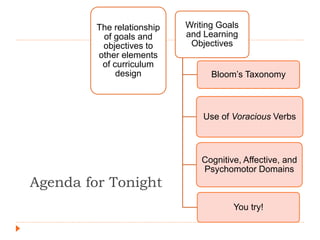
Agenda for Tonight
The relationship
of goals and
objectives to
other elements
of curriculum
design
Writing Goals
and Learning
Objectives
Bloom’s Taxonomy
Use of Voracious Verbs
Cognitive, Affective, and
Psychomotor Domains
You try!
JiTT: Results
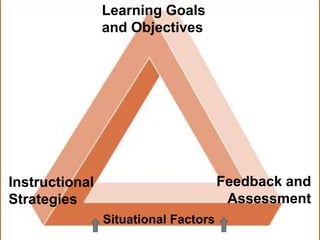
Learning Goals
and Objectives
Instructional
Strategies
Feedback and
Assessment
Situational Factors
In integrated course design, these three
elements are in perfect harmony
What do you want your
learners to be able to KNOW
or DO at the end of your
lesson, rotation, or course?
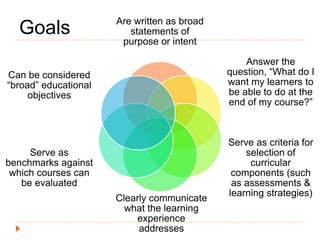
Goals Are written as broad
statements of
purpose or intent
Answer the
question, “What do I
want my learners to
be able to do at the
end of my course?”
Serve as criteria for
selection of
curricular
components (such
as assessments &
learning strategies)
Clearly communicate
what the learning
experience
addresses
Serve as
benchmarks against
which courses can
be evaluated
Can be considered
“broad” educational
objectives
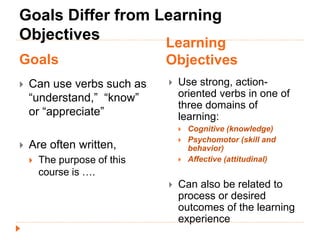
Goals Differ from Learning
Objectives
Goals
Learning
Objectives
 Can use verbs such as
“understand,” “know”
or “appreciate”
 Are often written,
 The purpose of this
course is ….
 Use strong, action-
oriented verbs in one of
three domains of
learning:
 Cognitive (knowledge)
 Psychomotor (skill and
behavior)
 Affective (attitudinal)
 Can also be related to
process or desired
outcomes of the learning
experience
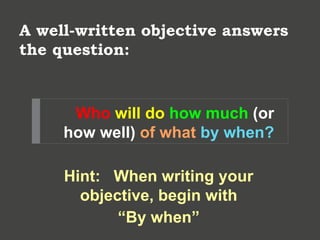
A well-written objective answers
the question:
Who will do how much (or
how well) of what by when?
Hint: When writing your
objective, begin with
“By when”
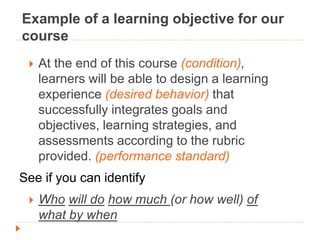
Example of a learning objective for our
course
 At the end of this course (condition),
learners will be able to design a learning
experience (desired behavior) that
successfully integrates goals and
objectives, learning strategies, and
assessments according to the rubric
provided. (performance standard)
See if you can identify
 Who will do how much (or how well) of
what by when
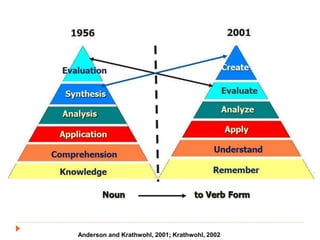
Anderson and Krathwohl, 2001; Krathwohl, 2002
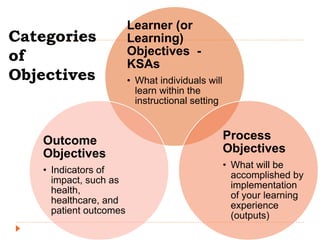
Categories
of
Objectives
Learner (or
Learning)
Objectives -
KSAs
• What individuals will
learn within the
instructional setting
Process
Objectives
• What will be
accomplished by
implementation
of your learning
experience
(outputs)
Outcome
Objectives
• Indicators of
impact, such as
health,
healthcare, and
patient outcomes
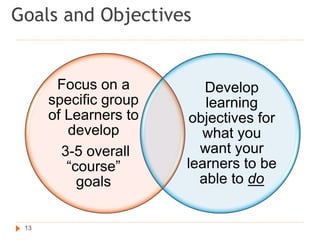
Goals and Objectives
Focus on a
specific group
of Learners to
develop
3-5 overall
“course”
goals
Develop
learning
objectives for
what you
want your
learners to be
able to do
13
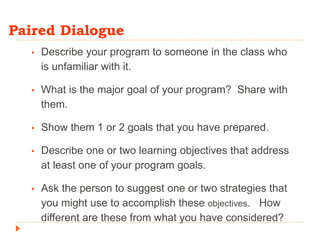
Paired Dialogue
• Describe your program to someone in the class who
is unfamiliar with it.
• What is the major goal of your program? Share with
them.
• Show them 1 or 2 goals that you have prepared.
• Describe one or two learning objectives that address
at least one of your program goals.
• Ask the person to suggest one or two strategies that
you might use to accomplish these objectives. How
different are these from what you have considered?

Learning objectives and goals

  • 1.
    Class Session 3:Objectives and Goals Curriculum Design in Medical Education February 2, 2016
  • 2.
    Agenda for Tonight Therelationship of goals and objectives to other elements of curriculum design Writing Goals and Learning Objectives Bloom’s Taxonomy Use of Voracious Verbs Cognitive, Affective, and Psychomotor Domains You try!
  • 3.
  • 4.
  • 5.
    In integrated coursedesign, these three elements are in perfect harmony
  • 6.
    What do youwant your learners to be able to KNOW or DO at the end of your lesson, rotation, or course?
  • 7.
    Goals Are writtenas broad statements of purpose or intent Answer the question, “What do I want my learners to be able to do at the end of my course?” Serve as criteria for selection of curricular components (such as assessments & learning strategies) Clearly communicate what the learning experience addresses Serve as benchmarks against which courses can be evaluated Can be considered “broad” educational objectives
  • 8.
    Goals Differ fromLearning Objectives Goals Learning Objectives  Can use verbs such as “understand,” “know” or “appreciate”  Are often written,  The purpose of this course is ….  Use strong, action- oriented verbs in one of three domains of learning:  Cognitive (knowledge)  Psychomotor (skill and behavior)  Affective (attitudinal)  Can also be related to process or desired outcomes of the learning experience
  • 9.
    A well-written objectiveanswers the question: Who will do how much (or how well) of what by when? Hint: When writing your objective, begin with “By when”
  • 10.
    Example of alearning objective for our course  At the end of this course (condition), learners will be able to design a learning experience (desired behavior) that successfully integrates goals and objectives, learning strategies, and assessments according to the rubric provided. (performance standard) See if you can identify  Who will do how much (or how well) of what by when
  • 11.
    Anderson and Krathwohl,2001; Krathwohl, 2002
  • 12.
    Categories of Objectives Learner (or Learning) Objectives - KSAs •What individuals will learn within the instructional setting Process Objectives • What will be accomplished by implementation of your learning experience (outputs) Outcome Objectives • Indicators of impact, such as health, healthcare, and patient outcomes
  • 13.
    Goals and Objectives Focuson a specific group of Learners to develop 3-5 overall “course” goals Develop learning objectives for what you want your learners to be able to do 13
  • 14.
    Paired Dialogue • Describeyour program to someone in the class who is unfamiliar with it. • What is the major goal of your program? Share with them. • Show them 1 or 2 goals that you have prepared. • Describe one or two learning objectives that address at least one of your program goals. • Ask the person to suggest one or two strategies that you might use to accomplish these objectives. How different are these from what you have considered?