Philosophies and principles in teaching
What is Philosophy
of Education?
• All teachers have a personal philosophy
that colors the way they teach
• Engaging in philosophy helps clarify what
they do or intend to do, justify or explain
why they do what they do in a logical,
systematic manner
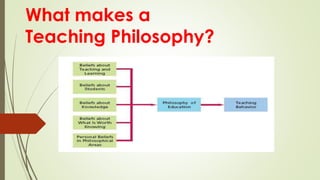
What makes a
Teaching Philosophy?
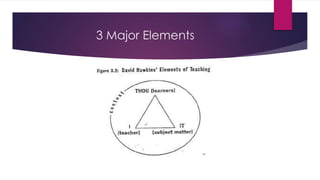
3 Major Elements
What Are Your Beliefs About Teaching?
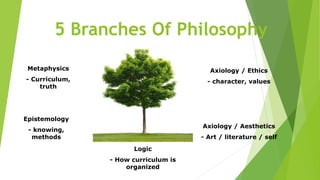
5 Branches Of Philosophy
Metaphysics
- Curriculum,
truth
Epistemology
- knowing,
methods
Axiology / Ethics
- character, values
Axiology / Aesthetics
- Art / literature / self
Logic
- How curriculum is
organized
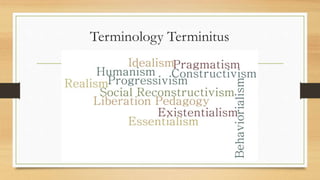
Terminology Terminitus
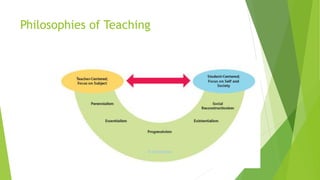
Philosophies of Teaching
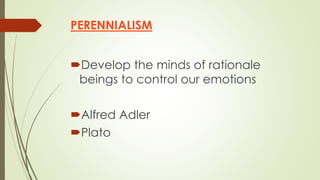
PERENNIALISM
Develop the minds of rationale
beings to control our emotions
Alfred Adler
Plato
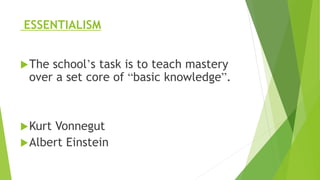
ESSENTIALISM
The school’s task is to teach mastery
over a set core of “basic knowledge”.
Kurt Vonnegut
Albert Einstein
PROGRESSIVISM
 The student’s world is the focus and
starting point of education.
 Maria Montessori
SOCIAL RECONSTRUCTIVISM
Schools should be “change agents” and educate students
about their place in the world and how to change the
world.
• Paolo Freire
EXISTENTIALISM
Focus on the experiences of each
individual, personal growth
Rollo May
PRINCIPLES OF TEACHING
“A thousand teachers,
a thousand methods.”
-Chinese Proverb
DIFFERENT APPROACHES
AND METHODS
TEACHING APPROACH
TEACHING STRATEGY
TEACHING METHOD
TEACHING TECHNIQUE
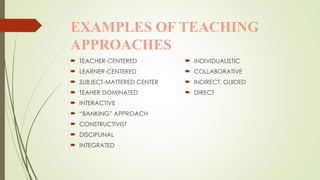
EXAMPLES OF TEACHING
APPROACHES
 TEACHER-CENTERED
 LEARNER-CENTERED
 SUBJECT-MATTERED CENTER
 TEAHER DOMINATED
 INTERACTIVE
 “BANKING” APPROACH
 CONSTRUCTIVIST
 DISCIPLINAL
 INTEGRATED
 INDIVIDUALISTIC
 COLLABORATIVE
 INDIRECT, GUIDED
 DIRECT
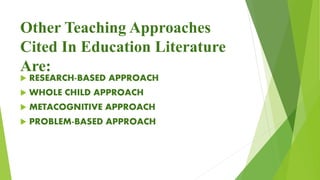
Other Teaching Approaches
Cited In Education Literature
Are:
 RESEARCH-BASED APPROACH
 WHOLE CHILD APPROACH
 METACOGNITIVE APPROACH
 PROBLEM-BASED APPROACH
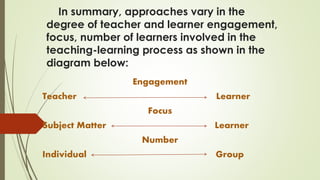
In summary, approaches vary in the
degree of teacher and learner engagement,
focus, number of learners involved in the
teaching-learning process as shown in the
diagram below:
Engagement
Teacher Learner
Focus
Subject Matter Learner
Number
Individual Group
DIRECT/EXPOSITORY
APPROACH
1) DIRECT INSTRUCTION/
LECTURE METHOD
TWO (2) TYPES OF ASSESSMENT
Summative Assessment
Formative Assessment
GUIDELINES FOR ITS EFFECTIVE USE
TEACHING SKILL
1. The students must be given ample time for practice.
2. They must be included in the planning stage since this technique
is highly task-oriented and aimed at mastery of every step. The
lesson objectives are student-based.
3. Describe the testing situation and specify the level of
performance expected.
4. Divide complex skills and understanding into subskills or into its
component steps so they can be taught easily and with
precision.
5. Design own strategy in teaching each skill which will
eventually contribute to the learning of the entire skill.
6. Before the demonstration, carefully rehearse all steps.
The steps should be observed and followed.
7. Assign practice for short periods of time, then continue
learning by imitating others.
8. Provide feedback and encouragement through
praises. Positively motivated, the students will never get
tired practicing.
9. Be able to construct good performance-based tests.
Teaching Declarative Knowledge – Facts,
Principles and Laws
1. Be sure the facts, principles, and laws are
correctly, clearly, and adequately explained.
2. Use visual aids to concretize abstract
principles and laws.
3. Illustrate laws and principles with concrete
examples.
4. Present facts meaningfully by citing their
significance and by connecting them with
everyday life.
2) DEMONSTRATION METHOD
• As the name implies, in the demonstration
method the teacher or an assigned student or
group shows how a process is done while the
students become observers.
ADVANTAGES
1. The demonstration method follows a systematic procedure.
2. The use of expensive equipment and machines will be maximized.
3. Possible wastage of time, effort and resources will be avoided since the
demonstration is supposed to be well-planned in advance.
4. It will not result to trial and error learning as what happens with unplanned
learning activities.
5. The findings are reliable and accurate since the procedure has bee tried
before.
6. The value of confidence is developed among the demonstrators for such
hands-on demonstration.
7. Curiosity and keen observing ability are instilled among the observers.
INDIRECT/GUIDED /
EXPLORATORY APPROACH
1) Inquiry method/discovery method
2) Problem solving method
3) Project method
Philosophies and principles in teaching

Philosophies and principles in teaching

  • 1.
  • 2.
    What is Philosophy ofEducation? • All teachers have a personal philosophy that colors the way they teach • Engaging in philosophy helps clarify what they do or intend to do, justify or explain why they do what they do in a logical, systematic manner
  • 3.
  • 4.
  • 5.
    What Are YourBeliefs About Teaching?
  • 6.
    5 Branches OfPhilosophy Metaphysics - Curriculum, truth Epistemology - knowing, methods Axiology / Ethics - character, values Axiology / Aesthetics - Art / literature / self Logic - How curriculum is organized
  • 7.
  • 8.
  • 9.
    PERENNIALISM Develop the mindsof rationale beings to control our emotions Alfred Adler Plato
  • 10.
    ESSENTIALISM The school’s taskis to teach mastery over a set core of “basic knowledge”. Kurt Vonnegut Albert Einstein
  • 11.
    PROGRESSIVISM  The student’sworld is the focus and starting point of education.  Maria Montessori
  • 12.
    SOCIAL RECONSTRUCTIVISM Schools shouldbe “change agents” and educate students about their place in the world and how to change the world. • Paolo Freire
  • 13.
    EXISTENTIALISM Focus on theexperiences of each individual, personal growth Rollo May
  • 14.
    PRINCIPLES OF TEACHING “Athousand teachers, a thousand methods.” -Chinese Proverb
  • 15.
    DIFFERENT APPROACHES AND METHODS TEACHINGAPPROACH TEACHING STRATEGY TEACHING METHOD TEACHING TECHNIQUE
  • 16.
    EXAMPLES OF TEACHING APPROACHES TEACHER-CENTERED  LEARNER-CENTERED  SUBJECT-MATTERED CENTER  TEAHER DOMINATED  INTERACTIVE  “BANKING” APPROACH  CONSTRUCTIVIST  DISCIPLINAL  INTEGRATED  INDIVIDUALISTIC  COLLABORATIVE  INDIRECT, GUIDED  DIRECT
  • 17.
    Other Teaching Approaches CitedIn Education Literature Are:  RESEARCH-BASED APPROACH  WHOLE CHILD APPROACH  METACOGNITIVE APPROACH  PROBLEM-BASED APPROACH
  • 18.
    In summary, approachesvary in the degree of teacher and learner engagement, focus, number of learners involved in the teaching-learning process as shown in the diagram below: Engagement Teacher Learner Focus Subject Matter Learner Number Individual Group
  • 19.
    DIRECT/EXPOSITORY APPROACH 1) DIRECT INSTRUCTION/ LECTUREMETHOD TWO (2) TYPES OF ASSESSMENT Summative Assessment Formative Assessment
  • 20.
    GUIDELINES FOR ITSEFFECTIVE USE TEACHING SKILL 1. The students must be given ample time for practice. 2. They must be included in the planning stage since this technique is highly task-oriented and aimed at mastery of every step. The lesson objectives are student-based. 3. Describe the testing situation and specify the level of performance expected. 4. Divide complex skills and understanding into subskills or into its component steps so they can be taught easily and with precision.
  • 21.
    5. Design ownstrategy in teaching each skill which will eventually contribute to the learning of the entire skill. 6. Before the demonstration, carefully rehearse all steps. The steps should be observed and followed. 7. Assign practice for short periods of time, then continue learning by imitating others. 8. Provide feedback and encouragement through praises. Positively motivated, the students will never get tired practicing. 9. Be able to construct good performance-based tests.
  • 22.
    Teaching Declarative Knowledge– Facts, Principles and Laws 1. Be sure the facts, principles, and laws are correctly, clearly, and adequately explained. 2. Use visual aids to concretize abstract principles and laws. 3. Illustrate laws and principles with concrete examples. 4. Present facts meaningfully by citing their significance and by connecting them with everyday life.
  • 23.
    2) DEMONSTRATION METHOD •As the name implies, in the demonstration method the teacher or an assigned student or group shows how a process is done while the students become observers.
  • 24.
    ADVANTAGES 1. The demonstrationmethod follows a systematic procedure. 2. The use of expensive equipment and machines will be maximized. 3. Possible wastage of time, effort and resources will be avoided since the demonstration is supposed to be well-planned in advance. 4. It will not result to trial and error learning as what happens with unplanned learning activities. 5. The findings are reliable and accurate since the procedure has bee tried before. 6. The value of confidence is developed among the demonstrators for such hands-on demonstration. 7. Curiosity and keen observing ability are instilled among the observers.
  • 25.
    INDIRECT/GUIDED / EXPLORATORY APPROACH 1)Inquiry method/discovery method 2) Problem solving method 3) Project method

Editor's Notes

  • #3 A set of values and beliefs about education that guide the professional behavior of educators
  • #4 Philosophies of teaching and learning Numerous philosophers have studied what it means to teach and learn, and have come up with various explanations of the process of becoming educated.  Faculty begin to refine their own beliefs and understandings of what it means to know through examining numerous theories of knowledge and making sense of the processes of teaching and learning in their own minds.