Pursuant to Cabinet Resolution No. 
1, s. 1991, Panibagong Sigia 2000 (PS 
2000) was launched in March 1991 as 
a government-wide campaign to 
revitalize the Philippine public 
service.
THE FOLLOWING CONCERNS WERE 
ADDRESSED BY PS 2000: 
1) gaps in government policies and programs; 
2) institutionalization of reforms through 
the active participation of government 
employees in making the bureaucracy 
more responsive and supportive of the 
objectives embodied in the Philippine 
Development Plan;
3) preparation of the public service for the 
challenges and opportunities in the year 2000. 
Cabinet Resolution No. 1 enjoined heads of 
government offices to actively support and 
participate in the various activities and 
programs of PS 2000.
One of the objectives of PS 2000 was 
to build a data and suggestion base 
which would be used to develop a 
reform package for the bureaucracy. 
Towards this end, PS 2000 
implemented a three-track program.
The first track involved the organization of 13 
Task Forces whose main function was to study 
the following identified priority areas of PS 
2000 on a macro perspective:
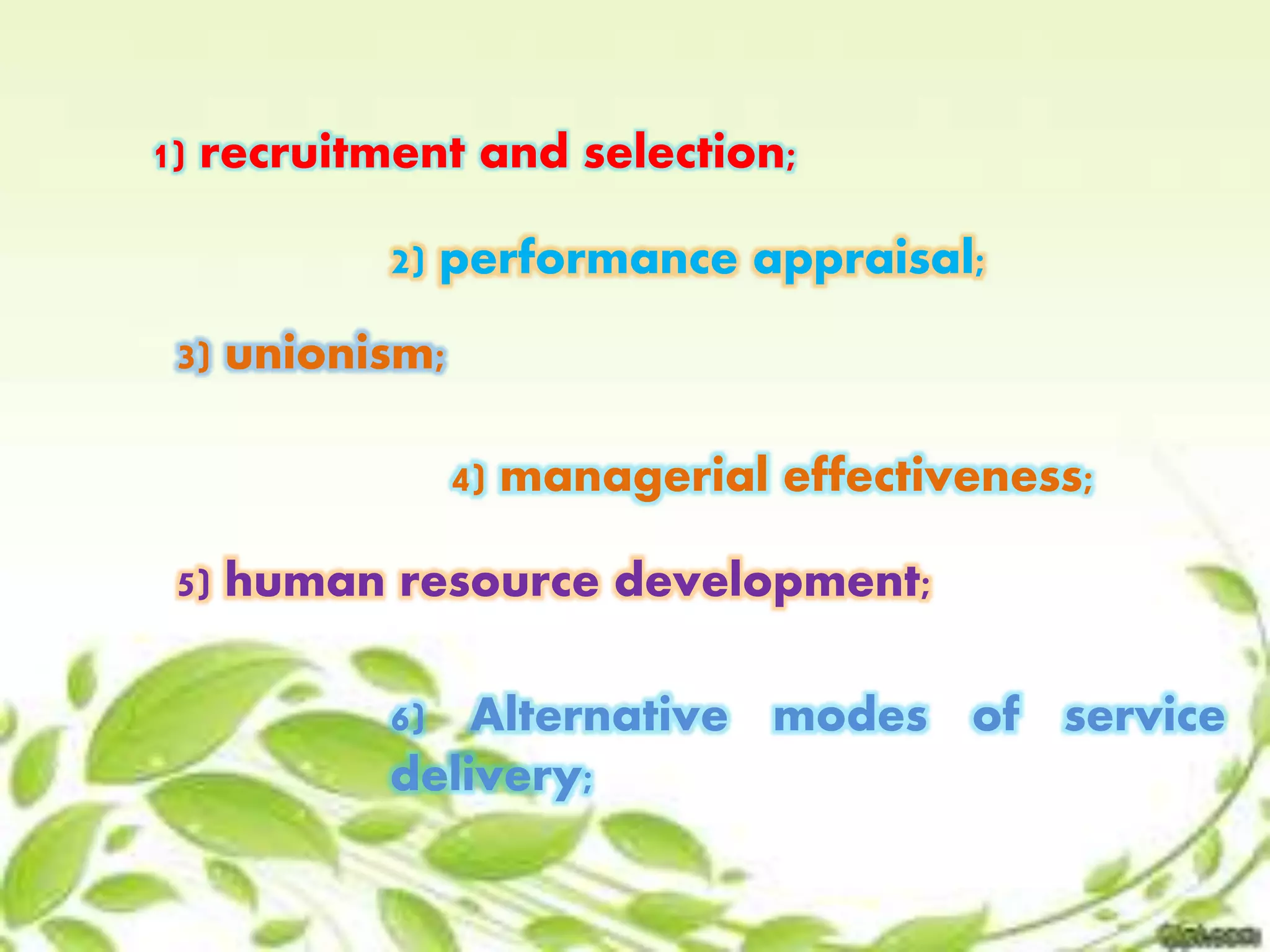
1) recruitment and selection; 
2) performance appraisal; 
3) unionism; 
4) managerial effectiveness; 
5) human resource development; 
6) Alternative modes of service 
delivery;
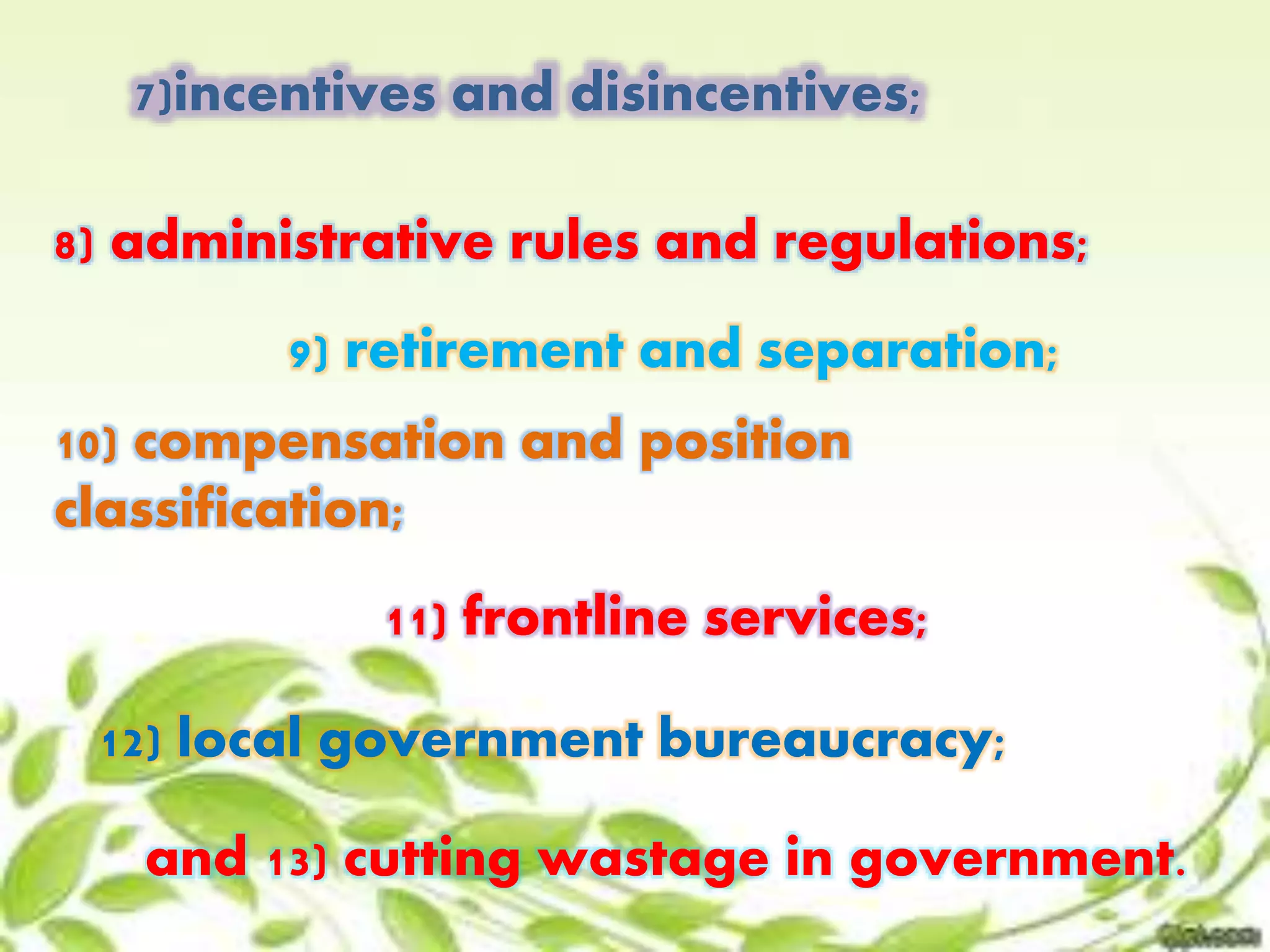
7)incentives and disincentives; 
8) administrative rules and regulations; 
9) retirement and separation; 
10) compensation and position 
classification; 
11) frontline services; 
12) local government bureaucracy; 
and 13) cutting wastage in government.
Each Task Force formulated and 
implemented their respective programs 
and strategies. Various forms of 
consultations, surveys, brainstorming, 
sessions, and symposia were conducted 
by the Task Forces. For example, the 
First Congress of Senior Government 
Executives was convened on May 31, 
1991.
The participants to the said Congress came 
up with recommendations on the issues 
presented by the Task Force convenors. To 
improve frontline services, the senior 
government executives recommended the 
improvement of working conditions and 
work attitudes of employees delivering 
frontline services and provision of an 
incentive system, both monetary and non-monetary, 
and the establishment of better 
coordination and liaison between and 
among concerned government agencies, 
among others.
The second track covered the 
conduct of employee assemblies 
at the agency and regional levels 
with PS 2000 as the agenda.
Government employees who 
participated in these assemblies 
identified problems hindering the 
effective delivery of public service as 
well as suggested solutions to solve 
these problems. These employee 
assemblies culminated in the 2nd 
National Congress of Workers in 
Government held on September 18-19, 
1991.
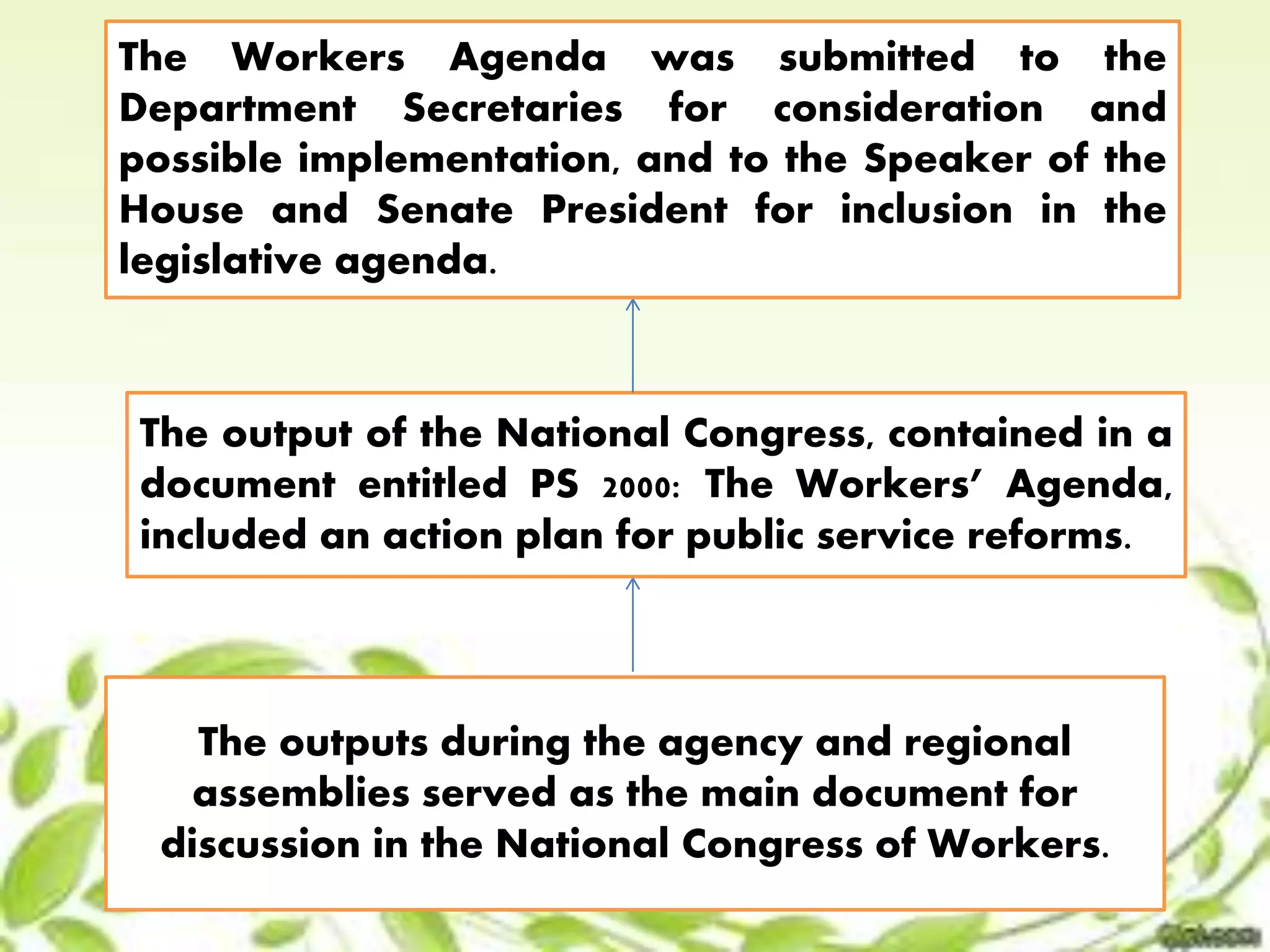
The Workers Agenda was submitted to the 
Department Secretaries for consideration and 
possible implementation, and to the Speaker of the 
House and Senate President for inclusion in the 
legislative agenda. 
The output of the National Congress, contained in a 
document entitled PS 2000: The Workers’ Agenda, 
included an action plan for public service reforms. 
The outputs during the agency and regional 
assemblies served as the main document for 
discussion in the National Congress of Workers.
The Third track was implemented 
to allow employees and private 
individuals to give their ideas and 
suggestions directly to the PS 2000 
Secretariat.
Issues and recommendations raised 
by the employees at various PS 2000 
fora and letters sent by the private 
individuals to PS 2000 also served as 
inputs to the Task Forces in preparing 
issue papers on their respective 
areas of concern.
The issue papers contained the 
following: challenges/opportunities of 
each area taking into account the 
environment, the client system, the 
technology, the practitioners; the three 
most significant problems and likely 
causes; present practices at government 
and agency levels of maintenance, 
refinements, and wide application; and 
recommendations for immediate 
executive action or inclusion in the 
legislative agenda.
PS 2000 was formally terminated in June 
1992. Among others, PS 2000 can be credited 
for providing the venue through which 
various sectors such as government 
officials and employees, academe, NGOs 
and private individuals, and elected local 
officials were consulted on major concerns 
affecting the whole bureaucracy. The 
organization of Task Forces as vehicle to 
evolve proposals for reforms and 
innovations in government provided 
opportunities for the active involvement of 
senior officials and public sector unions.
These consultations resulted in the 
formulation of Panibagong Sigla 2000: 
Shaping the Future of Philippines Public 
Service, a document which sets new 
directions and lays proposed policies for 
the revitalization of the public service. 
Through these efforts, it is hoped that by 
the year 2000 and even beyond, the 
Philippine public service would be a 
dynamic institution imbued with a client-focused 
service culture. The said document 
was endorsed by President Aquino to 
incoming President Ramos.
THANK YOU!!!

Sir roger ps

  • 2.
    Pursuant to CabinetResolution No. 1, s. 1991, Panibagong Sigia 2000 (PS 2000) was launched in March 1991 as a government-wide campaign to revitalize the Philippine public service.
  • 3.
    THE FOLLOWING CONCERNSWERE ADDRESSED BY PS 2000: 1) gaps in government policies and programs; 2) institutionalization of reforms through the active participation of government employees in making the bureaucracy more responsive and supportive of the objectives embodied in the Philippine Development Plan;
  • 4.
    3) preparation ofthe public service for the challenges and opportunities in the year 2000. Cabinet Resolution No. 1 enjoined heads of government offices to actively support and participate in the various activities and programs of PS 2000.
  • 5.
    One of theobjectives of PS 2000 was to build a data and suggestion base which would be used to develop a reform package for the bureaucracy. Towards this end, PS 2000 implemented a three-track program.
  • 6.
    The first trackinvolved the organization of 13 Task Forces whose main function was to study the following identified priority areas of PS 2000 on a macro perspective:
  • 7.
    1) recruitment andselection; 2) performance appraisal; 3) unionism; 4) managerial effectiveness; 5) human resource development; 6) Alternative modes of service delivery;
  • 8.
    7)incentives and disincentives; 8) administrative rules and regulations; 9) retirement and separation; 10) compensation and position classification; 11) frontline services; 12) local government bureaucracy; and 13) cutting wastage in government.
  • 9.
    Each Task Forceformulated and implemented their respective programs and strategies. Various forms of consultations, surveys, brainstorming, sessions, and symposia were conducted by the Task Forces. For example, the First Congress of Senior Government Executives was convened on May 31, 1991.
  • 10.
    The participants tothe said Congress came up with recommendations on the issues presented by the Task Force convenors. To improve frontline services, the senior government executives recommended the improvement of working conditions and work attitudes of employees delivering frontline services and provision of an incentive system, both monetary and non-monetary, and the establishment of better coordination and liaison between and among concerned government agencies, among others.
  • 11.
    The second trackcovered the conduct of employee assemblies at the agency and regional levels with PS 2000 as the agenda.
  • 12.
    Government employees who participated in these assemblies identified problems hindering the effective delivery of public service as well as suggested solutions to solve these problems. These employee assemblies culminated in the 2nd National Congress of Workers in Government held on September 18-19, 1991.
  • 13.
    The Workers Agendawas submitted to the Department Secretaries for consideration and possible implementation, and to the Speaker of the House and Senate President for inclusion in the legislative agenda. The output of the National Congress, contained in a document entitled PS 2000: The Workers’ Agenda, included an action plan for public service reforms. The outputs during the agency and regional assemblies served as the main document for discussion in the National Congress of Workers.
  • 14.
    The Third trackwas implemented to allow employees and private individuals to give their ideas and suggestions directly to the PS 2000 Secretariat.
  • 15.
    Issues and recommendationsraised by the employees at various PS 2000 fora and letters sent by the private individuals to PS 2000 also served as inputs to the Task Forces in preparing issue papers on their respective areas of concern.
  • 16.
    The issue paperscontained the following: challenges/opportunities of each area taking into account the environment, the client system, the technology, the practitioners; the three most significant problems and likely causes; present practices at government and agency levels of maintenance, refinements, and wide application; and recommendations for immediate executive action or inclusion in the legislative agenda.
  • 17.
    PS 2000 wasformally terminated in June 1992. Among others, PS 2000 can be credited for providing the venue through which various sectors such as government officials and employees, academe, NGOs and private individuals, and elected local officials were consulted on major concerns affecting the whole bureaucracy. The organization of Task Forces as vehicle to evolve proposals for reforms and innovations in government provided opportunities for the active involvement of senior officials and public sector unions.
  • 18.
    These consultations resultedin the formulation of Panibagong Sigla 2000: Shaping the Future of Philippines Public Service, a document which sets new directions and lays proposed policies for the revitalization of the public service. Through these efforts, it is hoped that by the year 2000 and even beyond, the Philippine public service would be a dynamic institution imbued with a client-focused service culture. The said document was endorsed by President Aquino to incoming President Ramos.
  • 19.