Under Guidance of
    Mr. Mali K.K.
(Assistant Professor)


              YSPM, YTC   1
YSPM, YTC   2
 Ensuring uniformity in standards of
  quality, efficacy of pharmaceutical
  products.
 BA/BE focus on the release of the
  drug from the dosage form and
  absorption in to the systemic
  circulation.
 BE for the comparison of the two drug,
  several test method are given to
  determine the equivalence.
Important Pharmacokinetic
Parameters
   AUC: area under the concentration-time
    curve     measure of the extent of
    bioavailability
   Cmax: the observed maximum
    concentration of drug    measure of both
    the rate of absorption and the extent of
    bioavailability
 tmax:  the time after administration of drug
    at which Cmax is observed     measure of
    the rate of absorption
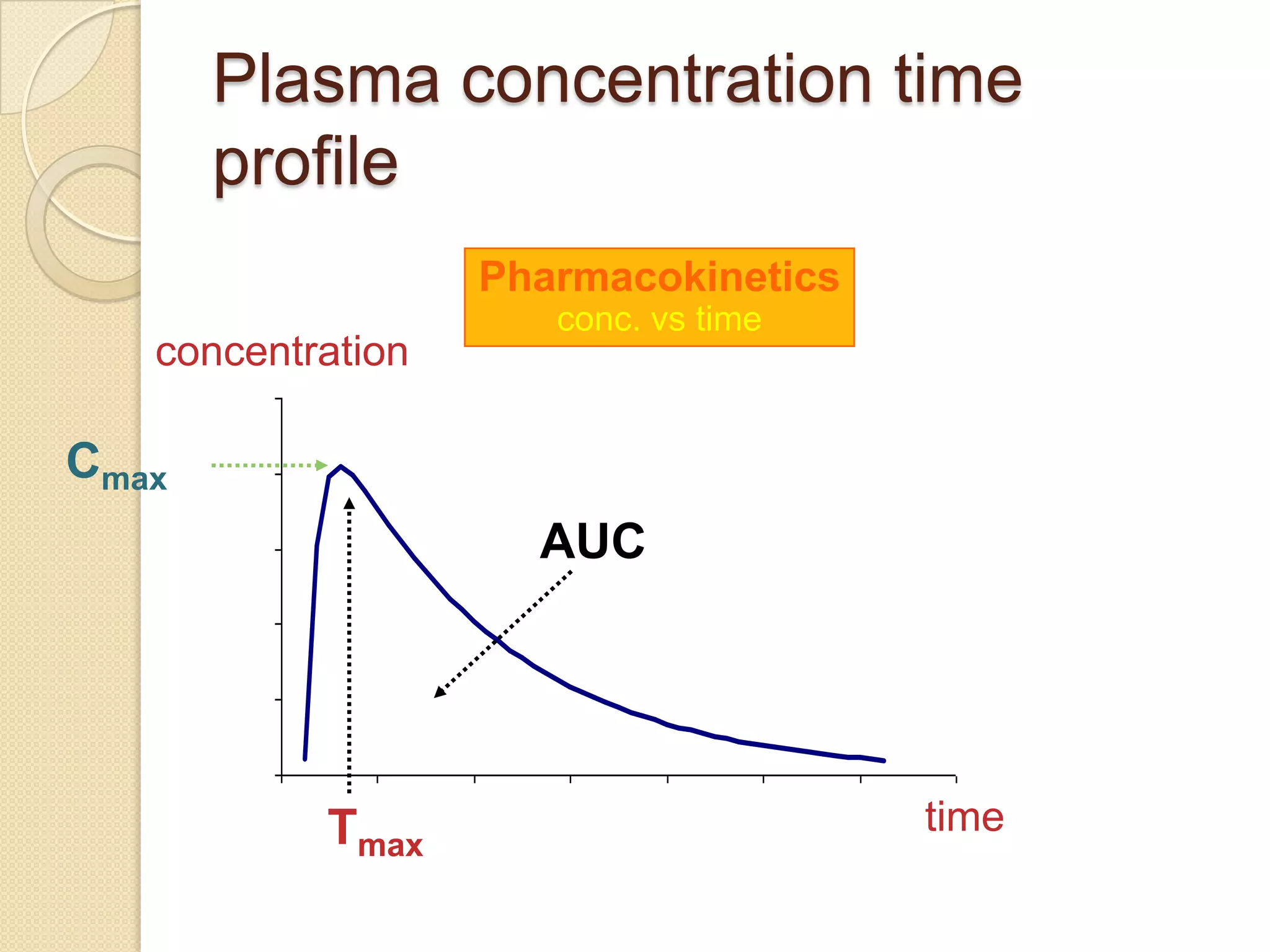
Plasma concentration time
       profile
                   Pharmacokinetics
                      conc. vs time
   concentration

Cmax
                     AUC


           Tmax                       time
 BIOAVAILABILITY: It is relative
  amount of drug from an administered
  dosage form which enters the
  systemic circulation and rate at which
  the drug appears in the systemic
  circulation.
 The extent and rate at which its active
  moiety is delivered from pharmaceutical
  form and becomes available in the
  systemic circulation
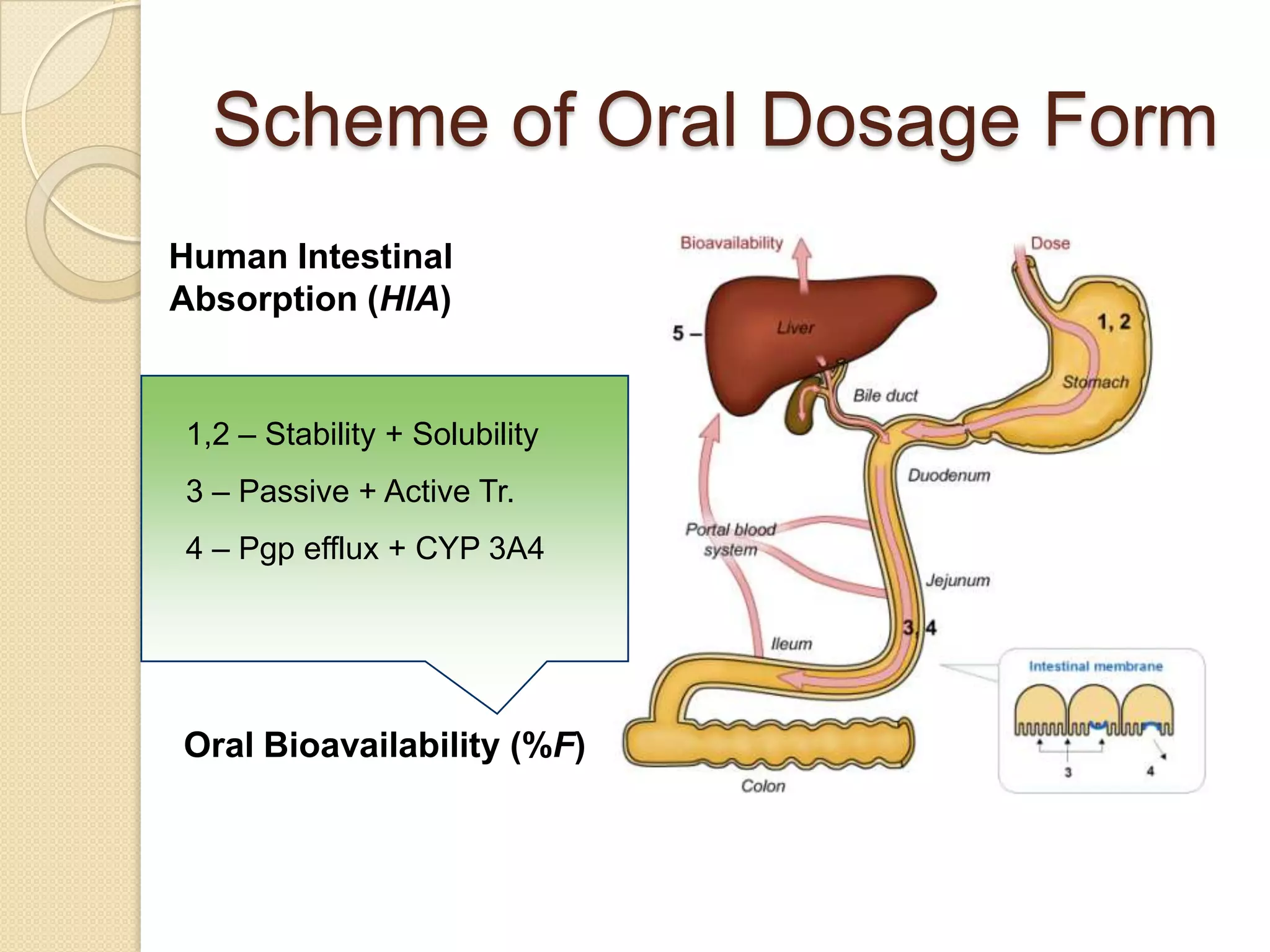
Scheme of Oral Dosage Form
Human Intestinal
Absorption (HIA)


1,2 – Stability + Solubility
3 – Passive + Active Tr.
4 – Pgp efflux + CYP 3A4


Oral Bioavailability (%F)
Why do we care about
BIOAVAILABILITY?
   The “true dose” is not the drug
    swallowed;
     BUT is the drug available to exert its
    effect.
•    Dissolution
•   Absorption
•    Survive metabolism
Why do we care about
BIOAVAILABILITY?
   May have a drug with very low
    bioavailability.
•   Dosage form or drug may not dissolve
    readily.
•    Drug may not be readily pass across
    biological membranes (i.e. be absorbed).
•    Drug may be extensively metabolized
    during absorption process (first-pass, gut
    wall, liver).
   Important component of overall variability
    i.e. Variable bioavailability may produce
    variable exposure.
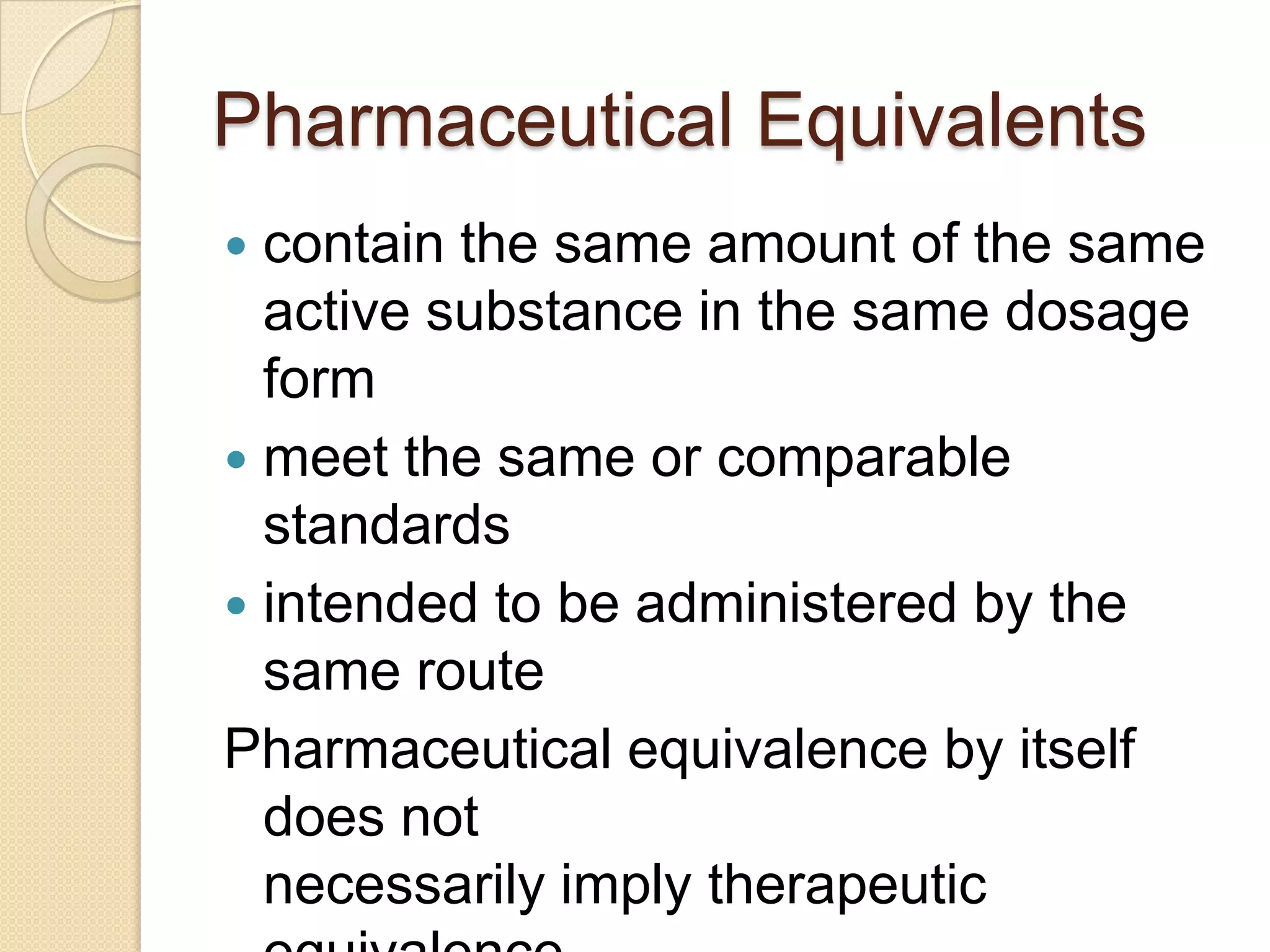
Pharmaceutical Equivalents
 contain the same amount of the same
  active substance in the same dosage
  form
 meet the same or comparable
  standards
 intended to be administered by the
  same route
Pharmaceutical equivalence by itself
  does not
  necessarily imply therapeutic
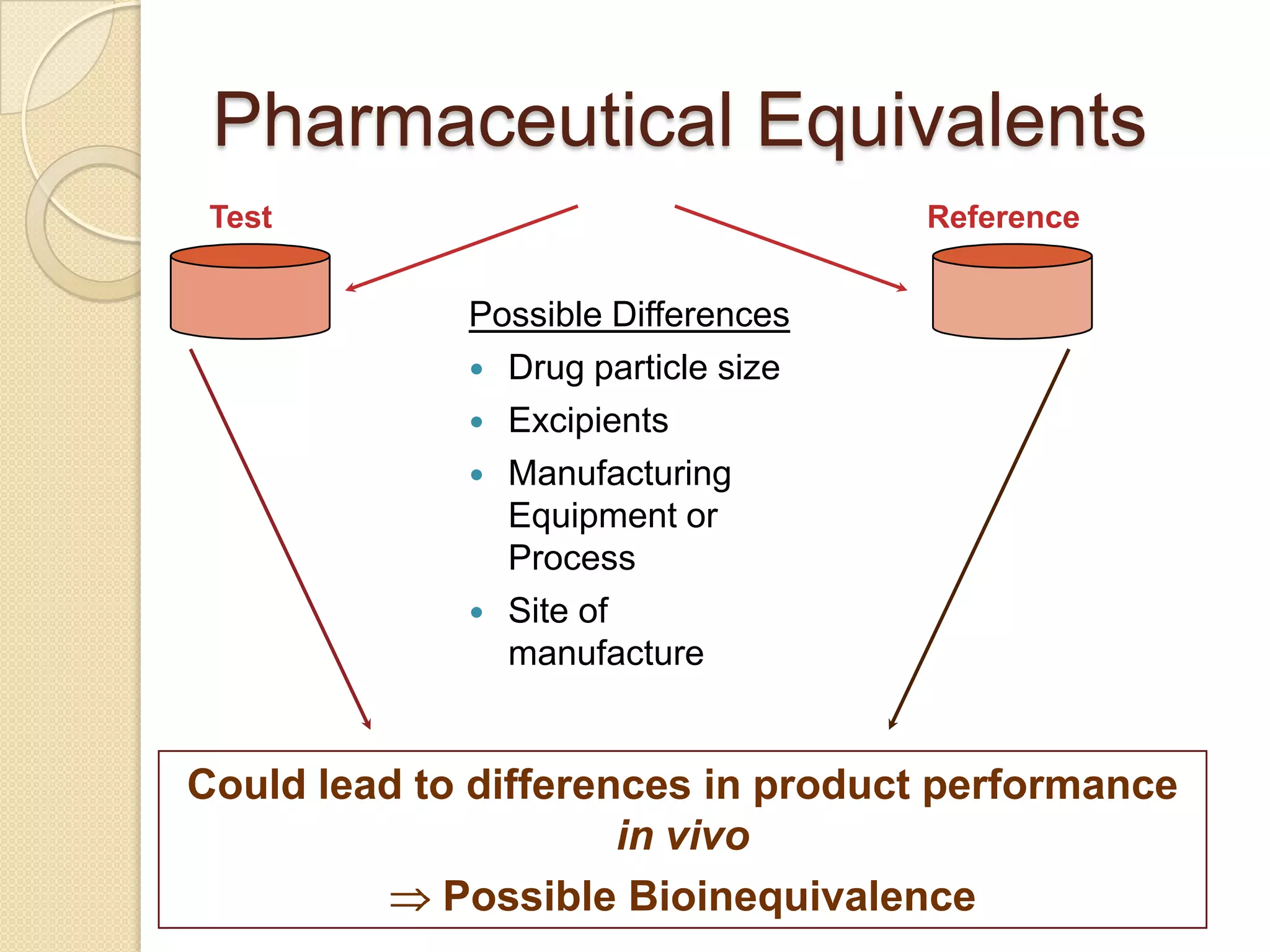
Pharmaceutical Equivalents
 Test                               Reference


             Possible Differences
              Drug particle size
              Excipients
              Manufacturing
               Equipment or
               Process
              Site of
               manufacture


Could lead to differences in product performance
                      in vivo
             Possible Bioinequivalence
Bioequivalence
Two products are bioequivalent if
 they are pharmaceutically equivalent
 bioavailabilities (both rate and extent)
  after administration in the same molar
  dose are similar to such a degree that
  their effects can be expected to be
  essentially the same
Therapeutic equivalence
Two products are therapeutically equivalent if
 pharmaceutically equivalent
 their effects, with respect to both efficacy and
  safety, will be essentially the same as derived from
  appropriate studies
  ◦   bioequivalence studies
  ◦   pharmacodynamic studies
  ◦   clinical studies
  ◦   in vitro studies
Bioequivalence (BE):
 the absence of a significant difference in
  the rate
and extent to which the active ingredient or
  active
moiety in pharmaceutical equivalents or
pharmaceutical alternatives becomes
  available at
the site of drug action when administered
  at the
same molar dose under similar conditions
  in
an appropriately designed study
Need of bioequivalence
studies
   No clinical studies have been
    performed in patients with the Generic
    Product to support its Efficacy and
    Safety.
   With data to support similar in vivo
    performance (= Bioequivalence)
    Efficacy and Safety
    data can be extrapolated from the
    Innovator Product to the Generic
    Product.
Bioequivalence (BE):
Ultimate: Bioequivalence studies impact
  of changes to the dosage form process
  after pivotal studies commence to
  ensure product on the market is
  comparable to that upon which the
  efficacy is based
 Establish that a new formulation has therapeutic
  equivalence in the rate and extent of absorption
  to the reference drug product.
 Important for linking the commercial drug product
  to clinical trial material at time of NDA.
 Important for post-approval changes in the
  marketed drug formulation.
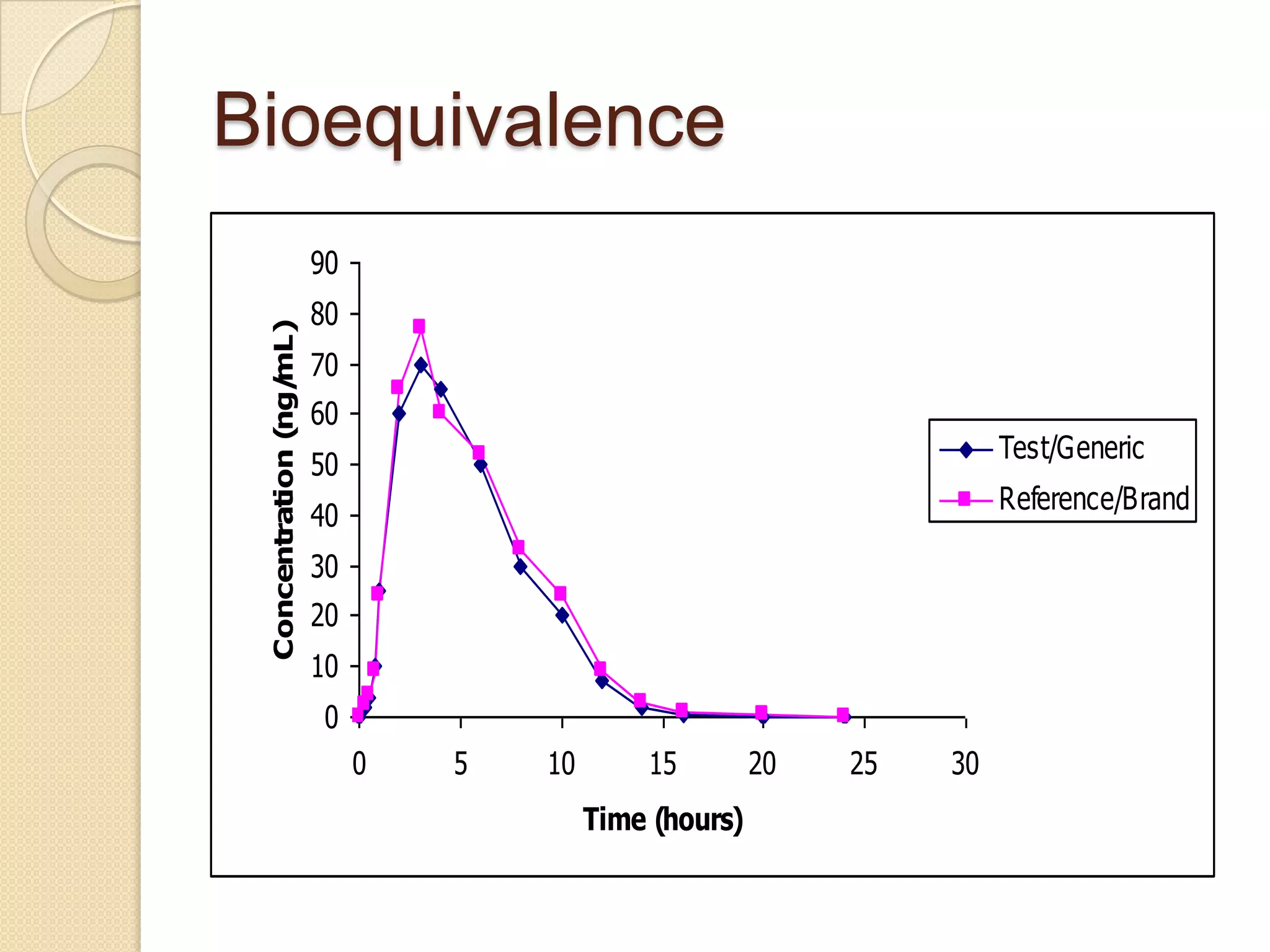
Bioequivalence
                         90
                         80
                   mL)


                         70
 Concentration (ng/


                         60
                                                                         Test/Generic
                         50
                                                                         Reference/Brand
                         40
                         30
                         20
                         10
                         0
                              0   5   10       15         20   25   30
                                           Time (hours)
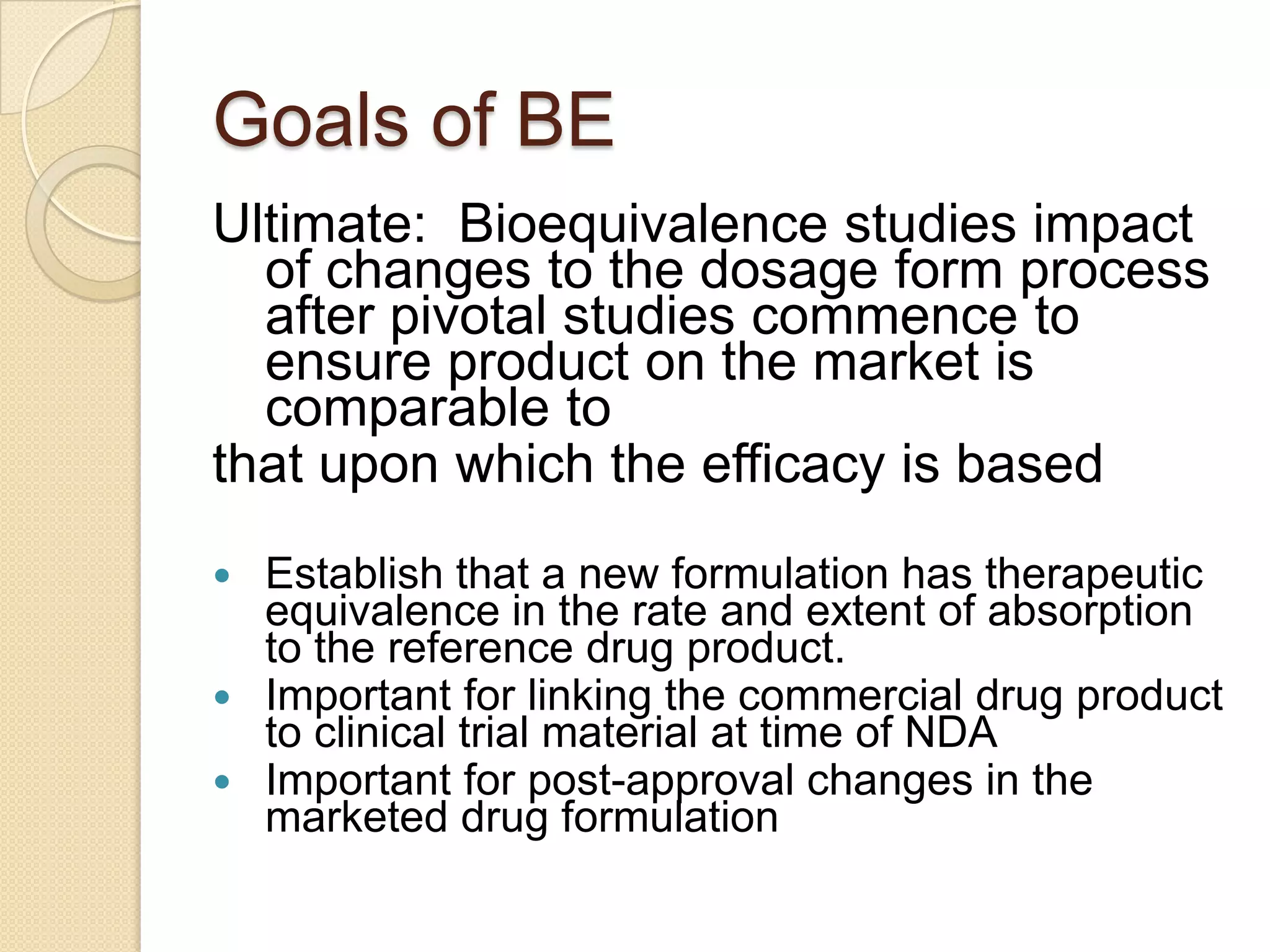
Goals of BE
Ultimate: Bioequivalence studies impact
  of changes to the dosage form process
  after pivotal studies commence to
  ensure product on the market is
  comparable to
that upon which the efficacy is based
 Establish that a new formulation has therapeutic
  equivalence in the rate and extent of absorption
  to the reference drug product.
 Important for linking the commercial drug product
  to clinical trial material at time of NDA
 Important for post-approval changes in the
  marketed drug formulation
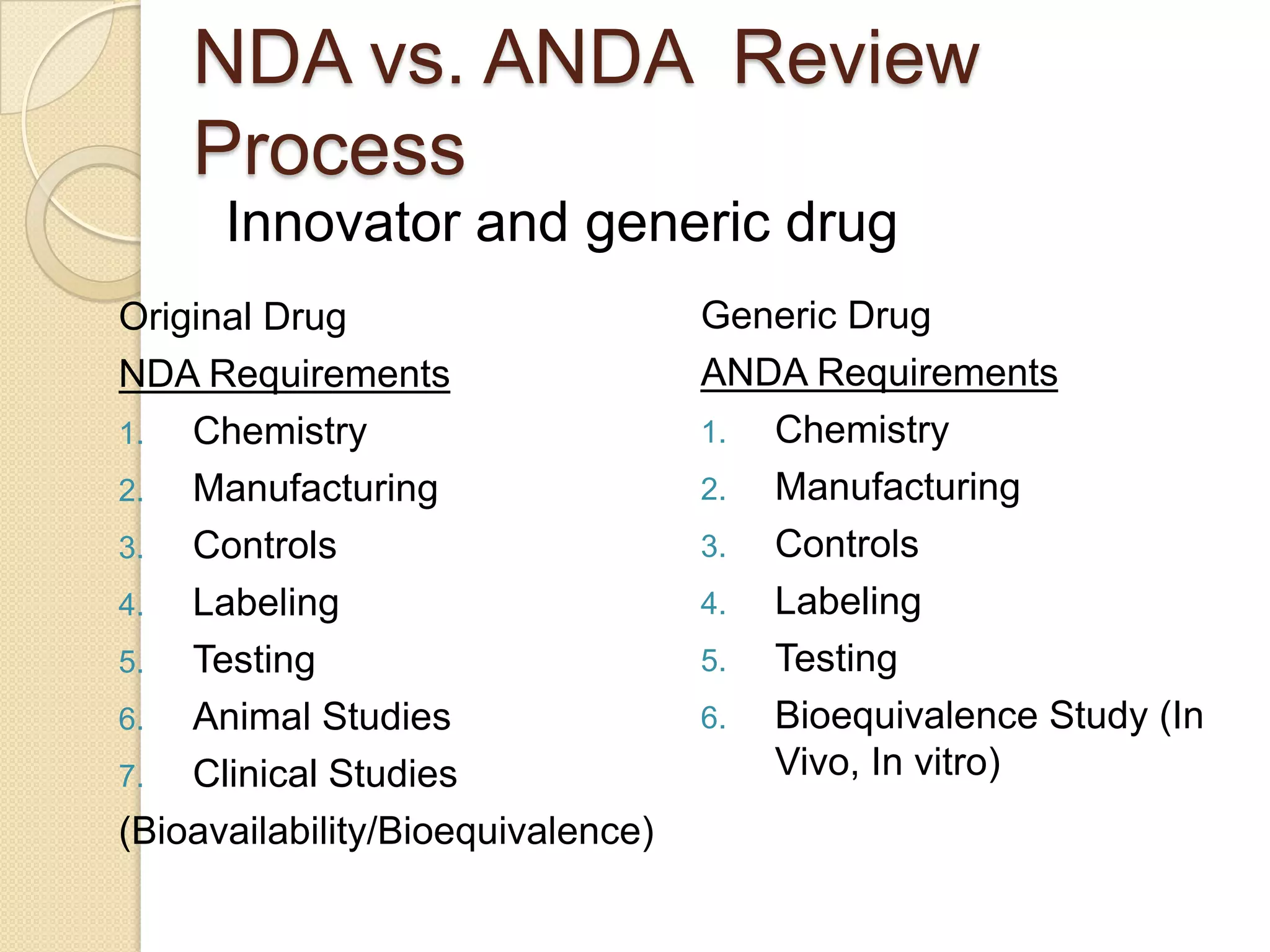
NDA vs. ANDA Review
    Process
      Innovator and generic drug
Original Drug                      Generic Drug
NDA Requirements                   ANDA Requirements
1.  Chemistry                      1. Chemistry
2.  Manufacturing                  2. Manufacturing
3.  Controls                       3. Controls
4.  Labeling                       4. Labeling
5.  Testing                        5. Testing
6.  Animal Studies                 6. Bioequivalence Study (In
7.  Clinical Studies                  Vivo, In vitro)
(Bioavailability/Bioequivalence)
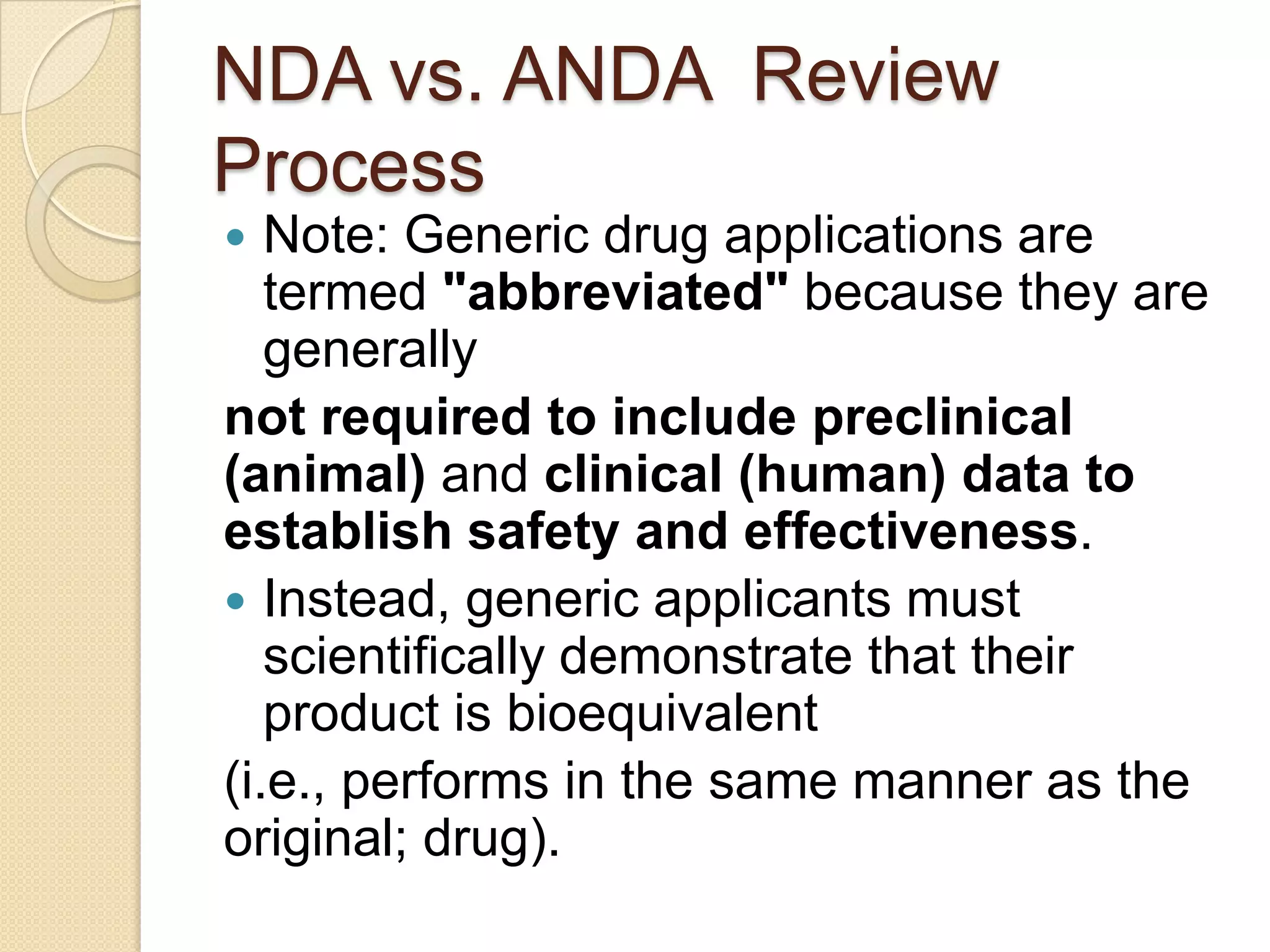
NDA vs. ANDA Review
Process
  Note: Generic drug applications are
   termed "abbreviated" because they are
   generally
not required to include preclinical
(animal) and clinical (human) data to
establish safety and effectiveness.
 Instead, generic applicants must
   scientifically demonstrate that their
   product is bioequivalent
(i.e., performs in the same manner as the
original; drug).
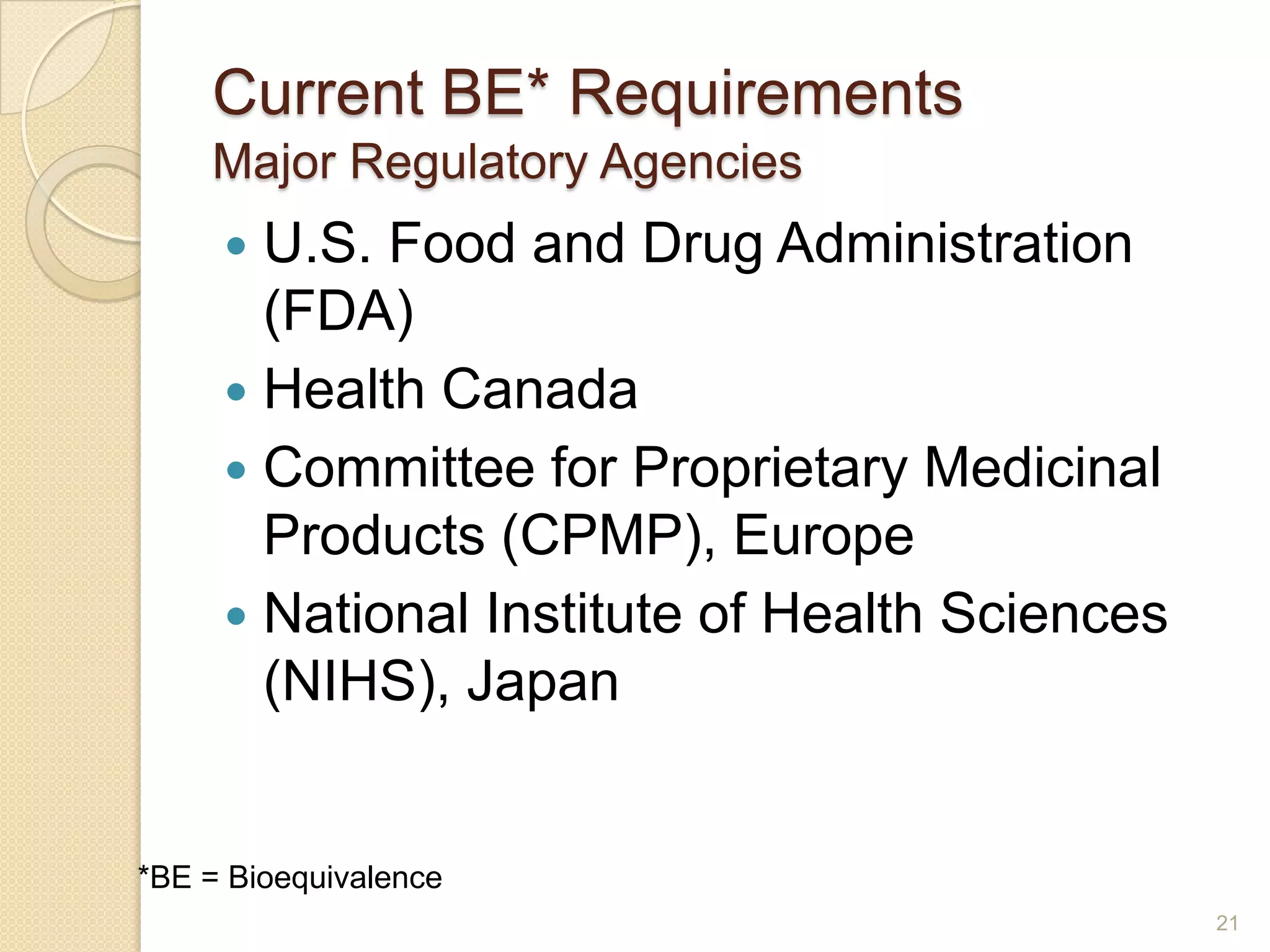
Current BE* Requirements
    Major Regulatory Agencies
      U.S. Food and Drug Administration
       (FDA)
      Health Canada
      Committee for Proprietary Medicinal
       Products (CPMP), Europe
      National Institute of Health Sciences
       (NIHS), Japan


*BE = Bioequivalence
                                               21
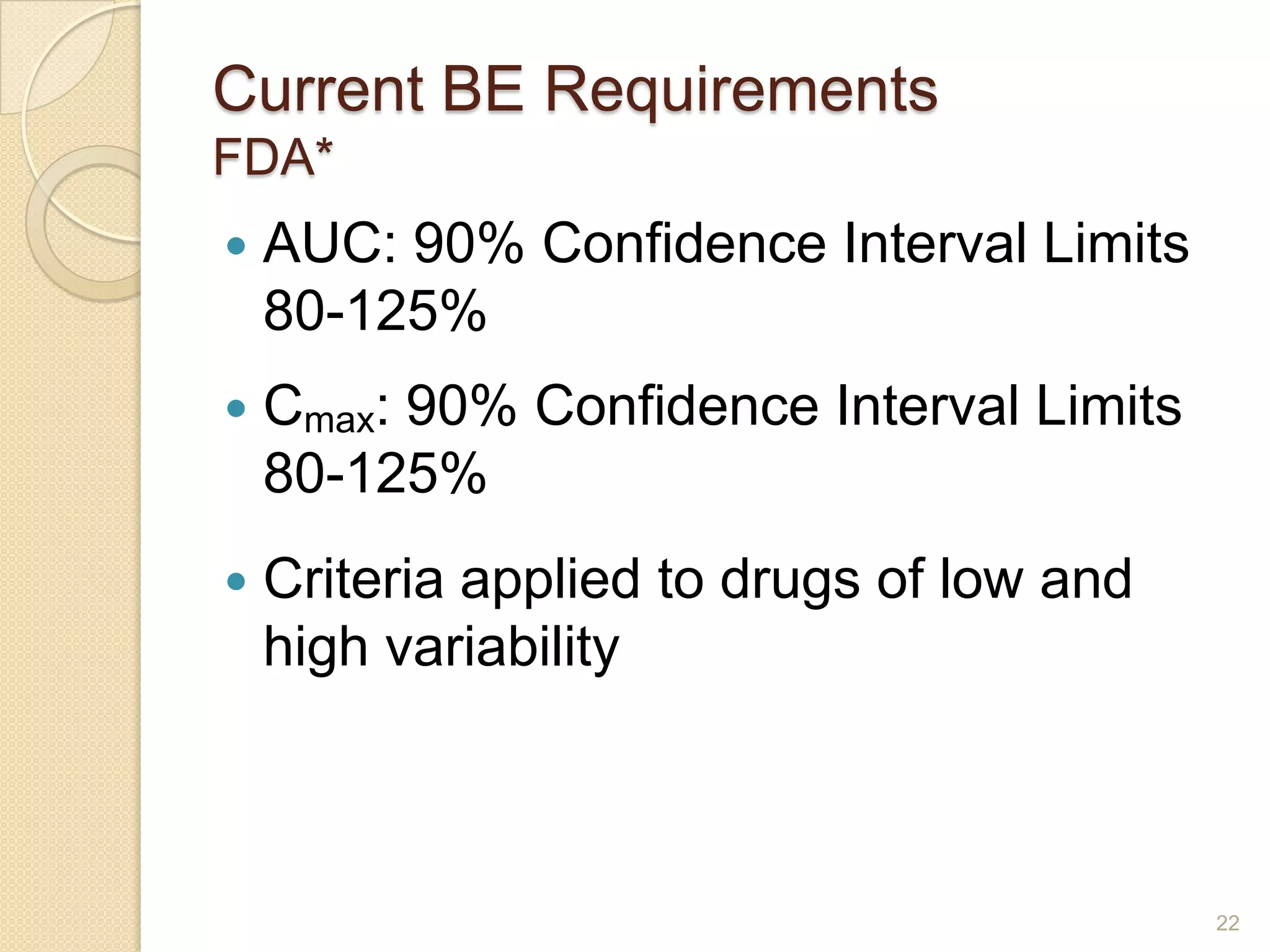
Current BE Requirements
FDA*
   AUC: 90% Confidence Interval Limits
    80-125%
   Cmax: 90% Confidence Interval Limits
    80-125%
   Criteria applied to drugs of low and
    high variability


                                           22
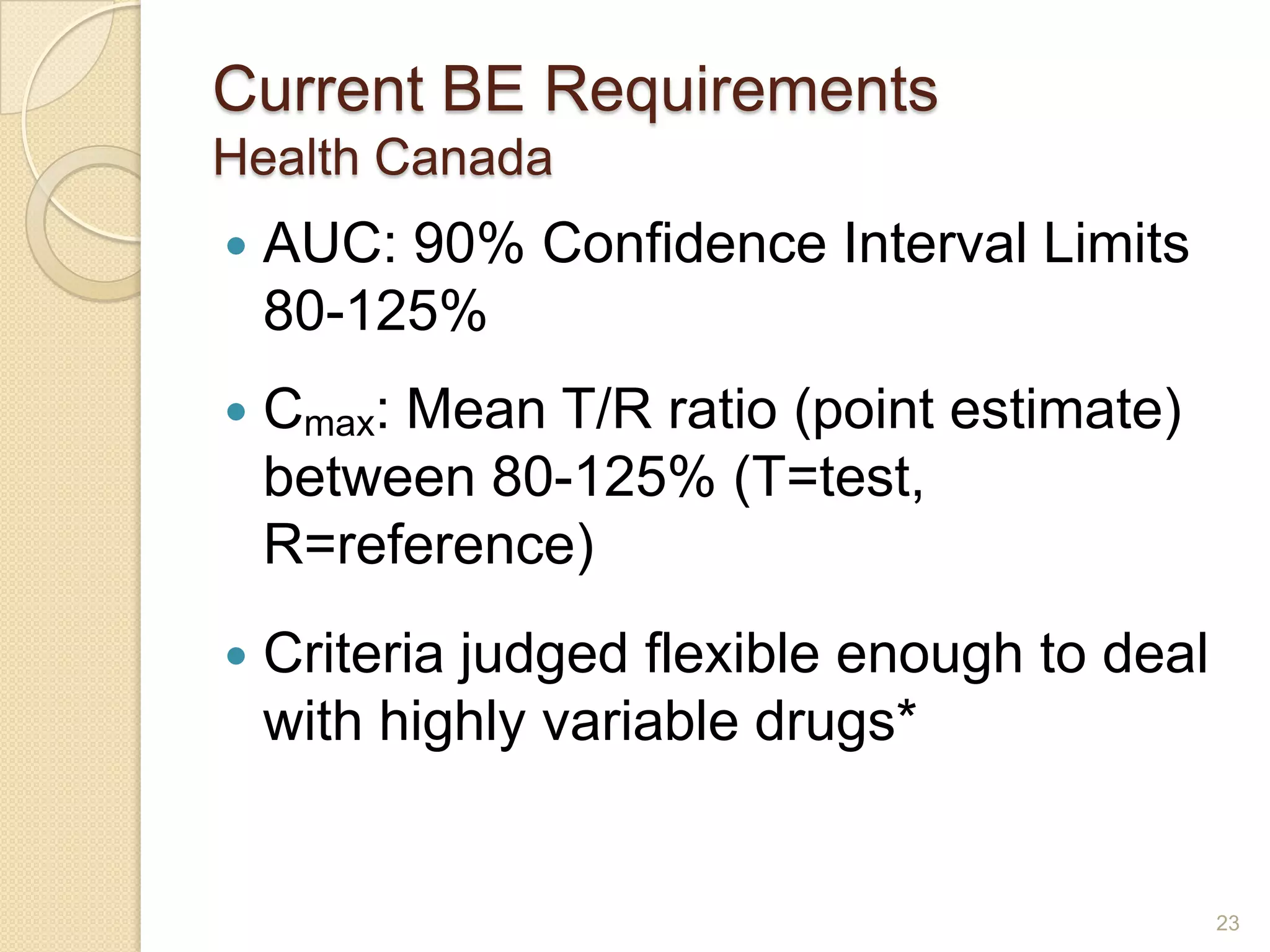
Current BE Requirements
Health Canada
   AUC: 90% Confidence Interval Limits
    80-125%
   Cmax: Mean T/R ratio (point estimate)
    between 80-125% (T=test,
    R=reference)
   Criteria judged flexible enough to deal
    with highly variable drugs*


                                              23
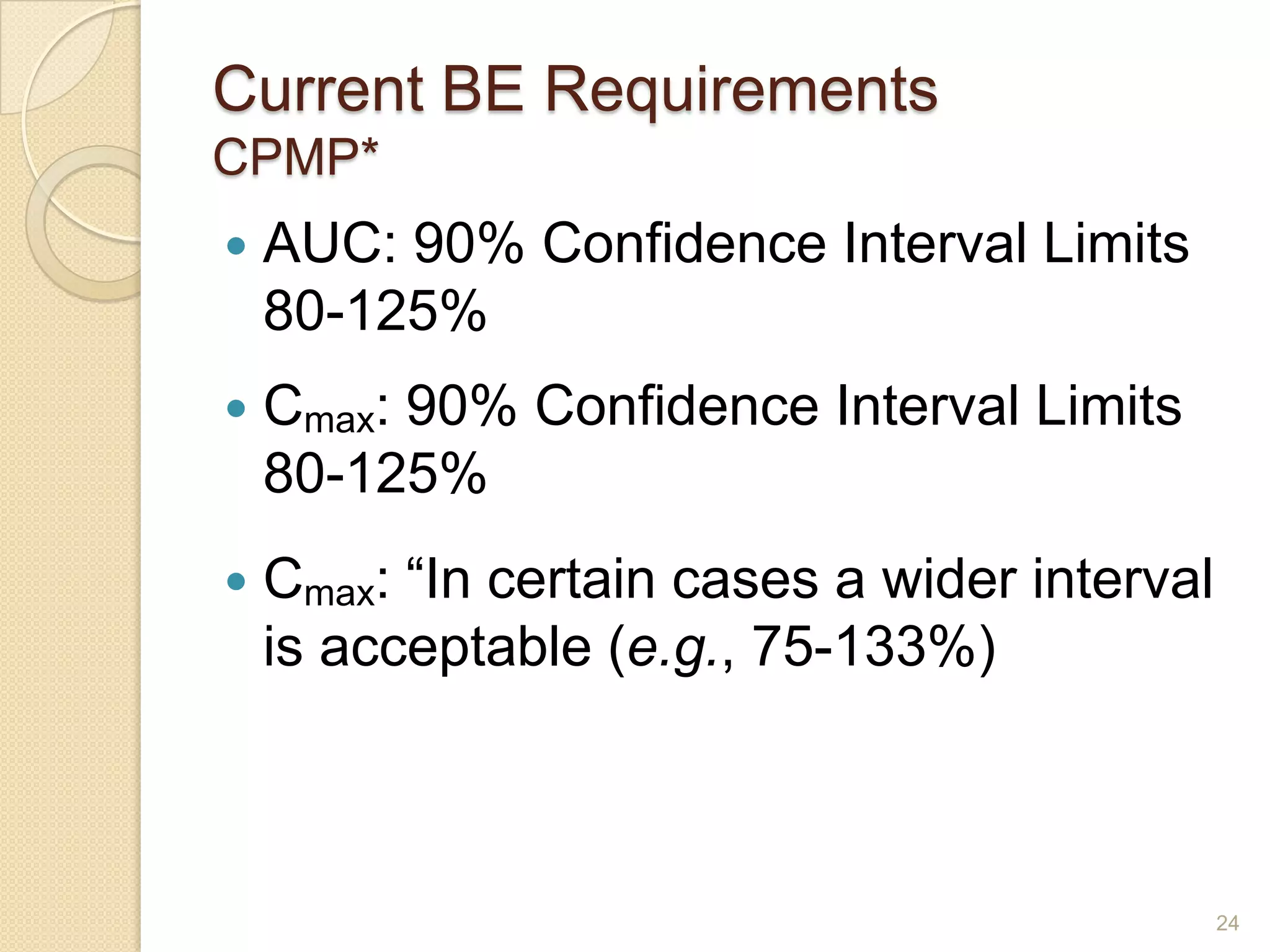
Current BE Requirements
CPMP*
   AUC: 90% Confidence Interval Limits
    80-125%
   Cmax: 90% Confidence Interval Limits
    80-125%
   Cmax: “In certain cases a wider interval
    is acceptable (e.g., 75-133%)


                                               24
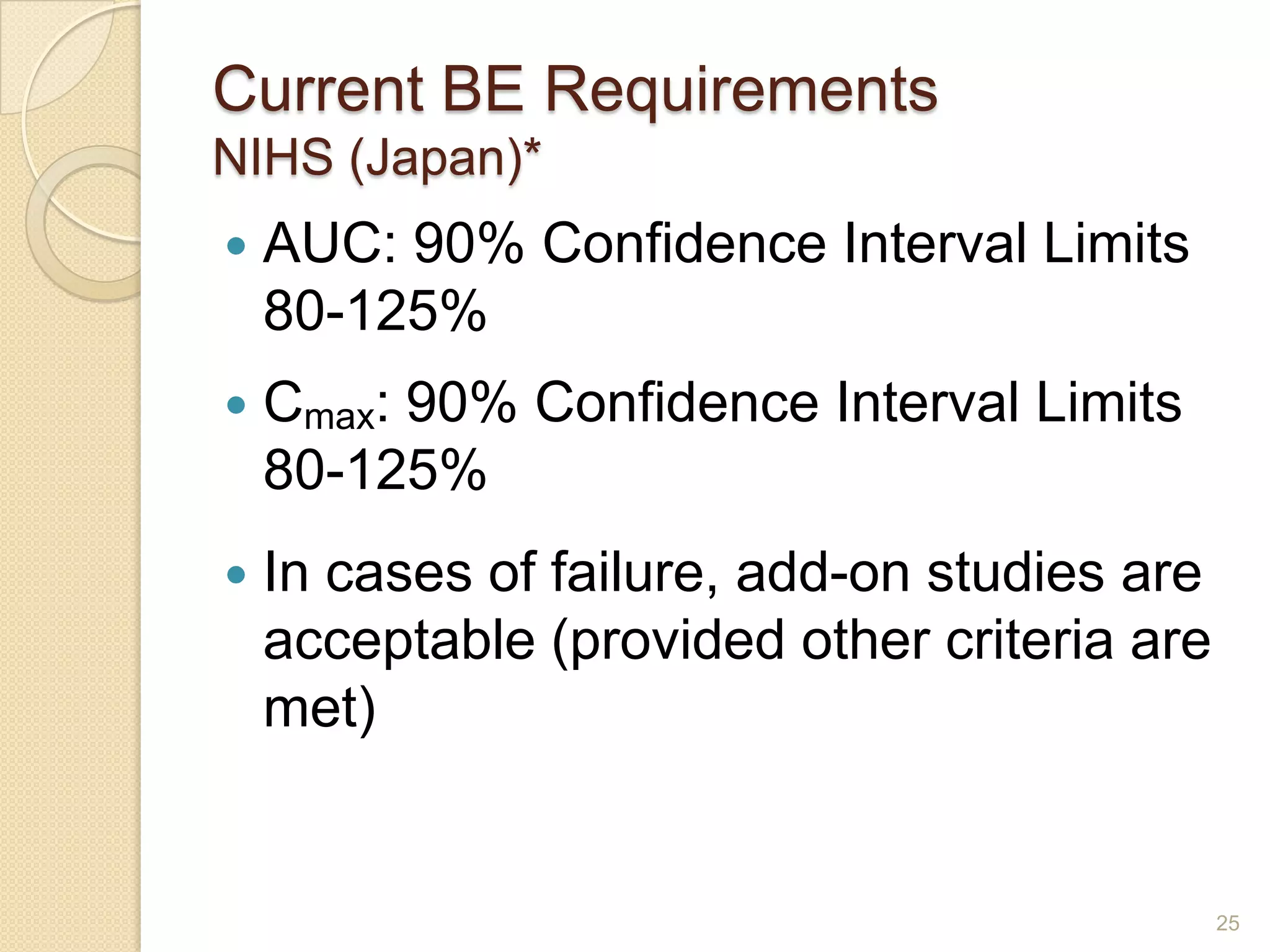
Current BE Requirements
NIHS (Japan)*
   AUC: 90% Confidence Interval Limits
    80-125%
   Cmax: 90% Confidence Interval Limits
    80-125%
   In cases of failure, add-on studies are
    acceptable (provided other criteria are
    met)


                                              25
Study Design: Basic design
consideration
 Minimize variability to formulations
 Minimize bias


To compare performance of two
 products!!!
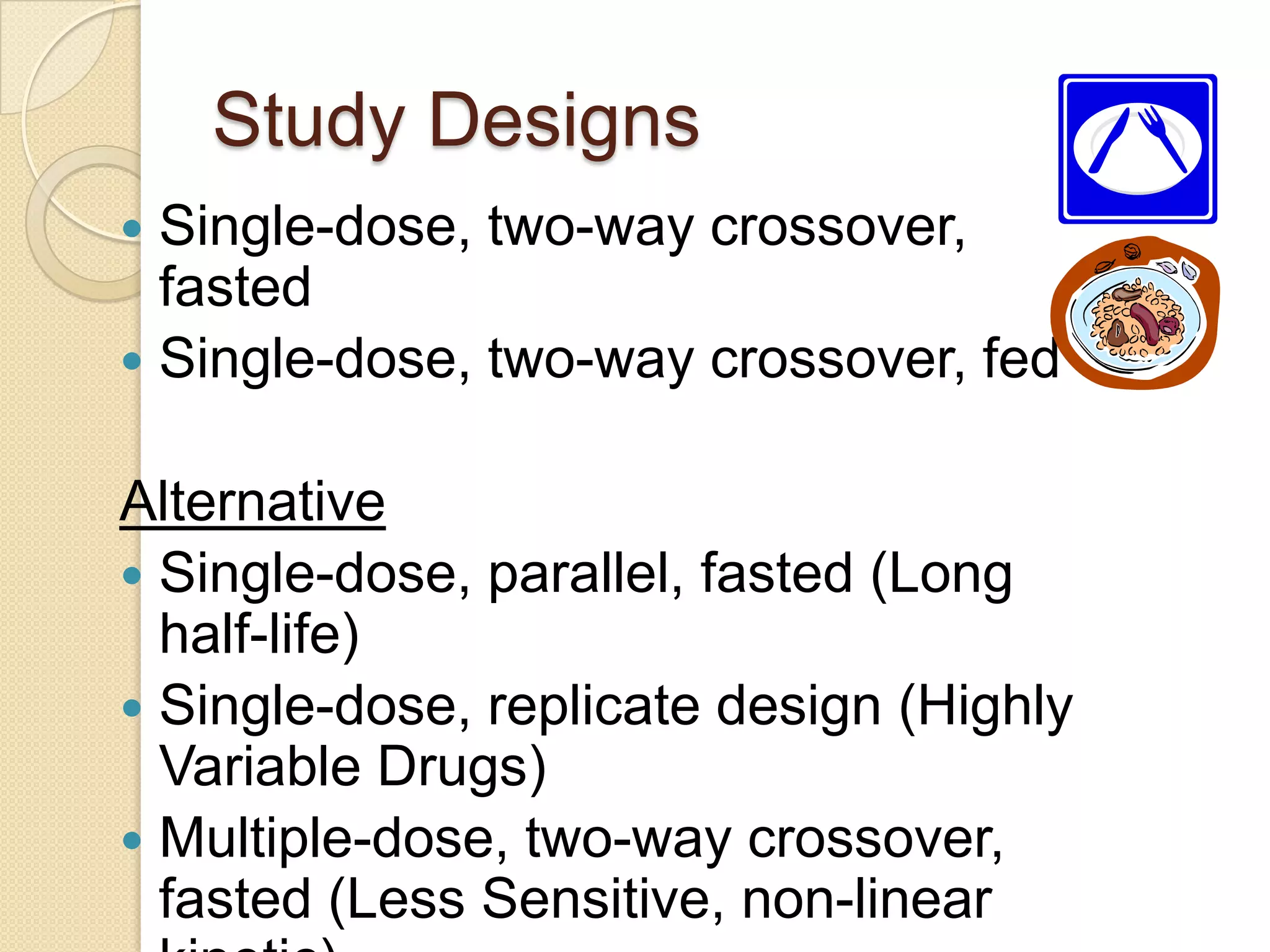
Study Designs
 Single-dose, two-way crossover,
  fasted
 Single-dose, two-way crossover, fed


Alternative
 Single-dose, parallel, fasted (Long
  half-life)
 Single-dose, replicate design (Highly
  Variable Drugs)
 Multiple-dose, two-way crossover,
  fasted (Less Sensitive, non-linear
Study Designs
   Duration of washout period for cross-
    over design
-   should be approximately > 5 times the
    plasma apparent terminal half-life
-   However, should be adjusted
    accordingly for drugs with complex
    kinetic model
Study Designs
 Sample size determination(dose)
- significant level (α = 0.05)
- 20% deviation from the reference
  product
- power > 80%
 Sample time determination
- adequate data points around tmax
- 3 or more time of t1/2 to around AUC0-t
  = at least 80% AUC0-inf
Study Designs
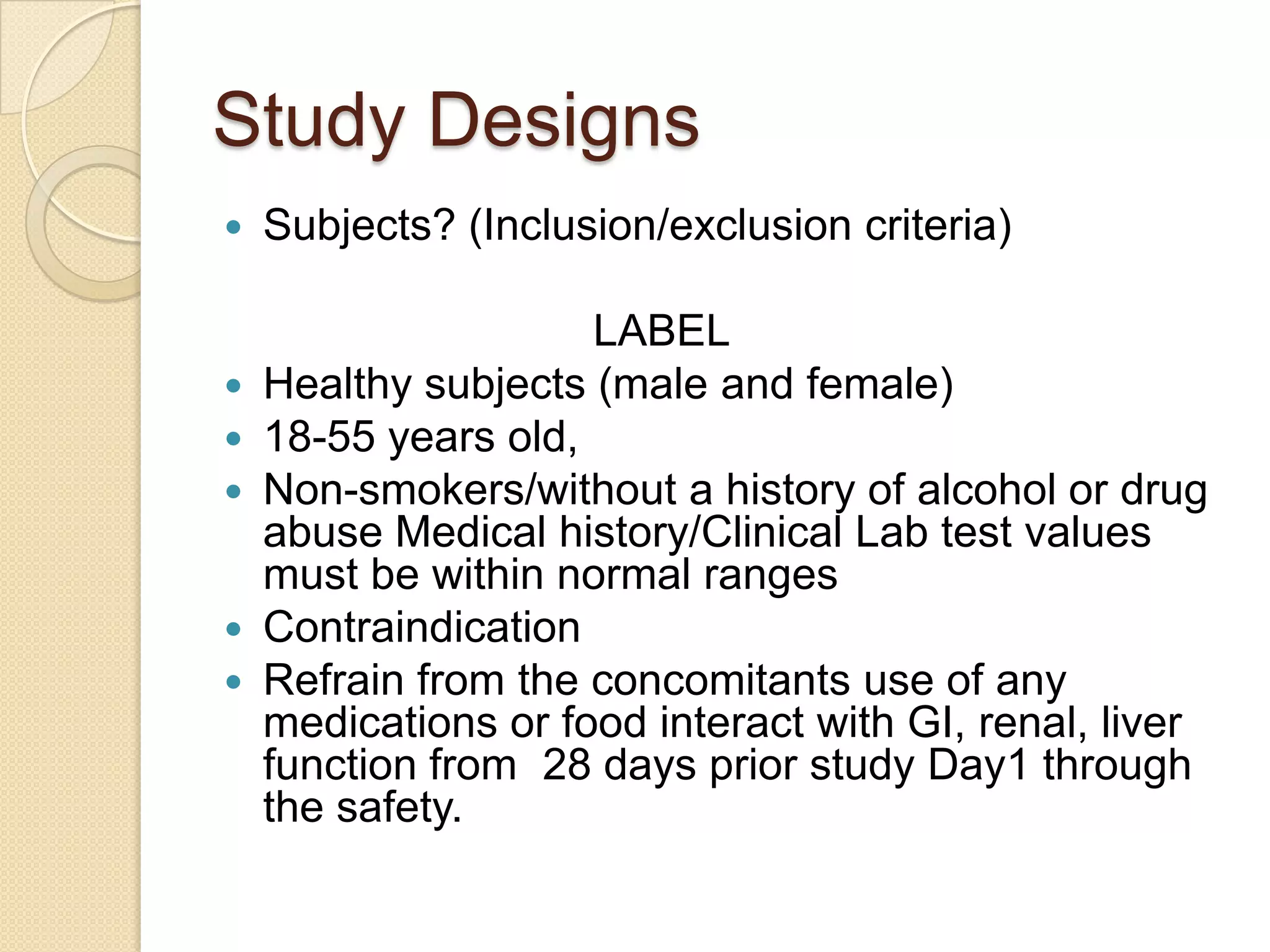
   Subjects? (Inclusion/exclusion criteria)

                     LABEL
   Healthy subjects (male and female)
   18-55 years old,
   Non-smokers/without a history of alcohol or drug
    abuse Medical history/Clinical Lab test values
    must be within normal ranges
   Contraindication
   Refrain from the concomitants use of any
    medications or food interact with GI, renal, liver
    function from 28 days prior study Day1 through
    the safety.
Study Design:
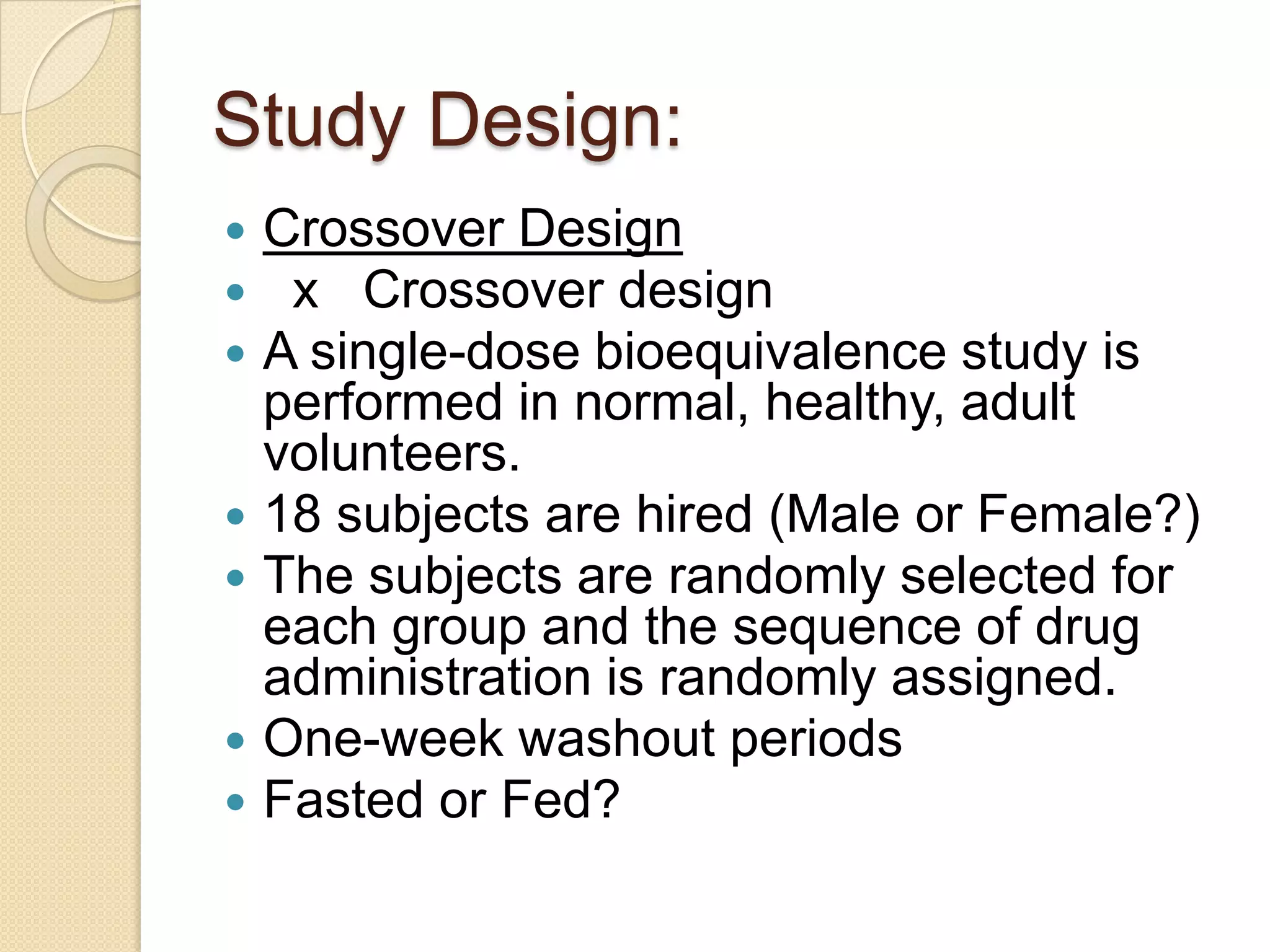
   Crossover Design
    x Crossover design
   A single-dose bioequivalence study is
    performed in normal, healthy, adult
    volunteers.
   18 subjects are hired (Male or Female?)
   The subjects are randomly selected for
    each group and the sequence of drug
    administration is randomly assigned.
   One-week washout periods
   Fasted or Fed?
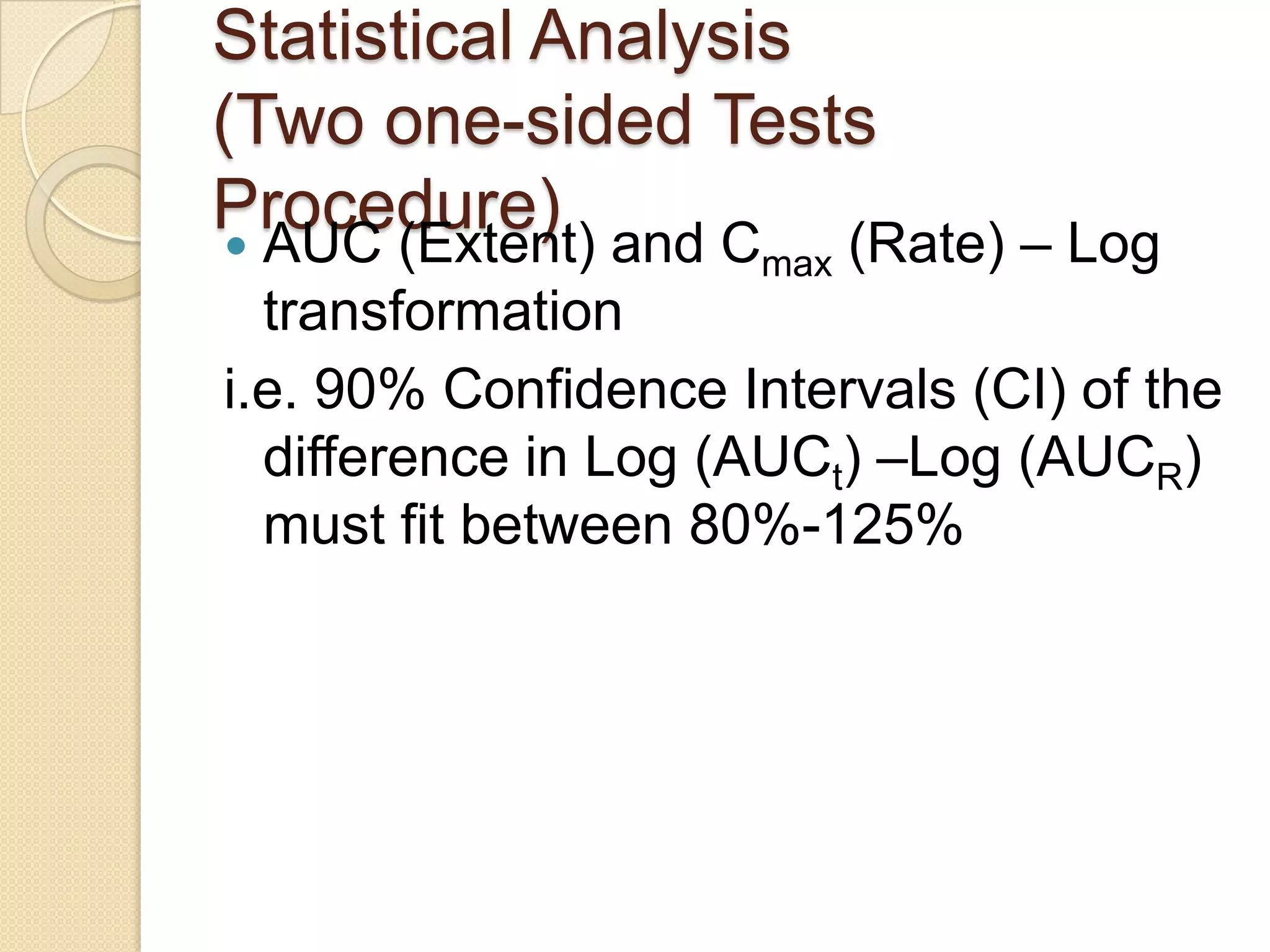
Statistical Analysis
(Two one-sided Tests
Procedure) and C (Rate) – Log
 AUC (Extent)        max
  transformation
i.e. 90% Confidence Intervals (CI) of the
  difference in Log (AUCt) –Log (AUCR)
  must fit between 80%-125%
Bioanalytical Method
Validation
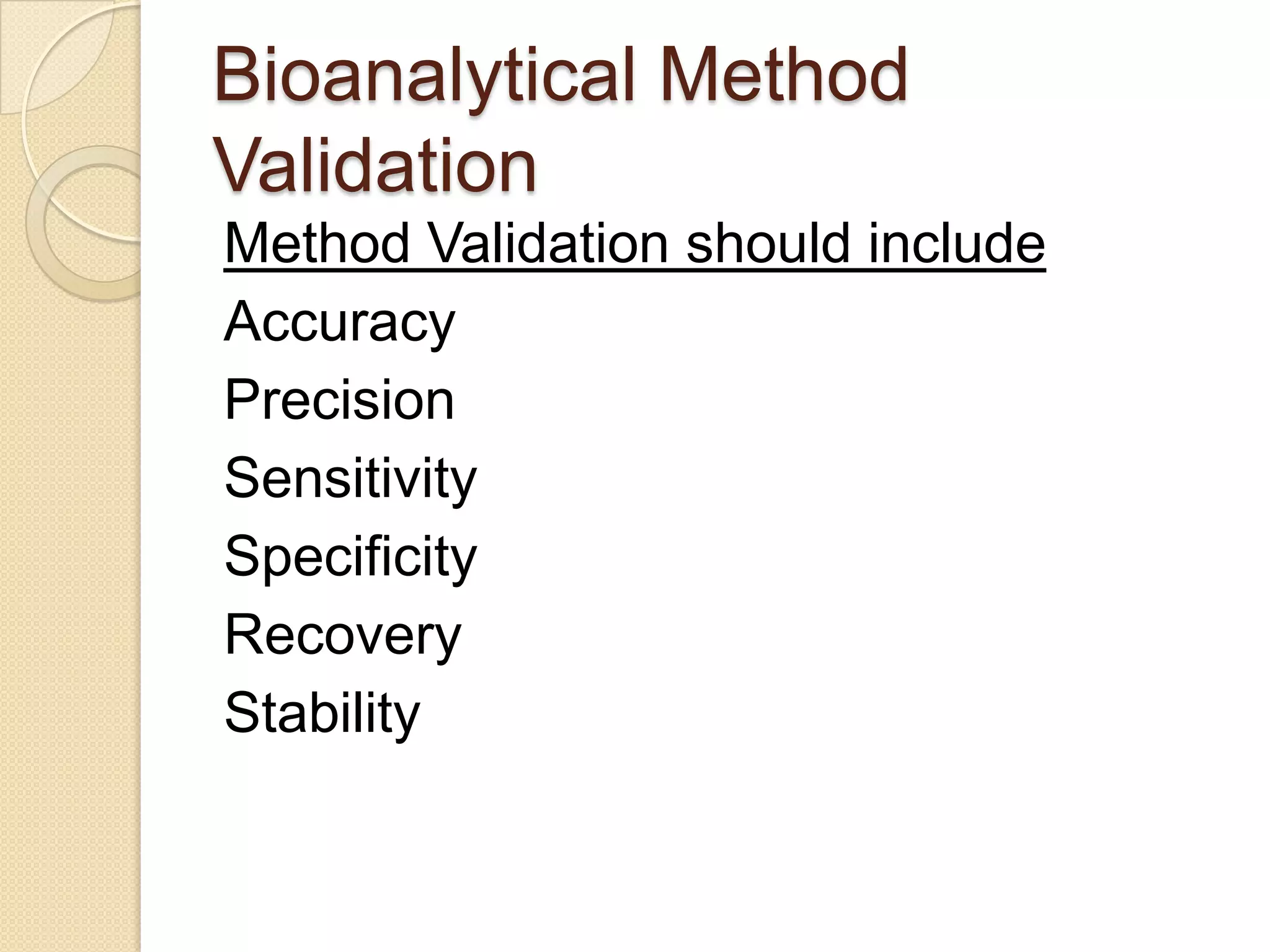
Method Validation should include
Accuracy
Precision
Sensitivity
Specificity
Recovery
Stability
Bioanalytical Method
Validation
Accuracy
Closeness of determined value to the
 true
Value
The acceptance criteria is mean value <
 15% deviation from the true value.

At LOQ(limit of quantification), 20%
 deviation is acceptable
Bioanalytical Method
Validation
 Precision
The closeness of replicate
  determinations of
a sample by an assay
The acceptance criteria is < 15%
  CV,(closeness value) at
20% LOQ(limit of quantification)
Bioanalytical Method
Validation
 Sensitivity
The limit of quantitation is the lowest
concentration which can be measured with
acceptable accuracy and precision
 Selectivity
Ability of the method to measure only what
  it
is intended to measure in the presence of
other components in the sample. Blank
samples of the biological matrix should be
tested for the interfering peak.
Bioanalytical Method
Validation
Recovery
The extraction efficiency of an analytical
process, reported as an percentage of
 the
known amount of an analyte. Recovery
 does not have to be 100% but the
 extent of recovery of internal standard
 and analyte should be consistent.
Bioanalytical Method
Validation
Stability
During, sample collection , sample
 storage
and sample analysis process, the
 stability of
drug in matrix should be conducted
Conclusion
   Establish that a new formulation has
    therapeutic equivalence in the rate
    and extent of absorption to the
    reference drug product.
   Important for linking the commercial
    drug product to clinical trial material at
    time of NDA.
   Important for post-approval changes
    in the marketed drug formulation.
References
   D.M.Brahmankar, S.B.Jaiswal
    Biopharmaceutics and
    Pharmacokinetics A Treatise Vallabh
    Prakashan pg.no.315-363.
Bioavailability and bioequivalence

Bioavailability and bioequivalence

  • 1.
    Under Guidance of Mr. Mali K.K. (Assistant Professor) YSPM, YTC 1
  • 2.
  • 3.
     Ensuring uniformityin standards of quality, efficacy of pharmaceutical products.  BA/BE focus on the release of the drug from the dosage form and absorption in to the systemic circulation.  BE for the comparison of the two drug, several test method are given to determine the equivalence.
  • 4.
    Important Pharmacokinetic Parameters  AUC: area under the concentration-time curve measure of the extent of bioavailability  Cmax: the observed maximum concentration of drug measure of both the rate of absorption and the extent of bioavailability  tmax: the time after administration of drug at which Cmax is observed measure of the rate of absorption
  • 5.
    Plasma concentration time profile Pharmacokinetics conc. vs time concentration Cmax AUC Tmax time
  • 6.
     BIOAVAILABILITY: Itis relative amount of drug from an administered dosage form which enters the systemic circulation and rate at which the drug appears in the systemic circulation.  The extent and rate at which its active moiety is delivered from pharmaceutical form and becomes available in the systemic circulation
  • 7.
    Scheme of OralDosage Form Human Intestinal Absorption (HIA) 1,2 – Stability + Solubility 3 – Passive + Active Tr. 4 – Pgp efflux + CYP 3A4 Oral Bioavailability (%F)
  • 8.
    Why do wecare about BIOAVAILABILITY?  The “true dose” is not the drug swallowed; BUT is the drug available to exert its effect. • Dissolution • Absorption • Survive metabolism
  • 9.
    Why do wecare about BIOAVAILABILITY?  May have a drug with very low bioavailability. • Dosage form or drug may not dissolve readily. • Drug may not be readily pass across biological membranes (i.e. be absorbed). • Drug may be extensively metabolized during absorption process (first-pass, gut wall, liver).  Important component of overall variability i.e. Variable bioavailability may produce variable exposure.
  • 10.
    Pharmaceutical Equivalents  containthe same amount of the same active substance in the same dosage form  meet the same or comparable standards  intended to be administered by the same route Pharmaceutical equivalence by itself does not necessarily imply therapeutic
  • 11.
    Pharmaceutical Equivalents Test Reference Possible Differences  Drug particle size  Excipients  Manufacturing Equipment or Process  Site of manufacture Could lead to differences in product performance in vivo Possible Bioinequivalence
  • 12.
    Bioequivalence Two products arebioequivalent if  they are pharmaceutically equivalent  bioavailabilities (both rate and extent) after administration in the same molar dose are similar to such a degree that their effects can be expected to be essentially the same
  • 13.
    Therapeutic equivalence Two productsare therapeutically equivalent if  pharmaceutically equivalent  their effects, with respect to both efficacy and safety, will be essentially the same as derived from appropriate studies ◦ bioequivalence studies ◦ pharmacodynamic studies ◦ clinical studies ◦ in vitro studies
  • 14.
    Bioequivalence (BE): theabsence of a significant difference in the rate and extent to which the active ingredient or active moiety in pharmaceutical equivalents or pharmaceutical alternatives becomes available at the site of drug action when administered at the same molar dose under similar conditions in an appropriately designed study
  • 15.
    Need of bioequivalence studies  No clinical studies have been performed in patients with the Generic Product to support its Efficacy and Safety.  With data to support similar in vivo performance (= Bioequivalence) Efficacy and Safety data can be extrapolated from the Innovator Product to the Generic Product.
  • 16.
    Bioequivalence (BE): Ultimate: Bioequivalencestudies impact of changes to the dosage form process after pivotal studies commence to ensure product on the market is comparable to that upon which the efficacy is based  Establish that a new formulation has therapeutic equivalence in the rate and extent of absorption to the reference drug product.  Important for linking the commercial drug product to clinical trial material at time of NDA.  Important for post-approval changes in the marketed drug formulation.
  • 17.
    Bioequivalence 90 80 mL) 70 Concentration (ng/ 60 Test/Generic 50 Reference/Brand 40 30 20 10 0 0 5 10 15 20 25 30 Time (hours)
  • 18.
    Goals of BE Ultimate:Bioequivalence studies impact of changes to the dosage form process after pivotal studies commence to ensure product on the market is comparable to that upon which the efficacy is based  Establish that a new formulation has therapeutic equivalence in the rate and extent of absorption to the reference drug product.  Important for linking the commercial drug product to clinical trial material at time of NDA  Important for post-approval changes in the marketed drug formulation
  • 19.
    NDA vs. ANDAReview Process Innovator and generic drug Original Drug Generic Drug NDA Requirements ANDA Requirements 1. Chemistry 1. Chemistry 2. Manufacturing 2. Manufacturing 3. Controls 3. Controls 4. Labeling 4. Labeling 5. Testing 5. Testing 6. Animal Studies 6. Bioequivalence Study (In 7. Clinical Studies Vivo, In vitro) (Bioavailability/Bioequivalence)
  • 20.
    NDA vs. ANDAReview Process  Note: Generic drug applications are termed "abbreviated" because they are generally not required to include preclinical (animal) and clinical (human) data to establish safety and effectiveness.  Instead, generic applicants must scientifically demonstrate that their product is bioequivalent (i.e., performs in the same manner as the original; drug).
  • 21.
    Current BE* Requirements Major Regulatory Agencies  U.S. Food and Drug Administration (FDA)  Health Canada  Committee for Proprietary Medicinal Products (CPMP), Europe  National Institute of Health Sciences (NIHS), Japan *BE = Bioequivalence 21
  • 22.
    Current BE Requirements FDA*  AUC: 90% Confidence Interval Limits 80-125%  Cmax: 90% Confidence Interval Limits 80-125%  Criteria applied to drugs of low and high variability 22
  • 23.
    Current BE Requirements HealthCanada  AUC: 90% Confidence Interval Limits 80-125%  Cmax: Mean T/R ratio (point estimate) between 80-125% (T=test, R=reference)  Criteria judged flexible enough to deal with highly variable drugs* 23
  • 24.
    Current BE Requirements CPMP*  AUC: 90% Confidence Interval Limits 80-125%  Cmax: 90% Confidence Interval Limits 80-125%  Cmax: “In certain cases a wider interval is acceptable (e.g., 75-133%) 24
  • 25.
    Current BE Requirements NIHS(Japan)*  AUC: 90% Confidence Interval Limits 80-125%  Cmax: 90% Confidence Interval Limits 80-125%  In cases of failure, add-on studies are acceptable (provided other criteria are met) 25
  • 26.
    Study Design: Basicdesign consideration  Minimize variability to formulations  Minimize bias To compare performance of two products!!!
  • 27.
    Study Designs  Single-dose,two-way crossover, fasted  Single-dose, two-way crossover, fed Alternative  Single-dose, parallel, fasted (Long half-life)  Single-dose, replicate design (Highly Variable Drugs)  Multiple-dose, two-way crossover, fasted (Less Sensitive, non-linear
  • 28.
    Study Designs  Duration of washout period for cross- over design - should be approximately > 5 times the plasma apparent terminal half-life - However, should be adjusted accordingly for drugs with complex kinetic model
  • 29.
    Study Designs  Samplesize determination(dose) - significant level (α = 0.05) - 20% deviation from the reference product - power > 80%  Sample time determination - adequate data points around tmax - 3 or more time of t1/2 to around AUC0-t = at least 80% AUC0-inf
  • 30.
    Study Designs  Subjects? (Inclusion/exclusion criteria) LABEL  Healthy subjects (male and female)  18-55 years old,  Non-smokers/without a history of alcohol or drug abuse Medical history/Clinical Lab test values must be within normal ranges  Contraindication  Refrain from the concomitants use of any medications or food interact with GI, renal, liver function from 28 days prior study Day1 through the safety.
  • 31.
    Study Design:  Crossover Design  x Crossover design  A single-dose bioequivalence study is performed in normal, healthy, adult volunteers.  18 subjects are hired (Male or Female?)  The subjects are randomly selected for each group and the sequence of drug administration is randomly assigned.  One-week washout periods  Fasted or Fed?
  • 32.
    Statistical Analysis (Two one-sidedTests Procedure) and C (Rate) – Log  AUC (Extent) max transformation i.e. 90% Confidence Intervals (CI) of the difference in Log (AUCt) –Log (AUCR) must fit between 80%-125%
  • 33.
    Bioanalytical Method Validation Method Validationshould include Accuracy Precision Sensitivity Specificity Recovery Stability
  • 34.
    Bioanalytical Method Validation Accuracy Closeness ofdetermined value to the true Value The acceptance criteria is mean value < 15% deviation from the true value. At LOQ(limit of quantification), 20% deviation is acceptable
  • 35.
    Bioanalytical Method Validation  Precision Thecloseness of replicate determinations of a sample by an assay The acceptance criteria is < 15% CV,(closeness value) at 20% LOQ(limit of quantification)
  • 36.
    Bioanalytical Method Validation  Sensitivity Thelimit of quantitation is the lowest concentration which can be measured with acceptable accuracy and precision  Selectivity Ability of the method to measure only what it is intended to measure in the presence of other components in the sample. Blank samples of the biological matrix should be tested for the interfering peak.
  • 37.
    Bioanalytical Method Validation Recovery The extractionefficiency of an analytical process, reported as an percentage of the known amount of an analyte. Recovery does not have to be 100% but the extent of recovery of internal standard and analyte should be consistent.
  • 38.
    Bioanalytical Method Validation Stability During, samplecollection , sample storage and sample analysis process, the stability of drug in matrix should be conducted
  • 39.
    Conclusion  Establish that a new formulation has therapeutic equivalence in the rate and extent of absorption to the reference drug product.  Important for linking the commercial drug product to clinical trial material at time of NDA.  Important for post-approval changes in the marketed drug formulation.
  • 40.
    References  D.M.Brahmankar, S.B.Jaiswal Biopharmaceutics and Pharmacokinetics A Treatise Vallabh Prakashan pg.no.315-363.