
Bioequivalence
Dr. Rupendra K. Bharti
MBBS MD
Reference: U.S. Department of Health and Human Services, Food and Drug Administration
Center for Drug Evaluation and Research (CDER), GUIDELINES ON DRUG BIOEQUIVALENCE
REQUIREMENTS IN THE GCC COUNTRIES, December 2013.
Definition
Birkett (2003) defined bioequivalence by stating that,
"two pharmaceutical products are bioequivalent if they
are pharmaceutically equivalent and their
bioavailabilities (rate and extent of availability) after
administration in the same molar dose are similar to
such a degree that their effects, with respect to both
efficacy and safety, can be expected to be essentially
the same.”
Birkett DJ (2003). "Generics - equal or not?" (PDF). Aust Prescr 26: 85–7.
The United States Food and Drug Administration (FDA)
has defined bioequivalence as, "the absence of a
significant difference in the rate and extent to which the
active ingredient or active moiety in pharmaceutical
equivalents or pharmaceutical alternatives becomes
available at the site of drug action when administered at
the same molar dose under similar conditions in an
appropriately designed study."
Center for Drug Evaluation and Research (2003). "Guidance for Industry: Bioavailability and Bioequivalence Studies for
Orally Administered Drug Products — General Considerations" (PDF). United States Food and Drug Administration.
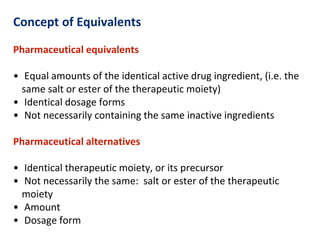
Concept of Equivalents
Pharmaceutical equivalents
• Equal amounts of the identical active drug ingredient, (i.e. the
same salt or ester of the therapeutic moiety)
• Identical dosage forms
• Not necessarily containing the same inactive ingredients
Pharmaceutical alternatives
• Identical therapeutic moiety, or its precursor
• Not necessarily the same: salt or ester of the therapeutic
moiety
• Amount
• Dosage form
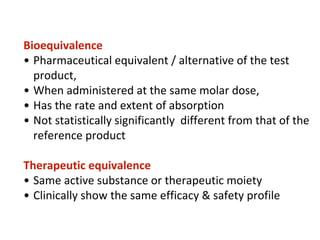
Bioequivalence
• Pharmaceutical equivalent / alternative of the test
product,
• When administered at the same molar dose,
• Has the rate and extent of absorption
• Not statistically significantly different from that of the
reference product
Therapeutic equivalence
• Same active substance or therapeutic moiety
• Clinically show the same efficacy & safety profile
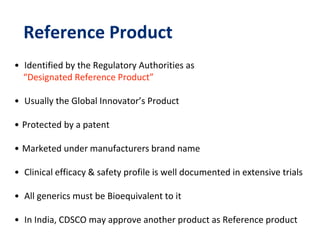
Reference Product
• Identified by the Regulatory Authorities as
“Designated Reference Product”
• Usually the Global Innovator’s Product
• Protected by a patent
• Marketed under manufacturers brand name
• Clinical efficacy & safety profile is well documented in extensive trials
• All generics must be Bioequivalent to it
• In India, CDSCO may approve another product as Reference product
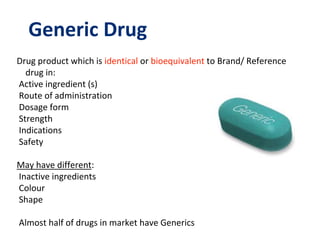
Generic Drug
Drug product which is identical or bioequivalent to Brand/ Reference
drug in:
Active ingredient (s)
Route of administration
Dosage form
Strength
Indications
Safety
May have different:
Inactive ingredients
Colour
Shape
Almost half of drugs in market have Generics
Bioequivalence Background
Using bioequivalence as the basis for approving generic copies in US
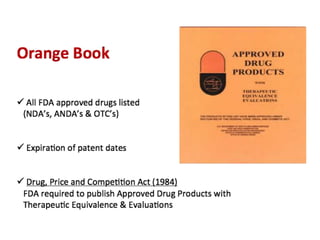
“Drug Price Competition and Patent Term Restoration Act of 1984,” also
known as the Waxman-Hatch Act
Created Generic Industry & ↑ their availability
Most successful legislation
Benefited Brand & Generic firms
Generic firms→ Rely on findings of safety & efficacy of Innovator drug after
Patent expiration
Innovator firms→ Patent extensions of 5yrs to make up for time lost while
their products were going through FDA's approval process
Indian Legislation
In India, CDSCO provides “Guidelines for Bioavailability &
Bioequivalence Studies” mentioned in Schedule Y
As per the Drugs & Cosmetic Rules (IInd Amendment) 2005,
• all bioavailability and bioequivalence studies should be
conducted in accordance to these Guidelines
Requirement of Bioequivalence Studies
For IND/NDAs:
To establish equivalence between:
Early & late clinical trial formulations
Formulations used in clinical trial & stability studies
Clinical trial formulations & to-be-marketed drug product
Any other comparisons, if appropriate
ANDA for a generic drug product
Change in components, composition, &/or manufacturing process
Change in dosage form (capsules to tablet)
Objectives of Bioequivalence Studies
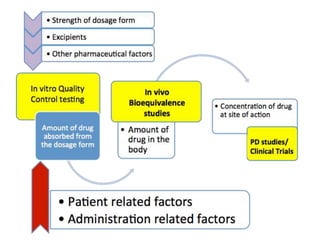
Development of suitable dosage form for a New Drug Entity
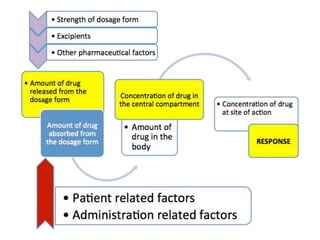
Determination of influence of excipients, patient related factors &
possible interactions with other drugs
Development of new drug formulations of existing drugs
Control of quality of drug products, influence of →
processing factors, storage & stability
Comparison of availability of a drug substance from different form
or same dosage form produced by different manufacturers
When is Bioequivalence not necessary (Biowaivers)
• Parental Solution; same active substance with same concentration, same
excipient
• Oral Solution; same active substance with same concentration, excipient
not affecting GI transit or absorption
• Gas
• Powder for reconstitution as solution; meets criterion (a) or (b)
• Otic/Ophthalmic/Topical Solution; same active substance with same
concentration, same excipient
• Inhalational Product/ Nasal Spray; administered with or w/o same device as
reference product ; prepared as aqueous solution ; same active substance
with same concentration, same excipient
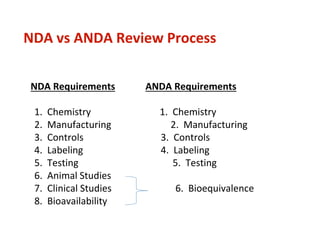
NDA vs ANDA Review Process
NDA Requirements ANDA Requirements
1. Chemistry 1. Chemistry
2. Manufacturing 2. Manufacturing
3. Controls 3. Controls
4. Labeling 4. Labeling
5. Testing 5. Testing
6. Animal Studies
7. Clinical Studies 6. Bioequivalence
8. Bioavailability
Pharmacokinetic Studies
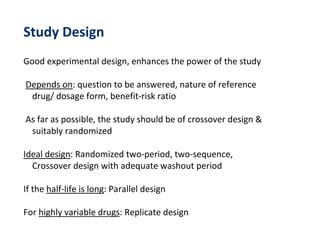
Study Design
Good experimental design, enhances the power of the study
Depends on: question to be answered, nature of reference
drug/ dosage form, benefit-risk ratio
As far as possible, the study should be of crossover design &
suitably randomized
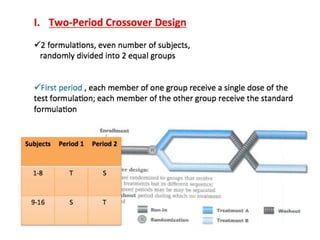
Ideal design: Randomized two-period, two-sequence,
Crossover design with adequate washout period
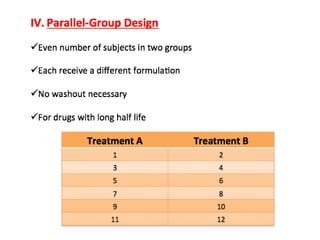
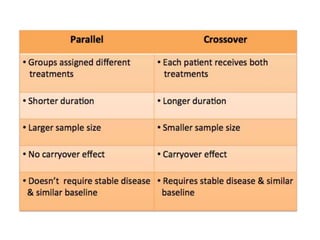
If the half-life is long: Parallel design
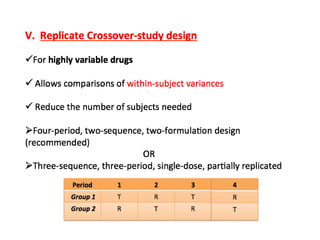
For highly variable drugs: Replicate design
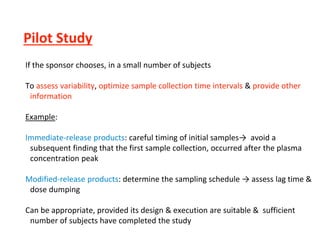
Pilot Study
If the sponsor chooses, in a small number of subjects
To assess variability, optimize sample collection time intervals & provide other
information
Example:
Immediate-release products: careful timing of initial samples→ avoid a
subsequent finding that the first sample collection, occurred after the plasma
concentration peak
Modified-release products: determine the sampling schedule → assess lag time &
dose dumping
Can be appropriate, provided its design & execution are suitable & sufficient
number of subjects have completed the study
Subject selection
Healthy adult volunteers
Age: 18-45 yrs
Age/Sex representation corresponding to therapeutic & safety profile
Weight within normal limits→ BMI
Women: Pregnancy test prior to 1st & last dose of study; OC pills C/I
Drug use intended in Elders (Age >60yrs)
Teratogenic Drugs→ Male volunteers
Highly toxic drugs: Patients with concerned disease (stable) eg. Cancer
Exclusion Criteria
• H/o allergy to test drug
• H/o liver or kidney dysfunction
• H/o jaundice in past 6 months
• Chronic diseases eg. Asthma, arthritis
• Psychiatric illness
• Chronic smoker, alcohol addiction, drug abuse
• Intake of enzyme modifying drug in past 3 months
• Intake of OTC/Prescription drugs past 2 weeks
• HIV positive
• BA & BE studies in past 3 months
• H/o bleeding disorder
Selection of Number of Subjects
Sample size is estimated by:
Pilot experiment
Previous studies
Published data
Significance level desired, usually 0.05
Power of the study, normally 80% or more
Expected deviation (Δ) from the reference product, as compatible with BE
If no data available, reference ratio of 0.95 (Δ = 5%) used
Minimum 16 subjects, unless ethical justification
Allow for drop-outs
Replace drop-outs→ substitute follow same protocol;
similar environment
Sequential/ Add-on Studies→ large no. of subjects
required, results of study do not convey adequate
significance
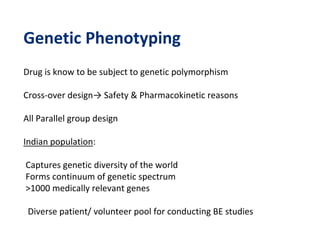
Genetic Phenotyping
Drug is know to be subject to genetic polymorphism
Cross-over design→ Safety & Pharmacokinetic reasons
All Parallel group design
Indian population:
Captures genetic diversity of the world
Forms continuum of genetic spectrum
>1000 medically relevant genes
Diverse patient/ volunteer pool for conducting BE studies
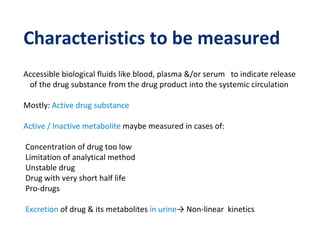
Characteristics to be measured
Accessible biological fluids like blood, plasma &/or serum to indicate release
of the drug substance from the drug product into the systemic circulation
Mostly: Active drug substance
Active / Inactive metabolite maybe measured in cases of:
Concentration of drug too low
Limitation of analytical method
Unstable drug
Drug with very short half life
Pro-drugs
Excretion of drug & its metabolites in urine→ Non-linear kinetics
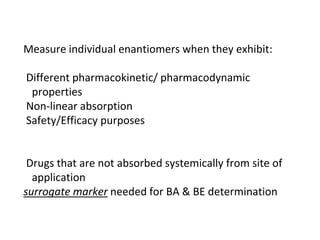
Measure individual enantiomers when they exhibit:
Different pharmacokinetic/ pharmacodynamic
properties
Non-linear absorption
Safety/Efficacy purposes
Drugs that are not absorbed systemically from site of
application
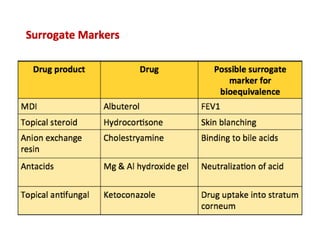
surrogate marker needed for BA & BE determination
Fasting & Fed State Conditions
Fasting Conditions:
Single dose study:
Overnight fast (10 hrs) and subsequent fast of 4 hrs
Multiple dose study:
Two hours fasting before and after the dose
Fed State Studies
Required when:
Drug recommended with food
Modified release product
Assessment of Cmax and Tmax difficult with fasting state study
Requires consumption of a high fat food, 15 minutes before dosing
Provide 950-1000 kcals
Fat- 50%, Proteins 15-20%, Carbohydrate- 30-35%
Ethnic & cultural variation considered
Specified in protocol
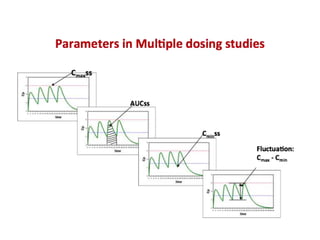
Steady State/ Multiple Dose Studies
Long elimination half life→ Accumulation in the body
Toxic drugs requiring multiple dose therapy
Some Modified-release drugs
Combination products
Drugs inducing own metabolism
Drugs showing non-linear pharmacokinetics
Disadvantages:
Difficult to conduct
Costly
Longer monitoring
Longer exposure to drug
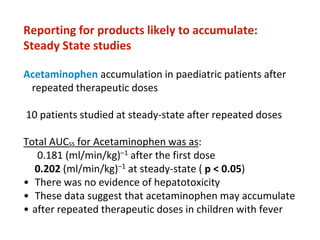
Reporting for products likely to accumulate:
Steady State studies
Acetaminophen accumulation in paediatric patients after
repeated therapeutic doses
10 patients studied at steady-state after repeated doses
Total AUCss for Acetaminophen was as:
0.181 (ml/min/kg)–1 after the first dose
0.202 (ml/min/kg)–1 at steady-state ( p < 0.05)
• There was no evidence of hepatotoxicity
• These data suggest that acetaminophen may accumulate
• after repeated therapeutic doses in children with fever
Modified-release drug products
Drug release characteristics of time course &/or release
location
Chosen to achieve therapeutic &/or convenience objectives
not
offered by immediate release forms
Includes:
Delayed release
Sustained release
Mixed immediate & sustained release
Mixed delayed & sustained release
Mixed immediate & delayed release
Should meet following criteria:
• Meet the label claims
• Preclude any dose-dumping
Provide therapeutic equivalence with:
• Multiple doses of reference product
OR
• Reference modified release formulation
• Produce plasma levels within therapeutic range
Study Design for Modified Release formulation
Unlikely to accumulate:
First market entry: Comparison between Single dose of Modified release
preparation & Immediate release formulation as per established dose
regimen
Subsequent market entry
Comparison with Reference Modified release product
Likely to accumulate:
• Both single & steady state doses of Modified Release formulation
• Compared with immediate release formulation as per established
• Dose regimen
Effect of food:
Not known/ Known that food affects absorption:
Two way cross over studies both in Fasting & Fed state
Known that it not affected by food:
Three way cross over study done with
Reference product in Fasting state
Test product in Fasting state
Test product in Fed state
Pharmacodynamic
Studies
Measurement of effect on a Patho-physiological process as a
function of time, after administration of 2 different products
Necessity:
Quantitative analysis in plasma or urine not possible with
sufficient accuracy & sensitivity
Drug concentrations are not surrogate endpoints
e.g. Topical formulations without systemic absorption
In situations of ‘Superiority Claims’
In case only Pharmacodynamic data is collected→ other
methods tried & why they were unsuitable
Special considerations while conducting this study:
Response measured→ Pharmacological/ Therapeutic effect→
relevant to Efficacy/ Safety of drug
Methodology validated→ Precision, accuracy, reproducibility,
specificity
Neither should produce a maximal response→
not possible to distinguish differences between formulations
given in those doses
Response measured “quantitatively” under double-blind
conditions,
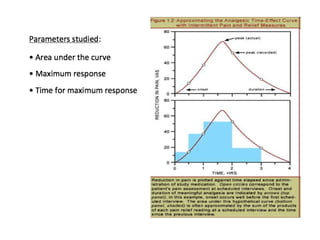
on repetitive basis, to record pharmacodynamic events→
Pharmacodynamic effect curve
Eg: Heart rate, pupil diameter, BP
Non Responders excluded by prior screening
If Placebo effect can occur→ 3rd Stage with Placebo
treatment in study
design
In Patients→ Underlying Pathology & Natural-history
considered
Conventional acceptance range → defined in protocol,
case to case basis
Orlistat capsule formulations
Orlistat acts in the lumen of the stomach & small intestine,
by binding lipases→ inhibits absorption of dietary fat
18 subjects were randomized for a parallel study
Given different Orlistat formulations for 10 days, with high fat diet
Fecal fat excretion over 24 hours→ endpoint for therapeutic
equivalence
Ratio of FFE(24) of the generic to the innovator formulation : 99.1%
with 90% confidence intervals of 83.8 -114.5%
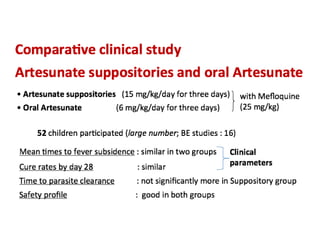
Comparative Clinical Studies
Necessity:
Both pharmacokinetic & pharmacodynamic parameters
not properly measurable or not feasible
Mention which methods were tried & found unsuitable
Statistical principles to be considered:
No. of patients→ Variability of assessed parameters &
acceptance range
Much higher than BE studies
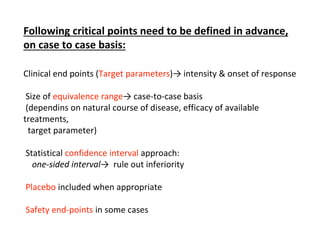
Following critical points need to be defined in advance,
on case to case basis:
Clinical end points (Target parameters)→ intensity & onset of response
Size of equivalence range→ case-to-case basis
(dependins on natural course of disease, efficacy of available
treatments,
target parameter)
Statistical confidence interval approach:
one-sided interval→ rule out inferiority
Placebo included when appropriate
Safety end-points in some cases
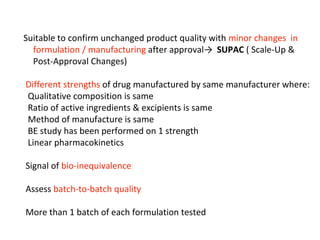
Suitable to confirm unchanged product quality with minor changes in
formulation / manufacturing after approval→ SUPAC ( Scale-Up &
Post-Approval Changes)
Different strengths of drug manufactured by same manufacturer where:
Qualitative composition is same
Ratio of active ingredients & excipients is same
Method of manufacture is same
BE study has been performed on 1 strength
Linear pharmacokinetics
Signal of bio-inequivalence
Assess batch-to-batch quality
More than 1 batch of each formulation tested
Design should include:
Individually testing of atleast 12 dosage units of each batch →
Mean & Individual results with Sd or SE
Measurement of percentage of content released at suitably spaced
time points
(eg. At 10, 20 & 30 mins or appropriate for complete dissolution)
Dissolution profile in atleast 3 aqueous media with pH range of
1.0-6.8 Or 1.0-8.0 wherever necessary
Conduct tests on each batch with same apparatus & on same or
consecutive days
Dissolution testing should be carried out in:
USP Apparatus I at 100 rpm or Apparatus II at 50 rpm
using 900 ml of the following dissolution media:
0.1N HCl or Simulated Gastric Fluid USP without enzymes
a pH 4.5 buffer
a pH 6.8 buffer or Simulated Intestinal Fluid USP without enzymes
For capsules and tablets with gelatin coating
Simulated Gastric and Intestinal Fluids USP (with enzymes)
can be used
Advantages offered
Reduced costs:
Data anticipates Bioequivalence
Type II error ++ for PK studies
More direct assessment:
If complicated in-vivo assessment
Ethical benefit:
No unnecessary human study
Conclusion
Concept of BE has been adopted by the pharmaceutical industry &
national regulatory authorities throughout the world for over 20
years
There is a continuing attempt to understand & develop more
efficient & scientifically valid approaches to assess bioequivalence
of various dosage forms including some of the tough complex
special dosage forms
Bioequivalence industry always existed in India→ become more
matured now
Changes in patent laws has added tremendous fuel to this growth
Generics help patients by making drugs available at affordable
price while retaining their quality
Balance public interests especially in diseases like Cancer & AIDs
which have high prevalence in developing countries &
patented
drugs are steeply priced
Value of drugs going off-patent in the regulated market is
estimated at US $ 70-80 billions in next 5 years
Translated into increased opportunities for Indian
Pharmaceutical Industry → Export of generics to the regulated
markets
thank’s

Bioequivalence

  • 1.
    Bioequivalence Dr. Rupendra K.Bharti MBBS MD Reference: U.S. Department of Health and Human Services, Food and Drug Administration Center for Drug Evaluation and Research (CDER), GUIDELINES ON DRUG BIOEQUIVALENCE REQUIREMENTS IN THE GCC COUNTRIES, December 2013.
  • 2.
    Definition Birkett (2003) definedbioequivalence by stating that, "two pharmaceutical products are bioequivalent if they are pharmaceutically equivalent and their bioavailabilities (rate and extent of availability) after administration in the same molar dose are similar to such a degree that their effects, with respect to both efficacy and safety, can be expected to be essentially the same.” Birkett DJ (2003). "Generics - equal or not?" (PDF). Aust Prescr 26: 85–7.
  • 3.
    The United StatesFood and Drug Administration (FDA) has defined bioequivalence as, "the absence of a significant difference in the rate and extent to which the active ingredient or active moiety in pharmaceutical equivalents or pharmaceutical alternatives becomes available at the site of drug action when administered at the same molar dose under similar conditions in an appropriately designed study." Center for Drug Evaluation and Research (2003). "Guidance for Industry: Bioavailability and Bioequivalence Studies for Orally Administered Drug Products — General Considerations" (PDF). United States Food and Drug Administration.
  • 4.
    Concept of Equivalents Pharmaceuticalequivalents • Equal amounts of the identical active drug ingredient, (i.e. the same salt or ester of the therapeutic moiety) • Identical dosage forms • Not necessarily containing the same inactive ingredients Pharmaceutical alternatives • Identical therapeutic moiety, or its precursor • Not necessarily the same: salt or ester of the therapeutic moiety • Amount • Dosage form
  • 5.
    Bioequivalence • Pharmaceutical equivalent/ alternative of the test product, • When administered at the same molar dose, • Has the rate and extent of absorption • Not statistically significantly different from that of the reference product Therapeutic equivalence • Same active substance or therapeutic moiety • Clinically show the same efficacy & safety profile
  • 8.
    Reference Product • Identifiedby the Regulatory Authorities as “Designated Reference Product” • Usually the Global Innovator’s Product • Protected by a patent • Marketed under manufacturers brand name • Clinical efficacy & safety profile is well documented in extensive trials • All generics must be Bioequivalent to it • In India, CDSCO may approve another product as Reference product
  • 9.
    Generic Drug Drug productwhich is identical or bioequivalent to Brand/ Reference drug in: Active ingredient (s) Route of administration Dosage form Strength Indications Safety May have different: Inactive ingredients Colour Shape Almost half of drugs in market have Generics
  • 12.
    Bioequivalence Background Using bioequivalenceas the basis for approving generic copies in US “Drug Price Competition and Patent Term Restoration Act of 1984,” also known as the Waxman-Hatch Act Created Generic Industry & ↑ their availability Most successful legislation Benefited Brand & Generic firms Generic firms→ Rely on findings of safety & efficacy of Innovator drug after Patent expiration Innovator firms→ Patent extensions of 5yrs to make up for time lost while their products were going through FDA's approval process
  • 13.
    Indian Legislation In India,CDSCO provides “Guidelines for Bioavailability & Bioequivalence Studies” mentioned in Schedule Y As per the Drugs & Cosmetic Rules (IInd Amendment) 2005, • all bioavailability and bioequivalence studies should be conducted in accordance to these Guidelines
  • 14.
    Requirement of BioequivalenceStudies For IND/NDAs: To establish equivalence between: Early & late clinical trial formulations Formulations used in clinical trial & stability studies Clinical trial formulations & to-be-marketed drug product Any other comparisons, if appropriate ANDA for a generic drug product Change in components, composition, &/or manufacturing process Change in dosage form (capsules to tablet)
  • 15.
    Objectives of BioequivalenceStudies Development of suitable dosage form for a New Drug Entity Determination of influence of excipients, patient related factors & possible interactions with other drugs Development of new drug formulations of existing drugs Control of quality of drug products, influence of → processing factors, storage & stability Comparison of availability of a drug substance from different form or same dosage form produced by different manufacturers
  • 16.
    When is Bioequivalencenot necessary (Biowaivers) • Parental Solution; same active substance with same concentration, same excipient • Oral Solution; same active substance with same concentration, excipient not affecting GI transit or absorption • Gas • Powder for reconstitution as solution; meets criterion (a) or (b) • Otic/Ophthalmic/Topical Solution; same active substance with same concentration, same excipient • Inhalational Product/ Nasal Spray; administered with or w/o same device as reference product ; prepared as aqueous solution ; same active substance with same concentration, same excipient
  • 17.
    NDA vs ANDAReview Process NDA Requirements ANDA Requirements 1. Chemistry 1. Chemistry 2. Manufacturing 2. Manufacturing 3. Controls 3. Controls 4. Labeling 4. Labeling 5. Testing 5. Testing 6. Animal Studies 7. Clinical Studies 6. Bioequivalence 8. Bioavailability
  • 20.
  • 21.
    Study Design Good experimentaldesign, enhances the power of the study Depends on: question to be answered, nature of reference drug/ dosage form, benefit-risk ratio As far as possible, the study should be of crossover design & suitably randomized Ideal design: Randomized two-period, two-sequence, Crossover design with adequate washout period If the half-life is long: Parallel design For highly variable drugs: Replicate design
  • 28.
    Pilot Study If thesponsor chooses, in a small number of subjects To assess variability, optimize sample collection time intervals & provide other information Example: Immediate-release products: careful timing of initial samples→ avoid a subsequent finding that the first sample collection, occurred after the plasma concentration peak Modified-release products: determine the sampling schedule → assess lag time & dose dumping Can be appropriate, provided its design & execution are suitable & sufficient number of subjects have completed the study
  • 29.
    Subject selection Healthy adultvolunteers Age: 18-45 yrs Age/Sex representation corresponding to therapeutic & safety profile Weight within normal limits→ BMI Women: Pregnancy test prior to 1st & last dose of study; OC pills C/I Drug use intended in Elders (Age >60yrs) Teratogenic Drugs→ Male volunteers Highly toxic drugs: Patients with concerned disease (stable) eg. Cancer
  • 30.
    Exclusion Criteria • H/oallergy to test drug • H/o liver or kidney dysfunction • H/o jaundice in past 6 months • Chronic diseases eg. Asthma, arthritis • Psychiatric illness • Chronic smoker, alcohol addiction, drug abuse • Intake of enzyme modifying drug in past 3 months • Intake of OTC/Prescription drugs past 2 weeks • HIV positive • BA & BE studies in past 3 months • H/o bleeding disorder
  • 31.
    Selection of Numberof Subjects Sample size is estimated by: Pilot experiment Previous studies Published data Significance level desired, usually 0.05 Power of the study, normally 80% or more Expected deviation (Δ) from the reference product, as compatible with BE If no data available, reference ratio of 0.95 (Δ = 5%) used Minimum 16 subjects, unless ethical justification
  • 32.
    Allow for drop-outs Replacedrop-outs→ substitute follow same protocol; similar environment Sequential/ Add-on Studies→ large no. of subjects required, results of study do not convey adequate significance
  • 33.
    Genetic Phenotyping Drug isknow to be subject to genetic polymorphism Cross-over design→ Safety & Pharmacokinetic reasons All Parallel group design Indian population: Captures genetic diversity of the world Forms continuum of genetic spectrum >1000 medically relevant genes Diverse patient/ volunteer pool for conducting BE studies
  • 34.
    Characteristics to bemeasured Accessible biological fluids like blood, plasma &/or serum to indicate release of the drug substance from the drug product into the systemic circulation Mostly: Active drug substance Active / Inactive metabolite maybe measured in cases of: Concentration of drug too low Limitation of analytical method Unstable drug Drug with very short half life Pro-drugs Excretion of drug & its metabolites in urine→ Non-linear kinetics
  • 35.
    Measure individual enantiomerswhen they exhibit: Different pharmacokinetic/ pharmacodynamic properties Non-linear absorption Safety/Efficacy purposes Drugs that are not absorbed systemically from site of application surrogate marker needed for BA & BE determination
  • 37.
    Fasting & FedState Conditions Fasting Conditions: Single dose study: Overnight fast (10 hrs) and subsequent fast of 4 hrs Multiple dose study: Two hours fasting before and after the dose
  • 38.
    Fed State Studies Requiredwhen: Drug recommended with food Modified release product Assessment of Cmax and Tmax difficult with fasting state study Requires consumption of a high fat food, 15 minutes before dosing Provide 950-1000 kcals Fat- 50%, Proteins 15-20%, Carbohydrate- 30-35% Ethnic & cultural variation considered Specified in protocol
  • 39.
    Steady State/ MultipleDose Studies Long elimination half life→ Accumulation in the body Toxic drugs requiring multiple dose therapy Some Modified-release drugs Combination products Drugs inducing own metabolism Drugs showing non-linear pharmacokinetics
  • 40.
    Disadvantages: Difficult to conduct Costly Longermonitoring Longer exposure to drug
  • 42.
    Reporting for productslikely to accumulate: Steady State studies Acetaminophen accumulation in paediatric patients after repeated therapeutic doses 10 patients studied at steady-state after repeated doses Total AUCss for Acetaminophen was as: 0.181 (ml/min/kg)–1 after the first dose 0.202 (ml/min/kg)–1 at steady-state ( p < 0.05) • There was no evidence of hepatotoxicity • These data suggest that acetaminophen may accumulate • after repeated therapeutic doses in children with fever
  • 44.
    Modified-release drug products Drugrelease characteristics of time course &/or release location Chosen to achieve therapeutic &/or convenience objectives not offered by immediate release forms Includes: Delayed release Sustained release Mixed immediate & sustained release Mixed delayed & sustained release Mixed immediate & delayed release
  • 45.
    Should meet followingcriteria: • Meet the label claims • Preclude any dose-dumping Provide therapeutic equivalence with: • Multiple doses of reference product OR • Reference modified release formulation • Produce plasma levels within therapeutic range
  • 46.
    Study Design forModified Release formulation Unlikely to accumulate: First market entry: Comparison between Single dose of Modified release preparation & Immediate release formulation as per established dose regimen Subsequent market entry Comparison with Reference Modified release product Likely to accumulate: • Both single & steady state doses of Modified Release formulation • Compared with immediate release formulation as per established • Dose regimen
  • 47.
    Effect of food: Notknown/ Known that food affects absorption: Two way cross over studies both in Fasting & Fed state Known that it not affected by food: Three way cross over study done with Reference product in Fasting state Test product in Fasting state Test product in Fed state
  • 49.
  • 50.
    Measurement of effecton a Patho-physiological process as a function of time, after administration of 2 different products Necessity: Quantitative analysis in plasma or urine not possible with sufficient accuracy & sensitivity Drug concentrations are not surrogate endpoints e.g. Topical formulations without systemic absorption In situations of ‘Superiority Claims’ In case only Pharmacodynamic data is collected→ other methods tried & why they were unsuitable
  • 51.
    Special considerations whileconducting this study: Response measured→ Pharmacological/ Therapeutic effect→ relevant to Efficacy/ Safety of drug Methodology validated→ Precision, accuracy, reproducibility, specificity Neither should produce a maximal response→ not possible to distinguish differences between formulations given in those doses Response measured “quantitatively” under double-blind conditions, on repetitive basis, to record pharmacodynamic events→ Pharmacodynamic effect curve Eg: Heart rate, pupil diameter, BP
  • 53.
    Non Responders excludedby prior screening If Placebo effect can occur→ 3rd Stage with Placebo treatment in study design In Patients→ Underlying Pathology & Natural-history considered Conventional acceptance range → defined in protocol, case to case basis
  • 54.
    Orlistat capsule formulations Orlistatacts in the lumen of the stomach & small intestine, by binding lipases→ inhibits absorption of dietary fat 18 subjects were randomized for a parallel study Given different Orlistat formulations for 10 days, with high fat diet Fecal fat excretion over 24 hours→ endpoint for therapeutic equivalence Ratio of FFE(24) of the generic to the innovator formulation : 99.1% with 90% confidence intervals of 83.8 -114.5%
  • 55.
  • 56.
    Necessity: Both pharmacokinetic &pharmacodynamic parameters not properly measurable or not feasible Mention which methods were tried & found unsuitable Statistical principles to be considered: No. of patients→ Variability of assessed parameters & acceptance range Much higher than BE studies
  • 57.
    Following critical pointsneed to be defined in advance, on case to case basis: Clinical end points (Target parameters)→ intensity & onset of response Size of equivalence range→ case-to-case basis (dependins on natural course of disease, efficacy of available treatments, target parameter) Statistical confidence interval approach: one-sided interval→ rule out inferiority Placebo included when appropriate Safety end-points in some cases
  • 60.
    Suitable to confirmunchanged product quality with minor changes in formulation / manufacturing after approval→ SUPAC ( Scale-Up & Post-Approval Changes) Different strengths of drug manufactured by same manufacturer where: Qualitative composition is same Ratio of active ingredients & excipients is same Method of manufacture is same BE study has been performed on 1 strength Linear pharmacokinetics Signal of bio-inequivalence Assess batch-to-batch quality More than 1 batch of each formulation tested
  • 61.
    Design should include: Individuallytesting of atleast 12 dosage units of each batch → Mean & Individual results with Sd or SE Measurement of percentage of content released at suitably spaced time points (eg. At 10, 20 & 30 mins or appropriate for complete dissolution) Dissolution profile in atleast 3 aqueous media with pH range of 1.0-6.8 Or 1.0-8.0 wherever necessary Conduct tests on each batch with same apparatus & on same or consecutive days
  • 62.
    Dissolution testing shouldbe carried out in: USP Apparatus I at 100 rpm or Apparatus II at 50 rpm using 900 ml of the following dissolution media: 0.1N HCl or Simulated Gastric Fluid USP without enzymes a pH 4.5 buffer a pH 6.8 buffer or Simulated Intestinal Fluid USP without enzymes For capsules and tablets with gelatin coating Simulated Gastric and Intestinal Fluids USP (with enzymes) can be used
  • 63.
    Advantages offered Reduced costs: Dataanticipates Bioequivalence Type II error ++ for PK studies More direct assessment: If complicated in-vivo assessment Ethical benefit: No unnecessary human study
  • 64.
    Conclusion Concept of BEhas been adopted by the pharmaceutical industry & national regulatory authorities throughout the world for over 20 years There is a continuing attempt to understand & develop more efficient & scientifically valid approaches to assess bioequivalence of various dosage forms including some of the tough complex special dosage forms Bioequivalence industry always existed in India→ become more matured now Changes in patent laws has added tremendous fuel to this growth
  • 65.
    Generics help patientsby making drugs available at affordable price while retaining their quality Balance public interests especially in diseases like Cancer & AIDs which have high prevalence in developing countries & patented drugs are steeply priced Value of drugs going off-patent in the regulated market is estimated at US $ 70-80 billions in next 5 years Translated into increased opportunities for Indian Pharmaceutical Industry → Export of generics to the regulated markets
  • 66.