 DEFINITIONS
 METHODS OF ASSESSMENT
 DESIGN OF STUDY
 EVALUATION OF DATA
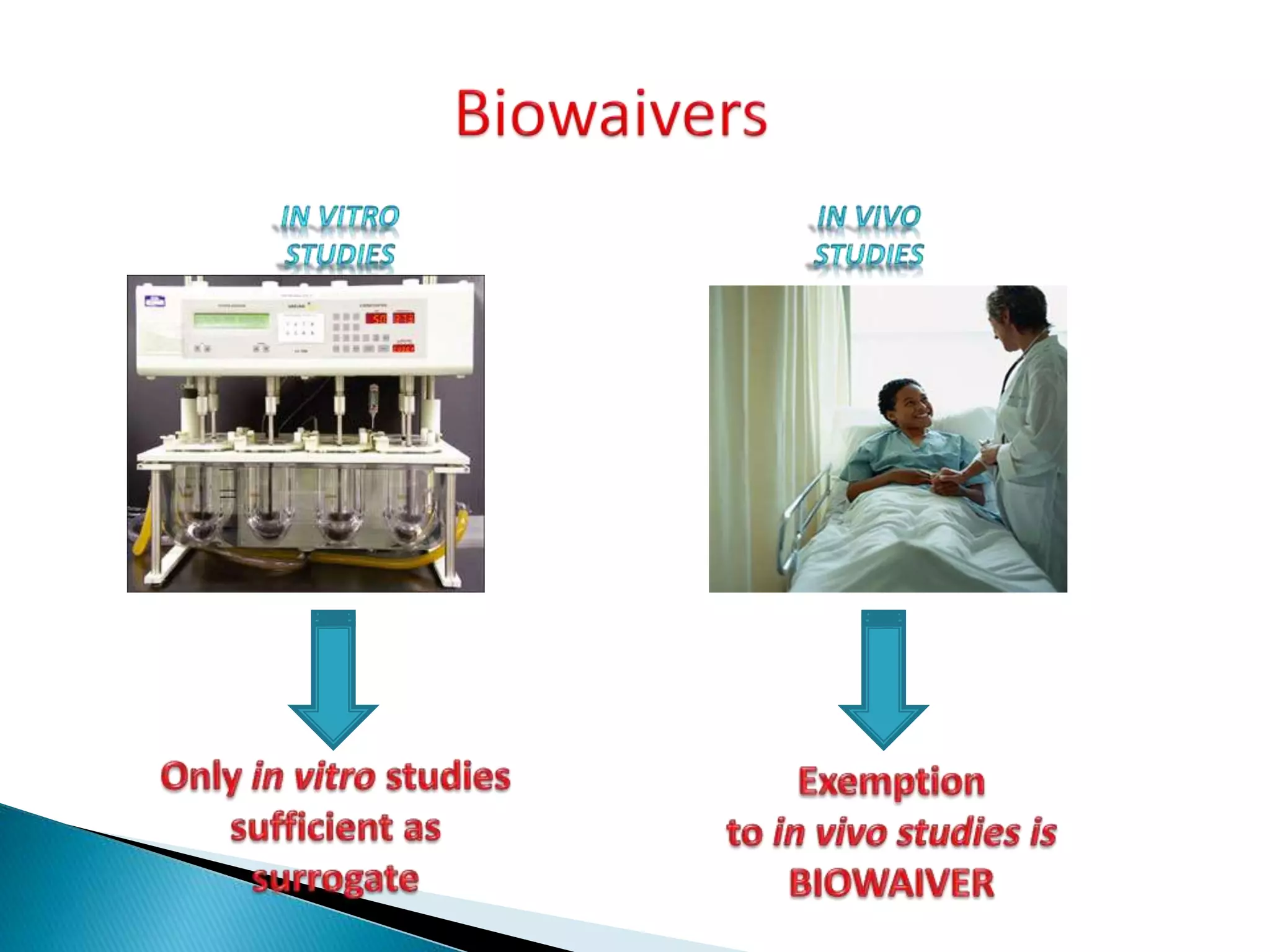
 BIOWAIVERS
 BCS
2
BIOAVAILABILITY: According to 2003 FDA guidance,
‘ Bioavailabilty is defined as the rate and extent to which the active
ingredient or active moiety is absorbed from a drug product and
becomes available at the site of action. For the products that are not
intended to be absorbed into blood stream, bioavailability may be
assessed by measurement intended to reflect the rate and extent to
which the active ingredient or active ingredient or active moiety
becomes available at the sit of action .'
In other words, it is the fraction of administered dose that actually
reaches the systemic circulation
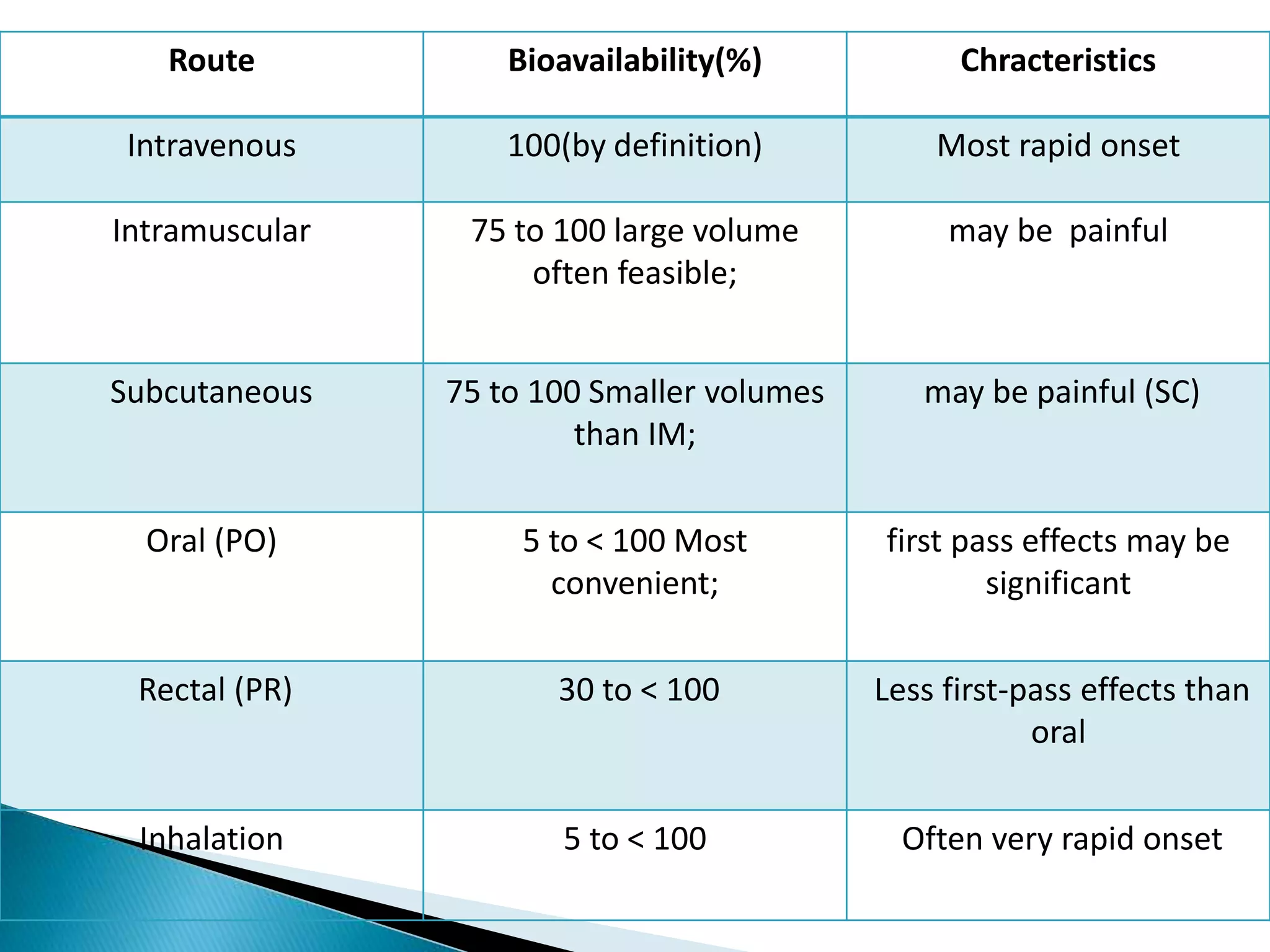
Route Bioavailability(%) Chracteristics
Intravenous 100(by definition) Most rapid onset
Intramuscular 75 to 100 large volume
often feasible;
may be painful
Subcutaneous 75 to 100 Smaller volumes
than IM;
may be painful (SC)
Oral (PO) 5 to < 100 Most
convenient;
first pass effects may be
significant
Rectal (PR) 30 to < 100 Less first-pass effects than
oral
Inhalation 5 to < 100 Often very rapid onset
 Primary stages of development of a suitable dosage for a new
drug entity.
 Development of a new formulations of the existing drugs.
 Control of quality of a drug product during the early stages of
marketing in order to determine the influence of processing
factors, storage and stability on drug absorption.
 Useful in determining the safety and efficacy of the drug product.
Two products are bioequivalent if
◦ they are pharmaceutically equivalent
◦ both rate and extent after administration in the same
molar dose are similar to such a degree that their
effects can be expected to be essentially the same.
6
 For drugs products that are not intended to be absorbed
into the bloodstream :
1. other in-vivo or in-vitro test methods may be used to
demonstrate bioequivalence,
2. in- vitro bioequivalence standard may be used, especially
when such an in-vitro test has been correlated with
human in-vivo bioavailability data,
3. in other cases B.E may be demonstrated through
comparative clinical trials or pharmacodynamic studies.
7
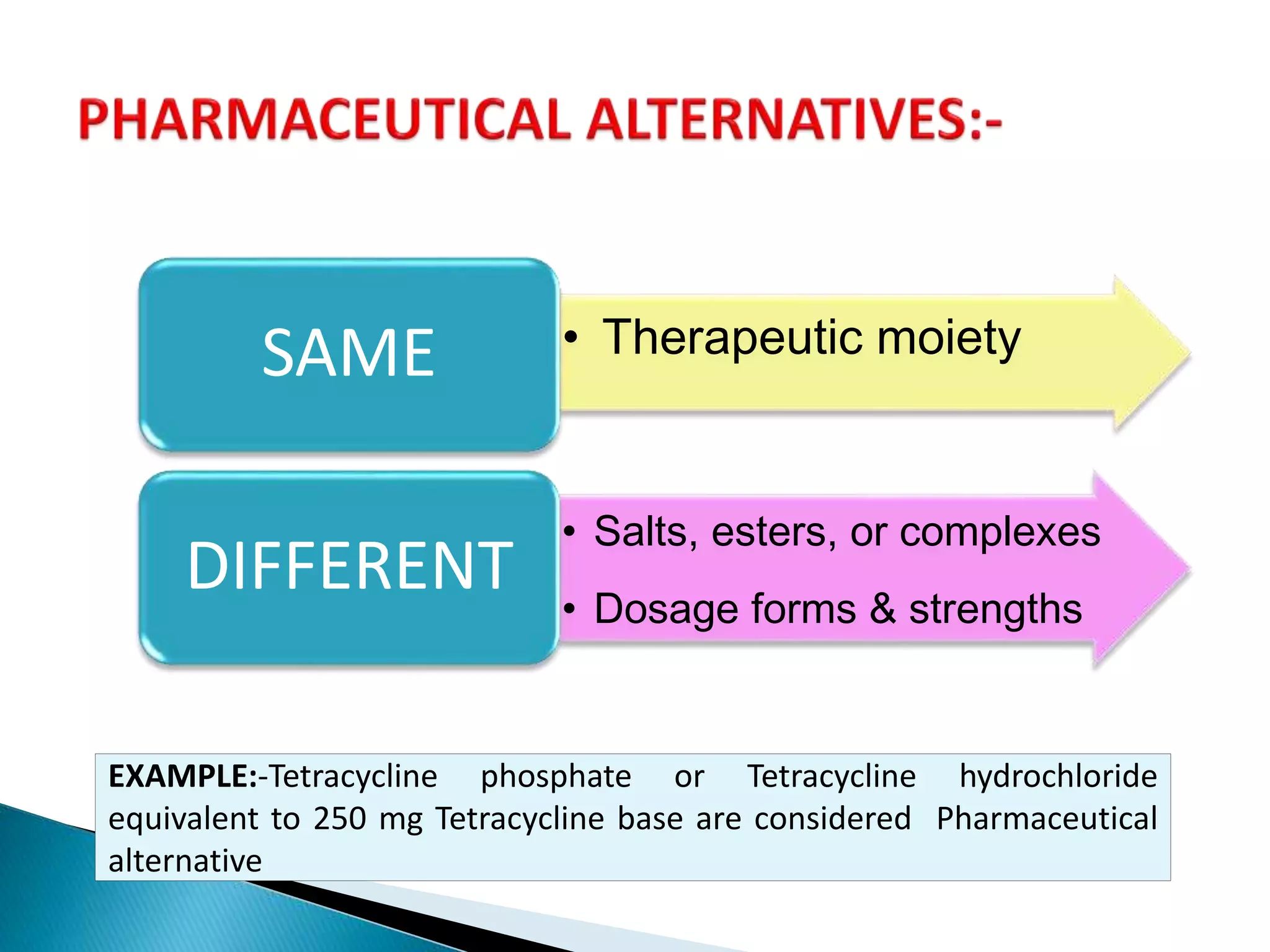
• Therapeutic moietySAME
• Salts, esters, or complexes
• Dosage forms & strengths
DIFFERENT
EXAMPLE:-Tetracycline phosphate or Tetracycline hydrochloride
equivalent to 250 mg Tetracycline base are considered Pharmaceutical
alternative
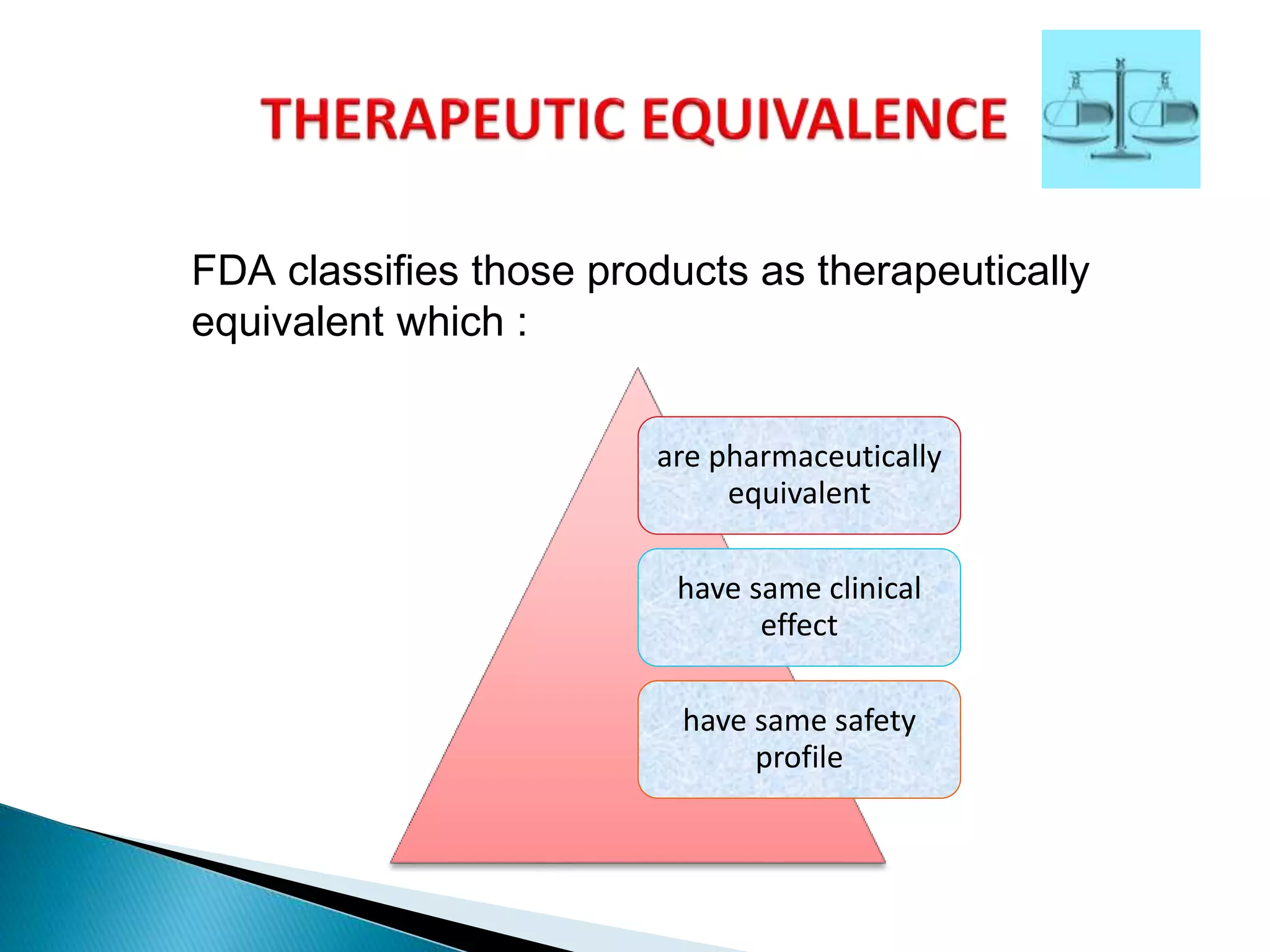
are pharmaceutically
equivalent
have same clinical
effect
have same safety
profile
FDA classifies those products as therapeutically
equivalent which :
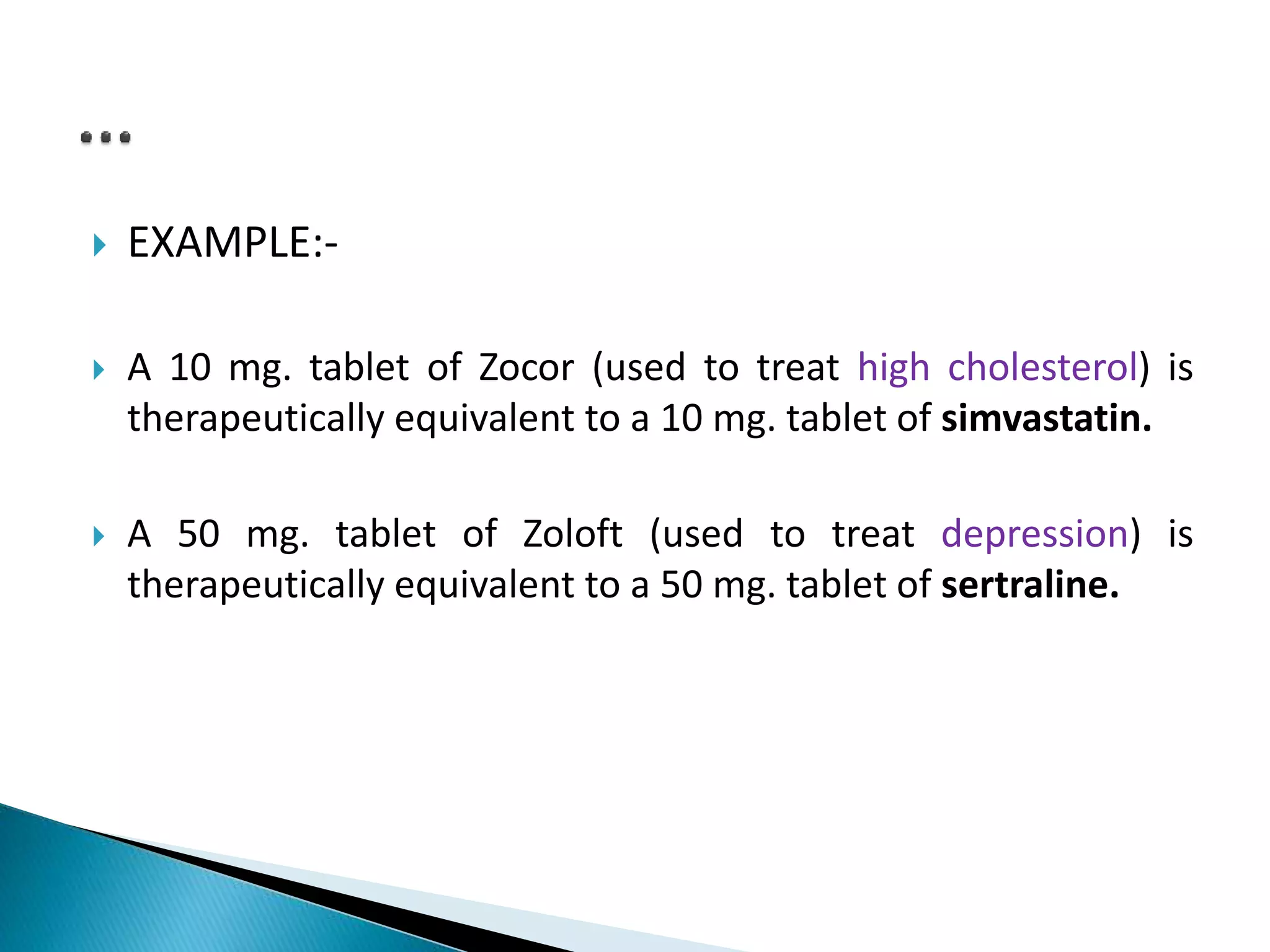
 EXAMPLE:-
 A 10 mg. tablet of Zocor (used to treat high cholesterol) is
therapeutically equivalent to a 10 mg. tablet of simvastatin.
 A 50 mg. tablet of Zoloft (used to treat depression) is
therapeutically equivalent to a 50 mg. tablet of sertraline.
Drug products containing different active ingredients that are
indicated for the same therapeutic or clinical objectives.
For example:-
Cimetidine may be given instead of Rantidine
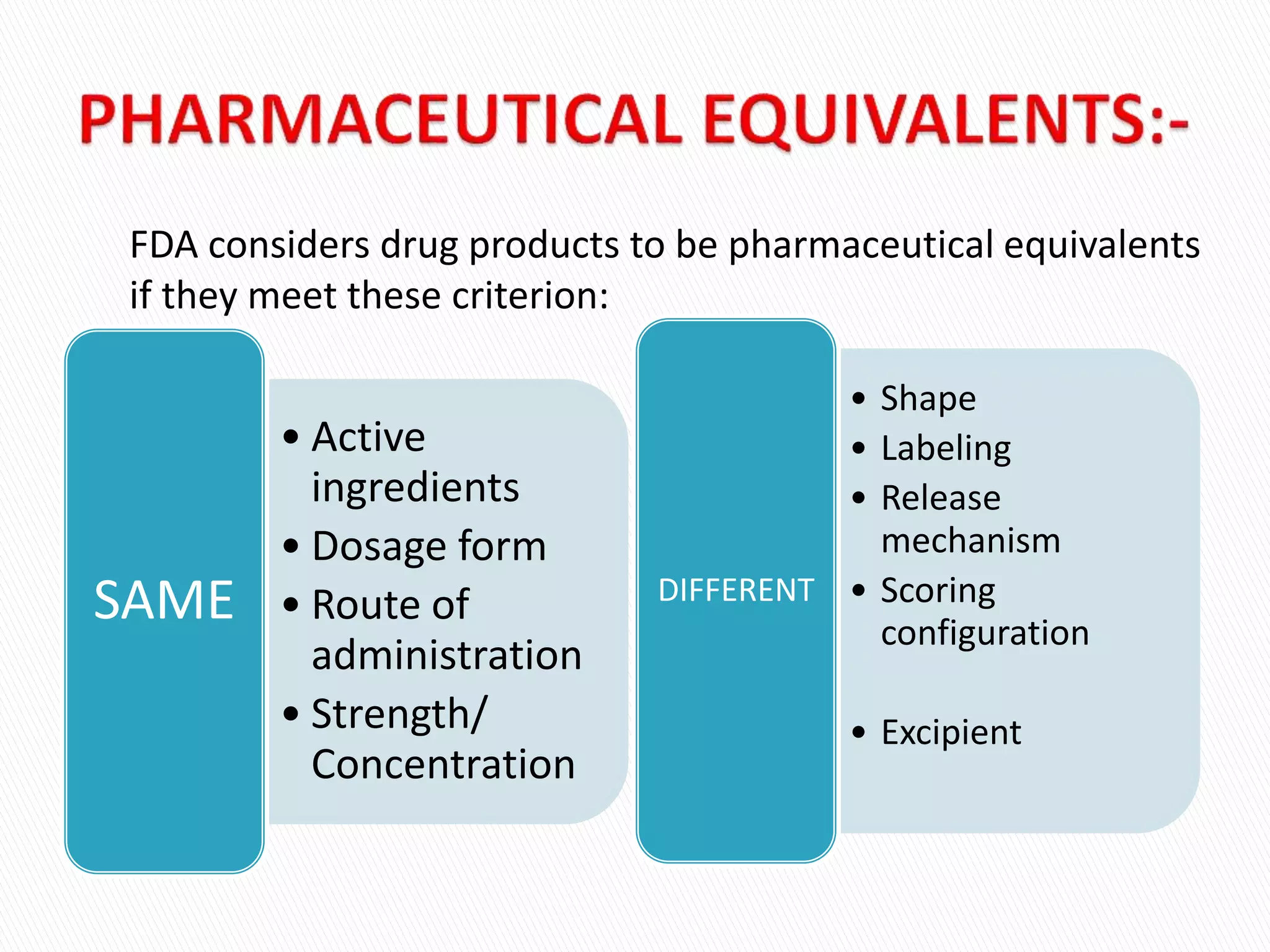
• Active
ingredients
• Dosage form
• Route of
administration
• Strength/
Concentration
SAME
• Shape
• Labeling
• Release
mechanism
• Scoring
configuration
• Excipient
DIFFERENT
FDA considers drug products to be pharmaceutical equivalents
if they meet these criterion:
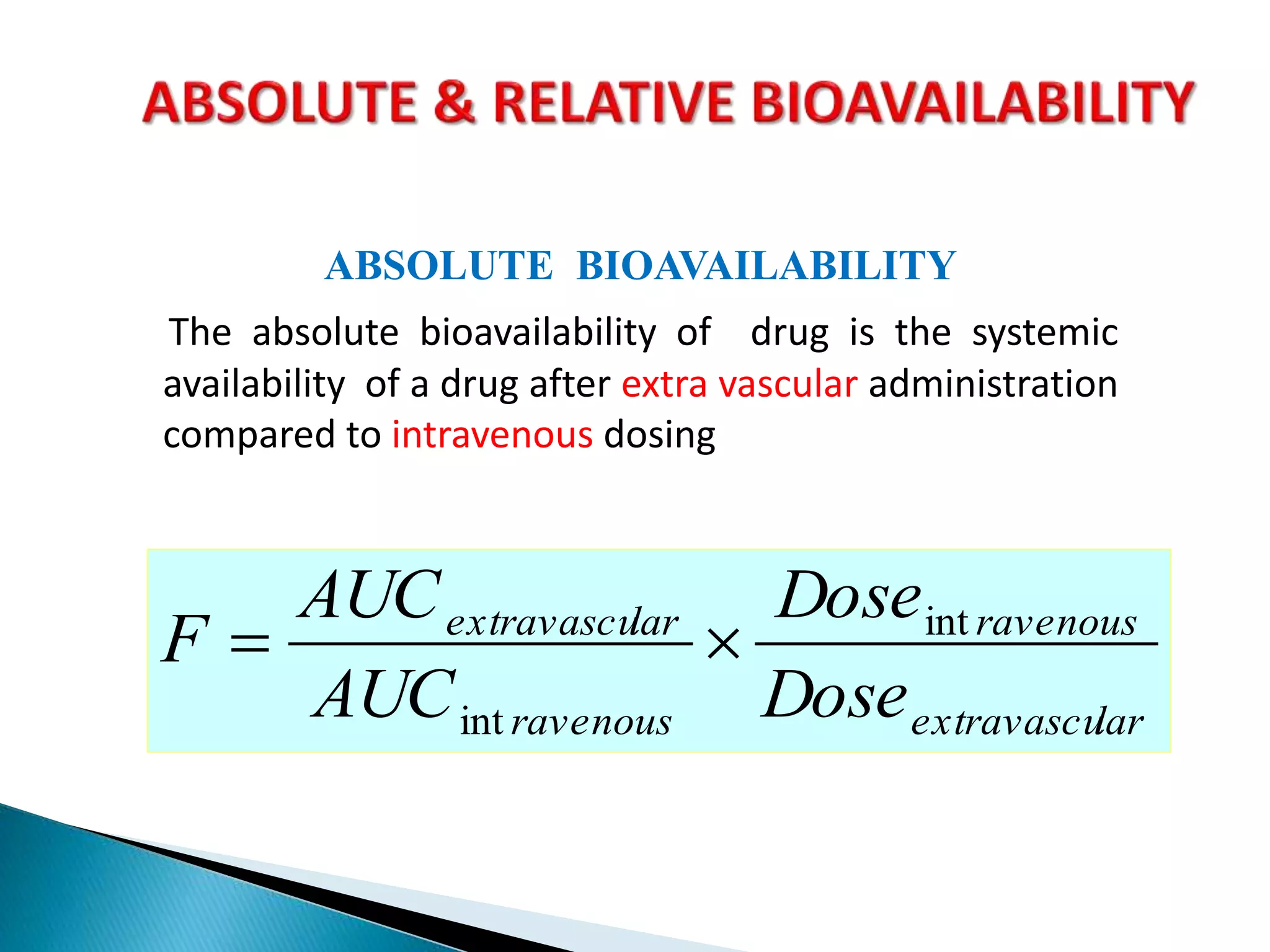
ABSOLUTE BIOAVAILABILITY
The absolute bioavailability of drug is the systemic
availability of a drug after extra vascular administration
compared to intravenous dosing
larextravascu
ravenous
ravenous
larextravascu
Dose
Dose
AUC
AUC
F int
int

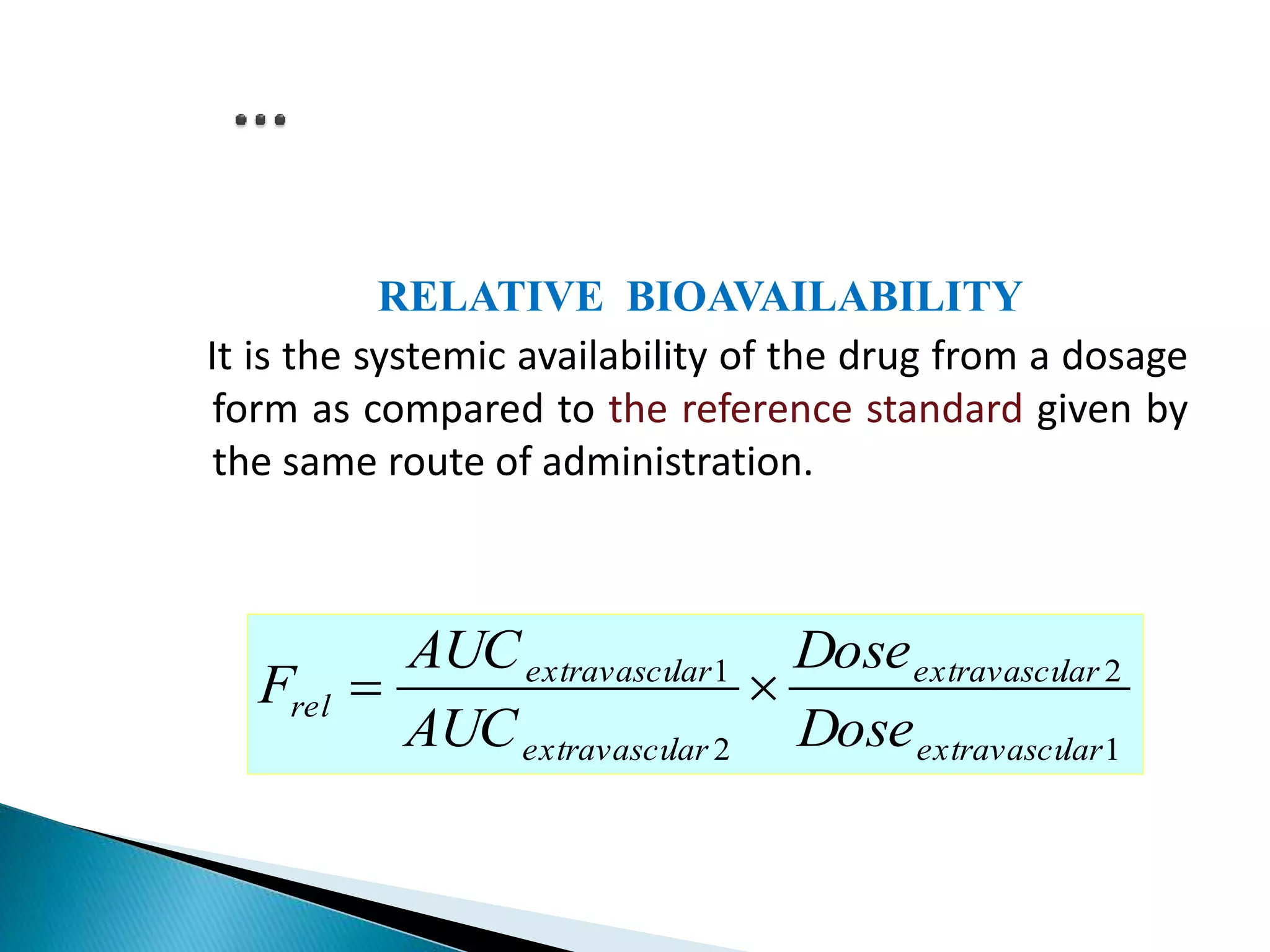
RELATIVE BIOAVAILABILITY
It is the systemic availability of the drug from a dosage
form as compared to the reference standard given by
the same route of administration.
1
2
2
1
larextravascu
larextravascu
larextravascu
larextravascu
rel
Dose
Dose
AUC
AUC
F 
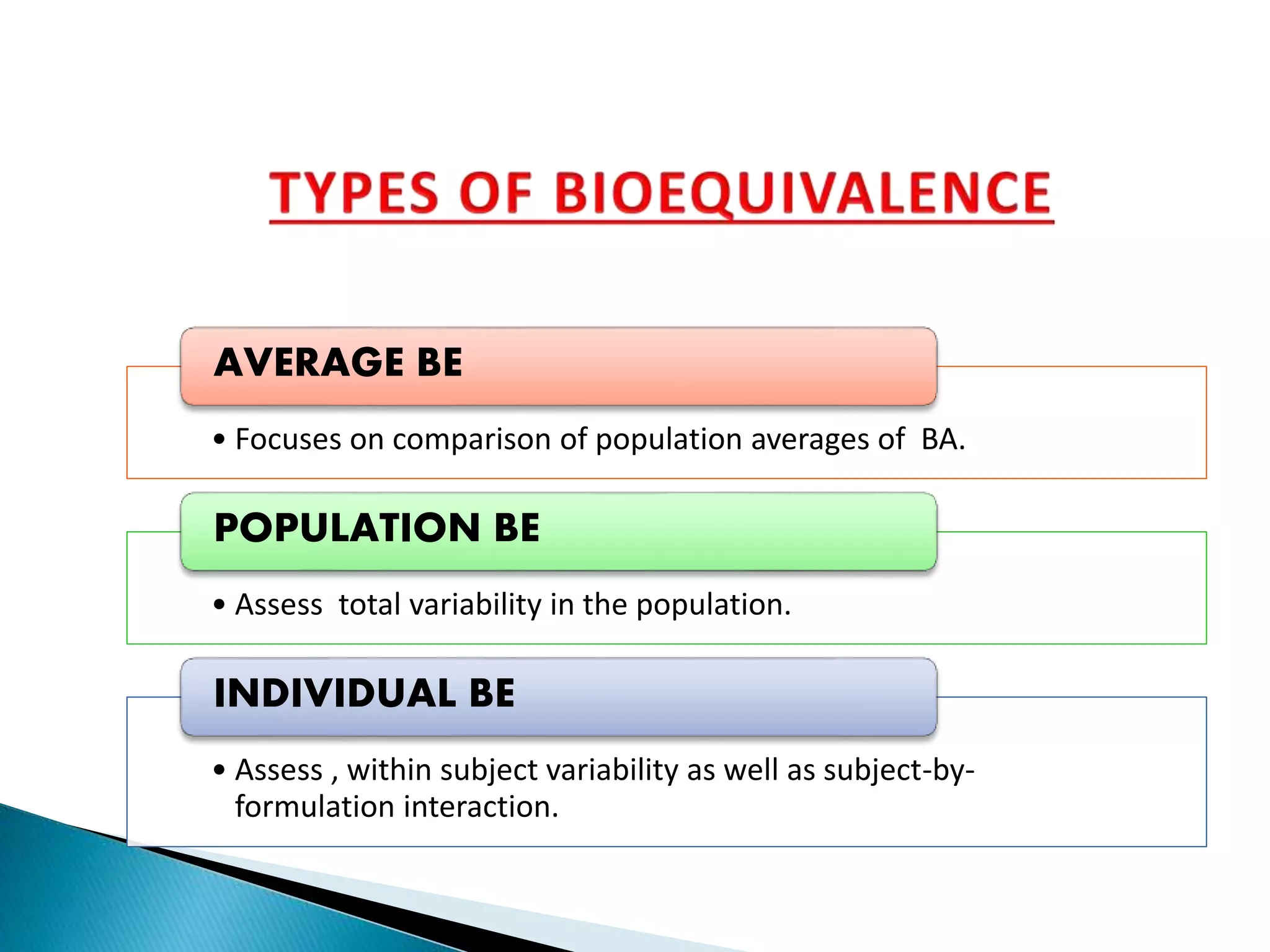
• Focuses on comparison of population averages of BA.
AVERAGE BE
• Assess total variability in the population.
POPULATION BE
• Assess , within subject variability as well as subject-by-
formulation interaction.
INDIVIDUAL BE
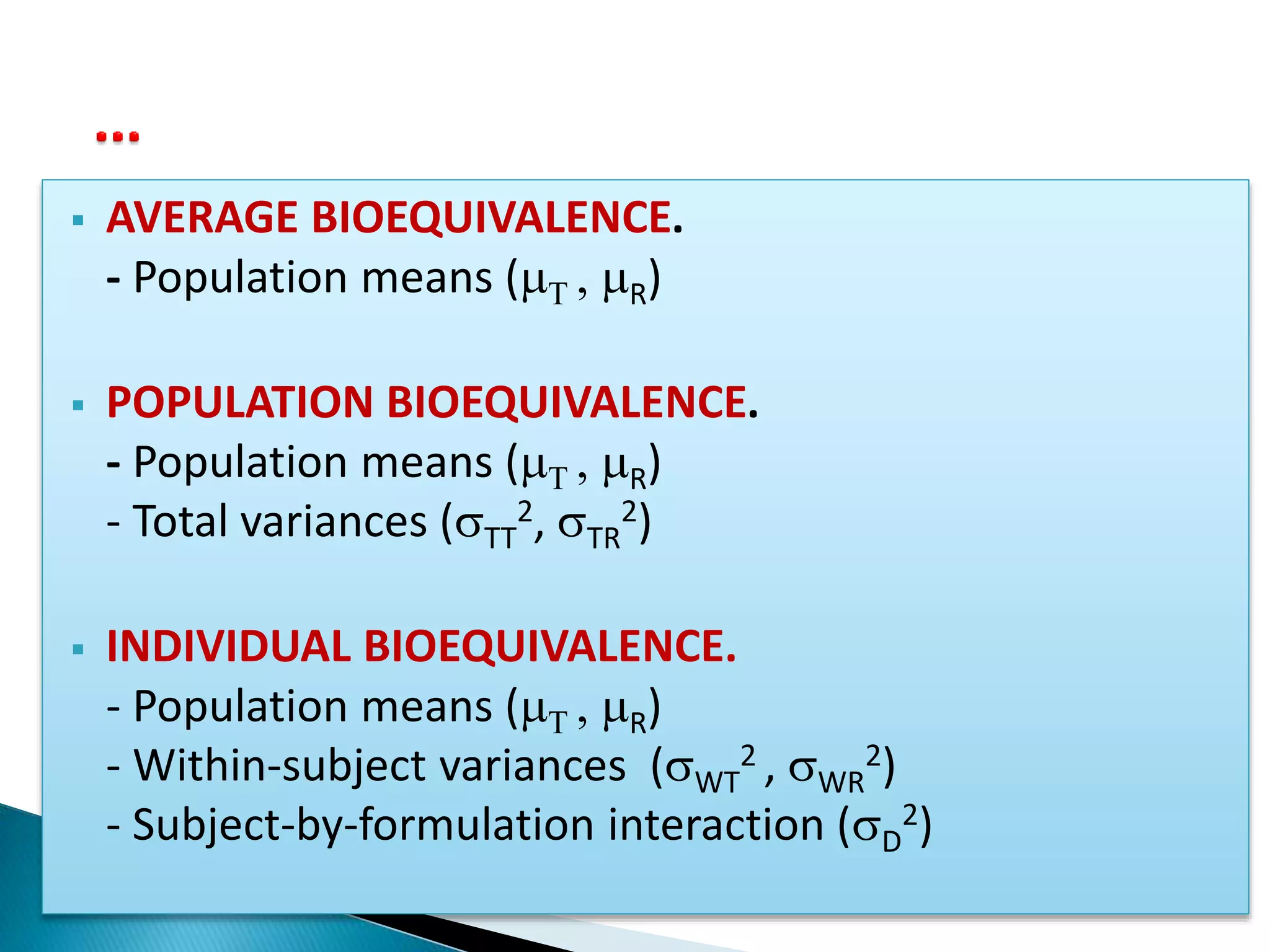
 AVERAGE BIOEQUIVALENCE.
- Population means (T , R)
 POPULATION BIOEQUIVALENCE.
- Population means (T , R)
- Total variances (TT
2, TR
2)
 INDIVIDUAL BIOEQUIVALENCE.
- Population means (T , R)
- Within-subject variances (WT
2 , WR
2)
- Subject-by-formulation interaction (D
2)
[ Criterion ]  BE Limit
 Average BE: (T - R)2  qA
2
(T - R)2 + D
2 + (WT
2 - WR
2)
 Individual BE: -------------------------------------------  qI
WR
2
(T - R)2 + (TT
2 - TR
2)
 Population BE: -----------------------------------  qP
TR
2
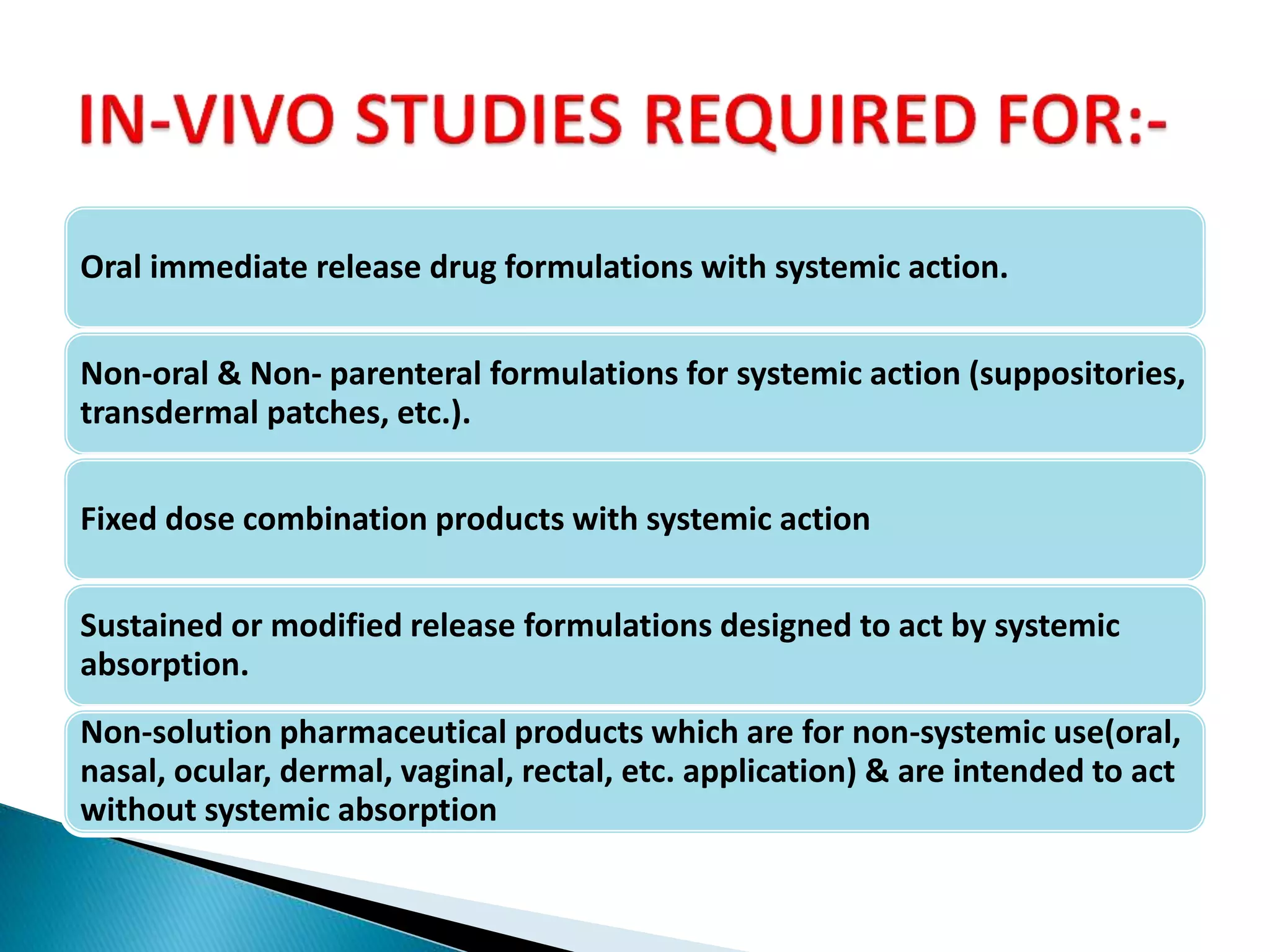
Oral immediate release drug formulations with systemic action.
Non-oral & Non- parenteral formulations for systemic action (suppositories,
transdermal patches, etc.).
Fixed dose combination products with systemic action
Sustained or modified release formulations designed to act by systemic
absorption.
Non-solution pharmaceutical products which are for non-systemic use(oral,
nasal, ocular, dermal, vaginal, rectal, etc. application) & are intended to act
without systemic absorption
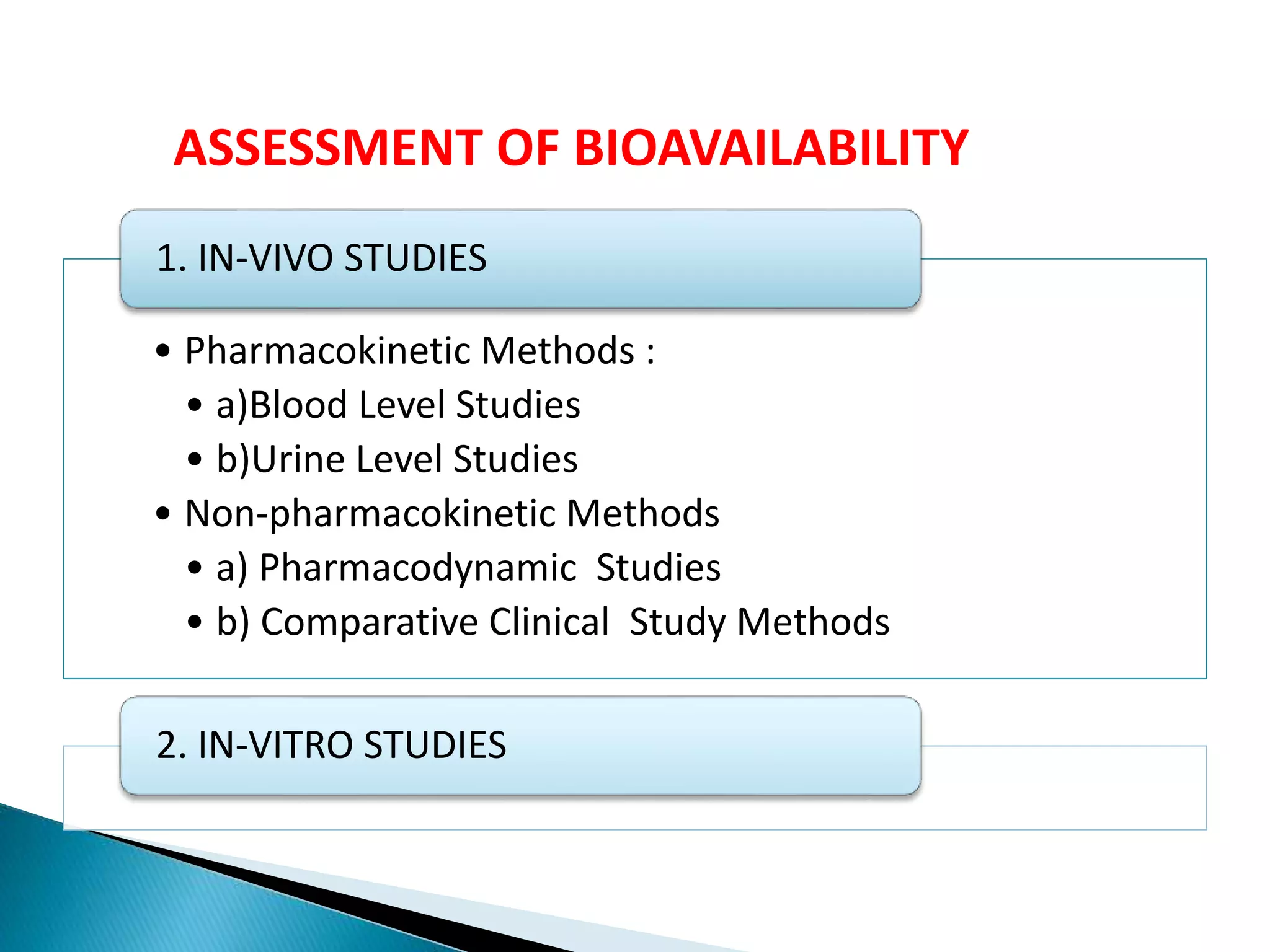
• Pharmacokinetic Methods :
• a)Blood Level Studies
• b)Urine Level Studies
• Non-pharmacokinetic Methods
• a) Pharmacodynamic Studies
• b) Comparative Clinical Study Methods
1. IN-VIVO STUDIES
2. IN-VITRO STUDIES
ASSESSMENT OF BIOAVAILABILITY
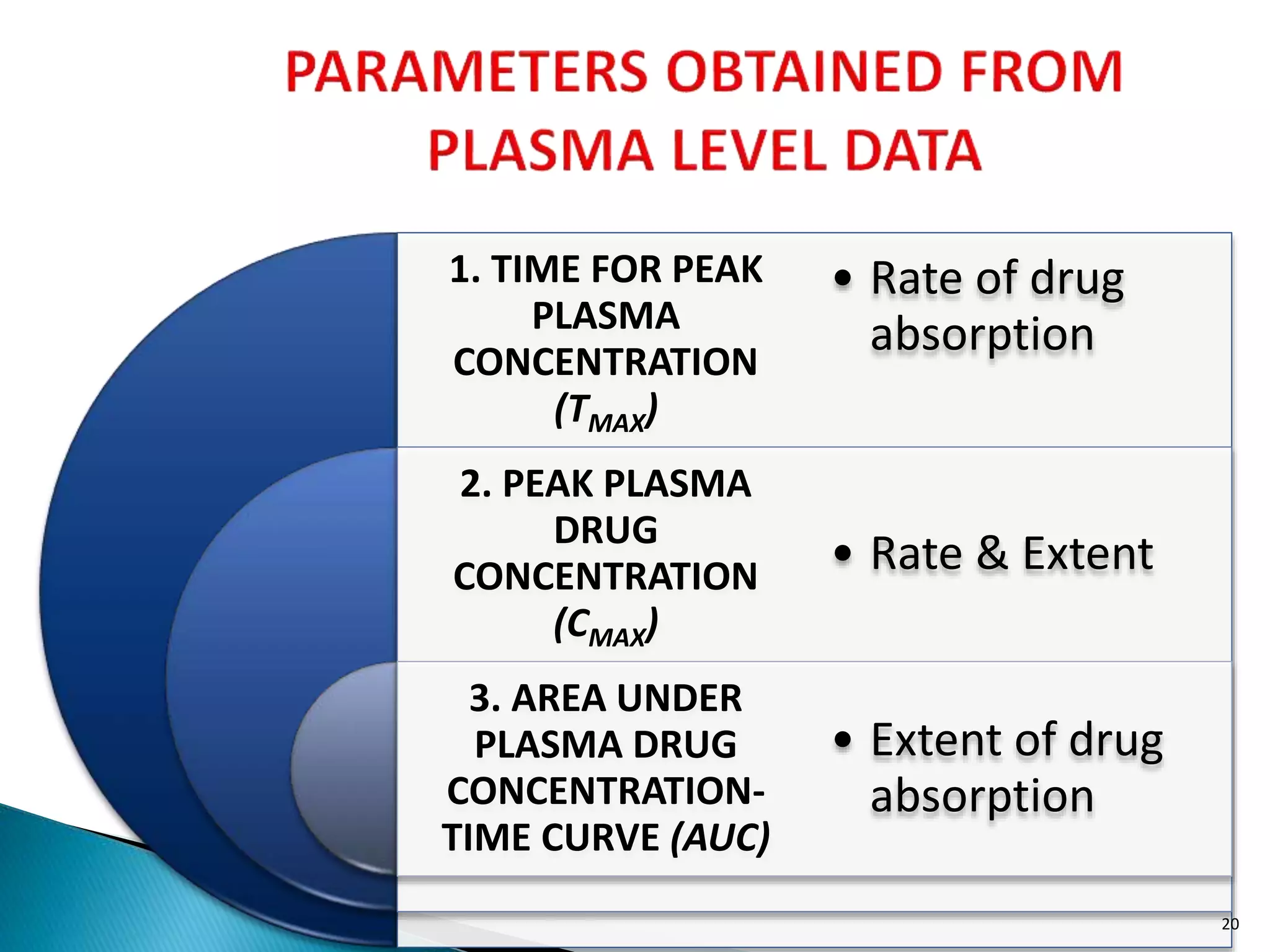
1. TIME FOR PEAK
PLASMA
CONCENTRATION
(TMAX)
2. PEAK PLASMA
DRUG
CONCENTRATION
(CMAX)
3. AREA UNDER
PLASMA DRUG
CONCENTRATION-
TIME CURVE (AUC)
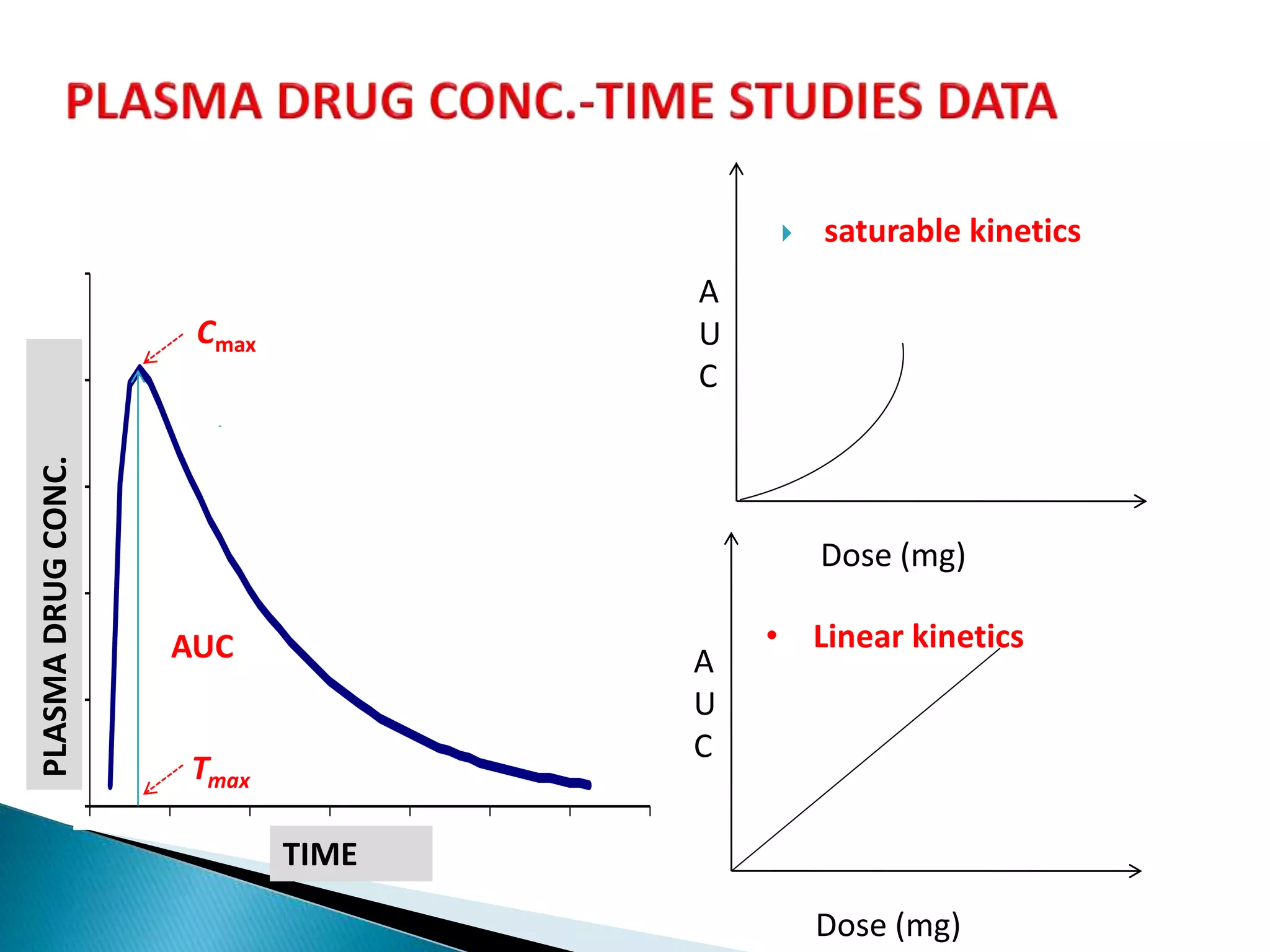
• Rate of drug
absorption
• Rate & Extent
• Extent of drug
absorption
20
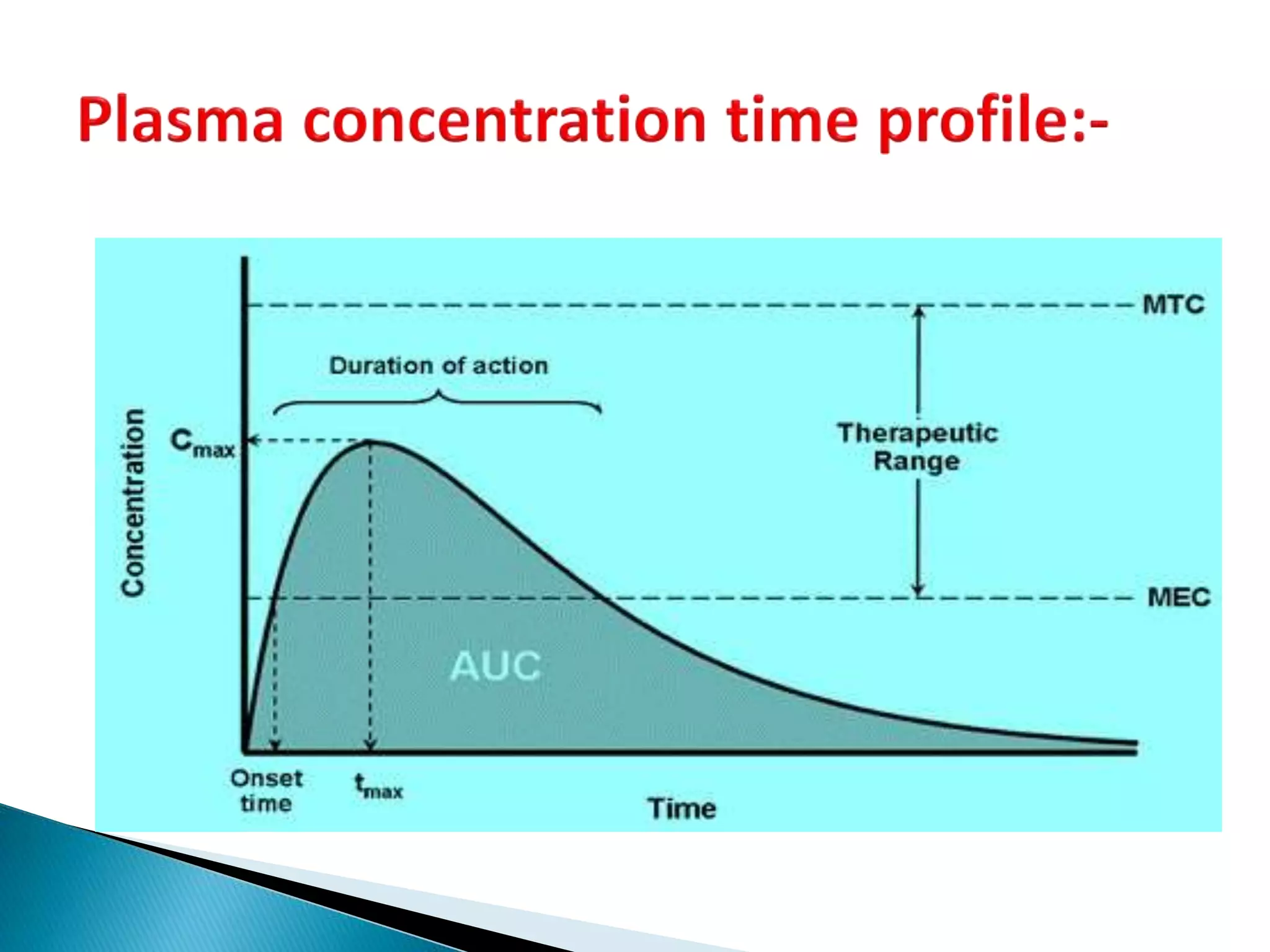
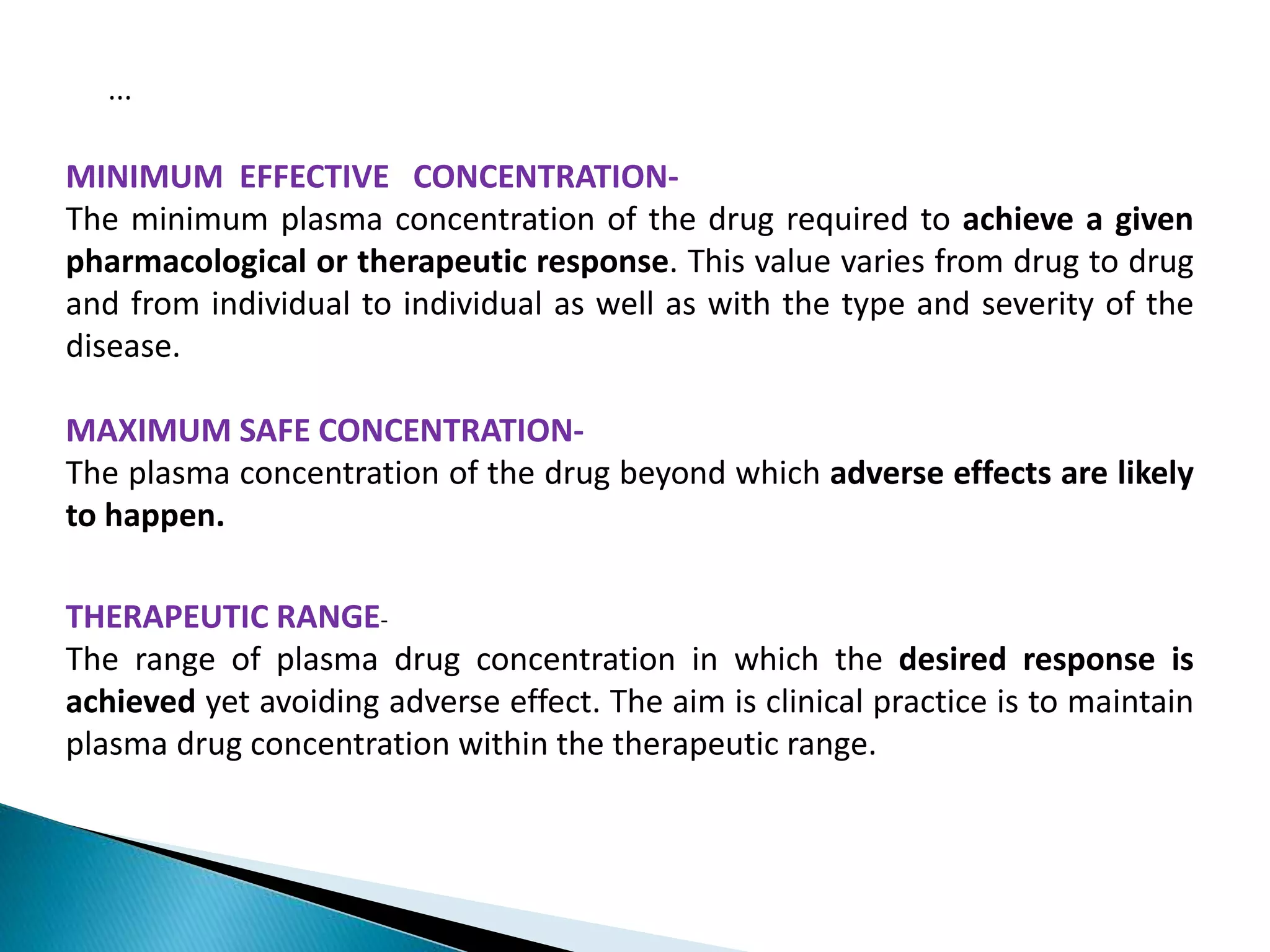
MINIMUM EFFECTIVE CONCENTRATION-
The minimum plasma concentration of the drug required to achieve a given
pharmacological or therapeutic response. This value varies from drug to drug
and from individual to individual as well as with the type and severity of the
disease.
MAXIMUM SAFE CONCENTRATION-
The plasma concentration of the drug beyond which adverse effects are likely
to happen.
THERAPEUTIC RANGE-
The range of plasma drug concentration in which the desired response is
achieved yet avoiding adverse effect. The aim is clinical practice is to maintain
plasma drug concentration within the therapeutic range.
...
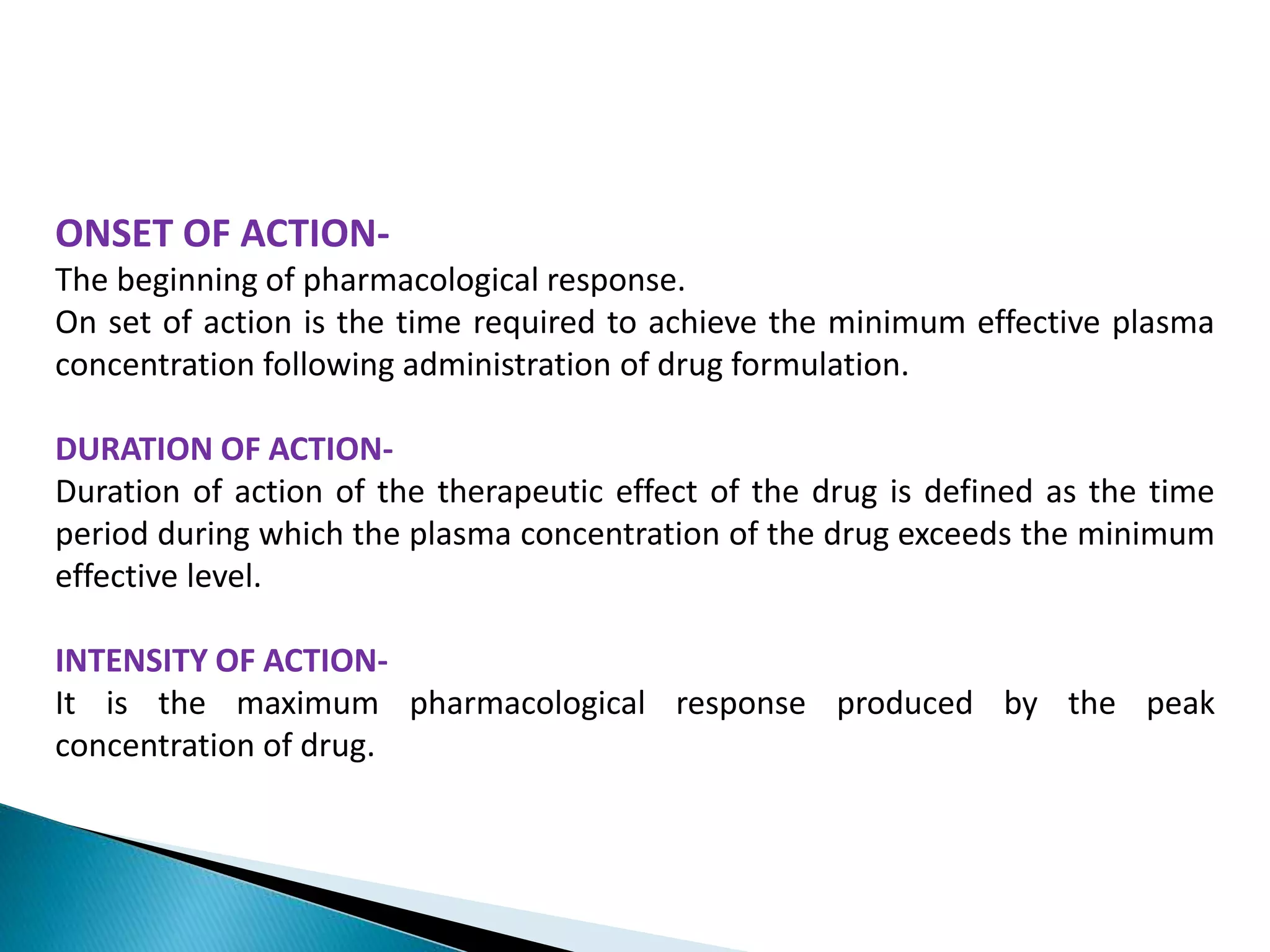
ONSET OF ACTION-
The beginning of pharmacological response.
On set of action is the time required to achieve the minimum effective plasma
concentration following administration of drug formulation.
DURATION OF ACTION-
Duration of action of the therapeutic effect of the drug is defined as the time
period during which the plasma concentration of the drug exceeds the minimum
effective level.
INTENSITY OF ACTION-
It is the maximum pharmacological response produced by the peak
concentration of drug.
Dose (mg)

A
U
C
Dose (mg)
A
U
C
Cmax
PLASMADRUGCONC.
TIME
Tmax
AUC
 saturable kinetics
• Linear kinetics
Cmax
PLASMADRUGCONC.
TIME
Tmax
AUC
oral
iv
iv
oral
Dose
Dose
AUC
AUC
F 
stdtest
teststd
std
test
D
D
AUC
AUC
F





][
][
Single dose studies
Multiple dose studies
...
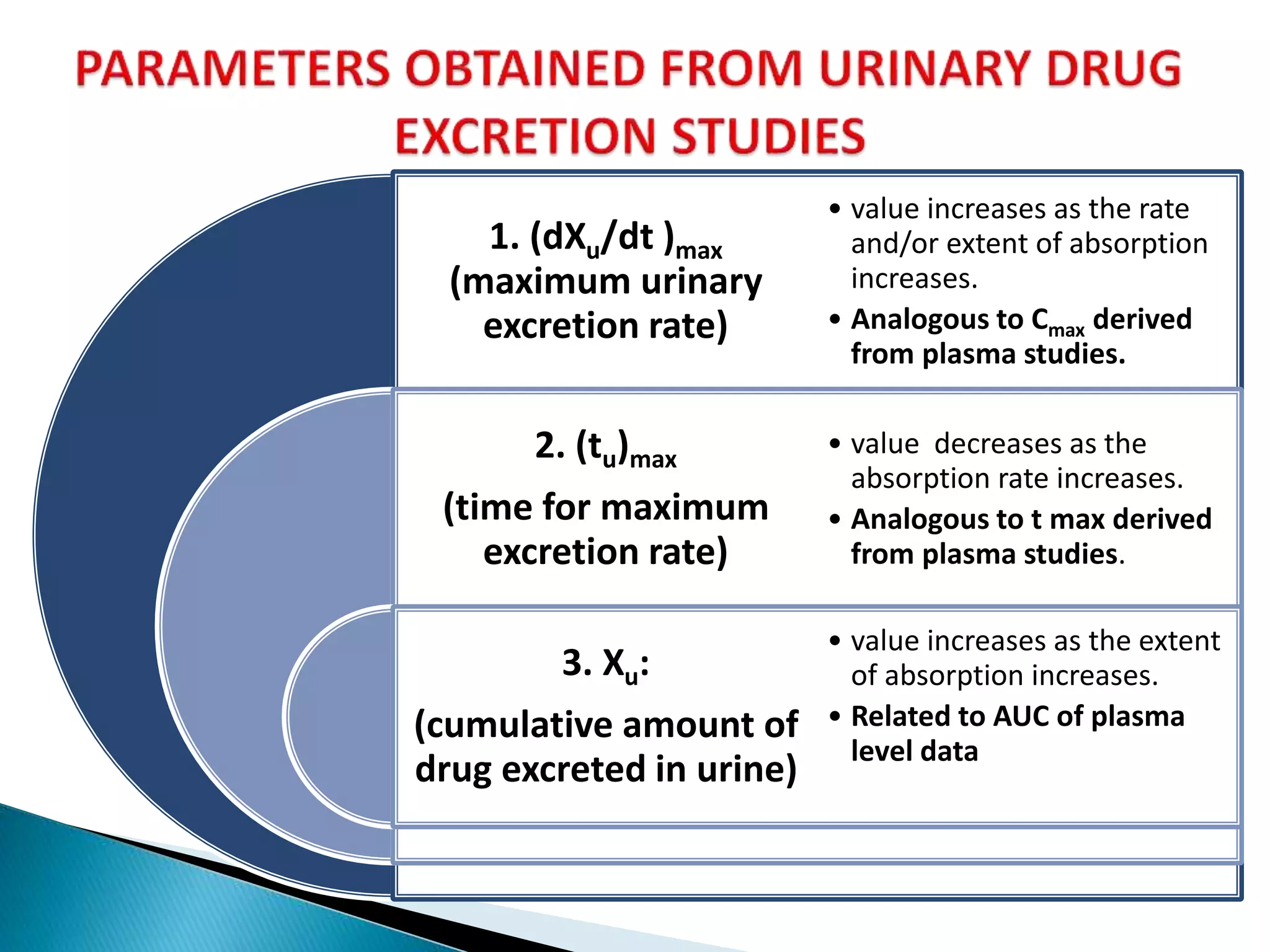
1. (dXu/dt )max
(maximum urinary
excretion rate)
2. (tu)max
(time for maximum
excretion rate)
3. Xu:
(cumulative amount of
drug excreted in urine)
• value increases as the rate
and/or extent of absorption
increases.
• Analogous to Cmax derived
from plasma studies.
• value decreases as the
absorption rate increases.
• Analogous to t max derived
from plasma studies.
• value increases as the extent
of absorption increases.
• Related to AUC of plasma
level data
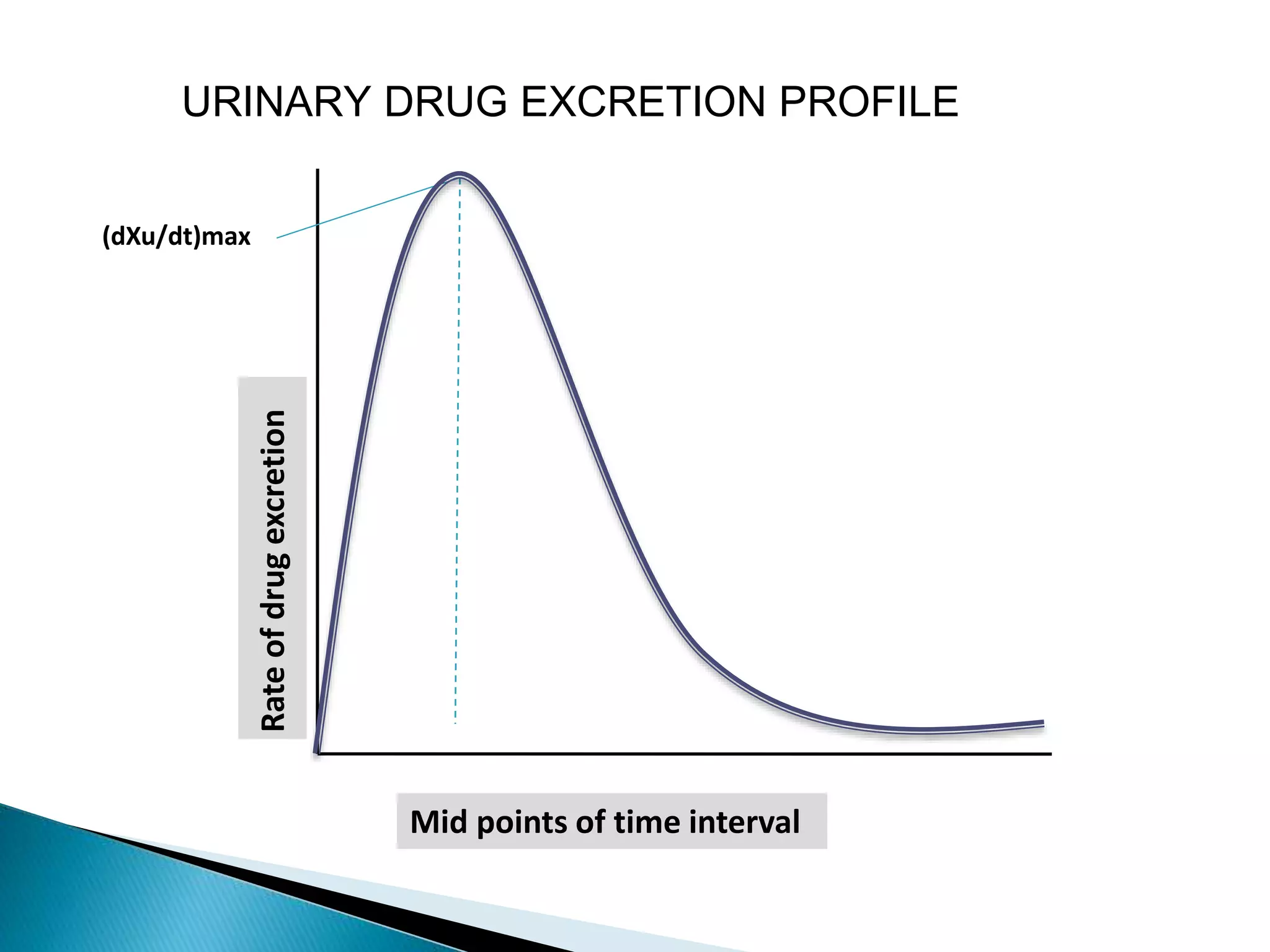
Rateofdrugexcretion
Mid points of time interval
(dXu/dt)max
URINARY DRUG EXCRETION PROFILE
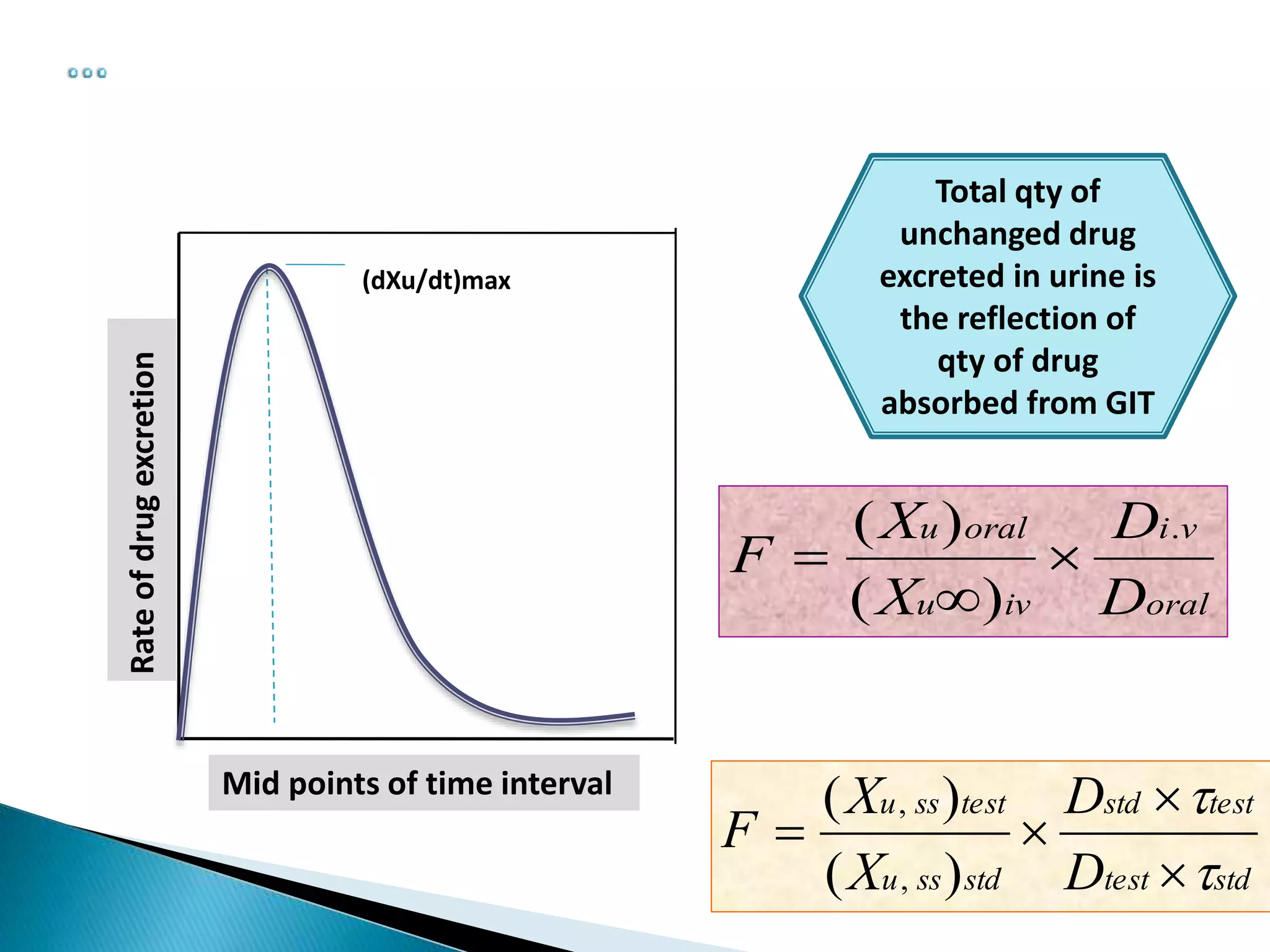
Rateofdrugexcretion
Mid points of time interval
(dXu/dt)max
Total qty of
unchanged drug
excreted in urine is
the reflection of
qty of drug
absorbed from GIT
oral
vi
ivu
oralu
D
D
X
X
F
.
)(
)(



stdtest
teststd
stdssu
testssu
D
D
X
X
F





)(
)(
,
,
 Significant amount of drug must be excreted unchanged in the
urine(40%).
 Not appropriate where urinary excretion is not a significant
mechanism of elimination.
 Analytical method must be specific for the unchanged drug;
metabolites should not interfere.
 Volunteers must instructed to completely empty their bladder
while collecting urine samples .
 Frequent sampling should be done in order to obtain a good
curve.
 During sampling the exact time and volume of urine excreted
should be noted.
 Urine sample must be collected for at least 7-10 biological
half lives.
 Changes in urine pH and urine volume may alter the urinary
excretion rate.
…
 Method is useful when there is lack of sufficiently sensitive analytical techniques
to measure concentration of drug in plasma with accuracy.
 Method is non-invasive.
 Convenience of collecting urine samples.
 Less sensitive analytical method is required for determining urine drug
concentration as compared to plasma concentration.
.
 Active drug substance in biological matrix.
 Active or inactive metabolite in cases where:
concentrations of drug(s) –too low to be measured in
biological matrix
limitations of analytical method
unstable drug(s)
drugs with very short half-life or
in the case of prodrugs
 Racemates should be measured using an achiral assay
method.
 Individual enantiomers must be measured in case:
exhibit different pharmacodynamic characteristics
exhibit different pharmacokinetic characteristics
primary activity/safety resides with the minor enantiomer
non-linear absorption of at least one of the enantiomers
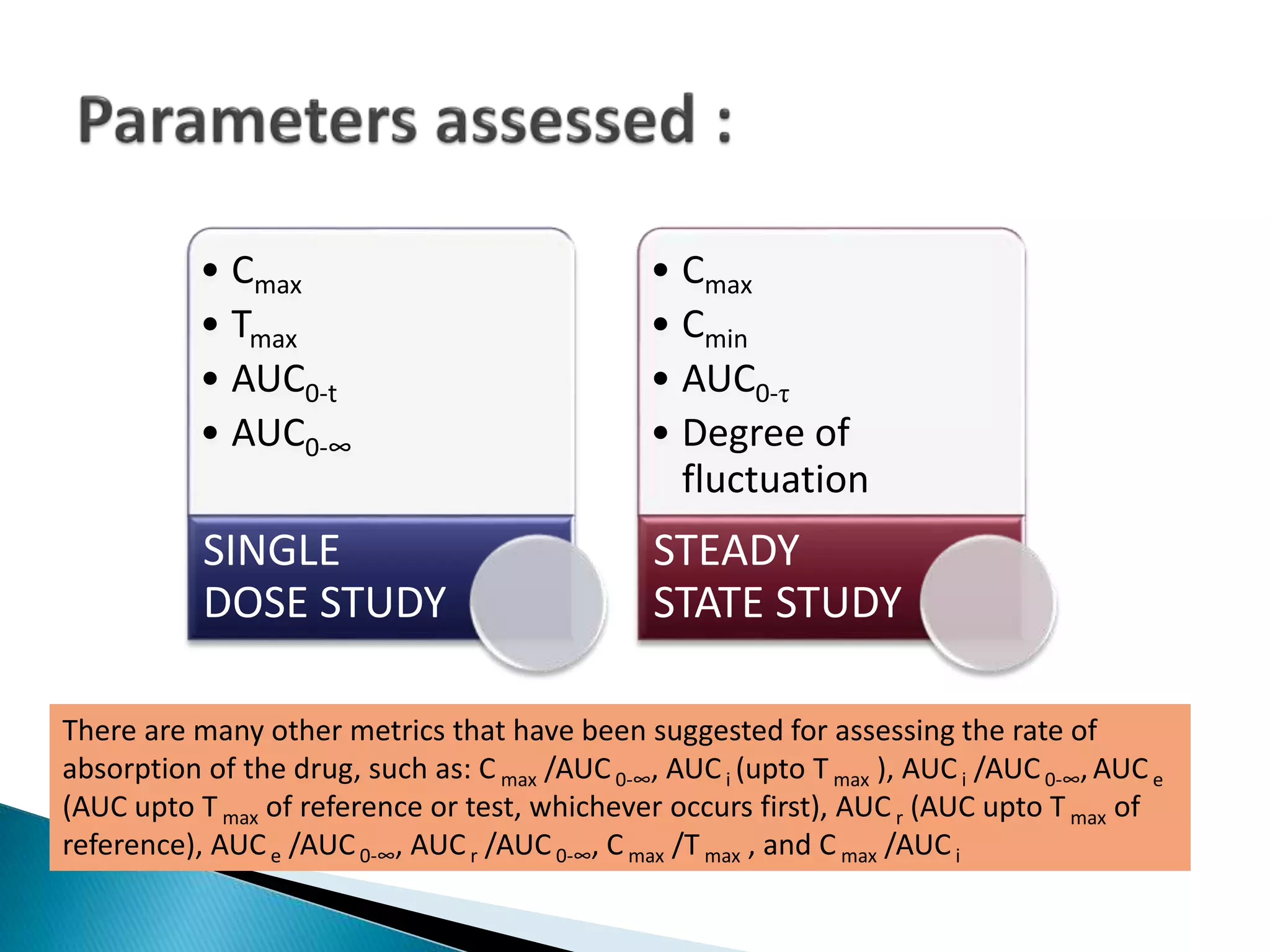
• Cmax
• Tmax
• AUC0-t
• AUC0-∞
SINGLE
DOSE STUDY
• Cmax
• Cmin
• AUC0-τ
• Degree of
fluctuation
STEADY
STATE STUDY
There are many other metrics that have been suggested for assessing the rate of
absorption of the drug, such as: C max /AUC 0-∞, AUCi (upto T max ), AUCi /AUC0-∞,AUCe
(AUC upto T max of reference or test, whichever occurs first), AUC r (AUC upto T max of
reference), AUCe /AUC0-∞, AUCr /AUC 0-∞, C max /T max , and C max /AUCi
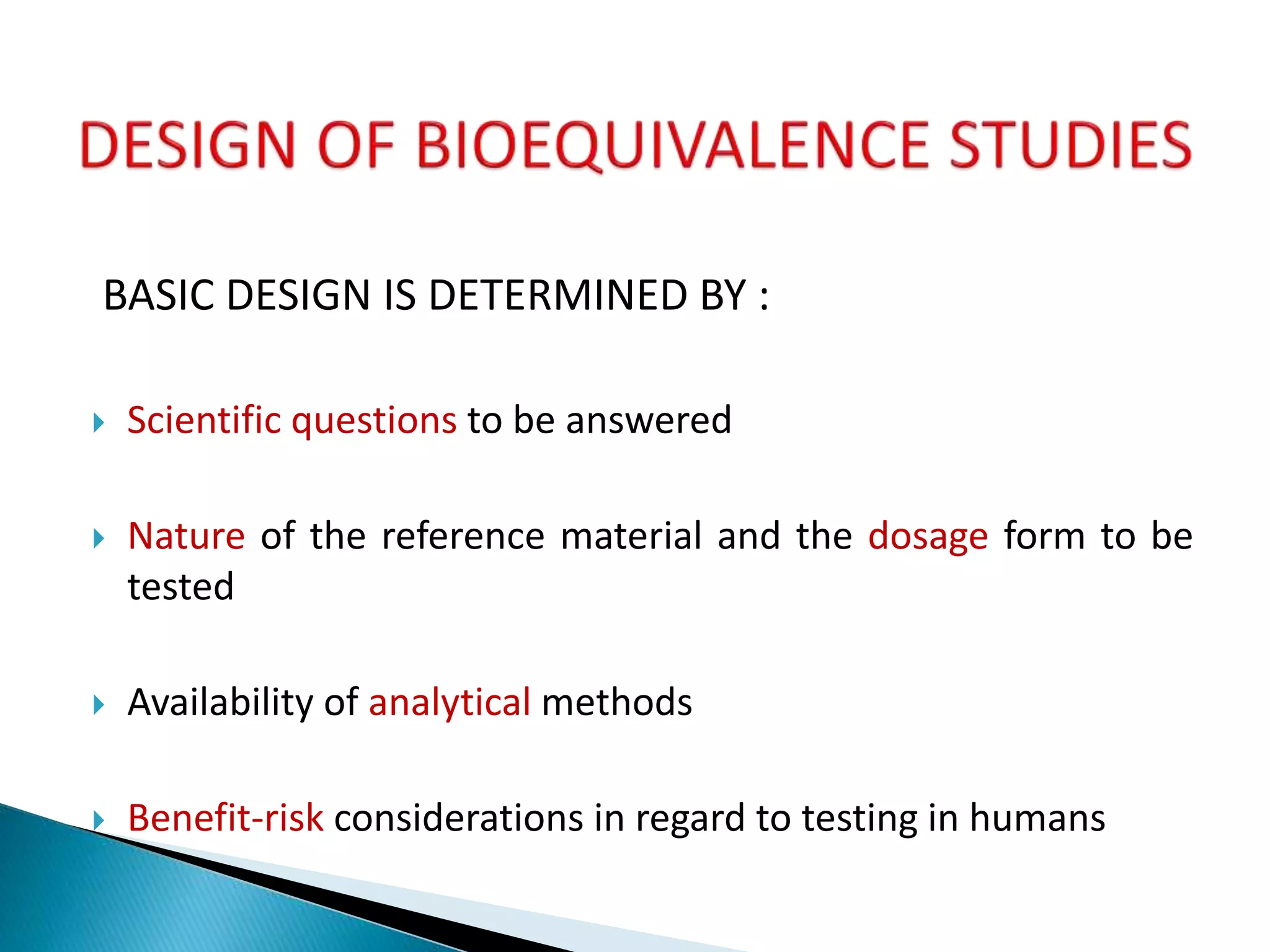
BASIC DESIGN IS DETERMINED BY :
 Scientific questions to be answered
 Nature of the reference material and the dosage form to be
tested
 Availability of analytical methods
 Benefit-risk considerations in regard to testing in humans
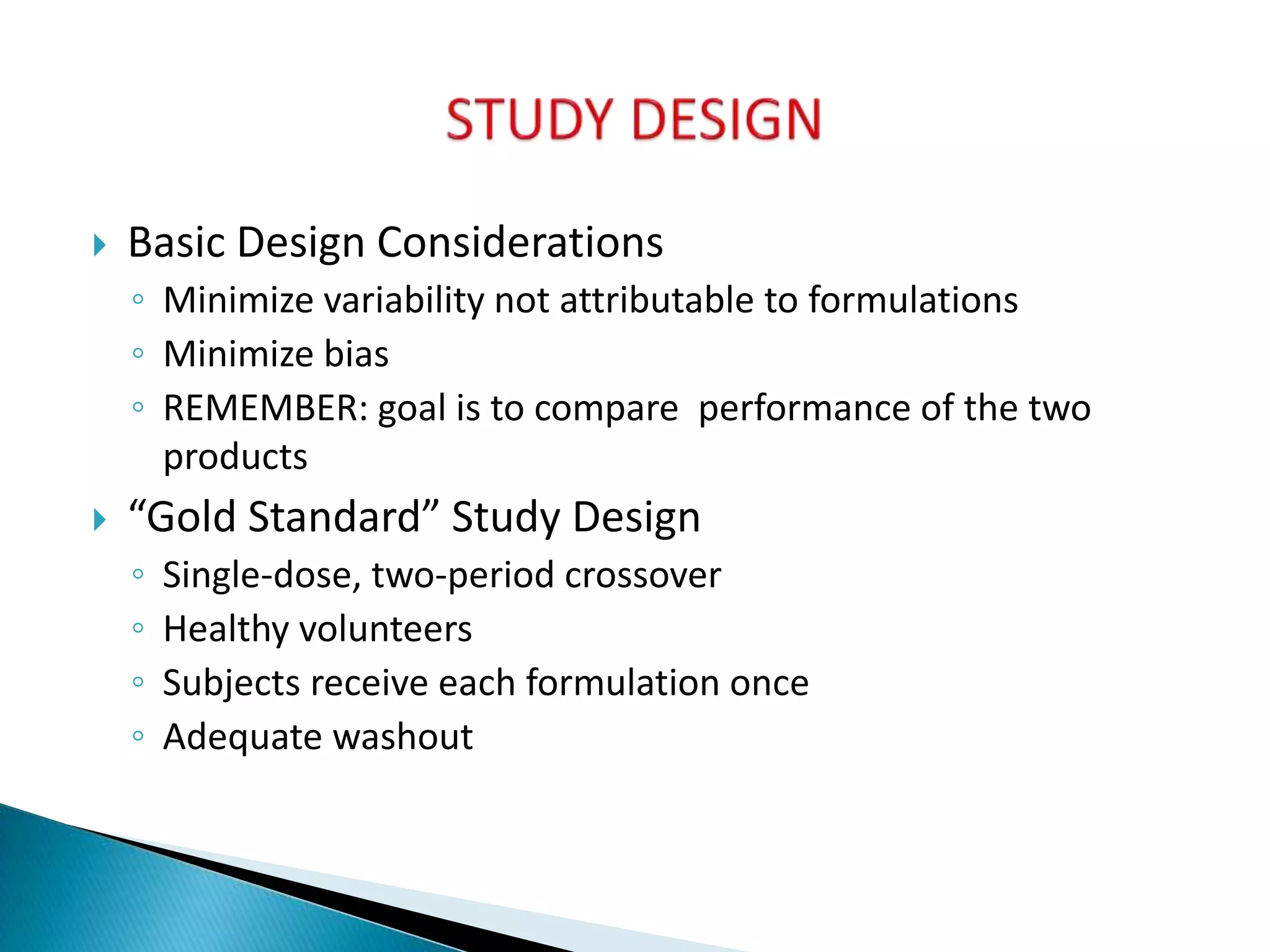
 Basic Design Considerations
◦ Minimize variability not attributable to formulations
◦ Minimize bias
◦ REMEMBER: goal is to compare performance of the two
products
 “Gold Standard” Study Design
◦ Single-dose, two-period crossover
◦ Healthy volunteers
◦ Subjects receive each formulation once
◦ Adequate washout
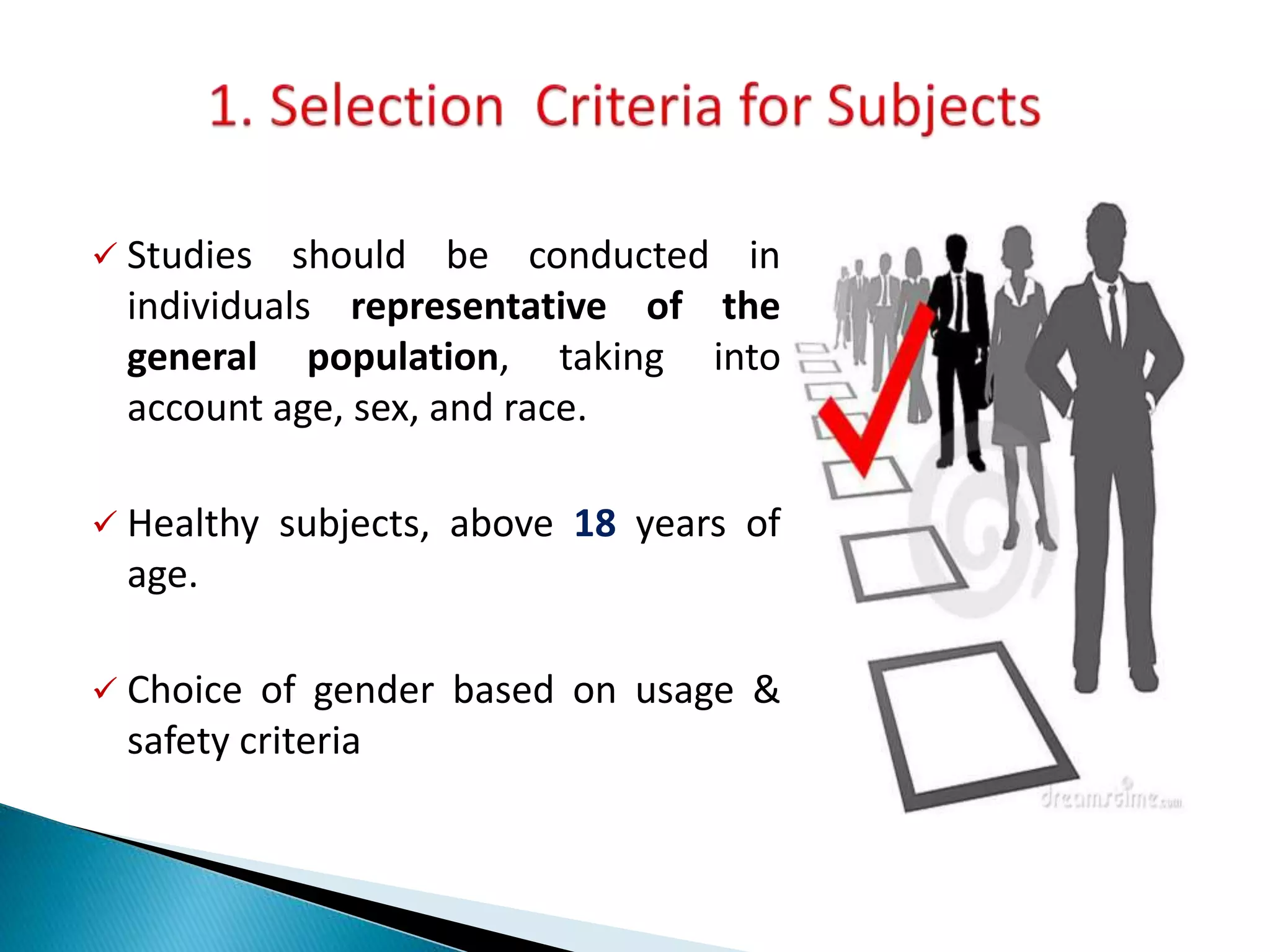
 Studies should be conducted in
individuals representative of the
general population, taking into
account age, sex, and race.
 Healthy subjects, above 18 years of
age.
 Choice of gender based on usage &
safety criteria
 If drug product is to be used predominantly in elders, then test
should include as many subjects of 60 years of age or older as
possible.
 Pregnant women or those taking contraceptives should not be
included in the test.
 For drugs hazardous for one group of users, choice of subjects may
be narrowed down, e.g., studies on teratogenic drugs should be
conducted only on males.
 For drugs primarily intended for use in only males or only females-
volunteers of only respective gender should be included in the
studies.
 For drugs where risk of toxicity or side effects is significant, studies
may be carried out in patients, but whose disease state is stable.
Number of Subjects should be statistically significant & is determined
by following considerations :
Error variance associated with primary characteristic to be studied.
Significance level desired :usually 0.05.
Expected deviation from the reference product compatible with
bioequivalence.
The required (discriminatory) power, normally 80% to detect maximum
allowable difference (usually +20%) in primary characteristics to be
studied.
Should be sufficient to allow for possible withdrawals or removals
(dropouts) from the study
Minimum number should not be less than 12
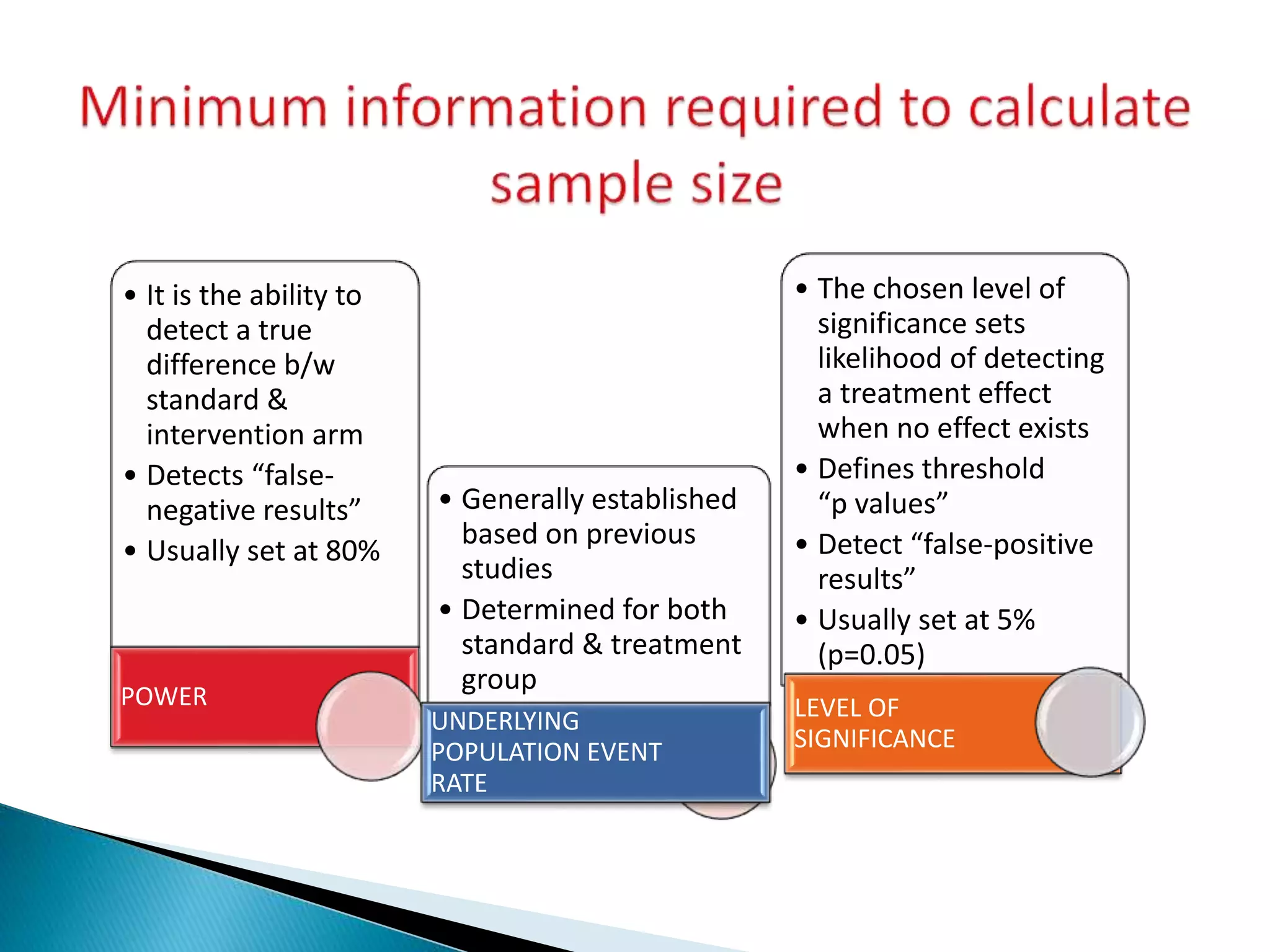
• It is the ability to
detect a true
difference b/w
standard &
intervention arm
• Detects “false-
negative results”
• Usually set at 80%
POWER
• The chosen level of
significance sets
likelihood of detecting
a treatment effect
when no effect exists
• Defines threshold
“p values”
• Detect “false-positive
results”
• Usually set at 5%
(p=0.05)
LEVEL OF
SIGNIFICANCE
• Generally established
based on previous
studies
• Determined for both
standard & treatment
group
UNDERLYING
POPULATION EVENT
RATE
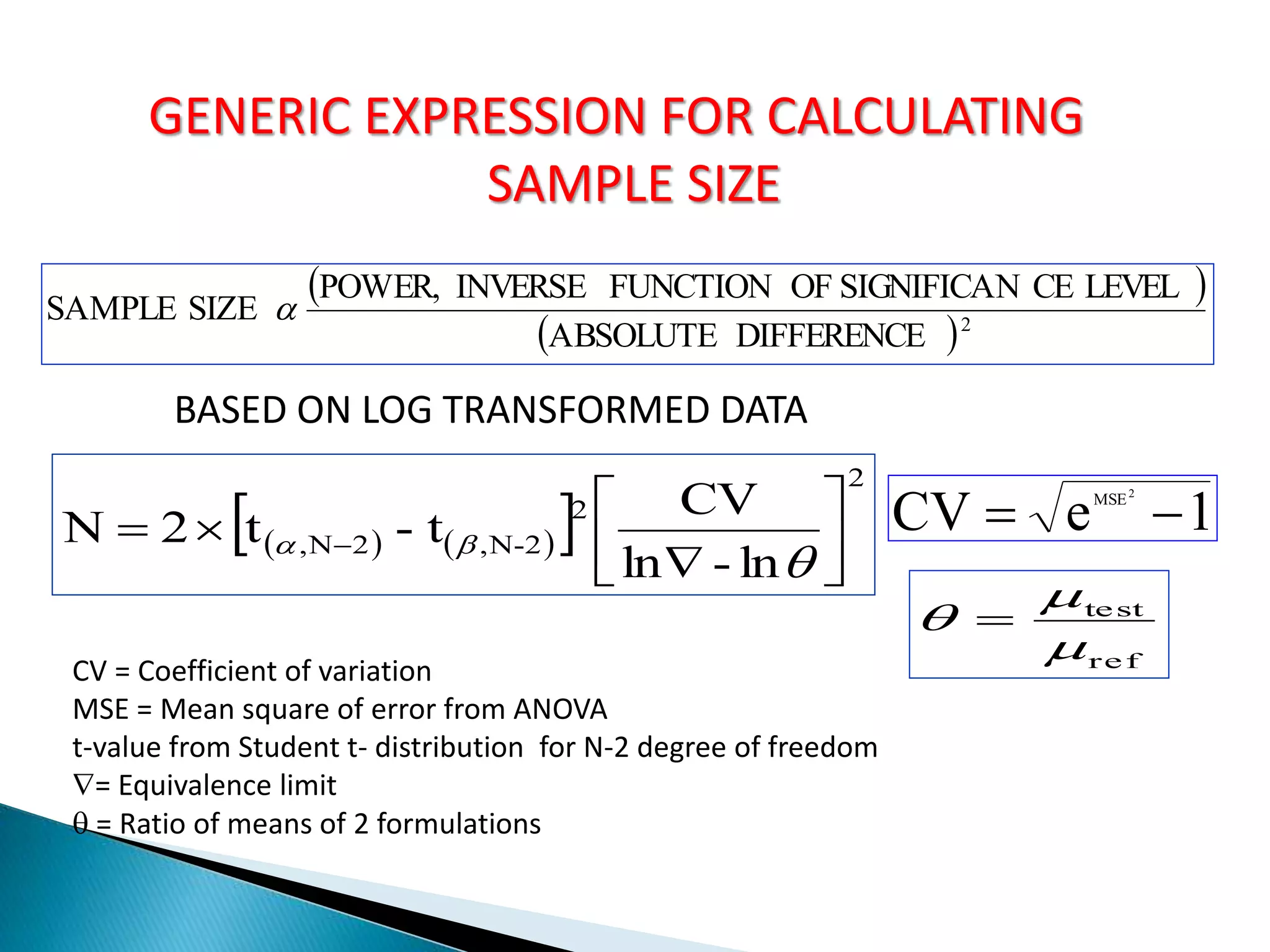
GENERIC EXPRESSION FOR CALCULATING
SAMPLE SIZE
 
 2
DIFFERENCEABSOLUTE
LEVELCESIGNIFICANOFFUNCTIONINVERSEPOWER,
SIZESAMPLE 
BASED ON LOG TRANSFORMED DATA
    
2
2
2-N,2N,
ln-ln
CV
t-t2N 




 
q
CV = Coefficient of variation
MSE = Mean square of error from ANOVA
t-value from Student t- distribution for N-2 degree of freedom
= Equivalence limit
q = Ratio of means of 2 formulations
1eCV
2
MSE

ref
test


q 
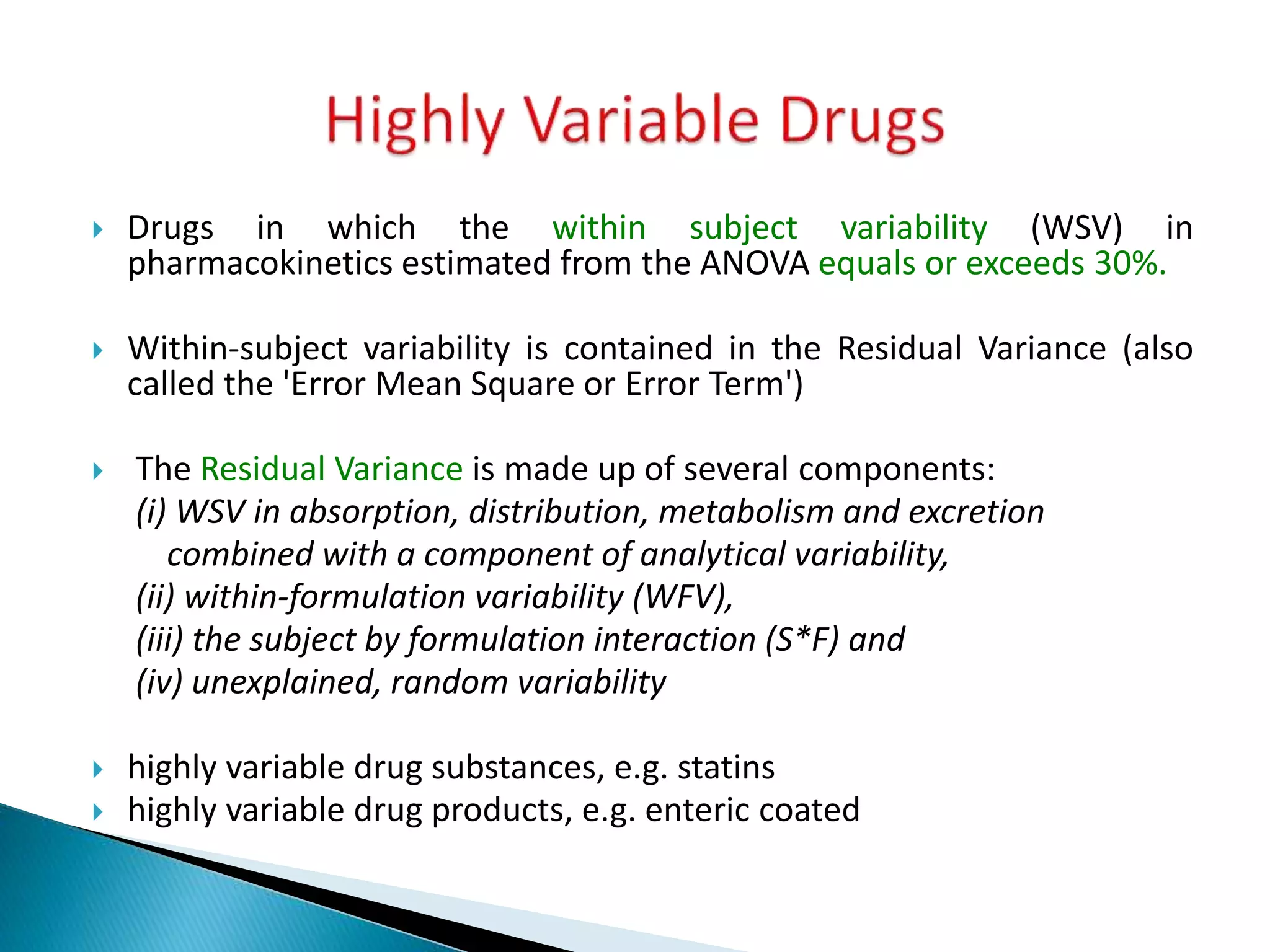
 Drugs in which the within subject variability (WSV) in
pharmacokinetics estimated from the ANOVA equals or exceeds 30%.
 Within-subject variability is contained in the Residual Variance (also
called the 'Error Mean Square or Error Term')
 The Residual Variance is made up of several components:
(i) WSV in absorption, distribution, metabolism and excretion
combined with a component of analytical variability,
(ii) within-formulation variability (WFV),
(iii) the subject by formulation interaction (S*F) and
(iv) unexplained, random variability
 highly variable drug substances, e.g. statins
 highly variable drug products, e.g. enteric coated
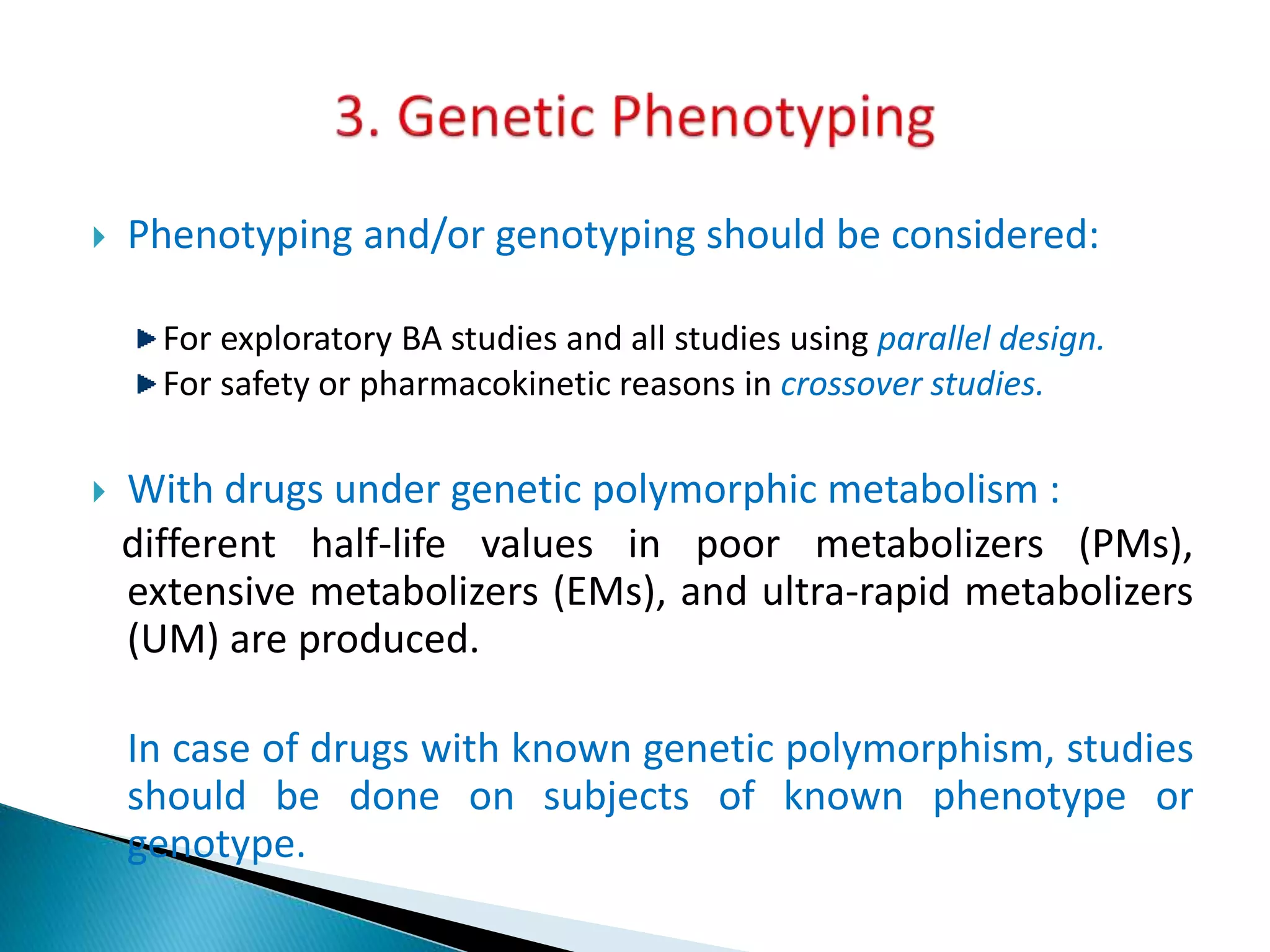
 Phenotyping and/or genotyping should be considered:
For exploratory BA studies and all studies using parallel design.
For safety or pharmacokinetic reasons in crossover studies.
 With drugs under genetic polymorphic metabolism :
different half-life values in poor metabolizers (PMs),
extensive metabolizers (EMs), and ultra-rapid metabolizers
(UM) are produced.
In case of drugs with known genetic polymorphism, studies
should be done on subjects of known phenotype or
genotype.
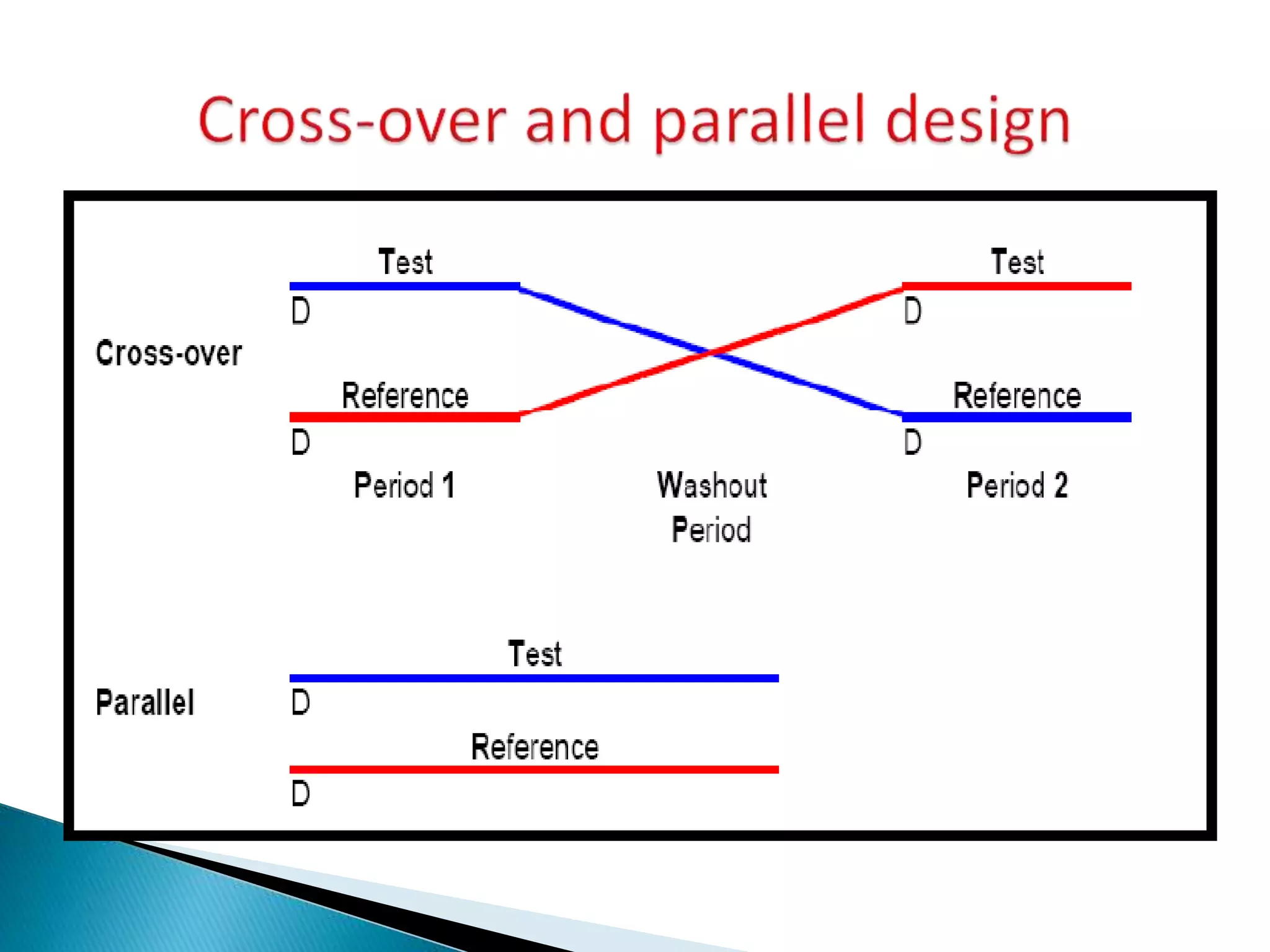
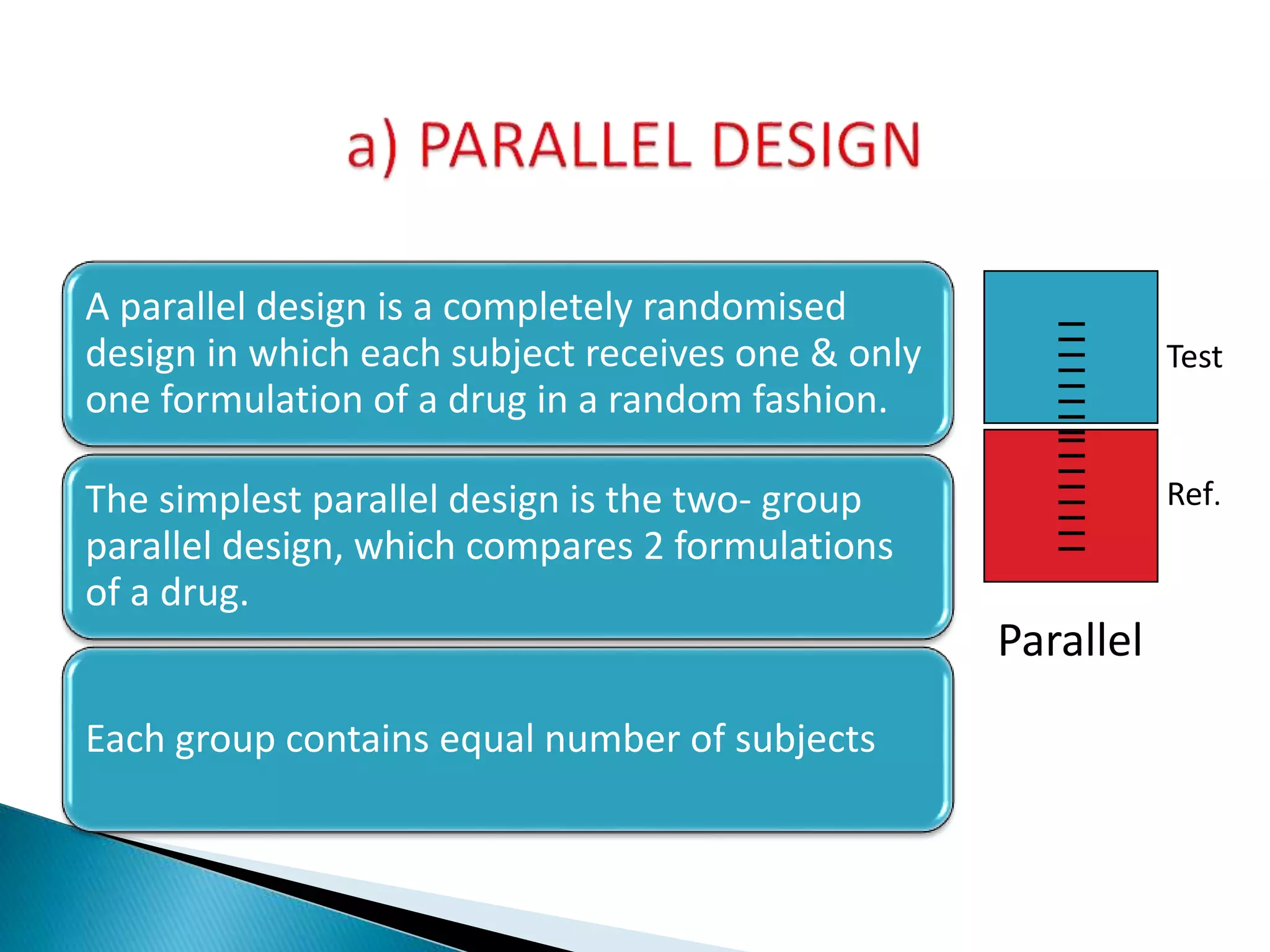
A parallel design is a completely randomised
design in which each subject receives one & only
one formulation of a drug in a random fashion.
The simplest parallel design is the two- group
parallel design, which compares 2 formulations
of a drug.
Each group contains equal number of subjects
Parallel
Ref.
Test
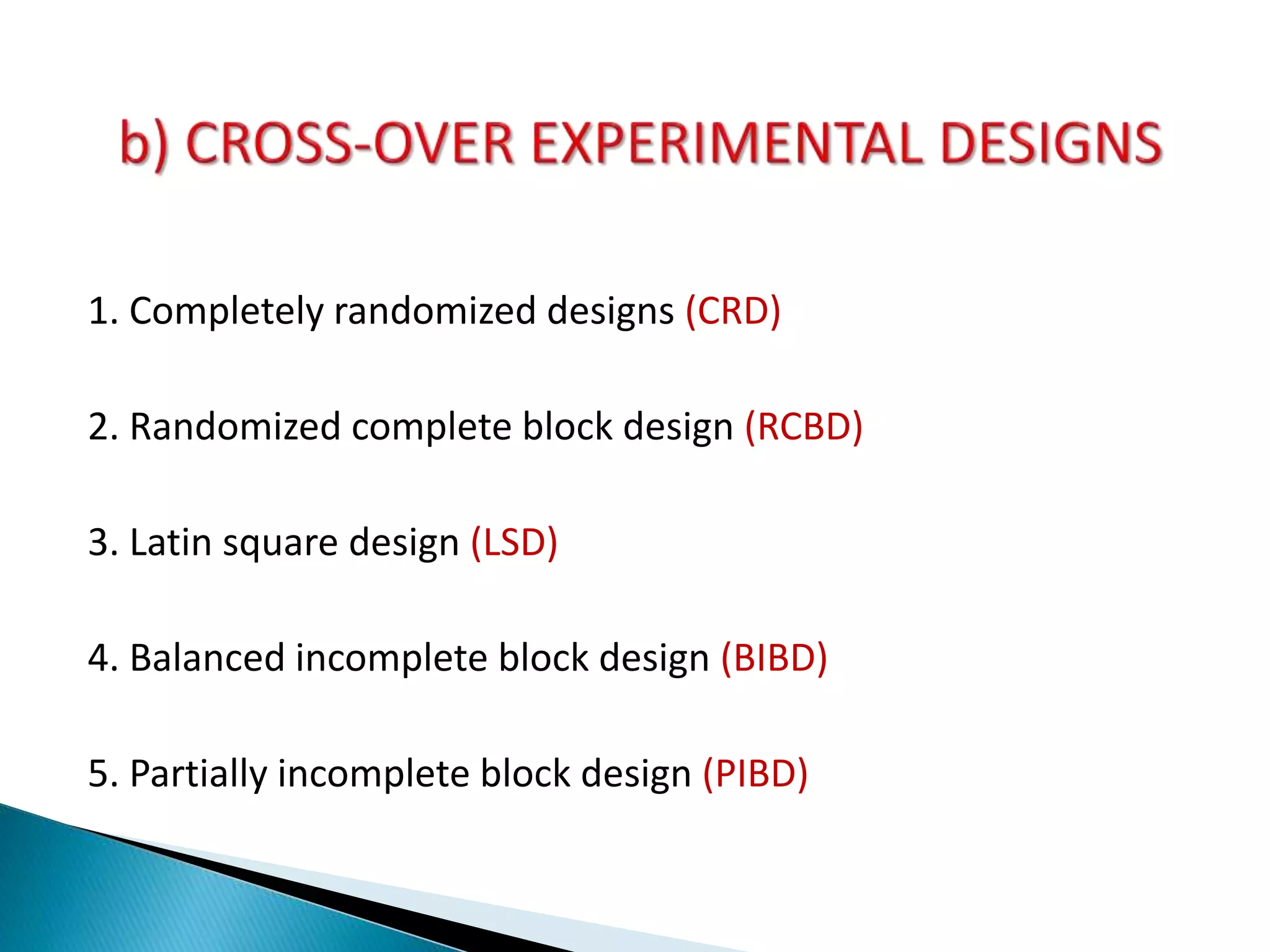
1. Completely randomized designs (CRD)
2. Randomized complete block design (RCBD)
3. Latin square design (LSD)
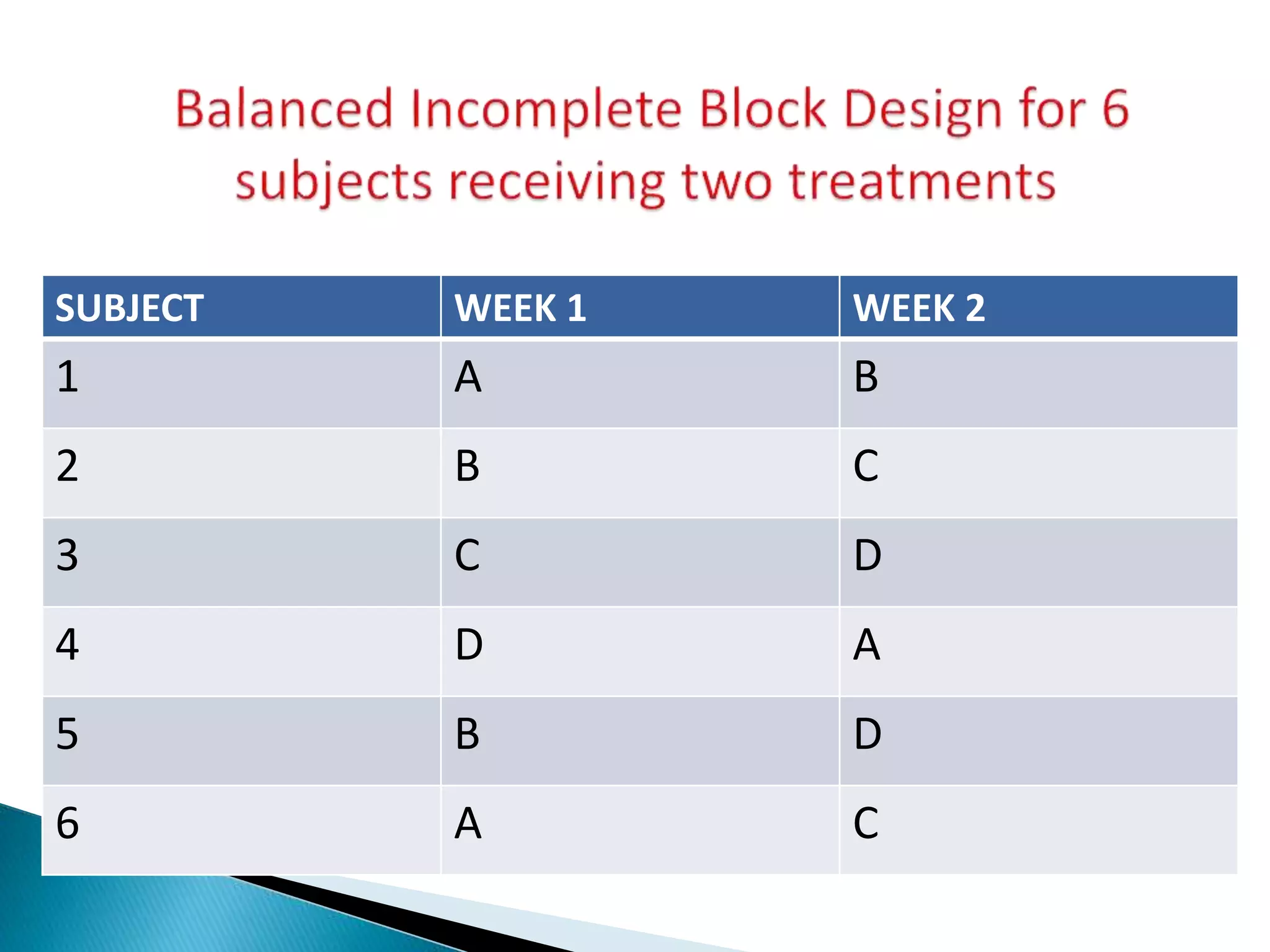
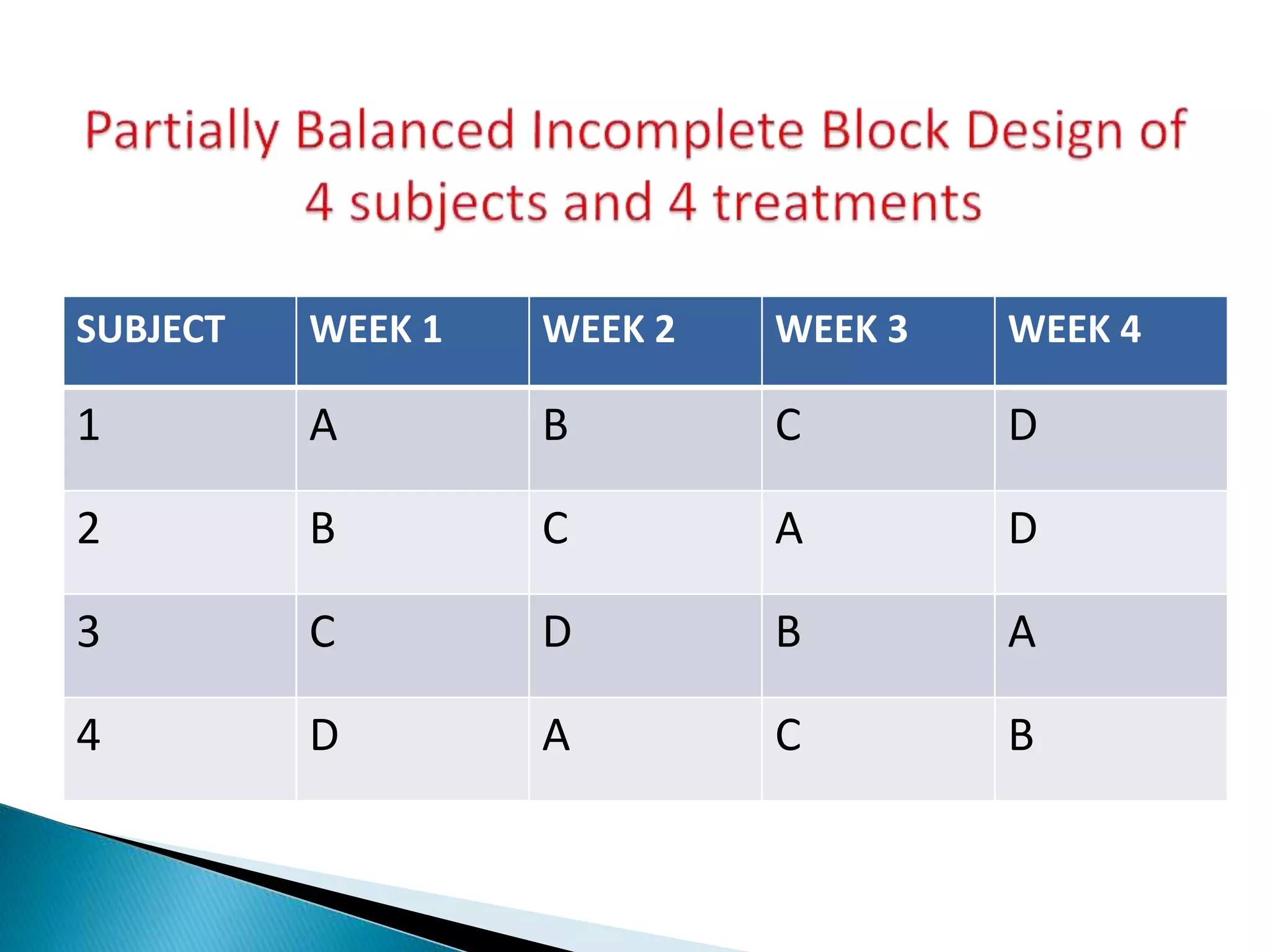
4. Balanced incomplete block design (BIBD)
5. Partially incomplete block design (PIBD)
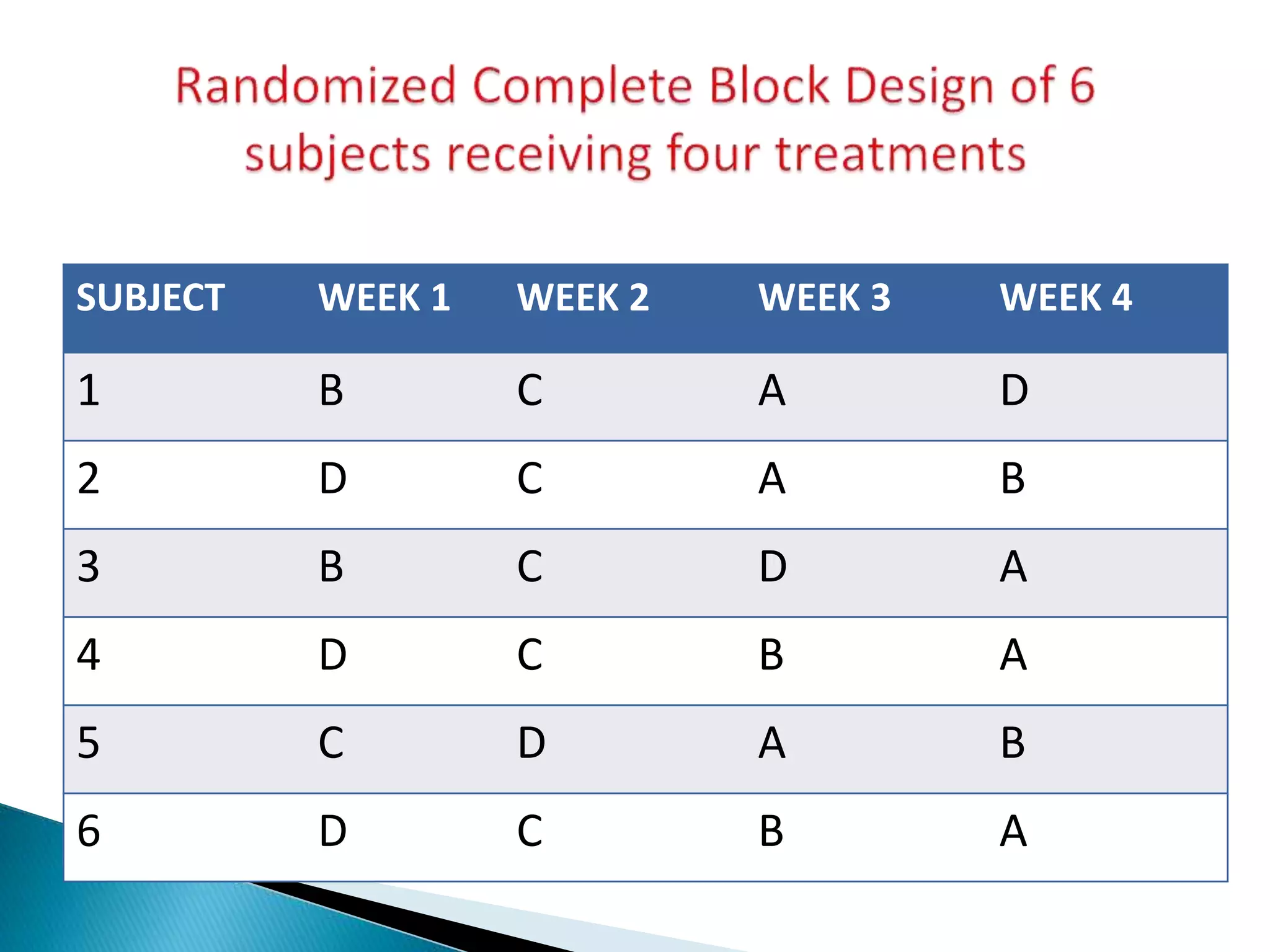
6 D C B A
SUBJECT WEEK 1 WEEK 2 WEEK 3 WEEK 4
1 B C A D
2 D C A B
3 B C D A
4 D C B A
5 C D A B
6 D C B A
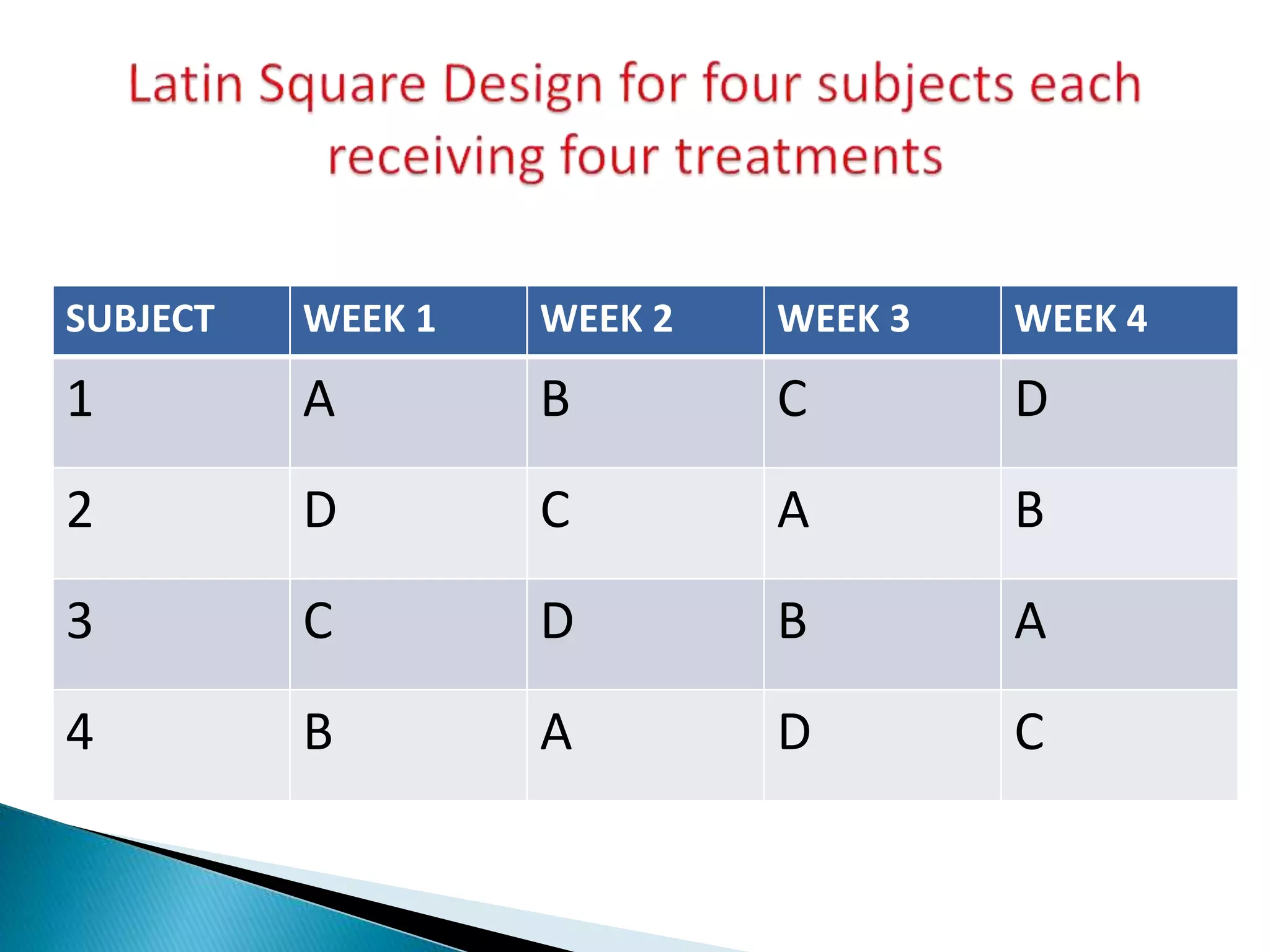
SUBJECT WEEK 1 WEEK 2 WEEK 3 WEEK 4
1 A B C D
2 D C A B
3 C D B A
4 B A D C
SUBJECT WEEK 1 WEEK 2
1 A B
2 B C
3 C D
4 D A
5 B D
6 A C
SUBJECT WEEK 1 WEEK 2 WEEK 3 WEEK 4
1 A B C D
2 B C A D
3 C D B A
4 D A C B
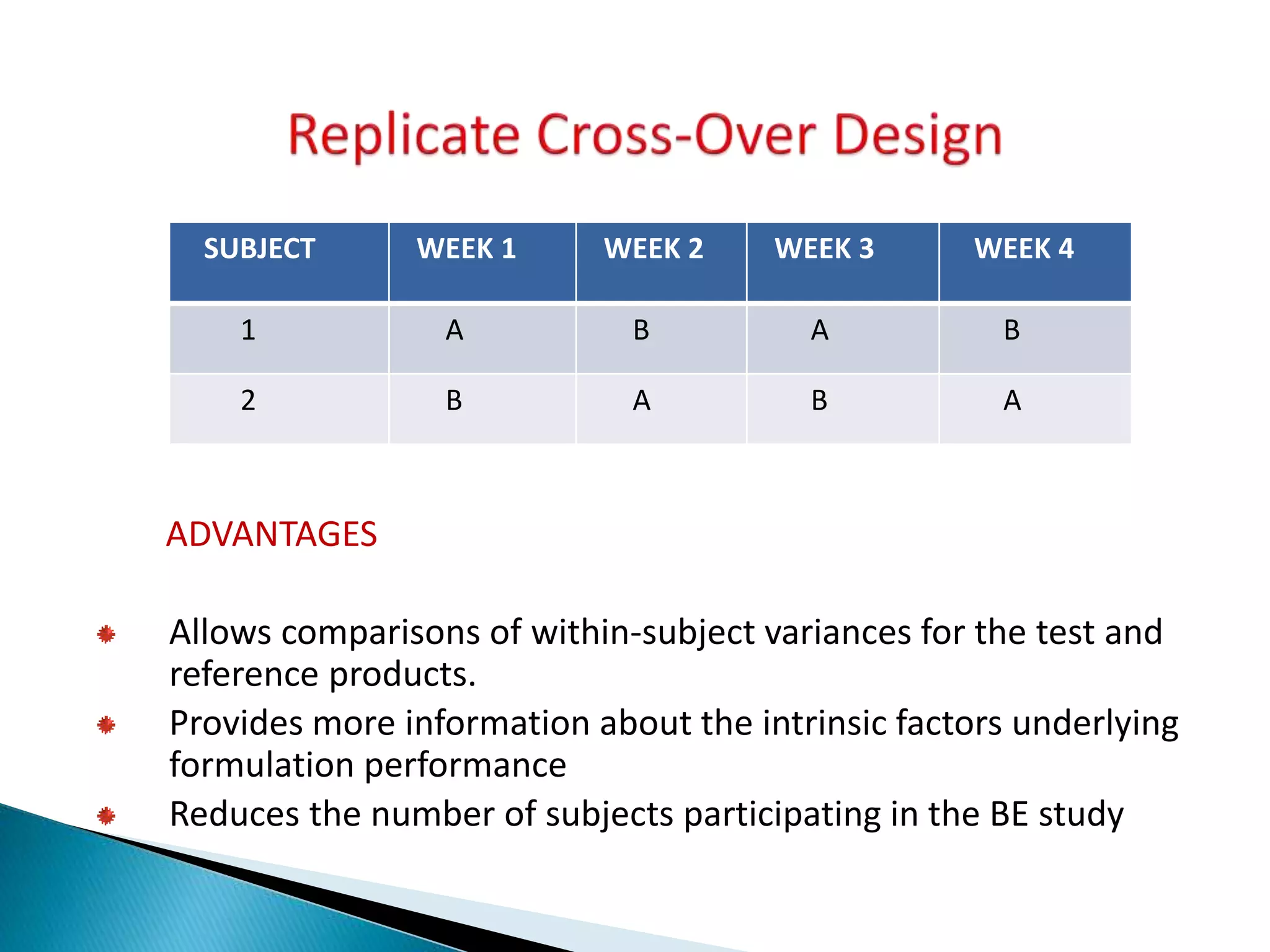
ADVANTAGES
Allows comparisons of within-subject variances for the test and
reference products.
Provides more information about the intrinsic factors underlying
formulation performance
Reduces the number of subjects participating in the BE study
SUBJECT WEEK 1 WEEK 2 WEEK 3 WEEK 4
1 A B A B
2 B A B A
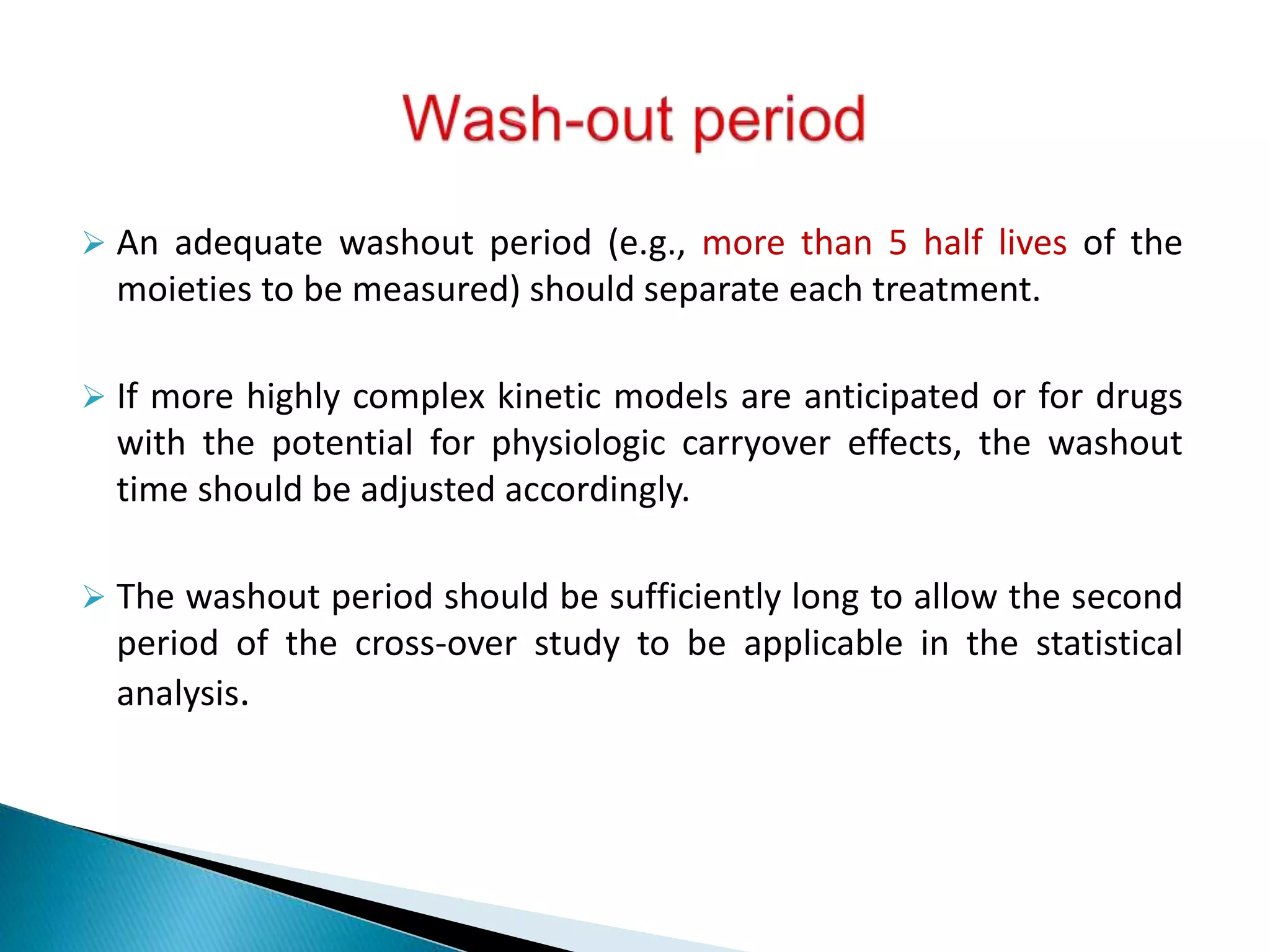
 An adequate washout period (e.g., more than 5 half lives of the
moieties to be measured) should separate each treatment.
 If more highly complex kinetic models are anticipated or for drugs
with the potential for physiologic carryover effects, the washout
time should be adjusted accordingly.
 The washout period should be sufficiently long to allow the second
period of the cross-over study to be applicable in the statistical
analysis.
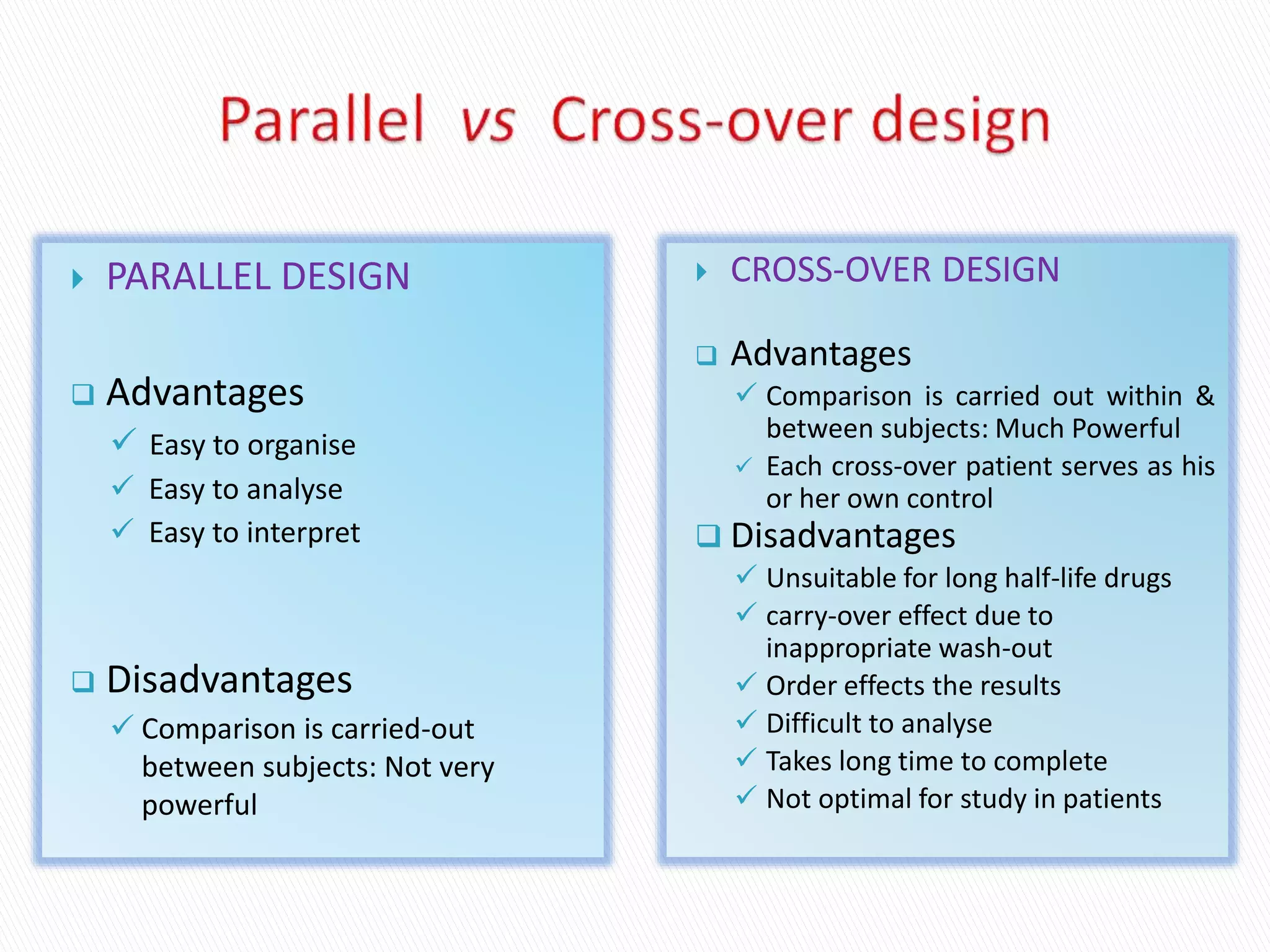
 PARALLEL DESIGN
 Advantages
 Easy to organise
 Easy to analyse
 Easy to interpret
 Disadvantages
 Comparison is carried-out
between subjects: Not very
powerful
 CROSS-OVER DESIGN
 Advantages
 Comparison is carried out within &
between subjects: Much Powerful
 Each cross-over patient serves as his
or her own control
 Disadvantages
 Unsuitable for long half-life drugs
 carry-over effect due to
inappropriate wash-out
 Order effects the results
 Difficult to analyse
 Takes long time to complete
 Not optimal for study in patients
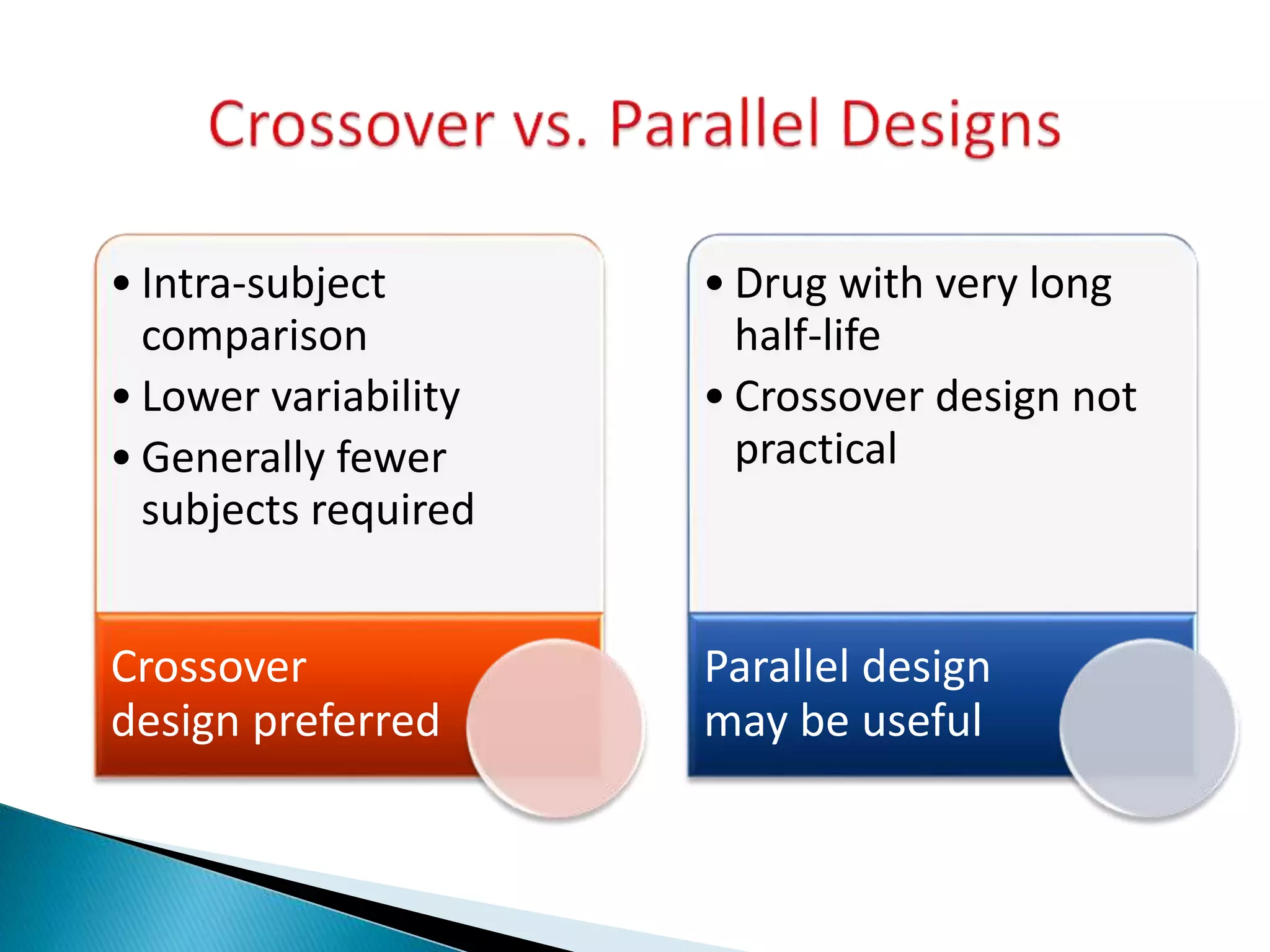
• Intra-subject
comparison
• Lower variability
• Generally fewer
subjects required
Crossover
design preferred
• Drug with very long
half-life
• Crossover design not
practical
Parallel design
may be useful
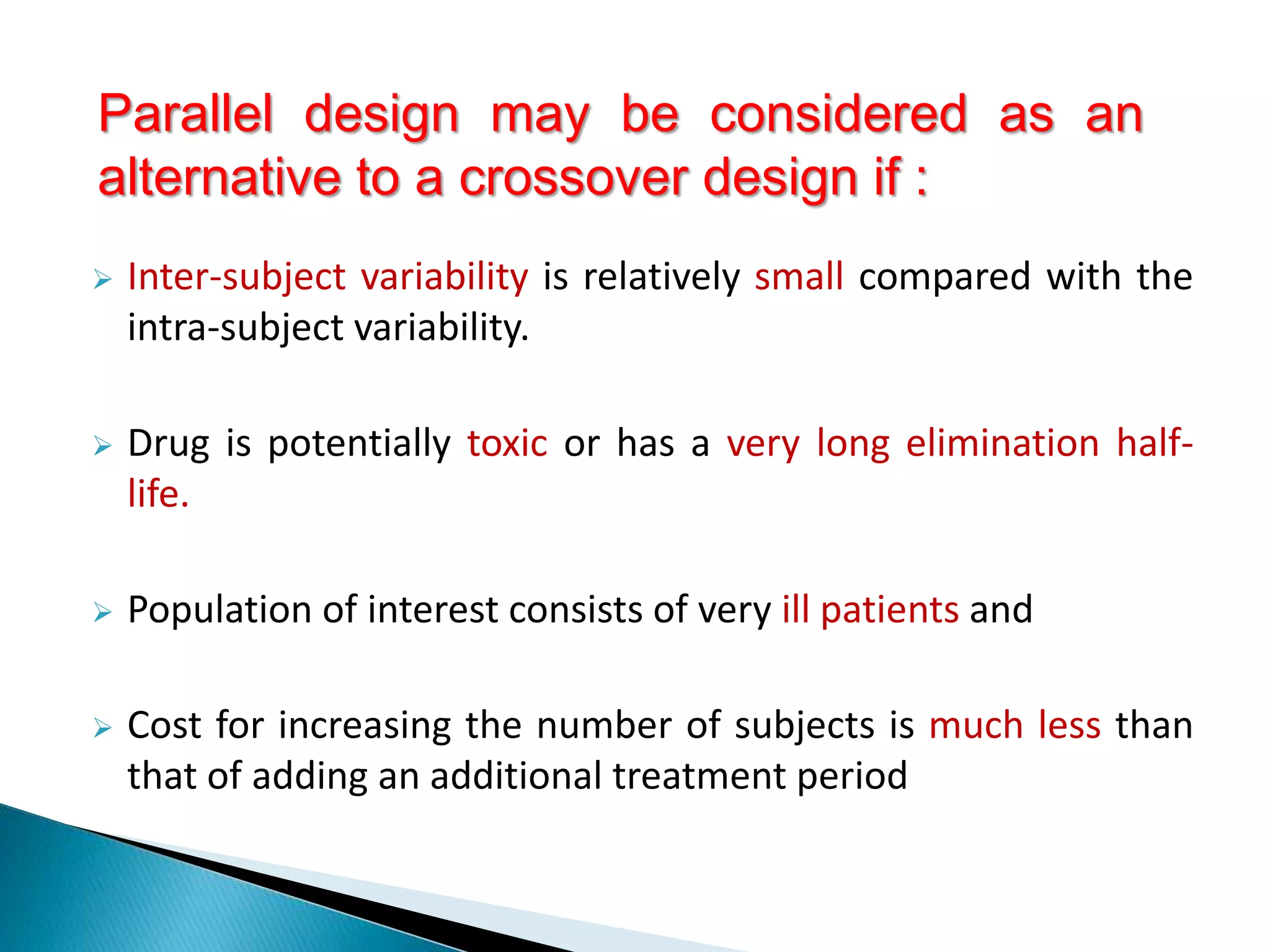
 Inter-subject variability is relatively small compared with the
intra-subject variability.
 Drug is potentially toxic or has a very long elimination half-
life.
 Population of interest consists of very ill patients and
 Cost for increasing the number of subjects is much less than
that of adding an additional treatment period
Parallel design may be considered as an
alternative to a crossover design if :
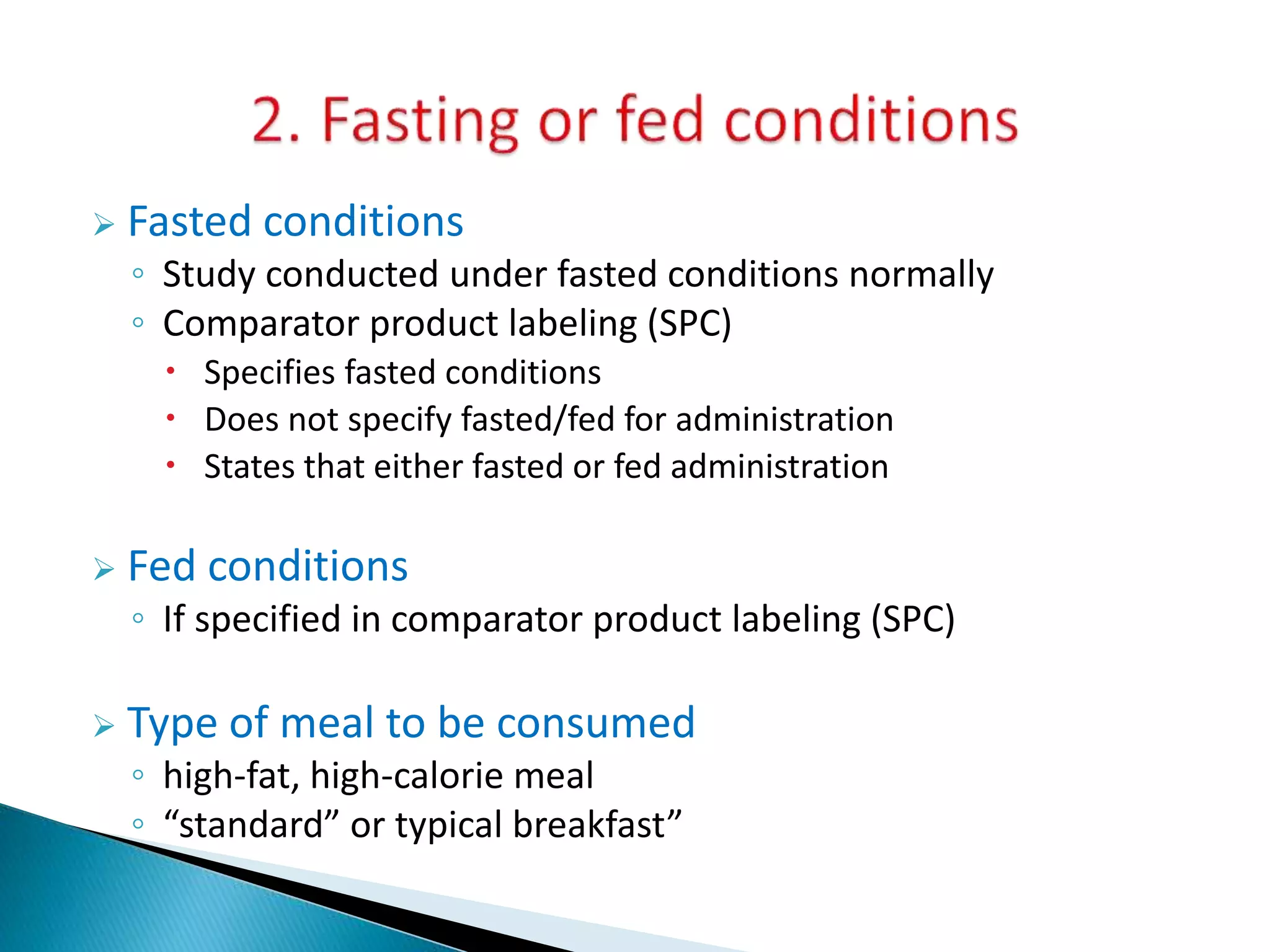
 Fasted conditions
◦ Study conducted under fasted conditions normally
◦ Comparator product labeling (SPC)
 Specifies fasted conditions
 Does not specify fasted/fed for administration
 States that either fasted or fed administration
 Fed conditions
◦ If specified in comparator product labeling (SPC)
 Type of meal to be consumed
◦ high-fat, high-calorie meal
◦ “standard” or typical breakfast”
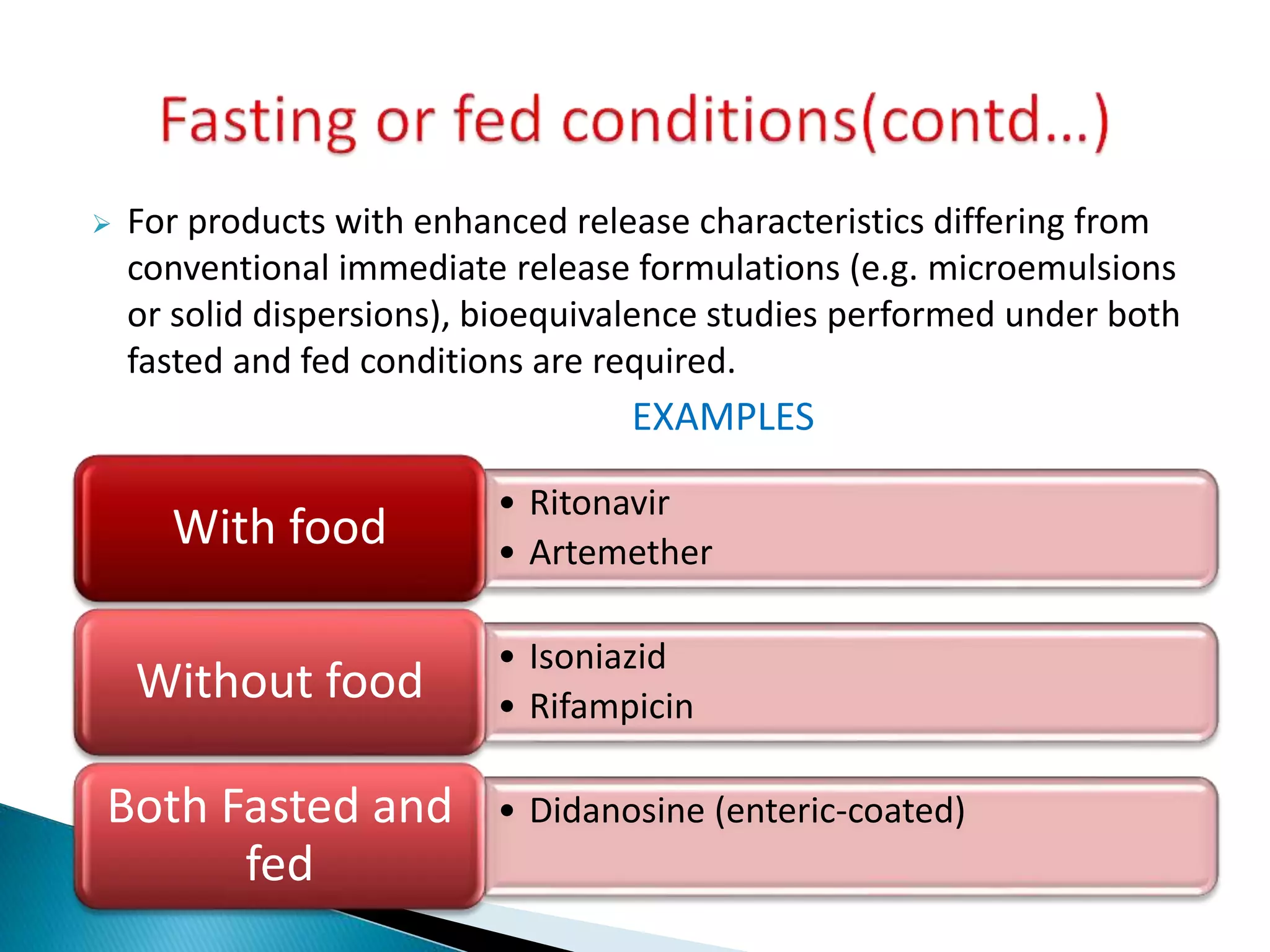
 For products with enhanced release characteristics differing from
conventional immediate release formulations (e.g. microemulsions
or solid dispersions), bioequivalence studies performed under both
fasted and fed conditions are required.
EXAMPLES
• Ritonavir
• Artemether
With food
• Isoniazid
• Rifampicin
Without food
• Didanosine (enteric-coated)Both Fasted and
fed
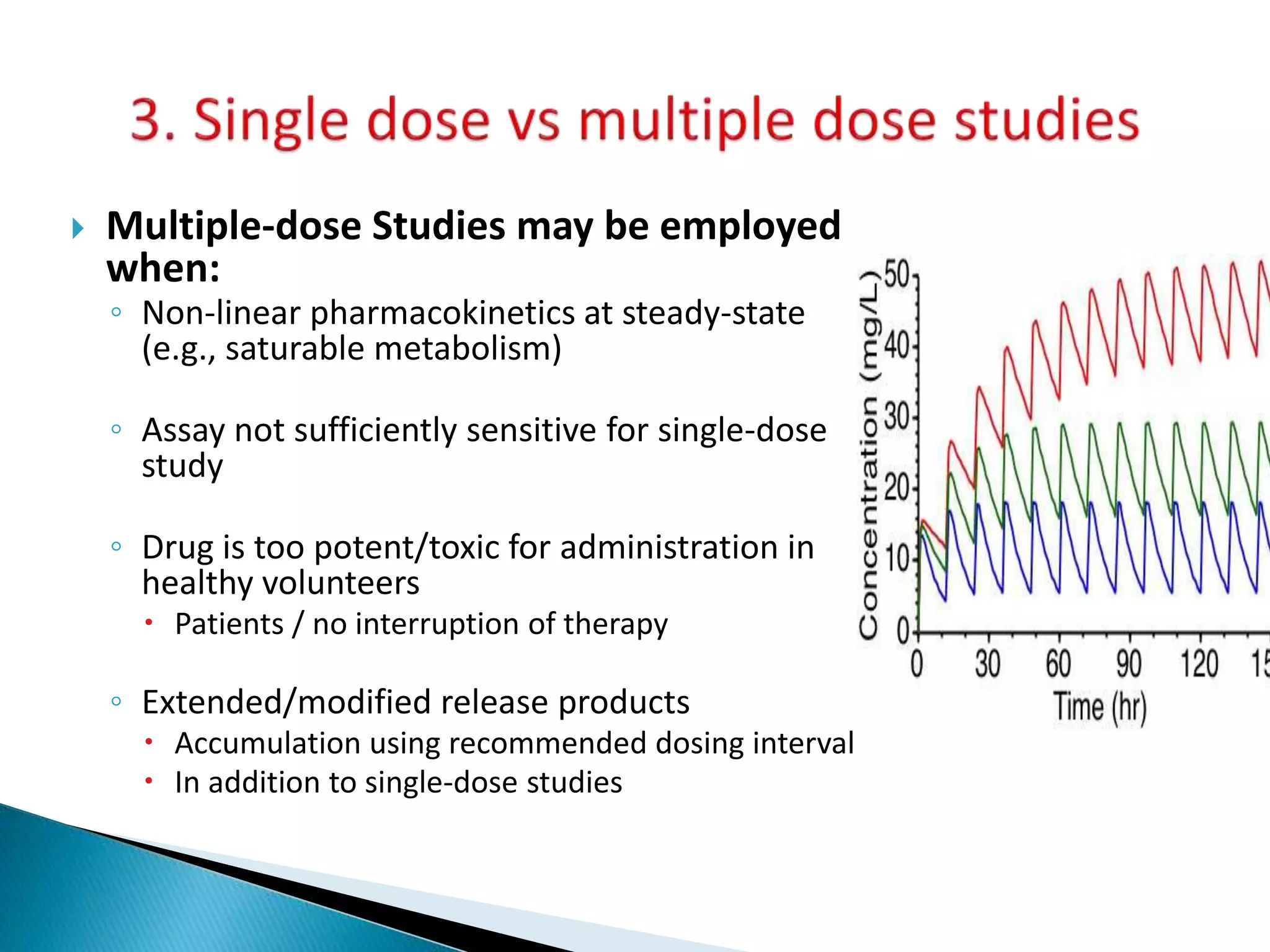
 Multiple-dose Studies may be employed
when:
◦ Non-linear pharmacokinetics at steady-state
(e.g., saturable metabolism)
◦ Assay not sufficiently sensitive for single-dose
study
◦ Drug is too potent/toxic for administration in
healthy volunteers
 Patients / no interruption of therapy
◦ Extended/modified release products
 Accumulation using recommended dosing interval
 In addition to single-dose studies
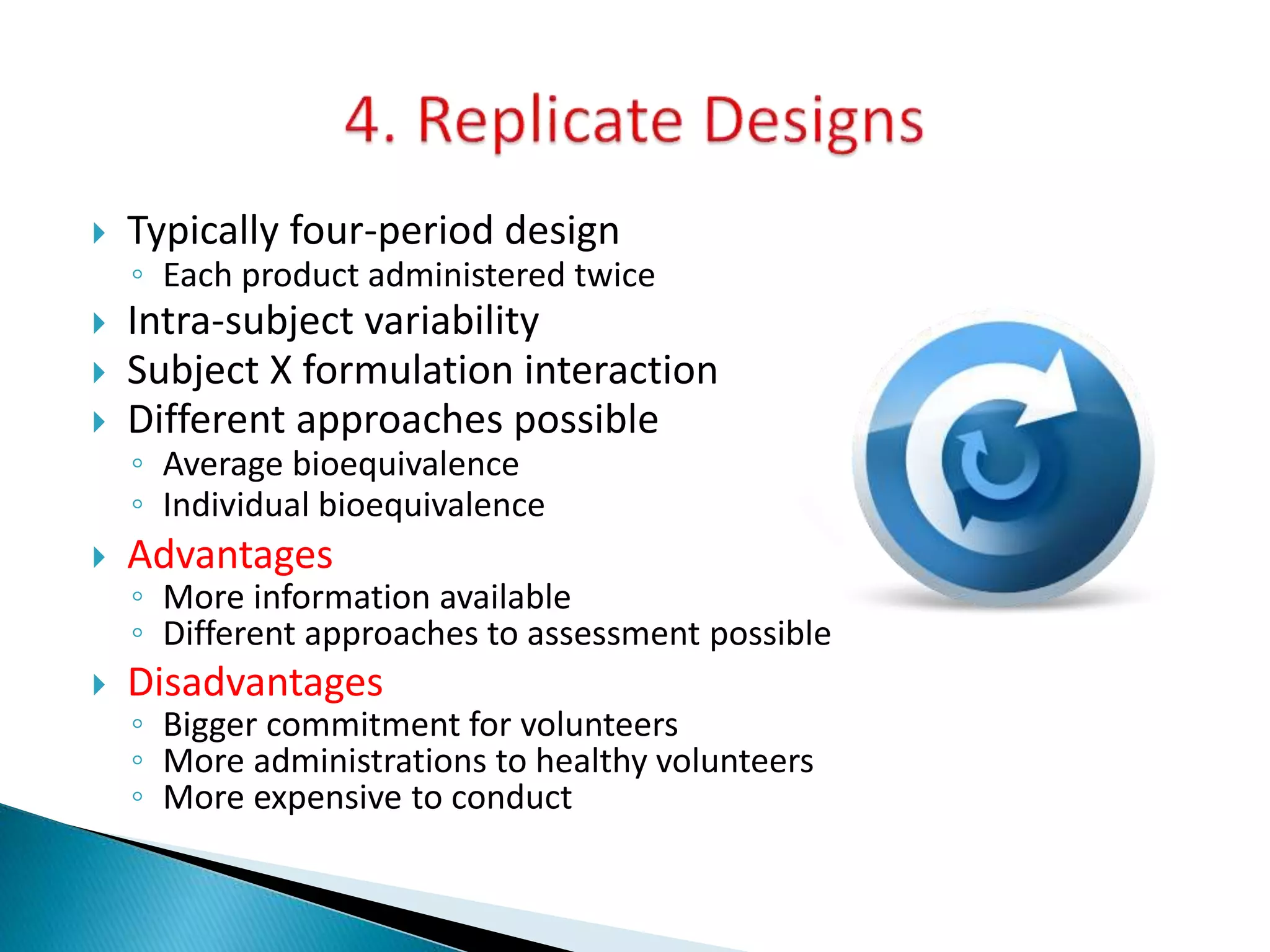
 Typically four-period design
◦ Each product administered twice
 Intra-subject variability
 Subject X formulation interaction
 Different approaches possible
◦ Average bioequivalence
◦ Individual bioequivalence
 Advantages
◦ More information available
◦ Different approaches to assessment possible
 Disadvantages
◦ Bigger commitment for volunteers
◦ More administrations to healthy volunteers
◦ More expensive to conduct
 1. STANDARDISATION
To minimise the variability of all factors involved except that
of the products being tested. It is recommended to
standardise diet, fluid intake and exercise.
◦ The time of day for ingestion should be specified.
◦ FLUID INTAKE WITH DRUG As fluid intake may influence gastric
passage for oral administration forms, the test and reference
products should be administered with a standardised volume of
fluid (at least 150 ml).
◦ POSTURE AND PHYSICAL ACTIVITY As the bioavailability of an active
moiety from a dosage form could be dependent upon
gastrointestinal transit times and regional blood flows, posture and
physical activity may need to be standardised.
 FOOD AND FLUID INTAKE may interact with circulatory, gastrointestinal,
hepatic or renal function (e.g. alcoholic or xanthine-containing beverages
or grapefruit juice).
 CONCOMINANT MEDICATION Subjects should not take any other
concomitant medication (including herbal remedies) for an appropriate
interval before as well as during the study. In case concomitant
medication is unavoidable and a subject is administered other drugs, the
use must be reported (dose and time of administration) and possible
effects on the study outcome must be addressed.
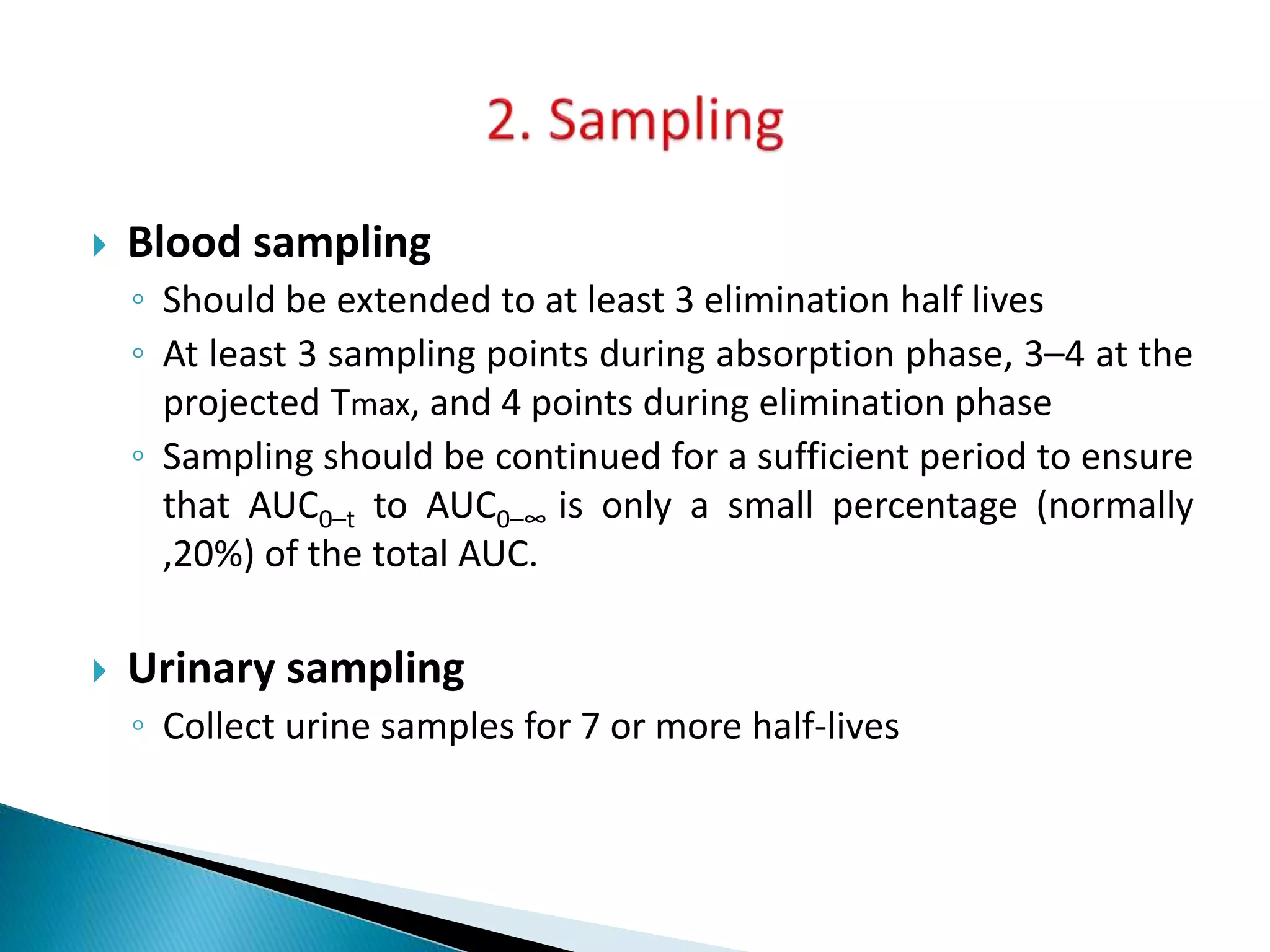
 Blood sampling
◦ Should be extended to at least 3 elimination half lives
◦ At least 3 sampling points during absorption phase, 3–4 at the
projected Tmax, and 4 points during elimination phase
◦ Sampling should be continued for a sufficient period to ensure
that AUC0–t to AUC0–∞ is only a small percentage (normally
,20%) of the total AUC.
 Urinary sampling
◦ Collect urine samples for 7 or more half-lives
 Should address the following characteristics of the
assay:
a) Stability of stock solutions.
b) Stability of the analyte(s) in the biological matrix under
processing conditions and during the entire period of storage.
c) Specificity.
d) Accuracy.
e) Precision.
f) Limits of detection and quantification.
g) Response function.
i) Robustness and ruggedness
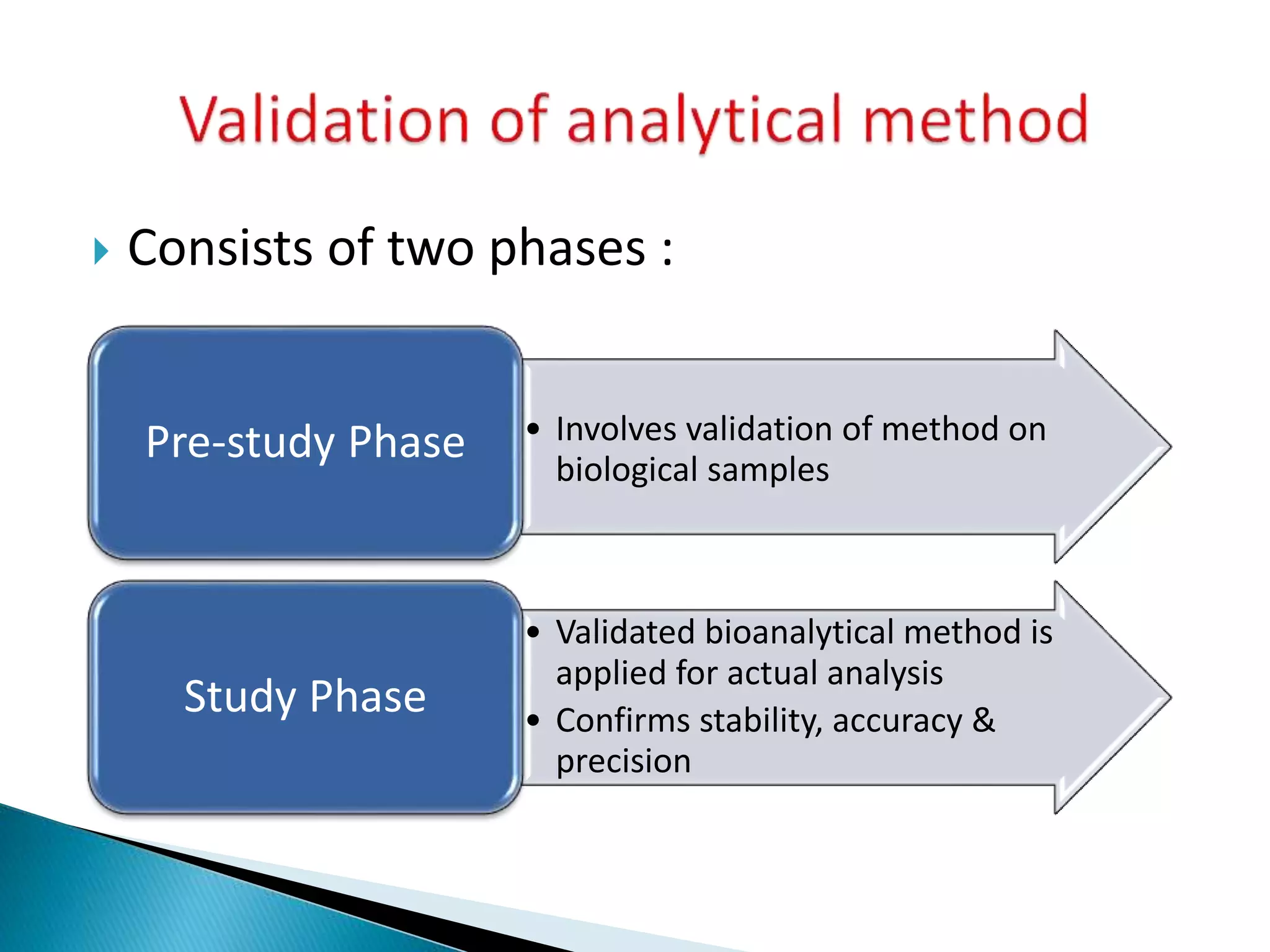
 Consists of two phases :
• Involves validation of method on
biological samples
Pre-study Phase
• Validated bioanalytical method is
applied for actual analysis
• Confirms stability, accuracy &
precision
Study Phase
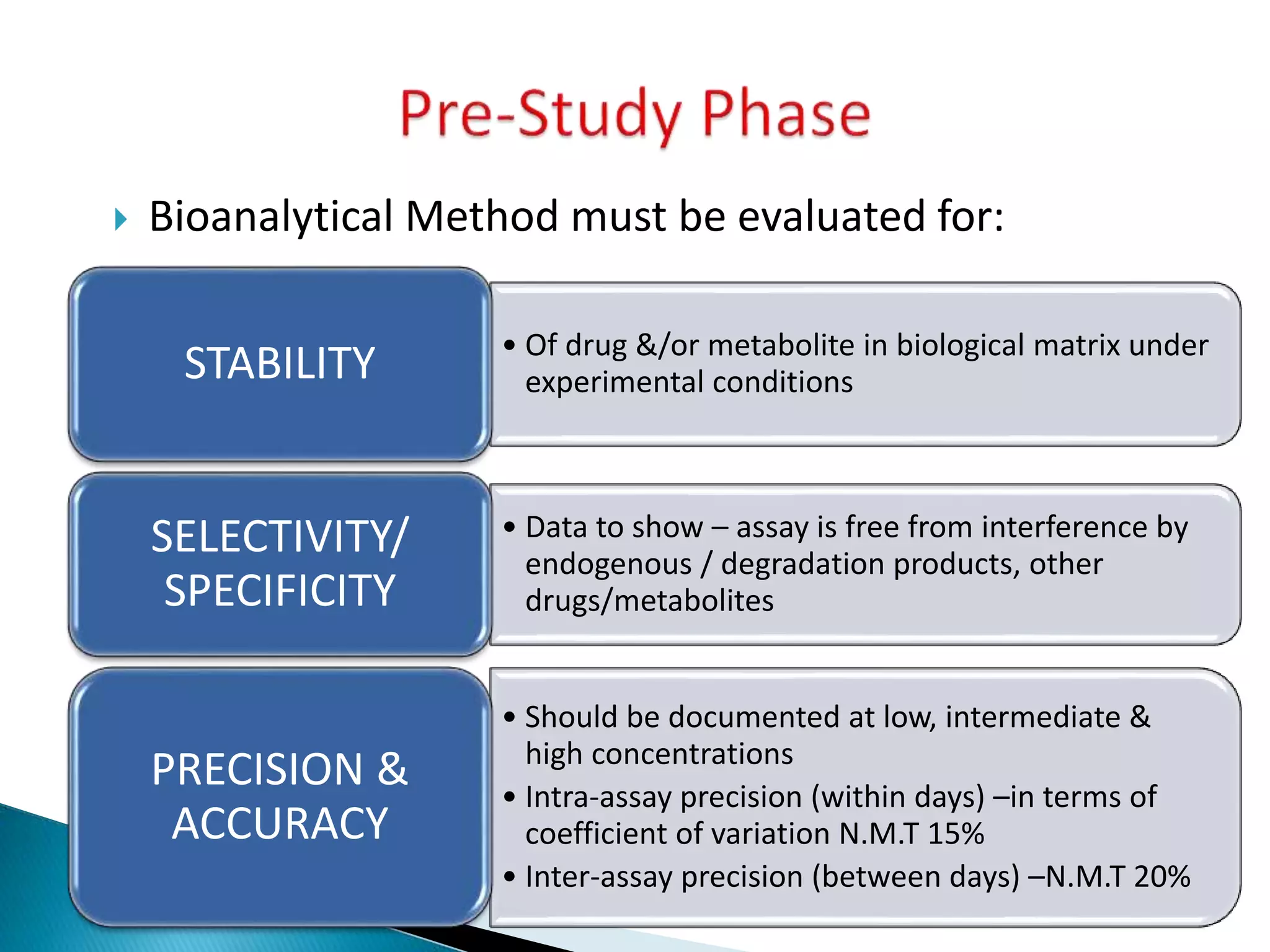
 Bioanalytical Method must be evaluated for:
• Of drug &/or metabolite in biological matrix under
experimental conditionsSTABILITY
• Data to show – assay is free from interference by
endogenous / degradation products, other
drugs/metabolites
SELECTIVITY/
SPECIFICITY
• Should be documented at low, intermediate &
high concentrations
• Intra-assay precision (within days) –in terms of
coefficient of variation N.M.T 15%
• Inter-assay precision (between days) –N.M.T 20%
PRECISION &
ACCURACY
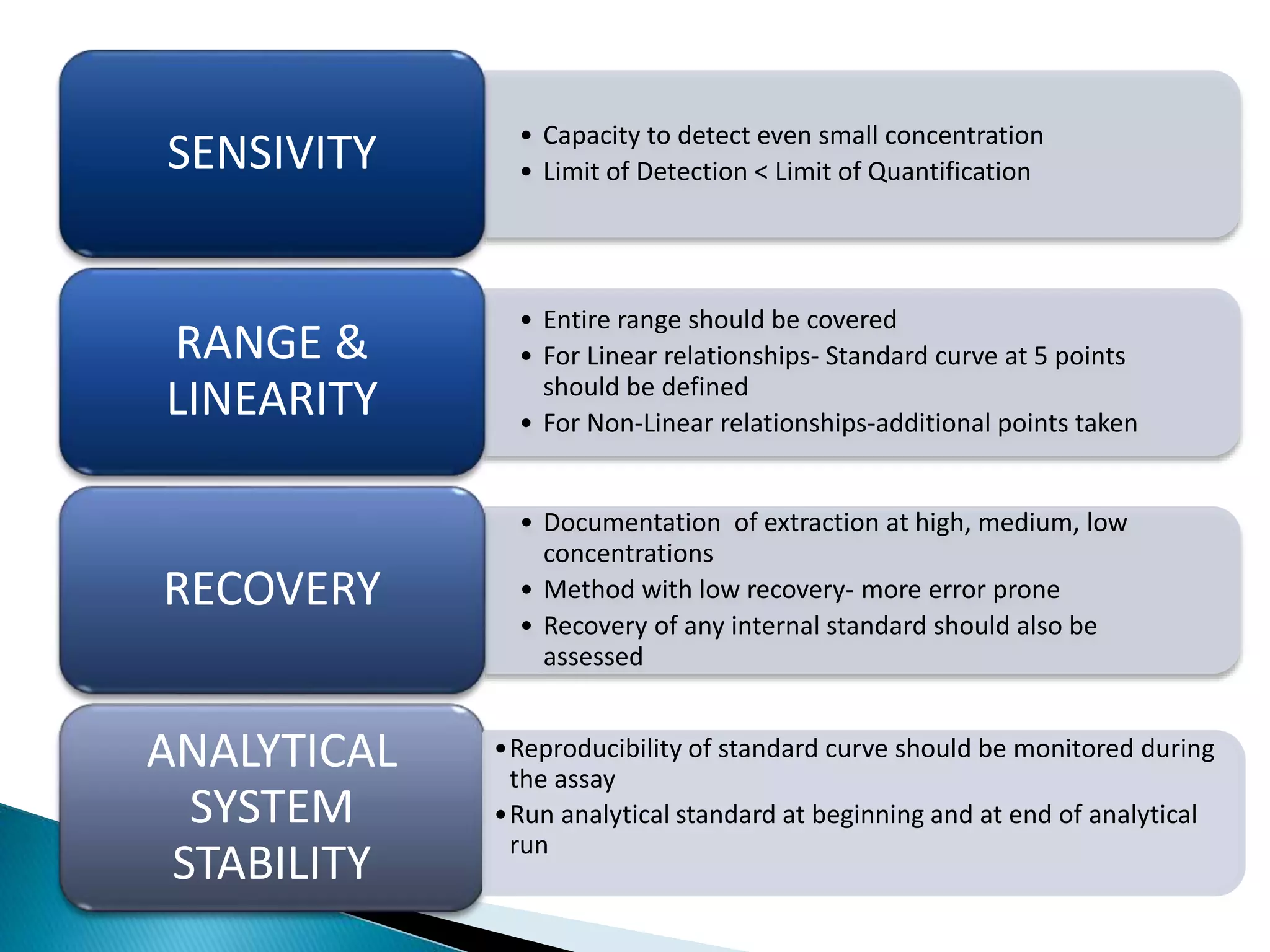
• Capacity to detect even small concentration
• Limit of Detection < Limit of QuantificationSENSIVITY
• Entire range should be covered
• For Linear relationships- Standard curve at 5 points
should be defined
• For Non-Linear relationships-additional points taken
RANGE &
LINEARITY
• Documentation of extraction at high, medium, low
concentrations
• Method with low recovery- more error prone
• Recovery of any internal standard should also be
assessed
RECOVERY
ANALYTICAL
SYSTEM
STABILITY
•Reproducibility of standard curve should be monitored during
the assay
•Run analytical standard at beginning and at end of analytical
run
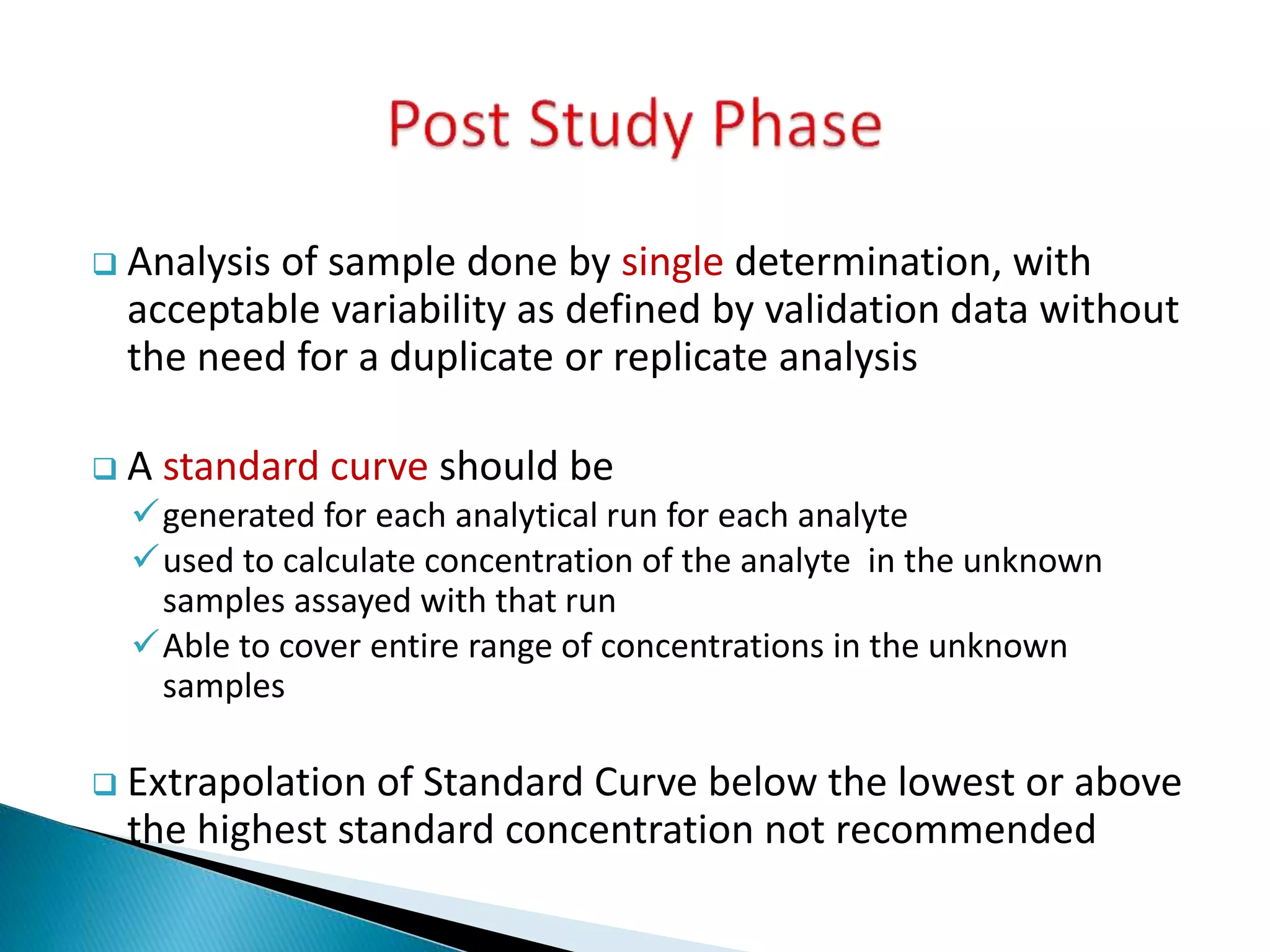
 Analysis of sample done by single determination, with
acceptable variability as defined by validation data without
the need for a duplicate or replicate analysis
 A standard curve should be
generated for each analytical run for each analyte
used to calculate concentration of the analyte in the unknown
samples assayed with that run
Able to cover entire range of concentrations in the unknown
samples
 Extrapolation of Standard Curve below the lowest or above
the highest standard concentration not recommended
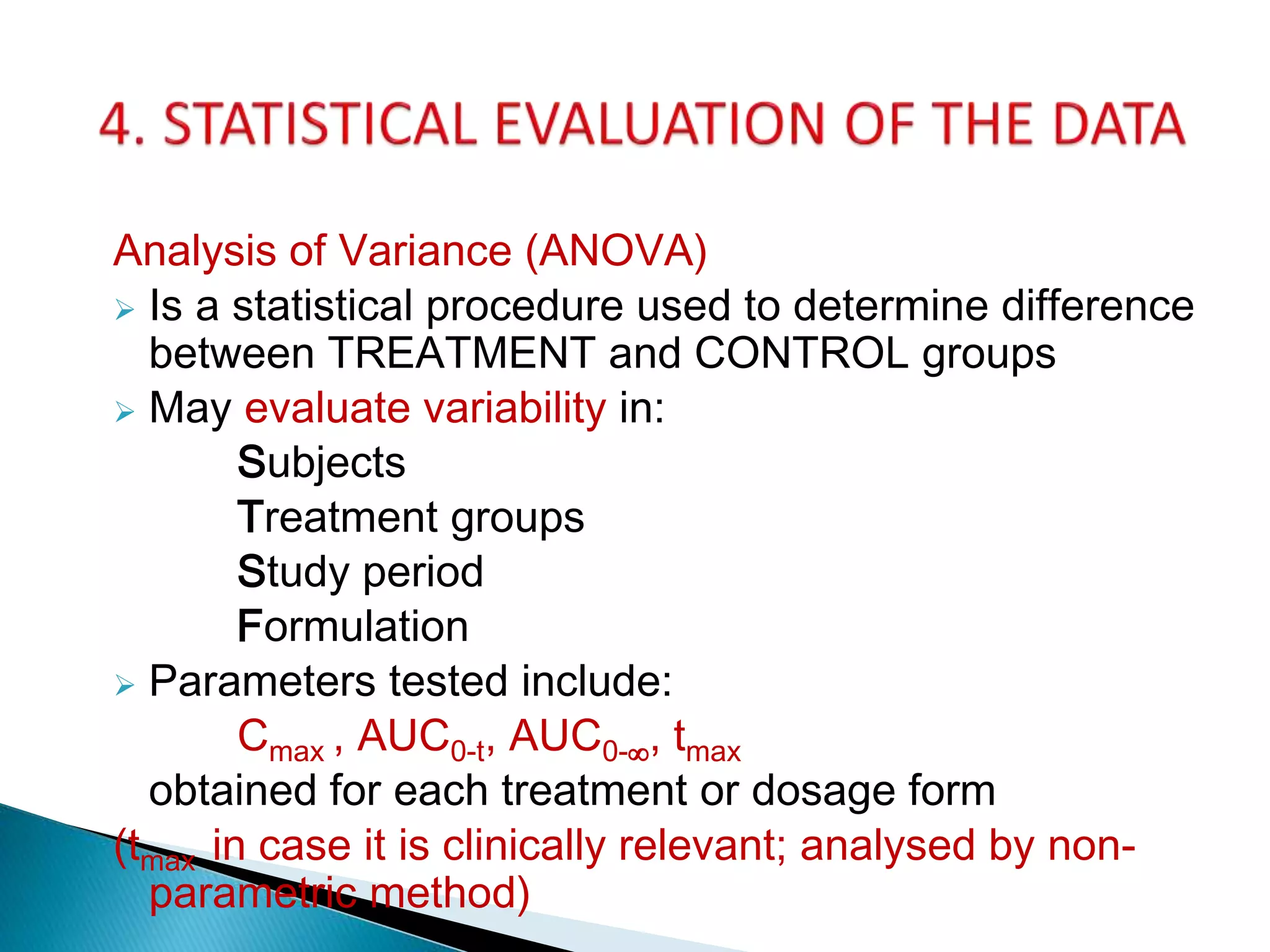
Analysis of Variance (ANOVA)
 Is a statistical procedure used to determine difference
between TREATMENT and CONTROL groups
 May evaluate variability in:
Subjects
Treatment groups
Study period
Formulation
 Parameters tested include:
Cmax , AUC0-t, AUC0-∞, tmax
obtained for each treatment or dosage form
(tmax in case it is clinically relevant; analysed by non-
parametric method)
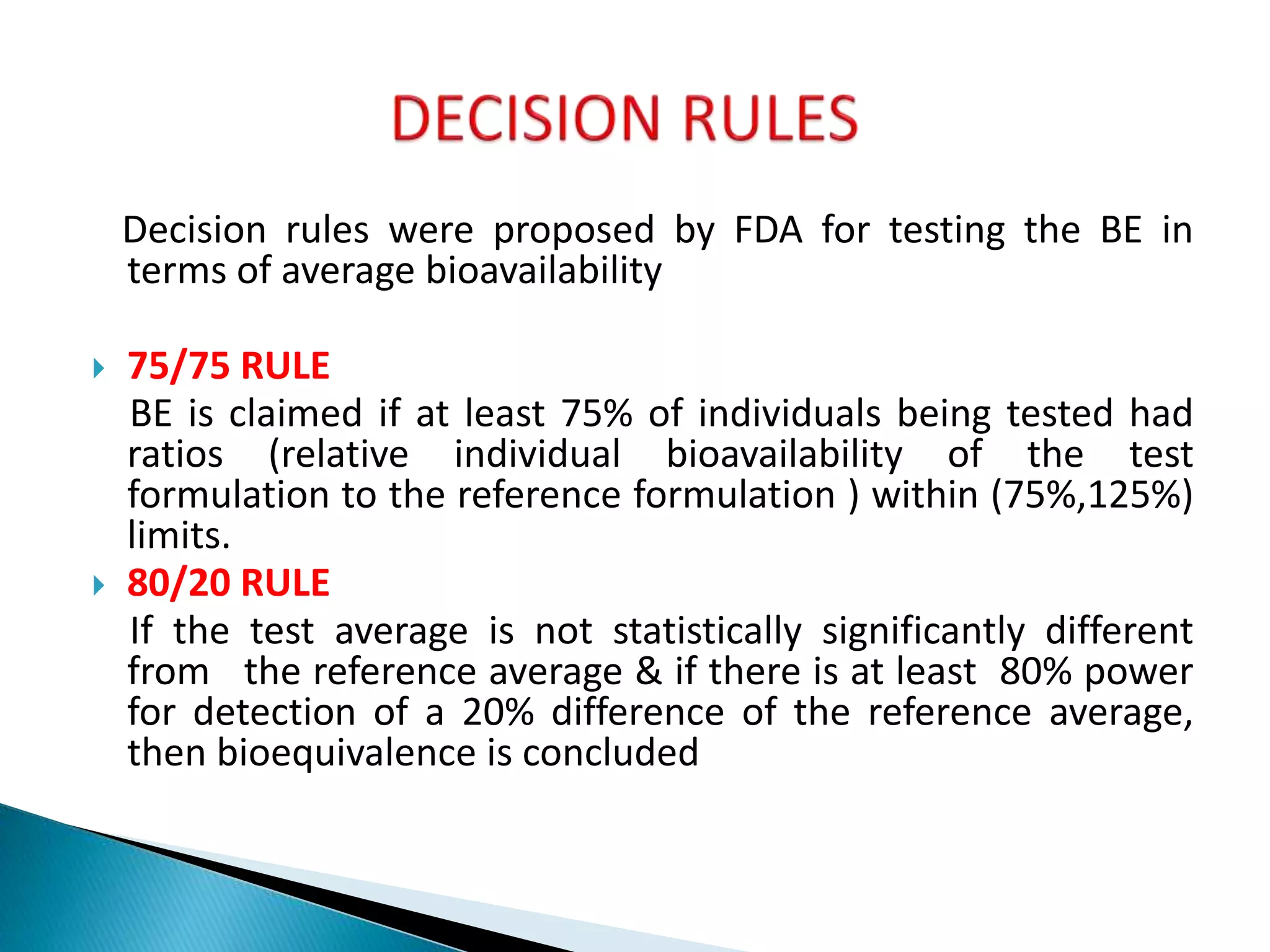
Decision rules were proposed by FDA for testing the BE in
terms of average bioavailability
 75/75 RULE
BE is claimed if at least 75% of individuals being tested had
ratios (relative individual bioavailability of the test
formulation to the reference formulation ) within (75%,125%)
limits.
 80/20 RULE
If the test average is not statistically significantly different
from the reference average & if there is at least 80% power
for detection of a 20% difference of the reference average,
then bioequivalence is concluded
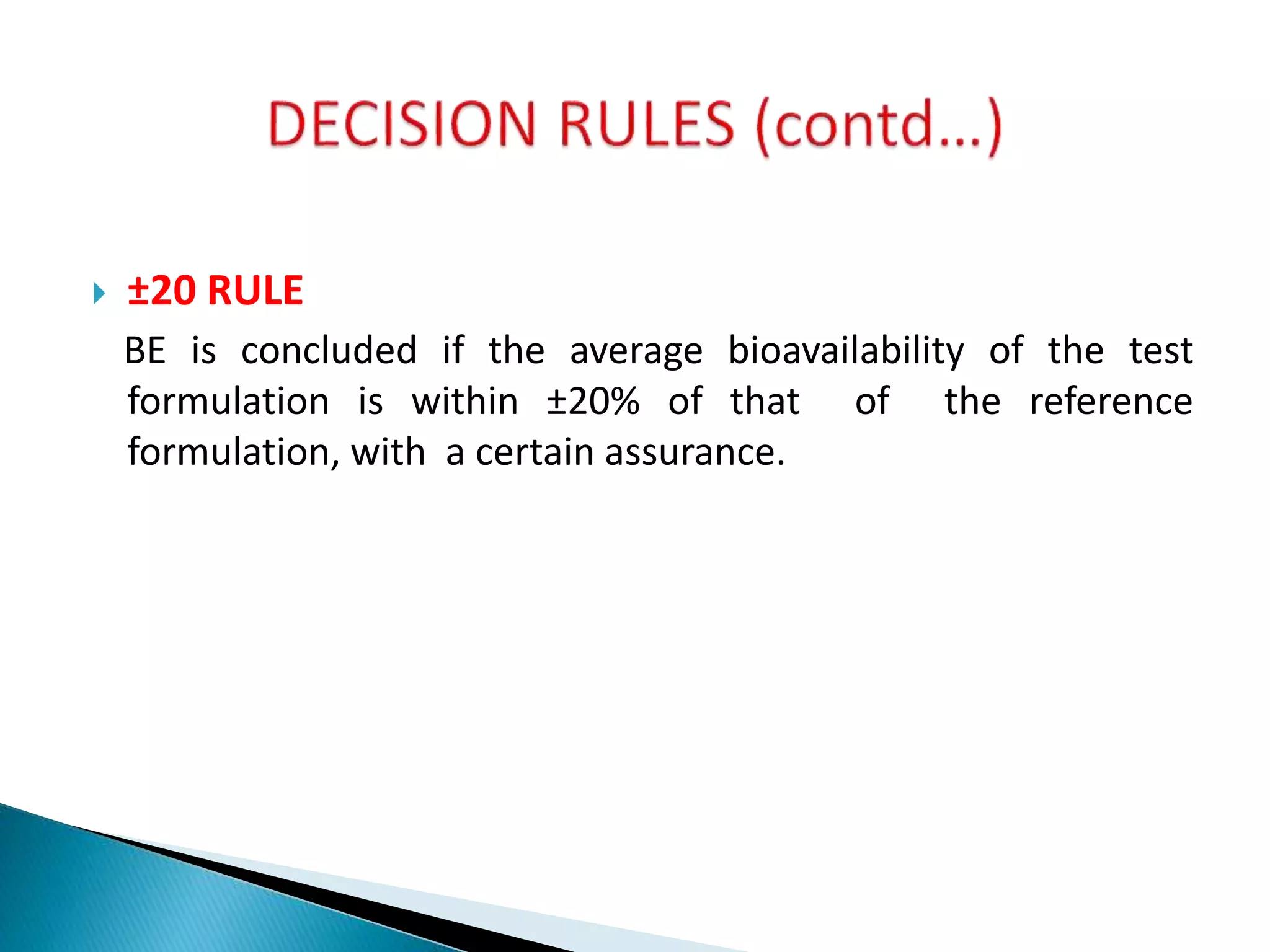
 ±20 RULE
BE is concluded if the average bioavailability of the test
formulation is within ±20% of that of the reference
formulation, with a certain assurance.
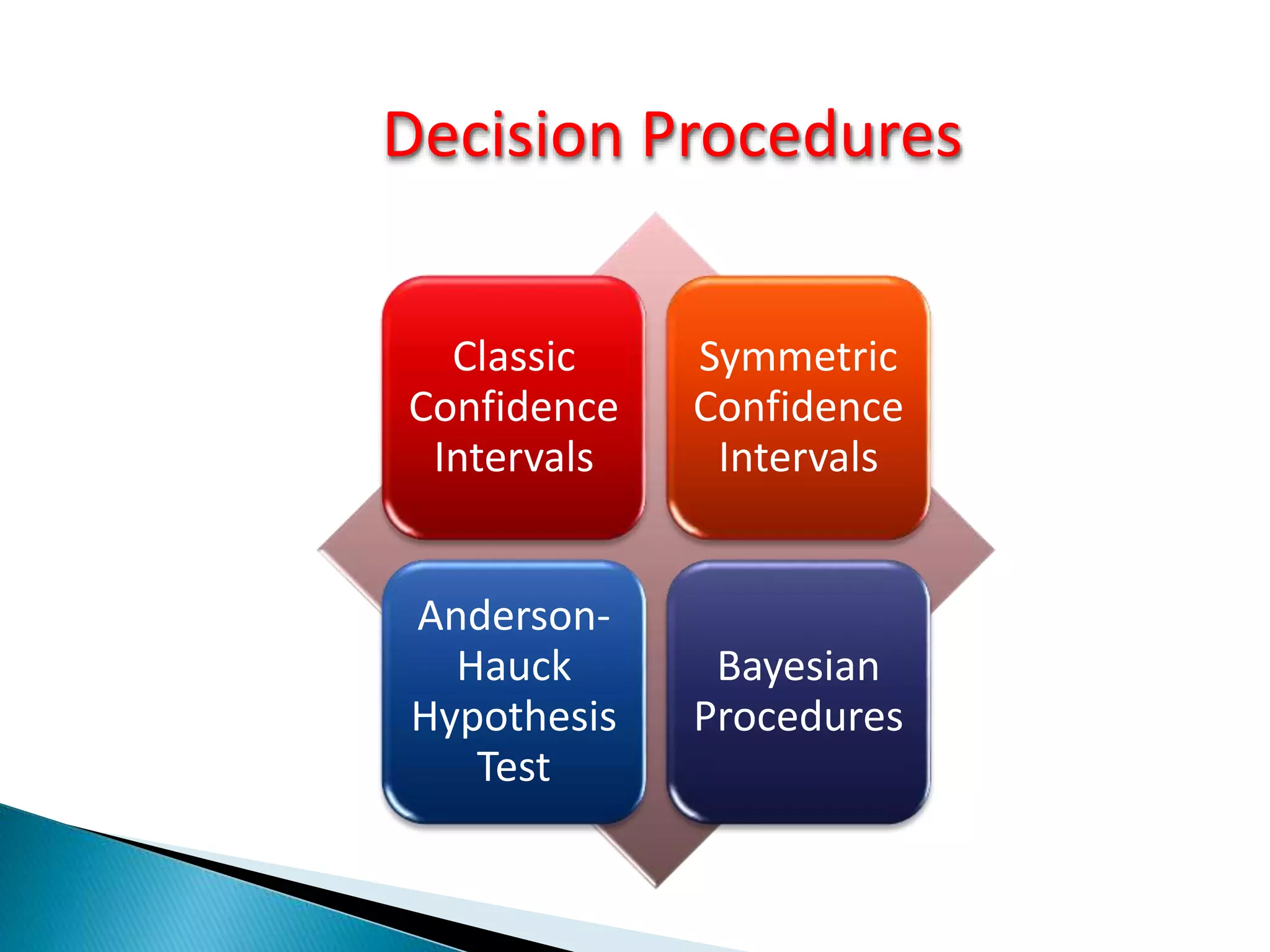
Classic
Confidence
Intervals
Symmetric
Confidence
Intervals
Anderson-
Hauck
Hypothesis
Test
Bayesian
Procedures
Decision Procedures
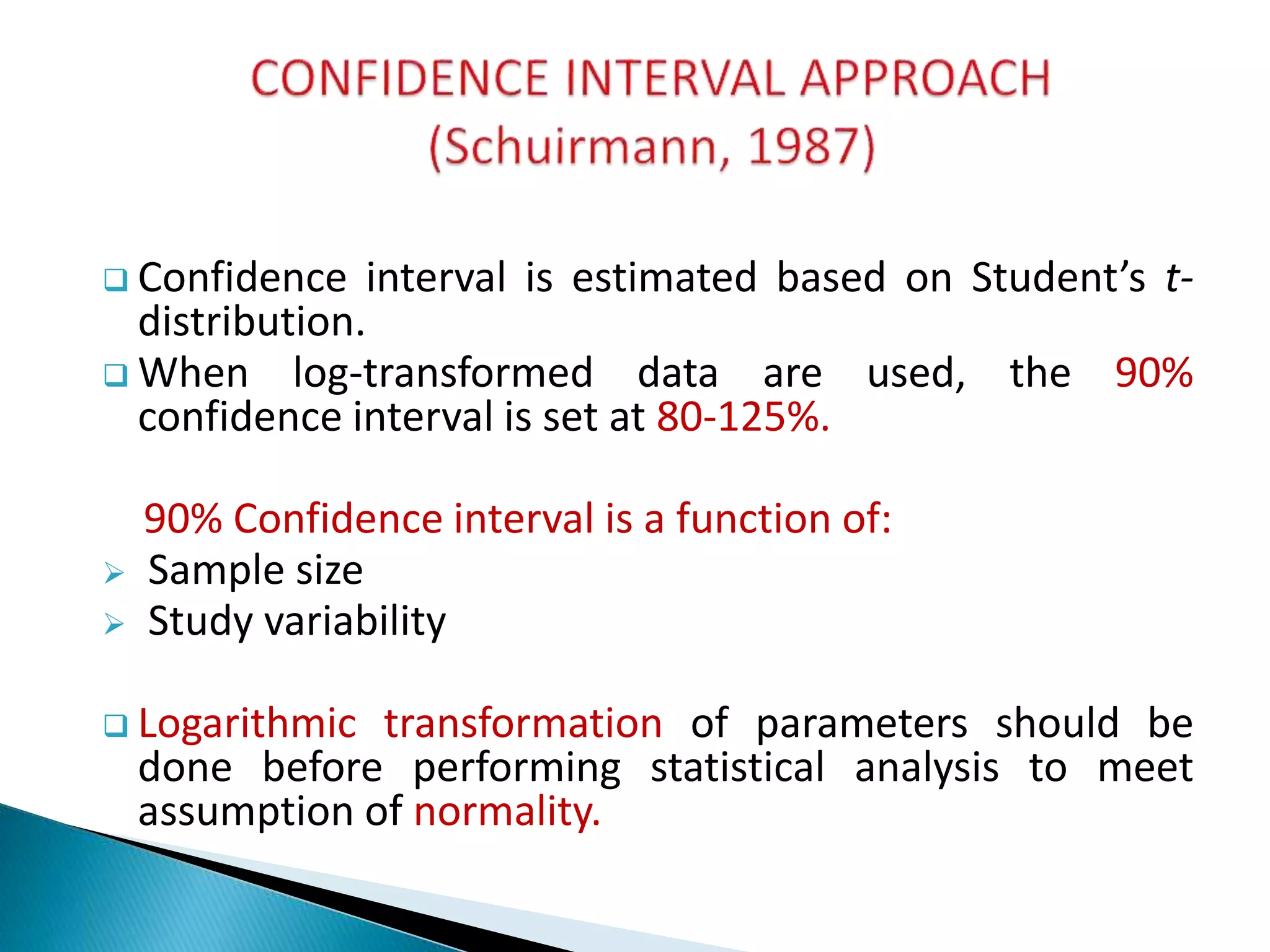
 Confidence interval is estimated based on Student’s t-
distribution.
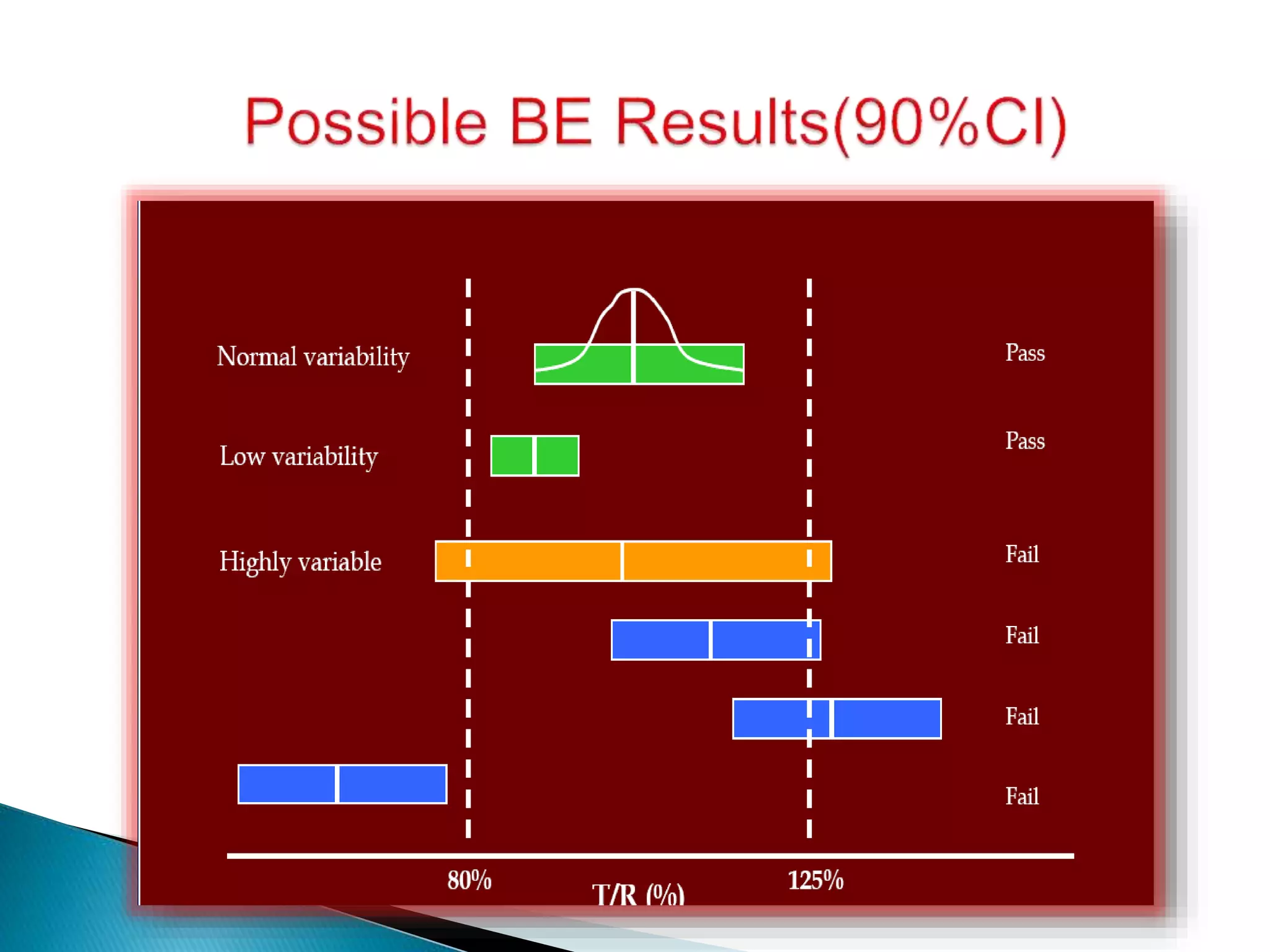
 When log-transformed data are used, the 90%
confidence interval is set at 80-125%.
90% Confidence interval is a function of:
 Sample size
 Study variability
 Logarithmic transformation of parameters should be
done before performing statistical analysis to meet
assumption of normality.

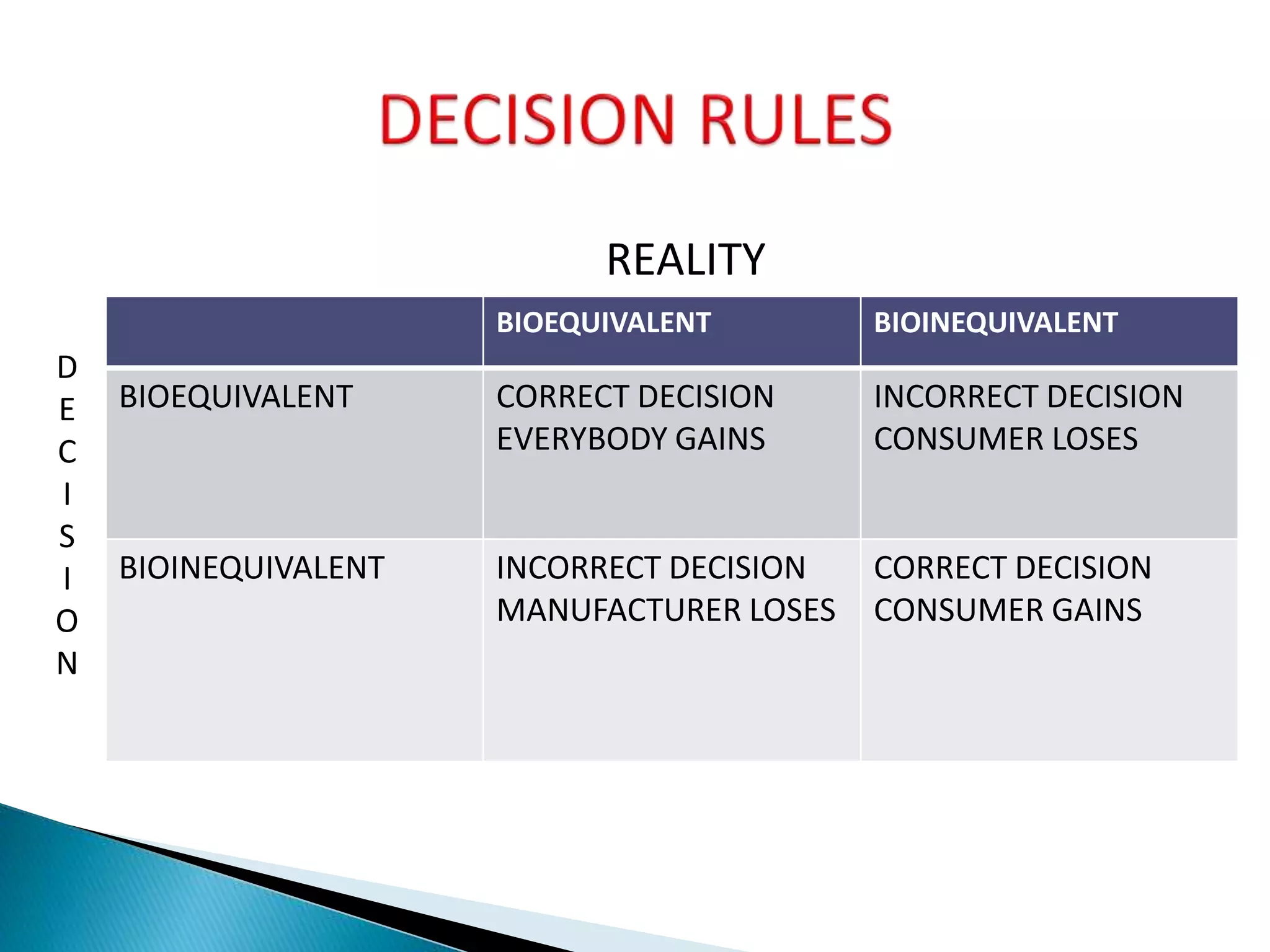
BIOEQUIVALENT BIOINEQUIVALENT
BIOEQUIVALENT CORRECT DECISION
EVERYBODY GAINS
INCORRECT DECISION
CONSUMER LOSES
BIOINEQUIVALENT INCORRECT DECISION
MANUFACTURER LOSES
CORRECT DECISION
CONSUMER GAINS
REALITY
D
E
C
I
S
I
O
N
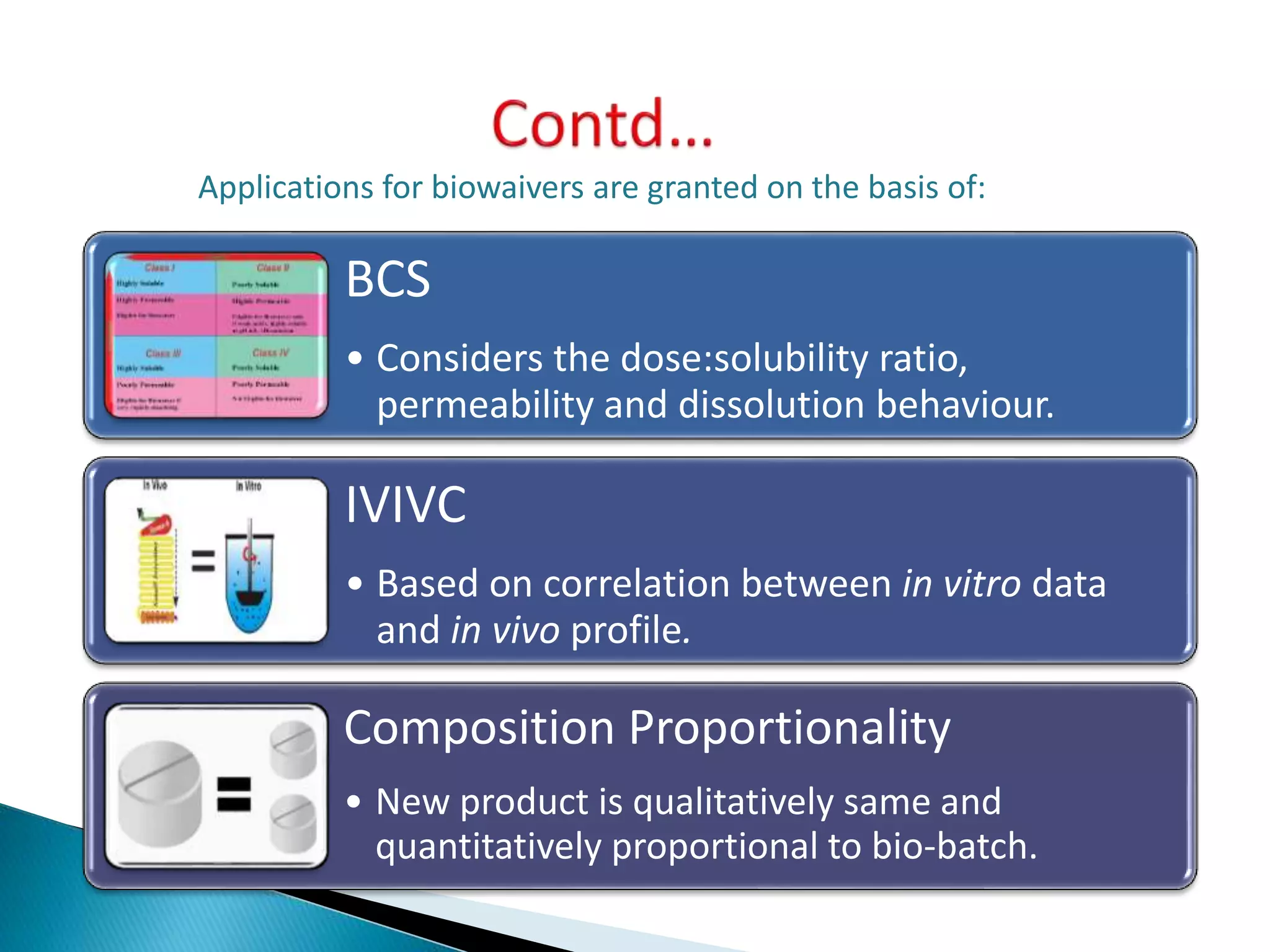
BCS
• Considers the dose:solubility ratio,
permeability and dissolution behaviour.
IVIVC
• Based on correlation between in vitro data
and in vivo profile.
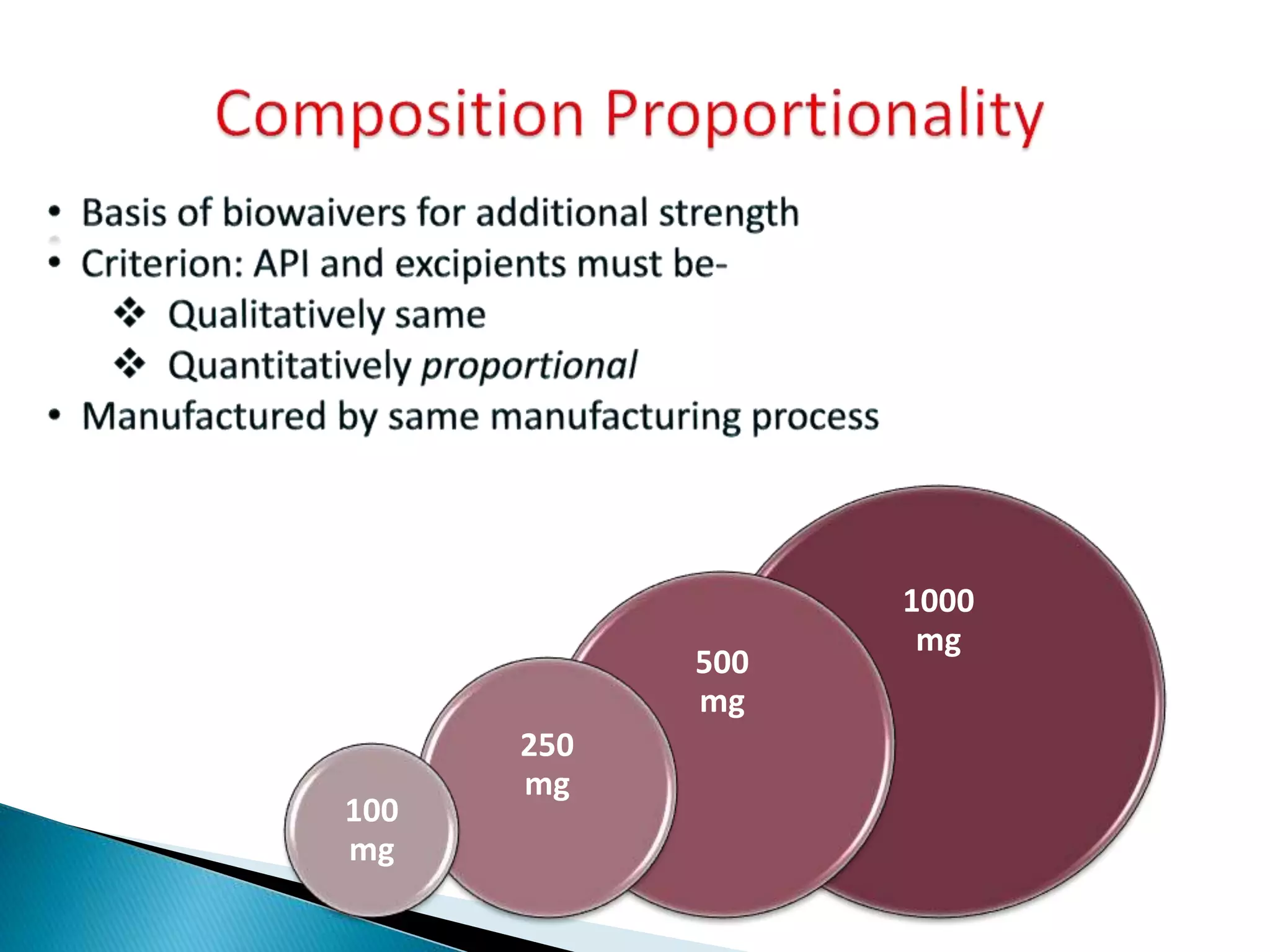
Composition Proportionality
• New product is qualitatively same and
quantitatively proportional to bio-batch.
Applications for biowaivers are granted on the basis of:
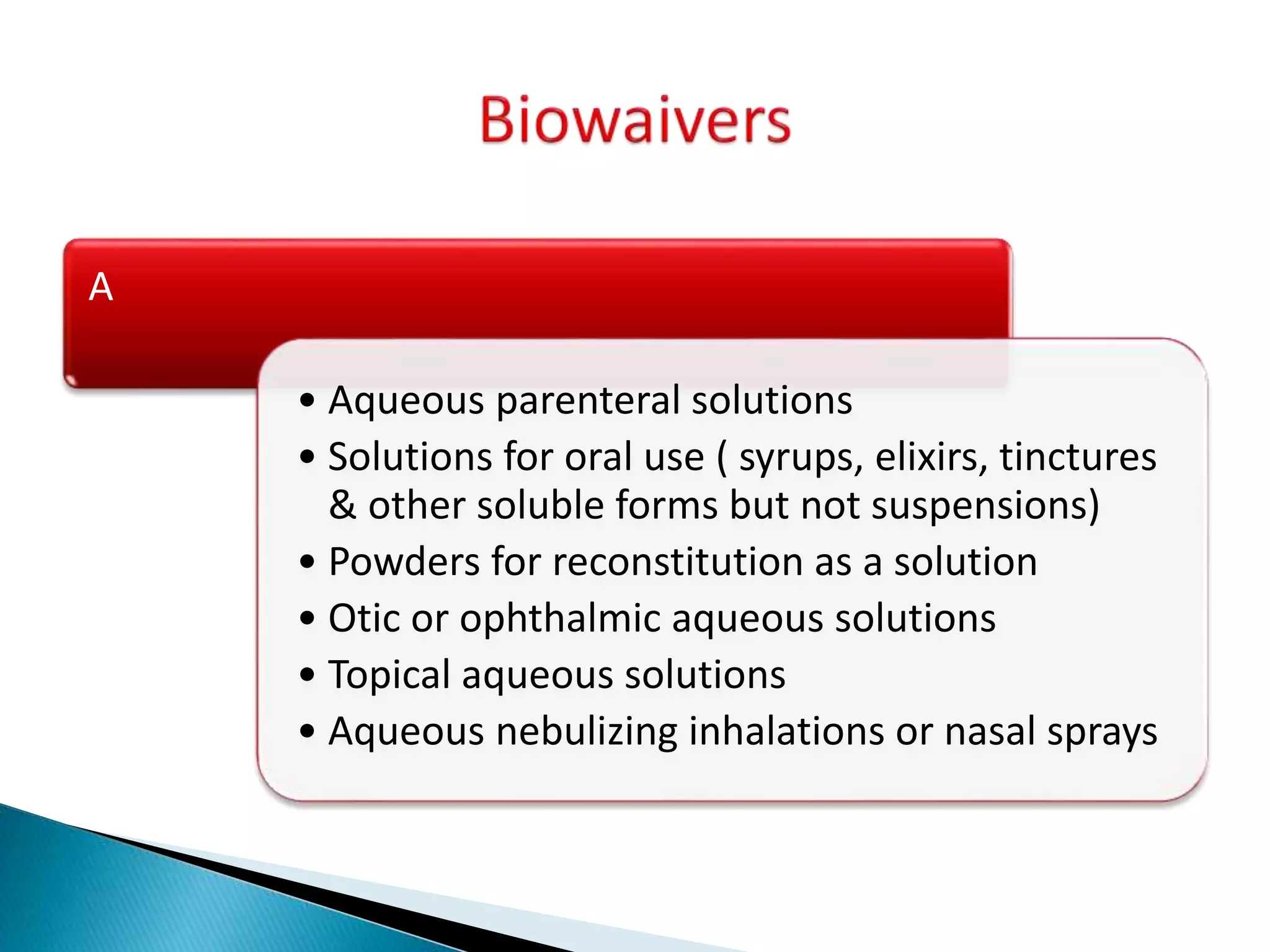
A
• Aqueous parenteral solutions
• Solutions for oral use ( syrups, elixirs, tinctures
& other soluble forms but not suspensions)
• Powders for reconstitution as a solution
• Otic or ophthalmic aqueous solutions
• Topical aqueous solutions
• Aqueous nebulizing inhalations or nasal sprays
1000
mg
500
mg
250
mg
100
mg
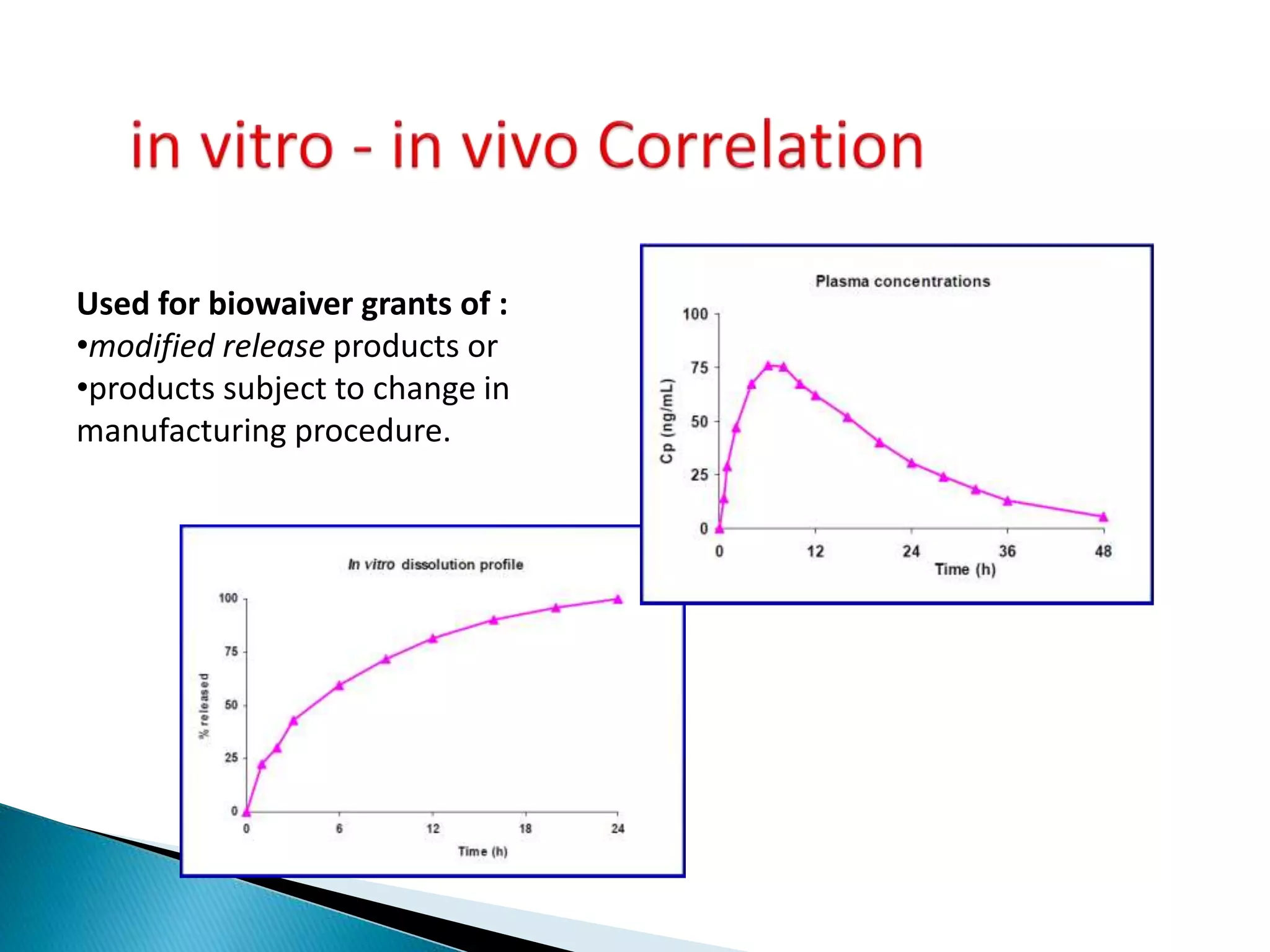
Used for biowaiver grants of :
•modified release products or
•products subject to change in
manufacturing procedure.
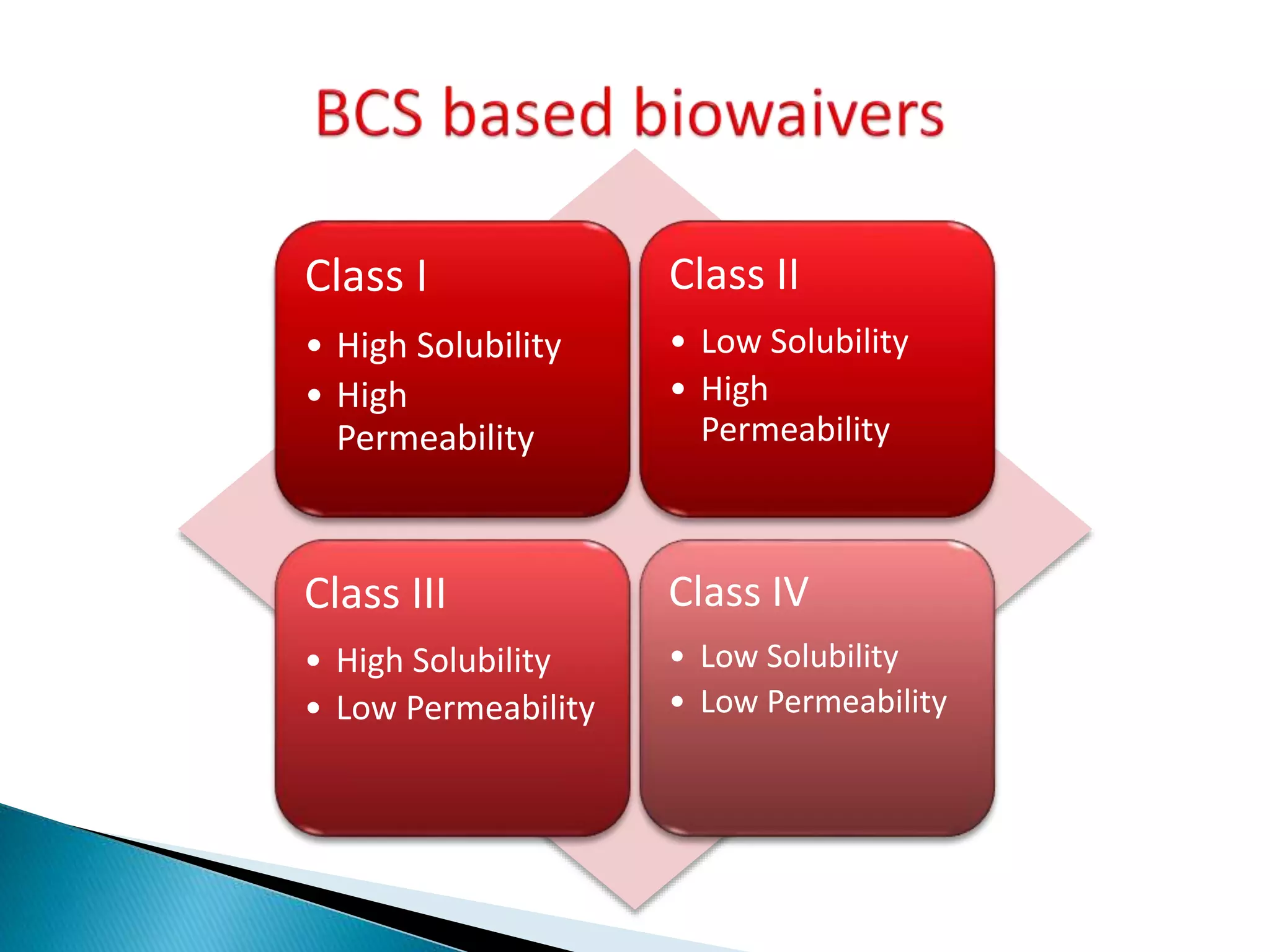
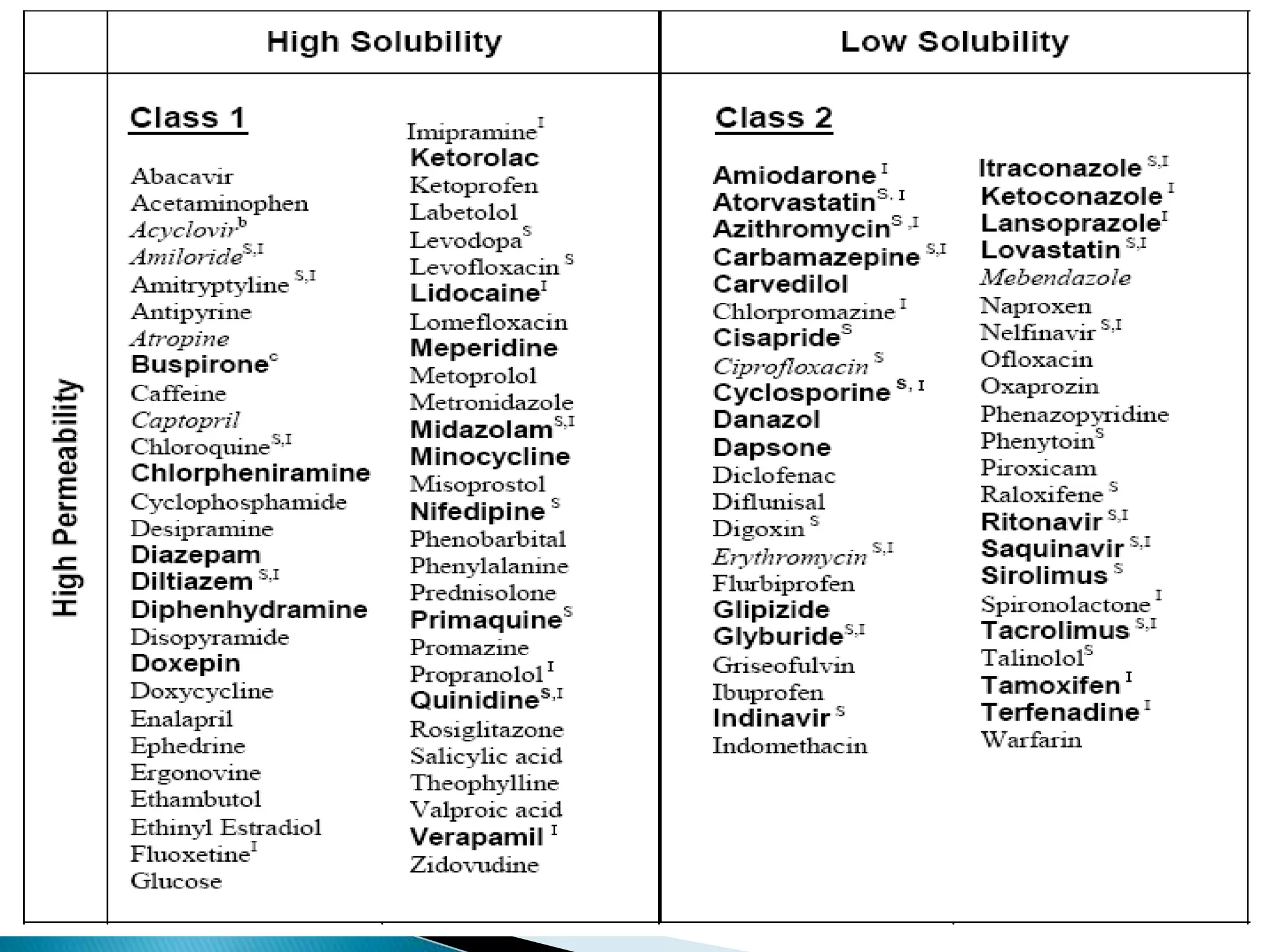
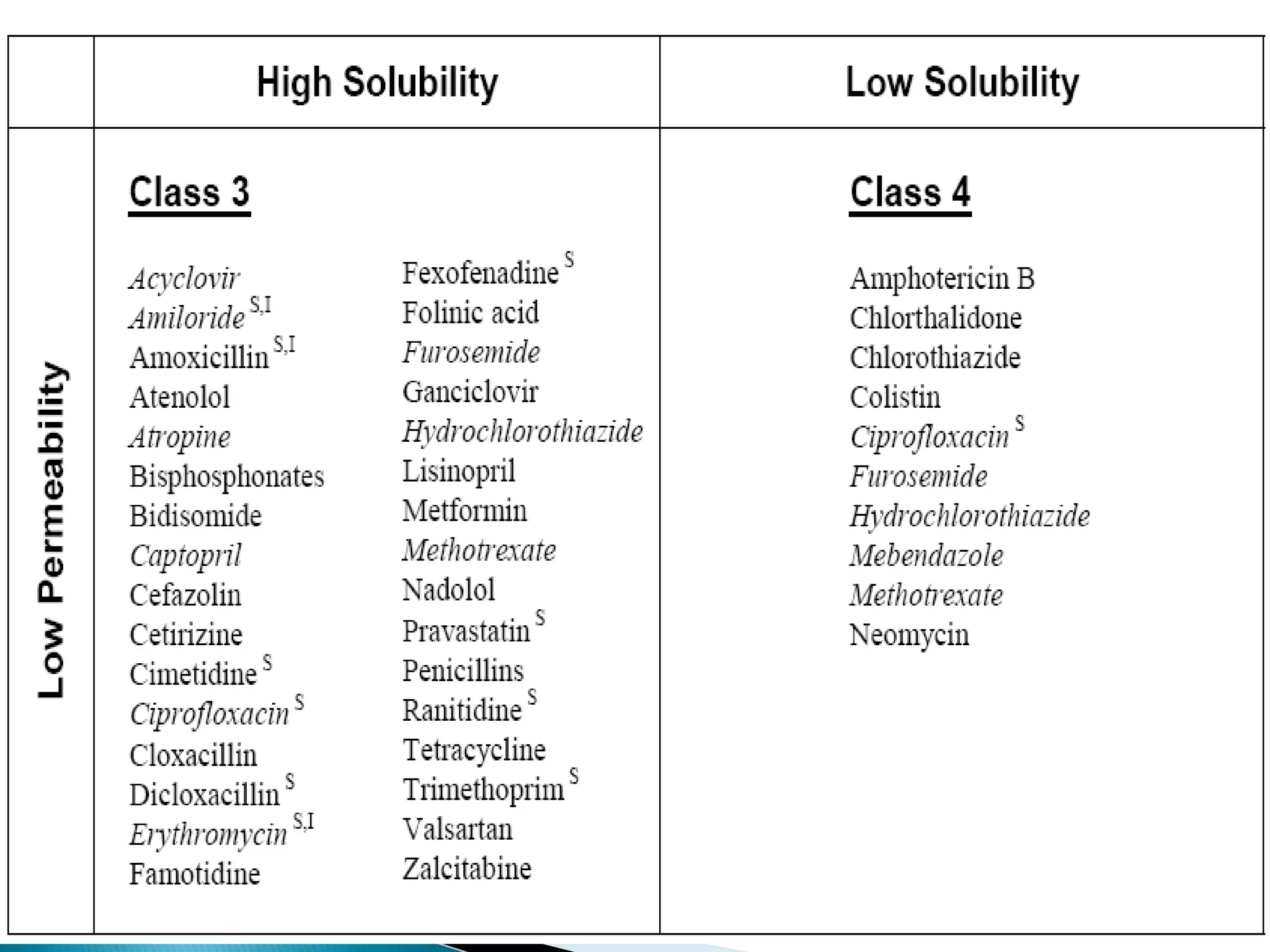
Class I
• High Solubility
• High
Permeability
Class II
• Low Solubility
• High
Permeability
Class III
• High Solubility
• Low Permeability
Class IV
• Low Solubility
• Low Permeability
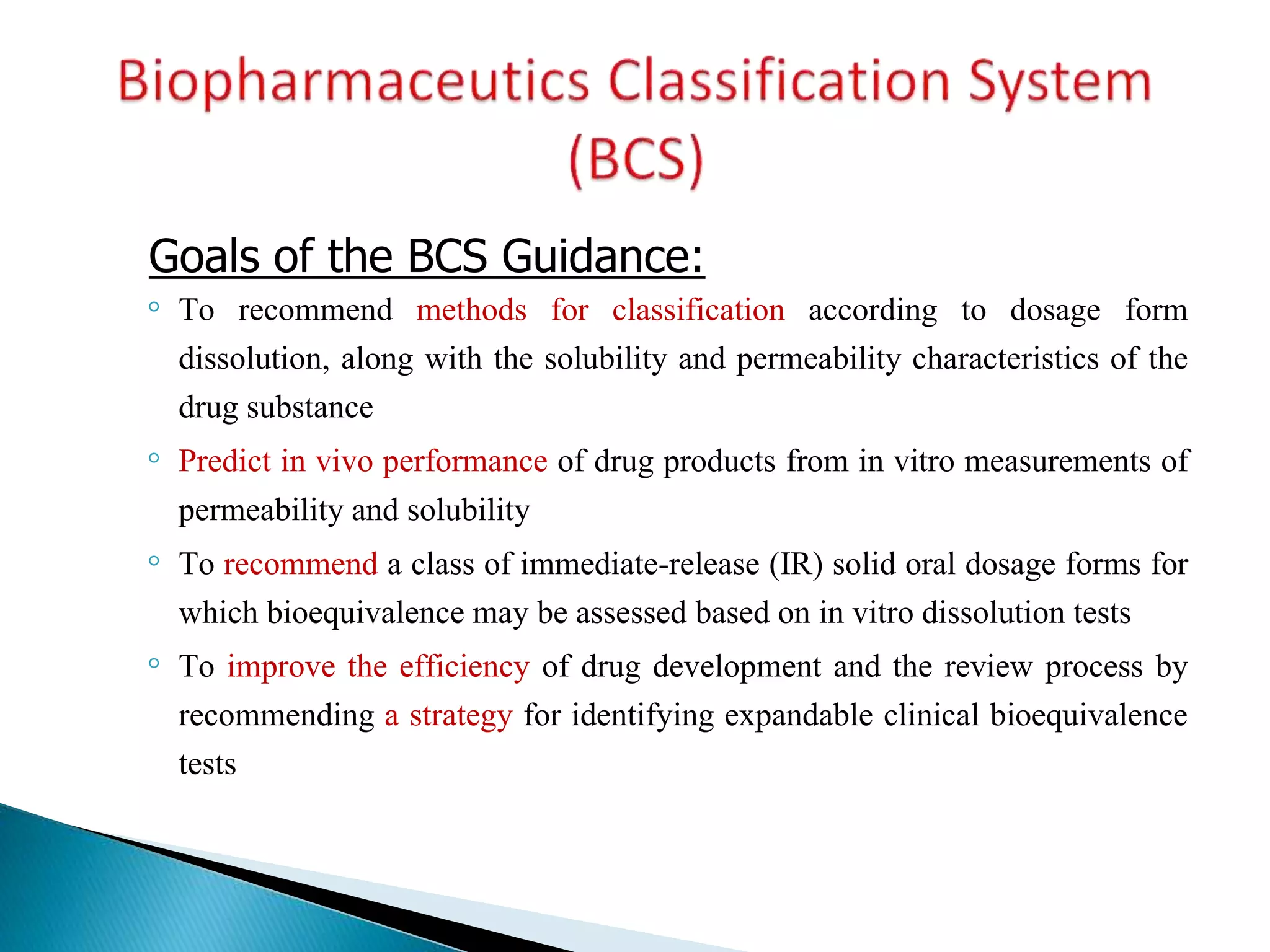
Goals of the BCS Guidance:
◦ To recommend methods for classification according to dosage form
dissolution, along with the solubility and permeability characteristics of the
drug substance
◦ Predict in vivo performance of drug products from in vitro measurements of
permeability and solubility
◦ To recommend a class of immediate-release (IR) solid oral dosage forms for
which bioequivalence may be assessed based on in vitro dissolution tests
◦ To improve the efficiency of drug development and the review process by
recommending a strategy for identifying expandable clinical bioequivalence
tests
85
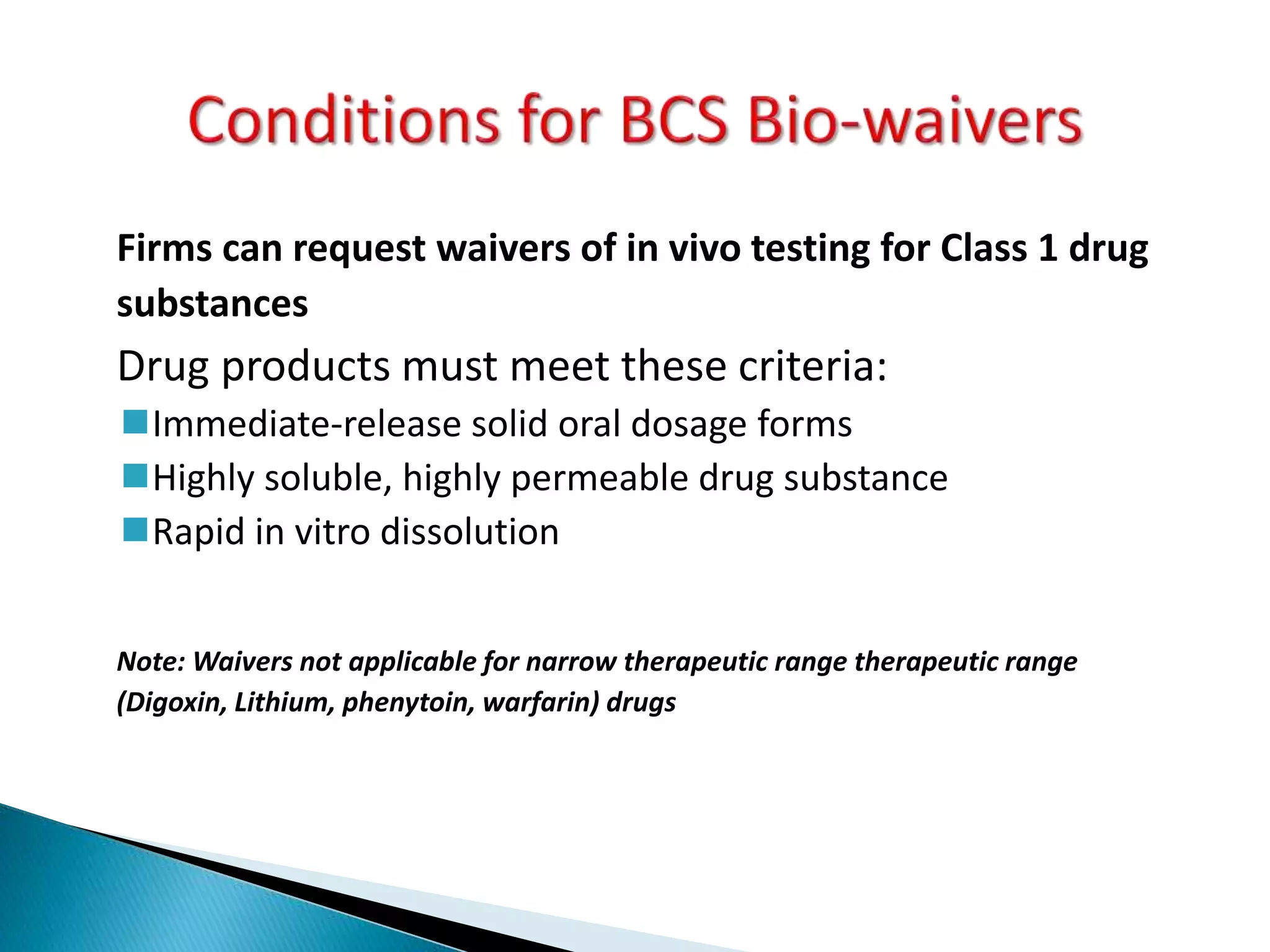
Firms can request waivers of in vivo testing for Class 1 drug
substances
Drug products must meet these criteria:
Immediate-release solid oral dosage forms
Highly soluble, highly permeable drug substance
Rapid in vitro dissolution
Note: Waivers not applicable for narrow therapeutic range therapeutic range
(Digoxin, Lithium, phenytoin, warfarin) drugs
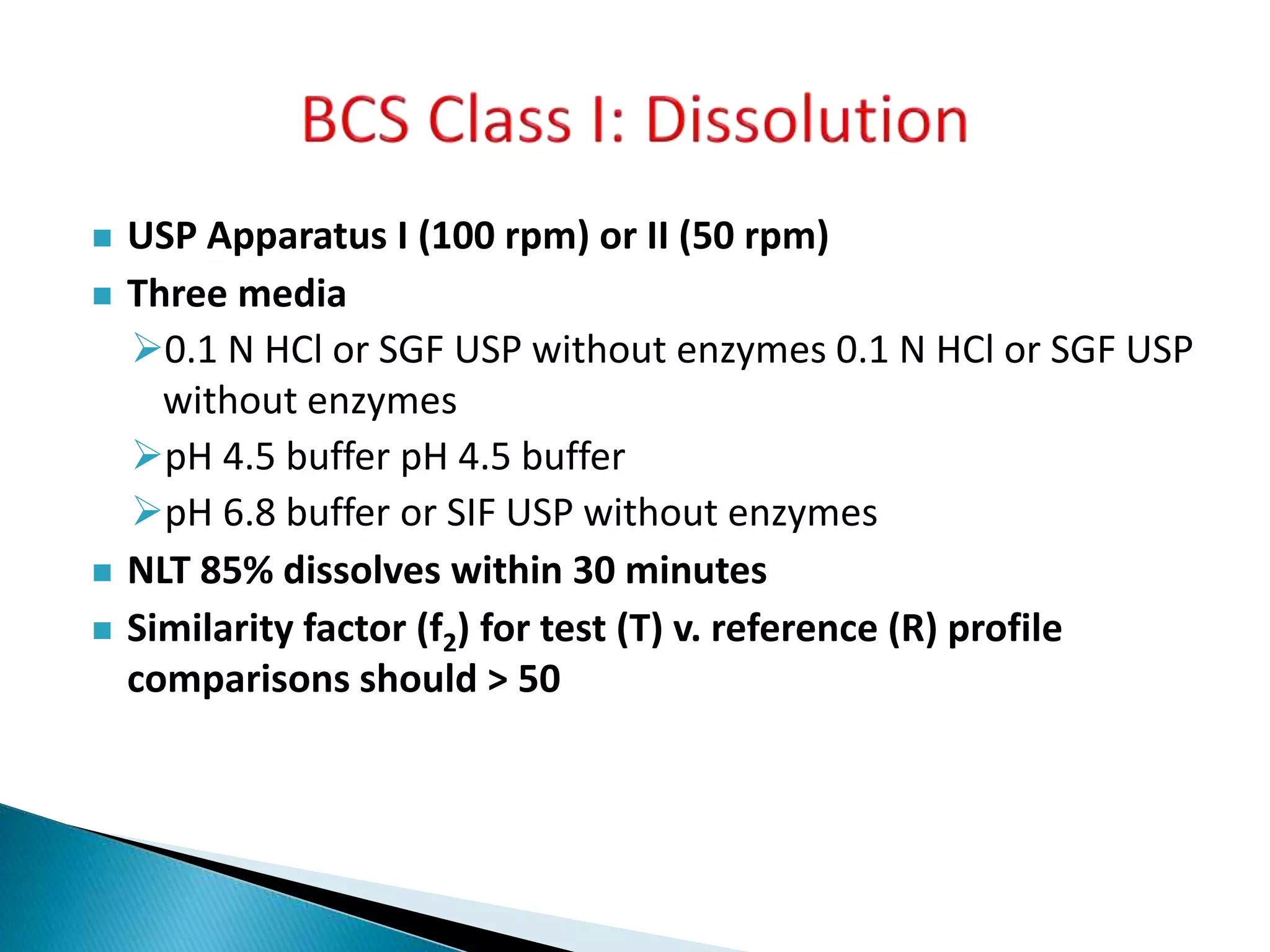
 USP Apparatus I (100 rpm) or II (50 rpm)
 Three media
0.1 N HCl or SGF USP without enzymes 0.1 N HCl or SGF USP
without enzymes
pH 4.5 buffer pH 4.5 buffer
pH 6.8 buffer or SIF USP without enzymes
 NLT 85% dissolves within 30 minutes
 Similarity factor (f2) for test (T) v. reference (R) profile
comparisons should > 50
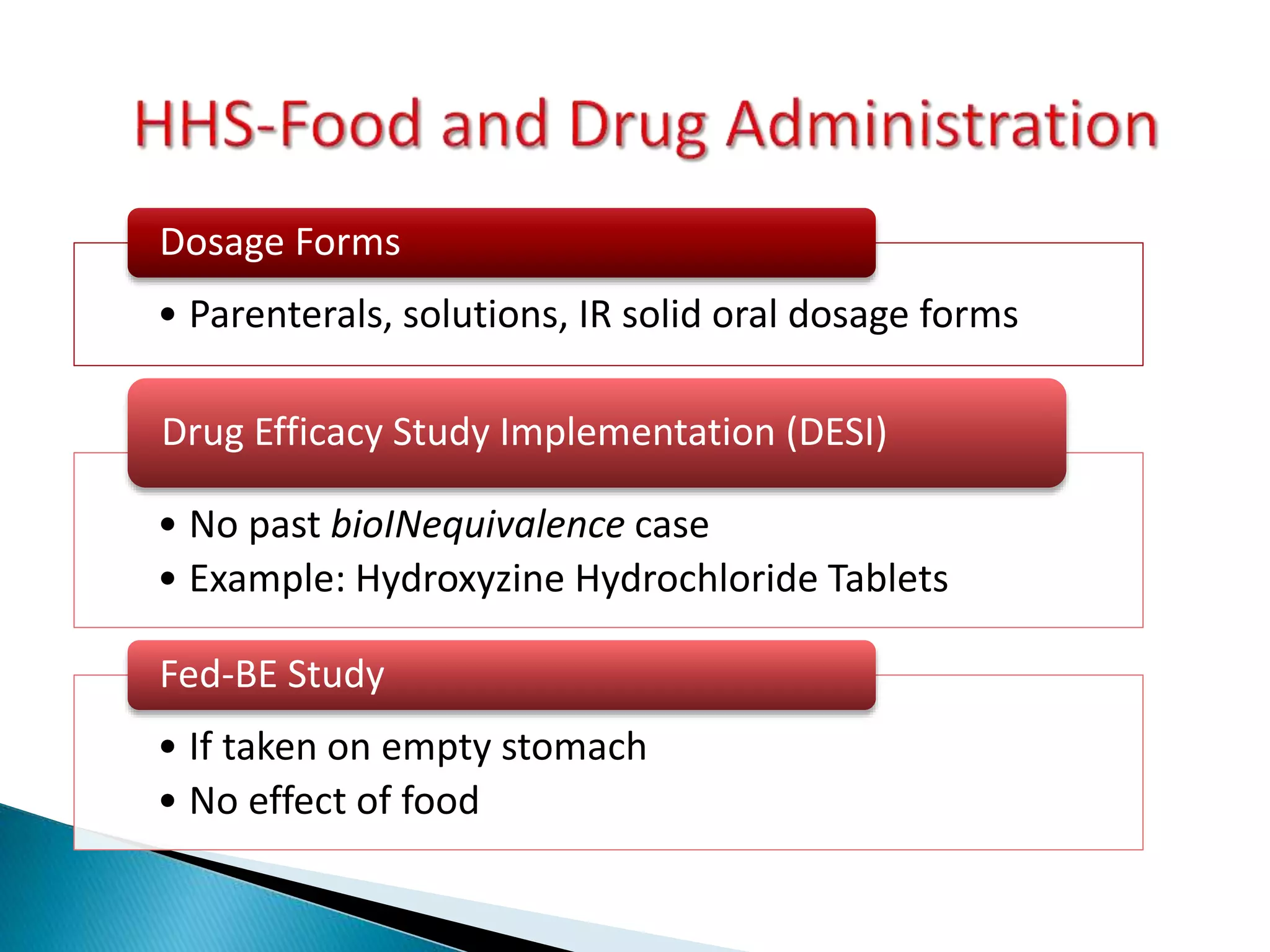
• Parenterals, solutions, IR solid oral dosage forms
Dosage Forms
• No past bioINequivalence case
• Example: Hydroxyzine Hydrochloride Tablets
Drug Efficacy Study Implementation (DESI)
• If taken on empty stomach
• No effect of food
Fed-BE Study
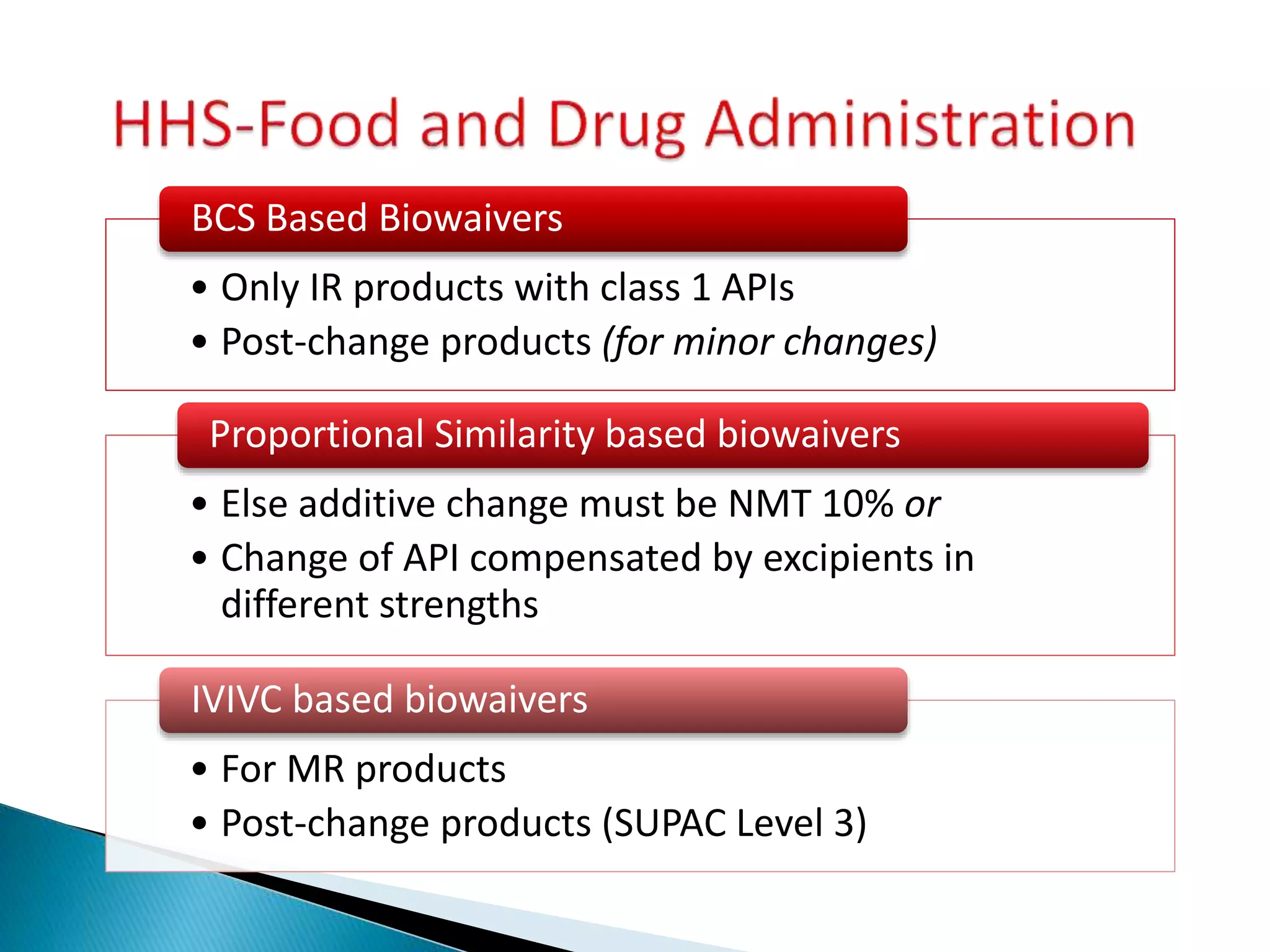
• Only IR products with class 1 APIs
• Post-change products (for minor changes)
BCS Based Biowaivers
• Else additive change must be NMT 10% or
• Change of API compensated by excipients in
different strengths
Proportional Similarity based biowaivers
• For MR products
• Post-change products (SUPAC Level 3)
IVIVC based biowaivers
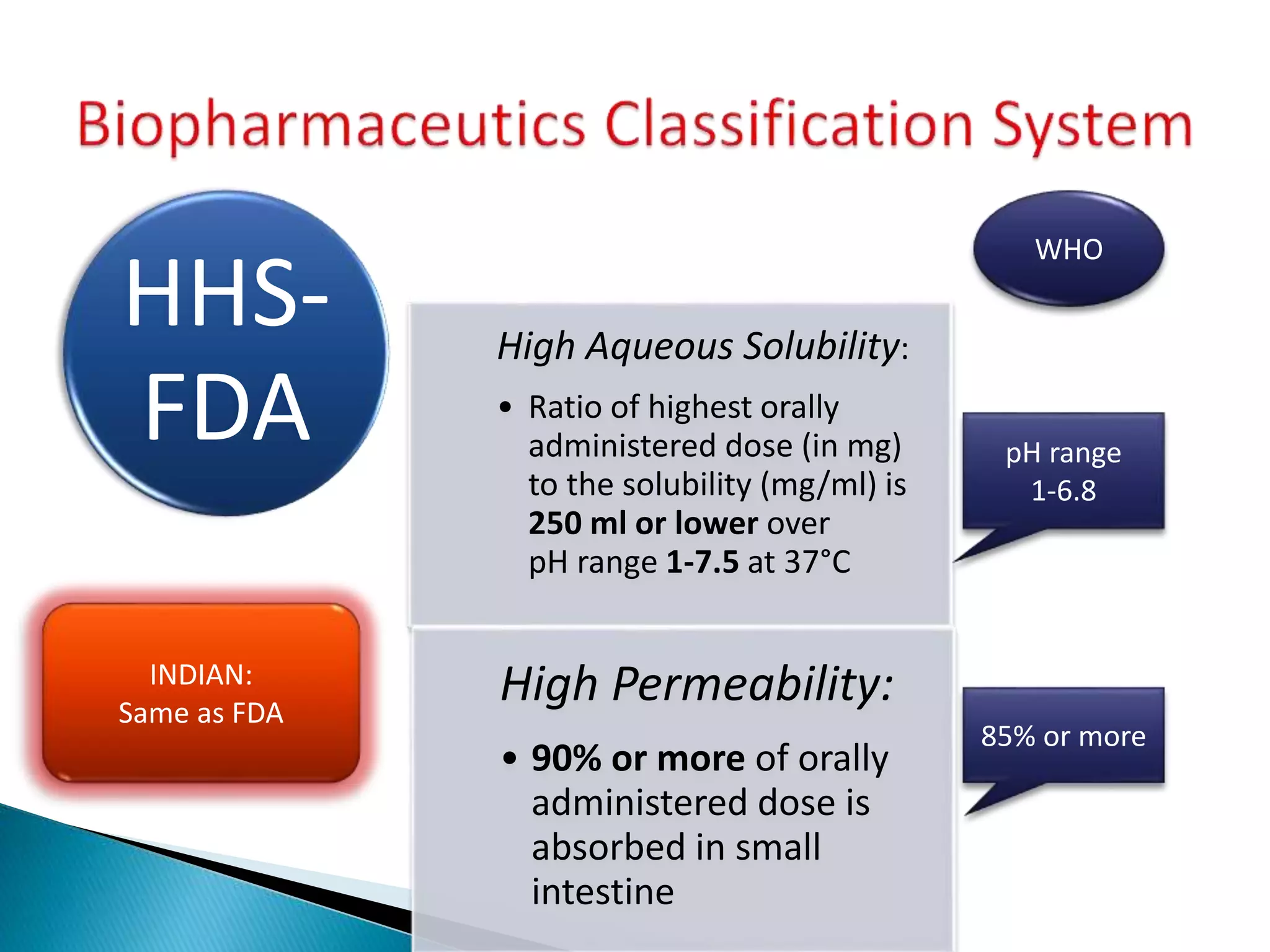
High Aqueous Solubility:
• Ratio of highest orally
administered dose (in mg)
to the solubility (mg/ml) is
250 ml or lower over
pH range 1-7.5 at 37°C
High Permeability:
• 90% or more of orally
administered dose is
absorbed in small
intestine
HHS-
FDA pH range
1-6.8
85% or more
WHO
INDIAN:
Same as FDA
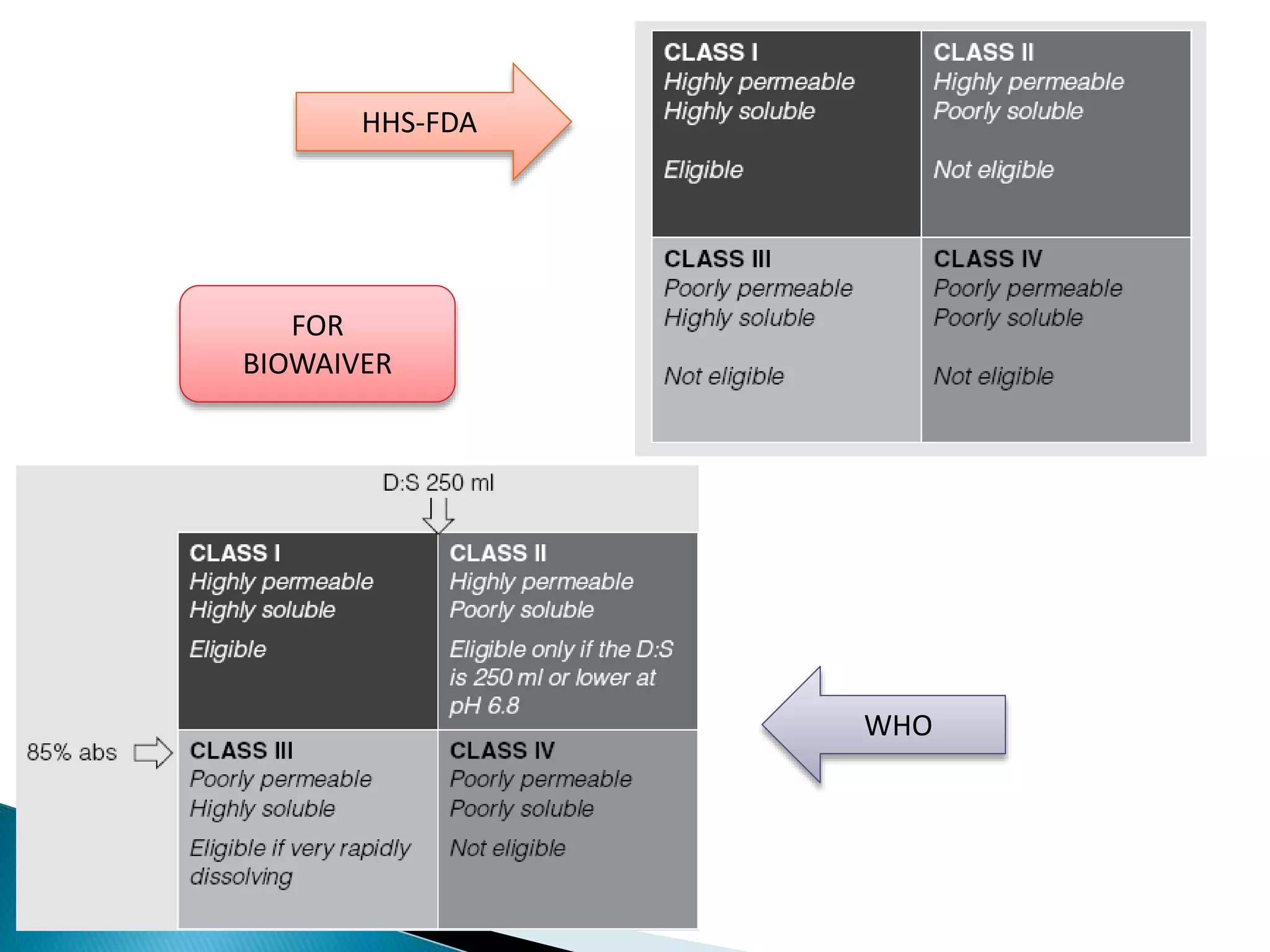
HHS-FDA
WHO
FOR
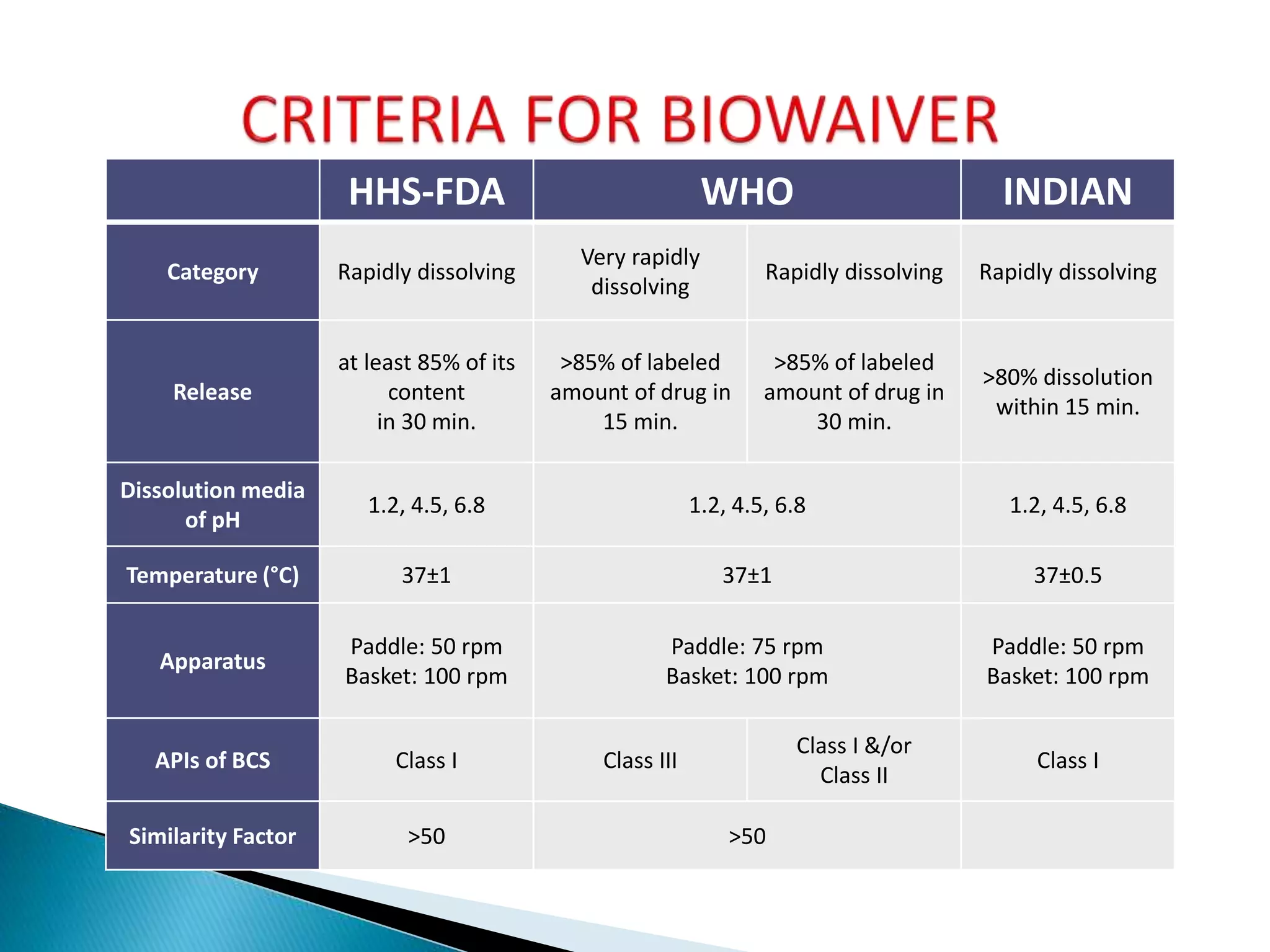
BIOWAIVER
HHS-FDA WHO INDIAN
Category Rapidly dissolving
Very rapidly
dissolving
Rapidly dissolving Rapidly dissolving
Release
at least 85% of its
content
in 30 min.
>85% of labeled
amount of drug in
15 min.
>85% of labeled
amount of drug in
30 min.
>80% dissolution
within 15 min.
Dissolution media
of pH
1.2, 4.5, 6.8 1.2, 4.5, 6.8 1.2, 4.5, 6.8
Temperature (°C) 37±1 37±1 37±0.5
Apparatus
Paddle: 50 rpm
Basket: 100 rpm
Paddle: 75 rpm
Basket: 100 rpm
Paddle: 50 rpm
Basket: 100 rpm
APIs of BCS Class I Class III
Class I &/or
Class II
Class I
Similarity Factor >50 >50
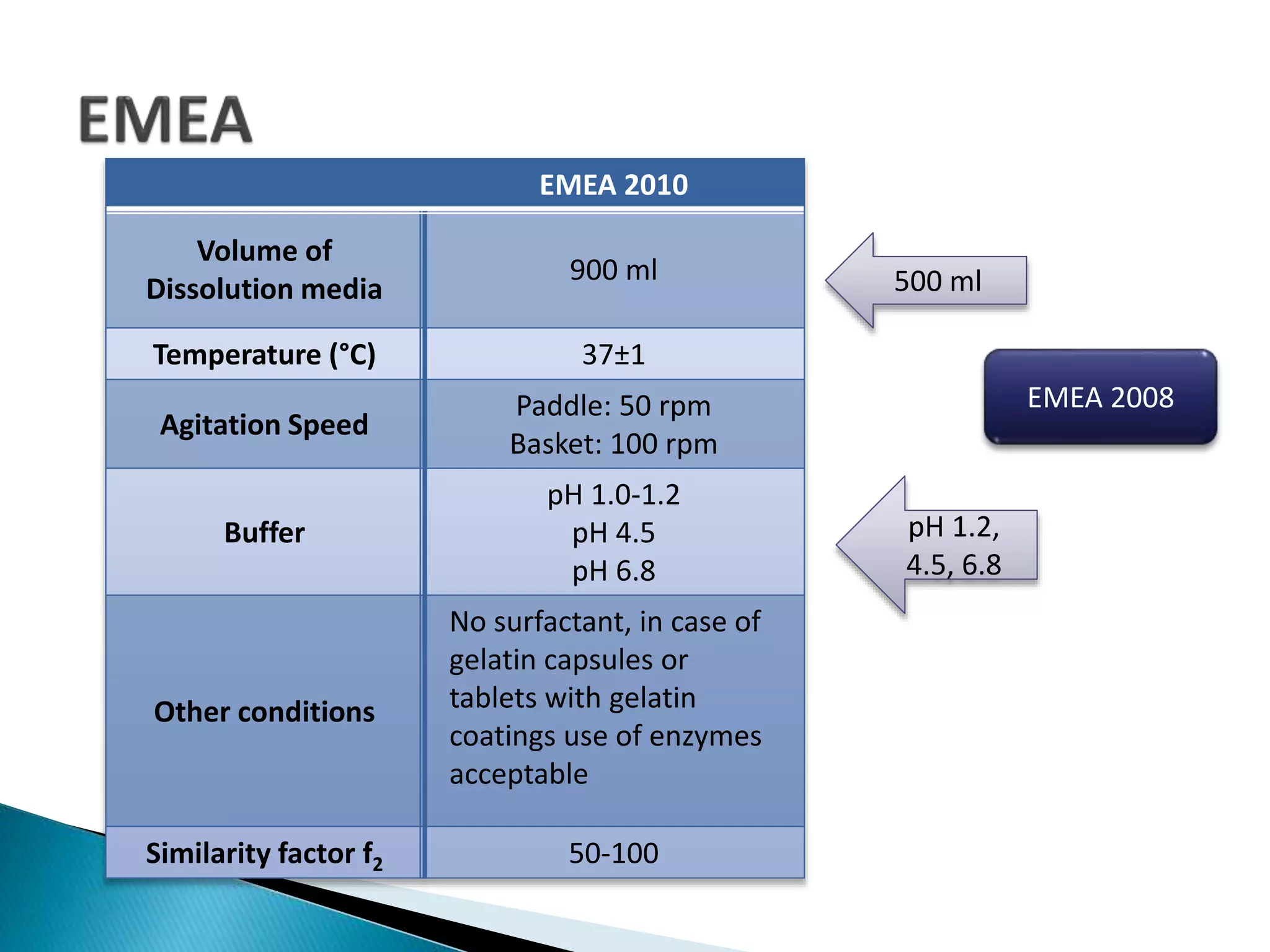
EMEA 2010
Volume of
Dissolution media
900 ml
Temperature (°C) 37±1
Agitation Speed
Paddle: 50 rpm
Basket: 100 rpm
Buffer
pH 1.0-1.2
pH 4.5
pH 6.8
Other conditions
No surfactant, in case of
gelatin capsules or
tablets with gelatin
coatings use of enzymes
acceptable
Similarity factor f2 50-100
500 ml
pH 1.2,
4.5, 6.8
EMEA 2008
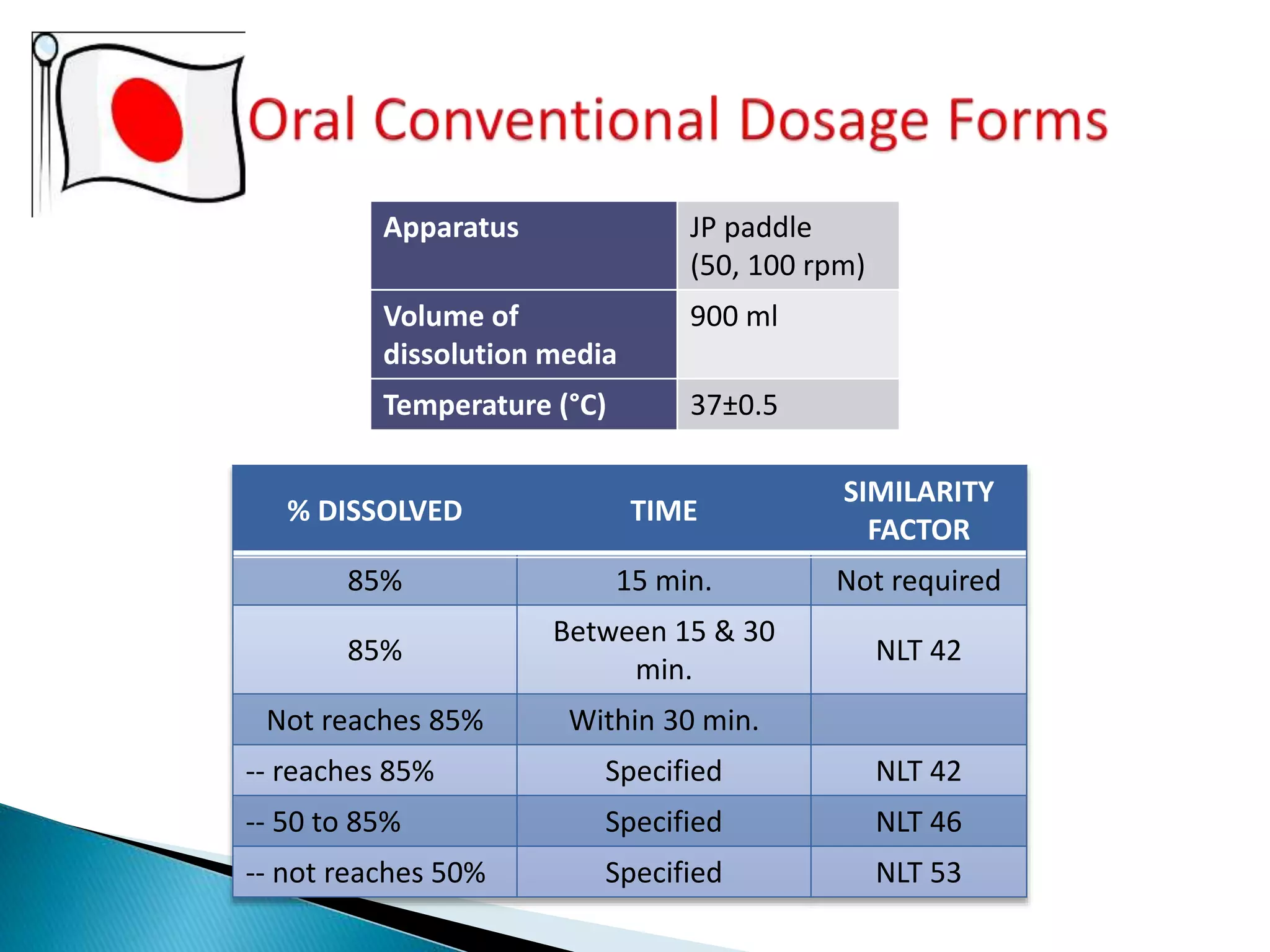
Apparatus JP paddle
(50, 100 rpm)
Volume of
dissolution media
900 ml
Temperature (°C) 37±0.5
% DISSOLVED TIME
SIMILARITY
FACTOR
85% 15 min. Not required
85%
Between 15 & 30
min.
NLT 42
Not reaches 85% Within 30 min.
-- reaches 85% Specified NLT 42
-- 50 to 85% Specified NLT 46
-- not reaches 50% Specified NLT 53
FDA
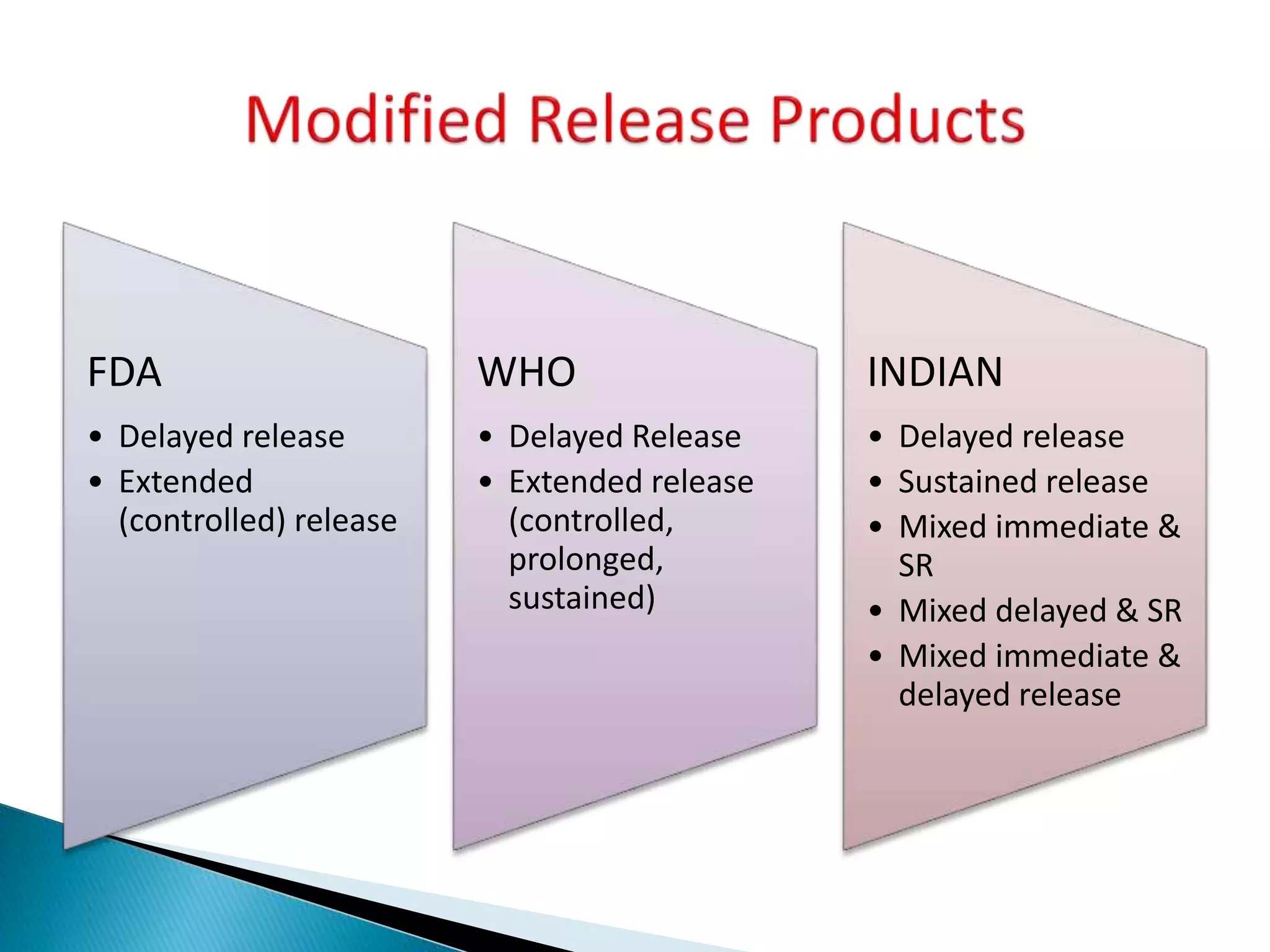
• Delayed release
• Extended
(controlled) release
WHO
• Delayed Release
• Extended release
(controlled,
prolonged,
sustained)
INDIAN
• Delayed release
• Sustained release
• Mixed immediate &
SR
• Mixed delayed & SR
• Mixed immediate &
delayed release
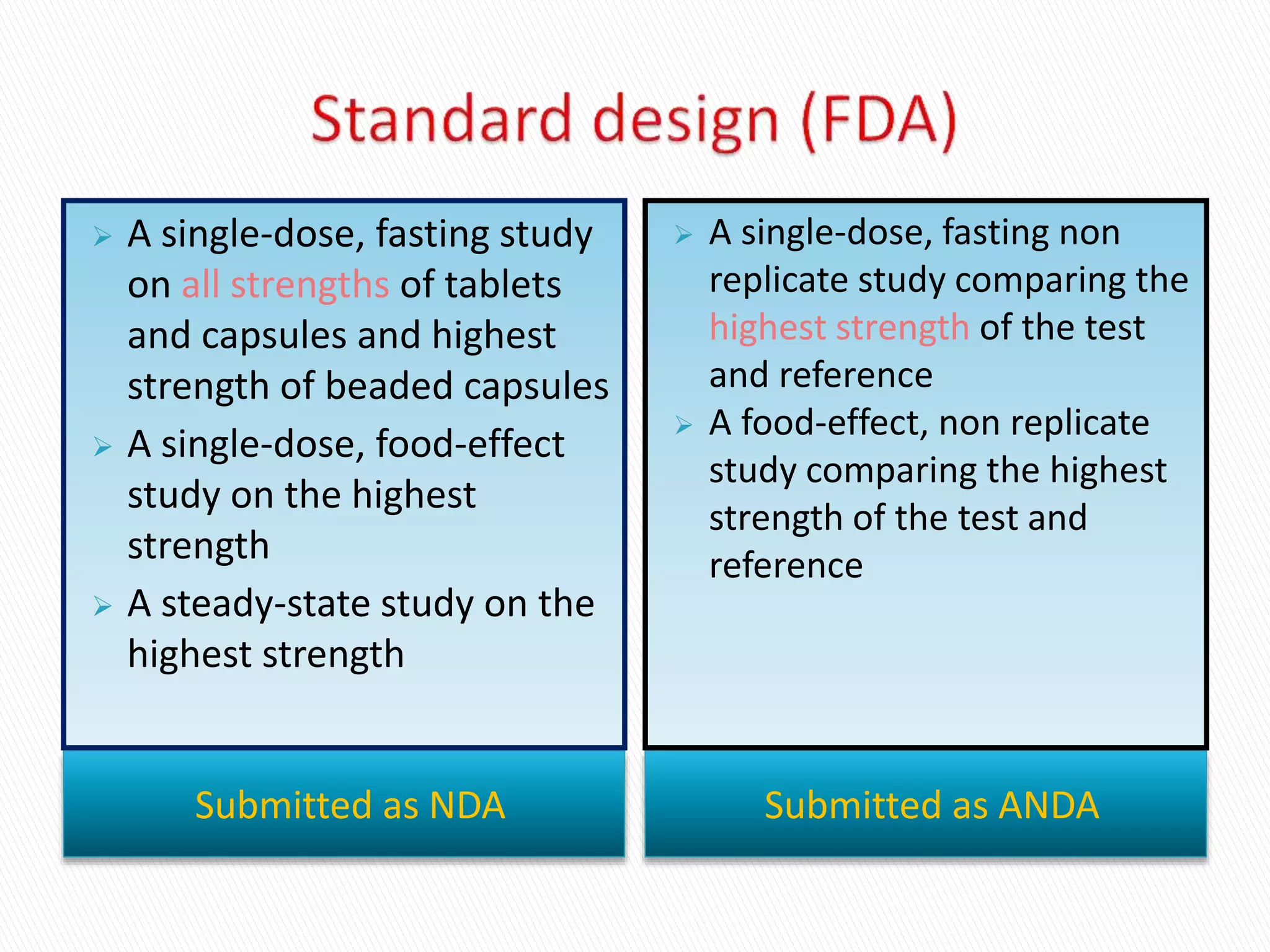
Submitted as NDA Submitted as ANDA
 A single-dose, fasting study
on all strengths of tablets
and capsules and highest
strength of beaded capsules
 A single-dose, food-effect
study on the highest
strength
 A steady-state study on the
highest strength
 A single-dose, fasting non
replicate study comparing the
highest strength of the test
and reference
 A food-effect, non replicate
study comparing the highest
strength of the test and
reference
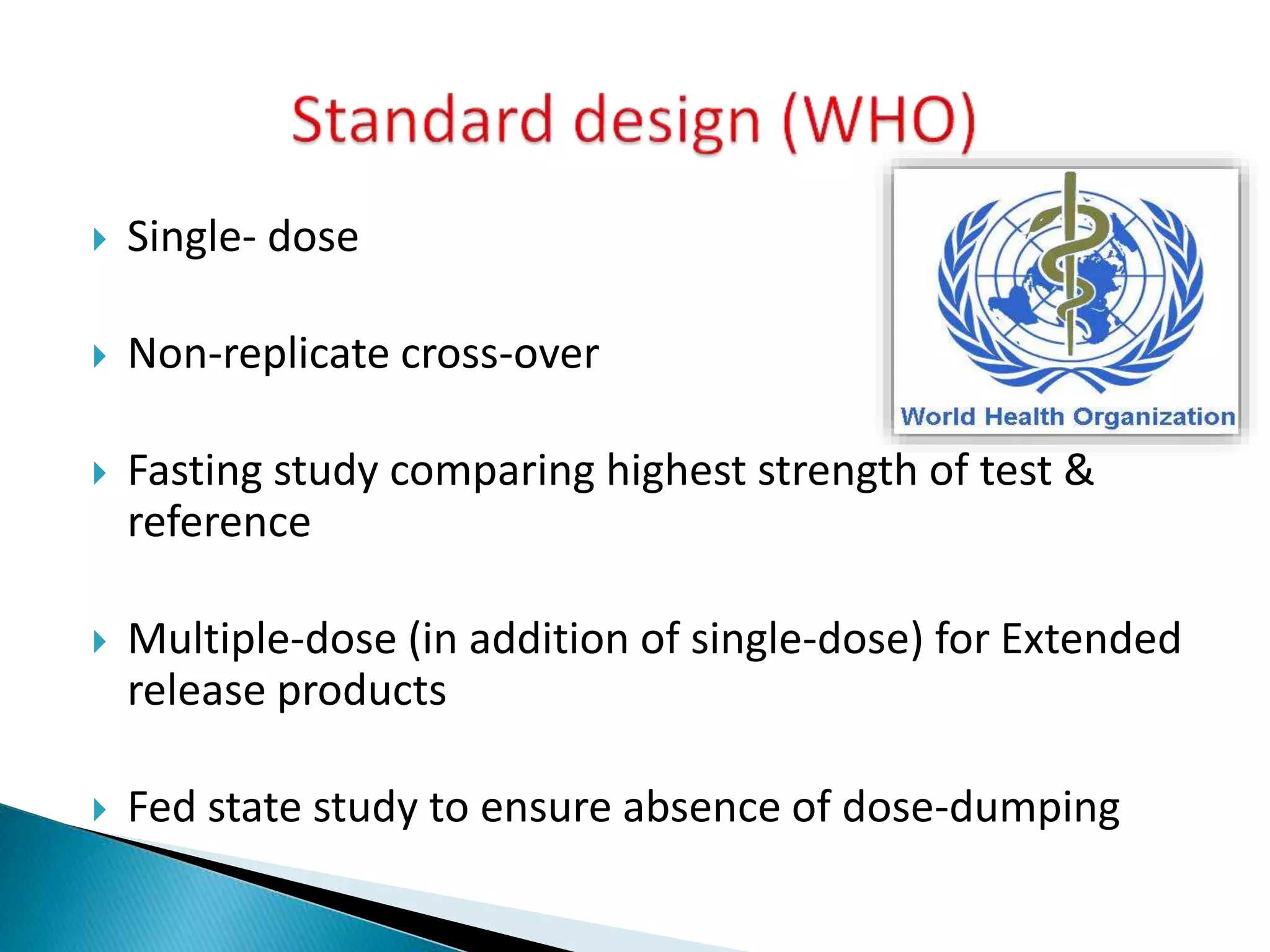
 Single- dose
 Non-replicate cross-over
 Fasting study comparing highest strength of test &
reference
 Multiple-dose (in addition of single-dose) for Extended
release products
 Fed state study to ensure absence of dose-dumping
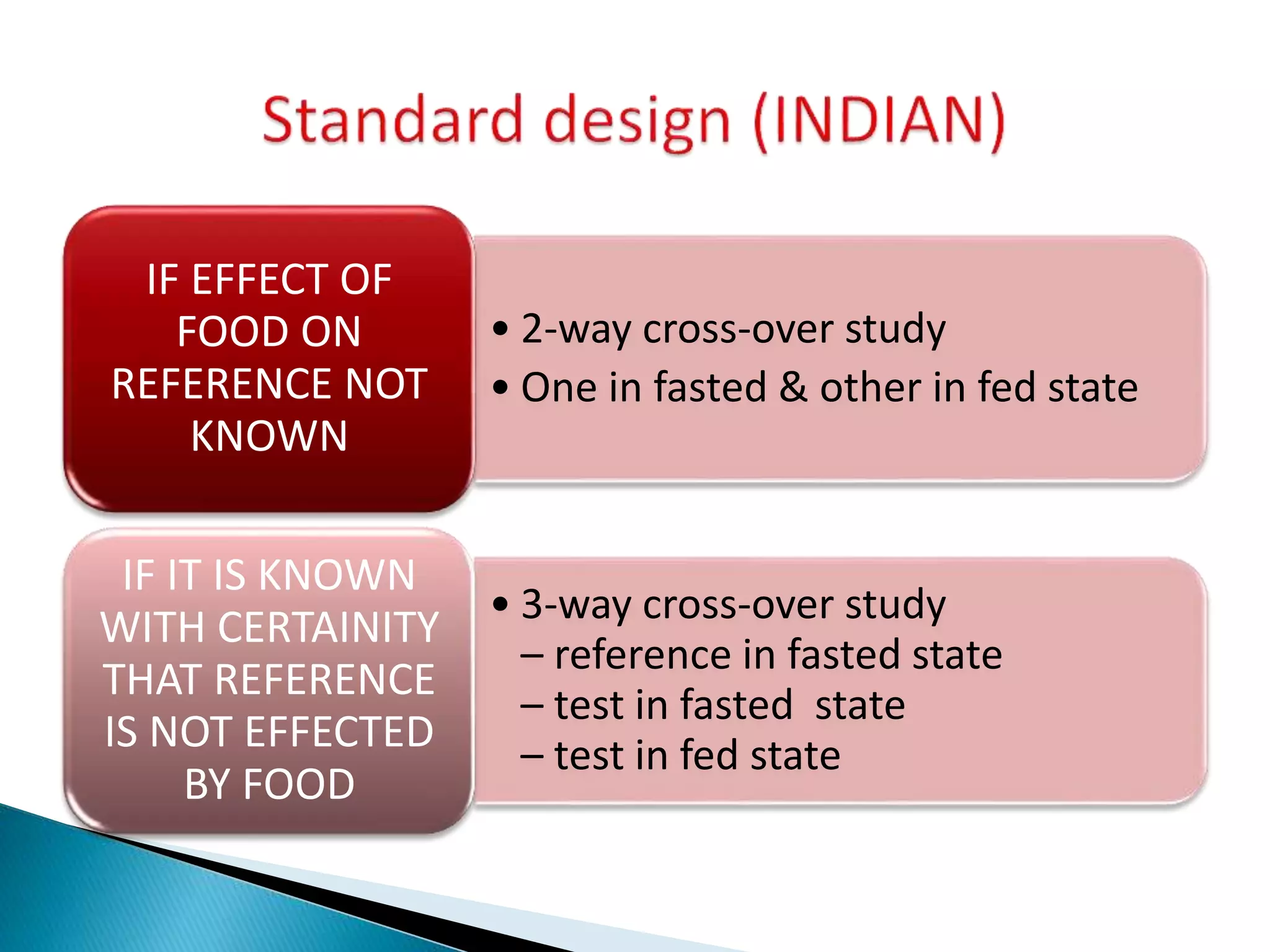
• 2-way cross-over study
• One in fasted & other in fed state
IF EFFECT OF
FOOD ON
REFERENCE NOT
KNOWN
• 3-way cross-over study
– reference in fasted state
– test in fasted state
– test in fed state
IF IT IS KNOWN
WITH CERTAINITY
THAT REFERENCE
IS NOT EFFECTED
BY FOOD
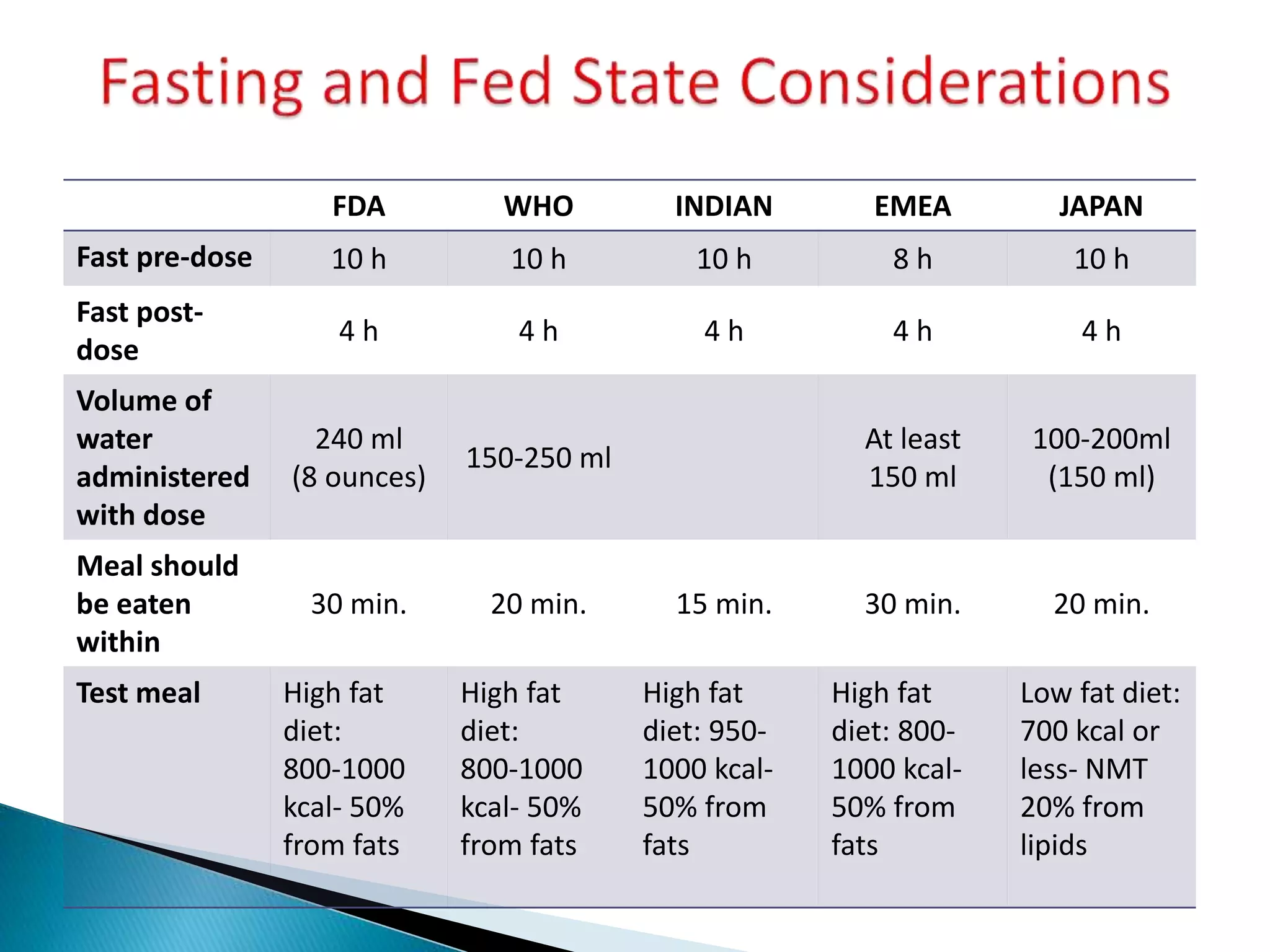
FDA WHO INDIAN EMEA JAPAN
Fast pre-dose 10 h 10 h 10 h 8 h 10 h
Fast post-
dose
4 h 4 h 4 h 4 h 4 h
Volume of
water
administered
with dose
240 ml
(8 ounces)
150-250 ml
At least
150 ml
100-200ml
(150 ml)
Meal should
be eaten
within
30 min. 20 min. 15 min. 30 min. 20 min.
Test meal High fat
diet:
800-1000
kcal- 50%
from fats
High fat
diet:
800-1000
kcal- 50%
from fats
High fat
diet: 950-
1000 kcal-
50% from
fats
High fat
diet: 800-
1000 kcal-
50% from
fats
Low fat diet:
700 kcal or
less- NMT
20% from
lipids
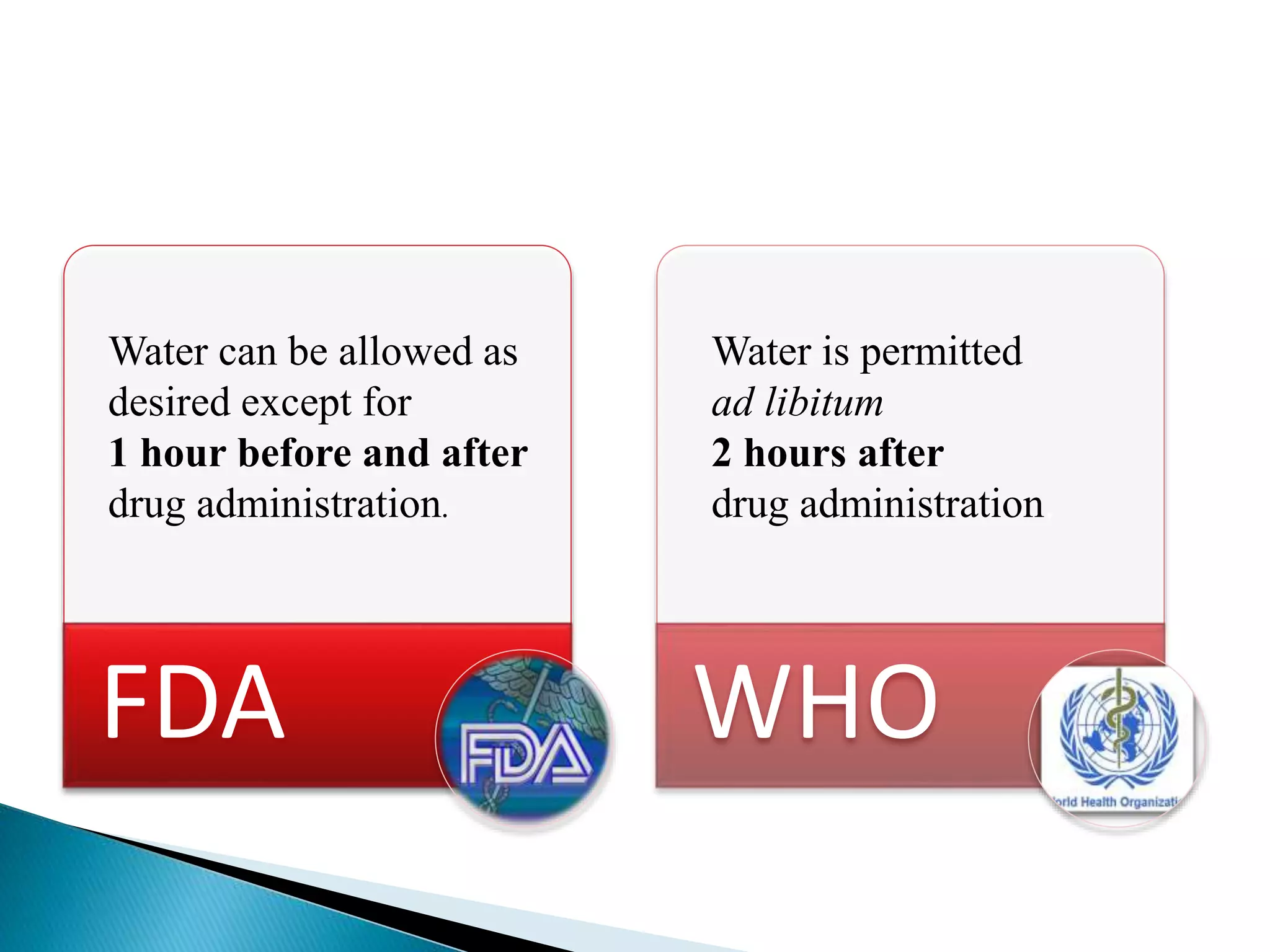
FDA WHO
Water can be allowed as
desired except for
1 hour before and after
drug administration.
Water is permitted
ad libitum
2 hours after
drug administration.
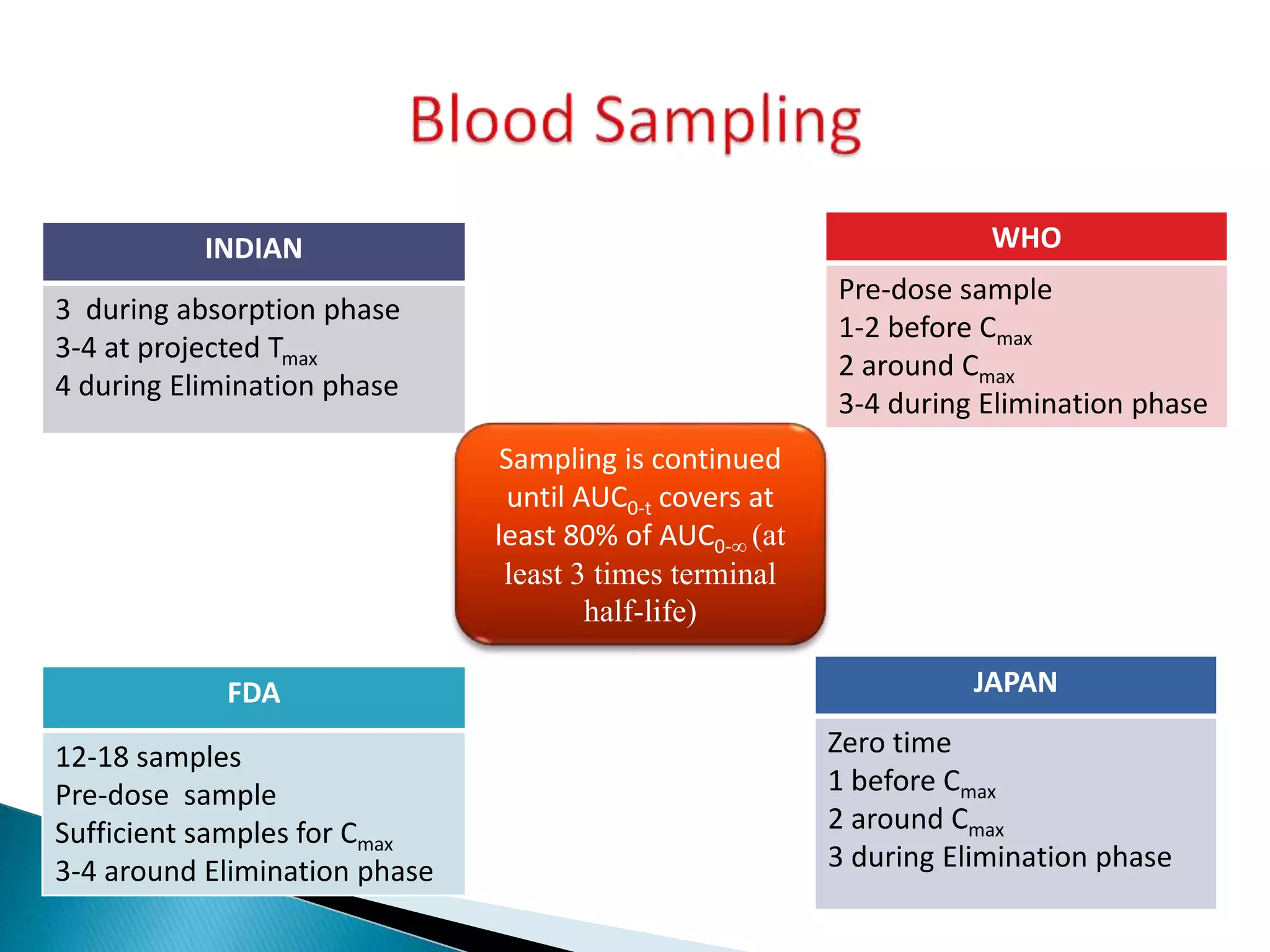
INDIAN
3 during absorption phase
3-4 at projected Tmax
4 during Elimination phase
WHO
Pre-dose sample
1-2 before Cmax
2 around Cmax
3-4 during Elimination phase
JAPAN
Zero time
1 before Cmax
2 around Cmax
3 during Elimination phase
Sampling is continued
until AUC0-t covers at
least 80% of AUC0-∞ (at
least 3 times terminal
half-life)
FDA
12-18 samples
Pre-dose sample
Sufficient samples for Cmax
3-4 around Elimination phase
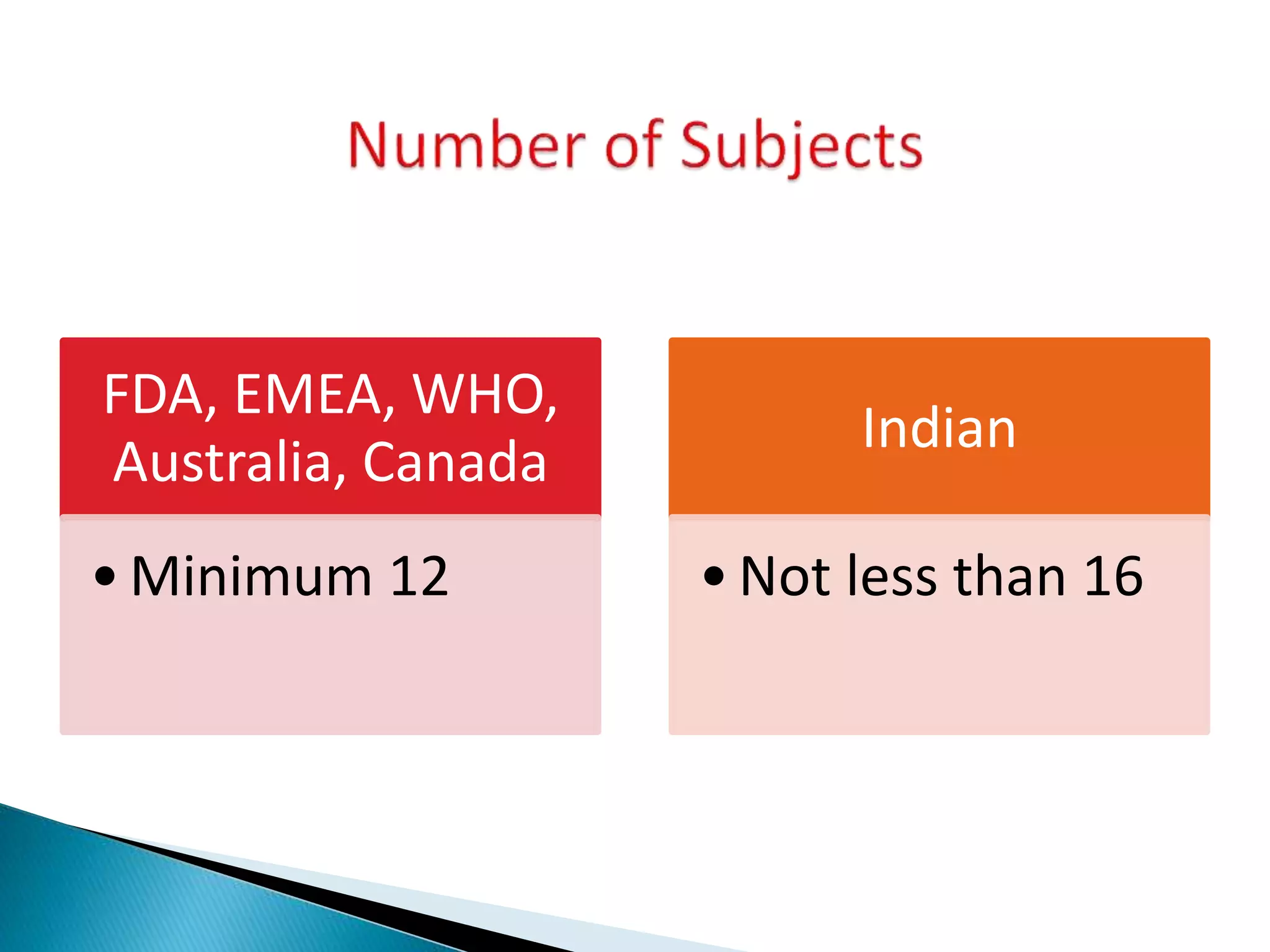
FDA, EMEA, WHO,
Australia, Canada
•Minimum 12
Indian
•Not less than 16
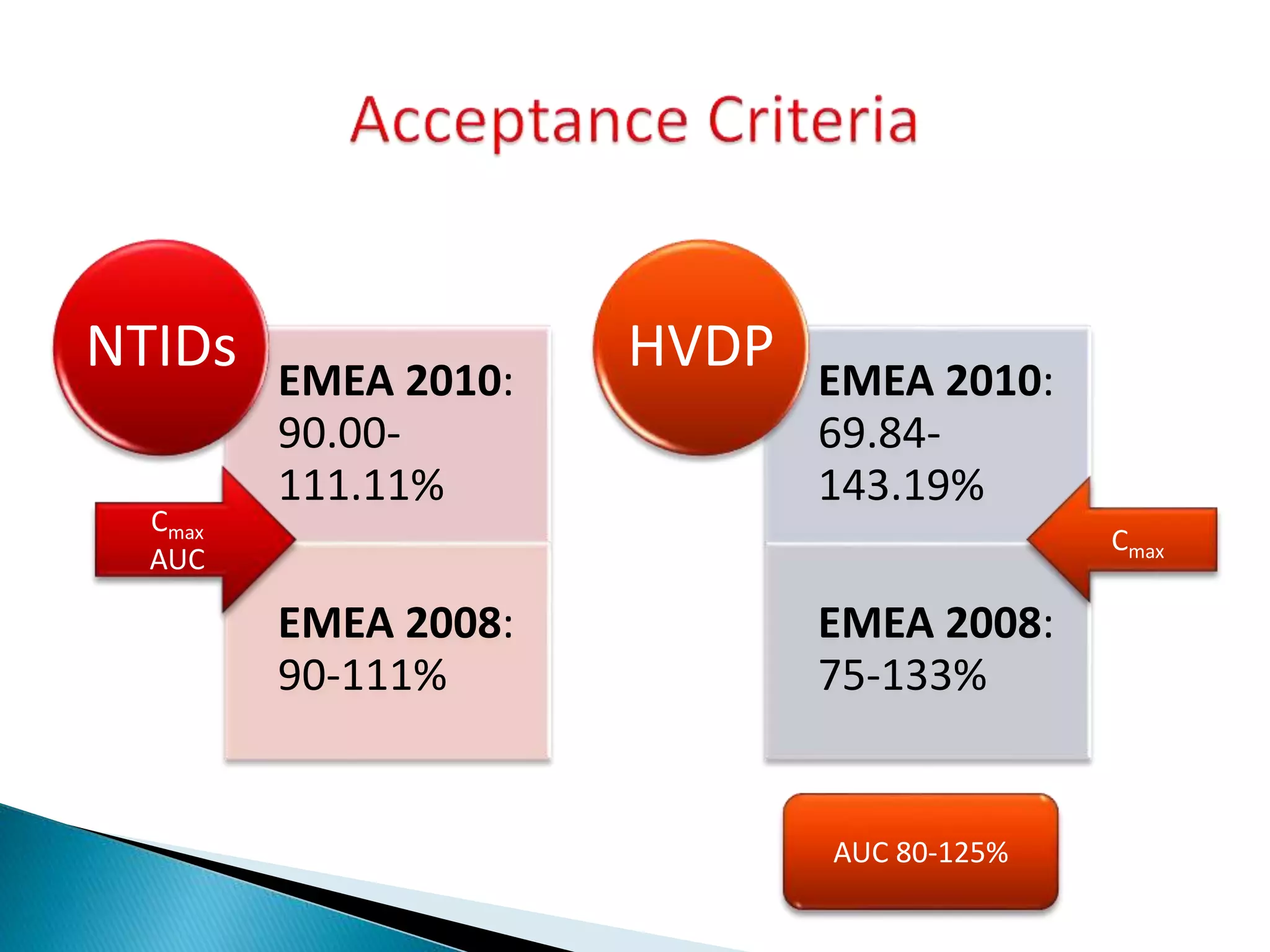
EMEA 2010:
90.00-
111.11%
EMEA 2008:
90-111%
NTIDs EMEA 2010:
69.84-
143.19%
EMEA 2008:
75-133%
HVDP
Cmax
AUC
Cmax
AUC 80-125%
Bioavailability and Bioequivalence Studies (BABE) & Concept of Biowaivers

Bioavailability and Bioequivalence Studies (BABE) & Concept of Biowaivers

  • 2.
     DEFINITIONS  METHODSOF ASSESSMENT  DESIGN OF STUDY  EVALUATION OF DATA  BIOWAIVERS  BCS 2
  • 3.
    BIOAVAILABILITY: According to2003 FDA guidance, ‘ Bioavailabilty is defined as the rate and extent to which the active ingredient or active moiety is absorbed from a drug product and becomes available at the site of action. For the products that are not intended to be absorbed into blood stream, bioavailability may be assessed by measurement intended to reflect the rate and extent to which the active ingredient or active ingredient or active moiety becomes available at the sit of action .' In other words, it is the fraction of administered dose that actually reaches the systemic circulation
  • 4.
    Route Bioavailability(%) Chracteristics Intravenous100(by definition) Most rapid onset Intramuscular 75 to 100 large volume often feasible; may be painful Subcutaneous 75 to 100 Smaller volumes than IM; may be painful (SC) Oral (PO) 5 to < 100 Most convenient; first pass effects may be significant Rectal (PR) 30 to < 100 Less first-pass effects than oral Inhalation 5 to < 100 Often very rapid onset
  • 5.
     Primary stagesof development of a suitable dosage for a new drug entity.  Development of a new formulations of the existing drugs.  Control of quality of a drug product during the early stages of marketing in order to determine the influence of processing factors, storage and stability on drug absorption.  Useful in determining the safety and efficacy of the drug product.
  • 6.
    Two products arebioequivalent if ◦ they are pharmaceutically equivalent ◦ both rate and extent after administration in the same molar dose are similar to such a degree that their effects can be expected to be essentially the same. 6
  • 7.
     For drugsproducts that are not intended to be absorbed into the bloodstream : 1. other in-vivo or in-vitro test methods may be used to demonstrate bioequivalence, 2. in- vitro bioequivalence standard may be used, especially when such an in-vitro test has been correlated with human in-vivo bioavailability data, 3. in other cases B.E may be demonstrated through comparative clinical trials or pharmacodynamic studies. 7
  • 8.
    • Therapeutic moietySAME •Salts, esters, or complexes • Dosage forms & strengths DIFFERENT EXAMPLE:-Tetracycline phosphate or Tetracycline hydrochloride equivalent to 250 mg Tetracycline base are considered Pharmaceutical alternative
  • 9.
    are pharmaceutically equivalent have sameclinical effect have same safety profile FDA classifies those products as therapeutically equivalent which :
  • 10.
     EXAMPLE:-  A10 mg. tablet of Zocor (used to treat high cholesterol) is therapeutically equivalent to a 10 mg. tablet of simvastatin.  A 50 mg. tablet of Zoloft (used to treat depression) is therapeutically equivalent to a 50 mg. tablet of sertraline.
  • 11.
    Drug products containingdifferent active ingredients that are indicated for the same therapeutic or clinical objectives. For example:- Cimetidine may be given instead of Rantidine
  • 12.
    • Active ingredients • Dosageform • Route of administration • Strength/ Concentration SAME • Shape • Labeling • Release mechanism • Scoring configuration • Excipient DIFFERENT FDA considers drug products to be pharmaceutical equivalents if they meet these criterion:
  • 13.
    ABSOLUTE BIOAVAILABILITY The absolutebioavailability of drug is the systemic availability of a drug after extra vascular administration compared to intravenous dosing larextravascu ravenous ravenous larextravascu Dose Dose AUC AUC F int int 
  • 14.
    RELATIVE BIOAVAILABILITY It isthe systemic availability of the drug from a dosage form as compared to the reference standard given by the same route of administration. 1 2 2 1 larextravascu larextravascu larextravascu larextravascu rel Dose Dose AUC AUC F 
  • 15.
    • Focuses oncomparison of population averages of BA. AVERAGE BE • Assess total variability in the population. POPULATION BE • Assess , within subject variability as well as subject-by- formulation interaction. INDIVIDUAL BE
  • 16.
     AVERAGE BIOEQUIVALENCE. -Population means (T , R)  POPULATION BIOEQUIVALENCE. - Population means (T , R) - Total variances (TT 2, TR 2)  INDIVIDUAL BIOEQUIVALENCE. - Population means (T , R) - Within-subject variances (WT 2 , WR 2) - Subject-by-formulation interaction (D 2)
  • 17.
    [ Criterion ] BE Limit  Average BE: (T - R)2  qA 2 (T - R)2 + D 2 + (WT 2 - WR 2)  Individual BE: -------------------------------------------  qI WR 2 (T - R)2 + (TT 2 - TR 2)  Population BE: -----------------------------------  qP TR 2
  • 18.
    Oral immediate releasedrug formulations with systemic action. Non-oral & Non- parenteral formulations for systemic action (suppositories, transdermal patches, etc.). Fixed dose combination products with systemic action Sustained or modified release formulations designed to act by systemic absorption. Non-solution pharmaceutical products which are for non-systemic use(oral, nasal, ocular, dermal, vaginal, rectal, etc. application) & are intended to act without systemic absorption
  • 19.
    • Pharmacokinetic Methods: • a)Blood Level Studies • b)Urine Level Studies • Non-pharmacokinetic Methods • a) Pharmacodynamic Studies • b) Comparative Clinical Study Methods 1. IN-VIVO STUDIES 2. IN-VITRO STUDIES ASSESSMENT OF BIOAVAILABILITY
  • 20.
    1. TIME FORPEAK PLASMA CONCENTRATION (TMAX) 2. PEAK PLASMA DRUG CONCENTRATION (CMAX) 3. AREA UNDER PLASMA DRUG CONCENTRATION- TIME CURVE (AUC) • Rate of drug absorption • Rate & Extent • Extent of drug absorption 20
  • 22.
    MINIMUM EFFECTIVE CONCENTRATION- Theminimum plasma concentration of the drug required to achieve a given pharmacological or therapeutic response. This value varies from drug to drug and from individual to individual as well as with the type and severity of the disease. MAXIMUM SAFE CONCENTRATION- The plasma concentration of the drug beyond which adverse effects are likely to happen. THERAPEUTIC RANGE- The range of plasma drug concentration in which the desired response is achieved yet avoiding adverse effect. The aim is clinical practice is to maintain plasma drug concentration within the therapeutic range. ...
  • 23.
    ONSET OF ACTION- Thebeginning of pharmacological response. On set of action is the time required to achieve the minimum effective plasma concentration following administration of drug formulation. DURATION OF ACTION- Duration of action of the therapeutic effect of the drug is defined as the time period during which the plasma concentration of the drug exceeds the minimum effective level. INTENSITY OF ACTION- It is the maximum pharmacological response produced by the peak concentration of drug.
  • 24.
  • 25.
  • 26.
    1. (dXu/dt )max (maximumurinary excretion rate) 2. (tu)max (time for maximum excretion rate) 3. Xu: (cumulative amount of drug excreted in urine) • value increases as the rate and/or extent of absorption increases. • Analogous to Cmax derived from plasma studies. • value decreases as the absorption rate increases. • Analogous to t max derived from plasma studies. • value increases as the extent of absorption increases. • Related to AUC of plasma level data
  • 27.
    Rateofdrugexcretion Mid points oftime interval (dXu/dt)max URINARY DRUG EXCRETION PROFILE
  • 28.
    Rateofdrugexcretion Mid points oftime interval (dXu/dt)max Total qty of unchanged drug excreted in urine is the reflection of qty of drug absorbed from GIT oral vi ivu oralu D D X X F . )( )(    stdtest teststd stdssu testssu D D X X F      )( )( , ,
  • 29.
     Significant amountof drug must be excreted unchanged in the urine(40%).  Not appropriate where urinary excretion is not a significant mechanism of elimination.  Analytical method must be specific for the unchanged drug; metabolites should not interfere.  Volunteers must instructed to completely empty their bladder while collecting urine samples .
  • 30.
     Frequent samplingshould be done in order to obtain a good curve.  During sampling the exact time and volume of urine excreted should be noted.  Urine sample must be collected for at least 7-10 biological half lives.  Changes in urine pH and urine volume may alter the urinary excretion rate. …
  • 31.
     Method isuseful when there is lack of sufficiently sensitive analytical techniques to measure concentration of drug in plasma with accuracy.  Method is non-invasive.  Convenience of collecting urine samples.  Less sensitive analytical method is required for determining urine drug concentration as compared to plasma concentration. .
  • 32.
     Active drugsubstance in biological matrix.  Active or inactive metabolite in cases where: concentrations of drug(s) –too low to be measured in biological matrix limitations of analytical method unstable drug(s) drugs with very short half-life or in the case of prodrugs
  • 33.
     Racemates shouldbe measured using an achiral assay method.  Individual enantiomers must be measured in case: exhibit different pharmacodynamic characteristics exhibit different pharmacokinetic characteristics primary activity/safety resides with the minor enantiomer non-linear absorption of at least one of the enantiomers
  • 34.
    • Cmax • Tmax •AUC0-t • AUC0-∞ SINGLE DOSE STUDY • Cmax • Cmin • AUC0-τ • Degree of fluctuation STEADY STATE STUDY There are many other metrics that have been suggested for assessing the rate of absorption of the drug, such as: C max /AUC 0-∞, AUCi (upto T max ), AUCi /AUC0-∞,AUCe (AUC upto T max of reference or test, whichever occurs first), AUC r (AUC upto T max of reference), AUCe /AUC0-∞, AUCr /AUC 0-∞, C max /T max , and C max /AUCi
  • 35.
    BASIC DESIGN ISDETERMINED BY :  Scientific questions to be answered  Nature of the reference material and the dosage form to be tested  Availability of analytical methods  Benefit-risk considerations in regard to testing in humans
  • 36.
     Basic DesignConsiderations ◦ Minimize variability not attributable to formulations ◦ Minimize bias ◦ REMEMBER: goal is to compare performance of the two products  “Gold Standard” Study Design ◦ Single-dose, two-period crossover ◦ Healthy volunteers ◦ Subjects receive each formulation once ◦ Adequate washout
  • 37.
     Studies shouldbe conducted in individuals representative of the general population, taking into account age, sex, and race.  Healthy subjects, above 18 years of age.  Choice of gender based on usage & safety criteria
  • 38.
     If drugproduct is to be used predominantly in elders, then test should include as many subjects of 60 years of age or older as possible.  Pregnant women or those taking contraceptives should not be included in the test.  For drugs hazardous for one group of users, choice of subjects may be narrowed down, e.g., studies on teratogenic drugs should be conducted only on males.  For drugs primarily intended for use in only males or only females- volunteers of only respective gender should be included in the studies.  For drugs where risk of toxicity or side effects is significant, studies may be carried out in patients, but whose disease state is stable.
  • 39.
    Number of Subjectsshould be statistically significant & is determined by following considerations : Error variance associated with primary characteristic to be studied. Significance level desired :usually 0.05. Expected deviation from the reference product compatible with bioequivalence. The required (discriminatory) power, normally 80% to detect maximum allowable difference (usually +20%) in primary characteristics to be studied. Should be sufficient to allow for possible withdrawals or removals (dropouts) from the study Minimum number should not be less than 12
  • 40.
    • It isthe ability to detect a true difference b/w standard & intervention arm • Detects “false- negative results” • Usually set at 80% POWER • The chosen level of significance sets likelihood of detecting a treatment effect when no effect exists • Defines threshold “p values” • Detect “false-positive results” • Usually set at 5% (p=0.05) LEVEL OF SIGNIFICANCE • Generally established based on previous studies • Determined for both standard & treatment group UNDERLYING POPULATION EVENT RATE
  • 41.
    GENERIC EXPRESSION FORCALCULATING SAMPLE SIZE    2 DIFFERENCEABSOLUTE LEVELCESIGNIFICANOFFUNCTIONINVERSEPOWER, SIZESAMPLE  BASED ON LOG TRANSFORMED DATA      2 2 2-N,2N, ln-ln CV t-t2N        q CV = Coefficient of variation MSE = Mean square of error from ANOVA t-value from Student t- distribution for N-2 degree of freedom = Equivalence limit q = Ratio of means of 2 formulations 1eCV 2 MSE  ref test   q 
  • 42.
     Drugs inwhich the within subject variability (WSV) in pharmacokinetics estimated from the ANOVA equals or exceeds 30%.  Within-subject variability is contained in the Residual Variance (also called the 'Error Mean Square or Error Term')  The Residual Variance is made up of several components: (i) WSV in absorption, distribution, metabolism and excretion combined with a component of analytical variability, (ii) within-formulation variability (WFV), (iii) the subject by formulation interaction (S*F) and (iv) unexplained, random variability  highly variable drug substances, e.g. statins  highly variable drug products, e.g. enteric coated
  • 43.
     Phenotyping and/orgenotyping should be considered: For exploratory BA studies and all studies using parallel design. For safety or pharmacokinetic reasons in crossover studies.  With drugs under genetic polymorphic metabolism : different half-life values in poor metabolizers (PMs), extensive metabolizers (EMs), and ultra-rapid metabolizers (UM) are produced. In case of drugs with known genetic polymorphism, studies should be done on subjects of known phenotype or genotype.
  • 45.
    A parallel designis a completely randomised design in which each subject receives one & only one formulation of a drug in a random fashion. The simplest parallel design is the two- group parallel design, which compares 2 formulations of a drug. Each group contains equal number of subjects Parallel Ref. Test
  • 46.
    1. Completely randomizeddesigns (CRD) 2. Randomized complete block design (RCBD) 3. Latin square design (LSD) 4. Balanced incomplete block design (BIBD) 5. Partially incomplete block design (PIBD)
  • 47.
    6 D CB A SUBJECT WEEK 1 WEEK 2 WEEK 3 WEEK 4 1 B C A D 2 D C A B 3 B C D A 4 D C B A 5 C D A B 6 D C B A
  • 48.
    SUBJECT WEEK 1WEEK 2 WEEK 3 WEEK 4 1 A B C D 2 D C A B 3 C D B A 4 B A D C
  • 49.
    SUBJECT WEEK 1WEEK 2 1 A B 2 B C 3 C D 4 D A 5 B D 6 A C
  • 50.
    SUBJECT WEEK 1WEEK 2 WEEK 3 WEEK 4 1 A B C D 2 B C A D 3 C D B A 4 D A C B
  • 51.
    ADVANTAGES Allows comparisons ofwithin-subject variances for the test and reference products. Provides more information about the intrinsic factors underlying formulation performance Reduces the number of subjects participating in the BE study SUBJECT WEEK 1 WEEK 2 WEEK 3 WEEK 4 1 A B A B 2 B A B A
  • 52.
     An adequatewashout period (e.g., more than 5 half lives of the moieties to be measured) should separate each treatment.  If more highly complex kinetic models are anticipated or for drugs with the potential for physiologic carryover effects, the washout time should be adjusted accordingly.  The washout period should be sufficiently long to allow the second period of the cross-over study to be applicable in the statistical analysis.
  • 53.
     PARALLEL DESIGN Advantages  Easy to organise  Easy to analyse  Easy to interpret  Disadvantages  Comparison is carried-out between subjects: Not very powerful  CROSS-OVER DESIGN  Advantages  Comparison is carried out within & between subjects: Much Powerful  Each cross-over patient serves as his or her own control  Disadvantages  Unsuitable for long half-life drugs  carry-over effect due to inappropriate wash-out  Order effects the results  Difficult to analyse  Takes long time to complete  Not optimal for study in patients
  • 54.
    • Intra-subject comparison • Lowervariability • Generally fewer subjects required Crossover design preferred • Drug with very long half-life • Crossover design not practical Parallel design may be useful
  • 55.
     Inter-subject variabilityis relatively small compared with the intra-subject variability.  Drug is potentially toxic or has a very long elimination half- life.  Population of interest consists of very ill patients and  Cost for increasing the number of subjects is much less than that of adding an additional treatment period Parallel design may be considered as an alternative to a crossover design if :
  • 56.
     Fasted conditions ◦Study conducted under fasted conditions normally ◦ Comparator product labeling (SPC)  Specifies fasted conditions  Does not specify fasted/fed for administration  States that either fasted or fed administration  Fed conditions ◦ If specified in comparator product labeling (SPC)  Type of meal to be consumed ◦ high-fat, high-calorie meal ◦ “standard” or typical breakfast”
  • 57.
     For productswith enhanced release characteristics differing from conventional immediate release formulations (e.g. microemulsions or solid dispersions), bioequivalence studies performed under both fasted and fed conditions are required. EXAMPLES • Ritonavir • Artemether With food • Isoniazid • Rifampicin Without food • Didanosine (enteric-coated)Both Fasted and fed
  • 58.
     Multiple-dose Studiesmay be employed when: ◦ Non-linear pharmacokinetics at steady-state (e.g., saturable metabolism) ◦ Assay not sufficiently sensitive for single-dose study ◦ Drug is too potent/toxic for administration in healthy volunteers  Patients / no interruption of therapy ◦ Extended/modified release products  Accumulation using recommended dosing interval  In addition to single-dose studies
  • 59.
     Typically four-perioddesign ◦ Each product administered twice  Intra-subject variability  Subject X formulation interaction  Different approaches possible ◦ Average bioequivalence ◦ Individual bioequivalence  Advantages ◦ More information available ◦ Different approaches to assessment possible  Disadvantages ◦ Bigger commitment for volunteers ◦ More administrations to healthy volunteers ◦ More expensive to conduct
  • 60.
     1. STANDARDISATION Tominimise the variability of all factors involved except that of the products being tested. It is recommended to standardise diet, fluid intake and exercise. ◦ The time of day for ingestion should be specified. ◦ FLUID INTAKE WITH DRUG As fluid intake may influence gastric passage for oral administration forms, the test and reference products should be administered with a standardised volume of fluid (at least 150 ml). ◦ POSTURE AND PHYSICAL ACTIVITY As the bioavailability of an active moiety from a dosage form could be dependent upon gastrointestinal transit times and regional blood flows, posture and physical activity may need to be standardised.
  • 61.
     FOOD ANDFLUID INTAKE may interact with circulatory, gastrointestinal, hepatic or renal function (e.g. alcoholic or xanthine-containing beverages or grapefruit juice).  CONCOMINANT MEDICATION Subjects should not take any other concomitant medication (including herbal remedies) for an appropriate interval before as well as during the study. In case concomitant medication is unavoidable and a subject is administered other drugs, the use must be reported (dose and time of administration) and possible effects on the study outcome must be addressed.
  • 62.
     Blood sampling ◦Should be extended to at least 3 elimination half lives ◦ At least 3 sampling points during absorption phase, 3–4 at the projected Tmax, and 4 points during elimination phase ◦ Sampling should be continued for a sufficient period to ensure that AUC0–t to AUC0–∞ is only a small percentage (normally ,20%) of the total AUC.  Urinary sampling ◦ Collect urine samples for 7 or more half-lives
  • 63.
     Should addressthe following characteristics of the assay: a) Stability of stock solutions. b) Stability of the analyte(s) in the biological matrix under processing conditions and during the entire period of storage. c) Specificity. d) Accuracy. e) Precision. f) Limits of detection and quantification. g) Response function. i) Robustness and ruggedness
  • 64.
     Consists oftwo phases : • Involves validation of method on biological samples Pre-study Phase • Validated bioanalytical method is applied for actual analysis • Confirms stability, accuracy & precision Study Phase
  • 65.
     Bioanalytical Methodmust be evaluated for: • Of drug &/or metabolite in biological matrix under experimental conditionsSTABILITY • Data to show – assay is free from interference by endogenous / degradation products, other drugs/metabolites SELECTIVITY/ SPECIFICITY • Should be documented at low, intermediate & high concentrations • Intra-assay precision (within days) –in terms of coefficient of variation N.M.T 15% • Inter-assay precision (between days) –N.M.T 20% PRECISION & ACCURACY
  • 66.
    • Capacity todetect even small concentration • Limit of Detection < Limit of QuantificationSENSIVITY • Entire range should be covered • For Linear relationships- Standard curve at 5 points should be defined • For Non-Linear relationships-additional points taken RANGE & LINEARITY • Documentation of extraction at high, medium, low concentrations • Method with low recovery- more error prone • Recovery of any internal standard should also be assessed RECOVERY ANALYTICAL SYSTEM STABILITY •Reproducibility of standard curve should be monitored during the assay •Run analytical standard at beginning and at end of analytical run
  • 67.
     Analysis ofsample done by single determination, with acceptable variability as defined by validation data without the need for a duplicate or replicate analysis  A standard curve should be generated for each analytical run for each analyte used to calculate concentration of the analyte in the unknown samples assayed with that run Able to cover entire range of concentrations in the unknown samples  Extrapolation of Standard Curve below the lowest or above the highest standard concentration not recommended
  • 68.
    Analysis of Variance(ANOVA)  Is a statistical procedure used to determine difference between TREATMENT and CONTROL groups  May evaluate variability in: Subjects Treatment groups Study period Formulation  Parameters tested include: Cmax , AUC0-t, AUC0-∞, tmax obtained for each treatment or dosage form (tmax in case it is clinically relevant; analysed by non- parametric method)
  • 69.
    Decision rules wereproposed by FDA for testing the BE in terms of average bioavailability  75/75 RULE BE is claimed if at least 75% of individuals being tested had ratios (relative individual bioavailability of the test formulation to the reference formulation ) within (75%,125%) limits.  80/20 RULE If the test average is not statistically significantly different from the reference average & if there is at least 80% power for detection of a 20% difference of the reference average, then bioequivalence is concluded
  • 70.
     ±20 RULE BEis concluded if the average bioavailability of the test formulation is within ±20% of that of the reference formulation, with a certain assurance.
  • 71.
  • 72.
     Confidence intervalis estimated based on Student’s t- distribution.  When log-transformed data are used, the 90% confidence interval is set at 80-125%. 90% Confidence interval is a function of:  Sample size  Study variability  Logarithmic transformation of parameters should be done before performing statistical analysis to meet assumption of normality.
  • 73.
  • 75.
    BIOEQUIVALENT BIOINEQUIVALENT BIOEQUIVALENT CORRECTDECISION EVERYBODY GAINS INCORRECT DECISION CONSUMER LOSES BIOINEQUIVALENT INCORRECT DECISION MANUFACTURER LOSES CORRECT DECISION CONSUMER GAINS REALITY D E C I S I O N
  • 77.
    BCS • Considers thedose:solubility ratio, permeability and dissolution behaviour. IVIVC • Based on correlation between in vitro data and in vivo profile. Composition Proportionality • New product is qualitatively same and quantitatively proportional to bio-batch. Applications for biowaivers are granted on the basis of:
  • 78.
    A • Aqueous parenteralsolutions • Solutions for oral use ( syrups, elixirs, tinctures & other soluble forms but not suspensions) • Powders for reconstitution as a solution • Otic or ophthalmic aqueous solutions • Topical aqueous solutions • Aqueous nebulizing inhalations or nasal sprays
  • 79.
  • 80.
    Used for biowaivergrants of : •modified release products or •products subject to change in manufacturing procedure.
  • 82.
    Class I • HighSolubility • High Permeability Class II • Low Solubility • High Permeability Class III • High Solubility • Low Permeability Class IV • Low Solubility • Low Permeability
  • 83.
    Goals of theBCS Guidance: ◦ To recommend methods for classification according to dosage form dissolution, along with the solubility and permeability characteristics of the drug substance ◦ Predict in vivo performance of drug products from in vitro measurements of permeability and solubility ◦ To recommend a class of immediate-release (IR) solid oral dosage forms for which bioequivalence may be assessed based on in vitro dissolution tests ◦ To improve the efficiency of drug development and the review process by recommending a strategy for identifying expandable clinical bioequivalence tests
  • 85.
  • 86.
    Firms can requestwaivers of in vivo testing for Class 1 drug substances Drug products must meet these criteria: Immediate-release solid oral dosage forms Highly soluble, highly permeable drug substance Rapid in vitro dissolution Note: Waivers not applicable for narrow therapeutic range therapeutic range (Digoxin, Lithium, phenytoin, warfarin) drugs
  • 87.
     USP ApparatusI (100 rpm) or II (50 rpm)  Three media 0.1 N HCl or SGF USP without enzymes 0.1 N HCl or SGF USP without enzymes pH 4.5 buffer pH 4.5 buffer pH 6.8 buffer or SIF USP without enzymes  NLT 85% dissolves within 30 minutes  Similarity factor (f2) for test (T) v. reference (R) profile comparisons should > 50
  • 88.
    • Parenterals, solutions,IR solid oral dosage forms Dosage Forms • No past bioINequivalence case • Example: Hydroxyzine Hydrochloride Tablets Drug Efficacy Study Implementation (DESI) • If taken on empty stomach • No effect of food Fed-BE Study
  • 89.
    • Only IRproducts with class 1 APIs • Post-change products (for minor changes) BCS Based Biowaivers • Else additive change must be NMT 10% or • Change of API compensated by excipients in different strengths Proportional Similarity based biowaivers • For MR products • Post-change products (SUPAC Level 3) IVIVC based biowaivers
  • 91.
    High Aqueous Solubility: •Ratio of highest orally administered dose (in mg) to the solubility (mg/ml) is 250 ml or lower over pH range 1-7.5 at 37°C High Permeability: • 90% or more of orally administered dose is absorbed in small intestine HHS- FDA pH range 1-6.8 85% or more WHO INDIAN: Same as FDA
  • 92.
  • 93.
    HHS-FDA WHO INDIAN CategoryRapidly dissolving Very rapidly dissolving Rapidly dissolving Rapidly dissolving Release at least 85% of its content in 30 min. >85% of labeled amount of drug in 15 min. >85% of labeled amount of drug in 30 min. >80% dissolution within 15 min. Dissolution media of pH 1.2, 4.5, 6.8 1.2, 4.5, 6.8 1.2, 4.5, 6.8 Temperature (°C) 37±1 37±1 37±0.5 Apparatus Paddle: 50 rpm Basket: 100 rpm Paddle: 75 rpm Basket: 100 rpm Paddle: 50 rpm Basket: 100 rpm APIs of BCS Class I Class III Class I &/or Class II Class I Similarity Factor >50 >50
  • 94.
    EMEA 2010 Volume of Dissolutionmedia 900 ml Temperature (°C) 37±1 Agitation Speed Paddle: 50 rpm Basket: 100 rpm Buffer pH 1.0-1.2 pH 4.5 pH 6.8 Other conditions No surfactant, in case of gelatin capsules or tablets with gelatin coatings use of enzymes acceptable Similarity factor f2 50-100 500 ml pH 1.2, 4.5, 6.8 EMEA 2008
  • 95.
    Apparatus JP paddle (50,100 rpm) Volume of dissolution media 900 ml Temperature (°C) 37±0.5 % DISSOLVED TIME SIMILARITY FACTOR 85% 15 min. Not required 85% Between 15 & 30 min. NLT 42 Not reaches 85% Within 30 min. -- reaches 85% Specified NLT 42 -- 50 to 85% Specified NLT 46 -- not reaches 50% Specified NLT 53
  • 97.
    FDA • Delayed release •Extended (controlled) release WHO • Delayed Release • Extended release (controlled, prolonged, sustained) INDIAN • Delayed release • Sustained release • Mixed immediate & SR • Mixed delayed & SR • Mixed immediate & delayed release
  • 98.
    Submitted as NDASubmitted as ANDA  A single-dose, fasting study on all strengths of tablets and capsules and highest strength of beaded capsules  A single-dose, food-effect study on the highest strength  A steady-state study on the highest strength  A single-dose, fasting non replicate study comparing the highest strength of the test and reference  A food-effect, non replicate study comparing the highest strength of the test and reference
  • 99.
     Single- dose Non-replicate cross-over  Fasting study comparing highest strength of test & reference  Multiple-dose (in addition of single-dose) for Extended release products  Fed state study to ensure absence of dose-dumping
  • 100.
    • 2-way cross-overstudy • One in fasted & other in fed state IF EFFECT OF FOOD ON REFERENCE NOT KNOWN • 3-way cross-over study – reference in fasted state – test in fasted state – test in fed state IF IT IS KNOWN WITH CERTAINITY THAT REFERENCE IS NOT EFFECTED BY FOOD
  • 101.
    FDA WHO INDIANEMEA JAPAN Fast pre-dose 10 h 10 h 10 h 8 h 10 h Fast post- dose 4 h 4 h 4 h 4 h 4 h Volume of water administered with dose 240 ml (8 ounces) 150-250 ml At least 150 ml 100-200ml (150 ml) Meal should be eaten within 30 min. 20 min. 15 min. 30 min. 20 min. Test meal High fat diet: 800-1000 kcal- 50% from fats High fat diet: 800-1000 kcal- 50% from fats High fat diet: 950- 1000 kcal- 50% from fats High fat diet: 800- 1000 kcal- 50% from fats Low fat diet: 700 kcal or less- NMT 20% from lipids
  • 102.
    FDA WHO Water canbe allowed as desired except for 1 hour before and after drug administration. Water is permitted ad libitum 2 hours after drug administration.
  • 103.
    INDIAN 3 during absorptionphase 3-4 at projected Tmax 4 during Elimination phase WHO Pre-dose sample 1-2 before Cmax 2 around Cmax 3-4 during Elimination phase JAPAN Zero time 1 before Cmax 2 around Cmax 3 during Elimination phase Sampling is continued until AUC0-t covers at least 80% of AUC0-∞ (at least 3 times terminal half-life) FDA 12-18 samples Pre-dose sample Sufficient samples for Cmax 3-4 around Elimination phase
  • 104.
    FDA, EMEA, WHO, Australia,Canada •Minimum 12 Indian •Not less than 16
  • 105.
    EMEA 2010: 90.00- 111.11% EMEA 2008: 90-111% NTIDsEMEA 2010: 69.84- 143.19% EMEA 2008: 75-133% HVDP Cmax AUC Cmax AUC 80-125%