Bioavailability  Of  Disperse Dosage Forms By Mohammad Sohail Mphil pharmaceutics Islamia university Bahawalpur [email_address]
Bioavailability Of Disperse Dosage Forms Bioavailability It is the measurement of the rate and extent to  which an active drug ingredient or therapeutic  moiety is absorbed from drug product and  becomes available at the site of action.
Relative Bioavailability (RBA) is a systemic availability of a drug from a dosage form as compared to a  reference standard  given by the same route of administration. Relative Bioavailability is calculated as a ratio of the “AUC” for the dosage form to the “AUC” for the reference dosage form given in the same dose.
RBA The determination of RBA is important in generic drug studies ( e.g. Bioequivalence studies ). Bioequivalence is the relative bioavailability study. [ AUC ] Oral test /  Dose  oral test RBA =  _______________________ [ AUC ] oral reference /  Dose  oral Ref
Absolute Bioabavailability ‘ F’ is the fraction of drug systemically absorbed from the dosage form. “ F” is calculated as the ratio of the AUC for the dosage form given orally to the AUC obtained after IV drug administration, ( adjusted for dose). A parenteral drug solution given by the IV administration is considered to have 100% systemic absorption ( i.e. F= 1).
Absolute Bioavailability An ‘F’ value of 0.80 0r 80% indicated that only 80% of the drug was systemically available from the oral dosage form. [ AUC ] Oral /  Dose  oral  F =  ______________________ [ AUC ] IV /  Dose  IV
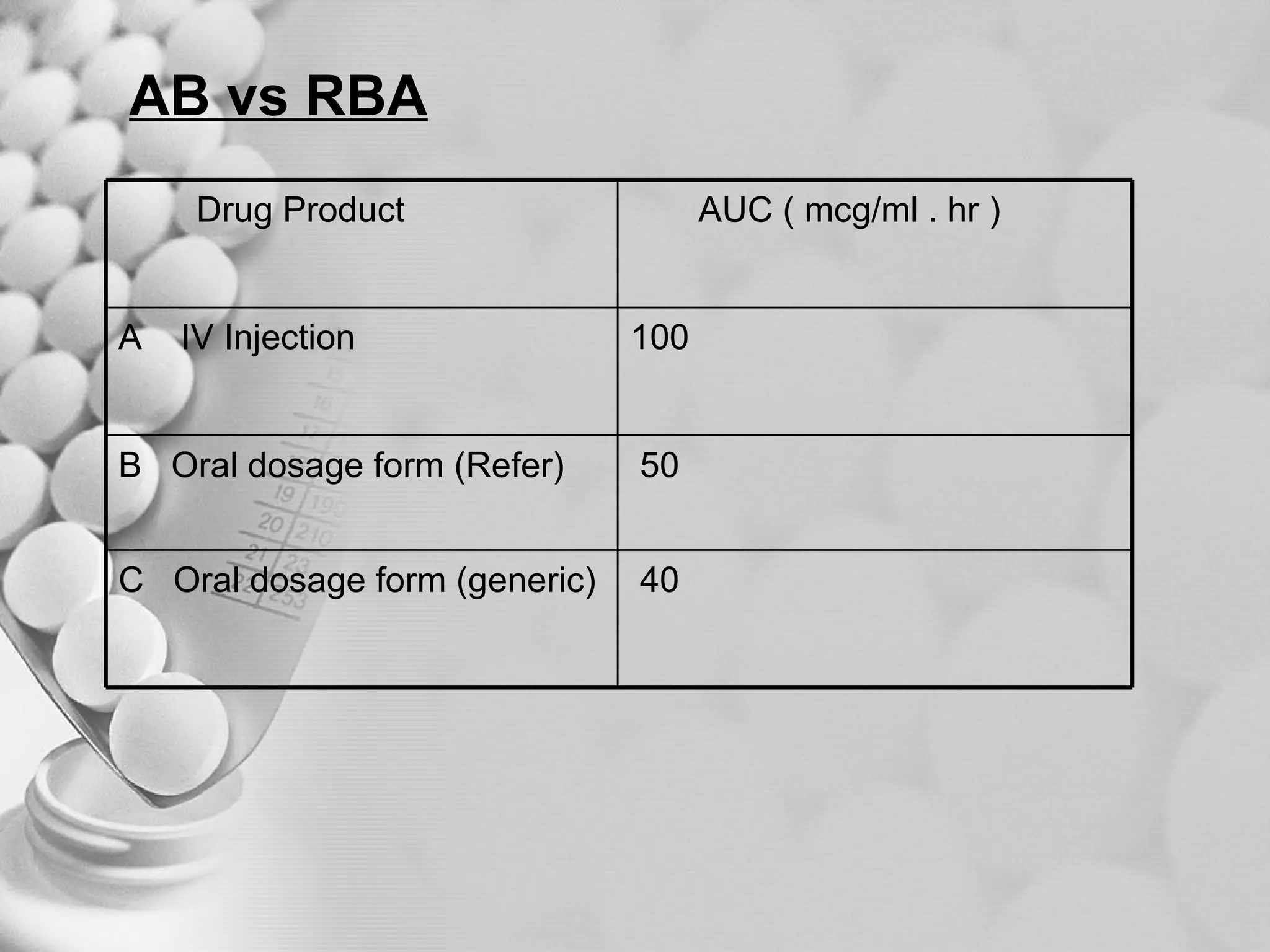
Difference between Absolute and Relative  Bioavailability The difference between AB and RBA is illustrated by the following hypothetical example, assume that , IV injection (product A) Oral dosage form No 1 (product B) Oral dosage form No 2 ( product C) All containing the same dose of the same drug.
AB vs RBA   Drug Product AUC ( mcg/ml . hr ) A  IV Injection 100 B  Oral dosage form (Refer) 50 C  Oral dosage form (generic) 40
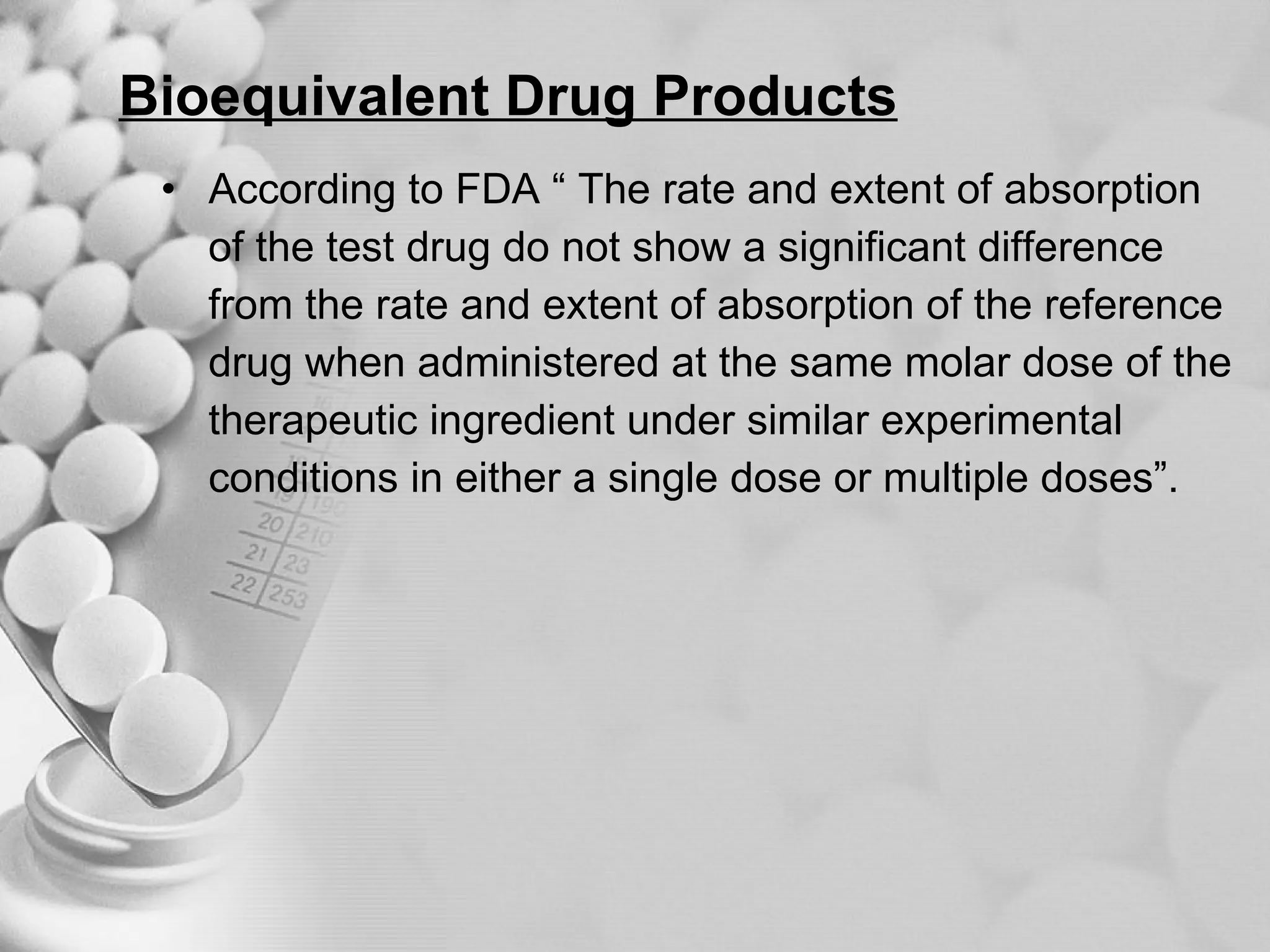
Bioequivalent Drug Products According to FDA “ The rate and extent of absorption  of the test drug do not show a significant difference  from the rate and extent of absorption of the reference  drug when administered at the same molar dose of the  therapeutic ingredient under similar experimental  conditions in either a single dose or multiple doses”.
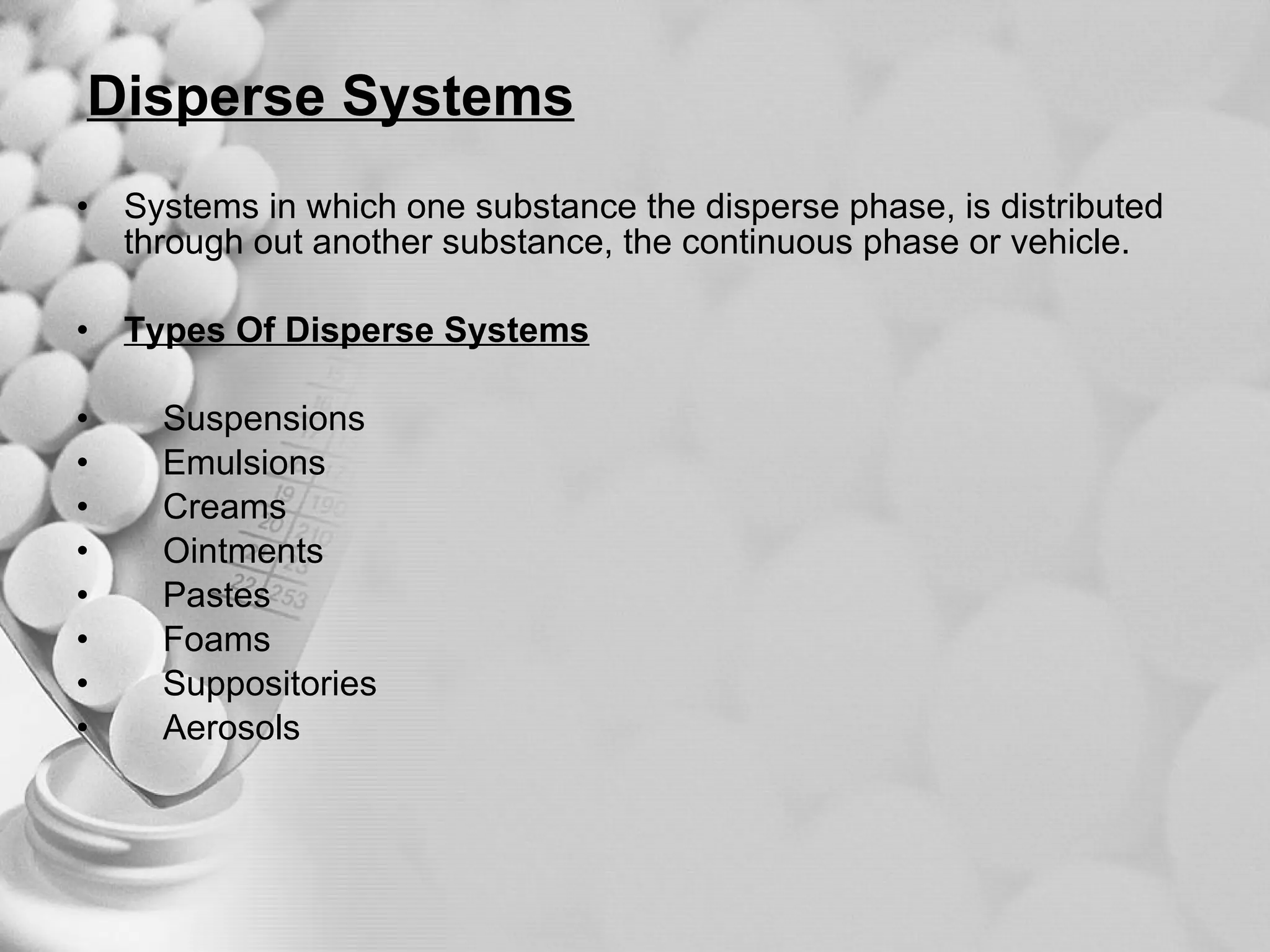
Disperse Systems Systems in which one substance the disperse phase, is distributed through out another substance, the continuous phase or vehicle. Types Of Disperse Systems Suspensions  Emulsions  Creams Ointments Pastes Foams  Suppositories Aerosols
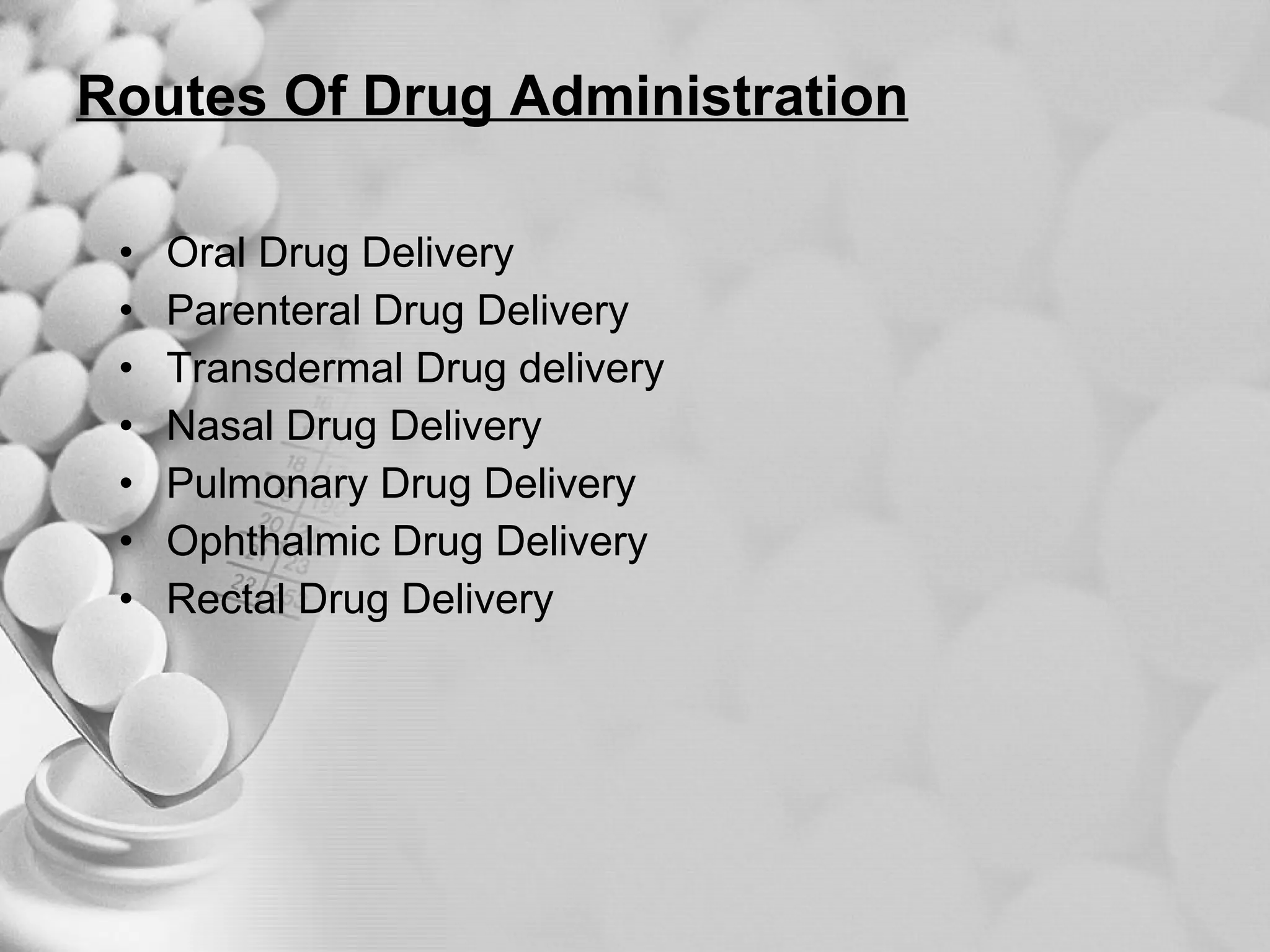
Routes Of Drug Administration Oral Drug Delivery Parenteral Drug Delivery Transdermal Drug delivery Nasal Drug Delivery Pulmonary Drug Delivery Ophthalmic Drug Delivery Rectal Drug Delivery
Properties Of Disperse Dosage Form Depending on the route of administration, the disperse phase may vary in particle size as, For inhalation and ophthalmic use particle size is  less then 1µm. For Dermatological use it is about  10- 100µm . For oral use it is  up to 200µm.
Properties Of Disperse Dosage Form Complex to formulate and prepare. Bulky and prone to various routes of physical  degradation ( i.e. segregation, coalescence, caking)  which leads to inaccurate dosing.
Advantages Of Disperse Dosage Form As compared to solutions it has adequate shelf life. Easier to administer to young and elder patients than a tablet or capsules. Less volume of formulation of poorly soluble drugs of same dose than solutions, so more convenient for patient use. Advantages in masking the taste of drugs.
Formulation Factors Affecting Drug Release  From Disperse Systems : Wetting The initial dispersion of particles in a suspension requires wetting by the dispersion medium. In case suspension is composed of particles that are hydrophobic, it is difficult to remove air from the surface of the particle . Entrapped air brings particles to the top of the medium, particles degradation, that leads to an unstable suspension.
Wetting Poor wetting of drug particles give rise to disperse formulations with poor physical stability and poor dissolution properties. To overcome this problem wetting agents are used, e.g. Surfactants : polysorbates, sorbitan, esters, etc.  Hydrophilic Polymers:   acacia, bentonite, colloidal silicon dioxide and cellulose derivatives. Hydrophilic Liquids:   alcohol, glycerol, propylene glycol, etc.
Particle Size Dissolution rate is direct function of total surface area for a dispersed phase. The surface area increases inversely with the particle size according to the expression: S v  =  6/d S v  is the specific surface area, and d is the average  particle diameter.
Particle Size Zinc suspension are crystalline having particle size of  10 – 40 micro meter give delayed onset of action 4 – 6  hours & prolong action to 36 hours, while prompt zinc  insulin suspension are amorphous particles with particle  size smaller than 2 micro meter gives prompt onset of  action in 1 -3 hours & duration of action 12 – 16 hours.
Viscosity Viscosity of dispersion arises from two sources: Intrinsic viscosity of dispersion  Interaction of the particles of disperse phase The intrinsic viscosity of the dispersion medium affects the dissolution rate of particles through its effect on the diffusion coefficient D.
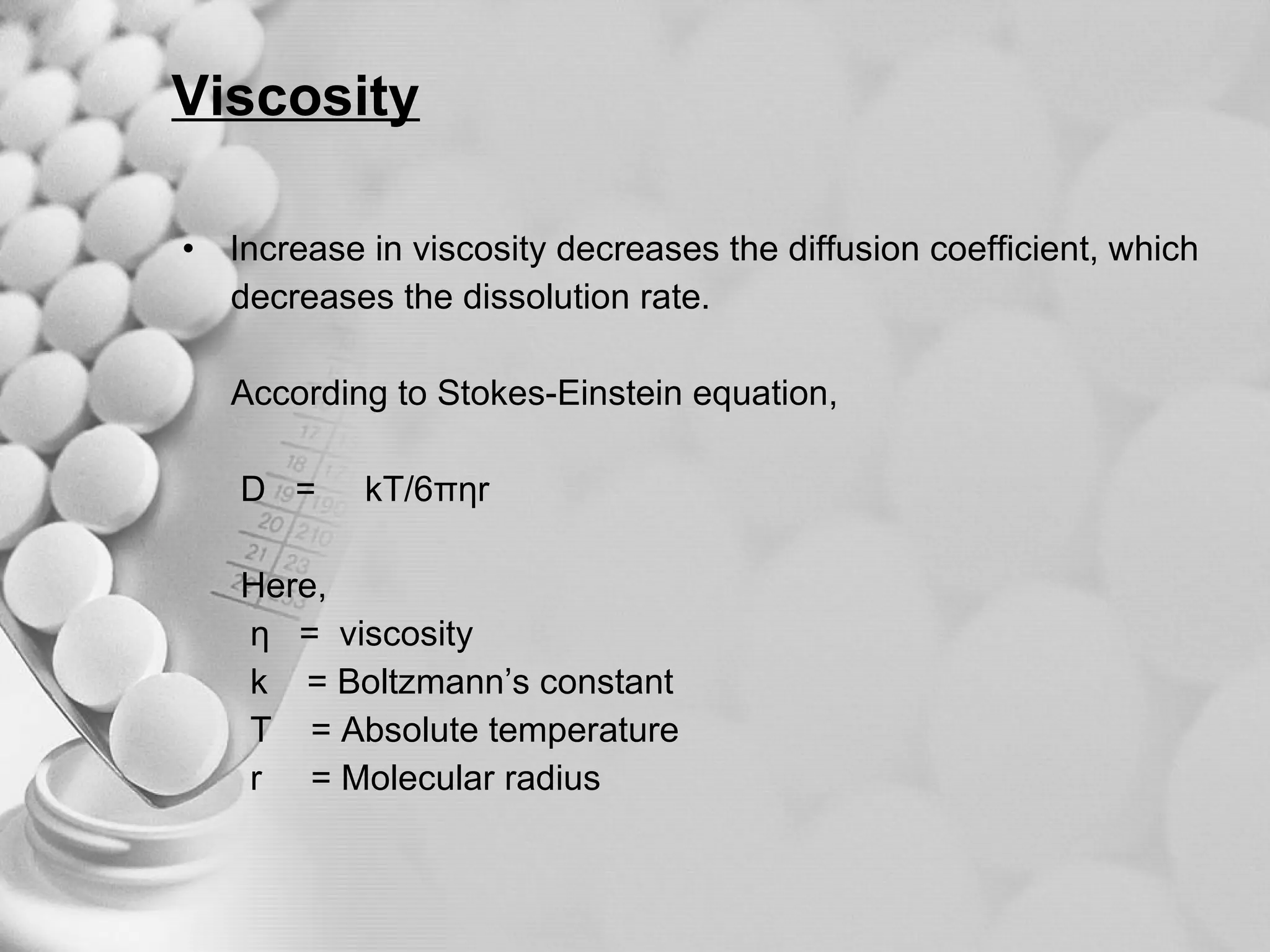
Viscosity Increase in viscosity decreases the diffusion coefficient, which  decreases the dissolution rate. According to Stokes-Einstein equation, D  =  kT/6π η r Here,  η   =  viscosity k  = Boltzmann’s constant T  = Absolute temperature r  = Molecular radius
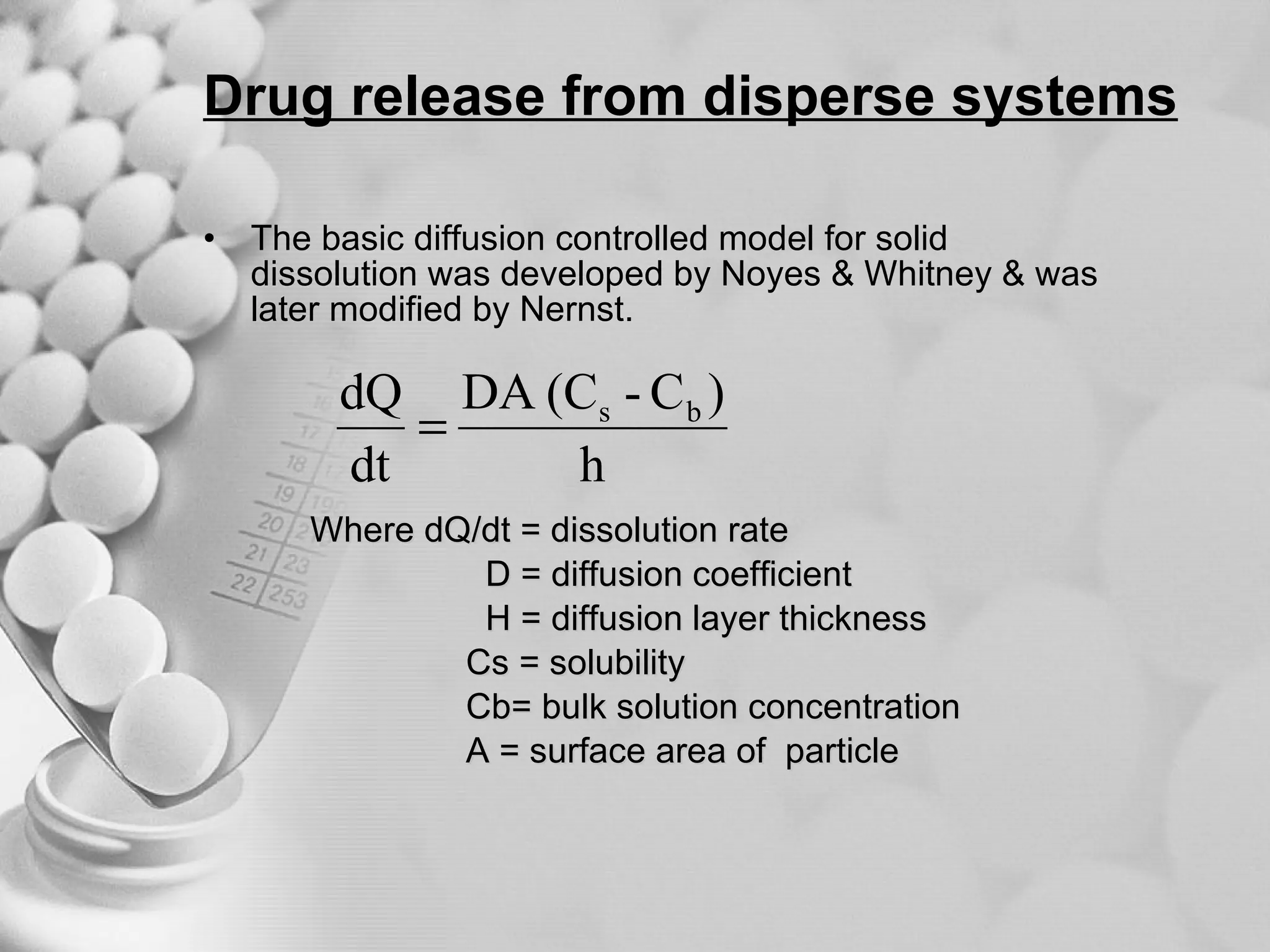
Drug release from disperse systems The basic diffusion controlled model for solid dissolution was developed by Noyes & Whitney & was later modified by Nernst. Where dQ/dt = dissolution rate  D = diffusion coefficient  H = diffusion layer thickness  Cs = solubility  Cb= bulk solution concentration  A = surface area of  particle
Absorption Barriers   Disperse dosage form are commonly administered through different routes but most commonly used are orally and topically to the skin and eye. An absorption barrier is the outer layer which is the most resistant to drug penetration.
Barriers for Skin
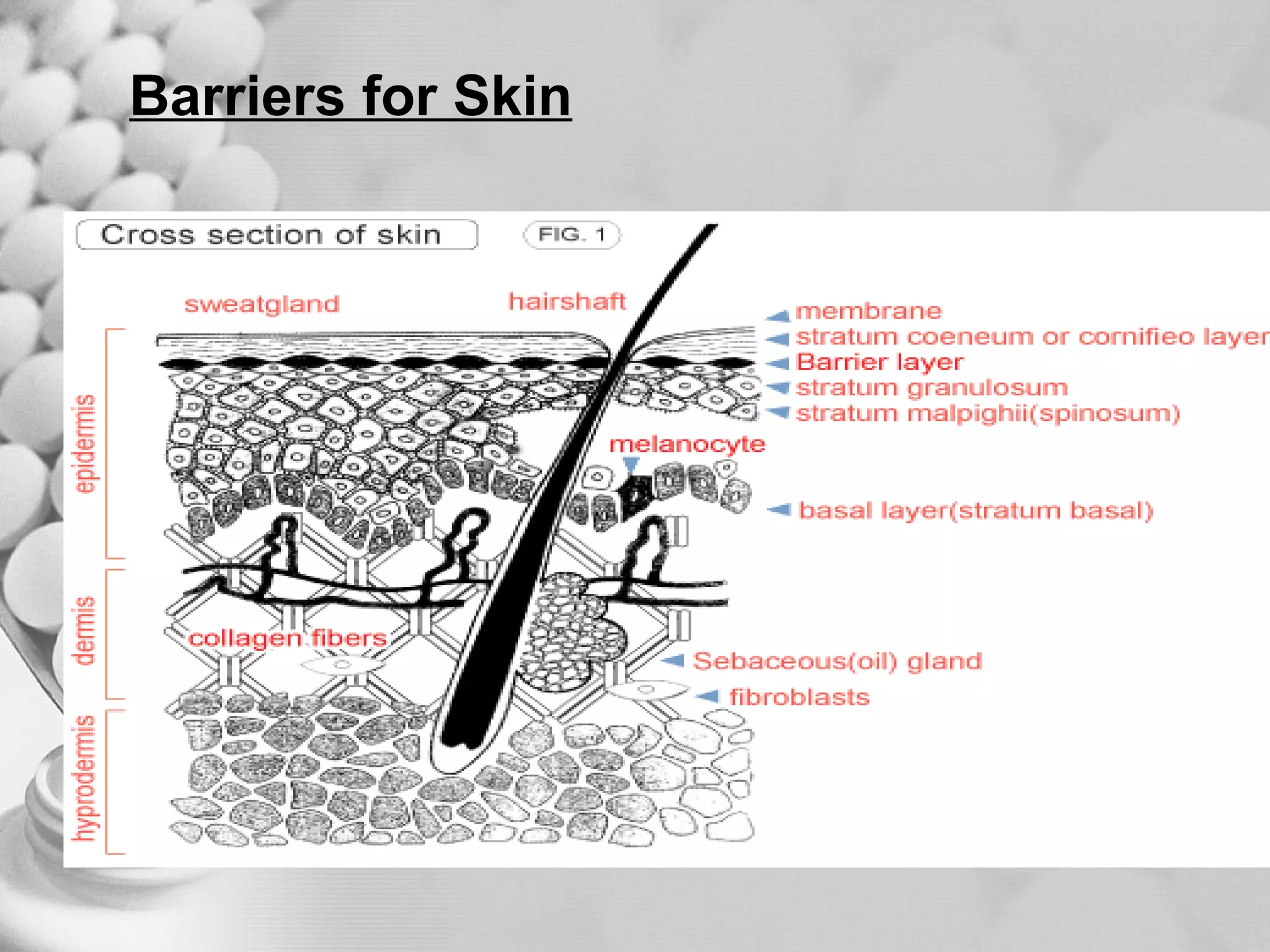
Barriers For Skin For skin the resistant layer is the Stratum Corneum, which consists of metabolically inactive cells.  The stratum corneum is 8-16 cells layers, thick and varies with body region, but over most of the body the thickness is 10µm.  The hydration level at the stratum corneum is about 10-25%.  The epidermis and dermis are situated just below the stratum corneum but provides far less resistance to drug penetration.
pathways for percutaneous absorption: Transcellular route:  Represent drug movement  through hydrated keratin layer cells  & is frequently referred to as polar route .  Intercellular route: Drug movement occurs  between the cells . Hydrophobic drugs dissolve in lipid phase & diffuse across the stratum corneum by passing through the spaces between the cells.  Transfollicular route: Follows along hair shafts to reach the systemic circulation through the capillaries & venules that supply the hair follicle.
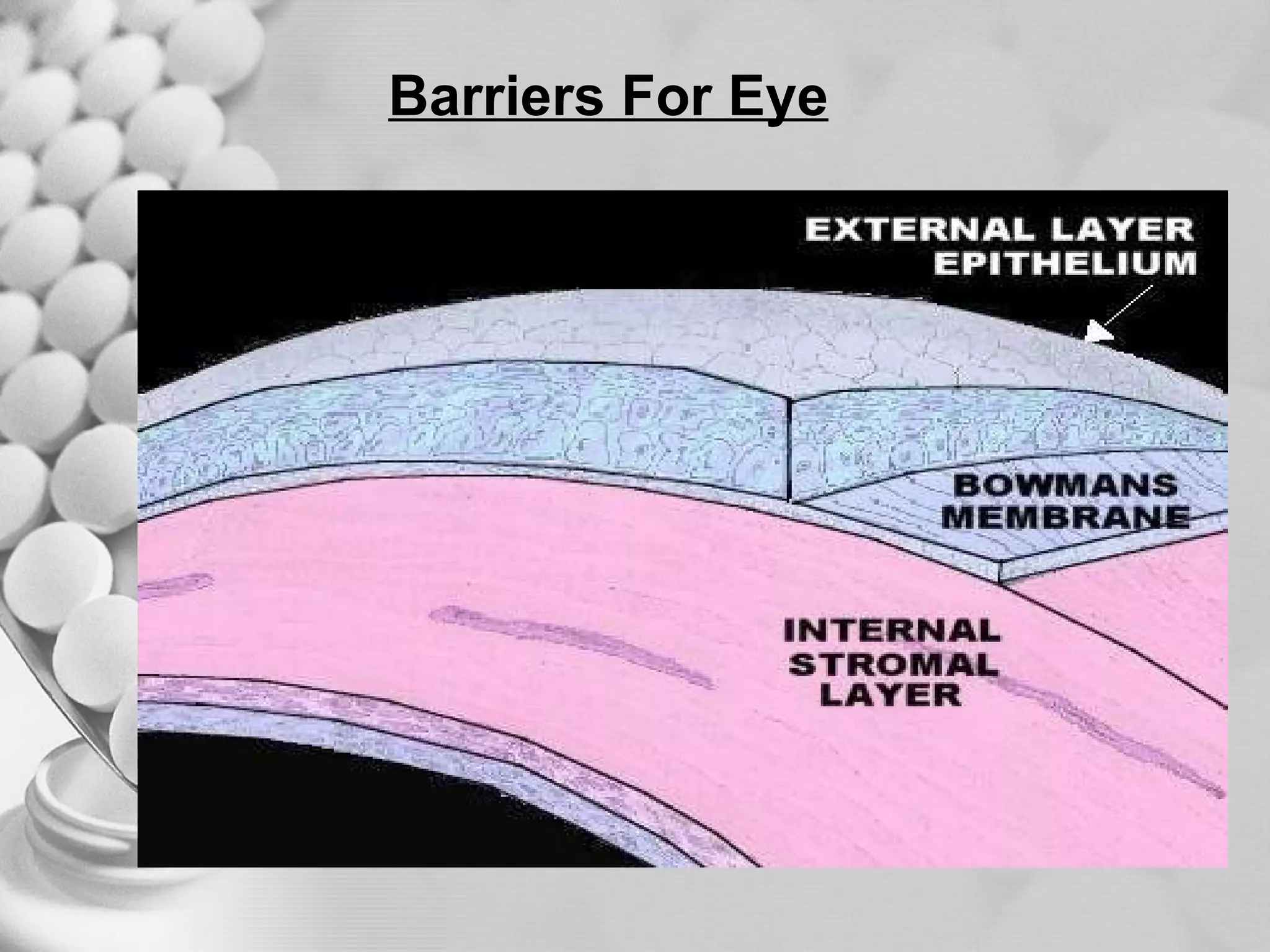
Barriers For Eye
Barriers For Eye The epithelium of cornea provides the greatest diffusional resistance for most ophthalmic drugs. It is 5 or 6 layers thick and about 50µm thick. Bowman’s membrane, stroma, Descemet’s membrane and the endothelium are adjacent layers but only incase of lipophillic drugs these layers provides significant resistance to penetration.
Barriers For Eye The hydration level of the cornea is 78%, which is significantly greater than that of the skin. The surface area of the corneal absorption site is about 1.2cm 2  compared to typical absorption areas for the skin, which vary from 2-25cm 2. Transcorneal route is considered primary pathway but scleral permeation & conjuctival blood vessels are possible alternatives.
Barriers For GIT
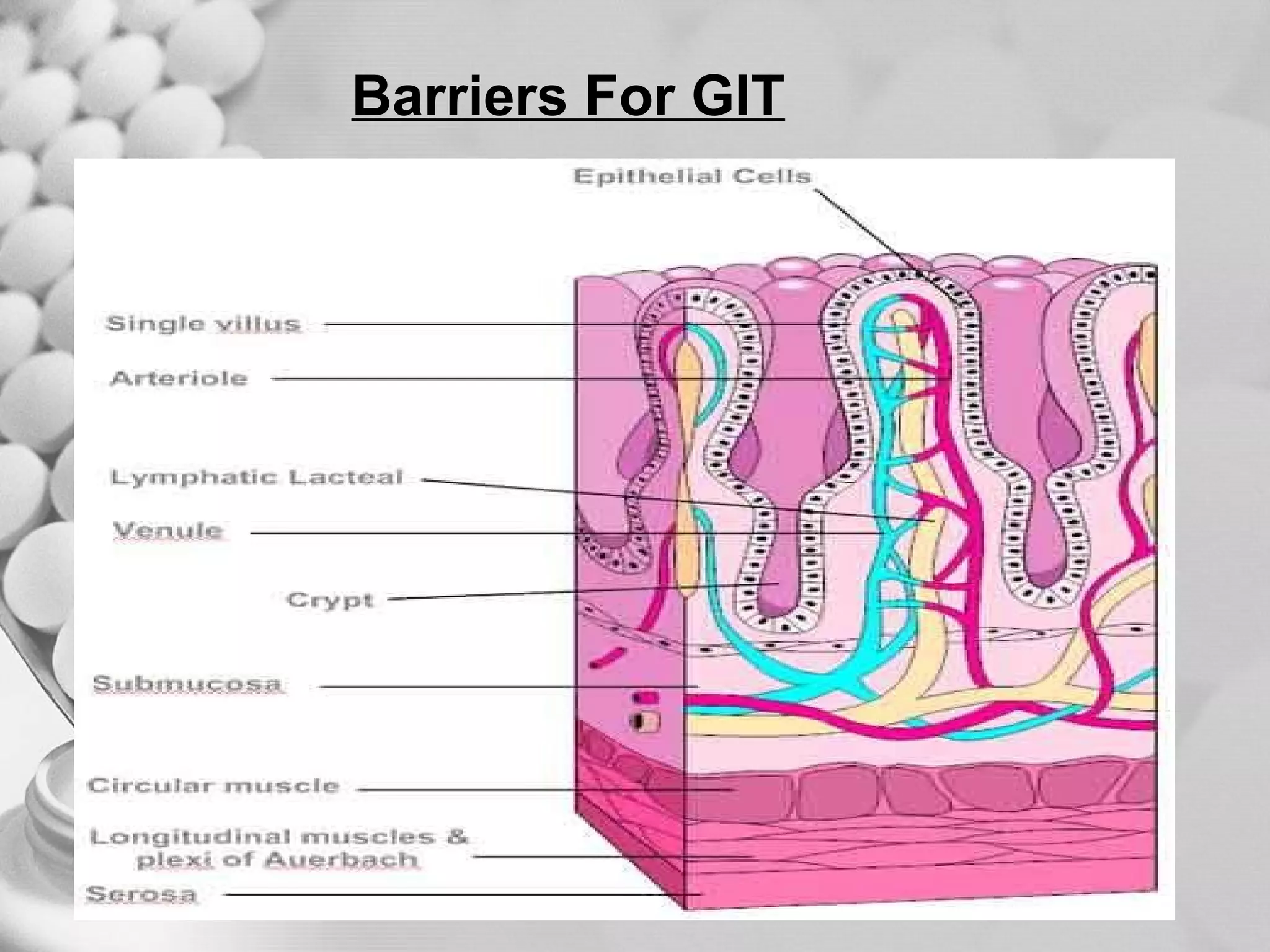
Barriers For GIT The absorption of the certain weak acid occurs through mucosal surface of stomach. Due to short residence time and low surface area drug absorption is less. primarily the drug absorption take place in small intestine. The epithelial cells of the small intestine are the Villi, which are columnar, 1µm in length, and have rapid renewal rate of two days.
Barriers for GIT Because of many folds in the small intestine the total surface area is about 2,000,000cm 2. GIT absorption is not completed until drug reaches systemic absorption, which means that the drug must cross the hepatoportal system intact and enter the inferior vena cava.
Barrier for Pulmonary Drug Delivery   Mucus Barrier The first barrier which is encountered before the drug can reach its site of action is the mucus, present as a viscoelastic layer in tracheobronchial region. If a drug is given as a aerosolized powder then the drug first needs to dissolve in the mucus layer.  Mucus has very high water content varying b/w 90-95%.
Barriers for Pulmonary Drug Delivery Its viscosity may result in slow dissolution of drugs. The dissolution may be the rate determining step especially for poorly soluble drugs such as some of the corticosteroids, which are delivered as a dry powder aerosols. Improvement in the drug penetration in to mucus has been attempted using  mucolytic drugs  such as N-aetylecysteine which acts to reduce mucus viscosity.
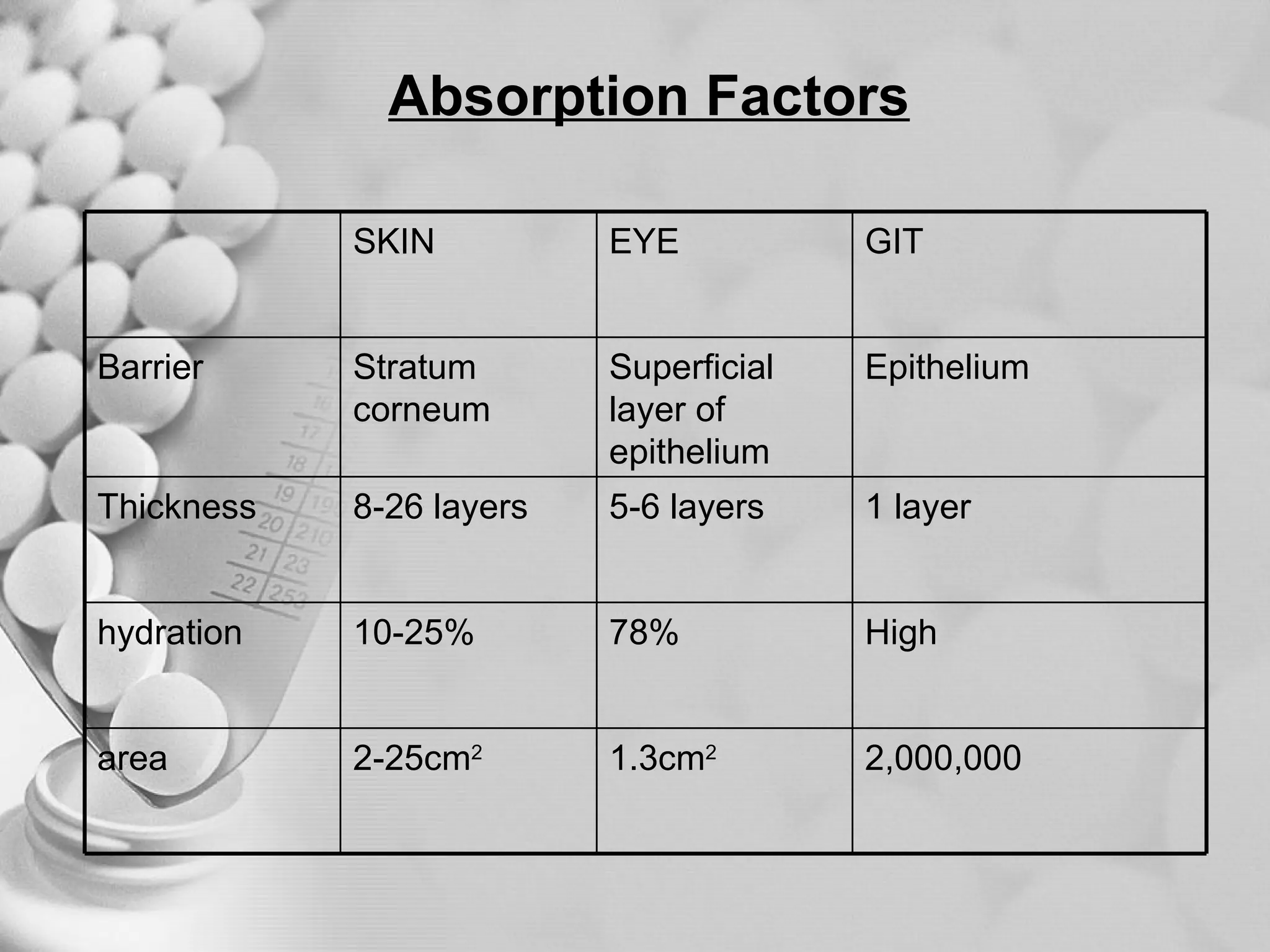
Absorption Factors SKIN EYE GIT Barrier Stratum corneum Superficial layer of epithelium  Epithelium  Thickness  8-26 layers  5-6 layers  1 layer hydration 10-25% 78% High area 2-25cm 2 1.3cm 2 2,000,000
Physiological Factors Affecting Absorption Factors affecting Percutaneous Absorption Skin PH  Normal adult human skin’s pH value is some place between 4.5 and 6. Whereas, infants’ skin pH is a bit to neutral value (pH=7 ) Hydration Level Skin has much lower hydration level, which restricts aqueous diffusion.
Factors affecting Percutaneous Absorption Skin Age As the skin ages it becomes more fragile and effects the absorption of the transdermal drug absorption. Skin Metabolism Presystemic metabolism, in the skin can obviously modify drug bioavailability. The coetaneous first pass effect for nitroglycerin, for example has been estimated to be 15-20%. The epidermis is a biochemicaly active tissue with metabolic capability, enzymes have been identified in the skin including Cytochrome P450 system.
Factors affecting Percutaneous Absorption Blood Flow The drug should be applied on those places of skin which has larger blood supply otherwise the lower blood absorption will occur. Skin Condition and Disease Changes in barrier function due to skin disease generally either from alteration of the lipid/protein composition of stratum corneum.
Factors affecting Percutaneous Absorption Desquamation  The epidermis undergoes complete renewal every three weeks or so, This corresponds there fore to the shedding of one layer of the Stratum corneum per day. Skin Irritation and sensitization  Skin irritation and sensitization by drug also causes inflammatory response which also effect drug absorption.
Percutaneous Absorption Advantages Avoidance of first pass effect. Drug levels can be maintained in the systemic circulation within the therapeutic window. Improved patient compliance. Drug input can be terminated simply by the removal of patch.
Percutaneous Absorption Disadvantages Limited only to potent drug molecules. Limited to those drugs which have adequate solubility in both lipophilic and hydrophilic environment, to reach dermal microcirculation and gain access to systemic circulation.
Factors affecting Ophthalmic Absorption Narrow PH Range Eye – 7.3-7.7 Small Area Of Absorption Nasolacrimal Drainage and Tear Turnover Which reduces residence time at the absorption site compared to the skin and G.I.T.
Factors affecting Ophthalmic Absorption Osmolality When eye surface is covered with the  HYPOTONIC SOLUTION,  the permeability of the epithelium is increased considerably and water flows in to the cornea, the corneal tissue swell, increasing the pressure on the nerves and causing anaesthetizing action on the cornea. In case of  HYPERTONIC SOLUTIONS  water flows from the aqueous layer through the cornea to the eye surface.
Factors affecting G.I.T Absorption GI Motility There are 03 major types of GI motility. Segmentation Tonic contractions Peristalsis The length of time a drug moiety is in contact with the absorbing tissue will influence the extent of drug absorption.
Factors affecting G.I.T Absorption pH The pH at the absorption site is an important factor in drug absorption because many drugs are either weak organic acids or bases. In solutions organic electrolytes exists in,  non ionized (usually lipid soluble) an ionized  ( usually poorly lipid soluble) The fraction of each species depends on the pH of the solution.
pH Location pH Stomach Duodenum Jejunum Ileum Colon Rectum 1.5-3.5 5-7 6-7 6.0-7.5 5.5-7.0 7
pH Changes in the pH of fluids may improve or decrease the absorption of drugs. Disease or drug related changes in a gastric pH may influence the dissolution, stability and/or absorption of certain drugs.
Metabolism Drug metabolism may occur at various sites along the GI tract, including: In the gut fluids Within the microvilli By colonic micro flora Cytochome P450 3A4 is highly expressed in human small intestinal mucosa and is responsible for metabolism of, Cyclosporine, Midazolam, Clozapine, during passage across the intestinal mucosa.
Metabolism First Pass metabolism  Absorbed drugs are carried in the portal circulation to the liver where they may be metabolized. Drugs that are structurally resembles nutrients such as polypeptides, nucleotides, or fatty acids, may be specially susceptible to enzymatic degradation. For example, Protolytic enzymes Chemotrypsin and Trypsin can degrade insulin and other peptide drugs.
Metabolism Acid or base mediated drugs breakdown is also a possibility in GI tract. Drugs such as Erythromycin, penicillin's, and Omeprazole are unstable in acidic media and will therefore degrade and provides lower effective dose.
Presence Of Food Drug absorption generally is less efficient in the presence of food. Mechanisms involved: By slowing down gastric emptying rate Food provides viscous environment Drug-Food complex is formed Gastrointestinal fluids are secreted in response to food, enzymes present in these fluids may deactivate a drug moiety. Increased acid secretion provoked by food may degrade acid labile compounds.
Presence Of Food Food constituents may compete with drugs for carrier  mediated absorption mechanisms.
Individual variation Gender Gastric acid secretion is greater in men than in women. Whereas gastric emptying time is slower in women. Enzymes expression is also different between men and women, for example, sex related cytochrome P450 isoenzymes and glucuronidation enzymes are more abundant in men.
Gender Pregnancy results in reduced gastric secretion increased intestinal motility, increased plasma volume, decreased plasma drug binding and also an additional pharmacokinetic compartment. These altered pharmacokinetic factors may require modifications in the dosage regimen for certain drugs.
Race Racial differences in oral drug bioavailability are known to exist and may be due to environmental, dietary or genetic differences. These differences are becoming increasingly important in therapeutics due to, increasingly international nature of drug development and use and also the multi-racial nature of population of many countries. The most profound differences are found in metabolic processes.
Example The hydroxylation of debrisoquine, an adrenergic-blocker used in the treatment of hypertension, is expressed as two phenotypes as, Extensive metabolizer ( EM ) Poor metabolizer ( PM ) Swedish and Spanish populations appear to both Ems and PMs, whereas Chinese and African populations are predominantly PMs.
Age Gastric fluids are less acidic in newborns than in adults, which can affect the absorption of ionizable and acid-labile drugs. Neonates are also associated with leaky epithelium, which permits the absorption of proteins, and macromolecules not normally absorbed from GI tract. Decreased enzymatic activity, including hepatic first pass metabolism, is associated with the elderly.
Methods Of Assessing Bioavailability Of Drugs Bioavailability testing is a mean of predicting the clinical efficacy of a drug in a given dosage form is a direct evidence of the efficiency with which a dosage form performs its intended therapeutic function. Bioavailability studies are also carried out  to compare the availability of a drug substance from different dosage forms, or from the same dosage form produced by different manufacturers.
Methods Of Assessing Bioavailability Of Drugs Following are the methods used in bioavailability and bioequivalence assessment: (1) Plasma Drug Concentration : The most commonly used and most direct method to assess the clinical performance of a drug involves measurement of the drug concentrations in the blood, plasma or serum. Single dose of a drug is administered. Blood samples are collected over a period of time following administration, and are analyzed for drug contents.
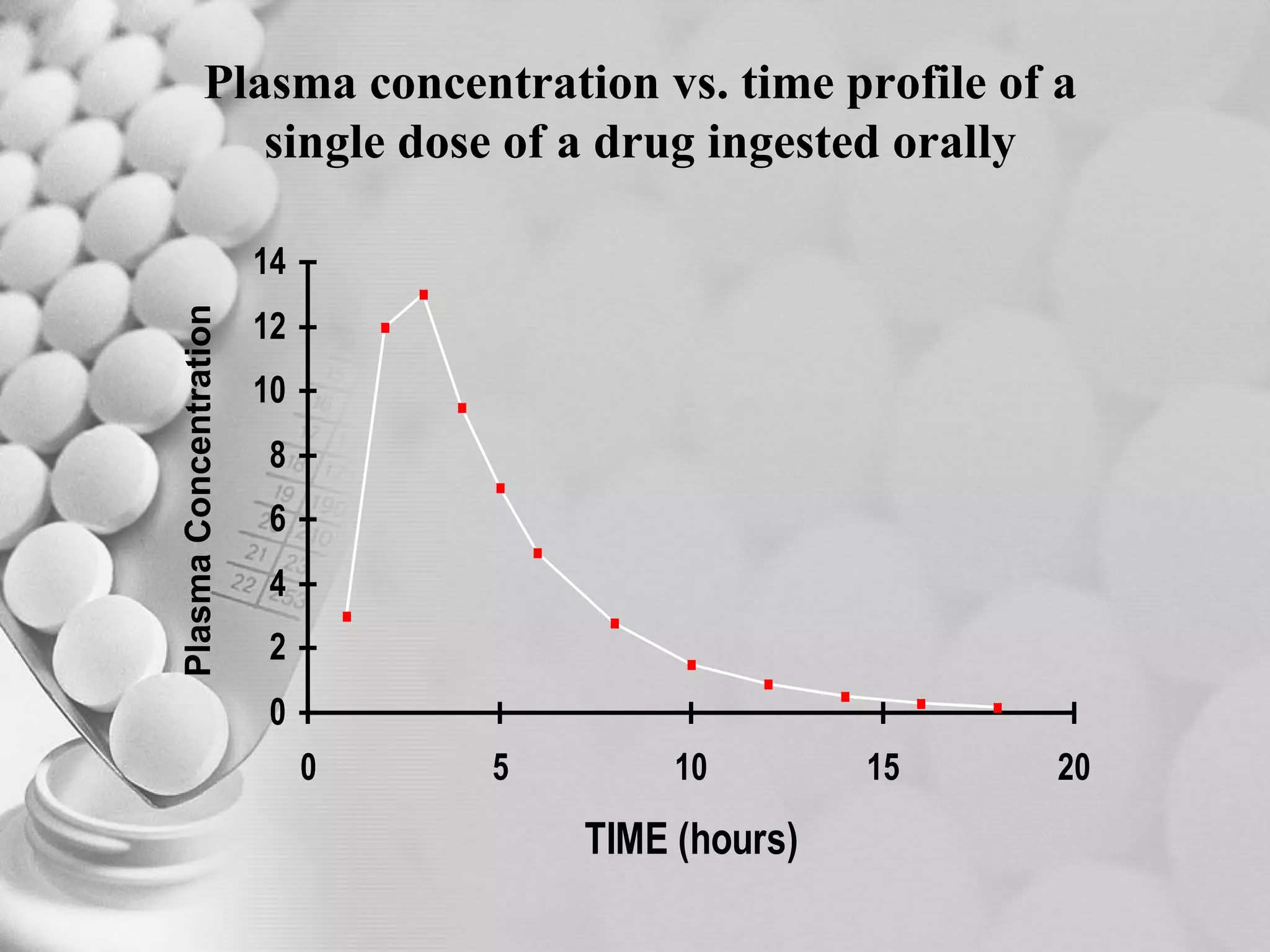
Plasma Drug Concentration Based on the blood concentration as a function of time  interference are drawn regarding the rate and extent of  absorption of drugs.
Plasma concentration vs. time profile of a single dose of a drug ingested orally Plasma Concentration
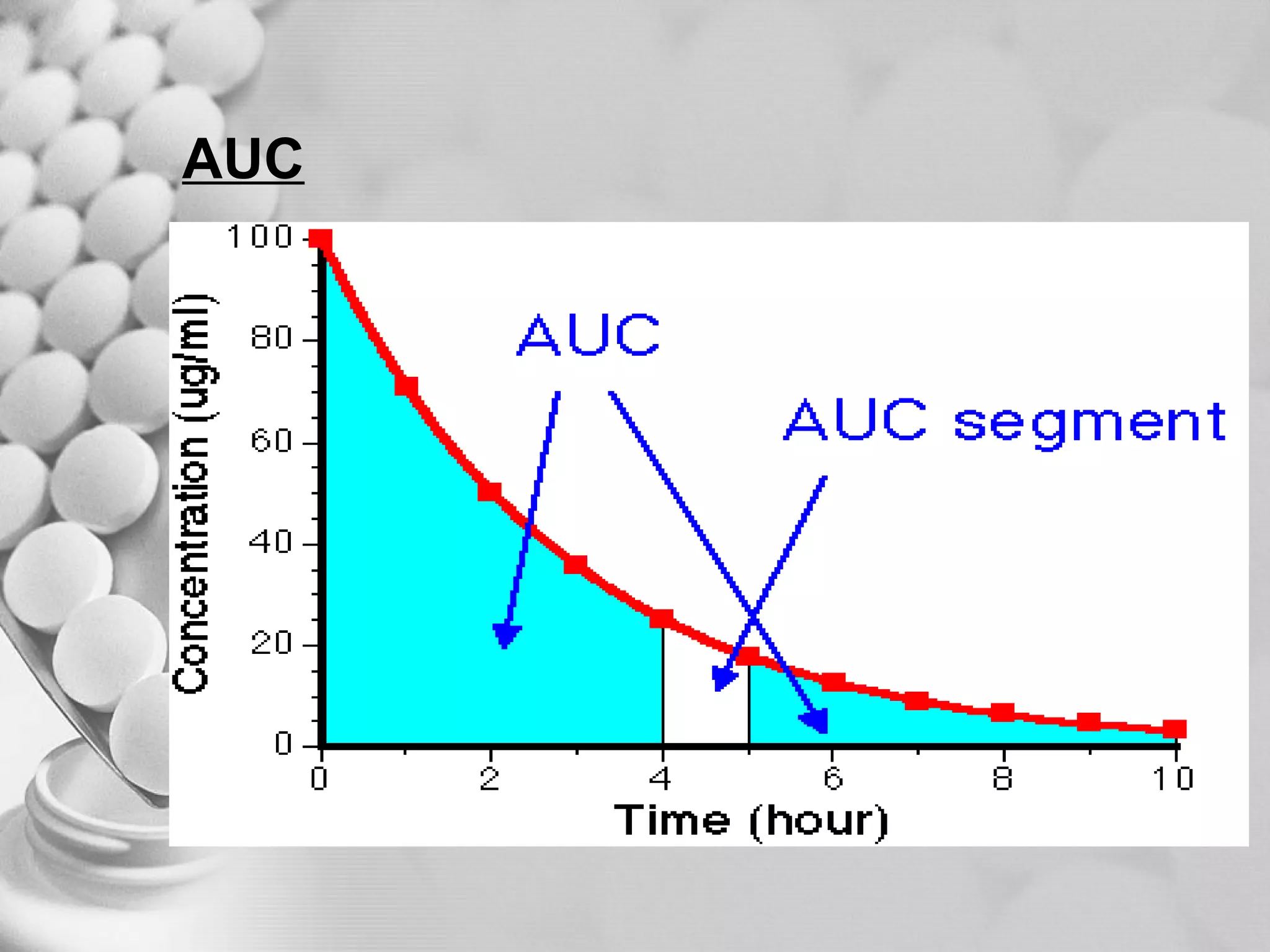
Key Parameters: AUC: The area under the plasma concentration –time curve from t = 0 to t = ∞. It is the measurement of drug bioavailability. The AUC is proportional to the total amount of drug reaching systemic circulation. The units for AUC are concentration –time units (e.g. µg hr/ml.
AUC
Peak height or C max It is the peak plasma drug concentration and represent the maximum drug concentration obtained after extra vascular administration of drugs. It is a function of both the rate and extent of absorption. C max  will increase with an increase in a dose as well as with an increase in the absorption rate
Time of occurrence or t max It is the time required for the concentration of drugs in plasma to reach its highest value C max  following extra vascular drug administration. For a given dose and bioavailability fraction, t max  is inversely dependent on absorption rate. T max  as the drug absorption increases.
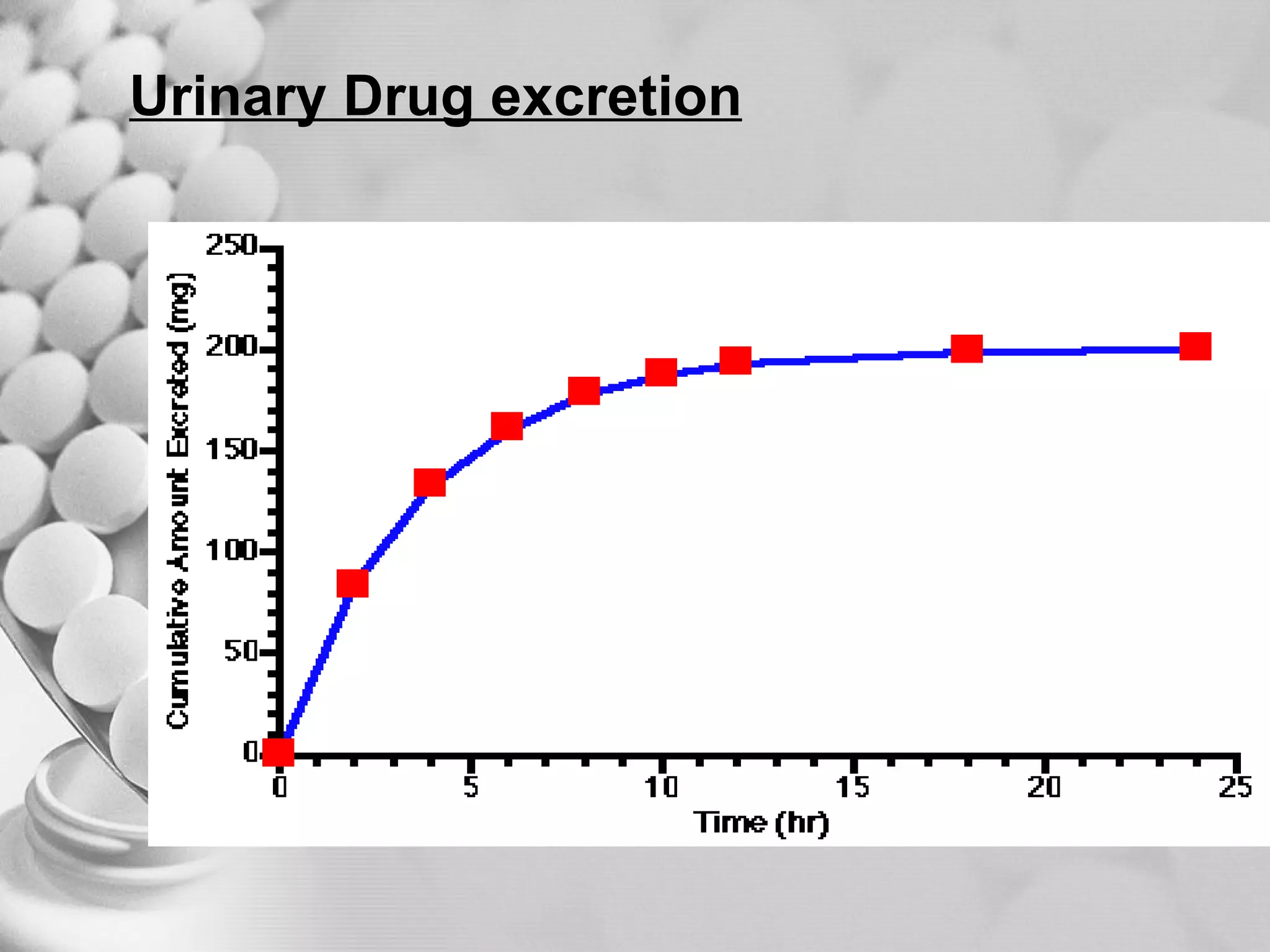
(2) Urinary Drug excretion Data An alternative and indirect method for the assessment of Bioavailability of drugs is to use the urinary drug excretion data. It involves the collection of urine samples and the determination of the total quantity of drugs excreted in the urine as a function of time. It is known that the urinary excretion of the unchanged drug is directly proportional to the plasma concentration of total drug.
Urinary Drug excretion
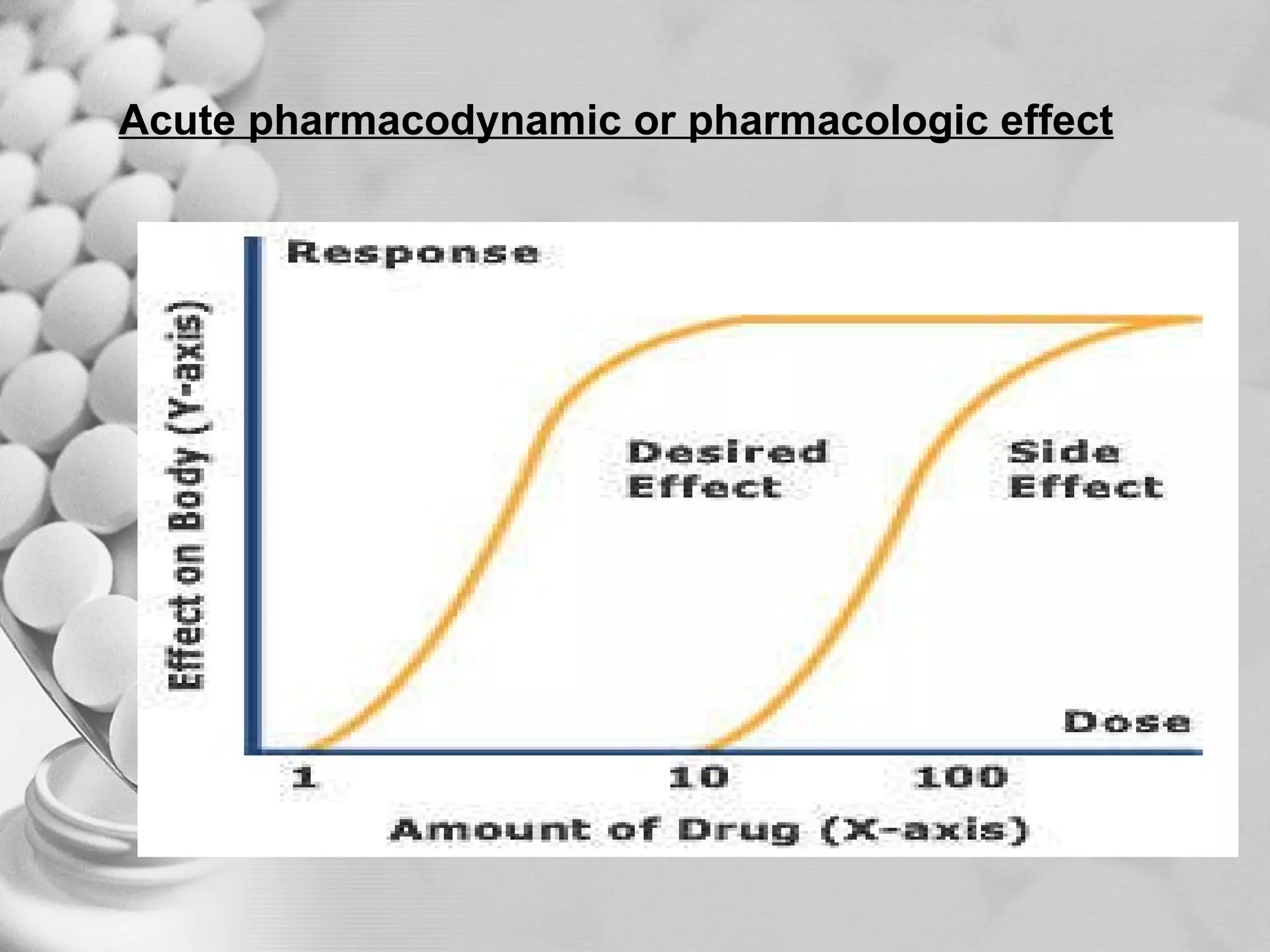
(3)   Acute pharmacodynamic or pharmacologic effect In some cases the quantitative measurement of a drug is not available or it lacks sufficient accuracy and reproducibility. in such cases acute pharmacodynamic effects are used as an index of drug bioavailability. For example, Effect on pupil diameter, heart rate, or blood pressure.
Acute pharmacodynamic or pharmacologic effect This method is based on the assumptions that “ a given intensity of response is associated with a particular drug concentration at the site of action. E.g. variation of meiotic response intensity can be directly related to the oral dose of chlorpromazine. In this case an acute pharmacodynamic effect-time curve is constructed .
Acute pharmacodynamic or pharmacologic effect
(4)   Clinical Observations This method of assessing bioavailability of a drug product is through the demonstration of the clinically significant effect. Well-controlled clinical trials in human can establish the safety and effectiveness of a drug product. However this approach is least accurate least sensitive, and least reproducible.
(5)   In vitro Bioavailability studies Drug dissolution studies may under certain conditions give an indication of drug bioavailability. Ideally the in-vitro drug dissolution rate should correlate with the in-vivo drug bioavailability. Dissolution studies are often performed on several test formulations of the same drug. The test formulation that demonstrate the most rapid drug dissolution in-vitro, will have generally the most rapid rate of drug bioavailability.
Gastrointestinal Bioavailability The bioavailability of an oral dosage form is determined  by the extent of absorption of the drugs throughout the  GIT.
Gastrointestinal Bioavailability Oral suspension Oral suspension dosage form is developed for drug product that has low solubility. Also for masking the bitter taste of the drugs. To overcome the difficulty that very young & old have in swallowing tablets and capsules.
Oral suspension Physical instability of suspension results an inaccurate dose. Formation of  agglomerates  in the suspension result in the reduced bioavailability as compared to tablet dosage form. Aq. Suspension is often used as reference formulation in bioavailability studies.
Oral suspension To optimize the bioavailability of oral suspension. Select the: Appropriate drug particle size Particle densities Vehicle viscosities
Oral suspension Nitrofurantoin suspension exhibit delayed absorption resulting in longer duration of action. Bioavailability of sulfathiazole increased as the viscosity of suspending agent increased due to increased absorption. It is thought that it occurs due to improved wetting by suspending agent.
Oral suspension Griseofulvin when administered with meal high in fat contents demonstrated increased absorption. Sod. Salicylate suspended in coconut oil administered show 1.32 fold increase in extent of absorption due to increased residence time of drug in stomach.
Oral emulsion The stability and release of drugs from emulsion are: Emulsifier type  Droplet size Absorption of micronized Griseofulvin fro an o/w emulsion dosage form increased when compared with oil suspension and aq. Suspension in rate. When micronized phenytoin was administered as a corn oil emulsion, both rate and extent of absorption increased.
Dermatological Bioavailability Transdermal medication In recent years transdermal route has been used for systemic delivery of Scopolamine, Clonidine, and Nitroglycerin, all very potent drugs with high transdermal penetration rates. Transdermal Medications are of two types,  Those that control the rate of drug delivery to the skin. Those that allows the skin to control the rate of drug absorption.
Dermatological Bioavailability Transdermal permeation of drug from various topical systems is governed by two factors: Penetration rate of drug  Release of drug from the system
Dermatological Bioavailability Permeability through skin depends upon: Thickness of stratum coeneum Integrity of stratum corneum Hydration level of skin Partition coefficient Permeability characteristics is described by its permeability coefficient ‘‘p’’ P =  DK/h
Dermatological Bioavailability The skin permeation enhancer have been used to promote drug permeation for local and systemic effects as: Dimethylsulfoxide Dimethyleformamide Dimethyleacetamide Enhance the efficacy of tetracycline for treatment of acne at the level of 0.125%.
Measurement of Dermatological bioavailability A promising approach to the measurement of steroids bioavailability in the skin has been to measure the vasoconstrictor activity produced by topically applied steroids. Procedure:  The procedure consists of applying test product to 7×7mm 2  outlined by a template on the both forearms of human volunteers. A thin layer of ointment is applied to the grid area and secured for 6 hours.
Procedure:  At that time the dressing are removed and the forearms are washed with soap and water. At various intervals over the next 24 hours or more, scores of  0-3 are assigned to each response  At the end the plot of the percentage of the total possible score can be plotted over time.
Ophthalmic Bioavailability Ophthalmologist prefers topical application to the eye for treating eye diseases. Due to the toxicity of some drugs such as anticholinesterase inhibitor & cholinergic drugs they cannot be used systemically. Relatively poor ocular bioavailability(2-10 % of the applied dose) is due to: Narrow pH range, rapid drainage, facilitated elimination by blinking, induced tearing from mechanical or chemical stimulation & small surface area.
Ophthalmic suspensions :   Aq. Suspensions of lipophilic steroids were developed because water-soluble analogues not adequately penetrate the cornea. Particle size of suspended drug particles & viscosity of vehicle influence the bioavailability of ophthalmic suspension. Polymers such as cellulosic derivative poly vinyl alcohol & polyvinyl pyrrolidone impart adequate viscosity, retard drainage rate of instilled drop & promote longer retention time on the cornea.
Ophthalmic suspensions :   The particle size of suspended drugs is below 10 micrometer to prevent abrasion of cornea. Particle size also affects the dissolution rate. The time required for dissolution & corneal absorption must be less than the residence time of the drug in the conjunctival sac to take advantage of the retained particles. The saturated solution of suspension provides initial response, whereas the retained particles maintain the response as particle dissolve & drug is absorbed.
Ophthalmic suspensions : With the decrease in the particle size bioavailability increases. Three suspensions of dexamethasone with particle sizes 5.75, 11.5 & 22 micrometer exhibit increasing blood levels with decreasing particle size when instilled into the eyes of rabbit.  The particle size must be small enough to prevent corneal abrasion, because mild irritation can induce lacrimation & facilitate drug removal. Label should state, “ shake well before each use”.
Ophthalmic ointments : Ophthalmic ointments are softer than dermatological ointments, at the eye temperature do not liquefy but readily soften & with the blinking action continuously spread throughout the conjunctival sac. Ocular contact time, diffusion through the bulk of the ointment, effective drug concentration at cornea &  facilitated release determine the bioavailability of ophthalmic drugs.
Ophthalmic ointments : Contact time of ophthalmic preparations is of primary importance because otherwise significant drug abs. cannot take place. Ophthalmic ointments provide long contact time as compared to viscous solution so used preferably. Ocular bioavailability of chloramphenicol ointment & solution was compared & it is found that the ointment prolong the drug concentration in aq. Humor above the minimum effective concentration while solution had to be instilled every 15 min. to attain comparable drug levels, which rapidly fall when the instillation were discontinued.
Ophthalmic ointments : Studies also report that increase in viscosity of vehicle  retard drainage  &  promote contact time  with the cornea due to increase in contact time hydrophilic drugs show greater improvement in ocular bioavailability.
Rectal bioavailability : Rectal suspension (enemas):   Administration of drug solution or suspension by rectum is accomplished with an enema system. Enemas are large in volume (50- 100ml) have limited patient acceptability & used in disease state which directly affect the colon e.g. ulcerative colitis. When carbamazepine administered as rectal suspension show low bioavailability as compared to oral suspension of carbamazepine. It is likely that slow dissolution of hydrophobic carbamazepine limited their bioavailability.
Rectal suppositories : The absorption of drugs from rectal suppositories is a complex process. There are three types of suppository bases. 1) Fatty or oleaginous bases include cocoa butter. Fatty bases melt at body temperature & are immiscible with rectal fluids. Drugs partition between the oily base & rectal fluid  2) Water soluble bases include polyethylene glycols & dissolve rapidly in the rectal fluids. 3) Emulsifying bases are not miscible with water & form emulsion when water from rectal fluid is incorporated into the suppository.
Rectal suppositories : Bioavailability of Phenobarbital & Phenobarbital sodium was observed from different suppository bases. Result indicated that drug release from suppository base was not rate limiting rather drug permeability across the rectal tissues was controlling the bioavailability of Phenobarbital.  Usually drug incorporated into rapidly dissolving water-soluble bases result in higher bioavailability than do the fatty bases.

Bioavailability Of Disperse Dosage Form

  • 1.
    Bioavailability Of Disperse Dosage Forms By Mohammad Sohail Mphil pharmaceutics Islamia university Bahawalpur [email_address]
  • 2.
    Bioavailability Of DisperseDosage Forms Bioavailability It is the measurement of the rate and extent to which an active drug ingredient or therapeutic moiety is absorbed from drug product and becomes available at the site of action.
  • 3.
    Relative Bioavailability (RBA)is a systemic availability of a drug from a dosage form as compared to a reference standard given by the same route of administration. Relative Bioavailability is calculated as a ratio of the “AUC” for the dosage form to the “AUC” for the reference dosage form given in the same dose.
  • 4.
    RBA The determinationof RBA is important in generic drug studies ( e.g. Bioequivalence studies ). Bioequivalence is the relative bioavailability study. [ AUC ] Oral test / Dose oral test RBA = _______________________ [ AUC ] oral reference / Dose oral Ref
  • 5.
    Absolute Bioabavailability ‘F’ is the fraction of drug systemically absorbed from the dosage form. “ F” is calculated as the ratio of the AUC for the dosage form given orally to the AUC obtained after IV drug administration, ( adjusted for dose). A parenteral drug solution given by the IV administration is considered to have 100% systemic absorption ( i.e. F= 1).
  • 6.
    Absolute Bioavailability An‘F’ value of 0.80 0r 80% indicated that only 80% of the drug was systemically available from the oral dosage form. [ AUC ] Oral / Dose oral F = ______________________ [ AUC ] IV / Dose IV
  • 7.
    Difference between Absoluteand Relative Bioavailability The difference between AB and RBA is illustrated by the following hypothetical example, assume that , IV injection (product A) Oral dosage form No 1 (product B) Oral dosage form No 2 ( product C) All containing the same dose of the same drug.
  • 8.
    AB vs RBA Drug Product AUC ( mcg/ml . hr ) A IV Injection 100 B Oral dosage form (Refer) 50 C Oral dosage form (generic) 40
  • 9.
    Bioequivalent Drug ProductsAccording to FDA “ The rate and extent of absorption of the test drug do not show a significant difference from the rate and extent of absorption of the reference drug when administered at the same molar dose of the therapeutic ingredient under similar experimental conditions in either a single dose or multiple doses”.
  • 10.
    Disperse Systems Systemsin which one substance the disperse phase, is distributed through out another substance, the continuous phase or vehicle. Types Of Disperse Systems Suspensions Emulsions Creams Ointments Pastes Foams Suppositories Aerosols
  • 11.
    Routes Of DrugAdministration Oral Drug Delivery Parenteral Drug Delivery Transdermal Drug delivery Nasal Drug Delivery Pulmonary Drug Delivery Ophthalmic Drug Delivery Rectal Drug Delivery
  • 12.
    Properties Of DisperseDosage Form Depending on the route of administration, the disperse phase may vary in particle size as, For inhalation and ophthalmic use particle size is less then 1µm. For Dermatological use it is about 10- 100µm . For oral use it is up to 200µm.
  • 13.
    Properties Of DisperseDosage Form Complex to formulate and prepare. Bulky and prone to various routes of physical degradation ( i.e. segregation, coalescence, caking) which leads to inaccurate dosing.
  • 14.
    Advantages Of DisperseDosage Form As compared to solutions it has adequate shelf life. Easier to administer to young and elder patients than a tablet or capsules. Less volume of formulation of poorly soluble drugs of same dose than solutions, so more convenient for patient use. Advantages in masking the taste of drugs.
  • 15.
    Formulation Factors AffectingDrug Release From Disperse Systems : Wetting The initial dispersion of particles in a suspension requires wetting by the dispersion medium. In case suspension is composed of particles that are hydrophobic, it is difficult to remove air from the surface of the particle . Entrapped air brings particles to the top of the medium, particles degradation, that leads to an unstable suspension.
  • 16.
    Wetting Poor wettingof drug particles give rise to disperse formulations with poor physical stability and poor dissolution properties. To overcome this problem wetting agents are used, e.g. Surfactants : polysorbates, sorbitan, esters, etc. Hydrophilic Polymers: acacia, bentonite, colloidal silicon dioxide and cellulose derivatives. Hydrophilic Liquids: alcohol, glycerol, propylene glycol, etc.
  • 17.
    Particle Size Dissolutionrate is direct function of total surface area for a dispersed phase. The surface area increases inversely with the particle size according to the expression: S v = 6/d S v is the specific surface area, and d is the average particle diameter.
  • 18.
    Particle Size Zincsuspension are crystalline having particle size of 10 – 40 micro meter give delayed onset of action 4 – 6 hours & prolong action to 36 hours, while prompt zinc insulin suspension are amorphous particles with particle size smaller than 2 micro meter gives prompt onset of action in 1 -3 hours & duration of action 12 – 16 hours.
  • 19.
    Viscosity Viscosity ofdispersion arises from two sources: Intrinsic viscosity of dispersion Interaction of the particles of disperse phase The intrinsic viscosity of the dispersion medium affects the dissolution rate of particles through its effect on the diffusion coefficient D.
  • 20.
    Viscosity Increase inviscosity decreases the diffusion coefficient, which decreases the dissolution rate. According to Stokes-Einstein equation, D = kT/6π η r Here, η = viscosity k = Boltzmann’s constant T = Absolute temperature r = Molecular radius
  • 21.
    Drug release fromdisperse systems The basic diffusion controlled model for solid dissolution was developed by Noyes & Whitney & was later modified by Nernst. Where dQ/dt = dissolution rate D = diffusion coefficient H = diffusion layer thickness Cs = solubility Cb= bulk solution concentration A = surface area of particle
  • 22.
    Absorption Barriers Disperse dosage form are commonly administered through different routes but most commonly used are orally and topically to the skin and eye. An absorption barrier is the outer layer which is the most resistant to drug penetration.
  • 23.
  • 24.
    Barriers For SkinFor skin the resistant layer is the Stratum Corneum, which consists of metabolically inactive cells. The stratum corneum is 8-16 cells layers, thick and varies with body region, but over most of the body the thickness is 10µm. The hydration level at the stratum corneum is about 10-25%. The epidermis and dermis are situated just below the stratum corneum but provides far less resistance to drug penetration.
  • 25.
    pathways for percutaneousabsorption: Transcellular route: Represent drug movement through hydrated keratin layer cells & is frequently referred to as polar route . Intercellular route: Drug movement occurs between the cells . Hydrophobic drugs dissolve in lipid phase & diffuse across the stratum corneum by passing through the spaces between the cells. Transfollicular route: Follows along hair shafts to reach the systemic circulation through the capillaries & venules that supply the hair follicle.
  • 26.
  • 27.
    Barriers For EyeThe epithelium of cornea provides the greatest diffusional resistance for most ophthalmic drugs. It is 5 or 6 layers thick and about 50µm thick. Bowman’s membrane, stroma, Descemet’s membrane and the endothelium are adjacent layers but only incase of lipophillic drugs these layers provides significant resistance to penetration.
  • 28.
    Barriers For EyeThe hydration level of the cornea is 78%, which is significantly greater than that of the skin. The surface area of the corneal absorption site is about 1.2cm 2 compared to typical absorption areas for the skin, which vary from 2-25cm 2. Transcorneal route is considered primary pathway but scleral permeation & conjuctival blood vessels are possible alternatives.
  • 29.
  • 30.
    Barriers For GITThe absorption of the certain weak acid occurs through mucosal surface of stomach. Due to short residence time and low surface area drug absorption is less. primarily the drug absorption take place in small intestine. The epithelial cells of the small intestine are the Villi, which are columnar, 1µm in length, and have rapid renewal rate of two days.
  • 31.
    Barriers for GITBecause of many folds in the small intestine the total surface area is about 2,000,000cm 2. GIT absorption is not completed until drug reaches systemic absorption, which means that the drug must cross the hepatoportal system intact and enter the inferior vena cava.
  • 32.
    Barrier for PulmonaryDrug Delivery Mucus Barrier The first barrier which is encountered before the drug can reach its site of action is the mucus, present as a viscoelastic layer in tracheobronchial region. If a drug is given as a aerosolized powder then the drug first needs to dissolve in the mucus layer. Mucus has very high water content varying b/w 90-95%.
  • 33.
    Barriers for PulmonaryDrug Delivery Its viscosity may result in slow dissolution of drugs. The dissolution may be the rate determining step especially for poorly soluble drugs such as some of the corticosteroids, which are delivered as a dry powder aerosols. Improvement in the drug penetration in to mucus has been attempted using mucolytic drugs such as N-aetylecysteine which acts to reduce mucus viscosity.
  • 34.
    Absorption Factors SKINEYE GIT Barrier Stratum corneum Superficial layer of epithelium Epithelium Thickness 8-26 layers 5-6 layers 1 layer hydration 10-25% 78% High area 2-25cm 2 1.3cm 2 2,000,000
  • 35.
    Physiological Factors AffectingAbsorption Factors affecting Percutaneous Absorption Skin PH Normal adult human skin’s pH value is some place between 4.5 and 6. Whereas, infants’ skin pH is a bit to neutral value (pH=7 ) Hydration Level Skin has much lower hydration level, which restricts aqueous diffusion.
  • 36.
    Factors affecting PercutaneousAbsorption Skin Age As the skin ages it becomes more fragile and effects the absorption of the transdermal drug absorption. Skin Metabolism Presystemic metabolism, in the skin can obviously modify drug bioavailability. The coetaneous first pass effect for nitroglycerin, for example has been estimated to be 15-20%. The epidermis is a biochemicaly active tissue with metabolic capability, enzymes have been identified in the skin including Cytochrome P450 system.
  • 37.
    Factors affecting PercutaneousAbsorption Blood Flow The drug should be applied on those places of skin which has larger blood supply otherwise the lower blood absorption will occur. Skin Condition and Disease Changes in barrier function due to skin disease generally either from alteration of the lipid/protein composition of stratum corneum.
  • 38.
    Factors affecting PercutaneousAbsorption Desquamation The epidermis undergoes complete renewal every three weeks or so, This corresponds there fore to the shedding of one layer of the Stratum corneum per day. Skin Irritation and sensitization Skin irritation and sensitization by drug also causes inflammatory response which also effect drug absorption.
  • 39.
    Percutaneous Absorption AdvantagesAvoidance of first pass effect. Drug levels can be maintained in the systemic circulation within the therapeutic window. Improved patient compliance. Drug input can be terminated simply by the removal of patch.
  • 40.
    Percutaneous Absorption DisadvantagesLimited only to potent drug molecules. Limited to those drugs which have adequate solubility in both lipophilic and hydrophilic environment, to reach dermal microcirculation and gain access to systemic circulation.
  • 41.
    Factors affecting OphthalmicAbsorption Narrow PH Range Eye – 7.3-7.7 Small Area Of Absorption Nasolacrimal Drainage and Tear Turnover Which reduces residence time at the absorption site compared to the skin and G.I.T.
  • 42.
    Factors affecting OphthalmicAbsorption Osmolality When eye surface is covered with the HYPOTONIC SOLUTION, the permeability of the epithelium is increased considerably and water flows in to the cornea, the corneal tissue swell, increasing the pressure on the nerves and causing anaesthetizing action on the cornea. In case of HYPERTONIC SOLUTIONS water flows from the aqueous layer through the cornea to the eye surface.
  • 43.
    Factors affecting G.I.TAbsorption GI Motility There are 03 major types of GI motility. Segmentation Tonic contractions Peristalsis The length of time a drug moiety is in contact with the absorbing tissue will influence the extent of drug absorption.
  • 44.
    Factors affecting G.I.TAbsorption pH The pH at the absorption site is an important factor in drug absorption because many drugs are either weak organic acids or bases. In solutions organic electrolytes exists in, non ionized (usually lipid soluble) an ionized ( usually poorly lipid soluble) The fraction of each species depends on the pH of the solution.
  • 45.
    pH Location pHStomach Duodenum Jejunum Ileum Colon Rectum 1.5-3.5 5-7 6-7 6.0-7.5 5.5-7.0 7
  • 46.
    pH Changes inthe pH of fluids may improve or decrease the absorption of drugs. Disease or drug related changes in a gastric pH may influence the dissolution, stability and/or absorption of certain drugs.
  • 47.
    Metabolism Drug metabolismmay occur at various sites along the GI tract, including: In the gut fluids Within the microvilli By colonic micro flora Cytochome P450 3A4 is highly expressed in human small intestinal mucosa and is responsible for metabolism of, Cyclosporine, Midazolam, Clozapine, during passage across the intestinal mucosa.
  • 48.
    Metabolism First Passmetabolism Absorbed drugs are carried in the portal circulation to the liver where they may be metabolized. Drugs that are structurally resembles nutrients such as polypeptides, nucleotides, or fatty acids, may be specially susceptible to enzymatic degradation. For example, Protolytic enzymes Chemotrypsin and Trypsin can degrade insulin and other peptide drugs.
  • 49.
    Metabolism Acid orbase mediated drugs breakdown is also a possibility in GI tract. Drugs such as Erythromycin, penicillin's, and Omeprazole are unstable in acidic media and will therefore degrade and provides lower effective dose.
  • 50.
    Presence Of FoodDrug absorption generally is less efficient in the presence of food. Mechanisms involved: By slowing down gastric emptying rate Food provides viscous environment Drug-Food complex is formed Gastrointestinal fluids are secreted in response to food, enzymes present in these fluids may deactivate a drug moiety. Increased acid secretion provoked by food may degrade acid labile compounds.
  • 51.
    Presence Of FoodFood constituents may compete with drugs for carrier mediated absorption mechanisms.
  • 52.
    Individual variation GenderGastric acid secretion is greater in men than in women. Whereas gastric emptying time is slower in women. Enzymes expression is also different between men and women, for example, sex related cytochrome P450 isoenzymes and glucuronidation enzymes are more abundant in men.
  • 53.
    Gender Pregnancy resultsin reduced gastric secretion increased intestinal motility, increased plasma volume, decreased plasma drug binding and also an additional pharmacokinetic compartment. These altered pharmacokinetic factors may require modifications in the dosage regimen for certain drugs.
  • 54.
    Race Racial differencesin oral drug bioavailability are known to exist and may be due to environmental, dietary or genetic differences. These differences are becoming increasingly important in therapeutics due to, increasingly international nature of drug development and use and also the multi-racial nature of population of many countries. The most profound differences are found in metabolic processes.
  • 55.
    Example The hydroxylationof debrisoquine, an adrenergic-blocker used in the treatment of hypertension, is expressed as two phenotypes as, Extensive metabolizer ( EM ) Poor metabolizer ( PM ) Swedish and Spanish populations appear to both Ems and PMs, whereas Chinese and African populations are predominantly PMs.
  • 56.
    Age Gastric fluidsare less acidic in newborns than in adults, which can affect the absorption of ionizable and acid-labile drugs. Neonates are also associated with leaky epithelium, which permits the absorption of proteins, and macromolecules not normally absorbed from GI tract. Decreased enzymatic activity, including hepatic first pass metabolism, is associated with the elderly.
  • 57.
    Methods Of AssessingBioavailability Of Drugs Bioavailability testing is a mean of predicting the clinical efficacy of a drug in a given dosage form is a direct evidence of the efficiency with which a dosage form performs its intended therapeutic function. Bioavailability studies are also carried out to compare the availability of a drug substance from different dosage forms, or from the same dosage form produced by different manufacturers.
  • 58.
    Methods Of AssessingBioavailability Of Drugs Following are the methods used in bioavailability and bioequivalence assessment: (1) Plasma Drug Concentration : The most commonly used and most direct method to assess the clinical performance of a drug involves measurement of the drug concentrations in the blood, plasma or serum. Single dose of a drug is administered. Blood samples are collected over a period of time following administration, and are analyzed for drug contents.
  • 59.
    Plasma Drug ConcentrationBased on the blood concentration as a function of time interference are drawn regarding the rate and extent of absorption of drugs.
  • 60.
    Plasma concentration vs.time profile of a single dose of a drug ingested orally Plasma Concentration
  • 61.
    Key Parameters: AUC:The area under the plasma concentration –time curve from t = 0 to t = ∞. It is the measurement of drug bioavailability. The AUC is proportional to the total amount of drug reaching systemic circulation. The units for AUC are concentration –time units (e.g. µg hr/ml.
  • 62.
  • 63.
    Peak height orC max It is the peak plasma drug concentration and represent the maximum drug concentration obtained after extra vascular administration of drugs. It is a function of both the rate and extent of absorption. C max will increase with an increase in a dose as well as with an increase in the absorption rate
  • 64.
    Time of occurrenceor t max It is the time required for the concentration of drugs in plasma to reach its highest value C max following extra vascular drug administration. For a given dose and bioavailability fraction, t max is inversely dependent on absorption rate. T max as the drug absorption increases.
  • 65.
    (2) Urinary Drugexcretion Data An alternative and indirect method for the assessment of Bioavailability of drugs is to use the urinary drug excretion data. It involves the collection of urine samples and the determination of the total quantity of drugs excreted in the urine as a function of time. It is known that the urinary excretion of the unchanged drug is directly proportional to the plasma concentration of total drug.
  • 66.
  • 67.
    (3) Acute pharmacodynamic or pharmacologic effect In some cases the quantitative measurement of a drug is not available or it lacks sufficient accuracy and reproducibility. in such cases acute pharmacodynamic effects are used as an index of drug bioavailability. For example, Effect on pupil diameter, heart rate, or blood pressure.
  • 68.
    Acute pharmacodynamic orpharmacologic effect This method is based on the assumptions that “ a given intensity of response is associated with a particular drug concentration at the site of action. E.g. variation of meiotic response intensity can be directly related to the oral dose of chlorpromazine. In this case an acute pharmacodynamic effect-time curve is constructed .
  • 69.
    Acute pharmacodynamic orpharmacologic effect
  • 70.
    (4) Clinical Observations This method of assessing bioavailability of a drug product is through the demonstration of the clinically significant effect. Well-controlled clinical trials in human can establish the safety and effectiveness of a drug product. However this approach is least accurate least sensitive, and least reproducible.
  • 71.
    (5) In vitro Bioavailability studies Drug dissolution studies may under certain conditions give an indication of drug bioavailability. Ideally the in-vitro drug dissolution rate should correlate with the in-vivo drug bioavailability. Dissolution studies are often performed on several test formulations of the same drug. The test formulation that demonstrate the most rapid drug dissolution in-vitro, will have generally the most rapid rate of drug bioavailability.
  • 72.
    Gastrointestinal Bioavailability Thebioavailability of an oral dosage form is determined by the extent of absorption of the drugs throughout the GIT.
  • 73.
    Gastrointestinal Bioavailability Oralsuspension Oral suspension dosage form is developed for drug product that has low solubility. Also for masking the bitter taste of the drugs. To overcome the difficulty that very young & old have in swallowing tablets and capsules.
  • 74.
    Oral suspension Physicalinstability of suspension results an inaccurate dose. Formation of agglomerates in the suspension result in the reduced bioavailability as compared to tablet dosage form. Aq. Suspension is often used as reference formulation in bioavailability studies.
  • 75.
    Oral suspension Tooptimize the bioavailability of oral suspension. Select the: Appropriate drug particle size Particle densities Vehicle viscosities
  • 76.
    Oral suspension Nitrofurantoinsuspension exhibit delayed absorption resulting in longer duration of action. Bioavailability of sulfathiazole increased as the viscosity of suspending agent increased due to increased absorption. It is thought that it occurs due to improved wetting by suspending agent.
  • 77.
    Oral suspension Griseofulvinwhen administered with meal high in fat contents demonstrated increased absorption. Sod. Salicylate suspended in coconut oil administered show 1.32 fold increase in extent of absorption due to increased residence time of drug in stomach.
  • 78.
    Oral emulsion Thestability and release of drugs from emulsion are: Emulsifier type Droplet size Absorption of micronized Griseofulvin fro an o/w emulsion dosage form increased when compared with oil suspension and aq. Suspension in rate. When micronized phenytoin was administered as a corn oil emulsion, both rate and extent of absorption increased.
  • 79.
    Dermatological Bioavailability Transdermalmedication In recent years transdermal route has been used for systemic delivery of Scopolamine, Clonidine, and Nitroglycerin, all very potent drugs with high transdermal penetration rates. Transdermal Medications are of two types, Those that control the rate of drug delivery to the skin. Those that allows the skin to control the rate of drug absorption.
  • 80.
    Dermatological Bioavailability Transdermalpermeation of drug from various topical systems is governed by two factors: Penetration rate of drug Release of drug from the system
  • 81.
    Dermatological Bioavailability Permeabilitythrough skin depends upon: Thickness of stratum coeneum Integrity of stratum corneum Hydration level of skin Partition coefficient Permeability characteristics is described by its permeability coefficient ‘‘p’’ P = DK/h
  • 82.
    Dermatological Bioavailability Theskin permeation enhancer have been used to promote drug permeation for local and systemic effects as: Dimethylsulfoxide Dimethyleformamide Dimethyleacetamide Enhance the efficacy of tetracycline for treatment of acne at the level of 0.125%.
  • 83.
    Measurement of Dermatologicalbioavailability A promising approach to the measurement of steroids bioavailability in the skin has been to measure the vasoconstrictor activity produced by topically applied steroids. Procedure: The procedure consists of applying test product to 7×7mm 2 outlined by a template on the both forearms of human volunteers. A thin layer of ointment is applied to the grid area and secured for 6 hours.
  • 84.
    Procedure: Atthat time the dressing are removed and the forearms are washed with soap and water. At various intervals over the next 24 hours or more, scores of 0-3 are assigned to each response At the end the plot of the percentage of the total possible score can be plotted over time.
  • 85.
    Ophthalmic Bioavailability Ophthalmologistprefers topical application to the eye for treating eye diseases. Due to the toxicity of some drugs such as anticholinesterase inhibitor & cholinergic drugs they cannot be used systemically. Relatively poor ocular bioavailability(2-10 % of the applied dose) is due to: Narrow pH range, rapid drainage, facilitated elimination by blinking, induced tearing from mechanical or chemical stimulation & small surface area.
  • 86.
    Ophthalmic suspensions : Aq. Suspensions of lipophilic steroids were developed because water-soluble analogues not adequately penetrate the cornea. Particle size of suspended drug particles & viscosity of vehicle influence the bioavailability of ophthalmic suspension. Polymers such as cellulosic derivative poly vinyl alcohol & polyvinyl pyrrolidone impart adequate viscosity, retard drainage rate of instilled drop & promote longer retention time on the cornea.
  • 87.
    Ophthalmic suspensions : The particle size of suspended drugs is below 10 micrometer to prevent abrasion of cornea. Particle size also affects the dissolution rate. The time required for dissolution & corneal absorption must be less than the residence time of the drug in the conjunctival sac to take advantage of the retained particles. The saturated solution of suspension provides initial response, whereas the retained particles maintain the response as particle dissolve & drug is absorbed.
  • 88.
    Ophthalmic suspensions :With the decrease in the particle size bioavailability increases. Three suspensions of dexamethasone with particle sizes 5.75, 11.5 & 22 micrometer exhibit increasing blood levels with decreasing particle size when instilled into the eyes of rabbit. The particle size must be small enough to prevent corneal abrasion, because mild irritation can induce lacrimation & facilitate drug removal. Label should state, “ shake well before each use”.
  • 89.
    Ophthalmic ointments :Ophthalmic ointments are softer than dermatological ointments, at the eye temperature do not liquefy but readily soften & with the blinking action continuously spread throughout the conjunctival sac. Ocular contact time, diffusion through the bulk of the ointment, effective drug concentration at cornea & facilitated release determine the bioavailability of ophthalmic drugs.
  • 90.
    Ophthalmic ointments :Contact time of ophthalmic preparations is of primary importance because otherwise significant drug abs. cannot take place. Ophthalmic ointments provide long contact time as compared to viscous solution so used preferably. Ocular bioavailability of chloramphenicol ointment & solution was compared & it is found that the ointment prolong the drug concentration in aq. Humor above the minimum effective concentration while solution had to be instilled every 15 min. to attain comparable drug levels, which rapidly fall when the instillation were discontinued.
  • 91.
    Ophthalmic ointments :Studies also report that increase in viscosity of vehicle retard drainage & promote contact time with the cornea due to increase in contact time hydrophilic drugs show greater improvement in ocular bioavailability.
  • 92.
    Rectal bioavailability :Rectal suspension (enemas): Administration of drug solution or suspension by rectum is accomplished with an enema system. Enemas are large in volume (50- 100ml) have limited patient acceptability & used in disease state which directly affect the colon e.g. ulcerative colitis. When carbamazepine administered as rectal suspension show low bioavailability as compared to oral suspension of carbamazepine. It is likely that slow dissolution of hydrophobic carbamazepine limited their bioavailability.
  • 93.
    Rectal suppositories :The absorption of drugs from rectal suppositories is a complex process. There are three types of suppository bases. 1) Fatty or oleaginous bases include cocoa butter. Fatty bases melt at body temperature & are immiscible with rectal fluids. Drugs partition between the oily base & rectal fluid 2) Water soluble bases include polyethylene glycols & dissolve rapidly in the rectal fluids. 3) Emulsifying bases are not miscible with water & form emulsion when water from rectal fluid is incorporated into the suppository.
  • 94.
    Rectal suppositories :Bioavailability of Phenobarbital & Phenobarbital sodium was observed from different suppository bases. Result indicated that drug release from suppository base was not rate limiting rather drug permeability across the rectal tissues was controlling the bioavailability of Phenobarbital. Usually drug incorporated into rapidly dissolving water-soluble bases result in higher bioavailability than do the fatty bases.