CSF ANALYSIS
INTERPRETATION
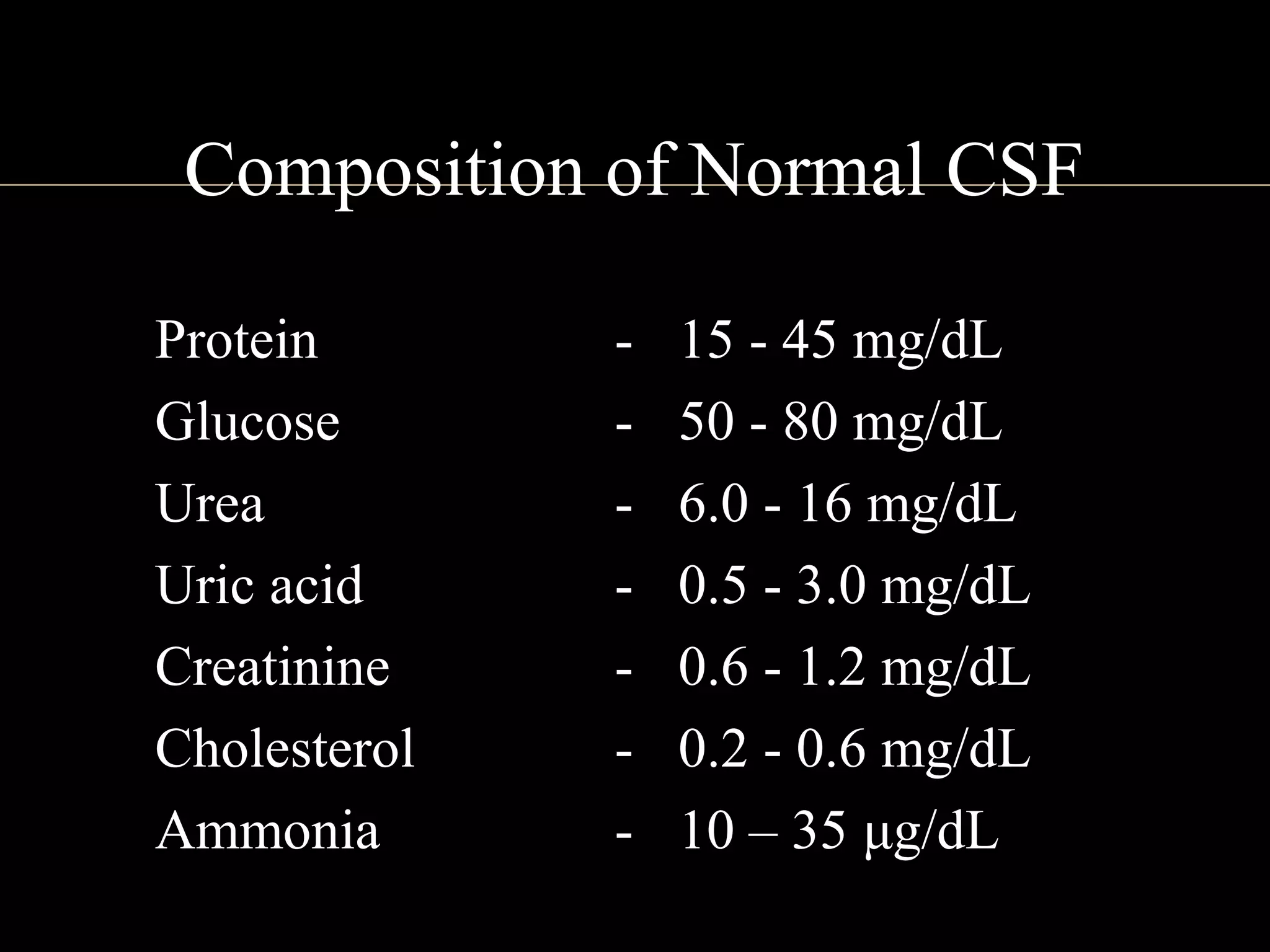
Composition of Normal CSF
•
 Protein - 15 - 45 mg/dL
 Glucose - 50 - 80 mg/dL
 Urea - 6.0 - 16 mg/dL
 Uric acid - 0.5 - 3.0 mg/dL
 Creatinine - 0.6 - 1.2 mg/dL
 Cholesterol - 0.2 - 0.6 mg/dL
 Ammonia - 10 – 35 μg/dL
Composition of Normal CSF
 Sodium - 135 – 150 mEq/L
 Potassium - 2.6 – 3.0 mEq/L
 Chloride - 115 – 130 mEq/L
 Magnesium - 2.4 – 3.0 mEq/L
 Cells - 0 – 5 Lymph/μL
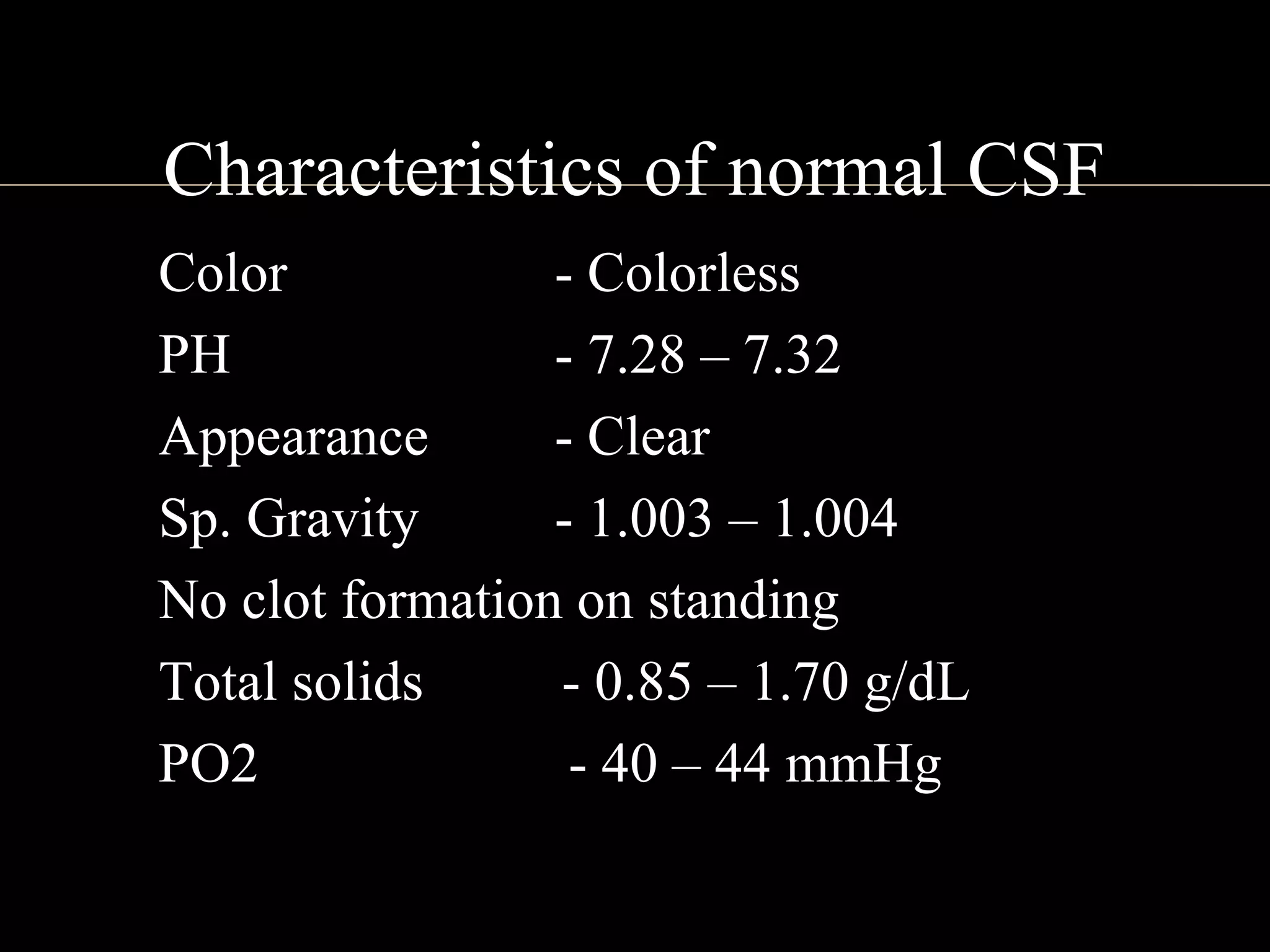
Characteristics of normal CSF
• Color - Colorless
• PH - 7.28 – 7.32
• Appearance - Clear
• Sp. Gravity - 1.003 – 1.004
• No clot formation on standing
• Total solids - 0.85 – 1.70 g/dL
• PO2 - 40 – 44 mmHg
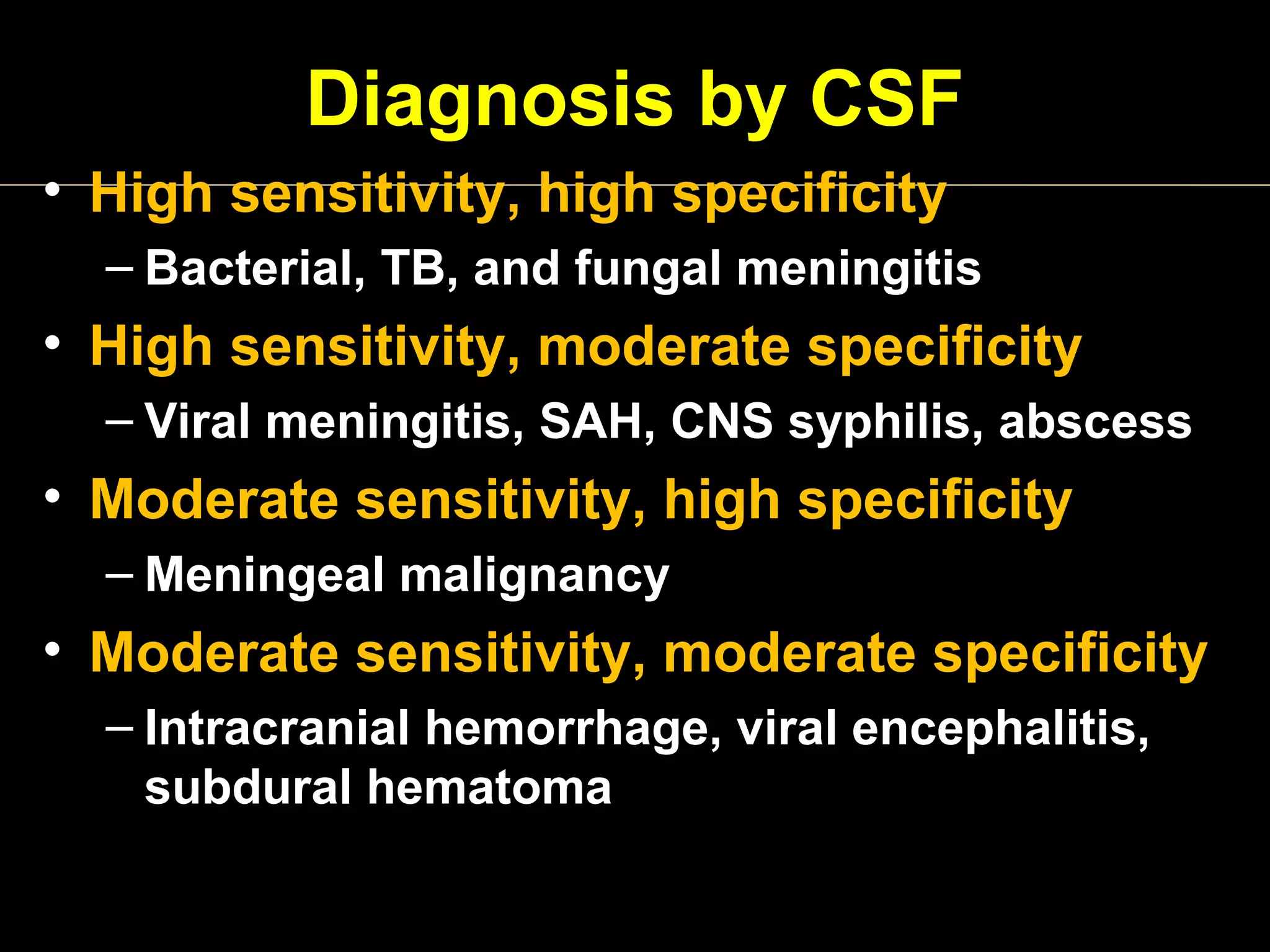
Diagnosis by CSF
• High sensitivity, high specificity
– Bacterial, TB, and fungal meningitis
• High sensitivity, moderate specificity
– Viral meningitis, SAH, CNS syphilis, abscess
• Moderate sensitivity, high specificity
– Meningeal malignancy
• Moderate sensitivity, moderate specificity
– Intracranial hemorrhage, viral encephalitis,
subdural hematoma
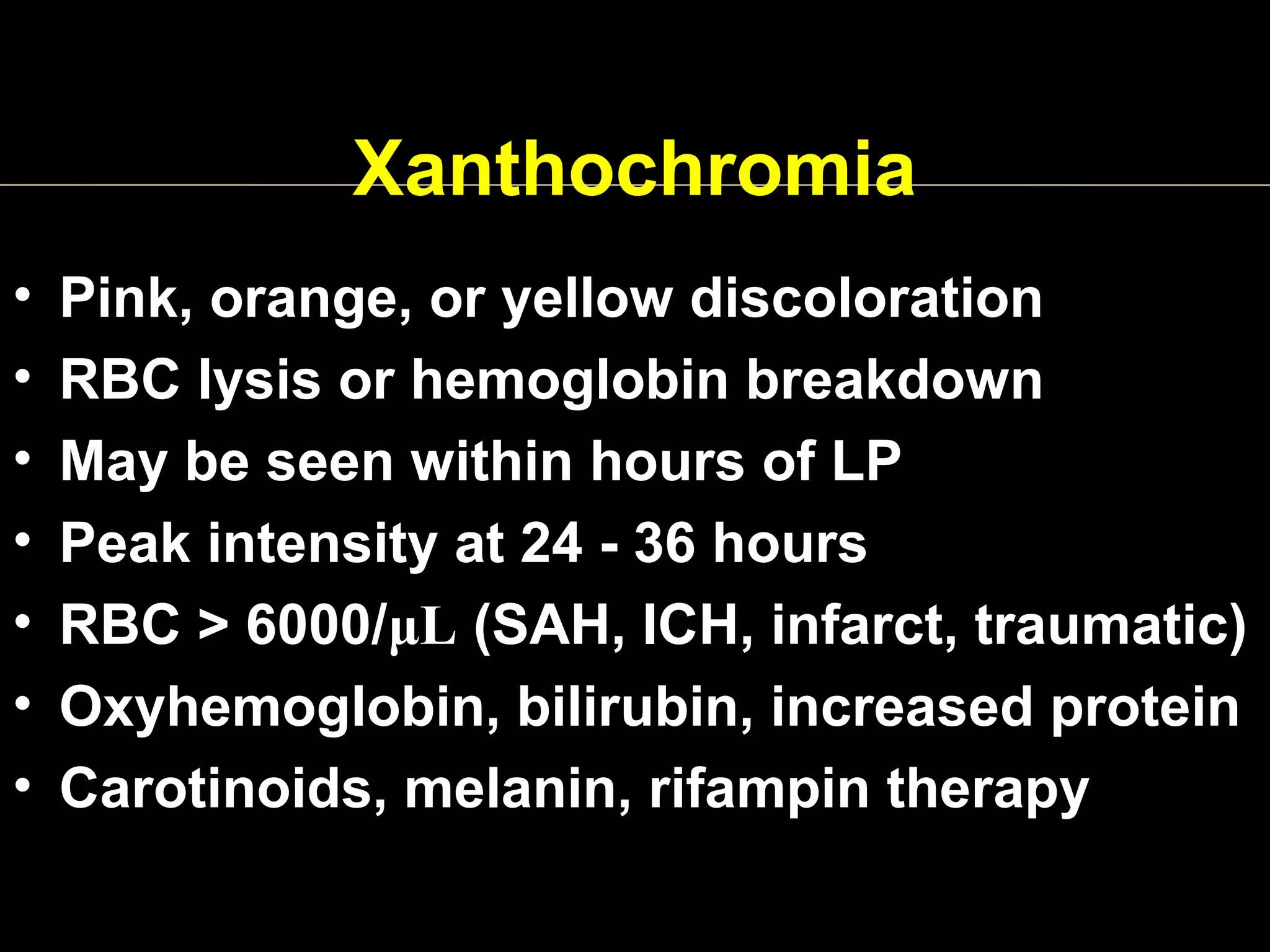
Xanthochromia
• Pink, orange, or yellow discoloration
• RBC lysis or hemoglobin breakdown
• May be seen within hours of LP
• Peak intensity at 24 - 36 hours
• RBC > 6000/μL (SAH, ICH, infarct, traumatic)
• Oxyhemoglobin, bilirubin, increased protein
• Carotinoids, melanin, rifampin therapy
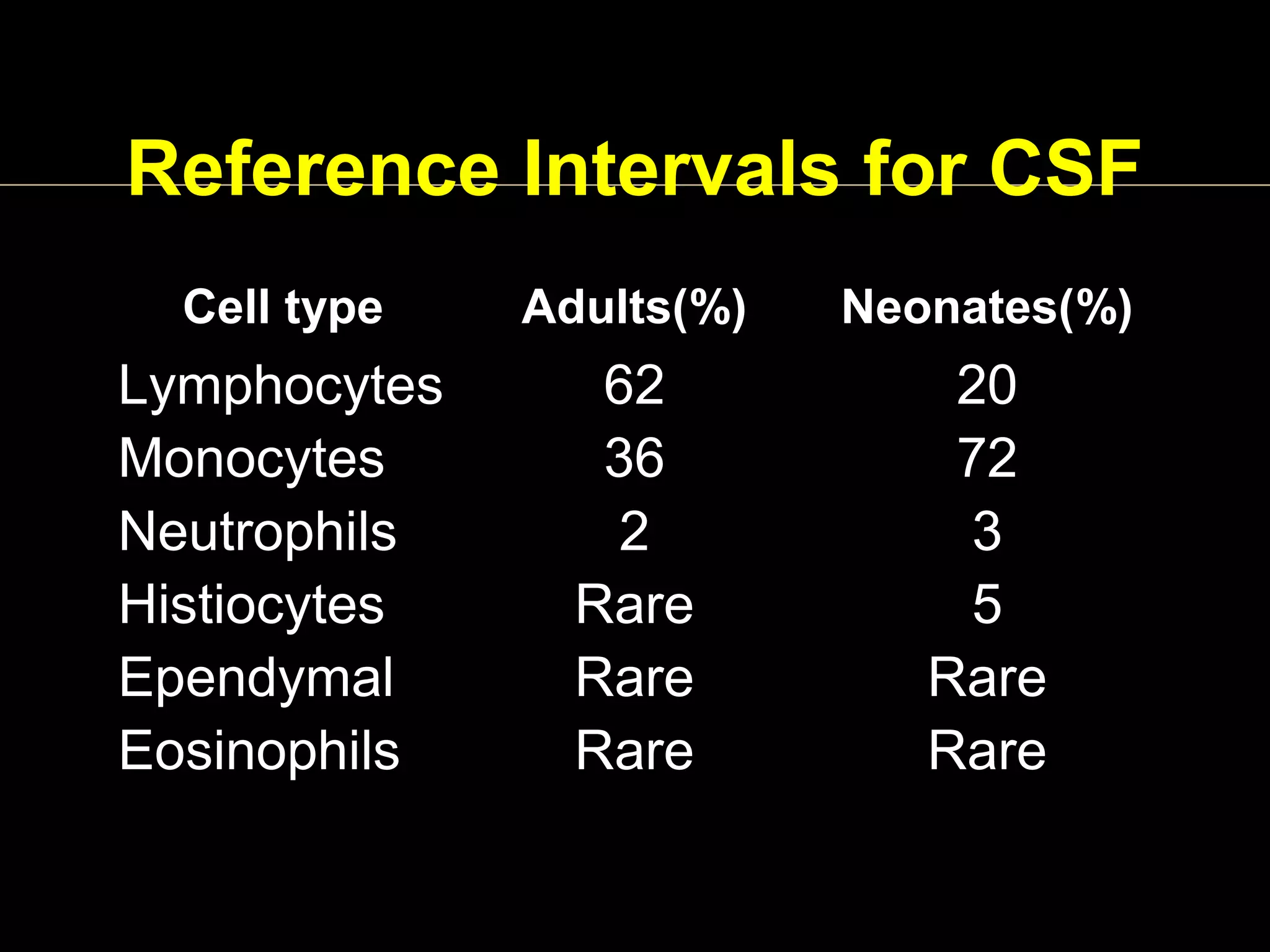
Reference Intervals for CSF
Cell type Adults(%) Neonates(%)
Lymphocytes 62 20
Monocytes 36 72
Neutrophils 2 3
Histiocytes Rare 5
Ependymal Rare Rare
Eosinophils Rare Rare
Increased Neutrophils in CSF
• Meningitis (bacterial, early TB, fungal)
• Other infections
• Following seizures
• Following CNS hemorrhage
• Following CNS infarct
• Reaction to repeated LP
• Foreign materials
• Metastatic tumor
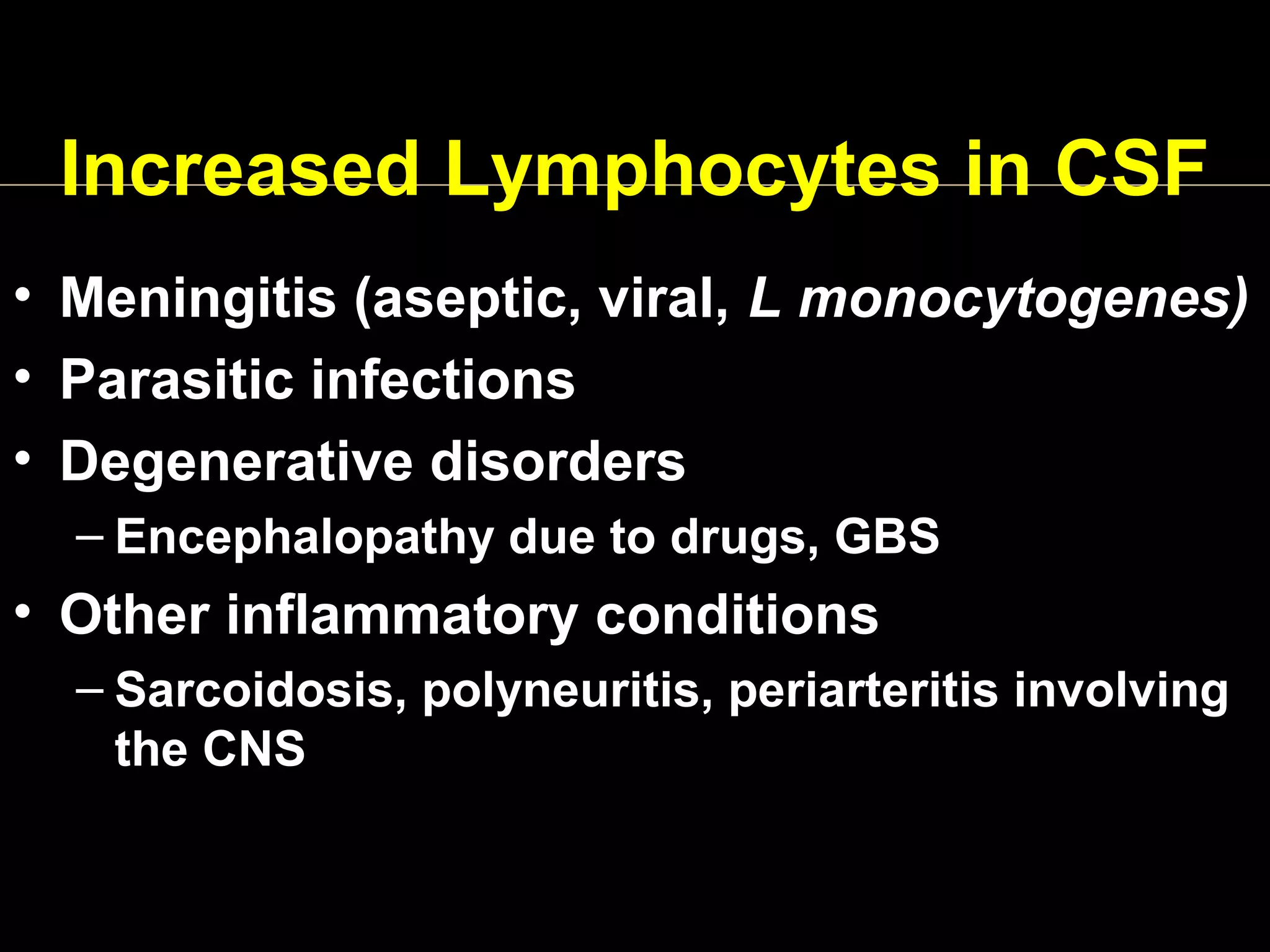
Increased Lymphocytes in CSF
• Meningitis (aseptic, viral, L monocytogenes)
• Parasitic infections
• Degenerative disorders
– Encephalopathy due to drugs, GBS
• Other inflammatory conditions
– Sarcoidosis, polyneuritis, periarteritis involving
the CNS
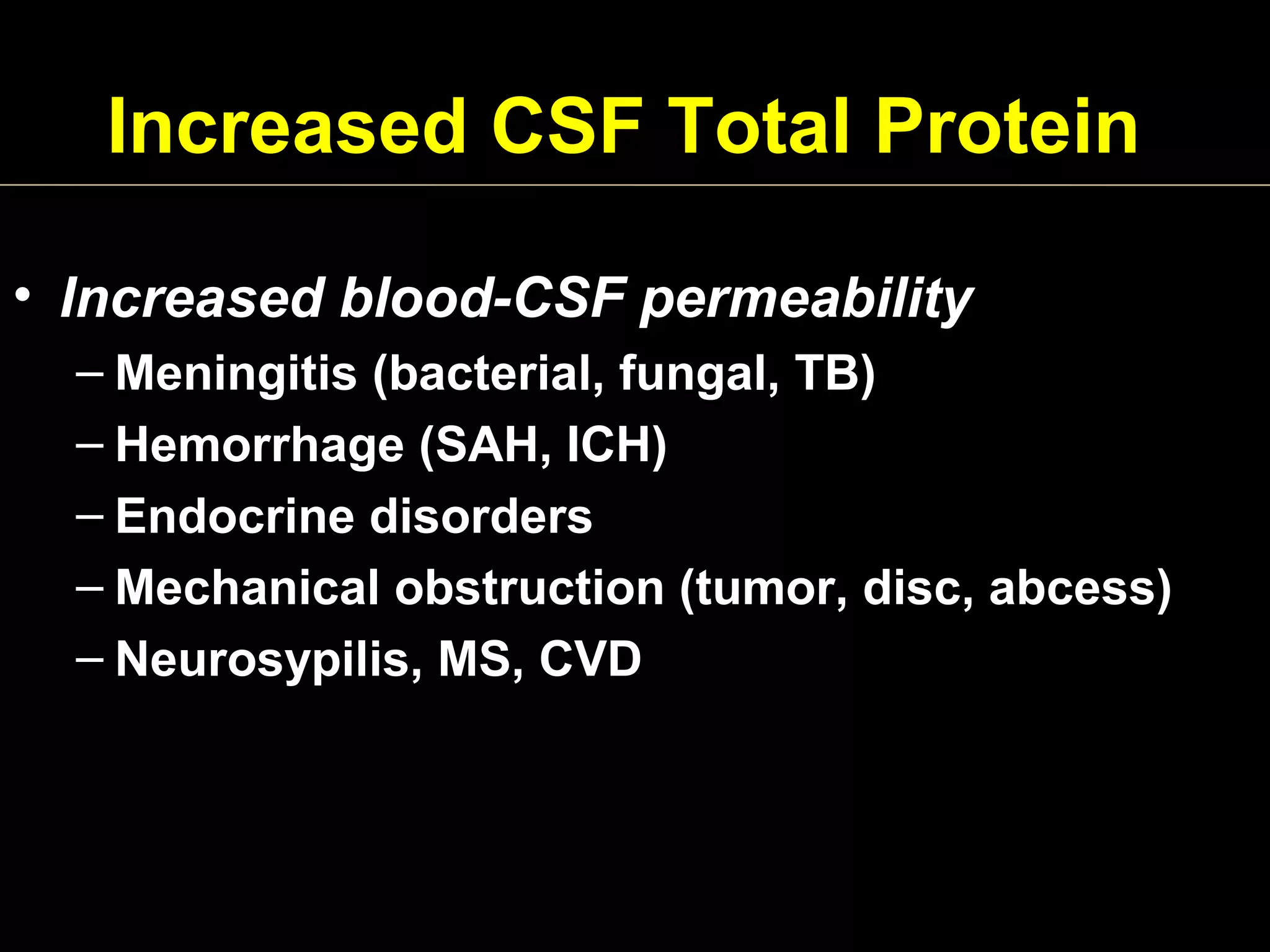
Increased CSF Total Protein
• Increased blood-CSF permeability
– Meningitis (bacterial, fungal, TB)
– Hemorrhage (SAH, ICH)
– Endocrine disorders
– Mechanical obstruction (tumor, disc, abcess)
– Neurosypilis, MS, CVD
•Causes of decreased CSF glucose
• Increased CSF glucose is of no clinical
significance.
• Meningitis-Bacterial, fungal tubercular and
syphilitic meningitis.
• Tumors involving the meninges.
• Subarachnoid hemorrhage.
• Cerebral ameobiasis.
Bacterial Meningitis
• 0 - 1m: Group B strept & E. coli (GNR)
• 1m - 5y: H. influenzae
• 5 - 29y: N. meningitidis
• >29y: S. pneumoniae
• Listeria monocytogenes common in
newborns, elderly, and other
immunocompromised hosts
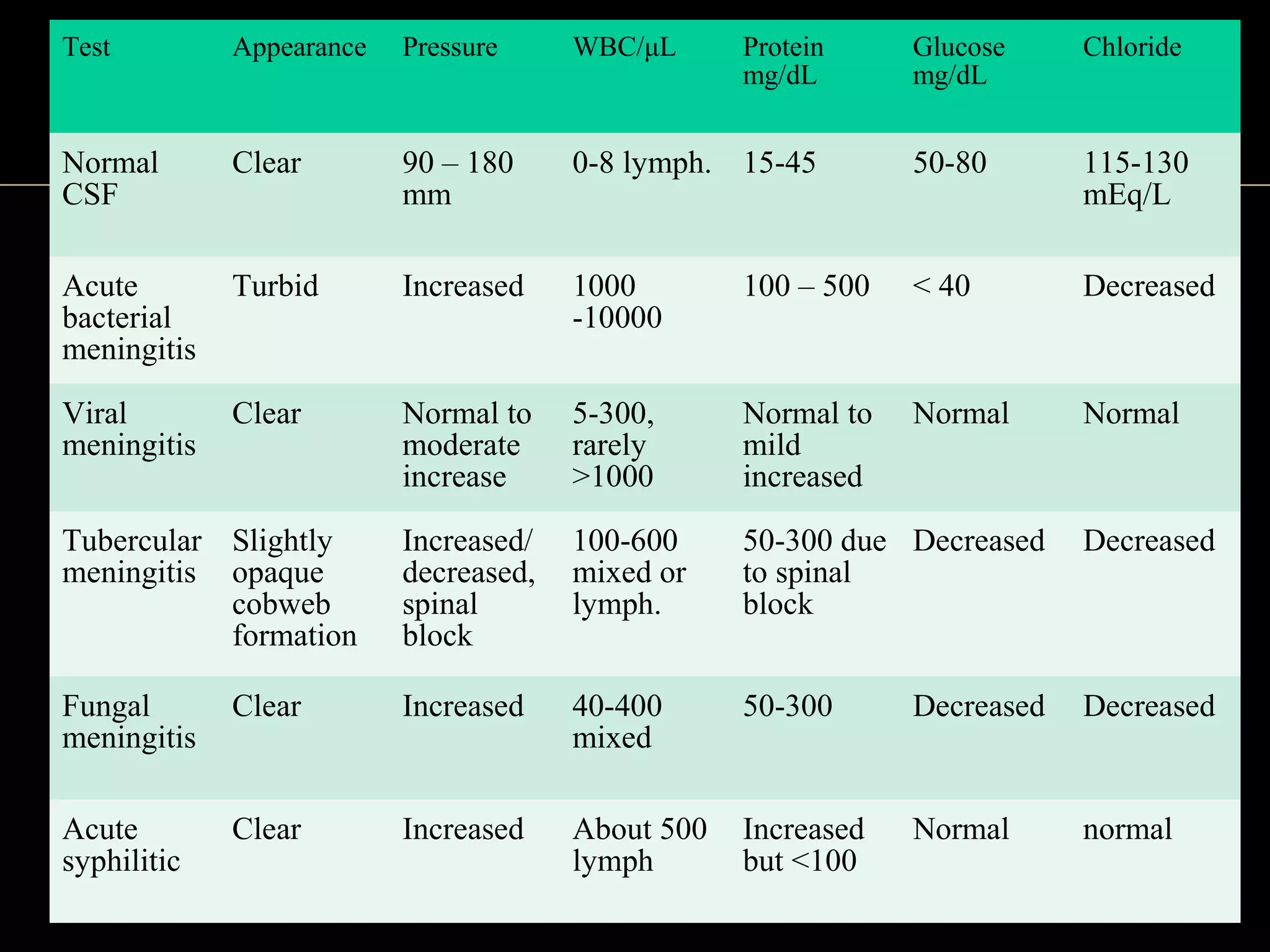
Test Appearance Pressure WBC/μL Protein
mg/dL
Glucose
mg/dL
Chloride
Normal
CSF
Clear 90 – 180
mm
0-8 lymph. 15-45 50-80 115-130
mEq/L
Acute
bacterial
meningitis
Turbid Increased 1000
-10000
100 – 500 < 40 Decreased
Viral
meningitis
Clear Normal to
moderate
increase
5-300,
rarely
>1000
Normal to
mild
increased
Normal Normal
Tubercular
meningitis
Slightly
opaque
cobweb
formation
Increased/
decreased,
spinal
block
100-600
mixed or
lymph.
50-300 due
to spinal
block
Decreased Decreased
Fungal
meningitis
Clear Increased 40-400
mixed
50-300 Decreased Decreased
Acute
syphilitic
Clear Increased About 500
lymph
Increased
but <100
Normal normal

Csf analysis

  • 1.
  • 2.
    Composition of NormalCSF •  Protein - 15 - 45 mg/dL  Glucose - 50 - 80 mg/dL  Urea - 6.0 - 16 mg/dL  Uric acid - 0.5 - 3.0 mg/dL  Creatinine - 0.6 - 1.2 mg/dL  Cholesterol - 0.2 - 0.6 mg/dL  Ammonia - 10 – 35 μg/dL
  • 3.
    Composition of NormalCSF  Sodium - 135 – 150 mEq/L  Potassium - 2.6 – 3.0 mEq/L  Chloride - 115 – 130 mEq/L  Magnesium - 2.4 – 3.0 mEq/L  Cells - 0 – 5 Lymph/μL
  • 4.
    Characteristics of normalCSF • Color - Colorless • PH - 7.28 – 7.32 • Appearance - Clear • Sp. Gravity - 1.003 – 1.004 • No clot formation on standing • Total solids - 0.85 – 1.70 g/dL • PO2 - 40 – 44 mmHg
  • 5.
    Diagnosis by CSF •High sensitivity, high specificity – Bacterial, TB, and fungal meningitis • High sensitivity, moderate specificity – Viral meningitis, SAH, CNS syphilis, abscess • Moderate sensitivity, high specificity – Meningeal malignancy • Moderate sensitivity, moderate specificity – Intracranial hemorrhage, viral encephalitis, subdural hematoma
  • 6.
    Xanthochromia • Pink, orange,or yellow discoloration • RBC lysis or hemoglobin breakdown • May be seen within hours of LP • Peak intensity at 24 - 36 hours • RBC > 6000/μL (SAH, ICH, infarct, traumatic) • Oxyhemoglobin, bilirubin, increased protein • Carotinoids, melanin, rifampin therapy
  • 7.
    Reference Intervals forCSF Cell type Adults(%) Neonates(%) Lymphocytes 62 20 Monocytes 36 72 Neutrophils 2 3 Histiocytes Rare 5 Ependymal Rare Rare Eosinophils Rare Rare
  • 8.
    Increased Neutrophils inCSF • Meningitis (bacterial, early TB, fungal) • Other infections • Following seizures • Following CNS hemorrhage • Following CNS infarct • Reaction to repeated LP • Foreign materials • Metastatic tumor
  • 9.
    Increased Lymphocytes inCSF • Meningitis (aseptic, viral, L monocytogenes) • Parasitic infections • Degenerative disorders – Encephalopathy due to drugs, GBS • Other inflammatory conditions – Sarcoidosis, polyneuritis, periarteritis involving the CNS
  • 10.
    Increased CSF TotalProtein • Increased blood-CSF permeability – Meningitis (bacterial, fungal, TB) – Hemorrhage (SAH, ICH) – Endocrine disorders – Mechanical obstruction (tumor, disc, abcess) – Neurosypilis, MS, CVD
  • 11.
    •Causes of decreasedCSF glucose • Increased CSF glucose is of no clinical significance. • Meningitis-Bacterial, fungal tubercular and syphilitic meningitis. • Tumors involving the meninges. • Subarachnoid hemorrhage. • Cerebral ameobiasis.
  • 12.
    Bacterial Meningitis • 0- 1m: Group B strept & E. coli (GNR) • 1m - 5y: H. influenzae • 5 - 29y: N. meningitidis • >29y: S. pneumoniae • Listeria monocytogenes common in newborns, elderly, and other immunocompromised hosts
  • 13.
    Test Appearance PressureWBC/μL Protein mg/dL Glucose mg/dL Chloride Normal CSF Clear 90 – 180 mm 0-8 lymph. 15-45 50-80 115-130 mEq/L Acute bacterial meningitis Turbid Increased 1000 -10000 100 – 500 < 40 Decreased Viral meningitis Clear Normal to moderate increase 5-300, rarely >1000 Normal to mild increased Normal Normal Tubercular meningitis Slightly opaque cobweb formation Increased/ decreased, spinal block 100-600 mixed or lymph. 50-300 due to spinal block Decreased Decreased Fungal meningitis Clear Increased 40-400 mixed 50-300 Decreased Decreased Acute syphilitic Clear Increased About 500 lymph Increased but <100 Normal normal