CSF analysis
Dr. Ajit Kumar Singh
(MD Laboratory Medicine)
PGT 1st year
Moderator
Dr. Debanjan Ghosh
M.B.B.S., M.D ( PATHOLOGY )
Assistant Professor
Department Of Laboratory Medicine
CHITTRANJAN NATIONAL CANCER INSTITUTE , KOLKATA
CSF production
• CSF is secreted by the choroid plexus , around the cerebral vessels
and along the ventricular walls of the brain.
• Its produced at a rate of 550 ml / day.
• The functions of CSF are to collect wastes, circulate nutrients ,
cushion and lubricate the CNS .
• Resorption of CSF occurs at the arachnoid villi.
Laboratory examination of CSF
1. Physical examination
a. Volume
b. Appearance
c. Color
d. pH
e. Specific gravity
2. Biochemical tests
a. Glucose
b. Protein
3. Microscopic examination
a. Cells counts
b. Cells type
c. Cytology for malignant cell
Laboratory examination of CSF
4. Microbiological examination
a. Gram stain
b. Ziehl – Neelsen stain
c. Culture
5. Special studies
a. CSF electrophoresis for the oligoclonal band
b. Lactate dehydrogenase (LDH)
c. Lactic acid
d. Chloride
e. Serology to rule out syphilis
Purpose of the test (Indications of CSF analysis)
For diagnostic purpose:
1. CNS infection
2. Meningeal involvement by leukemia/lymphoma or metastasis carcinoma
(rule out neoplasm of CNS)
3. Subarachnoid hemorrhage
4. Inflammatory and demyelinating disease
Purpose of the test (Indications of CSF analysis)
For therapeutic purpose :
1. To reduced CSF pressure
2. Administration of various drugs like
• Antibiotics
• Anticancer drugs
• Anesthetic agents
3. Introduction of radiographic dyes for myelography
Contraindications of CSF analysis (lumbar puncture)
Raised intracranial pressure.
Uncorrected bleeding diathesis.
Local infection at the site of lumbar puncture.
Cardiorespiratory compromise.
Complication of CSF analysis (lumbar puncture)
• Post lumbar puncture headache
• Introduction of infection in spinal canal
• Subdural hematoma
• Herniation of cerebellum
Lumber puncture method
Proper position of patient is important
Two different position can be use :
• Lateral decubitus position (lying position) :
most common and routinely performed
• Sitting position : preferable in obese patients
Lumber puncture method
• Properly sterilized LP needle with stylet
with in it pushed forward and slightly
upward in midline between L3 and L4
vertebrae till a “give way” sensation is felt.
• The stylet is the removed.
• Pressure of CSF measured by fitting
the manometer to the needle.
Sample for Cerebrospinal Fluid Analysis
Four tubes with 2 to 3 ml each of CSF are collected. These tubes are
labeled as:
Opening pressure of CSF
• Normal pressure 60-180 mm H2O in lateral decubitus position in
adults
• Infants and children 10-100 mm of H2O
Increased pressure
• Intracranial hypertension ( benign intracranial hypertension )
• Tumors
• Meningitis
• Cerebral edema
• SAH
• Intracranial mass lesion
Opening pressure of CSF
Reduced CSF pressure
• CSF leakage following trauma or lumbar puncture
• Circulatory collapse
• Dehydration
Physical examination of CSF
CSF volume :
In adults : 90ml to 150ml
In neonates : 10ml to 60 ml
Rate of production : 550 ml / day
CSF pH : 7.28-7.32
Specific Gravity : 1.003 – 1.004
Physical examination of CSF
Normal CSF is crystal clear , colorless and no coagulum.
The initial color of CSF is due to -
• Inflammatory diseases.
• Traumatic tap.
• Hemorrhage.
• Tumors.
Abnormal CSF may be appear Turbid ( Cloudy ) or Blood mixed
or xanthochromia
Physical examination of CSF
Blood-like appearance :
• Subarachnoid hemorrhage
• Traumatic tap
Cloudy (Turbid) may be due to:
• The presence of WBCs.
• Increased protein.
• The presence of the microorganism.
• Contrast media
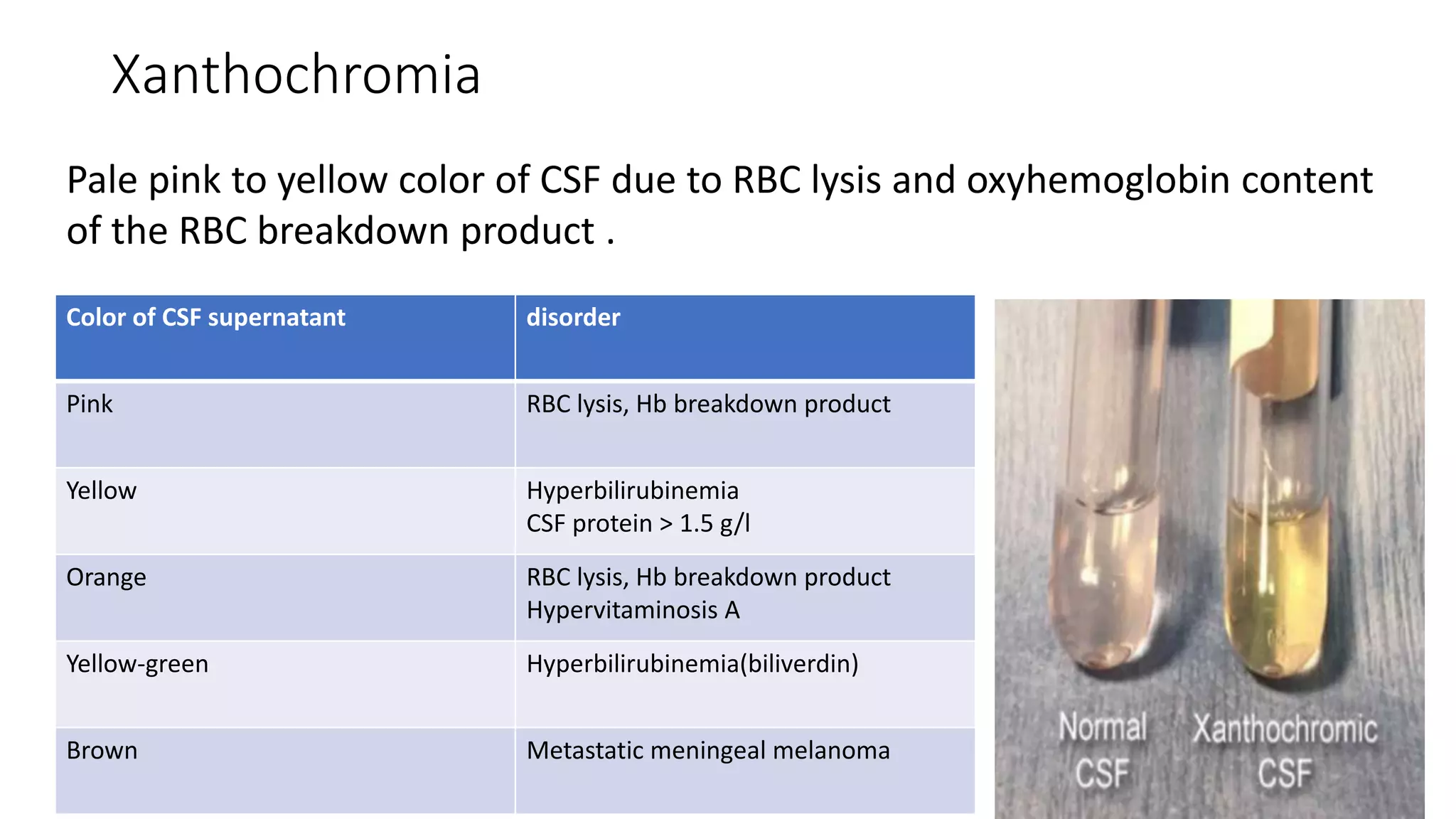
Xanthochromia
Color of CSF supernatant disorder
Pink RBC lysis, Hb breakdown product
Yellow Hyperbilirubinemia
CSF protein > 1.5 g/l
Orange RBC lysis, Hb breakdown product
Hypervitaminosis A
Yellow-green Hyperbilirubinemia(biliverdin)
Brown Metastatic meningeal melanoma
Pale pink to yellow color of CSF due to RBC lysis and oxyhemoglobin content
of the RBC breakdown product .
Microscopic examination of CSF
Normal CSF has very few mononuclear cells. Essentially free of cells.
Normal cell count:
1. Adult = 0 to 5/cu mm.
2. Newborn = 0 to 30/cu mm.
3. Child = 0 to 15/cu mm.
• Neutrophils = 0 to 6% of the total cell count.
• Lymphocytes = 40 to 80 % of the total cell count.
• Monocytes = 25 to 45 % of the total cell count.
• Neutrophils in bacterial meningitis may increase from 100/cu mm to
10,000 /cu mm.
• Tuberculous meningitis moderate rise in cell count 50/cu mm to
1000/cu mm predominant cells are lymphocytes.
Table Of Various Types Of Meningitis
Disease Pressure Gross Glucose mg/dL Protein mg/dL TLC count/cm
m
Type of Cells
Normal 90-150 Clear(C.L) 45-85 10-45 0-5 mononuclear
cells
Bact.
Meningitis
Increased Turbid 0-25 mg/dL 50-500 1000-2000+ Polymorph
cells
Viral
meningitis
Normal <100 mg/dL 5 to 300 Lymphocytes
Tub. Meningitis Increased clear/cobweb 15-45
(Decreased)
50-100 100-300 Lymphocytes
Fungal
meningitis
Increased Normal to
Decreased
50 to 300 40 to 400 Lymphocytes
monocytes
Poliomyelitis Increased clear normal 50-200 50-250 Polymorph cell
lymphocyte
Subarachnoid
Hemorrhage
increased bloody normal 50-100 normal RBCs
Microscopic examination of CSF
Increased monocytes are seen in
• Chronic bacterial meningitis.
• Multiple sclerosis.
• Rupture of brain abscess
Macrophages are seen in
• These may be seen in TB or viral meningitis
Eosinophils are seen in
• Parasitic infestation.
• Fungal infection.
• Sarcoidosis.
• Rocky Mountain spotted fever
Biochemical tests of CSF ( Glucose level )
1.Normal CSF glucose
1. Adult = 40 to 70 mg/dL.
2. Child = 60 to 80 mg/dL.
2.Decreased glucose is seen in
1. Acute bacterial meningitis.
2. Tuberculous meningitis.
3. Subarachnoid hemorrhage.
4. Diabetes with hypoglycemia.
5. Malignant tumors with metastases to meninges.
6. Non-Bacterial meningoencephalitis.
7. Syphilis.
3.Increased glucose level is seen in
1. Diabetic hyperglycemia.
Biochemical tests of CSF ( Protein level )
Normal CSF protein
Adult = 15 to 45 mg/dL.
Neonates = 15 to 100 mg/dL.
• CSF protein is a nonspecific test because it is raised in so many
diseases.
• CSF has a very small quantity of protein because of the blood-brain
barrier.
• Increased CSF protein is caused by:
1. Increased permeability of the blood-brain barrier.
2. Decreased resorption by the arachnoid villi.
3. Obstruction of CSF flow.
4. Increased synthesis of immunoglobulin in the intrathecal space.
Biochemical tests of CSF ( Protein level )
Increased CSF protein is seen in:
• Traumatic tap.
• Bacterial meningitis may increase even up to >1000 mg/dL.
• Tuberculous meningitis leads to a mild increase of 50 to 300 mg/dL.
• Fungal meningitis, the increase may be 50 to 300 mg/dL.
• Viral meningitis, the increase is mild < 200 mg/dL.
• Dehydration.
• Diabetic neuropathy
• Guillain-barre syndrome.
Decreased CSF protein seen in:
• Leakage of CSF due to trauma.
• Intracranial hypertension.
• Removal of the large volume of CSF.
Microbiological examination
1.Gram stain.
2.Acid-fast stain.
3.India Ink preparation.
4.Latex agglutination.
5.Enzyme-linked immunoabsorbent assay (ELISA).
6.The Limulus lysate test is useful to diagnose meningitis caused
by gram-negative bacteria.
7.CSF serological tests can diagnose neurosyphilis
Microbiological examination ( Gram stain )
1.It gives a preliminary diagnosis.
• Gram stain yield is 70% of the suspected cases.
• A negative gram stain does not rule out bacterial meningitis.
2.Gram stain will differentiate:
• Bacterial meningitis with the presence of bacteria, whether it is cocci or
bacilli, and as gram-positive or negative.
• Viral meningitis will be negative.
3.The most common causative agents are H. Influenzae in
children and Neisseria and Streptococcus in adults.
Microbiological examination (Culture and
Sensitivity )
1.Culture can identify the organism, and the most common
organism found are:
• Bacteria.
• Fungi.
• Mycobacterium tuberculosis
2.Culture needs 24 to 48 hours to get a result. This may take up
to 72 hours to get sensitivity.
3.Culture can recognize around 85% of the bacteria in case of
suspected bacterial meningitis.
4.Meningococci grow best in a high CO2atmosphere.
Identification of mycobacterium tuberculosis
1. CSF smears are stained for the Acid-fast bacilli.
These are red, rod-shaped bacteria.
2. The conventional culture of the mycobacterium tuberculosis takes 4
to 6 weeks of incubation.
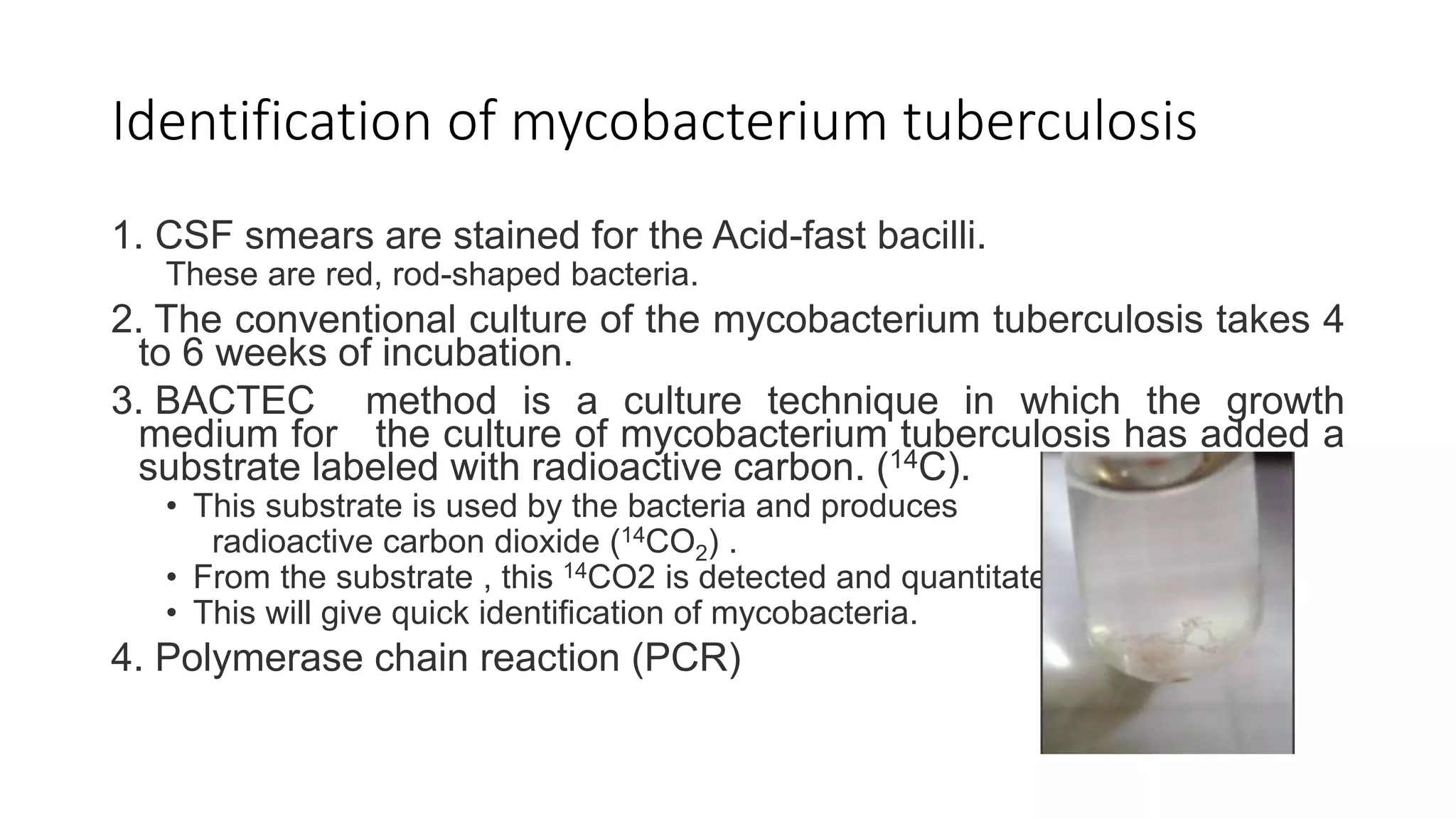
3. BACTEC method is a culture technique in which the growth
medium for the culture of mycobacterium tuberculosis has added a
substrate labeled with radioactive carbon. (14C).
• This substrate is used by the bacteria and produces
radioactive carbon dioxide (14CO2) .
• From the substrate , this 14CO2 is detected and quantitated.
• This will give quick identification of mycobacteria.
4. Polymerase chain reaction (PCR)
India ink preparation
• Centrifuge the CSF for 5 to 10 minutes.
• Remove the supernatant fluid and mix the sediment.
• Transfer a drop of the sediment to a slide and add a drop of
India ink.
• Mix and cover with a coverslip.
India ink for CSF is used to detect the
presence of encapsulated yeast in CSF
particularly Cryptococcus neoformans.
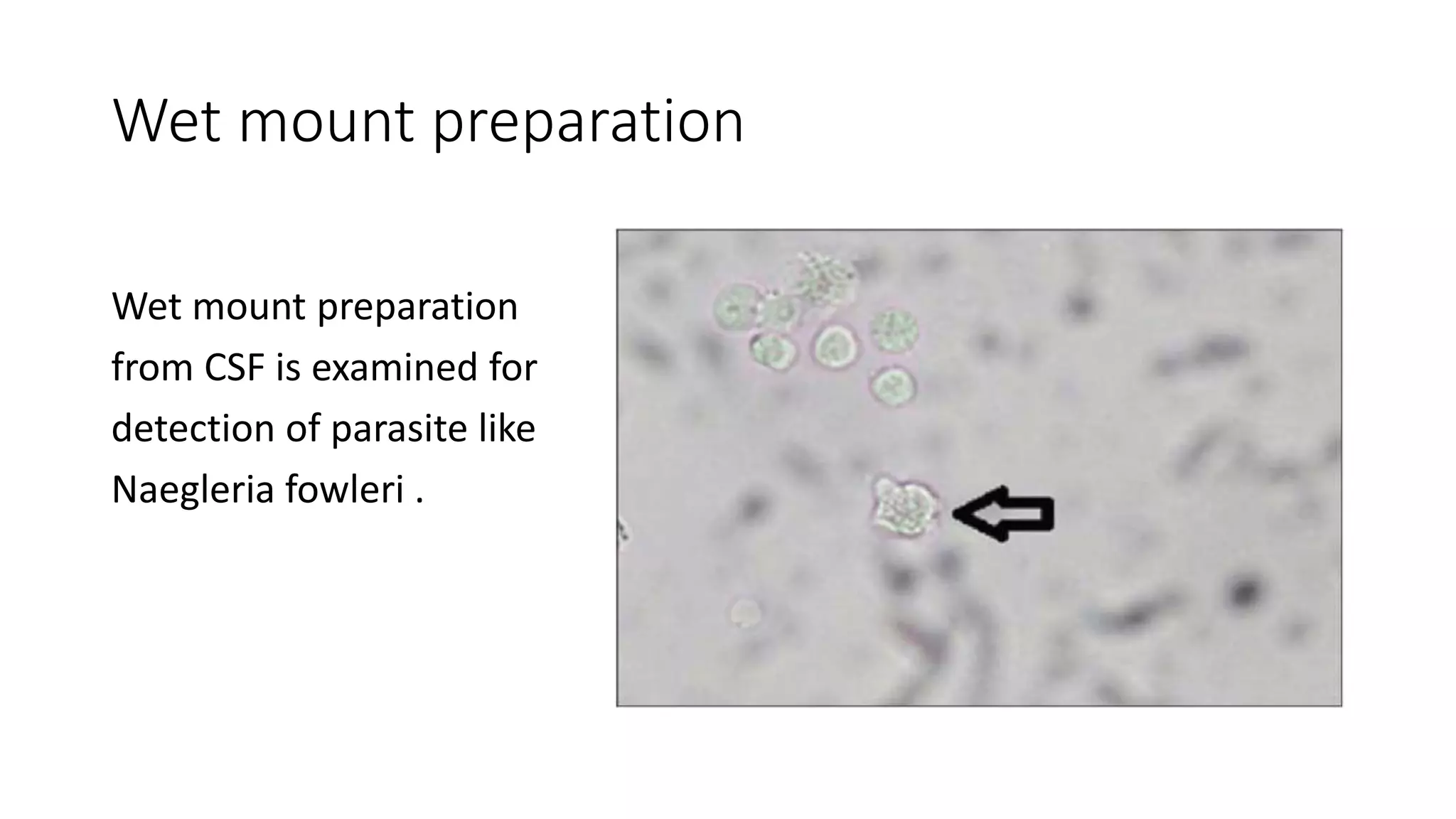
Wet mount preparation
from CSF is examined for
detection of parasite like
Naegleria fowleri .
Antigen detection
• After centrifugation , the supernatant part of CSF used for antigen
detection.
• Latex agglutination test use for detection of bacterial antigens.
• This test is used for rapid diagnosis of meningitis.
• This is available for N. meningitidis , S. Pneumoniae , H. influenzae
type b , S. aglactiae and Cryptococcus neoformans.
• These tests are expensive.
CSF protein electrophoresis
1. Indication:
Electrophoresis is done to find any abnormality of the proteins and
immunoglobulins.
2. This helps diagnose:
1.Multiple sclerosis.
2.Neurosyphilis.
3.Autoimmune diseases
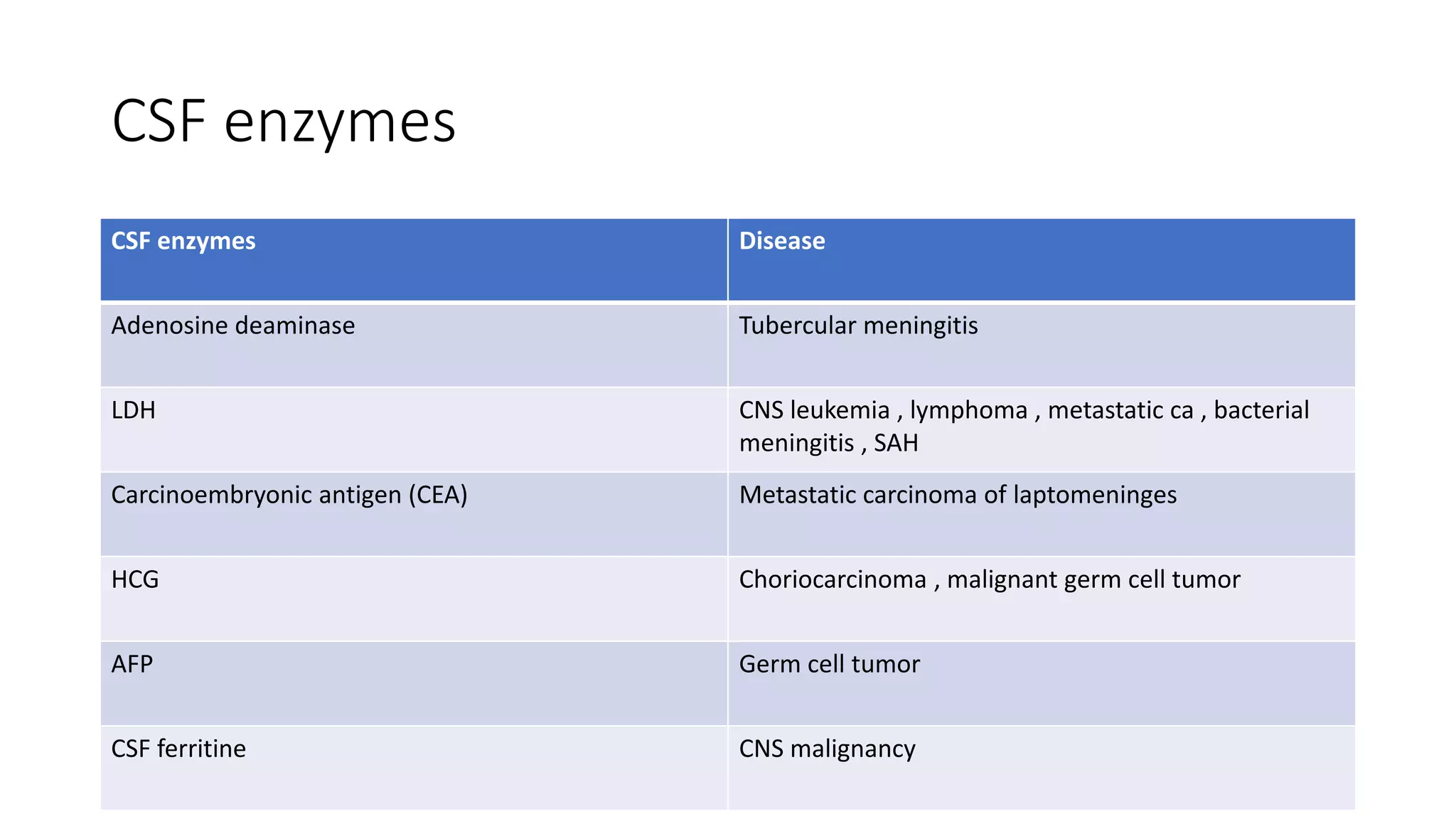
CSF enzymes
CSF enzymes Disease
Adenosine deaminase Tubercular meningitis
LDH CNS leukemia , lymphoma , metastatic ca , bacterial
meningitis , SAH
Carcinoembryonic antigen (CEA) Metastatic carcinoma of laptomeninges
HCG Choriocarcinoma , malignant germ cell tumor
AFP Germ cell tumor
CSF ferritine CNS malignancy
Thank you

cerebrospinal fluid (1)11111.pptx

  • 1.
    CSF analysis Dr. AjitKumar Singh (MD Laboratory Medicine) PGT 1st year Moderator Dr. Debanjan Ghosh M.B.B.S., M.D ( PATHOLOGY ) Assistant Professor Department Of Laboratory Medicine CHITTRANJAN NATIONAL CANCER INSTITUTE , KOLKATA
  • 2.
    CSF production • CSFis secreted by the choroid plexus , around the cerebral vessels and along the ventricular walls of the brain. • Its produced at a rate of 550 ml / day. • The functions of CSF are to collect wastes, circulate nutrients , cushion and lubricate the CNS . • Resorption of CSF occurs at the arachnoid villi.
  • 3.
    Laboratory examination ofCSF 1. Physical examination a. Volume b. Appearance c. Color d. pH e. Specific gravity 2. Biochemical tests a. Glucose b. Protein 3. Microscopic examination a. Cells counts b. Cells type c. Cytology for malignant cell
  • 4.
    Laboratory examination ofCSF 4. Microbiological examination a. Gram stain b. Ziehl – Neelsen stain c. Culture 5. Special studies a. CSF electrophoresis for the oligoclonal band b. Lactate dehydrogenase (LDH) c. Lactic acid d. Chloride e. Serology to rule out syphilis
  • 5.
    Purpose of thetest (Indications of CSF analysis) For diagnostic purpose: 1. CNS infection 2. Meningeal involvement by leukemia/lymphoma or metastasis carcinoma (rule out neoplasm of CNS) 3. Subarachnoid hemorrhage 4. Inflammatory and demyelinating disease
  • 6.
    Purpose of thetest (Indications of CSF analysis) For therapeutic purpose : 1. To reduced CSF pressure 2. Administration of various drugs like • Antibiotics • Anticancer drugs • Anesthetic agents 3. Introduction of radiographic dyes for myelography
  • 7.
    Contraindications of CSFanalysis (lumbar puncture) Raised intracranial pressure. Uncorrected bleeding diathesis. Local infection at the site of lumbar puncture. Cardiorespiratory compromise.
  • 8.
    Complication of CSFanalysis (lumbar puncture) • Post lumbar puncture headache • Introduction of infection in spinal canal • Subdural hematoma • Herniation of cerebellum
  • 9.
    Lumber puncture method Properposition of patient is important Two different position can be use : • Lateral decubitus position (lying position) : most common and routinely performed • Sitting position : preferable in obese patients
  • 10.
    Lumber puncture method •Properly sterilized LP needle with stylet with in it pushed forward and slightly upward in midline between L3 and L4 vertebrae till a “give way” sensation is felt. • The stylet is the removed. • Pressure of CSF measured by fitting the manometer to the needle.
  • 11.
    Sample for CerebrospinalFluid Analysis Four tubes with 2 to 3 ml each of CSF are collected. These tubes are labeled as:
  • 12.
    Opening pressure ofCSF • Normal pressure 60-180 mm H2O in lateral decubitus position in adults • Infants and children 10-100 mm of H2O Increased pressure • Intracranial hypertension ( benign intracranial hypertension ) • Tumors • Meningitis • Cerebral edema • SAH • Intracranial mass lesion
  • 13.
    Opening pressure ofCSF Reduced CSF pressure • CSF leakage following trauma or lumbar puncture • Circulatory collapse • Dehydration
  • 14.
    Physical examination ofCSF CSF volume : In adults : 90ml to 150ml In neonates : 10ml to 60 ml Rate of production : 550 ml / day CSF pH : 7.28-7.32 Specific Gravity : 1.003 – 1.004
  • 15.
    Physical examination ofCSF Normal CSF is crystal clear , colorless and no coagulum. The initial color of CSF is due to - • Inflammatory diseases. • Traumatic tap. • Hemorrhage. • Tumors. Abnormal CSF may be appear Turbid ( Cloudy ) or Blood mixed or xanthochromia
  • 16.
    Physical examination ofCSF Blood-like appearance : • Subarachnoid hemorrhage • Traumatic tap Cloudy (Turbid) may be due to: • The presence of WBCs. • Increased protein. • The presence of the microorganism. • Contrast media
  • 17.
    Xanthochromia Color of CSFsupernatant disorder Pink RBC lysis, Hb breakdown product Yellow Hyperbilirubinemia CSF protein > 1.5 g/l Orange RBC lysis, Hb breakdown product Hypervitaminosis A Yellow-green Hyperbilirubinemia(biliverdin) Brown Metastatic meningeal melanoma Pale pink to yellow color of CSF due to RBC lysis and oxyhemoglobin content of the RBC breakdown product .
  • 18.
    Microscopic examination ofCSF Normal CSF has very few mononuclear cells. Essentially free of cells. Normal cell count: 1. Adult = 0 to 5/cu mm. 2. Newborn = 0 to 30/cu mm. 3. Child = 0 to 15/cu mm. • Neutrophils = 0 to 6% of the total cell count. • Lymphocytes = 40 to 80 % of the total cell count. • Monocytes = 25 to 45 % of the total cell count. • Neutrophils in bacterial meningitis may increase from 100/cu mm to 10,000 /cu mm. • Tuberculous meningitis moderate rise in cell count 50/cu mm to 1000/cu mm predominant cells are lymphocytes.
  • 19.
    Table Of VariousTypes Of Meningitis Disease Pressure Gross Glucose mg/dL Protein mg/dL TLC count/cm m Type of Cells Normal 90-150 Clear(C.L) 45-85 10-45 0-5 mononuclear cells Bact. Meningitis Increased Turbid 0-25 mg/dL 50-500 1000-2000+ Polymorph cells Viral meningitis Normal <100 mg/dL 5 to 300 Lymphocytes Tub. Meningitis Increased clear/cobweb 15-45 (Decreased) 50-100 100-300 Lymphocytes Fungal meningitis Increased Normal to Decreased 50 to 300 40 to 400 Lymphocytes monocytes Poliomyelitis Increased clear normal 50-200 50-250 Polymorph cell lymphocyte Subarachnoid Hemorrhage increased bloody normal 50-100 normal RBCs
  • 20.
    Microscopic examination ofCSF Increased monocytes are seen in • Chronic bacterial meningitis. • Multiple sclerosis. • Rupture of brain abscess Macrophages are seen in • These may be seen in TB or viral meningitis Eosinophils are seen in • Parasitic infestation. • Fungal infection. • Sarcoidosis. • Rocky Mountain spotted fever
  • 21.
    Biochemical tests ofCSF ( Glucose level ) 1.Normal CSF glucose 1. Adult = 40 to 70 mg/dL. 2. Child = 60 to 80 mg/dL. 2.Decreased glucose is seen in 1. Acute bacterial meningitis. 2. Tuberculous meningitis. 3. Subarachnoid hemorrhage. 4. Diabetes with hypoglycemia. 5. Malignant tumors with metastases to meninges. 6. Non-Bacterial meningoencephalitis. 7. Syphilis. 3.Increased glucose level is seen in 1. Diabetic hyperglycemia.
  • 22.
    Biochemical tests ofCSF ( Protein level ) Normal CSF protein Adult = 15 to 45 mg/dL. Neonates = 15 to 100 mg/dL. • CSF protein is a nonspecific test because it is raised in so many diseases. • CSF has a very small quantity of protein because of the blood-brain barrier. • Increased CSF protein is caused by: 1. Increased permeability of the blood-brain barrier. 2. Decreased resorption by the arachnoid villi. 3. Obstruction of CSF flow. 4. Increased synthesis of immunoglobulin in the intrathecal space.
  • 23.
    Biochemical tests ofCSF ( Protein level ) Increased CSF protein is seen in: • Traumatic tap. • Bacterial meningitis may increase even up to >1000 mg/dL. • Tuberculous meningitis leads to a mild increase of 50 to 300 mg/dL. • Fungal meningitis, the increase may be 50 to 300 mg/dL. • Viral meningitis, the increase is mild < 200 mg/dL. • Dehydration. • Diabetic neuropathy • Guillain-barre syndrome. Decreased CSF protein seen in: • Leakage of CSF due to trauma. • Intracranial hypertension. • Removal of the large volume of CSF.
  • 24.
    Microbiological examination 1.Gram stain. 2.Acid-faststain. 3.India Ink preparation. 4.Latex agglutination. 5.Enzyme-linked immunoabsorbent assay (ELISA). 6.The Limulus lysate test is useful to diagnose meningitis caused by gram-negative bacteria. 7.CSF serological tests can diagnose neurosyphilis
  • 25.
    Microbiological examination (Gram stain ) 1.It gives a preliminary diagnosis. • Gram stain yield is 70% of the suspected cases. • A negative gram stain does not rule out bacterial meningitis. 2.Gram stain will differentiate: • Bacterial meningitis with the presence of bacteria, whether it is cocci or bacilli, and as gram-positive or negative. • Viral meningitis will be negative. 3.The most common causative agents are H. Influenzae in children and Neisseria and Streptococcus in adults.
  • 26.
    Microbiological examination (Cultureand Sensitivity ) 1.Culture can identify the organism, and the most common organism found are: • Bacteria. • Fungi. • Mycobacterium tuberculosis 2.Culture needs 24 to 48 hours to get a result. This may take up to 72 hours to get sensitivity. 3.Culture can recognize around 85% of the bacteria in case of suspected bacterial meningitis. 4.Meningococci grow best in a high CO2atmosphere.
  • 27.
    Identification of mycobacteriumtuberculosis 1. CSF smears are stained for the Acid-fast bacilli. These are red, rod-shaped bacteria. 2. The conventional culture of the mycobacterium tuberculosis takes 4 to 6 weeks of incubation. 3. BACTEC method is a culture technique in which the growth medium for the culture of mycobacterium tuberculosis has added a substrate labeled with radioactive carbon. (14C). • This substrate is used by the bacteria and produces radioactive carbon dioxide (14CO2) . • From the substrate , this 14CO2 is detected and quantitated. • This will give quick identification of mycobacteria. 4. Polymerase chain reaction (PCR)
  • 28.
    India ink preparation •Centrifuge the CSF for 5 to 10 minutes. • Remove the supernatant fluid and mix the sediment. • Transfer a drop of the sediment to a slide and add a drop of India ink. • Mix and cover with a coverslip. India ink for CSF is used to detect the presence of encapsulated yeast in CSF particularly Cryptococcus neoformans.
  • 29.
    Wet mount preparation Wetmount preparation from CSF is examined for detection of parasite like Naegleria fowleri .
  • 30.
    Antigen detection • Aftercentrifugation , the supernatant part of CSF used for antigen detection. • Latex agglutination test use for detection of bacterial antigens. • This test is used for rapid diagnosis of meningitis. • This is available for N. meningitidis , S. Pneumoniae , H. influenzae type b , S. aglactiae and Cryptococcus neoformans. • These tests are expensive.
  • 31.
    CSF protein electrophoresis 1.Indication: Electrophoresis is done to find any abnormality of the proteins and immunoglobulins. 2. This helps diagnose: 1.Multiple sclerosis. 2.Neurosyphilis. 3.Autoimmune diseases
  • 32.
    CSF enzymes CSF enzymesDisease Adenosine deaminase Tubercular meningitis LDH CNS leukemia , lymphoma , metastatic ca , bacterial meningitis , SAH Carcinoembryonic antigen (CEA) Metastatic carcinoma of laptomeninges HCG Choriocarcinoma , malignant germ cell tumor AFP Germ cell tumor CSF ferritine CNS malignancy
  • 33.