




Wound Management in
the ED
James Pocock
Topics for this Session
 Assessment of Wounds in ED
 Types of Wound Closure
 Sutures
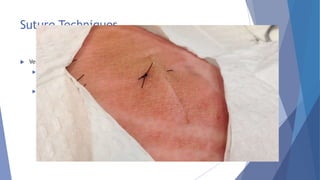
 Suture Techniques
 Staples
 Steristrips
 Adhesive Glue
 Wound Dressing
Lacerations and Wounds in the ED
 Common
 Most common in young men
 Sites
 Head & Neck- 50%
 Upper limbs- 35%
 1.1-12% risk of infection in all wounds presenting to ED
Lacerations and Wounds in the ED
 Concerns for Patient
 Functional outcome
 Cosmesis
 Least painful repair
 Avoiding infection
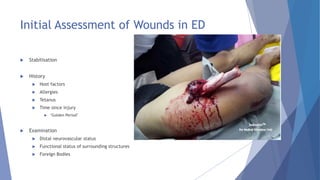
Initial Assessment of Wounds in ED
 Stabilisation
 History
 Host factors
 Allergies
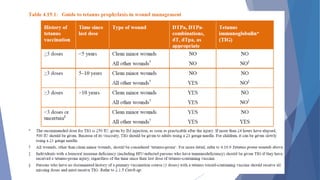
 Tetanus
 Time since injury
 ‘Golden Period’
 Examination
 Distal neurovascular status
 Functional status of surrounding structures
 Foreign Bodies
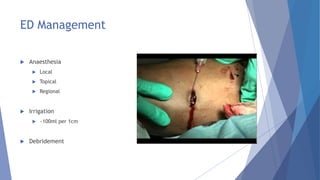
ED Management
 Anaesthesia
 Local
 Topical
 Regional
 Irrigation
 ~100ml per 1cm
 Debridement
Wound Closure Methods
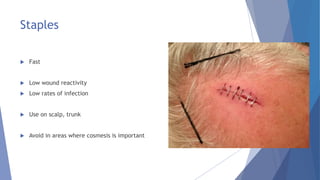
Staples
 Fast
 Low wound reactivity
 Low rates of infection
 Use on scalp, trunk
 Avoid in areas where cosmesis is important
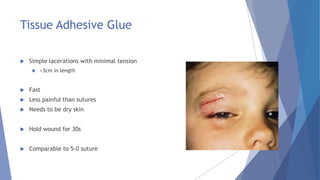
Tissue Adhesive Glue
 Simple lacerations with minimal tension
 <3cm in length
 Fast
 Less painful than sutures
 Needs to be dry skin
 Hold wound for 30s
 Comparable to 5-0 suture
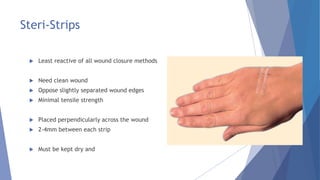
Steri-Strips
 Least reactive of all wound closure methods
 Need clean wound
 Oppose slightly separated wound edges
 Minimal tensile strength
 Placed perpendicularly across the wound
 2-4mm between each strip
 Must be kept dry and
Sutures
 Variety of materials, sizes available
 Absorbable leads to increased reactivity
 Natural fibres more reactive than synthetic
 Avoid silk in ED
 Monofilament vs multifilament
 Absorbable suture uses:
 Deep dermal- degrade in ~60 days
 Mucosal
 Unlikely to seek follow up
 Suture size should be smallest to resist the wound’s tension
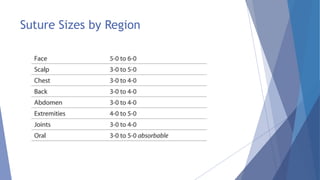
Suture Sizes by Region
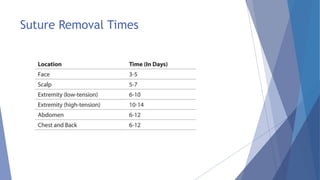
Suture Removal Times
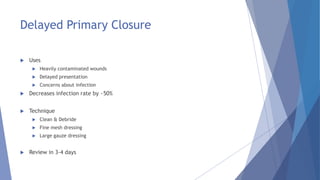
Delayed Primary Closure
 Uses
 Heavily contaminated wounds
 Delayed presentation
 Concerns about infection
 Decreases infection rate by ~50%
 Technique
 Clean & Debride
 Fine mesh dressing
 Large gauze dressing
 Review in 3-4 days
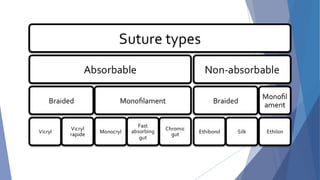
Suture Types
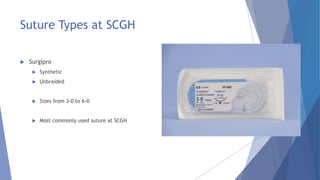
Suture Types at SCGH
 Surgipro
 Synthetic
 Unbraided
 Sizes from 3-0 to 6-0
 Most commonly used suture at SCGH
Suture Types at SCGH
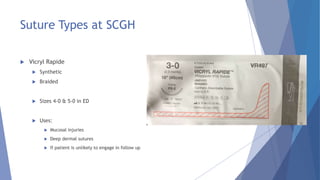
 Vicryl Rapide
 Synthetic
 Braided
 Sizes 4-0 & 5-0 in ED
 Uses:
 Mucosal injuries
 Deep dermal sutures
 If patient is unlikely to engage in follow up
Suture Types at SCGH
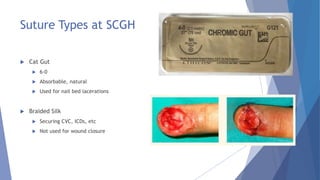
 Cat Gut
 6-0
 Absorbable, natural
 Used for nail bed lacerations
 Braided Silk
 Securing CVC, ICDs, etc
 Not used for wound closure
Suture Techniques
Suture Techniques
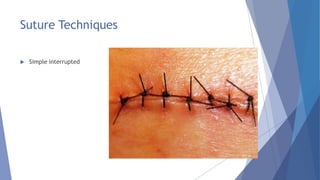
 Simple interrupted
Suture Techniques
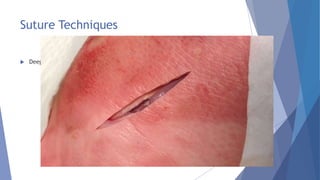
 Deep Dermal Suture
Suture Techniques
 Vertical Mattress
 Useful in areas of high tension (e.g. shin)
 Can lead to ischaemia around wound edges
Dressings in ED
Dressings at SCGH
 Large number of dressings available in ED
 When working out what dressing, think about intention
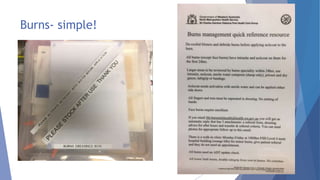
Burns- simple!
Burns Management
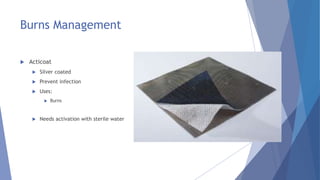
 Acticoat
 Silver coated
 Prevent infection
 Uses:
 Burns
 Needs activation with sterile water
Wound Management
 Intrasite
 Hydrogel-impregnated
 Uses:
 Slow healing/ necrotic wounds
 Lifts aware slough, necrotic tissue and eschar
 Allows granulation tissue to form
 Burns
Active Bleeding
 Major bleeds
 Consider direct or indirect pressure
 ?Tourniquet
 Ligature of the vessel if collateral available
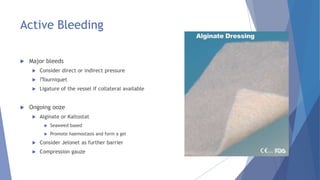
 Ongoing ooze
 Alginate or Kaltostat
 Seaweed based
 Promote haemostasis and form a gel
 Consider Jelonet as further barrier
 Compression gauze
Wound Management
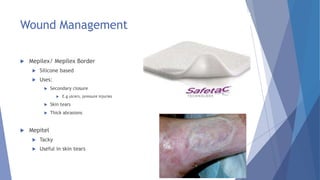
 Mepilex/ Mepilex Border
 Silicone based
 Uses:
 Secondary closure
 E.g ulcers, pressure injuries
 Skin tears
 Thick abrasions
 Mepitel
 Tacky
 Useful in skin tears
References
 Jamie Bawden, SCGH ED ANP
 www.lacerationrepair.com
 https://lifeinthefastlane.com/own-the-wound/
 https://hqmeded.com/wound-care-ed/
 Wound Care: Modern Evidence in the Treatment of Man’s Age-Old Injuries;
Emergency Medicine Practice; March 2005; 7(3)
 https://www.rch.org.au/clinicalguide/guideline_index/Lacerations/
 https://coreem.net/core/suture-materials/

Wound management

  • 1.
    Wound Management in theED James Pocock
  • 2.
    Topics for thisSession  Assessment of Wounds in ED  Types of Wound Closure  Sutures  Suture Techniques  Staples  Steristrips  Adhesive Glue  Wound Dressing
  • 3.
    Lacerations and Woundsin the ED  Common  Most common in young men  Sites  Head & Neck- 50%  Upper limbs- 35%  1.1-12% risk of infection in all wounds presenting to ED
  • 4.
    Lacerations and Woundsin the ED  Concerns for Patient  Functional outcome  Cosmesis  Least painful repair  Avoiding infection
  • 5.
    Initial Assessment ofWounds in ED  Stabilisation  History  Host factors  Allergies  Tetanus  Time since injury  ‘Golden Period’  Examination  Distal neurovascular status  Functional status of surrounding structures  Foreign Bodies
  • 7.
    ED Management  Anaesthesia Local  Topical  Regional  Irrigation  ~100ml per 1cm  Debridement
  • 8.
  • 9.
    Staples  Fast  Lowwound reactivity  Low rates of infection  Use on scalp, trunk  Avoid in areas where cosmesis is important
  • 10.
    Tissue Adhesive Glue Simple lacerations with minimal tension  <3cm in length  Fast  Less painful than sutures  Needs to be dry skin  Hold wound for 30s  Comparable to 5-0 suture
  • 11.
    Steri-Strips  Least reactiveof all wound closure methods  Need clean wound  Oppose slightly separated wound edges  Minimal tensile strength  Placed perpendicularly across the wound  2-4mm between each strip  Must be kept dry and
  • 12.
    Sutures  Variety ofmaterials, sizes available  Absorbable leads to increased reactivity  Natural fibres more reactive than synthetic  Avoid silk in ED  Monofilament vs multifilament  Absorbable suture uses:  Deep dermal- degrade in ~60 days  Mucosal  Unlikely to seek follow up  Suture size should be smallest to resist the wound’s tension
  • 14.
  • 15.
  • 16.
    Delayed Primary Closure Uses  Heavily contaminated wounds  Delayed presentation  Concerns about infection  Decreases infection rate by ~50%  Technique  Clean & Debride  Fine mesh dressing  Large gauze dressing  Review in 3-4 days
  • 17.
  • 19.
    Suture Types atSCGH  Surgipro  Synthetic  Unbraided  Sizes from 3-0 to 6-0  Most commonly used suture at SCGH
  • 20.
    Suture Types atSCGH  Vicryl Rapide  Synthetic  Braided  Sizes 4-0 & 5-0 in ED  Uses:  Mucosal injuries  Deep dermal sutures  If patient is unlikely to engage in follow up
  • 21.
    Suture Types atSCGH  Cat Gut  6-0  Absorbable, natural  Used for nail bed lacerations  Braided Silk  Securing CVC, ICDs, etc  Not used for wound closure
  • 22.
  • 23.
  • 24.
  • 25.
    Suture Techniques  VerticalMattress  Useful in areas of high tension (e.g. shin)  Can lead to ischaemia around wound edges
  • 26.
  • 27.
    Dressings at SCGH Large number of dressings available in ED  When working out what dressing, think about intention
  • 28.
  • 29.
    Burns Management  Acticoat Silver coated  Prevent infection  Uses:  Burns  Needs activation with sterile water
  • 30.
    Wound Management  Intrasite Hydrogel-impregnated  Uses:  Slow healing/ necrotic wounds  Lifts aware slough, necrotic tissue and eschar  Allows granulation tissue to form  Burns
  • 31.
    Active Bleeding  Majorbleeds  Consider direct or indirect pressure  ?Tourniquet  Ligature of the vessel if collateral available  Ongoing ooze  Alginate or Kaltostat  Seaweed based  Promote haemostasis and form a gel  Consider Jelonet as further barrier  Compression gauze
  • 32.
    Wound Management  Mepilex/Mepilex Border  Silicone based  Uses:  Secondary closure  E.g ulcers, pressure injuries  Skin tears  Thick abrasions  Mepitel  Tacky  Useful in skin tears
  • 33.
    References  Jamie Bawden,SCGH ED ANP  www.lacerationrepair.com  https://lifeinthefastlane.com/own-the-wound/  https://hqmeded.com/wound-care-ed/  Wound Care: Modern Evidence in the Treatment of Man’s Age-Old Injuries; Emergency Medicine Practice; March 2005; 7(3)  https://www.rch.org.au/clinicalguide/guideline_index/Lacerations/  https://coreem.net/core/suture-materials/

Editor's Notes

  • #6 ‘’Golden period”- 6-10 hours for extremeties 10-12 hours for scalp and face Host factors: Increasing age DM Renal failure Malnutrition Obesity Immunocompromise Prolonged time since wound
  • #11 Do not let glue enter wound (acts as foreign body)