Wound Care
Practicalities and Self-Care
LNNM Conference, Friday 12th May 2017
Jemell Geraghty, Lead Nurse Tissue Viability
Lydia Barry, Specialist Sister Tissue Viability
Royal Free London, NHS Foundation Trust.
NW3 2QG
jemell82@hotmail.com
Background: Wound Care Support
Accessing health care is problematic for
homeless people due to:
• Difficulties in registering with a GP
• Lack of access to phone or transport
• Disordered lifestyle
• Previous experience of attitudes from health
care professionals
(Crisis, 2002).
We need to improve client experience in general practice
and make every contact count
Crisis (2002) Critical Condition – Homeless People’s Access to GPs.
London: Crisis
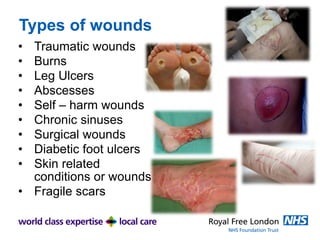
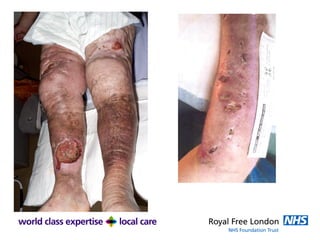
Types of wounds
• Traumatic wounds
• Burns
• Leg Ulcers
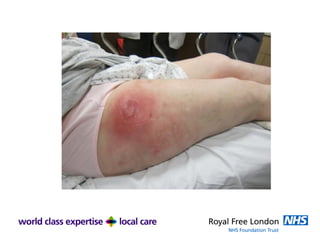
• Abscesses
• Self – harm wounds
• Chronic sinuses
• Surgical wounds
• Diabetic foot ulcers
• Skin related
conditions or wounds
• Fragile scars
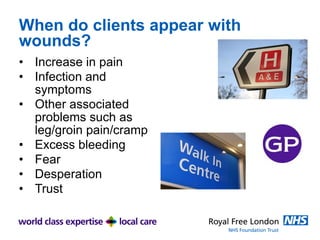
When do clients appear with
wounds?
• Increase in pain
• Infection and
symptoms
• Other associated
problems such as
leg/groin pain/cramp
• Excess bleeding
• Fear
• Desperation
• Trust
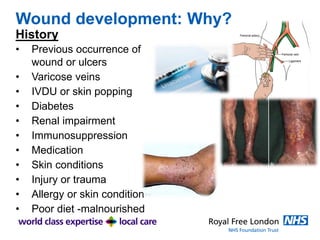
Wound development: Why?
History
• Previous occurrence of
wound or ulcers
• Varicose veins
• IVDU or skin popping
• Diabetes
• Renal impairment
• Immunosuppression
• Medication
• Skin conditions
• Injury or trauma
• Allergy or skin condition
• Poor diet -malnourished
Wound Assessment: Diagnosis
• Examine
• When did it
occur?
• How?
• Previous
occurrence?
• Describe what
you see
• Feel, palpate
surrounding skin
• Assess pain
• Other
contributing
factors
Wound
Location
Wound
Bed
Wound
Edges
Wound
Assessment
Wound
Size
Signs
Of
Infection
Surround
skin:
Colour &
Temp
TIME: Model for Wound Bed
Preparation
T – Tissue Viable
or non viable
I – Infection or
Inflammation
M – Moisture
Imbalance or
balance
E – Edges of
Wound
International Advisory Board on Wound Bed Preparation. Schultz GS,
Sibbald, RG, Falanga V et al (2003) Wound bed preparation: systematic
approach to wound management Wound Rep Reg 11; 1-28
T - Does the wound contain non
viable tissue such as necrotic
tissue, slough, non-viable
tendon or bone?
I - Does the wound have signs
of bacterial contamination,
infection or inflammation?
M -Does the wound have
excess exudate or is the wound
too dry?
E - Edge wound undermined
and is the epidermis failing to
migrate across the granulation
tissue?
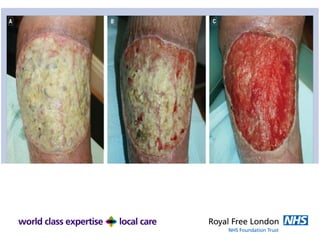
Wound bed: Tissue Types
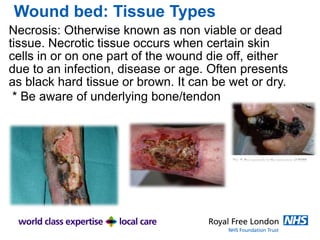
Necrosis: Otherwise known as non viable or dead
tissue. Necrotic tissue occurs when certain skin
cells in or on one part of the wound die off, either
due to an infection, disease or age. Often presents
as black hard tissue or brown. It can be wet or dry.
* Be aware of underlying bone/tendon
Wound bed: Tissue Types
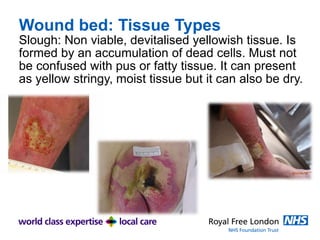
Slough: Non viable, devitalised yellowish tissue. Is
formed by an accumulation of dead cells. Must not
be confused with pus or fatty tissue. It can present
as yellow stringy, moist tissue but it can also be dry.
Wound bed: Tissue Types
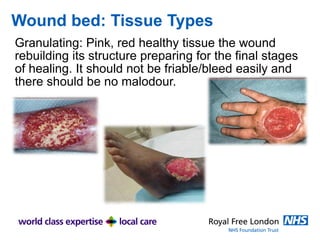
Granulating: Pink, red healthy tissue the wound
rebuilding its structure preparing for the final stages
of healing. It should not be friable/bleed easily and
there should be no malodour.
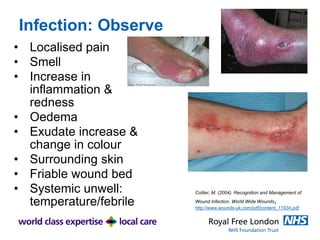
Infection: Observe
• Localised pain
• Smell
• Increase in
inflammation &
redness
• Oedema
• Exudate increase &
change in colour
• Surrounding skin
• Friable wound bed
• Systemic unwell:
temperature/febrile
Collier, M. (2004). Recognition and Management of
Wound Infection. World Wide Wounds,
http://www.wounds-uk.com/pdf/content_11934.pdf
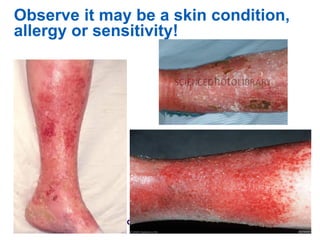
Observe it may be a skin condition,
allergy or sensitivity!
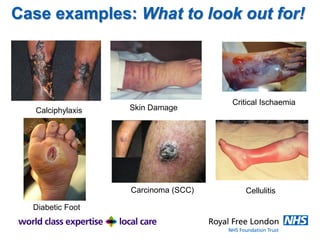
Case examples: What to look out for!
Skin Damage
Critical Ischaemia
CellulitisCarcinoma (SCC)
Calciphylaxis
Diabetic Foot
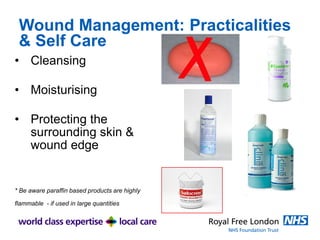
Wound Management: Practicalities
& Self Care
• Cleansing
• Moisturising
• Protecting the
surrounding skin &
wound edge
* Be aware paraffin based products are highly
flammable - if used in large quantities
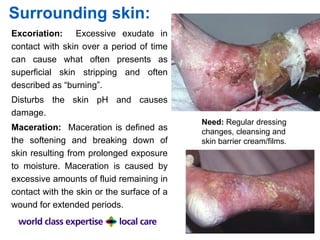
Surrounding skin:
Excoriation: Excessive exudate in
contact with skin over a period of time
can cause what often presents as
superficial skin stripping and often
described as “burning”.
Disturbs the skin pH and causes
damage.
Maceration: Maceration is defined as
the softening and breaking down of
skin resulting from prolonged exposure
to moisture. Maceration is caused by
excessive amounts of fluid remaining in
contact with the skin or the surface of a
wound for extended periods.
Need: Regular dressing
changes, cleansing and
skin barrier cream/films.
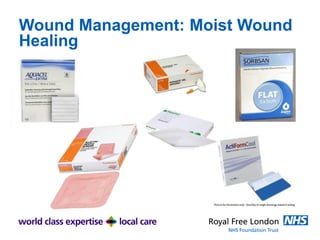
Wound Management: Moist Wound
Healing
Antimicrobials: Prevent & treat
wound infection
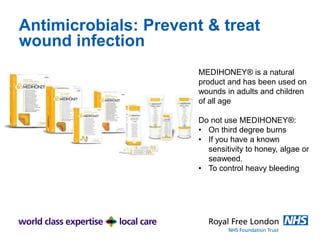
MEDIHONEY® is a natural
product and has been used on
wounds in adults and children
of all age
Do not use MEDIHONEY®:
• On third degree burns
• If you have a known
sensitivity to honey, algae or
seaweed.
• To control heavy bleeding
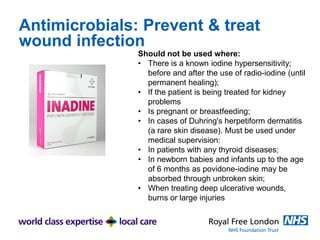
Antimicrobials: Prevent & treat
wound infection
Should not be used where:
• There is a known iodine hypersensitivity;
before and after the use of radio-iodine (until
permanent healing);
• If the patient is being treated for kidney
problems
• Is pregnant or breastfeeding;
• In cases of Duhring's herpetiform dermatitis
(a rare skin disease). Must be used under
medical supervision:
• In patients with any thyroid diseases;
• In newborn babies and infants up to the age
of 6 months as povidone-iodine may be
absorbed through unbroken skin;
• When treating deep ulcerative wounds,
burns or large injuries
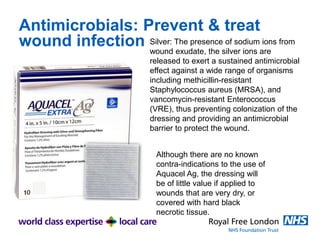
Antimicrobials: Prevent & treat
wound infection
Although there are no known
contra-indications to the use of
Aquacel Ag, the dressing will
be of little value if applied to
wounds that are very dry, or
covered with hard black
necrotic tissue.
Silver: The presence of sodium ions from
wound exudate, the silver ions are
released to exert a sustained antimicrobial
effect against a wide range of organisms
including methicillin-resistant
Staphylococcus aureus (MRSA), and
vancomycin-resistant Enterococcus
(VRE), thus preventing colonization of the
dressing and providing an antimicrobial
barrier to protect the wound.
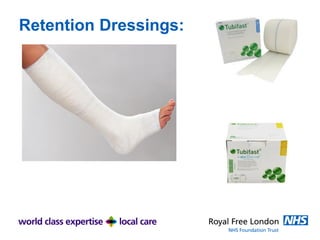
Retention Dressings:
Why bandage?
Keeps dressing in place
Covers wound/ulcer
Prevent contamination
Manage exudate and malodour
Support the limb
Comfort
Help reduce oedema
Protection
Foundation for compression
Can be used safely in nearly all
cases
Can be applied by almost all
clinicians
Easy to learn and share skill
How to promote self care and
concordance.
• Establish trust and
respect
• Listen to their story
• Engage and promote
independence
• Promote concordance
• Give encouragement
and positivity about
wound healing
• Chronic wounds can
cause isolation and
depression
Copyright: Geraghty (2015)
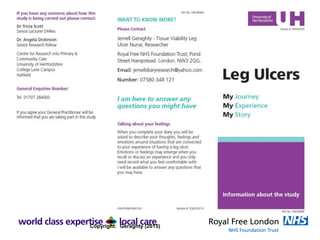
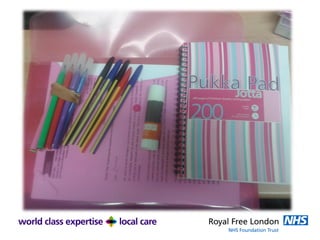
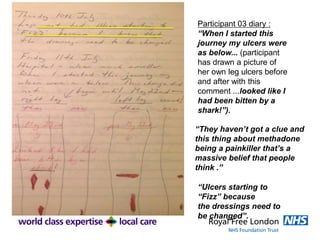
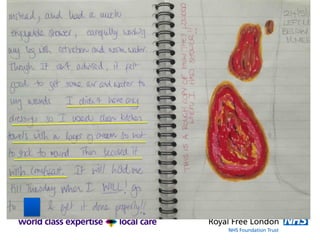
Participant 03 diary :
“When I started this
journey my ulcers were
as below... (participant
has drawn a picture of
her own leg ulcers before
and after with this
comment ...looked like I
had been bitten by a
shark!”).
“Ulcers starting to
“Fizz” because
the dressings need to
be changed”.
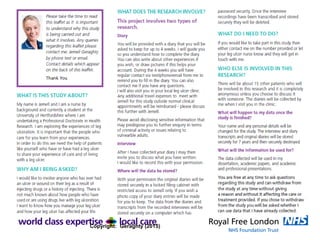
“They haven’t got a clue and
this thing about methadone
being a painkiller that’s a
massive belief that people
think .”
Questions
Thank you!
jemell82@hotmail.com

Wound Care

  • 1.
    Wound Care Practicalities andSelf-Care LNNM Conference, Friday 12th May 2017 Jemell Geraghty, Lead Nurse Tissue Viability Lydia Barry, Specialist Sister Tissue Viability Royal Free London, NHS Foundation Trust. NW3 2QG jemell82@hotmail.com
  • 2.
    Background: Wound CareSupport Accessing health care is problematic for homeless people due to: • Difficulties in registering with a GP • Lack of access to phone or transport • Disordered lifestyle • Previous experience of attitudes from health care professionals (Crisis, 2002). We need to improve client experience in general practice and make every contact count Crisis (2002) Critical Condition – Homeless People’s Access to GPs. London: Crisis
  • 3.
    Types of wounds •Traumatic wounds • Burns • Leg Ulcers • Abscesses • Self – harm wounds • Chronic sinuses • Surgical wounds • Diabetic foot ulcers • Skin related conditions or wounds • Fragile scars
  • 6.
    When do clientsappear with wounds? • Increase in pain • Infection and symptoms • Other associated problems such as leg/groin pain/cramp • Excess bleeding • Fear • Desperation • Trust
  • 7.
    Wound development: Why? History •Previous occurrence of wound or ulcers • Varicose veins • IVDU or skin popping • Diabetes • Renal impairment • Immunosuppression • Medication • Skin conditions • Injury or trauma • Allergy or skin condition • Poor diet -malnourished
  • 8.
    Wound Assessment: Diagnosis •Examine • When did it occur? • How? • Previous occurrence? • Describe what you see • Feel, palpate surrounding skin • Assess pain • Other contributing factors Wound Location Wound Bed Wound Edges Wound Assessment Wound Size Signs Of Infection Surround skin: Colour & Temp
  • 9.
    TIME: Model forWound Bed Preparation T – Tissue Viable or non viable I – Infection or Inflammation M – Moisture Imbalance or balance E – Edges of Wound International Advisory Board on Wound Bed Preparation. Schultz GS, Sibbald, RG, Falanga V et al (2003) Wound bed preparation: systematic approach to wound management Wound Rep Reg 11; 1-28 T - Does the wound contain non viable tissue such as necrotic tissue, slough, non-viable tendon or bone? I - Does the wound have signs of bacterial contamination, infection or inflammation? M -Does the wound have excess exudate or is the wound too dry? E - Edge wound undermined and is the epidermis failing to migrate across the granulation tissue?
  • 10.
    Wound bed: TissueTypes Necrosis: Otherwise known as non viable or dead tissue. Necrotic tissue occurs when certain skin cells in or on one part of the wound die off, either due to an infection, disease or age. Often presents as black hard tissue or brown. It can be wet or dry. * Be aware of underlying bone/tendon
  • 11.
    Wound bed: TissueTypes Slough: Non viable, devitalised yellowish tissue. Is formed by an accumulation of dead cells. Must not be confused with pus or fatty tissue. It can present as yellow stringy, moist tissue but it can also be dry.
  • 12.
    Wound bed: TissueTypes Granulating: Pink, red healthy tissue the wound rebuilding its structure preparing for the final stages of healing. It should not be friable/bleed easily and there should be no malodour.

  • 14.
    Infection: Observe • Localisedpain • Smell • Increase in inflammation & redness • Oedema • Exudate increase & change in colour • Surrounding skin • Friable wound bed • Systemic unwell: temperature/febrile Collier, M. (2004). Recognition and Management of Wound Infection. World Wide Wounds, http://www.wounds-uk.com/pdf/content_11934.pdf
  • 15.
    Observe it maybe a skin condition, allergy or sensitivity!
  • 16.
    Case examples: Whatto look out for! Skin Damage Critical Ischaemia CellulitisCarcinoma (SCC) Calciphylaxis Diabetic Foot
  • 17.
    Wound Management: Practicalities &Self Care • Cleansing • Moisturising • Protecting the surrounding skin & wound edge * Be aware paraffin based products are highly flammable - if used in large quantities
  • 18.
    Surrounding skin: Excoriation: Excessiveexudate in contact with skin over a period of time can cause what often presents as superficial skin stripping and often described as “burning”. Disturbs the skin pH and causes damage. Maceration: Maceration is defined as the softening and breaking down of skin resulting from prolonged exposure to moisture. Maceration is caused by excessive amounts of fluid remaining in contact with the skin or the surface of a wound for extended periods. Need: Regular dressing changes, cleansing and skin barrier cream/films.
  • 19.
  • 20.
    Antimicrobials: Prevent &treat wound infection MEDIHONEY® is a natural product and has been used on wounds in adults and children of all age Do not use MEDIHONEY®: • On third degree burns • If you have a known sensitivity to honey, algae or seaweed. • To control heavy bleeding
  • 21.
    Antimicrobials: Prevent &treat wound infection Should not be used where: • There is a known iodine hypersensitivity; before and after the use of radio-iodine (until permanent healing); • If the patient is being treated for kidney problems • Is pregnant or breastfeeding; • In cases of Duhring's herpetiform dermatitis (a rare skin disease). Must be used under medical supervision: • In patients with any thyroid diseases; • In newborn babies and infants up to the age of 6 months as povidone-iodine may be absorbed through unbroken skin; • When treating deep ulcerative wounds, burns or large injuries
  • 22.
    Antimicrobials: Prevent &treat wound infection Although there are no known contra-indications to the use of Aquacel Ag, the dressing will be of little value if applied to wounds that are very dry, or covered with hard black necrotic tissue. Silver: The presence of sodium ions from wound exudate, the silver ions are released to exert a sustained antimicrobial effect against a wide range of organisms including methicillin-resistant Staphylococcus aureus (MRSA), and vancomycin-resistant Enterococcus (VRE), thus preventing colonization of the dressing and providing an antimicrobial barrier to protect the wound.
  • 23.
  • 24.
    Why bandage? Keeps dressingin place Covers wound/ulcer Prevent contamination Manage exudate and malodour Support the limb Comfort Help reduce oedema Protection Foundation for compression Can be used safely in nearly all cases Can be applied by almost all clinicians Easy to learn and share skill
  • 25.
    How to promoteself care and concordance. • Establish trust and respect • Listen to their story • Engage and promote independence • Promote concordance • Give encouragement and positivity about wound healing • Chronic wounds can cause isolation and depression
  • 26.
  • 27.
  • 29.
    Participant 03 diary: “When I started this journey my ulcers were as below... (participant has drawn a picture of her own leg ulcers before and after with this comment ...looked like I had been bitten by a shark!”). “Ulcers starting to “Fizz” because the dressings need to be changed”. “They haven’t got a clue and this thing about methadone being a painkiller that’s a massive belief that people think .”
  • 31.