
Wound Care
Management
Mr. Mahesh. S, M.Sc. Nursing
NurseEducator,
MGMCRI
WOUND:
 It is a breakdown in the protective function of the skin, with the
loss of continuity of epithelium, with or without loss of
underlying connective tissue (i.e. muscle, bone, nerves)
following:
 Injury to the skin or underlying tissues/ organs
caused by surgery,
 A blow, a cut, chemicals, heat/ cold, friction/
shear force, pressure or as a result of disease,
such as leg ulcers or carcinomas.
WOUND CARE MANAGEMENT
 Wound care management is an ongoing treatment of
a wound, by providing appropriate environment for
healing, by both direct and indirect methods, together
with the prevention of skin breakdown. ... Because of
these many different wound care techniques and
dressings.
What is the purpose of wound
care?
 Some wounds are deeper and need medical attention to
prevent infection and loss of function, due to damage to
underlying structures like bone, muscle, tendon, arteries
and nerves.
 The purpose of medical care for wounds is to prevent
complications and preserve function.
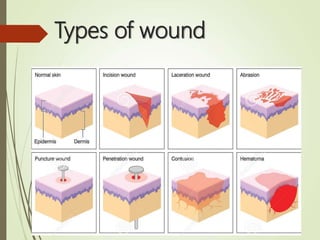
Types of wound
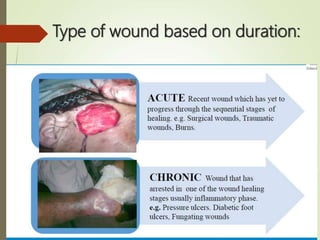
Type of wound based on duration:
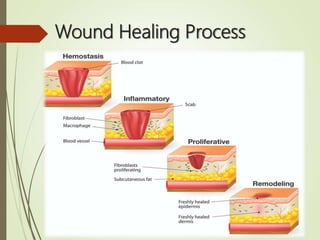
Wound Healing Process
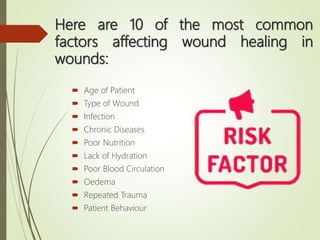
Here are 10 of the most common
factors affecting wound healing in
wounds:
 Age of Patient
 Type of Wound
 Infection
 Chronic Diseases
 Poor Nutrition
 Lack of Hydration
 Poor Blood Circulation
 Oedema
 Repeated Trauma
 Patient Behaviour
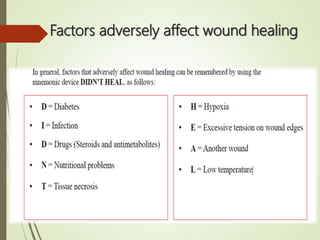
Factors adversely affect wound healing
Wound care management :
7 steps of wound care
Types of Dressings-
Dry To Dry Dressings
 Used primarily for wounds closing by primary
intention.
 •Offers good protection, absorption & provide
pressure
 •They adhere to the wound surface when
drainage dries.
 - when removed can cause pain and disruption
of granulation tissue.
Types of Dressings-
Wet To Dry Dressings
 Used for untidy or infected wounds that must
be debrided and closed by secondary intention.
 How can it be done? - Gauze saturated with
sterile saline or antimicrobial sol's. Is packed into
the wound, the wet dressing are then covered
by dry dressings
Wet To Wet Dressings:
 Provide a more physiologic environment (warmth,
moisture) which can enhance the local healing
processes and assure greater patient comfort.
 -Surrounding tissues can become ulcerated. (High
risk for infection).
Wound care Management

Wound care Management

  • 1.
    Wound Care Management Mr. Mahesh.S, M.Sc. Nursing NurseEducator, MGMCRI
  • 2.
    WOUND:  It isa breakdown in the protective function of the skin, with the loss of continuity of epithelium, with or without loss of underlying connective tissue (i.e. muscle, bone, nerves) following:  Injury to the skin or underlying tissues/ organs caused by surgery,  A blow, a cut, chemicals, heat/ cold, friction/ shear force, pressure or as a result of disease, such as leg ulcers or carcinomas.
  • 3.
    WOUND CARE MANAGEMENT Wound care management is an ongoing treatment of a wound, by providing appropriate environment for healing, by both direct and indirect methods, together with the prevention of skin breakdown. ... Because of these many different wound care techniques and dressings.
  • 4.
    What is thepurpose of wound care?  Some wounds are deeper and need medical attention to prevent infection and loss of function, due to damage to underlying structures like bone, muscle, tendon, arteries and nerves.  The purpose of medical care for wounds is to prevent complications and preserve function.
  • 5.
  • 7.
    Type of woundbased on duration:
  • 8.
  • 9.
    Here are 10of the most common factors affecting wound healing in wounds:  Age of Patient  Type of Wound  Infection  Chronic Diseases  Poor Nutrition  Lack of Hydration  Poor Blood Circulation  Oedema  Repeated Trauma  Patient Behaviour
  • 10.
  • 11.
    Wound care management: 7 steps of wound care
  • 12.
    Types of Dressings- DryTo Dry Dressings  Used primarily for wounds closing by primary intention.  •Offers good protection, absorption & provide pressure  •They adhere to the wound surface when drainage dries.  - when removed can cause pain and disruption of granulation tissue.
  • 13.
    Types of Dressings- WetTo Dry Dressings  Used for untidy or infected wounds that must be debrided and closed by secondary intention.  How can it be done? - Gauze saturated with sterile saline or antimicrobial sol's. Is packed into the wound, the wet dressing are then covered by dry dressings
  • 14.
    Wet To WetDressings:  Provide a more physiologic environment (warmth, moisture) which can enhance the local healing processes and assure greater patient comfort.  -Surrounding tissues can become ulcerated. (High risk for infection).