
When is MR Venography Useful?
What makes it so Operator
Dependent ?
Constantino S.Peña
Interventional Radiologist
Medical Director, Vascular Imaging
Baptist Cardiac & Vascular Institute, Miami, Florida
Clinical Associate Professor of Medicine,
University of South Florida
And
Florida International University
Herbert Wertheim School of Medicine
Why MR Venography?
 Evaluate Central Veins-
 SVC, IVC, Pelvis
 Patency and extrinsic compression
 Allows for a 4 Dimensional Flow
evaluation- Time Resolved Imaging
 Lack of Ionizing Radiation
 Does not utilize Iodinated contrast
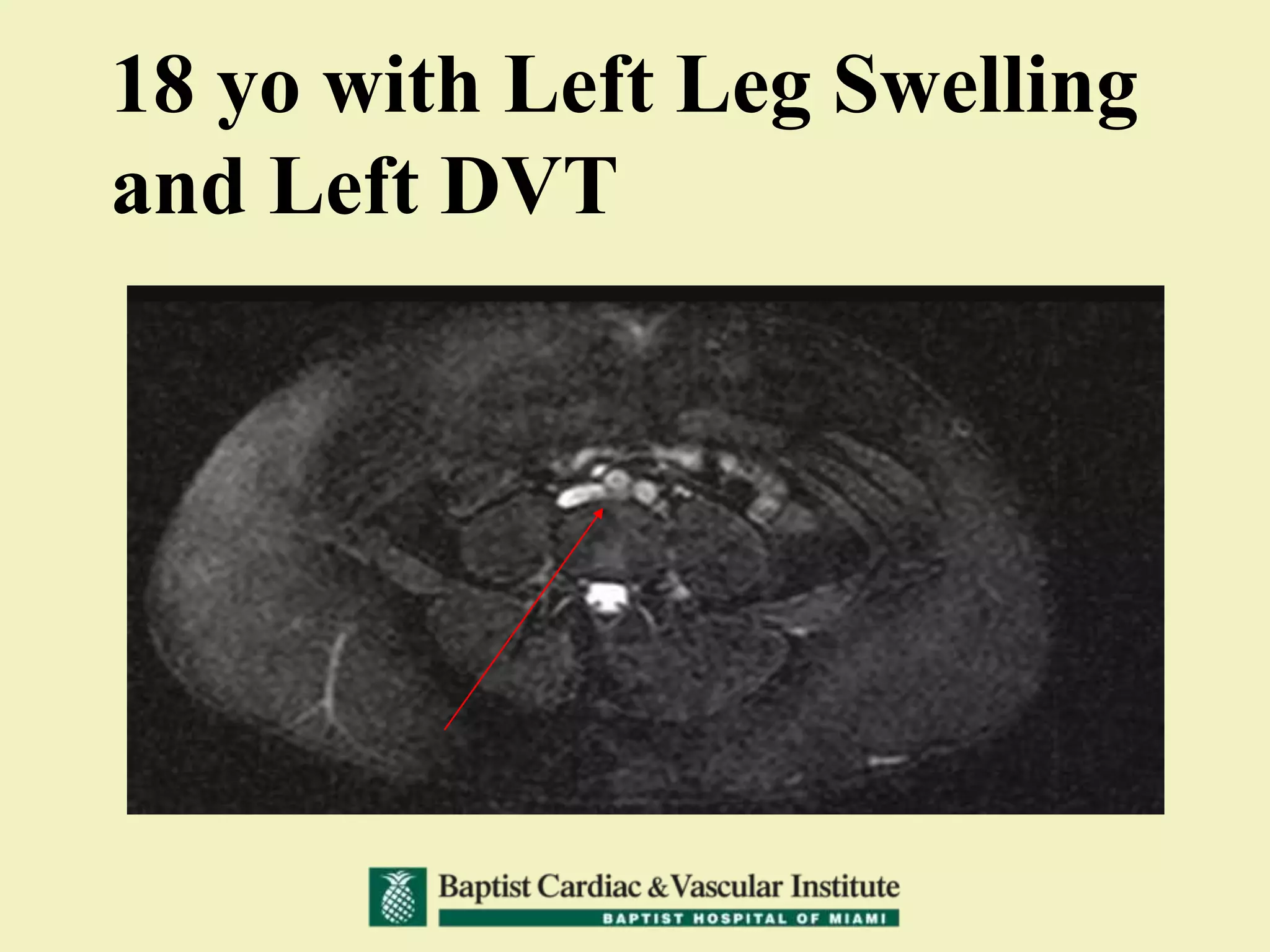
18 yo with Left Leg Swelling
and Left DVT
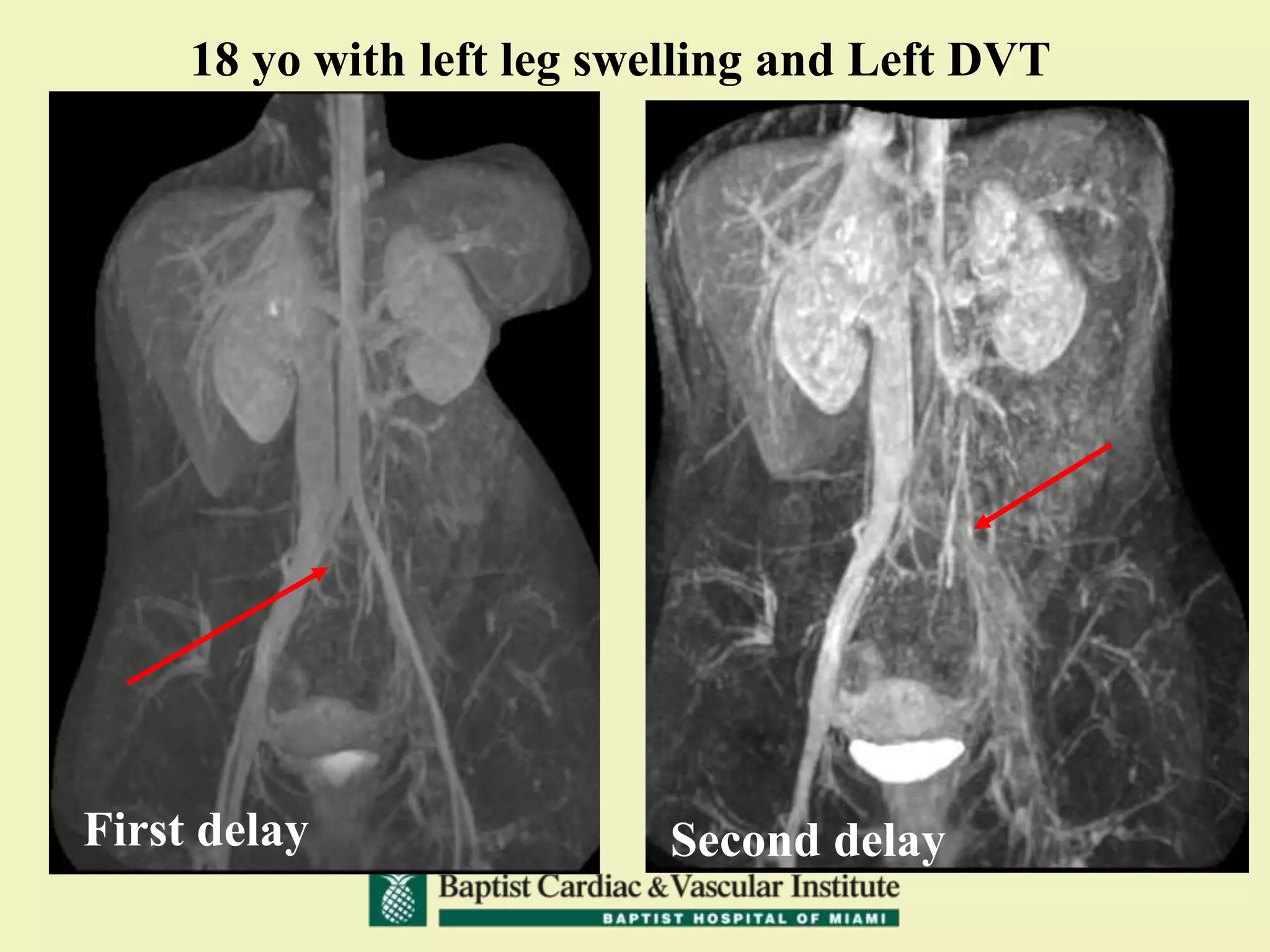
18 yo with left leg swelling and Left DVT
First delay Second delay
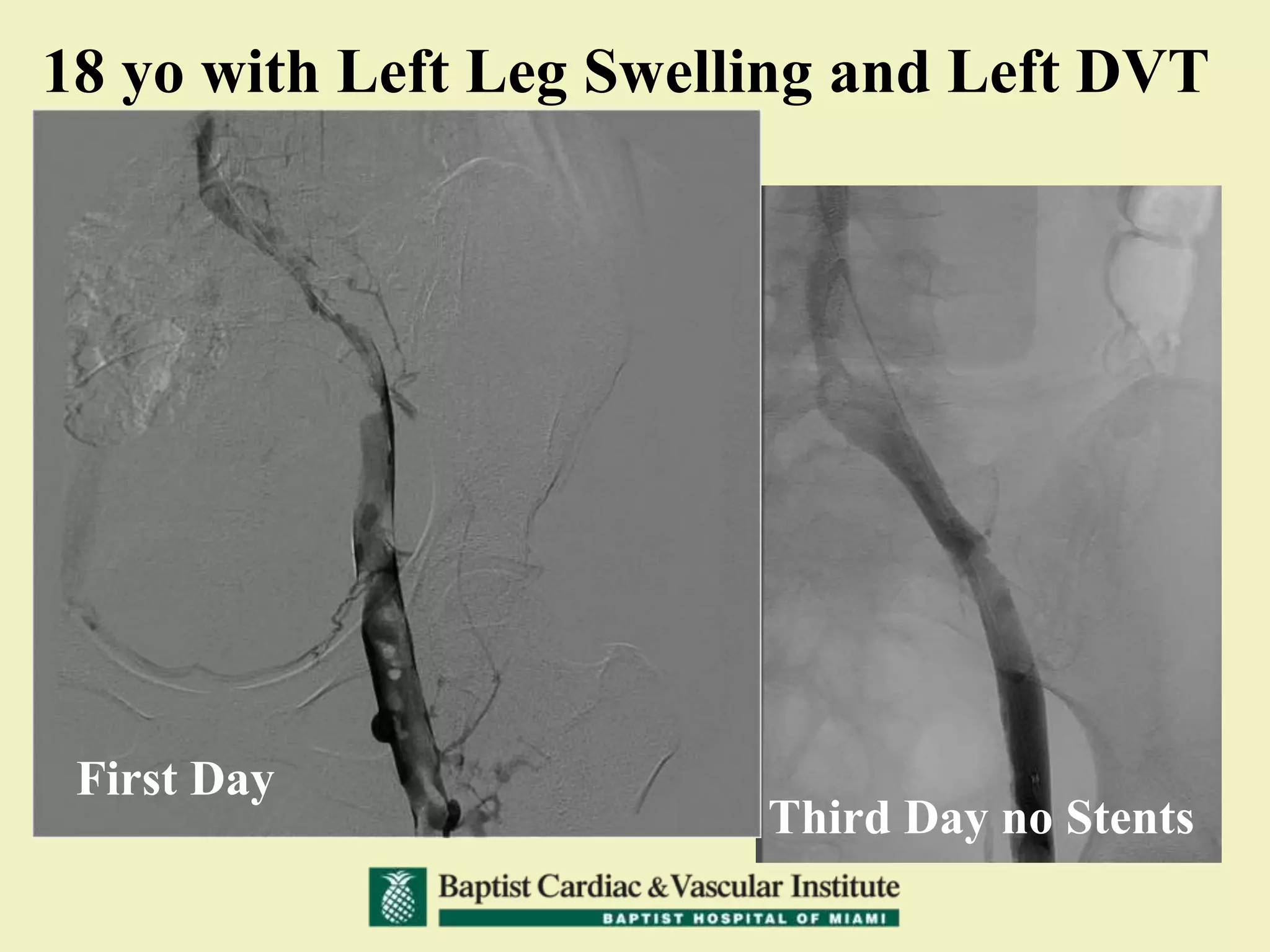
18 yo with Left Leg Swelling and Left DVT
First Day
Third Day no Stents
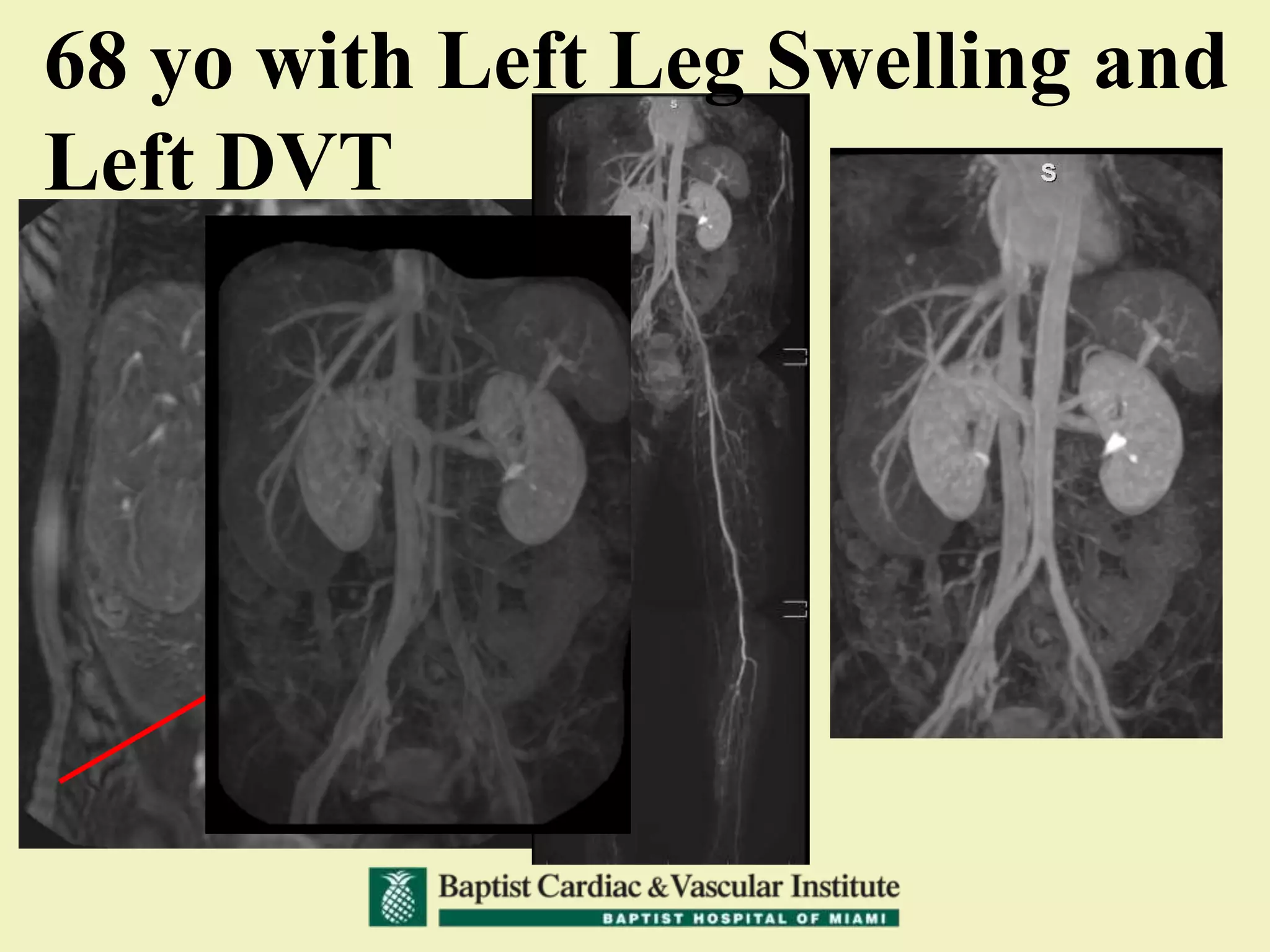
68 yo with Left Leg Swelling and
Left DVT
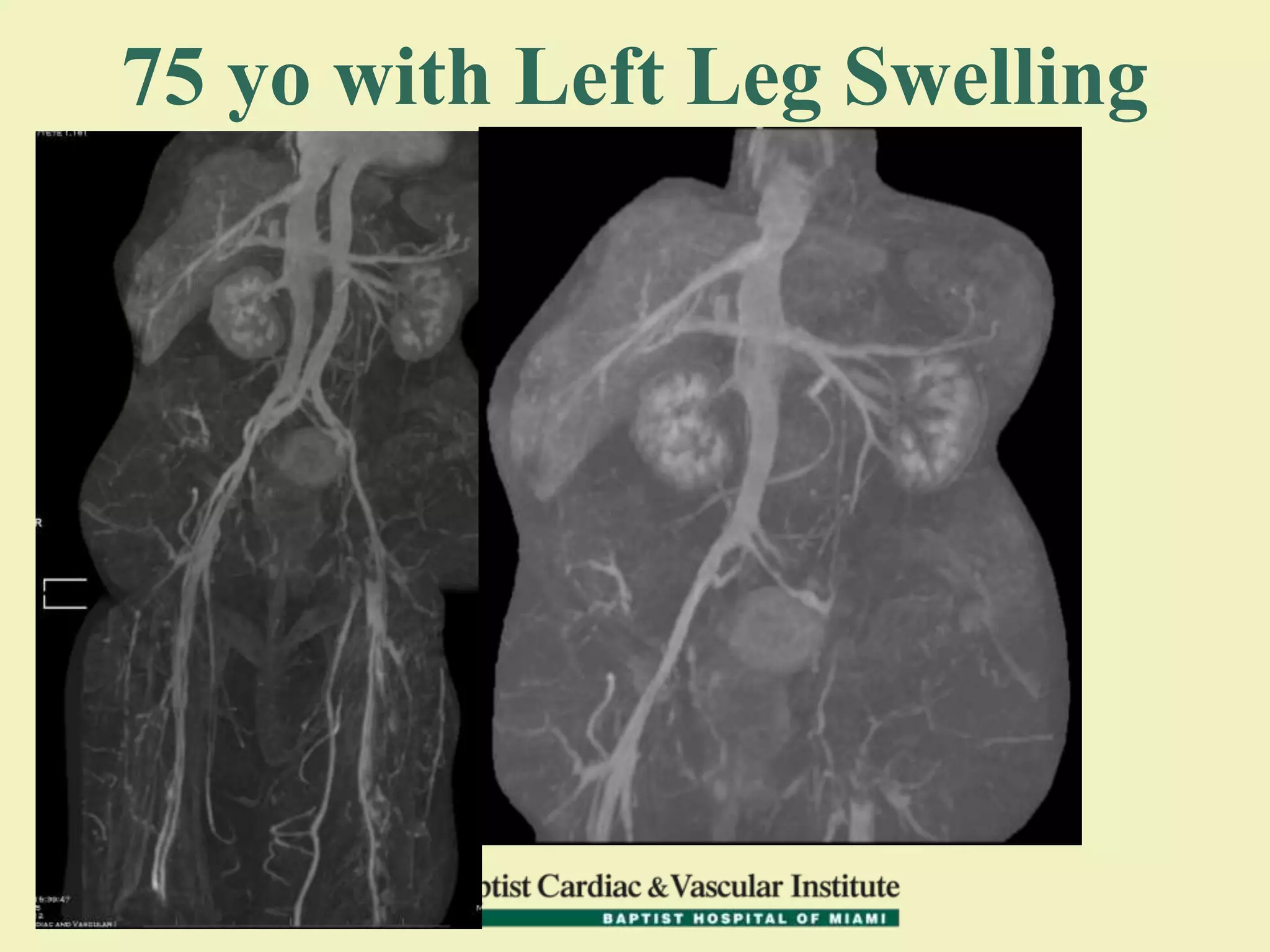
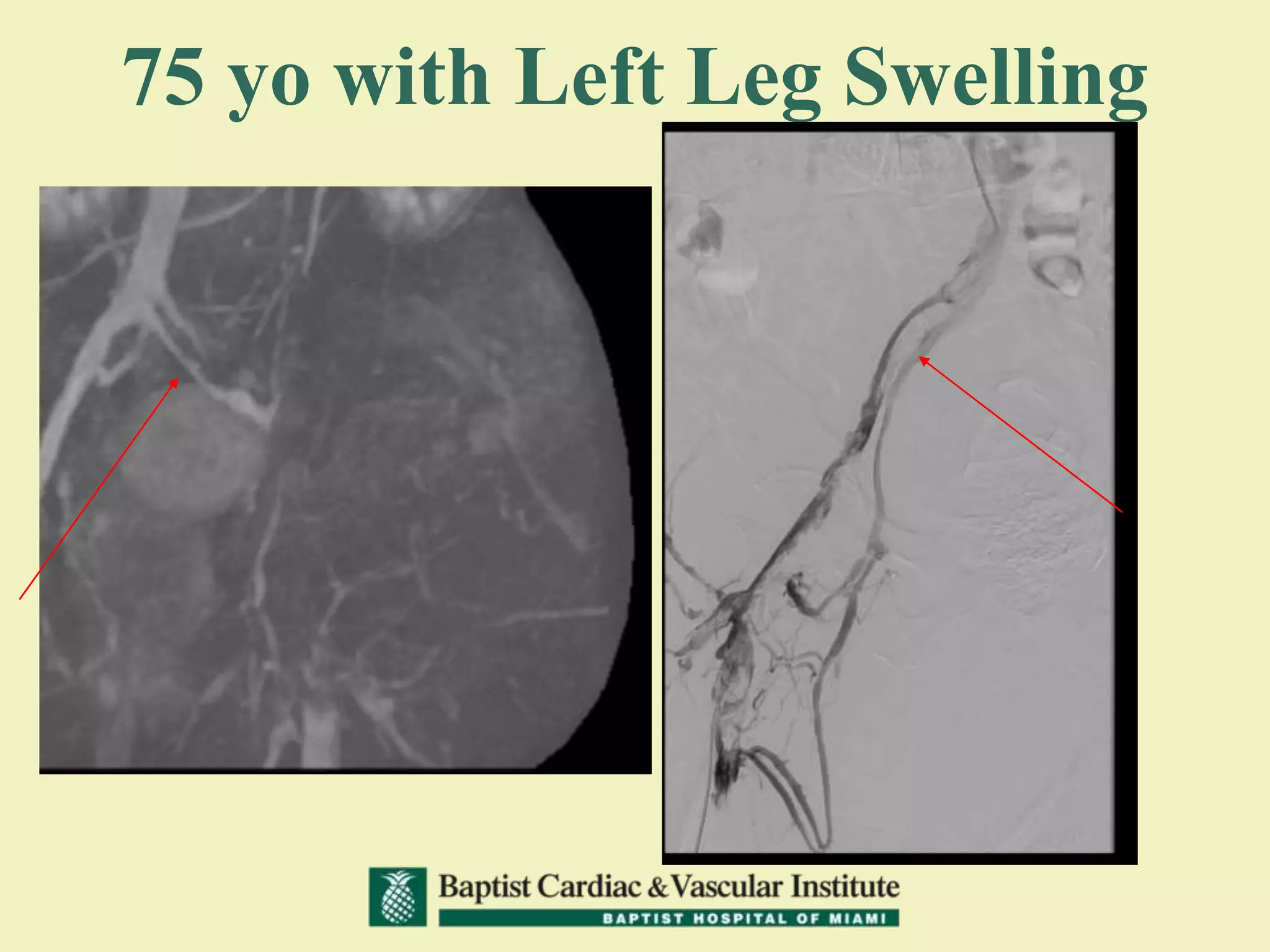
75 yo with Left Leg Swelling
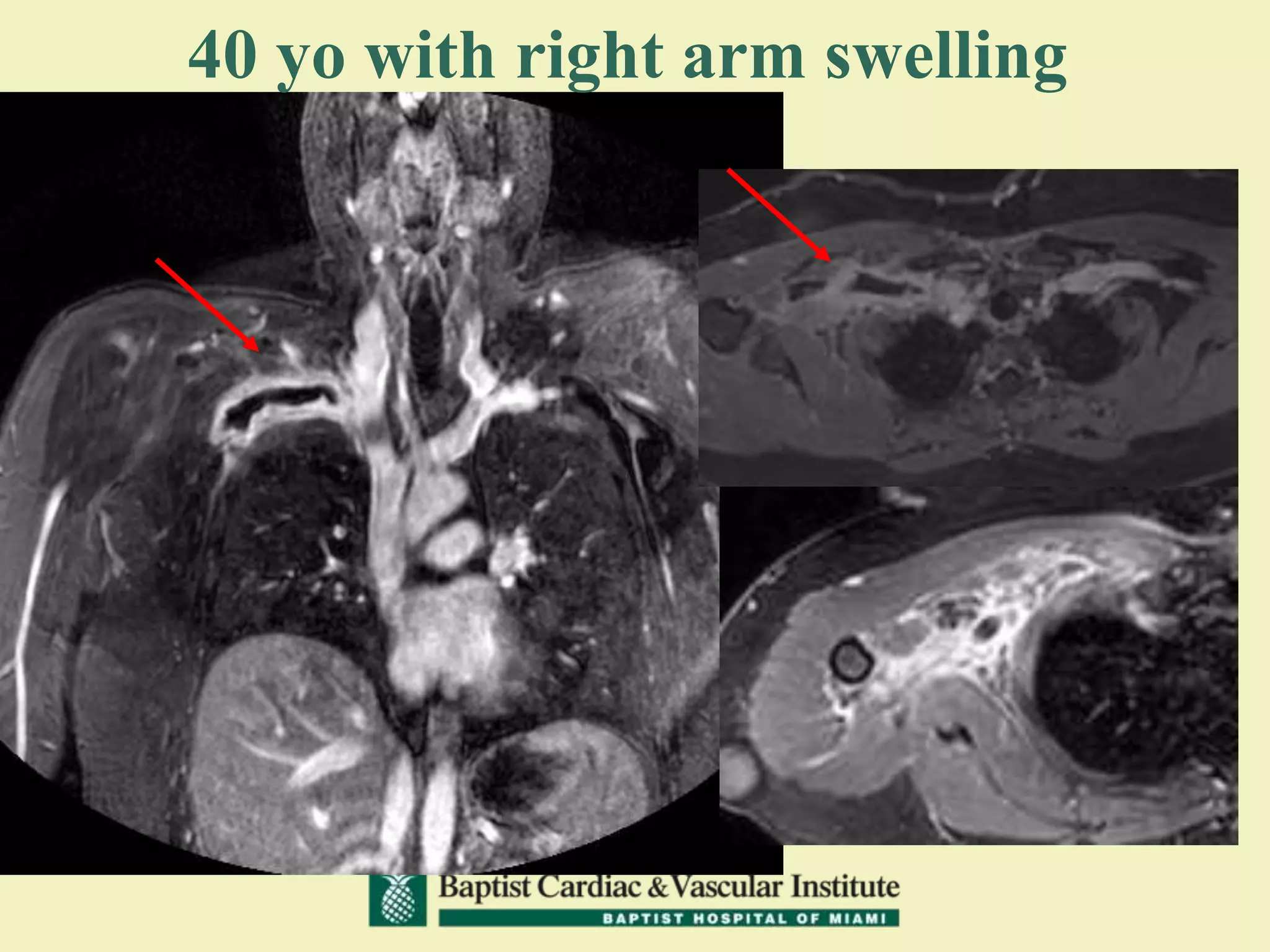
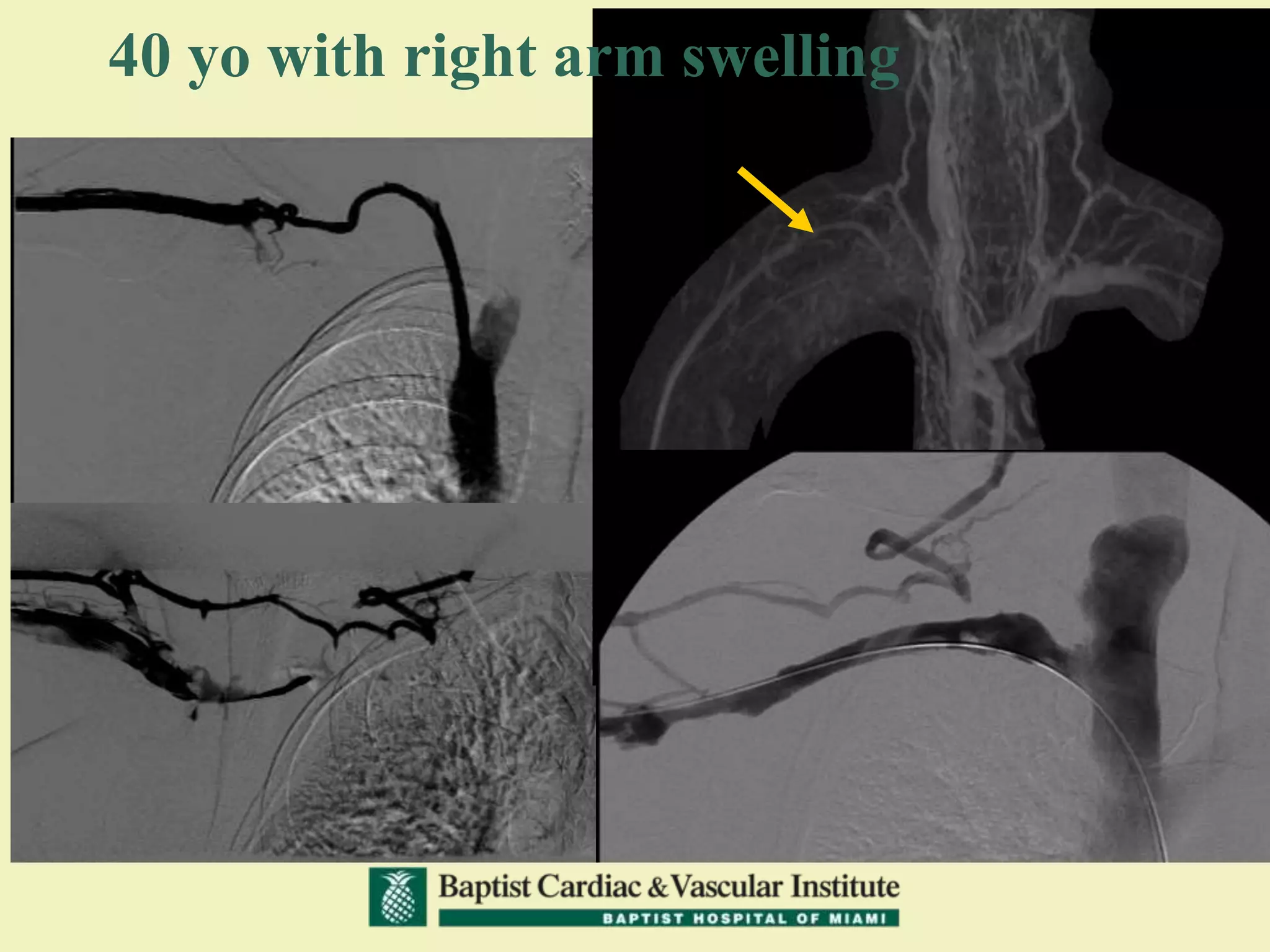
40 yo with right arm swelling
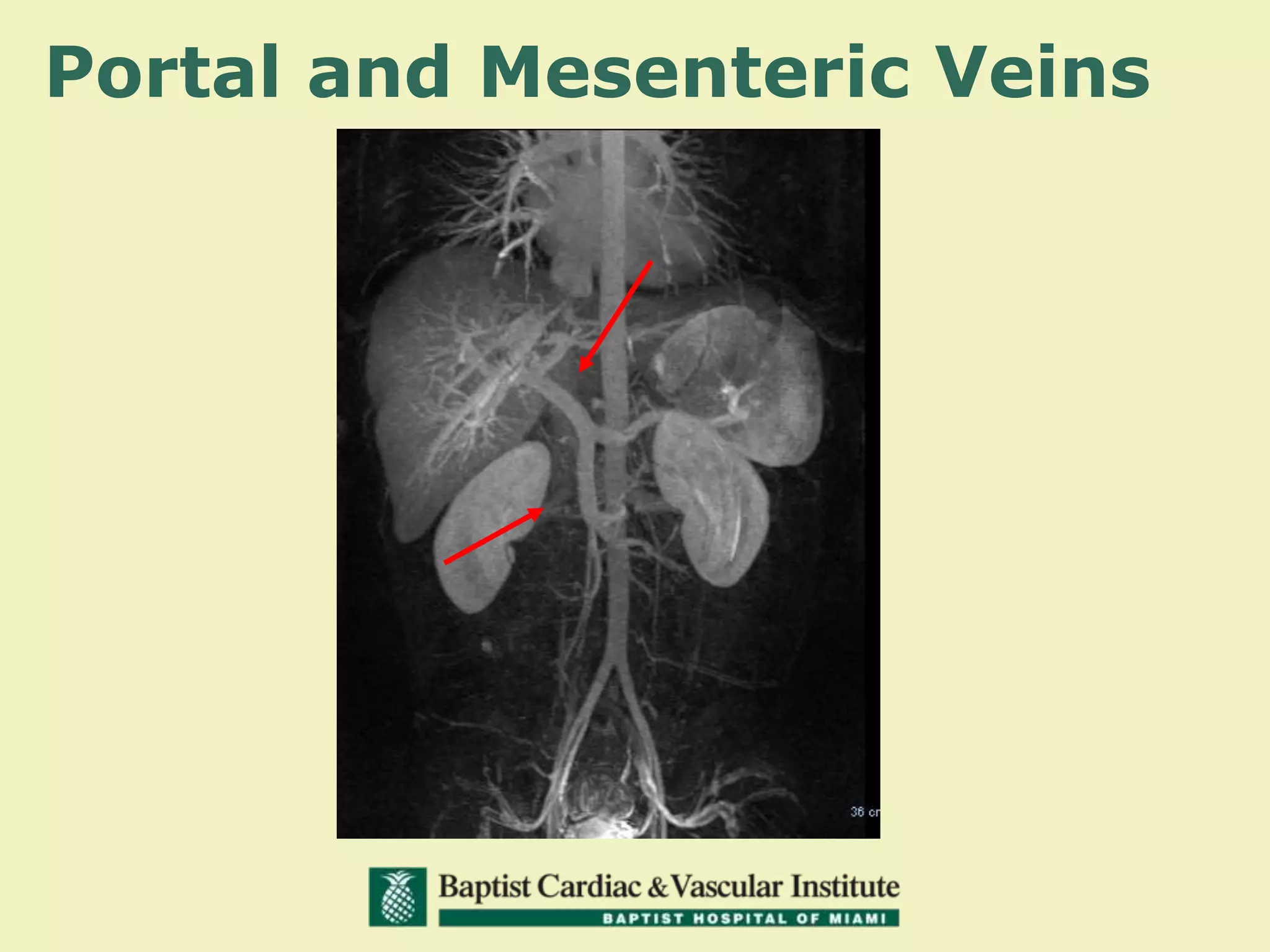
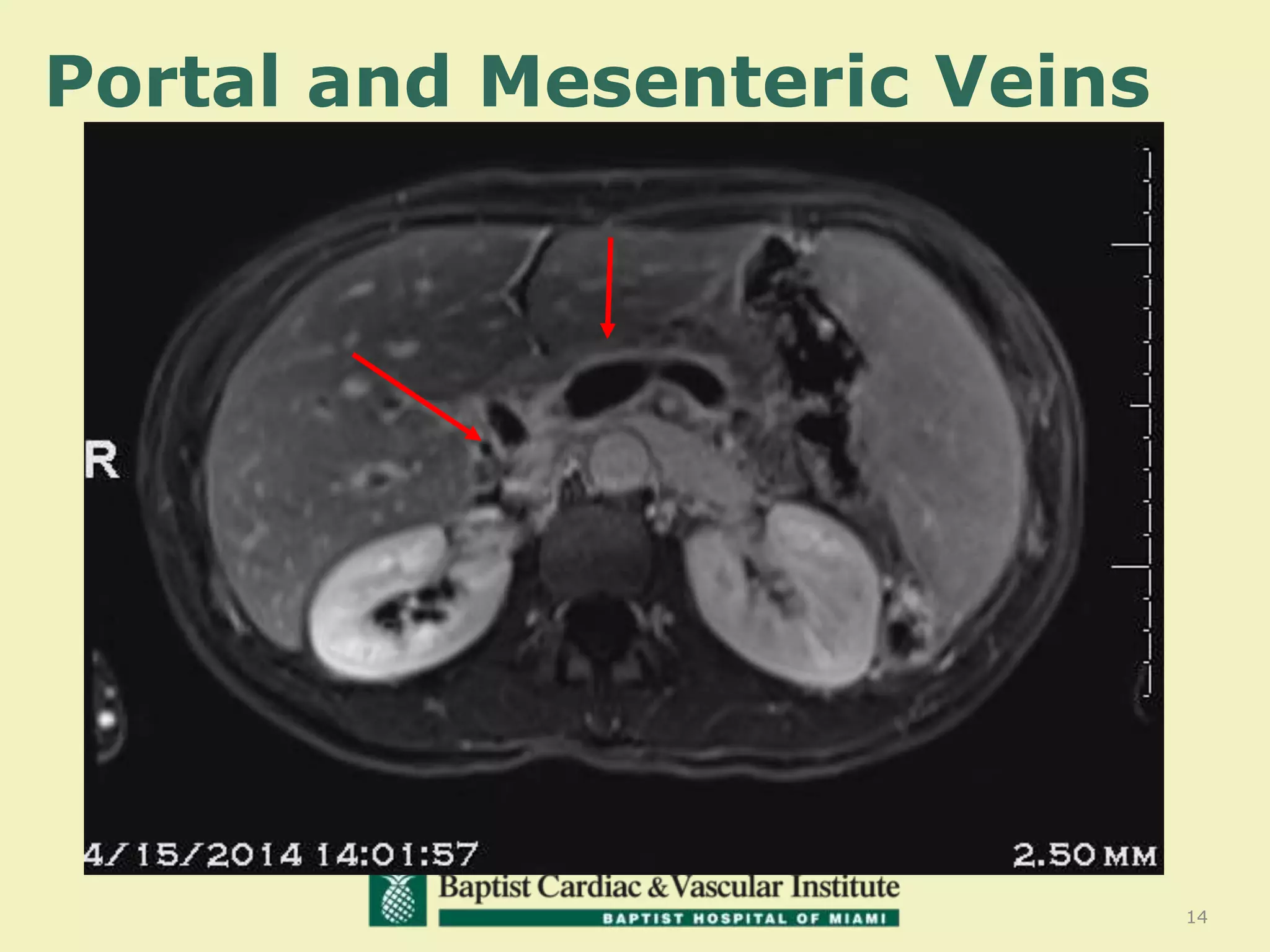
Portal and Mesenteric Veins
14
Portal and Mesenteric Veins
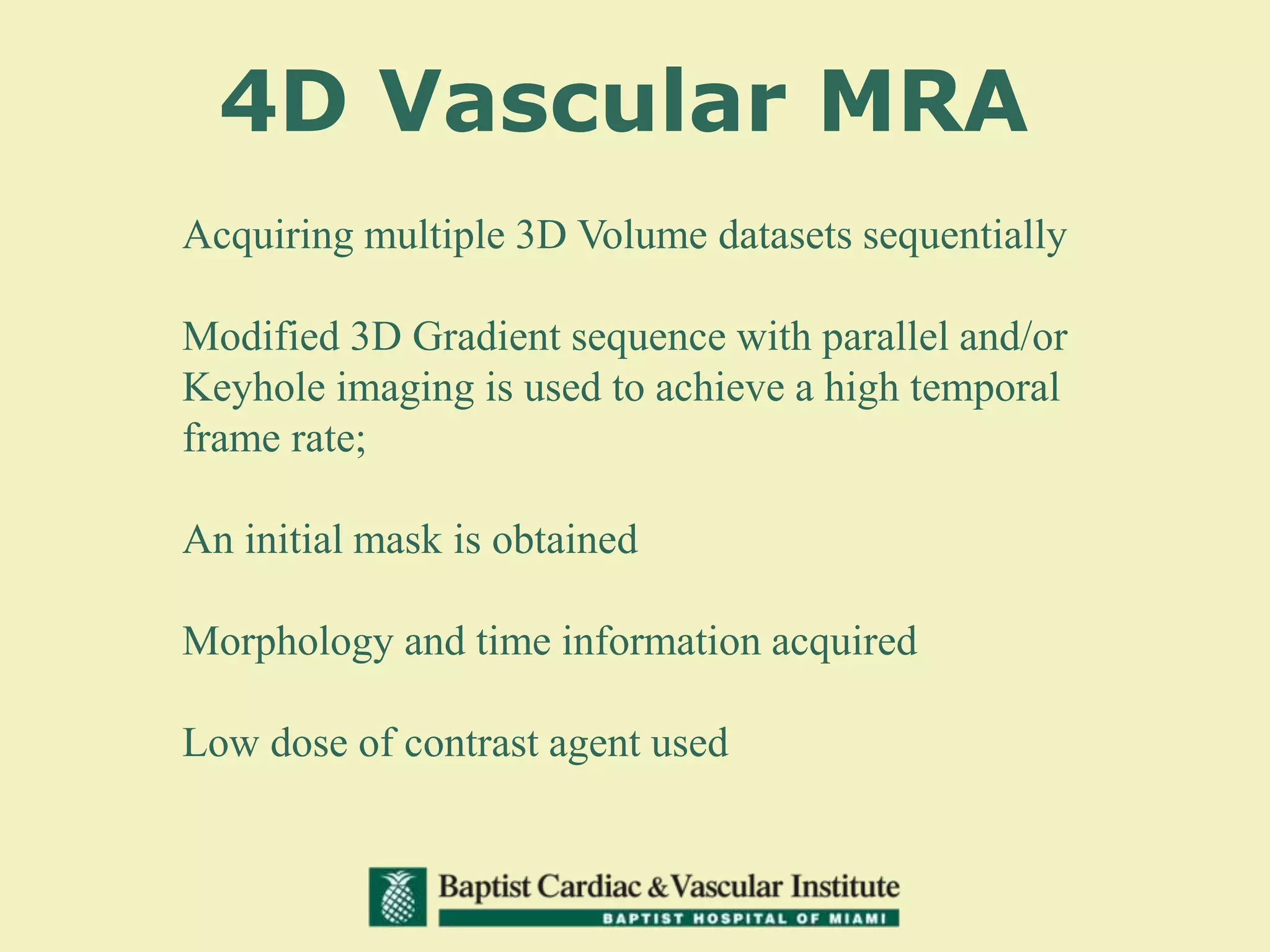
4D Vascular MRA
Acquiring multiple 3D Volume datasets sequentially
Modified 3D Gradient sequence with parallel and/or
Keyhole imaging is used to achieve a high temporal
frame rate;
An initial mask is obtained
Morphology and time information acquired
Low dose of contrast agent used
TR of the Upper Central Veins
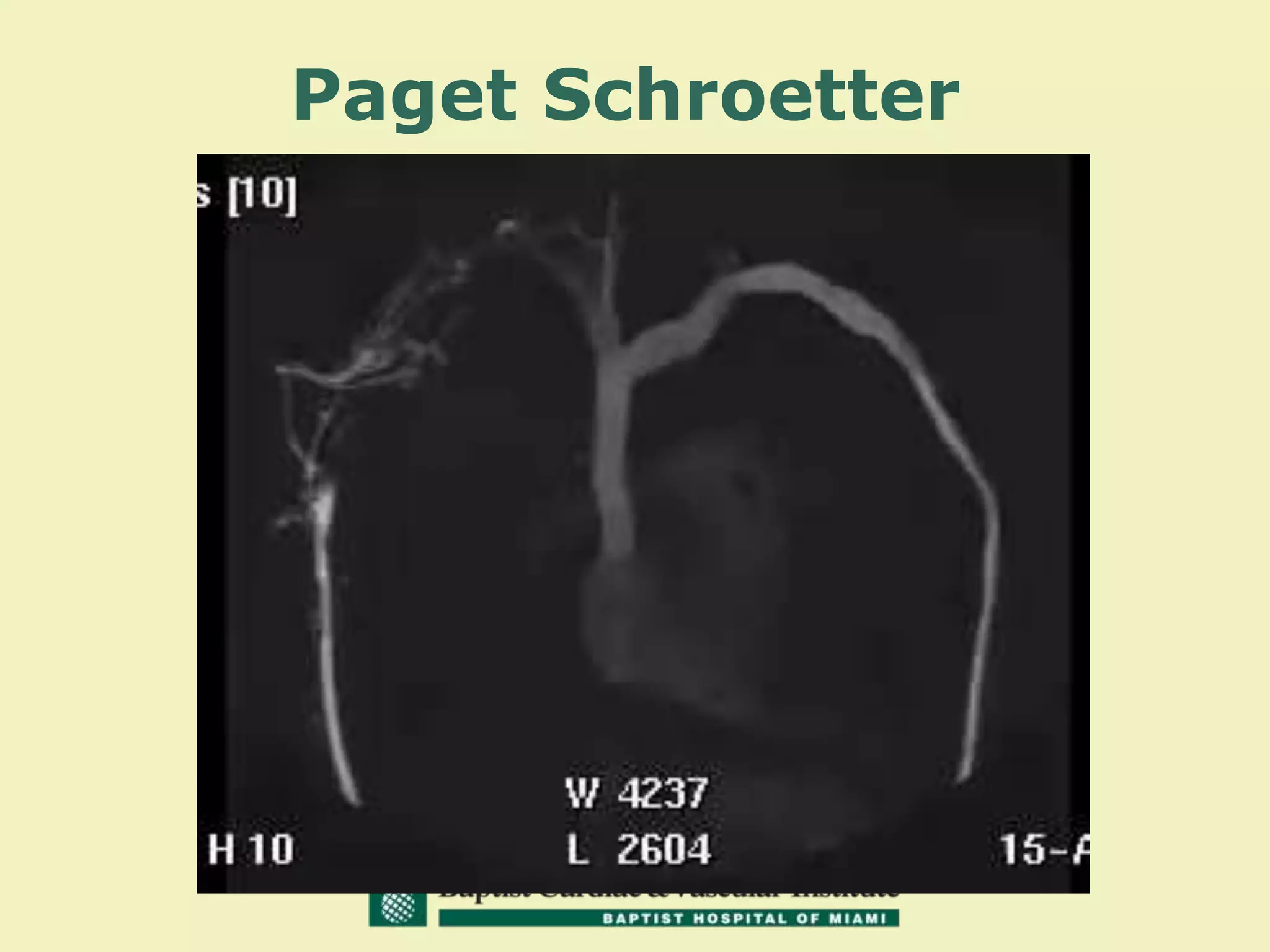
Paget Schroetter
Complex Malformations
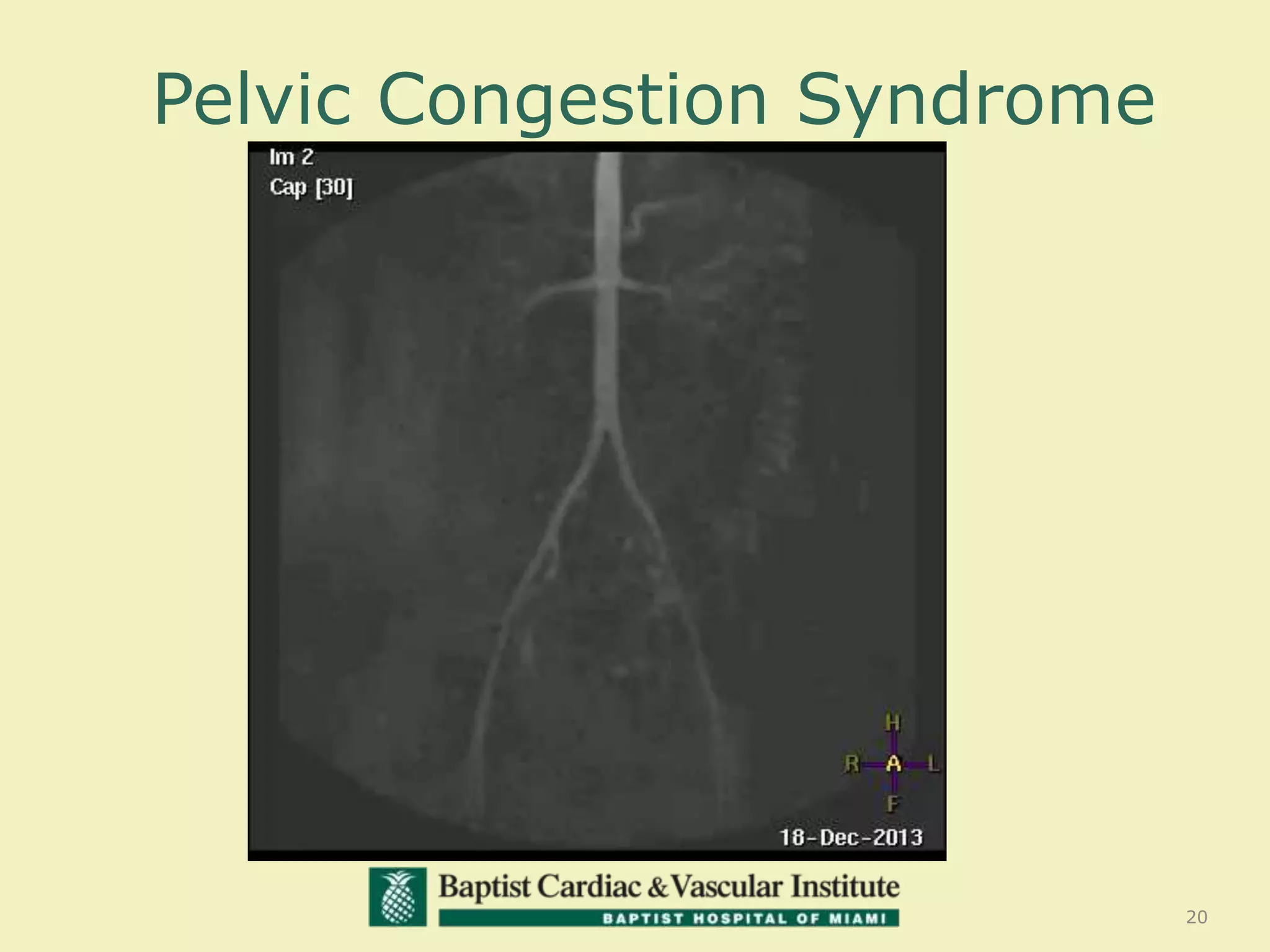
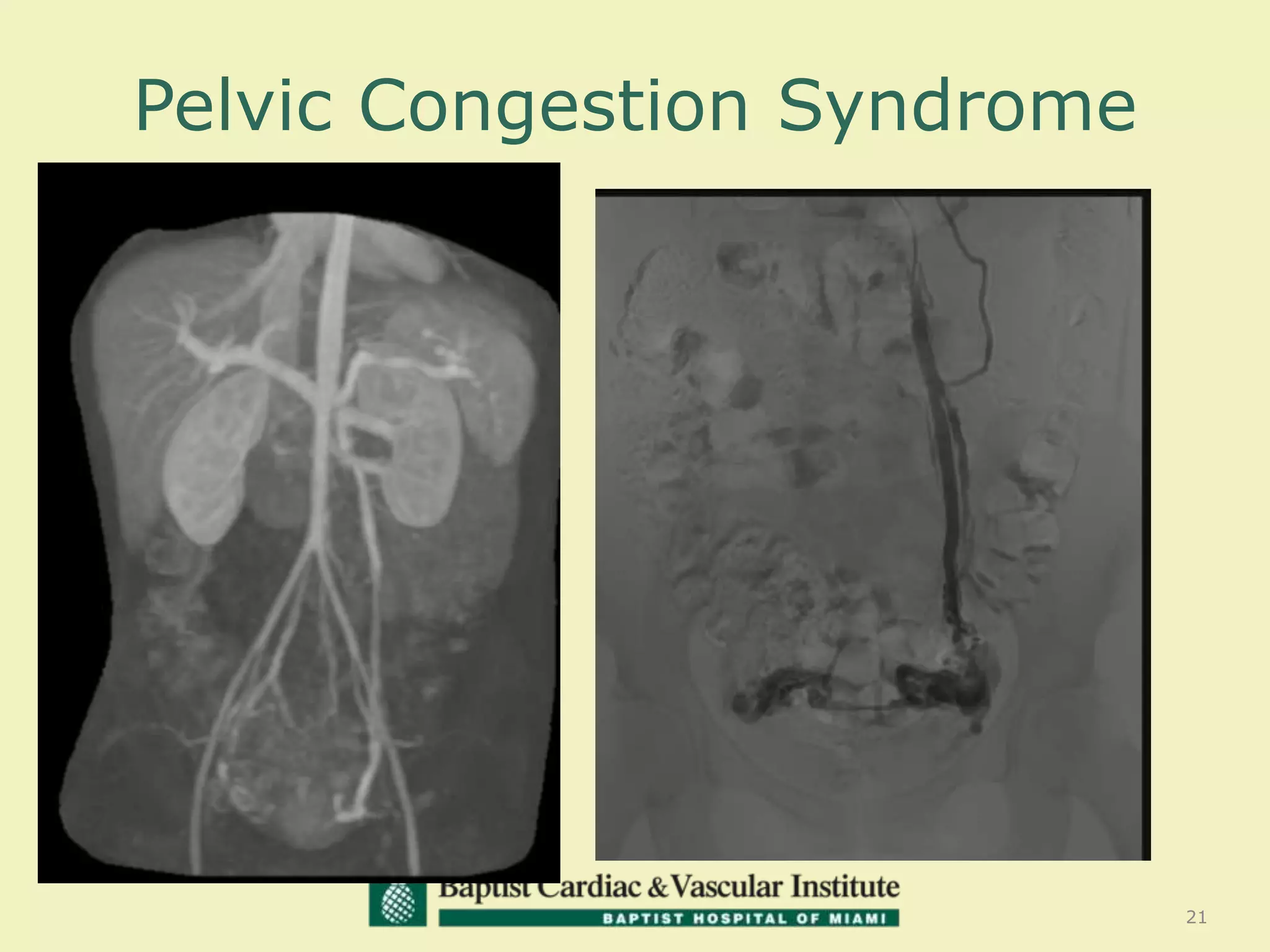
Pelvic Congestion Syndrome
20
Pelvic Congestion Syndrome
21
Why is MR Venography
Operator Dependent?
 What is the clinical question?
 What is the best way to study?
 What type of sequence and contrast
material?
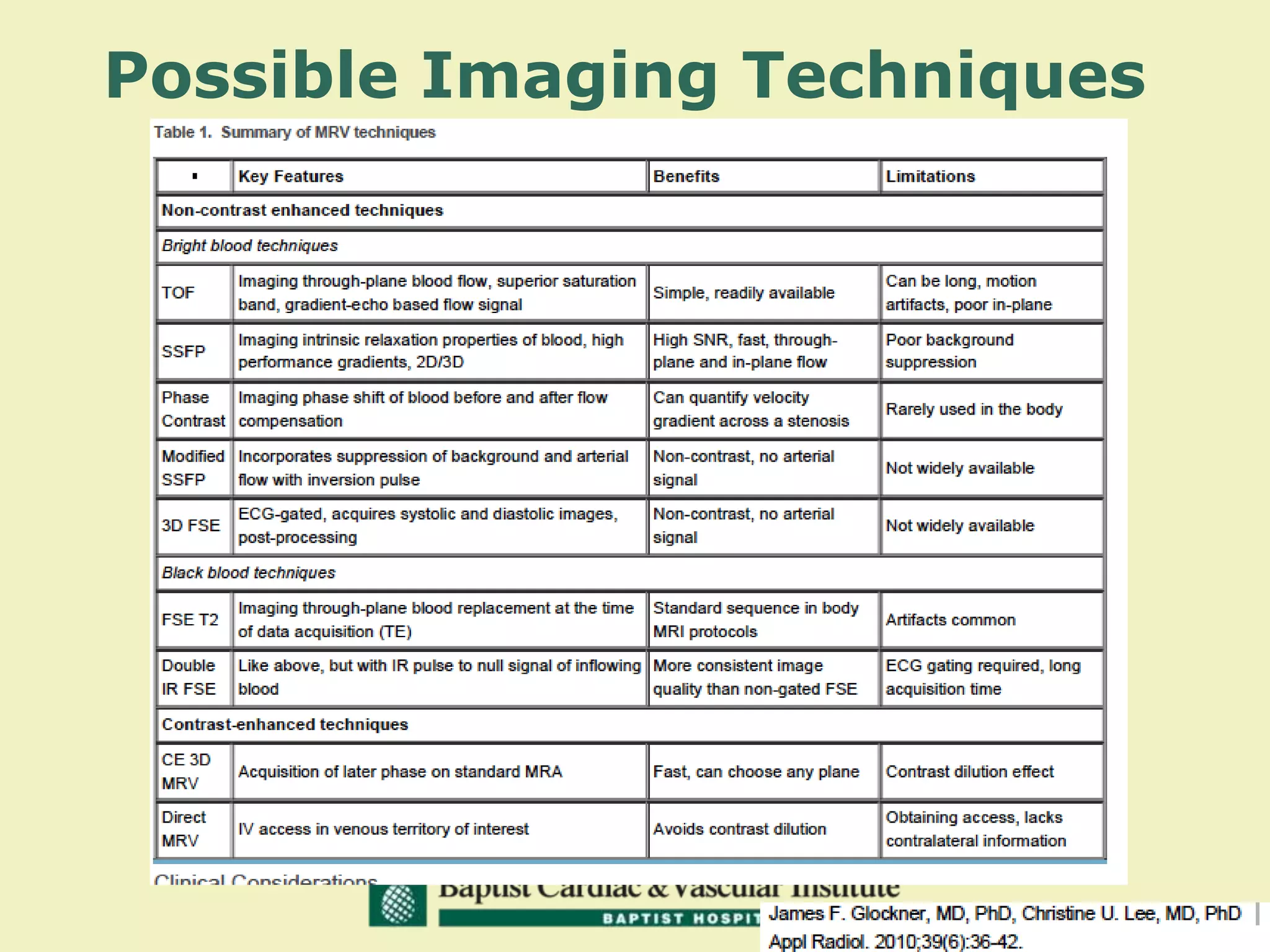
Possible Imaging Techniques
Techniques for MRV
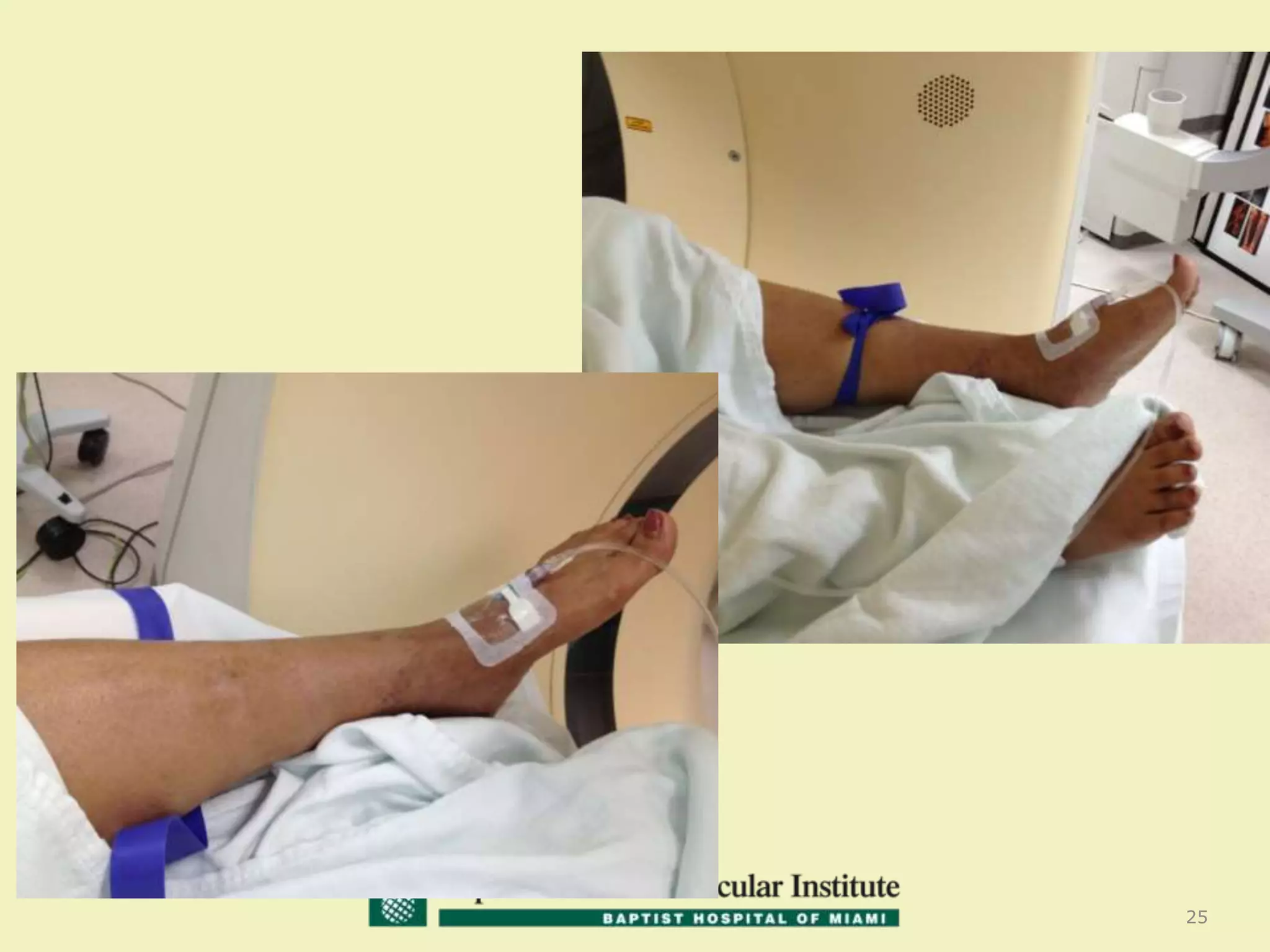
 Indirect MRV- (recirculation)
 Injecting upper extremity vein
 Allowing first pass through the arterial
tree
 Imaging venous system during venous
phase
 Direct MRV
 Injecting extremity of choice with dilute
contrast material
25
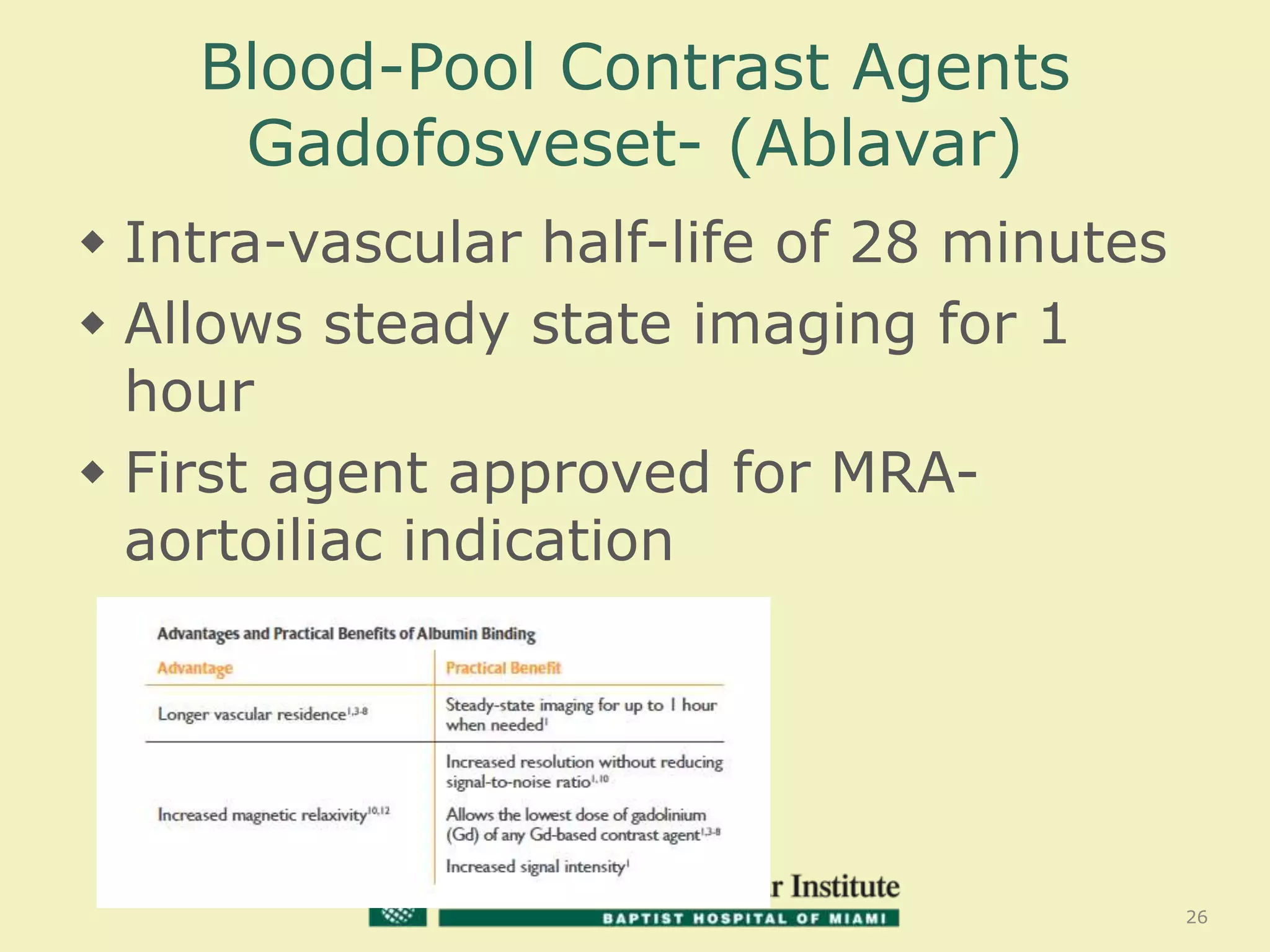
Blood-Pool Contrast Agents
Gadofosveset- (Ablavar)
26
 Intra-vascular half-life of 28 minutes
 Allows steady state imaging for 1
hour
 First agent approved for MRA-
aortoiliac indication
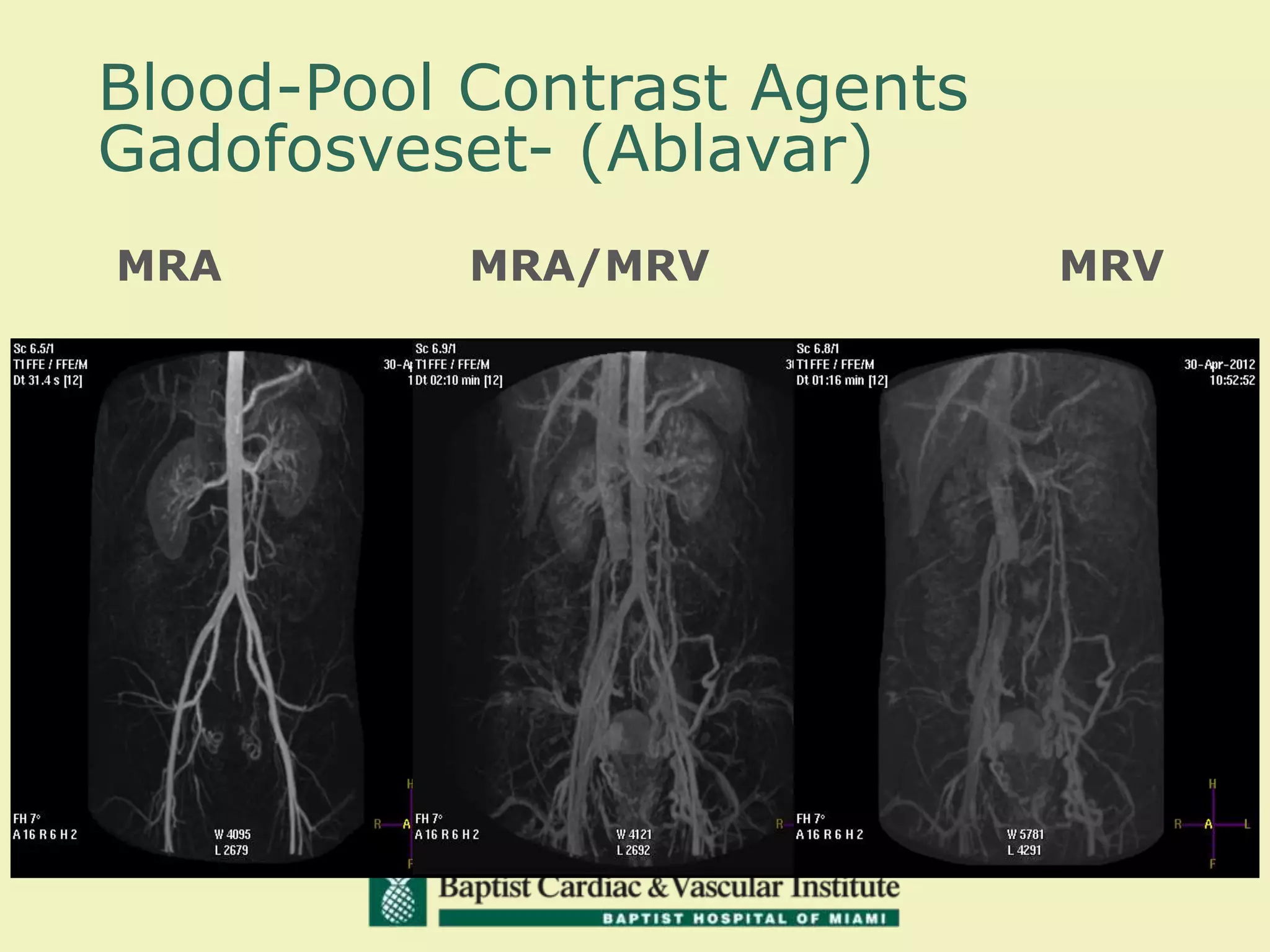
MRA MRA/MRV MRV
Blood-Pool Contrast Agents
Gadofosveset- (Ablavar)
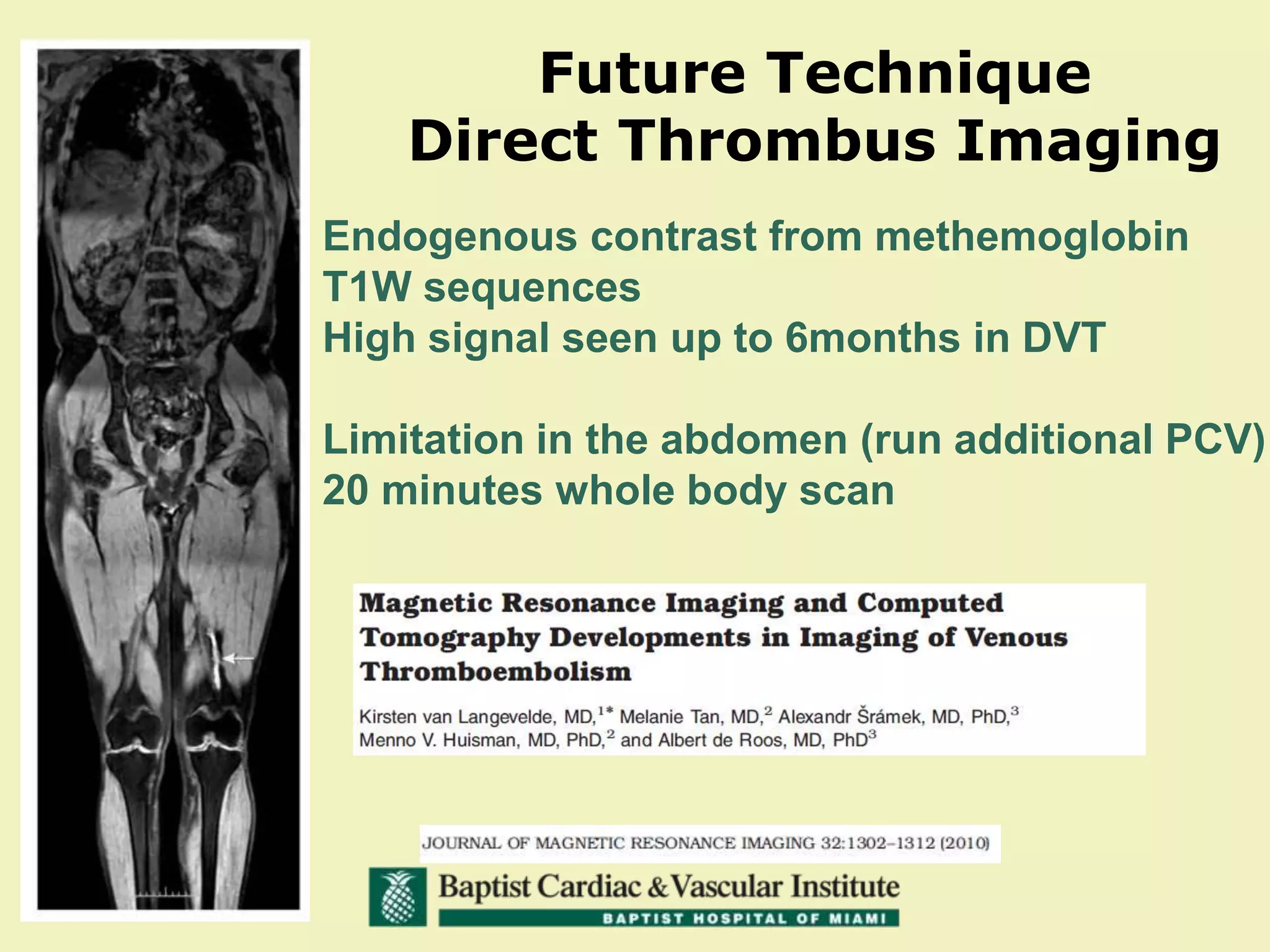
Future Technique
Direct Thrombus Imaging
Endogenous contrast from methemoglobin
T1W sequences
High signal seen up to 6months in DVT
Limitation in the abdomen (run additional PCV)
20 minutes whole body scan
When is CT Venography
better?
 Evaluation of metal stent
 Renal failure (Hemodialysis)
 Pacemaker/AICD
Summary
 MR Venography has a role in the diagnosis and
surveillance of “central venous” disease.
 Indications include: SVC/IVC patency,
compressive syndromes, portal vein or visceral
vein patency. Usually performed when
treatment is being considered
 MR Venography eliminates radiation risk
associated with CTV but is limited in terms of
heavy metal evaluation (bones and metal)
 Off-label use of blood pool MR agents will
likely allow first pass as well as steady imaging
to improve resolution and evaluation of
compressive effects
 Future MR imaging with Direct thrombus
imaging may deliver a manner to assess for
VTE without radiation or contrast agents
Thank You!
31

When is MR Venography Useful? What makes it so Operator Dependent?

  • 1.
    When is MRVenography Useful? What makes it so Operator Dependent ? Constantino S.Peña Interventional Radiologist Medical Director, Vascular Imaging Baptist Cardiac & Vascular Institute, Miami, Florida Clinical Associate Professor of Medicine, University of South Florida And Florida International University Herbert Wertheim School of Medicine
  • 2.
    Why MR Venography? Evaluate Central Veins-  SVC, IVC, Pelvis  Patency and extrinsic compression  Allows for a 4 Dimensional Flow evaluation- Time Resolved Imaging  Lack of Ionizing Radiation  Does not utilize Iodinated contrast
  • 3.
    18 yo withLeft Leg Swelling and Left DVT
  • 4.
    18 yo withleft leg swelling and Left DVT First delay Second delay
  • 5.
    18 yo withLeft Leg Swelling and Left DVT First Day Third Day no Stents
  • 6.
    68 yo withLeft Leg Swelling and Left DVT
  • 9.
    75 yo withLeft Leg Swelling
  • 10.
    75 yo withLeft Leg Swelling
  • 11.
    40 yo withright arm swelling
  • 12.
    40 yo withright arm swelling
  • 13.
  • 14.
  • 15.
    4D Vascular MRA Acquiringmultiple 3D Volume datasets sequentially Modified 3D Gradient sequence with parallel and/or Keyhole imaging is used to achieve a high temporal frame rate; An initial mask is obtained Morphology and time information acquired Low dose of contrast agent used
  • 17.
    TR of theUpper Central Veins
  • 18.
  • 19.
  • 20.
  • 21.
  • 22.
    Why is MRVenography Operator Dependent?  What is the clinical question?  What is the best way to study?  What type of sequence and contrast material?
  • 23.
  • 24.
    Techniques for MRV Indirect MRV- (recirculation)  Injecting upper extremity vein  Allowing first pass through the arterial tree  Imaging venous system during venous phase  Direct MRV  Injecting extremity of choice with dilute contrast material
  • 25.
  • 26.
    Blood-Pool Contrast Agents Gadofosveset-(Ablavar) 26  Intra-vascular half-life of 28 minutes  Allows steady state imaging for 1 hour  First agent approved for MRA- aortoiliac indication
  • 27.
    MRA MRA/MRV MRV Blood-PoolContrast Agents Gadofosveset- (Ablavar)
  • 28.
    Future Technique Direct ThrombusImaging Endogenous contrast from methemoglobin T1W sequences High signal seen up to 6months in DVT Limitation in the abdomen (run additional PCV) 20 minutes whole body scan
  • 29.
    When is CTVenography better?  Evaluation of metal stent  Renal failure (Hemodialysis)  Pacemaker/AICD
  • 30.
    Summary  MR Venographyhas a role in the diagnosis and surveillance of “central venous” disease.  Indications include: SVC/IVC patency, compressive syndromes, portal vein or visceral vein patency. Usually performed when treatment is being considered  MR Venography eliminates radiation risk associated with CTV but is limited in terms of heavy metal evaluation (bones and metal)  Off-label use of blood pool MR agents will likely allow first pass as well as steady imaging to improve resolution and evaluation of compressive effects  Future MR imaging with Direct thrombus imaging may deliver a manner to assess for VTE without radiation or contrast agents
  • 31.