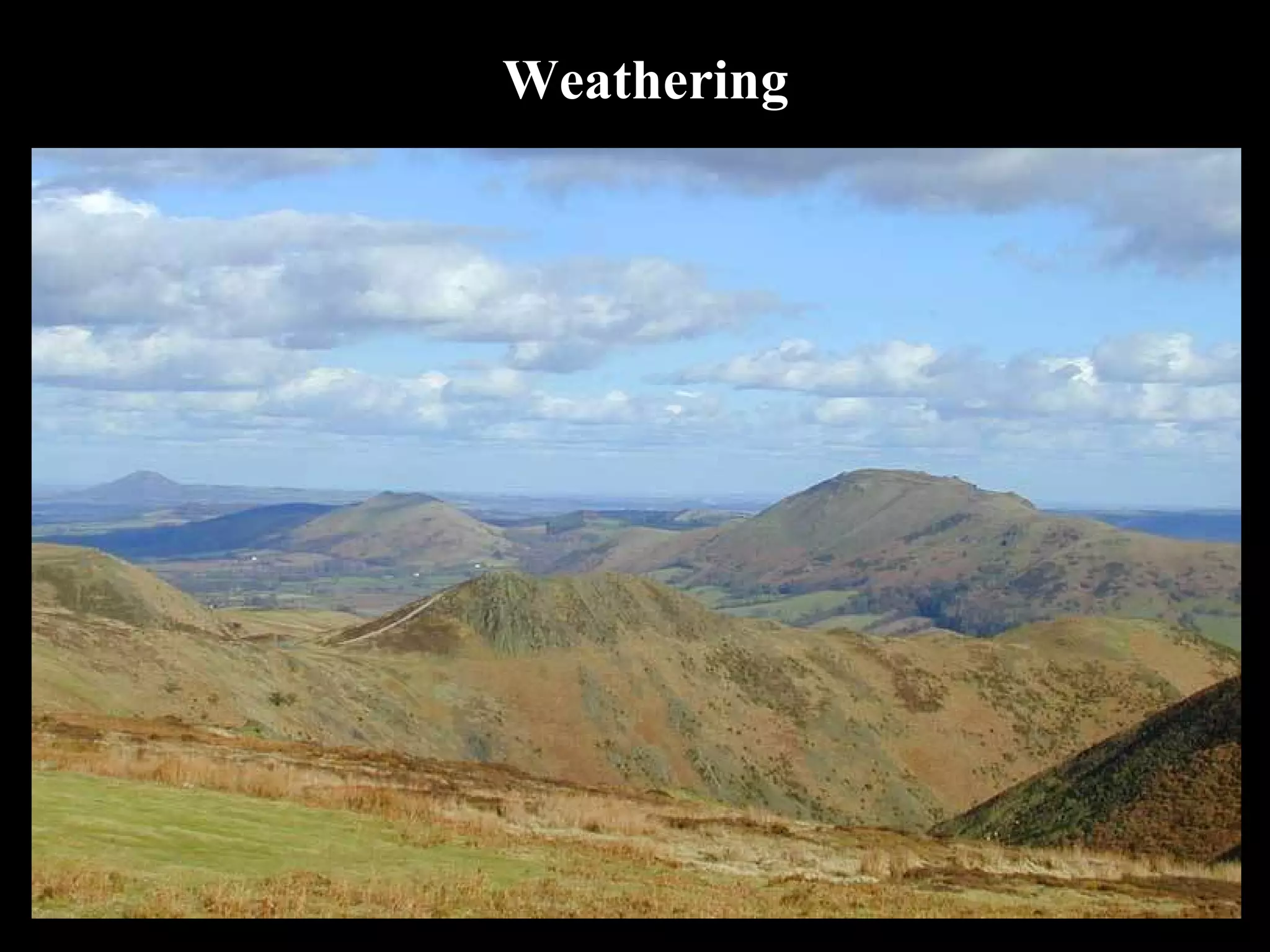

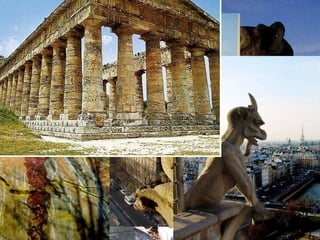
Weathering Weathering : process that breaks down rocks into smaller and smaller fragments.  Rocks break down into smaller pieces called sediment. Soil is made of the tiniest fragments of weathered rock. Weathering has been occuring for the past millions of years here on Earth.  This weathering changes the surface of Earth.  For example  mountains over millions of years become hills because of weathering. There are two kinds of weathering that can happen at the same time. 1)  Mechanical 2)  Chemical
Weathering created by  TeachPower.net This lesson is a preview of a full complete lesson and contains animation, sounds, video, and pictures that SlideShare.net does not show.  To preview this lesson as it was originally intended please go to  http://teachpower.net , click on the  Lesson PowerPoints  tab at the top, and scroll down until you see the name of this lesson in the appropriate category.
Mechanical Weathering Mechanical Weathering: breaks down rocks  without  breaking down their chemical composition. Mechanical Weathering can be caused by: A)  growing plants B)  water and ice C)  heating  and  cooling Growing plants  dig their roots deep into the soil and rock.  As the roots grow they continually split and wedge the soil and rock apart.  The cracks get bigger and bigger as the roots dig deeper and deeper. Water and ice  usually break down rock faster in areas where it is warm enough to rain but get cold enough to freeze the water. The water fills the cracks and spaces in the rock.
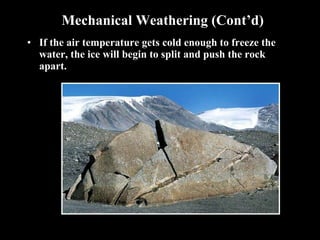
Mechanical Weathering (Cont’d) If the air temperature gets cold enough to freeze the water, the ice will begin to split and push the rock apart.
Chemical Weathering Chemical Weathering : occurs when water, air, and other substances react with the minerals in rocks.  The water, air, or other substances slowly change the composition of the surface of the rock into something else and wears away. The hydrogen and oxygen in the water sometimes react with the chemicals in the rock and new substances form. Naturally formed acids can weather rocks chemically.  When water (H 2 0) mixes with carbon dioxide (CO 2 ), a weak acid called carbonic acid forms.  Carbonic acid is the same chemical that makes the sodas “fizzy”.  Carbonic acid dissolves the surface of the rock and then washes away.  Usually buildings, statues, and mountains are worn quickly away in this way. Some trees also produce weak acids that eats away the rock around the root and weakens it allowing it to break into pieces faster.
Chemical Weathering (cont’d) Oxygen (O 2 ) by itself also causes weathering.  When oxygen reacts with metals that contain iron, it makes rust. Rusty metal is very brittle and breaks away easily.  Rocks that contain iron also rust, turn reddish, and wear away.
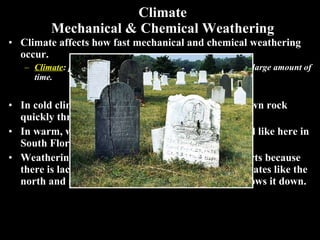
Climate Mechanical & Chemical Weathering Climate affects how fast mechanical and chemical weathering occur. Climate : pattern of weather that happens in an area over a large amount of time. In cold climates,  mechanical weathering  breaks down rock quickly through ice wedging. In warm, wet climates  chemical weathering  is rapid like here in South Florida and northern South America. Weathering occurs slowly in dry climates like deserts because there is lack of moisture and in extremely cold climates like the north and south poles because low temperatures slows it down.

Erosion

  • 1.
    Weathering Weathering :process that breaks down rocks into smaller and smaller fragments. Rocks break down into smaller pieces called sediment. Soil is made of the tiniest fragments of weathered rock. Weathering has been occuring for the past millions of years here on Earth. This weathering changes the surface of Earth. For example mountains over millions of years become hills because of weathering. There are two kinds of weathering that can happen at the same time. 1) Mechanical 2) Chemical
  • 2.
    Weathering created by TeachPower.net This lesson is a preview of a full complete lesson and contains animation, sounds, video, and pictures that SlideShare.net does not show. To preview this lesson as it was originally intended please go to http://teachpower.net , click on the Lesson PowerPoints tab at the top, and scroll down until you see the name of this lesson in the appropriate category.
  • 3.
    Mechanical Weathering MechanicalWeathering: breaks down rocks without breaking down their chemical composition. Mechanical Weathering can be caused by: A) growing plants B) water and ice C) heating and cooling Growing plants dig their roots deep into the soil and rock. As the roots grow they continually split and wedge the soil and rock apart. The cracks get bigger and bigger as the roots dig deeper and deeper. Water and ice usually break down rock faster in areas where it is warm enough to rain but get cold enough to freeze the water. The water fills the cracks and spaces in the rock.
  • 4.
    Mechanical Weathering (Cont’d)If the air temperature gets cold enough to freeze the water, the ice will begin to split and push the rock apart.
  • 5.
    Chemical Weathering ChemicalWeathering : occurs when water, air, and other substances react with the minerals in rocks. The water, air, or other substances slowly change the composition of the surface of the rock into something else and wears away. The hydrogen and oxygen in the water sometimes react with the chemicals in the rock and new substances form. Naturally formed acids can weather rocks chemically. When water (H 2 0) mixes with carbon dioxide (CO 2 ), a weak acid called carbonic acid forms. Carbonic acid is the same chemical that makes the sodas “fizzy”. Carbonic acid dissolves the surface of the rock and then washes away. Usually buildings, statues, and mountains are worn quickly away in this way. Some trees also produce weak acids that eats away the rock around the root and weakens it allowing it to break into pieces faster.
  • 6.
    Chemical Weathering (cont’d)Oxygen (O 2 ) by itself also causes weathering. When oxygen reacts with metals that contain iron, it makes rust. Rusty metal is very brittle and breaks away easily. Rocks that contain iron also rust, turn reddish, and wear away.
  • 7.
    Climate Mechanical &Chemical Weathering Climate affects how fast mechanical and chemical weathering occur. Climate : pattern of weather that happens in an area over a large amount of time. In cold climates, mechanical weathering breaks down rock quickly through ice wedging. In warm, wet climates chemical weathering is rapid like here in South Florida and northern South America. Weathering occurs slowly in dry climates like deserts because there is lack of moisture and in extremely cold climates like the north and south poles because low temperatures slows it down.