Mudlogging is a critical aspect of oil well drilling that involves real-time monitoring and assessment of data from various rig components and downhole sensors. It plays a key role in maintaining well integrity by using drilling muds that provide hydrostatic pressure, cool the drill bit, and carry out drill cuttings. Mudloggers are responsible for sample collection, data monitoring, and reporting, ensuring smooth operations and safety on the rig.
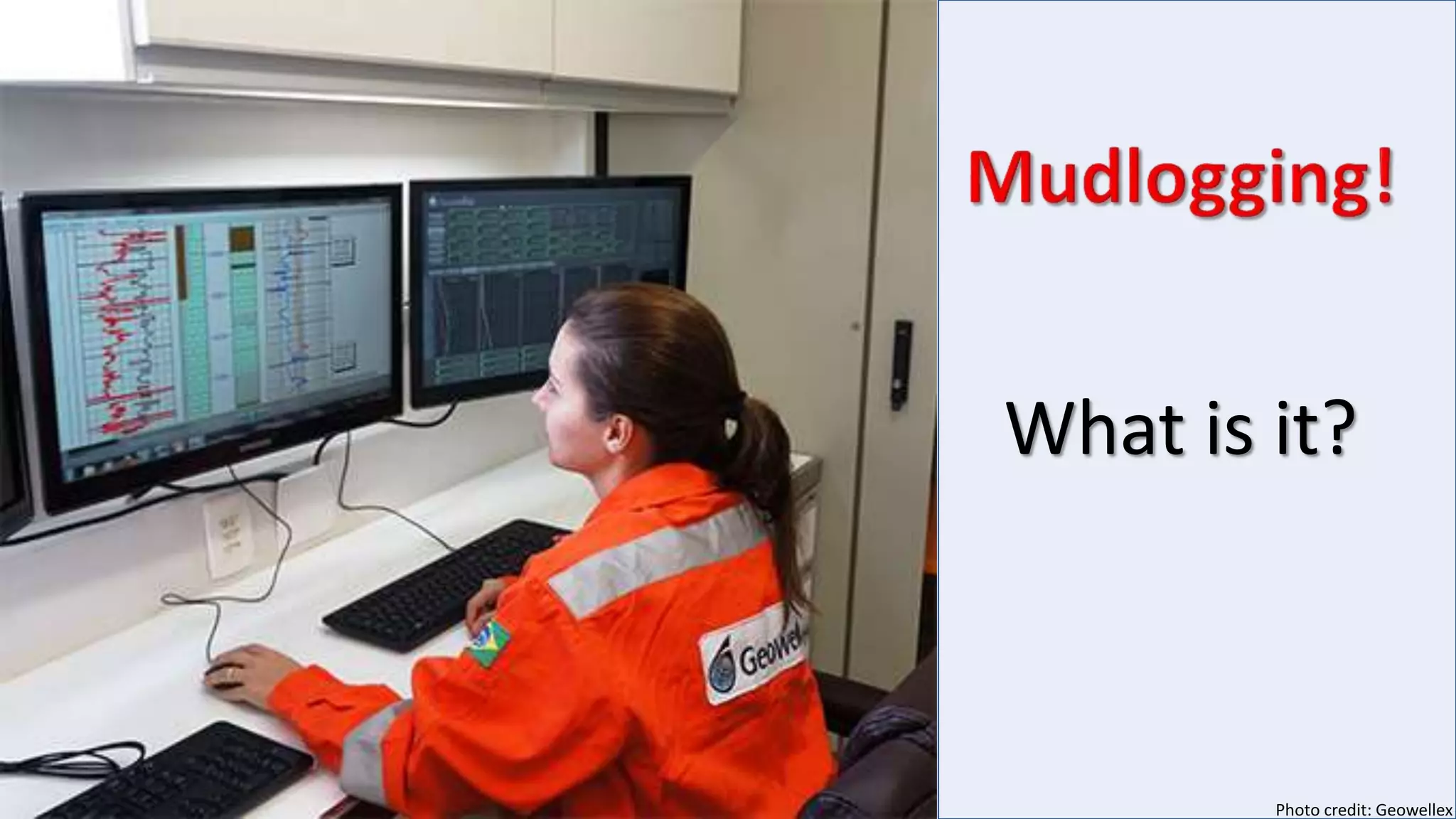
Introduces Mudlogging, its role in oil well drilling, and how it involves monitoring and data assessment during drilling.
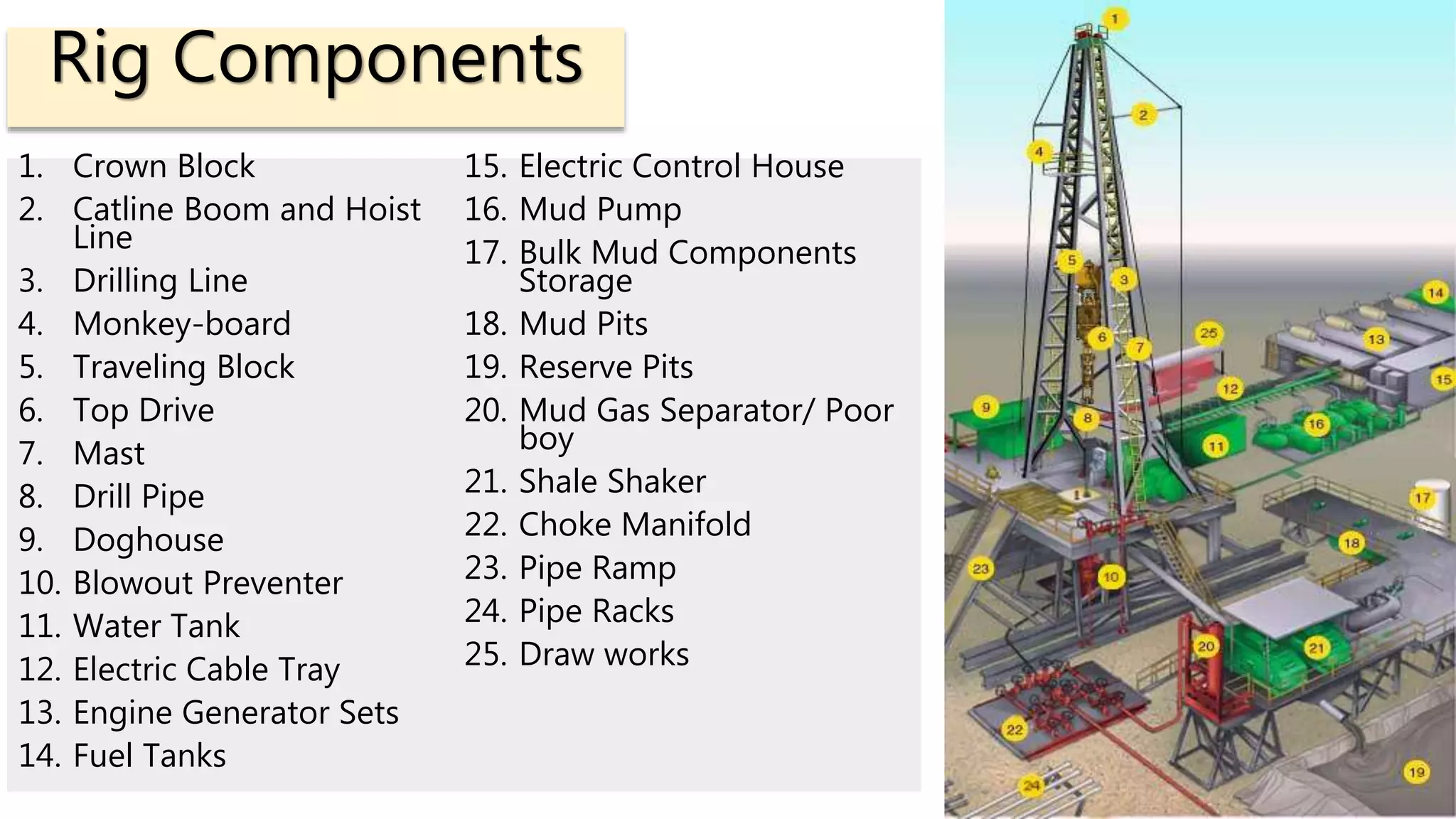
Outlines key working sections in Mudlogging including components of the rig and their functions in drilling operations.
Describes rig operations including crew roles, mud tank types, and the significance of mudlogging as a centralized information source. Explains the real-time data services in mudlogging, roles of personnel, and the importance of sampling and analysis.
Focuses on sample collection techniques, microscopic examination, and key considerations for effective monitoring.
Discusses ongoing operations monitoring, preparation of well logs and geological reports, and key challenges in drilling.
Mudlogging
An Introduction toOil Well Drilling
ANKIT LOHAR
Tr. Mudlogger (OFI Ind. Pvt. Ltd.)
M. Sc. Tech. (Applied Geology), M. Sc. (Geology)
Mohanlal Sukhadia University, Udaipur (Rajasthan), India
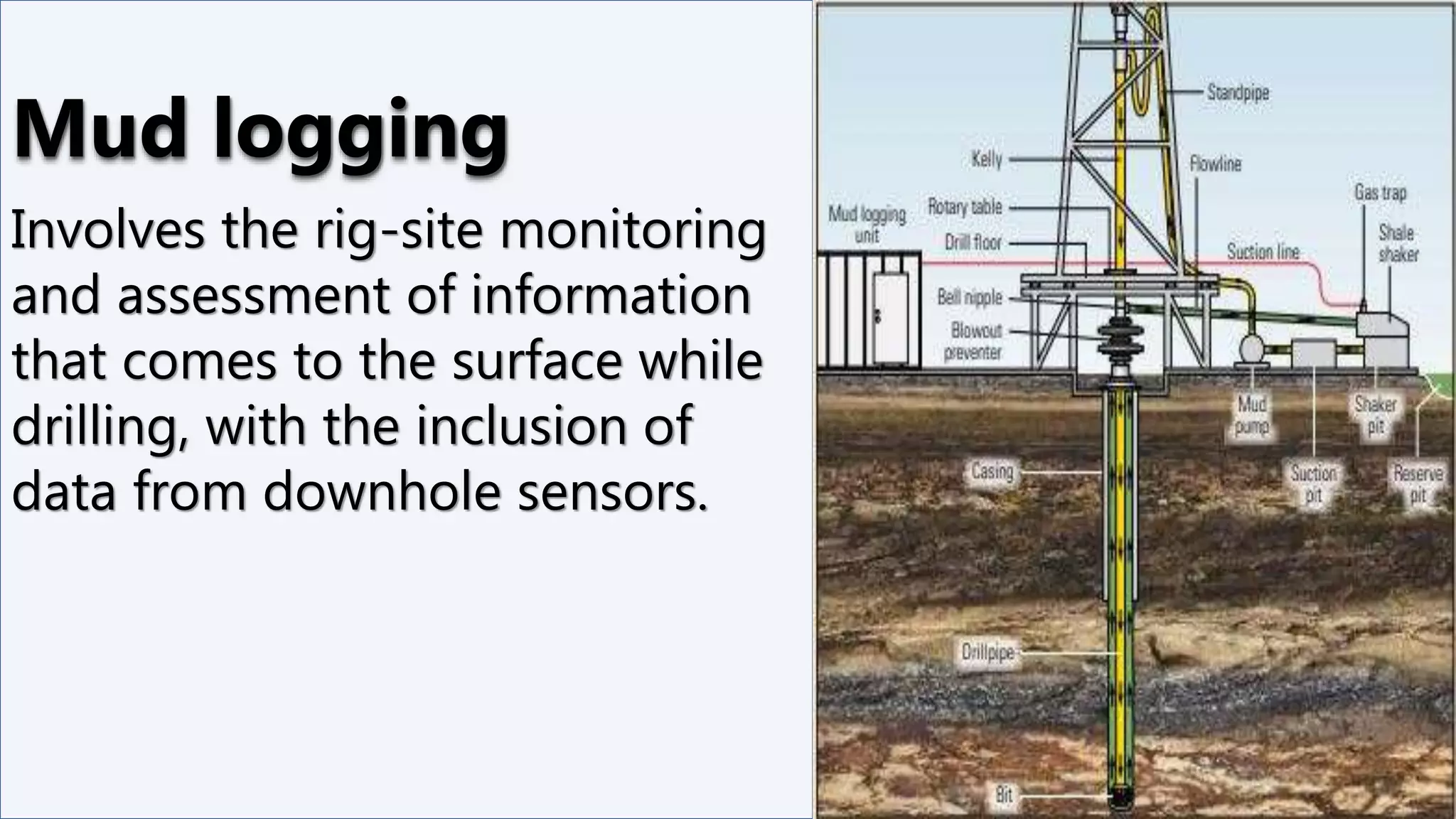
Involves the rig-sitemonitoring
and assessment of information
that comes to the surface while
drilling, with the inclusion of
data from downhole sensors.
Mud logging
4.
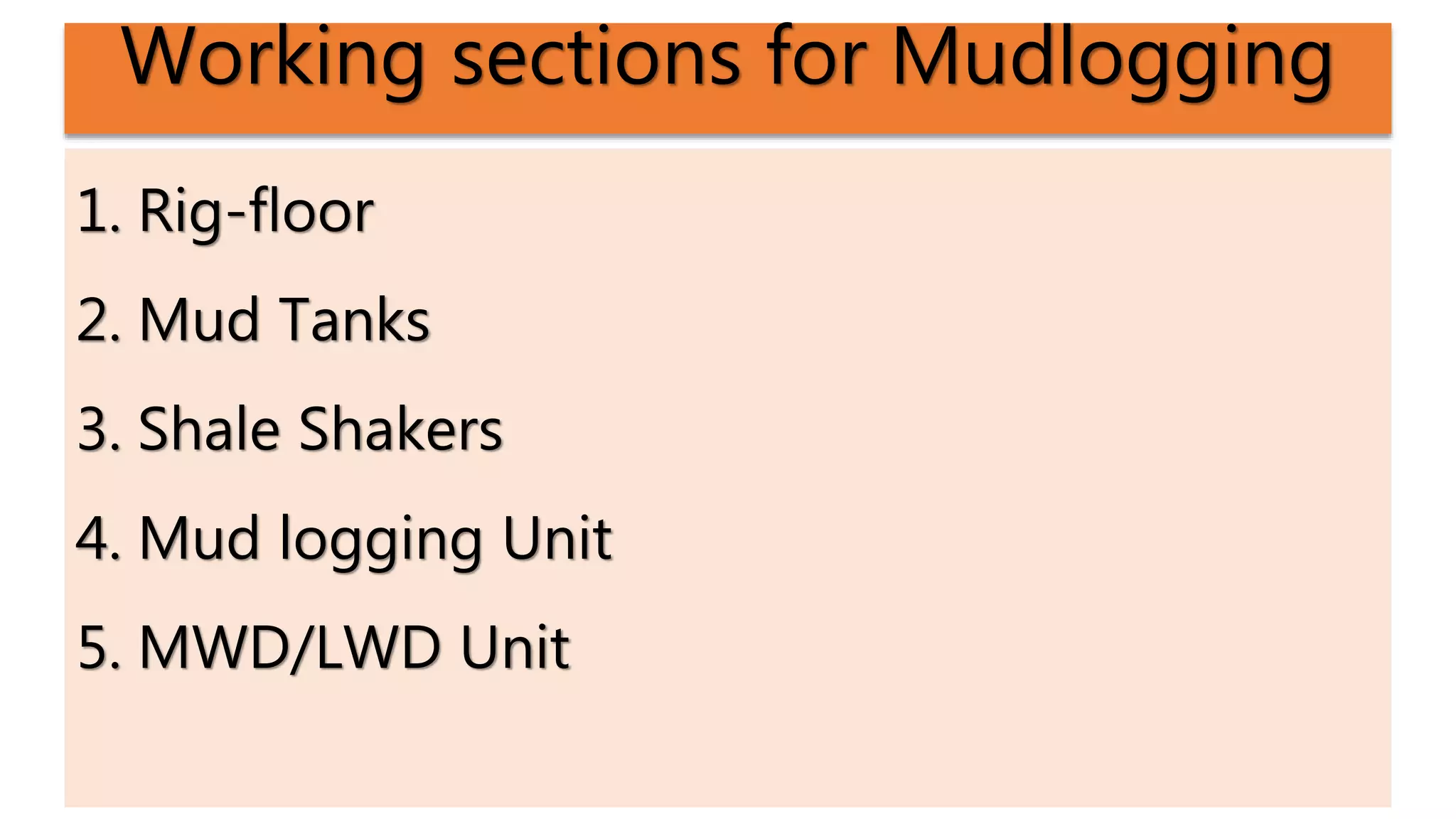
Working sections forMudlogging
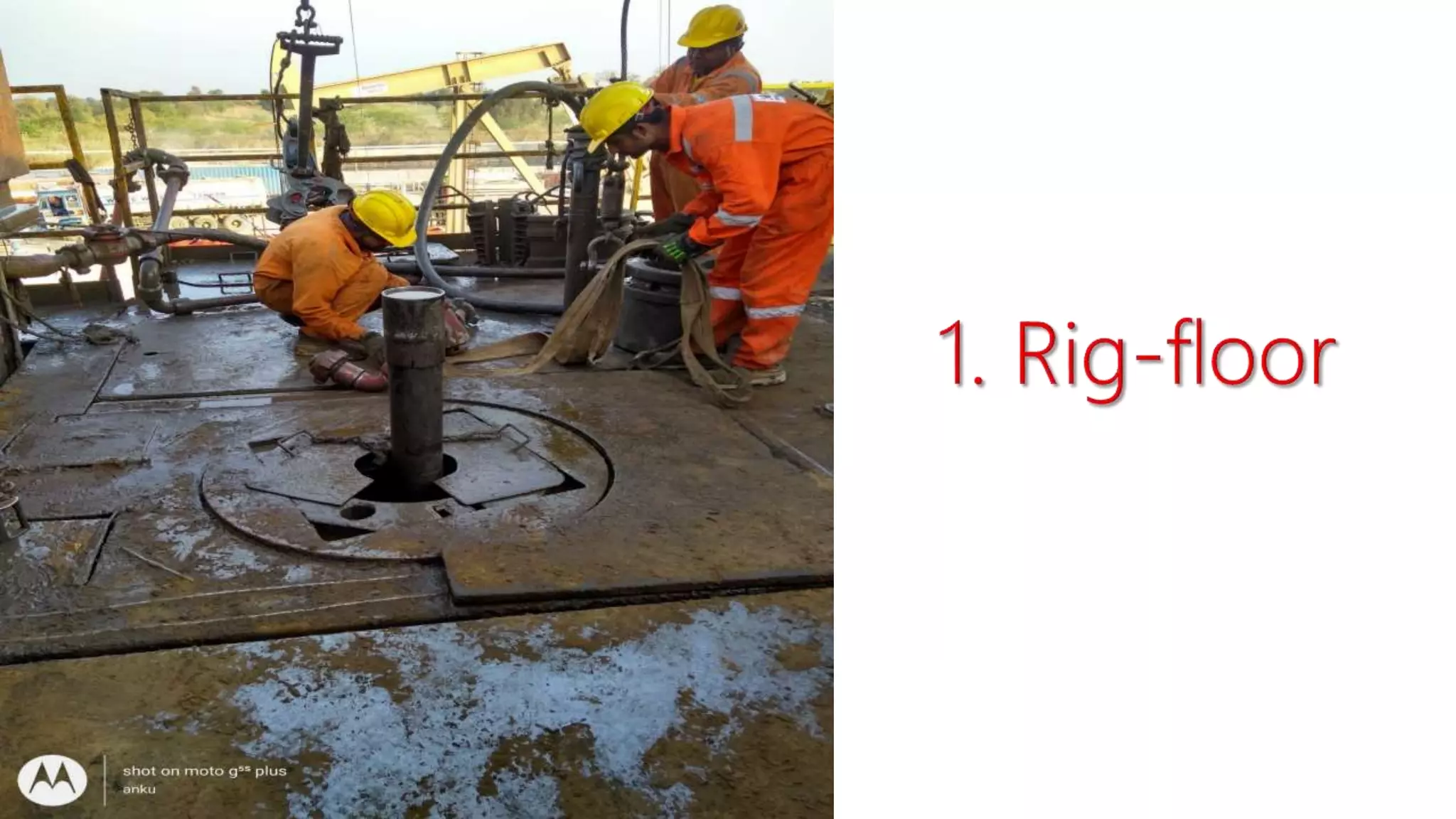
1. Rig-floor
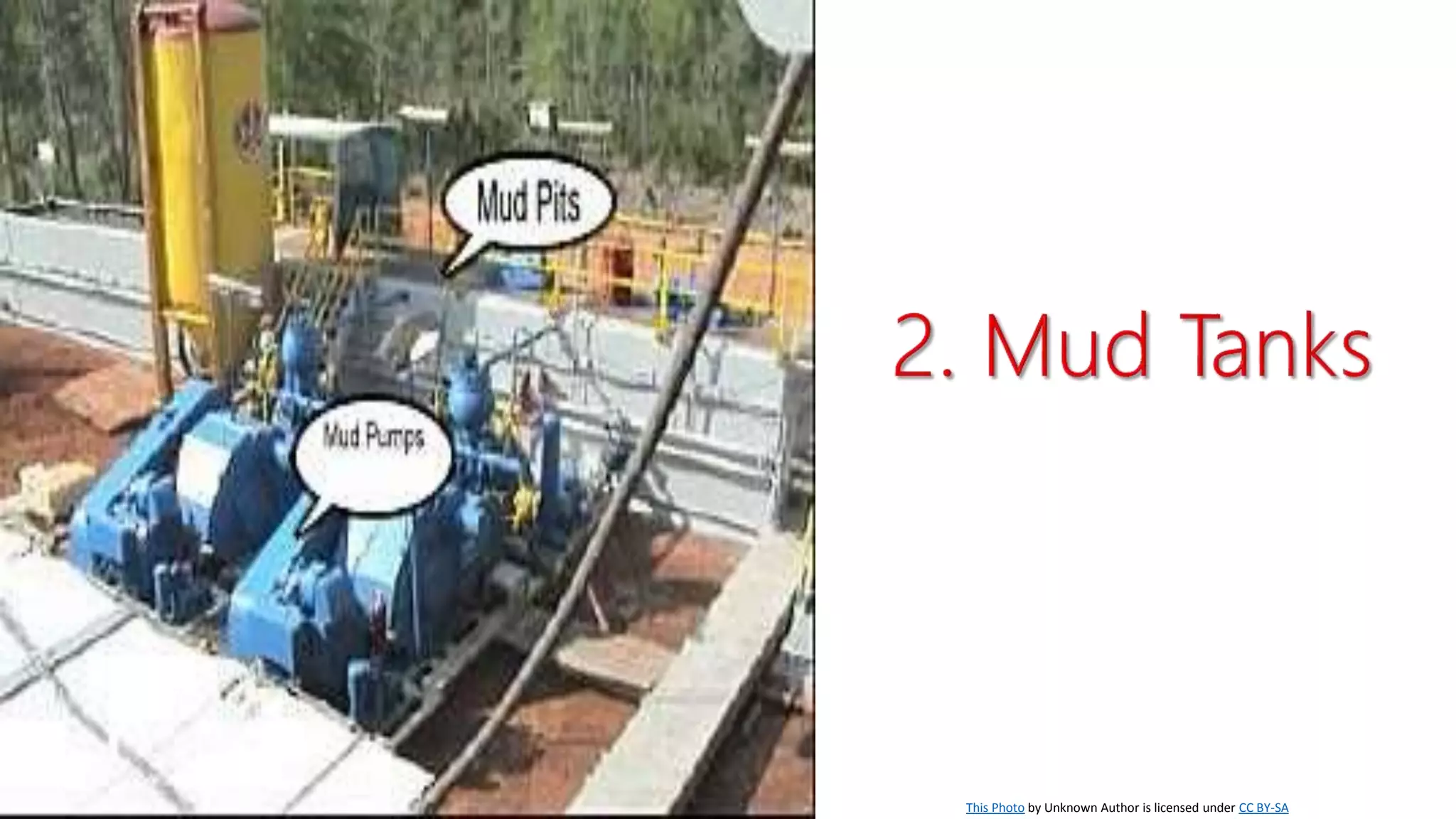
2. Mud Tanks
3. Shale Shakers
4. Mud logging Unit
5. MWD/LWD Unit
5.
1. Crown Block
2.Catline Boom and Hoist
Line
3. Drilling Line
4. Monkey-board
5. Traveling Block
6. Top Drive
7. Mast
8. Drill Pipe
9. Doghouse
10. Blowout Preventer
11. Water Tank
12. Electric Cable Tray
13. Engine Generator Sets
14. Fuel Tanks
15. Electric Control House
16. Mud Pump
17. Bulk Mud Components
Storage
18. Mud Pits
19. Reserve Pits
20. Mud Gas Separator/ Poor
boy
21. Shale Shaker
22. Choke Manifold
23. Pipe Ramp
24. Pipe Racks
25. Draw works
Rig Components
7.
• A smallworking place where rig crew conduct
operations i.e. drilling, adding and removing
drilling pipe to or from the drill string.
• An attached metal cabin also there that is
Doghouse where rig crew usually meet, take break
and perform other related works.
8.
This Photo byUnknown Author is licensed under CC BY-SA
9.
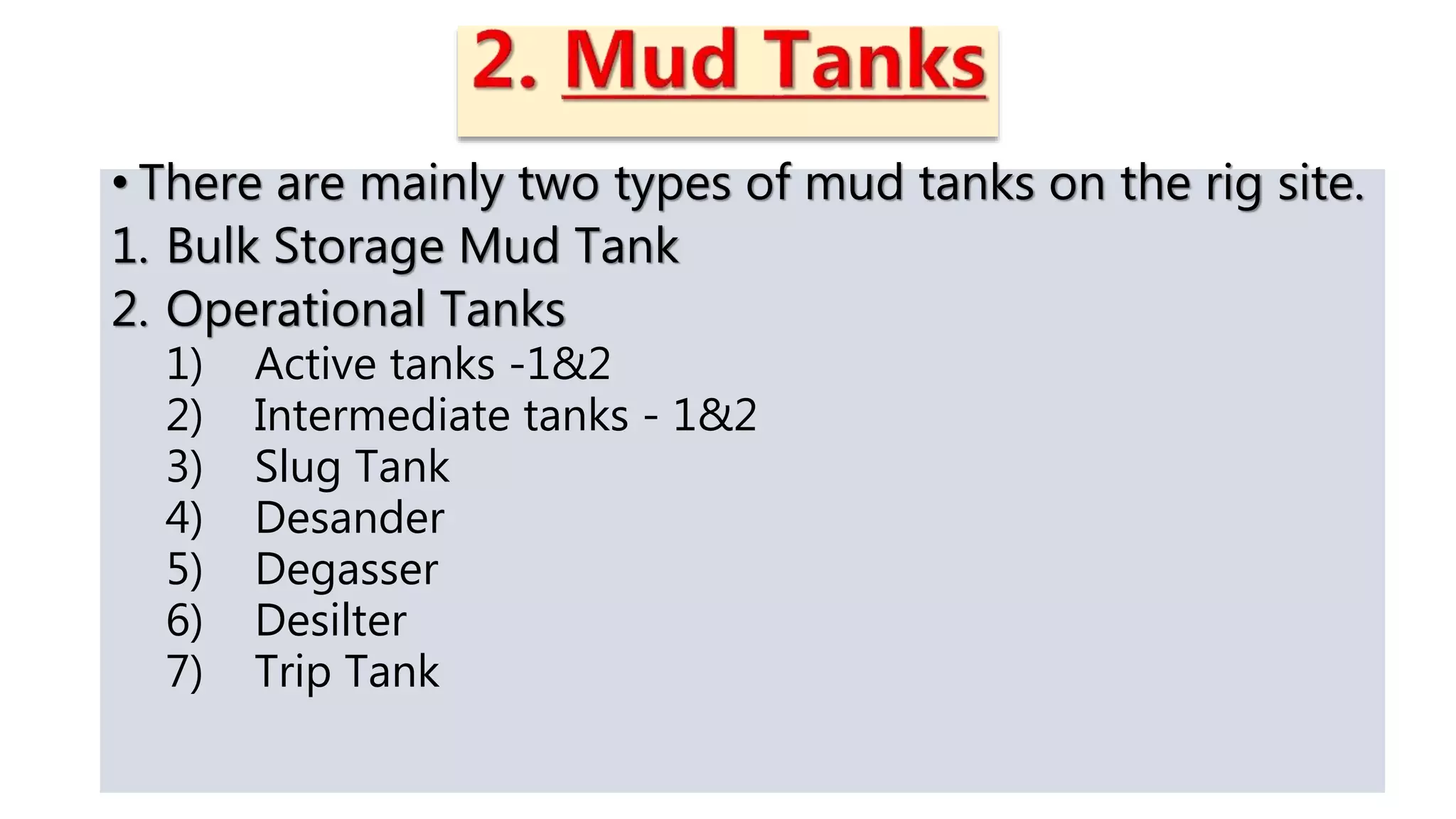
• There aremainly two types of mud tanks on the rig site.
1. Bulk Storage Mud Tank
2. Operational Tanks
1) Active tanks -1&2
2) Intermediate tanks - 1&2
3) Slug Tank
4) Desander
5) Degasser
6) Desilter
7) Trip Tank
10.
o What isDrilling Mud/Fluid?
o Why we are using Drilling Mud/Fluid?
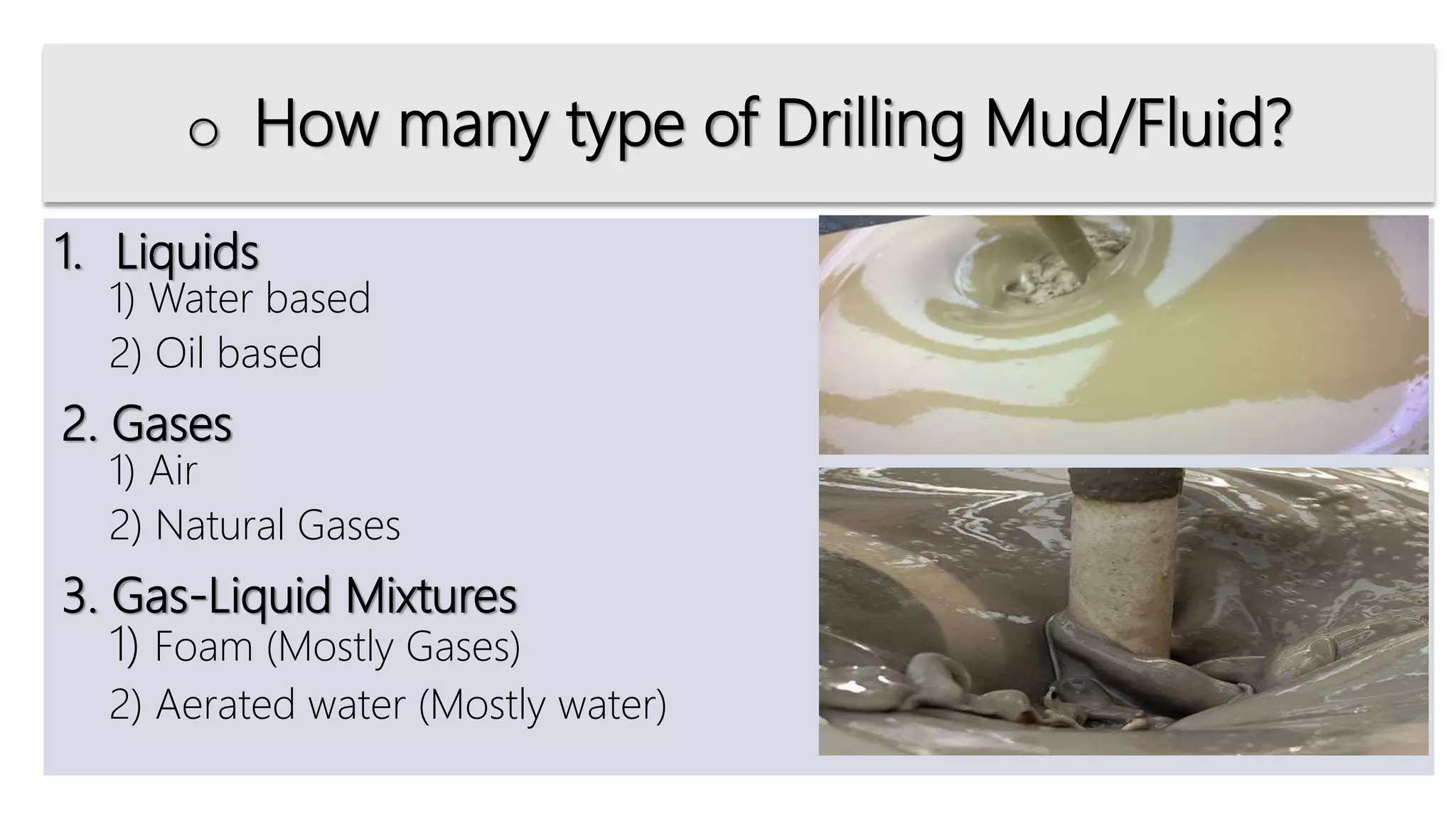
o How many type of Drilling Mud/Fluid?
11.
Drilling mud, alsocalled drilling fluid, in petroleum engineering,
a heavy, viscous fluid mixture that is used in oil and gas drilling
operations.
o What is Drilling Mud/Fluid?
12.
1. Providing Hydrostaticpressure to prevent Formation fluids from
entering into the well bore.
2. Keeping the Drill bit cool and clean during drilling,
3. Carrying out drill cuttings, and suspending the drill cuttings while
drilling is paused and when the drilling assembly is brought in and
out of the hole.
4. The drilling fluid used for a particular job is selected to
avoid Formation damage and to limit corrosion.
o Why we are using Drilling Mud/Fluid?
13.
1. Liquids
1) Waterbased
2) Oil based
2. Gases
1) Air
2) Natural Gases
3. Gas-Liquid Mixtures
1) Foam (Mostly Gases)
2) Aerated water (Mostly water)
o How many type of Drilling Mud/Fluid?
14.
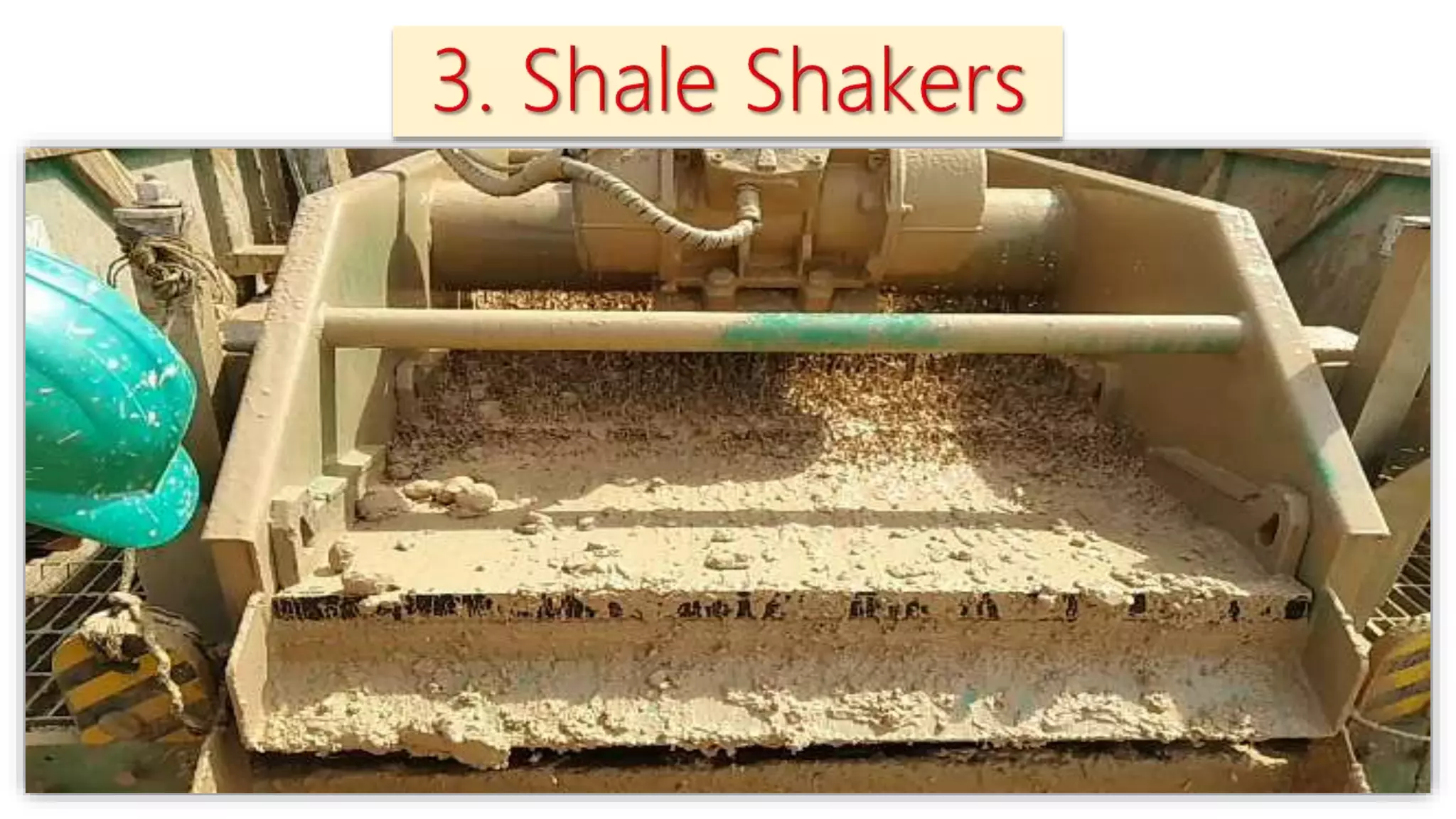
• Shakers arethe outlet part of the well; that is connected
by the Flow Line.
• When Drilling is in progress the cuttings come up from
the bottom of the well with mud and farther it travels to
the Shakers via flow line.
• As its name suggests; cuttings passes through these
shakers and sorts in the 3 different sizes. Along with this
the mud also get separated from the cuttings and ways
to the Desander tank.
16.
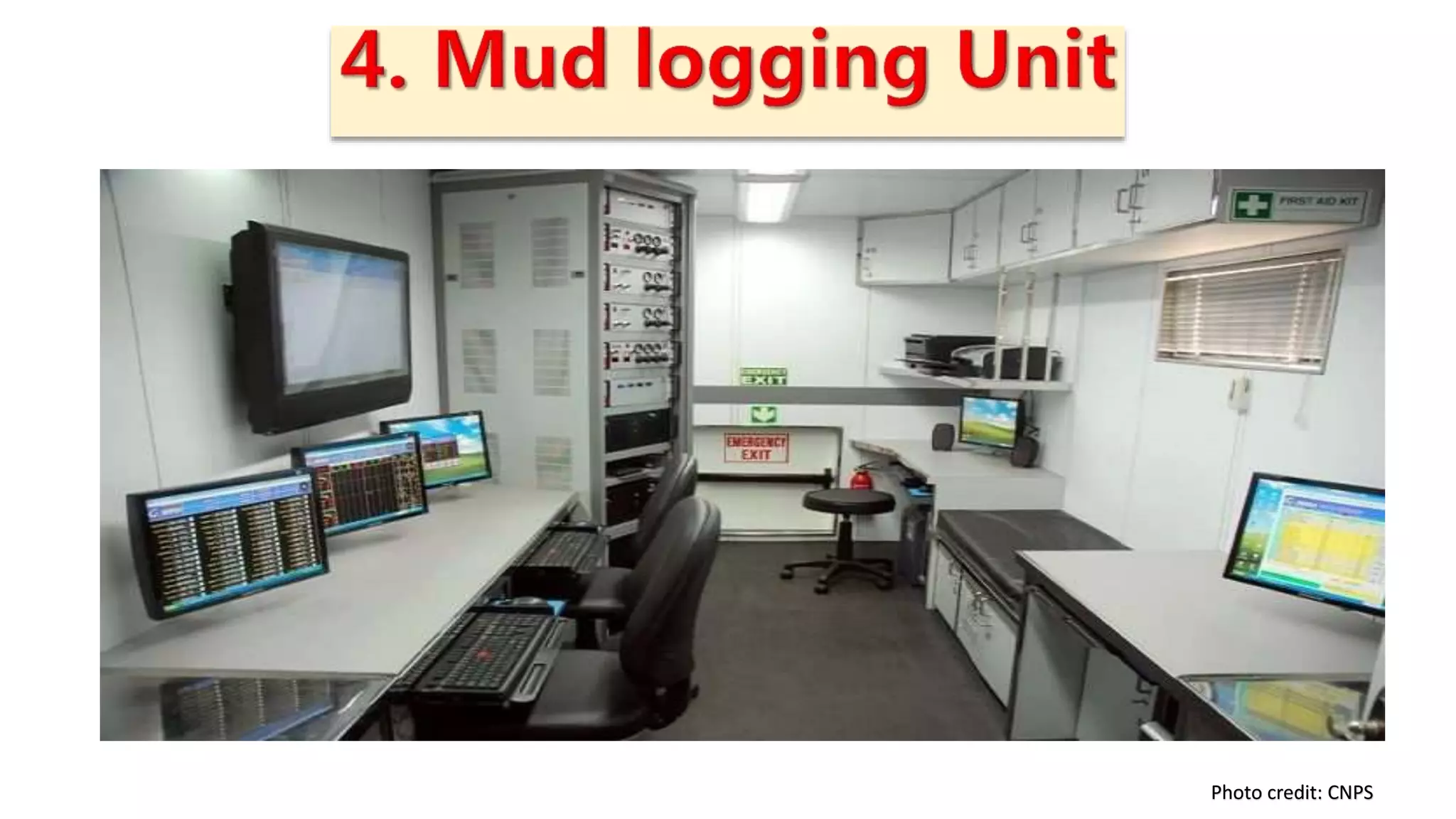
o Mudlogging isthe Soul Part of the Rig.
o A single place where you can see whole rig
operations; whether it is rig-floor, mud
tanks, shakers, gas data etc. except the
MWD/LWD unit.
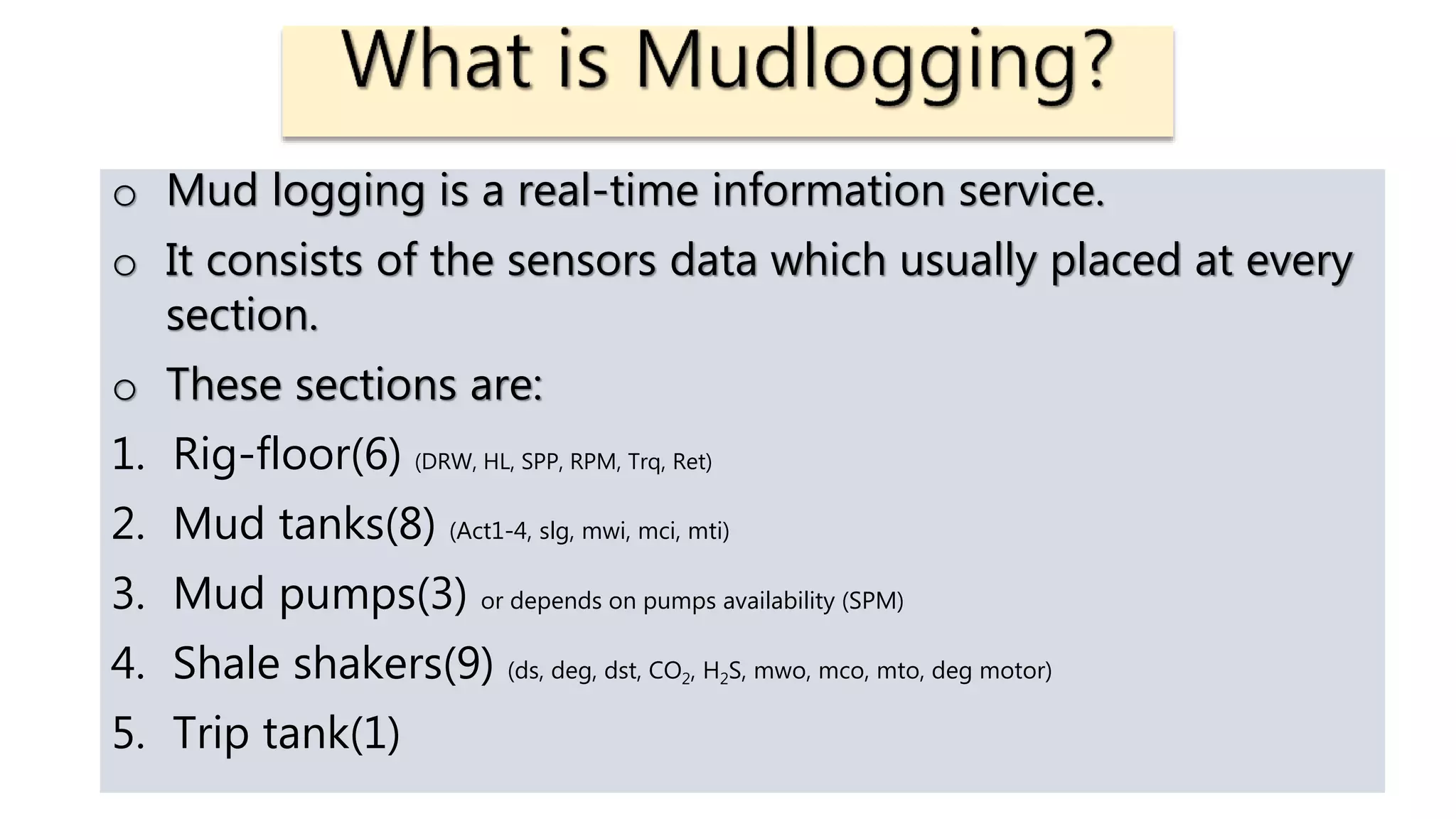
o Mud loggingis a real-time information service.
o It consists of the sensors data which usually placed at every
section.
o These sections are:
1. Rig-floor(6) (DRW, HL, SPP, RPM, Trq, Ret)
2. Mud tanks(8) (Act1-4, slg, mwi, mci, mti)
3. Mud pumps(3) or depends on pumps availability (SPM)
4. Shale shakers(9) (ds, deg, dst, CO2, H2S, mwo, mco, mto, deg motor)
5. Trip tank(1)
20.
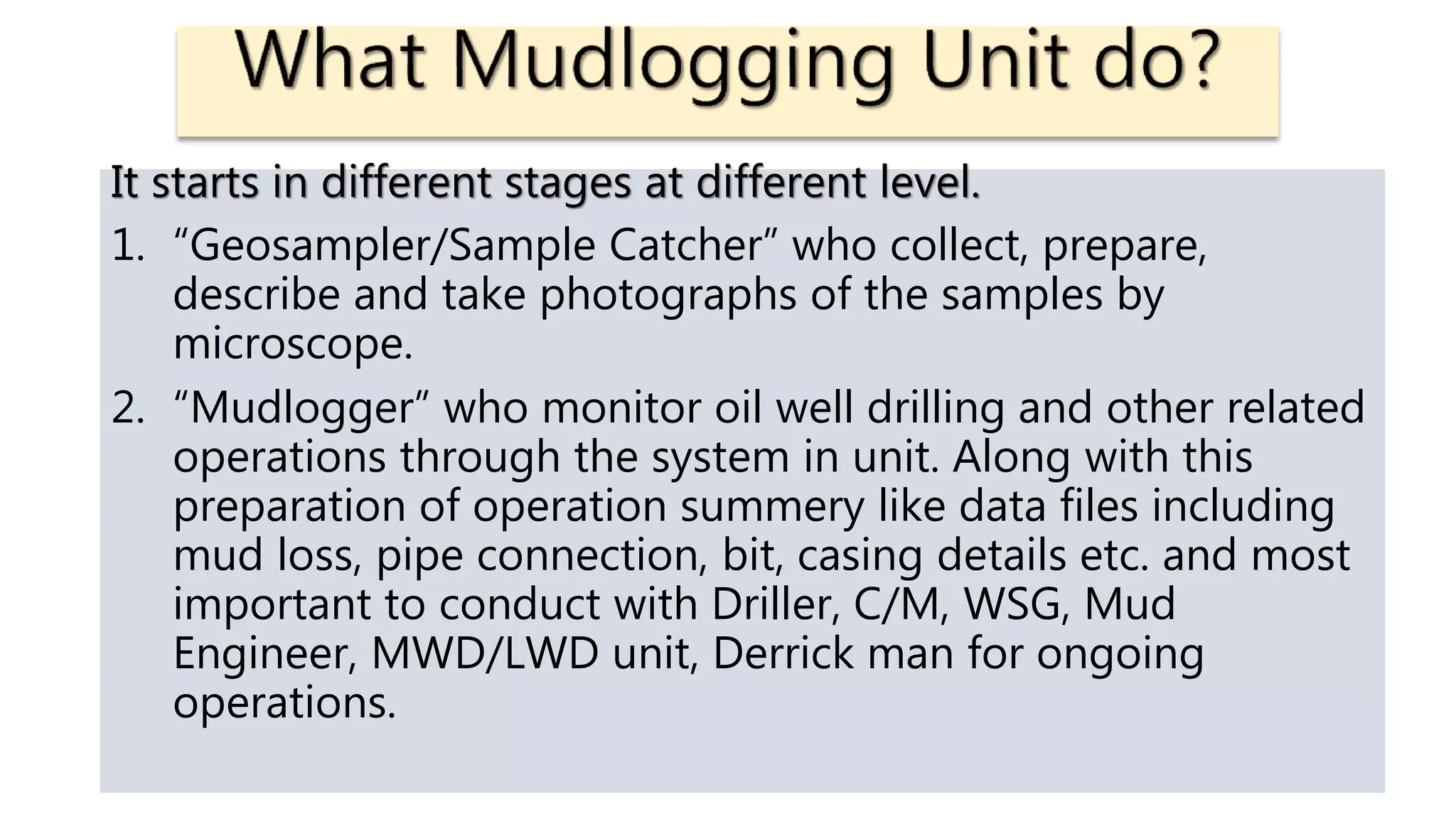
It starts indifferent stages at different level.
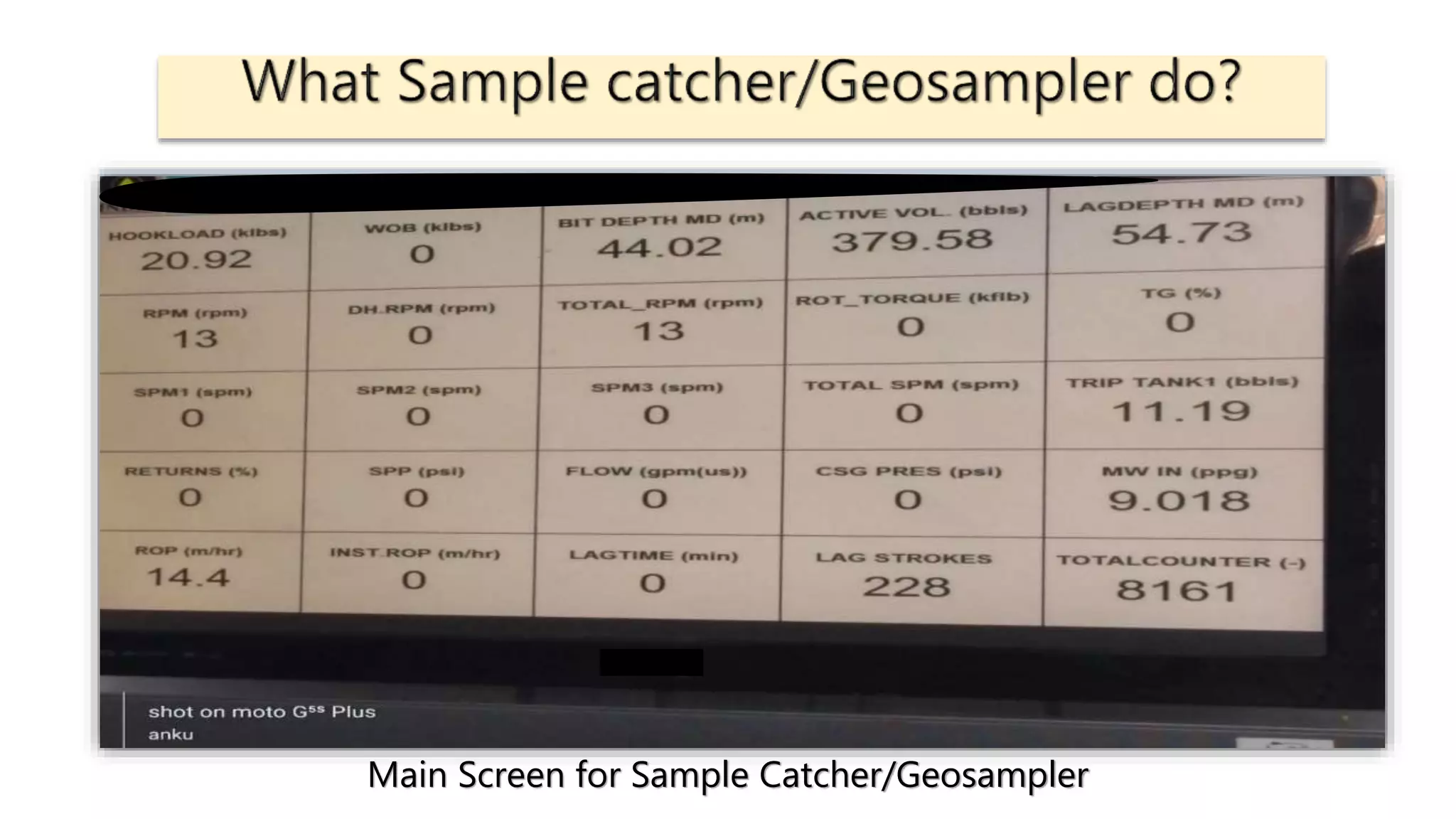
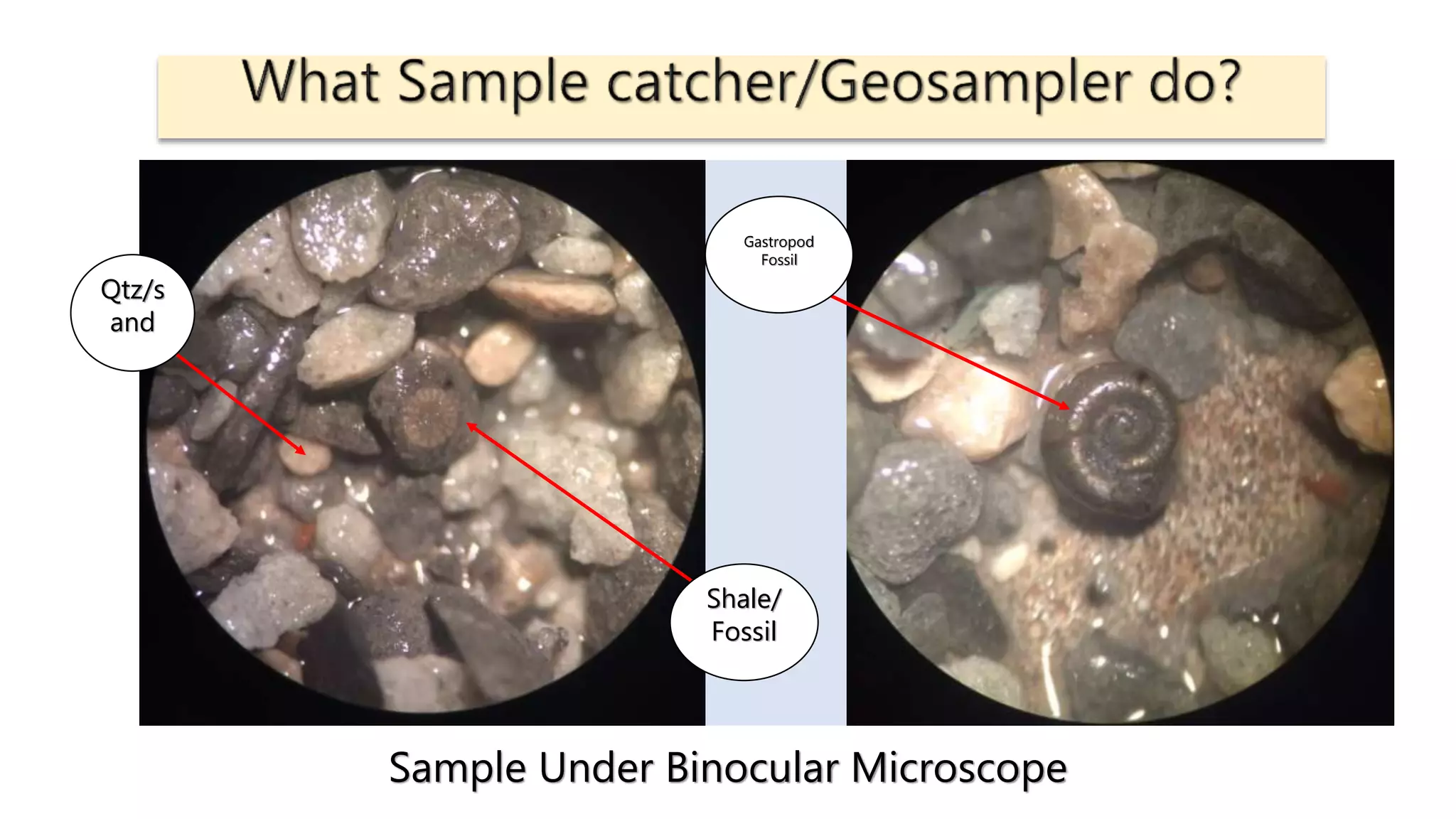
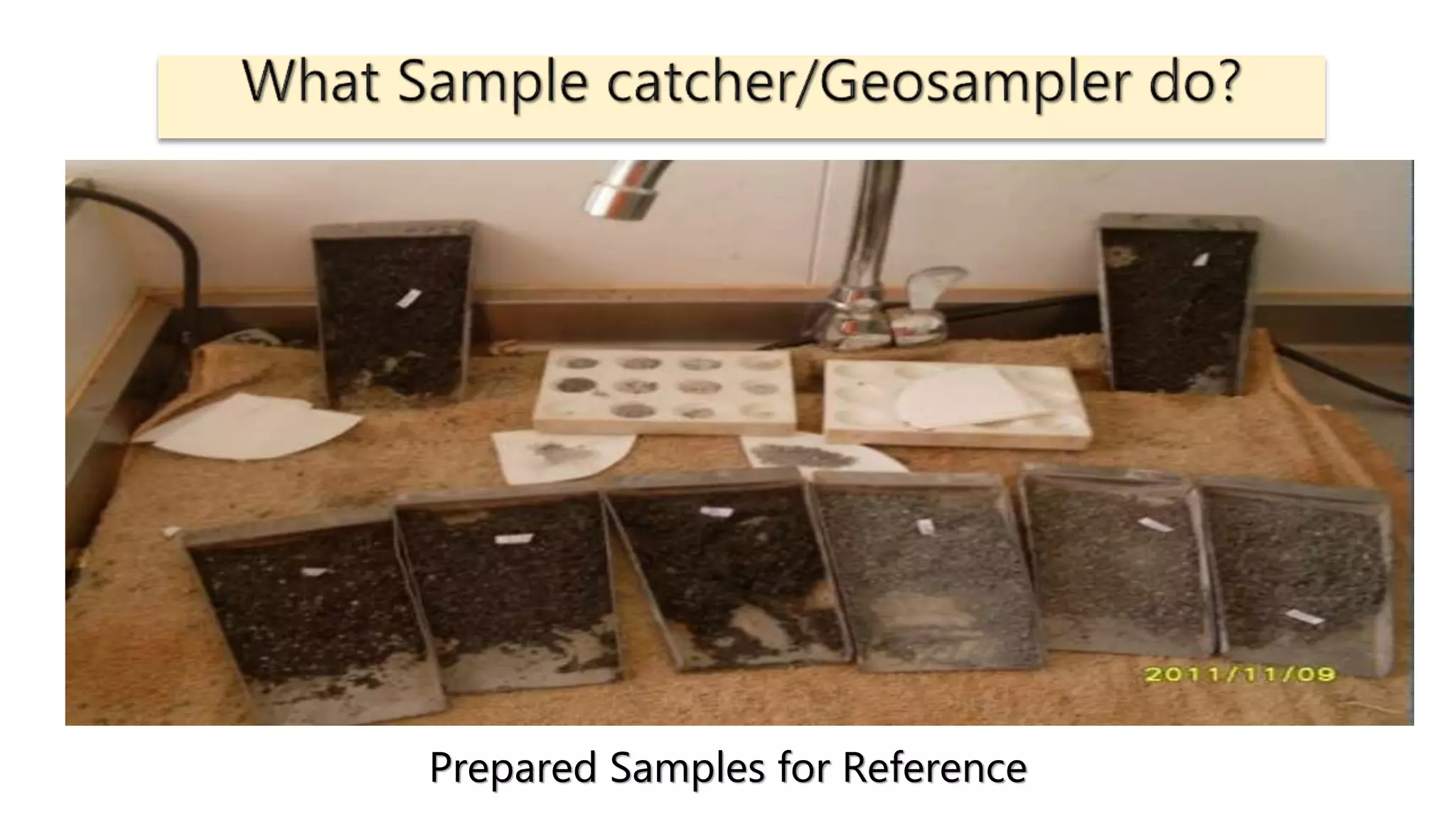
1. “Geosampler/Sample Catcher” who collect, prepare,
describe and take photographs of the samples by
microscope.
2. “Mudlogger” who monitor oil well drilling and other related
operations through the system in unit. Along with this
preparation of operation summery like data files including
mud loss, pipe connection, bit, casing details etc. and most
important to conduct with Driller, C/M, WSG, Mud
Engineer, MWD/LWD unit, Derrick man for ongoing
operations.
21.
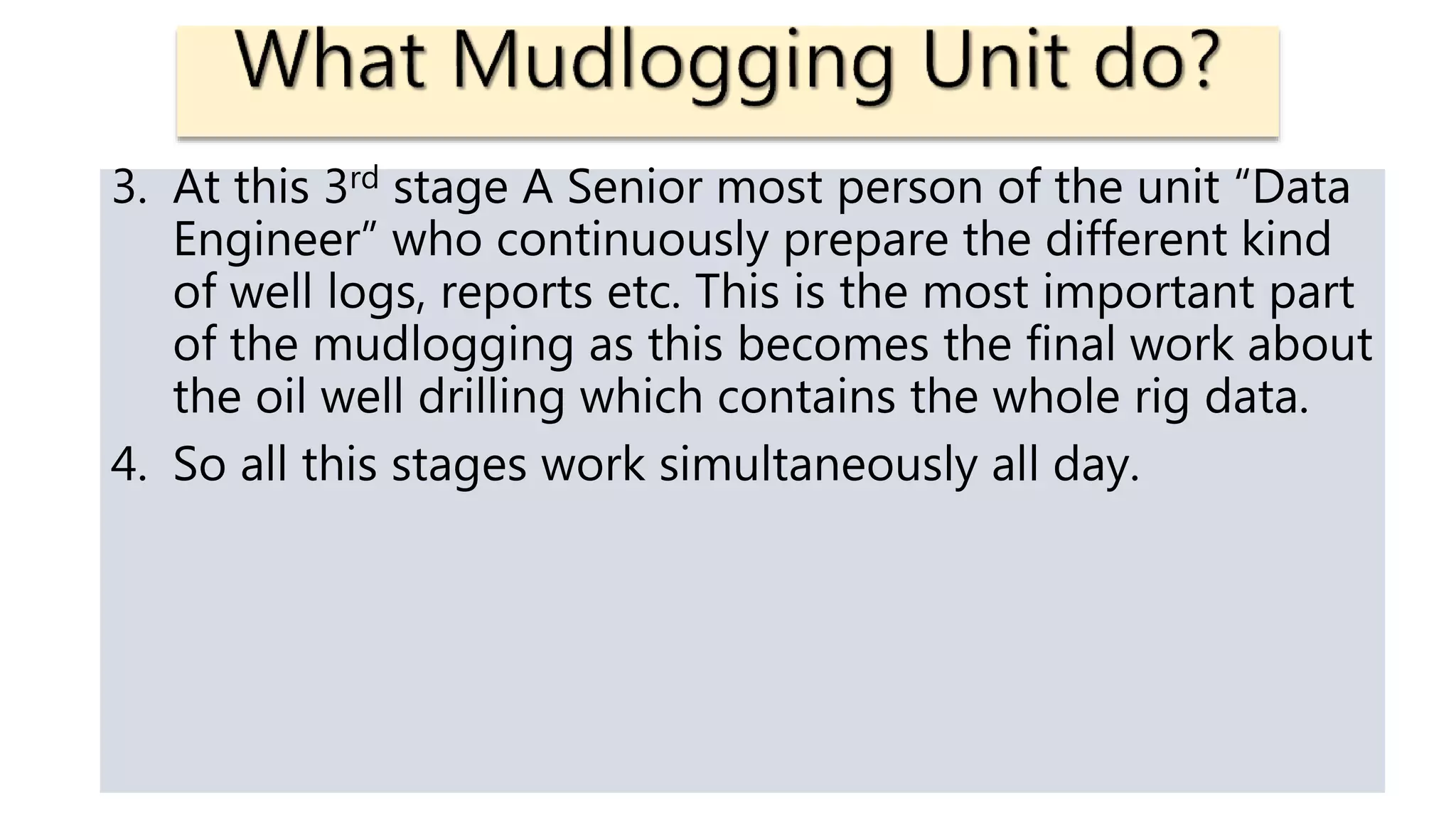
3. At this3rd stage A Senior most person of the unit “Data
Engineer” who continuously prepare the different kind
of well logs, reports etc. This is the most important part
of the mudlogging as this becomes the final work about
the oil well drilling which contains the whole rig data.
4. So all this stages work simultaneously all day.
22.
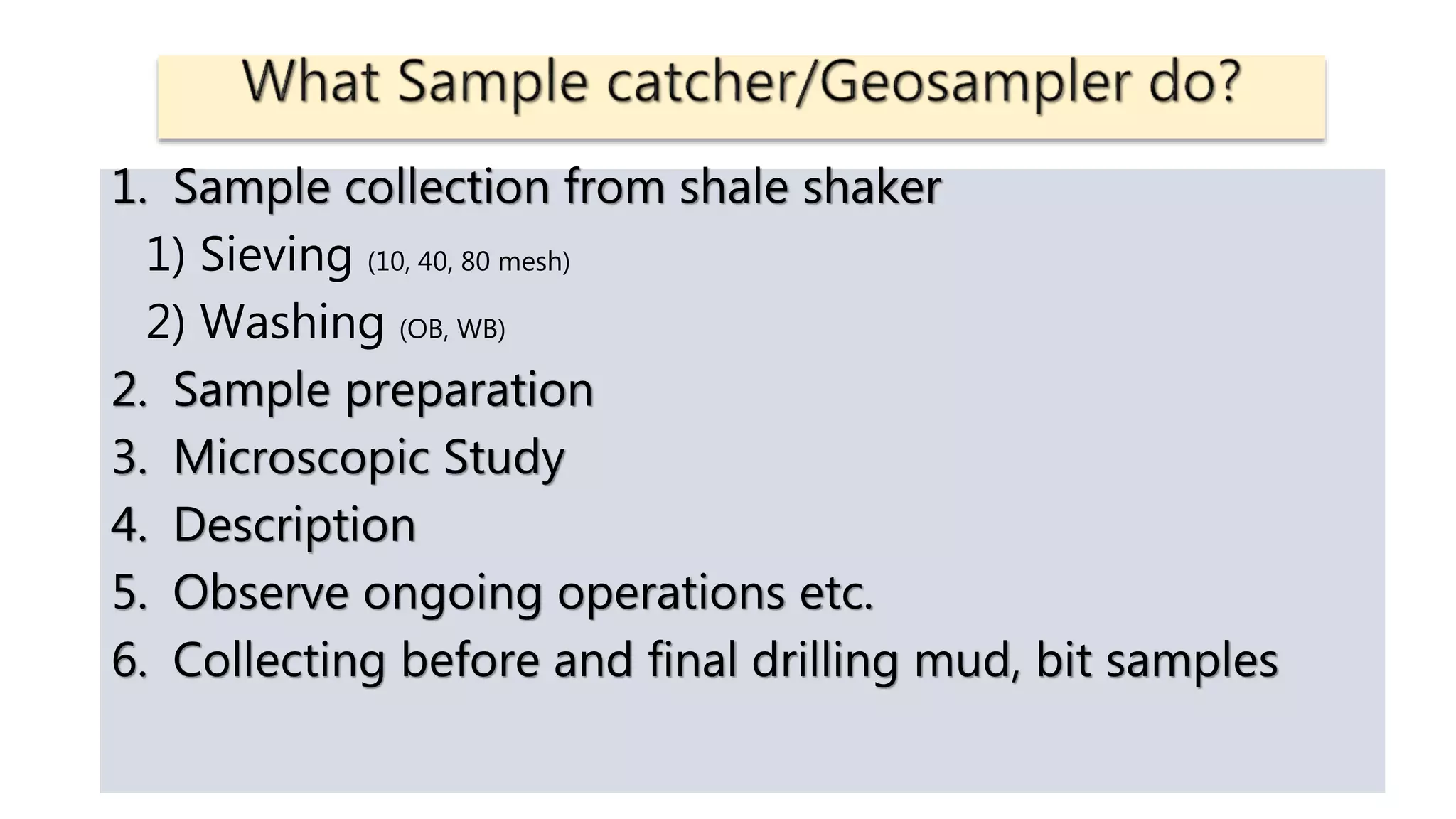
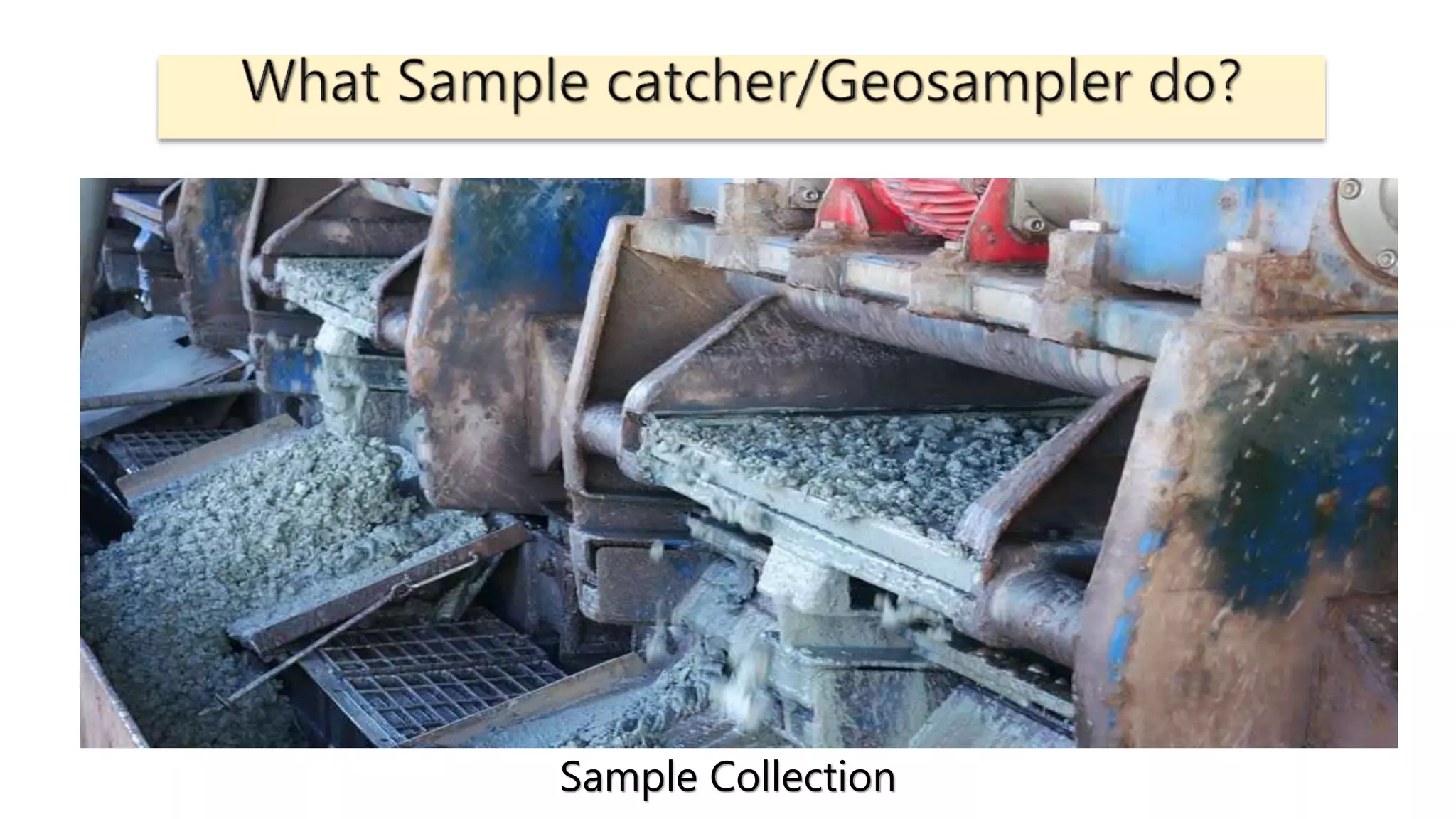
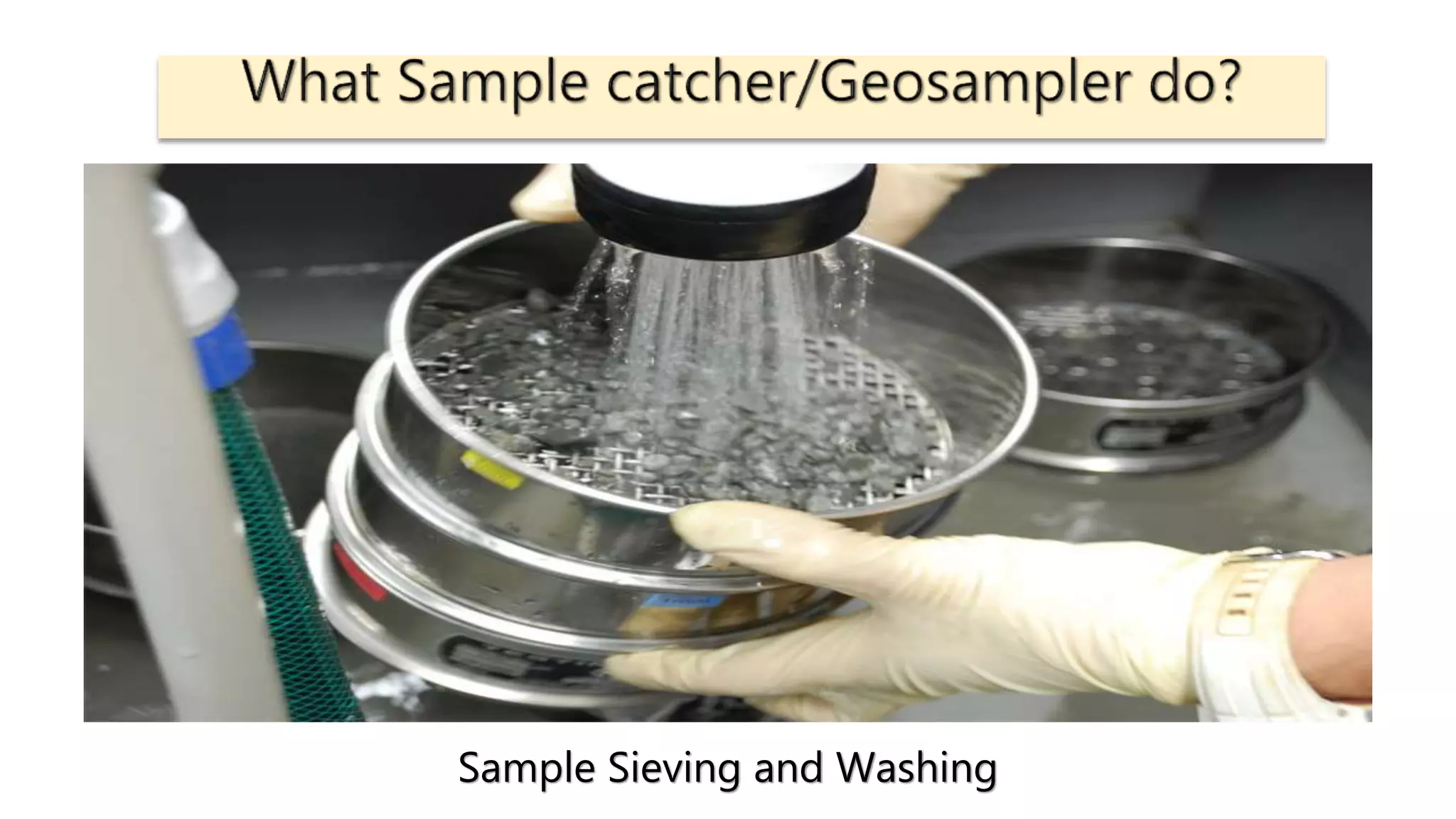
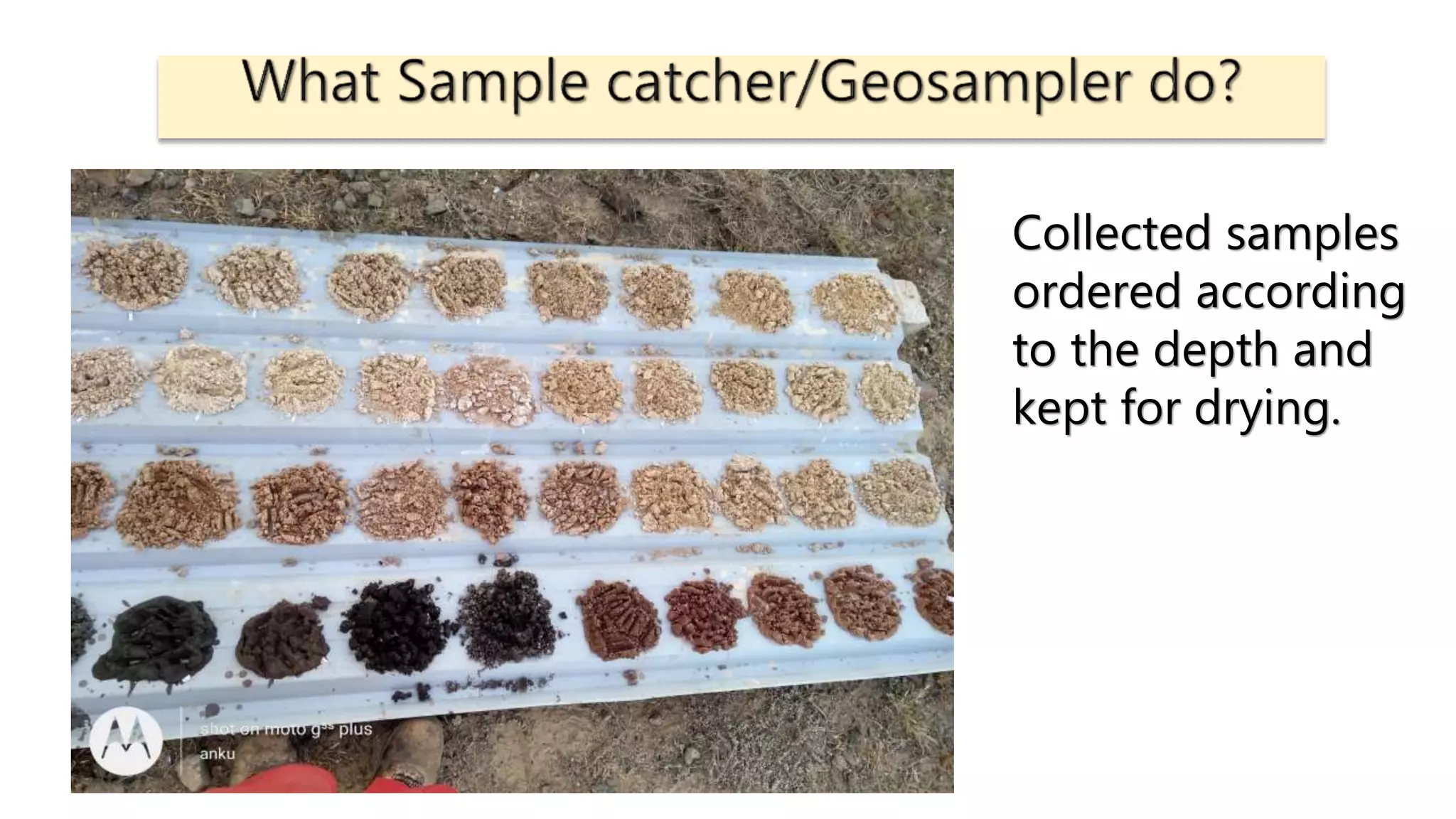
1. Sample collectionfrom shale shaker
1) Sieving (10, 40, 80 mesh)
2) Washing (OB, WB)
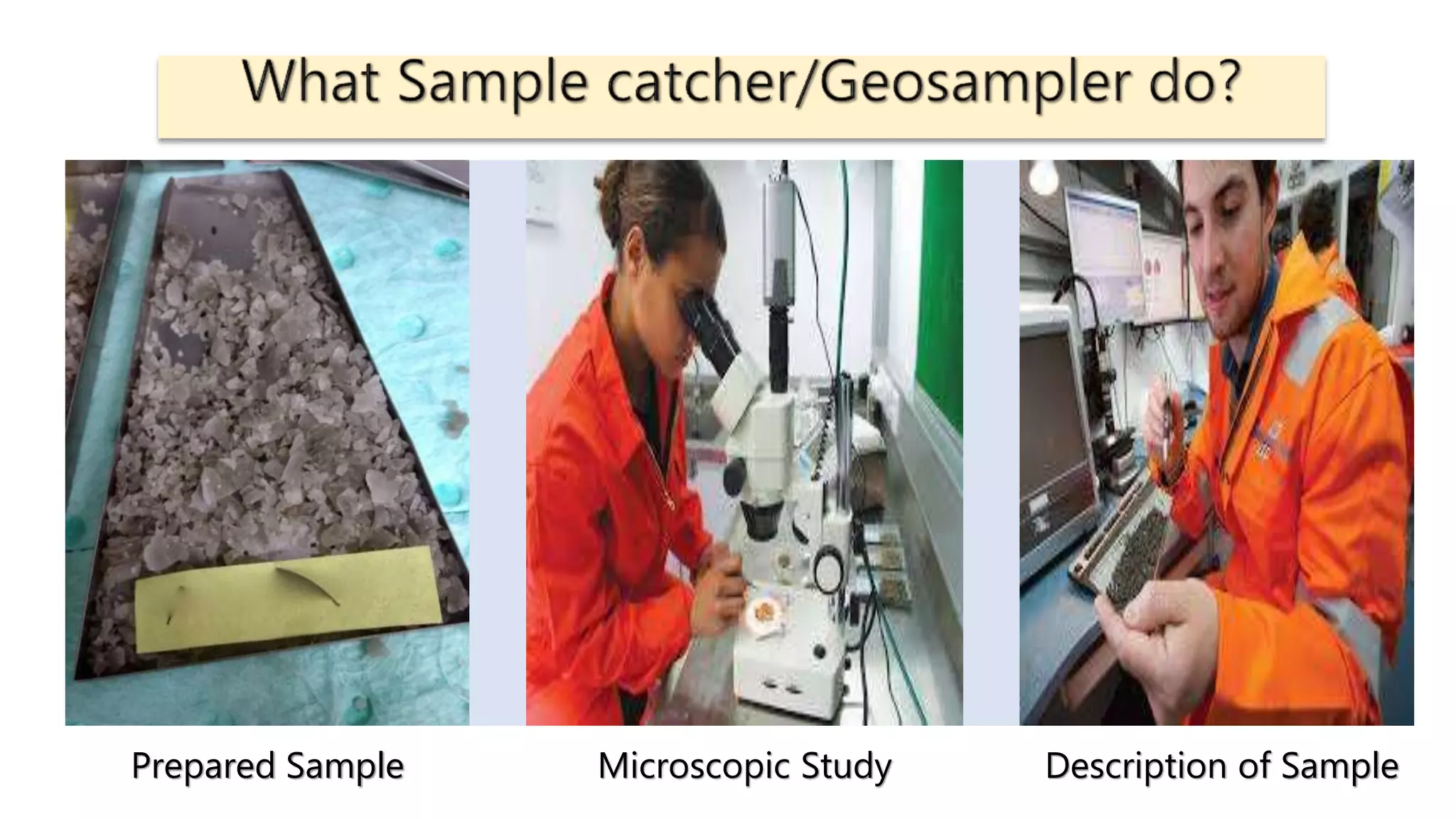
2. Sample preparation
3. Microscopic Study
4. Description
5. Observe ongoing operations etc.
6. Collecting before and final drilling mud, bit samples
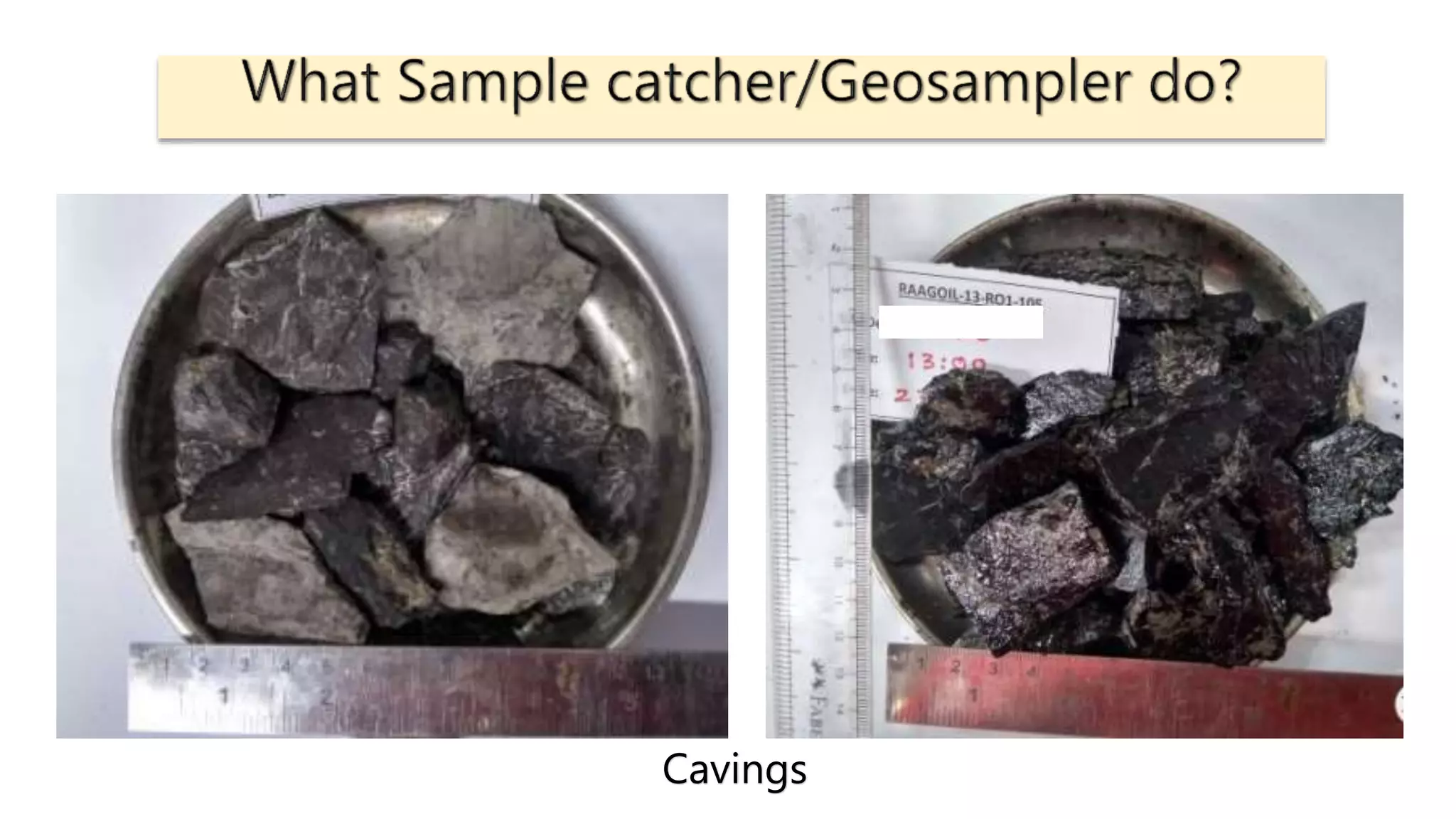
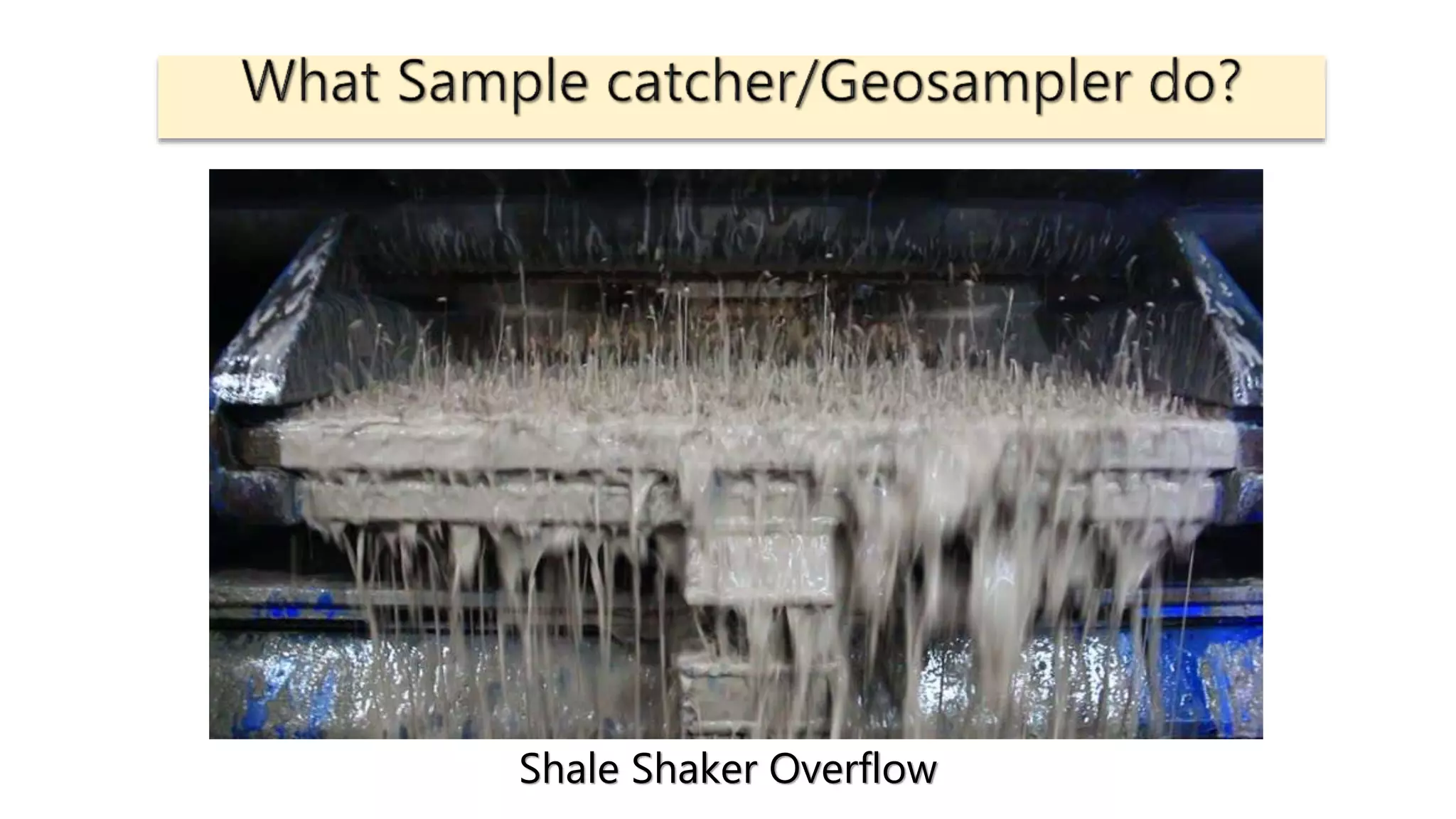
The main keythings to note or care while collecting
samples:
1) Mud temperature (physically)
2) Return
3) Cavings
4) Shale Shaker overflow
5) Cuttings colour change
6) Lag time check once in a day
7) H2S & CO2 gases exposure.
8) Last but not least i.e. “Safety”.
o Monitor ongoingoperations:
1. Drilling: HL, TRQ, WOB, ROP, SPM, RPM, Lag time, SPP,
Return, Flow, Mud tanks/pit Volume, MWI/O, MTI/O, MCI/O
and TG, Mud Loss/Gain, Check samples.
2. P/C: BHA, DP/HWDP etc.
3. POOH/RIH
4. Prepare data sheets.
35.
o Prepare WellLogs, Gas Data and Final Work Completion
Report, Geological reports with all recorded data for Final
Submission.
o Continuously in conduct with C/M, WS Geologist,
Operational Geologist for the log, data, reports preparation
and also ongoing scenario whether it is complicated or
running smoothly.
36.
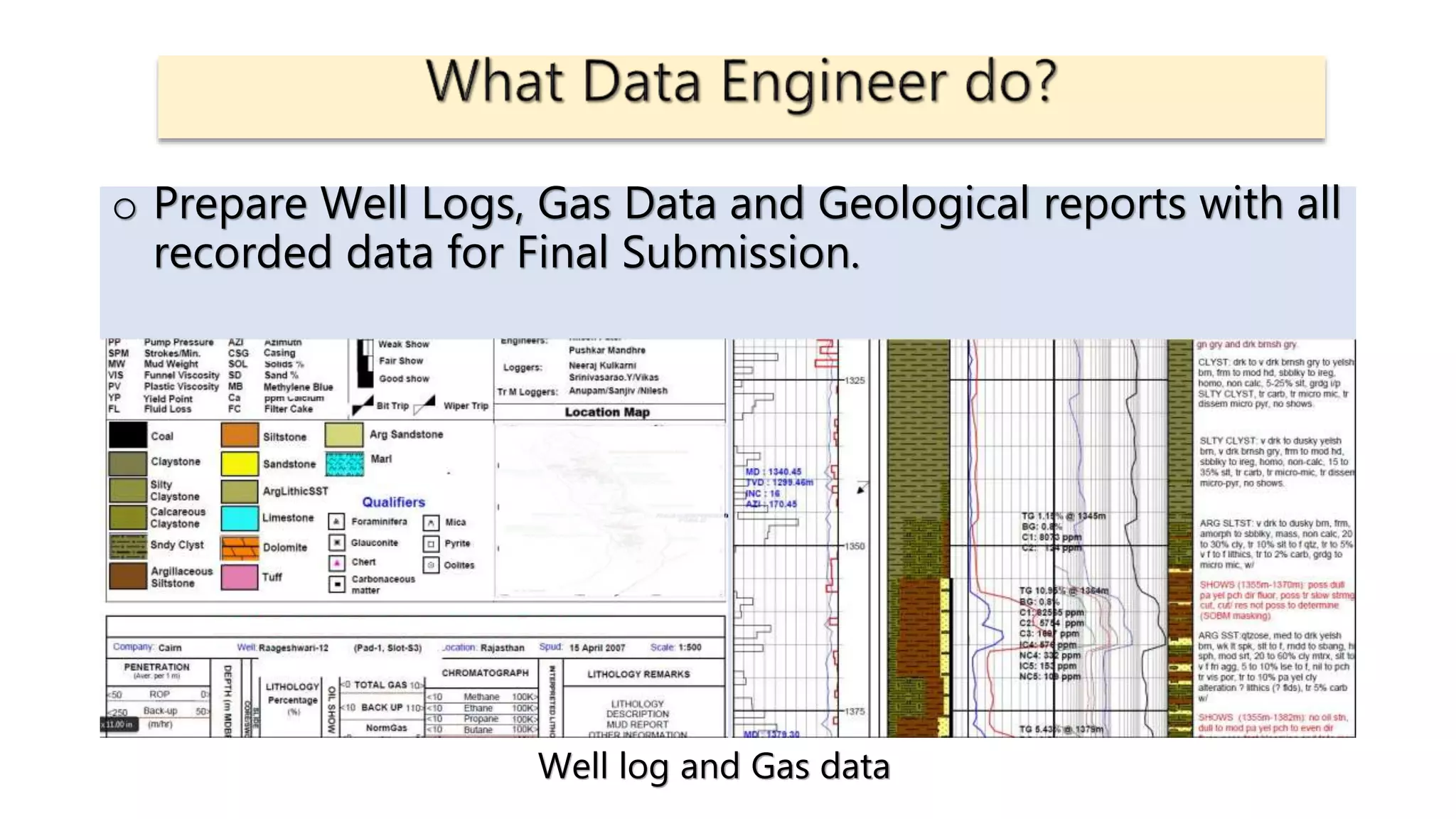
o Prepare WellLogs, Gas Data and Geological reports with all
recorded data for Final Submission.
0
Well log and Gas data
37.
o FIT/LOT
o PipeSticking
o Loss of Circulation
o Hole Deviation
o Drill pipe Failures
o Mud Loss/Gain
o Hard/Soft formation drilling
o Cavings
o Tripping
o Reservoir drilling target
formation
o Cementing
o Casing