WEATHERING
Earth Science
2
Table of Contents
 Definitions: Weathering
Types of Weathering
 Mechanical Weathering
 Exfoliation
 Frost Wedging
 Temperature Change
 Salt Wedging
 Abrasion
 Chemical Weathering
 Carbonation
 Hydrolysis
 Hydration
 Oxidation
 Solution
 Biological Weathering
 Lichen, Algae, and Decaying Plants
 Plant Roots
 Organism Activity: Burrowing
 Differential Weathering
3
Definitions
 Weathering processe occur at or near the Earth’s surface and produce changes to the
landscape that influence surface and subsurface topography and landform
development.
 Weathering is the physical disintegration or chemical alteration of rocks at or near the
Earth’s surface.
 Erosion is the physical removal and transportation of weathered material by water,
wind, ice, or gravity.
4
Types of Weathering
I. Mechanical (physical) weathering is the physical disintegration and reduction
in the size of the rocks without changing their chemical composition.
Examples: exfoliation, frost wedging, salt wedging, temperature changes, and
abrasion
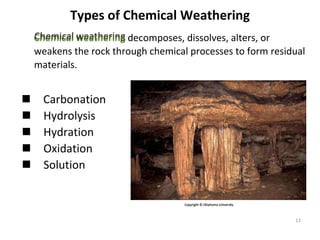
II. Chemical weathering decomposes, dissolves, alters, or weakens the rock
through chemical processes to form residual materials.
Examples: carbonation, hydration, hydrolosis, oxidation, and solution
III. Biological weathering is the disintegration or decay of rocks and minerals
caused by chemical or physical agents of organisms.
Examples: organic activity from lichen and algae, rock disintegration by plant or
root growth, burrowing and tunneling organisms, and acid secretion
5
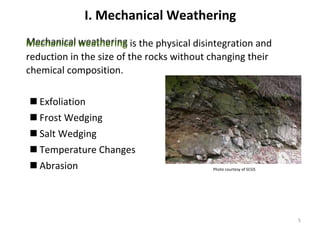
I. Mechanical Weathering
Mechanical weathering is the physical disintegration and
reduction in the size of the rocks without changing their
chemical composition.
 Exfoliation
 Frost Wedging
 Salt Wedging
 Temperature Changes
 Abrasion Photo courtesy of SCGS
6
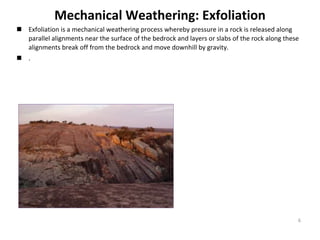
Mechanical Weathering: Exfoliation
 Exfoliation is a mechanical weathering process whereby pressure in a rock is released along
parallel alignments near the surface of the bedrock and layers or slabs of the rock along these
alignments break off from the bedrock and move downhill by gravity.
 .
7
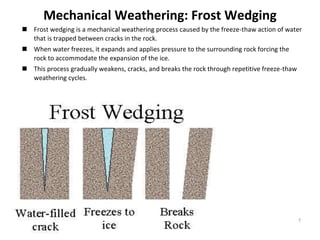
Mechanical Weathering: Frost Wedging
 Frost wedging is a mechanical weathering process caused by the freeze-thaw action of water
that is trapped between cracks in the rock.
 When water freezes, it expands and applies pressure to the surrounding rock forcing the
rock to accommodate the expansion of the ice.
 This process gradually weakens, cracks, and breaks the rock through repetitive freeze-thaw
weathering cycles.
Copyright © Bruce Molnia, USGS
8
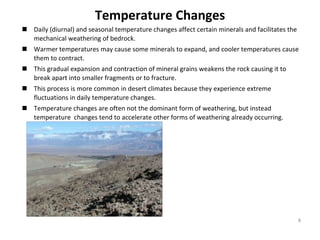
Temperature Changes
 Daily (diurnal) and seasonal temperature changes affect certain minerals and facilitates the
mechanical weathering of bedrock.
 Warmer temperatures may cause some minerals to expand, and cooler temperatures cause
them to contract.
 This gradual expansion and contraction of mineral grains weakens the rock causing it to
break apart into smaller fragments or to fracture.
 This process is more common in desert climates because they experience extreme
fluctuations in daily temperature changes.
 Temperature changes are often not the dominant form of weathering, but instead
temperature changes tend to accelerate other forms of weathering already occurring.
9
Mechanical Weathering: Salt Wedging
 Salt wedging occurs when salts crystallize out of solution as water evaporates. As the salt
crystals grow, they apply pressure to the surrounding rock weakening it, until it eventually
cracks and breaks down, enabling the salt crystal to continue growing.
 Salt wedging is most common in drier climates, such as deserts.
10
Mechanical Weathering: Abrasion
 Abrasion occurs when rocks collide against each other while they are transported by water,
glacial ice, wind, or gravitational force.
 During abrasion, rocks may also weather the bedrock surface they are coming into contact
with as well as breaking into smaller particles and eventually individual grains.
Photo Source: SCGS
11
Types of Chemical Weathering
Chemical weathering decomposes, dissolves, alters, or
weakens the rock through chemical processes to form residual
materials.
Carbonation
Hydrolysis
Hydration
Oxidation
Solution
Copyright © Oklahoma University
12
Chemical Weathering: Carbonation
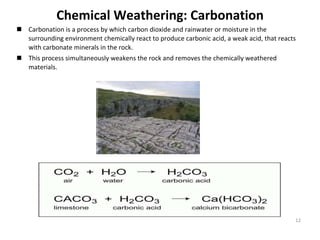
 Carbonation is a process by which carbon dioxide and rainwater or moisture in the
surrounding environment chemically react to produce carbonic acid, a weak acid, that reacts
with carbonate minerals in the rock.
 This process simultaneously weakens the rock and removes the chemically weathered
materials.
14
Chemical Weathering: Hydrolysis
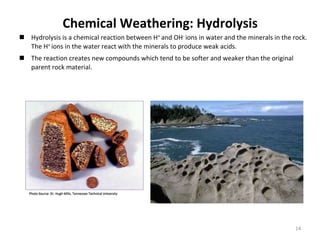
 Hydrolysis is a chemical reaction between H+ and OH- ions in water and the minerals in the rock.
The H+ ions in the water react with the minerals to produce weak acids.
 The reaction creates new compounds which tend to be softer and weaker than the original
parent rock material.
Photo Source: Dr. Hugh Mills, Tennessee Technical University
15
Chemical Weathering: Hydration
• Hydration is a process where mineral structure in the rock forms a weak bond with H20 which
causes the mineral grains to expand, creating stress which causes the disintegration of the
rock.
• Hydration often produces a new mineral compound that is larger than the original compound.
The increased size expanse the rock and can lead to decay.
• Hydration can also lead to color changes in the weathered rock surface.
• An example of hydrolosis: Anhydrite (CaSO4) can absorb two water molecules to become
gypsum (CaSO4·2H2O).
16
Chemical Weathering: Oxidation
• Oxidation occurs when oxygen and water react with iron-rich minerals and weaken the
structure of the mineral.
• During oxidation the minerals in the rock will change colors, taking on a ‘rusty’, reddishorange
appearance.
Photo: SCGS
17
Chemical Weathering: Solution
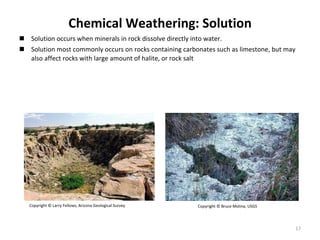
 Solution occurs when minerals in rock dissolve directly into water.
 Solution most commonly occurs on rocks containing carbonates such as limestone, but may
also affect rocks with large amount of halite, or rock salt
Copyright © Larry Fellows, Arizona Geological Survey Copyright © Bruce Molina, USGS
Biological Weathering
Biological weathering is the disintegration or decay of rocks
and minerals caused by chemical or physical agents of
organisms.
Organic activity from lichen and algae
Rock disintegration by plant growth
Burrowing and tunneling organisms
Secretion of acids
19
Organism Activity
 Some animals may burrow or tunnel into rocks or cracks in rocks and cause the rock to break
down and disintegrate. Small animals, worms, and other insects, often contribute to this
form of biological weathering.
 Some organisms, such as snails, barnacles, or limpets, attach themselves to rocks and
secrete acid, acids that chemically dissolve the rock surface.
20
Plant Roots
The most common form of biological weathering is when plant roots penetrate into cracks
and crevices of rocks and cause the rock to split or break into smaller particles through
mechanical weathering.
Copyright © Bruce Molnia, Terra Photographics
21
Lichen, Algae, and Decaying Plants
 This bio-chemical weathering process leaches minerals from the rock causing it to weaken
and breakdown.
 The decaying of plant materials can also produce acidic compounds which dissolve the
exposed rock.
 The presence of organisms growing, expanding, or moving across the surface of the rock
also exerts a small amount of abrasion and pressure that gradually cause the mechanical
weathering of the rock as the organisms extract various minerals.
Photo: SCGS
22
Differential Weathering
 Weathering rates will not only vary depending on the type of weathering process,
whether it is mechanical, chemical, or biological, but they will also vary depending on the
rock material that is being weathered.
 Some rocks are harder than other rocks, and will weather slower than softer rocks.
 The differences in rates of weathering due to different types of rocks, textures, or other
characteristics is referred to as differential weathering.
 Climate can also produce differential weathering responses for the same rock type. For
example, limestone weathers more quickly in wet climates than dry climates.
weathering.docx

weathering.docx

  • 1.
  • 2.
    2 Table of Contents Definitions: Weathering Types of Weathering  Mechanical Weathering  Exfoliation  Frost Wedging  Temperature Change  Salt Wedging  Abrasion  Chemical Weathering  Carbonation  Hydrolysis  Hydration  Oxidation  Solution  Biological Weathering  Lichen, Algae, and Decaying Plants  Plant Roots  Organism Activity: Burrowing  Differential Weathering
  • 3.
    3 Definitions  Weathering processeoccur at or near the Earth’s surface and produce changes to the landscape that influence surface and subsurface topography and landform development.  Weathering is the physical disintegration or chemical alteration of rocks at or near the Earth’s surface.  Erosion is the physical removal and transportation of weathered material by water, wind, ice, or gravity.
  • 4.
    4 Types of Weathering I.Mechanical (physical) weathering is the physical disintegration and reduction in the size of the rocks without changing their chemical composition. Examples: exfoliation, frost wedging, salt wedging, temperature changes, and abrasion II. Chemical weathering decomposes, dissolves, alters, or weakens the rock through chemical processes to form residual materials. Examples: carbonation, hydration, hydrolosis, oxidation, and solution III. Biological weathering is the disintegration or decay of rocks and minerals caused by chemical or physical agents of organisms. Examples: organic activity from lichen and algae, rock disintegration by plant or root growth, burrowing and tunneling organisms, and acid secretion
  • 5.
    5 I. Mechanical Weathering Mechanicalweathering is the physical disintegration and reduction in the size of the rocks without changing their chemical composition.  Exfoliation  Frost Wedging  Salt Wedging  Temperature Changes  Abrasion Photo courtesy of SCGS
  • 6.
    6 Mechanical Weathering: Exfoliation Exfoliation is a mechanical weathering process whereby pressure in a rock is released along parallel alignments near the surface of the bedrock and layers or slabs of the rock along these alignments break off from the bedrock and move downhill by gravity.  .
  • 7.
    7 Mechanical Weathering: FrostWedging  Frost wedging is a mechanical weathering process caused by the freeze-thaw action of water that is trapped between cracks in the rock.  When water freezes, it expands and applies pressure to the surrounding rock forcing the rock to accommodate the expansion of the ice.  This process gradually weakens, cracks, and breaks the rock through repetitive freeze-thaw weathering cycles. Copyright © Bruce Molnia, USGS
  • 8.
    8 Temperature Changes  Daily(diurnal) and seasonal temperature changes affect certain minerals and facilitates the mechanical weathering of bedrock.  Warmer temperatures may cause some minerals to expand, and cooler temperatures cause them to contract.  This gradual expansion and contraction of mineral grains weakens the rock causing it to break apart into smaller fragments or to fracture.  This process is more common in desert climates because they experience extreme fluctuations in daily temperature changes.  Temperature changes are often not the dominant form of weathering, but instead temperature changes tend to accelerate other forms of weathering already occurring.
  • 9.
    9 Mechanical Weathering: SaltWedging  Salt wedging occurs when salts crystallize out of solution as water evaporates. As the salt crystals grow, they apply pressure to the surrounding rock weakening it, until it eventually cracks and breaks down, enabling the salt crystal to continue growing.  Salt wedging is most common in drier climates, such as deserts.
  • 10.
    10 Mechanical Weathering: Abrasion Abrasion occurs when rocks collide against each other while they are transported by water, glacial ice, wind, or gravitational force.  During abrasion, rocks may also weather the bedrock surface they are coming into contact with as well as breaking into smaller particles and eventually individual grains. Photo Source: SCGS
  • 11.
    11 Types of ChemicalWeathering Chemical weathering decomposes, dissolves, alters, or weakens the rock through chemical processes to form residual materials. Carbonation Hydrolysis Hydration Oxidation Solution Copyright © Oklahoma University
  • 12.
    12 Chemical Weathering: Carbonation Carbonation is a process by which carbon dioxide and rainwater or moisture in the surrounding environment chemically react to produce carbonic acid, a weak acid, that reacts with carbonate minerals in the rock.  This process simultaneously weakens the rock and removes the chemically weathered materials.
  • 14.
    14 Chemical Weathering: Hydrolysis Hydrolysis is a chemical reaction between H+ and OH- ions in water and the minerals in the rock. The H+ ions in the water react with the minerals to produce weak acids.  The reaction creates new compounds which tend to be softer and weaker than the original parent rock material. Photo Source: Dr. Hugh Mills, Tennessee Technical University
  • 15.
    15 Chemical Weathering: Hydration •Hydration is a process where mineral structure in the rock forms a weak bond with H20 which causes the mineral grains to expand, creating stress which causes the disintegration of the rock. • Hydration often produces a new mineral compound that is larger than the original compound. The increased size expanse the rock and can lead to decay. • Hydration can also lead to color changes in the weathered rock surface. • An example of hydrolosis: Anhydrite (CaSO4) can absorb two water molecules to become gypsum (CaSO4·2H2O).
  • 16.
    16 Chemical Weathering: Oxidation •Oxidation occurs when oxygen and water react with iron-rich minerals and weaken the structure of the mineral. • During oxidation the minerals in the rock will change colors, taking on a ‘rusty’, reddishorange appearance. Photo: SCGS
  • 17.
    17 Chemical Weathering: Solution Solution occurs when minerals in rock dissolve directly into water.  Solution most commonly occurs on rocks containing carbonates such as limestone, but may also affect rocks with large amount of halite, or rock salt Copyright © Larry Fellows, Arizona Geological Survey Copyright © Bruce Molina, USGS
  • 18.
    Biological Weathering Biological weatheringis the disintegration or decay of rocks and minerals caused by chemical or physical agents of organisms. Organic activity from lichen and algae Rock disintegration by plant growth Burrowing and tunneling organisms Secretion of acids
  • 19.
    19 Organism Activity  Someanimals may burrow or tunnel into rocks or cracks in rocks and cause the rock to break down and disintegrate. Small animals, worms, and other insects, often contribute to this form of biological weathering.  Some organisms, such as snails, barnacles, or limpets, attach themselves to rocks and secrete acid, acids that chemically dissolve the rock surface.
  • 20.
    20 Plant Roots The mostcommon form of biological weathering is when plant roots penetrate into cracks and crevices of rocks and cause the rock to split or break into smaller particles through mechanical weathering. Copyright © Bruce Molnia, Terra Photographics
  • 21.
    21 Lichen, Algae, andDecaying Plants  This bio-chemical weathering process leaches minerals from the rock causing it to weaken and breakdown.  The decaying of plant materials can also produce acidic compounds which dissolve the exposed rock.  The presence of organisms growing, expanding, or moving across the surface of the rock also exerts a small amount of abrasion and pressure that gradually cause the mechanical weathering of the rock as the organisms extract various minerals. Photo: SCGS
  • 22.
    22 Differential Weathering  Weatheringrates will not only vary depending on the type of weathering process, whether it is mechanical, chemical, or biological, but they will also vary depending on the rock material that is being weathered.  Some rocks are harder than other rocks, and will weather slower than softer rocks.  The differences in rates of weathering due to different types of rocks, textures, or other characteristics is referred to as differential weathering.  Climate can also produce differential weathering responses for the same rock type. For example, limestone weathers more quickly in wet climates than dry climates.