
January 2013 
What are 
weather 
?climate
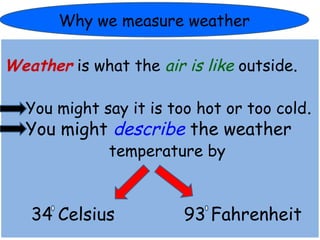
Why we measure weather 
Weather is what the air is like outside. 
You might say it is too hot or too cold. 
You might describe the weather 
temperature by 
34 Celsius 93 Fahrenheit
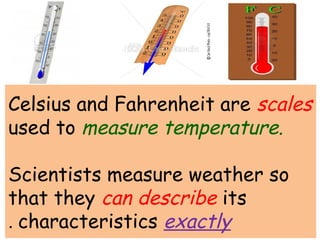
Celsius and Fahrenheit are scales 
used to measure temperature. 
Scientists measure weather so 
that they can describe its 
. characteristics exactly
Weather and 
climate
Weather 
Weather includes the kinds of - 
clouds in the sky and the amount 
of water in the air. 
-It includes the air temperature 
.and how the wind is blowing 
Weather is what the air is like in 
.a place at a single moment
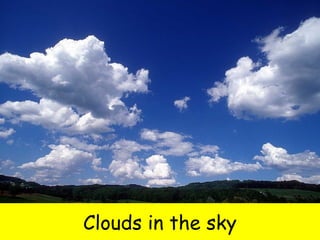
Clouds in the sky
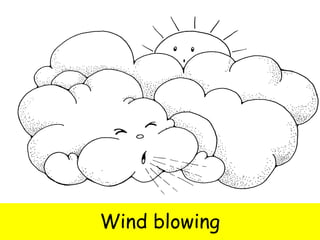
Wind blowing
climate 
Climate is the pattern of 
weather in a place over many 
years. 
1) Climate includes an area`s 
average temperatures. 
2) It includes the average 
amount . of precipitation
The climate of a place can 
change, but it takes many 
years. 
Weather can change every 
. day
Factors That 
Affect Climate
1 
sunlight
The amount of sunlight a place 
receives affects climate. 
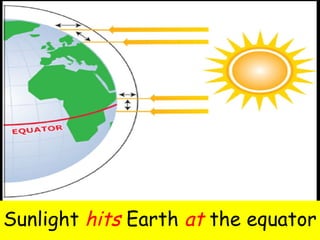
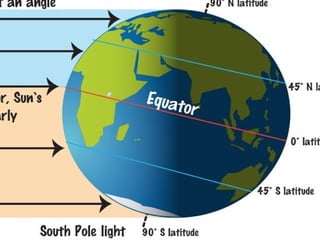
Sunlight hits Earth directly at 
the equator. 
The equator is an imaginary line 
that circles Earth Pole. 
Places near the equator have 
warmer climates than places 
. farther from it
Sunlight hits Earth at the equator
2 
ocean
The ocean also affects climate. 
Places near the ocean often have 
milder temperatures than places 
inland. 
. They receive more precipitation
3 
mountains
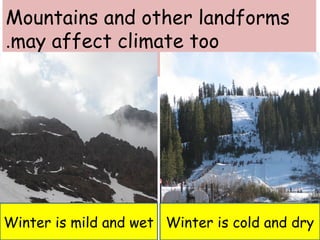
Mountains and other landforms 
.may affect climate too 
Winter is mild and wet Winter is cold and dry
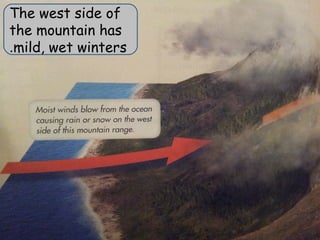
The west side of 
the mountain has 
.mild, wet winters
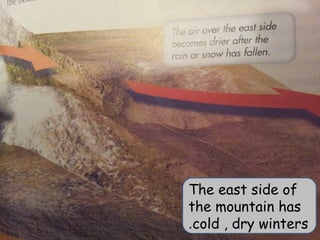
The east side of 
the mountain has 
.cold , dry winters
4 
altitude
Altitude affects climate . 
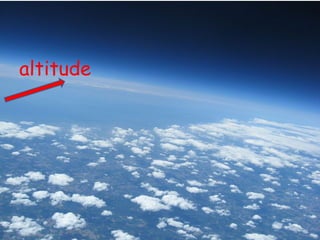
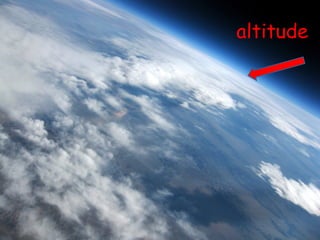
Altitude is the height above sea 
level. 
Temperature at the top of a 
mountain would be colder 
than temperatures at the 
.bottom
altitude
altitude
Factors that 
affect Local 
Weather
Scientists study temperature, 
speed, and direction of wind to 
predict weather. 
They measure air pressure and 
the amount of moisture in the 
air too. 
They also look at wind and ocean 
.currents
Wind 
currents
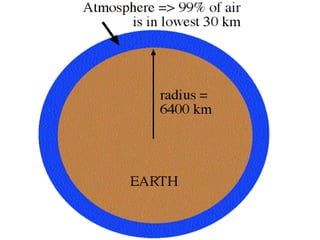
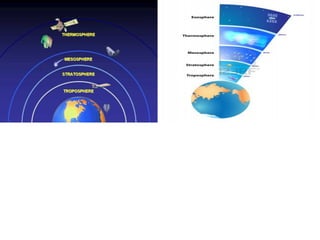
The atmosphere is the blanket of 
air that surrounds Earth. 
The atmosphere is made up of 
gases that have no color, taste, 
or odor.These gases have weight. 
The air pressure : when the 
weight of the atmosphere 
presses . down on Earth
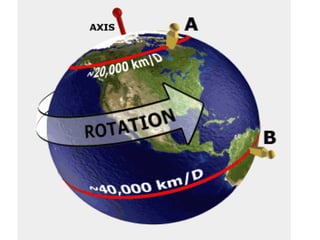
Heat from the sun, air pressure, 
and Earth`s rotation work 
together to cause wind. 
The sun heats up the air in some 
areas more than other areas. 
Warm air has less pressure 
than cold air. Cool air sinks 
because it has more pressure. 
.This makes warm air rise
Winds form as air flows from 
areas of high pressure 
areas of low pressure 
Earth`s rotation influences the 
.direction of the flow
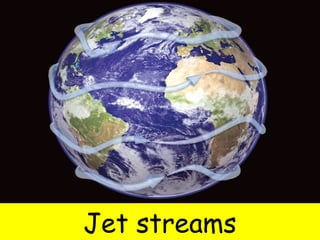
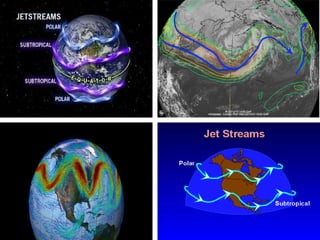
Jet streams are fast winds high 
above Earth`s surface. 
Jet streams can affect local 
weather by changing 
temperatures, surface winds, 
.and precipitation
Jet streams
ocean 
currents
water cycle 
The ocean affects climate 
weather 
The ocean can absorb, store, and 
release vast amounts of heat. 
Changes in ocean temperatures 
help produce hurricanes, floods, 
droughts, and other severe weather 
. events
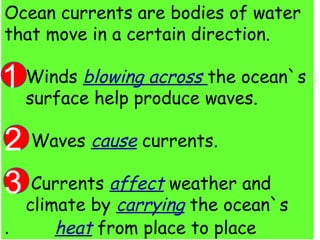
Ocean currents are bodies of water 
that move in a certain direction. 
Winds blowing across the ocean`s 
surface help produce waves. 
Waves cause currents. 
Currents affect weather and 
climate by carrying the ocean`s 
1 
23 
heat . from place to place
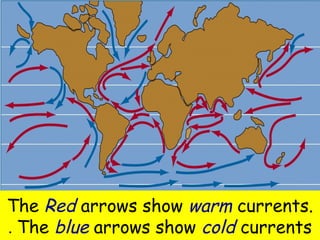
The Red arrows show warm currents. 
The blue arrows . show cold currents
Tools for Measuring 
Weather
Scientists use a number of tools to help 
them measure and describe weather. 
These tools help them predict what the 
weather will be like. 
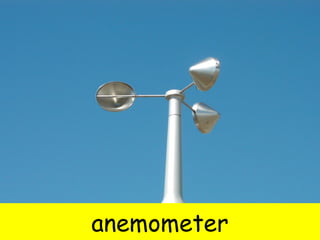
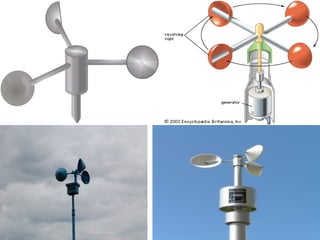
Anemometer measures wind speed 
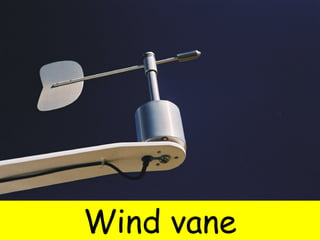
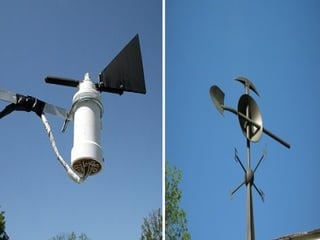
Wind vane shows the direction 
from . which the wind is blowing
anemometer
Wind vane
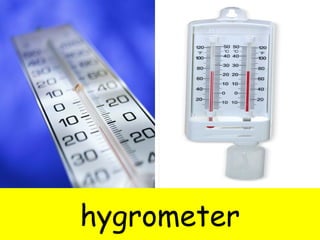
Hygrometer measures how much 
water vapor is in the air. 
Humidity is the amount of water 
vapor in the air. 
is low when air is dry 
humidity 
is high when air has 
more . water vapor in it
hygrometer
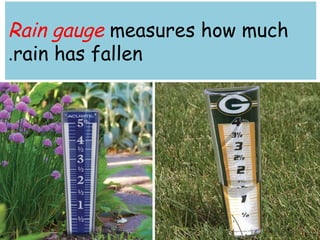
Rain gauge measures how much 
.rain has fallen
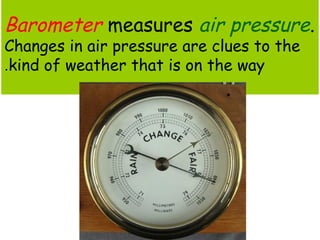
Barometer measures air pressure. 
Changes in air pressure are clues to the 
kind of . weather that is on the way
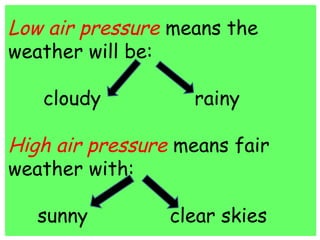
Low air pressure means the 
weather will be: 
cloudy rainy 
High air pressure means fair 
weather with: 
sunny clear skies
Weather and climate

Weather and climate

  • 1.
    January 2013 Whatare weather ?climate
  • 2.
    Why we measureweather Weather is what the air is like outside. You might say it is too hot or too cold. You might describe the weather temperature by 34 Celsius 93 Fahrenheit
  • 3.
    Celsius and Fahrenheitare scales used to measure temperature. Scientists measure weather so that they can describe its . characteristics exactly
  • 4.
  • 5.
    Weather Weather includesthe kinds of - clouds in the sky and the amount of water in the air. -It includes the air temperature .and how the wind is blowing Weather is what the air is like in .a place at a single moment
  • 6.
  • 7.
  • 8.
    climate Climate isthe pattern of weather in a place over many years. 1) Climate includes an area`s average temperatures. 2) It includes the average amount . of precipitation
  • 9.
    The climate ofa place can change, but it takes many years. Weather can change every . day
  • 10.
  • 11.
  • 12.
    The amount ofsunlight a place receives affects climate. Sunlight hits Earth directly at the equator. The equator is an imaginary line that circles Earth Pole. Places near the equator have warmer climates than places . farther from it
  • 13.
    Sunlight hits Earthat the equator
  • 15.
  • 16.
    The ocean alsoaffects climate. Places near the ocean often have milder temperatures than places inland. . They receive more precipitation
  • 18.
  • 19.
    Mountains and otherlandforms .may affect climate too Winter is mild and wet Winter is cold and dry
  • 20.
    The west sideof the mountain has .mild, wet winters
  • 21.
    The east sideof the mountain has .cold , dry winters
  • 22.
  • 23.
    Altitude affects climate. Altitude is the height above sea level. Temperature at the top of a mountain would be colder than temperatures at the .bottom
  • 24.
  • 25.
  • 27.
    Factors that affectLocal Weather
  • 28.
    Scientists study temperature, speed, and direction of wind to predict weather. They measure air pressure and the amount of moisture in the air too. They also look at wind and ocean .currents
  • 29.
  • 30.
    The atmosphere isthe blanket of air that surrounds Earth. The atmosphere is made up of gases that have no color, taste, or odor.These gases have weight. The air pressure : when the weight of the atmosphere presses . down on Earth
  • 32.
    Heat from thesun, air pressure, and Earth`s rotation work together to cause wind. The sun heats up the air in some areas more than other areas. Warm air has less pressure than cold air. Cool air sinks because it has more pressure. .This makes warm air rise
  • 33.
    Winds form asair flows from areas of high pressure areas of low pressure Earth`s rotation influences the .direction of the flow
  • 35.
    Jet streams arefast winds high above Earth`s surface. Jet streams can affect local weather by changing temperatures, surface winds, .and precipitation
  • 36.
  • 38.
  • 39.
    water cycle Theocean affects climate weather The ocean can absorb, store, and release vast amounts of heat. Changes in ocean temperatures help produce hurricanes, floods, droughts, and other severe weather . events
  • 40.
    Ocean currents arebodies of water that move in a certain direction. Winds blowing across the ocean`s surface help produce waves. Waves cause currents. Currents affect weather and climate by carrying the ocean`s 1 23 heat . from place to place
  • 41.
    The Red arrowsshow warm currents. The blue arrows . show cold currents
  • 42.
  • 43.
    Scientists use anumber of tools to help them measure and describe weather. These tools help them predict what the weather will be like. Anemometer measures wind speed Wind vane shows the direction from . which the wind is blowing
  • 44.
  • 46.
  • 48.
    Hygrometer measures howmuch water vapor is in the air. Humidity is the amount of water vapor in the air. is low when air is dry humidity is high when air has more . water vapor in it
  • 49.
  • 50.
    Rain gauge measureshow much .rain has fallen
  • 51.
    Barometer measures airpressure. Changes in air pressure are clues to the kind of . weather that is on the way
  • 52.
    Low air pressuremeans the weather will be: cloudy rainy High air pressure means fair weather with: sunny clear skies