WEATHER AND CLIMATE
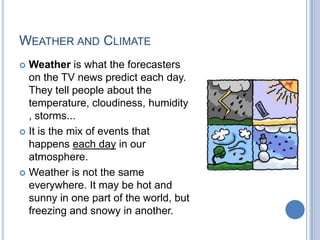
 Weather is what the forecasters
  on the TV news predict each day.
  They tell people about the
  temperature, cloudiness, humidity
  , storms...
 It is the mix of events that
  happens each day in our
  atmosphere.
 Weather is not the same
  everywhere. It may be hot and
  sunny in one part of the world, but
  freezing and snowy in another.
WEATHER AND CLIMATE
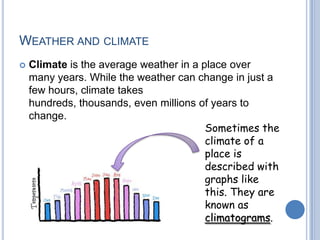
   Climate is the average weather in a place over
    many years. While the weather can change in just a
    few hours, climate takes
    hundreds, thousands, even millions of years to
    change.
                                         Sometimes the
                                         climate of a
                                         place is
                                         described with
                                         graphs like
                                         this. They are
                                         known as
                                         climatograms.
CLIMATE
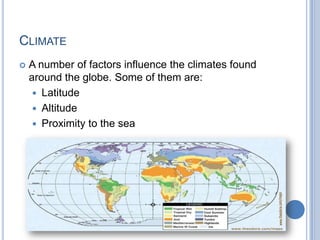
   A number of factors influence the climates found
    around the globe. Some of them are:
      Latitude
      Altitude
      Proximity to the sea
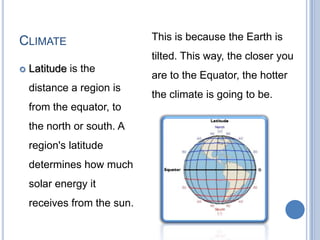
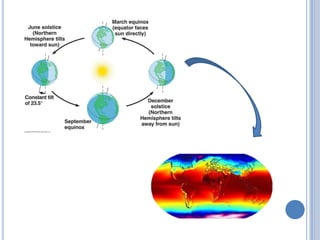
CLIMATE                      This is because the Earth is
                             tilted. This way, the closer you
   Latitude is the
                             are to the Equator, the hotter
    distance a region is
                             the climate is going to be.
    from the equator, to
    the north or south. A
    region's latitude
    determines how much
    solar energy it
    receives from the sun.
CLIMATE

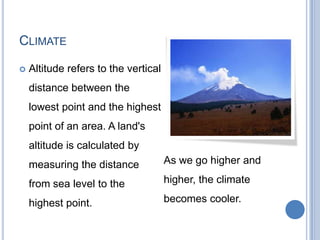
   Altitude refers to the vertical
    distance between the
    lowest point and the highest
    point of an area. A land's
    altitude is calculated by
    measuring the distance            As we go higher and

    from sea level to the             higher, the climate

    highest point.                    becomes cooler.
CLIMATE

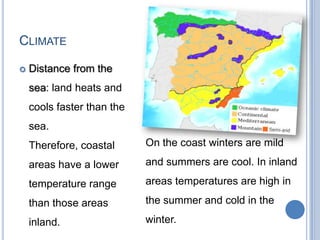
   Distance from the
    sea: land heats and
    cools faster than the
    sea.
    Therefore, coastal      On the coast winters are mild

    areas have a lower      and summers are cool. In inland

    temperature range       areas temperatures are high in

    than those areas        the summer and cold in the

    inland.                 winter.
THE STUDY OF WEATHER AND CLIMATE

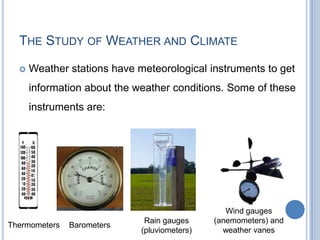
     Weather stations have meteorological instruments to get
      information about the weather conditions. Some of these
      instruments are:


                                                 Wind gauges
                              Rain gauges     (anemometers) and
Thermometers   Barometers
                             (pluviometers)     weather vanes

Weather and climate

  • 2.
    WEATHER AND CLIMATE Weather is what the forecasters on the TV news predict each day. They tell people about the temperature, cloudiness, humidity , storms...  It is the mix of events that happens each day in our atmosphere.  Weather is not the same everywhere. It may be hot and sunny in one part of the world, but freezing and snowy in another.
  • 3.
    WEATHER AND CLIMATE  Climate is the average weather in a place over many years. While the weather can change in just a few hours, climate takes hundreds, thousands, even millions of years to change. Sometimes the climate of a place is described with graphs like this. They are known as climatograms.
  • 4.
    CLIMATE  A number of factors influence the climates found around the globe. Some of them are:  Latitude  Altitude  Proximity to the sea
  • 5.
    CLIMATE This is because the Earth is tilted. This way, the closer you  Latitude is the are to the Equator, the hotter distance a region is the climate is going to be. from the equator, to the north or south. A region's latitude determines how much solar energy it receives from the sun.
  • 7.
    CLIMATE  Altitude refers to the vertical distance between the lowest point and the highest point of an area. A land's altitude is calculated by measuring the distance As we go higher and from sea level to the higher, the climate highest point. becomes cooler.
  • 8.
    CLIMATE  Distance from the sea: land heats and cools faster than the sea. Therefore, coastal On the coast winters are mild areas have a lower and summers are cool. In inland temperature range areas temperatures are high in than those areas the summer and cold in the inland. winter.
  • 9.
    THE STUDY OFWEATHER AND CLIMATE  Weather stations have meteorological instruments to get information about the weather conditions. Some of these instruments are: Wind gauges Rain gauges (anemometers) and Thermometers Barometers (pluviometers) weather vanes