Earth’s
Weather &
Climate
Here is where your presentation begins
6TH Grade
Table of Contents
Introduction
01
You will learn about
weather and climate in this
lesson
03
You will learn that weather changes
with changing geographical
location
02 04
You will learn that average
temperature and precipitation can
change seasons.
Weather changes
weather and climate Seasons
You will learn difference between
weather and climate
Welcome Students!
Lets begin the lesson….
Weather & Climate
01
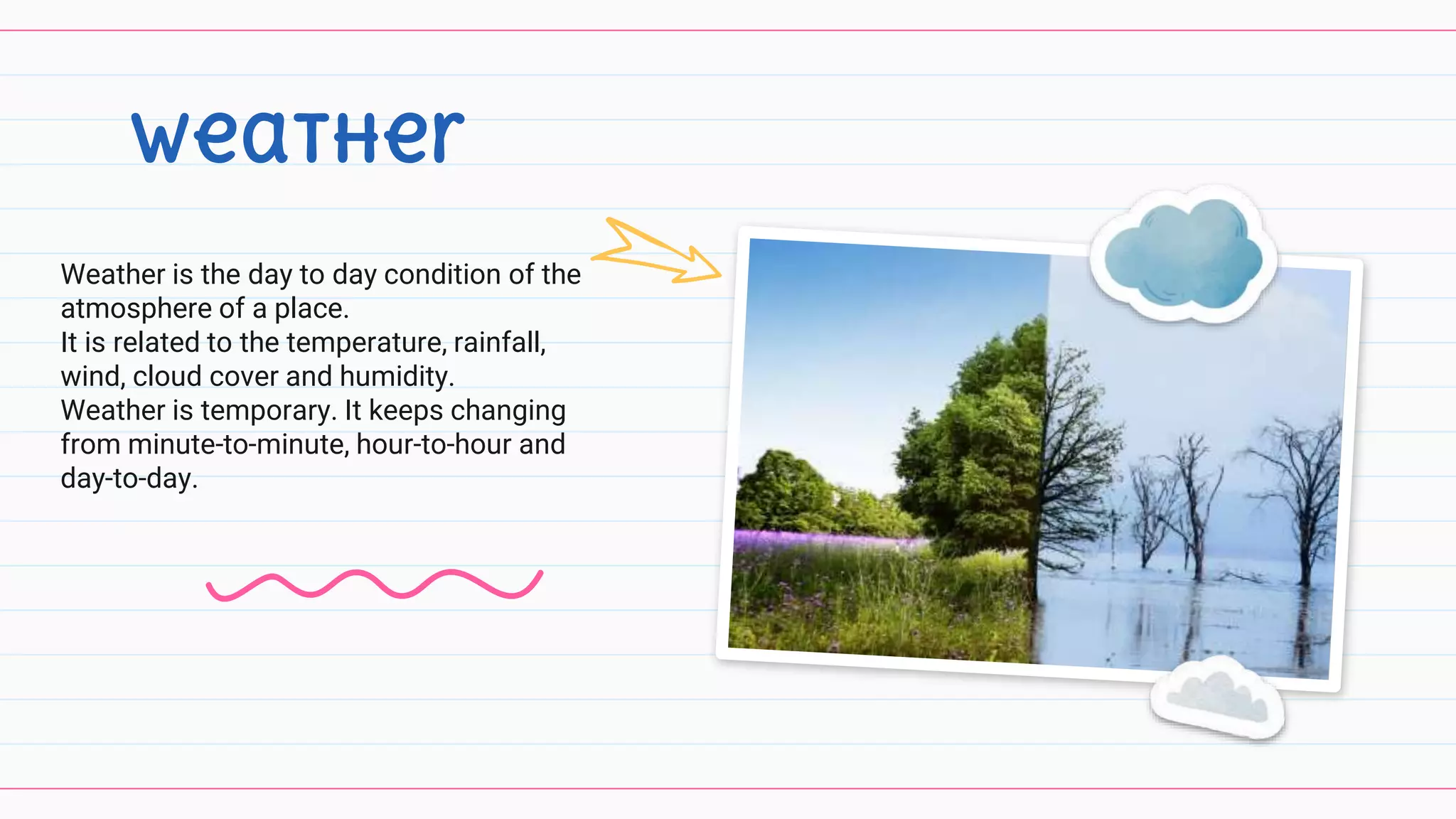
Weather is the day to day condition of the
atmosphere of a place.
It is related to the temperature, rainfall,
wind, cloud cover and humidity.
Weather is temporary. It keeps changing
from minute-to-minute, hour-to-hour and
day-to-day.
Weather
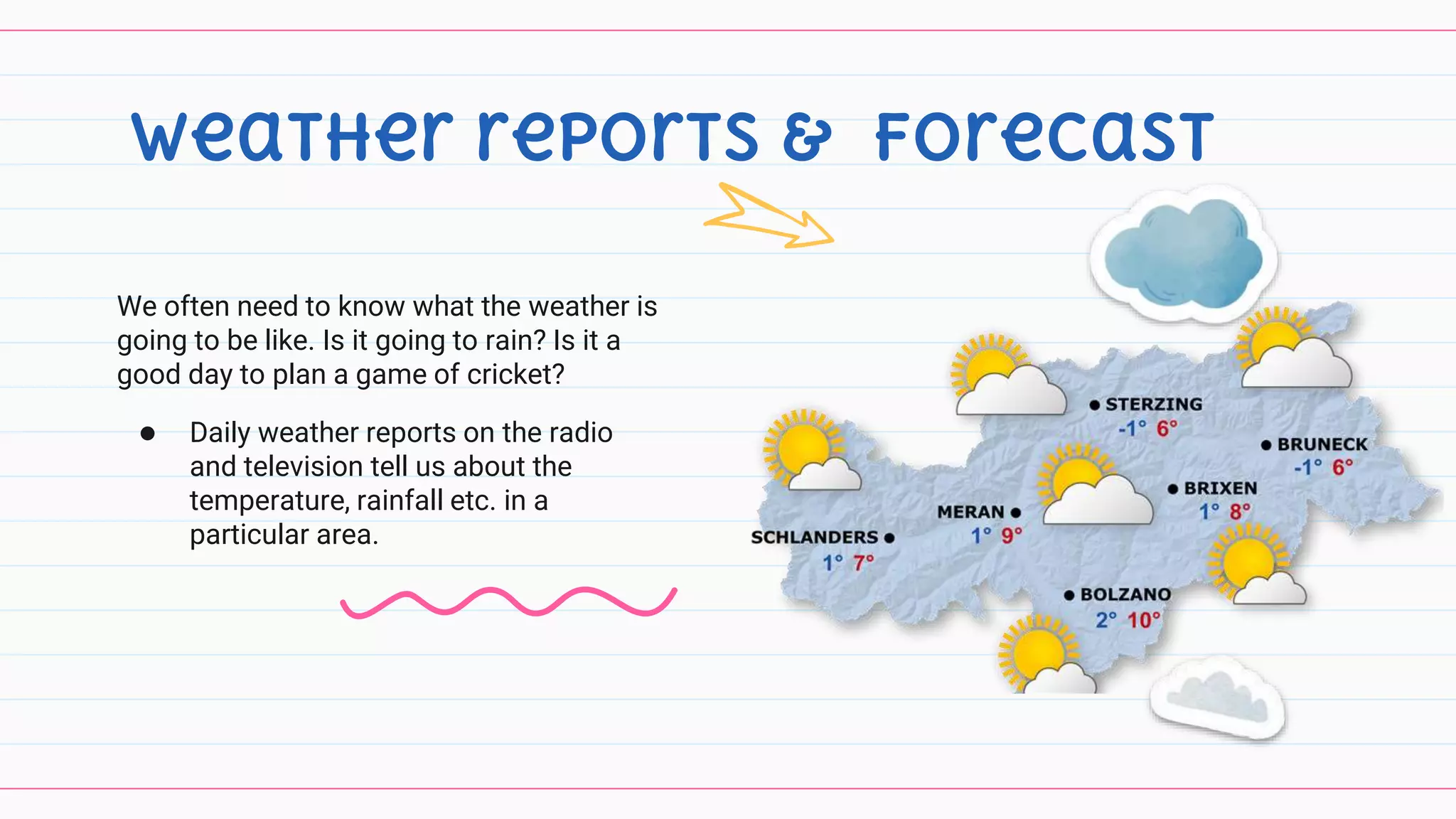
We often need to know what the weather is
going to be like. Is it going to rain? Is it a
good day to plan a game of cricket?
● Daily weather reports on the radio
and television tell us about the
temperature, rainfall etc. in a
particular area.
Weather reports & Forecast
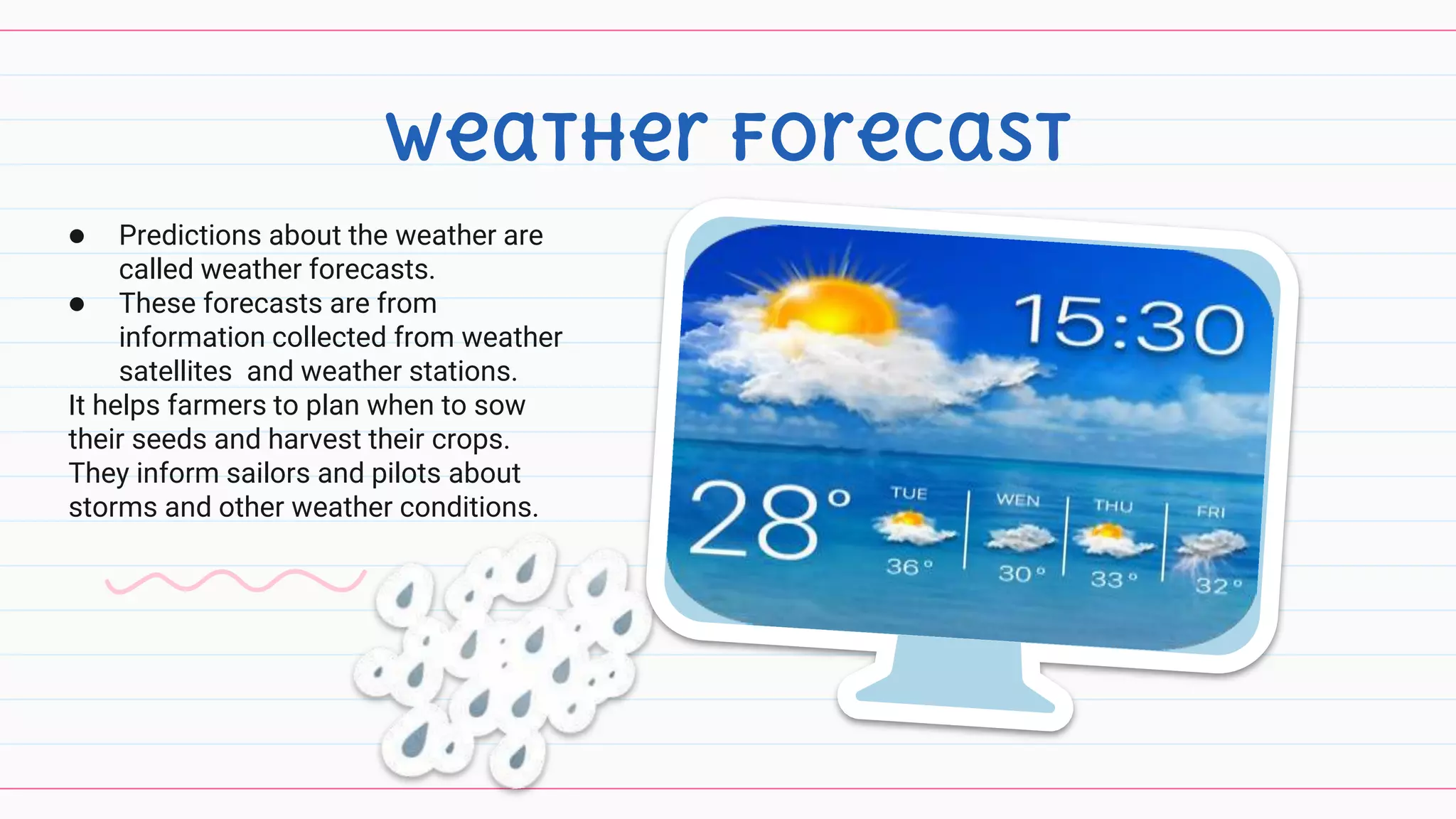
● Predictions about the weather are
called weather forecasts.
● These forecasts are from
information collected from weather
satellites and weather stations.
It helps farmers to plan when to sow
their seeds and harvest their crops.
They inform sailors and pilots about
storms and other weather conditions.
Weather Forecast
Humidity Temperature
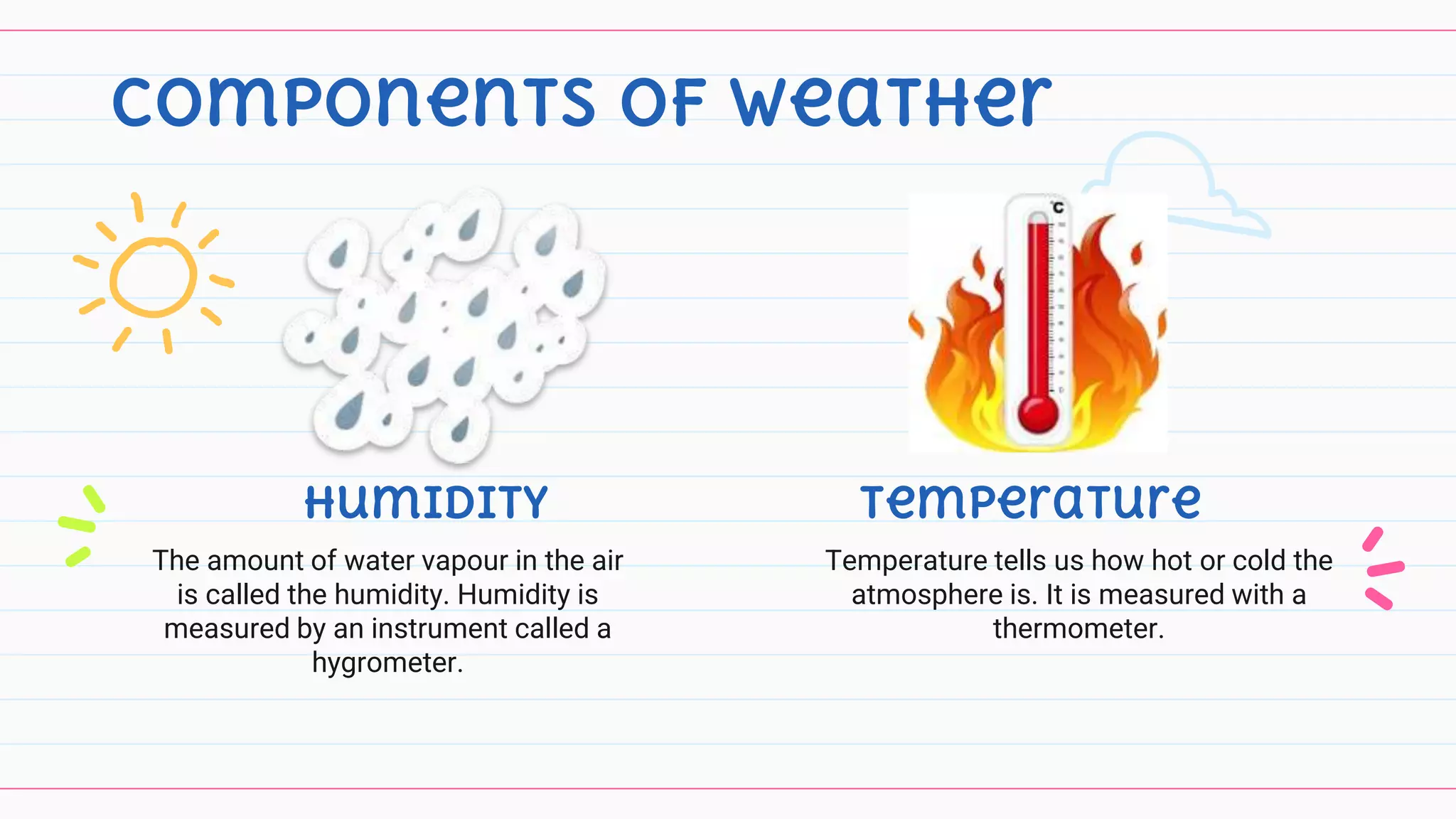
The amount of water vapour in the air
is called the humidity. Humidity is
measured by an instrument called a
hygrometer.
Temperature tells us how hot or cold the
atmosphere is. It is measured with a
thermometer.
Components of Weather
Precipitation Wind
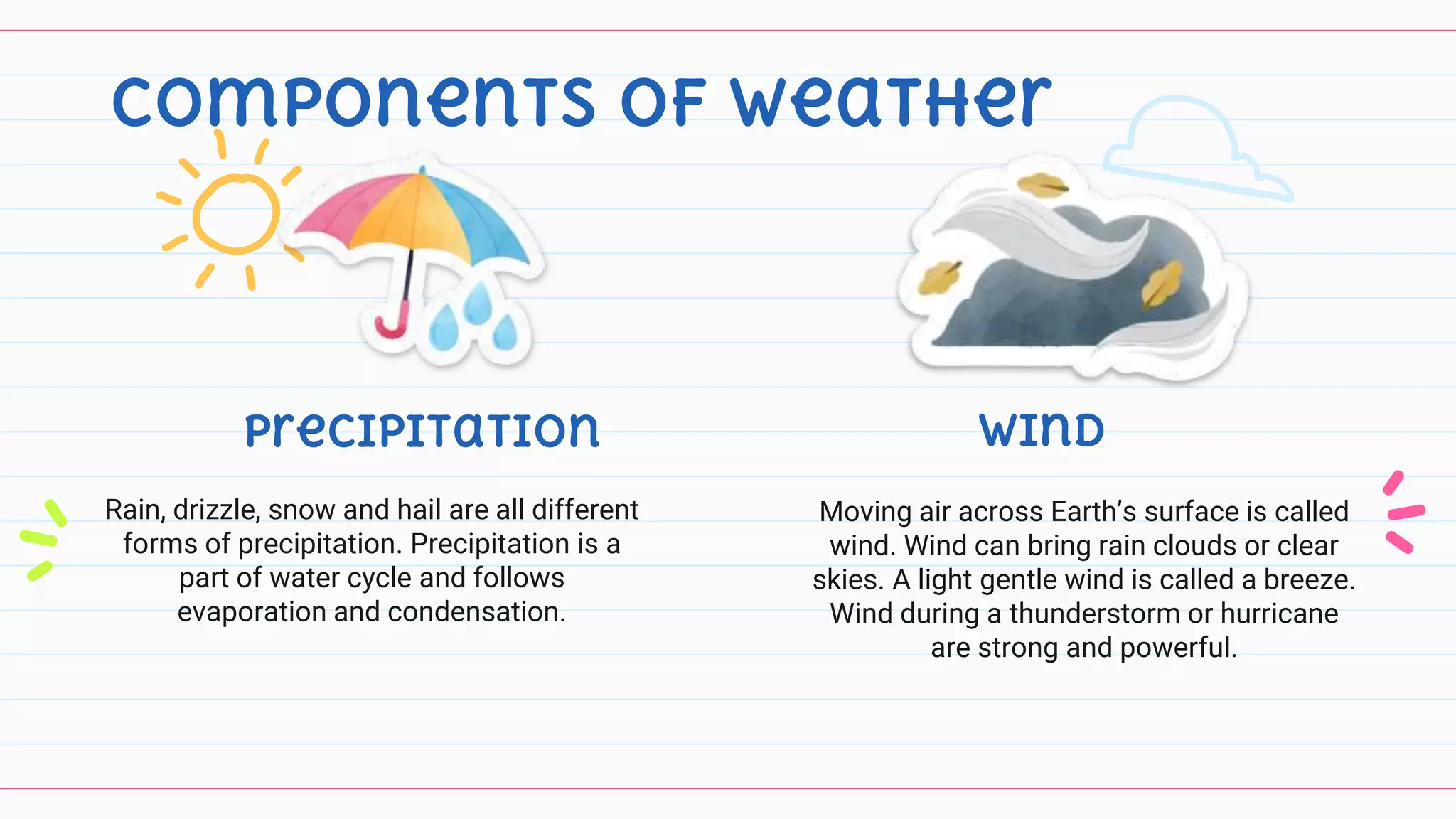
Rain, drizzle, snow and hail are all different
forms of precipitation. Precipitation is a
part of water cycle and follows
evaporation and condensation.
Moving air across Earth’s surface is called
wind. Wind can bring rain clouds or clear
skies. A light gentle wind is called a breeze.
Wind during a thunderstorm or hurricane
are strong and powerful.
Components of Weather
Clouds
Clouds are collections of tiny droplets of water or
ice crystals. These droplets are so light that they
float in the air. Clouds move with the wind.
Components of Weather
Find out about different types of clouds and make a poster.
The heat from the sun, temperature, the
movement of air, humidity, rain and clouds
are some of the factors responsible for
weather change.
Cause of
Weather change
 Afternoons are hot
compared to mornings or
evenings. That is because
the sun is directly overhead
at this time of the day.
 Early in the morning and
inn the evening the sun’s
rays are slanting, and so it
is cool.
 The sun warms the air in different places to
different amounts. When the air in an area is
warmer than the surrounding area, the hot air
above the land rises and cool air rushes to take its
place. This cause movement of air or winds which
lead to changes in weather.
 Humidity in the air also affects the weather. It
affects cloud formation can cause rain or snow
 Clouds can both cool down or warm up
temperature on the Earth.
Climate is the weather pattern in a place over a long
period of time (about 30 years).
Climate
03
 Climate is important as if affects
the wildlife and vegetation of a
place.
 Climate is ‘what you expect’ like
a very cold winter, while weather
is ‘what you actually get’ like a
hot day with thunder showers.
 The climate depends on the
temperature and precipitation in
that place, over many years.
Different climate
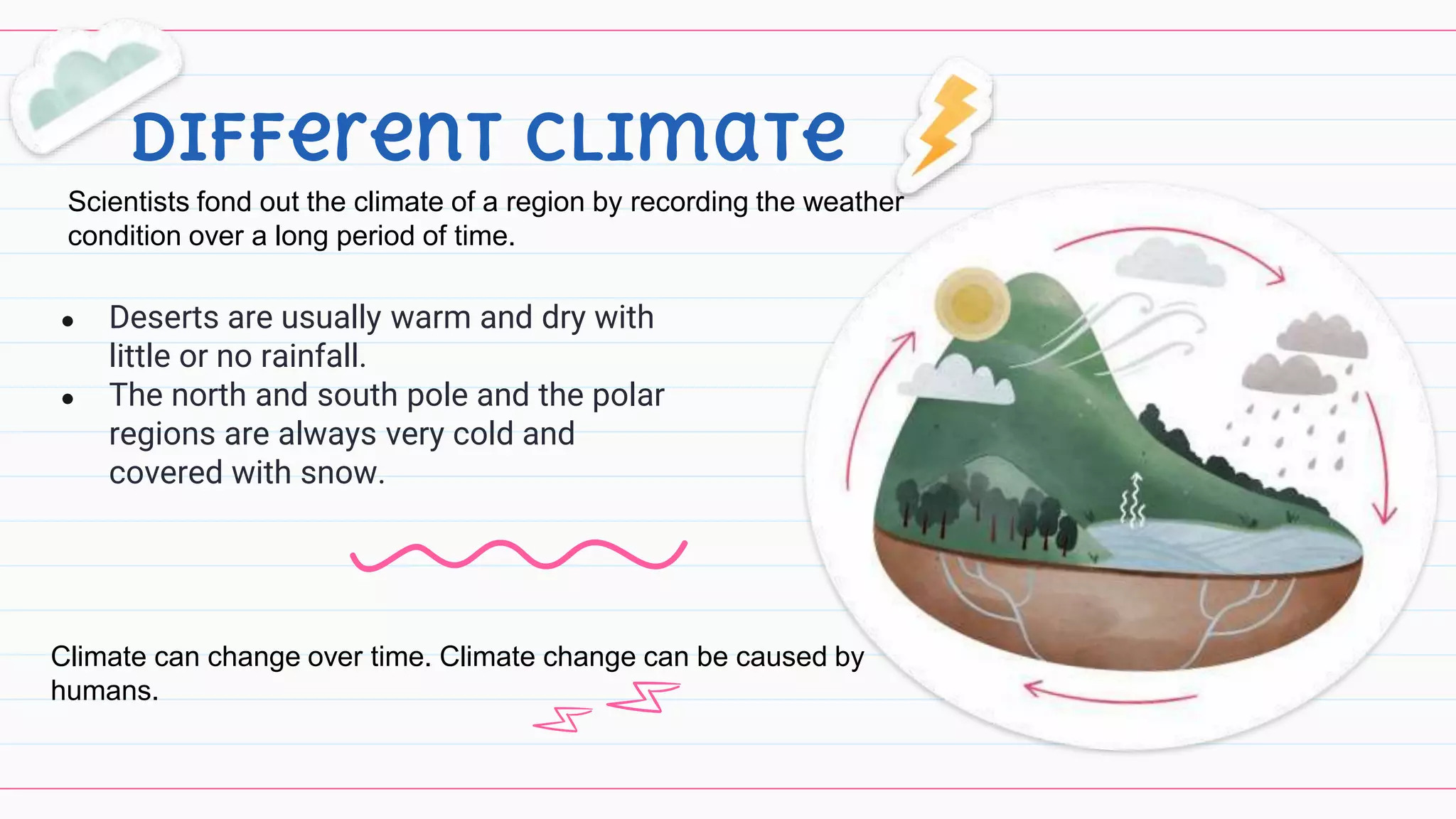
● Deserts are usually warm and dry with
little or no rainfall.
● The north and south pole and the polar
regions are always very cold and
covered with snow.
Scientists fond out the climate of a region by recording the weather
condition over a long period of time.
Climate can change over time. Climate change can be caused by
humans.
Temperature and precipitation change with the season
and the location.
Factors affecting
climate
04
Seasons Latitude
Weather change with
seasons. This is because of
the movement of earth
around the sun.
The climate of a place
depends on a latitude or the
nearness of the place to the
equator.
Factors Affecting climate
Change of seasons in
northern hemisphere of Earth
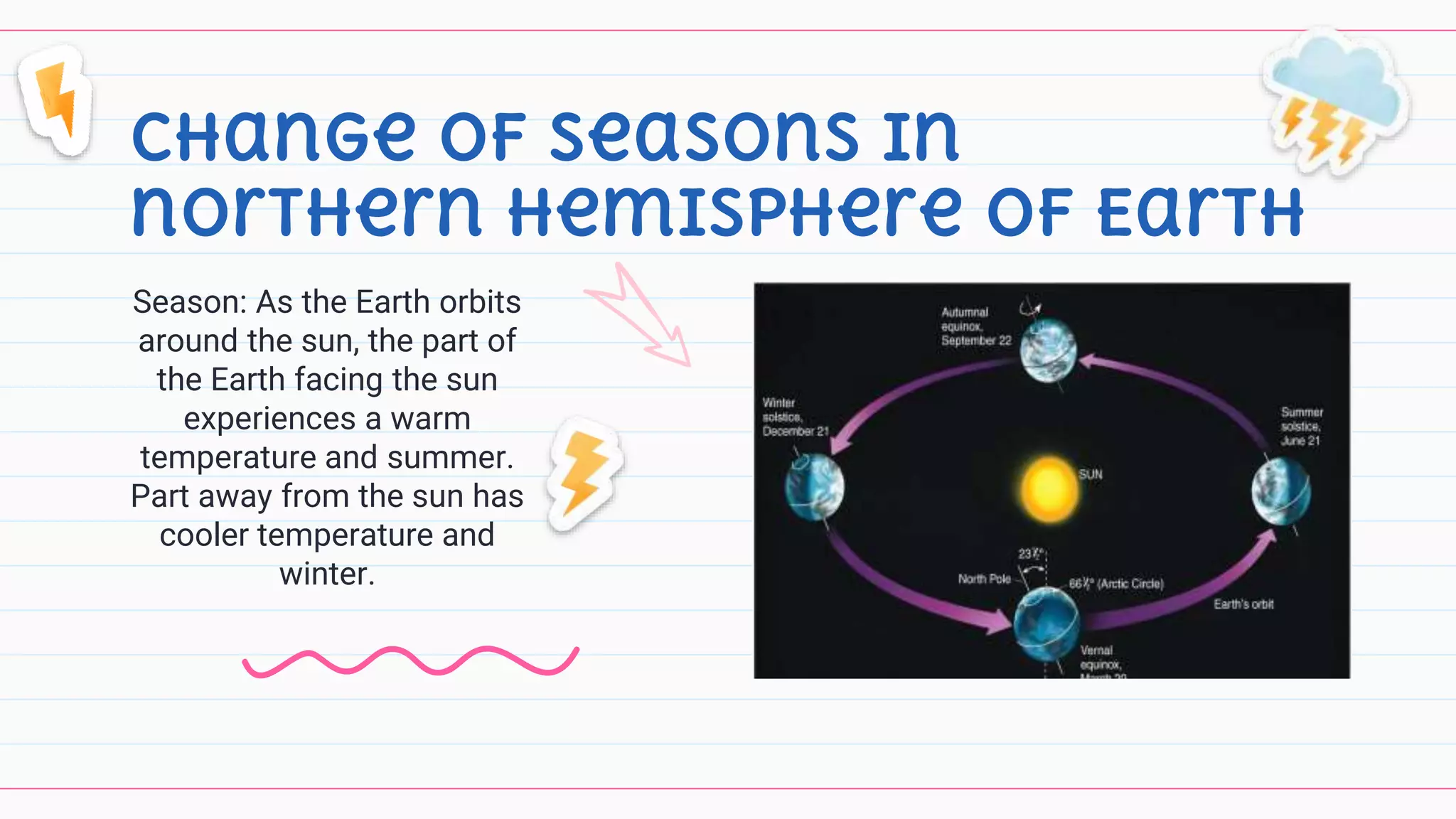
Season: As the Earth orbits
around the sun, the part of
the Earth facing the sun
experiences a warm
temperature and summer.
Part away from the sun has
cooler temperature and
winter.
Change of seasons in
northern hemisphere of Earth
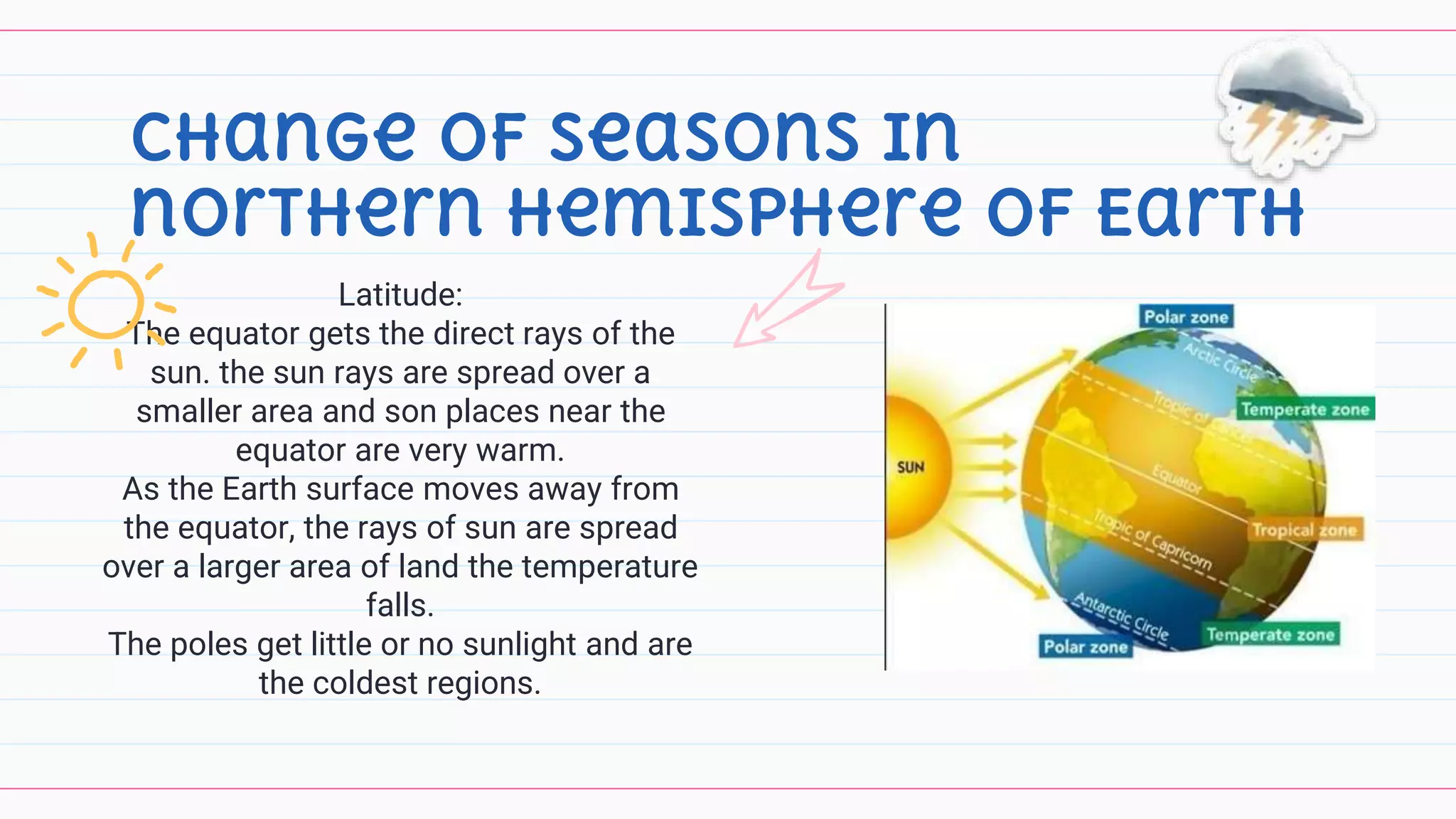
Latitude:
The equator gets the direct rays of the
sun. the sun rays are spread over a
smaller area and son places near the
equator are very warm.
As the Earth surface moves away from
the equator, the rays of sun are spread
over a larger area of land the temperature
falls.
The poles get little or no sunlight and are
the coldest regions.
Altitude
Distance from
ocean
Height of a place above sea
level also affect its climate.
A place at higher altitude, or
location will have a cooler
temperature because as you
go higher the air becomes
thinner, or less dense, and
so it absorbs less heat.
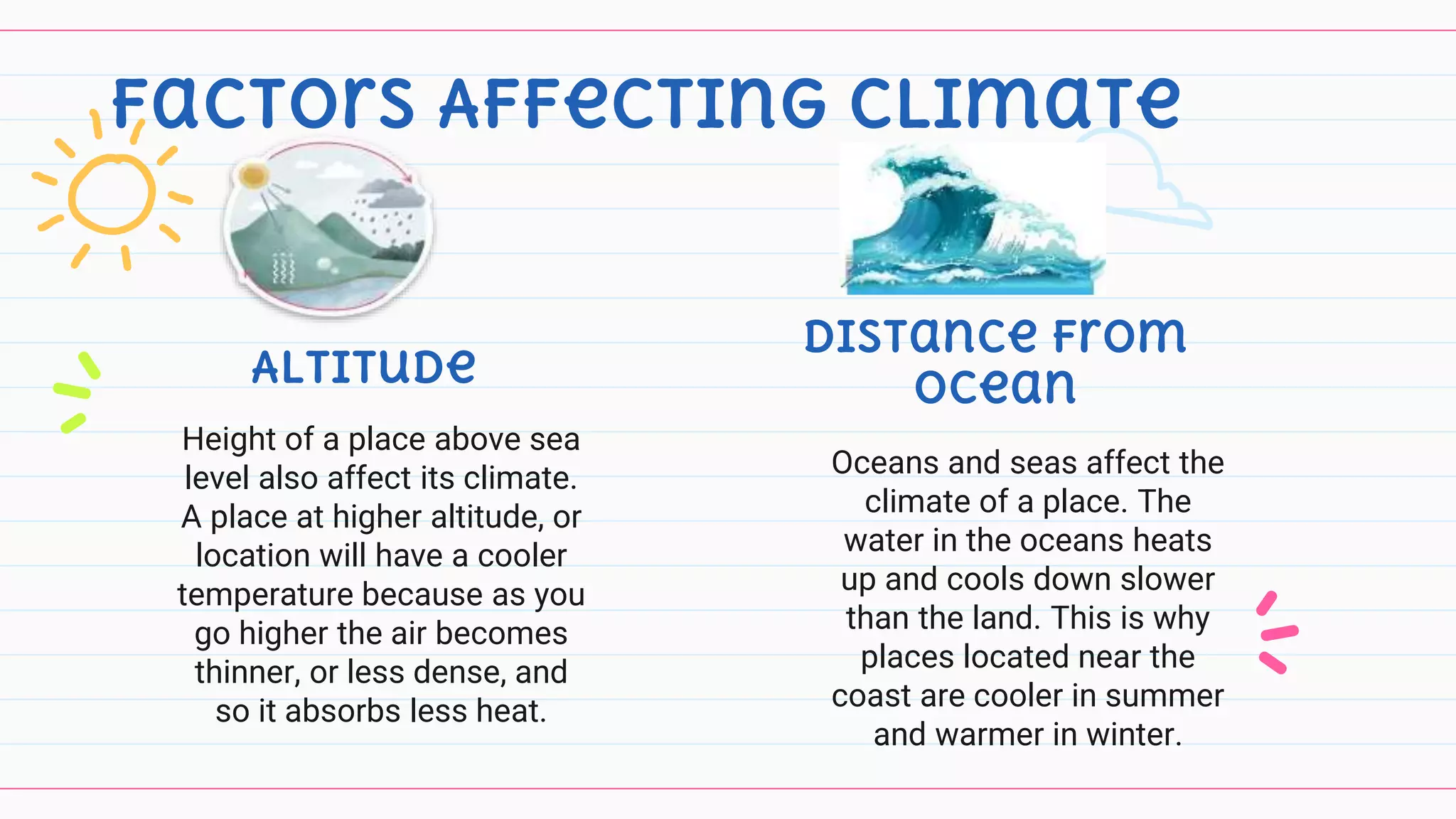
Oceans and seas affect the
climate of a place. The
water in the oceans heats
up and cools down slower
than the land. This is why
places located near the
coast are cooler in summer
and warmer in winter.
Factors Affecting climate
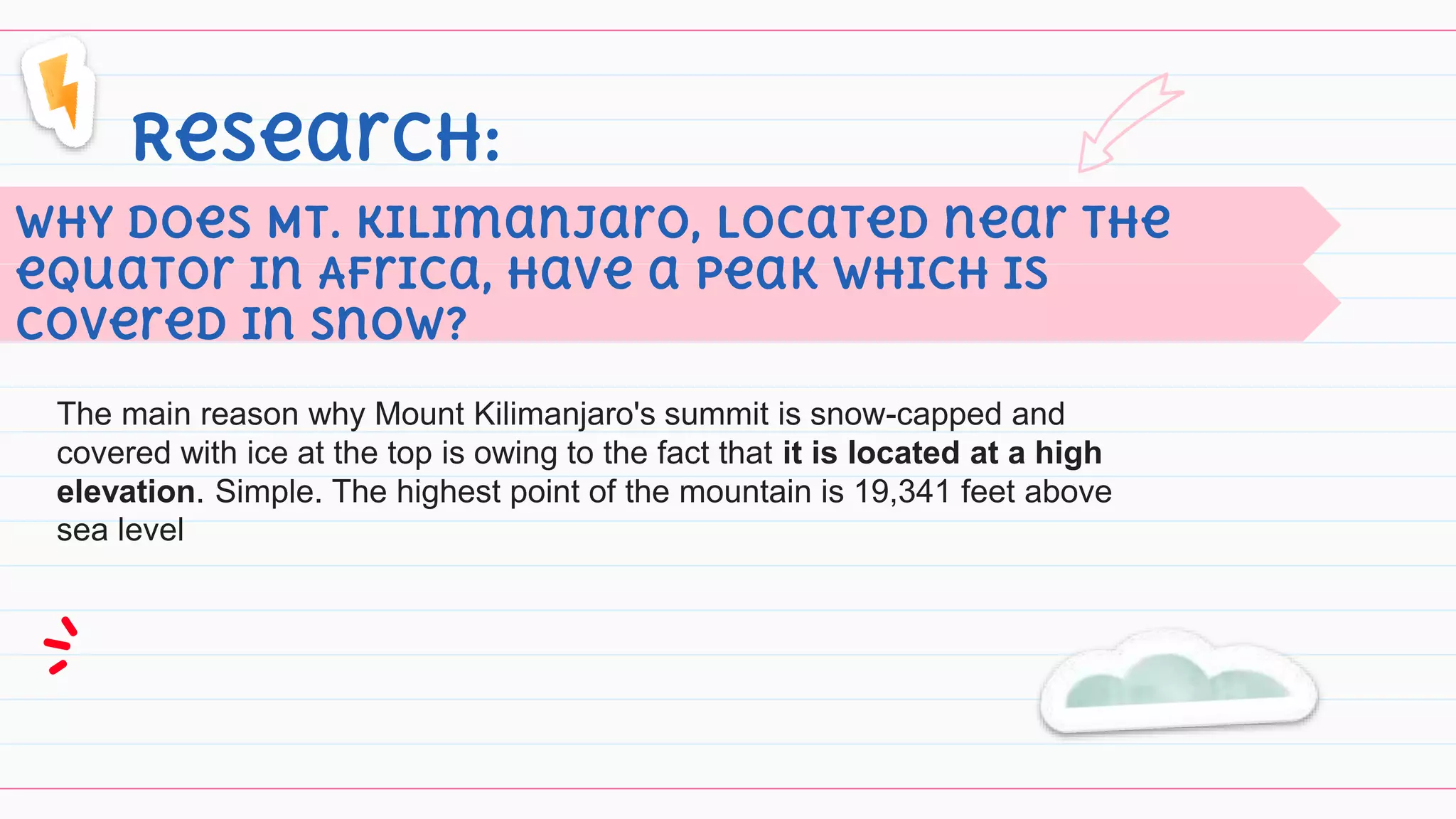
Research:
The main reason why Mount Kilimanjaro's summit is snow-capped and
covered with ice at the top is owing to the fact that it is located at a high
elevation. Simple. The highest point of the mountain is 19,341 feet above
sea level
Why does MT. Kilimanjaro, located near the
equator in Africa, have a peak which is
covered in snow?
Research:
What can cause climate change?
How can humans help to stop climate change?
Thank you
If you have any question, you can ask

Science - 6th Grade_ Weather & Climate .pptx

  • 1.
    Earth’s Weather & Climate Here iswhere your presentation begins 6TH Grade
  • 2.
    Table of Contents Introduction 01 Youwill learn about weather and climate in this lesson 03 You will learn that weather changes with changing geographical location 02 04 You will learn that average temperature and precipitation can change seasons. Weather changes weather and climate Seasons You will learn difference between weather and climate
  • 3.
  • 4.
  • 5.
    Weather is theday to day condition of the atmosphere of a place. It is related to the temperature, rainfall, wind, cloud cover and humidity. Weather is temporary. It keeps changing from minute-to-minute, hour-to-hour and day-to-day. Weather
  • 6.
    We often needto know what the weather is going to be like. Is it going to rain? Is it a good day to plan a game of cricket? ● Daily weather reports on the radio and television tell us about the temperature, rainfall etc. in a particular area. Weather reports & Forecast
  • 7.
    ● Predictions aboutthe weather are called weather forecasts. ● These forecasts are from information collected from weather satellites and weather stations. It helps farmers to plan when to sow their seeds and harvest their crops. They inform sailors and pilots about storms and other weather conditions. Weather Forecast
  • 8.
    Humidity Temperature The amountof water vapour in the air is called the humidity. Humidity is measured by an instrument called a hygrometer. Temperature tells us how hot or cold the atmosphere is. It is measured with a thermometer. Components of Weather
  • 9.
    Precipitation Wind Rain, drizzle,snow and hail are all different forms of precipitation. Precipitation is a part of water cycle and follows evaporation and condensation. Moving air across Earth’s surface is called wind. Wind can bring rain clouds or clear skies. A light gentle wind is called a breeze. Wind during a thunderstorm or hurricane are strong and powerful. Components of Weather
  • 10.
    Clouds Clouds are collectionsof tiny droplets of water or ice crystals. These droplets are so light that they float in the air. Clouds move with the wind. Components of Weather Find out about different types of clouds and make a poster.
  • 11.
    The heat fromthe sun, temperature, the movement of air, humidity, rain and clouds are some of the factors responsible for weather change. Cause of Weather change
  • 12.
     Afternoons arehot compared to mornings or evenings. That is because the sun is directly overhead at this time of the day.  Early in the morning and inn the evening the sun’s rays are slanting, and so it is cool.
  • 13.
     The sunwarms the air in different places to different amounts. When the air in an area is warmer than the surrounding area, the hot air above the land rises and cool air rushes to take its place. This cause movement of air or winds which lead to changes in weather.  Humidity in the air also affects the weather. It affects cloud formation can cause rain or snow  Clouds can both cool down or warm up temperature on the Earth.
  • 14.
    Climate is theweather pattern in a place over a long period of time (about 30 years). Climate 03
  • 15.
     Climate isimportant as if affects the wildlife and vegetation of a place.  Climate is ‘what you expect’ like a very cold winter, while weather is ‘what you actually get’ like a hot day with thunder showers.  The climate depends on the temperature and precipitation in that place, over many years.
  • 16.
    Different climate ● Desertsare usually warm and dry with little or no rainfall. ● The north and south pole and the polar regions are always very cold and covered with snow. Scientists fond out the climate of a region by recording the weather condition over a long period of time. Climate can change over time. Climate change can be caused by humans.
  • 17.
    Temperature and precipitationchange with the season and the location. Factors affecting climate 04
  • 18.
    Seasons Latitude Weather changewith seasons. This is because of the movement of earth around the sun. The climate of a place depends on a latitude or the nearness of the place to the equator. Factors Affecting climate
  • 19.
    Change of seasonsin northern hemisphere of Earth Season: As the Earth orbits around the sun, the part of the Earth facing the sun experiences a warm temperature and summer. Part away from the sun has cooler temperature and winter.
  • 20.
    Change of seasonsin northern hemisphere of Earth Latitude: The equator gets the direct rays of the sun. the sun rays are spread over a smaller area and son places near the equator are very warm. As the Earth surface moves away from the equator, the rays of sun are spread over a larger area of land the temperature falls. The poles get little or no sunlight and are the coldest regions.
  • 21.
    Altitude Distance from ocean Height ofa place above sea level also affect its climate. A place at higher altitude, or location will have a cooler temperature because as you go higher the air becomes thinner, or less dense, and so it absorbs less heat. Oceans and seas affect the climate of a place. The water in the oceans heats up and cools down slower than the land. This is why places located near the coast are cooler in summer and warmer in winter. Factors Affecting climate
  • 22.
    Research: The main reasonwhy Mount Kilimanjaro's summit is snow-capped and covered with ice at the top is owing to the fact that it is located at a high elevation. Simple. The highest point of the mountain is 19,341 feet above sea level Why does MT. Kilimanjaro, located near the equator in Africa, have a peak which is covered in snow?
  • 23.
    Research: What can causeclimate change? How can humans help to stop climate change?
  • 24.
    Thank you If youhave any question, you can ask