Plants Christina WillsEDU: 290 T-TR11:00 a.m. to 12:15 p.m.
Plants vs. Animals
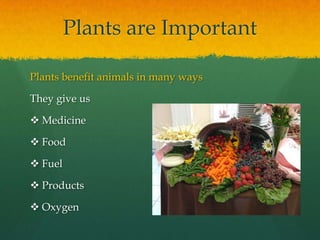
Plants are ImportantPlants benefit animals in many ways They give usMedicine
Food
Fuel
Products
OxygenIf you scratch my back I’ll scratch yoursPlants and animals both give what the other one needsAll animals need oxygen to survive, oxygen is produced by plantsAll plants need carbon dioxide to make food, and animals breath out CO2
Making foodPlants have special components in their cells that are needed to make their own food, called ChloroplastsA chloroplast is a green plastid inside a plant cell, it contains the pigment chlorophyll which is why plants are green. This pigment is needed for plants to complete photosynthesis. Photosynthesis is a process in which a plant makes its own food.
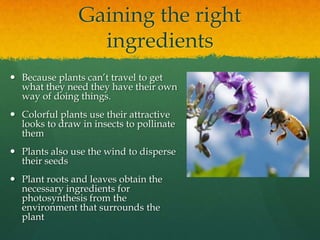
Gaining the right ingredientsBecause plants can’t travel to get what they need they have their own way of doing things.Colorful plants use their attractive looks to draw in insects to pollinate themPlants also use the wind to disperse their seedsPlant roots and leaves obtain the necessary ingredients for photosynthesis from the environment that surrounds the plant
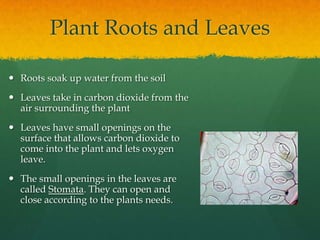
Plant Roots and LeavesRoots soak up water from the soilLeaves take in carbon dioxide from the air surrounding the plantLeaves have small openings on the surface that allows carbon dioxide to come into the plant and lets oxygen leave.The small openings in the leaves are called Stomata. They can open and close according to the plants needs.
Photosynthesis Process where plants take in H2O (water) and CO2 (carbon dioxide) and then light hits the chlorophyll and its starts to convert H2O and CO2 into Sugar and O2 (oxygen)The sugar is what is needed by the plantThe O2 is not needed so it is released as a waste product into the atmosphere
Glucose The sugar that is produced through photosynthesis is called GlucoseThis is used by the plant in other processes so that is has energy and can grow
CellsThe reason plants can perform photosynthesis is because their cells are specially made for it.Plants contain-ChloroplastsChlorophyllThe green pigment, chlorophyll, is the reason most plants are greenTheir color helps them absorb the strongest types of wavelengths to insure the best growing conditions
The cell wallPlants also have a cell wall, it helps maintain their shape and supports them.Some plant cells have a double cell wall that helps plants grow tall and sturdy.
Plants come in all shapes and sizesThere are so many different environments that plants grow in.Plants adapt to their surroundings in order to survivePlants in the rainforest have larger, broader leaves that are made for catching sunlightPlants in the dessert have spines instead of leaves, and their stems are large to contain more water
Environmental affectsThe reason plants have to adapt is for the environment their inMany factors that affect plant growth are:Light intensityTemperature The soils pH

Plants and Photosynthesis

  • 1.
    Plants Christina WillsEDU:290 T-TR11:00 a.m. to 12:15 p.m.
  • 2.
  • 3.
    Plants are ImportantPlantsbenefit animals in many ways They give usMedicine
  • 4.
  • 5.
  • 6.
  • 7.
    OxygenIf you scratchmy back I’ll scratch yoursPlants and animals both give what the other one needsAll animals need oxygen to survive, oxygen is produced by plantsAll plants need carbon dioxide to make food, and animals breath out CO2
  • 8.
    Making foodPlants havespecial components in their cells that are needed to make their own food, called ChloroplastsA chloroplast is a green plastid inside a plant cell, it contains the pigment chlorophyll which is why plants are green. This pigment is needed for plants to complete photosynthesis. Photosynthesis is a process in which a plant makes its own food.
  • 9.
    Gaining the rightingredientsBecause plants can’t travel to get what they need they have their own way of doing things.Colorful plants use their attractive looks to draw in insects to pollinate themPlants also use the wind to disperse their seedsPlant roots and leaves obtain the necessary ingredients for photosynthesis from the environment that surrounds the plant
  • 10.
    Plant Roots andLeavesRoots soak up water from the soilLeaves take in carbon dioxide from the air surrounding the plantLeaves have small openings on the surface that allows carbon dioxide to come into the plant and lets oxygen leave.The small openings in the leaves are called Stomata. They can open and close according to the plants needs.
  • 11.
    Photosynthesis Process whereplants take in H2O (water) and CO2 (carbon dioxide) and then light hits the chlorophyll and its starts to convert H2O and CO2 into Sugar and O2 (oxygen)The sugar is what is needed by the plantThe O2 is not needed so it is released as a waste product into the atmosphere
  • 12.
    Glucose The sugarthat is produced through photosynthesis is called GlucoseThis is used by the plant in other processes so that is has energy and can grow
  • 13.
    CellsThe reason plantscan perform photosynthesis is because their cells are specially made for it.Plants contain-ChloroplastsChlorophyllThe green pigment, chlorophyll, is the reason most plants are greenTheir color helps them absorb the strongest types of wavelengths to insure the best growing conditions
  • 14.
    The cell wallPlantsalso have a cell wall, it helps maintain their shape and supports them.Some plant cells have a double cell wall that helps plants grow tall and sturdy.
  • 15.
    Plants come inall shapes and sizesThere are so many different environments that plants grow in.Plants adapt to their surroundings in order to survivePlants in the rainforest have larger, broader leaves that are made for catching sunlightPlants in the dessert have spines instead of leaves, and their stems are large to contain more water
  • 16.
    Environmental affectsThe reasonplants have to adapt is for the environment their inMany factors that affect plant growth are:Light intensityTemperature The soils pH