Wave Motion
Definition, types, properties
Velocity, wavelength, frequency
Wave Motion
Definitions
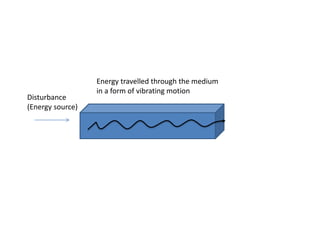
 Propagation of energy without the necessary
displacement of matter
 It is a mechanism to transmit energy from one
point to another
 Vibrational Motion
Disturbance
(Energy source)
Energy travelled through the medium
in a form of vibrating motion
Type of Waves
Types according to Medium
 Mechanical Waves – wave energy needs a
physical medium (air, liquid, solid) to
propagate itself.
Examples: sound ( air), earthquake ( solid and
liquid),
 Electromagnetic Waves – wave energy which
does not require any physical medium.
Example: Light, and the different frequencies
of light
Radio waves, gamma rays, x-rays, visible light,
ultraviolet rays, microwaves.
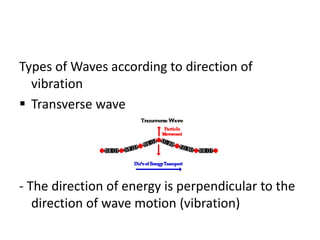
Types of Waves according to direction of
vibration
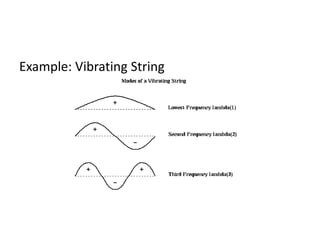
 Transverse wave
- The direction of energy is perpendicular to the
direction of wave motion (vibration)
Example: Vibrating String
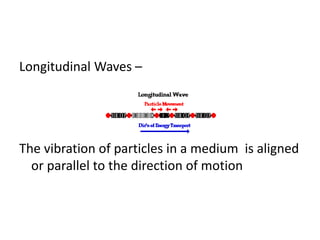
Longitudinal Waves –
The vibration of particles in a medium is aligned
or parallel to the direction of motion
Example: Sound
Transverse VS Longitudinal
Circular Wave
Circular Wave (Surface Waves) – Combination of
Transverse and Longitudinal
Example: Sea Waves
Parts, and Properties of a Wave
Transverse Wave
Trough
Crest
Nodes
Wavelength
Length of one cycle
Amplitude – distance
From equilibrium to max displacement
Frequency (f) – the number of cycles or
vibrations per second. (Hertz)
Velocity – the speed of the wave
Period (T) – the time required to make one
vibration( 1/f)
Frequency, Velocity, and Wavelength
F – frequency
V – velocity
- wavelength
T - period

T
v
fv




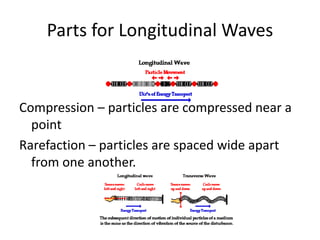
Parts for Longitudinal Waves
Compression – particles are compressed near a
point
Rarefaction – particles are spaced wide apart
from one another.
Quiz
Answer the following:
True or False
1) In order for a sound to travel from Joseph to
Martin, the air molecules near Joseph’s lips
must travel to the ears of Martin.
2) A transverse wave transmits energy from east
to west, the particles of the medium will
move also from east to west.
• 3. When the fans in a basketball game makes
this movement, this is an example of
Longitudinal wave.
• 4. When fans in a basketball game makes this
movement, this is an example of transverse
wave.
• 5. Sonar sound is used to map the bottom of a
sea floor and to locate fish. Sonar is an
example of transverse wave
Multiple Choice
6. This letter represents the wavelength
7. This letter represents the amplitude.
8. This letter represents the trough.
9. This letter represents the crest.
F
G
10. What is your new year’s resolution?

Wave motion

  • 1.
    Wave Motion Definition, types,properties Velocity, wavelength, frequency
  • 2.
    Wave Motion Definitions  Propagationof energy without the necessary displacement of matter  It is a mechanism to transmit energy from one point to another  Vibrational Motion
  • 3.
    Disturbance (Energy source) Energy travelledthrough the medium in a form of vibrating motion
  • 4.
    Type of Waves Typesaccording to Medium  Mechanical Waves – wave energy needs a physical medium (air, liquid, solid) to propagate itself. Examples: sound ( air), earthquake ( solid and liquid),
  • 5.
     Electromagnetic Waves– wave energy which does not require any physical medium. Example: Light, and the different frequencies of light Radio waves, gamma rays, x-rays, visible light, ultraviolet rays, microwaves.
  • 6.
    Types of Wavesaccording to direction of vibration  Transverse wave - The direction of energy is perpendicular to the direction of wave motion (vibration)
  • 7.
  • 8.
    Longitudinal Waves – Thevibration of particles in a medium is aligned or parallel to the direction of motion
  • 9.
  • 10.
  • 11.
    Circular Wave Circular Wave(Surface Waves) – Combination of Transverse and Longitudinal Example: Sea Waves
  • 12.
    Parts, and Propertiesof a Wave Transverse Wave Trough Crest Nodes Wavelength Length of one cycle Amplitude – distance From equilibrium to max displacement
  • 13.
    Frequency (f) –the number of cycles or vibrations per second. (Hertz) Velocity – the speed of the wave Period (T) – the time required to make one vibration( 1/f)
  • 14.
    Frequency, Velocity, andWavelength F – frequency V – velocity - wavelength T - period  T v fv    
  • 15.
    Parts for LongitudinalWaves Compression – particles are compressed near a point Rarefaction – particles are spaced wide apart from one another.
  • 16.
    Quiz Answer the following: Trueor False 1) In order for a sound to travel from Joseph to Martin, the air molecules near Joseph’s lips must travel to the ears of Martin. 2) A transverse wave transmits energy from east to west, the particles of the medium will move also from east to west.
  • 17.
    • 3. Whenthe fans in a basketball game makes this movement, this is an example of Longitudinal wave. • 4. When fans in a basketball game makes this movement, this is an example of transverse wave. • 5. Sonar sound is used to map the bottom of a sea floor and to locate fish. Sonar is an example of transverse wave
  • 18.
    Multiple Choice 6. Thisletter represents the wavelength 7. This letter represents the amplitude. 8. This letter represents the trough. 9. This letter represents the crest. F G
  • 19.
    10. What isyour new year’s resolution?