BE READY WITH THE FOLLOWING:
1. ¼ paper
2. Black and Red ballpen
T R U E O R F A L S E
A wave is a disturbance that
transfers energy as it propagates
from one region of the system to
the other.
T R U E
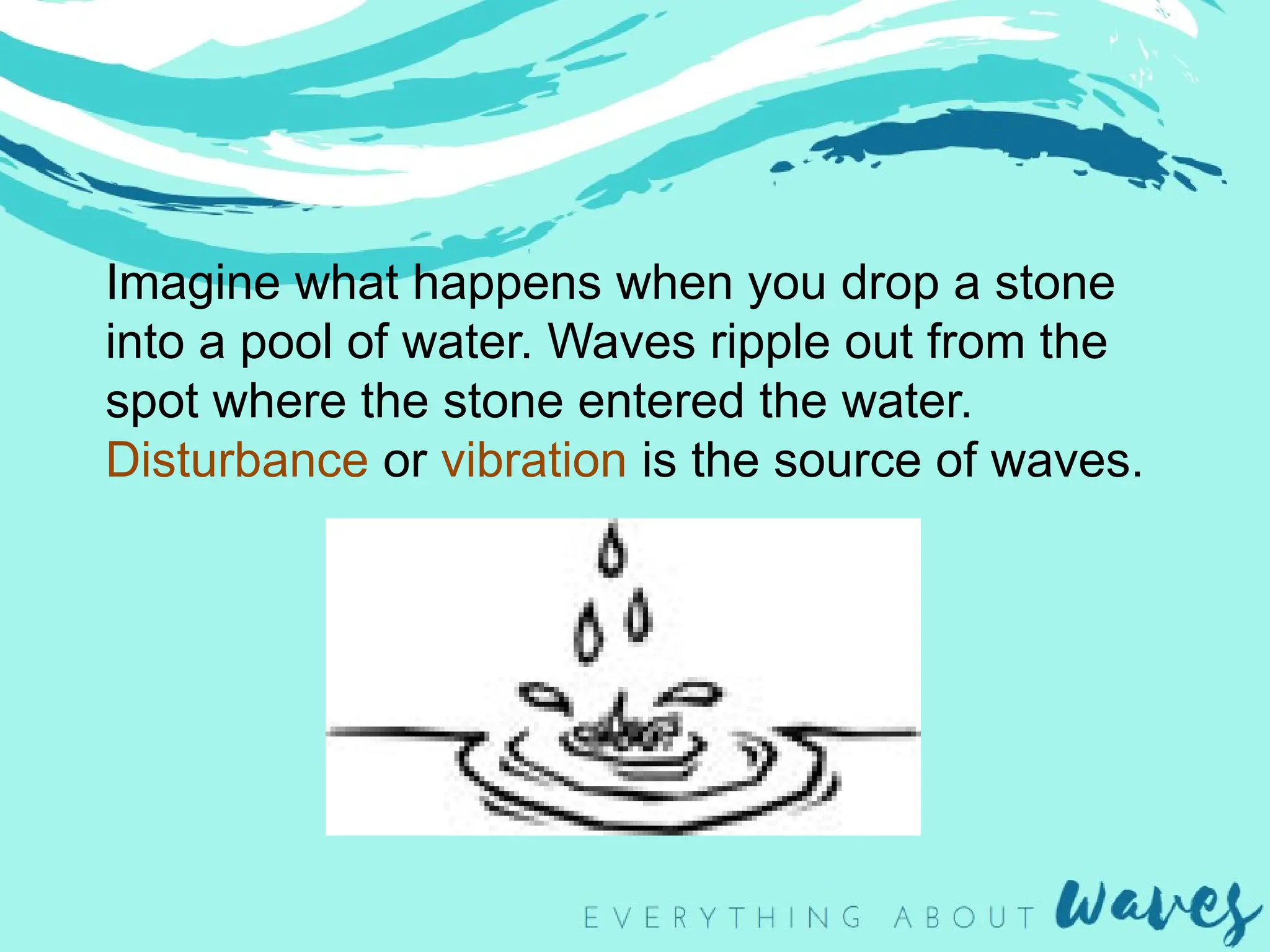
Imagine what happens when you drop a stone
into a pool of water. Waves ripple out from the
spot where the stone entered the water.
Disturbance or vibration is the source of waves.
I D E N T I F Y
Waves can travel in solid, liquid, gas
and even in vacuum. What term
is used to describe the substance
or material that carries the wave?
MEDIUM
M U L T I P L E C H O I CE
A medium is able to transport a wave from
one location to another because the particles
of the medium are ____.
a. Frictionless
b. isolated from one another
c. able to interact
d. very light
C
• The wave medium is not the wave and it doesn't
make the wave; it merely carries or transports the
wave from its source to other locations.
• In the case of our slinky wave, the medium through
that the wave travels is the slinky coils.
• In the case of a sound wave, the medium through
which the sound wave travels is the air in the room.
• In the case of a water wave in the ocean, the
medium through which the wave travels is the
ocean water.
T R U E O R F A L S E
Mechanical waves do not require a
medium of propagation because
these waves can propagate in a
vacuum.
F A L S E
Waves are classified by WHAT they
move through or by HOW
particles move through them.
WAVE CLASSIFICATION BY WHAT THEY MOVE
THROUGH
MECHANICAL VS. ELECTROMAGNETIC
Mechanical waves
- require a medium of propagation
E.g. sound wave, water wave
Electromagnetic waves
- do not require a medium of
propagation because these waves can
propagate in a vacuum
E.g. infrared, x – ray, radio wave
Electromagnetic Spectrum
I D E N T I F Y
Waves in which the particles of the
medium move at right angles to
the direction of propagation of
the wave.
TRANSVERSE or LONGITUDINAL
TRANSVERSE
WAVE CLASSIFICATION BY HOW PARTICLES MOVE
THROUGH THEM
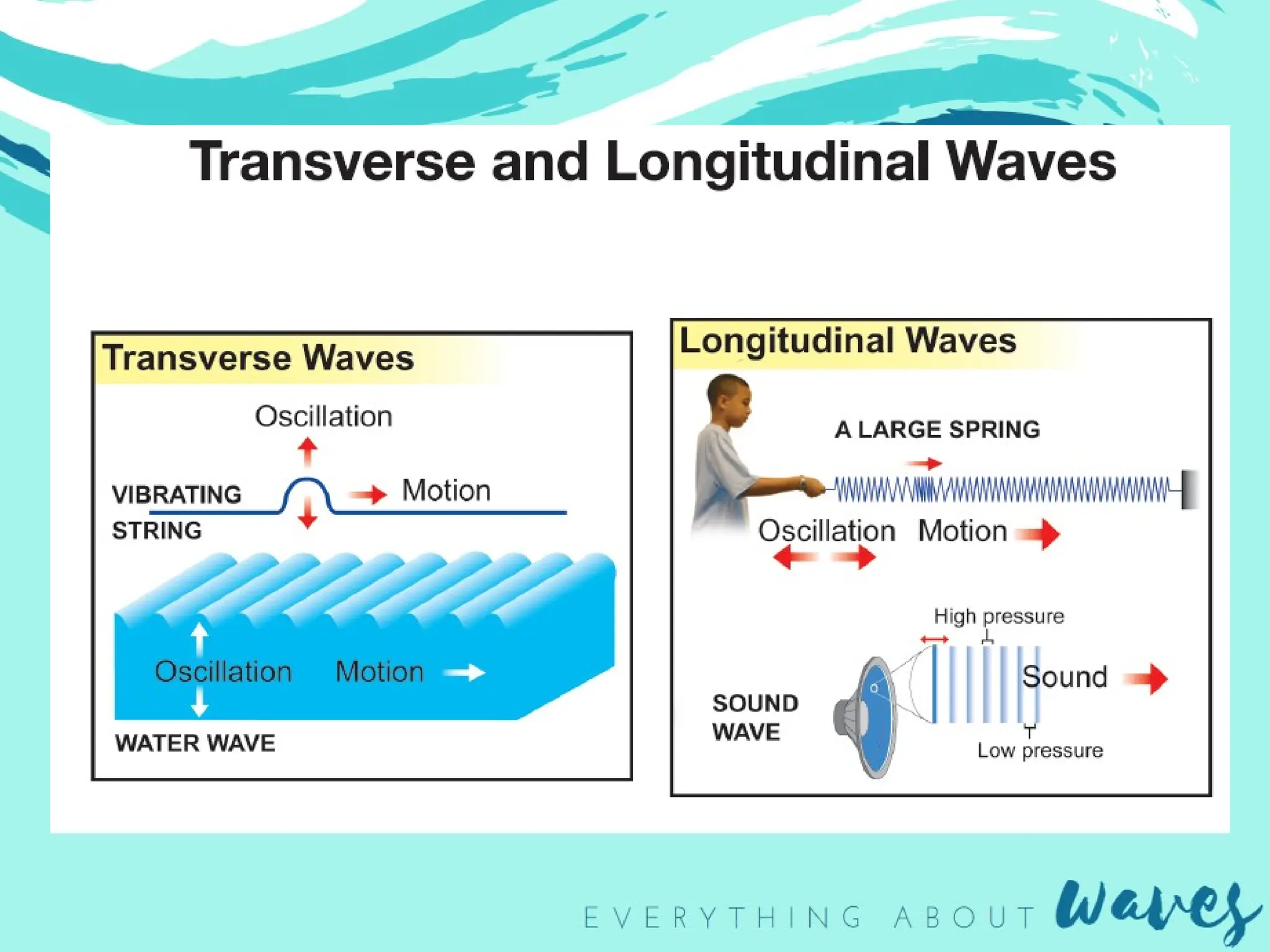
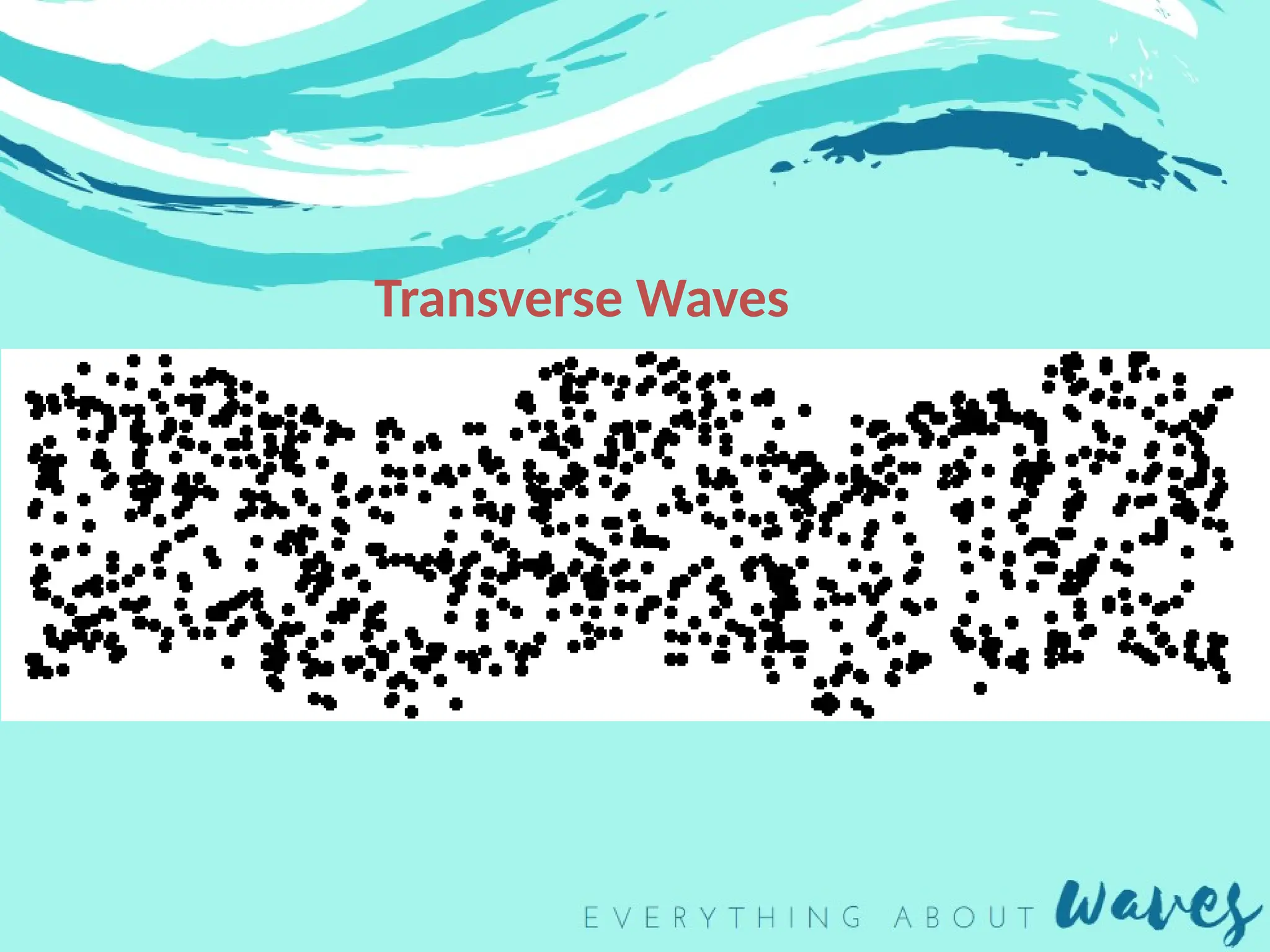
Transverse waves
- the particles of the medium move at right
angles to the direction of propagation of the wave.
E.g. rope wave, electromagnetic waves
TRANSVERSE AND LONGITUDINAL
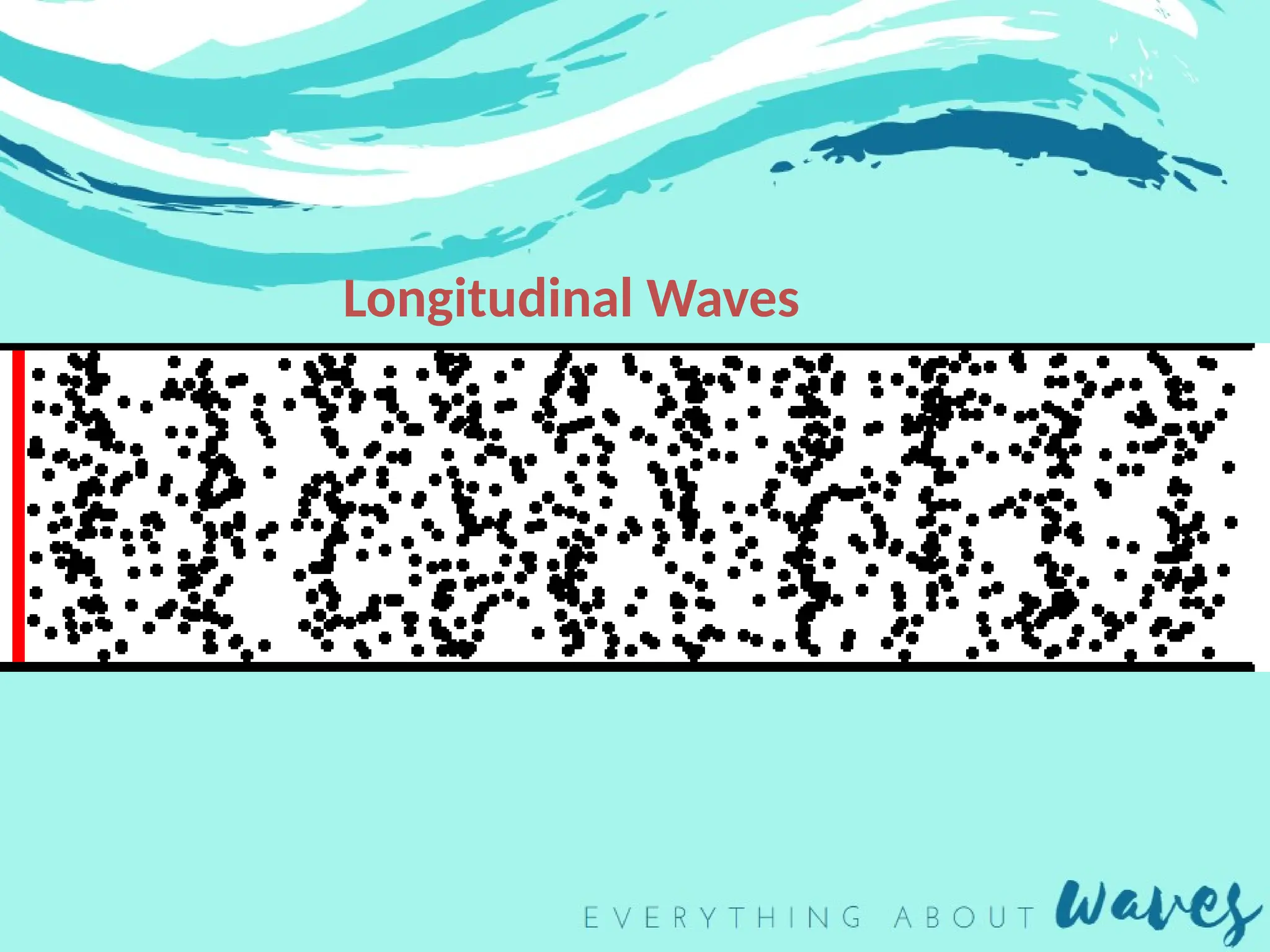
Longitudinal waves
- the particles of the medium move back –
and – forth parallel to the direction of
propagation of the wave.
E.g. sound waves
Transverse Waves
Longitudinal Waves
T R U E O R F A L S E
The wavelength is the distance
between two successive identical
parts of the wave.
T R U E
T R U E O R F A L S E
A frequency is a disturbance that
transfers energy as it propagates
from one region of the system to
the other.
F A L S E
T R U E O R F A L S E
The amplitude refers to the
maximum distance of a particle
with respect to the equilibrium
position.
T R U E
Transverse Waves
Parts of a Transverse Wave
Crest is the position of maximum upward displacement from
the equilibrium position.
Trough is the position of maximum downward displacement
from the equilibrium position.
Wavelength is the distance between two successive identical
parts of the wave.
Parts of a Transverse Wave
Frequency refers to the number of identical parts of a wave
that pass through a given point per unit time.
frequency = no. of cycles/ s
1Hz = 1 cycle/s
Parts of a Transverse Wave
Period refers to the time for one complete cycle of a wave.
Amplitude refers to the maximum distance of a particle with
respect to the equilibrium position.
Wave speed refers to how fast the wave propagates
wave speed = wavelength x frequency
I D E N T I F Y
A region in a longitudinal wave
where the particles are closest
together
COMPRESSION
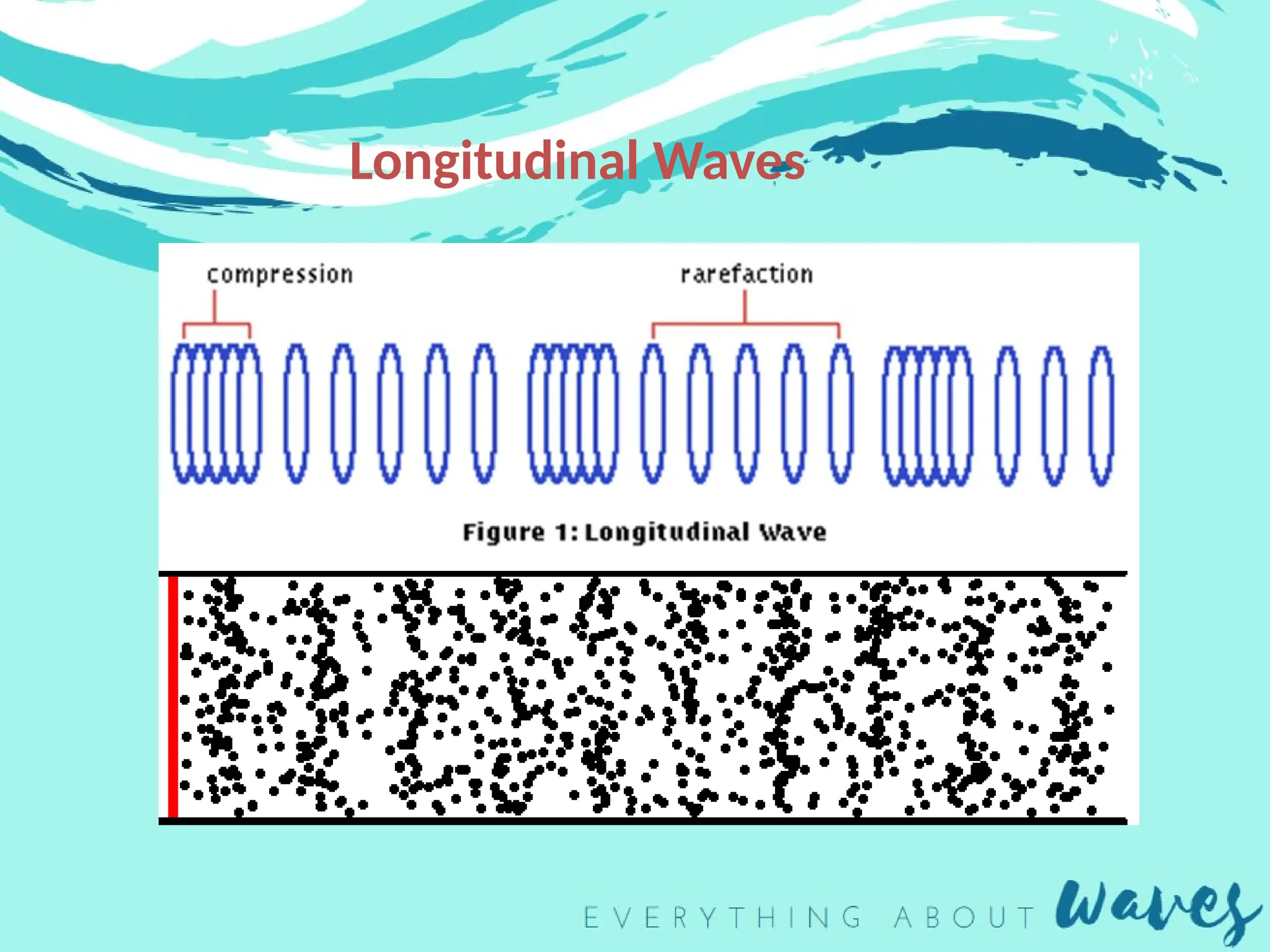
Longitudinal Waves
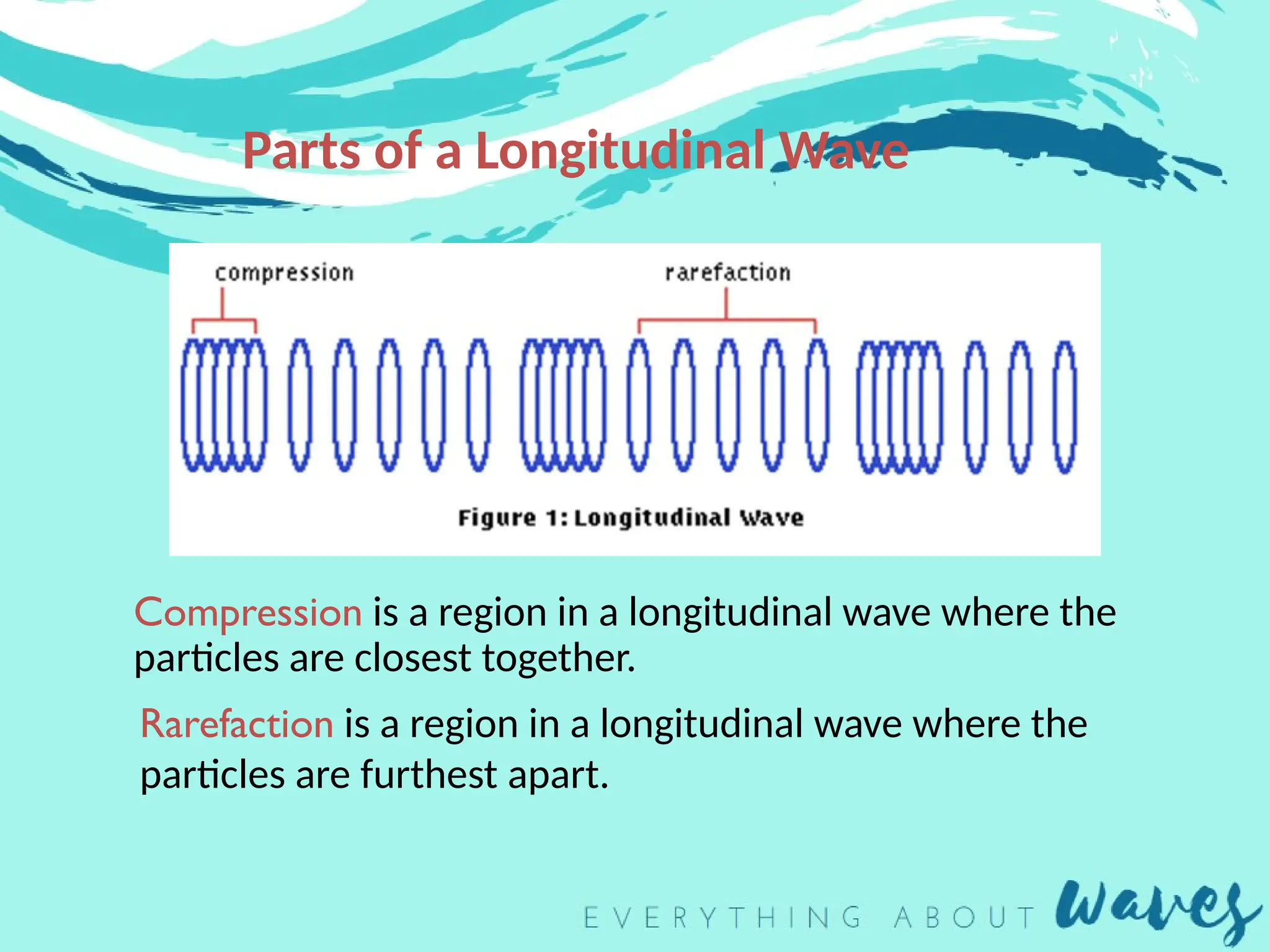
Parts of a Longitudinal Wave
Compression is a region in a longitudinal wave where the
particles are closest together.
Rarefaction is a region in a longitudinal wave where the
particles are furthest apart.
T R U E O R F A L S E
In order for Jack to hear Jill, air molecules
must move from the lips of Jill to the
ears of Jack.
F A L S E
A sound wave involves the movement of energy from one location to
another, not the movement of material. The air molecules are the particles
of the medium, and they are only temporarily displaced, always returning to
their original position.

Congratulations to those who
got a perfect 10!

Waves powerpoint presentation .........

  • 2.
    BE READY WITHTHE FOLLOWING: 1. ¼ paper 2. Black and Red ballpen
  • 3.
    T R UE O R F A L S E A wave is a disturbance that transfers energy as it propagates from one region of the system to the other. T R U E
  • 4.
    Imagine what happenswhen you drop a stone into a pool of water. Waves ripple out from the spot where the stone entered the water. Disturbance or vibration is the source of waves.
  • 5.
    I D EN T I F Y Waves can travel in solid, liquid, gas and even in vacuum. What term is used to describe the substance or material that carries the wave? MEDIUM
  • 6.
    M U LT I P L E C H O I CE A medium is able to transport a wave from one location to another because the particles of the medium are ____. a. Frictionless b. isolated from one another c. able to interact d. very light C
  • 7.
    • The wavemedium is not the wave and it doesn't make the wave; it merely carries or transports the wave from its source to other locations. • In the case of our slinky wave, the medium through that the wave travels is the slinky coils. • In the case of a sound wave, the medium through which the sound wave travels is the air in the room. • In the case of a water wave in the ocean, the medium through which the wave travels is the ocean water.
  • 8.
    T R UE O R F A L S E Mechanical waves do not require a medium of propagation because these waves can propagate in a vacuum. F A L S E
  • 9.
    Waves are classifiedby WHAT they move through or by HOW particles move through them.
  • 10.
    WAVE CLASSIFICATION BYWHAT THEY MOVE THROUGH MECHANICAL VS. ELECTROMAGNETIC Mechanical waves - require a medium of propagation E.g. sound wave, water wave Electromagnetic waves - do not require a medium of propagation because these waves can propagate in a vacuum E.g. infrared, x – ray, radio wave
  • 11.
  • 12.
    I D EN T I F Y Waves in which the particles of the medium move at right angles to the direction of propagation of the wave. TRANSVERSE or LONGITUDINAL TRANSVERSE
  • 13.
    WAVE CLASSIFICATION BYHOW PARTICLES MOVE THROUGH THEM Transverse waves - the particles of the medium move at right angles to the direction of propagation of the wave. E.g. rope wave, electromagnetic waves TRANSVERSE AND LONGITUDINAL Longitudinal waves - the particles of the medium move back – and – forth parallel to the direction of propagation of the wave. E.g. sound waves
  • 15.
  • 16.
  • 17.
    T R UE O R F A L S E The wavelength is the distance between two successive identical parts of the wave. T R U E
  • 18.
    T R UE O R F A L S E A frequency is a disturbance that transfers energy as it propagates from one region of the system to the other. F A L S E
  • 19.
    T R UE O R F A L S E The amplitude refers to the maximum distance of a particle with respect to the equilibrium position. T R U E
  • 20.
  • 21.
    Parts of aTransverse Wave Crest is the position of maximum upward displacement from the equilibrium position. Trough is the position of maximum downward displacement from the equilibrium position.
  • 22.
    Wavelength is thedistance between two successive identical parts of the wave. Parts of a Transverse Wave Frequency refers to the number of identical parts of a wave that pass through a given point per unit time. frequency = no. of cycles/ s 1Hz = 1 cycle/s
  • 23.
    Parts of aTransverse Wave Period refers to the time for one complete cycle of a wave. Amplitude refers to the maximum distance of a particle with respect to the equilibrium position. Wave speed refers to how fast the wave propagates wave speed = wavelength x frequency
  • 24.
    I D EN T I F Y A region in a longitudinal wave where the particles are closest together COMPRESSION
  • 25.
  • 26.
    Parts of aLongitudinal Wave Compression is a region in a longitudinal wave where the particles are closest together. Rarefaction is a region in a longitudinal wave where the particles are furthest apart.
  • 27.
    T R UE O R F A L S E In order for Jack to hear Jill, air molecules must move from the lips of Jill to the ears of Jack. F A L S E A sound wave involves the movement of energy from one location to another, not the movement of material. The air molecules are the particles of the medium, and they are only temporarily displaced, always returning to their original position.

  • 28.
    Congratulations to thosewho got a perfect 10!