NAUSEA
&
VOMITING
DR.ABHINAV KUMAR
OUTLINE
• Classifications
• Reflex mechanism of vomiting
• Causes of Vomiting
• History
• Physical Examination
• Special Considerations In Pediatric Group
• Tests
DDx In General Population
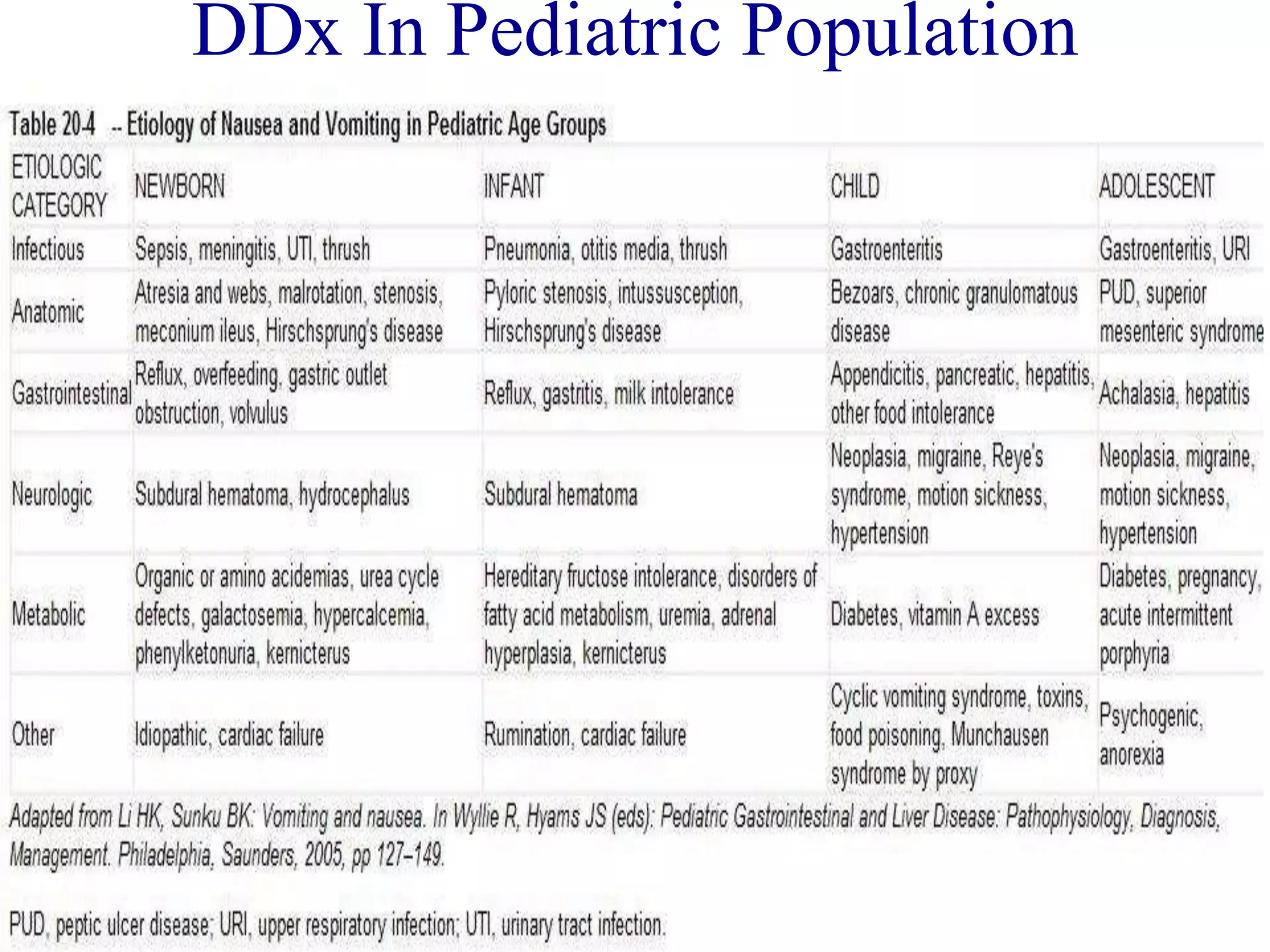
• DDx In Pediatric Population
• Cyclic vomiting syndrome
• Evaluation of nausea and vomiting of pregnancy
• The management of Nausea &Vomiting
• Sequelae Of Vomiting
What is the major physiological
function of vomiting
Remove non-toxic or harmless substances from the body after ingestion
Valuable physiological response to ingestion of toxic substances e.g.
alcohol
Classifications
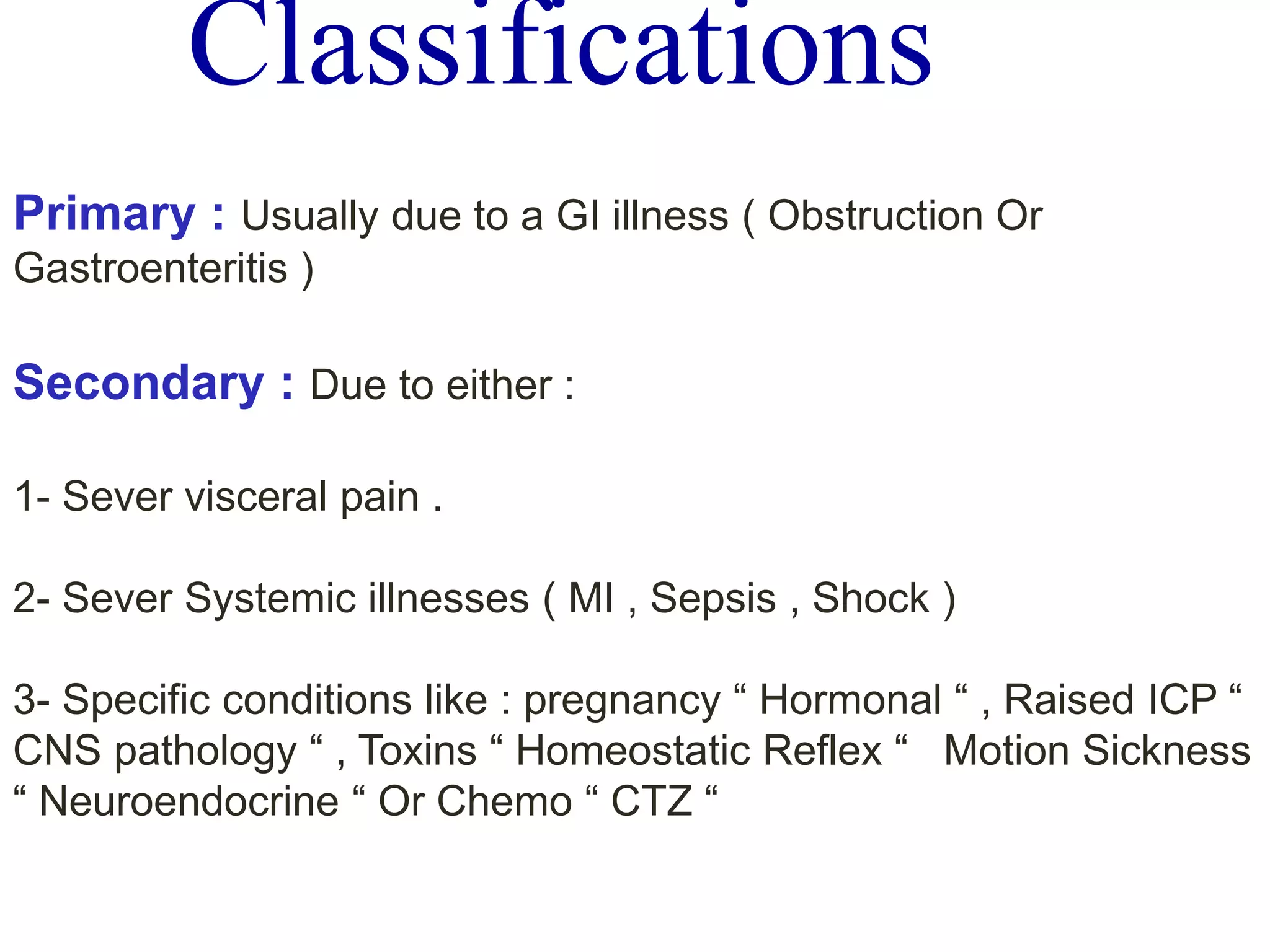
Primary : Usually due to a GI illness ( Obstruction Or
Gastroenteritis )
Secondary : Due to either :
1- Sever visceral pain .
2- Sever Systemic illnesses ( MI , Sepsis , Shock )
3- Specific conditions like : pregnancy “ Hormonal “ , Raised ICP “
CNS pathology “ , Toxins “ Homeostatic Reflex “ Motion Sickness
“ Neuroendocrine “ Or Chemo “ CTZ “
Classifications
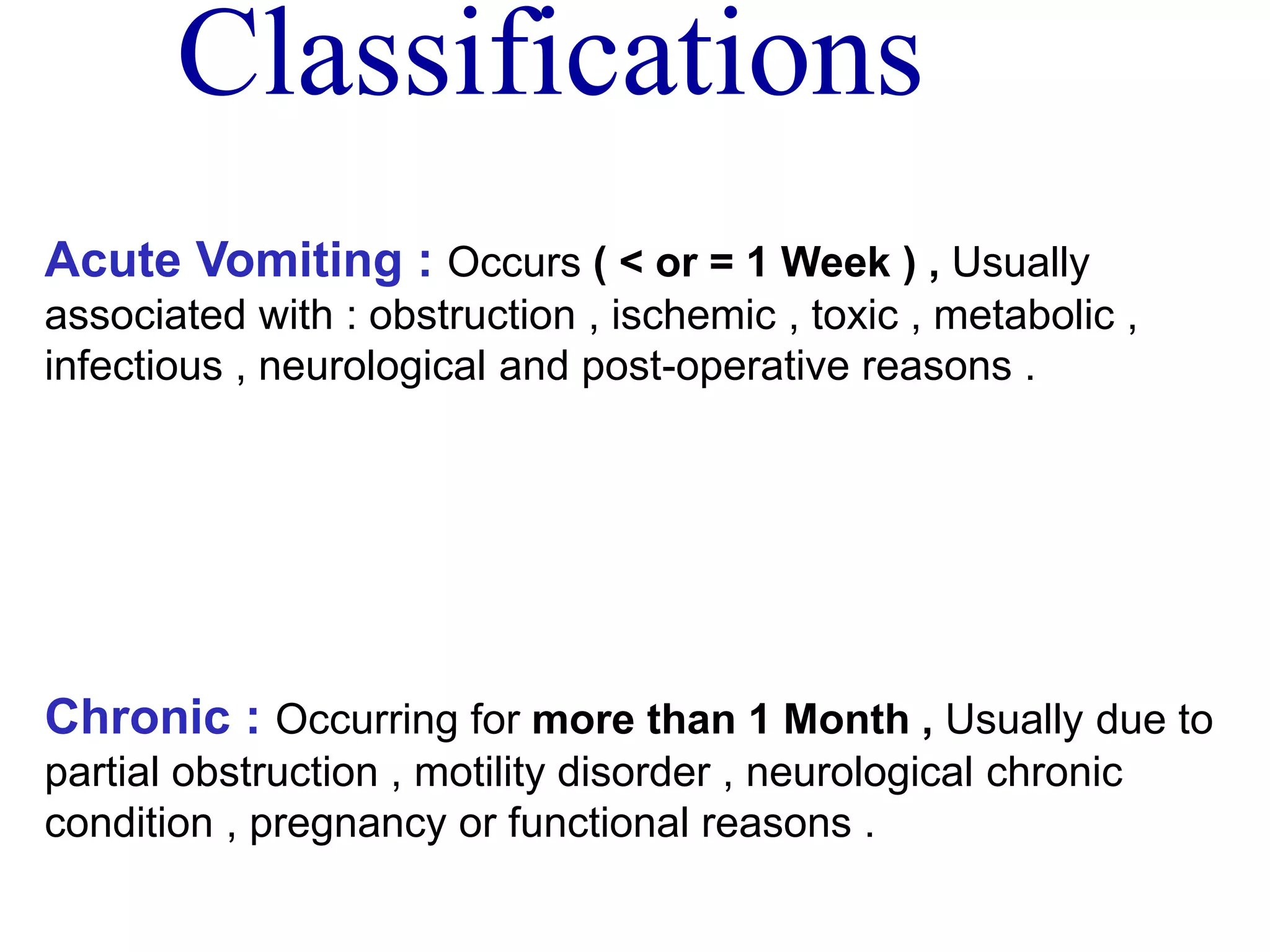
Acute Vomiting : Occurs ( < or = 1 Week ) , Usually
associated with : obstruction , ischemic , toxic , metabolic ,
infectious , neurological and post-operative reasons .
Chronic : Occurring for more than 1 Month , Usually due to
partial obstruction , motility disorder , neurological chronic
condition , pregnancy or functional reasons .
Reflex mechanism of vomiting
Three phases:
NAUSEA, RETCHING and VOMITING
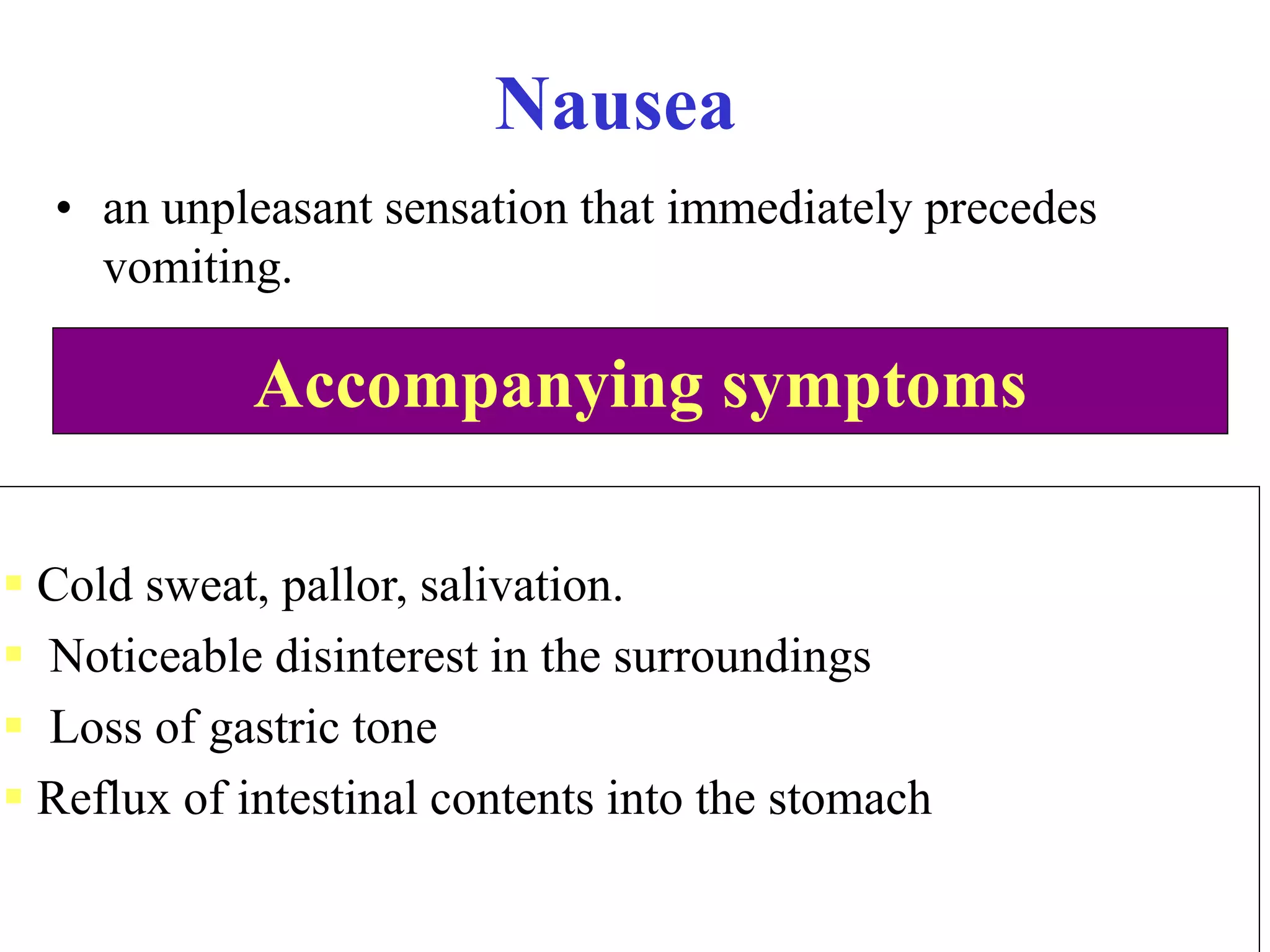
Nausea
• an unpleasant sensation that immediately precedes
vomiting.
 Cold sweat, pallor, salivation.
 Noticeable disinterest in the surroundings
 Loss of gastric tone
 Reflux of intestinal contents into the stomach
Accompanying symptoms
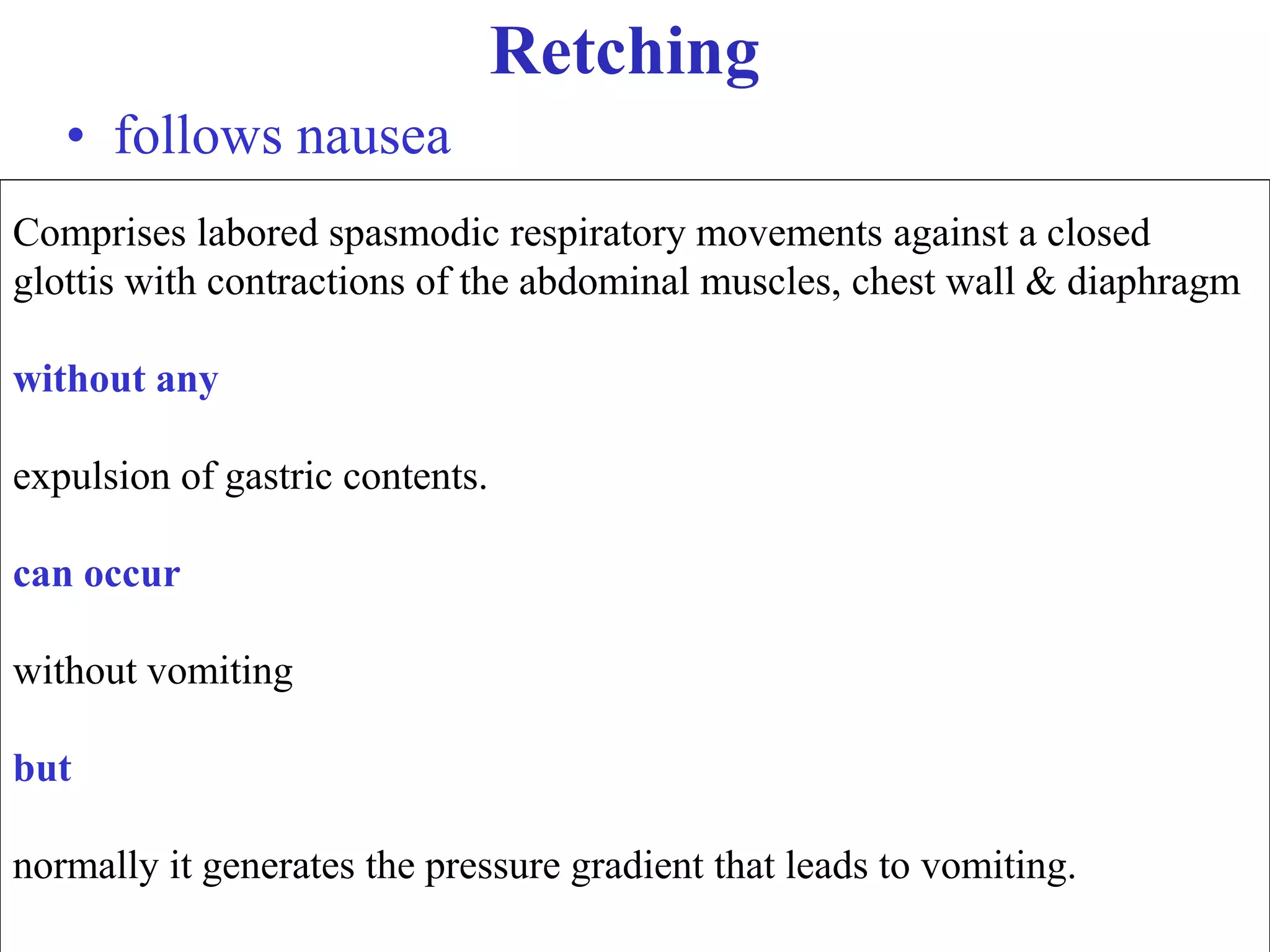
Retching
• follows nausea
Comprises labored spasmodic respiratory movements against a closed
glottis with contractions of the abdominal muscles, chest wall & diaphragm
without any
expulsion of gastric contents.
can occur
without vomiting
but
normally it generates the pressure gradient that leads to vomiting.
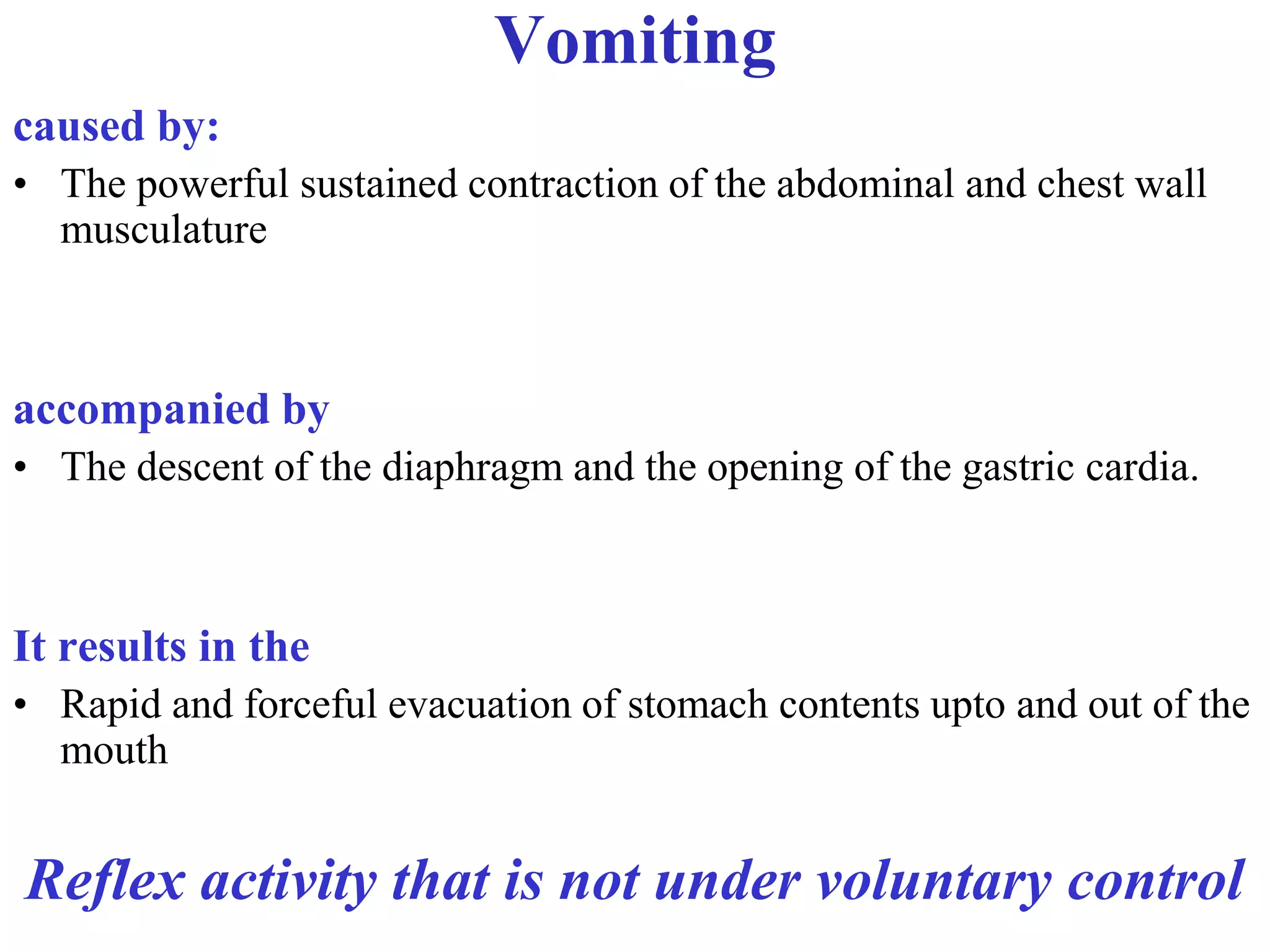
Vomiting
caused by:
• The powerful sustained contraction of the abdominal and chest wall
musculature
accompanied by
• The descent of the diaphragm and the opening of the gastric cardia.
It results in the
• Rapid and forceful evacuation of stomach contents upto and out of the
mouth
Reflex activity that is not under voluntary control
Neuronal pathways,
transmitters and
receptors involved in
nausea and vomiting
Mechano and Chemo receptors
located in
• stomach, jejunum and ileum
involved with
• detection of emetic stimuli in the gastrointestinal tract
• Mechanoreceptors are tension receptors that initiate emesis in
response to distension and contraction
• Chemo receptors respond to a variety of toxins in the intestinal lumina
Afferent neuronal pathways
from the abdomen are the
same regardless of the
stimulus
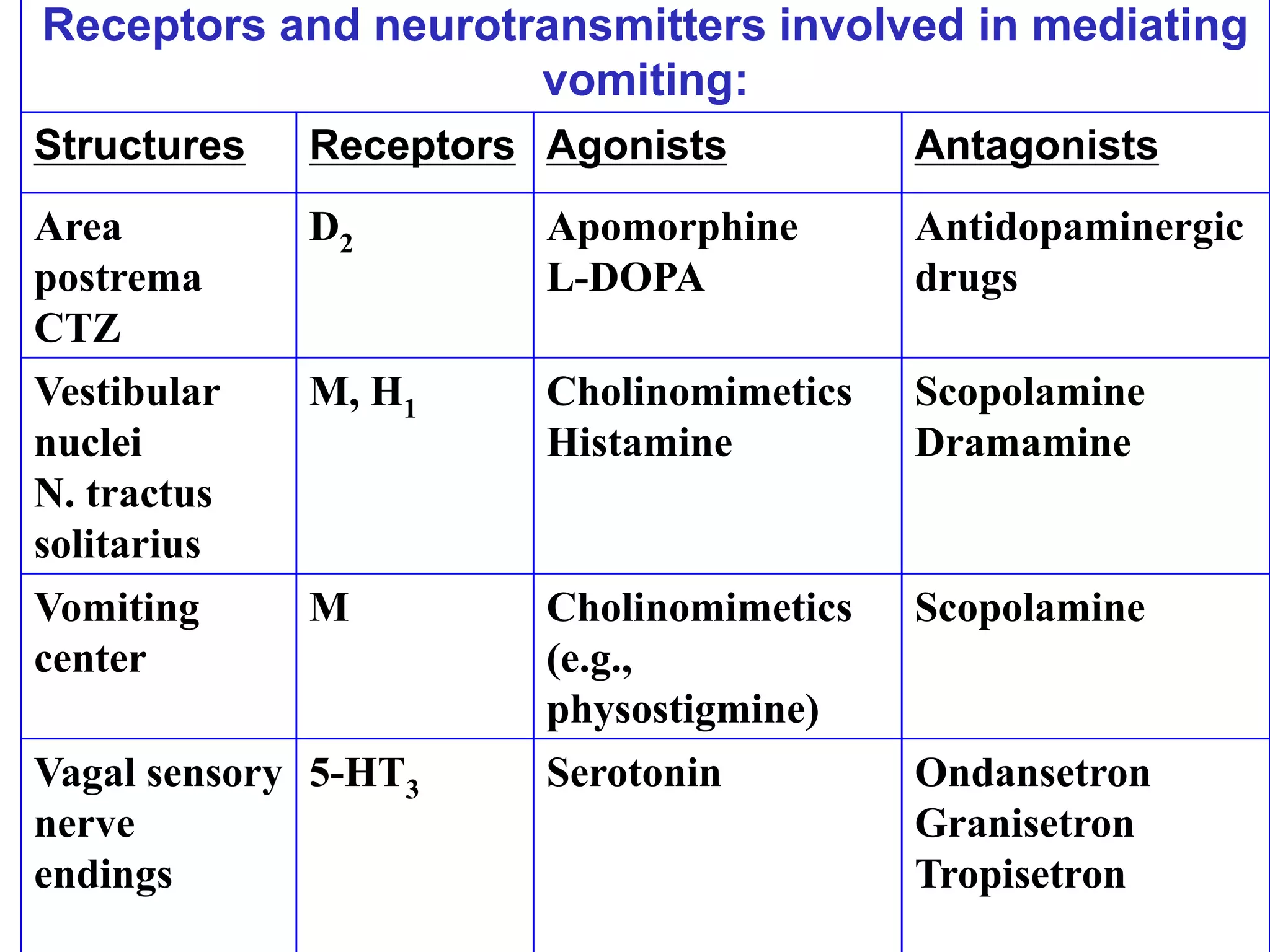
Receptors and neurotransmitters involved in mediating
vomiting:
Structures Receptors Agonists Antagonists
Area
postrema
CTZ
D2 Apomorphine
L-DOPA
Antidopaminergic
drugs
Vestibular
nuclei
N. tractus
solitarius
M, H1 Cholinomimetics
Histamine
Scopolamine
Dramamine
Vomiting
center
M Cholinomimetics
(e.g.,
physostigmine)
Scopolamine
Vagal sensory
nerve
endings
5-HT3 Serotonin Ondansetron
Granisetron
Tropisetron
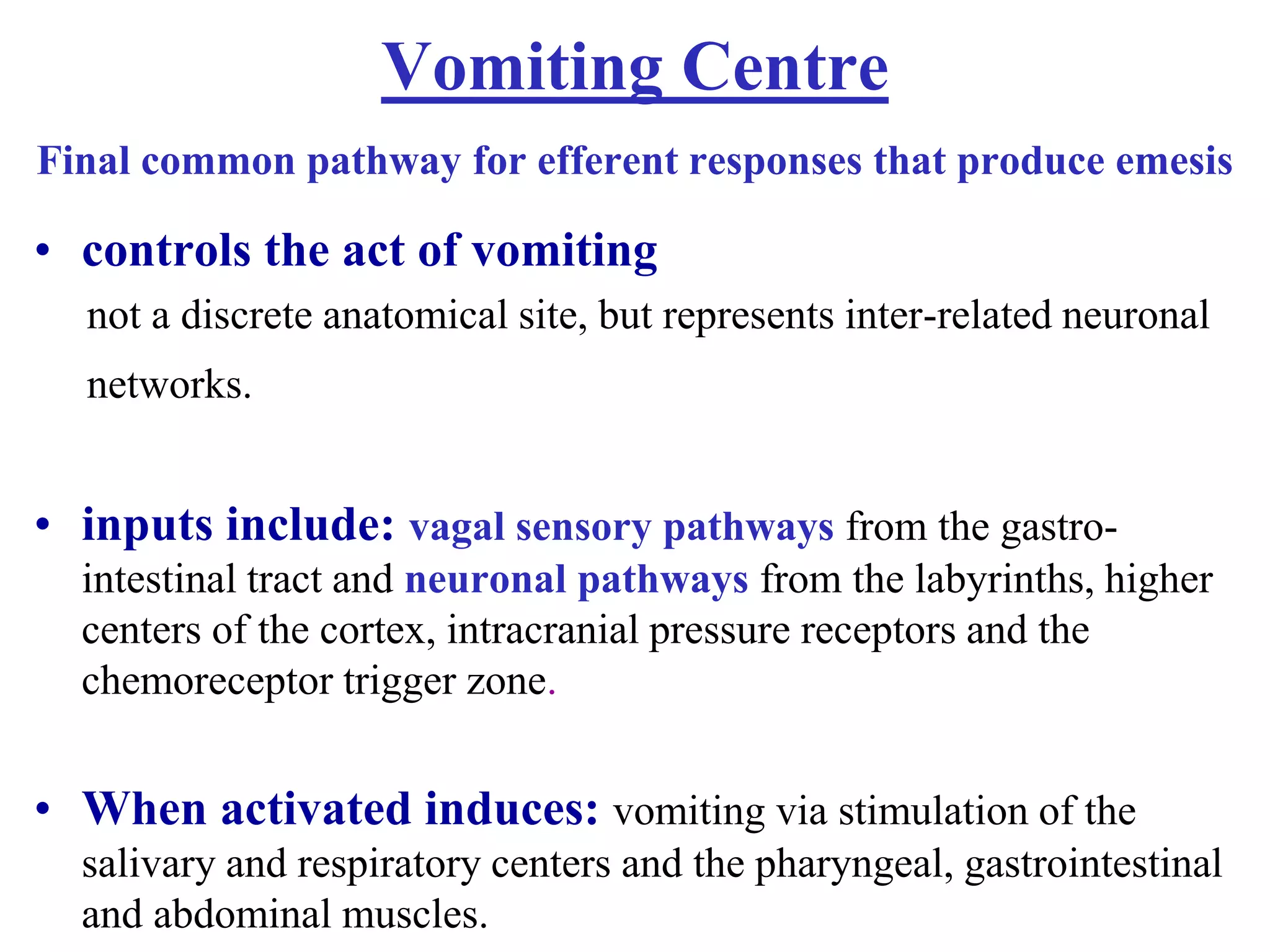
Vomiting Centre
Final common pathway for efferent responses that produce emesis
• controls the act of vomiting
not a discrete anatomical site, but represents inter-related neuronal
networks.
• inputs include: vagal sensory pathways from the gastro-
intestinal tract and neuronal pathways from the labyrinths, higher
centers of the cortex, intracranial pressure receptors and the
chemoreceptor trigger zone.
• When activated induces: vomiting via stimulation of the
salivary and respiratory centers and the pharyngeal, gastrointestinal
and abdominal muscles.
Chemoreceptor Trigger Centre
(CTZ)
• Area prostrema of the 4th ventricle of the brain
• acts as the entry point for emetic stimuli
• CTZ is outside the blood-brain barrier
• Responds to stimuli from either the cerebral spinal fluid (CSF) or
the blood.
Main neurotransmitters involved in
control of vomiting
• Acetylcholine
• Histamine
• 5-HT
• Dopamine
• Enkephalins
• Substance P
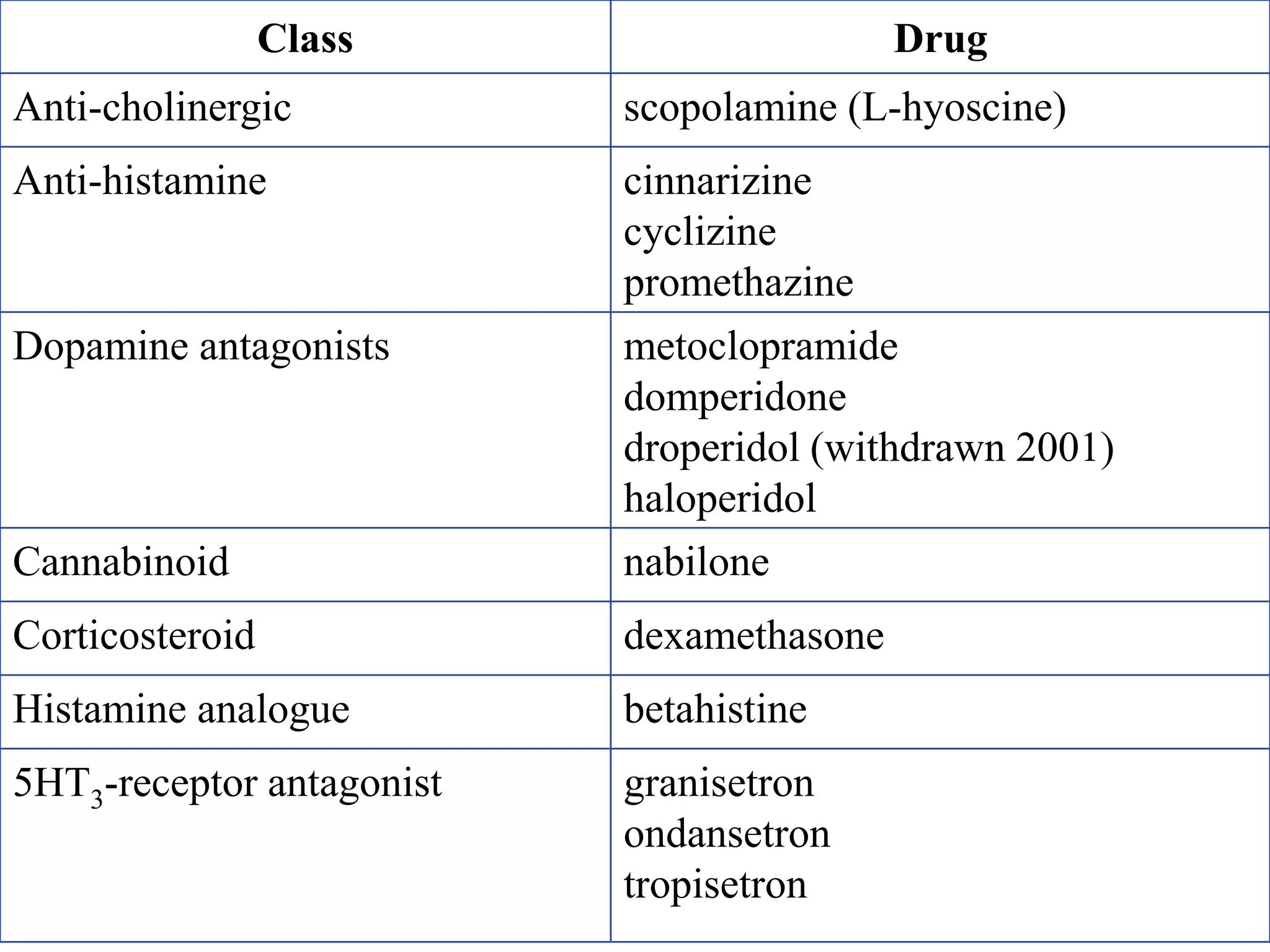
Class Drug
Anti-cholinergic scopolamine (L-hyoscine)
Anti-histamine cinnarizine
cyclizine
promethazine
Dopamine antagonists metoclopramide
domperidone
droperidol (withdrawn 2001)
haloperidol
Cannabinoid nabilone
Corticosteroid dexamethasone
Histamine analogue betahistine
5HT3-receptor antagonist granisetron
ondansetron
tropisetron
Causes of Vomiting
Drug/treatment - induced Cancer chemotherapy
Opiates, Nicotine
Antibiotics, Radiotherapy
Labyrinth disorders Motion, Meniere's disease
Endocrine causes Pregnancy
Infectious causes Gastroenteritis
Viral labyrinthitis
Increased intracranial pressure Haemorrhage, Meningitis
Post-operative Anaesthetics, Analgesics
Procedural
CNS causes Anticipatory
Migraine, Bulimia nervosa
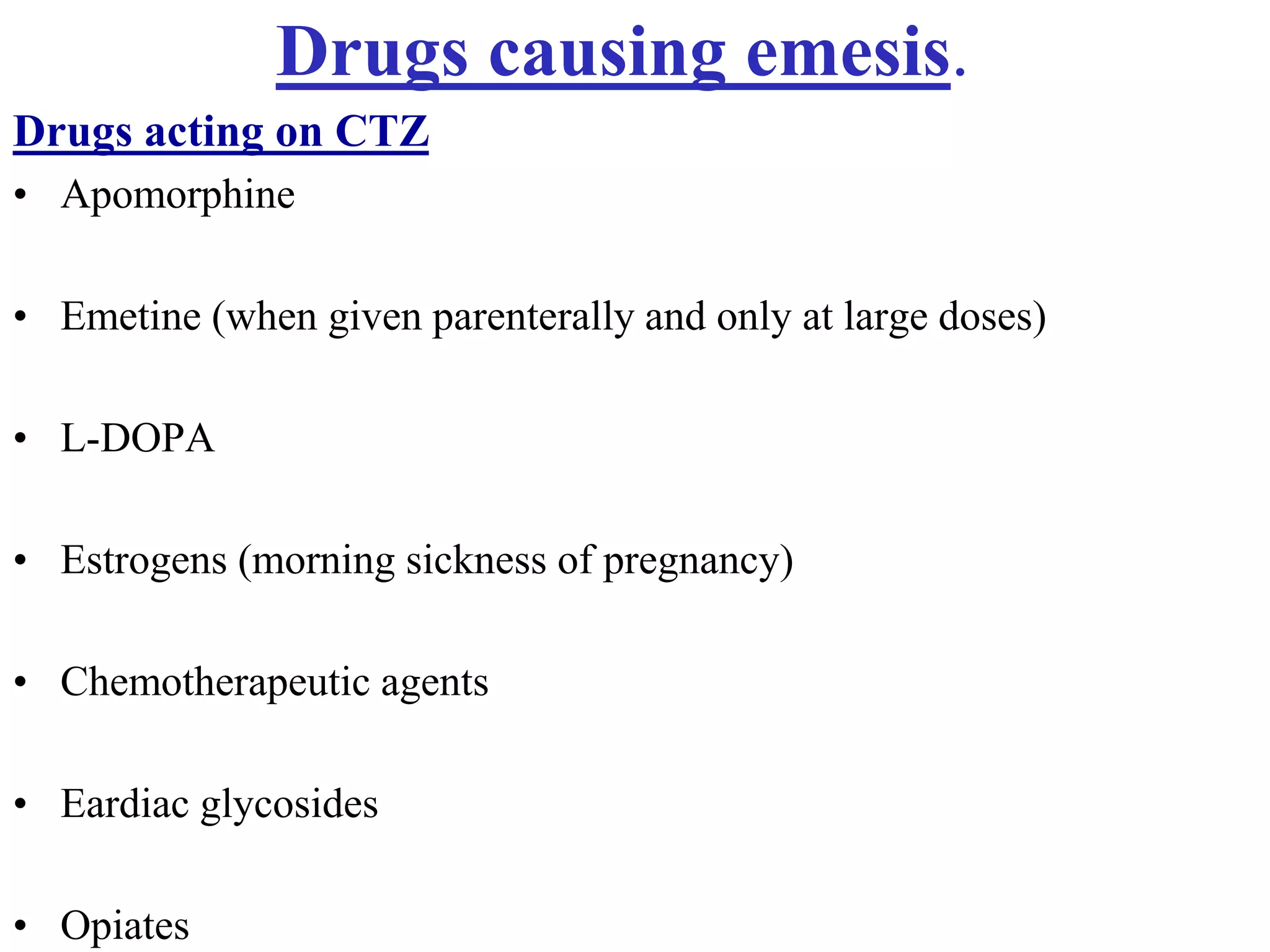
Drugs causing emesis.
Drugs acting on CTZ
• Apomorphine
• Emetine (when given parenterally and only at large doses)
• L-DOPA
• Estrogens (morning sickness of pregnancy)
• Chemotherapeutic agents
• Eardiac glycosides
• Opiates
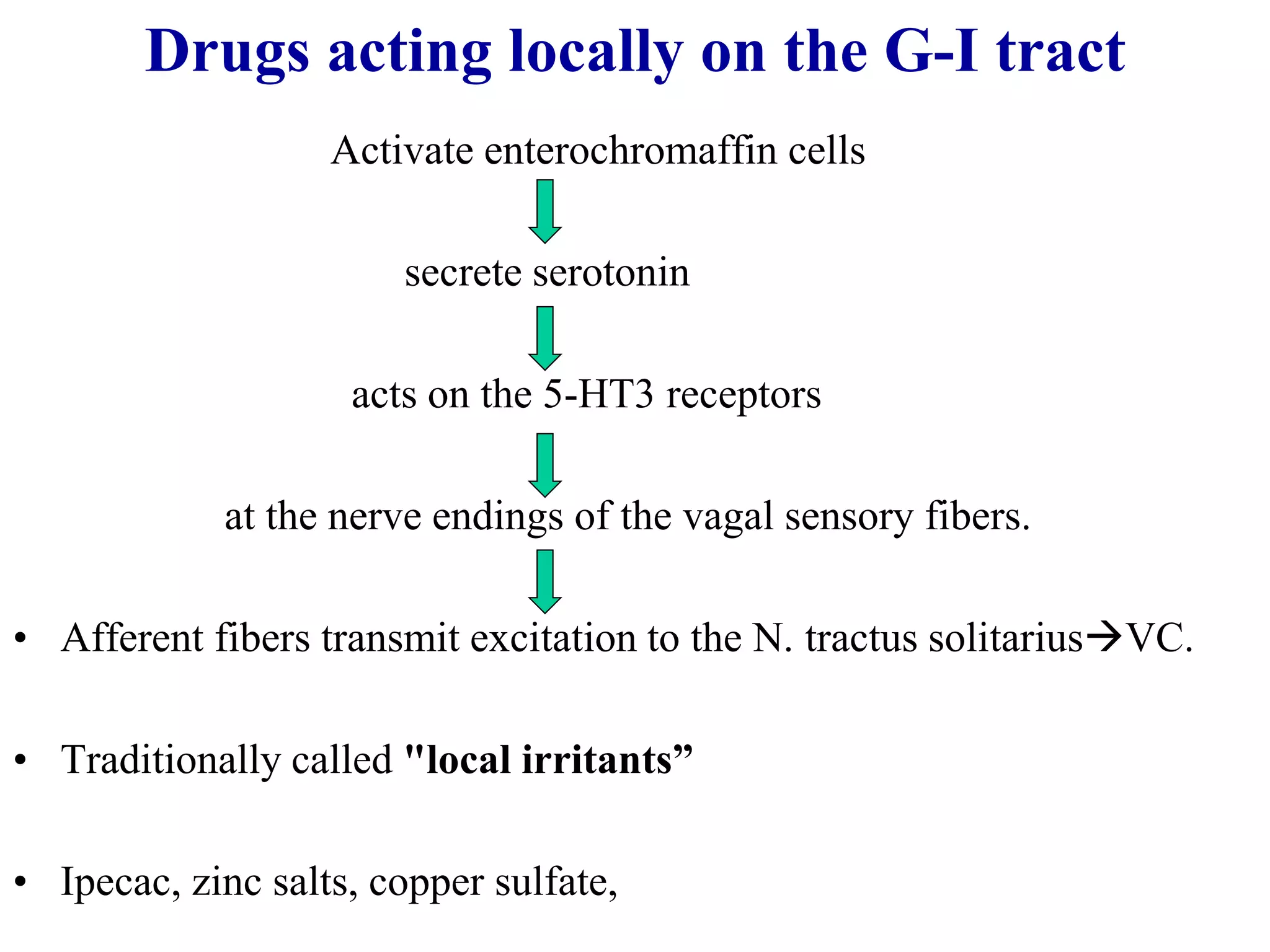
Drugs acting locally on the G-I tract
Activate enterochromaffin cells
secrete serotonin
acts on the 5-HT3 receptors
at the nerve endings of the vagal sensory fibers.
• Afferent fibers transmit excitation to the N. tractus solitariusVC.
• Traditionally called "local irritants”
• Ipecac, zinc salts, copper sulfate,
Cancer chemotherapeutic agents and
radiation therapy
Produce free Radicals
Enterochromaffin cells
Serotonin
Stimulate CTZ receptors
History
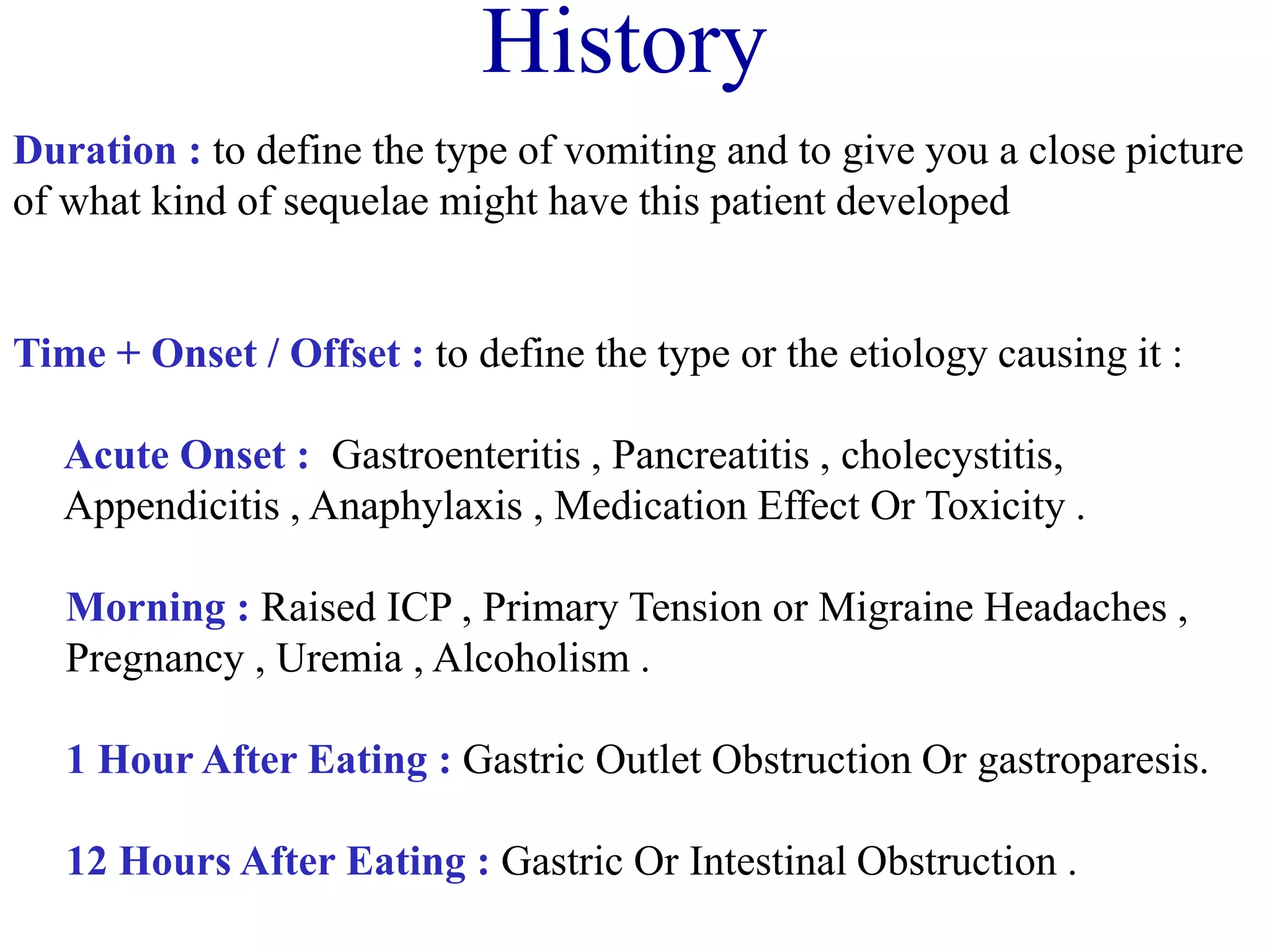
Duration : to define the type of vomiting and to give you a close picture
of what kind of sequelae might have this patient developed
Time + Onset / Offset : to define the type or the etiology causing it :
Acute Onset : Gastroenteritis , Pancreatitis , cholecystitis,
Appendicitis , Anaphylaxis , Medication Effect Or Toxicity .
Morning : Raised ICP , Primary Tension or Migraine Headaches ,
Pregnancy , Uremia , Alcoholism .
1 Hour After Eating : Gastric Outlet Obstruction Or gastroparesis.
12 Hours After Eating : Gastric Or Intestinal Obstruction .
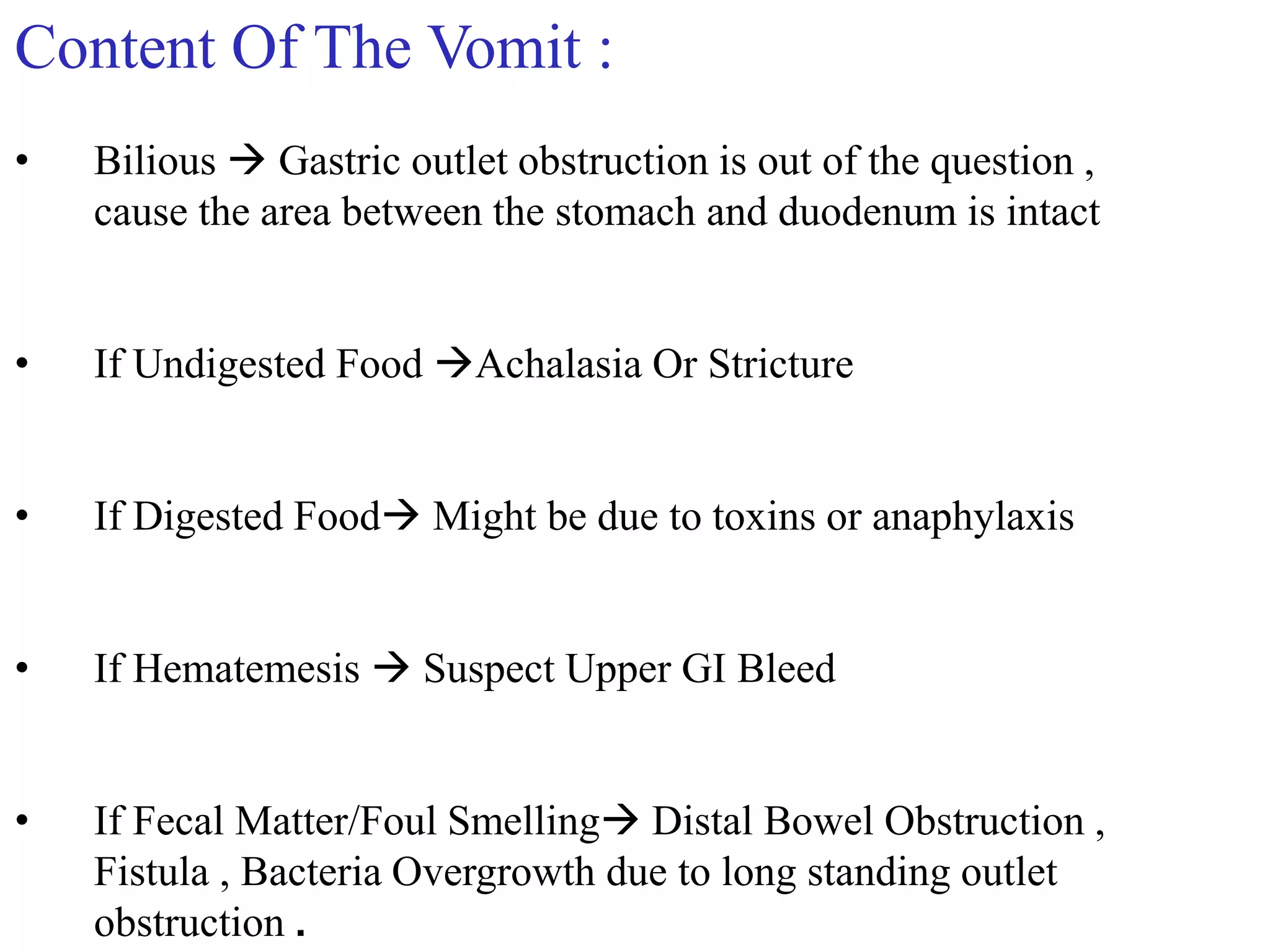
Content Of The Vomit :
• Bilious  Gastric outlet obstruction is out of the question ,
cause the area between the stomach and duodenum is intact
• If Undigested Food Achalasia Or Stricture
• If Digested Food Might be due to toxins or anaphylaxis
• If Hematemesis  Suspect Upper GI Bleed
• If Fecal Matter/Foul Smelling Distal Bowel Obstruction ,
Fistula , Bacteria Overgrowth due to long standing outlet
obstruction .
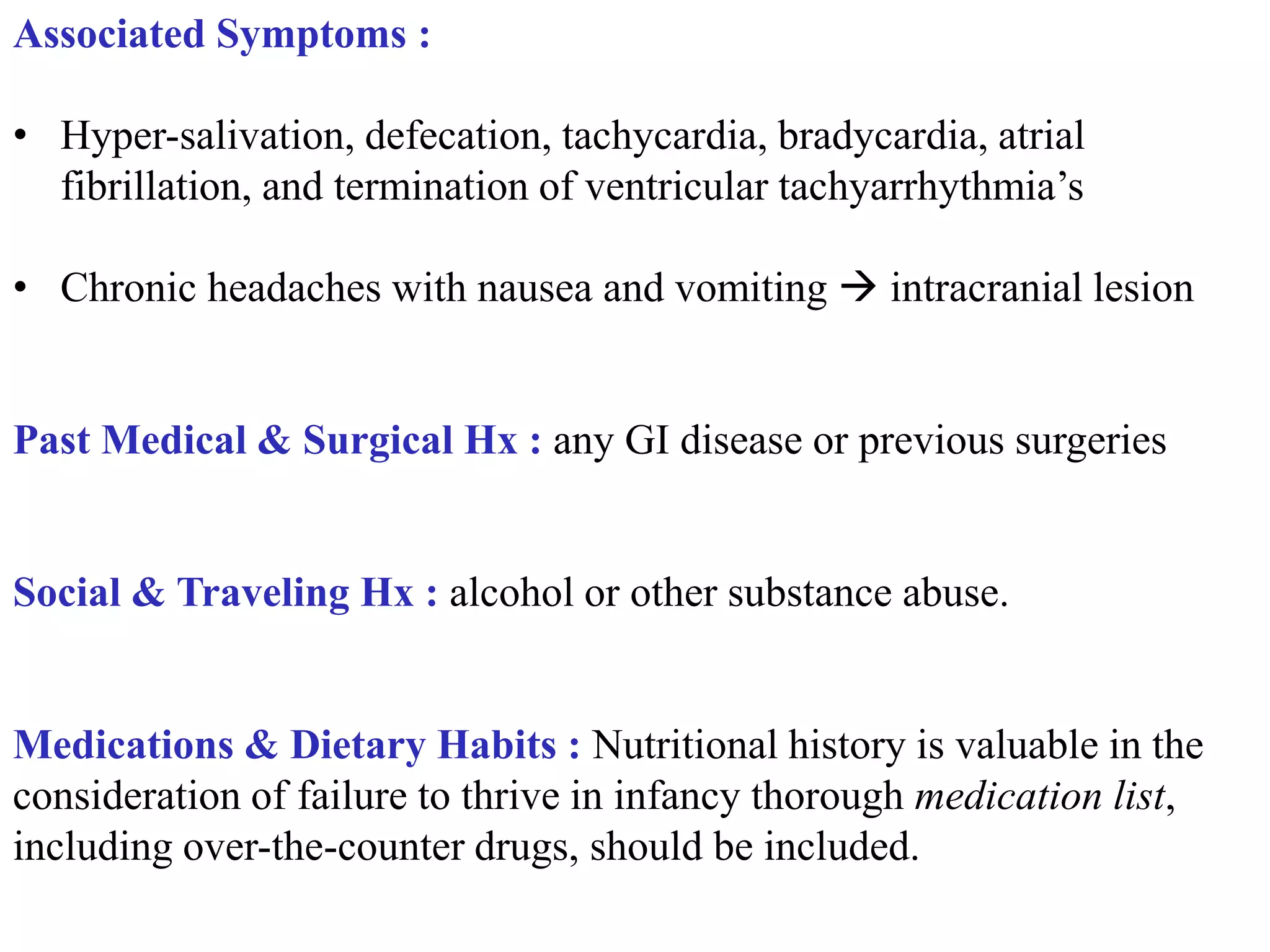
Associated Symptoms :
• Hyper-salivation, defecation, tachycardia, bradycardia, atrial
fibrillation, and termination of ventricular tachyarrhythmia’s
• Chronic headaches with nausea and vomiting  intracranial lesion
Past Medical & Surgical Hx : any GI disease or previous surgeries
Social & Traveling Hx : alcohol or other substance abuse.
Medications & Dietary Habits : Nutritional history is valuable in the
consideration of failure to thrive in infancy thorough medication list,
including over-the-counter drugs, should be included.
Physical Examination
Special Considerations In Pediatric Group
• Bulging Fontanel Meningitis
• Projectile Vomiting Pyloric Stenosis
• Unusual Odors Metabolic Or Toxicological Causes
• Visible Bowel Loops Obstruction
• Enlarged Parotid Gland + Loss Of Dental Enamel  Bulimia
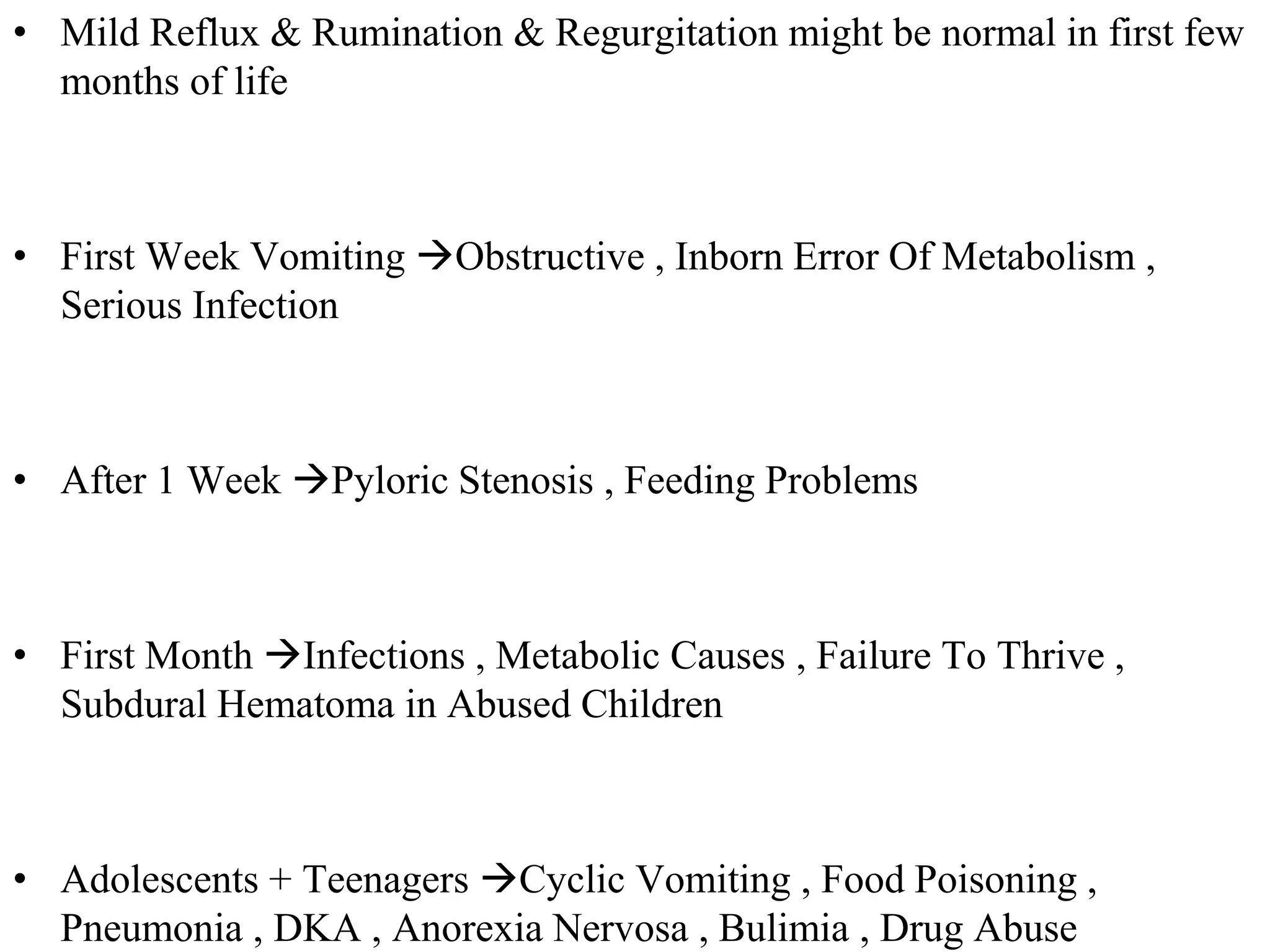
• Mild Reflux & Rumination & Regurgitation might be normal in first few
months of life
• First Week Vomiting Obstructive , Inborn Error Of Metabolism ,
Serious Infection
• After 1 Week Pyloric Stenosis , Feeding Problems
• First Month Infections , Metabolic Causes , Failure To Thrive ,
Subdural Hematoma in Abused Children
• Adolescents + Teenagers Cyclic Vomiting , Food Poisoning ,
Pneumonia , DKA , Anorexia Nervosa , Bulimia , Drug Abuse
Tests
- CBC : If Hb and HCT are High >>> Dehydration
- Electrolytes : Hypochloremia , Hypokalemia .
- BUN / Creatinine Ratio : If 20:1 >> Sever Dehydration .
- Amylase & Lipase : Pancreatitis >>> Dehydration
- Urine analysis : For UTI , Pregnancy Test , DKA , Hematuria ,
Stones , Sterile Pyuria in Appendicitis .
- Culture , Sensitivity & Titers : To Rule In Or Out Infection
- LFTs + Ammonia : Cholycystitis , Ascending Cholangitis , Liver
Failure .
-
• Chest & Abdominal X-Rays : Focus ,Perforation ,
Obstruction
• CT & Angio : Ischemia & Infarction
• ECG : MI
• TFT : Thyroid Disease
• Drug Levels
DDx In General Population
DDx In Pediatric Population
The management of
Nausea &Vomiting
Antiemetics
Class Drug
Anti-cholinergic scopolamine (L-hyoscine)
Anti-histamine cinnarizine
cyclizine
promethazine
Dopamine antagonists metoclopramide
domperidone
droperidol (withdrawn 2001)
haloperidol
Cannabinoid nabilone
Corticosteroid dexamethasone
Histamine analogue betahistine
5HT3-receptor antagonist granisetron
ondansetron
tropisetron
Receptors antagonists
Which receptors
 H1 - Histamine receptors
 Muscarinic receptors
 5 HT 3 receptors
Antiemetic Drugs
H1- receptor antagonist
• Cyclizine
• Meclizine
• Cinnarazine
• Promethazin
• Diphenhydramine
• Dimenhydrinate
• Hydroxyzine
Muscarinic antagonist
• Hyoscine (Scopolamine)
D2-receptor antagonist
Phenothiazine
• Chlorpromazine
• prochlorperazine
• Promethazine
• Trifluoperazine
• Thiethylperazine
Butyrophenones:
• Haloperidol
• Droperidol
Metoclopramide
Domperidone
5 HT3-receptor antagonist
Ondansetron
Granisetron
Dolasetron
Cannabinoids
• Nabilone
• Dronabinol
Steroids
• Dexamethasone
• Methylprednisolone
Clinical Uses of Anti emetics
• Histamine H1 receptor antagonist
Cyclizine Motion sickness
Cinnarazine Motion sickness, vestibular
disorders
Promethazine Morning sickness of pregnancy
Muscarinic antagonist
Hyoscine Motion sickness
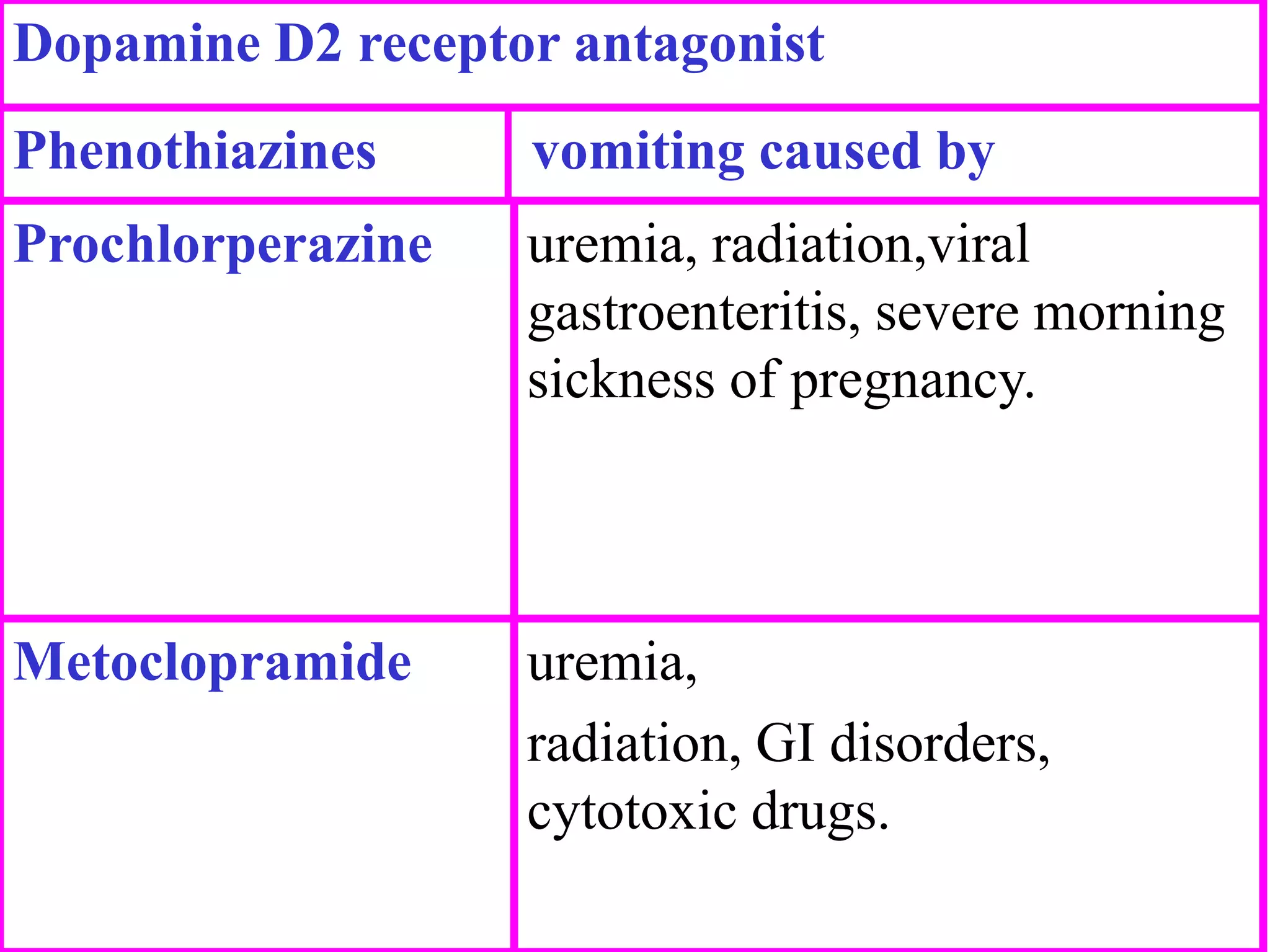
Dopamine D2 receptor antagonist
Phenothiazines vomiting caused by
Prochlorperazine uremia, radiation,viral
gastroenteritis, severe morning
sickness of pregnancy.
Metoclopramide uremia,
radiation, GI disorders,
cytotoxic drugs.
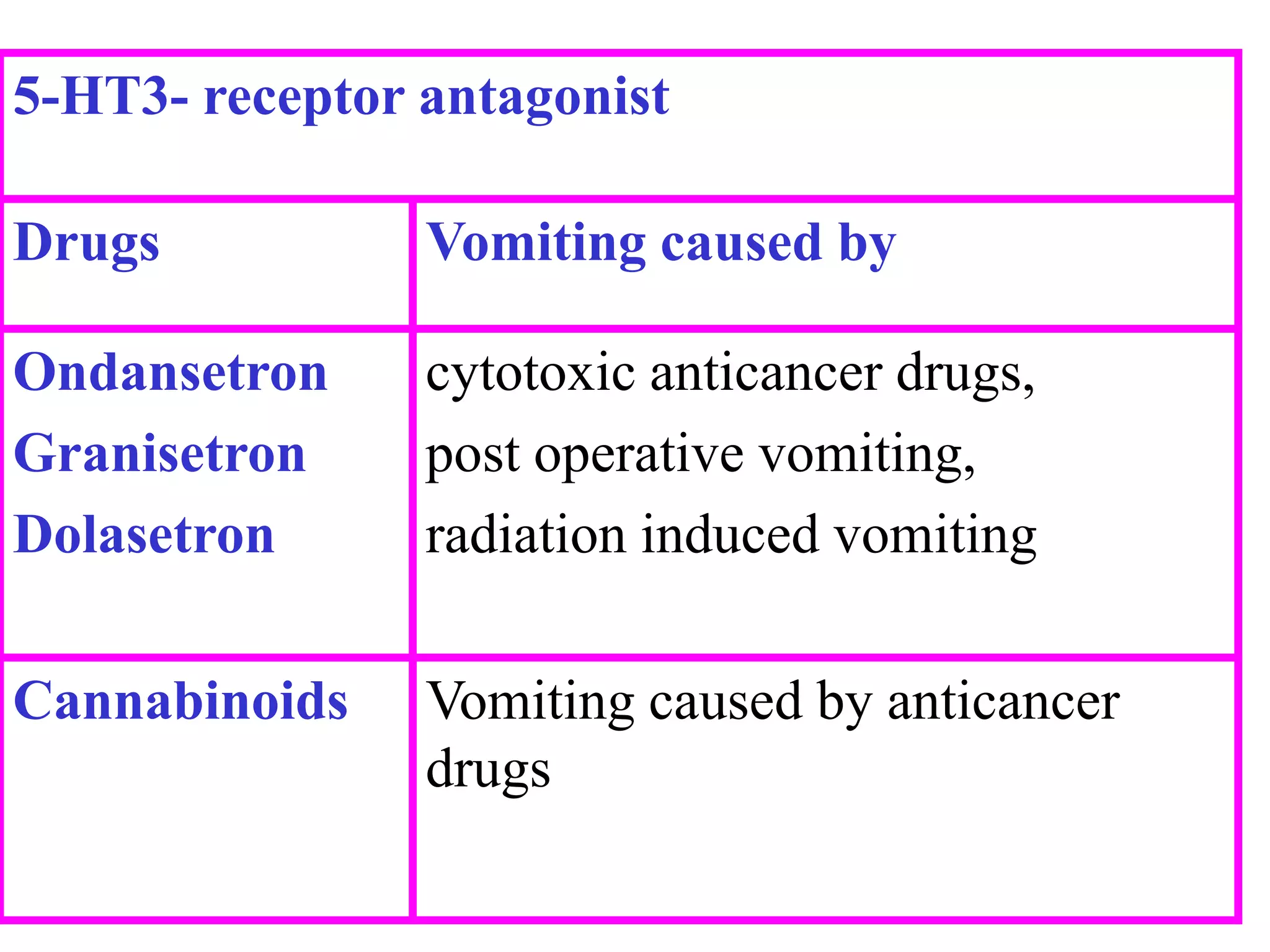
5-HT3- receptor antagonist
Drugs Vomiting caused by
Ondansetron
Granisetron
Dolasetron
cytotoxic anticancer drugs,
post operative vomiting,
radiation induced vomiting
Cannabinoids Vomiting caused by anticancer
drugs
5 HT3 Antagonists
• Ondansetron,
• Granisetron,
• Dolasetron,
• Tropisetron
Primary site of action: CTZ
Therapeutic Use:
chemotherapy and radiation induced nausea & vomiting
DOSE: Adult:4mg IV single dose
paeds : up to 40kg 0.1mg/kg, >404mg IV
Adverse effects: Rare headache , GI upsets
Phenothiazines
• Antipsychotics
• Commonly used for: nausea and vomiting associated with
vertigo, motion sickness, and migraine.
• Act mainly as: antagonist at dopamine D-2 receptors in the CTZ
• Also block: muscarinic and histamine receptors
• Adverse effects: sedation
hypotension
extra pyramidal symptoms
Metoclopramide and Domperidone
• D2 receptor antagonist in CTZ.
• Peripheral prokinetic activity:
• Domperidone does not cross BBB.
• DOSE:10-20mg tid max 2.4mg/kg or 80max
• Peads:250ug-500ug/kg tid max 2.4 mg/kg total daily dose
Incontrast
• Metoclopramide crosses BBB Movement disorder,
fatigue, spasmodic torticollis, occulogyric crises, increased
prolactin release galactorrhea , menstrual irregularities
DOSE:10mg IM/IV Q6hr
Increase the motility of
esophagus, stomach, and intestine
Cannabinoids
Dronabinol, Nabilone
• Synthetic cannabinol derivative
Mechanism of action: unknown
Adverse effects: common:
• Drowsiness , dizziness, dry mouth.
• Mood changes
• Postural hypotension
• Hallucinations
DOSE:4.2mg/m2 PO 1-3hr before chemotherapy for total
of 4-6 doses/day
Corticosteroids
High dose Glucocorticoids
• Dexamethasone
• Methylprednisolone
Mechanism of action: unclear
may involve inhibition of PGs
DOSE : 8-12mg/PO/IV
Cyclic vomiting syndrome
• CVS was first described in France in 1861
• In 1882, described three essential clinical features of the disorder
Three or more recurrent discrete episodes of vomiting
Varying intervals of completely normal health between episodes
Episodes are stereotypical with regard to timing of onset,
symptoms & duration
Absence of an organic cause of vomiting
PATHOGENESIS
• Unknown
• CVS and migraines
• Food allergy
• Catamenial CVS
• Chronic cannabis use
DIAGNOSIS
Rome IV criteria
• Stereotypical episodes of vomiting regarding onset (acute) and
duration (less than one week)
• Three or more discrete episodes in the prior year, and two episodes in
the past six months, occurring at least one week apart
• Absence of vomiting between episodes, but other milder symptoms
can be present between cycles
• The criteria should be fulfilled for the last three months with symptom
onset at least six months before diagnosis.
Supportive criteria
• History or family history of migraine headaches.
• North American Society for Pediatric Gastroenterology Hepatology and Nutrition —
Recommendations apply to children and adolescents (all must be met)
At least five attacks in any interval, or a minimum of three attacks during a six-
month period
Episodic attacks of intense nausea and vomiting lasting 1 hour to 10 days and
occurring at least one week apart
Stereotypical pattern and symptoms in the individual patient
Vomiting during attacks occurs at least four times per hour for at least one hour
Return to baseline health between episodes
Not attributed to another disorder
Treatment
• antimigraine medications
• coenzyme Q10 is 10 to 20 mg/kg per day, or 200 mg twice daily
• L-carnitine is 50 or 100 mg/kg per day, or one gram twice daily
• During vomiting episodes
intravenous administration of a 10 percent dextrose solution can
decrease the frequency and duration of vomiting episodes
high dose ondansetron (0.3 to 0.4mg/kg/dose, max 20 mg/dose)
sedation (eg, with diphenhydramine or lorazepam)
quiet, dark room are often helpful.
Evaluation of nausea and vomiting of
pregnancy
• Hyperemesis gravidarum  severe end of the symptom spectrum
(weight loss exceeding 5 percent of prepregnancy body weight)
• no universally accepted criteria distinguish between mild and severe
disease
Sequelae Of Vomiting
-Aspiration :
altered mental status
low or depressed level of consciousness
extremely repetitive cycles
lead to aspiration of gastric contents
aspiration pneumonia
Mallory Weiss Syndrome
Due to sever and repetitive retching and vomiting
partial tear of the mucosa and sub-mucosa in the stomach &
gastroesophageal junction
Bleeding
Boerhaave's Syndrome :
Due to repetitive extreme prolonged bouts of retching and vomiting
full tear of all the layers of the esophagus
most commonly the posterolateral lower part of the esophagus
Hypovolemia
due to a lot of vomiting
high water volume content and sodium and chloride will be lost
contraction of the extracellular fluid space
activation of the Renin – Angiotensin – Aldosterone system .
Electrolyte Imbalance :
Mainly Hypokalemia
Volume depletion
Hyperaldosteronism
Increased re-absorption of Sodium
Increased Excretion of large amounts of Potassium in the urine
Thank You

Vomiting

  • 1.
  • 2.
    OUTLINE • Classifications • Reflexmechanism of vomiting • Causes of Vomiting • History • Physical Examination • Special Considerations In Pediatric Group • Tests DDx In General Population • DDx In Pediatric Population • Cyclic vomiting syndrome • Evaluation of nausea and vomiting of pregnancy • The management of Nausea &Vomiting • Sequelae Of Vomiting
  • 3.
    What is themajor physiological function of vomiting Remove non-toxic or harmless substances from the body after ingestion Valuable physiological response to ingestion of toxic substances e.g. alcohol
  • 4.
    Classifications Primary : Usuallydue to a GI illness ( Obstruction Or Gastroenteritis ) Secondary : Due to either : 1- Sever visceral pain . 2- Sever Systemic illnesses ( MI , Sepsis , Shock ) 3- Specific conditions like : pregnancy “ Hormonal “ , Raised ICP “ CNS pathology “ , Toxins “ Homeostatic Reflex “ Motion Sickness “ Neuroendocrine “ Or Chemo “ CTZ “
  • 5.
    Classifications Acute Vomiting :Occurs ( < or = 1 Week ) , Usually associated with : obstruction , ischemic , toxic , metabolic , infectious , neurological and post-operative reasons . Chronic : Occurring for more than 1 Month , Usually due to partial obstruction , motility disorder , neurological chronic condition , pregnancy or functional reasons .
  • 6.
    Reflex mechanism ofvomiting Three phases: NAUSEA, RETCHING and VOMITING
  • 7.
    Nausea • an unpleasantsensation that immediately precedes vomiting.  Cold sweat, pallor, salivation.  Noticeable disinterest in the surroundings  Loss of gastric tone  Reflux of intestinal contents into the stomach Accompanying symptoms
  • 8.
    Retching • follows nausea Compriseslabored spasmodic respiratory movements against a closed glottis with contractions of the abdominal muscles, chest wall & diaphragm without any expulsion of gastric contents. can occur without vomiting but normally it generates the pressure gradient that leads to vomiting.
  • 9.
    Vomiting caused by: • Thepowerful sustained contraction of the abdominal and chest wall musculature accompanied by • The descent of the diaphragm and the opening of the gastric cardia. It results in the • Rapid and forceful evacuation of stomach contents upto and out of the mouth Reflex activity that is not under voluntary control
  • 11.
    Neuronal pathways, transmitters and receptorsinvolved in nausea and vomiting
  • 12.
    Mechano and Chemoreceptors located in • stomach, jejunum and ileum involved with • detection of emetic stimuli in the gastrointestinal tract • Mechanoreceptors are tension receptors that initiate emesis in response to distension and contraction • Chemo receptors respond to a variety of toxins in the intestinal lumina
  • 13.
    Afferent neuronal pathways fromthe abdomen are the same regardless of the stimulus
  • 14.
    Receptors and neurotransmittersinvolved in mediating vomiting: Structures Receptors Agonists Antagonists Area postrema CTZ D2 Apomorphine L-DOPA Antidopaminergic drugs Vestibular nuclei N. tractus solitarius M, H1 Cholinomimetics Histamine Scopolamine Dramamine Vomiting center M Cholinomimetics (e.g., physostigmine) Scopolamine Vagal sensory nerve endings 5-HT3 Serotonin Ondansetron Granisetron Tropisetron
  • 15.
    Vomiting Centre Final commonpathway for efferent responses that produce emesis • controls the act of vomiting not a discrete anatomical site, but represents inter-related neuronal networks. • inputs include: vagal sensory pathways from the gastro- intestinal tract and neuronal pathways from the labyrinths, higher centers of the cortex, intracranial pressure receptors and the chemoreceptor trigger zone. • When activated induces: vomiting via stimulation of the salivary and respiratory centers and the pharyngeal, gastrointestinal and abdominal muscles.
  • 16.
    Chemoreceptor Trigger Centre (CTZ) •Area prostrema of the 4th ventricle of the brain • acts as the entry point for emetic stimuli • CTZ is outside the blood-brain barrier • Responds to stimuli from either the cerebral spinal fluid (CSF) or the blood.
  • 19.
    Main neurotransmitters involvedin control of vomiting • Acetylcholine • Histamine • 5-HT • Dopamine • Enkephalins • Substance P
  • 20.
    Class Drug Anti-cholinergic scopolamine(L-hyoscine) Anti-histamine cinnarizine cyclizine promethazine Dopamine antagonists metoclopramide domperidone droperidol (withdrawn 2001) haloperidol Cannabinoid nabilone Corticosteroid dexamethasone Histamine analogue betahistine 5HT3-receptor antagonist granisetron ondansetron tropisetron
  • 21.
  • 22.
    Drug/treatment - inducedCancer chemotherapy Opiates, Nicotine Antibiotics, Radiotherapy Labyrinth disorders Motion, Meniere's disease Endocrine causes Pregnancy Infectious causes Gastroenteritis Viral labyrinthitis Increased intracranial pressure Haemorrhage, Meningitis Post-operative Anaesthetics, Analgesics Procedural CNS causes Anticipatory Migraine, Bulimia nervosa
  • 23.
    Drugs causing emesis. Drugsacting on CTZ • Apomorphine • Emetine (when given parenterally and only at large doses) • L-DOPA • Estrogens (morning sickness of pregnancy) • Chemotherapeutic agents • Eardiac glycosides • Opiates
  • 24.
    Drugs acting locallyon the G-I tract Activate enterochromaffin cells secrete serotonin acts on the 5-HT3 receptors at the nerve endings of the vagal sensory fibers. • Afferent fibers transmit excitation to the N. tractus solitariusVC. • Traditionally called "local irritants” • Ipecac, zinc salts, copper sulfate,
  • 25.
    Cancer chemotherapeutic agentsand radiation therapy Produce free Radicals Enterochromaffin cells Serotonin Stimulate CTZ receptors
  • 26.
    History Duration : todefine the type of vomiting and to give you a close picture of what kind of sequelae might have this patient developed Time + Onset / Offset : to define the type or the etiology causing it : Acute Onset : Gastroenteritis , Pancreatitis , cholecystitis, Appendicitis , Anaphylaxis , Medication Effect Or Toxicity . Morning : Raised ICP , Primary Tension or Migraine Headaches , Pregnancy , Uremia , Alcoholism . 1 Hour After Eating : Gastric Outlet Obstruction Or gastroparesis. 12 Hours After Eating : Gastric Or Intestinal Obstruction .
  • 27.
    Content Of TheVomit : • Bilious  Gastric outlet obstruction is out of the question , cause the area between the stomach and duodenum is intact • If Undigested Food Achalasia Or Stricture • If Digested Food Might be due to toxins or anaphylaxis • If Hematemesis  Suspect Upper GI Bleed • If Fecal Matter/Foul Smelling Distal Bowel Obstruction , Fistula , Bacteria Overgrowth due to long standing outlet obstruction .
  • 28.
    Associated Symptoms : •Hyper-salivation, defecation, tachycardia, bradycardia, atrial fibrillation, and termination of ventricular tachyarrhythmia’s • Chronic headaches with nausea and vomiting  intracranial lesion Past Medical & Surgical Hx : any GI disease or previous surgeries Social & Traveling Hx : alcohol or other substance abuse. Medications & Dietary Habits : Nutritional history is valuable in the consideration of failure to thrive in infancy thorough medication list, including over-the-counter drugs, should be included.
  • 29.
  • 30.
    Special Considerations InPediatric Group • Bulging Fontanel Meningitis • Projectile Vomiting Pyloric Stenosis • Unusual Odors Metabolic Or Toxicological Causes • Visible Bowel Loops Obstruction • Enlarged Parotid Gland + Loss Of Dental Enamel  Bulimia
  • 31.
    • Mild Reflux& Rumination & Regurgitation might be normal in first few months of life • First Week Vomiting Obstructive , Inborn Error Of Metabolism , Serious Infection • After 1 Week Pyloric Stenosis , Feeding Problems • First Month Infections , Metabolic Causes , Failure To Thrive , Subdural Hematoma in Abused Children • Adolescents + Teenagers Cyclic Vomiting , Food Poisoning , Pneumonia , DKA , Anorexia Nervosa , Bulimia , Drug Abuse
  • 32.
    Tests - CBC :If Hb and HCT are High >>> Dehydration - Electrolytes : Hypochloremia , Hypokalemia . - BUN / Creatinine Ratio : If 20:1 >> Sever Dehydration . - Amylase & Lipase : Pancreatitis >>> Dehydration - Urine analysis : For UTI , Pregnancy Test , DKA , Hematuria , Stones , Sterile Pyuria in Appendicitis . - Culture , Sensitivity & Titers : To Rule In Or Out Infection - LFTs + Ammonia : Cholycystitis , Ascending Cholangitis , Liver Failure . -
  • 33.
    • Chest &Abdominal X-Rays : Focus ,Perforation , Obstruction • CT & Angio : Ischemia & Infarction • ECG : MI • TFT : Thyroid Disease • Drug Levels
  • 34.
    DDx In GeneralPopulation
  • 35.
    DDx In PediatricPopulation
  • 36.
  • 37.
  • 38.
    Class Drug Anti-cholinergic scopolamine(L-hyoscine) Anti-histamine cinnarizine cyclizine promethazine Dopamine antagonists metoclopramide domperidone droperidol (withdrawn 2001) haloperidol Cannabinoid nabilone Corticosteroid dexamethasone Histamine analogue betahistine 5HT3-receptor antagonist granisetron ondansetron tropisetron
  • 39.
    Receptors antagonists Which receptors H1 - Histamine receptors  Muscarinic receptors  5 HT 3 receptors
  • 41.
    Antiemetic Drugs H1- receptorantagonist • Cyclizine • Meclizine • Cinnarazine • Promethazin • Diphenhydramine • Dimenhydrinate • Hydroxyzine Muscarinic antagonist • Hyoscine (Scopolamine)
  • 42.
    D2-receptor antagonist Phenothiazine • Chlorpromazine •prochlorperazine • Promethazine • Trifluoperazine • Thiethylperazine Butyrophenones: • Haloperidol • Droperidol Metoclopramide Domperidone
  • 43.
    5 HT3-receptor antagonist Ondansetron Granisetron Dolasetron Cannabinoids •Nabilone • Dronabinol Steroids • Dexamethasone • Methylprednisolone
  • 44.
    Clinical Uses ofAnti emetics • Histamine H1 receptor antagonist Cyclizine Motion sickness Cinnarazine Motion sickness, vestibular disorders Promethazine Morning sickness of pregnancy
  • 45.
  • 46.
    Dopamine D2 receptorantagonist Phenothiazines vomiting caused by Prochlorperazine uremia, radiation,viral gastroenteritis, severe morning sickness of pregnancy. Metoclopramide uremia, radiation, GI disorders, cytotoxic drugs.
  • 47.
    5-HT3- receptor antagonist DrugsVomiting caused by Ondansetron Granisetron Dolasetron cytotoxic anticancer drugs, post operative vomiting, radiation induced vomiting Cannabinoids Vomiting caused by anticancer drugs
  • 48.
    5 HT3 Antagonists •Ondansetron, • Granisetron, • Dolasetron, • Tropisetron Primary site of action: CTZ Therapeutic Use: chemotherapy and radiation induced nausea & vomiting DOSE: Adult:4mg IV single dose paeds : up to 40kg 0.1mg/kg, >404mg IV Adverse effects: Rare headache , GI upsets
  • 49.
    Phenothiazines • Antipsychotics • Commonlyused for: nausea and vomiting associated with vertigo, motion sickness, and migraine. • Act mainly as: antagonist at dopamine D-2 receptors in the CTZ • Also block: muscarinic and histamine receptors • Adverse effects: sedation hypotension extra pyramidal symptoms
  • 50.
    Metoclopramide and Domperidone •D2 receptor antagonist in CTZ. • Peripheral prokinetic activity: • Domperidone does not cross BBB. • DOSE:10-20mg tid max 2.4mg/kg or 80max • Peads:250ug-500ug/kg tid max 2.4 mg/kg total daily dose Incontrast • Metoclopramide crosses BBB Movement disorder, fatigue, spasmodic torticollis, occulogyric crises, increased prolactin release galactorrhea , menstrual irregularities DOSE:10mg IM/IV Q6hr Increase the motility of esophagus, stomach, and intestine
  • 51.
    Cannabinoids Dronabinol, Nabilone • Syntheticcannabinol derivative Mechanism of action: unknown Adverse effects: common: • Drowsiness , dizziness, dry mouth. • Mood changes • Postural hypotension • Hallucinations DOSE:4.2mg/m2 PO 1-3hr before chemotherapy for total of 4-6 doses/day
  • 52.
    Corticosteroids High dose Glucocorticoids •Dexamethasone • Methylprednisolone Mechanism of action: unclear may involve inhibition of PGs DOSE : 8-12mg/PO/IV
  • 53.
    Cyclic vomiting syndrome •CVS was first described in France in 1861 • In 1882, described three essential clinical features of the disorder Three or more recurrent discrete episodes of vomiting Varying intervals of completely normal health between episodes Episodes are stereotypical with regard to timing of onset, symptoms & duration Absence of an organic cause of vomiting
  • 54.
    PATHOGENESIS • Unknown • CVSand migraines • Food allergy • Catamenial CVS • Chronic cannabis use
  • 55.
    DIAGNOSIS Rome IV criteria •Stereotypical episodes of vomiting regarding onset (acute) and duration (less than one week) • Three or more discrete episodes in the prior year, and two episodes in the past six months, occurring at least one week apart • Absence of vomiting between episodes, but other milder symptoms can be present between cycles • The criteria should be fulfilled for the last three months with symptom onset at least six months before diagnosis.
  • 56.
    Supportive criteria • Historyor family history of migraine headaches. • North American Society for Pediatric Gastroenterology Hepatology and Nutrition — Recommendations apply to children and adolescents (all must be met) At least five attacks in any interval, or a minimum of three attacks during a six- month period Episodic attacks of intense nausea and vomiting lasting 1 hour to 10 days and occurring at least one week apart Stereotypical pattern and symptoms in the individual patient Vomiting during attacks occurs at least four times per hour for at least one hour Return to baseline health between episodes Not attributed to another disorder
  • 57.
    Treatment • antimigraine medications •coenzyme Q10 is 10 to 20 mg/kg per day, or 200 mg twice daily • L-carnitine is 50 or 100 mg/kg per day, or one gram twice daily • During vomiting episodes intravenous administration of a 10 percent dextrose solution can decrease the frequency and duration of vomiting episodes high dose ondansetron (0.3 to 0.4mg/kg/dose, max 20 mg/dose) sedation (eg, with diphenhydramine or lorazepam) quiet, dark room are often helpful.
  • 58.
    Evaluation of nauseaand vomiting of pregnancy • Hyperemesis gravidarum  severe end of the symptom spectrum (weight loss exceeding 5 percent of prepregnancy body weight) • no universally accepted criteria distinguish between mild and severe disease
  • 59.
    Sequelae Of Vomiting -Aspiration: altered mental status low or depressed level of consciousness extremely repetitive cycles lead to aspiration of gastric contents aspiration pneumonia
  • 60.
    Mallory Weiss Syndrome Dueto sever and repetitive retching and vomiting partial tear of the mucosa and sub-mucosa in the stomach & gastroesophageal junction Bleeding
  • 61.
    Boerhaave's Syndrome : Dueto repetitive extreme prolonged bouts of retching and vomiting full tear of all the layers of the esophagus most commonly the posterolateral lower part of the esophagus
  • 62.
    Hypovolemia due to alot of vomiting high water volume content and sodium and chloride will be lost contraction of the extracellular fluid space activation of the Renin – Angiotensin – Aldosterone system .
  • 63.
    Electrolyte Imbalance : MainlyHypokalemia Volume depletion Hyperaldosteronism Increased re-absorption of Sodium Increased Excretion of large amounts of Potassium in the urine
  • 65.