Nausea and Vomiting
Hashim Syed Ali Abbas H.
Pharm.D VI Year
170312882029
Nausea
• Nausea is an uneasiness of the stomach that often comes
before vomiting.
Vomiting
• Vomiting is the forcible voluntary or involuntary emptying
("throwing up") of stomach contents through the mouth.
Causes
Nausea and vomiting are not diseases, but they are
symptoms of many conditions such as:
•Motion sickness or seasickness
•Early stages of pregnancy (nausea occurs in
approximately 50%-90% of all pregnancies; vomiting in
25%-55%)
•Medication-induced vomiting
•Intense pain
•Emotional stress (such as fear)
•Gallbladder Diseases
•Food Poisoning
•Infections (such as the “stomach flu")
•Overeating
Causes
• A reaction to certain smells or odours
• Heart Attack
• Concussion or Brain injury
• Brain Tumor
• Ulcers
• Some forms of cancer
• Bulimia or other psychological illnesses
• Gastroparesis or slow stomach emptying (a condition that
can be seen in people with Diabetes)
• Ingestion of toxins or excessive amounts of alcohol
• The causes of vomiting differ according to age. For children, it
is common for vomiting to occur from a viral infections, food
poisoning, milk allergy, motion sickness, overeating or
feeding, coughing, or blocked intestines and illnesses in which
the child has a high fever.
The timing of the nausea or vomiting can indicate the cause.
When appearing shortly after a meal, nausea or vomiting may
be caused by food poisoning, gastritis (inflammation of the
stomach lining), an ulcer, or bulimia. Nausea or vomiting one
to eight hours after a meal may also indicate food poisoning.
However, certain food- borne bacteria, such as salmonella, can
take longer to produce symptoms.
Pathophysiology
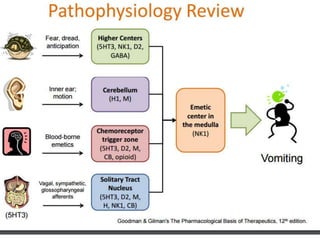
• There are four general pathways that are activated by specific triggers in the human
body that go on to create the sensation of nausea and vomiting.
• Central Nervous System(CNS): Stimuli can affect areas of the CNS including the
cerebral cortex and the limbic system. These areas are activated by elevated
intracranial pressure, irritation of the meninges (i.e. blood or infection), and extreme
emotional triggers such as anxiety.
• Chemoreceptor trigger zone (CTZ): The CTZ is located in the area postrema in the
floor of the fourth ventricle within the brain. This area is outside the blood brain
barrier, and is therefore readily exposed to substances circulating through the blood
and cerebral spinal fluid. Common triggers of the CTZ include metabolic
abnormalities, toxins, and medications. Activation of the CTZ is mediated
by dopamine (D2) receptors, serotonin (5HT3) receptors, and neurokinin receptors
(NK1).
• Vestibular System: This system is activated by disturbances to the vestibular
apparatus in the inner ear. These include movements that cause motion sickness and
dizziness. This pathway is triggered via histamine (H1) receptors
and acetylcholine (ACh) receptors.
Pathophysiology
• Peripheral Pathways: These pathways are triggered via chemoreceptors and
mechanoreceptors in the gastrointestinal tract, as well as other organs such
as the heart and kidneys. Common activators of these pathways include
toxins present in the gastrointestinal lumen and distension of the
gastrointestinal lumen from blockage or dysmotility of the bowels. Signals
from these pathways travel via multiple neural tracts including
the vagus, glossopharyngeal, splanchnic, and sympathetic nerves.
• Signals from any of these pathways then travel to the brainstem, activating
several structures including the nucleus of the solitary tract, the dorsal motor
nucleus of the vagus, and central pattern generator.These structures go on to
signal various downstream effects of nausea and vomiting.
• Autonomic effects involve increased salivation and the sensation of feeling
faint that often occurs with nausea and vomiting.
Treatment
• If dehydration is present due to loss of fluids from severe vomiting, rehydration
with oral electrolyte solutions is preferred. If this is not effective or possible,
intravenous rehydration may be required. Medical care is recommended if: a
person cannot keep any liquids down, has symptoms more than 2 days, is weak,
has a fever, has stomach pain, vomits more two times in a day or does not
urinate for more than 8 hours.
Medications
The choice of antiemetic medication may be based on the situation during which
the person experiences nausea.
• For people with motion sickness and vertigo, antihistamines and
anticholinergics such as meclizine and scopolamine are particularly effective.
• Nausea and vomiting associated with migraine headaches respond best to
dopamine antagonists such as metoclopramide, prochlorperazine
and chlorpromazine.
Medications
• In cases of gastroenteritis, serotonin antagonists such as ondansetron were
found to suppress nausea and vomiting, as well as reduce the need for IV
fluid resuscitation.
• The combination of pyridoxine and doxylamine is the first line treatment for
pregnancy-related nausea and vomiting.
• Dimenhydrinate is an inexpensive and effective over the counter medication
for preventing postoperative nausea and vomiting. Other factors to consider
when choosing an antiemetic medication include the person's preference,
side-effect profile, and cost
Alternative medicine
• Cannabinoids may be effective for nausea and vomiting in the advanced
stages of illnesses such as cancer (chemotherapy) and AIDS.
• Ginger has also been shown to be potentially effective in treating several
types of nausea.
• Tentative evidence supports Acupuncture at point PC6
Chemotherapy-induced nausea and vomiting
• Most feared side-effect
• May be more distressing than future concerns of life
expectancy
• Medical complications: dehydration, electrolyte imbalance, risk
of aspiration pneumonia
• Many treatments palliative intent = maintain QOL
• Effective management of N + V is essential
Types
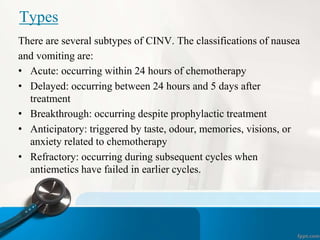
There are several subtypes of CINV. The classifications of nausea
and vomiting are:
• Acute: occurring within 24 hours of chemotherapy
• Delayed: occurring between 24 hours and 5 days after
treatment
• Breakthrough: occurring despite prophylactic treatment
• Anticipatory: triggered by taste, odour, memories, visions, or
anxiety related to chemotherapy
• Refractory: occurring during subsequent cycles when
antiemetics have failed in earlier cycles.
Risk factors
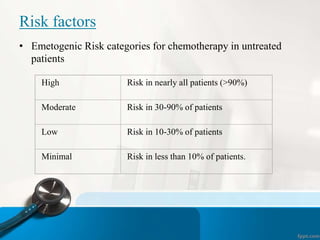
• Emetogenic Risk categories for chemotherapy in untreated
patients
High Risk in nearly all patients (>90%)
Moderate Risk in 30-90% of patients
Low Risk in 10-30% of patients
Minimal Risk in less than 10% of patients.
Risk factors
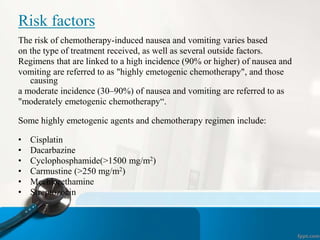
The risk of chemotherapy-induced nausea and vomiting varies based
on the type of treatment received, as well as several outside factors.
Regimens that are linked to a high incidence (90% or higher) of nausea and
vomiting are referred to as "highly emetogenic chemotherapy", and those
causing
a moderate incidence (30–90%) of nausea and vomiting are referred to as
"moderately emetogenic chemotherapy“.
Some highly emetogenic agents and chemotherapy regimen include:
• Cisplatin
• Dacarbazine
• Cyclophosphamide(>1500 mg/m2)
• Carmustine (>250 mg/m2)
• Mechlorethamine
• Streptozocin
Risk factors
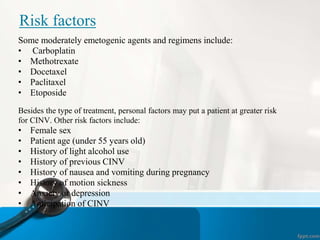
Some moderately emetogenic agents and regimens include:
• Carboplatin
• Methotrexate
• Docetaxel
• Paclitaxel
• Etoposide
Besides the type of treatment, personal factors may put a patient at greater risk
for CINV. Other risk factors include:
• Female sex
• Patient age (under 55 years old)
• History of light alcohol use
• History of previous CINV
• History of nausea and vomiting during pregnancy
• History of motion sickness
• Anxiety or depression
• Anticipation of CINV
Pathophysiology of CINV
• Emesis is a defense mechanism controlled by the area postrema of the medulla
oblongata.
• Stimulation of different receptors are involved in different pathways leading to
emesis. In the final common pathway, substance P, which activates
the neurokinin-1 receptor appears to be involved.
• Additionally, the vagal and enteric nervous system inputs transmit information
regarding the state of the gastrointestinal system. Irritation of the GI mucosa by
chemotherapy, radiation, distention, or acute infectious gastroenteritis activates
the 5-HT3receptors of these inputs.
• It is now widely known that cytotoxic chemotherapeutic agents cause a
detectable increase in blood levels of serotonin (5-HT) and its major
metabolite, 5-hydroxyindoleacetic acid (5-HIAA). The presence of these
chemicals in the blood activate 5-HT3 receptors in the chemoreceptor trigger
zone, in turn releasing substance P, which activates NK1 receptors to cause an
emetic response (vomiting).
Treatments
Pharmaceutical treatment is generally separated into two types: prophylactic
(preventative) treatment, given before the dose of chemotherapy agents, and
rescue treatment, given to treat breakthrough nausea and vomiting.
5-HT3 inhibitors:
• Dolasetron
• Granisetron
• Ondansetron
And newer drugs like Palonosetron can be given orally, I.V injections or as
transdermal patches.
NK1 inhibitors:
• Aprepitant
• Netupitant (newly approved)
These drugs are often used alongside 5HT3inhibitors and corticosteroids
(eg: Dexamethasone) to form a very potent cocktail of antiemetics that
verge on achieving a nearly complete patient response (that is, completely
stopping CINV).
Other drugs:
• Metoclopramide, a dopamine D2 receptor antagonist.
• Histamine blockers such as diphenhydramine or meclozine may be used in
rescue treatment.
• The use of Cannabinoids derived from cannabis during chemotherapy greatly
reduces the associated nausea and vomiting, and enables the patient to eat
(Eg: Tetrahydrocannabinol).
Nausea and vomiting

Nausea and vomiting

  • 1.
    Nausea and Vomiting HashimSyed Ali Abbas H. Pharm.D VI Year 170312882029
  • 2.
    Nausea • Nausea isan uneasiness of the stomach that often comes before vomiting. Vomiting • Vomiting is the forcible voluntary or involuntary emptying ("throwing up") of stomach contents through the mouth.
  • 3.
    Causes Nausea and vomitingare not diseases, but they are symptoms of many conditions such as: •Motion sickness or seasickness •Early stages of pregnancy (nausea occurs in approximately 50%-90% of all pregnancies; vomiting in 25%-55%) •Medication-induced vomiting •Intense pain •Emotional stress (such as fear) •Gallbladder Diseases •Food Poisoning •Infections (such as the “stomach flu") •Overeating
  • 4.
    Causes • A reactionto certain smells or odours • Heart Attack • Concussion or Brain injury • Brain Tumor • Ulcers • Some forms of cancer • Bulimia or other psychological illnesses • Gastroparesis or slow stomach emptying (a condition that can be seen in people with Diabetes) • Ingestion of toxins or excessive amounts of alcohol
  • 5.
    • The causesof vomiting differ according to age. For children, it is common for vomiting to occur from a viral infections, food poisoning, milk allergy, motion sickness, overeating or feeding, coughing, or blocked intestines and illnesses in which the child has a high fever. The timing of the nausea or vomiting can indicate the cause. When appearing shortly after a meal, nausea or vomiting may be caused by food poisoning, gastritis (inflammation of the stomach lining), an ulcer, or bulimia. Nausea or vomiting one to eight hours after a meal may also indicate food poisoning. However, certain food- borne bacteria, such as salmonella, can take longer to produce symptoms.
  • 6.
    Pathophysiology • There arefour general pathways that are activated by specific triggers in the human body that go on to create the sensation of nausea and vomiting. • Central Nervous System(CNS): Stimuli can affect areas of the CNS including the cerebral cortex and the limbic system. These areas are activated by elevated intracranial pressure, irritation of the meninges (i.e. blood or infection), and extreme emotional triggers such as anxiety. • Chemoreceptor trigger zone (CTZ): The CTZ is located in the area postrema in the floor of the fourth ventricle within the brain. This area is outside the blood brain barrier, and is therefore readily exposed to substances circulating through the blood and cerebral spinal fluid. Common triggers of the CTZ include metabolic abnormalities, toxins, and medications. Activation of the CTZ is mediated by dopamine (D2) receptors, serotonin (5HT3) receptors, and neurokinin receptors (NK1). • Vestibular System: This system is activated by disturbances to the vestibular apparatus in the inner ear. These include movements that cause motion sickness and dizziness. This pathway is triggered via histamine (H1) receptors and acetylcholine (ACh) receptors.
  • 8.
    Pathophysiology • Peripheral Pathways:These pathways are triggered via chemoreceptors and mechanoreceptors in the gastrointestinal tract, as well as other organs such as the heart and kidneys. Common activators of these pathways include toxins present in the gastrointestinal lumen and distension of the gastrointestinal lumen from blockage or dysmotility of the bowels. Signals from these pathways travel via multiple neural tracts including the vagus, glossopharyngeal, splanchnic, and sympathetic nerves. • Signals from any of these pathways then travel to the brainstem, activating several structures including the nucleus of the solitary tract, the dorsal motor nucleus of the vagus, and central pattern generator.These structures go on to signal various downstream effects of nausea and vomiting. • Autonomic effects involve increased salivation and the sensation of feeling faint that often occurs with nausea and vomiting.
  • 9.
    Treatment • If dehydrationis present due to loss of fluids from severe vomiting, rehydration with oral electrolyte solutions is preferred. If this is not effective or possible, intravenous rehydration may be required. Medical care is recommended if: a person cannot keep any liquids down, has symptoms more than 2 days, is weak, has a fever, has stomach pain, vomits more two times in a day or does not urinate for more than 8 hours. Medications The choice of antiemetic medication may be based on the situation during which the person experiences nausea. • For people with motion sickness and vertigo, antihistamines and anticholinergics such as meclizine and scopolamine are particularly effective. • Nausea and vomiting associated with migraine headaches respond best to dopamine antagonists such as metoclopramide, prochlorperazine and chlorpromazine.
  • 10.
    Medications • In casesof gastroenteritis, serotonin antagonists such as ondansetron were found to suppress nausea and vomiting, as well as reduce the need for IV fluid resuscitation. • The combination of pyridoxine and doxylamine is the first line treatment for pregnancy-related nausea and vomiting. • Dimenhydrinate is an inexpensive and effective over the counter medication for preventing postoperative nausea and vomiting. Other factors to consider when choosing an antiemetic medication include the person's preference, side-effect profile, and cost
  • 11.
    Alternative medicine • Cannabinoidsmay be effective for nausea and vomiting in the advanced stages of illnesses such as cancer (chemotherapy) and AIDS. • Ginger has also been shown to be potentially effective in treating several types of nausea. • Tentative evidence supports Acupuncture at point PC6
  • 12.
    Chemotherapy-induced nausea andvomiting • Most feared side-effect • May be more distressing than future concerns of life expectancy • Medical complications: dehydration, electrolyte imbalance, risk of aspiration pneumonia • Many treatments palliative intent = maintain QOL • Effective management of N + V is essential
  • 13.
    Types There are severalsubtypes of CINV. The classifications of nausea and vomiting are: • Acute: occurring within 24 hours of chemotherapy • Delayed: occurring between 24 hours and 5 days after treatment • Breakthrough: occurring despite prophylactic treatment • Anticipatory: triggered by taste, odour, memories, visions, or anxiety related to chemotherapy • Refractory: occurring during subsequent cycles when antiemetics have failed in earlier cycles.
  • 14.
    Risk factors • EmetogenicRisk categories for chemotherapy in untreated patients High Risk in nearly all patients (>90%) Moderate Risk in 30-90% of patients Low Risk in 10-30% of patients Minimal Risk in less than 10% of patients.
  • 15.
    Risk factors The riskof chemotherapy-induced nausea and vomiting varies based on the type of treatment received, as well as several outside factors. Regimens that are linked to a high incidence (90% or higher) of nausea and vomiting are referred to as "highly emetogenic chemotherapy", and those causing a moderate incidence (30–90%) of nausea and vomiting are referred to as "moderately emetogenic chemotherapy“. Some highly emetogenic agents and chemotherapy regimen include: • Cisplatin • Dacarbazine • Cyclophosphamide(>1500 mg/m2) • Carmustine (>250 mg/m2) • Mechlorethamine • Streptozocin
  • 16.
    Risk factors Some moderatelyemetogenic agents and regimens include: • Carboplatin • Methotrexate • Docetaxel • Paclitaxel • Etoposide Besides the type of treatment, personal factors may put a patient at greater risk for CINV. Other risk factors include: • Female sex • Patient age (under 55 years old) • History of light alcohol use • History of previous CINV • History of nausea and vomiting during pregnancy • History of motion sickness • Anxiety or depression • Anticipation of CINV
  • 17.
    Pathophysiology of CINV •Emesis is a defense mechanism controlled by the area postrema of the medulla oblongata. • Stimulation of different receptors are involved in different pathways leading to emesis. In the final common pathway, substance P, which activates the neurokinin-1 receptor appears to be involved. • Additionally, the vagal and enteric nervous system inputs transmit information regarding the state of the gastrointestinal system. Irritation of the GI mucosa by chemotherapy, radiation, distention, or acute infectious gastroenteritis activates the 5-HT3receptors of these inputs. • It is now widely known that cytotoxic chemotherapeutic agents cause a detectable increase in blood levels of serotonin (5-HT) and its major metabolite, 5-hydroxyindoleacetic acid (5-HIAA). The presence of these chemicals in the blood activate 5-HT3 receptors in the chemoreceptor trigger zone, in turn releasing substance P, which activates NK1 receptors to cause an emetic response (vomiting).
  • 18.
    Treatments Pharmaceutical treatment isgenerally separated into two types: prophylactic (preventative) treatment, given before the dose of chemotherapy agents, and rescue treatment, given to treat breakthrough nausea and vomiting. 5-HT3 inhibitors: • Dolasetron • Granisetron • Ondansetron And newer drugs like Palonosetron can be given orally, I.V injections or as transdermal patches.
  • 19.
    NK1 inhibitors: • Aprepitant •Netupitant (newly approved) These drugs are often used alongside 5HT3inhibitors and corticosteroids (eg: Dexamethasone) to form a very potent cocktail of antiemetics that verge on achieving a nearly complete patient response (that is, completely stopping CINV). Other drugs: • Metoclopramide, a dopamine D2 receptor antagonist. • Histamine blockers such as diphenhydramine or meclozine may be used in rescue treatment. • The use of Cannabinoids derived from cannabis during chemotherapy greatly reduces the associated nausea and vomiting, and enables the patient to eat (Eg: Tetrahydrocannabinol).