Approach to Vomiting
Presenter : Dr Jason Dsouza
Moderator: Dr Jaidev MD
CONTEN
TS
1. Introduction
2. Definitions
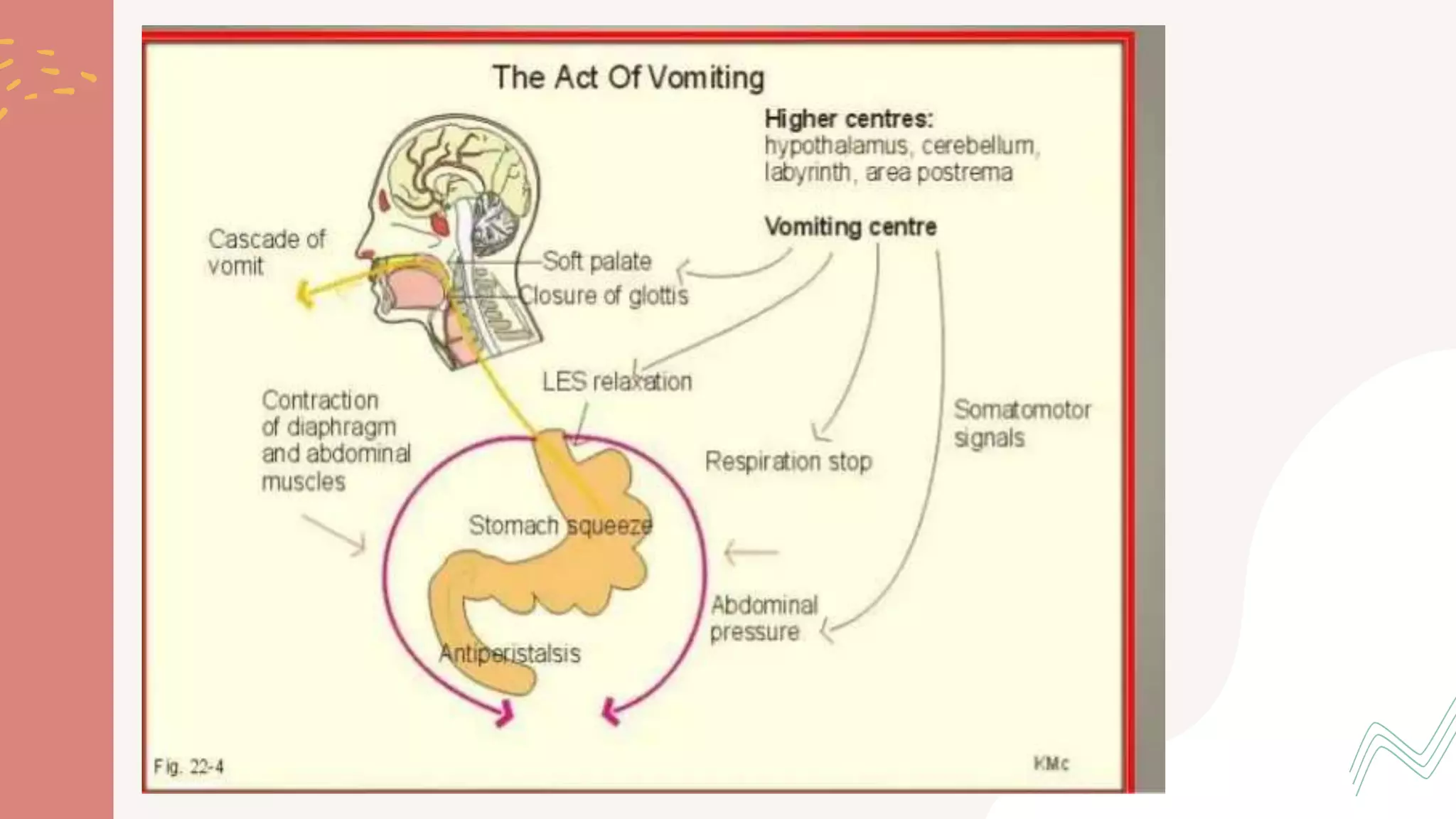
3. Physiology of emesis
4. Approach to vomiting
5. Clinical Clues
6. Management
INTRODUCTI
ON
Common symptom of disorders ranging from self limiting to life
threatening illness
Recognize serious conditions requiring immediate interventions
Definition
s
Vomiting(emesis): Forceful oral expulsion of gastric contents
associated with contraction of abdominal and chest wall
musculature(retrograde)
Nausea: Unpleasant,vaguely epigastric or abdominal sensation
accompanied by variety of autonomic changes that may precede
vomiting but may be present in a child who does not vomit
Regurgitation: Effortless passage of gastric contents into mouth.
*Nelsons Textbook of Pediatric symptom based Diagnosis
Definitions
(cont)
Prolonged Vomiting:
Vomiting > 12hours in a neonate,
>24hours in children younger than 2 years of age
> 48 hours in older children
Recurrent Vomiting : At least 3 episodes occurring over 3 months
Chronic vomiting : Low grade frequent vomiting episodes
(>2episode/week)
Episodic / Cyclic vomiting: Discrete episodes of high intensity
vomiting that occur sporadically in between asymptomatic intervals
*Indian Journal of pediatrics(April 2013)
Sitophobia: An extreme avulsion to eating or to food
Retching: It is the effort to vomit, short of expulsion of gastric
contents
Rumination: Repeated regurgitation of stomach contents which are
often rechewed and reswallowed
*Nelsons Textbook of Pediatric symptom based Diagnosis
Definitions (cont)
Physiolo
gy of
Emesis
Protective reflex
Major pathways involved: Vagal Afferents
The Area Prostrema (CTZ)
Vestibular system
Amygdala
Physiology of Emesis
5 Principal Neurotransmitters (Receptors):
Muscarinic(M1)
Dopamine (D2)
Histamine (H1)
Serotonin (5HT3)
Substance P (Neurokinin 1)
Physiology of
Emesis(cont.)
Stimuli for Vomiting :
1. Noxious thoughts or smell(cerebral cortex)
2. Gag reflex activation(cranial nerve)
3. Motion sickness ,Inner ear disorders (Labyrnthine)
4. Gastric irritants ,distension(Vagal afferents)
5. Small intestinal or colon obstruction or ischaemia(Non gastric visceral
afferents )
6. Blood borne Eg: Bacterial toxins, uremia, Keto acidosis,
chemotherapy,drug induce(CTZ)
7. Pregnancy(hormonal)
Physiology of
Emesis(cont.)
Centers for Vomiting
1) Reticular Formation
2) Others: Dorsal vagal nuclei
Nucleus tractus solitarius
Phrenic Nuclei
Respiratory nuclei
Nuclei that control Facial, Pharyngeal and Tongue
movements
Programmed Vomiting Response
Pain, Sights ,
Anticipation
Pharyngeal
stimulation
Nucleus tractus
Solitarius
Area Postrema
(CTZ)
Gastric mucosa
Gastric Irritants
-Ipecac
-Cytotoxic Drugs
Drugs :
Chemotherapy,Opioids
Hormones: Pregnancy
Cerebellum
Brain Stem
vomiting center
Labyrinth
Motion, vertigo
Higher
centers
Red Flag signs of vomiting
1. Persistent or severe vomiting and Failure to thrive
2. Guarding / Rigidity or abdominal distension
3. Lethargy / Altered sensorium
4. Inconsolability and Bulging fontanelle in infant
5. Nuchal rigidity, Photophobia and fever in older child
6. Toxic/septic/apprehensive look
7. Bilious /bloody vomiting
8. Signs of severe dehydration or symptomatic hypoglycemia
Red Flag signs of vomiting
COMMON CAUSES LESS COMMON RARE CAUSES
Gastroenteritis
Gastritis
Motion sickness
Hepatitis
Surgical abdomen
Gastroesophageal reflux
Pyelonephritis Cholecystitis
Raised ICP –Tumor,
Intracranial infection ,
Pseudotumor
IEM, Migraine variant,
Cyclical vomiting, Chronic
renal failure, Endocrine
causes, (DKA, Addison’s
disease)
Vestibular dysfunction,
Psychogenic
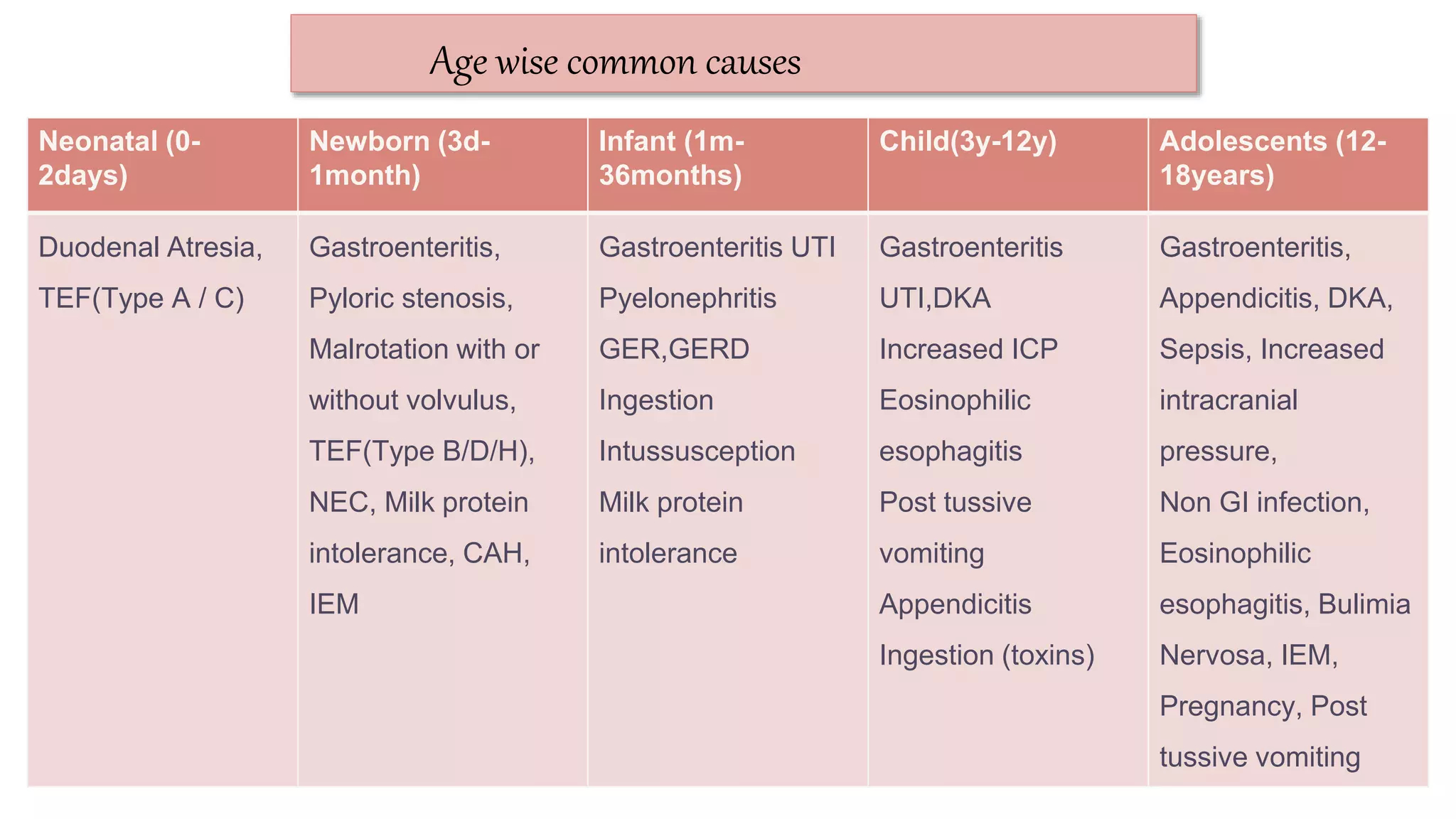
Causes of vomiting
Neonatal (0-
2days)
Newborn (3d-
1month)
Infant (1m-
36months)
Child(3y-12y) Adolescents (12-
18years)
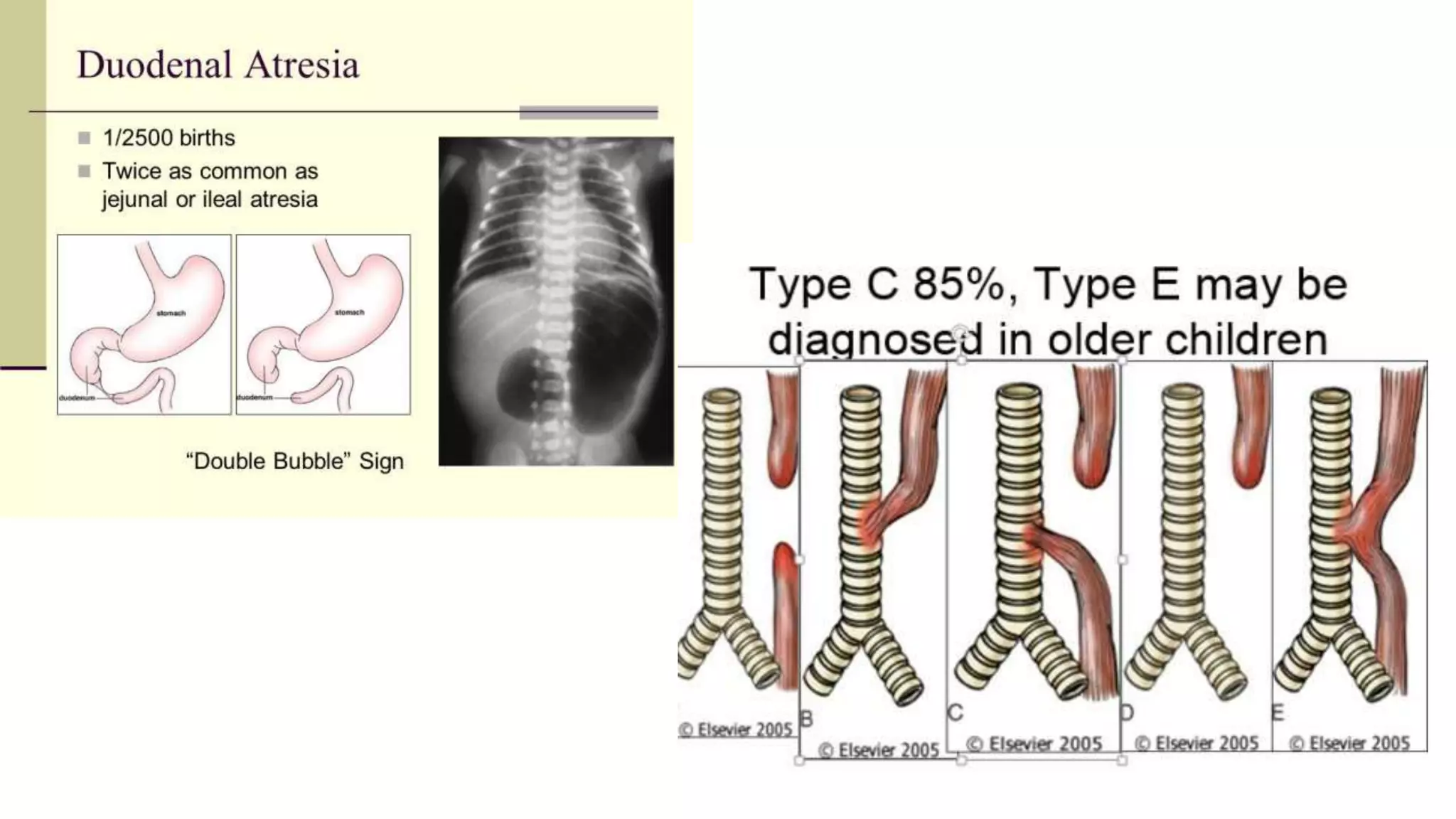
Duodenal Atresia,
TEF(Type A / C)
Gastroenteritis,
Pyloric stenosis,
Malrotation with or
without volvulus,
TEF(Type B/D/H),
NEC, Milk protein
intolerance, CAH,
IEM
Gastroenteritis UTI
Pyelonephritis
GER,GERD
Ingestion
Intussusception
Milk protein
intolerance
Gastroenteritis
UTI,DKA
Increased ICP
Eosinophilic
esophagitis
Post tussive
vomiting
Appendicitis
Ingestion (toxins)
Gastroenteritis,
Appendicitis, DKA,
Sepsis, Increased
intracranial
pressure,
Non GI infection,
Eosinophilic
esophagitis, Bulimia
Nervosa, IEM,
Pregnancy, Post
tussive vomiting
Age wise common causes
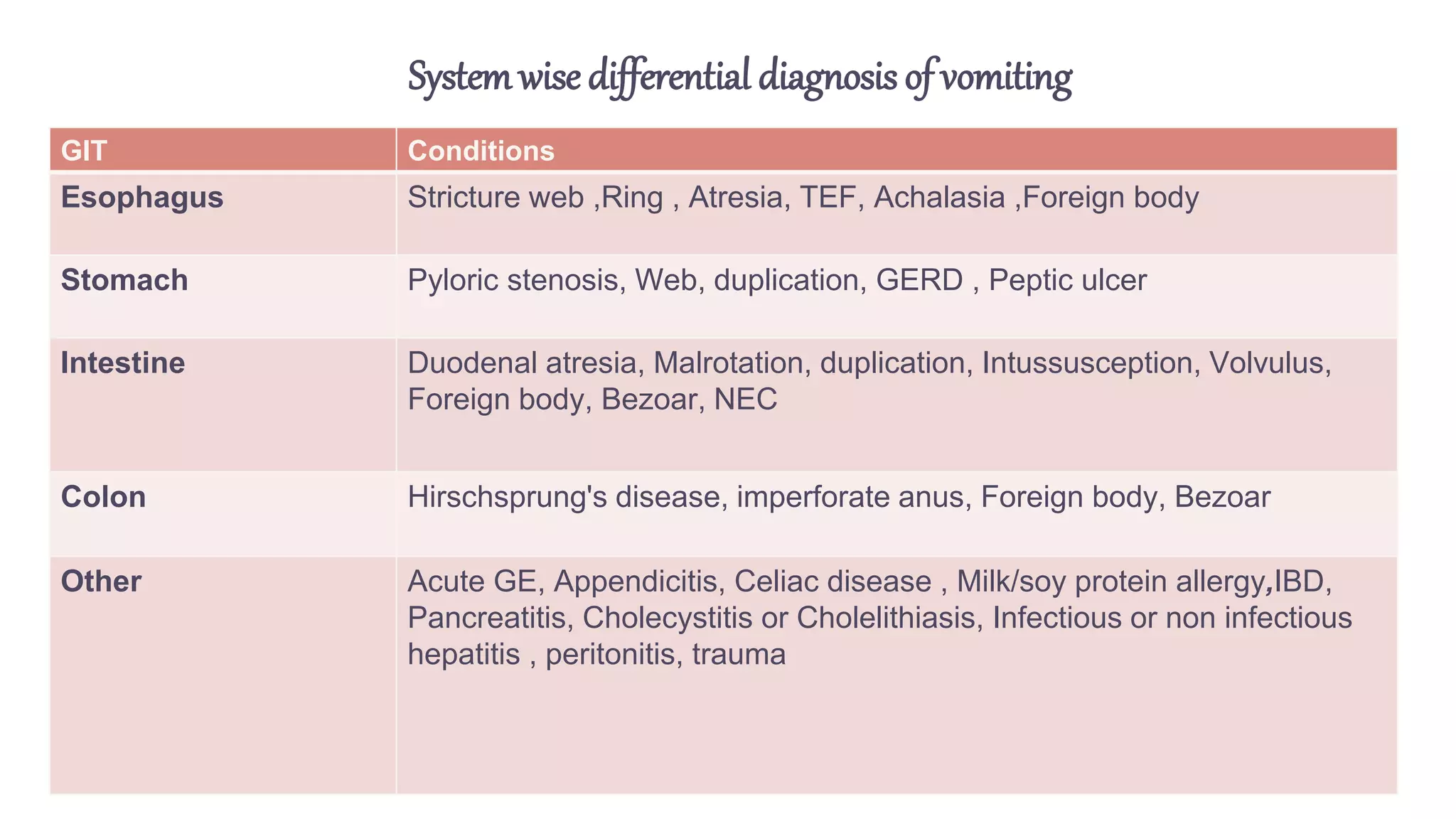
Systemwise differential diagnosis of vomiting
GIT Conditions
Esophagus Stricture web ,Ring , Atresia, TEF, Achalasia ,Foreign body
Stomach Pyloric stenosis, Web, duplication, GERD , Peptic ulcer
Intestine Duodenal atresia, Malrotation, duplication, Intussusception, Volvulus,
Foreign body, Bezoar, NEC
Colon Hirschsprung's disease, imperforate anus, Foreign body, Bezoar
Other Acute GE, Appendicitis, Celiac disease , Milk/soy protein allergy,IBD,
Pancreatitis, Cholecystitis or Cholelithiasis, Infectious or non infectious
hepatitis , peritonitis, trauma
System wise causes (cont.)
SYSTEM Conditions
Neurologic Tumor , Cyst hematoma, Cerebral edema, hydrocephalus,
Pseudotumor cerebri, Migraine(abdominal migraine), Seizure ,
Meningitis
Renal Obstructive uropathy (UPJ obstruction, hydronephrosis,
Nephrolithiasis) , Renal insufficiency, Glomerulonephritis , UTI,
Renal tubular acidosis
Metabolic Galactosemia, Fructosuria, Amino Acidopathy, Organic
acidopathy , Urea cycle defects ,Fatty acid oxidation defects ,
lactic acidosis, lysosomal storage disorders ,peroxisomal
disorders
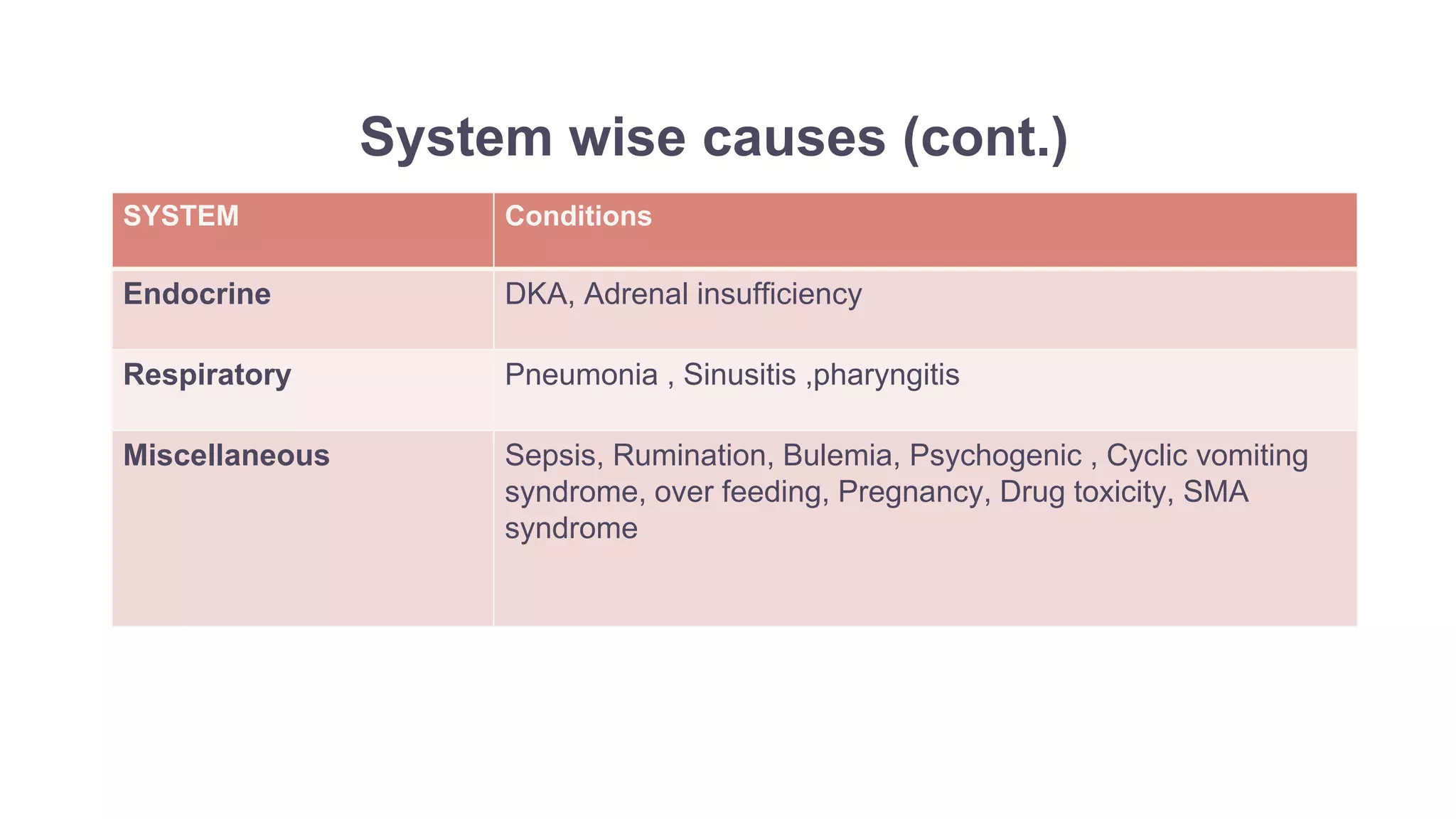
SYSTEM Conditions
Endocrine DKA, Adrenal insufficiency
Respiratory Pneumonia , Sinusitis ,pharyngitis
Miscellaneous Sepsis, Rumination, Bulemia, Psychogenic , Cyclic vomiting
syndrome, over feeding, Pregnancy, Drug toxicity, SMA
syndrome
System wise causes (cont.)
Approach to vomiting
VOMITING
Recent
onset/Acute
Long
standing(weeks
to months )
Recent onset/Acute
With
Diarrhoea
With
Headache
Intestinal
obstruction
Gastroenetritis Extra Cranial infection
YES
With
Abdominal Pain
Intra Cranial infection
Pyelonephritis
Cholecystitis
No Fever
No associated
features /fever
Intestnal
obstruction
Recurrences
present (Be
alert for Red
Flag signs)
Associated
Features
Eg: Fever
Long
standing(weeks
to months )
Recurrent(Almost
normal interval
period)
Migraine
Cyclic vomiting
Psychogenic
Motion sickness
Near Continuous
-Alert for Red flag signs
-IEM
-ICSOL
-Intracranial Infection
IMAGING SOS
Clinical Clues
● Bile stained Vomitus: Intestinal obstruction distal to ampulla of vater
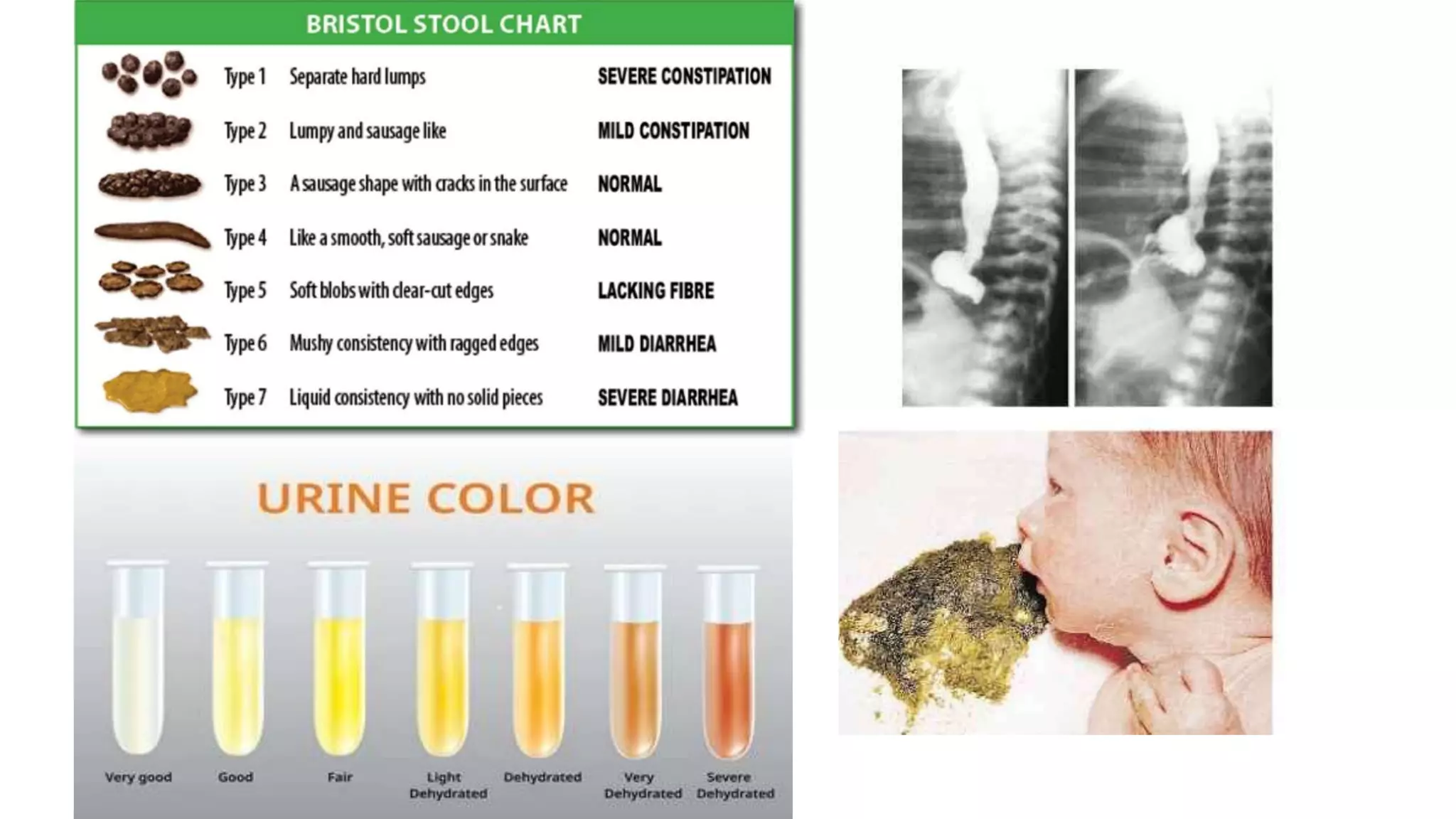
● Acute change in stool pattern:Constipation (intestinal obstruction ),
Diarrhea (Intestinal infection)
● High colored urine: Hepatitis or concentrated urine in dehydration
(Oliguria fluid resuscitation)
● Failure to thrive (Chronic cases: IEM)
● Cyclical Vomiting and Vomiting due to migraine: Asymptomatic
between interval period
● Drug induced Vomiting: Metallic taste ,undesirable taste, gastritis or
hepatitis
Clinical Clues(Cont.)
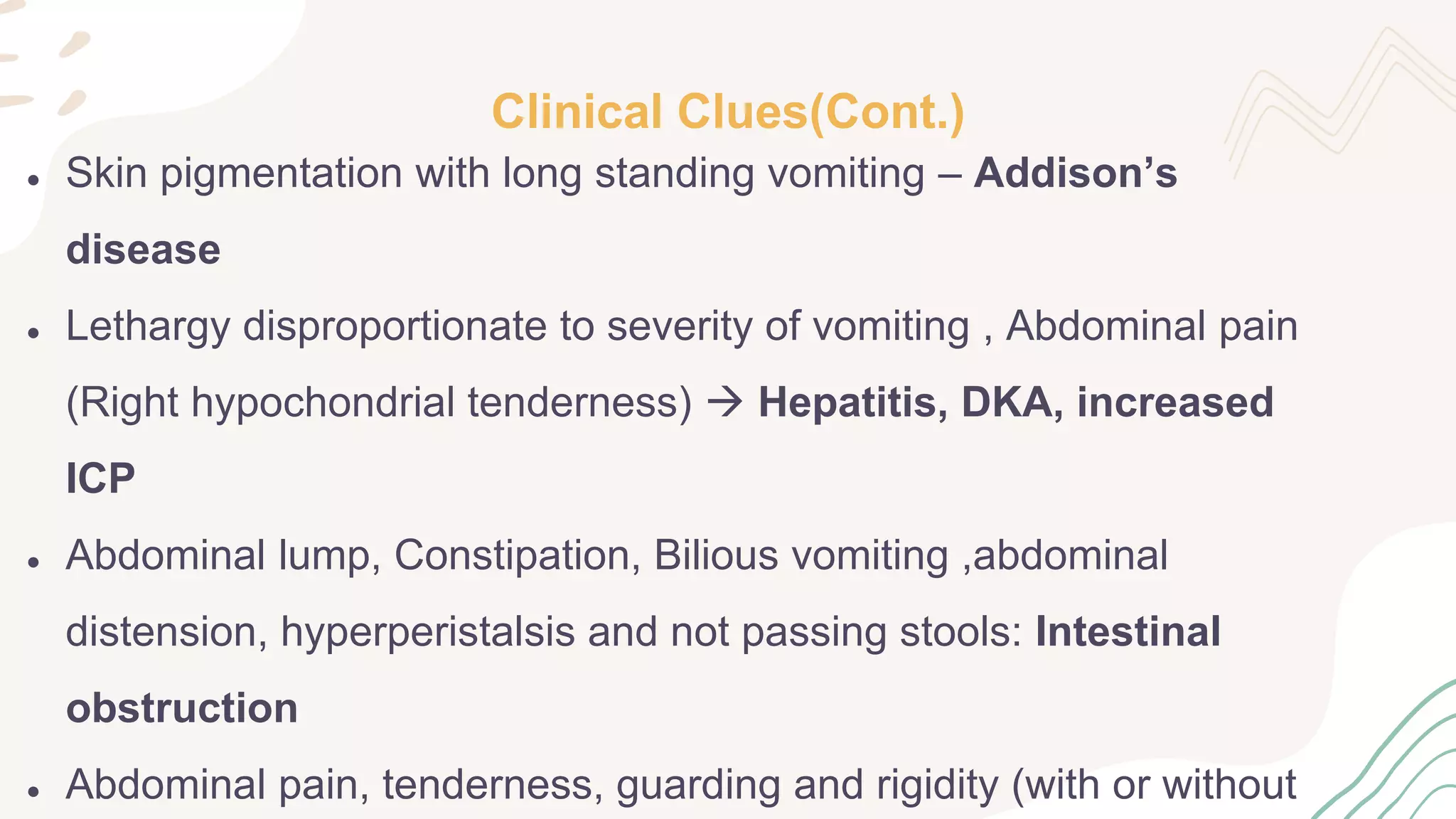
● Skin pigmentation with long standing vomiting – Addison’s
disease
● Lethargy disproportionate to severity of vomiting , Abdominal pain
(Right hypochondrial tenderness)  Hepatitis, DKA, increased
ICP
● Abdominal lump, Constipation, Bilious vomiting ,abdominal
distension, hyperperistalsis and not passing stools: Intestinal
obstruction
● Abdominal pain, tenderness, guarding and rigidity (with or without
Clinical Clues(Cont.)
● Toxic child ,effortless vomiting, projectile, non bilious,Early morning –
extrabdominal cause (Intracranial)
● Nausea ,Dizziness ,Vertigo ,Nystagmus  vestibular dysfunction
● Well appearing child with No clinical findings  migraine ,cyclical
vomiting & psychogenic vomiting
Evaluation of Vomiting
● ASK:
1)Age
2)Timing : Onset Duration Time of day
Frequency Triggers
3)Associated symptoms:
Diarrhea: Stool pattern Urine: oliguria
Abdominal pain /distension Fever, Headache
Anorexia, Failure to thrive Periodicity
Drug history(Digoxin) Relation to travel
Back pain (Pyelonephritis)
● Look:
Sick or well , Lethargy, Abdominal distension , Tenderness,
Guarding, Rigidity, Hepatosplenomegaly, Signs of raised ICP ,
meningeal signs, skin pigmentation , Fundus examination,
Nystagmus, vertigo , Sore throat /cough, No abnormal signs
found
Laboratory investigation
● Investigations not required :
1. Well appearing infant with typical regurgitant reflex
2. Well child with suspected gastritis or GER
3. Brief episode of vomiting with no dehydration and clear
etiology like gastroenteritis
4. Chronic vomiting where acid peptic disease is suspected
Laboratory investigation(Cont.)
● Investigation generally done include:
1. Blood investigations: children with red flag signs and with dehydration
features
2. Serum electrolytes with Blood gas:
● Infant with projectile vomiting from pyloric stenosis: Hypochloremic
Hypokalemic Metabolic alkalosis
● Congenital adrenal hyperplasia: Hyperkalemia and hyponatremia
● Alcohols,salicylates, uremia,Metabolic defects: Lactic acidosis with
elevated anion gap
Laboratory investigation(Cont.)
● Renal Tubular Acidosis: Metabolic acidosis with normal anion gap
● Renal or Prerenal Failure : Elevated creatinine
● Hepatic enzymes & Pancreatic enzymes: Elevated in liver and
pancreatic disease
● Urinanalysis: Presence of Glucose & KetonesDKA
■ RBC Renal cause(Nephritis,UTI,Calculi,Trauma)
■ WBC/Nitrites (UTI)
Radiological investigation
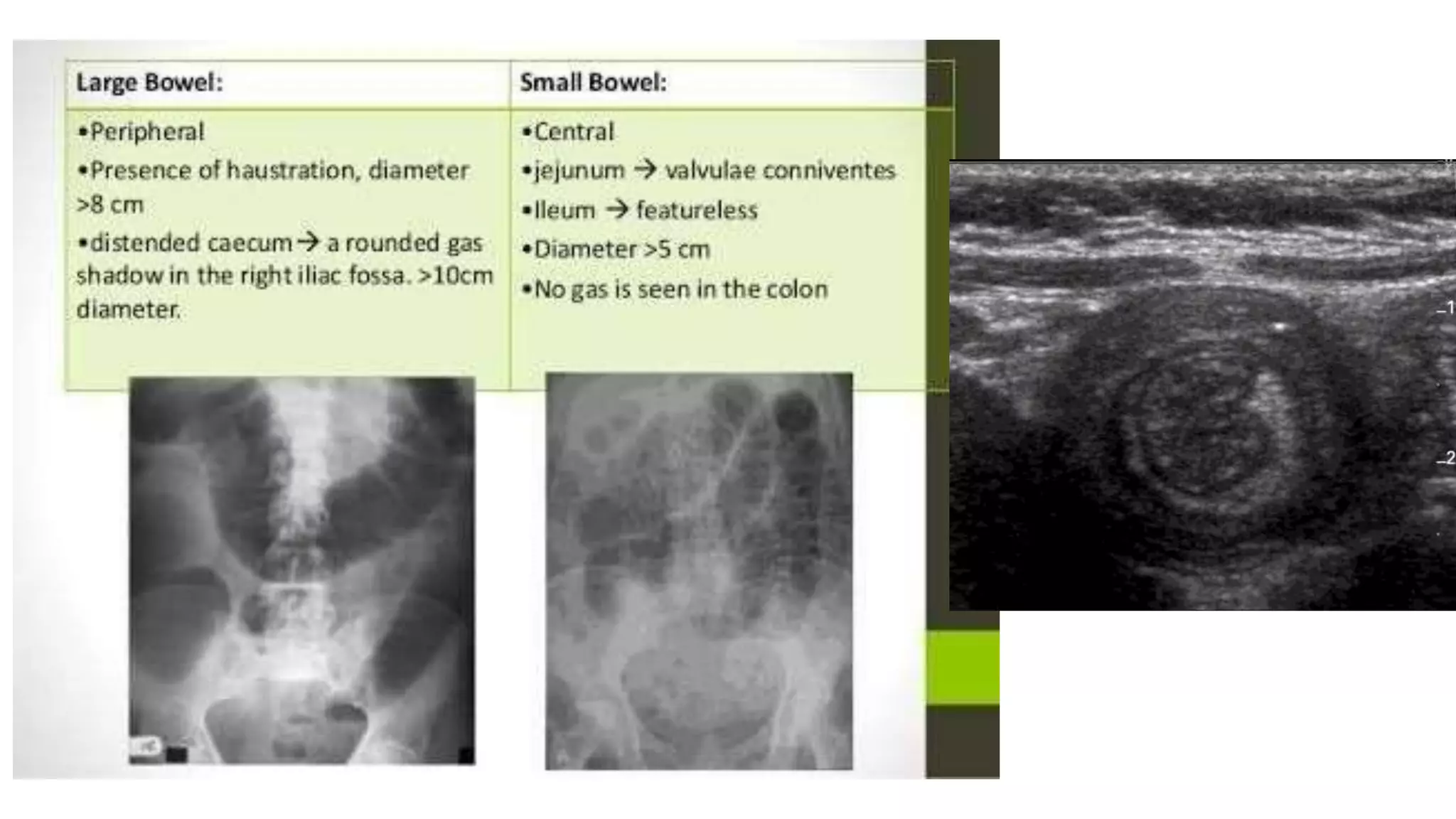
Plain Xray abdomen (Erect):
-Distended bowel loop with air fluid levels: Intestinal obstruction
-Dilated stomach : Pyloric stenosis
-Free air under diaphragm: Hollow viscus perforation
-Abnormal calcification: Renal /biliary stones or Fecoliths
-Basilar infiltrates: Lower lobe pneumonias
Radiological investigation(cont.)
1. USG abdomen: Helps in diagnosis of appendicitis ,intussusception,
Pyloric stenosis
2. Upper GI series : Malrotation and upper GIT obstructions
3. CT scan: Useful in imaging of liver and pancreas and in evaluating
mass lesions
4. Upper GI endoscopy: For mucosal pathology
● Metabolic work up:
Children with episodic vomiting or suspected metabolic
disorders, blood and urine screening are positive only during
actual vomiting episodes only
ABDOMINAL MIGRAINE
● Episodic attacks of epigastric and periumbilical abdominal pain
● F>M(3:2),Onset 7-12years of age
● Family history positive for migraine headache
● Intense pain lasting for 1 hour or more ;affecting normal activities along with Anorexia,
Nausea, Vomiting, Headache,Phototphobia, Pallor
ABDOMINAL MIGRAINE
• Have normal episodes between intervals of migraine
• Diagnosis of exclusion ;usually responsive to drugs used in treating
migraine headaches
• Triggers : Caffeine foods, prolonged fasting, altered sleep, emotional
stress
CYCLICAL VOMITING SYNDROME
● Stereotypic recurrent episodes of nausea and vomiting with no
identifiable organic cause
● Idiopathic, begins in early childhood
● Rapid onset ,persisting from hours to days separated by symptom free
intervals from weeks to years
CYCLICAL VOMITING SYNDROME
• Diagnosis is made when:
1) ≥ 3 episodes of recurrent vomiting
2) Intervals of normal health between episodes
3) Lack of laboratory and radiologic evidence of alternate diagnosis
• Supportive management i.e dehydration and electrolyte imbalance
correction
• Amitriptyline and propranolol as described as effective in prophylactic
therapy
Emergency management
● Treat dehydration
● If bilious vomiting : Stop oral fluids/feeds, Keep NPO and
decompress stomach with NG tube, Start IV fluids, Surgical
opinion
● Antiemetics: ondansetron (preferred)
● Dose of ondansetron: oral : 0.2mg/kg
Parenteral : 0.15mg/kg (max of 4mg)
Administration of antiemetics prior to surgical evaluation is
avoided unless in
i. Child not able to take orally due to persistent vomiting
ii. Post operative vomiting
iii. Chemotherapy induced vomiting
iv. Cyclic vomiting syndrome
v. Acute motion sickness
Take Home message
● Vomiting is a non specific symptom
● History along with age related common causes helps in
narrowing the differentials
● Important to differentiate serious causes from mild so as
to necessity prompt referral
● Always watch out for RED Flag signs
References
● Vomiting in children :Reassurance, red flags , or Referral ?
American Academy pediatrics
● Management of a Child with Vomiting –Indian Journal of
pediatrics
● IAP textbook of RAPID approach to common symptoms
● Nelson textbook of Pediatric symptom based diagnosis
THANK YOU

Approcah to vomiting

  • 1.
    Approach to Vomiting Presenter: Dr Jason Dsouza Moderator: Dr Jaidev MD
  • 2.
    CONTEN TS 1. Introduction 2. Definitions 3.Physiology of emesis 4. Approach to vomiting 5. Clinical Clues 6. Management
  • 3.
    INTRODUCTI ON Common symptom ofdisorders ranging from self limiting to life threatening illness Recognize serious conditions requiring immediate interventions
  • 4.
    Definition s Vomiting(emesis): Forceful oralexpulsion of gastric contents associated with contraction of abdominal and chest wall musculature(retrograde) Nausea: Unpleasant,vaguely epigastric or abdominal sensation accompanied by variety of autonomic changes that may precede vomiting but may be present in a child who does not vomit Regurgitation: Effortless passage of gastric contents into mouth. *Nelsons Textbook of Pediatric symptom based Diagnosis
  • 5.
    Definitions (cont) Prolonged Vomiting: Vomiting >12hours in a neonate, >24hours in children younger than 2 years of age > 48 hours in older children Recurrent Vomiting : At least 3 episodes occurring over 3 months Chronic vomiting : Low grade frequent vomiting episodes (>2episode/week) Episodic / Cyclic vomiting: Discrete episodes of high intensity vomiting that occur sporadically in between asymptomatic intervals *Indian Journal of pediatrics(April 2013)
  • 6.
    Sitophobia: An extremeavulsion to eating or to food Retching: It is the effort to vomit, short of expulsion of gastric contents Rumination: Repeated regurgitation of stomach contents which are often rechewed and reswallowed *Nelsons Textbook of Pediatric symptom based Diagnosis Definitions (cont)
  • 7.
  • 8.
    Protective reflex Major pathwaysinvolved: Vagal Afferents The Area Prostrema (CTZ) Vestibular system Amygdala Physiology of Emesis
  • 9.
    5 Principal Neurotransmitters(Receptors): Muscarinic(M1) Dopamine (D2) Histamine (H1) Serotonin (5HT3) Substance P (Neurokinin 1)
  • 10.
    Physiology of Emesis(cont.) Stimuli forVomiting : 1. Noxious thoughts or smell(cerebral cortex) 2. Gag reflex activation(cranial nerve) 3. Motion sickness ,Inner ear disorders (Labyrnthine) 4. Gastric irritants ,distension(Vagal afferents) 5. Small intestinal or colon obstruction or ischaemia(Non gastric visceral afferents ) 6. Blood borne Eg: Bacterial toxins, uremia, Keto acidosis, chemotherapy,drug induce(CTZ) 7. Pregnancy(hormonal)
  • 11.
    Physiology of Emesis(cont.) Centers forVomiting 1) Reticular Formation 2) Others: Dorsal vagal nuclei Nucleus tractus solitarius Phrenic Nuclei Respiratory nuclei Nuclei that control Facial, Pharyngeal and Tongue movements
  • 12.
    Programmed Vomiting Response Pain,Sights , Anticipation Pharyngeal stimulation Nucleus tractus Solitarius Area Postrema (CTZ) Gastric mucosa Gastric Irritants -Ipecac -Cytotoxic Drugs Drugs : Chemotherapy,Opioids Hormones: Pregnancy Cerebellum Brain Stem vomiting center Labyrinth Motion, vertigo Higher centers
  • 14.
    Red Flag signsof vomiting 1. Persistent or severe vomiting and Failure to thrive 2. Guarding / Rigidity or abdominal distension 3. Lethargy / Altered sensorium 4. Inconsolability and Bulging fontanelle in infant
  • 15.
    5. Nuchal rigidity,Photophobia and fever in older child 6. Toxic/septic/apprehensive look 7. Bilious /bloody vomiting 8. Signs of severe dehydration or symptomatic hypoglycemia Red Flag signs of vomiting
  • 16.
    COMMON CAUSES LESSCOMMON RARE CAUSES Gastroenteritis Gastritis Motion sickness Hepatitis Surgical abdomen Gastroesophageal reflux Pyelonephritis Cholecystitis Raised ICP –Tumor, Intracranial infection , Pseudotumor IEM, Migraine variant, Cyclical vomiting, Chronic renal failure, Endocrine causes, (DKA, Addison’s disease) Vestibular dysfunction, Psychogenic Causes of vomiting
  • 17.
    Neonatal (0- 2days) Newborn (3d- 1month) Infant(1m- 36months) Child(3y-12y) Adolescents (12- 18years) Duodenal Atresia, TEF(Type A / C) Gastroenteritis, Pyloric stenosis, Malrotation with or without volvulus, TEF(Type B/D/H), NEC, Milk protein intolerance, CAH, IEM Gastroenteritis UTI Pyelonephritis GER,GERD Ingestion Intussusception Milk protein intolerance Gastroenteritis UTI,DKA Increased ICP Eosinophilic esophagitis Post tussive vomiting Appendicitis Ingestion (toxins) Gastroenteritis, Appendicitis, DKA, Sepsis, Increased intracranial pressure, Non GI infection, Eosinophilic esophagitis, Bulimia Nervosa, IEM, Pregnancy, Post tussive vomiting Age wise common causes
  • 18.
    Systemwise differential diagnosisof vomiting GIT Conditions Esophagus Stricture web ,Ring , Atresia, TEF, Achalasia ,Foreign body Stomach Pyloric stenosis, Web, duplication, GERD , Peptic ulcer Intestine Duodenal atresia, Malrotation, duplication, Intussusception, Volvulus, Foreign body, Bezoar, NEC Colon Hirschsprung's disease, imperforate anus, Foreign body, Bezoar Other Acute GE, Appendicitis, Celiac disease , Milk/soy protein allergy,IBD, Pancreatitis, Cholecystitis or Cholelithiasis, Infectious or non infectious hepatitis , peritonitis, trauma
  • 21.
    System wise causes(cont.) SYSTEM Conditions Neurologic Tumor , Cyst hematoma, Cerebral edema, hydrocephalus, Pseudotumor cerebri, Migraine(abdominal migraine), Seizure , Meningitis Renal Obstructive uropathy (UPJ obstruction, hydronephrosis, Nephrolithiasis) , Renal insufficiency, Glomerulonephritis , UTI, Renal tubular acidosis Metabolic Galactosemia, Fructosuria, Amino Acidopathy, Organic acidopathy , Urea cycle defects ,Fatty acid oxidation defects , lactic acidosis, lysosomal storage disorders ,peroxisomal disorders
  • 22.
    SYSTEM Conditions Endocrine DKA,Adrenal insufficiency Respiratory Pneumonia , Sinusitis ,pharyngitis Miscellaneous Sepsis, Rumination, Bulemia, Psychogenic , Cyclic vomiting syndrome, over feeding, Pregnancy, Drug toxicity, SMA syndrome System wise causes (cont.)
  • 23.
  • 24.
    Recent onset/Acute With Diarrhoea With Headache Intestinal obstruction Gastroenetritis ExtraCranial infection YES With Abdominal Pain Intra Cranial infection Pyelonephritis Cholecystitis No Fever No associated features /fever Intestnal obstruction Recurrences present (Be alert for Red Flag signs) Associated Features Eg: Fever
  • 25.
    Long standing(weeks to months ) Recurrent(Almost normalinterval period) Migraine Cyclic vomiting Psychogenic Motion sickness Near Continuous -Alert for Red flag signs -IEM -ICSOL -Intracranial Infection IMAGING SOS
  • 26.
    Clinical Clues ● Bilestained Vomitus: Intestinal obstruction distal to ampulla of vater ● Acute change in stool pattern:Constipation (intestinal obstruction ), Diarrhea (Intestinal infection) ● High colored urine: Hepatitis or concentrated urine in dehydration (Oliguria fluid resuscitation) ● Failure to thrive (Chronic cases: IEM) ● Cyclical Vomiting and Vomiting due to migraine: Asymptomatic between interval period ● Drug induced Vomiting: Metallic taste ,undesirable taste, gastritis or hepatitis
  • 28.
    Clinical Clues(Cont.) ● Skinpigmentation with long standing vomiting – Addison’s disease ● Lethargy disproportionate to severity of vomiting , Abdominal pain (Right hypochondrial tenderness)  Hepatitis, DKA, increased ICP ● Abdominal lump, Constipation, Bilious vomiting ,abdominal distension, hyperperistalsis and not passing stools: Intestinal obstruction ● Abdominal pain, tenderness, guarding and rigidity (with or without
  • 30.
    Clinical Clues(Cont.) ● Toxicchild ,effortless vomiting, projectile, non bilious,Early morning – extrabdominal cause (Intracranial) ● Nausea ,Dizziness ,Vertigo ,Nystagmus  vestibular dysfunction ● Well appearing child with No clinical findings  migraine ,cyclical vomiting & psychogenic vomiting
  • 31.
    Evaluation of Vomiting ●ASK: 1)Age 2)Timing : Onset Duration Time of day Frequency Triggers 3)Associated symptoms: Diarrhea: Stool pattern Urine: oliguria Abdominal pain /distension Fever, Headache Anorexia, Failure to thrive Periodicity Drug history(Digoxin) Relation to travel Back pain (Pyelonephritis)
  • 32.
    ● Look: Sick orwell , Lethargy, Abdominal distension , Tenderness, Guarding, Rigidity, Hepatosplenomegaly, Signs of raised ICP , meningeal signs, skin pigmentation , Fundus examination, Nystagmus, vertigo , Sore throat /cough, No abnormal signs found
  • 33.
    Laboratory investigation ● Investigationsnot required : 1. Well appearing infant with typical regurgitant reflex 2. Well child with suspected gastritis or GER 3. Brief episode of vomiting with no dehydration and clear etiology like gastroenteritis 4. Chronic vomiting where acid peptic disease is suspected
  • 34.
    Laboratory investigation(Cont.) ● Investigationgenerally done include: 1. Blood investigations: children with red flag signs and with dehydration features 2. Serum electrolytes with Blood gas: ● Infant with projectile vomiting from pyloric stenosis: Hypochloremic Hypokalemic Metabolic alkalosis ● Congenital adrenal hyperplasia: Hyperkalemia and hyponatremia ● Alcohols,salicylates, uremia,Metabolic defects: Lactic acidosis with elevated anion gap
  • 35.
    Laboratory investigation(Cont.) ● RenalTubular Acidosis: Metabolic acidosis with normal anion gap ● Renal or Prerenal Failure : Elevated creatinine ● Hepatic enzymes & Pancreatic enzymes: Elevated in liver and pancreatic disease ● Urinanalysis: Presence of Glucose & KetonesDKA ■ RBC Renal cause(Nephritis,UTI,Calculi,Trauma) ■ WBC/Nitrites (UTI)
  • 36.
    Radiological investigation Plain Xrayabdomen (Erect): -Distended bowel loop with air fluid levels: Intestinal obstruction -Dilated stomach : Pyloric stenosis -Free air under diaphragm: Hollow viscus perforation -Abnormal calcification: Renal /biliary stones or Fecoliths -Basilar infiltrates: Lower lobe pneumonias
  • 38.
    Radiological investigation(cont.) 1. USGabdomen: Helps in diagnosis of appendicitis ,intussusception, Pyloric stenosis 2. Upper GI series : Malrotation and upper GIT obstructions 3. CT scan: Useful in imaging of liver and pancreas and in evaluating mass lesions 4. Upper GI endoscopy: For mucosal pathology
  • 39.
    ● Metabolic workup: Children with episodic vomiting or suspected metabolic disorders, blood and urine screening are positive only during actual vomiting episodes only
  • 40.
    ABDOMINAL MIGRAINE ● Episodicattacks of epigastric and periumbilical abdominal pain ● F>M(3:2),Onset 7-12years of age ● Family history positive for migraine headache ● Intense pain lasting for 1 hour or more ;affecting normal activities along with Anorexia, Nausea, Vomiting, Headache,Phototphobia, Pallor
  • 41.
    ABDOMINAL MIGRAINE • Havenormal episodes between intervals of migraine • Diagnosis of exclusion ;usually responsive to drugs used in treating migraine headaches • Triggers : Caffeine foods, prolonged fasting, altered sleep, emotional stress
  • 42.
    CYCLICAL VOMITING SYNDROME ●Stereotypic recurrent episodes of nausea and vomiting with no identifiable organic cause ● Idiopathic, begins in early childhood ● Rapid onset ,persisting from hours to days separated by symptom free intervals from weeks to years
  • 43.
    CYCLICAL VOMITING SYNDROME •Diagnosis is made when: 1) ≥ 3 episodes of recurrent vomiting 2) Intervals of normal health between episodes 3) Lack of laboratory and radiologic evidence of alternate diagnosis • Supportive management i.e dehydration and electrolyte imbalance correction • Amitriptyline and propranolol as described as effective in prophylactic therapy
  • 44.
    Emergency management ● Treatdehydration ● If bilious vomiting : Stop oral fluids/feeds, Keep NPO and decompress stomach with NG tube, Start IV fluids, Surgical opinion ● Antiemetics: ondansetron (preferred) ● Dose of ondansetron: oral : 0.2mg/kg Parenteral : 0.15mg/kg (max of 4mg)
  • 45.
    Administration of antiemeticsprior to surgical evaluation is avoided unless in i. Child not able to take orally due to persistent vomiting ii. Post operative vomiting iii. Chemotherapy induced vomiting iv. Cyclic vomiting syndrome v. Acute motion sickness
  • 46.
    Take Home message ●Vomiting is a non specific symptom ● History along with age related common causes helps in narrowing the differentials ● Important to differentiate serious causes from mild so as to necessity prompt referral ● Always watch out for RED Flag signs
  • 47.
    References ● Vomiting inchildren :Reassurance, red flags , or Referral ? American Academy pediatrics ● Management of a Child with Vomiting –Indian Journal of pediatrics ● IAP textbook of RAPID approach to common symptoms ● Nelson textbook of Pediatric symptom based diagnosis
  • 48.

Editor's Notes

  • #4 Nausea and vomiting are common sequelae of a multitude of disorders ranging from self limiting to life threatening illness Hence its important to recognize serious conditions (Intestinal obstruction, Increased ICP etc.) for which immediate intervention is required
  • #6 Episodes separated not more than 2 mins is considered as single episode
  • #8 Vomiting is a reflex act. Sensory impulses for vomiting arise from the irritated or distended part of GI tract or other organs and are transmitted to the vomiting center through vagus and sympathetic afferent fibers. Vomiting center is situated bilaterally in medullaoblongata near the nucleus tractus solitarius. Motor impulses from the vomiting center are transmitted through V, VII, IX, X and XII cranial nerves to the upper part of GI tract; and through spinal nerves to diaphragm and abdominal muscles.
  • #14 1. Antiperistalsis, ileum towards the mouth ,Velocity of antiperistalsis of about 2 to 3 cm/second 2. Deep inspiration followed by temporary cessation of breathing and Closure of glottis 3. Upward and forward movement of larynx and hyoid bone with Elevation of soft palate 4. Contraction of diaphragm and abdominal muscles resulting in elevation of intra-abdominal pressure 5. Compression of the stomach between diaphragm and abdominal wall( intragastric pressure) and Simultaneous relaxation of lower esophageal sphincter, esophagus and upper esophageal sphincter 6. Forceful expulsion of gastric contents (vomitus) through esophagus, pharynx and mouth Some of the movements play important roles by preventing the entry of vomitus through other routes and thereby prevent the adverse effect of the vomitus on many structures. 1. Closure of glottis and cessation of breathing prevents entry of vomitus into the lungs 2. Elevation of soft palate prevents entry of vomitus into the nasopharynx 3. Larynx and hyoid bone move upward and forwardand are placed in this position rigidly. This causes the dilatation of throat, which allows free exit of vomitus
  • #34 Well appearing infant with typical regurgitant reflex (No diarrhoea, fever, nausea and forceful abdominal contractions)
  • #37 To differentiate from surgical to non surgical causes