Vomiting
&
Anti-emetics
Dr Dayakar Marri
MD Pharmacology
JNMC, KLE
Terminology
Nausea: is an unpleasant subjective sensation that most
people have experienced at some point in their lives and
usually recognize as a feeling of impending vomiting in
the epigastrium or throat.
Retching: muscular activity of the abdomen and thorax,
often voluntary, leading to forced inspiration against a
closed mouth and glottis without oral discharge of gastric
contents (“dry heaves”)
Vomiting: Vomiting is a partially voluntary act of
forcefully expelling gastric or intestinal content through
the mouth.
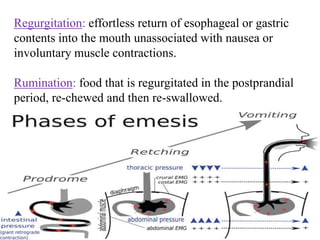
Regurgitation: effortless return of esophageal or gastric
contents into the mouth unassociated with nausea or
involuntary muscle contractions.
Rumination: food that is regurgitated in the postprandial
period, re-chewed and then re-swallowed.
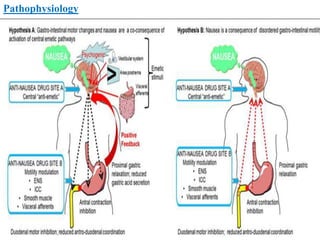
Pathophysiology
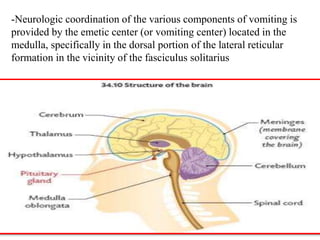
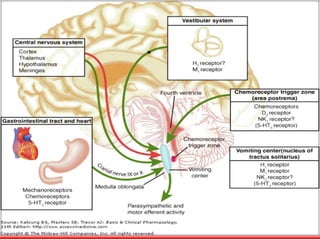
-Neurologic coordination of the various components of vomiting is
provided by the emetic center (or vomiting center) located in the
medulla, specifically in the dorsal portion of the lateral reticular
formation in the vicinity of the fasciculus solitarius
-The components include brisk
contraction of the diaphragm and
abdominal muscles, relaxation of
the lower esophageal sphincter,
and a forceful retrograde
peristaltic contraction in the
jejunum that pushes enteric
content into the stomach and from
there toward the mouth.
-Simultaneously, protective
reflexes are activated. The soft
palate is raised to prevent gastric
content from entering the
nasopharynx, respiration is
inhibited momentarily, and the
glottis is closed to prevent
pulmonary aspiration, which is a
potentially serious complication of
vomiting.
Clinical features
• Nausea and vomiting that occur in the morning or with an empty
stomach are characteristic of vomiting produced by direct
activation of the emetic center or CTZ.
• This type of emesis is most typical of pregnancy, drugs, toxins
(e.g., alcohol abuse), or metabolic disorders (diabetes mellitus,
uremia).
• Bilious vomiting is commonly seen after multiple vomiting
episodes occur in close succession because of retrograde entry of
intestinal material into the stomach. It is also characteristic of
patients with a surgical enterogastric anastomosis, in whom the
gastric contents normally include bile-stained enteric refluxate.
•Vomitus with a feculent odor suggests intestinal obstruction, ileus
associated with peritonitis.
•Vomiting that develops abruptly without preceding nausea or
retching (projectile vomiting) is characteristic of, but not specific
for, direct stimulation of the emetic center, as may occur with
intracerebral lesions (tumor, abscess) or increased intracranial
pressure.
• Vomiting that occurs outside the immediate postprandial period
and that is characterized by evacuation of retained and partially
digested food is typical of slowly developing gastric outlet
obstruction or gastroparesis.
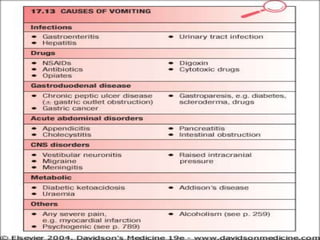
Common etiologies
Abdominal Causes:
• Mechanical obstruction, Gastric outlet obstruction
• Small bowel obstruction, Motility disorders.
• Chronic intestinal pseudo-obstruction, Gastroparesis.
• Acute appendicitis, Acute cholecystitis, Acute hepatitis.
• Acute mesenteric ischemia, Crohn's disease.
• Gastric and duodenal ulcer disease.
• Pancreatitis and pancreatic neoplasms.
• Peritonitis and peritoneal carcinomatosis.
• Retroperitoneal and mesenteric pathology.
• SUPERIOR MESENTERIC ARTERY SYNDROME.
Infectious Causes
• Acute gastroenteritis.
• Viral
• Bacterial
• Nongastrointestinal (systemic) infections
Metabolic and Endocrine Causes
• Acute intermittent porphyria -Addison's disease
• Diabetic ketoacidosis --Diabetes mellitus
• Hyperparathyroidism/hypercalcemia.
• Hyperthyroidism -Hyponatremia
• Hypoparathyroidism
• Pregnancy.
Nervous System Causes
• Demyelinating disorders
• Disorders of the autonomic system
• Hydrocephalus
• Intracerebral lesions with edema Abscess
• Hemorrhage --Infarction
• Neoplasm --Labyrinthine disorders
• Meningitis --Migraine headaches
• Otitis media --Seizure disorders
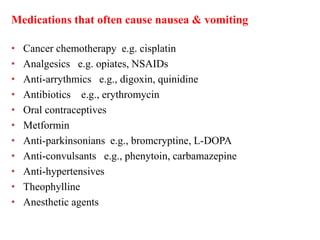
Medications that often cause nausea & vomiting
• Cancer chemotherapy e.g. cisplatin
• Analgesics e.g. opiates, NSAIDs
• Anti-arrythmics e.g., digoxin, quinidine
• Antibiotics e.g., erythromycin
• Oral contraceptives
• Metformin
• Anti-parkinsonians e.g., bromcryptine, L-DOPA
• Anti-convulsants e.g., phenytoin, carbamazepine
• Anti-hypertensives
• Theophylline
• Anesthetic agents
Treatment of nausea and vomiting
1. Treat complications regardless of cause
e.g., replace salt, water, potassium losses
2. Identify and treat underlying cause, whenever possible
3. Provide temporary symptomatic relief of the symptoms
4. Use preventive measures when vomiting is likely to occur (e.g.,
cancer chemotherapy, parenteral opiate administration)
Drugs with anti- emetic properties and known mechanisms
-Antihistamines, e.g., meclizine.
esp. for vestibular disorders
-Anticholinergics, e.g., scopolamine.
esp. for vestibular and GI disorders
-Dopamine antagonists, e.g.,metoclopramide or prochlorperazine.
esp. for GI disorders
-Selective serotonin-3 (5HT3) RAs, e.g., odansetron, granisetron,
dolasetron
esp. to prevent chemotherapy-induced nausea/vomiting
Multiple mechanisms of action:
Promethazine (Phenergan)
dopamine antagonist
H1 antihistamine
anticholinergic
CNS sedative
prevention of opiate-induced nausea and vomiting
Hydroxyzine.
H1 antihistamine
anticholinergic
CNS sedation
prevention of opiate-induced nausea and vomiting
--Nausea and vomiting are features of many GI and non-GI
diseases and disorders.
--Regardless of its cause, treatment of nausea and vomiting should
initially focus on replacing volume and electrolyte deficits.
Later on, nutritional deficits must be addressed.
--Regardless of its cause, nausea and vomiting can cause several
life-threatening GI and non-GI complications.
--Elucidation of the cause is often possible, and treatment of the
underlying cause will usually be successful.
--Effective symptomatic therapies for nausea and vomiting are
available when the cause is unclear or when the treatment of the
underlying cause takes time to work.
Vomiting

Vomiting

  • 1.
  • 2.
    Terminology Nausea: is anunpleasant subjective sensation that most people have experienced at some point in their lives and usually recognize as a feeling of impending vomiting in the epigastrium or throat. Retching: muscular activity of the abdomen and thorax, often voluntary, leading to forced inspiration against a closed mouth and glottis without oral discharge of gastric contents (“dry heaves”) Vomiting: Vomiting is a partially voluntary act of forcefully expelling gastric or intestinal content through the mouth.
  • 3.
    Regurgitation: effortless returnof esophageal or gastric contents into the mouth unassociated with nausea or involuntary muscle contractions. Rumination: food that is regurgitated in the postprandial period, re-chewed and then re-swallowed.
  • 5.
  • 6.
    -Neurologic coordination ofthe various components of vomiting is provided by the emetic center (or vomiting center) located in the medulla, specifically in the dorsal portion of the lateral reticular formation in the vicinity of the fasciculus solitarius
  • 8.
    -The components includebrisk contraction of the diaphragm and abdominal muscles, relaxation of the lower esophageal sphincter, and a forceful retrograde peristaltic contraction in the jejunum that pushes enteric content into the stomach and from there toward the mouth. -Simultaneously, protective reflexes are activated. The soft palate is raised to prevent gastric content from entering the nasopharynx, respiration is inhibited momentarily, and the glottis is closed to prevent pulmonary aspiration, which is a potentially serious complication of vomiting.
  • 9.
    Clinical features • Nauseaand vomiting that occur in the morning or with an empty stomach are characteristic of vomiting produced by direct activation of the emetic center or CTZ. • This type of emesis is most typical of pregnancy, drugs, toxins (e.g., alcohol abuse), or metabolic disorders (diabetes mellitus, uremia). • Bilious vomiting is commonly seen after multiple vomiting episodes occur in close succession because of retrograde entry of intestinal material into the stomach. It is also characteristic of patients with a surgical enterogastric anastomosis, in whom the gastric contents normally include bile-stained enteric refluxate.
  • 10.
    •Vomitus with afeculent odor suggests intestinal obstruction, ileus associated with peritonitis. •Vomiting that develops abruptly without preceding nausea or retching (projectile vomiting) is characteristic of, but not specific for, direct stimulation of the emetic center, as may occur with intracerebral lesions (tumor, abscess) or increased intracranial pressure. • Vomiting that occurs outside the immediate postprandial period and that is characterized by evacuation of retained and partially digested food is typical of slowly developing gastric outlet obstruction or gastroparesis.
  • 11.
    Common etiologies Abdominal Causes: •Mechanical obstruction, Gastric outlet obstruction • Small bowel obstruction, Motility disorders. • Chronic intestinal pseudo-obstruction, Gastroparesis. • Acute appendicitis, Acute cholecystitis, Acute hepatitis. • Acute mesenteric ischemia, Crohn's disease. • Gastric and duodenal ulcer disease. • Pancreatitis and pancreatic neoplasms. • Peritonitis and peritoneal carcinomatosis. • Retroperitoneal and mesenteric pathology. • SUPERIOR MESENTERIC ARTERY SYNDROME.
  • 12.
    Infectious Causes • Acutegastroenteritis. • Viral • Bacterial • Nongastrointestinal (systemic) infections Metabolic and Endocrine Causes • Acute intermittent porphyria -Addison's disease • Diabetic ketoacidosis --Diabetes mellitus • Hyperparathyroidism/hypercalcemia. • Hyperthyroidism -Hyponatremia • Hypoparathyroidism • Pregnancy.
  • 13.
    Nervous System Causes •Demyelinating disorders • Disorders of the autonomic system • Hydrocephalus • Intracerebral lesions with edema Abscess • Hemorrhage --Infarction • Neoplasm --Labyrinthine disorders • Meningitis --Migraine headaches • Otitis media --Seizure disorders
  • 15.
    Medications that oftencause nausea & vomiting • Cancer chemotherapy e.g. cisplatin • Analgesics e.g. opiates, NSAIDs • Anti-arrythmics e.g., digoxin, quinidine • Antibiotics e.g., erythromycin • Oral contraceptives • Metformin • Anti-parkinsonians e.g., bromcryptine, L-DOPA • Anti-convulsants e.g., phenytoin, carbamazepine • Anti-hypertensives • Theophylline • Anesthetic agents
  • 16.
    Treatment of nauseaand vomiting 1. Treat complications regardless of cause e.g., replace salt, water, potassium losses 2. Identify and treat underlying cause, whenever possible 3. Provide temporary symptomatic relief of the symptoms 4. Use preventive measures when vomiting is likely to occur (e.g., cancer chemotherapy, parenteral opiate administration)
  • 17.
    Drugs with anti-emetic properties and known mechanisms -Antihistamines, e.g., meclizine. esp. for vestibular disorders -Anticholinergics, e.g., scopolamine. esp. for vestibular and GI disorders -Dopamine antagonists, e.g.,metoclopramide or prochlorperazine. esp. for GI disorders -Selective serotonin-3 (5HT3) RAs, e.g., odansetron, granisetron, dolasetron esp. to prevent chemotherapy-induced nausea/vomiting
  • 18.
    Multiple mechanisms ofaction: Promethazine (Phenergan) dopamine antagonist H1 antihistamine anticholinergic CNS sedative prevention of opiate-induced nausea and vomiting Hydroxyzine. H1 antihistamine anticholinergic CNS sedation prevention of opiate-induced nausea and vomiting
  • 19.
    --Nausea and vomitingare features of many GI and non-GI diseases and disorders. --Regardless of its cause, treatment of nausea and vomiting should initially focus on replacing volume and electrolyte deficits. Later on, nutritional deficits must be addressed. --Regardless of its cause, nausea and vomiting can cause several life-threatening GI and non-GI complications. --Elucidation of the cause is often possible, and treatment of the underlying cause will usually be successful. --Effective symptomatic therapies for nausea and vomiting are available when the cause is unclear or when the treatment of the underlying cause takes time to work.