
1
2
VITAMIN K
Antihemorrhagic /coagulation vitamin or
prothrombin factor.Two variants K1
and,K2 .All are napthoquinone derivatives.
4
VITAMIN K (PHYLOQUINONE)
It is essential for production of a type of protein
called prothrombin & other factor involve in
blood clotting mechanism. Hence it is known as
anti – hemorrhagic vitamin.
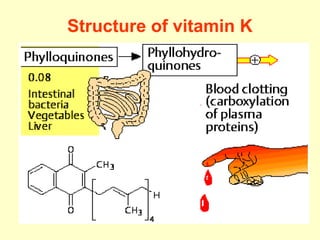
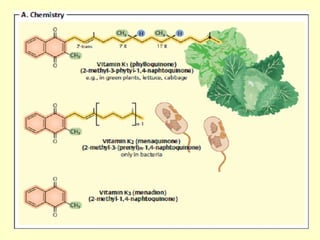
• The basic structure of vitamin K is 1,4-
naphtoquinone. Its vitamin activity depends
on the methyl group in position two, while
its fat solubility and other properties are due
to the long side chains. Vitamin K2 is a
collective term for menaquinones with side
chains of different lengths-always with an
iso-prene unit attached.
6
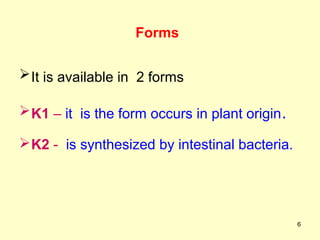
Forms
It is available in 2 forms
K1 – it is the form occurs in plant origin.
K2 - is synthesized by intestinal bacteria.
• Phylloquinone (vitamin K1) is present in
variable concentriations in the chloroplasts
or green plants, where it is needed for
photosynthesis. Gram-positive bacteria,
like certain strains of Escherichia coli and
Bacteriodes fragilis produce
menaquinones (vitamin K2),
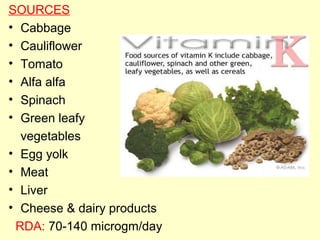
SOURCES
• Cabbage
• Cauliflower
• Tomato
• Alfa alfa
• Spinach
• Green leafy
vegetables
• Egg yolk
• Meat
• Liver
• Cheese & dairy products
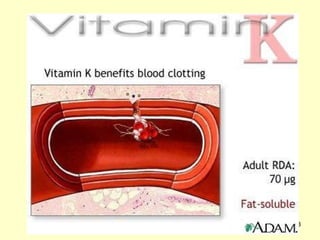
RDA: 70-140 microgm/day
Structure of vitamin K
11
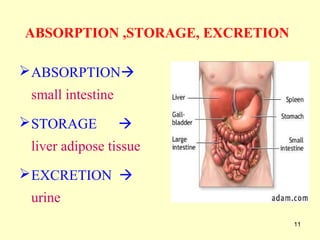
ABSORPTION ,STORAGE, EXCRETION
ABSORPTION
small intestine
STORAGE 
liver adipose tissue
EXCRETION 
urine
BIOLOGICAL ACTIONS OF VITAMIN-K
1. Vitamin-K is needed for formation of
proconvertin: It is needed for the formation
of prothrombin. Deficiency of vitamin K
decreases proconvertin level in blood.
2. Vitamin-K modifies prothrombin: Vitamin-K
is a coenzyme in modification of
prothrombin to thrombin.
3. Vitamin-K modifies other clotting factors
also: Vitamin K is needed for maintenance
of normal levels of blood clotting factors II,
VII, IX and X.
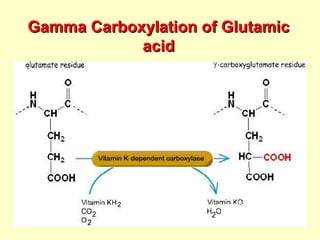
3. Their conversion to biologically active
forms depends upon vitamin K. The
activation involves carboxylation of
glutamyl residues in the molecules of
these factors (including prothrombin
also) to form dicarboxylic glutamyl
residue.
4. Vitamin-K is needed for carboxylation of
glutamyl residue of Ca++
binding transport
between the flavin coenzyme and the
cytochrome system.
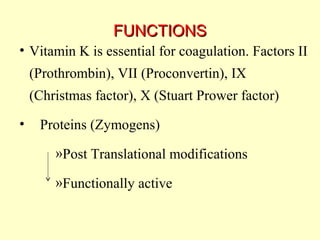
FUNCTIONSFUNCTIONS
• Vitamin K is essential for coagulation. Factors II
(Prothrombin), VII (Proconvertin), IX
(Christmas factor), X (Stuart Prower factor)
• Proteins (Zymogens)
»Post Translational modifications
»Functionally active
Gamma Carboxylation of GlutamicGamma Carboxylation of Glutamic
acidacid
18
FUNCTIONS
it is essential for the hepatic synthesis of
coagulation factor II, V, VII, IX, X.
CLOTTING – it prevents hemorrhage only in
cases when there is defective production of
prothrombin
OXIDATIVE PHOSPHORYLATION – it
acts as a co- factor in oxidative
phosphorylation associated with lipid
FACTORS CAUSING VITAMIN-K
DEFICIENCY:
• Surgical removal of intestine:
• Liquid paraffin:
• Antibiotic therapy for a long time:
• Vitamin-K antagonists: Heparin and warfarin
long term administration of antibiotic doses for
more than a week may temporarily suppress
the normal intestinal flora may cause
deficiency of vit k
21
DAILY REQUIRMENT
men and women – 70 – 140 mcg.
children – 35 – 75mcg
22
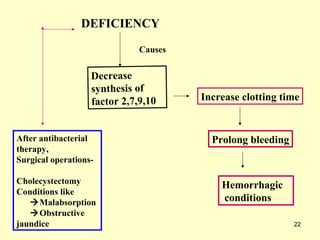
DEFICIENCY
Causes
Decrease
synthesis of
factor 2,7,9,10 Increase clotting time
Prolong bleeding
Hemorrhagic
conditions
After antibacterial
therapy,
Surgical operations-
Cholecystectomy
Conditions like
Malabsorption
Obstructive
jaundice
23
25
26
27
28
29
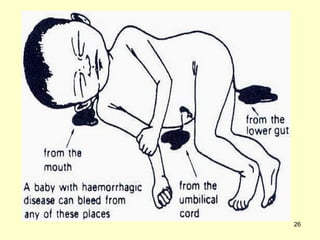
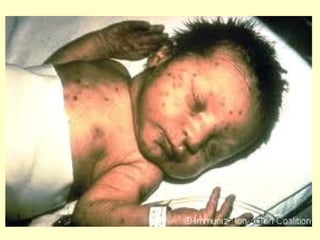
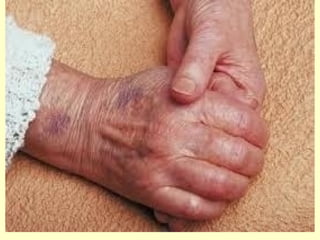
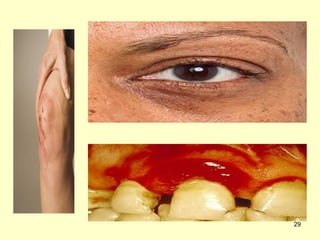
Vitamin - K Deficiency
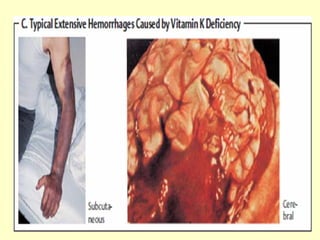
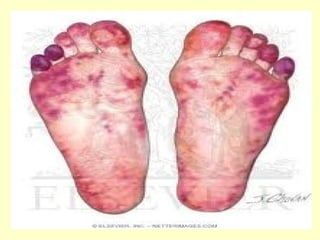
• Deficiency causes:
• Bleeding of gums
• Dark circles under eyes
• Bleeding
HYPERVITAMINOSIS K
Hemolytic anemia and jaundice (in large
doses)
ANTAGONIST TO VITAMIN K
Heparin, Dicumarol, Salicylates
Misuses
• Prolonged consumption of megadoses of
vitamin K (menadione) results in anemia,
which is a reduced level of red blood cells
in the bloodstream.

Vitamin k MUHAMMAD MUSTANSAR

  • 1.
  • 2.
  • 3.
    VITAMIN K Antihemorrhagic /coagulationvitamin or prothrombin factor.Two variants K1 and,K2 .All are napthoquinone derivatives.
  • 4.
    4 VITAMIN K (PHYLOQUINONE) Itis essential for production of a type of protein called prothrombin & other factor involve in blood clotting mechanism. Hence it is known as anti – hemorrhagic vitamin.
  • 5.
    • The basicstructure of vitamin K is 1,4- naphtoquinone. Its vitamin activity depends on the methyl group in position two, while its fat solubility and other properties are due to the long side chains. Vitamin K2 is a collective term for menaquinones with side chains of different lengths-always with an iso-prene unit attached.
  • 6.
    6 Forms It is availablein 2 forms K1 – it is the form occurs in plant origin. K2 - is synthesized by intestinal bacteria.
  • 7.
    • Phylloquinone (vitaminK1) is present in variable concentriations in the chloroplasts or green plants, where it is needed for photosynthesis. Gram-positive bacteria, like certain strains of Escherichia coli and Bacteriodes fragilis produce menaquinones (vitamin K2),
  • 8.
    SOURCES • Cabbage • Cauliflower •Tomato • Alfa alfa • Spinach • Green leafy vegetables • Egg yolk • Meat • Liver • Cheese & dairy products RDA: 70-140 microgm/day
  • 9.
  • 11.
    11 ABSORPTION ,STORAGE, EXCRETION ABSORPTION smallintestine STORAGE  liver adipose tissue EXCRETION  urine
  • 12.
    BIOLOGICAL ACTIONS OFVITAMIN-K 1. Vitamin-K is needed for formation of proconvertin: It is needed for the formation of prothrombin. Deficiency of vitamin K decreases proconvertin level in blood. 2. Vitamin-K modifies prothrombin: Vitamin-K is a coenzyme in modification of prothrombin to thrombin.
  • 13.
    3. Vitamin-K modifiesother clotting factors also: Vitamin K is needed for maintenance of normal levels of blood clotting factors II, VII, IX and X.
  • 14.
    3. Their conversionto biologically active forms depends upon vitamin K. The activation involves carboxylation of glutamyl residues in the molecules of these factors (including prothrombin also) to form dicarboxylic glutamyl residue.
  • 15.
    4. Vitamin-K isneeded for carboxylation of glutamyl residue of Ca++ binding transport between the flavin coenzyme and the cytochrome system.
  • 16.
    FUNCTIONSFUNCTIONS • Vitamin Kis essential for coagulation. Factors II (Prothrombin), VII (Proconvertin), IX (Christmas factor), X (Stuart Prower factor) • Proteins (Zymogens) »Post Translational modifications »Functionally active
  • 17.
    Gamma Carboxylation ofGlutamicGamma Carboxylation of Glutamic acidacid
  • 18.
    18 FUNCTIONS it is essentialfor the hepatic synthesis of coagulation factor II, V, VII, IX, X. CLOTTING – it prevents hemorrhage only in cases when there is defective production of prothrombin OXIDATIVE PHOSPHORYLATION – it acts as a co- factor in oxidative phosphorylation associated with lipid
  • 19.
    FACTORS CAUSING VITAMIN-K DEFICIENCY: •Surgical removal of intestine: • Liquid paraffin: • Antibiotic therapy for a long time: • Vitamin-K antagonists: Heparin and warfarin
  • 20.
    long term administrationof antibiotic doses for more than a week may temporarily suppress the normal intestinal flora may cause deficiency of vit k
  • 21.
    21 DAILY REQUIRMENT men andwomen – 70 – 140 mcg. children – 35 – 75mcg
  • 22.
    22 DEFICIENCY Causes Decrease synthesis of factor 2,7,9,10Increase clotting time Prolong bleeding Hemorrhagic conditions After antibacterial therapy, Surgical operations- Cholecystectomy Conditions like Malabsorption Obstructive jaundice
  • 23.
  • 25.
  • 26.
  • 27.
  • 28.
  • 29.
  • 30.
    Vitamin - KDeficiency • Deficiency causes: • Bleeding of gums • Dark circles under eyes • Bleeding
  • 31.
    HYPERVITAMINOSIS K Hemolytic anemiaand jaundice (in large doses) ANTAGONIST TO VITAMIN K Heparin, Dicumarol, Salicylates
  • 32.
    Misuses • Prolonged consumptionof megadoses of vitamin K (menadione) results in anemia, which is a reduced level of red blood cells in the bloodstream.