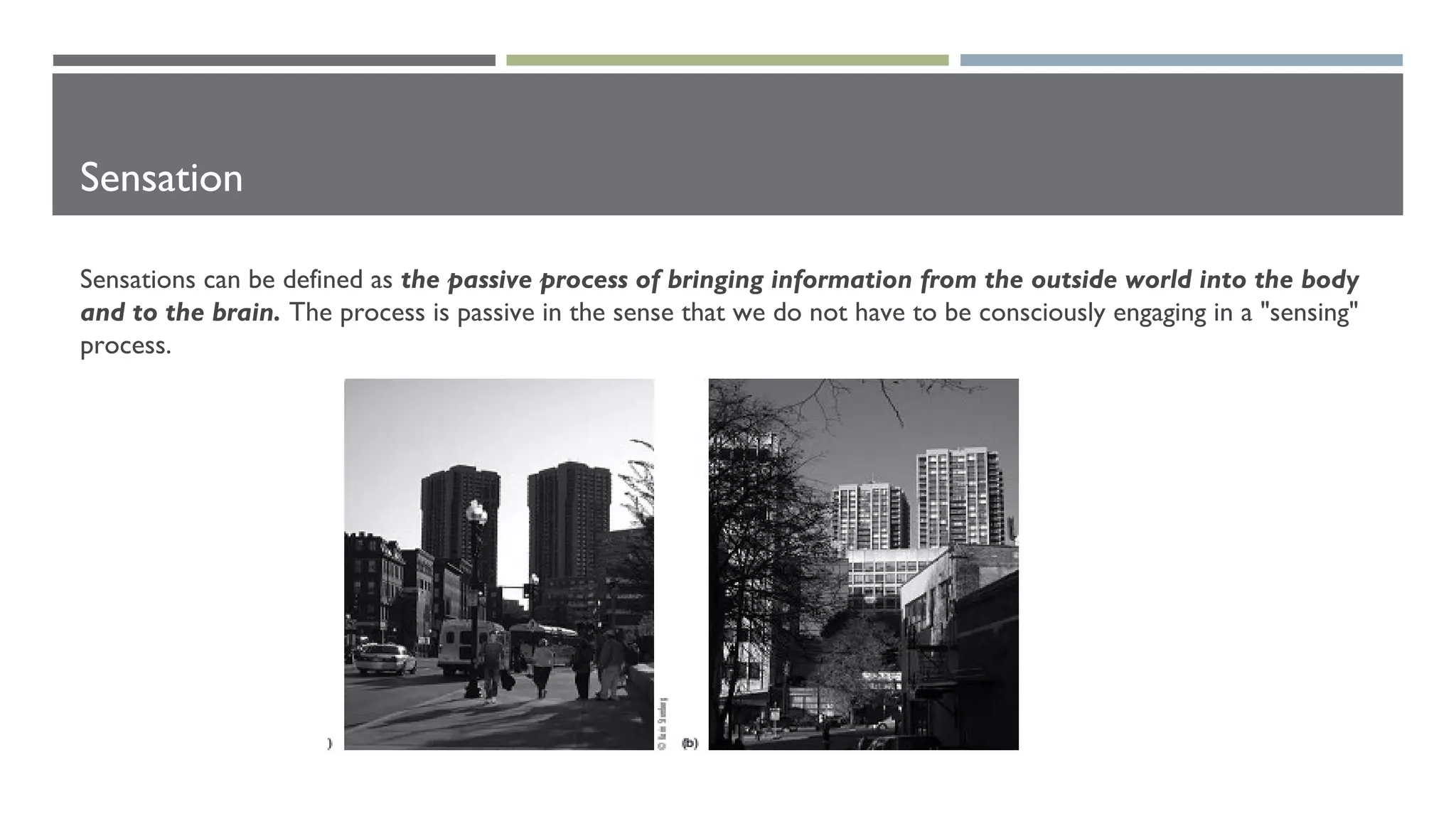
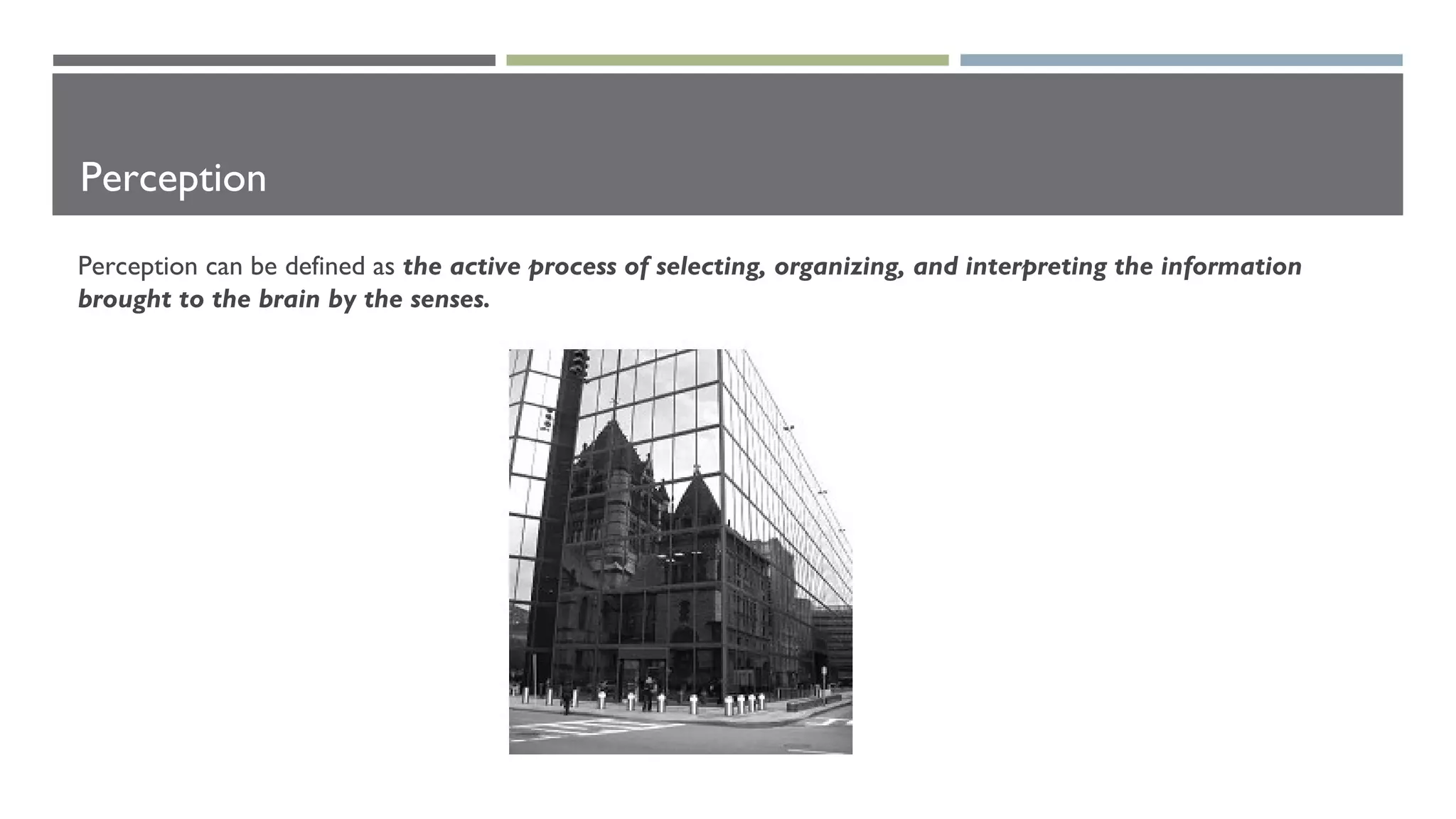
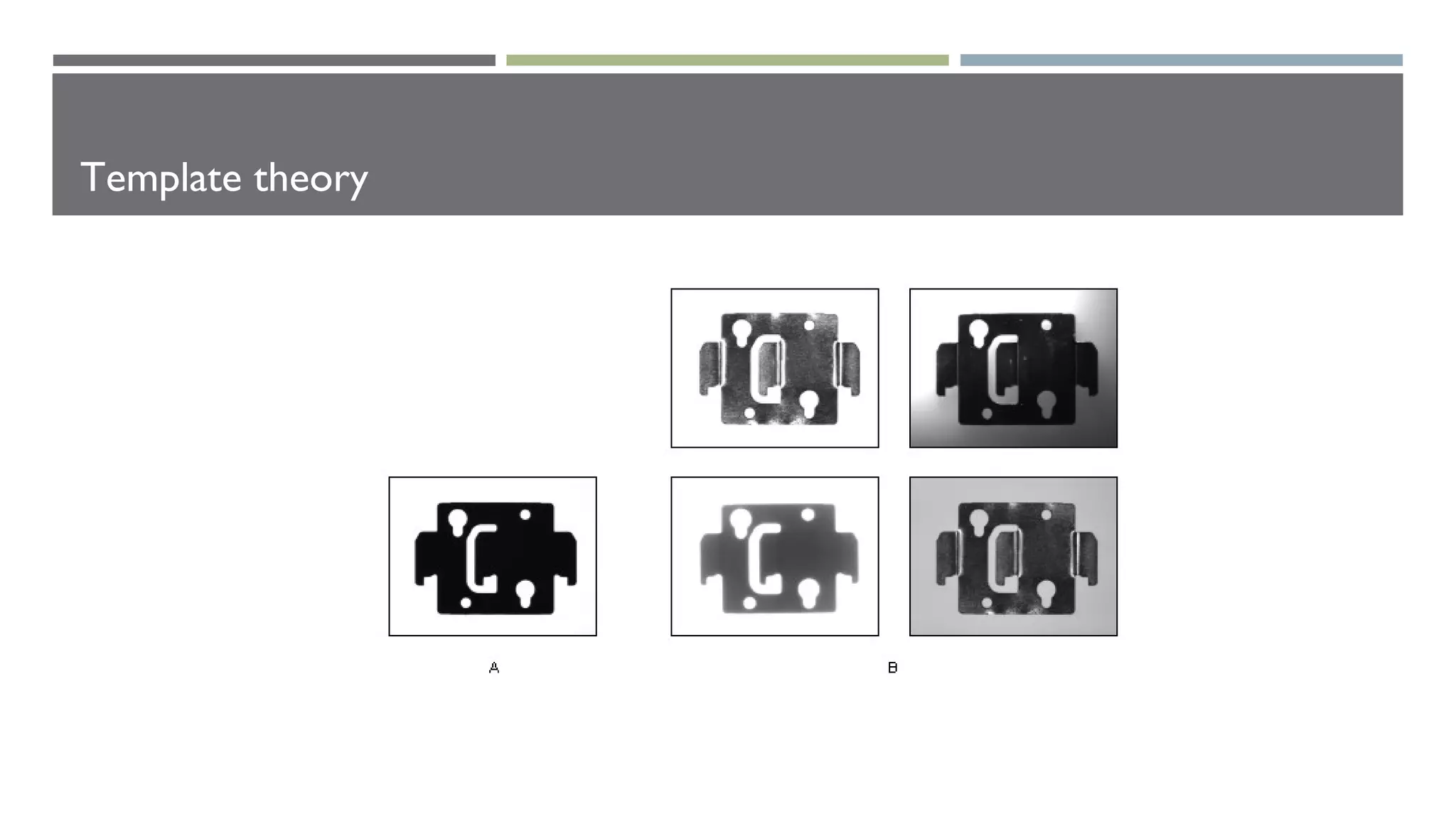
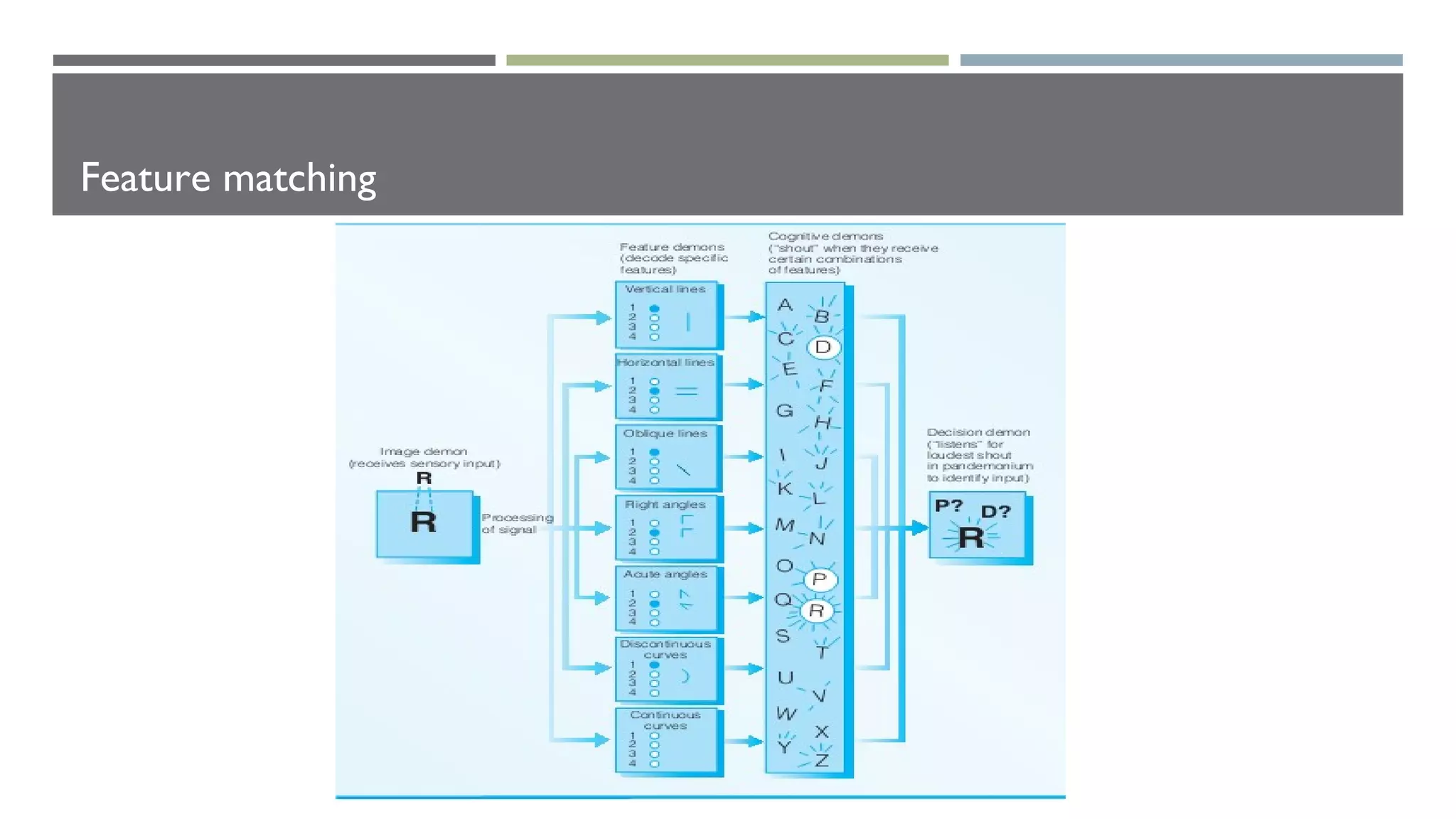
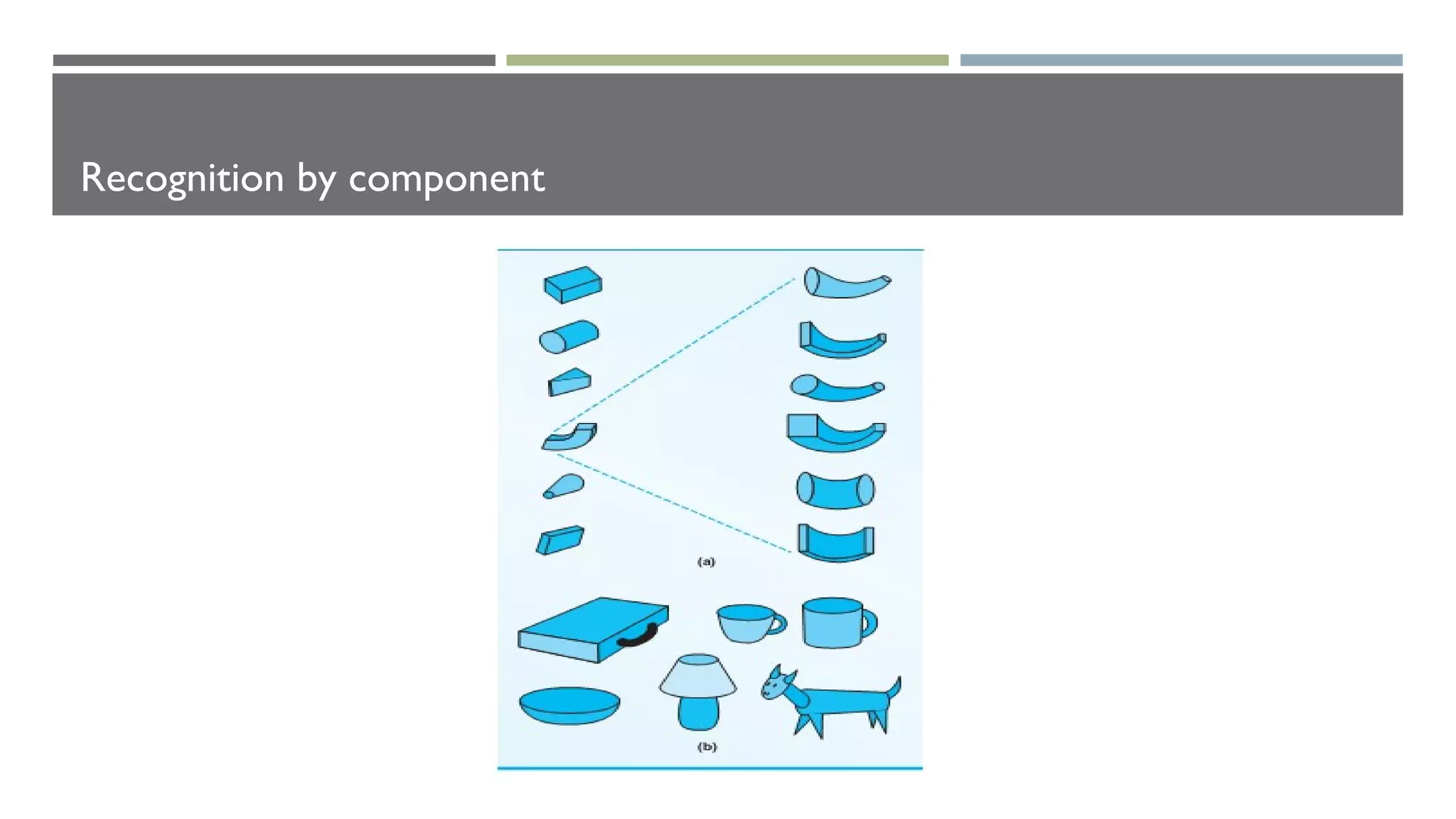
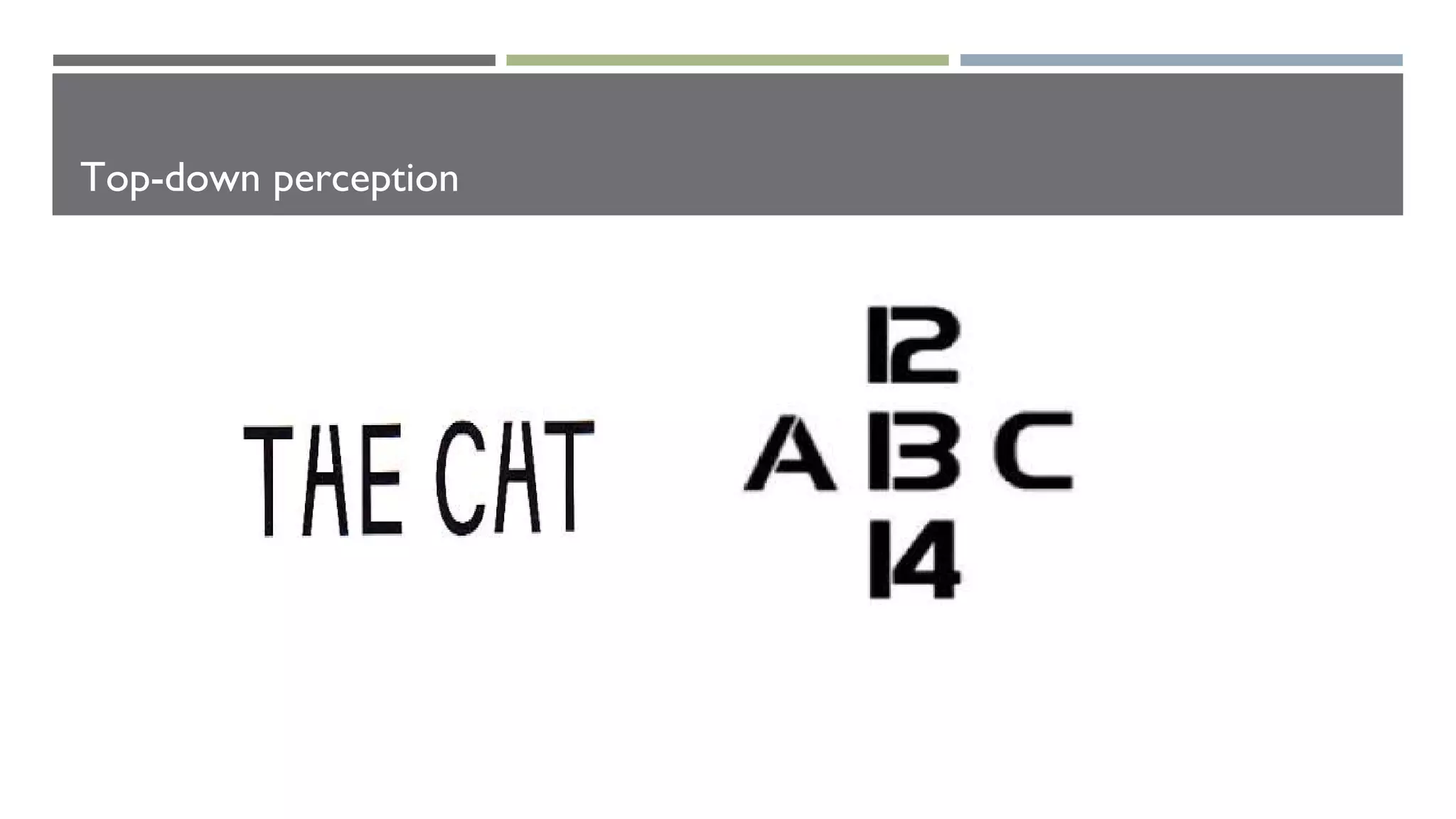
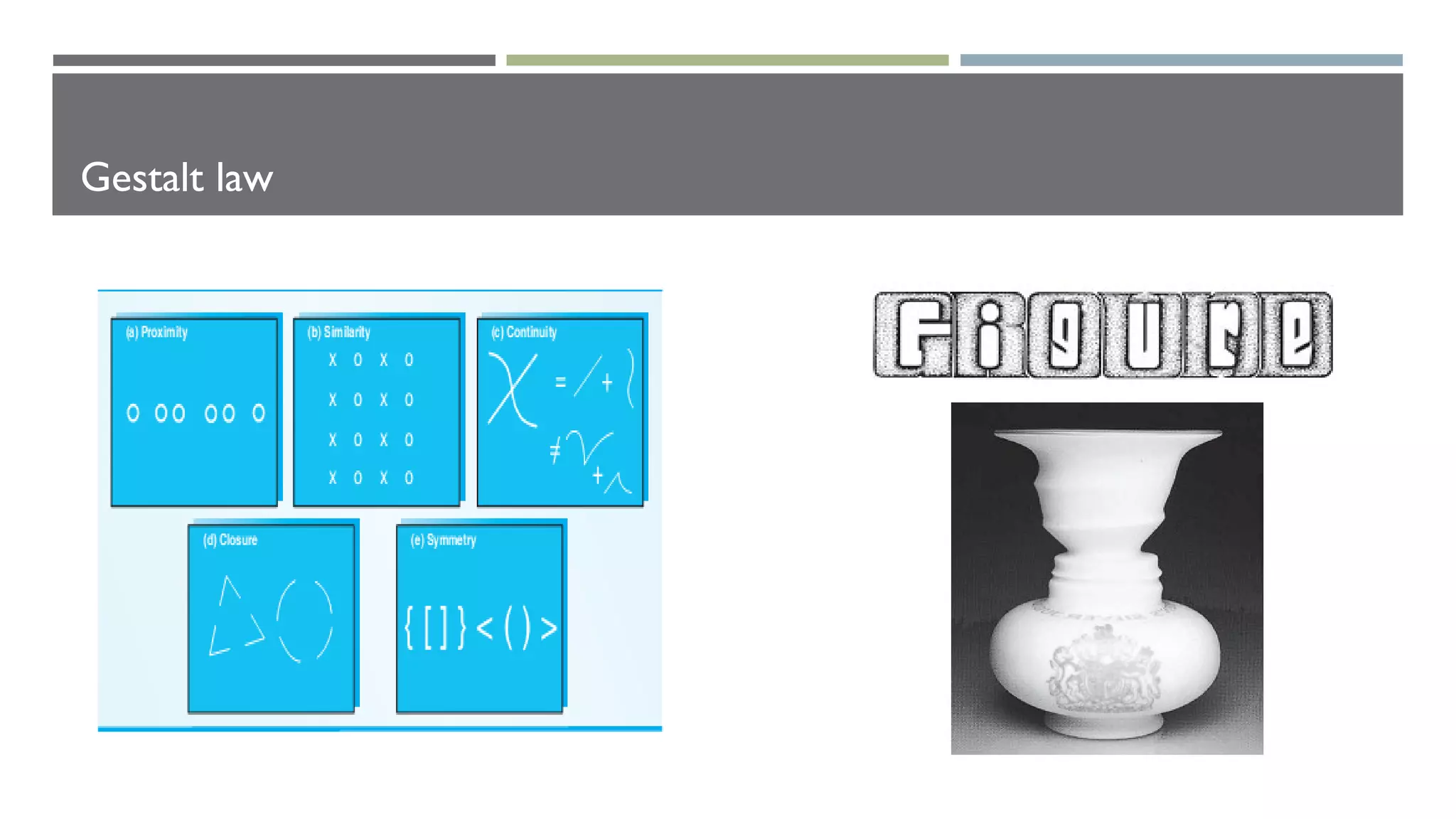
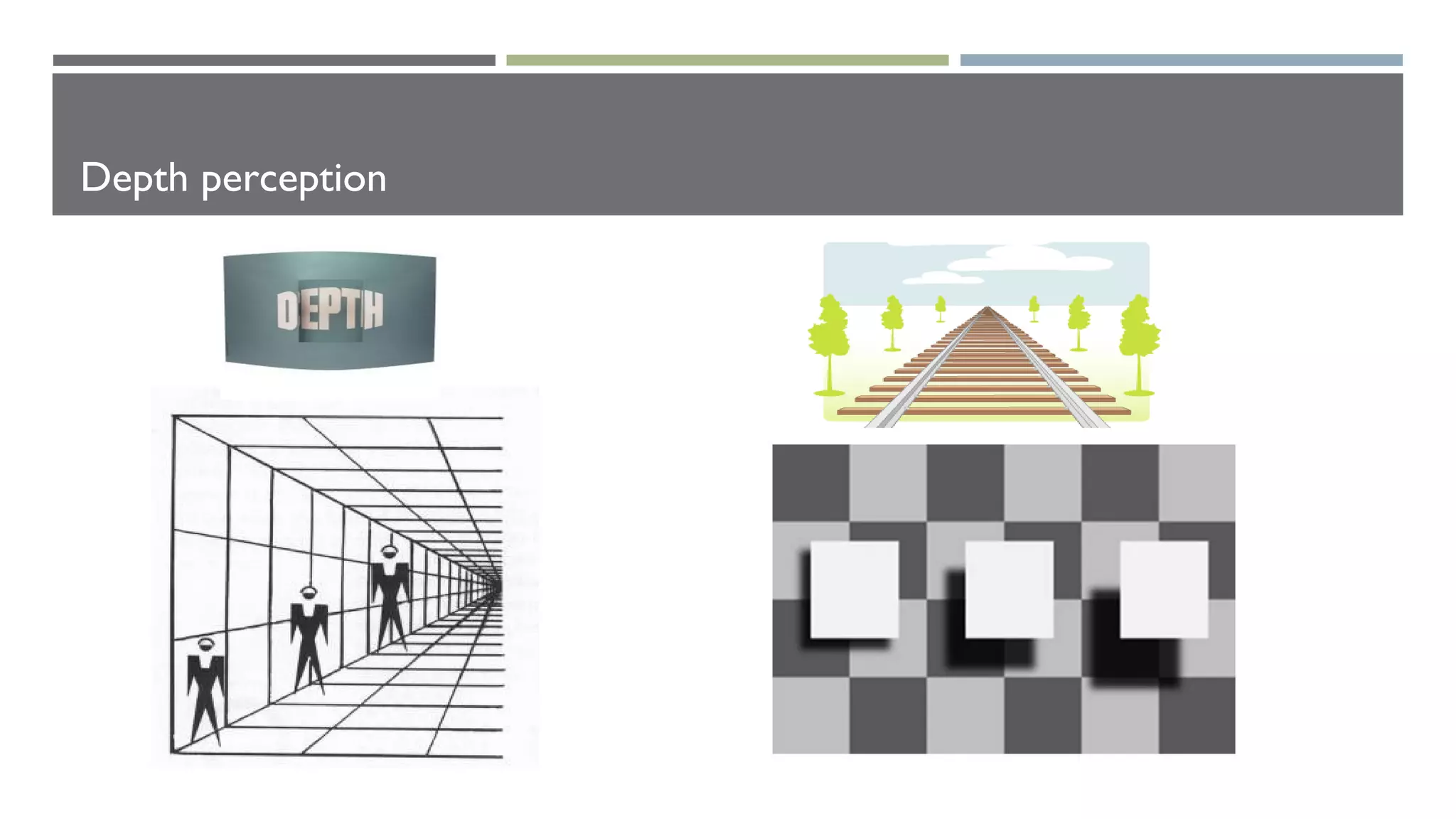
This document discusses visual perception and the processes of sensation and perception. It defines sensation as the passive process of bringing external information to the brain through the senses. Perception is defined as the active process of selecting, organizing, and interpreting sensory information. The document outlines different approaches to perception, including bottom-up stimulus-driven perception, top-down goal-driven perception based on knowledge and expectations, and interactive perception involving both processes. It also discusses theories of bottom-up perception, object perception from viewer-centered and object-centered perspectives, Gestalt laws of patterns and forms perception, and depth perception.


![Computer Networks 01[1 using all terms].pptx](https://cdn.slidesharecdn.com/ss_thumbnails/computernetworks011-251214040533-327dd9f8-thumbnail.jpg?width=640&height=640&fit=bounds)


