Research Aptitude
UNIVERSITY GRANTS COMMISSION
NET BUREAU
GENERAL PAPER ON TEACHING & RESEARCH APTITUDE
Paper 1: Unit - II
K.THIYAGU, Assistant Professor, Department of Education,
Central University of Kerala, Kasaragod
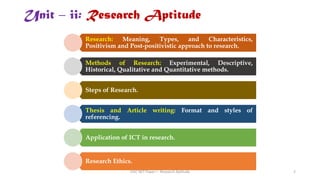
Unit – ii: Research Aptitude
Research: Meaning, Types, and Characteristics,
Positivism and Post-positivistic approach to research.
Methods of Research: Experimental, Descriptive,
Historical, Qualitative and Quantitative methods.
Steps of Research.
Thesis and Article writing: Format and styles of
referencing.
Application of ICT in research.
Research Ethics.
UGC NET Paper I - Research Aptitude 2
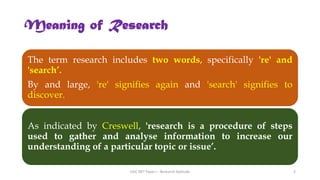
Meaning of Research
The term research includes two words, specifically 're' and
'search’.
By and large, 're' signifies again and 'search' signifies to
discover.
As indicated by Creswell, 'research is a procedure of steps
used to gather and analyse information to increase our
understanding of a particular topic or issue’.
UGC NET Paper I - Research Aptitude 3
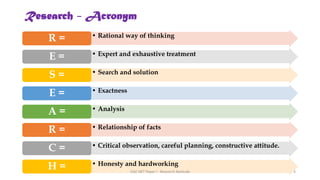
Research - Acronym
• Rational way of thinking
R =
• Expert and exhaustive treatment
E =
• Search and solution
S =
• Exactness
E =
• Analysis
A =
• Relationship of facts
R =
• Critical observation, careful planning, constructive attitude.
C =
• Honesty and hardworking
H = UGC NET Paper I - Research Aptitude 4
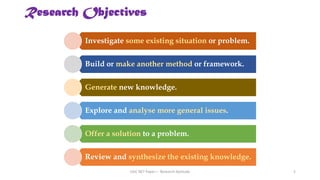
Research Objectives
Investigate some existing situation or problem.
Build or make another method or framework.
Generate new knowledge.
Explore and analyse more general issues.
Offer a solution to a problem.
Review and synthesize the existing knowledge.
UGC NET Paper I - Research Aptitude 5
Research Characteristics
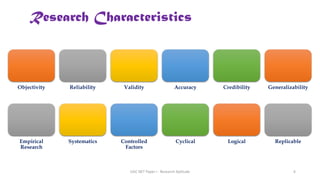
Objectivity Reliability Validity Accuracy Credibility Generalizability
Empirical
Research
Systematics Controlled
Factors
Cyclical Logical Replicable
UGC NET Paper I - Research Aptitude 6
Research Characteristics
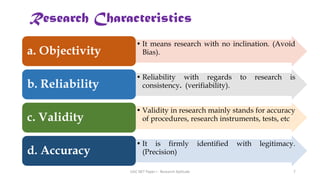
• It means research with no inclination. (Avoid
Bias).
a. Objectivity
• Reliability with regards to research is
consistency. (verifiability).
b. Reliability
• Validity in research mainly stands for accuracy
of procedures, research instruments, tests, etc
c. Validity
• It is firmly identified with legitimacy.
(Precision)
d. Accuracy
UGC NET Paper I - Research Aptitude 7
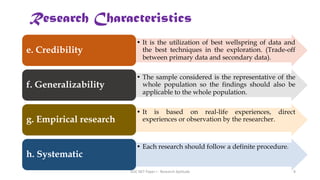
• It is the utilization of best wellspring of data and
the best techniques in the exploration. (Trade-off
between primary data and secondary data).
e. Credibility
• The sample considered is the representative of the
whole population so the findings should also be
applicable to the whole population.
f. Generalizability
• It is based on real-life experiences, direct
experiences or observation by the researcher.
g. Empirical research
• Each research should follow a definite procedure.
h. Systematic
Research Characteristics
UGC NET Paper I - Research Aptitude 8
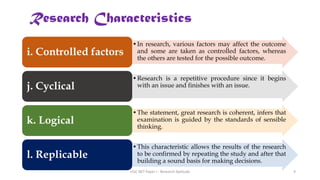
•In research, various factors may affect the outcome
and some are taken as controlled factors, whereas
the others are tested for the possible outcome.
i. Controlled factors
•Research is a repetitive procedure since it begins
with an issue and finishes with an issue.
j. Cyclical
•The statement, great research is coherent, infers that
examination is guided by the standards of sensible
thinking.
k. Logical
•This characteristic allows the results of the research
to be confirmed by repeating the study and after that
building a sound basis for making decisions.
l. Replicable
Research Characteristics
UGC NET Paper I - Research Aptitude 9
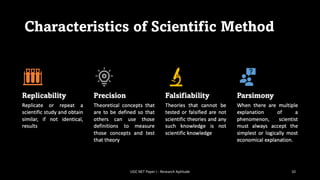
Characteristics of Scientific Method
10
UGC NET Paper I - Research Aptitude
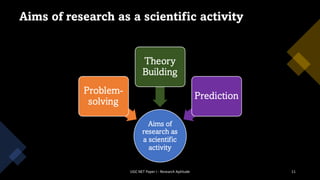
Aims of research as a scientific activity
UGC NET Paper I - Research Aptitude 11
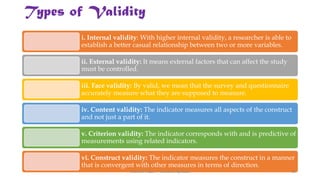
Types of Validity
i. Internal validity: With higher internal validity, a researcher is able to
establish a better casual relationship between two or more variables.
ii. External validity: It means external factors that can affect the study
must be controlled.
iii. Face validity: By valid, we mean that the survey and questionnaire
accurately measure what they are supposed to measure.
iv. Content validity: The indicator measures all aspects of the construct
and not just a part of it.
v. Criterion validity: The indicator corresponds with and is predictive of
measurements using related indicators.
vi. Construct validity: The indicator measures the construct in a manner
that is convergent with other measures in terms of direction.
UGC NET Paper I - Research Aptitude 12
Types of Research
UGC NET Paper I - Research Aptitude 13
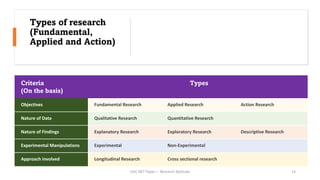
Types of research
(Fundamental,
Applied and Action)
Criteria
(On the basis)
Types
Objectives Fundamental Research Applied Research Action Research
Nature of Data Qualitative Research Quantitative Research
Nature of Findings Explanatory Research Exploratory Research Descriptive Research
Experimental Manipulations Experimental Non-Experimental
Approach involved Longitudinal Research Cross sectional research
14
UGC NET Paper I - Research Aptitude
Types of Scientific Method (Exploratory, Explanatory and Descriptive)
15
UGC NET Paper I - Research Aptitude
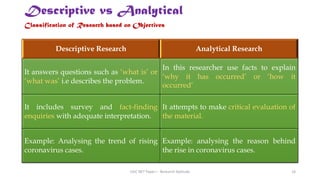
Descriptive vs Analytical
Descriptive Research Analytical Research
It answers questions such as ‘what is’ or
‘what was’ i.e describes the problem.
In this researcher use facts to explain
‘why it has occurred’ or ‘how it
occurred’
It includes survey and fact-finding
enquiries with adequate interpretation.
It attempts to make critical evaluation of
the material.
Example: Analysing the trend of rising
coronavirus cases.
Example: analysing the reason behind
the rise in coronavirus cases.
Classification of Research based on Objectives
UGC NET Paper I - Research Aptitude 16
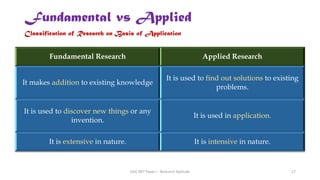
Fundamental Research Applied Research
It makes addition to existing knowledge
It is used to find out solutions to existing
problems.
It is used to discover new things or any
invention.
It is used in application.
It is extensive in nature. It is intensive in nature.
Fundamental vs Applied
Classification of Research on Basis of Application
UGC NET Paper I - Research Aptitude 17
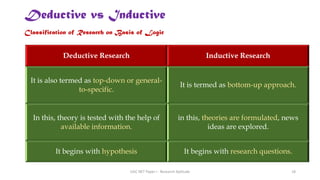
Deductive Research Inductive Research
It is also termed as top-down or general-
to-specific.
It is termed as bottom-up approach.
In this, theory is tested with the help of
available information.
in this, theories are formulated, news
ideas are explored.
It begins with hypothesis It begins with research questions.
Deductive vs Inductive
Classification of Research on Basis of Logic
UGC NET Paper I - Research Aptitude 18
Structured Research Unstructured Research
Everything that is part of research is
predetermined such as objective, design,
sample, and questions.
In this, flexibility is allowed because it is
not predetermined for formulating
research.
It is more appropriate to determine the
extent of problem.
It is more appropriate to explore the
nature of problem.
It is used in quantitative research. It is used in qualitative research.
Structured vs Unstructured
UGC NET Paper I - Research Aptitude 19
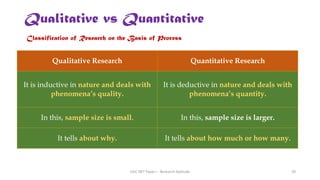
Qualitative Research Quantitative Research
It is inductive in nature and deals with
phenomena’s quality.
It is deductive in nature and deals with
phenomena’s quantity.
In this, sample size is small. In this, sample size is larger.
It tells about why. It tells about how much or how many.
Qualitative vs Quantitative
Classification of Research on the Basis of Process
UGC NET Paper I - Research Aptitude 20
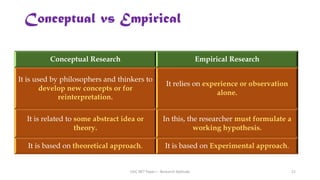
Conceptual Research Empirical Research
It is used by philosophers and thinkers to
develop new concepts or for
reinterpretation.
It relies on experience or observation
alone.
It is related to some abstract idea or
theory.
In this, the researcher must formulate a
working hypothesis.
It is based on theoretical approach. It is based on Experimental approach.
Conceptual vs Empirical
UGC NET Paper I - Research Aptitude 21
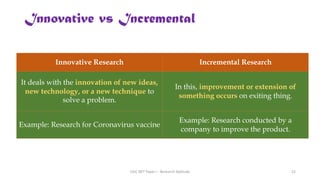
Innovative Research Incremental Research
It deals with the innovation of new ideas,
new technology, or a new technique to
solve a problem.
In this, improvement or extension of
something occurs on exiting thing.
Example: Research for Coronavirus vaccine
Example: Research conducted by a
company to improve the product.
Innovative vs Incremental
UGC NET Paper I - Research Aptitude 22
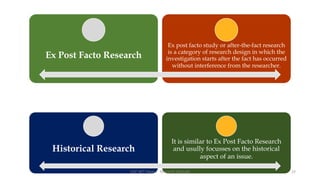
Ex Post Facto Research
Ex post facto study or after-the-fact research
is a category of research design in which the
investigation starts after the fact has occurred
without interference from the researcher.
Historical Research
It is similar to Ex Post Facto Research
and usully focusses on the historical
aspect of an issue.
UGC NET Paper I - Research Aptitude 23
Positivism and
Post Positivism Approach to
Research
UGC NET Paper I - Research Aptitude 24
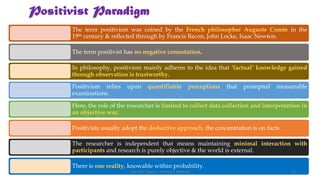
Positivist Paradigm
The term positivism was coined by the French philosopher Auguste Comte in the
19th century & reflected through by Francis Bacon, John Locke, Isaac Newton.
The term positivist has no negative connotation.
In philosophy, positivism mainly adheres to the idea that ‘factual’ knowledge gained
through observation is trustworthy.
Positivism relies upon quantifiable perceptions that prompted measurable
examinations.
Here, the role of the researcher is limited to collect data collection and interpretation in
an objective way.
Positivists usually adopt the deductive approach, the concentration is on facts.
The researcher is independent that means maintaining minimal interaction with
participants and research is purely objective & the world is external.
There is one reality, knowable within probability.
UGC NET Paper I - Research Aptitude 25
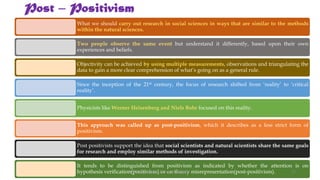
Post – Positivism
What we should carry out research in social sciences in ways that are similar to the methods
within the natural sciences.
Two people observe the same event but understand it differently, based upon their own
experiences and beliefs.
Objectivity can be achieved by using multiple measurements, observations and triangulating the
data to gain a more clear comprehension of what’s going on as a general rule.
Since the inception of the 21st century, the focus of research shifted from ‘reality’ to ‘critical
reality’.
Physicists like Werner Heisenberg and Niels Bohr focused on this reality.
This approach was called up as post-positivism, which it describes as a less strict form of
positivism.
Post positivists support the idea that social scientists and natural scientists share the same goals
for research and employ similar methods of investigation.
It tends to be distinguished from positivism as indicated by whether the attention is on
hypothesis verification(positivism) or on theory misrepresentation(post-positivism).
UGC NET Paper I - Research Aptitude 26
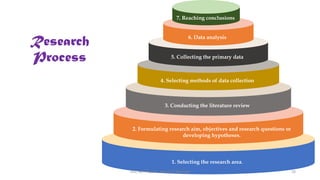
Research Process / Steps
UGC NET Paper I - Research Aptitude 27
1. Selecting the research area.
2. Formulating research aim, objectives and research questions or
developing hypotheses.
3. Conducting the literature review
4. Selecting methods of data collection
5. Collecting the primary data
6. Data analysis
Research
Process
7. Reaching conclusions
UGC NET Paper I - Research Aptitude 28
Research
Steps
UGC NET Paper I - Research Aptitude 29
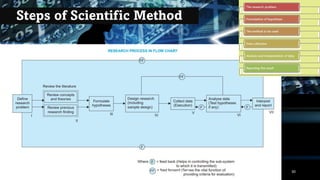
Steps of Scientific Method
UGC NET Paper I - Research Aptitude 30
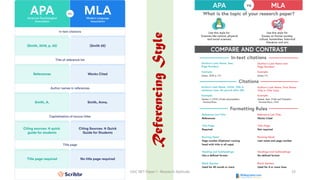
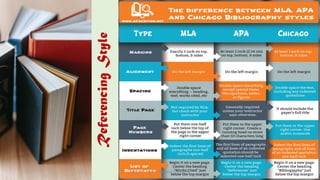
Formats and styles of
Referencing of a Research Report
UGC NET Paper I - Research Aptitude 31
Referencing
Style
UGC NET Paper I - Research Aptitude 32
Referencing
Style
UGC NET Paper I - Research Aptitude 33
Referencing
Style
UGC NET Paper I - Research Aptitude 34
Referencing
Style
UGC NET Paper I - Research Aptitude 35
Application of ICT Tools in
Research
(ICT Applications in Research)
K.THIYAGU,
Assistant Professor, Department of Education,
Central University of Kerala, Kasaragod
UGC NET Paper I - Research Aptitude 37
ICT tools are mainly used by researchers
for its ability
to ease knowledge –gathering process
and
to enhance resource development.
UGC NET Paper I - Research Aptitude 38
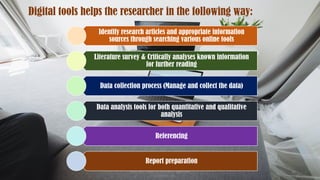
Digital tools helps the researcher in the following way:
Identify research articles and appropriate information
sources through searching various online tools
Literature survey & Critically analyses known information
for further reading
Data collection process (Manage and collect the data)
Data analysis tools for both quantitative and qualitative
analysis
Referencing
Report preparation
CC-BY-NC-SA 38
ICT
Tools
Search Engine
Connect &
Communicate
with experts
and researchers
Free Digital
Library
Data Analysis
Referencing
Write & Publish
Research
Papers
UGC NET Paper I - Research Aptitude 39
Application
of ICT
Pre-data Analysis
Data Analysis
Post-data analysis
UGC NET Paper I - Research Aptitude 40
Application of ICT in
Pre-Data Analysis
UGC NET Paper I - Research Aptitude 41
Pre-Data
Analysis
Literature
Search
Literature
Tracking
Data
Collection
UGC NET Paper I - Research Aptitude 42
Literature Search
• https://scholar.google.com/
Google Scholar
• https://www.researchgate.net/
Research Gate
• https://www.academia.edu/
Academia
• https://www.semanticscholar.org/
Semantic Scholar
• https://scinapse.io/
Scinapse
• https://eric.ed.gov/
Eric
• https://pubmed.ncbi.nlm.nih.gov/
PubMed
• https://doaj.org/
DOAJ
• https://www.lens.org/
Lens
• https://login.webofknowledge.com/
Web of Knowledge
UGC NET Paper I - Research Aptitude 43
Famous Database for Research articles
AMS
Annual Revices
EBSCO
Elsevier
Indian Citation Index
Indian Journals
JSTOR
PsycINFO
SpringerLink
ProQuest
Academic Search Premier
Teacher Reference Center
PubPsych
Research Gate
Scopus
ERIC
PubMed
IEEE Xplore
Science Direct
DOAJ
Google Scholar
J-Gate
ORCID
Paperity
Publons
SpringerLink
Web of Science
UGC NET Paper I - Research Aptitude 44
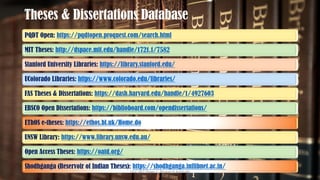
Theses & Dissertations Database
PQDT Open: https://pqdtopen.proquest.com/search.html
MIT Theses: http://dspace.mit.edu/handle/1721.1/7582
Stanford University Libraries: https://library.stanford.edu/
UColorado Libraries: https://www.colorado.edu/libraries/
FAS Theses & Dissertations: https://dash.harvard.edu/handle/1/4927603
EBSCO Open Dissertations: https://biblioboard.com/opendissertations/
EThOS e-theses: https://ethos.bl.uk/Home.do
UNSW Library: https://www.library.unsw.edu.au/
Open Access Theses: https://oatd.org/
Shodhganga (Reservoir of Indian Theses): https://shodhganga.inflibnet.ac.in/
UGC NET Paper I - Research Aptitude 45
Literature
Tracking
Mendely
Zotero
EndNote
Literature Tracking: Sort, classify and store
EasyBib
UGC NET Paper I - Research Aptitude 46
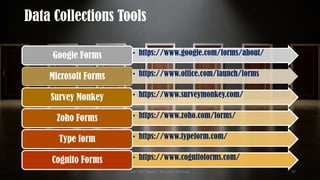
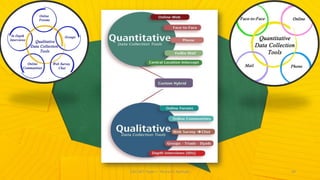
Data Collections Tools
• https://www.google.com/forms/about/
Google Forms
• https://www.office.com/launch/forms
Microsoft Forms
• https://www.surveymonkey.com/
Survey Monkey
• https://www.zoho.com/forms/
Zoho Forms
• https://www.typeform.com/
Type form
• https://www.cognitoforms.com/
Cognito Forms
UGC NET Paper I - Research Aptitude 47
Application of ICT in
Data Analysis
UGC NET Paper I - Research Aptitude 48
UGC NET Paper I - Research Aptitude 49
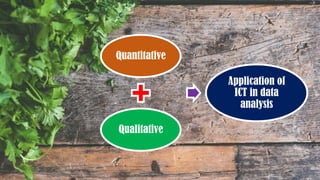
Quantitative
Qualitative
Application of
ICT in data
analysis
UGC NET Paper I - Research Aptitude 50
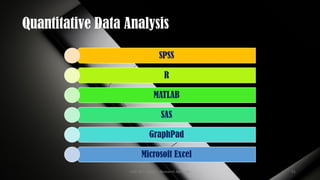
Quantitative Data Analysis
SPSS
R
MATLAB
SAS
GraphPad
Microsoft Excel
UGC NET Paper I - Research Aptitude 51
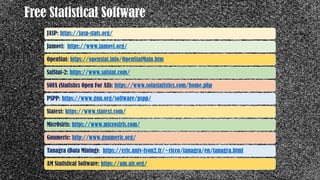
Free Statistical Software
JASP: https://jasp-stats.org/
Jamovi: https://www.jamovi.org/
OpenStat: https://openstat.info/OpenStatMain.htm
SalStat-2: https://www.salstat.com/
SOFA (Statistics Open For All): https://www.sofastatistics.com/home.php
PSPP: https://www.gnu.org/software/pspp/
Statext: https://www.statext.com/
MicrOsiris: https://www.microsiris.com/
Gnumeric: http://www.gnumeric.org/
Tanagra (Data Mining): https://eric.univ-lyon2.fr/~ricco/tanagra/en/tanagra.html
AM Statistical Software: https://am.air.org/
UGC NET Paper I - Research Aptitude 52
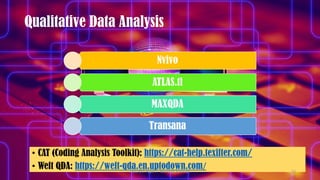
Qualitative Data Analysis
Nvivo
ATLAS.ti
MAXQDA
Transana
• CAT (Coding Analysis Toolkit): https://cat-help.texifter.com/
• Weft QDA: https://weft-qda.en.uptodown.com/
UGC NET Paper I - Research Aptitude 53
Application of ICT in
Post Data Analysis
UGC NET Paper I - Research Aptitude 54
References and Bibliography Compilation
•Endnote
•Zotero
•Mendeley
UGC NET Paper I - Research Aptitude 55
Article and Thesis Discussion
• Academia.edu
• ResearchGate
UGC NET Paper I - Research Aptitude 56
Plagiarism Detection
• Grammarly
• Article Checker
• Turnitin
• Duplichecker
UGC NET Paper I - Research Aptitude 57
Ethical Considerations
in
Quantitative &
Qualitative Research
K.THIYAGU, Assistant Professor, Department of Education, Central University of Kerala, Kasaragod
Research
Ethics
Quantitative Research
• Data that are analyzed are in the form of
numbers.
• Eg: Behaviors are counted, correct answers or
errors are counted, and other types of measures
are recorded in terms of quantity.
• Quantitative research involves both experimental
and nonexperimental research.
UGC NET Paper I - Research Aptitude 59
Qualitative Research
• Data that are recorded in narrative
descriptions, not numbers.
• Methods to observe and describe
conditions rather than control them.
Basic Ethical Principle for Qualitative Researchers is this:
Do not tamper with the natural setting under study.
UGC NET Paper I - Research Aptitude 60
Research
Ethics
Accuracy
Credibility
Confidential
Transparency
Honesty
Protecting
Authenticity
Originality
Plagiarism
UGC NET Paper I - Research Aptitude 61
Accuracy
UGC NET Paper I - Research Aptitude 62
Accuracy / Carefulness
Avoid careless errors
and negligence;
Carefully and critically
examine your own work
Keep good records of
research activities,
such as data collection,
research design, and
correspondence with
agencies or journals.
UGC NET Paper I - Research Aptitude 63
Credibility
UGC NET Paper I - Research Aptitude 64
Credibility
• Proper Citations
• Acknowledgement
UGC NET Paper I - Research Aptitude 65
Confidential
UGC NET Paper I - Research Aptitude 66
Confidential
Protect confidential
communications,
such as papers or
grants submitted for
publication,
personnel records,
trade or military secrets,
and patient records.
UGC NET Paper I - Research Aptitude 67
Protecting
UGC NET Paper I - Research Aptitude 68
Protection
• When conducting research on
human subjects, minimize harms
and risks and maximize benefits;
• Take special precautions with
vulnerable populations;
• Respect human dignity, privacy,
and autonomy;
UGC NET Paper I - Research Aptitude 69
Transparency
UGC NET Paper I - Research Aptitude 70
Transparency/
Openness
Share data,
results, ideas,
tools,
resources.
Be open to
criticism and
new ideas.
UGC NET Paper I - Research Aptitude 71
Honesty
UGC NET Paper I - Research Aptitude 72
Honestly report data,
results, methods and
procedures, and
publication status.
Do not deceive
colleagues,
research sponsors,
or
the public.
Do not fabricate,
falsify,
or
misrepresent data.
UGC NET Paper I - Research Aptitude 73
Authenticity
UGC NET Paper I - Research Aptitude 74
Authenticity
Data should authentic
Information should be authentic
Proper references
UGC NET Paper I - Research Aptitude 75
Originality
UGC NET Paper I - Research Aptitude 76
Originality
Ideas should be fresh
Innovative work
Novel work
UGC NET Paper I - Research Aptitude 77
Plagiarism
UGC NET Paper I - Research Aptitude 78
Plagiarism
Plagiarism is the act of passing
off somebody else’s ideas,
thoughts, pictures, theories,
words, or stories as your own.
UGC NET Paper I - Research Aptitude 79
UGC NET Paper I - Research Aptitude 80

Research Aptitude
UNIVERSITY GRANTS COMMISSION
NET BUREAU
GENERAL PAPER ON TEACHING & RESEARCH APTITUDE
Unit - II
K.THIYAGU, Assistant Professor, Department of Education,
Central University of Kerala, Kasaragod