Unit 11: Pollution
APES
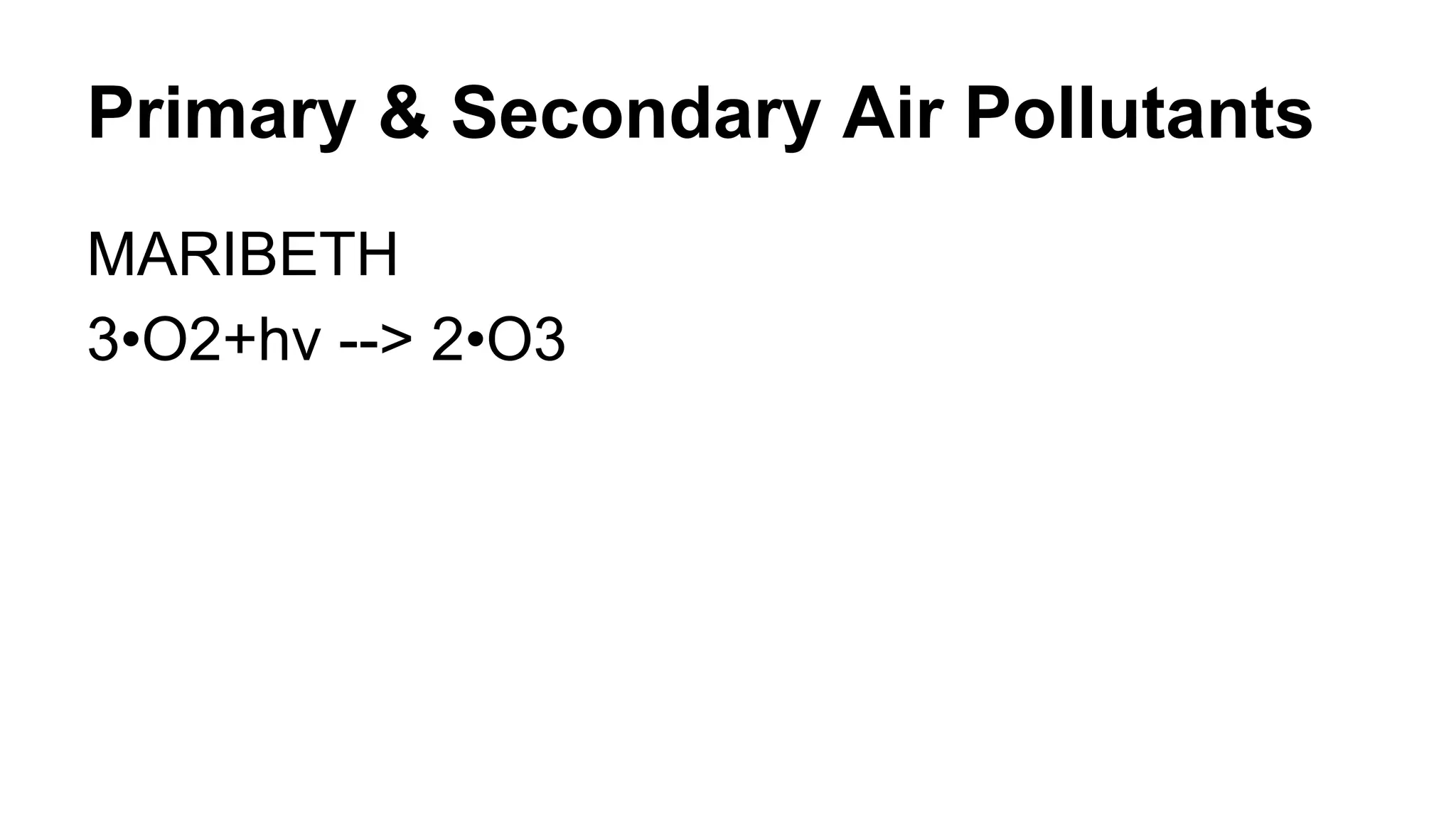
Primary & Secondary Air Pollutants
MARIBETH
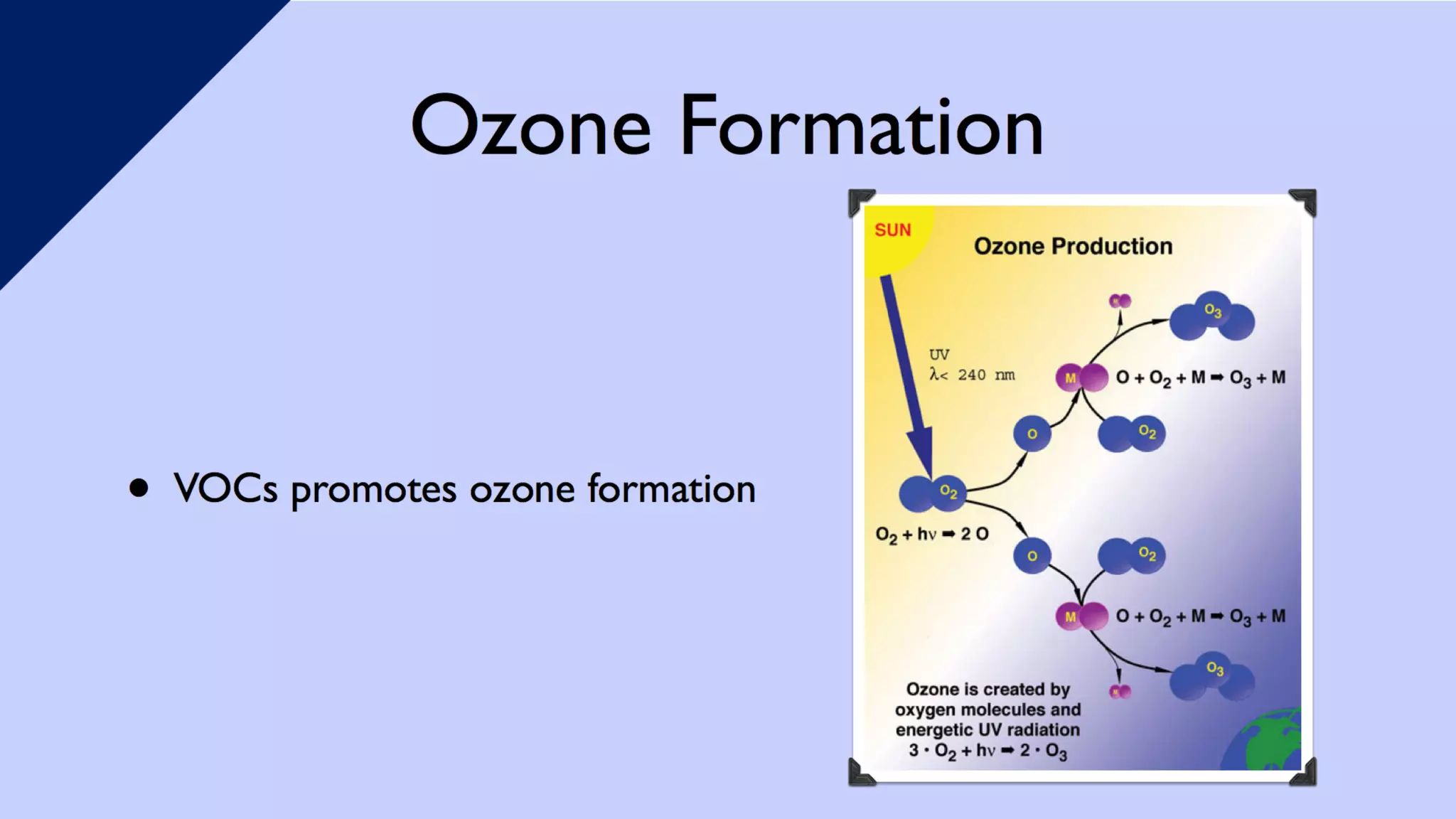
3•O2+hv --> 2•O3
Primary and
Secondary Air
Pollutants
What is the difference?
Primary air pollutants are emitted directly into
the air from sources.
Secondary air pollutants are not directly emitted
but forms when other pollutants (primary
pollutants) react in the atmosphere.
Primary Air Pollutants
★
★
★
★
★

Carbon monoxide (car exhausts)
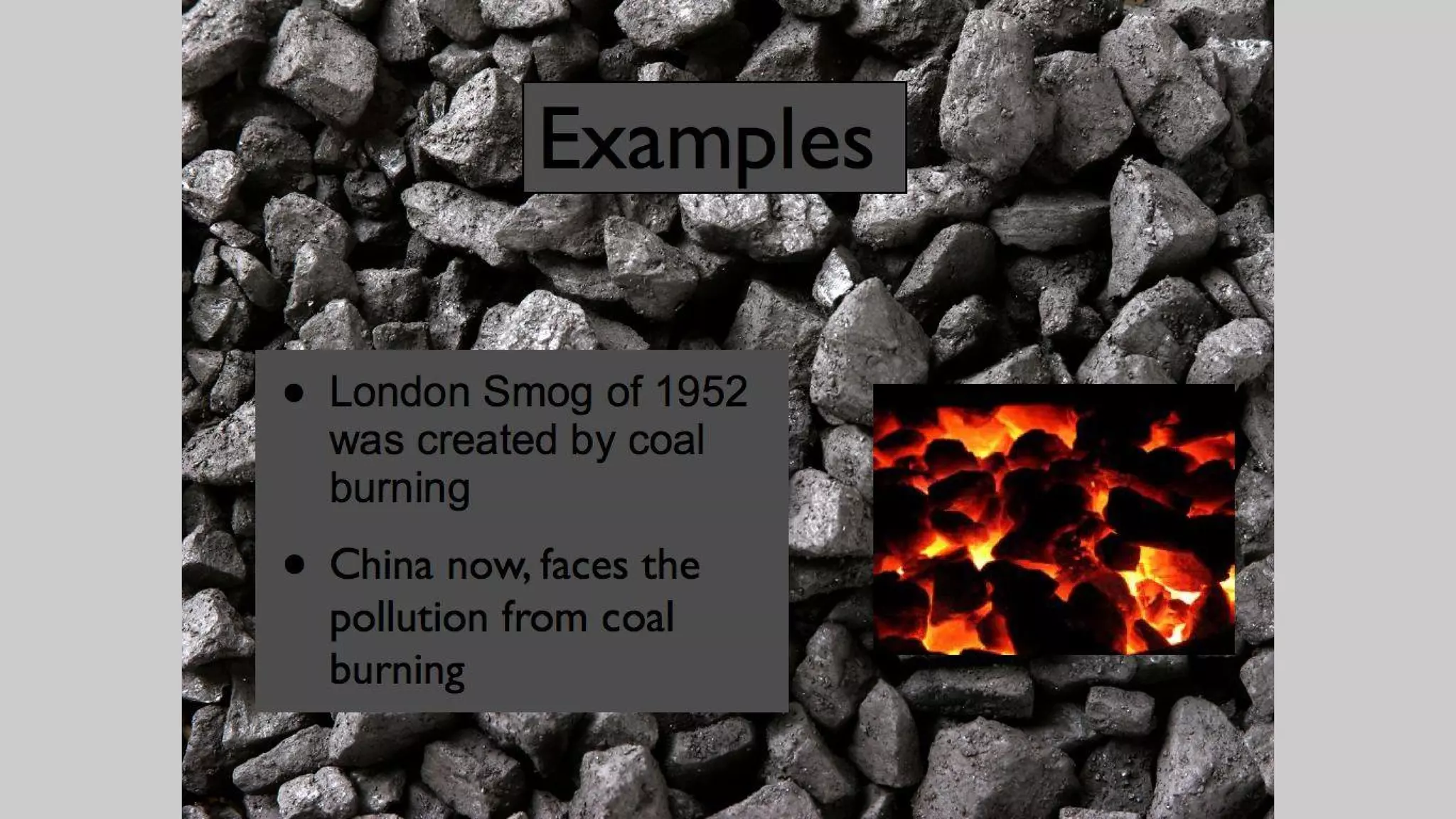
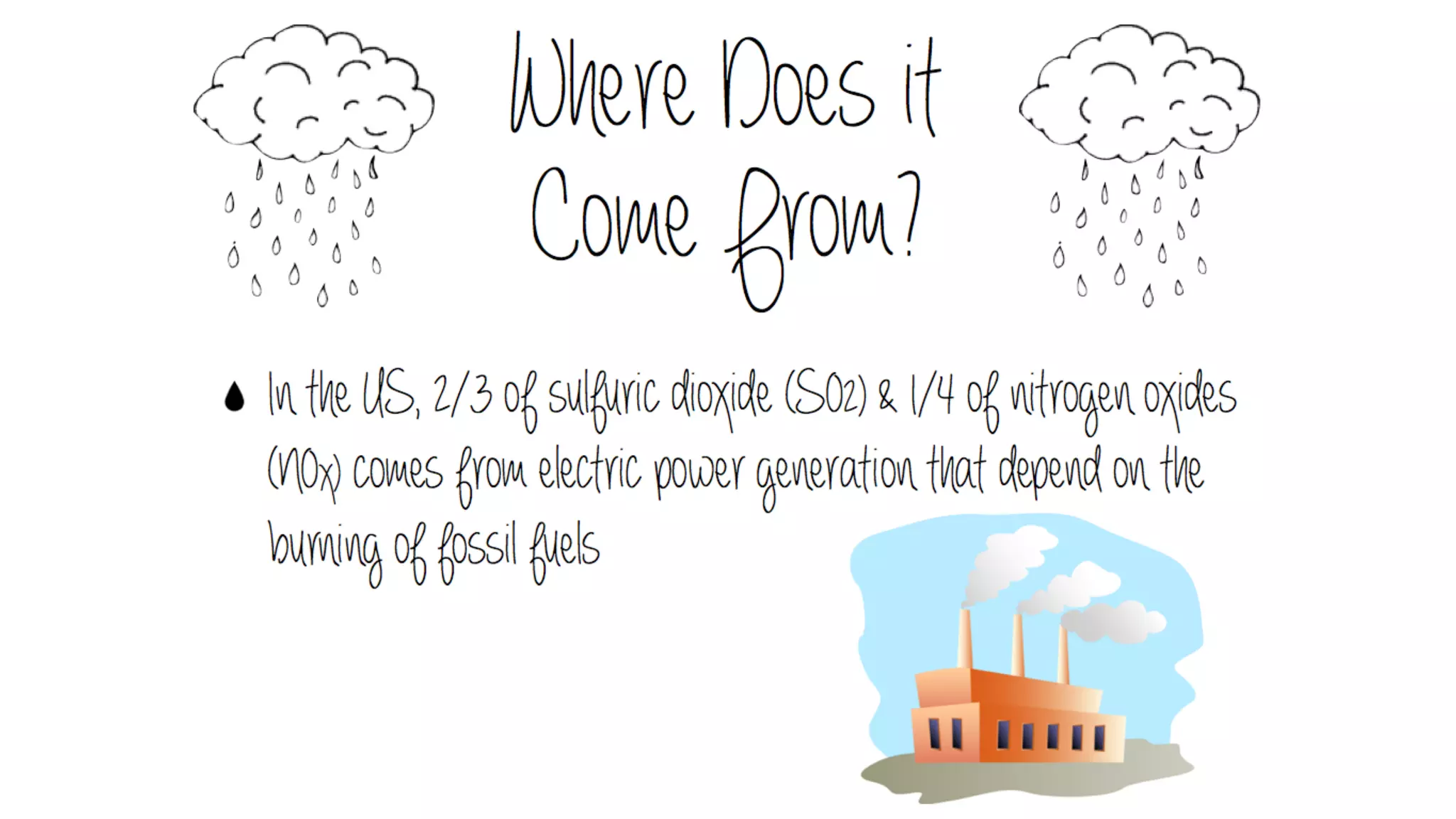
Sulfur dioxide (combustion of coal)
Nitrogen oxides
Hydrocarbons
Particulate matter (both solid and liquid)
Secondary Air Pollutants
★ Ozone (formed when hydrocarbons (HC)
and nitrogen oxides (NOx) combine in the
presence of sunlight)
★ NO2 (formed as NO combines with oxygen
in the air)
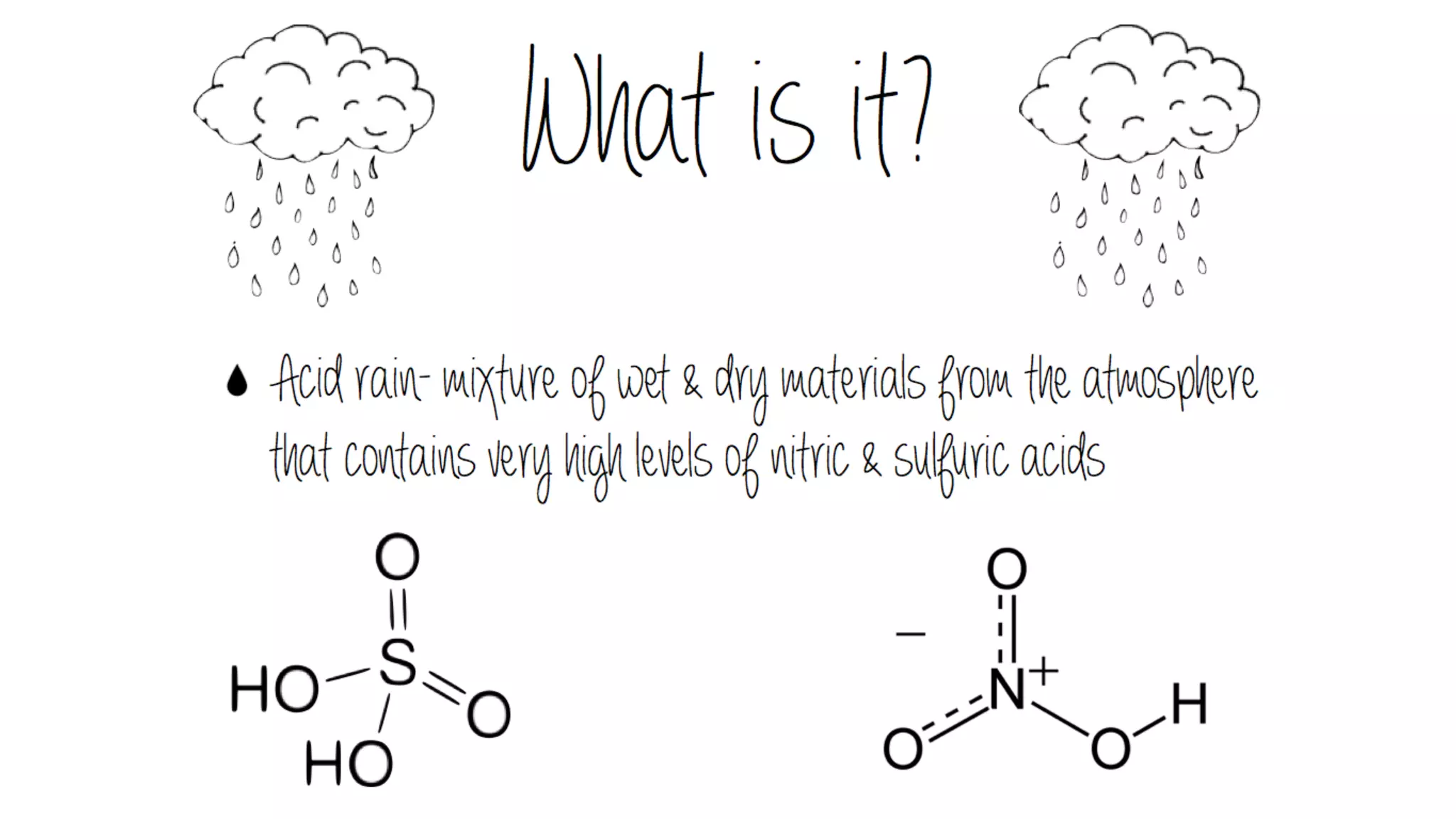
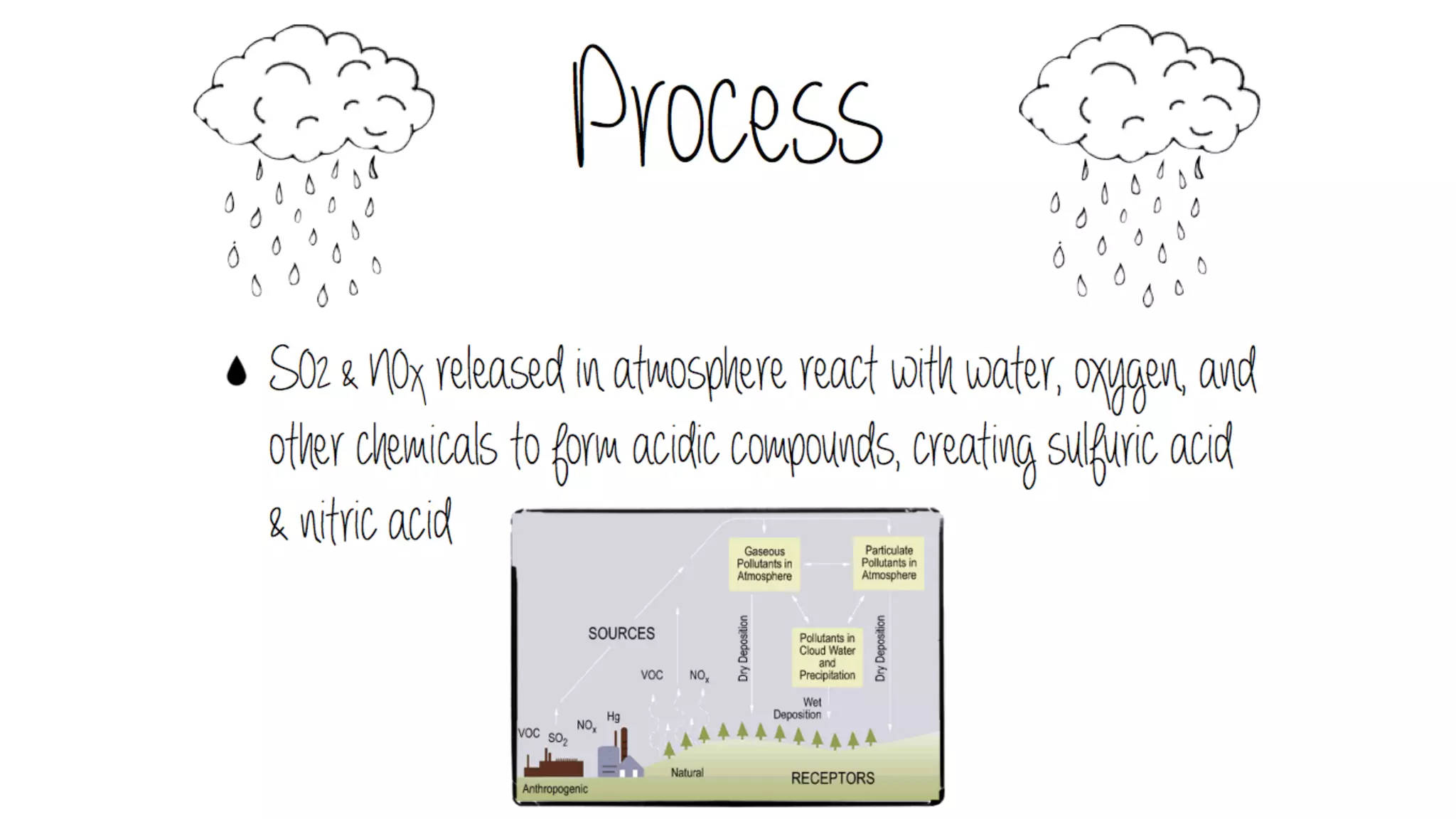
★ Acid rain (formed when sulfur dioxide or
nitrogen oxides react with water)
Carbon monoxide (CO) (Primary)
★ Odorless and Colorless
★ Stops with the process of oxygen from being delivered
in blood to the body.
★ It is produced as a result of incomplete burning of
carbon-containing fuels including coal, wood, charcoal,
natural gas, and fuel oil.
★ Signs of too much CO inhaled are fatigue, headache,
weakness, confusion, disorientation, nausea, and
dizziness
★ Too much CO can cause death.
Ground level Ozone (O3)
(Secondary)
★ Toxic to both humans and vegetation
★ Triatomic molecule consisting of three oxygen
atoms.
★ Hurts the respiratory of animal (humans too?)
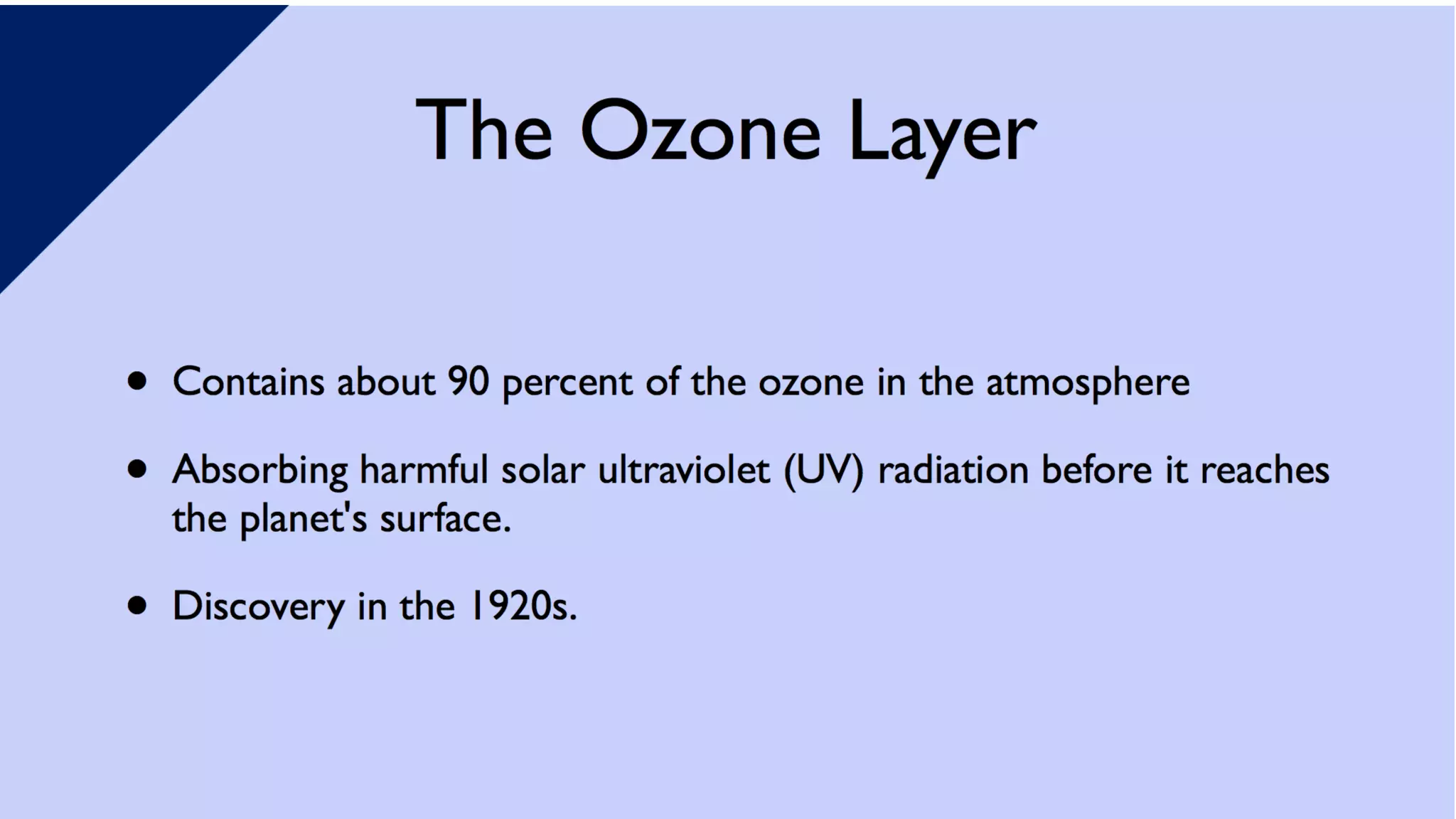
★ Ozone in the upper atmosphere protects living
organisms by preventing damaging ultraviolet
light from reaching the Earth's surface.
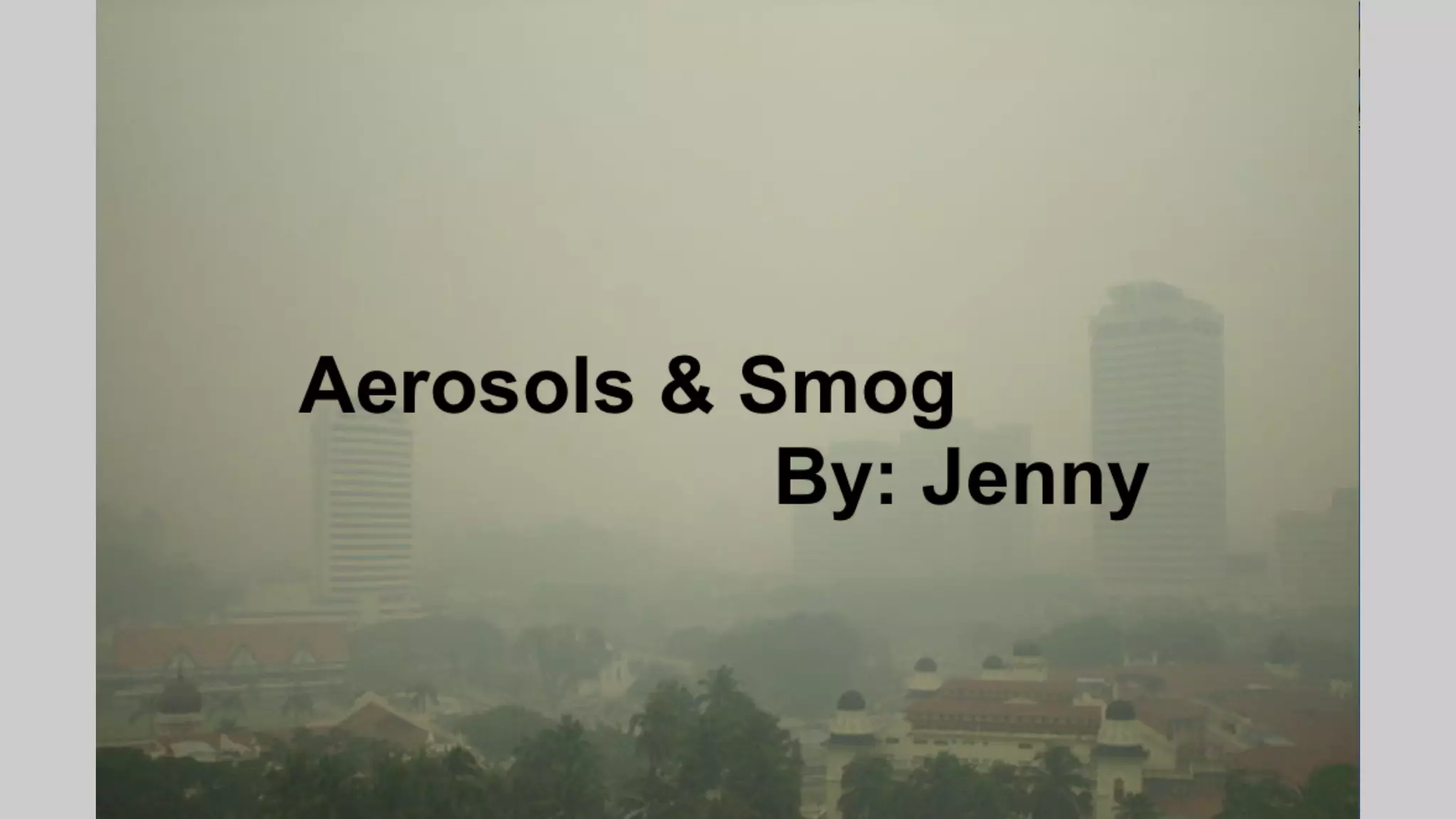
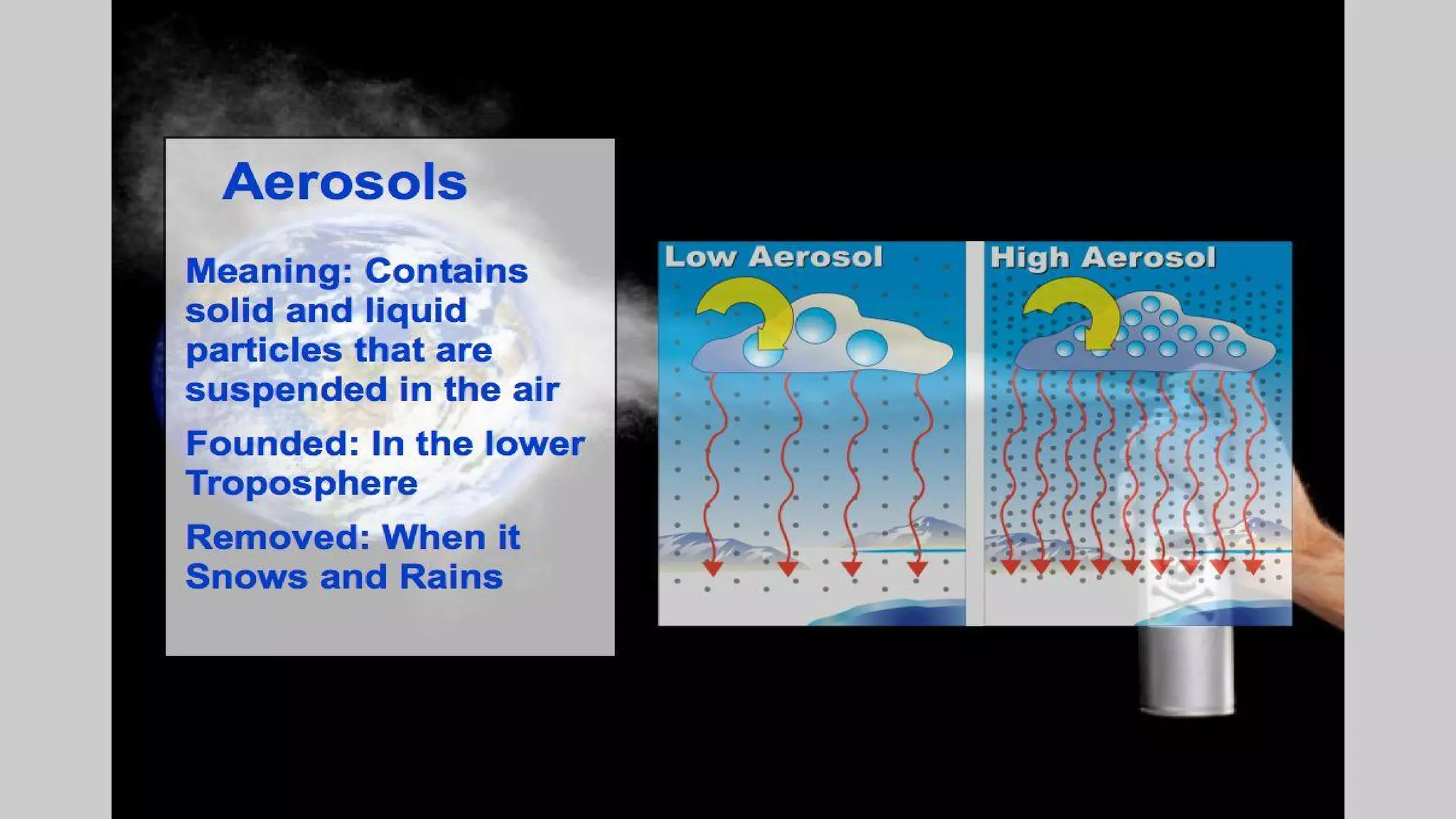
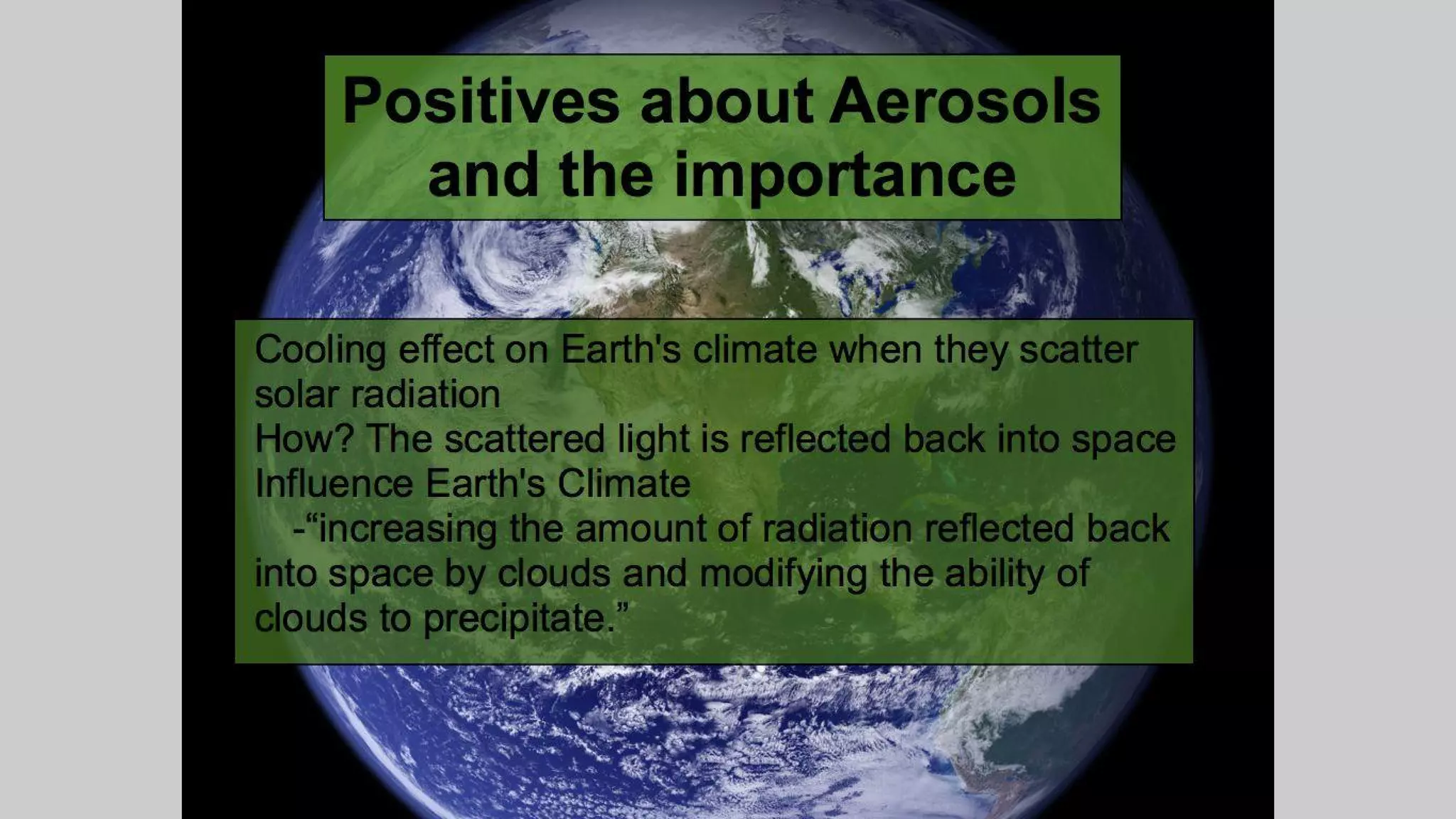
Aerosols & Smog
By: Jenny
Controlling Air Pollution &
Stratospheric Ozone
Nicholas Cochrane
How to Make Your Keynote the Right Ratio for Doc’s

When Making a new keynote
click “Slide Size”

Select 1920 x 1080

And TADA!
Make sure to click the zoom in the
lower left and “select fit to window”
Air Pollution, GHGs, Climate Change
& Major Laws and Treaties
Victoria Owen
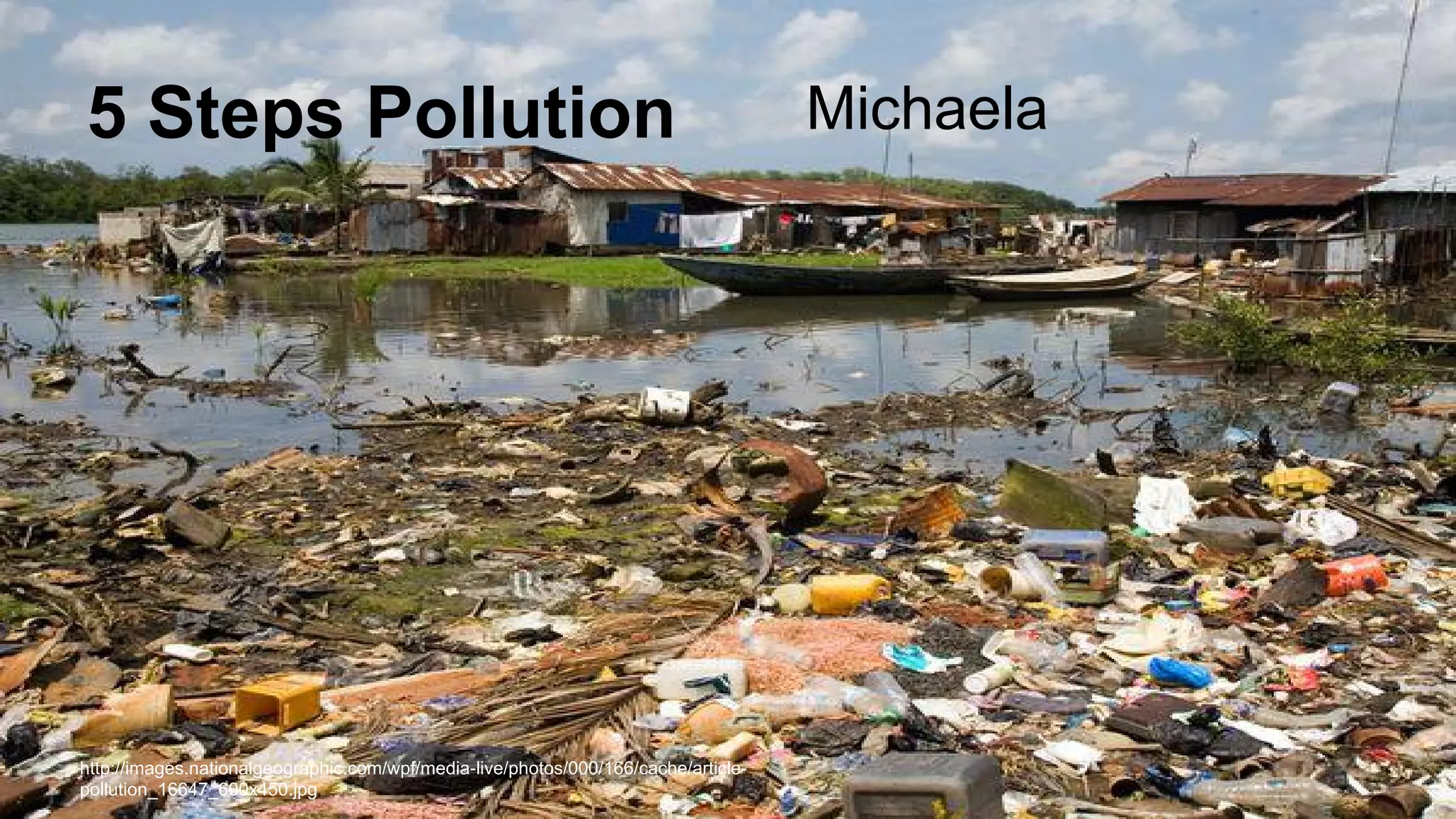
5 Steps Pollution

http://images.nationalgeographic.com/wpf/media-live/photos/000/166/cache/articlepollution_16647_600x450.jpg

Michaela
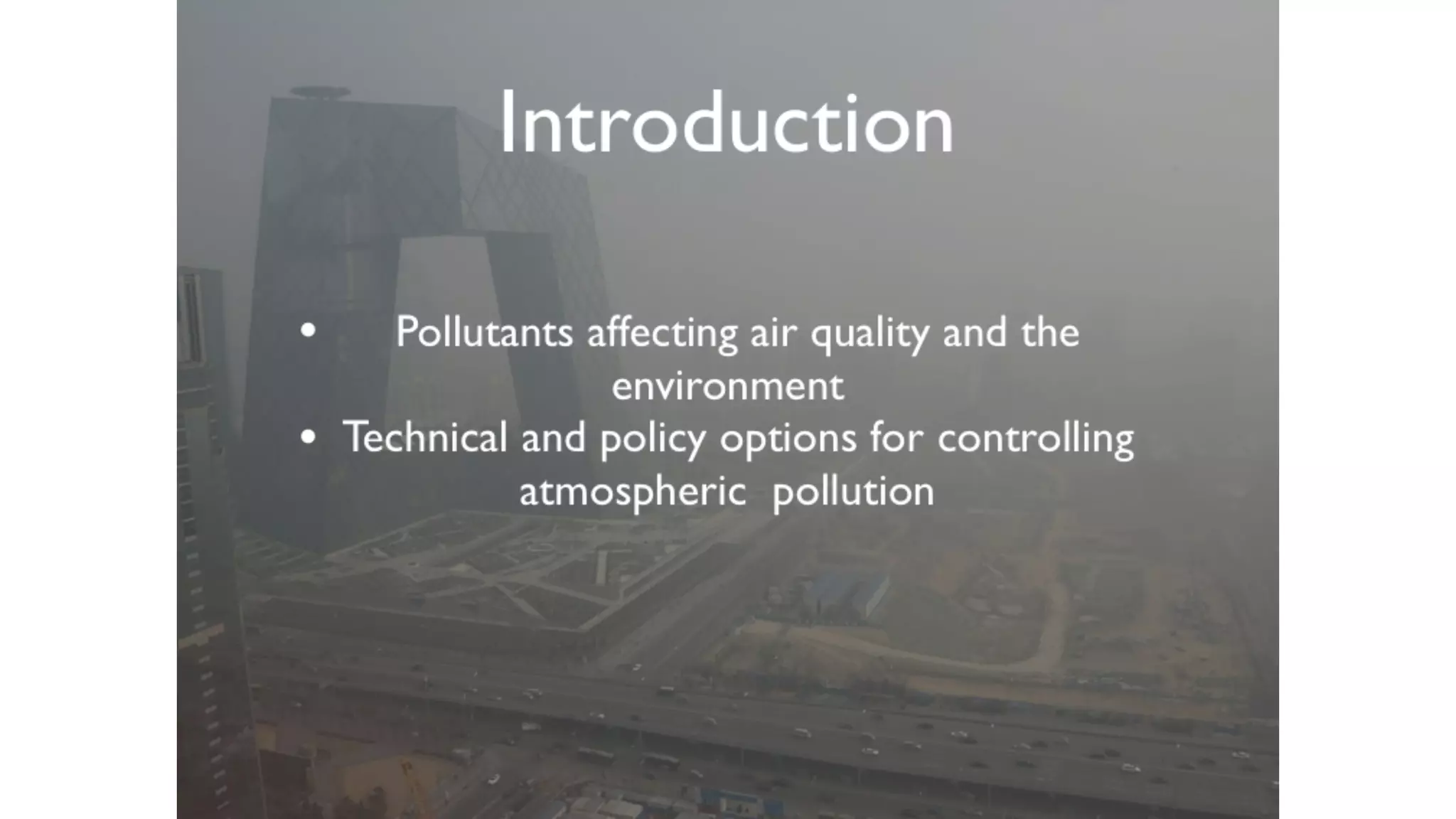
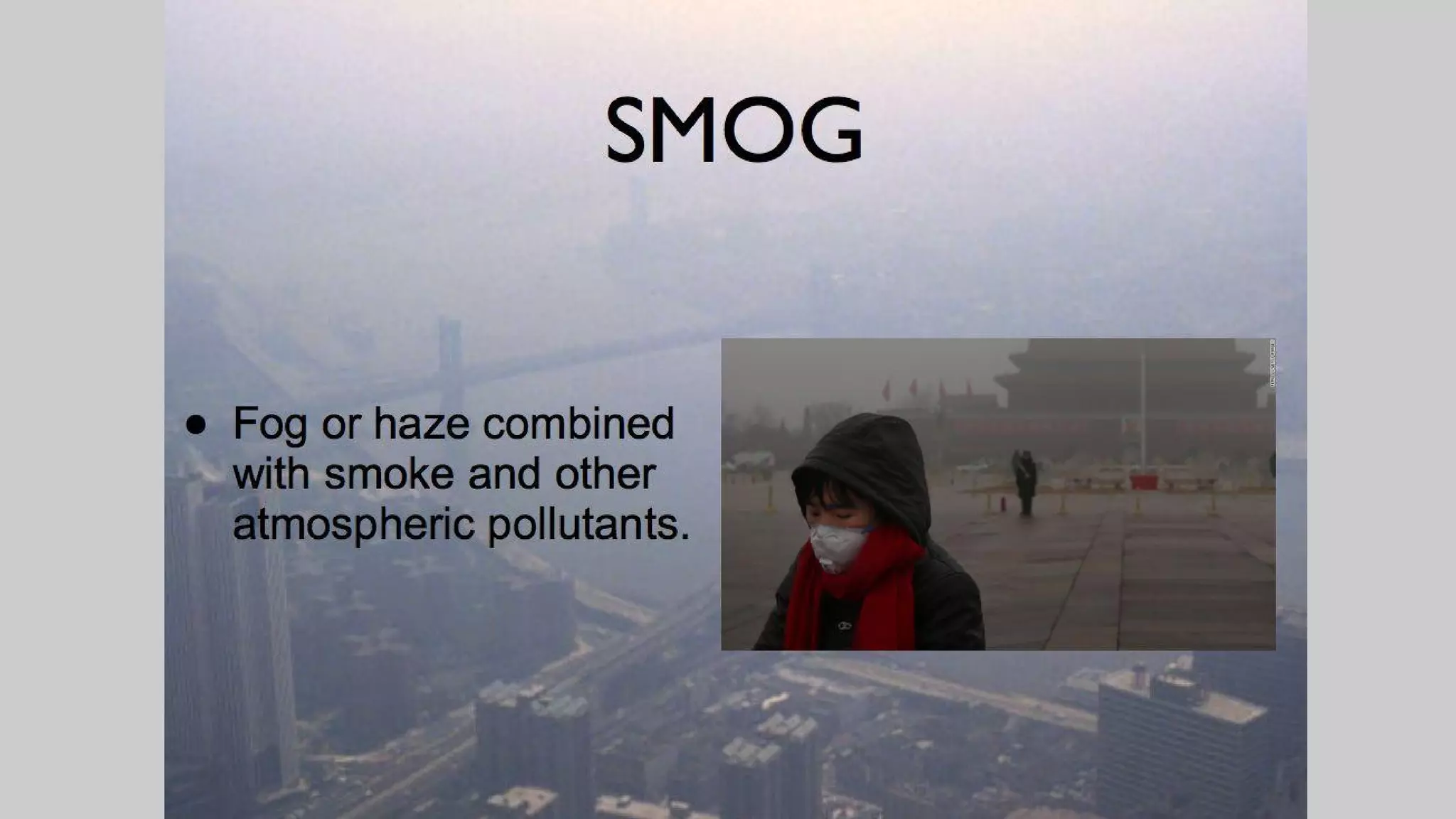
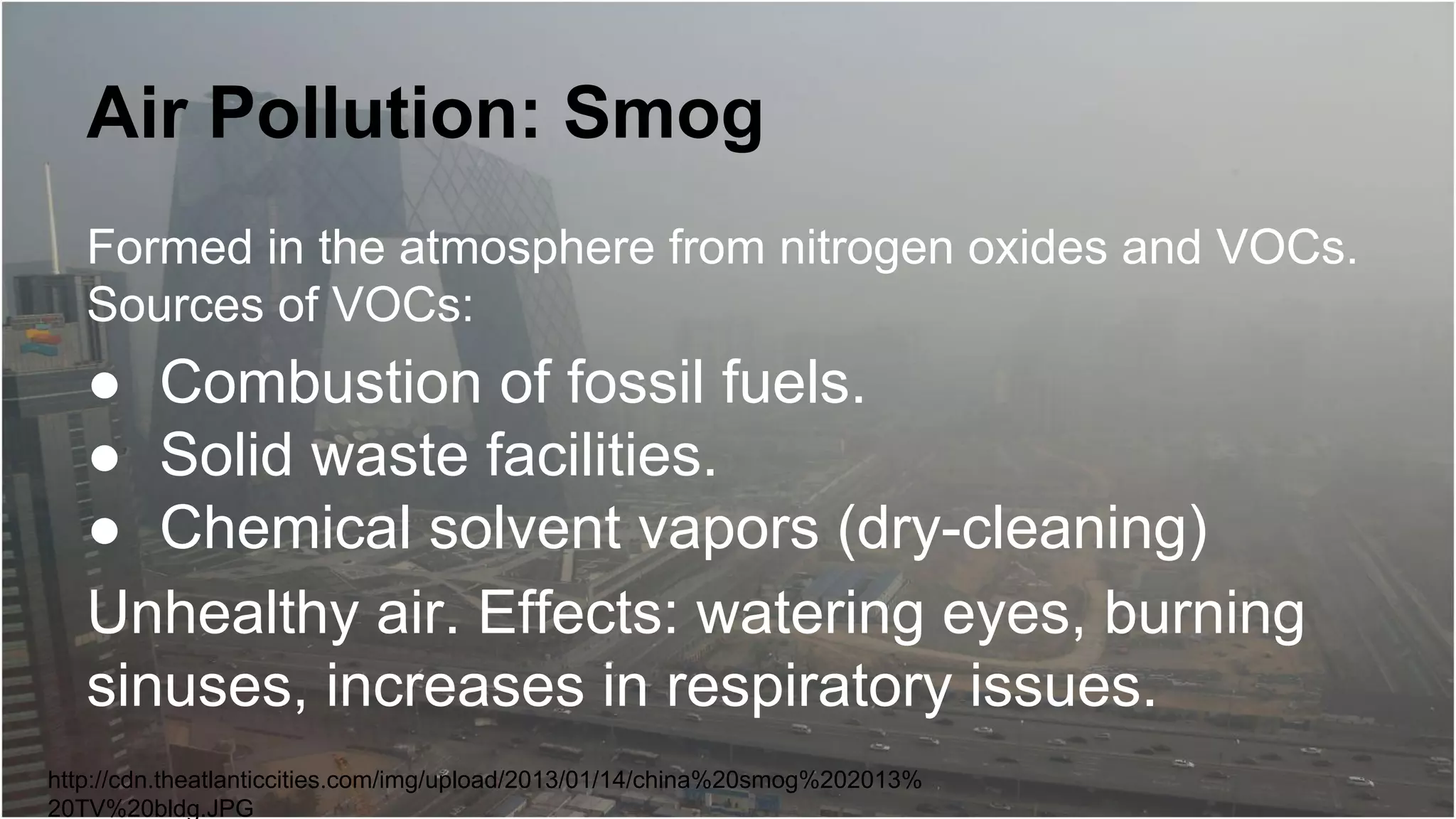
Air Pollution: Smog
Formed in the atmosphere from nitrogen oxides and VOCs.
Sources of VOCs:

● Combustion of fossil fuels.
● Solid waste facilities.
● Chemical solvent vapors (dry-cleaning)
Unhealthy air. Effects: watering eyes, burning
sinuses, increases in respiratory issues.
http://cdn.theatlanticcities.com/img/upload/2013/01/14/china%20smog%202013%
20TV%20bldg.JPG
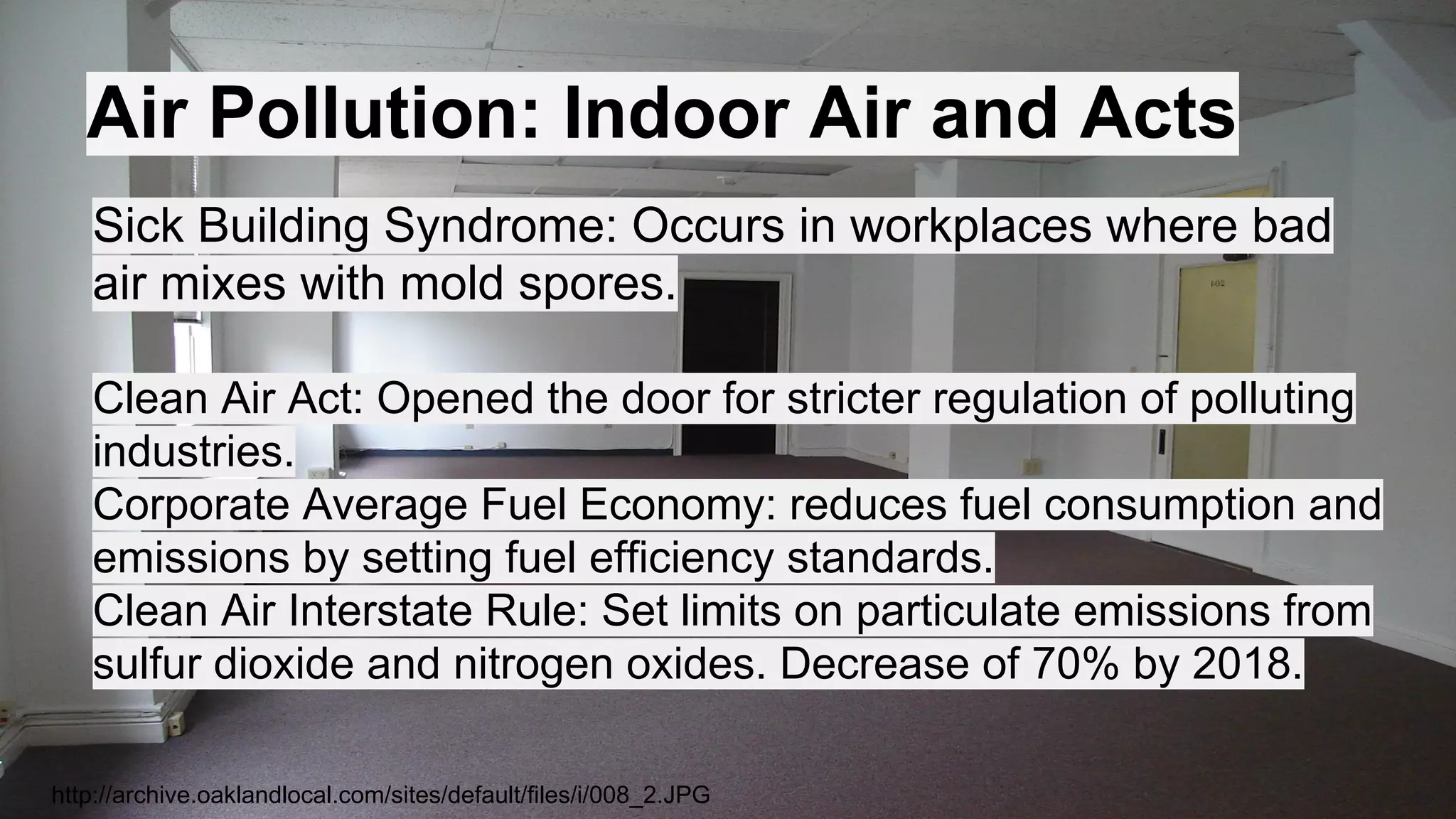
Air Pollution: Indoor Air and Acts
Sick Building Syndrome: Occurs in workplaces where bad
air mixes with mold spores.
Clean Air Act: Opened the door for stricter regulation of polluting
industries.
Corporate Average Fuel Economy: reduces fuel consumption and
emissions by setting fuel efficiency standards.
Clean Air Interstate Rule: Set limits on particulate emissions from
sulfur dioxide and nitrogen oxides. Decrease of 70% by 2018.
http://archive.oaklandlocal.com/sites/default/files/i/008_2.JPG
Water
“Pure Water” only exists in laboratories. Natural
water contains dissolved gases and salts.

Water must contain enough dissolved oxygen
for fish to survive.
http://b-i.forbesimg.com/singularity/files/2013/04/water.jpg
Dissolved Oxygen
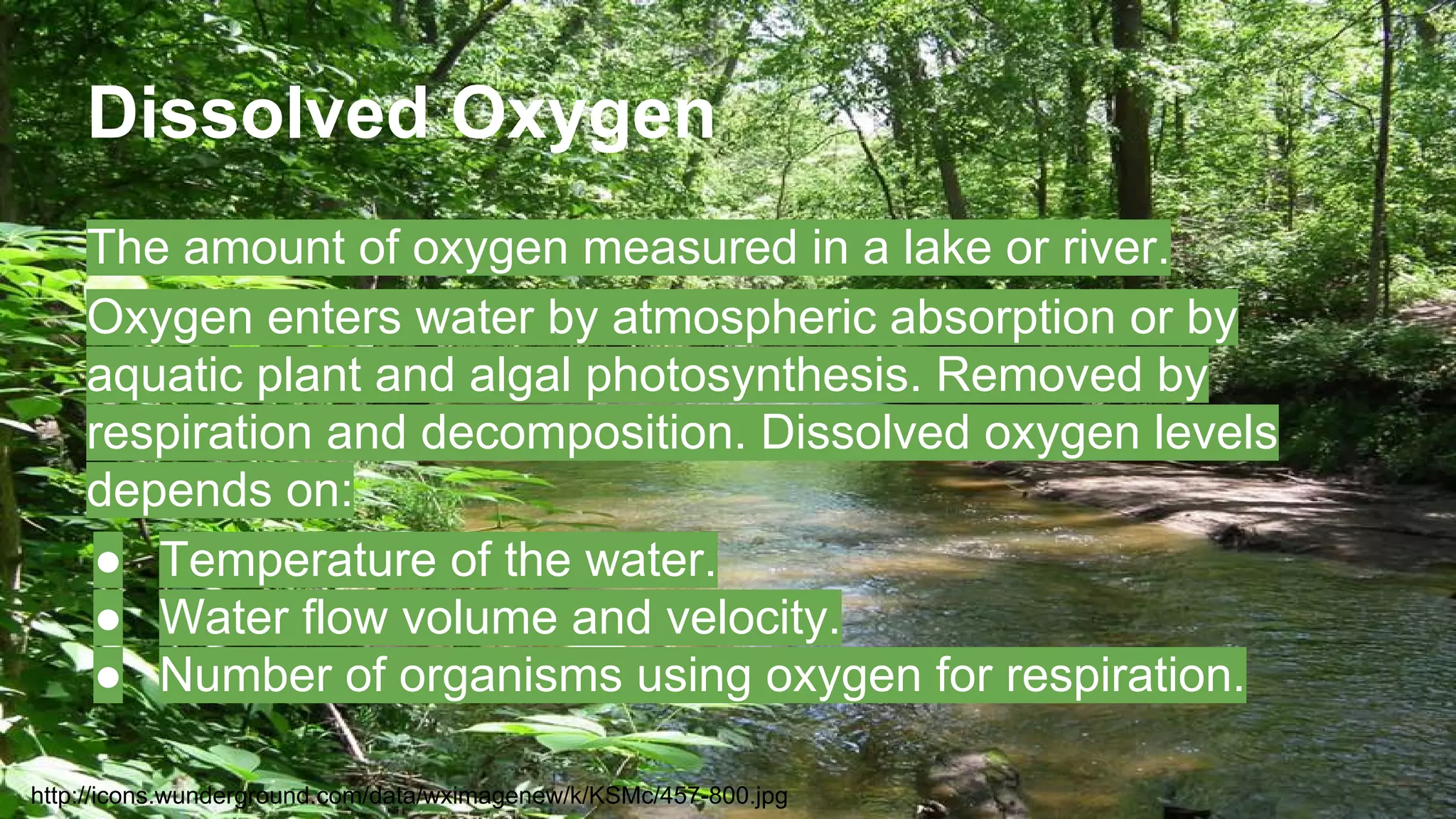
The amount of oxygen measured in a lake or river.
Oxygen enters water by atmospheric absorption or by
aquatic plant and algal photosynthesis. Removed by
respiration and decomposition. Dissolved oxygen levels
depends on:
● Temperature of the water.
● Water flow volume and velocity.
● Number of organisms using oxygen for respiration.
http://icons.wunderground.com/data/wximagenew/k/KSMc/457-800.jpg
Water Pollution
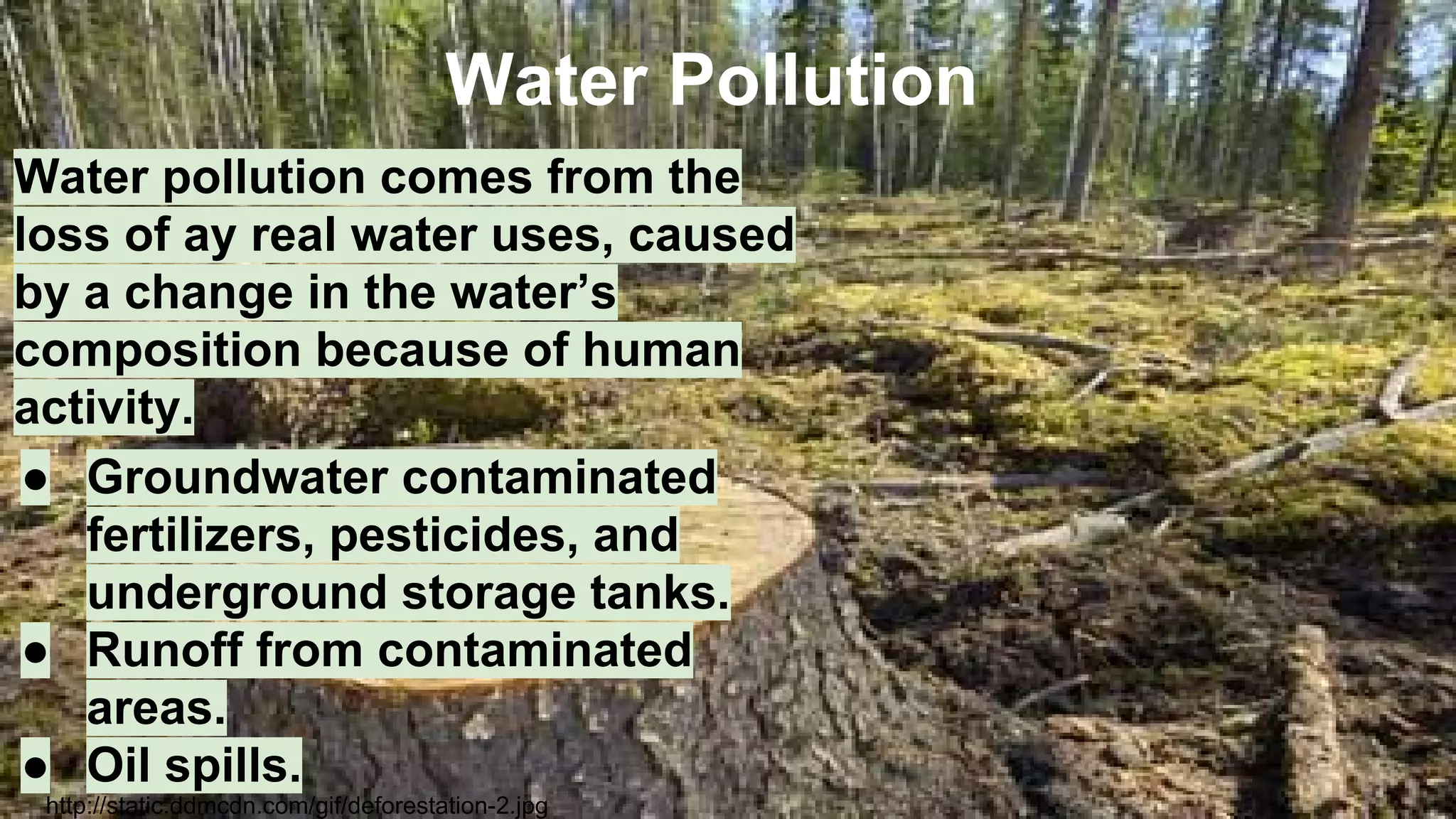
Water pollution comes from the
loss of ay real water uses, caused
by a change in the water’s
composition because of human
activity.
● Groundwater contaminated
fertilizers, pesticides, and
underground storage tanks.
● Runoff from contaminated
areas.
● Oil spills.
http://static.ddmcdn.com/gif/deforestation-2.jpg
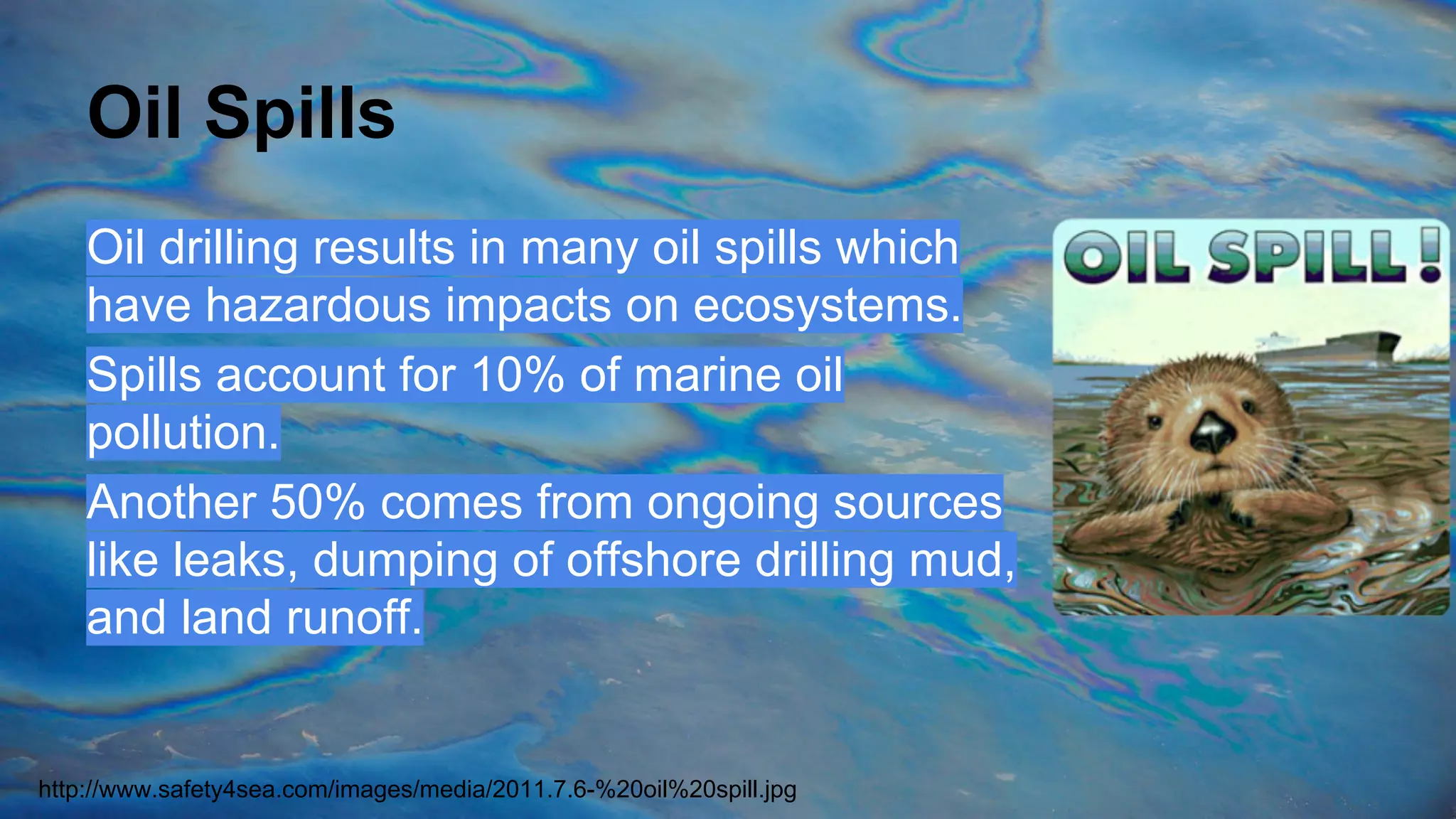
Oil Spills
Oil drilling results in many oil spills which
have hazardous impacts on ecosystems.
Spills account for 10% of marine oil
pollution.
Another 50% comes from ongoing sources
like leaks, dumping of offshore drilling mud,
and land runoff.

http://www.safety4sea.com/images/media/2011.7.6-%20oil%20spill.jpg
Reducing GHGs
http://www.epa.gov/climatechange/reducing-emissions.htm
Daniel Monsalve

Reducing Greenhouse
Gas Emissions.
Daniel Monsalve
Major GHGs
Carbon Dioxide
●
●

The main
greenhouse gas.
Sources
○ Burning of fossil
fuels to generate
electricity.
○ Transportation.
○ Industry.

Methane (CH4)
●
●

The 2nd most common GHG.
Sources
○ Natural gas and petroleum
manufacturing/mining.
○ Agriculture.
○ Landfills.
○ Wetlands are the largest natural
source of methane.
Major GHGs
Nitrous Oxide(N2O)
●
●

5% of US GHG emissions.
Sources
○ Agriculture and soil
management is 69% of
(N2O) emissions.
○ Industry
○ Transportation.

F Gases
●
●
●

Fluorinated gases such as (HFCs),
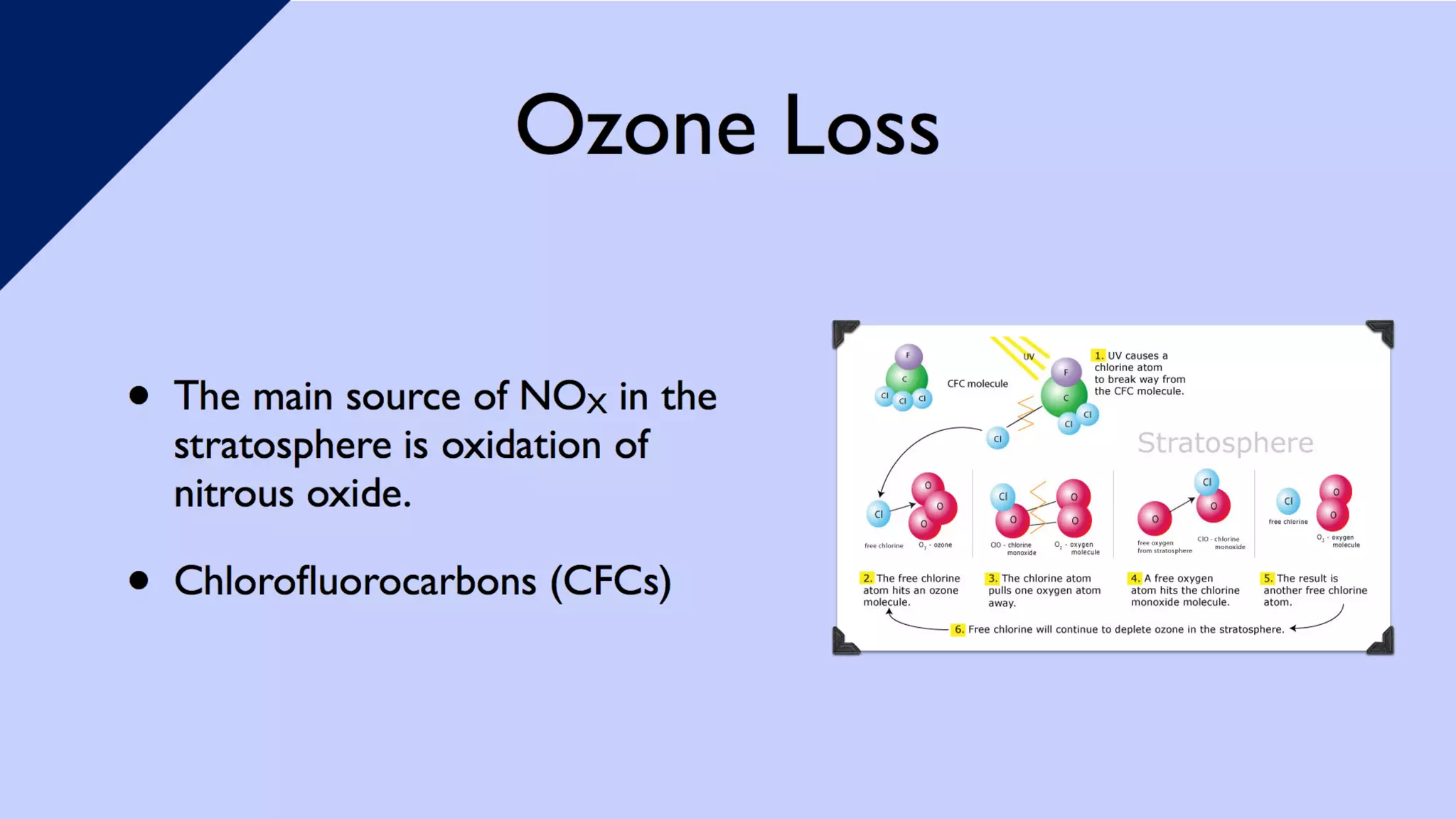
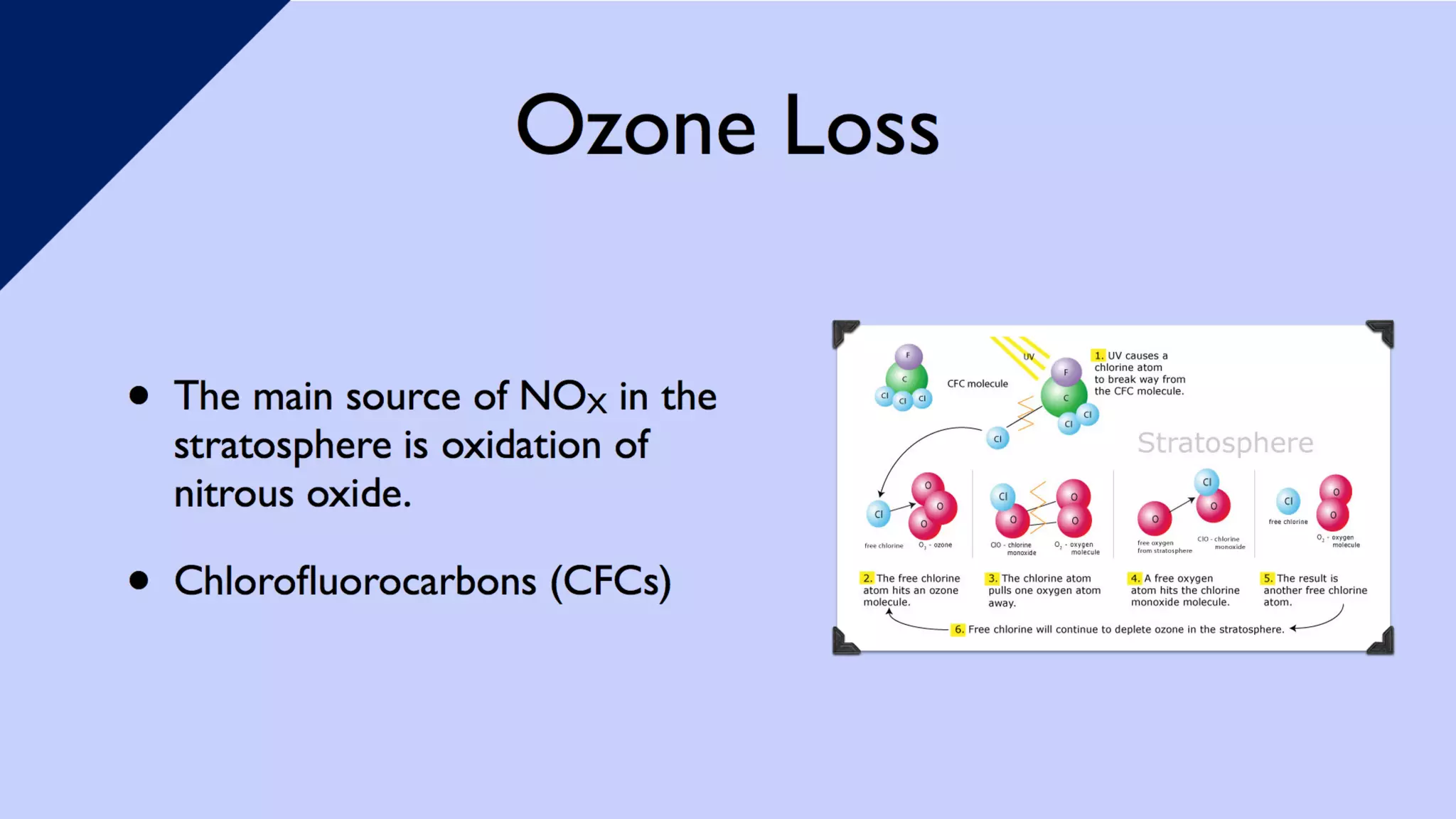
(PFCs), (CFCs).
Have no natural sources.
Sources
○ 84% of F gases emitted are
used as a substitute for ozone
depleting substances. Used for
refrigeration, aerosols, and AC.
Reducing GHGs
●

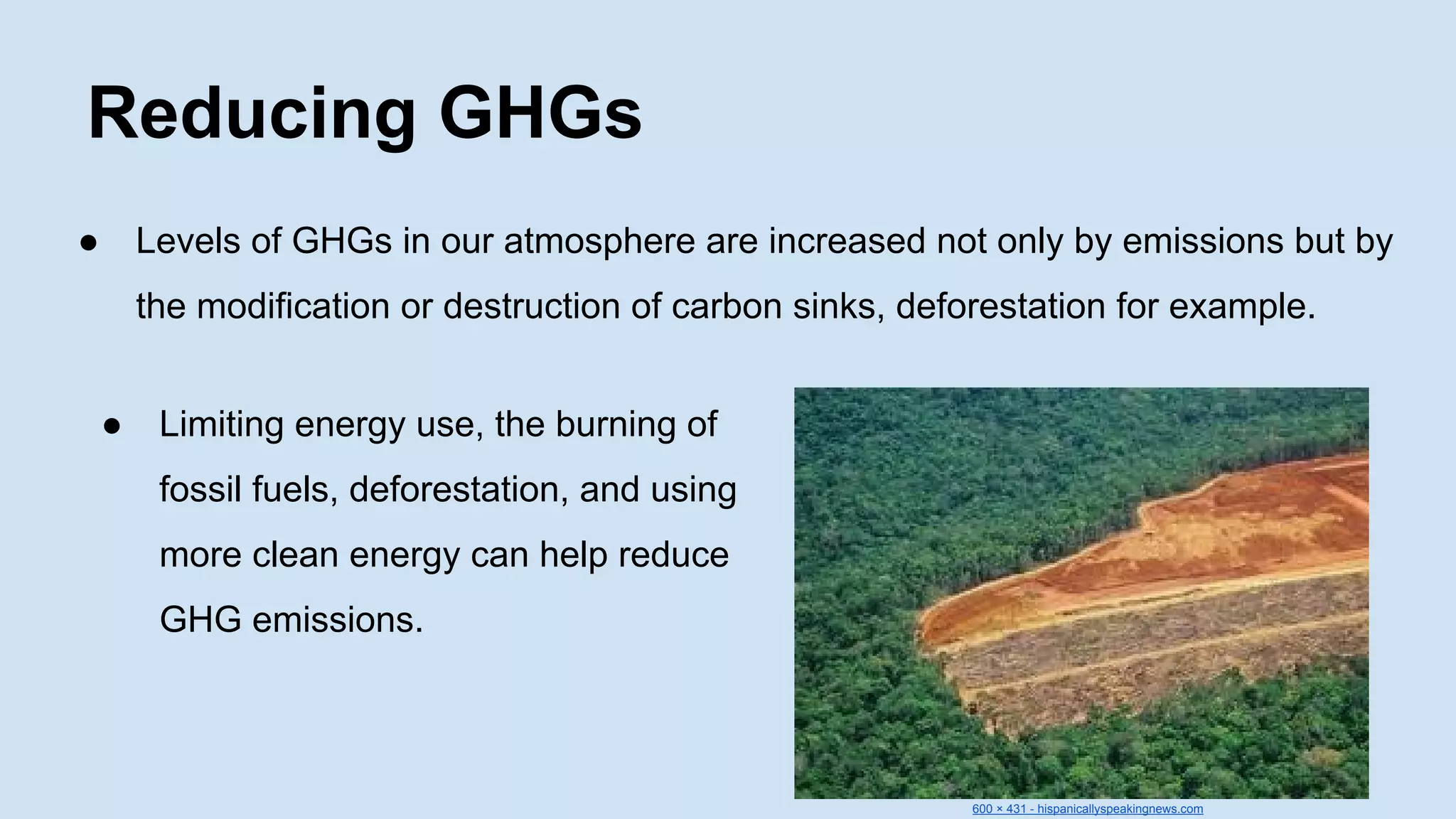
Levels of GHGs in our atmosphere are increased not only by emissions but by
the modification or destruction of carbon sinks, deforestation for example.
●

Limiting energy use, the burning of
fossil fuels, deforestation, and using
more clean energy can help reduce
GHG emissions.

600 × 431 - hispanicallyspeakingnews.com
What Can You Do?
●

Use as little electricity as possible.

●

limit transportation, use public transportation.

●

Ride a bike, use energy efficient cars.

●

Buy local produce, grow your own food.

●

Use eco friendly products.

●

Reduce heating and air conditioning.

●

Spread the word and influence others.
Indoor Air
Quality

Karis Heidebrecht
Pollution Indoors:

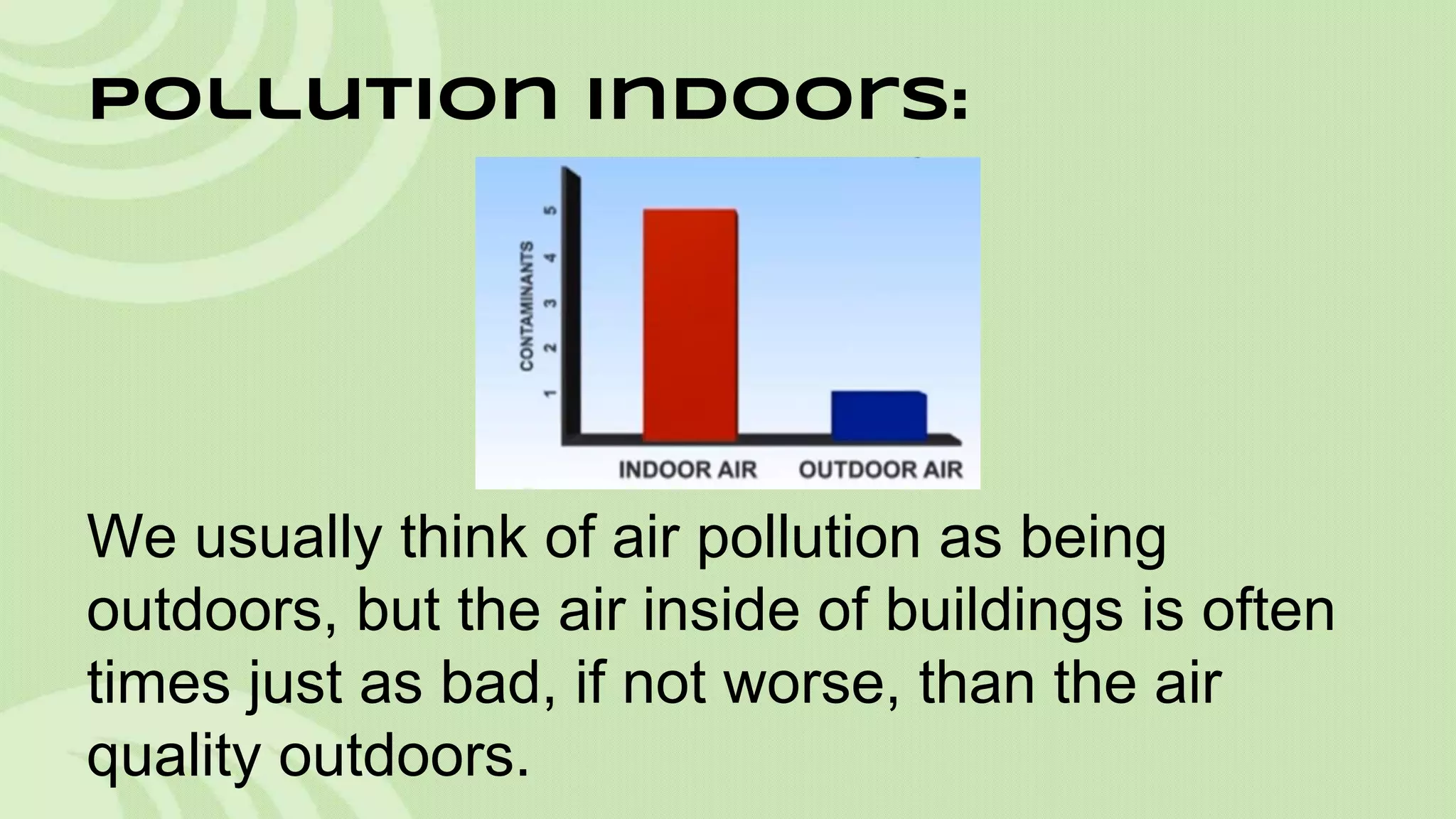
We usually think of air pollution as being
outdoors, but the air inside of buildings is often
times just as bad, if not worse, than the air
quality outdoors.
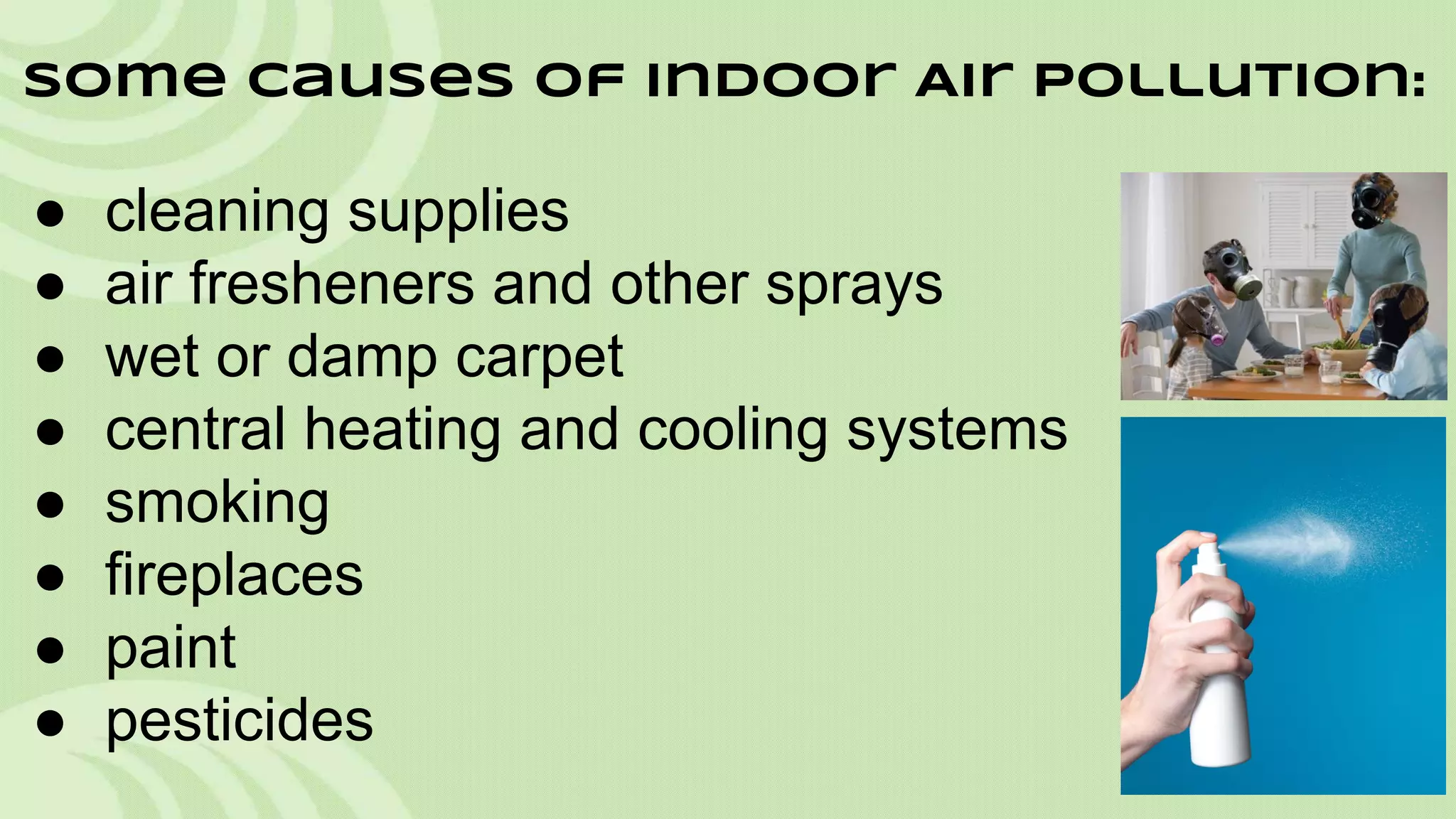
Some Causes of Indoor Air Pollution:

●
●
●
●
●
●
●
●

cleaning supplies
air fresheners and other sprays
wet or damp carpet
central heating and cooling systems
smoking
fireplaces
paint
pesticides
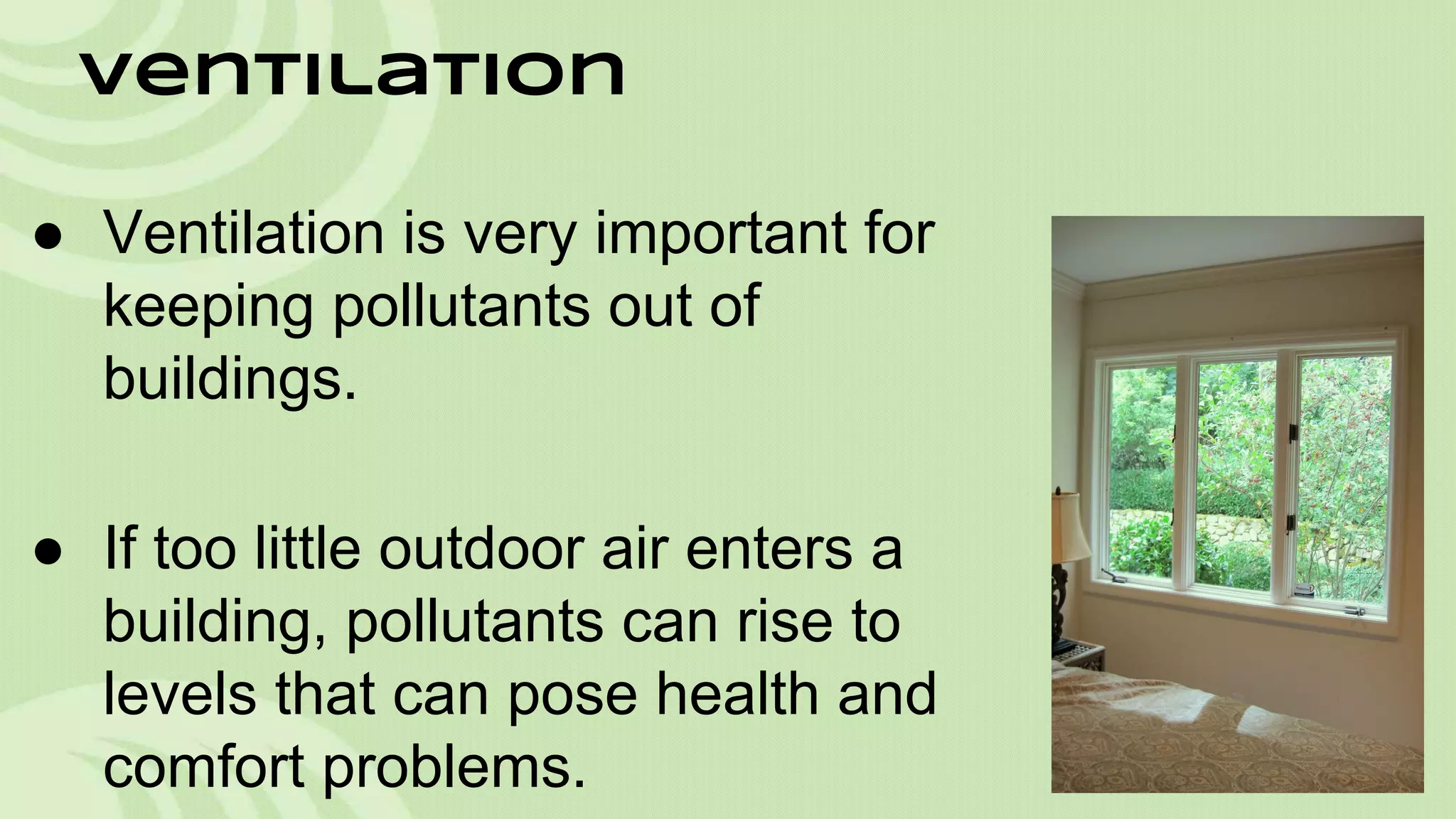
Ventilation
● Ventilation is very important for
keeping pollutants out of
buildings.
● If too little outdoor air enters a
building, pollutants can rise to
levels that can pose health and
comfort problems.
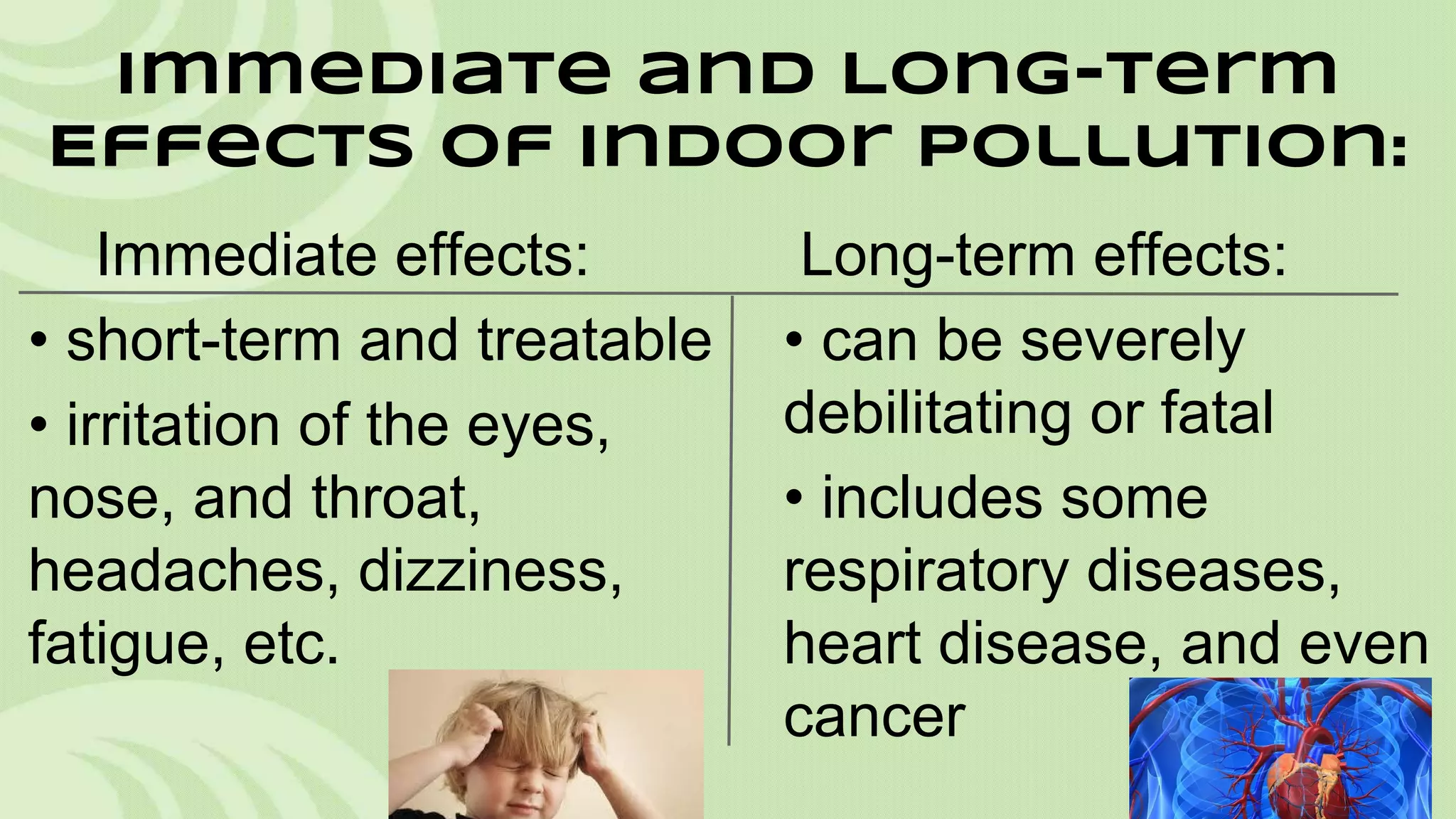
Immediate and Long-Term
Effects of Indoor Pollution:
Immediate effects:
• short-term and treatable
• irritation of the eyes,
nose, and throat,
headaches, dizziness,
fatigue, etc.

Long-term effects:
• can be severely
debilitating or fatal
• includes some
respiratory diseases,
heart disease, and even
cancer
Ozone Layer Protection
http://www.epa.gov/ozone/basicinfo.html
Eve Tovar
http://www.epa.gov/mold/moldguide.html
Unit 11  Pollution
Unit 11  Pollution
Unit 11  Pollution
Unit 11  Pollution
Unit 11  Pollution
Unit 11  Pollution
Unit 11  Pollution
Unit 11  Pollution

Unit 11 Pollution

  • 1.
  • 7.
    Primary & SecondaryAir Pollutants MARIBETH 3•O2+hv --> 2•O3
  • 8.
  • 9.
    What is thedifference? Primary air pollutants are emitted directly into the air from sources. Secondary air pollutants are not directly emitted but forms when other pollutants (primary pollutants) react in the atmosphere.
  • 10.
    Primary Air Pollutants ★ ★ ★ ★ ★ Carbonmonoxide (car exhausts) Sulfur dioxide (combustion of coal) Nitrogen oxides Hydrocarbons Particulate matter (both solid and liquid)
  • 11.
    Secondary Air Pollutants ★Ozone (formed when hydrocarbons (HC) and nitrogen oxides (NOx) combine in the presence of sunlight) ★ NO2 (formed as NO combines with oxygen in the air) ★ Acid rain (formed when sulfur dioxide or nitrogen oxides react with water)
  • 12.
    Carbon monoxide (CO)(Primary) ★ Odorless and Colorless ★ Stops with the process of oxygen from being delivered in blood to the body. ★ It is produced as a result of incomplete burning of carbon-containing fuels including coal, wood, charcoal, natural gas, and fuel oil. ★ Signs of too much CO inhaled are fatigue, headache, weakness, confusion, disorientation, nausea, and dizziness ★ Too much CO can cause death.
  • 13.
    Ground level Ozone(O3) (Secondary) ★ Toxic to both humans and vegetation ★ Triatomic molecule consisting of three oxygen atoms. ★ Hurts the respiratory of animal (humans too?) ★ Ozone in the upper atmosphere protects living organisms by preventing damaging ultraviolet light from reaching the Earth's surface.
  • 14.
  • 27.
    Controlling Air Pollution& Stratospheric Ozone Nicholas Cochrane
  • 40.
    How to MakeYour Keynote the Right Ratio for Doc’s When Making a new keynote click “Slide Size” Select 1920 x 1080 And TADA! Make sure to click the zoom in the lower left and “select fit to window”
  • 41.
    Air Pollution, GHGs,Climate Change & Major Laws and Treaties Victoria Owen
  • 46.
  • 47.
    Air Pollution: Smog Formedin the atmosphere from nitrogen oxides and VOCs. Sources of VOCs: ● Combustion of fossil fuels. ● Solid waste facilities. ● Chemical solvent vapors (dry-cleaning) Unhealthy air. Effects: watering eyes, burning sinuses, increases in respiratory issues. http://cdn.theatlanticcities.com/img/upload/2013/01/14/china%20smog%202013% 20TV%20bldg.JPG
  • 48.
    Air Pollution: IndoorAir and Acts Sick Building Syndrome: Occurs in workplaces where bad air mixes with mold spores. Clean Air Act: Opened the door for stricter regulation of polluting industries. Corporate Average Fuel Economy: reduces fuel consumption and emissions by setting fuel efficiency standards. Clean Air Interstate Rule: Set limits on particulate emissions from sulfur dioxide and nitrogen oxides. Decrease of 70% by 2018. http://archive.oaklandlocal.com/sites/default/files/i/008_2.JPG
  • 49.
    Water “Pure Water” onlyexists in laboratories. Natural water contains dissolved gases and salts. Water must contain enough dissolved oxygen for fish to survive. http://b-i.forbesimg.com/singularity/files/2013/04/water.jpg
  • 50.
    Dissolved Oxygen The amountof oxygen measured in a lake or river. Oxygen enters water by atmospheric absorption or by aquatic plant and algal photosynthesis. Removed by respiration and decomposition. Dissolved oxygen levels depends on: ● Temperature of the water. ● Water flow volume and velocity. ● Number of organisms using oxygen for respiration. http://icons.wunderground.com/data/wximagenew/k/KSMc/457-800.jpg
  • 51.
    Water Pollution Water pollutioncomes from the loss of ay real water uses, caused by a change in the water’s composition because of human activity. ● Groundwater contaminated fertilizers, pesticides, and underground storage tanks. ● Runoff from contaminated areas. ● Oil spills. http://static.ddmcdn.com/gif/deforestation-2.jpg
  • 52.
    Oil Spills Oil drillingresults in many oil spills which have hazardous impacts on ecosystems. Spills account for 10% of marine oil pollution. Another 50% comes from ongoing sources like leaks, dumping of offshore drilling mud, and land runoff. http://www.safety4sea.com/images/media/2011.7.6-%20oil%20spill.jpg
  • 65.
  • 66.
    Major GHGs Carbon Dioxide ● ● Themain greenhouse gas. Sources ○ Burning of fossil fuels to generate electricity. ○ Transportation. ○ Industry. Methane (CH4) ● ● The 2nd most common GHG. Sources ○ Natural gas and petroleum manufacturing/mining. ○ Agriculture. ○ Landfills. ○ Wetlands are the largest natural source of methane.
  • 67.
    Major GHGs Nitrous Oxide(N2O) ● ● 5%of US GHG emissions. Sources ○ Agriculture and soil management is 69% of (N2O) emissions. ○ Industry ○ Transportation. F Gases ● ● ● Fluorinated gases such as (HFCs), (PFCs), (CFCs). Have no natural sources. Sources ○ 84% of F gases emitted are used as a substitute for ozone depleting substances. Used for refrigeration, aerosols, and AC.
  • 68.
    Reducing GHGs ● Levels ofGHGs in our atmosphere are increased not only by emissions but by the modification or destruction of carbon sinks, deforestation for example. ● Limiting energy use, the burning of fossil fuels, deforestation, and using more clean energy can help reduce GHG emissions. 600 × 431 - hispanicallyspeakingnews.com
  • 69.
    What Can YouDo? ● Use as little electricity as possible. ● limit transportation, use public transportation. ● Ride a bike, use energy efficient cars. ● Buy local produce, grow your own food. ● Use eco friendly products. ● Reduce heating and air conditioning. ● Spread the word and influence others.
  • 70.
  • 71.
    Pollution Indoors: We usuallythink of air pollution as being outdoors, but the air inside of buildings is often times just as bad, if not worse, than the air quality outdoors.
  • 72.
    Some Causes ofIndoor Air Pollution: ● ● ● ● ● ● ● ● cleaning supplies air fresheners and other sprays wet or damp carpet central heating and cooling systems smoking fireplaces paint pesticides
  • 73.
    Ventilation ● Ventilation isvery important for keeping pollutants out of buildings. ● If too little outdoor air enters a building, pollutants can rise to levels that can pose health and comfort problems.
  • 74.
    Immediate and Long-Term Effectsof Indoor Pollution: Immediate effects: • short-term and treatable • irritation of the eyes, nose, and throat, headaches, dizziness, fatigue, etc. Long-term effects: • can be severely debilitating or fatal • includes some respiratory diseases, heart disease, and even cancer
  • 75.
  • 77.