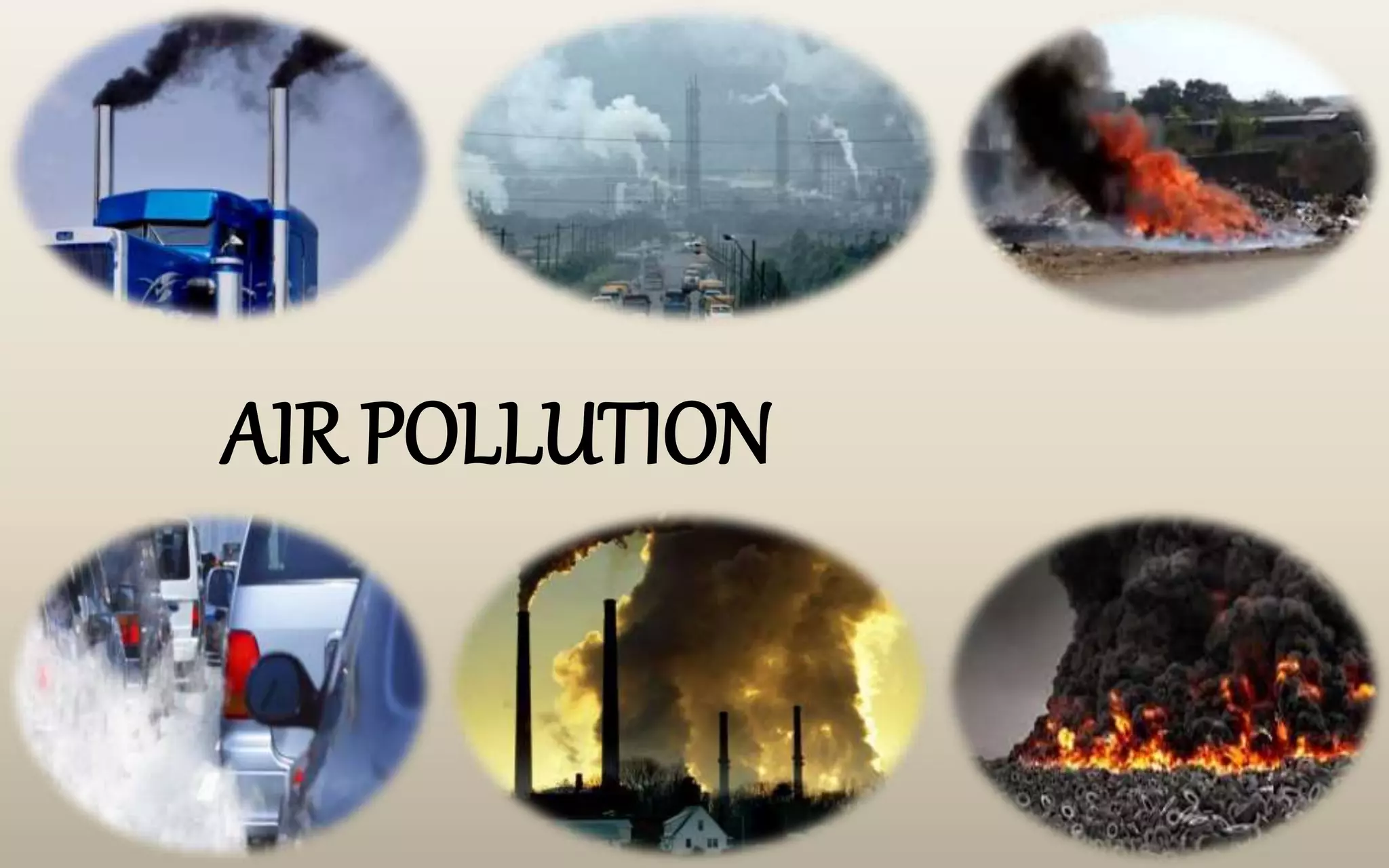
AIR POLLUTION
It is an undesirable change in
the physical , chemical or
biological characteristics of air .
Air pollution is cause due to an
increase in the content of
harmful substances in air such
as oxides of nitrogen, sulphor
etc
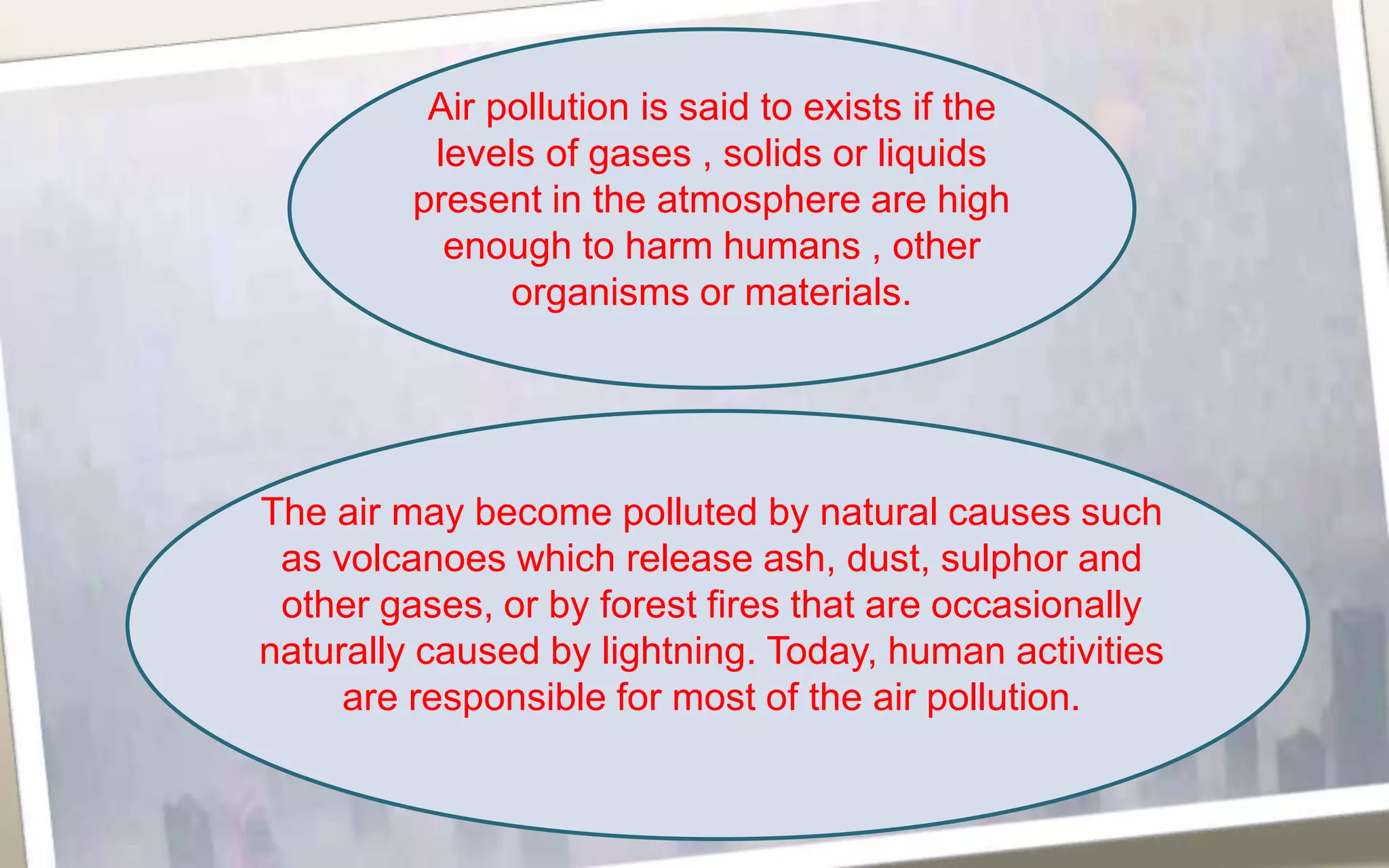
Air pollution is said to exists if the
levels of gases , solids or liquids
present in the atmosphere are high
enough to harm humans , other
organisms or materials.
The air may become polluted by natural causes such
as volcanoes which release ash, dust, sulphor and
other gases, or by forest fires that are occasionally
naturally caused by lightning. Today, human activities
are responsible for most of the air pollution.
AIR POLLUTANT
An air pollutant is a substance in the air that
adversely effect human beings and eco-system.
Pollutants can categorized in to two ; Primary pollutants and
Secondary pollutants.
Primaryairpollutants
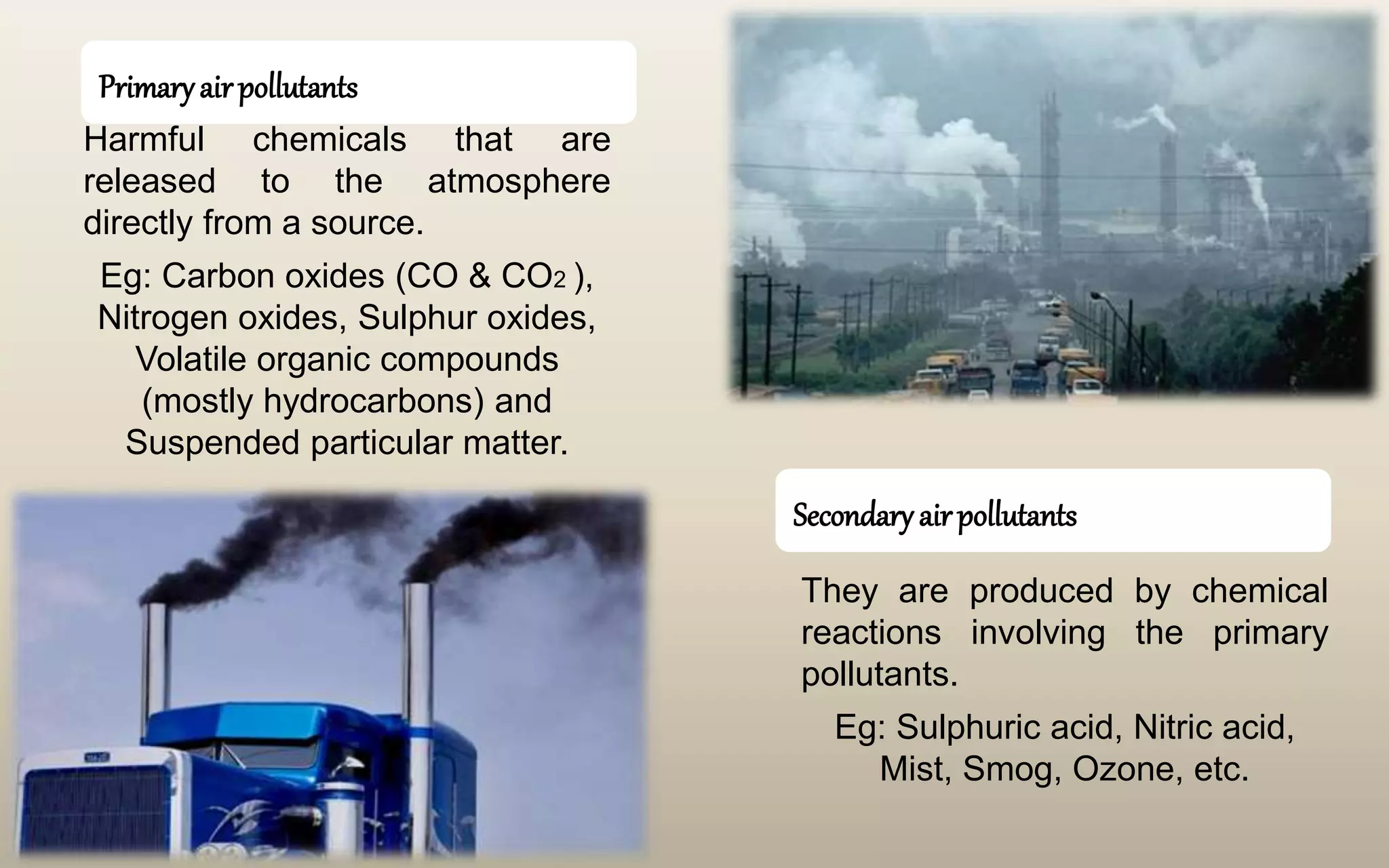
Harmful chemicals that are
released to the atmosphere
directly from a source.
Eg: Carbon oxides (CO & CO2 ),
Nitrogen oxides, Sulphur oxides,
Volatile organic compounds
(mostly hydrocarbons) and
Suspended particular matter.
Secondaryairpollutants
They are produced by chemical
reactions involving the primary
pollutants.
Eg: Sulphuric acid, Nitric acid,
Mist, Smog, Ozone, etc.
Causes and effects of
Indoor
Air Pollution
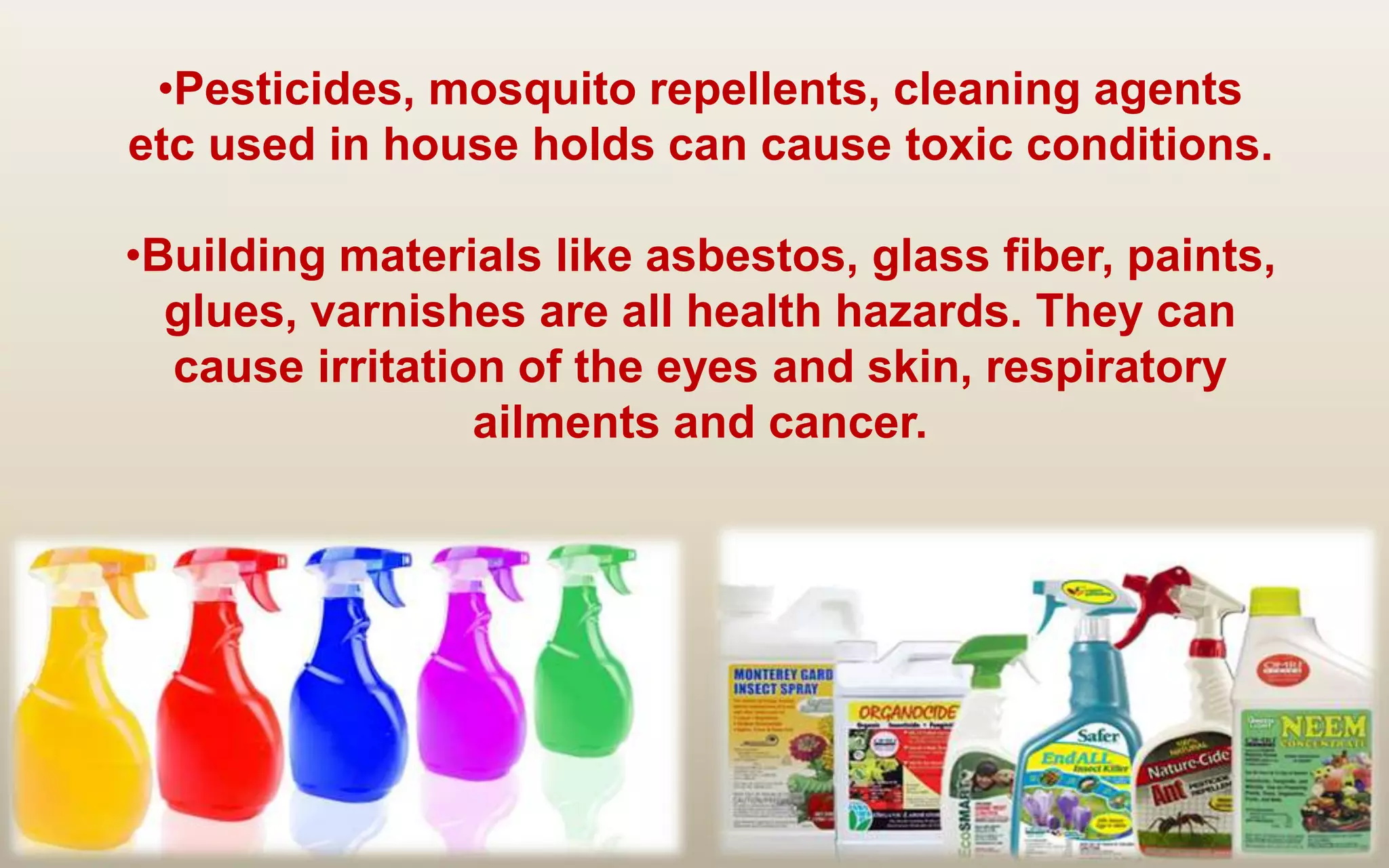
•Pesticides, mosquito repellents, cleaning agents
etc used in house holds can cause toxic conditions.
•Building materials like asbestos, glass fiber, paints,
glues, varnishes are all health hazards. They can
cause irritation of the eyes and skin, respiratory
ailments and cancer.
•Air conditioned rooms
and offices cause a
broad spectrum of
health complaints,
because the sealed
space accumulates
various contaminants.
•Cigarette smoke affects
both smokers and non-
smokers.
•The common pollutants in
urban interiors are
cigarette smoke, gases
from stoves, formaldehyde
(from carpets and
furniture), pesticides,
cleaning solvents and
ozone (from photocopies).
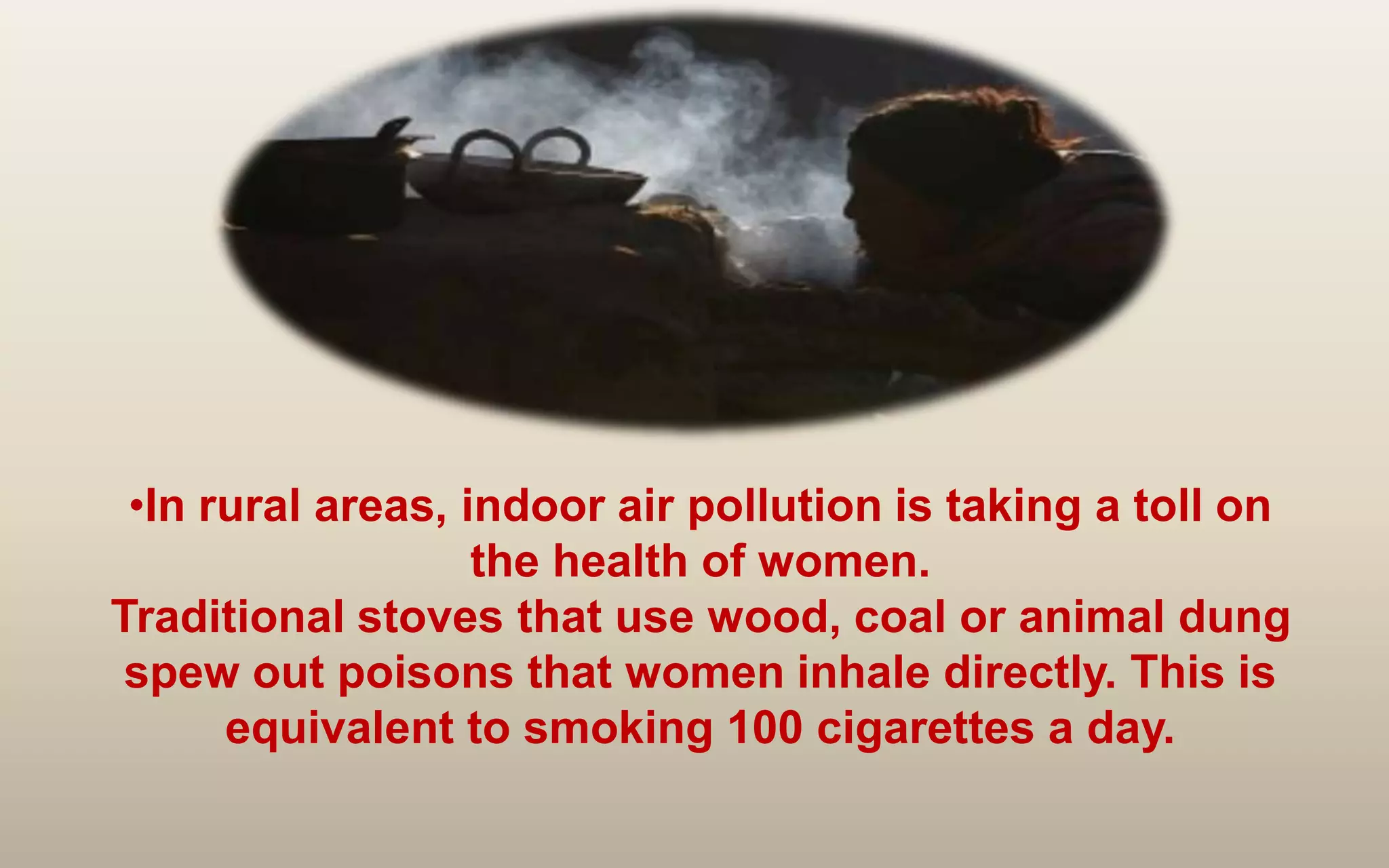
•In rural areas, indoor air pollution is taking a toll on
the health of women.
Traditional stoves that use wood, coal or animal dung
spew out poisons that women inhale directly. This is
equivalent to smoking 100 cigarettes a day.
Causes and effects of
Outdoor Air Pollution
The sources of outdoor air pollution are :
•Burning of fossil fuels in automobiles, power stations,
chemical, metal and paper industries.
•Mining activities leading to dust as well as fires.
•Natural emissions from animals, decaying organic matter.
•Burning of bio-fuels, tropical rain forests, wastes of all kinds
etc.
•Disasters like earthquakes, volcano eruptions, dust storms,
leak of gases (like Bhopal case) and armed conflicts.
•Festivals (eg : Diwali with its crackers).
•Dust storms are typically formed in desert areas and from
there they can spread to places thousands of kilometers
away.
•Industries and automobiles are the main contributors to
outdoor air pollution across the world.
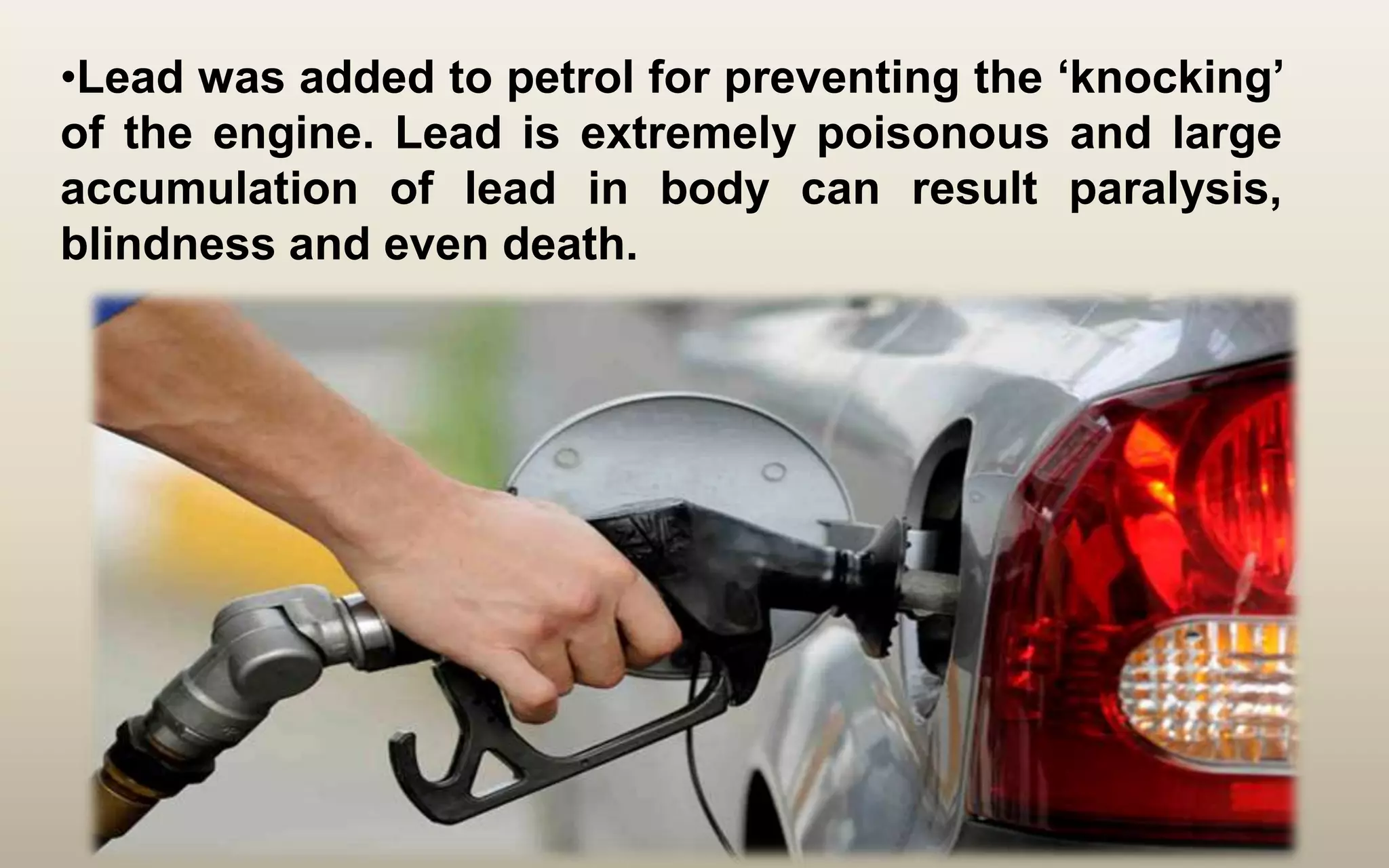
•Lead was added to petrol for preventing the ‘knocking’
of the engine. Lead is extremely poisonous and large
accumulation of lead in body can result paralysis,
blindness and even death.
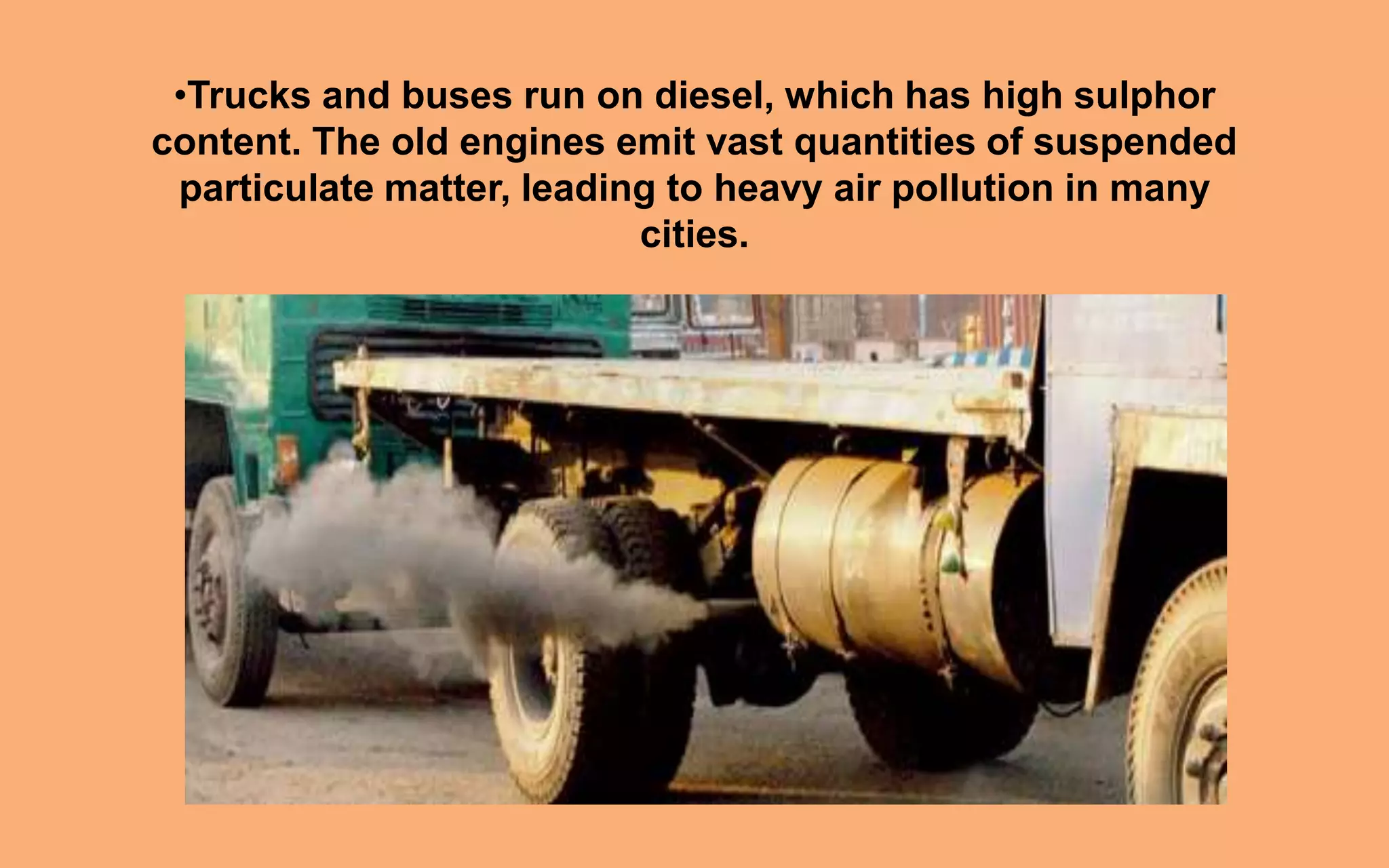
•Trucks and buses run on diesel, which has high sulphor
content. The old engines emit vast quantities of suspended
particulate matter, leading to heavy air pollution in many
cities.
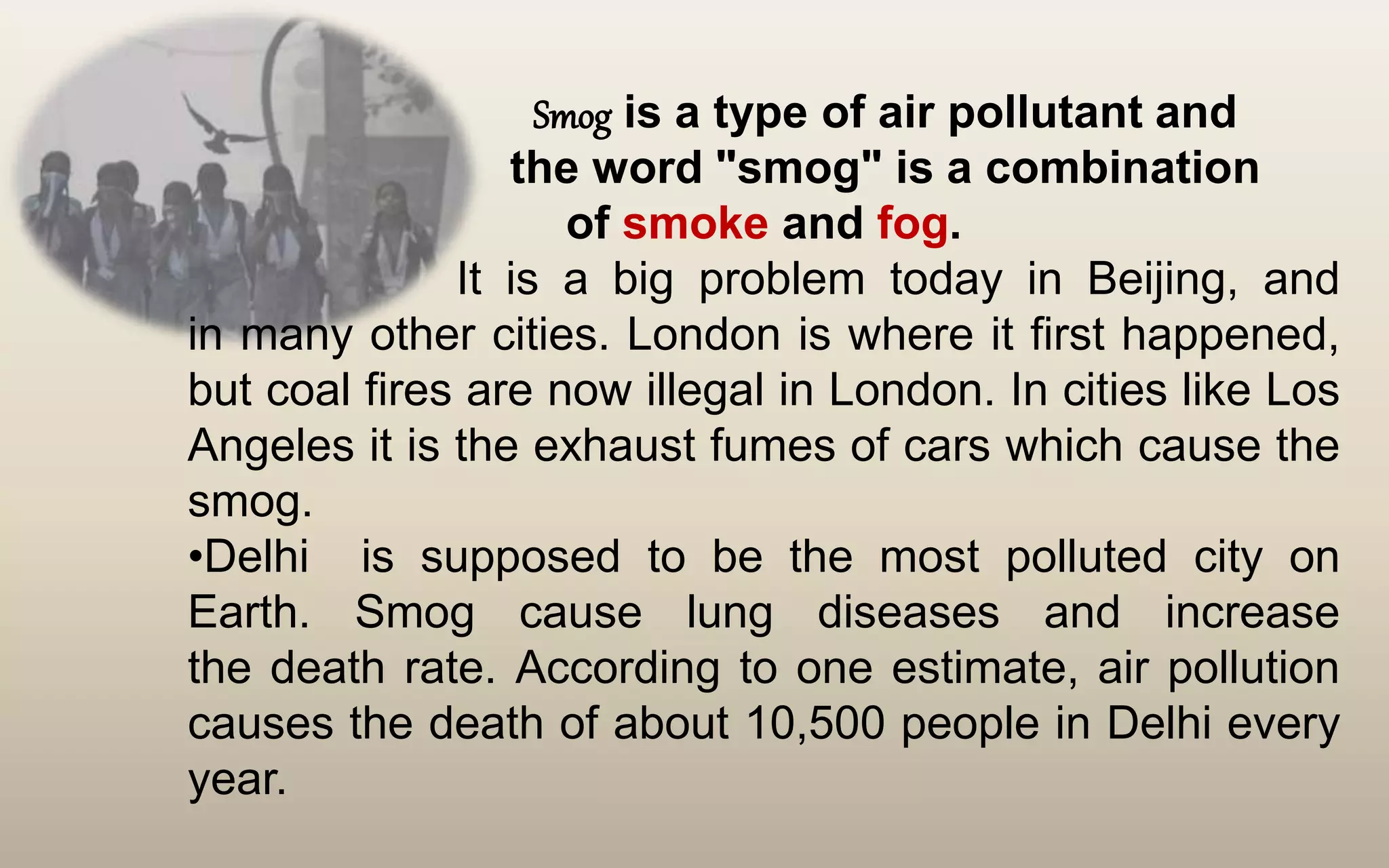
Smog is a type of air pollutant and
the word "smog" is a combination
of smoke and fog.
It is a big problem today in Beijing, and
in many other cities. London is where it first happened,
but coal fires are now illegal in London. In cities like Los
Angeles it is the exhaust fumes of cars which cause the
smog.
•Delhi is supposed to be the most polluted city on
Earth. Smog cause lung diseases and increase
the death rate. According to one estimate, air pollution
causes the death of about 10,500 people in Delhi every
year.
•Polluted air is effecting the
health of the people,
particularly children. In Delhi
alone, one out of every 10
school children suffers from
asthma.
•Air pollutants irritate the eyes
and cause inflammation of the
respiratory tract. If the person
already suffers from respiratory
illness, air pollution may lead to
the condition becoming chronic
at later stage. It can also lead
to skin allergies.
•Many pollutants also depress the immune
system, making the body more prone to
infections. CO from automobile emissions can
cause headache at lower levels and mental
impairment and even death at higher levels.
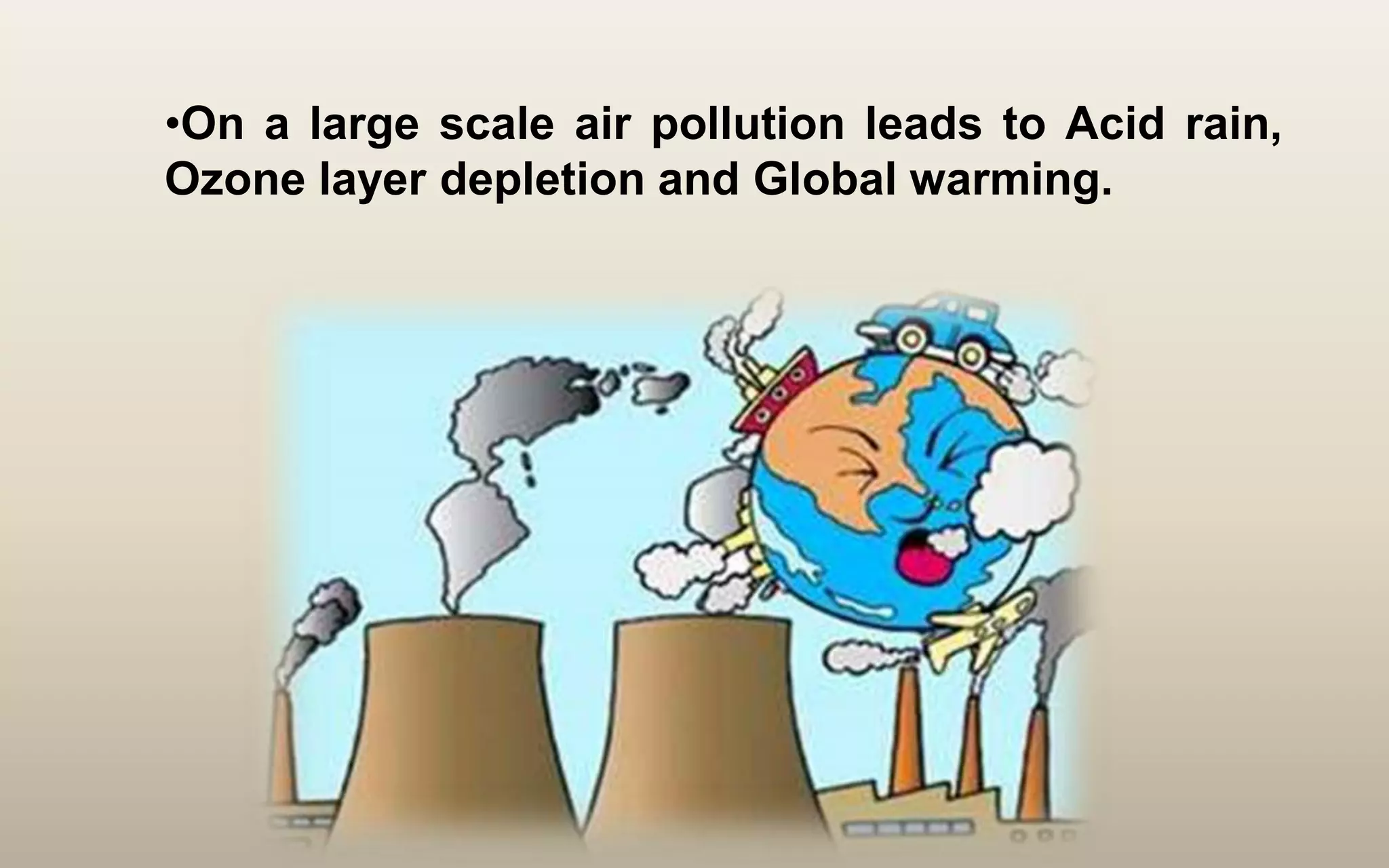
•On a large scale air pollution leads to Acid rain,
Ozone layer depletion and Global warming.
Control Measures
for
Air Pollution
•Give greater emphasis on pollution
prevention rather than control.
•Reduce the use of fossil fuels and increase
the use of renewable energy. Use fuels with
low sulphor and ash content.
•improve the quality of vehicular fuel. Use
un-leaded petrol.
•Encourage pupil to use public transport,
walk or use a cycle as opposed to private
vehicles.
•Ensure that houses, schools, restaurants,
and playgrounds are not located on busy
streets.
• Plant trees along busy streets as they
remove particulates, CO2 and absorb
noise.
•Industries and waste disposal sites should be
situated outside the city, preferably on the
downwind of the city.
•Catalytic converters should be used to control
emissions of CO and hydrocarbons.
In industrial centers :
•Emission rate should be restricted to permissible
levels by each and every industry.
•Ensure sufficient supply of oxygen to the
combustion chamber and adequate temperature
so that the combustion is complete there by
eliminating much of the smoke consisting or
partly burned ashes and dust.
•Use mechanical devices such as scrubbers,
cyclones, bag houses and electro-static
precipitators in manufacturing processes.
•The air pollutants collected must be carefully
disposed. The factory fumes are dealt with
chemical treatment.

Air pollution : causes, effects and solutions of air pollution.

  • 1.
  • 2.
    It is anundesirable change in the physical , chemical or biological characteristics of air . Air pollution is cause due to an increase in the content of harmful substances in air such as oxides of nitrogen, sulphor etc
  • 3.
    Air pollution issaid to exists if the levels of gases , solids or liquids present in the atmosphere are high enough to harm humans , other organisms or materials. The air may become polluted by natural causes such as volcanoes which release ash, dust, sulphor and other gases, or by forest fires that are occasionally naturally caused by lightning. Today, human activities are responsible for most of the air pollution.
  • 4.
    AIR POLLUTANT An airpollutant is a substance in the air that adversely effect human beings and eco-system. Pollutants can categorized in to two ; Primary pollutants and Secondary pollutants.
  • 5.
    Primaryairpollutants Harmful chemicals thatare released to the atmosphere directly from a source. Eg: Carbon oxides (CO & CO2 ), Nitrogen oxides, Sulphur oxides, Volatile organic compounds (mostly hydrocarbons) and Suspended particular matter. Secondaryairpollutants They are produced by chemical reactions involving the primary pollutants. Eg: Sulphuric acid, Nitric acid, Mist, Smog, Ozone, etc.
  • 6.
    Causes and effectsof Indoor Air Pollution
  • 7.
    •Pesticides, mosquito repellents,cleaning agents etc used in house holds can cause toxic conditions. •Building materials like asbestos, glass fiber, paints, glues, varnishes are all health hazards. They can cause irritation of the eyes and skin, respiratory ailments and cancer.
  • 8.
    •Air conditioned rooms andoffices cause a broad spectrum of health complaints, because the sealed space accumulates various contaminants.
  • 9.
    •Cigarette smoke affects bothsmokers and non- smokers. •The common pollutants in urban interiors are cigarette smoke, gases from stoves, formaldehyde (from carpets and furniture), pesticides, cleaning solvents and ozone (from photocopies).
  • 10.
    •In rural areas,indoor air pollution is taking a toll on the health of women. Traditional stoves that use wood, coal or animal dung spew out poisons that women inhale directly. This is equivalent to smoking 100 cigarettes a day.
  • 11.
    Causes and effectsof Outdoor Air Pollution
  • 12.
    The sources ofoutdoor air pollution are : •Burning of fossil fuels in automobiles, power stations, chemical, metal and paper industries. •Mining activities leading to dust as well as fires. •Natural emissions from animals, decaying organic matter. •Burning of bio-fuels, tropical rain forests, wastes of all kinds etc. •Disasters like earthquakes, volcano eruptions, dust storms, leak of gases (like Bhopal case) and armed conflicts. •Festivals (eg : Diwali with its crackers). •Dust storms are typically formed in desert areas and from there they can spread to places thousands of kilometers away. •Industries and automobiles are the main contributors to outdoor air pollution across the world.
  • 13.
    •Lead was addedto petrol for preventing the ‘knocking’ of the engine. Lead is extremely poisonous and large accumulation of lead in body can result paralysis, blindness and even death.
  • 14.
    •Trucks and busesrun on diesel, which has high sulphor content. The old engines emit vast quantities of suspended particulate matter, leading to heavy air pollution in many cities.
  • 15.
    Smog is atype of air pollutant and the word "smog" is a combination of smoke and fog. It is a big problem today in Beijing, and in many other cities. London is where it first happened, but coal fires are now illegal in London. In cities like Los Angeles it is the exhaust fumes of cars which cause the smog. •Delhi is supposed to be the most polluted city on Earth. Smog cause lung diseases and increase the death rate. According to one estimate, air pollution causes the death of about 10,500 people in Delhi every year.
  • 16.
    •Polluted air iseffecting the health of the people, particularly children. In Delhi alone, one out of every 10 school children suffers from asthma.
  • 17.
    •Air pollutants irritatethe eyes and cause inflammation of the respiratory tract. If the person already suffers from respiratory illness, air pollution may lead to the condition becoming chronic at later stage. It can also lead to skin allergies.
  • 18.
    •Many pollutants alsodepress the immune system, making the body more prone to infections. CO from automobile emissions can cause headache at lower levels and mental impairment and even death at higher levels.
  • 19.
    •On a largescale air pollution leads to Acid rain, Ozone layer depletion and Global warming.
  • 20.
  • 21.
    •Give greater emphasison pollution prevention rather than control. •Reduce the use of fossil fuels and increase the use of renewable energy. Use fuels with low sulphor and ash content.
  • 22.
    •improve the qualityof vehicular fuel. Use un-leaded petrol. •Encourage pupil to use public transport, walk or use a cycle as opposed to private vehicles. •Ensure that houses, schools, restaurants, and playgrounds are not located on busy streets. • Plant trees along busy streets as they remove particulates, CO2 and absorb noise.
  • 23.
    •Industries and wastedisposal sites should be situated outside the city, preferably on the downwind of the city. •Catalytic converters should be used to control emissions of CO and hydrocarbons.
  • 24.
    In industrial centers: •Emission rate should be restricted to permissible levels by each and every industry. •Ensure sufficient supply of oxygen to the combustion chamber and adequate temperature so that the combustion is complete there by eliminating much of the smoke consisting or partly burned ashes and dust.
  • 25.
    •Use mechanical devicessuch as scrubbers, cyclones, bag houses and electro-static precipitators in manufacturing processes. •The air pollutants collected must be carefully disposed. The factory fumes are dealt with chemical treatment.