Downloaded 26 times
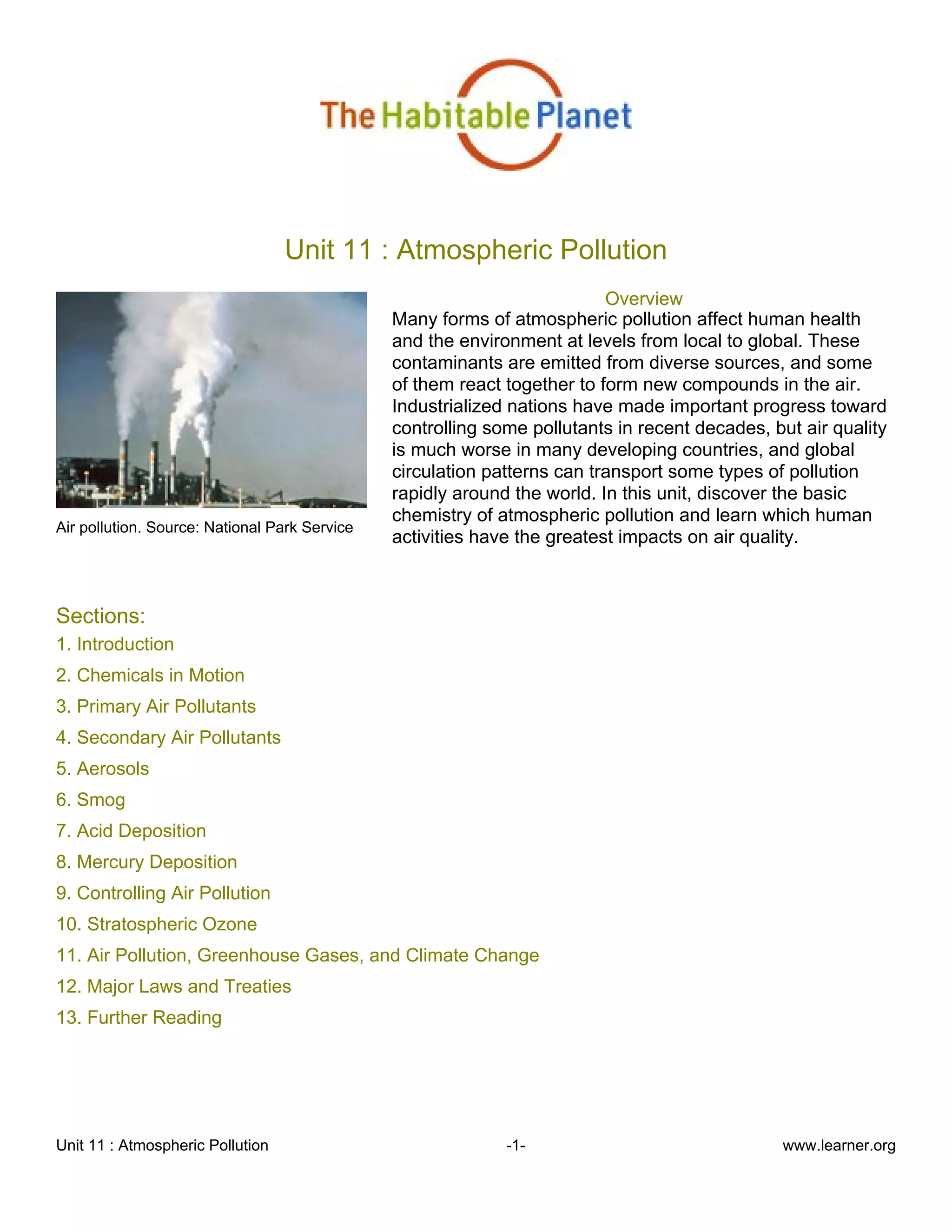
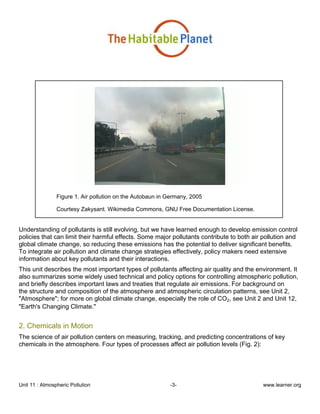
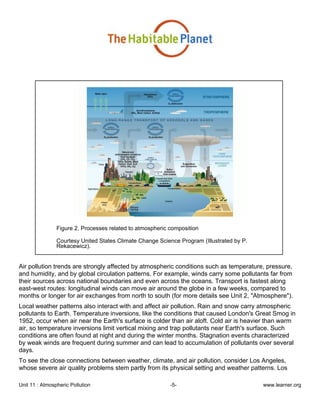
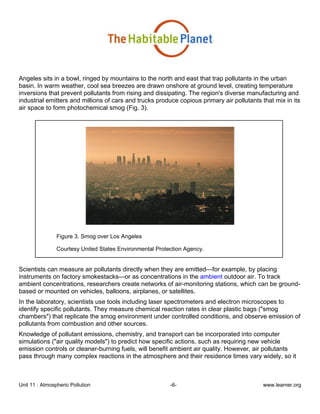
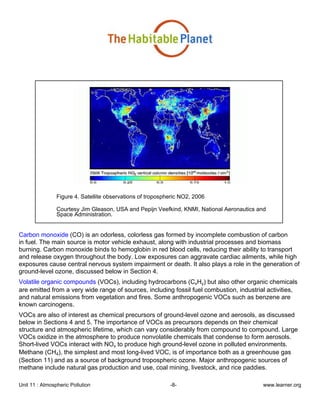
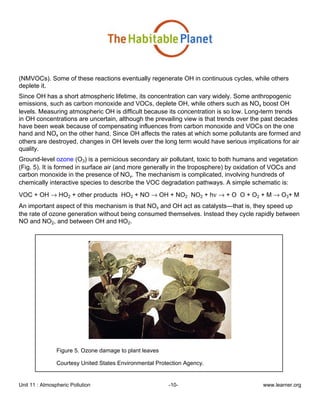
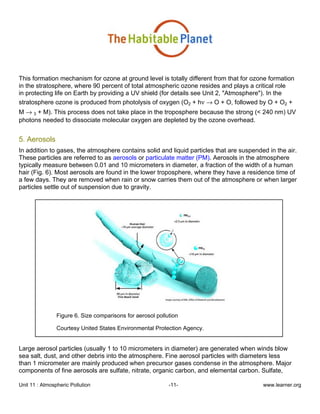
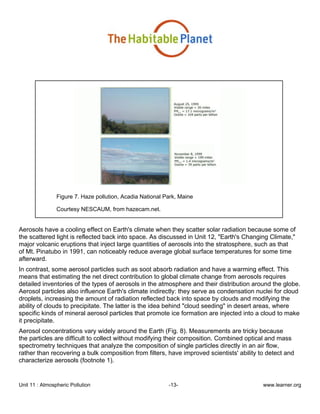
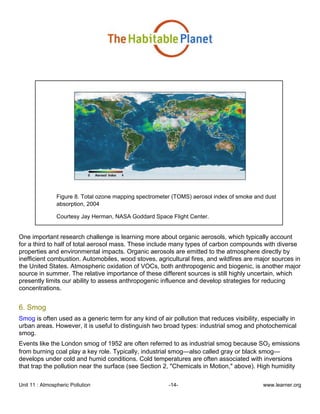
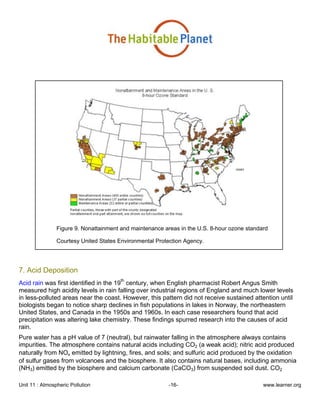
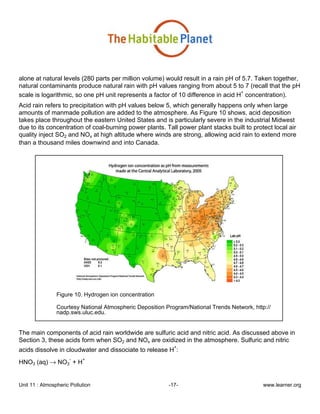
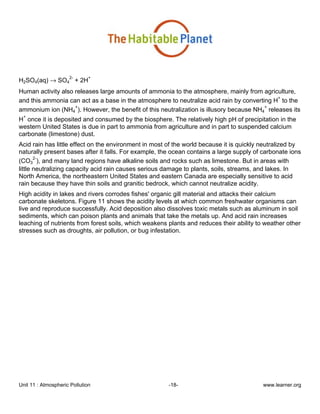
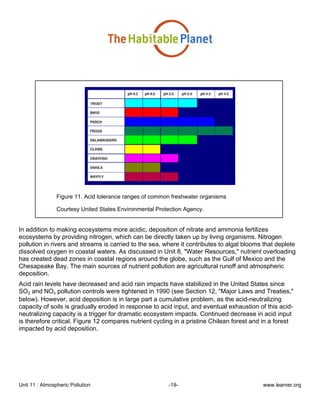
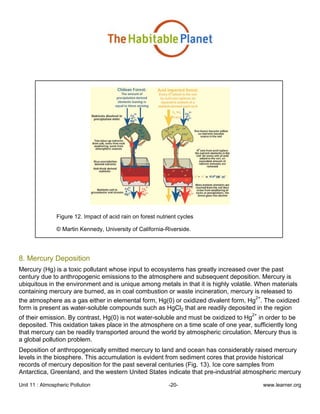
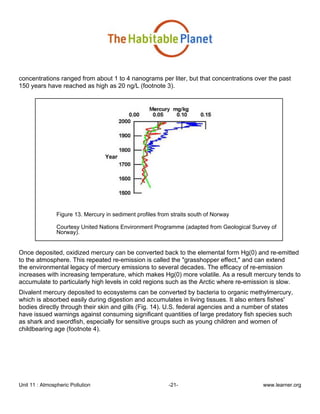
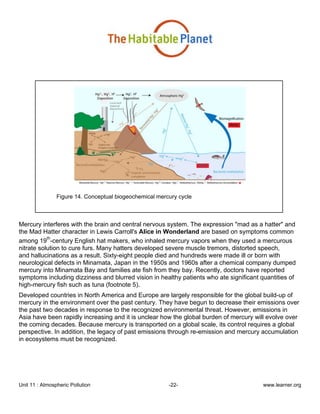
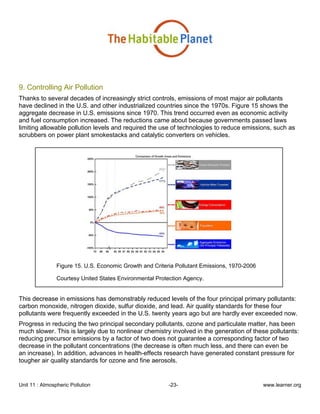
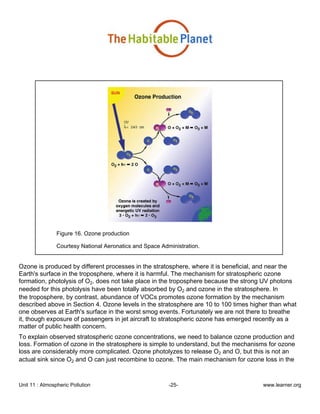
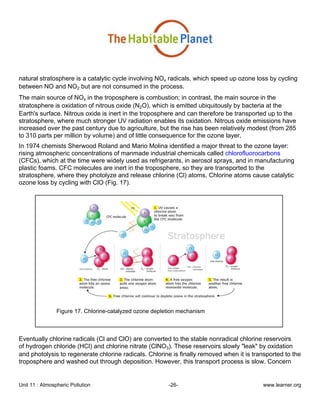
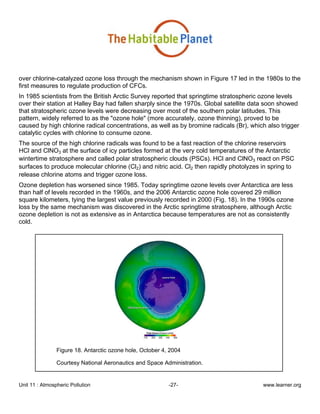

This document provides an overview of atmospheric pollution. It discusses how pollutants are emitted from various sources and undergo chemical reactions and transport processes in the atmosphere. Some key points: - Primary pollutants like sulfur dioxide, nitrogen oxides, and particulate matter are directly emitted from combustion and industrial activities. Secondary pollutants like ground-level ozone and aerosols form through atmospheric reactions between primary pollutants. - Events like London's Great Smog of 1952 demonstrated the deadly impacts of air pollution, spurring early controls on emissions. While pollution levels have declined in some areas, air quality problems persist and some pollutants contribute to climate change. - Atmospheric chemistry and transport are complex


