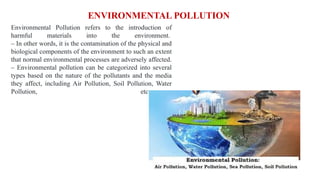
Environmental Pollution refersto the introduction of
harmful materials into the environment.
– In other words, it is the contamination of the physical and
biological components of the environment to such an extent
that normal environmental processes are adversely affected.
– Environmental pollution can be categorized into several
types based on the nature of the pollutants and the media
they affect, including Air Pollution, Soil Pollution, Water
Pollution, etc.
ENVIRONMENTAL POLLUTION
2.
Environmental pollution can,therefore, be defined as any undesirable change in the
physical, chemical or biological characteristics of any component of the environment (air,
water, soil), which can cause harmful effects on various forms of life or property
AIR POLLUTION
WATER POLLUTION
NOISE POLLUTION
CHEMICAL POLLUTION
NOISE POLLUTION
3.
• “Air Pollutionis the release of pollutants such as gases, particles, biological
molecules, etc. into the air that is harmful to human health and the environment.”
• Air pollution refers to any physical, chemical or biological change in the air. It is
the contamination of air by harmful gases, dust and smoke which affects plants,
animals and humans drastically.
• There is a certain percentage of gases present in the atmosphere. An increase or
decrease in the composition of these gases is harmful to survival. This imbalance
in the gaseous composition has resulted in an increase in earth’s temperature,
which is known as global warming. Example CO2 PREVIOUS (280 PPM)
RECENT (480 PPM)
AIR POLLUTION
4.
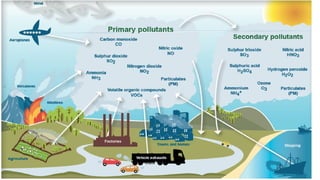
Types of AirPollutants
• Primary Pollutants
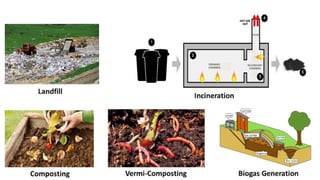
The pollutants that directly cause air pollution are known as primary
pollutants. Sulphur-dioxide emitted from factories is a primary
pollutant.
• Secondary Pollutants
The pollutants formed by the intermingling and reaction of primary
pollutants are known as secondary pollutants. Smog, formed by the
intermingling of smoke and fog, is a secondary pollutant.
5.
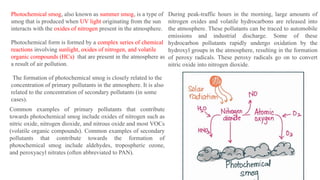
Photochemical smog, alsoknown as summer smog, is a type of
smog that is produced when UV light originating from the sun
interacts with the oxides of nitrogen present in the atmosphere.
Photochemical form is formed by a complex series of chemical
reactions involving sunlight, oxides of nitrogen, and volatile
organic compounds (HCs) that are present in the atmosphere as
a result of air pollution.
The formation of photochemical smog is closely related to the
concentration of primary pollutants in the atmosphere. It is also
related to the concentration of secondary pollutants (in some
cases).
Common examples of primary pollutants that contribute
towards photochemical smog include oxides of nitrogen such as
nitric oxide, nitrogen dioxide, and nitrous oxide and most VOCs
(volatile organic compounds). Common examples of secondary
pollutants that contribute towards the formation of
photochemical smog include aldehydes, tropospheric ozone,
and peroxyacyl nitrates (often abbreviated to PAN).
During peak-traffic hours in the morning, large amounts of
nitrogen oxides and volatile hydrocarbons are released into
the atmosphere. These pollutants can be traced to automobile
emissions and industrial discharge. Some of these
hydrocarbon pollutants rapidly undergo oxidation by the
hydroxyl groups in the atmosphere, resulting in the formation
of peroxy radicals. These peroxy radicals go on to convert
nitric oxide into nitrogen dioxide.
7.
Causes of AirPollution
Following are the important causes of air pollution:
Burning of Fossil Fuels
The combustion of fossil fuels emits a large amount of Sulphur
dioxide. Carbon monoxide released by incomplete combustion of
fossil fuels also results in air pollution.
Automobiles
The gases emitted from vehicles such as jeeps, trucks, cars, buses,
etc. pollute the environment. These are the major sources of
greenhouse gases and also result in diseases among individuals.
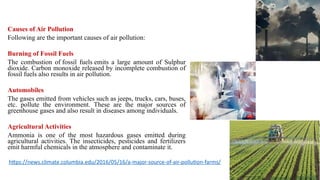
Agricultural Activities
Ammonia is one of the most hazardous gases emitted during
agricultural activities. The insecticides, pesticides and fertilizers
emit harmful chemicals in the atmosphere and contaminate it.
https://news.climate.columbia.edu/2016/05/16/a-major-source-of-air-pollution-farms/
8.
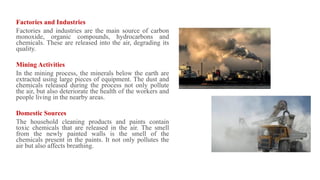
Factories and Industries
Factoriesand industries are the main source of carbon
monoxide, organic compounds, hydrocarbons and
chemicals. These are released into the air, degrading its
quality.
Mining Activities
In the mining process, the minerals below the earth are
extracted using large pieces of equipment. The dust and
chemicals released during the process not only pollute
the air, but also deteriorate the health of the workers and
people living in the nearby areas.
Domestic Sources
The household cleaning products and paints contain
toxic chemicals that are released in the air. The smell
from the newly painted walls is the smell of the
chemicals present in the paints. It not only pollutes the
air but also affects breathing.
9.
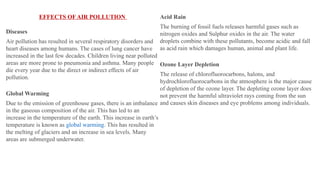
EFFECTS OF AIRPOLLUTION
Diseases
Air pollution has resulted in several respiratory disorders and
heart diseases among humans. The cases of lung cancer have
increased in the last few decades. Children living near polluted
areas are more prone to pneumonia and asthma. Many people
die every year due to the direct or indirect effects of air
pollution.
Global Warming
Due to the emission of greenhouse gases, there is an imbalance
in the gaseous composition of the air. This has led to an
increase in the temperature of the earth. This increase in earth’s
temperature is known as global warming. This has resulted in
the melting of glaciers and an increase in sea levels. Many
areas are submerged underwater.
Acid Rain
The burning of fossil fuels releases harmful gases such as
nitrogen oxides and Sulphur oxides in the air. The water
droplets combine with these pollutants, become acidic and fall
as acid rain which damages human, animal and plant life.
Ozone Layer Depletion
The release of chlorofluorocarbons, halons, and
hydrochlorofluorocarbons in the atmosphere is the major cause
of depletion of the ozone layer. The depleting ozone layer does
not prevent the harmful ultraviolet rays coming from the sun
and causes skin diseases and eye problems among individuals.
10.
Air Pollution Control
AirPollution Control
Following are the measures one should adopt, to control air pollution:
Preventive measures
Avoid Using Vehicles
People should avoid using vehicles for shorter distances. Rather, they should prefer public modes
of transport to travel from one place to another. This not only prevents pollution, but also
conserves energy.
Energy Conservation
A large number of fossil fuels are burnt to generate electricity. Therefore, do not forget to switch
off the electrical appliances when not in use. Thus, you can save the environment at the individual
level. Use of energy-efficient devices such as CFLs also controls pollution to a greater level.
Use of Clean Energy Resources
The use of solar, wind and geothermal energies reduce air pollution at a larger level. Various
countries, including India, have implemented the use of these resources as a step towards a
cleaner environment.
11.
Other air pollutioncontrol measures include:
1.By minimizing and reducing the use of fire and fire products.
2.Since industrial emissions are one of the major causes of air pollution, the pollutants can be controlled or treated at
the source itself to reduce its effects. For example, if the reactions of a certain raw material yield a pollutant, then the
raw materials can be substituted with other less polluting materials.
3.Fuel substitution is another way of controlling air pollution. In many parts of India, petrol and diesel are being
replaced by CNG – Compressed Natural Gas fueled vehicles. These are mostly adopted by vehicles that aren’t fully
operating with ideal emission engines.
4.Although there are many practices in India, which focus on repairing the quality of air, most of them are either
forgotten or not being enforced properly. There are still a lot of vehicles on roads which haven’t been tested for
vehicle emissions.
5.Another way of controlling air pollution caused by industries is to modify and maintain existing pieces of
equipment so that the emission of pollutants is minimized.
6.Sometimes controlling pollutants at the source is not possible. In that case, we can have process control equipment
to control the pollution.
7.A very effective way of controlling air pollution is by diluting the air pollutants.
8.The last and the best way of reducing the ill effects of air pollution is tree plantation. Plants and trees reduce a large
number of pollutants in the air. Ideally, planting trees in areas of high pollution levels will be extremely effective.
12.
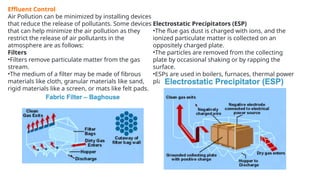
Effluent Control
Air Pollutioncan be minimized by installing devices
that reduce the release of pollutants. Some devices
that can help minimize the air pollution as they
restrict the release of air pollutants in the
atmosphere are as follows:
Filters
•Filters remove particulate matter from the gas
stream.
•The medium of a filter may be made of fibrous
materials like cloth, granular materials like sand,
rigid materials like a screen, or mats like felt pads.
Electrostatic Precipitators (ESP)
•The flue gas dust is charged with ions, and the
ionized particulate matter is collected on an
oppositely charged plate.
•The particles are removed from the collecting
plate by occasional shaking or by rapping the
surface.
•ESPs are used in boilers, furnaces, thermal power
plants, cement factories, steel plants, etc.
13.
Scrubber
•It is asystem that removes harmful materials from
industrial exhaust gases before they are released into
the environment.
•Scrubbers help prevent the formation of acid rain by
removing acidic gases from the exhaust before they
are released into the sky.
•These are mainly of 2 types:
• Wet Scrubbing: The removal of harmful
components of exhausted flue gases by
spraying a liquid substance through the gas.
• Dry Scrubbing: The removal of harmful
components of exhausted flue gases by
introducing a solid substance to the gas –
generally in powdered form.
14.
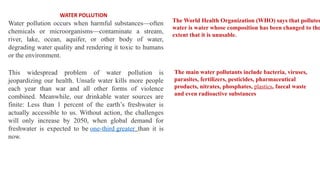
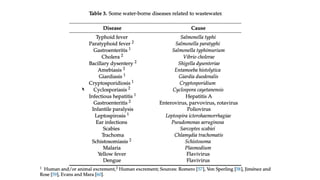
Water pollution occurswhen harmful substances—often
chemicals or microorganisms—contaminate a stream,
river, lake, ocean, aquifer, or other body of water,
degrading water quality and rendering it toxic to humans
or the environment.
This widespread problem of water pollution is
jeopardizing our health. Unsafe water kills more people
each year than war and all other forms of violence
combined. Meanwhile, our drinkable water sources are
finite: Less than 1 percent of the earth’s freshwater is
actually accessible to us. Without action, the challenges
will only increase by 2050, when global demand for
freshwater is expected to be one-third greater than it is
now.
The World Health Organization (WHO) says that polluted
water is water whose composition has been changed to the
extent that it is unusable.
The main water pollutants include bacteria, viruses,
parasites, fertilizers, pesticides, pharmaceutical
products, nitrates, phosphates, plastics, faecal waste
and even radioactive substances
WATER POLLUTION
15.
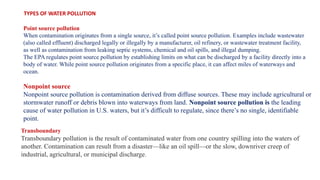
TYPES OF WATERPOLLUTION
Point source pollution
When contamination originates from a single source, it’s called point source pollution. Examples include wastewater
(also called effluent) discharged legally or illegally by a manufacturer, oil refinery, or wastewater treatment facility,
as well as contamination from leaking septic systems, chemical and oil spills, and illegal dumping.
The EPA regulates point source pollution by establishing limits on what can be discharged by a facility directly into a
body of water. While point source pollution originates from a specific place, it can affect miles of waterways and
ocean.
Nonpoint source
Nonpoint source pollution is contamination derived from diffuse sources. These may include agricultural or
stormwater runoff or debris blown into waterways from land. Nonpoint source pollution is the leading
cause of water pollution in U.S. waters, but it’s difficult to regulate, since there’s no single, identifiable
point.
Transboundary
Transboundary pollution is the result of contaminated water from one country spilling into the waters of
another. Contamination can result from a disaster—like an oil spill—or the slow, downriver creep of
industrial, agricultural, or municipal discharge.
16.
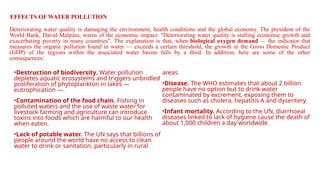
Deteriorating water qualityis damaging the environment, health conditions and the global economy. The president of the
World Bank, David Malpass, warns of the economic impact: "Deteriorating water quality is stalling economic growth and
exacerbating poverty in many countries". The explanation is that, when biological oxygen demand — the indicator that
measures the organic pollution found in water — exceeds a certain threshold, the growth in the Gross Domestic Product
(GDP) of the regions within the associated water basins falls by a third. In addition, here are some of the other
consequences:
EFFECTS OF WATER POLLUTION
•Destruction of biodiversity. Water pollution
depletes aquatic ecosystems and triggers unbridled
proliferation of phytoplankton in lakes —
eutrophication —.
•Contamination of the food chain. Fishing in
polluted waters and the use of waste water for
livestock farming and agriculture can introduce
toxins into foods which are harmful to our health
when eaten.
•Lack of potable water. The UN says that billions of
people around the world have no access to clean
water to drink or sanitation, particularly in rural
areas.
•Disease. The WHO estimates that about 2 billion
people have no option but to drink water
contaminated by excrement, exposing them to
diseases such as cholera, hepatitis A and dysentery.
•Infant mortality. According to the UN, diarrhoeal
diseases linked to lack of hygiene cause the death of
about 1,000 children a day worldwide.
17.
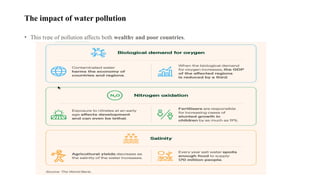
The impact ofwater pollution
• This type of pollution affects both wealthy and poor countries.
19.
Prevention of waterpollution
Half of the world's inhabitants will live in water-scarce areas by 2025, so every drop of
polluted water today is an irreparable loss for tomorrow. That's why we must prevent water
pollution with measures like the following:
•Reduce CO2 emissions to prevent global warming and acidification of the oceans.
•Reduce the use of chemical pesticides and nutrients on crops.
•Reduce and safely treat waste water so that, as well as not polluting, it can be reused for irrigation
and energy production.
•Restrict the use of single-use plastics that end up floating in rivers, lakes and oceans, many as
microplastics.
•Encourage sustainable fishing to ensure the survival of species and avoid depletion of the seas.
20.
Four steps tocontrol water pollution
Step 1: Implementing Control measures
This is the first step of the process, and strict control measures should be implemented for the activities
causing water pollution. The community should reduce activities such as plastic usage and sewage
dumping. There are many things that society can do to implement control measures for water pollution.
Step 2: Wastewater treatment
This is the next step in controlling water pollution. We can control water pollution by reducing the
proportion of wasted water. The pollutants should be removed from water through chemical, biological
or physical treatments.
Step 3: Purification
Further, water purification initiatives should be carried out thoroughly to destroy the pollutants and
harmful elements from water to a substantial extent.
Step 4: Spreading awareness
After all these three steps, spreading awareness and raising public consciousness for better participation
in reducing water pollution are necessary steps. The combined initiatives from all communities to reduce
water pollution can increase or maintain water quality in the long run.
21.
What is SoilPollution?
•Soil Pollution is the presence of toxic chemicals
(pollutants or contaminants) in soil in high enough
concentrations to pose a risk to human health and the
ecosystem.
•The contaminating substances that cause soil
pollution are called Soil Pollutants.
•Soil Pollution is one of the prominent types of
Environmental Pollution.
Causes of Soil Pollution
Some prominent causes of soil pollution can be
categorised into two categories –
•Natural Causes and
•Anthropogenic Causes.
Natural Causes
•There are various contaminants (compounds) naturally present in the soil. In addition, various
compounds get into the soil from the atmosphere through water precipitation, wind activity, water runoff,
etc.
•When the amounts of soil contaminants exceed natural levels, it leads to soil pollution.
•A few natural processes leading to soil pollution are:
• Natural accumulation of compounds in soil due to imbalances between atmospheric deposition
and leaking away with precipitation water.
• Natural production in soil under certain environmental conditions.
• Acid Rain and other polluted water could dissolve away some of the important nutrients found in
soil and change the structure of the soil.
• The soil also receives toxic chemicals during the weathering of certain rocks.
• Natural disasters like floods, tsunamis, storm surges, etc.
SOIL POLLUTION
22.
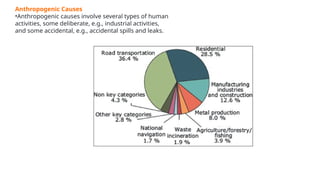
Anthropogenic Causes
•Anthropogenic causesinvolve several types of human
activities, some deliberate, e.g., industrial activities,
and some accidental, e.g., accidental spills and leaks.
23.
•Some of theprominent reasons for anthropogenic soil pollution include:
• Industrial Activity: Waste materials from industries linger on the soil surface for a long time, making the
soil unsuitable.
• Agricultural Activities: Pesticides, fertilisers, farm wastes, etc., contain organic chemicals that cause soil
pollution.
• These chemicals seep into the ground and slowly reduce soil fertility.
• Further, few chemicals damage the composition of the soil and make it easier to erode by water and
air.
• Plants absorb many of these pesticides, and when they decompose, they cause soil pollution since they
become a part of the land.
• Waste Disposal: Dumping municipal, nuclear, and mining waste leads to soil pollution.
• Accidental Oil Spills: Oil leaks can happen during storage and transport. The chemicals in the fuel
deteriorate the soil quality and make them unsuitable for cultivation.
• Construction Activities: Almost any chemical substance handled at construction sites may pollute the soil.
• Other Causes: Some of the other causes of soil pollution include:
• Air pollutants and many water pollutants become part of the soil.
• A major part of lead released in the automobile exhaust settles down on the roadside areas and
becomes part of it.
24.
Sources of SoilPollution
The sources of soil pollution can be seen as follows:
•Soil pollution arises from various sources, primarily
due to human activities. Industrial waste is a major
contributor, as factories directly discharge toxic
chemicals and heavy metals into the soil.
•Agricultural practices also play a significant role,
with the overuse of chemical fertilizers, pesticides, and
herbicides contaminating the soil over time.
•Improper waste disposal, including plastic,
electronic, and hazardous waste, leads to harmful
substances leaching the ground.
•Mining activities disturb the soil and release toxic
materials, while oil spills from transportation and
drilling operations add further pollutants.
•Additionally, urbanization and
deforestation contribute to the degradation of soil
quality, altering its structure and composition.
•All of these factors combine to disrupt soil health and
its ability to sustain plant and animal life.
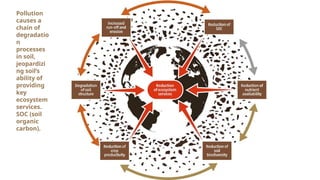
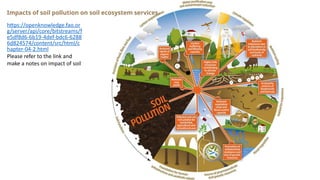
Impacts of soilpollution on soil ecosystem services.
https://openknowledge.fao.or
g/server/api/core/bitstreams/f
e5df8d6-6b19-4def-bdc6-6288
6d824574/content/src/html/c
hapter-04-2.html
Please refer to the link and
make a notes on impact of soil
27.
Effects of SoilPollution
Some multifaceted effects of soil pollution can be seen as follows:
•Effects on Health: Plants grown in polluted soil absorb much of the pollution and then pass it
on to consumers. This leads to multiple health effects, such as:
• Effect on the genetic makeup of the body causing congenital illnesses and chronic health
issues that cannot be cured easily.
• It can sicken the livestock to a considerable extent and cause food poisoning over a long
period of time.
• The emission of toxic and foul gases from landfills pollutes the environment and causes
serious effects on the health of some people.
• Soil pollution can even lead to widespread famines if the plants cannot grow in it.
•Effects on Plant Growth: The ecological balance of any system is affected by widespread soil
contamination. This impacts the plant growth in the following ways:
• Most plants are unable to adapt when the soil chemistry changes radically in a short
period of time.
• Fungi and bacteria found in the soil that bind it together begin to decline, which creates
an additional problem of soil erosion.
• The fertility slowly diminishes, making land unsuitable for agriculture and any local
vegetation to survive.
• Soil pollution makes large tracts of land hazardous to health. Unlike deserts, suitable for
their native vegetation, such land cannot support most life forms.
•Effects on Soil Fertility: Toxic chemicals in the soil can decrease soil fertility and, therefore, soil
yield.
28.
Prevention of SoilPollution
Below are some of the measures that can help control soil pollution:
•Proper Dumping of Unwanted Materials: Waste, if not disposed of well, can create problems
for the environment, so it is a must to manage human and animal waste well.
• Nowadays, the control tipping method is used to manage solid waste, and the surface is
then used for constructing houses or sports grounds.
•Production of Natural Fertilizers: Instead of chemical pesticides and fertilizers, use bio-
pesticides and organic fertilizers.
•Control of Soil Erosion: Soil erosion should be controlled through measures like afforestation
and a variety of forestry and farm practices, like covering barren slopes by planting trees,
contour cultivation, and strip farming instead of shifting cultivation.
•Public Awareness: Formal or informal public awareness campaigns should be executed to
increase awareness about the harmful effects of soil pollution and measures to be taken to
control it.
•Proper Hygienic Conditions: People should be trained to follow proper sanitation habits
instead of open defection and throwing human and animal waste in the open.
•Recycling and Reuse of Waste: Reusing paper, plastics, glasses, organics, and petroleum
products can help control soil pollution.
•Ban on Toxic Chemicals: The use of harsh chemicals like DDT, BHC, etc., which have harmful
impacts on animals and plants, should be banned.
29.
Conclusion
Soil Pollution isa critical environmental issue with
significant implications for ecosystems, agriculture, and
public health. Addressing soil pollution requires a
multifaceted approach, including regulatory measures,
technological innovations, sustainable practices, and
public engagement. By implementing effective solutions
and promoting awareness, India and the world can work
towards mitigating soil pollution and ensuring a healthier
and more sustainable environment.
30.
SOLID WASTE MANAGMENT
•Solid waste refers to any discarded or unwanted materials. It includes
various items such as paper, plastics, glass and food waste. The Resource
Conservation and Recovery Act also states that solid waste can include
sludge from industrial plants or other discarded materials that result from
industrial, commercial, mining and agricultural operations.
• While solid waste is often considered a solid state, the RCRA states that this
type of waste does not have to be physically solid. In fact, many solid
wastes are liquid, semi-solid or contain gaseous material.
31.
According to the
U.S.ENVIRONMENTAL PROTECTION AGENCY (EPA),
To be considered a solid waste, the material must be discarded
by being:
•Abandoned (disposed of, burned, incinerated or sham
recycled)
•Inherently waste-like (for example, dioxin-containing
wastes)
•Discarded military amunition (unused or defective, and
must be abandoned, rendered nonrecyclable, or declared a
waste by an authorized military official)
•Recycled in certain ways (such as if the waste is burned for
energy recovery or as an ingredient in a process)
32.
Types Of SolidWaste
•Municipal Solid Waste (MSW): This type includes
everyday items discarded by households, such as
paper, plastics, food scraps, textiles, packaging
materials, yard waste and household hazardous
waste like batteries or cleaning products.
•Industrial Waste: Generated by industrial processes
and manufacturing activities, industrial waste
comprises materials like scrap metal, chemicals,
solvents, sludge and other by-products from
factories and production facilities.
Commercial Waste: Originating from commercial
establishments such as offices, restaurants, shops
and institutions, this waste type includes paper,
packaging materials, food waste and other
discarded items.
•Construction and Demolition Debris
(C&D): Generated from construction, renovation and
demolition activities, C&D waste includes concrete,
wood, bricks, asphalt, metals, drywall and other
materials used in building structures.
33.
•Hazardous Waste: Materialsthat pose a risk to
human health or the environment due to their
toxic, flammable, corrosive or reactive nature are
considered hazardous. This category includes items
like batteries, fluorescent bulbs, pesticides, certain
chemicals and medical waste.
•Electronic Waste (E-waste): Discarded electronic
devices and equipment, such as computers,
televisions, smartphones and appliances, can
contain hazardous materials like lead, mercury and
other components that require specialized
handling and disposal.
•Agricultural Waste: Generated from farming
activities, agricultural waste includes crop
residues, animal manure, pesticides and other
waste produced in agricultural processes.
34.
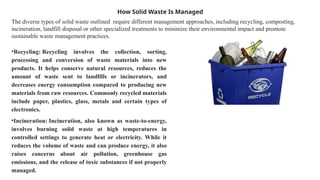
How Solid WasteIs Managed
The diverse types of solid waste outlined require different management approaches, including recycling, composting,
incineration, landfill disposal or other specialized treatments to minimize their environmental impact and promote
sustainable waste management practices.
•Recycling: Recycling involves the collection, sorting,
processing and conversion of waste materials into new
products. It helps conserve natural resources, reduces the
amount of waste sent to landfills or incinerators, and
decreases energy consumption compared to producing new
materials from raw resources. Commonly recycled materials
include paper, plastics, glass, metals and certain types of
electronics.
•Incineration: Incineration, also known as waste-to-energy,
involves burning solid waste at high temperatures in
controlled settings to generate heat or electricity. While it
reduces the volume of waste and can produce energy, it also
raises concerns about air pollution, greenhouse gas
emissions, and the release of toxic substances if not properly
managed.
36.
•Composting: Composting isthe biological decomposition of
organic waste, such as food scraps, yard waste and certain
paper products, into nutrient-rich soil amendments. It's a
natural process that produces compost, a valuable resource
for enriching soil fertility and enhancing plant growth.
Composting reduces methane emissions from landfills and
decreases the need for chemical fertilizers.
•Landfill Disposal: Landfills are designated areas where
waste is deposited and covered with soil to minimize
environmental contamination. Properly engineered and
managed landfills include liners and systems to collect
leachate (liquid formed as waste decomposes) and methane
gas, reducing potential groundwater contamination and
methane emissions. However, landfills can pose
environmental risks if not managed correctly and can
contribute to soil and water pollution.
Vermicomposting
Vermicomposting is a method that uses
earthworms and microorganisms to help
stabilize active organic materials and
convert them into a valuable soil
amendment and plant nutrient source.
Most organic materials, including food
preparation residuals and leftovers,
scrap paper, animal manure, agricultural
crop residues, organic byproducts from
industries, and yard trimmings, will be
consumed by earthworms.
37.
Integrated Solid WasteManagement
Integrated Solid Waste Management (ISWM) is a system
which defines a hierarchy while
managing solid waste. According the ISWM, solid waste
must be managed in the following
hierarchy with the first strategy being most desirable and
the succeeding strategies to be
followed only when a particular strategy cannot be
employed:
Reduction at source and reuse: The most logical and
preferred option is minimizing the
waste production. This can be done by using better
technologies, efficient packaging,
reusing the waste produced at each level in some other
process or activity.
Recycling: Recovery of material from the waste and
reusing it again in manufacturing
of some other product is recycling. Although recycling
helps in recovering the
material waste, energy is used in the process.
Waste to Compost: Decomposition of organic
municipal waste to produce manure.
Waste-to-Energy: Production of heat, electricity or fuel
from the waste using bio-
methanation, waste incineration or Refuse Derived Fuel
(RDF).
Waste Disposal: Inert waste or the residual waste
produced in the other waste
management process must be disposed in engineered
landfills.
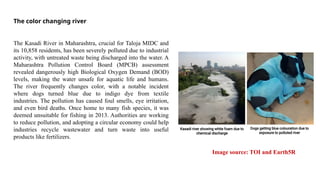
The color changingriver
Image source: TOI and Earth5R
The Kasadi River in Maharashtra, crucial for Taloja MIDC and
its 10,858 residents, has been severely polluted due to industrial
activity, with untreated waste being discharged into the water. A
Maharashtra Pollution Control Board (MPCB) assessment
revealed dangerously high Biological Oxygen Demand (BOD)
levels, making the water unsafe for aquatic life and humans.
The river frequently changes color, with a notable incident
where dogs turned blue due to indigo dye from textile
industries. The pollution has caused foul smells, eye irritation,
and even bird deaths. Once home to many fish species, it was
deemed unsuitable for fishing in 2013. Authorities are working
to reduce pollution, and adopting a circular economy could help
industries recycle wastewater and turn waste into useful
products like fertilizers.
40.
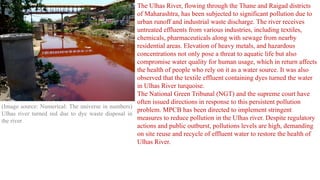
(Image source: Numerical:The universe in numbers)
Ulhas river turned red due to dye waste disposal in
the river
The Ulhas River, flowing through the Thane and Raigad districts
of Maharashtra, has been subjected to significant pollution due to
urban runoff and industrial waste discharge. The river receives
untreated effluents from various industries, including textiles,
chemicals, pharmaceuticals along with sewage from nearby
residential areas. Elevation of heavy metals, and hazardous
concentrations not only pose a threat to aquatic life but also
compromise water quality for human usage, which in return affects
the health of people who rely on it as a water source. It was also
observed that the textile effluent containing dyes turned the water
in Ulhas River turquoise.
The National Green Tribunal (NGT) and the supreme court have
often issued directions in response to this persistent pollution
problem. MPCB has been directed to implement stringent
measures to reduce pollution in the Ulhas river. Despite regulatory
actions and public outburst, pollutions levels are high, demanding
on site reuse and recycle of effluent water to restore the health of
Ulhas River.
41.
Air pollution: Acase study on the impact of COVID-19 on Delhi city
India is the second most populated country globally and requires massive urban infrastructure. As a result
of this rapid growth, air quality in cities has deteriorated. A World Health Organization survey found that 147
males and 136 females per 100,000 persons in India are died by air pollution. In recent times, Delhi, the
capital city of India, experienced the worst condition of air pollution. Therefore, different air pollutants were
assessed for Delhi city using the Central Pollution Control Boards report in this study. The study indicated
that a city’s air quality has considerably beyond the safety limitations of the Central Pollution Control Board.
From the study, it is clear that the various activities in the city are causing air pollution, but neighboring
towns are equally responsible for it. Countries suffered enormous economic losses due to the COVID-19
shutdown, but air quality improved. Pollution levels fell by half during the shutdown. The Delhi government
established an odd/even system and educated the people on the benefits of carpooling to curb air pollution.
Recently, smog towers were installed to clear a larger volume of polluted air and supply fresh air to the
surrounding community. The study recommends that reducing pollution is not just a government duty, but
the general public still plays an important role.
42.
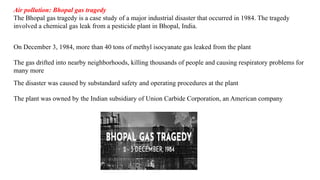
Air pollution: Bhopalgas tragedy
The Bhopal gas tragedy is a case study of a major industrial disaster that occurred in 1984. The tragedy
involved a chemical gas leak from a pesticide plant in Bhopal, India.
On December 3, 1984, more than 40 tons of methyl isocyanate gas leaked from the plant
The gas drifted into nearby neighborhoods, killing thousands of people and causing respiratory problems for
many more
The disaster was caused by substandard safety and operating procedures at the plant
The plant was owned by the Indian subsidiary of Union Carbide Corporation, an American company
43.
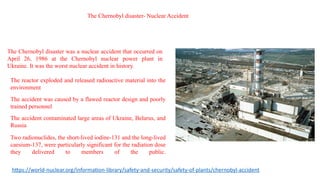
The Chernobyl disasterwas a nuclear accident that occurred on
April 26, 1986 at the Chernobyl nuclear power plant in
Ukraine. It was the worst nuclear accident in history.
The reactor exploded and released radioactive material into the
environment
The accident was caused by a flawed reactor design and poorly
trained personnel
The accident contaminated large areas of Ukraine, Belarus, and
Russia
Two radionuclides, the short-lived iodine-131 and the long-lived
caesium-137, were particularly significant for the radiation dose
they delivered to members of the public.
The Chernobyl disaster- Nuclear Accident
https://world-nuclear.org/information-library/safety-and-security/safety-of-plants/chernobyl-accident
44.
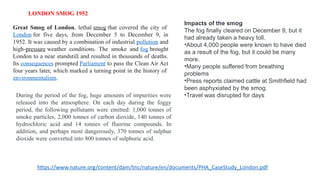
LONDON SMOG 1952
GreatSmog of London, lethal smog that covered the city of
London for five days, from December 5 to December 9, in
1952. It was caused by a combination of industrial pollution and
high-pressure weather conditions. The smoke and fog brought
London to a near standstill and resulted in thousands of deaths.
Its consequences prompted Parliament to pass the Clean Air Act
four years later, which marked a turning point in the history of
environmentalism.
During the period of the fog, huge amounts of impurities were
released into the atmosphere. On each day during the foggy
period, the following pollutants were emitted: 1,000 tonnes of
smoke particles, 2,000 tonnes of carbon dioxide, 140 tonnes of
hydrochloric acid and 14 tonnes of fluorine compounds. In
addition, and perhaps most dangerously, 370 tonnes of sulphur
dioxide were converted into 800 tonnes of sulphuric acid.
Impacts of the smog
The fog finally cleared on December 9, but it
had already taken a heavy toll.
•About 4,000 people were known to have died
as a result of the fog, but it could be many
more.
•Many people suffered from breathing
problems
•Press reports claimed cattle at Smithfield had
been asphyxiated by the smog.
•Travel was disrupted for days
https://www.nature.org/content/dam/tnc/nature/en/documents/PHA_CaseStudy_London.pdf