AIR POLLUTION
EnE 203 Lecture
Joseph Gerard T. Reyes, Ph.D.
Outline
• Definition
• Composition of atmospheric air
• Classification and sources of air pollutants
• Effects of air pollution
• Air pollution control methods, equipment and safety
What is Pollution?
• Change in background concentration
• Any substance introduced into the environment that adversely affects
the usefulness of a resource.
• Pollution happens because no process is 100% efficient; each process
produces waste, which can contribute to pollution.
• Air pollution - one or more contaminants or combinations in such
quantities and of such durations in atmospheric air which tend to be
injurious to biological life, or materials
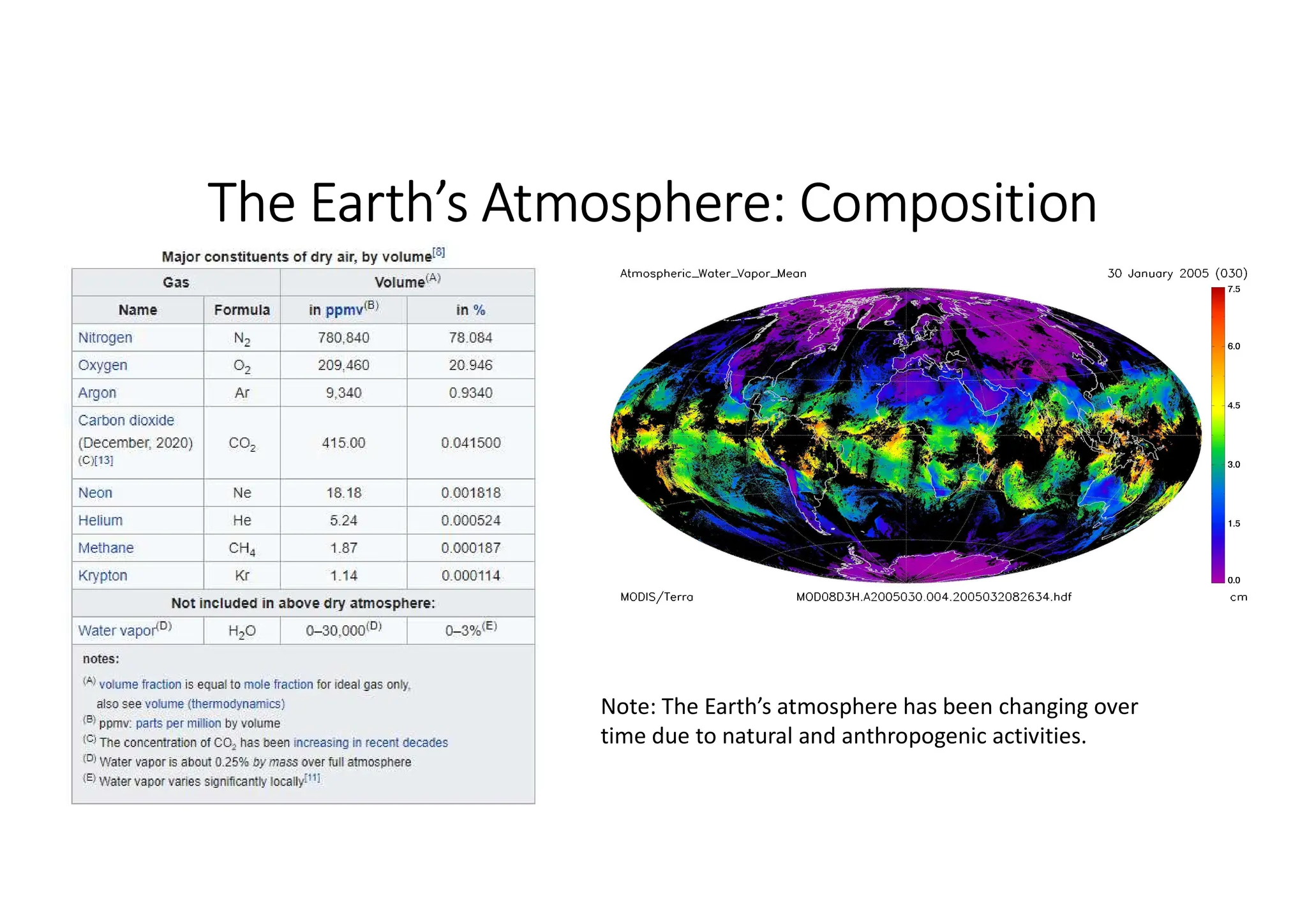
The Earth’s Atmosphere: Composition
Note: The Earth’s atmosphere has been changing over
time due to natural and anthropogenic activities.
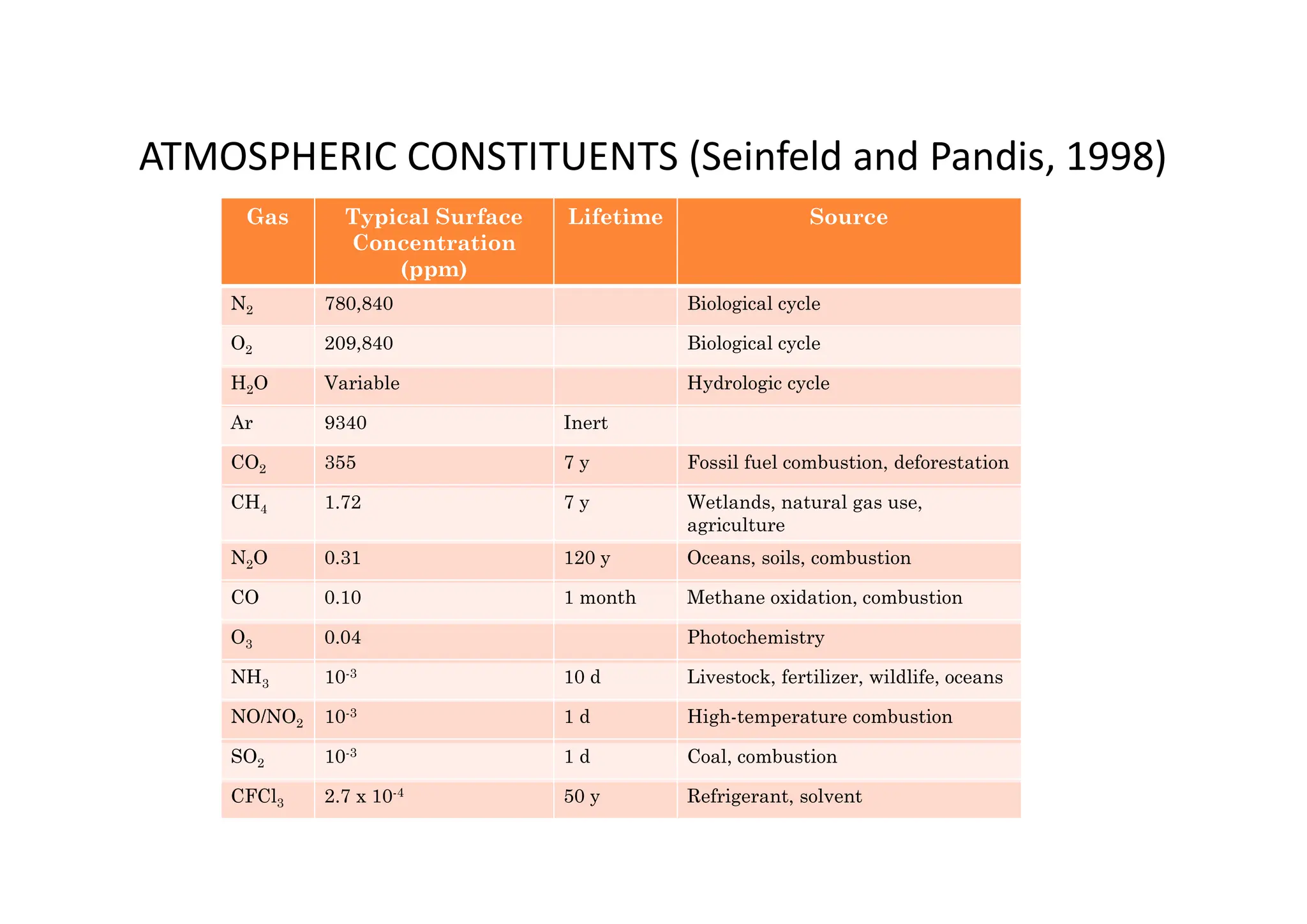
Gas Typical Surface
Concentration
(ppm)
Lifetime Source
N2 780,840 Biological cycle
O2 209,840 Biological cycle
H2O Variable Hydrologic cycle
Ar 9340 Inert
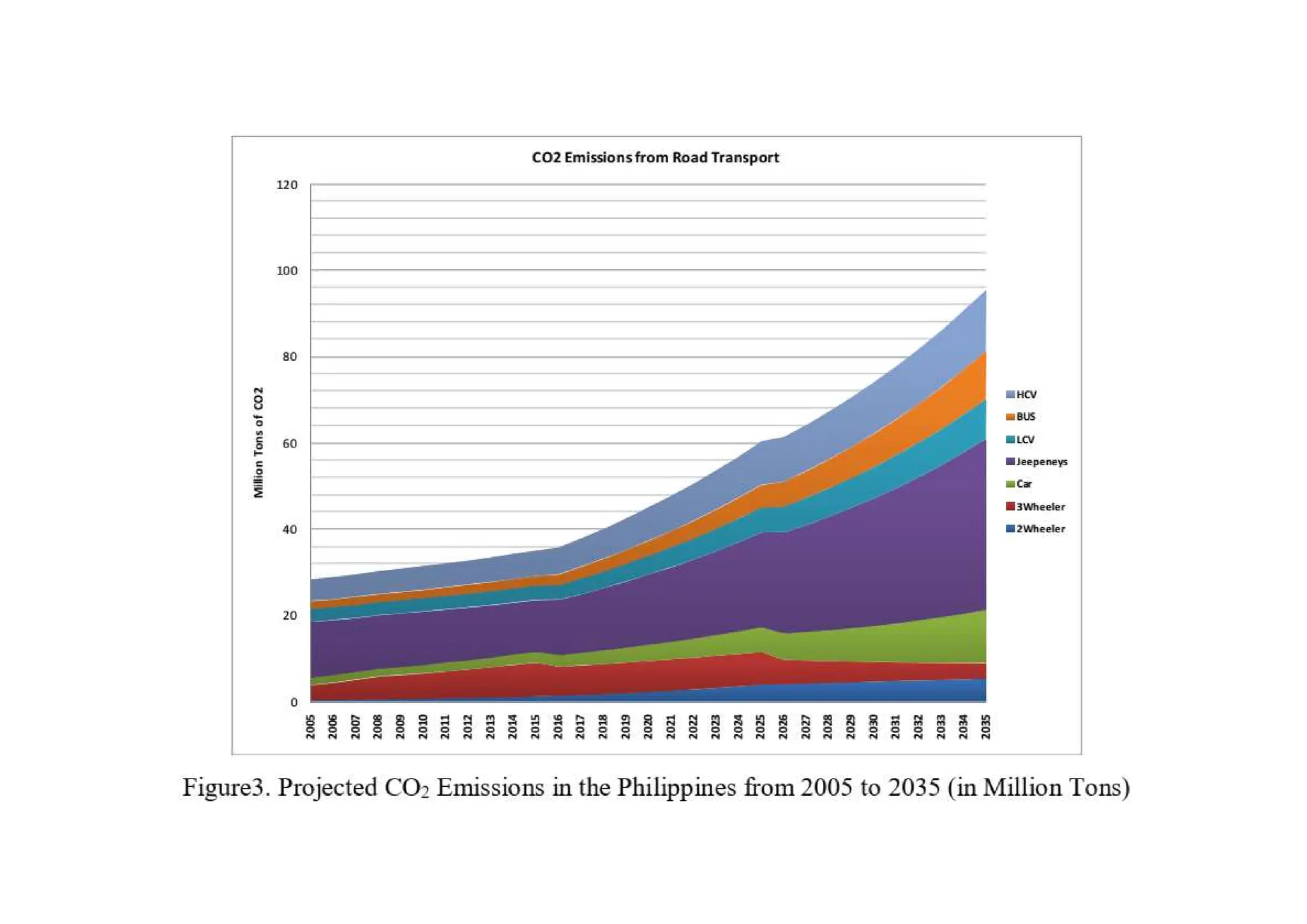
CO2 355 7 y Fossil fuel combustion, deforestation
CH4 1.72 7 y Wetlands, natural gas use,
agriculture
N2O 0.31 120 y Oceans, soils, combustion
CO 0.10 1 month Methane oxidation, combustion
O3 0.04 Photochemistry
NH3 10-3 10 d Livestock, fertilizer, wildlife, oceans
NO/NO2 10-3 1 d High-temperature combustion
SO2 10-3 1 d Coal, combustion
CFCl3 2.7 x 10⁻⁴ 50 y Refrigerant, solvent
ATMOSPHERIC CONSTITUENTS (Seinfeld and Pandis, 1998)
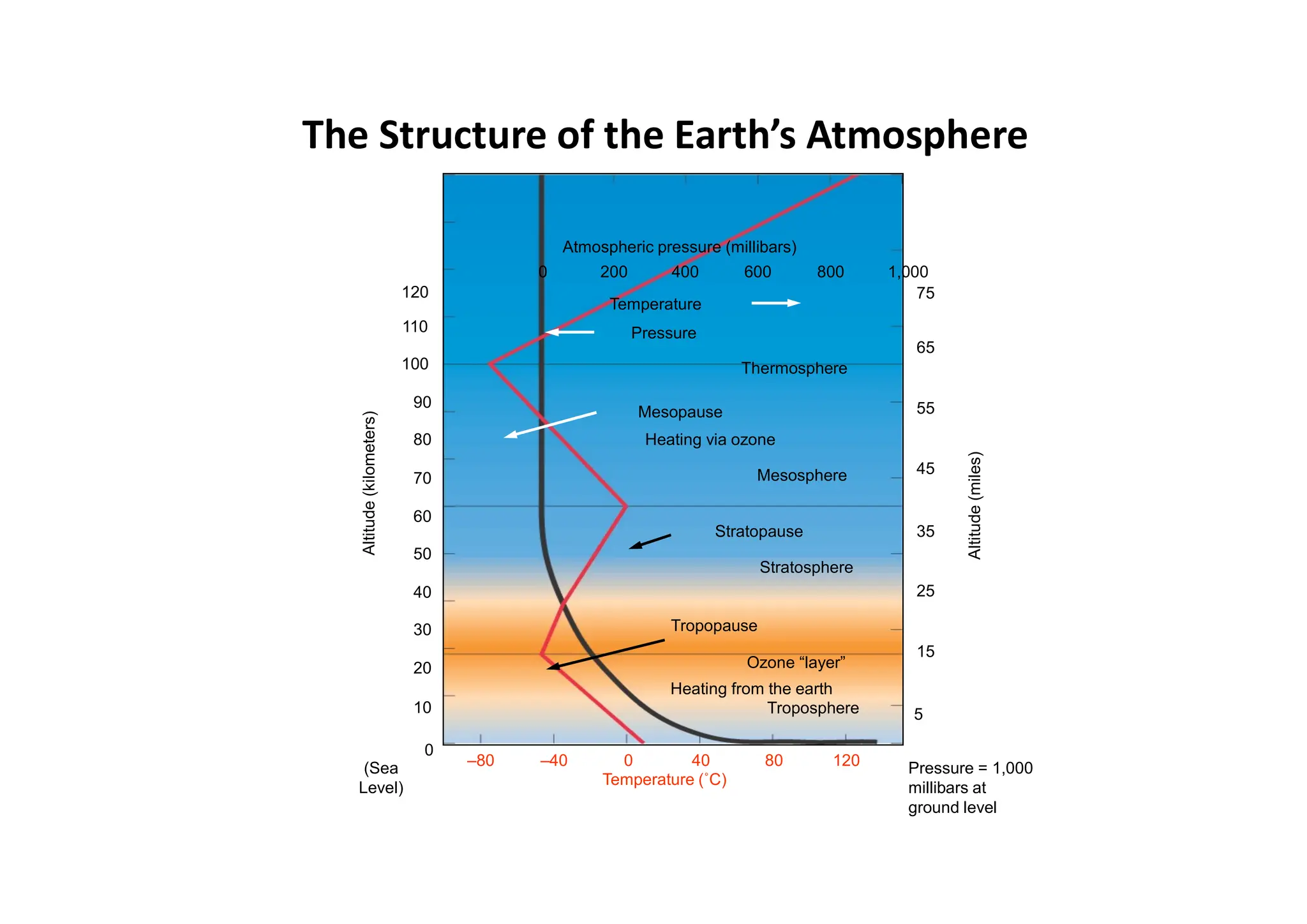
Pressure = 1,000
millibars at
ground level
Atmospheric pressure (millibars)
0 200 400 600 800 1,000
120
110
100
90
80
70
60
50
40
30
20
10
0
(Sea
Level)
–80 –40 0 40 80 120
Temperature (˚C)
Altitude
(kilometers)
Altitude
(miles)
75
65
55
45
35
25
15
5
Thermosphere
Heating via ozone
Mesosphere
Stratosphere
Ozone “layer”
Heating from the earth
Troposphere
Temperature
Pressure
Mesopause
Stratopause
Tropopause
The Structure of the Earth’s Atmosphere
Classification of Sources of Air Pollution
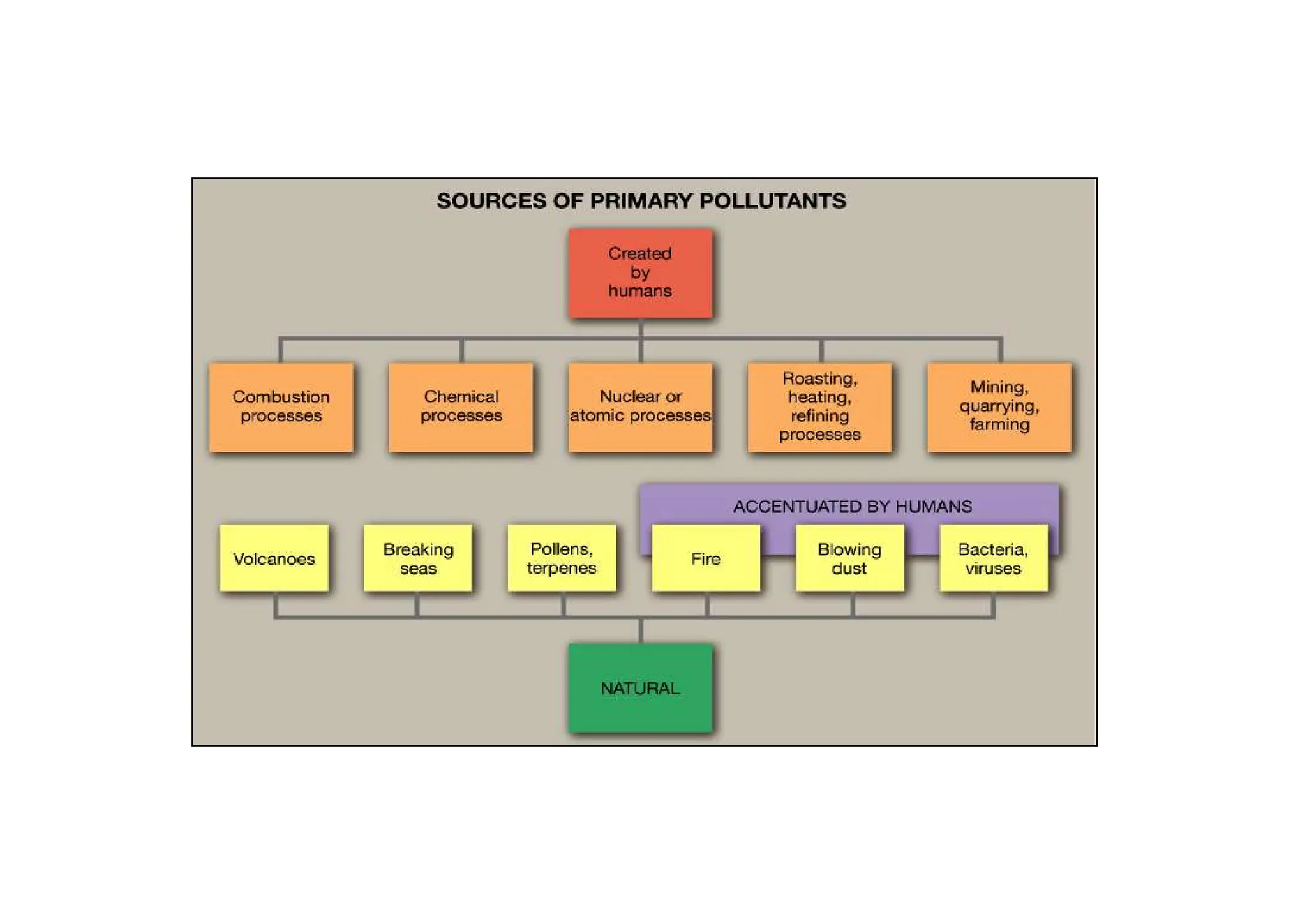
• Natural – e.g., pollen grains, volcanic eruptions, forest fires, dust
storms, spores, bacteria and other microorganisms.
• Man- made – e.g., industrial plants, thermal power plants,
automobile exhaust, fossil fuel burning, mining
Stationary and Mobile Sources of Emissions
• Stationary sources
• Point (major) source – a stationary single, major source of emissions; can be
pinpointed to a single location
• Area source - smaller-size facilities that release lesser quantities of toxic
pollutants into the air; mobile sources with indefinite routes
• Volume source – a three-dimensional source of pollutant emissions (includes
elevations from ground, e.g. emissions from roof vents of buildings);
emissions are often uncontrolled
• Line source – mobile sources with definite routes
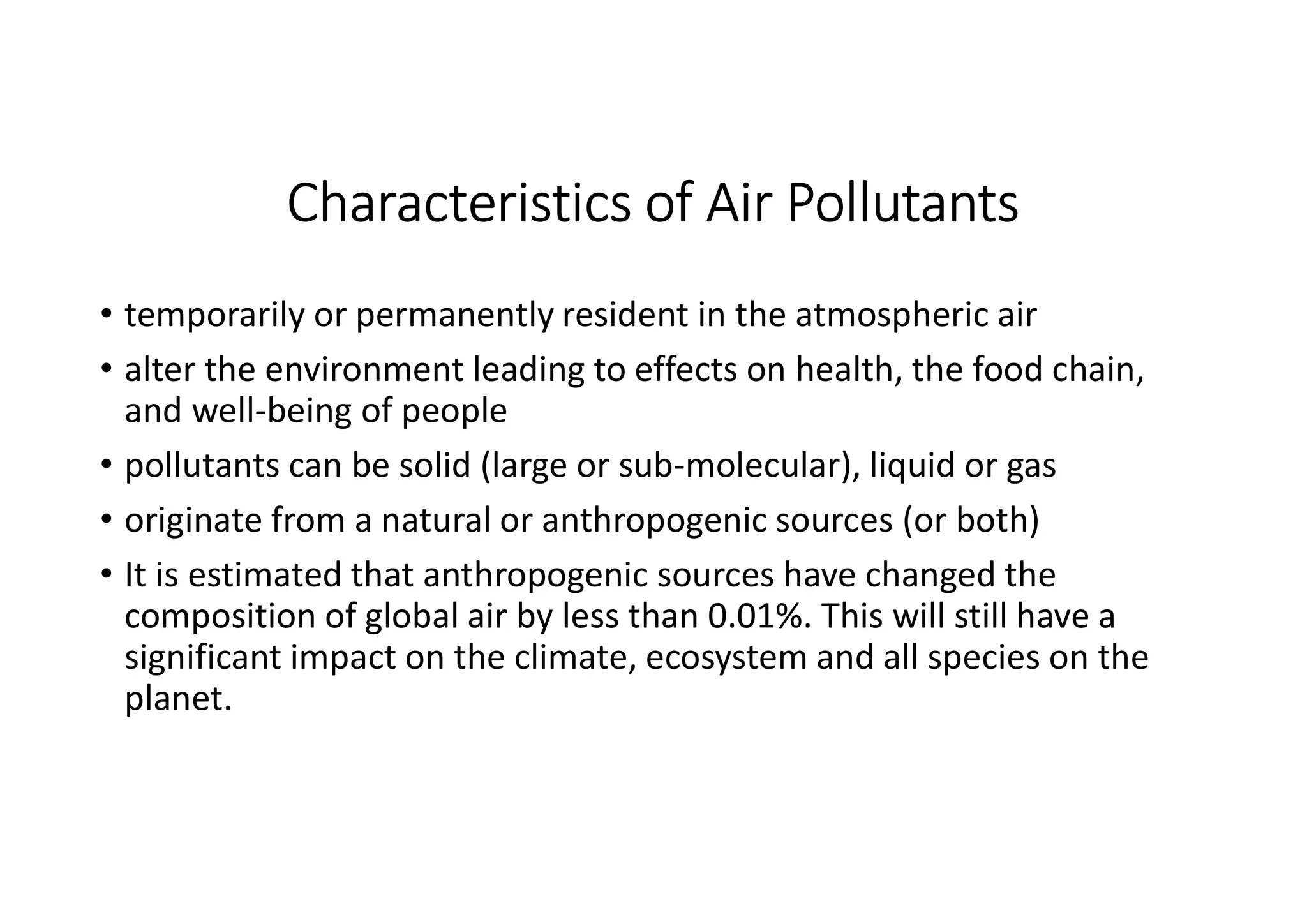
Characteristics of Air Pollutants
• temporarily or permanently resident in the atmospheric air
• alter the environment leading to effects on health, the food chain,
and well-being of people
• pollutants can be solid (large or sub-molecular), liquid or gas
• originate from a natural or anthropogenic sources (or both)
• It is estimated that anthropogenic sources have changed the
composition of global air by less than 0.01%. This will still have a
significant impact on the climate, ecosystem and all species on the
planet.
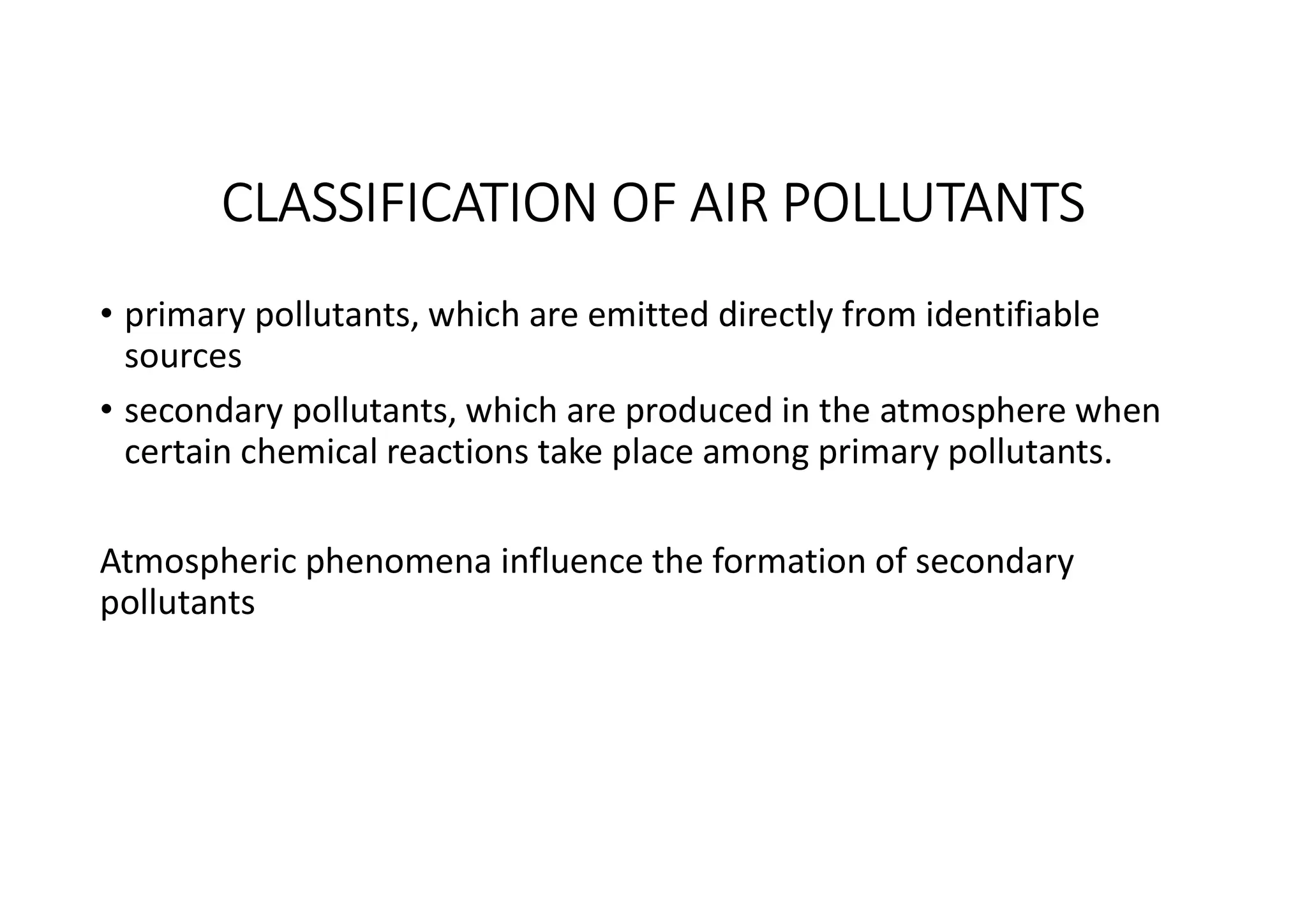
CLASSIFICATION OF AIR POLLUTANTS
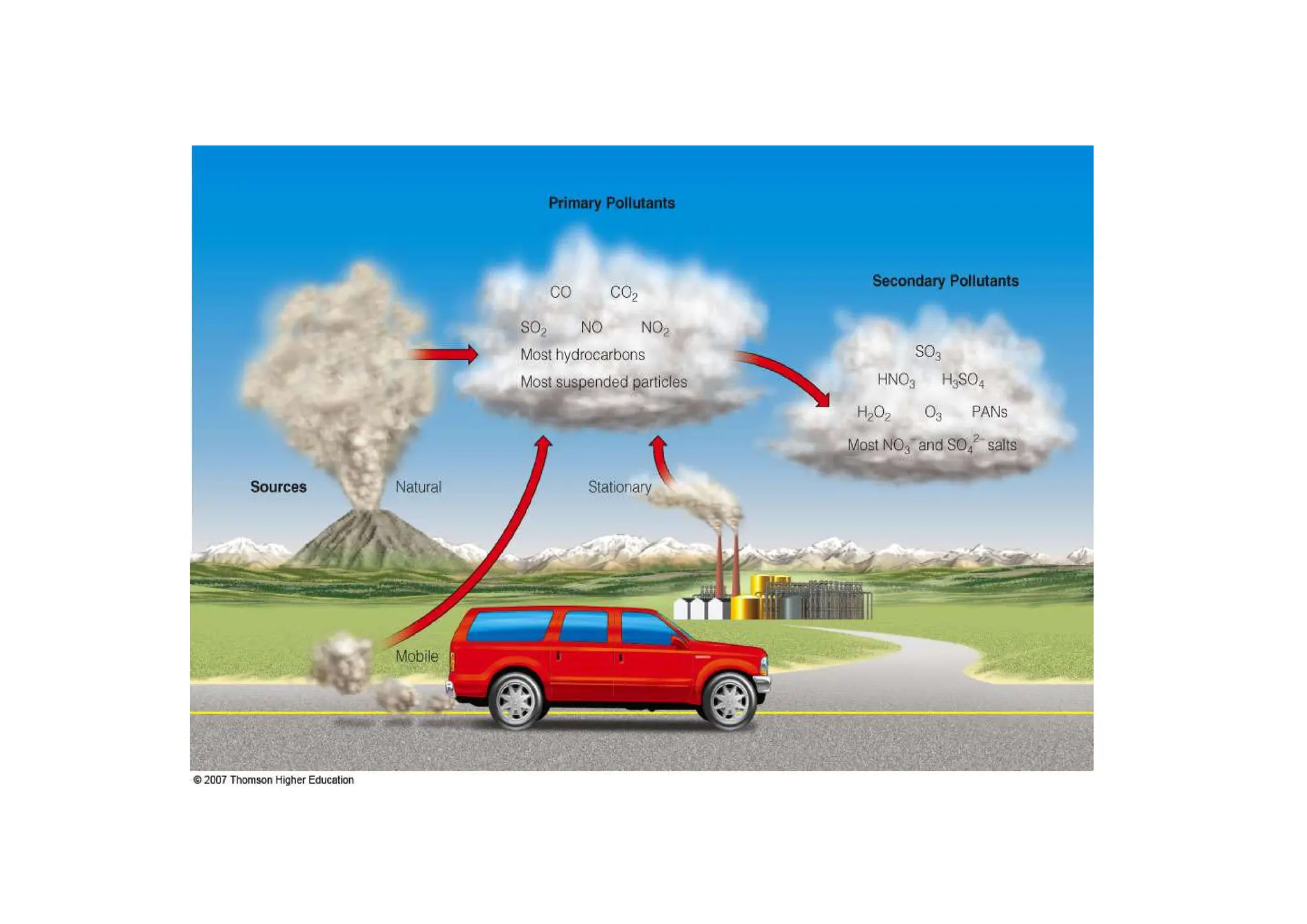
• primary pollutants, which are emitted directly from identifiable
sources
• secondary pollutants, which are produced in the atmosphere when
certain chemical reactions take place among primary pollutants.
Atmospheric phenomena influence the formation of secondary
pollutants
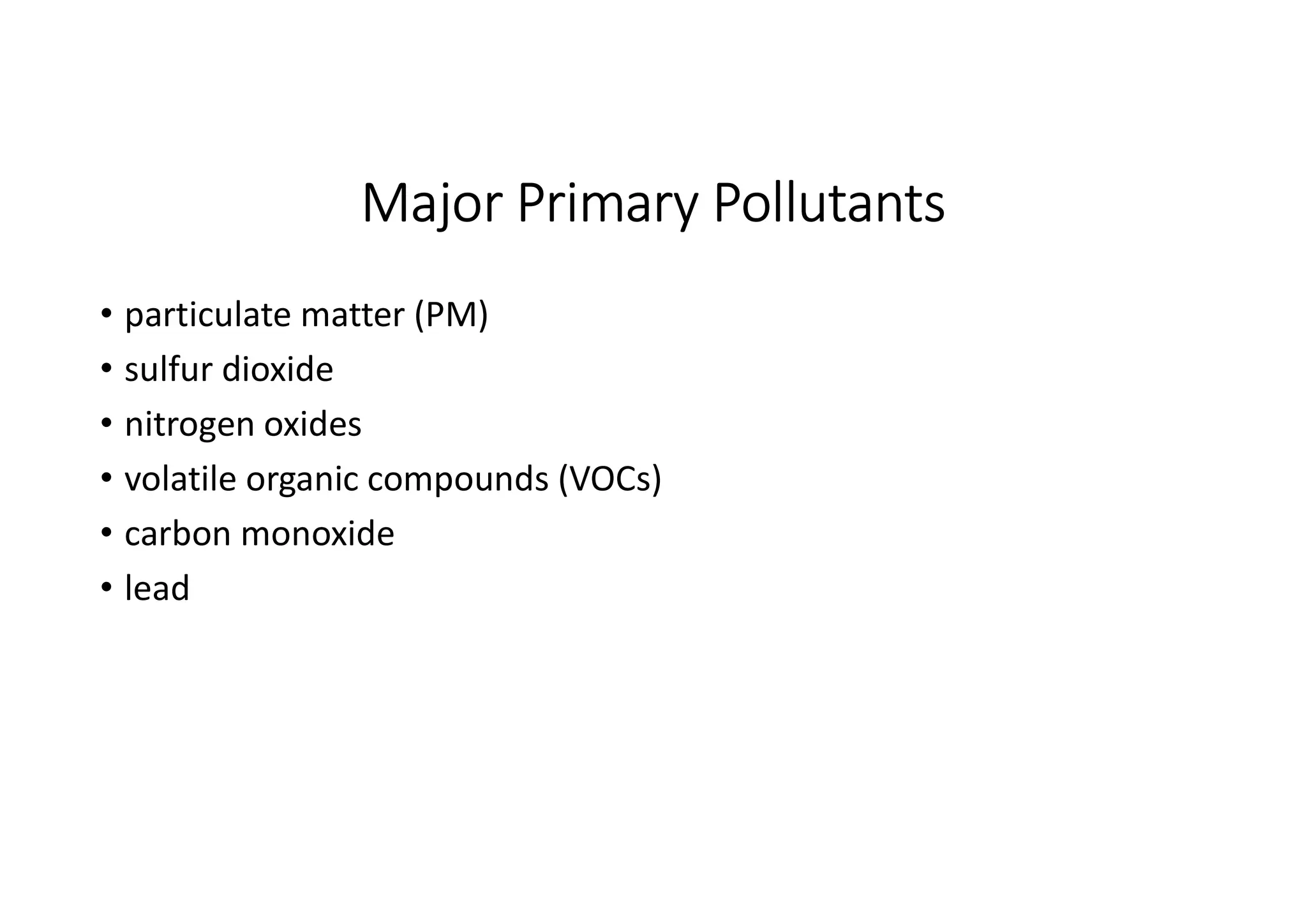
Major Primary Pollutants
• particulate matter (PM)
• sulfur dioxide
• nitrogen oxides
• volatile organic compounds (VOCs)
• carbon monoxide
• lead
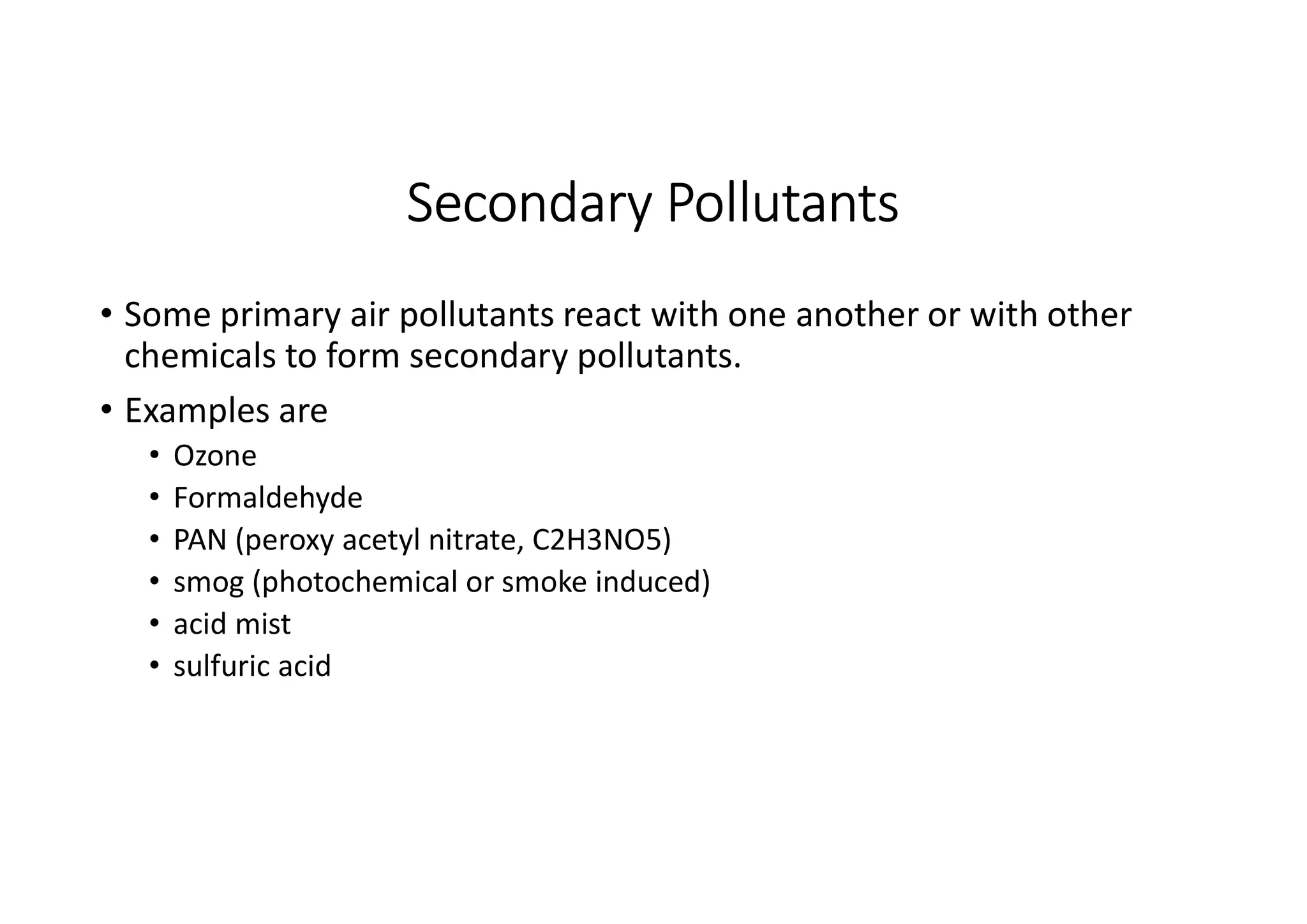
Secondary Pollutants
• Some primary air pollutants react with one another or with other
chemicals to form secondary pollutants.
• Examples are
• Ozone
• Formaldehyde
• PAN (peroxy acetyl nitrate, C2H3NO5)
• smog (photochemical or smoke induced)
• acid mist
• sulfuric acid
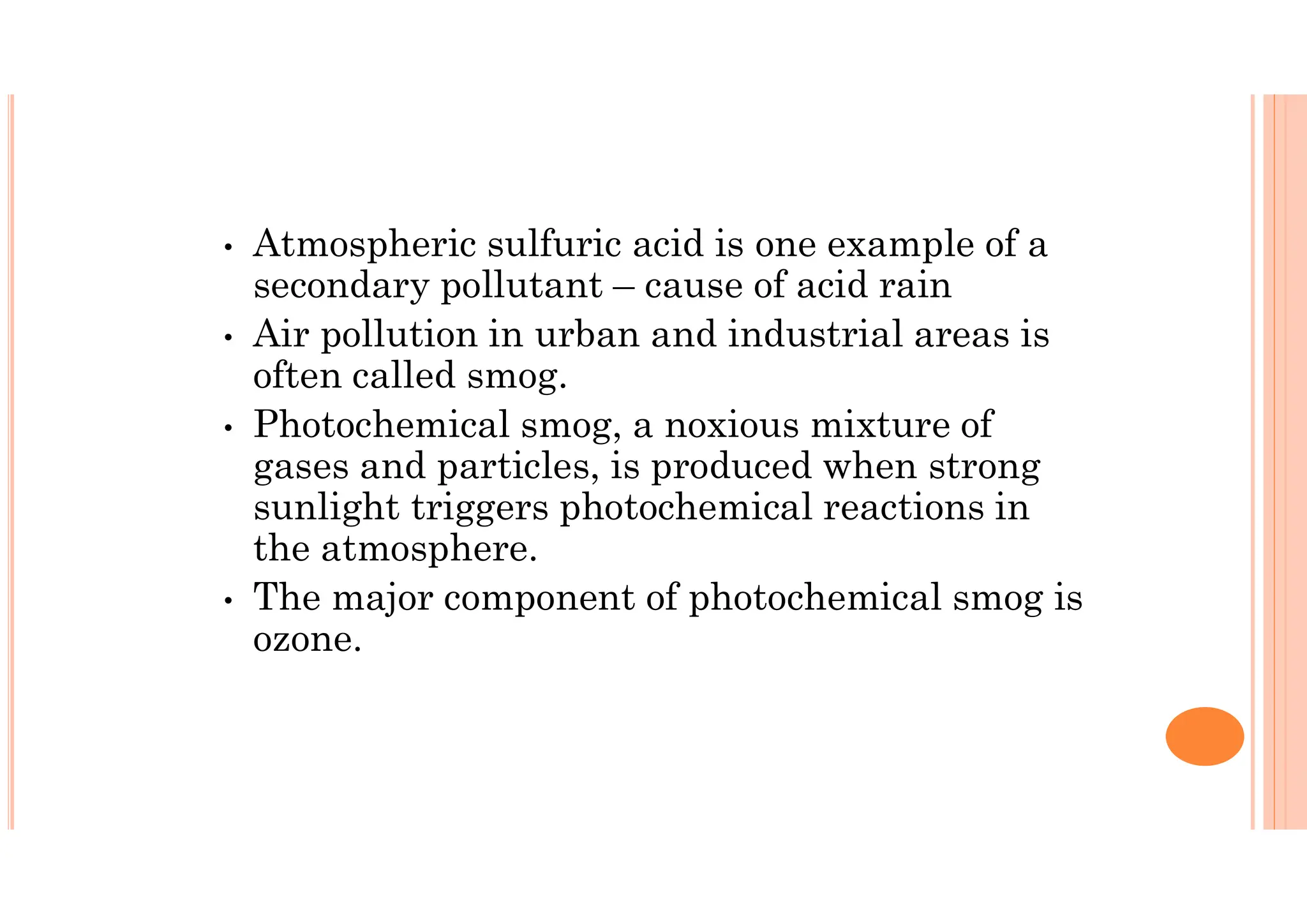
• Atmospheric sulfuric acid is one example of a
secondary pollutant – cause of acid rain
• Air pollution in urban and industrial areas is
often called smog.
• Photochemical smog, a noxious mixture of
gases and particles, is produced when strong
sunlight triggers photochemical reactions in
the atmosphere.
• The major component of photochemical smog is
ozone.
Major Pollutants, Sources, and Effects
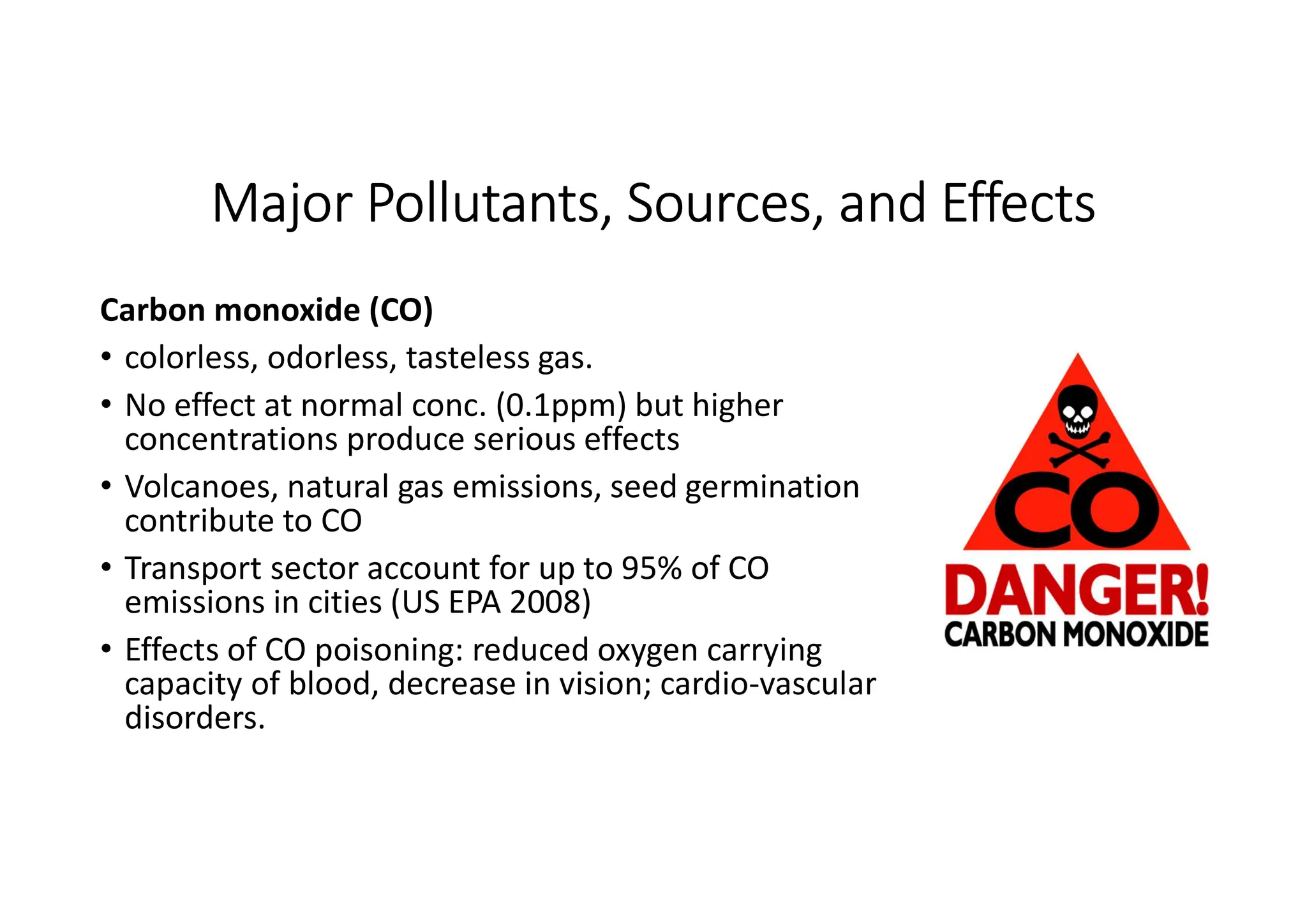
Carbon monoxide (CO)
• colorless, odorless, tasteless gas.
• No effect at normal conc. (0.1ppm) but higher
concentrations produce serious effects
• Volcanoes, natural gas emissions, seed germination
contribute to CO
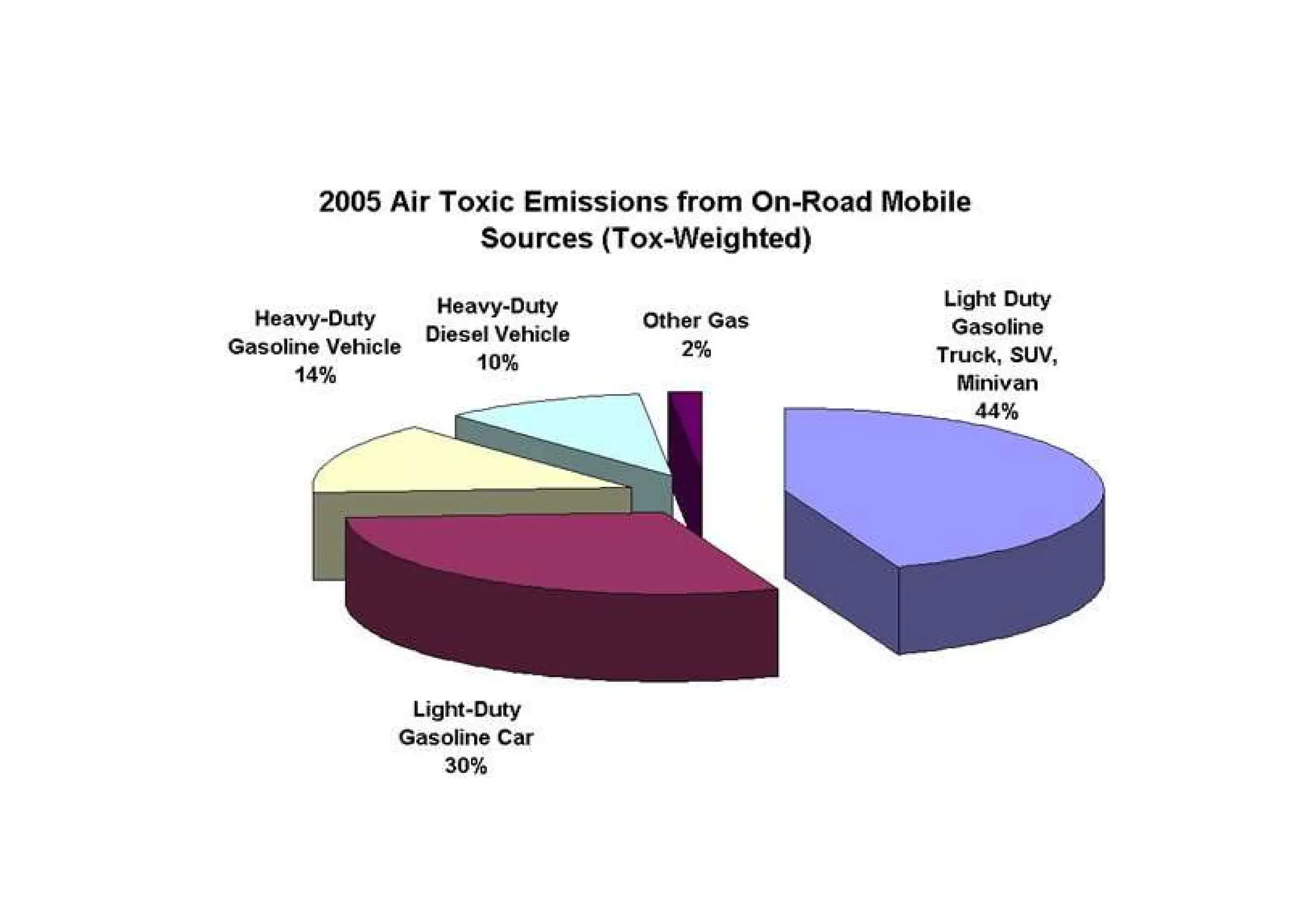
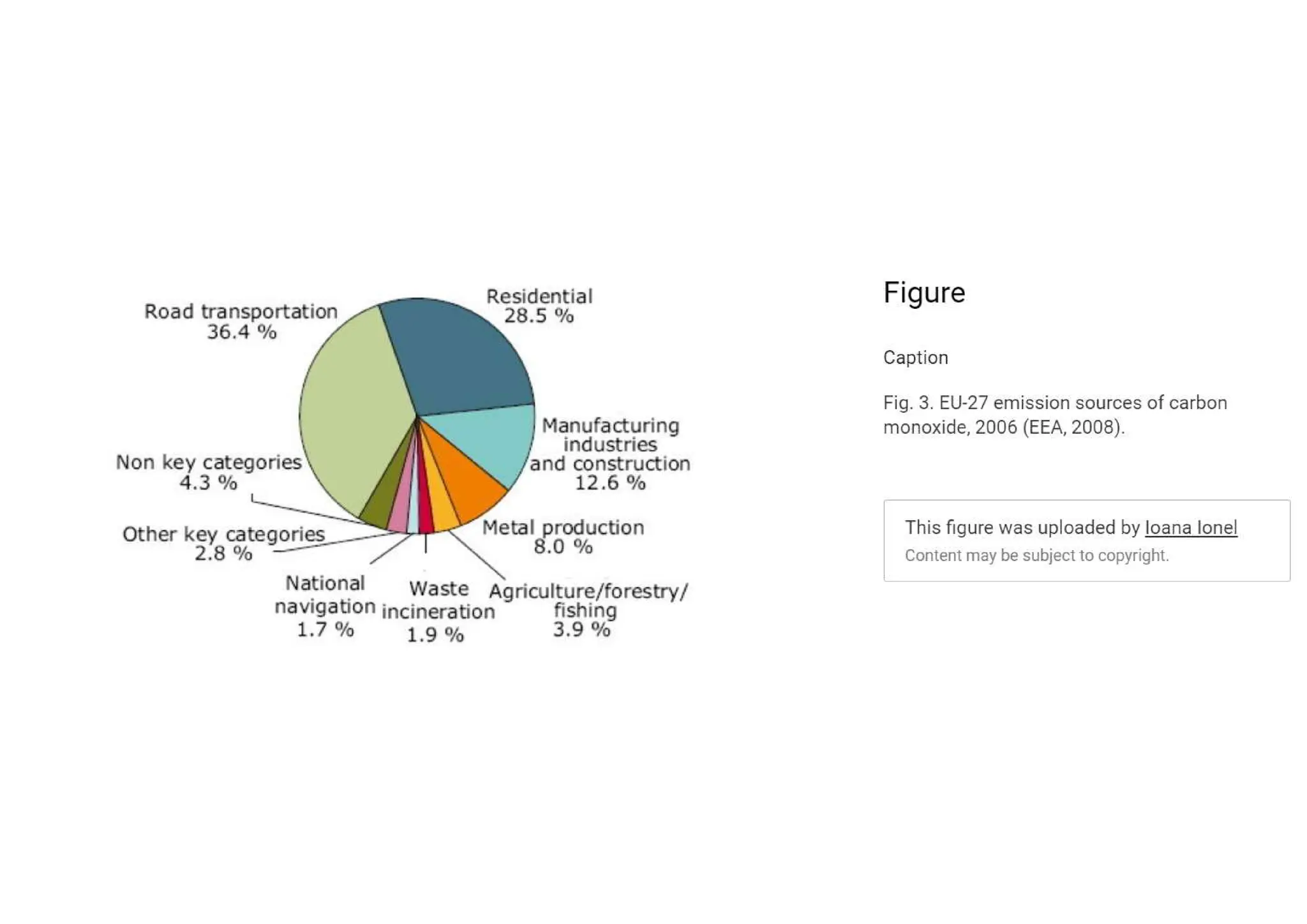
• Transport sector account for up to 95% of CO
emissions in cities (US EPA 2008)
• Effects of CO poisoning: reduced oxygen carrying
capacity of blood, decrease in vision; cardio-vascular
disorders.
Major Pollutants, Sources, and Effects
Carbon dioxide (CO2)
• colorless, odorless, tasteless gas.
• a product of combustion, respiration or decomposition; can also
be a secondary pollutant
• emitted from natural and anthropogenic sources
• effects: nausea, headaches
• an atmospheric greenhouse gas
Major Pollutants, Sources, and Effects
Oxides of nitrogen (NOx)
• group that includes NO, NO2, N2O.
• sources include:
• fuel combustion in automobiles and industries; three types of production –
fuel NOx, thermal NOx, prompt NOx
• agriculture
• lightning
• forest fires.
• natural ionizing radiations
• effects: Reduce blood carrying capacity; lung problems
• can react with other airborne compounds to produce nitric acids and
photochemical smog
Major Pollutants, Sources, and Effects
Oxides of sulfur (SOx)
• include SO2, SO3.
• 67% SOx pollution due to volcanic activities and other natural
sources
• anthropogenic sources are fossil fuel burning, transportation,
industrial activities; sulfur is contained in fuel such as coal and
diesel
• effects: respiratory problems; materials such as marbles, cloth,
paper, leather also affected; impact on plants
• can react with airborne compounds to produce sulfuric acid
Major Pollutants, Sources, and Effects
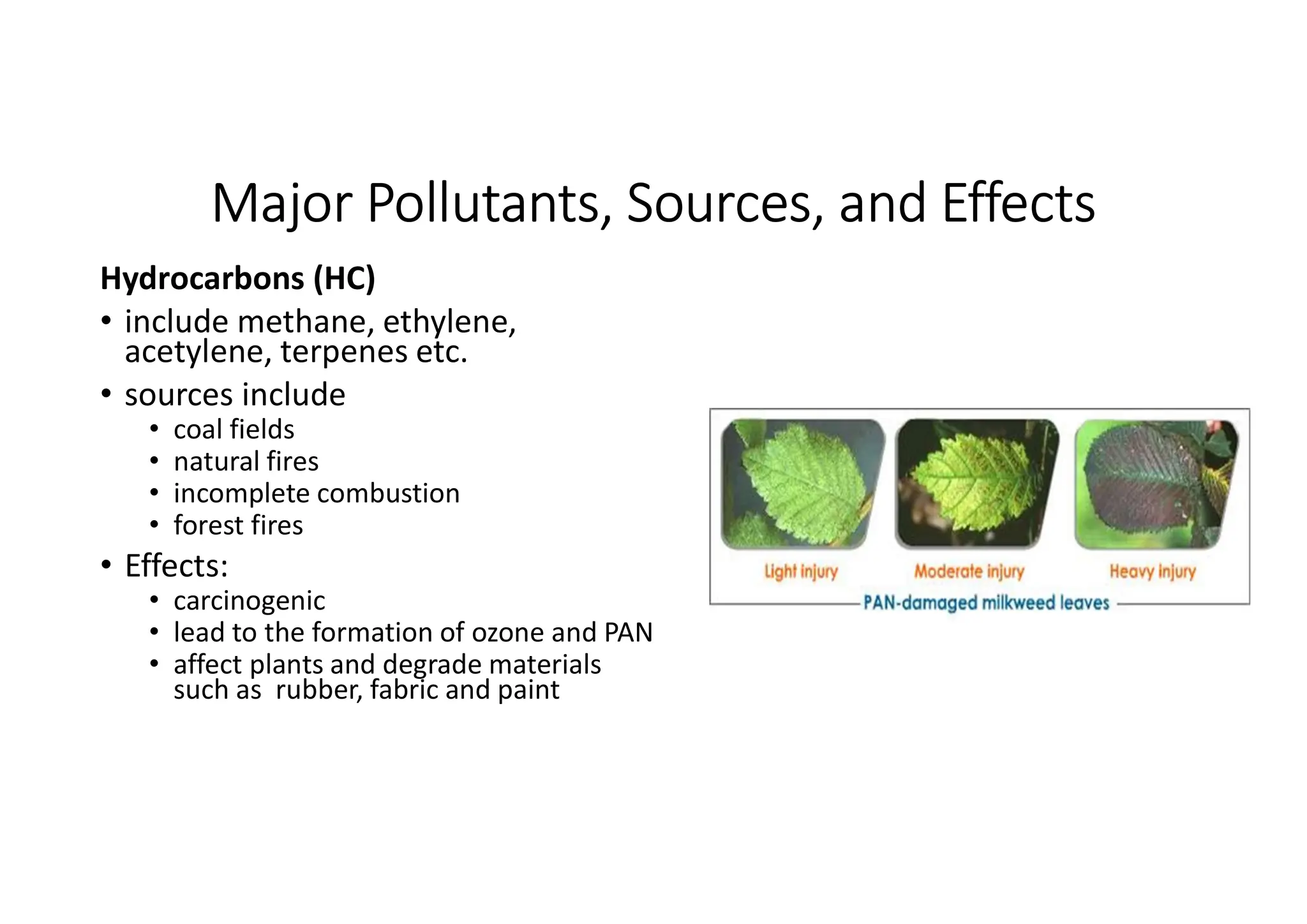
Hydrocarbons (HC)
• include methane, ethylene,
acetylene, terpenes etc.
• sources include
• coal fields
• natural fires
• incomplete combustion
• forest fires
• Effects:
• carcinogenic
• lead to the formation of ozone and PAN
• affect plants and degrade materials
such as rubber, fabric and paint
Major Pollutants, Sources, and Effects
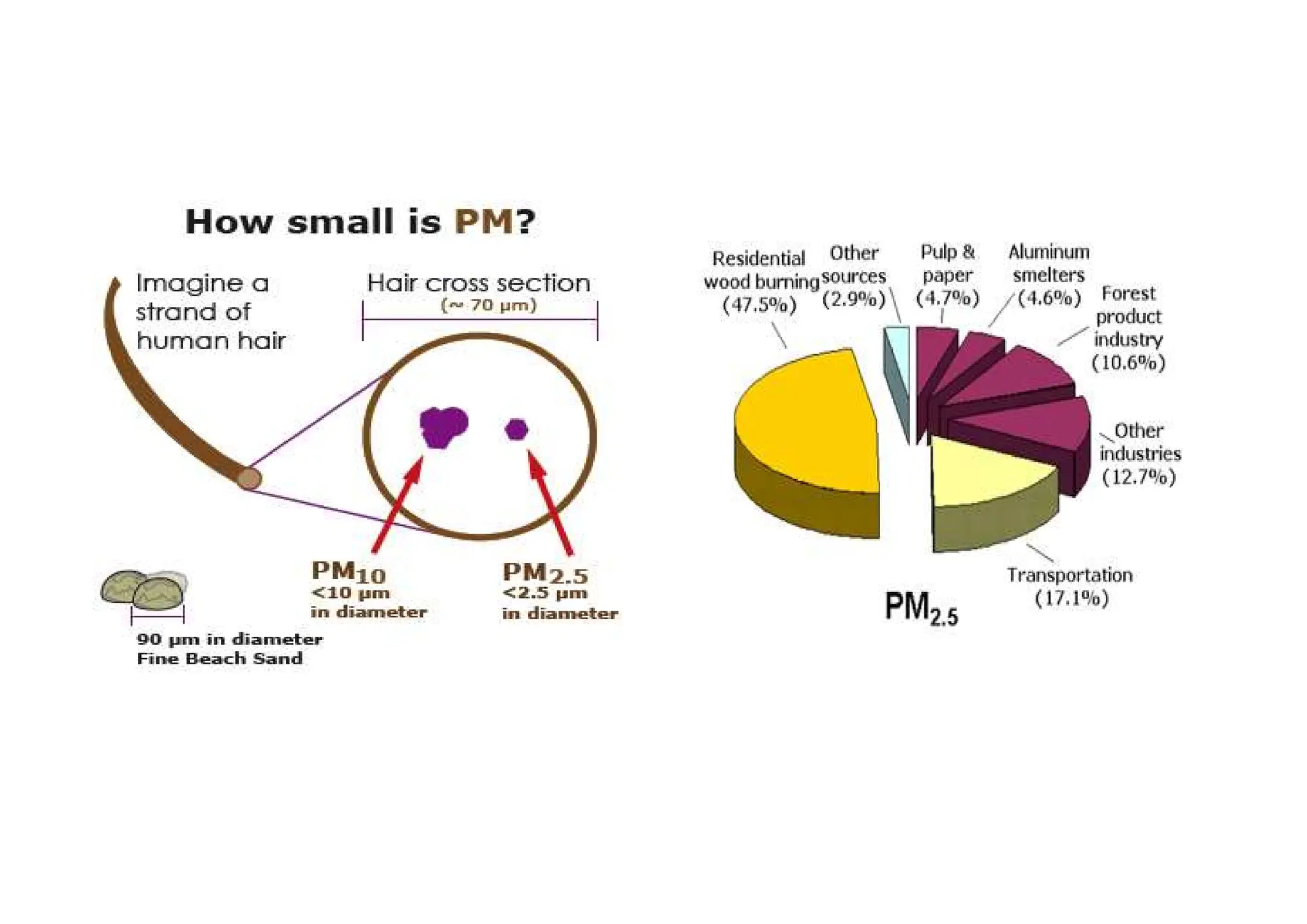
Particulate Matter (PM)
• particles of various substances suspended in the air (aerosols)
• in the form of solid particles and liquid droplets
• vary widely in size
• PM may be found in dust, smoke, fumes, mist, fog, fly ash etc.
• known sources of PM:
• diesel trucks and buses
• construction equipment
• power plants
• burning of solid fuels
• PM can also be a result of condensation of gases or reactions of air-borne
compounds
Effects of PM:
• premature death
• aggravated asthma
• acute respiratory symptoms
• chronic bronchitis
• decreased lung function (shortness of breath)
People with existing heart and lung disease, as
well as the elderly and children, are particularly at
risk.
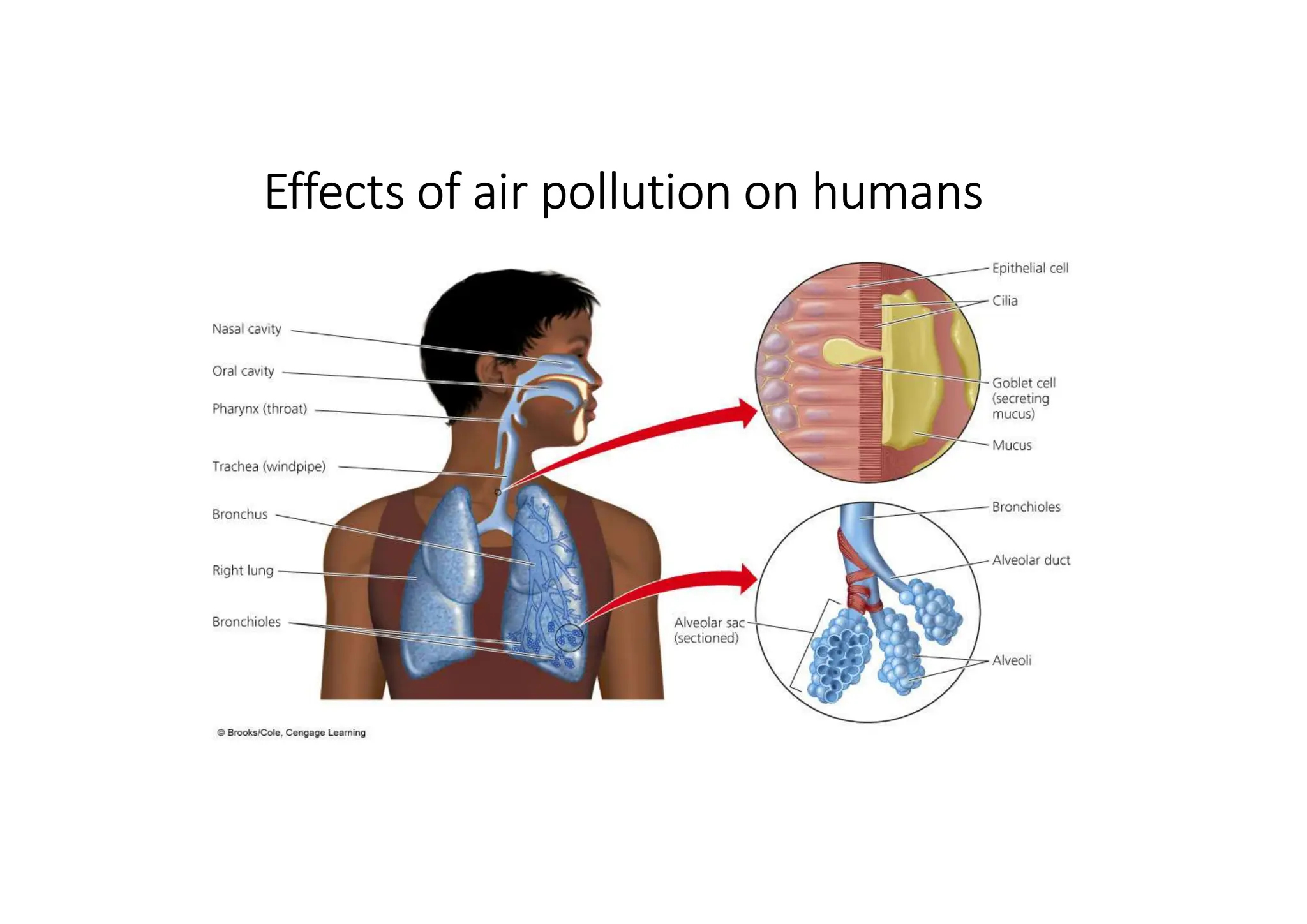
Effects of air pollution on humans
• air pollution accounts for around 30-40% of cases of
asthma and 20-30% of all respiratory disease.
• Short-term effects: irritation to nose, eye, throat,
bronchitis, headache etc.
• Long-term effects: lung disease, chronic respiratory
problem, damage to heart, brain, eyes etc.
• eye irritation due exposure to NOx, O3, PAN, PM
• nose and throat ailments due to pollutants such as
SO2, NOx
• gaseous pollutants like H2S, SO2, NO2 and hydrocarbons
cause noxious odors
• irritation of respiration tract caused by SOx, NOx, CO, O3.
• exposure to high concentrations of SO2, NO2 and SPM
causes bronchitis and asthma
• CO and NO react with hemoglobin and reduce O2
carrying capacity of blood
• heavy metals like lead can cause poisoning; high
concentrations cause damage to liver and kidney.
Air Pollutant Factors Affecting Human Health
• nature of the pollutants
• concentration of the pollutants
• duration of exposure
• state of health of receptor
• age group of the receptor
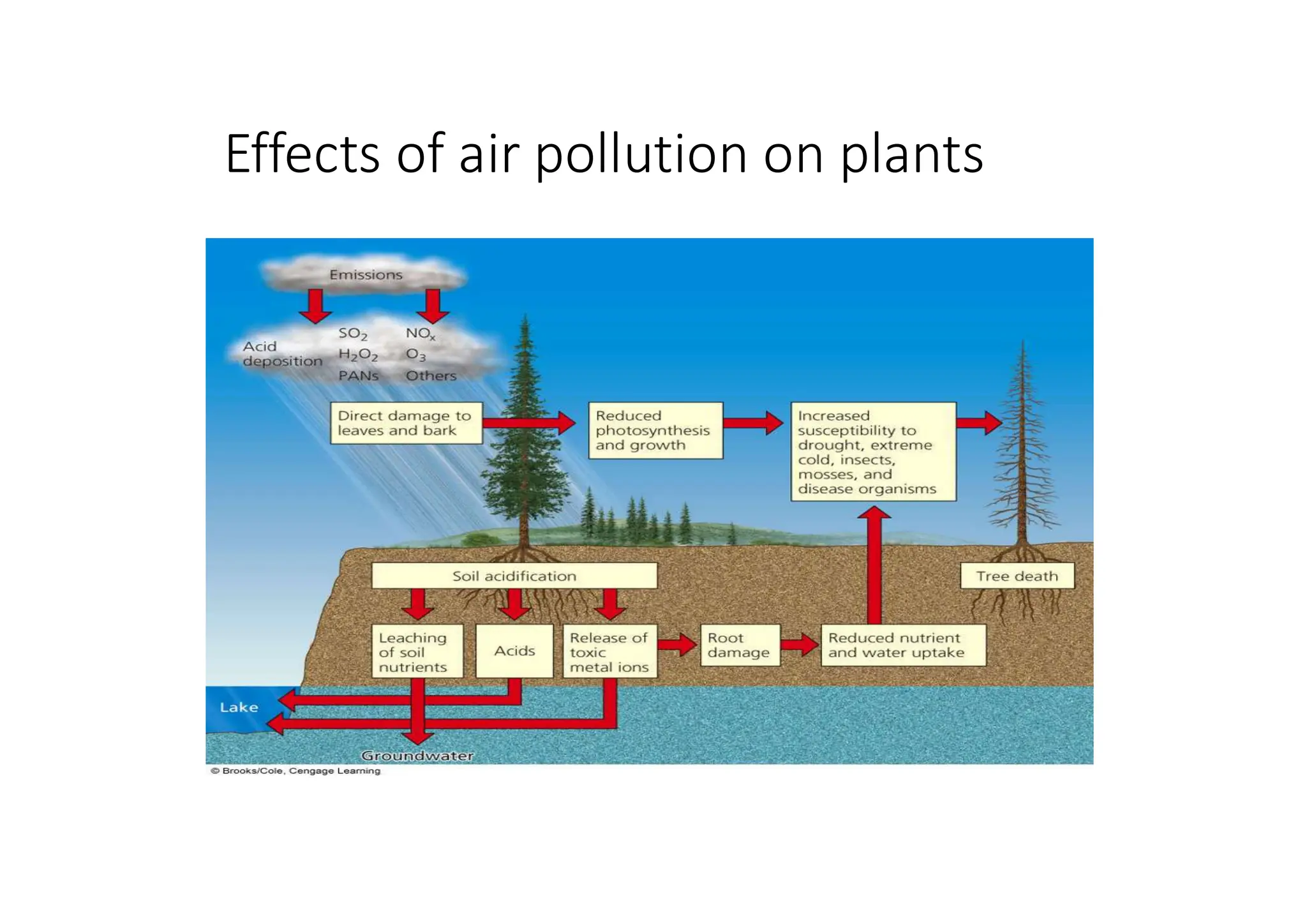
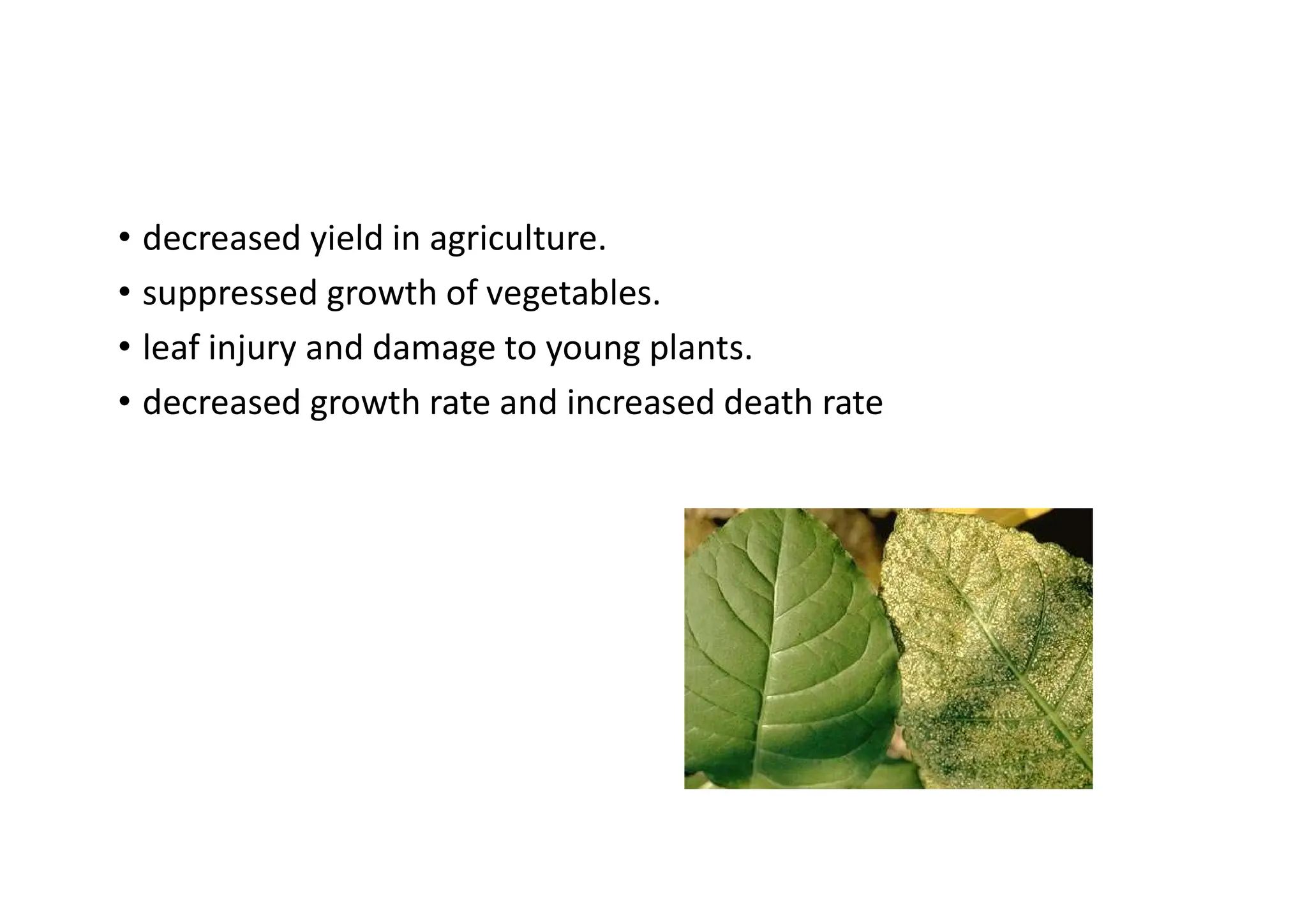
Effects of air pollution on plants
• decreased yield in agriculture.
• suppressed growth of vegetables.
• leaf injury and damage to young plants.
• decreased growth rate and increased death rate
Some Effects of air pollution on materials
• corrosion of metals due to SO2 in presence of oxygen
and moisture is converted into H2SO4; H2SO4 reacts
with limestone, marble and other building materials
to cause deterioration.
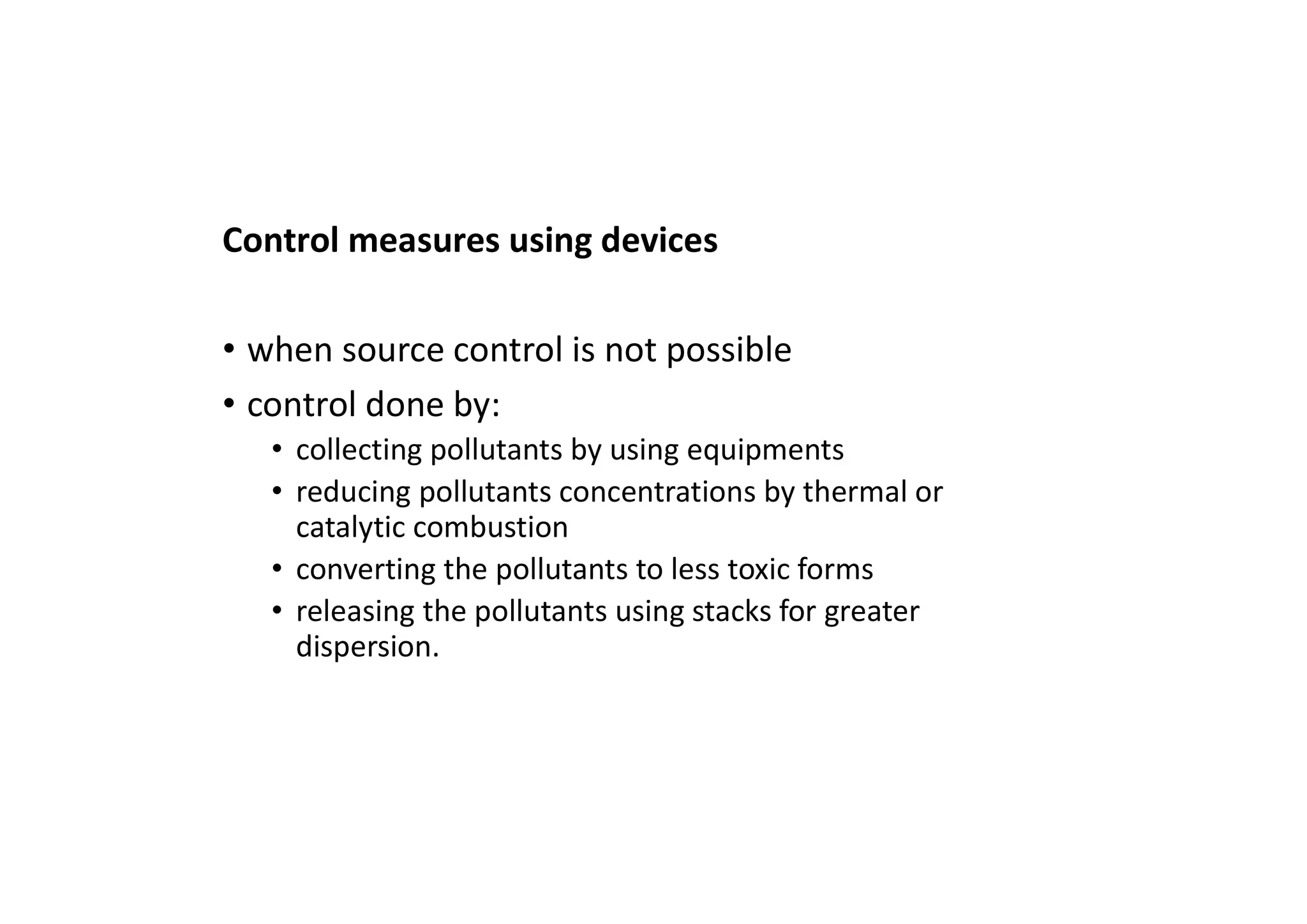
• soiling and erosion of building materials.
• SO2, O3, H2S and aerosols damage protective coating
and paints of the surface
• O3 and PAN causes cracking of rubber and various
electrical insulations
• deterioration of art work due to SPM.
Air pollution control
Cannot be fully prevented but can be controlled.
1. Preventive measures
2. Control measures using devices
Preventive measures (source control)
• selection of suitable fuel (e.g., low sulphur coal in
power plant, using of CNG)
• modifications in industrial processes
• selection of suitable sites; zoning for industrial
plants
Control measures using devices
• when source control is not possible
• control done by:
• collecting pollutants by using equipments
• reducing pollutants concentrations by thermal or
catalytic combustion
• converting the pollutants to less toxic forms
• releasing the pollutants using stacks for greater
dispersion.
Air pollution controlling equipment
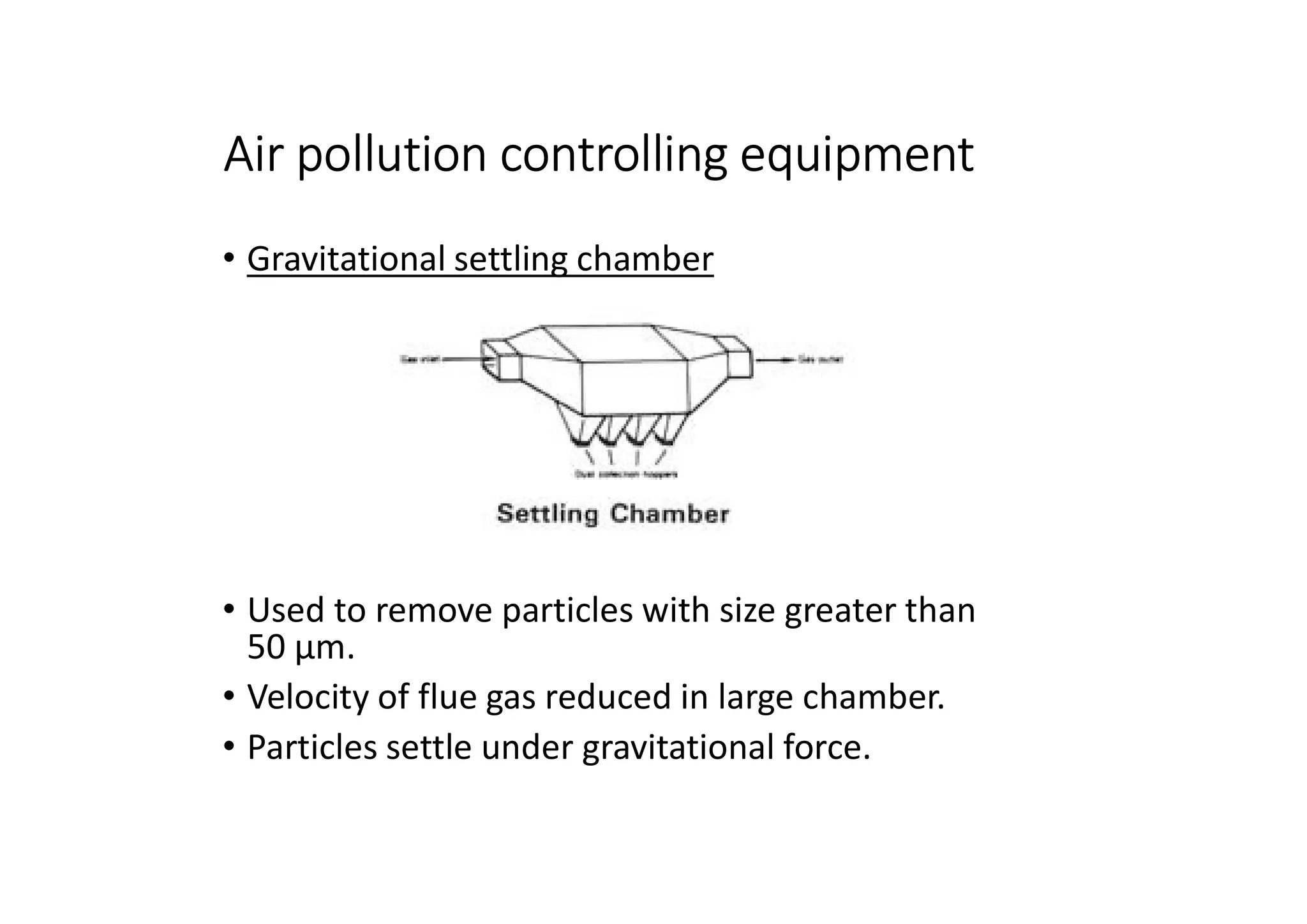
• Gravitational settling chamber
• Used to remove particles with size greater than
50 μm.
• Velocity of flue gas reduced in large chamber.
• Particles settle under gravitational force.
Advantages
• Low initial cost.
• Easy to design.
• Low pressure drop.
• Low maintenance cost.
• Dry and continuous disposal of solid particulates.
Disadvantages
• Require large space.
• Less collection efficiency.
• Only larger size particles can be collected.
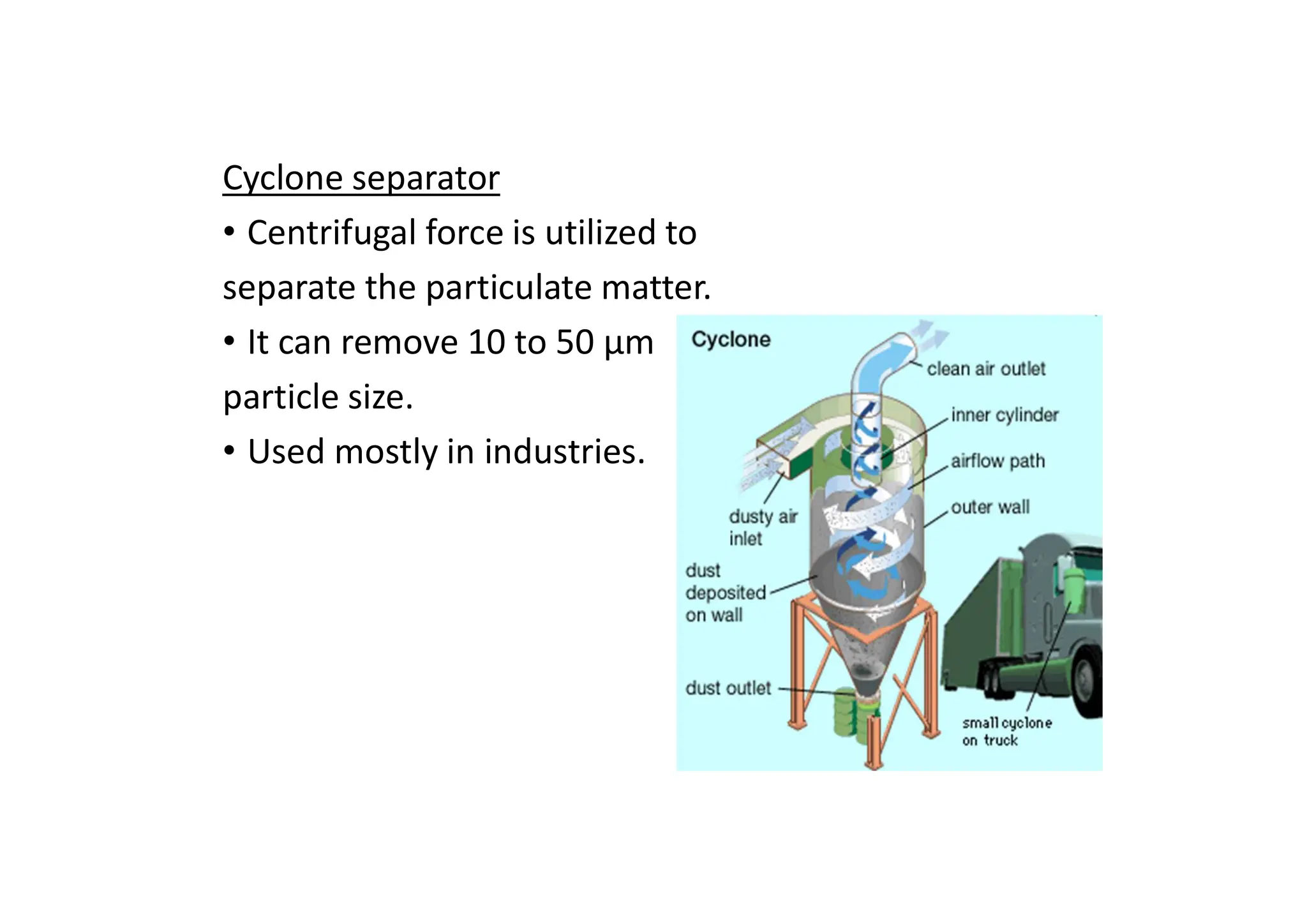
Cyclone separator
• Centrifugal force is utilized to
separate the particulate matter.
• It can remove 10 to 50 μm
particle size.
• Used mostly in industries.
Advantages
• Low initial cost.
• Require less floor area.
• Simple construction and maintenance.
• Can handle large volume of gas at high temp.
Disadvantages
• Requires large head room.
• Less efficiency for smaller particles (<10μm).
• Sensitive to variable dust load and flow rate.
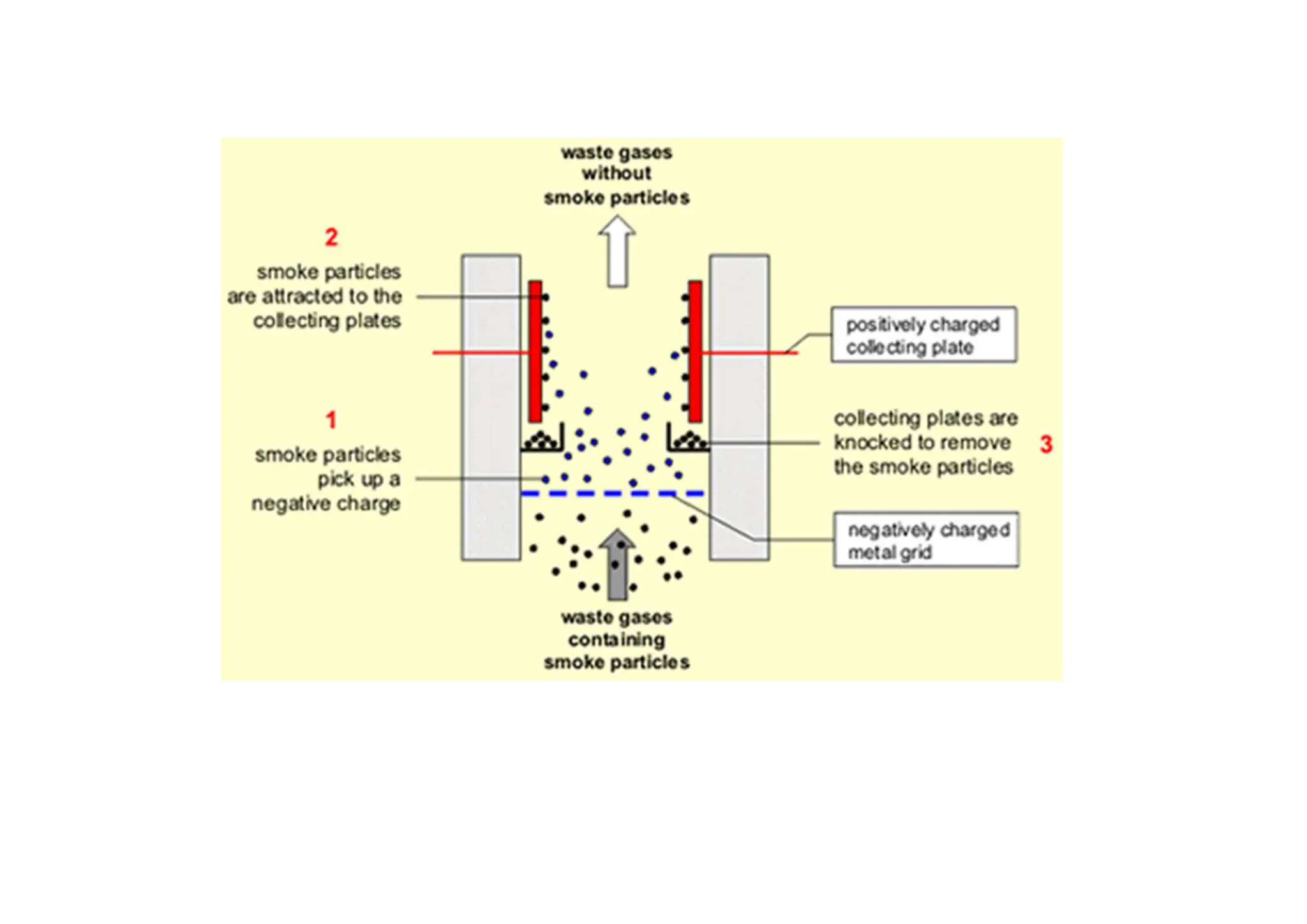
Electrostatic precipitators
• works on the principle of electrical charging of
particulate matter (negative) and collecting it in
a positive-charged surface
• 99% collection efficiency
• can remove particle size range of 0.1 μm to 1
μm.
Advantages
• High collection efficiency.
• Particles may be collected dry or wet.
• Can be operated at high temp. (300-450˚c).
• Maintenance is normal.
• Few moving parts.
Disadvantages
• High initial cost.
• Require high voltage.
• Collection efficiency reduce with time.
• Space requirement is more.
• Possible of explosion during collection of
combustible gases or particulates.
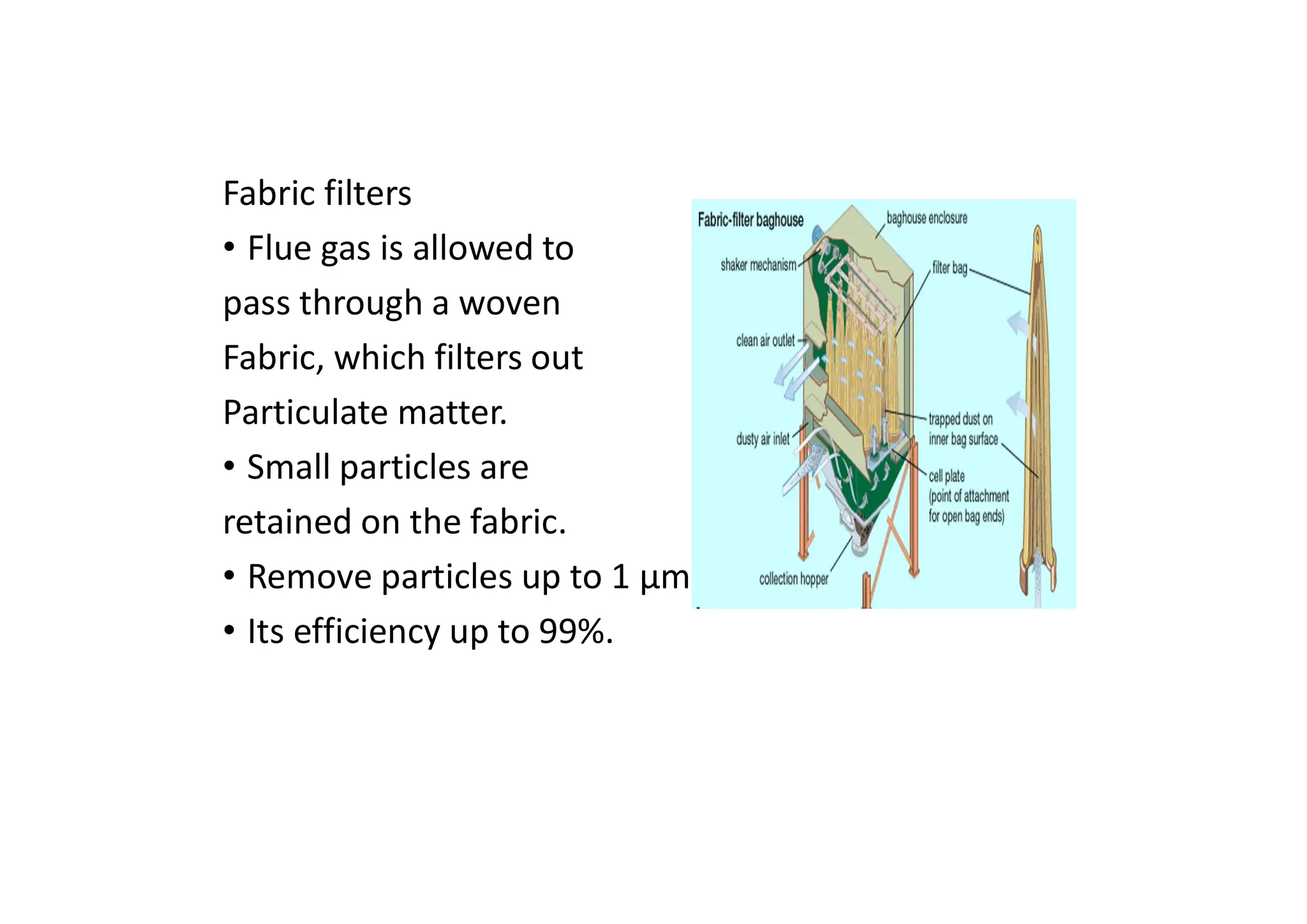
Fabric filters
• Flue gas is allowed to
pass through a woven
Fabric, which filters out
Particulate matter.
• Small particles are
retained on the fabric.
• Remove particles up to 1 μm.
• Its efficiency up to 99%.
Advantages
• Higher collection efficiency for smaller than
10 μm particle size.
• Performance decrease becomes visible, giving
prewarning.
• Normal power consumption.
Disadvantages
• High temp. gases need to be cooled.
• High maintenance and fabric replacement cost.
• Large size equipment.
• Fabric is liable to chemical attack.
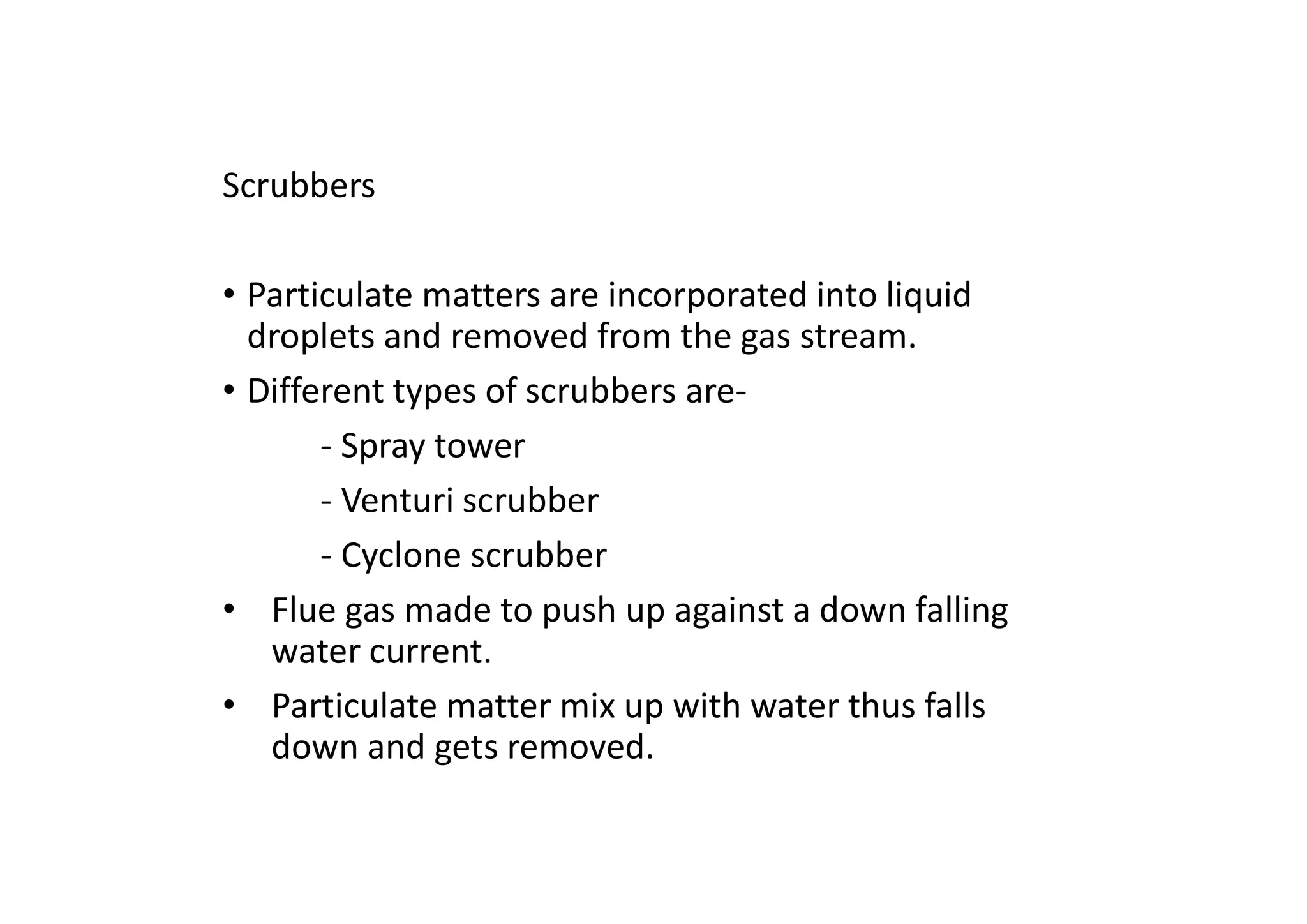
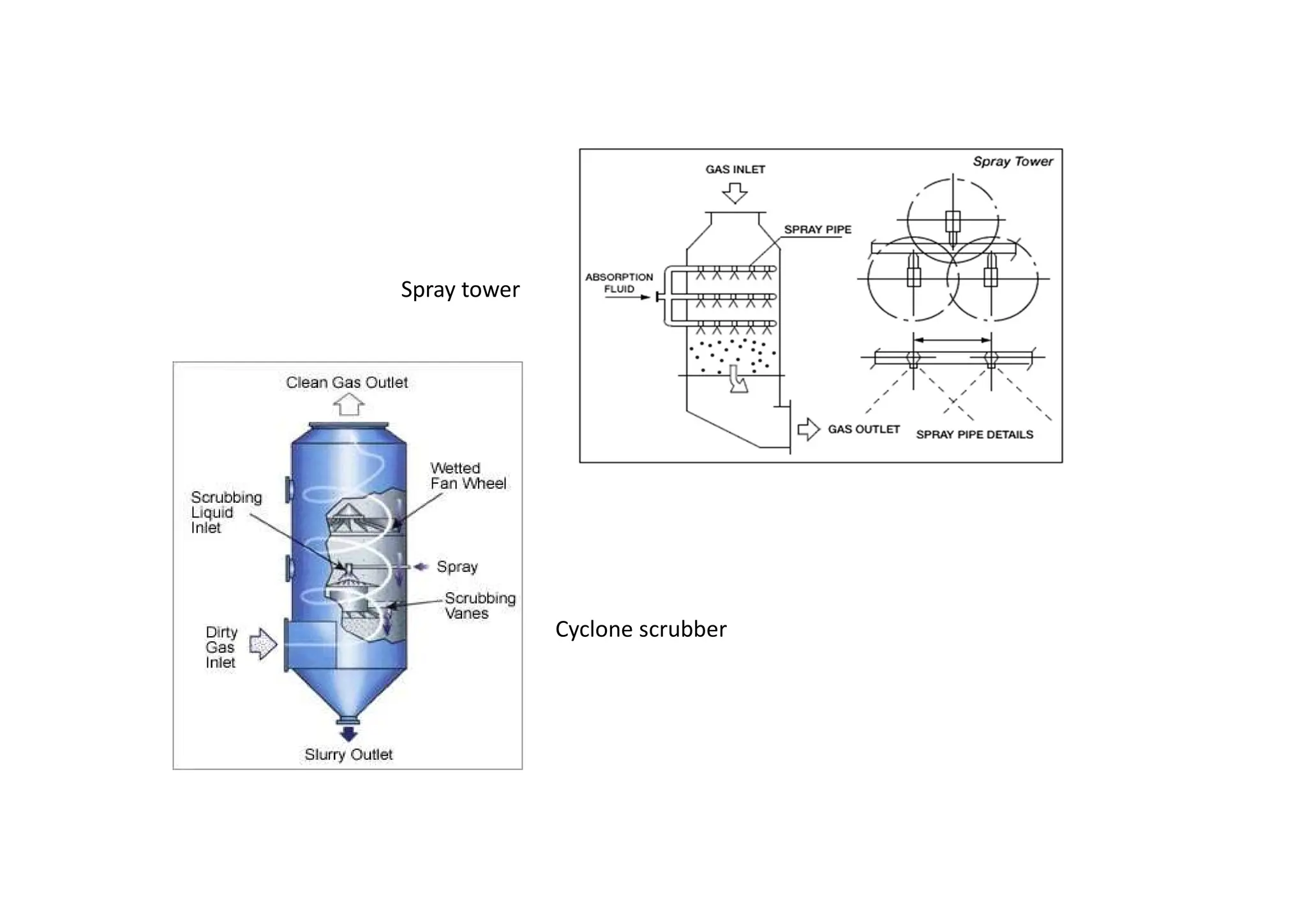
Scrubbers
• Particulate matters are incorporated into liquid
droplets and removed from the gas stream.
• Different types of scrubbers are-
- Spray tower
- Venturi scrubber
- Cyclone scrubber
• Flue gas made to push up against a down falling
water current.
• Particulate matter mix up with water thus falls
down and gets removed.
Spray tower
Cyclone scrubber
Advantages
• Simultaneously remove particulates and gaseous
pollutants.
• Hot gases can be cooled down.
• Corrosive gases can be recovered and neutralize.
Disadvantages
• Lot of waste waters produced.
• Poses freezing problem in cold countries.
• Maintenance cost is high when corrosive materials
are collected.
END OF LECTURE

AIR POLLUTION lecture EnE203 updated.pdf

  • 1.
    AIR POLLUTION EnE 203Lecture Joseph Gerard T. Reyes, Ph.D.
  • 2.
    Outline • Definition • Compositionof atmospheric air • Classification and sources of air pollutants • Effects of air pollution • Air pollution control methods, equipment and safety
  • 3.
    What is Pollution? •Change in background concentration • Any substance introduced into the environment that adversely affects the usefulness of a resource. • Pollution happens because no process is 100% efficient; each process produces waste, which can contribute to pollution. • Air pollution - one or more contaminants or combinations in such quantities and of such durations in atmospheric air which tend to be injurious to biological life, or materials
  • 4.
    The Earth’s Atmosphere:Composition Note: The Earth’s atmosphere has been changing over time due to natural and anthropogenic activities.
  • 5.
    Gas Typical Surface Concentration (ppm) LifetimeSource N2 780,840 Biological cycle O2 209,840 Biological cycle H2O Variable Hydrologic cycle Ar 9340 Inert CO2 355 7 y Fossil fuel combustion, deforestation CH4 1.72 7 y Wetlands, natural gas use, agriculture N2O 0.31 120 y Oceans, soils, combustion CO 0.10 1 month Methane oxidation, combustion O3 0.04 Photochemistry NH3 10-3 10 d Livestock, fertilizer, wildlife, oceans NO/NO2 10-3 1 d High-temperature combustion SO2 10-3 1 d Coal, combustion CFCl3 2.7 x 10⁻⁴ 50 y Refrigerant, solvent ATMOSPHERIC CONSTITUENTS (Seinfeld and Pandis, 1998)
  • 6.
    Pressure = 1,000 millibarsat ground level Atmospheric pressure (millibars) 0 200 400 600 800 1,000 120 110 100 90 80 70 60 50 40 30 20 10 0 (Sea Level) –80 –40 0 40 80 120 Temperature (˚C) Altitude (kilometers) Altitude (miles) 75 65 55 45 35 25 15 5 Thermosphere Heating via ozone Mesosphere Stratosphere Ozone “layer” Heating from the earth Troposphere Temperature Pressure Mesopause Stratopause Tropopause The Structure of the Earth’s Atmosphere
  • 7.
    Classification of Sourcesof Air Pollution • Natural – e.g., pollen grains, volcanic eruptions, forest fires, dust storms, spores, bacteria and other microorganisms. • Man- made – e.g., industrial plants, thermal power plants, automobile exhaust, fossil fuel burning, mining
  • 8.
    Stationary and MobileSources of Emissions • Stationary sources • Point (major) source – a stationary single, major source of emissions; can be pinpointed to a single location • Area source - smaller-size facilities that release lesser quantities of toxic pollutants into the air; mobile sources with indefinite routes • Volume source – a three-dimensional source of pollutant emissions (includes elevations from ground, e.g. emissions from roof vents of buildings); emissions are often uncontrolled • Line source – mobile sources with definite routes
  • 11.
    Characteristics of AirPollutants • temporarily or permanently resident in the atmospheric air • alter the environment leading to effects on health, the food chain, and well-being of people • pollutants can be solid (large or sub-molecular), liquid or gas • originate from a natural or anthropogenic sources (or both) • It is estimated that anthropogenic sources have changed the composition of global air by less than 0.01%. This will still have a significant impact on the climate, ecosystem and all species on the planet.
  • 12.
    CLASSIFICATION OF AIRPOLLUTANTS • primary pollutants, which are emitted directly from identifiable sources • secondary pollutants, which are produced in the atmosphere when certain chemical reactions take place among primary pollutants. Atmospheric phenomena influence the formation of secondary pollutants
  • 13.
    Major Primary Pollutants •particulate matter (PM) • sulfur dioxide • nitrogen oxides • volatile organic compounds (VOCs) • carbon monoxide • lead
  • 16.
    Secondary Pollutants • Someprimary air pollutants react with one another or with other chemicals to form secondary pollutants. • Examples are • Ozone • Formaldehyde • PAN (peroxy acetyl nitrate, C2H3NO5) • smog (photochemical or smoke induced) • acid mist • sulfuric acid
  • 18.
    • Atmospheric sulfuricacid is one example of a secondary pollutant – cause of acid rain • Air pollution in urban and industrial areas is often called smog. • Photochemical smog, a noxious mixture of gases and particles, is produced when strong sunlight triggers photochemical reactions in the atmosphere. • The major component of photochemical smog is ozone.
  • 19.
    Major Pollutants, Sources,and Effects Carbon monoxide (CO) • colorless, odorless, tasteless gas. • No effect at normal conc. (0.1ppm) but higher concentrations produce serious effects • Volcanoes, natural gas emissions, seed germination contribute to CO • Transport sector account for up to 95% of CO emissions in cities (US EPA 2008) • Effects of CO poisoning: reduced oxygen carrying capacity of blood, decrease in vision; cardio-vascular disorders.
  • 21.
    Major Pollutants, Sources,and Effects Carbon dioxide (CO2) • colorless, odorless, tasteless gas. • a product of combustion, respiration or decomposition; can also be a secondary pollutant • emitted from natural and anthropogenic sources • effects: nausea, headaches • an atmospheric greenhouse gas
  • 22.
    Major Pollutants, Sources,and Effects Oxides of nitrogen (NOx) • group that includes NO, NO2, N2O. • sources include: • fuel combustion in automobiles and industries; three types of production – fuel NOx, thermal NOx, prompt NOx • agriculture • lightning • forest fires. • natural ionizing radiations • effects: Reduce blood carrying capacity; lung problems • can react with other airborne compounds to produce nitric acids and photochemical smog
  • 23.
    Major Pollutants, Sources,and Effects Oxides of sulfur (SOx) • include SO2, SO3. • 67% SOx pollution due to volcanic activities and other natural sources • anthropogenic sources are fossil fuel burning, transportation, industrial activities; sulfur is contained in fuel such as coal and diesel • effects: respiratory problems; materials such as marbles, cloth, paper, leather also affected; impact on plants • can react with airborne compounds to produce sulfuric acid
  • 24.
    Major Pollutants, Sources,and Effects Hydrocarbons (HC) • include methane, ethylene, acetylene, terpenes etc. • sources include • coal fields • natural fires • incomplete combustion • forest fires • Effects: • carcinogenic • lead to the formation of ozone and PAN • affect plants and degrade materials such as rubber, fabric and paint
  • 25.
    Major Pollutants, Sources,and Effects Particulate Matter (PM) • particles of various substances suspended in the air (aerosols) • in the form of solid particles and liquid droplets • vary widely in size • PM may be found in dust, smoke, fumes, mist, fog, fly ash etc. • known sources of PM: • diesel trucks and buses • construction equipment • power plants • burning of solid fuels • PM can also be a result of condensation of gases or reactions of air-borne compounds
  • 27.
    Effects of PM: •premature death • aggravated asthma • acute respiratory symptoms • chronic bronchitis • decreased lung function (shortness of breath) People with existing heart and lung disease, as well as the elderly and children, are particularly at risk.
  • 28.
    Effects of airpollution on humans
  • 29.
    • air pollutionaccounts for around 30-40% of cases of asthma and 20-30% of all respiratory disease. • Short-term effects: irritation to nose, eye, throat, bronchitis, headache etc. • Long-term effects: lung disease, chronic respiratory problem, damage to heart, brain, eyes etc. • eye irritation due exposure to NOx, O3, PAN, PM • nose and throat ailments due to pollutants such as SO2, NOx
  • 30.
    • gaseous pollutantslike H2S, SO2, NO2 and hydrocarbons cause noxious odors • irritation of respiration tract caused by SOx, NOx, CO, O3. • exposure to high concentrations of SO2, NO2 and SPM causes bronchitis and asthma • CO and NO react with hemoglobin and reduce O2 carrying capacity of blood • heavy metals like lead can cause poisoning; high concentrations cause damage to liver and kidney.
  • 31.
    Air Pollutant FactorsAffecting Human Health • nature of the pollutants • concentration of the pollutants • duration of exposure • state of health of receptor • age group of the receptor
  • 32.
    Effects of airpollution on plants
  • 33.
    • decreased yieldin agriculture. • suppressed growth of vegetables. • leaf injury and damage to young plants. • decreased growth rate and increased death rate
  • 34.
    Some Effects ofair pollution on materials • corrosion of metals due to SO2 in presence of oxygen and moisture is converted into H2SO4; H2SO4 reacts with limestone, marble and other building materials to cause deterioration. • soiling and erosion of building materials. • SO2, O3, H2S and aerosols damage protective coating and paints of the surface • O3 and PAN causes cracking of rubber and various electrical insulations • deterioration of art work due to SPM.
  • 35.
    Air pollution control Cannotbe fully prevented but can be controlled. 1. Preventive measures 2. Control measures using devices Preventive measures (source control) • selection of suitable fuel (e.g., low sulphur coal in power plant, using of CNG) • modifications in industrial processes • selection of suitable sites; zoning for industrial plants
  • 36.
    Control measures usingdevices • when source control is not possible • control done by: • collecting pollutants by using equipments • reducing pollutants concentrations by thermal or catalytic combustion • converting the pollutants to less toxic forms • releasing the pollutants using stacks for greater dispersion.
  • 37.
    Air pollution controllingequipment • Gravitational settling chamber • Used to remove particles with size greater than 50 μm. • Velocity of flue gas reduced in large chamber. • Particles settle under gravitational force.
  • 38.
    Advantages • Low initialcost. • Easy to design. • Low pressure drop. • Low maintenance cost. • Dry and continuous disposal of solid particulates. Disadvantages • Require large space. • Less collection efficiency. • Only larger size particles can be collected.
  • 39.
    Cyclone separator • Centrifugalforce is utilized to separate the particulate matter. • It can remove 10 to 50 μm particle size. • Used mostly in industries.
  • 40.
    Advantages • Low initialcost. • Require less floor area. • Simple construction and maintenance. • Can handle large volume of gas at high temp. Disadvantages • Requires large head room. • Less efficiency for smaller particles (<10μm). • Sensitive to variable dust load and flow rate.
  • 41.
    Electrostatic precipitators • workson the principle of electrical charging of particulate matter (negative) and collecting it in a positive-charged surface • 99% collection efficiency • can remove particle size range of 0.1 μm to 1 μm.
  • 43.
    Advantages • High collectionefficiency. • Particles may be collected dry or wet. • Can be operated at high temp. (300-450˚c). • Maintenance is normal. • Few moving parts. Disadvantages • High initial cost. • Require high voltage. • Collection efficiency reduce with time. • Space requirement is more. • Possible of explosion during collection of combustible gases or particulates.
  • 44.
    Fabric filters • Fluegas is allowed to pass through a woven Fabric, which filters out Particulate matter. • Small particles are retained on the fabric. • Remove particles up to 1 μm. • Its efficiency up to 99%.
  • 45.
    Advantages • Higher collectionefficiency for smaller than 10 μm particle size. • Performance decrease becomes visible, giving prewarning. • Normal power consumption. Disadvantages • High temp. gases need to be cooled. • High maintenance and fabric replacement cost. • Large size equipment. • Fabric is liable to chemical attack.
  • 46.
    Scrubbers • Particulate mattersare incorporated into liquid droplets and removed from the gas stream. • Different types of scrubbers are- - Spray tower - Venturi scrubber - Cyclone scrubber • Flue gas made to push up against a down falling water current. • Particulate matter mix up with water thus falls down and gets removed.
  • 47.
  • 48.
    Advantages • Simultaneously removeparticulates and gaseous pollutants. • Hot gases can be cooled down. • Corrosive gases can be recovered and neutralize. Disadvantages • Lot of waste waters produced. • Poses freezing problem in cold countries. • Maintenance cost is high when corrosive materials are collected.
  • 49.