Unit 5
Environmental Pollution
•Environmental pollution (Air, water, soil, thermal, and noise): causes, effects, and controls; Primary
and secondary air pollutants; Air and water quality standards
•Nuclear hazards and human health risks
•Solid waste management: Control measures for various types of urban, industrial waste, Hazardous
waste, E-waste, etc; Waste segregation and disposal
•Pollution case studies: Ganga Action plan (GAP), Delhi air pollution and public health issues, Plastic
waste management rules, Bhopal gas tragedy, etc
Nawin Kumar Tiwary, Ph.d.
Assistant Professor
Department of Environmental Studies
Indraprastha College for Women
University of Delhi, Delhi, India
• Pollution, also called environmental pollution is addition of any substance (solid, liquid, or gas) or any form
of energy (such as heat, sound, or radioactivity) to the environment at a rate faster than it can be dispersed,
diluted, decomposed, recycled, or stored in some harmless form.
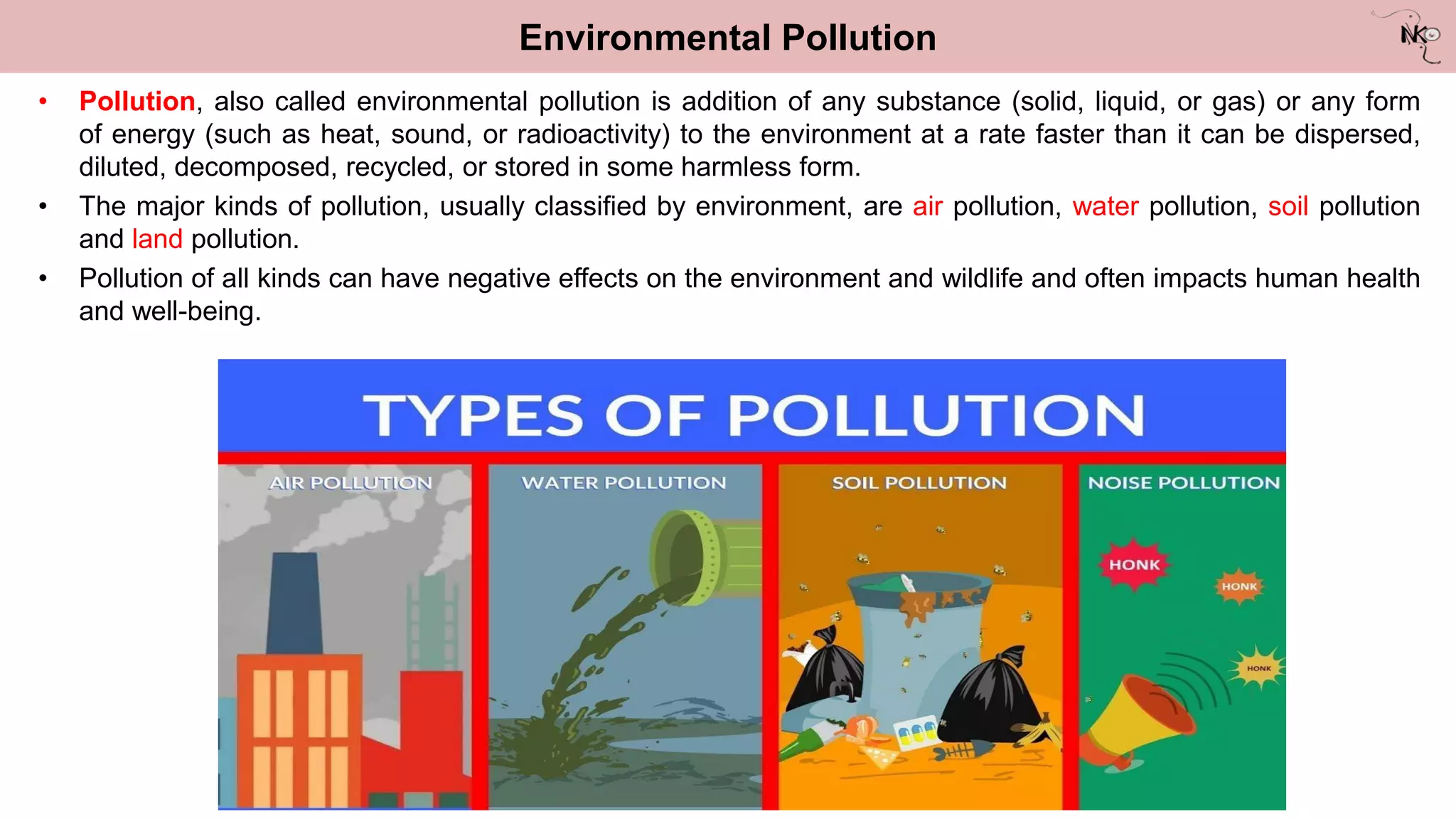
• The major kinds of pollution, usually classified by environment, are air pollution, water pollution, soil pollution
and land pollution.
• Pollution of all kinds can have negative effects on the environment and wildlife and often impacts human health
and well-being.
Environmental Pollution
The introduction of gaseous chemicals, particulate matter, or biological materials that cause harm or
discomfort to humans or other living organisms, or cause damage to the natural environment or built
environment, into the atmosphere.
Air Pollution
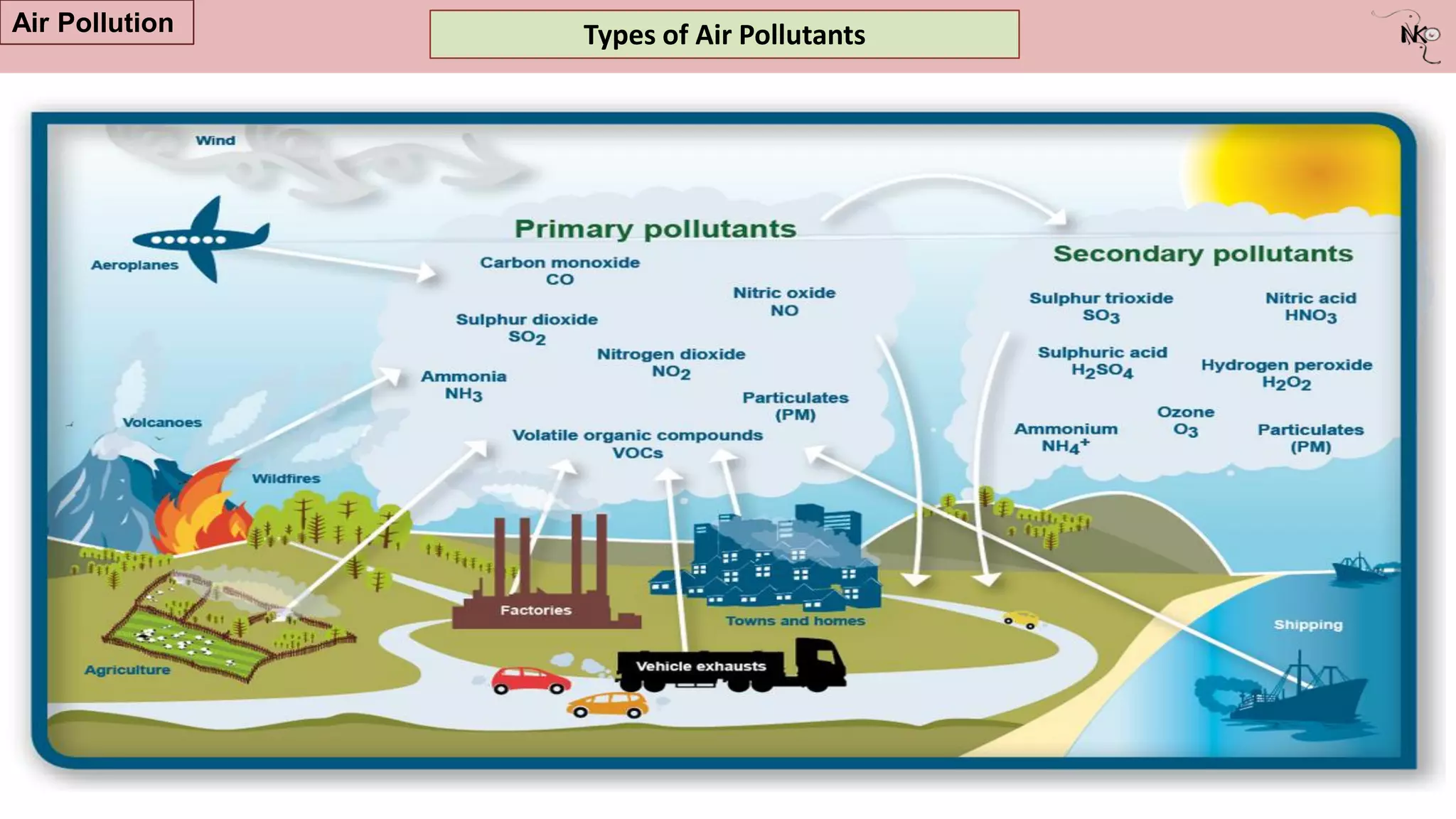
Types of Air Pollutants
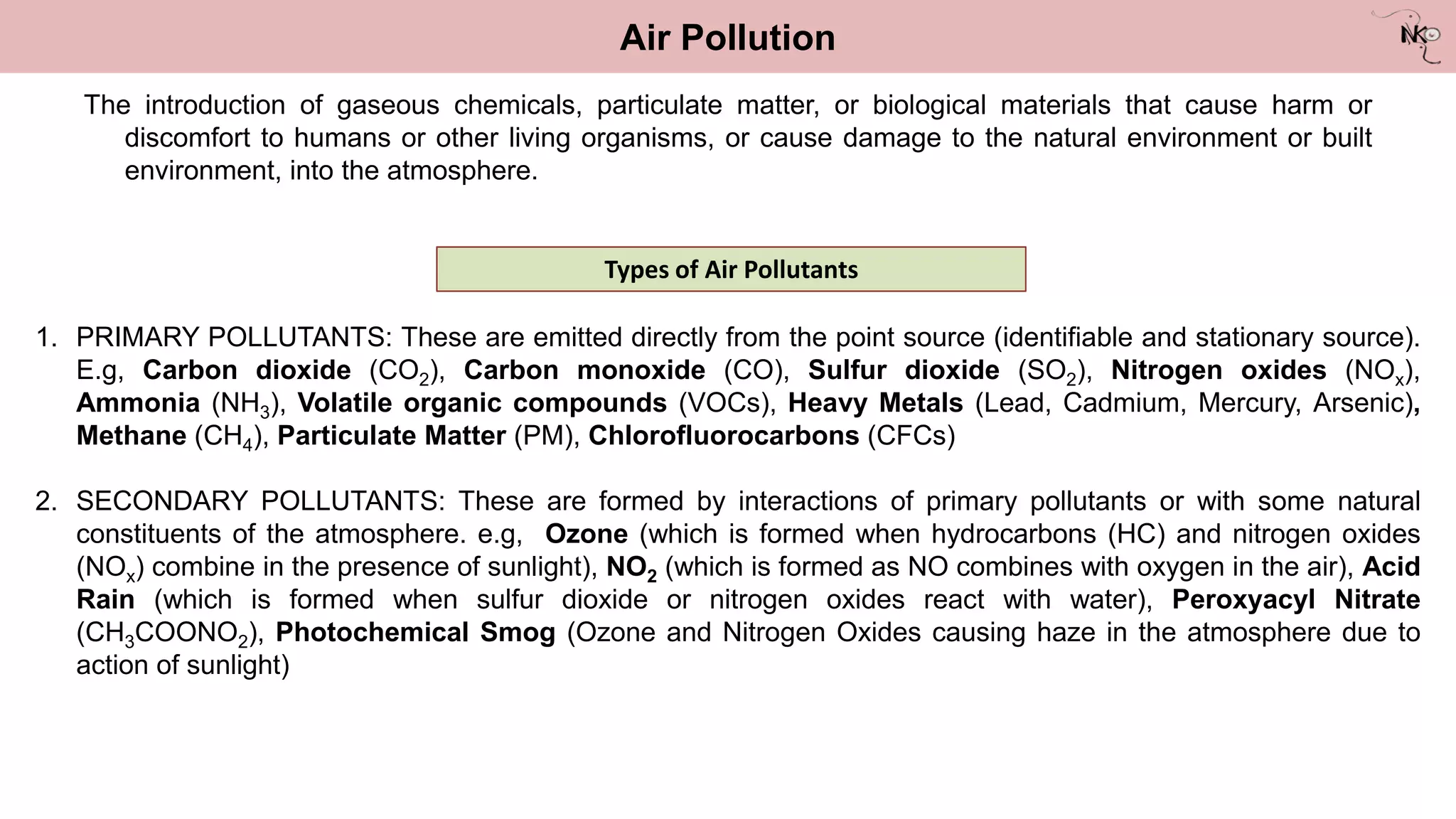
1. PRIMARY POLLUTANTS: These are emitted directly from the point source (identifiable and stationary source).
E.g, Carbon dioxide (CO2), Carbon monoxide (CO), Sulfur dioxide (SO2), Nitrogen oxides (NOx),
Ammonia (NH3), Volatile organic compounds (VOCs), Heavy Metals (Lead, Cadmium, Mercury, Arsenic),
Methane (CH4), Particulate Matter (PM), Chlorofluorocarbons (CFCs)
2. SECONDARY POLLUTANTS: These are formed by interactions of primary pollutants or with some natural
constituents of the atmosphere. e.g, Ozone (which is formed when hydrocarbons (HC) and nitrogen oxides
(NOx) combine in the presence of sunlight), NO2 (which is formed as NO combines with oxygen in the air), Acid
Rain (which is formed when sulfur dioxide or nitrogen oxides react with water), Peroxyacyl Nitrate
(CH3COONO2), Photochemical Smog (Ozone and Nitrogen Oxides causing haze in the atmosphere due to
action of sunlight)
Types of Air Pollutants
Air Pollution
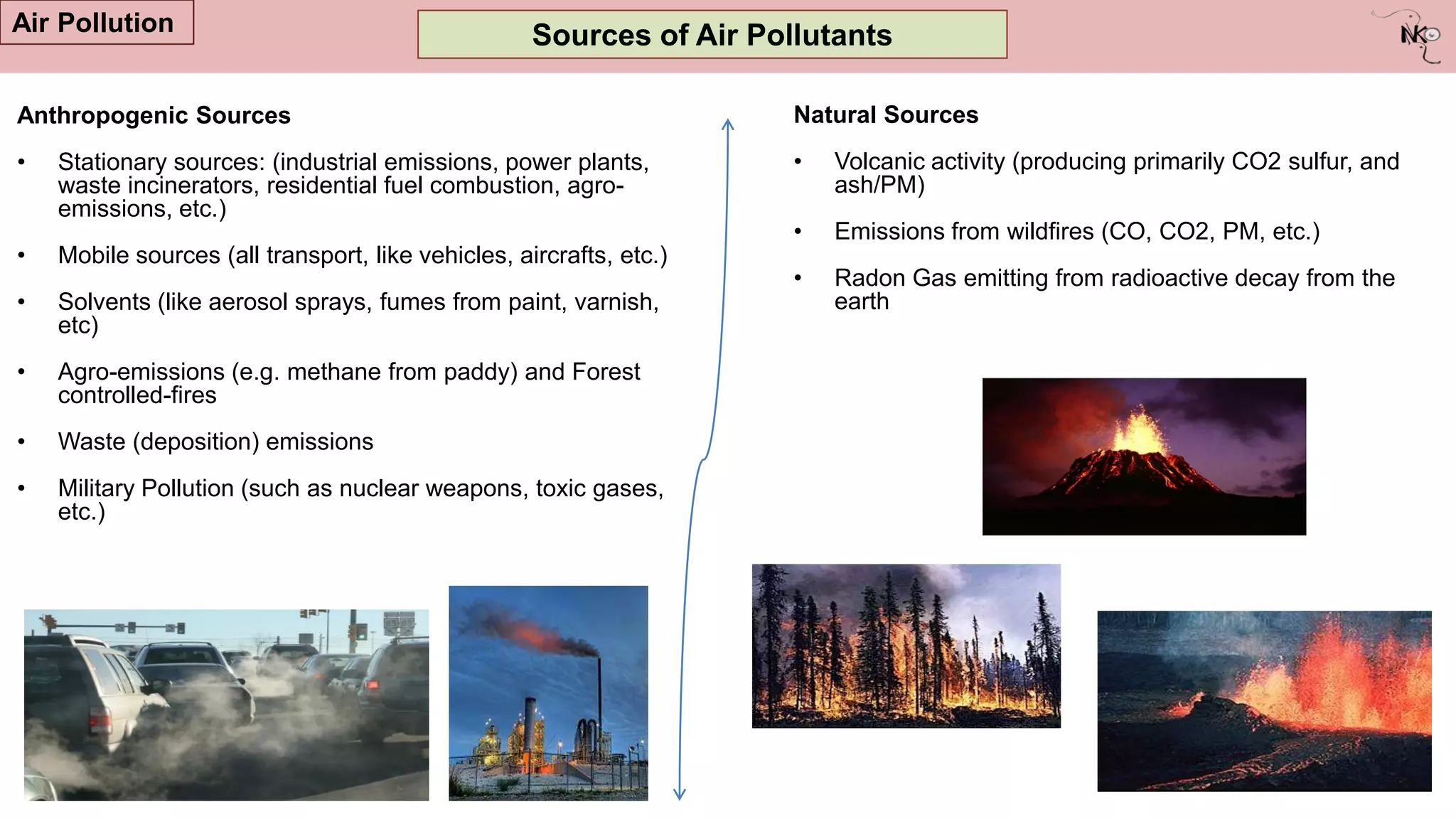
Sources of Air Pollutants
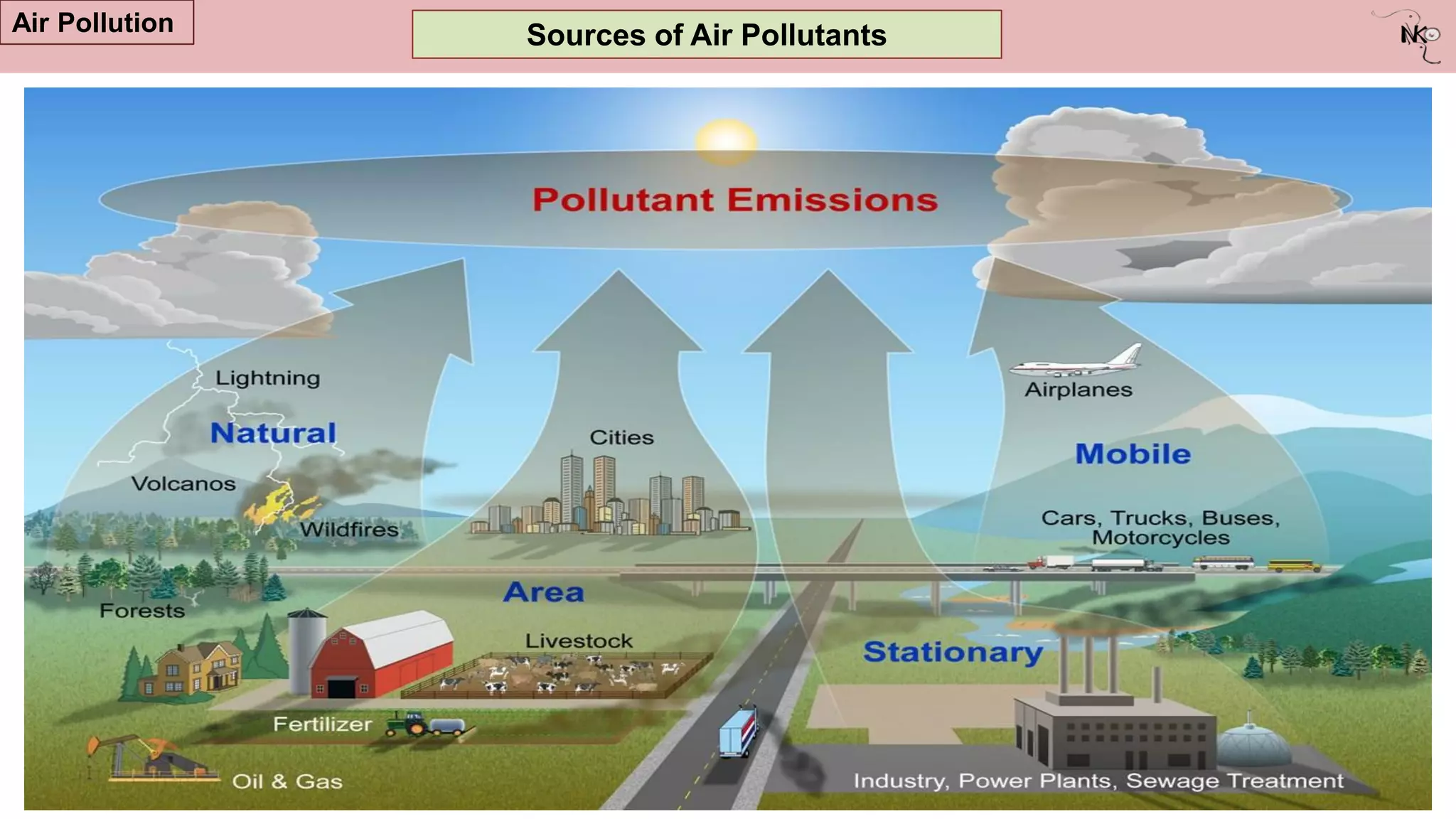
Anthropogenic Sources
• Stationary sources: (industrial emissions, power plants,
waste incinerators, residential fuel combustion, agro-
emissions, etc.)
• Mobile sources (all transport, like vehicles, aircrafts, etc.)
• Solvents (like aerosol sprays, fumes from paint, varnish,
etc)
• Agro-emissions (e.g. methane from paddy) and Forest
controlled-fires
• Waste (deposition) emissions
• Military Pollution (such as nuclear weapons, toxic gases,
etc.)
Natural Sources
• Volcanic activity (producing primarily CO2 sulfur, and
ash/PM)
• Emissions from wildfires (CO, CO2, PM, etc.)
• Radon Gas emitting from radioactive decay from the
earth
Air Pollution
Air Pollution Sources of Air Pollutants
Impacts of Air Pollution
Air Pollution
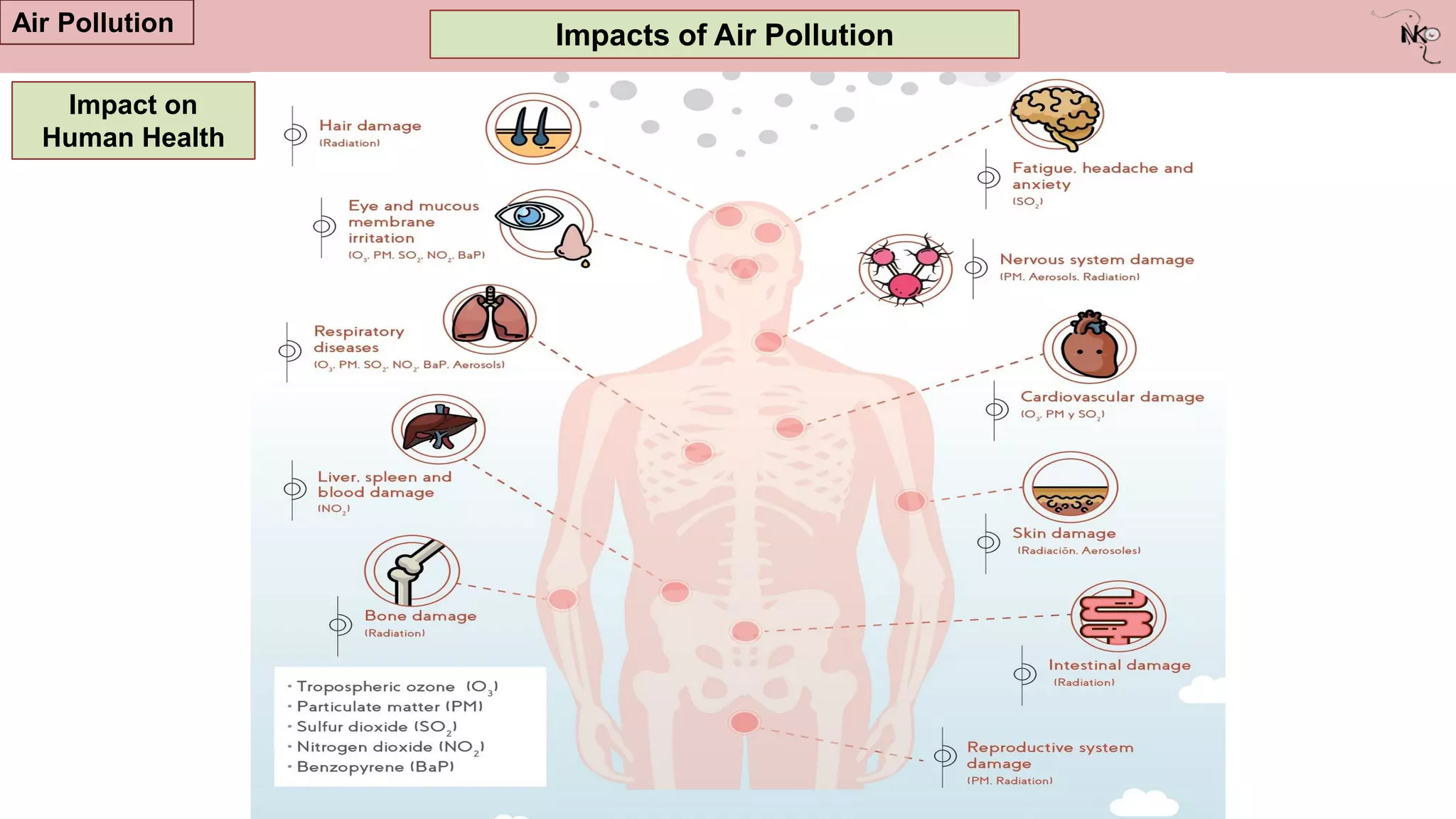
Impact on Human Health
• The immediate effects of air pollution is watery eyes, coughing and difficulty in breathing.
• Exposure to high levels of air pollution during pregnancy has been linked to miscarriages as well as premature birth, autism
spectrum disorder and asthma in children.
• Air pollution may damage children‟s brain development, and pneumonia, which kills almost 1 million children under the age of 5
every year. Children who breathe in higher levels of pollutants also face a greater risk of short-term respiratory infections and
lung damage.
• Other conditions associated with high levels of air pollution include emphysema and chronic bronchitis, as well as lung
cancer.
• Pollutants can affect cardiovascular health by hardening the arteries and increase the risk of heart attack and strokes, and
there is even emerging evidence that air pollution may be linked to mental health conditions and degenerative brain diseases
such as Alzheimer’s disease, Parkinson’s disease and schizophrenia.
• Impact of Particulate Matter: Particulate matter 2.5 (PM2.5) refers to tiny particles or droplets in the air that are of 2.5
microns in size. Fine particles (PM2.5) pose the greatest health risk. These fine particles can get deep into lungs and some may
even get into the bloodstream. Exposure to these particles can affect a person's lungs and heart. Coarse particles (PM2.5 to10)
are of less concern, although they can irritate a person's eyes, nose, and throat.
Impacts of Air Pollution
Air Pollution
Impact on
Human Health
Impacts of Air Pollution
Air Pollution
Impact on Environment
• Ecologically, air pollution can cause serious environmental damages to the groundwater, soil, and air.
• It is a serious threat to the diversity of life. Studies on the relationship between air pollution and reducing species diversity
clearly show the detrimental effects of environmental contaminants on the extinction of animals and plants species.
• Air suspended toxicants may also cause reproductive effects in animals.
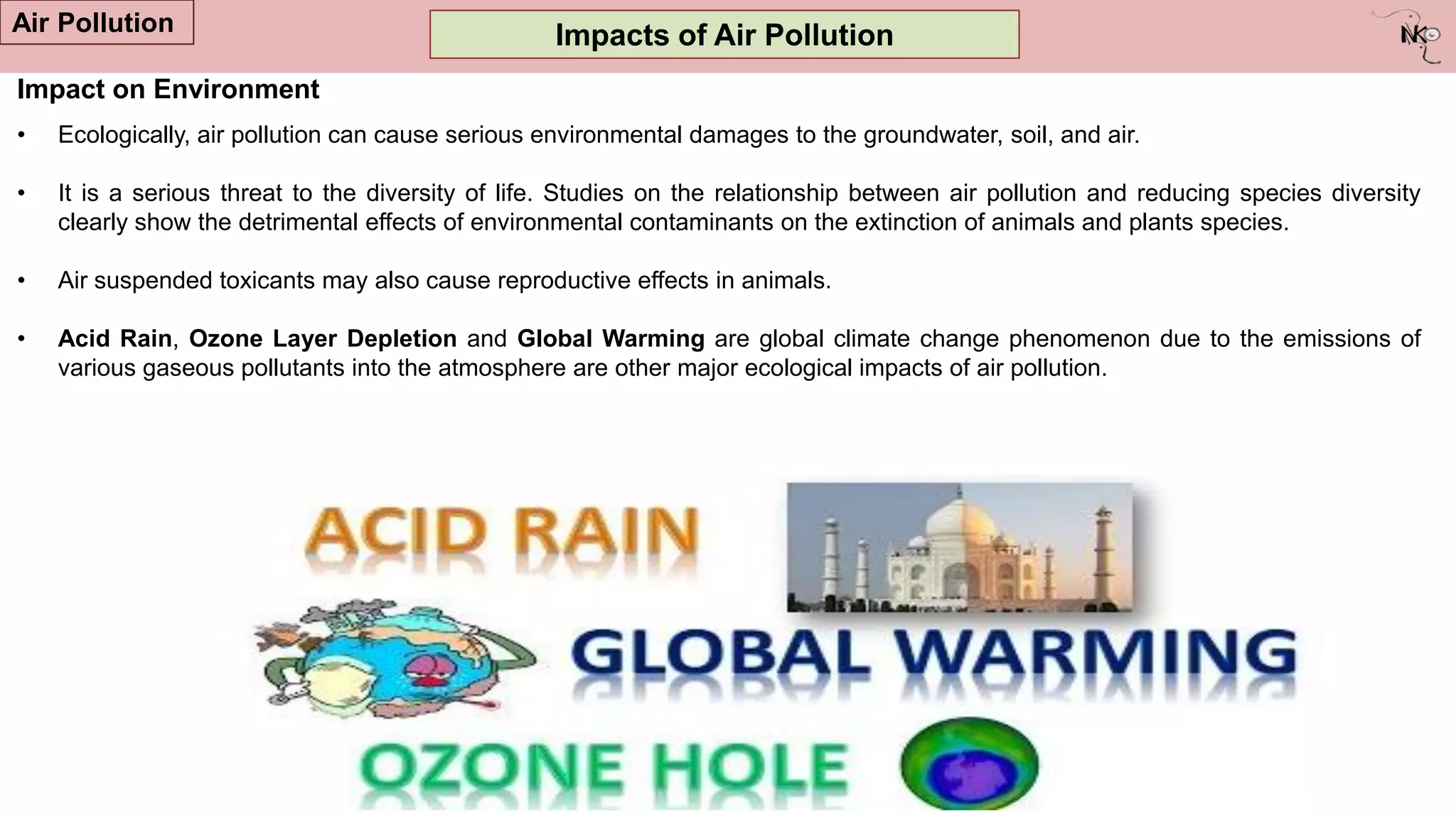
• Acid Rain, Ozone Layer Depletion and Global Warming are global climate change phenomenon due to the emissions of
various gaseous pollutants into the atmosphere are other major ecological impacts of air pollution.
Indoor Air Pollution
Air Pollution
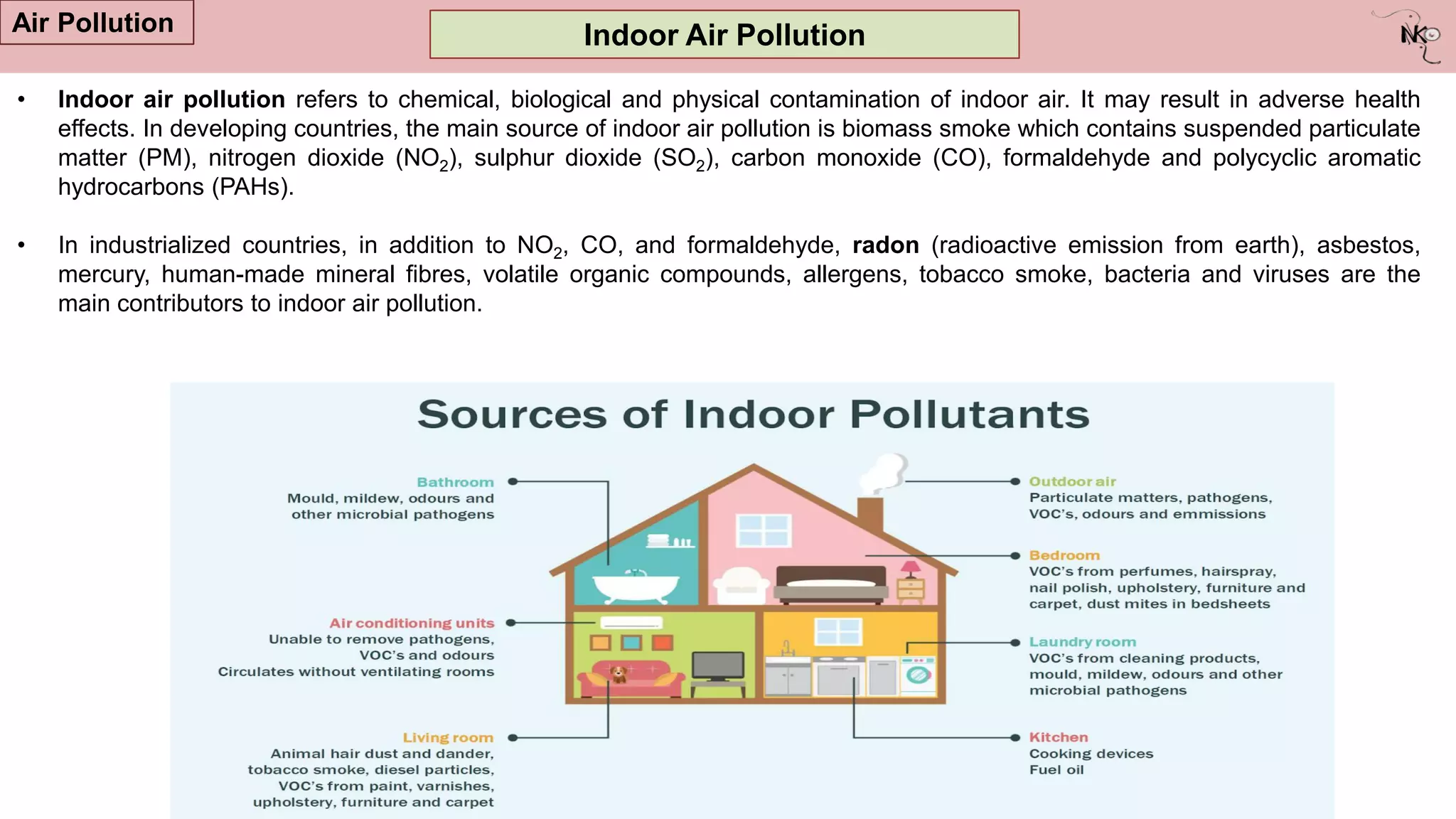
• Indoor air pollution refers to chemical, biological and physical contamination of indoor air. It may result in adverse health
effects. In developing countries, the main source of indoor air pollution is biomass smoke which contains suspended particulate
matter (PM), nitrogen dioxide (NO2), sulphur dioxide (SO2), carbon monoxide (CO), formaldehyde and polycyclic aromatic
hydrocarbons (PAHs).
• In industrialized countries, in addition to NO2, CO, and formaldehyde, radon (radioactive emission from earth), asbestos,
mercury, human-made mineral fibres, volatile organic compounds, allergens, tobacco smoke, bacteria and viruses are the
main contributors to indoor air pollution.
Global Warming
Air Pollution
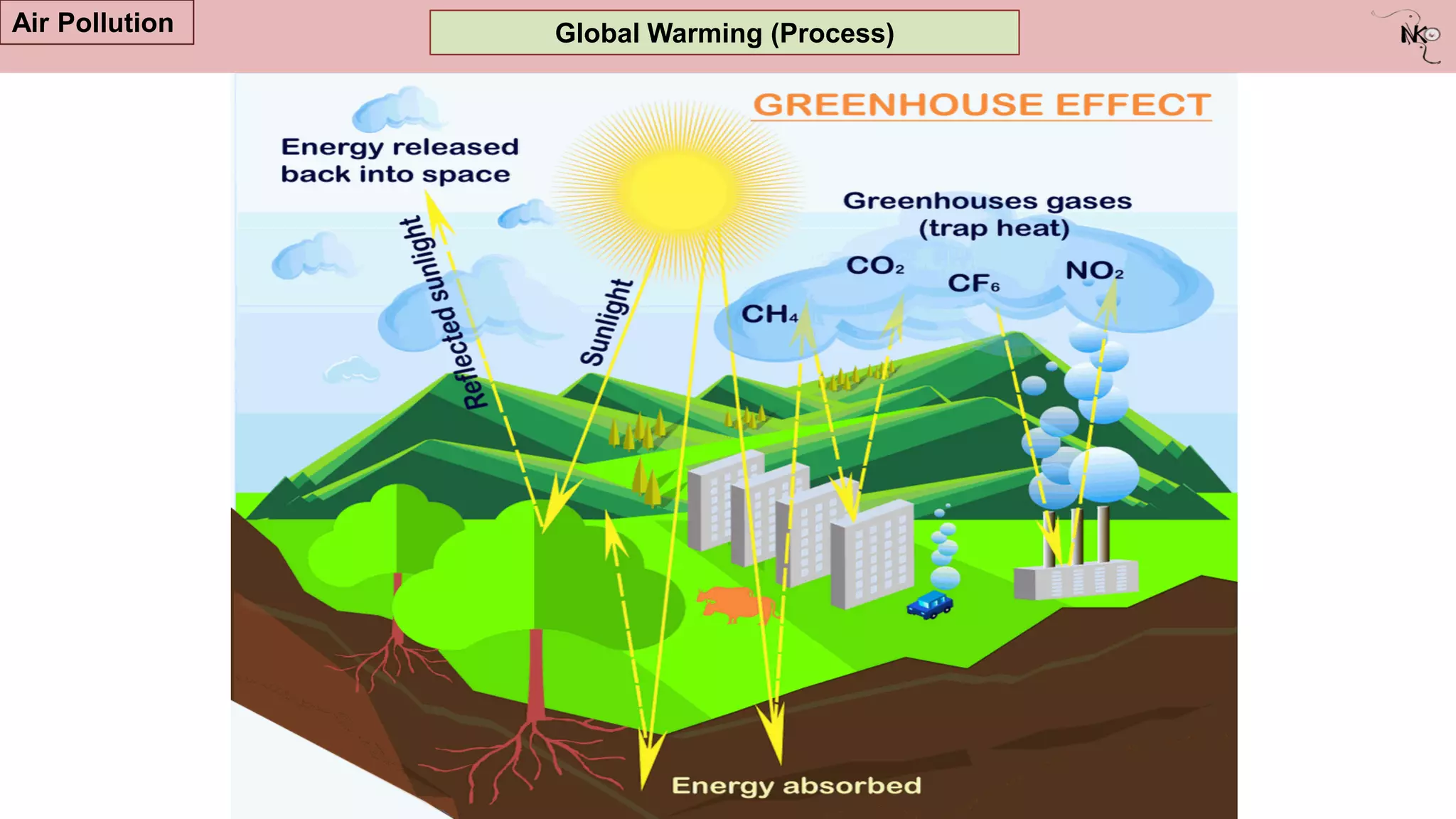
• Troposphere, the lowermost layer of the atmosphere, traps heat by a natural process due to the presence of certain gases.
This effect is called Greenhouse Effect as it is similar to the warming effect observed in the horticultural greenhouse made of
glass.
• The amount of heat trapped in the atmosphere depends mostly on the concentrations of “heat trapping” or “greenhouse
gases” and the length of time they stay in the atmosphere. The major greenhouse gases are carbon dioxide, ozone, methane,
nitrous oxide, chlorofluorocarbons (CFCs) and water vapours.
• Warming or cooling by more than 2°C over the past few decades may prove to be disastrous for various ecosystems on the
earth including humans, as it would alter the conditions faster than some species could adapt or migrate. Some areas will
become inhabitable because of drought or floods following a rise in average sea level.
• Greenhouse gases: The phenomenon that worries the environmental scientists is that due to anthropogenic activities there is
an increase in the concentration of the greenhouse gases in the air that absorb infrared light containing heat and results in the
re-radiation of even more of the outgoing thermal infrared energy, thereby increasing the average surface temperature beyond
15°C. The phenomenon is referred to as the enhanced greenhouse effect to distinguish its effect from the one that has been
operating naturally for millennia.
• The greenhouse gases present in the troposphere and resulting in an increase in the temperature of air and the earth are:
Carbon dioxide, Methane, Nitrous oxide (NO2), Water vapours, Chlorofluorocarbons(CFC)
Global Warming (Process)
Air Pollution
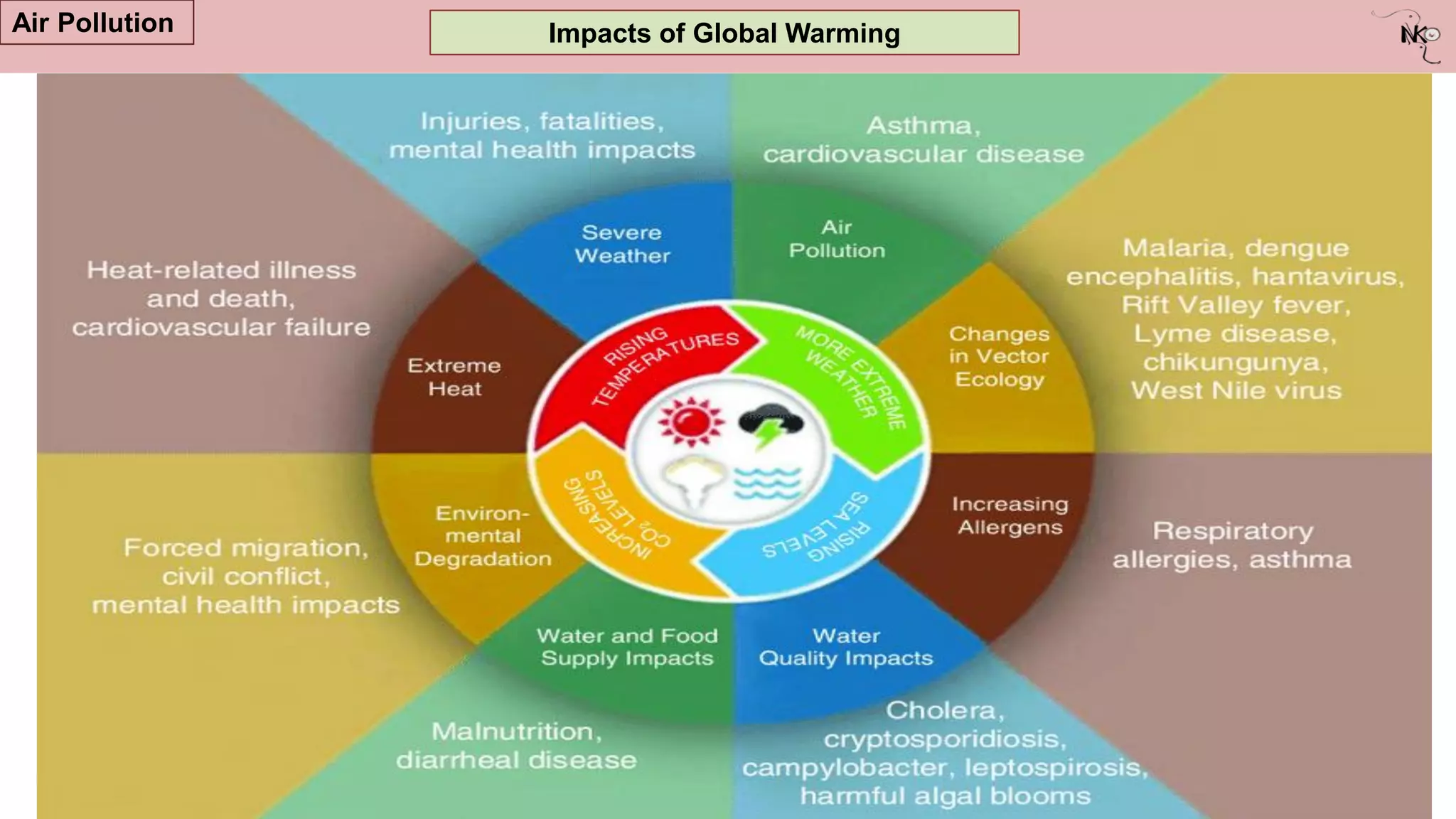
Impacts of Global Warming
Air Pollution
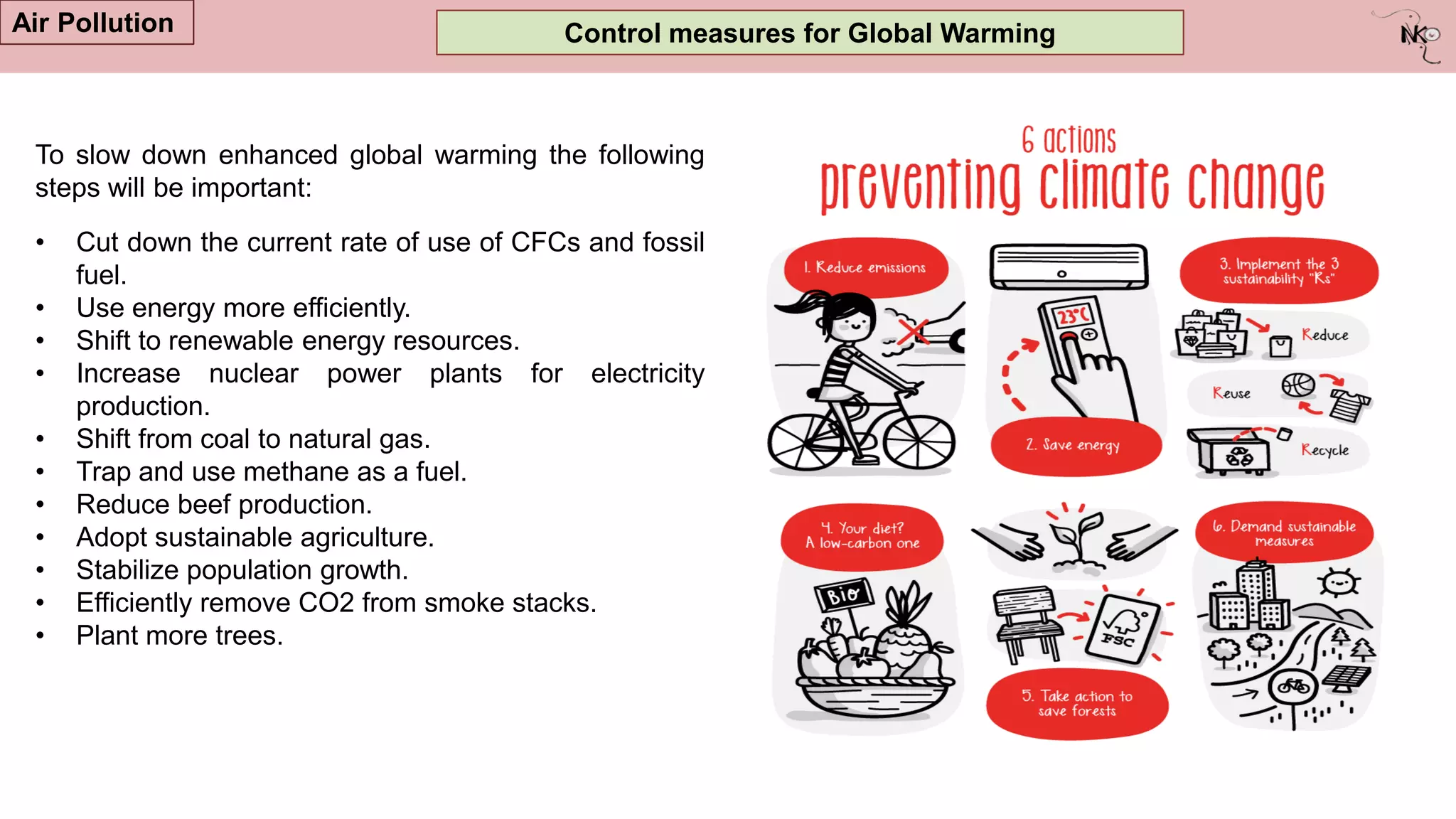
Control measures for Global Warming
Air Pollution
To slow down enhanced global warming the following
steps will be important:
• Cut down the current rate of use of CFCs and fossil
fuel.
• Use energy more efficiently.
• Shift to renewable energy resources.
• Increase nuclear power plants for electricity
production.
• Shift from coal to natural gas.
• Trap and use methane as a fuel.
• Reduce beef production.
• Adopt sustainable agriculture.
• Stabilize population growth.
• Efficiently remove CO2 from smoke stacks.
• Plant more trees.
Acid Rain
Air Pollution
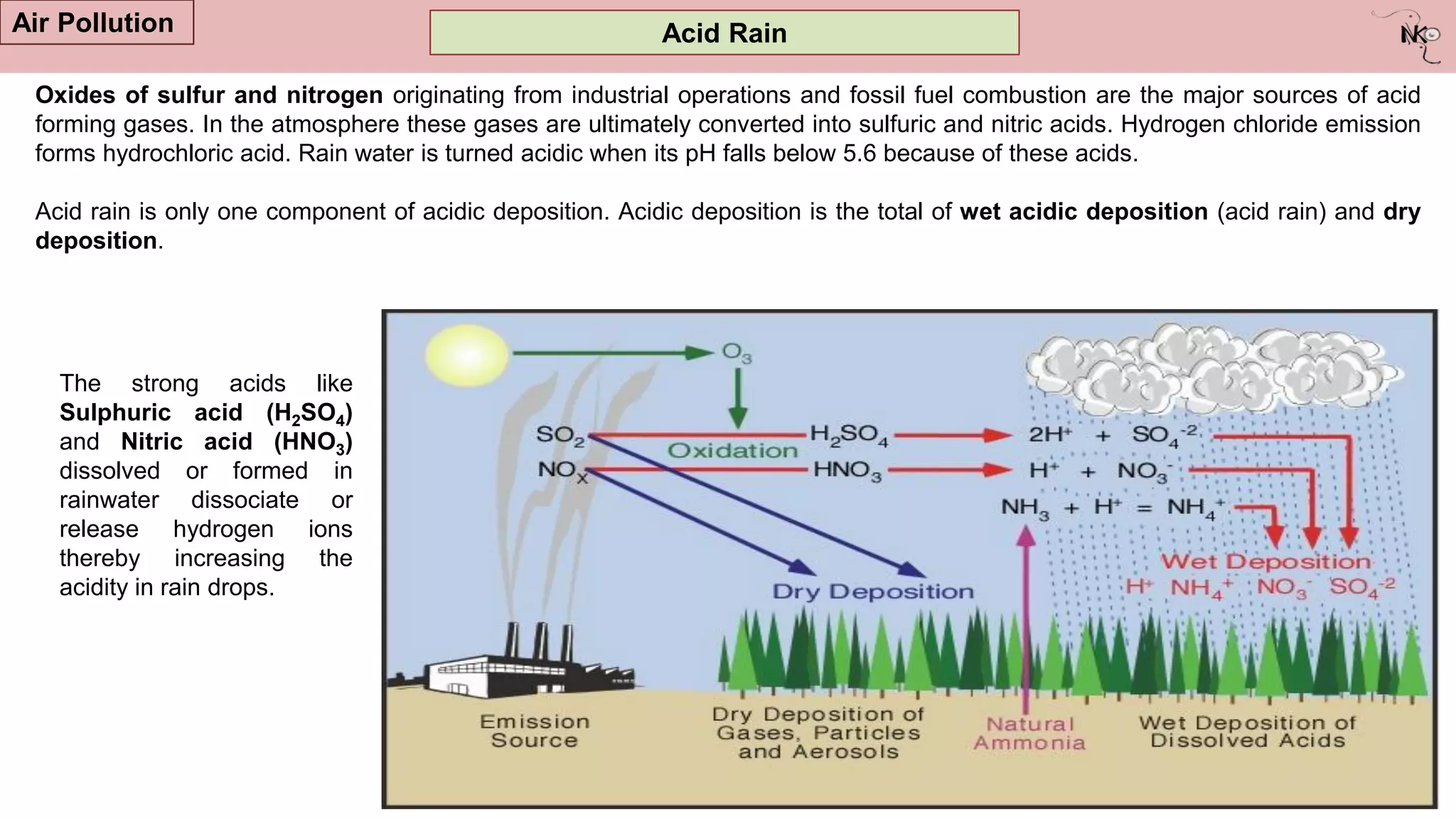
Oxides of sulfur and nitrogen originating from industrial operations and fossil fuel combustion are the major sources of acid
forming gases. In the atmosphere these gases are ultimately converted into sulfuric and nitric acids. Hydrogen chloride emission
forms hydrochloric acid. Rain water is turned acidic when its pH falls below 5.6 because of these acids.
Acid rain is only one component of acidic deposition. Acidic deposition is the total of wet acidic deposition (acid rain) and dry
deposition.
The strong acids like
Sulphuric acid (H2SO4)
and Nitric acid (HNO3)
dissolved or formed in
rainwater dissociate or
release hydrogen ions
thereby increasing the
acidity in rain drops.
Impacts of Acid Rain
Air Pollution
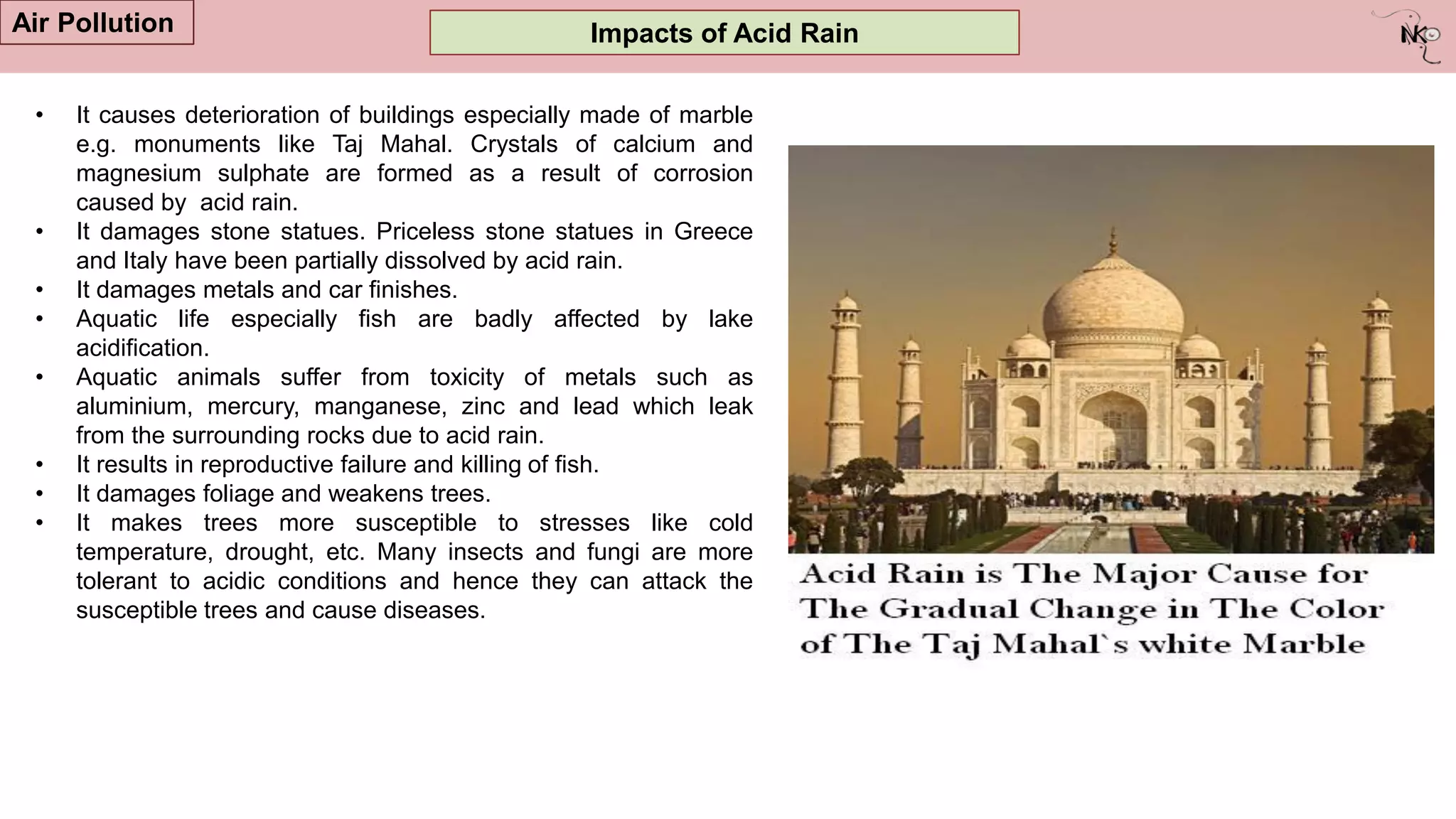
• It causes deterioration of buildings especially made of marble
e.g. monuments like Taj Mahal. Crystals of calcium and
magnesium sulphate are formed as a result of corrosion
caused by acid rain.
• It damages stone statues. Priceless stone statues in Greece
and Italy have been partially dissolved by acid rain.
• It damages metals and car finishes.
• Aquatic life especially fish are badly affected by lake
acidification.
• Aquatic animals suffer from toxicity of metals such as
aluminium, mercury, manganese, zinc and lead which leak
from the surrounding rocks due to acid rain.
• It results in reproductive failure and killing of fish.
• It damages foliage and weakens trees.
• It makes trees more susceptible to stresses like cold
temperature, drought, etc. Many insects and fungi are more
tolerant to acidic conditions and hence they can attack the
susceptible trees and cause diseases.
Ozone layer depletion
Air Pollution
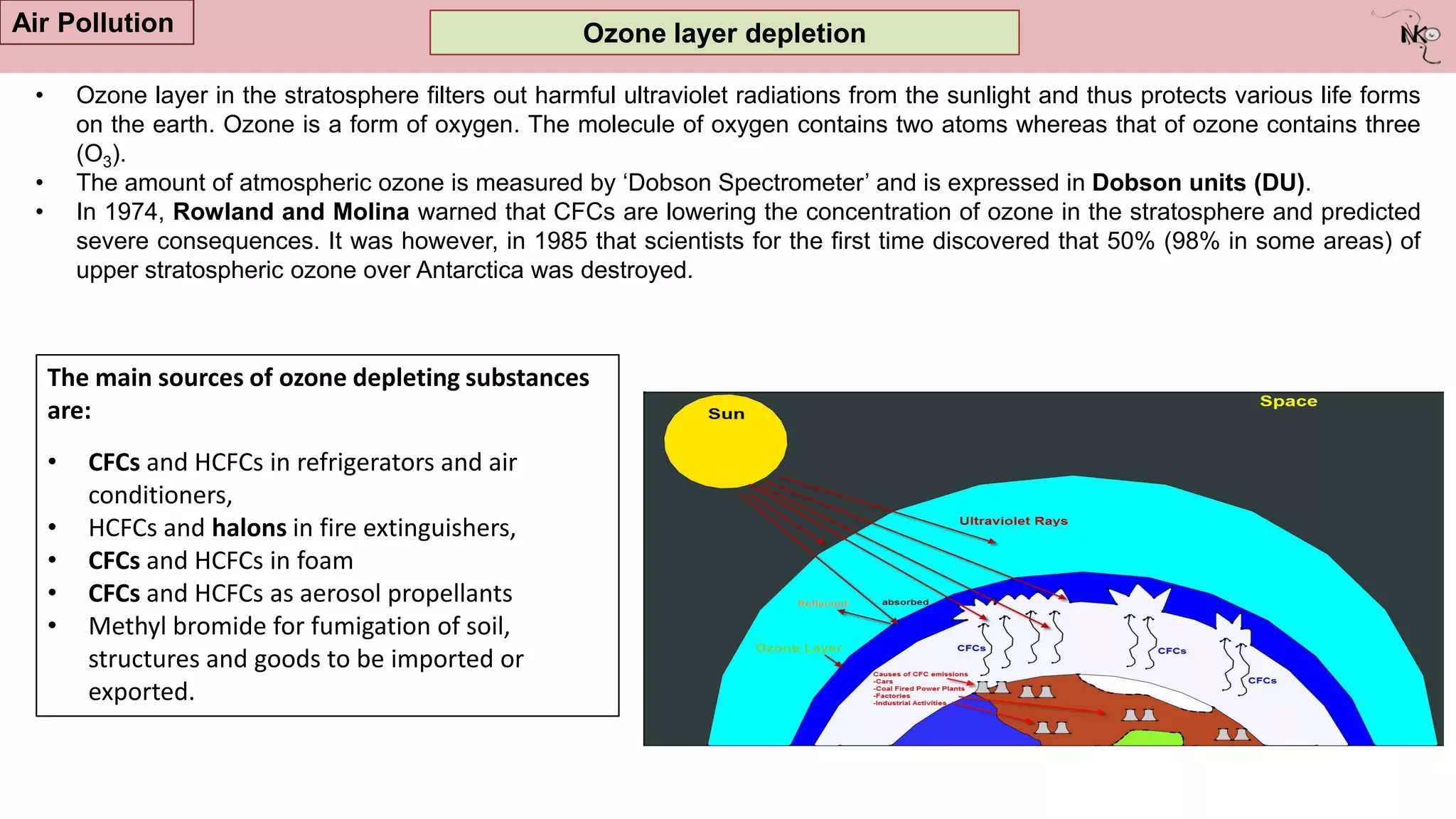
• Ozone layer in the stratosphere filters out harmful ultraviolet radiations from the sunlight and thus protects various life forms
on the earth. Ozone is a form of oxygen. The molecule of oxygen contains two atoms whereas that of ozone contains three
(O3).
• The amount of atmospheric ozone is measured by „Dobson Spectrometer‟ and is expressed in Dobson units (DU).
• In 1974, Rowland and Molina warned that CFCs are lowering the concentration of ozone in the stratosphere and predicted
severe consequences. It was however, in 1985 that scientists for the first time discovered that 50% (98% in some areas) of
upper stratospheric ozone over Antarctica was destroyed.
The main sources of ozone depleting substances
are:
• CFCs and HCFCs in refrigerators and air
conditioners,
• HCFCs and halons in fire extinguishers,
• CFCs and HCFCs in foam
• CFCs and HCFCs as aerosol propellants
• Methyl bromide for fumigation of soil,
structures and goods to be imported or
exported.
Impacts of Ozone layer depletion
Air Pollution
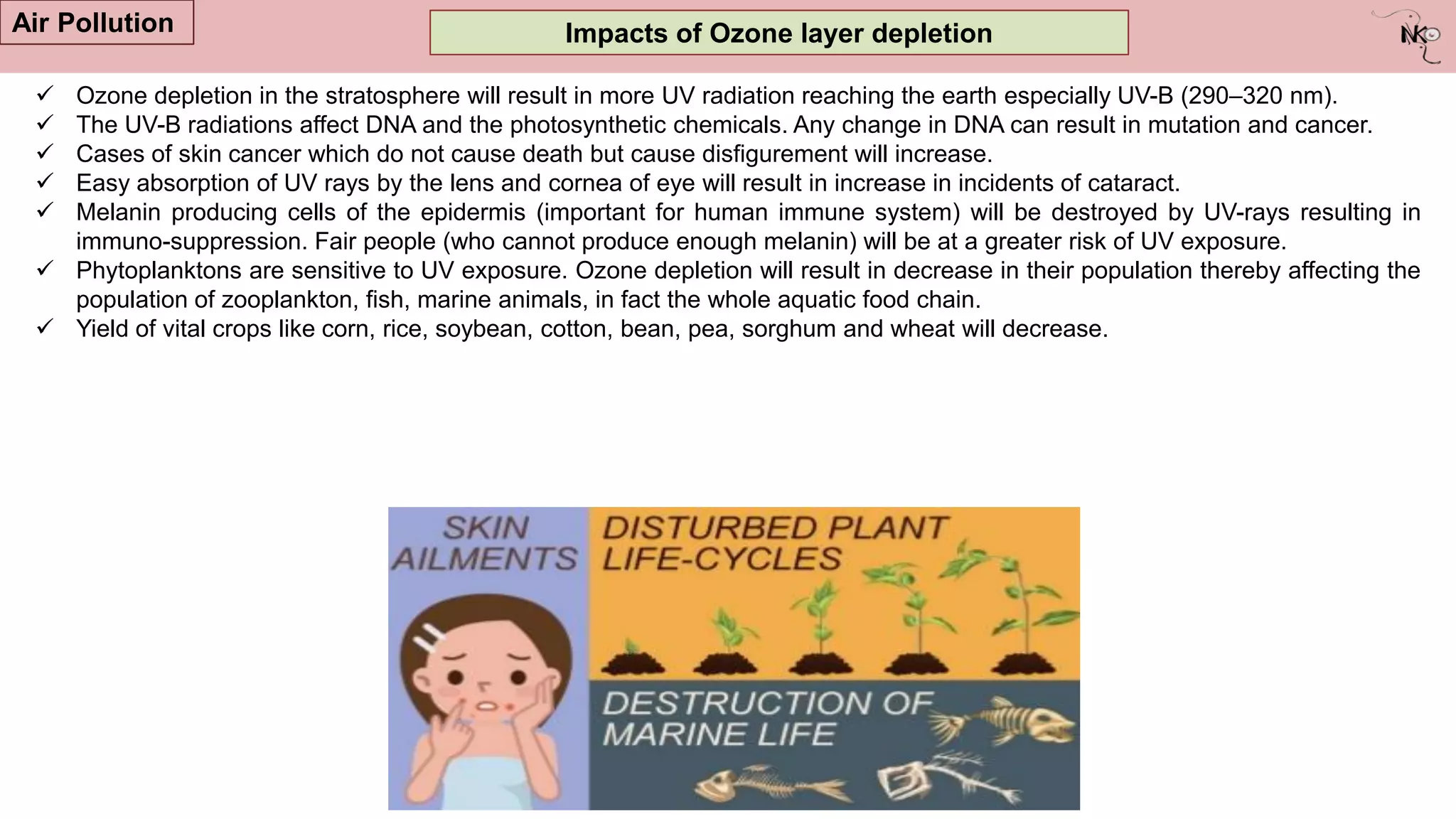
 Ozone depletion in the stratosphere will result in more UV radiation reaching the earth especially UV-B (290–320 nm).
 The UV-B radiations affect DNA and the photosynthetic chemicals. Any change in DNA can result in mutation and cancer.
 Cases of skin cancer which do not cause death but cause disfigurement will increase.
 Easy absorption of UV rays by the lens and cornea of eye will result in increase in incidents of cataract.
 Melanin producing cells of the epidermis (important for human immune system) will be destroyed by UV-rays resulting in
immuno-suppression. Fair people (who cannot produce enough melanin) will be at a greater risk of UV exposure.
 Phytoplanktons are sensitive to UV exposure. Ozone depletion will result in decrease in their population thereby affecting the
population of zooplankton, fish, marine animals, in fact the whole aquatic food chain.
 Yield of vital crops like corn, rice, soybean, cotton, bean, pea, sorghum and wheat will decrease.
Remedial Measures for Air Pollution
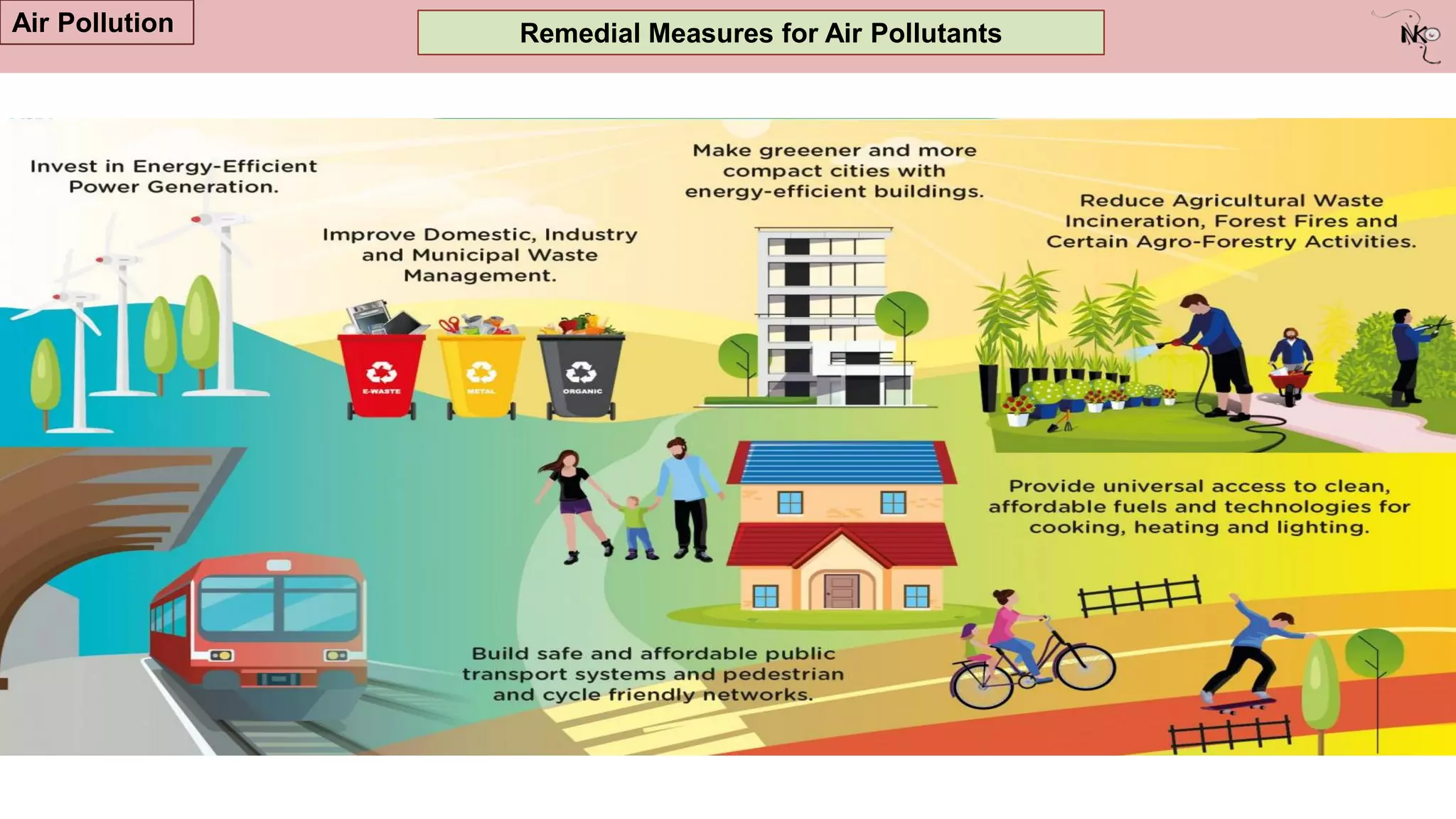
• Locating industries after proper environmental impact assessment studies.
• By dilution of emission. This can be done by increasing the stack height (though up to permissible height), beyond inversion
layer. Wind currents will disperse the pollutants.
• Minimise/modify activities which cause pollution e.g. transportation and energy production.
• Using low sulphur coal in industries.
• Removing sulphur from coal (by washing or with the help of bacteria).
• Removing NOx during the combustion process and controlling the flow of air and fuel in industrial boilers.
• Vehicular pollution can be checked by regular tune-up of engines; replacement of more polluting old vehicles; installing
catalytic converters; by engine modification to have fuel efficient (lean) mixtures to reduce CO and hydrocarbon emissions;
and slow and cooler burning of fuels to reduce NOx emission.
• Using mass transport system, bicycles etc.
• Shifting to less polluting (clean) fuels (hydrogen gas).
• Using non-conventional sources of energy.
• Using biological filters and bio-scrubbers.
• Planting more trees.
• Reduction of pollution at source by installing air pollution control devices like cyclones, baghouse filters, wet scrubbers,
electrostatic precipitators etc.
Air Pollution
Remedial Measures for Air Pollutants
Air Pollution
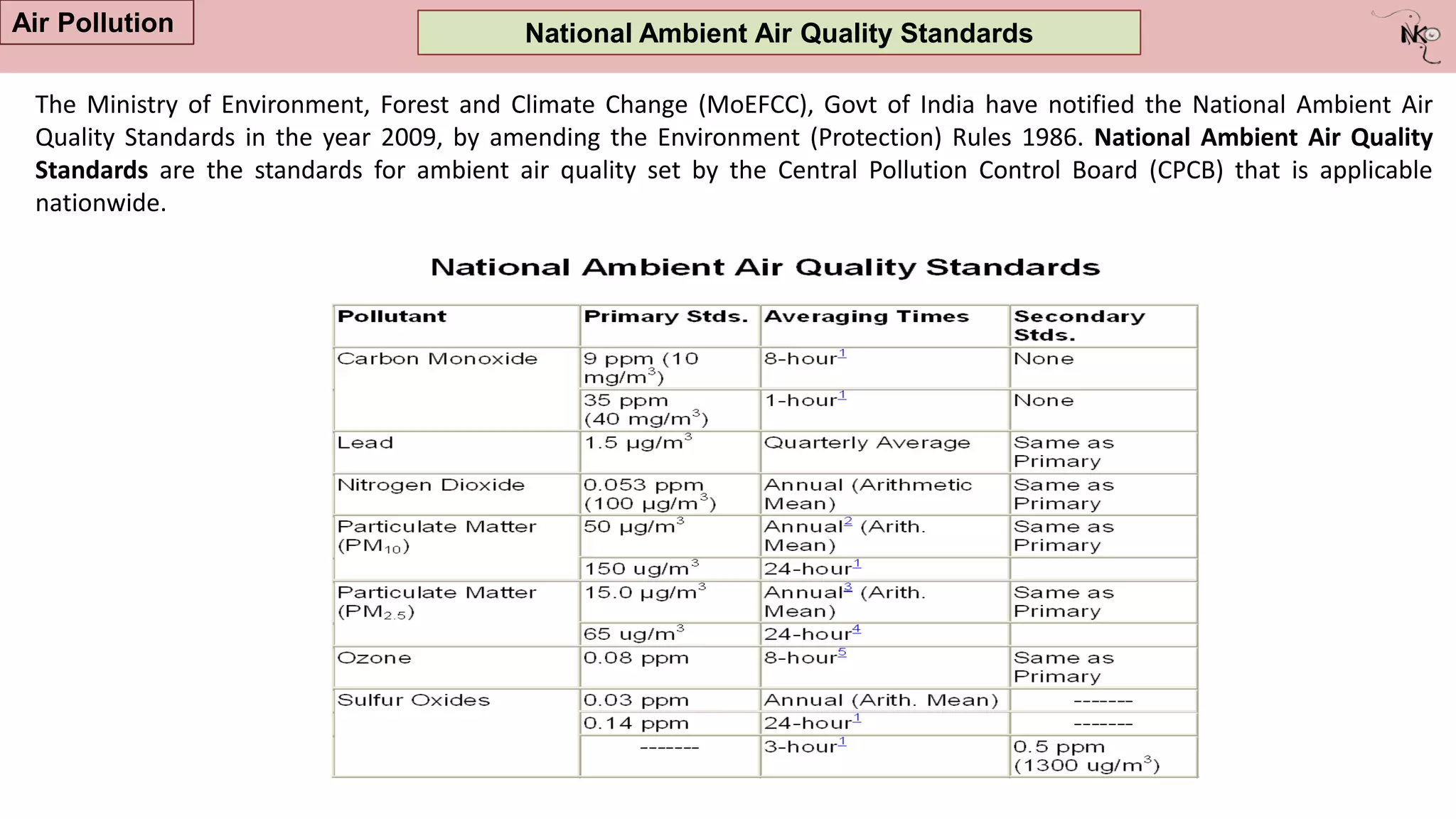
National Ambient Air Quality Standards
Air Pollution
The Ministry of Environment, Forest and Climate Change (MoEFCC), Govt of India have notified the National Ambient Air
Quality Standards in the year 2009, by amending the Environment (Protection) Rules 1986. National Ambient Air Quality
Standards are the standards for ambient air quality set by the Central Pollution Control Board (CPCB) that is applicable
nationwide.
Water pollution can be defined as alteration in physical, chemical or biological characteristics of water
making it unsuitable for designated use in its natural state.
Water Pollution
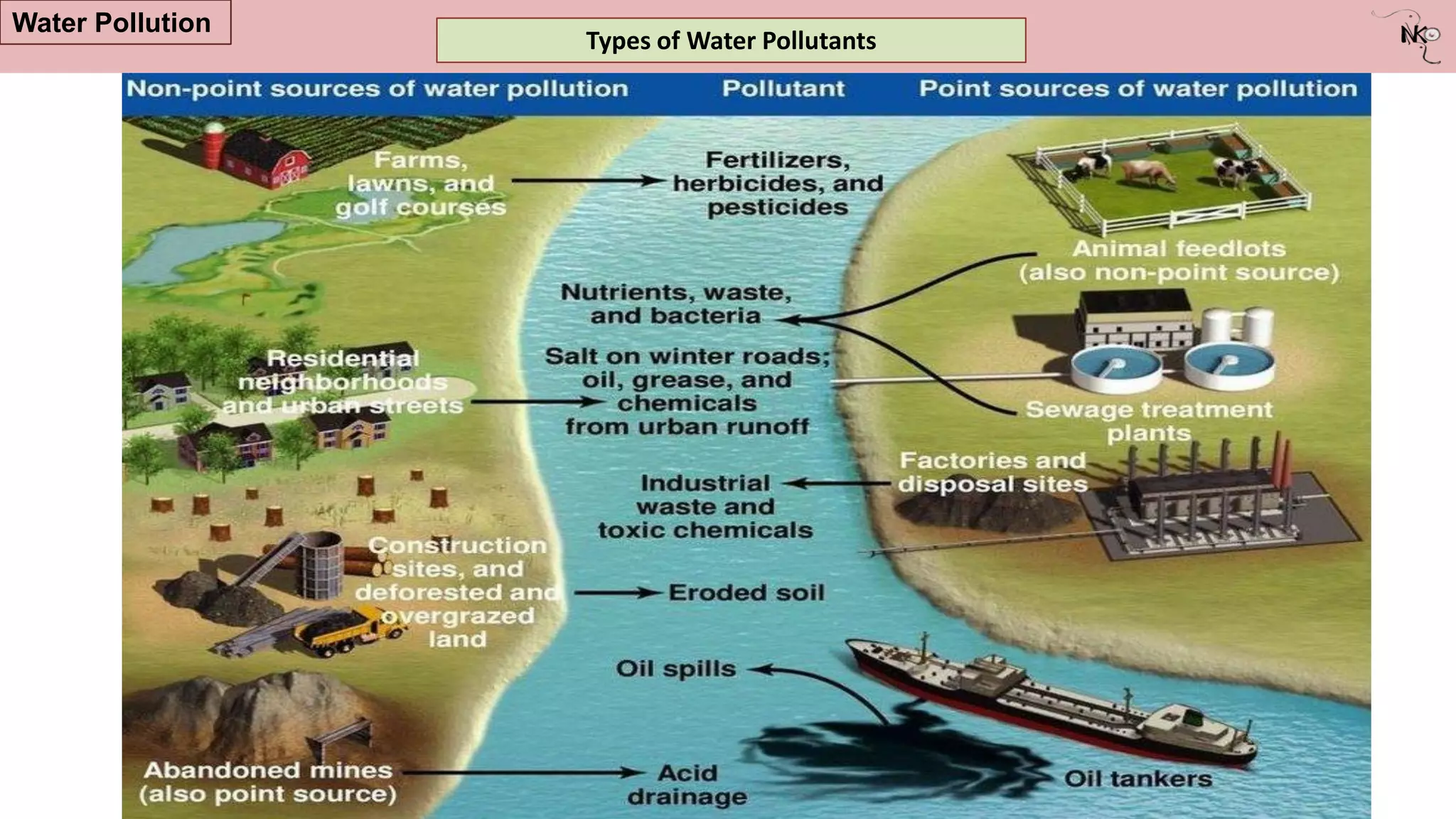
Types of Water Pollutants
Water Pollution can be caused by “point sources” or “non-point sources”.
1. Point sources are specific sites near water which directly discharge effluents into them. Major point sources of
water pollution are industries, power plants, underground coal mines, offshore oil wells etc.
2. Non-point sources are not at any particular site, rather, these sources are scattered, which individually or
collectively pollute water. Surface run-off from agricultural fields, overflowing small drains, rain water sweeping
roads and fields, atmospheric deposition etc., are the non-point sources of water pollution.
Sources of Water Pollution
Water Pollution
Surface water pollution: The major sources of surface water pollution are:
1. Sewage. Emptying the drains and sewers in fresh water bodies causes water pollution.
2. Industrial effluents. Industrial wastes containing toxic chemicals, acids, alkalis, metallic salts, phenols,
cyanides, ammonia, radioactive substances, etc., are sources of water pollution.
3. Synthetic detergents. Synthetic detergents used in washing and cleaning produce foam and pollute water.
4. Agrochemicals. Agrochemicals like fertilizers (containing nitrates and phosphates) and pesticides (insecticides,
fungicides, herbicides etc.) washed by rain-water and surface runoff pollute water.
5. Oil. Oil spillage into sea-water during drilling and shipment pollute it.
6. Waste heat. Waste heat from industrial discharges increases the temperature of water bodies and affects
distribution and survival of sensitive species. They also cause thermal (heat) pollution of water.
Ground Water Pollution: Ground water seems to be less prone to pollution as the soil mantle through which
water passes helps to retain various contaminants due to its cation exchange capacity. However, there are a
number of potential sources of ground water pollution. Septic tanks, industry (textile, chemical, tanneries), deep
well injection, mining etc., are mainly responsible for ground water pollution. Ground water pollution with arsenic,
fluoride and nitrate are posing serious health hazards.
Types of Water Pollutants
Water Pollution
Impacts of Water Pollution
Water Pollution
Following are some important effects of various types of water pollutants:
1. Oxygen demanding wastes: Organic matter which reaches water bodies is decomposed by micro organisms present in water.
For this degradation, oxygen dissolved in water is consumed. Dissolved oxygen (DO) is the amount of oxygen dissolved in a
given quantity of water at particular temperature and atmospheric pressure. Lower DO may be harmful to animals especially
fish population. Oxygen depletion (deoxygenation) helps in release of phosphates from bottom sediments and causes
eutrophication.
2. Rise in BOD: The demand of DO increases with addition of biodegradable organic matter which is expressed as biological
oxygen demand (BOD). BOD is defined as the amount of DO required to aerobically decompose biodegradable organic
matter of a given volume of water over a period of 5 days at 20ºC. Higher BOD values of any water sample are associated with
poor water quality.
3. Nitrogen and phosphorus compounds (nutrients): Addition of compounds containing nitrogen and phosphorus helps in the
growth of algae and other plants which when die and decay consume oxygen of water. Under anaerobic conditions foul
smelling gases are produced.
4. Pathogens: Many waste waters especially sewage contain many pathogenic (disease causing) and non-pathogenic micro-
organisms and many viruses. Water borne diseases like cholera, dysentery, typhoid, jaundice etc. are spread by water
contaminated with sewage.
Impacts of Water Pollution
Water Pollution
5. Toxic compounds: Pollutants such as heavy metals, pesticides, cyanides and many other organic and inorganic compounds
are harmful to aquatic organisms. The non-biodegradable toxic compounds biomagnify in the food chain and cause toxic
effects at various levels of food chain.
6. Heavy metal contamination: Toxic substances polluting the water ultimately affect human health. Some heavy metals like
lead, mercury and cadmium cause various types of diseases.
• Mercury dumped into water is transformed into water soluble methyl mercury by bacterial action. Methyl mercury
accumulates in fish and causes Minimata disease when consumed by humans.
• Cadmium pollution had caused the disease called Itai-itai in the people of Japan. In this disease bones, liver, kidney,
lungs, pancreas and thyroid are affected.
• Lead poisoning affects kidneys reproductive system, liver, brain and central nervous system. It also causes anaemia and
mental retardation in children.
• Arsenic Pollution in Groundwater causes white or black spots called melanosis. The spots were later found to get
converted into leprosy like skin lesions encrusting the palms and soles, eventually rotting into gangrenous ulcers.
• Nitrate ions present in the water are harmful to human health. Nitrite reacts with haemoglobin which is converted into
non-functional oxidised form. Due to diarrhoea and vomiting child becomes slate blue, giving the baby Blue-baby
syndrome or methaemoglobinaemia.
Impacts of Water Pollution
Water Pollution
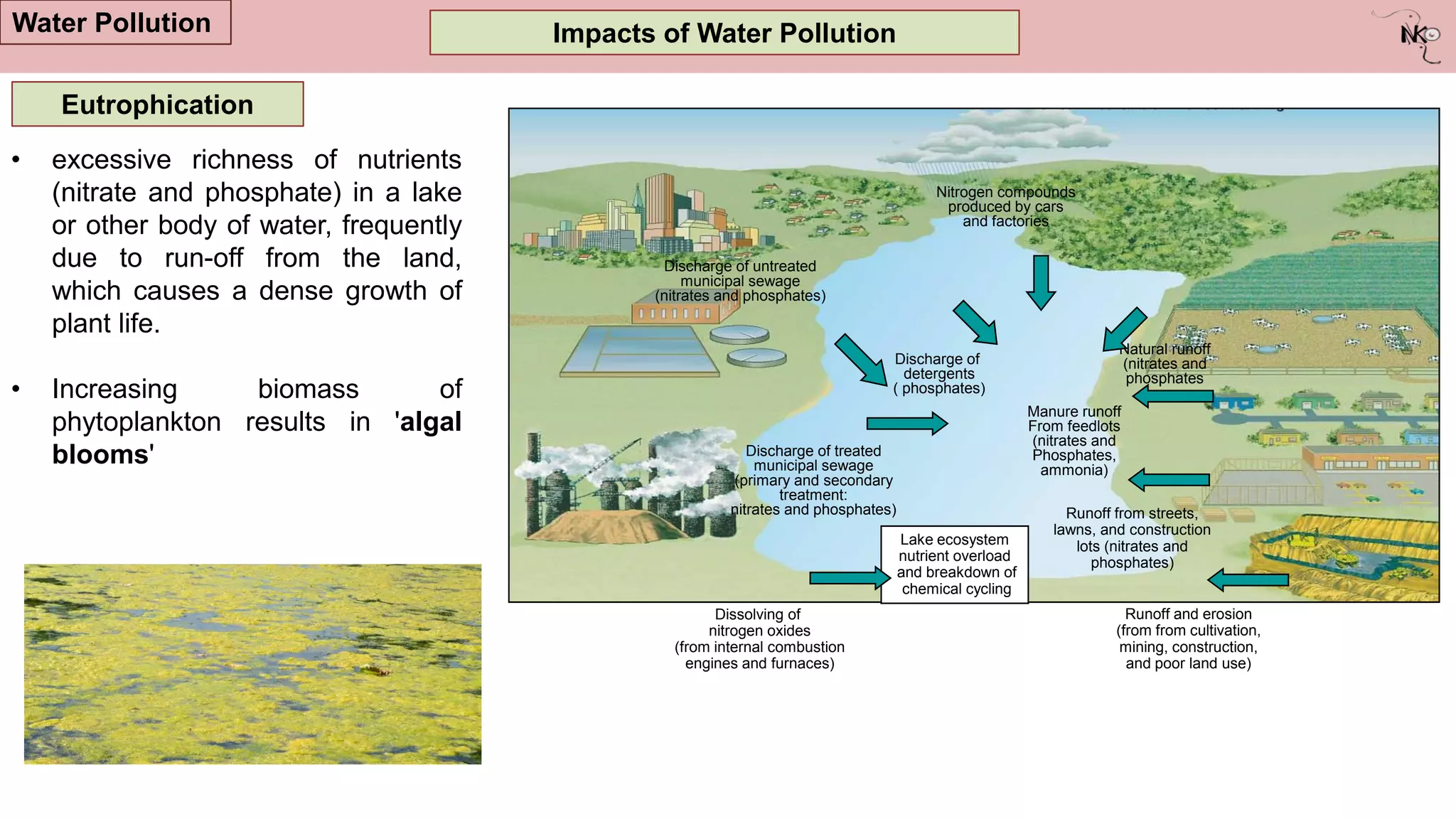
Eutrophication
Discharge of untreated
municipal sewage
(nitrates and phosphates)
Nitrogen compounds
produced by cars
and factories
Discharge of treated
municipal sewage
(primary and secondary
treatment:
nitrates and phosphates)
Discharge of
detergents
( phosphates)
Natural runoff
(nitrates and
phosphates
Manure runoff
From feedlots
(nitrates and
Phosphates,
ammonia)
Dissolving of
nitrogen oxides
(from internal combustion
engines and furnaces)
Runoff and erosion
(from from cultivation,
mining, construction,
and poor land use)
Runoff from streets,
lawns, and construction
lots (nitrates and
phosphates)
Lake ecosystem
nutrient overload
and breakdown of
chemical cycling
• excessive richness of nutrients
(nitrate and phosphate) in a lake
or other body of water, frequently
due to run-off from the land,
which causes a dense growth of
plant life.
• Increasing biomass of
phytoplankton results in 'algal
blooms'
Impacts of Water Pollution
Water Pollution
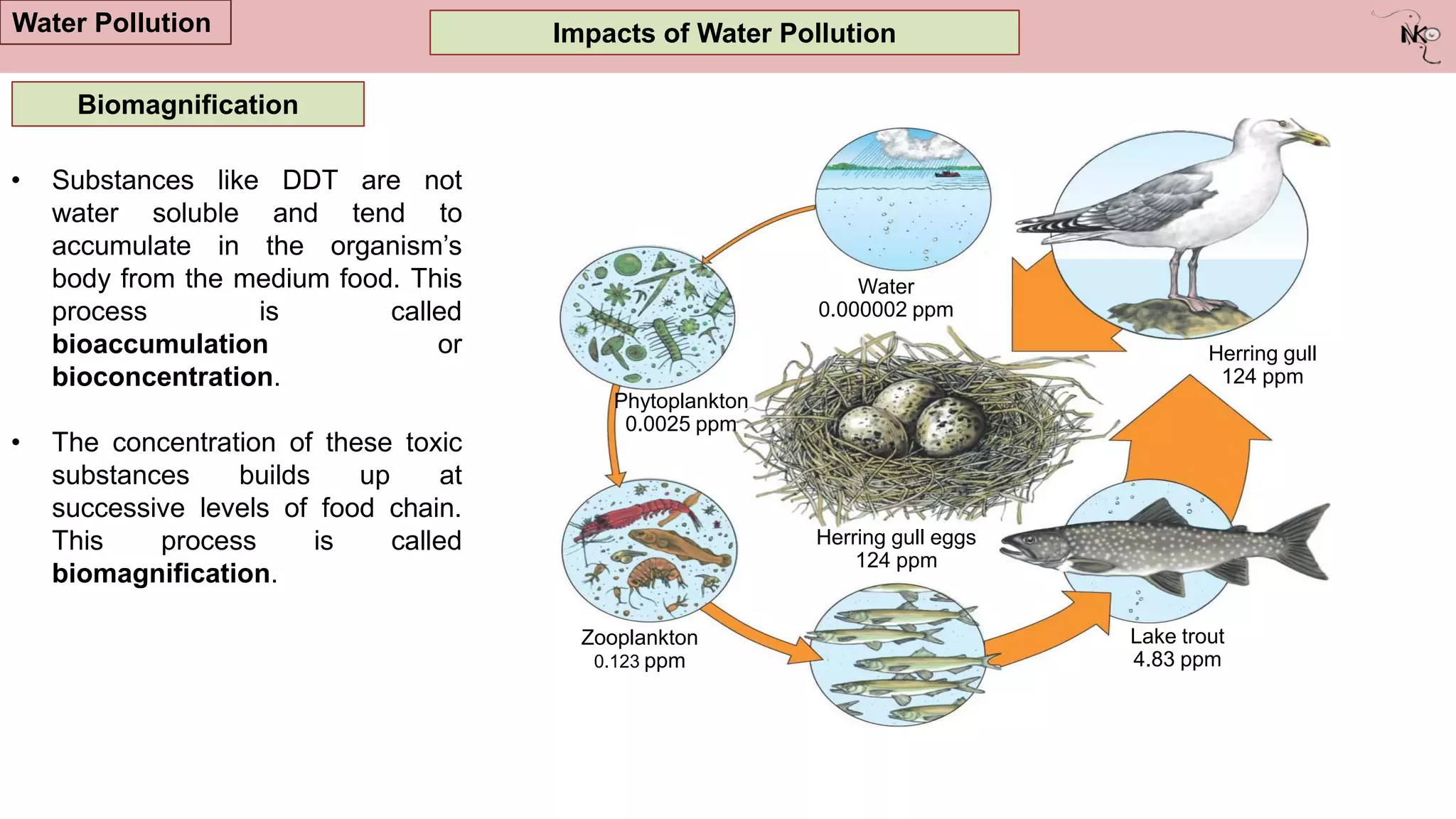
Biomagnification
• Substances like DDT are not
water soluble and tend to
accumulate in the organism‟s
body from the medium food. This
process is called
bioaccumulation or
bioconcentration.
• The concentration of these toxic
substances builds up at
successive levels of food chain.
This process is called
biomagnification.
Rainbow smelt
1.04 ppm
Zooplankton
0.123 ppm
Phytoplankton
0.0025 ppm
Water
0.000002 ppm
Herring gull
124 ppm
Lake trout
4.83 ppm
Herring gull eggs
124 ppm
Remedial Measures for Water Pollution
It is easy to reduce water pollution from point sources by legislation. However, due to absence of defined strategies it
becomes difficult to prevent water pollution from non-point sources. The following points may help in reducing
water pollution from non-point sources.
• Judicious use of agrochemicals like pesticides and fertilizers which will reduce their surface run-off and leaching.
Use of these on sloped lands should be avoided.
• Use of nitrogen fixing plants to supplement the use of fertilizers.
• Adopting integrated pest management to reduce greater reliance on pesticides.
• Prevent run-off of manure. Divert such run-off to basin for settlement. The nutrient rich water can be used as
fertilizer in the fields.
• Separate drainage of sewage and rain water should be provided to prevent overflow of sewage with rain water.
• Planting trees would reduce pollution by sediments and will also prevent soil erosion.
• For controlling water pollution from point sources, treatment of waste waters is essential before being discharged.
Parametres which are considered for reduction in such water are: Total solids, biological oxygen demand (BOD),
chemical oxygen demand (COD), nitrates and phosphates, oil and grease, toxic metals etc.
• Waste waters should be properly treated by primary and secondary treatments to reduce the BOD, COD levels
upto the permissible levels for discharge.
Water Pollution
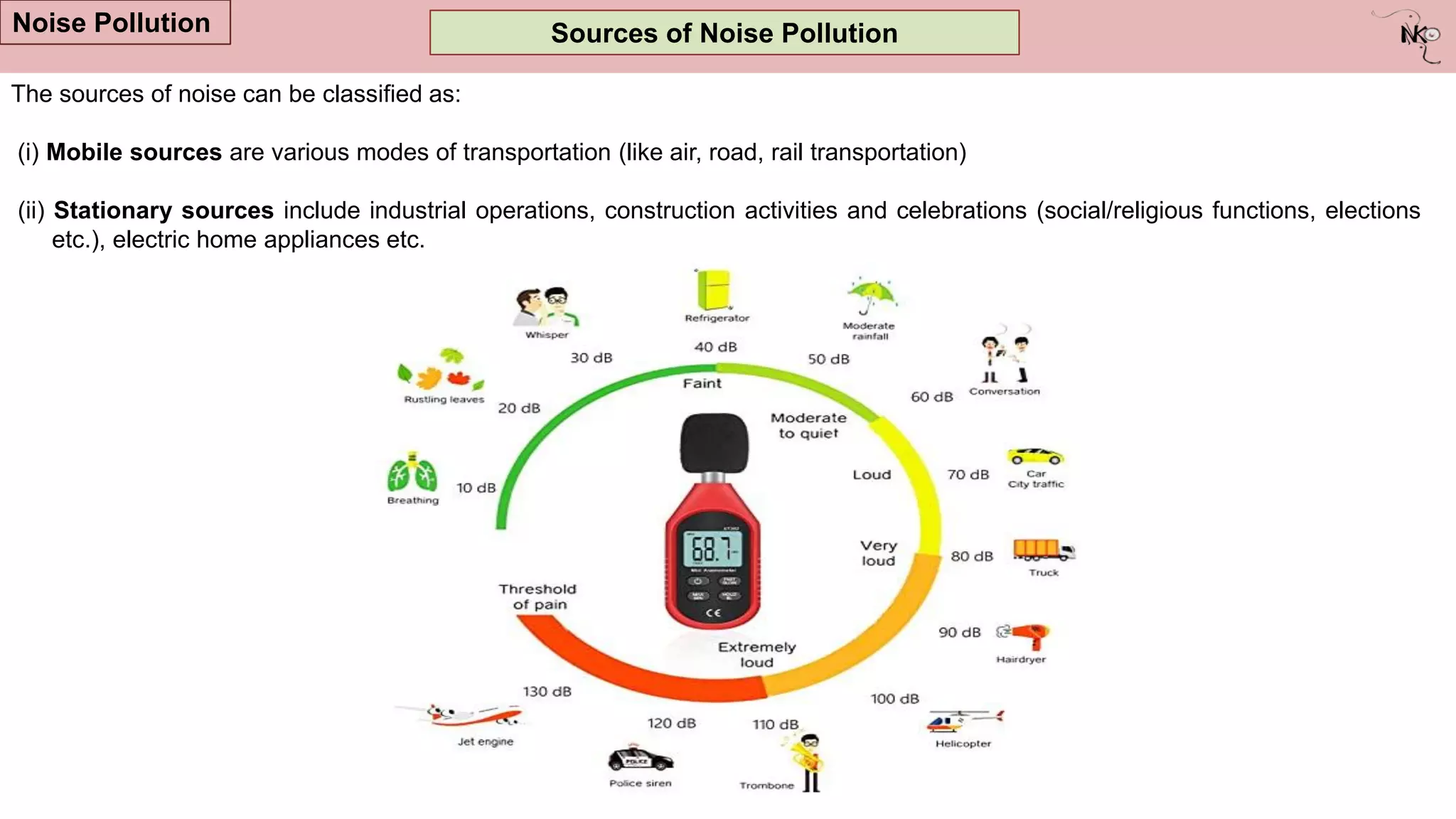
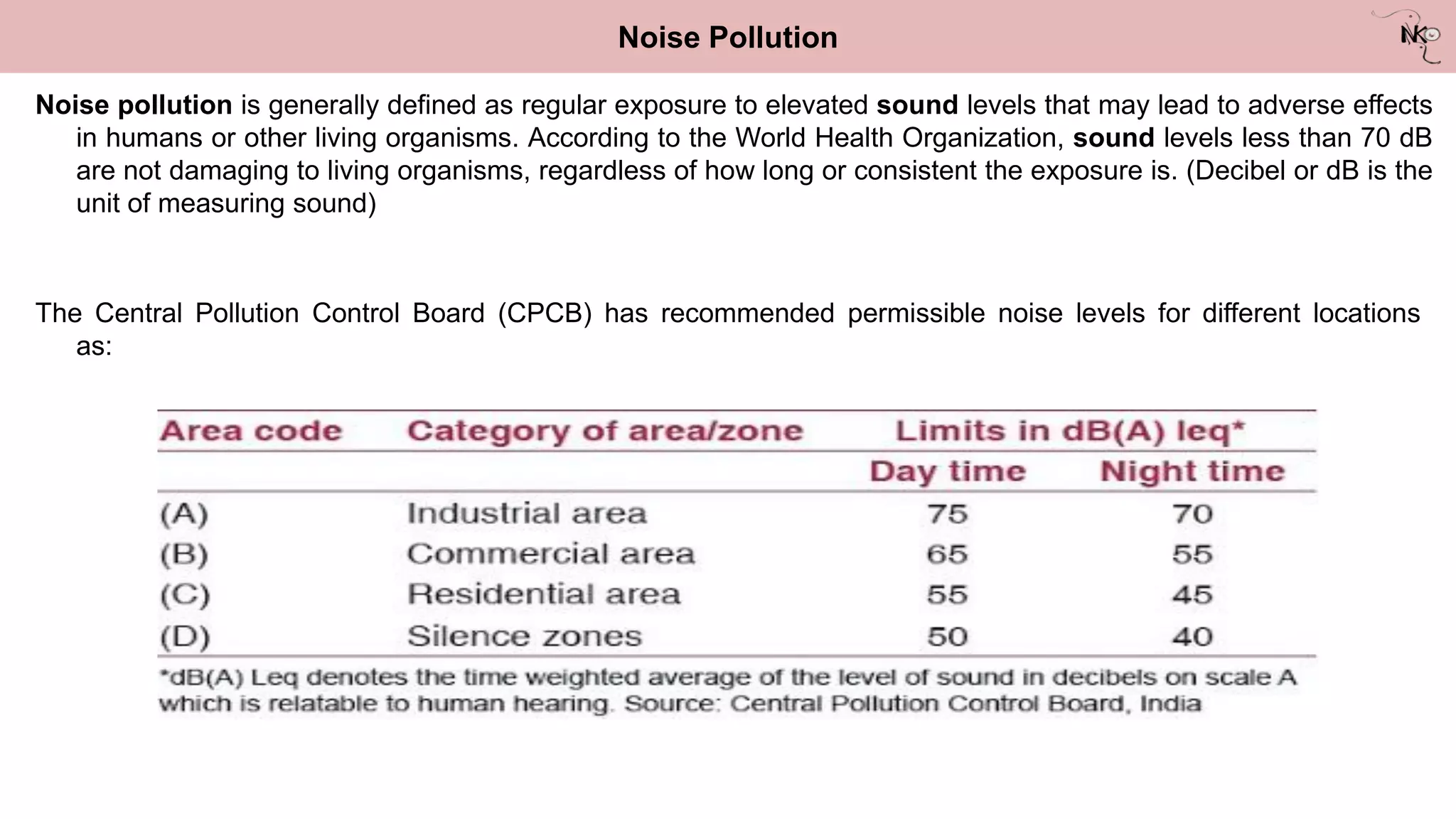
Noise pollution is generally defined as regular exposure to elevated sound levels that may lead to adverse effects
in humans or other living organisms. According to the World Health Organization, sound levels less than 70 dB
are not damaging to living organisms, regardless of how long or consistent the exposure is. (Decibel or dB is the
unit of measuring sound)
Noise Pollution
The Central Pollution Control Board (CPCB) has recommended permissible noise levels for different locations
as:
Sources of Noise Pollution
Noise Pollution
The sources of noise can be classified as:
(i) Mobile sources are various modes of transportation (like air, road, rail transportation)
(ii) Stationary sources include industrial operations, construction activities and celebrations (social/religious functions, elections
etc.), electric home appliances etc.
Impacts of Noise Pollution
Noise Pollution
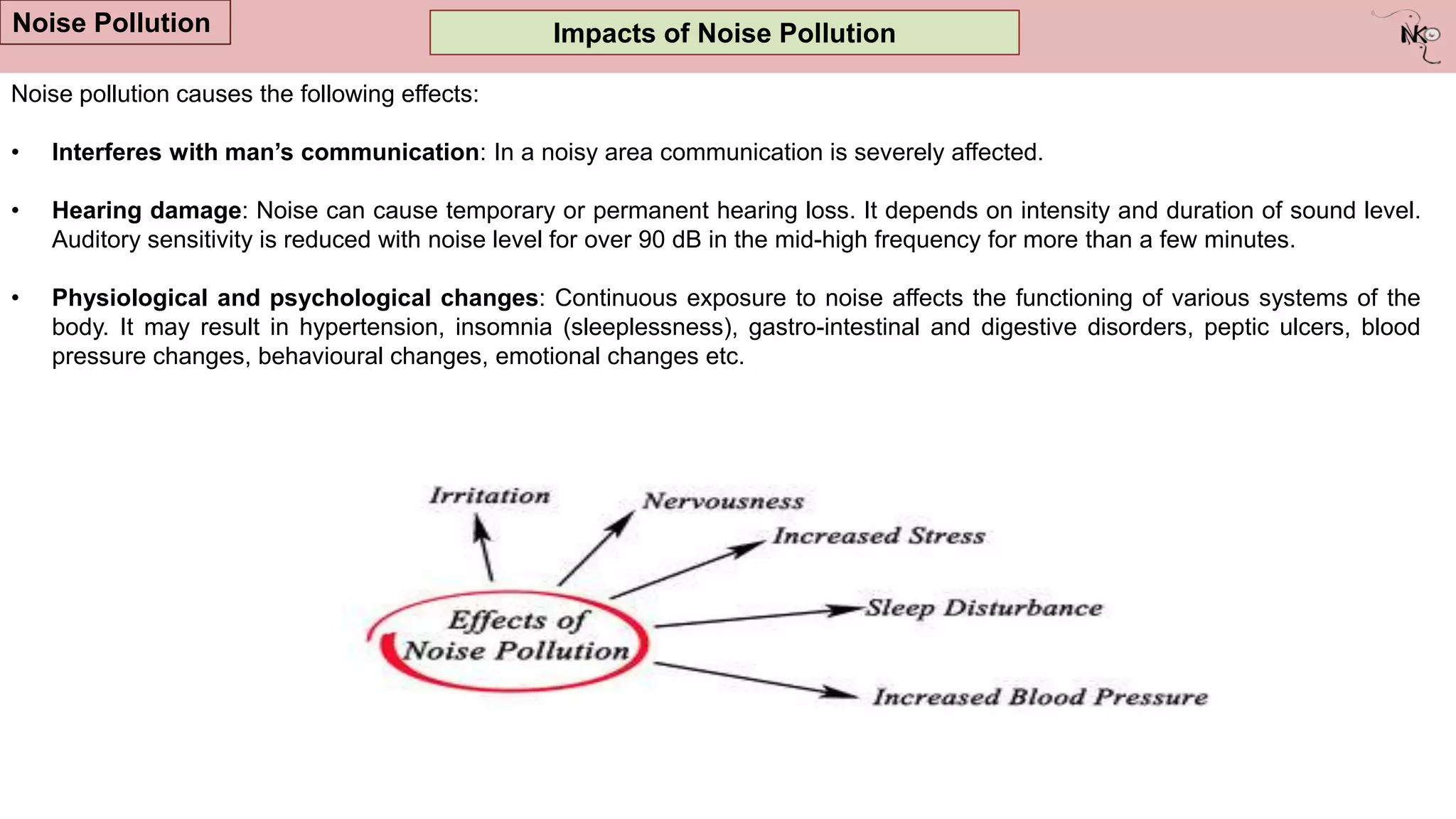
Noise pollution causes the following effects:
• Interferes with man’s communication: In a noisy area communication is severely affected.
• Hearing damage: Noise can cause temporary or permanent hearing loss. It depends on intensity and duration of sound level.
Auditory sensitivity is reduced with noise level for over 90 dB in the mid-high frequency for more than a few minutes.
• Physiological and psychological changes: Continuous exposure to noise affects the functioning of various systems of the
body. It may result in hypertension, insomnia (sleeplessness), gastro-intestinal and digestive disorders, peptic ulcers, blood
pressure changes, behavioural changes, emotional changes etc.
Remedial Measures for Noise Pollution
Noise Pollution
• Reduction in sources of noise: Sources of noise pollution like heavy vehicles and old vehicles may not be allowed to ply in the
populated areas.
• Noise making machines should be kept in containers with sound absorbing media. The noise path will be uninterrupted and will
not reach the workers.
• Proper oiling will reduce the noise from the machinery.
• Use of sound absorbing silencers: Silencers can reduce noise by absorbing sound. For this purpose various types of fibrous
material could be used.
• Planting more trees having broad leaves.
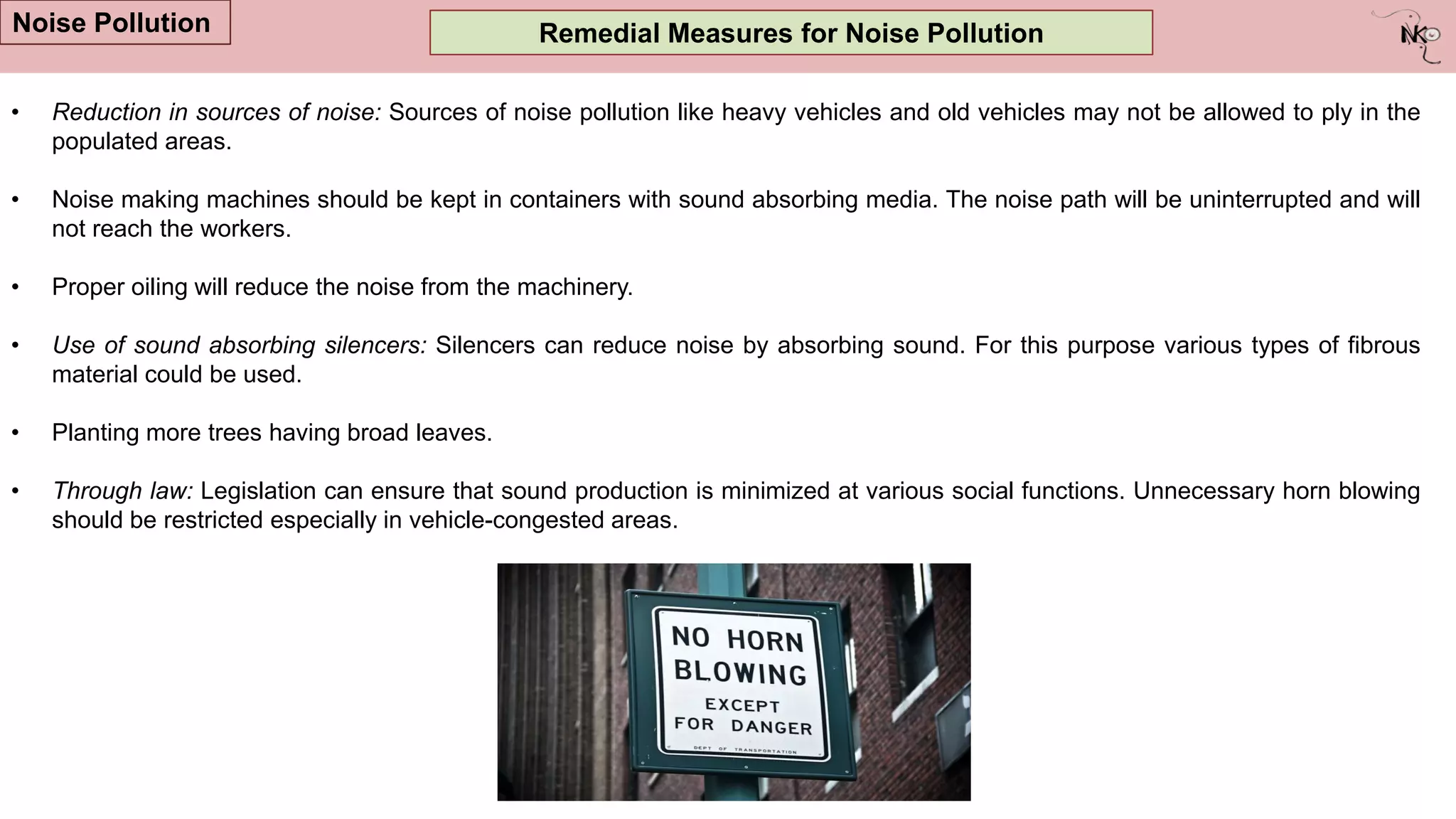
• Through law: Legislation can ensure that sound production is minimized at various social functions. Unnecessary horn blowing
should be restricted especially in vehicle-congested areas.
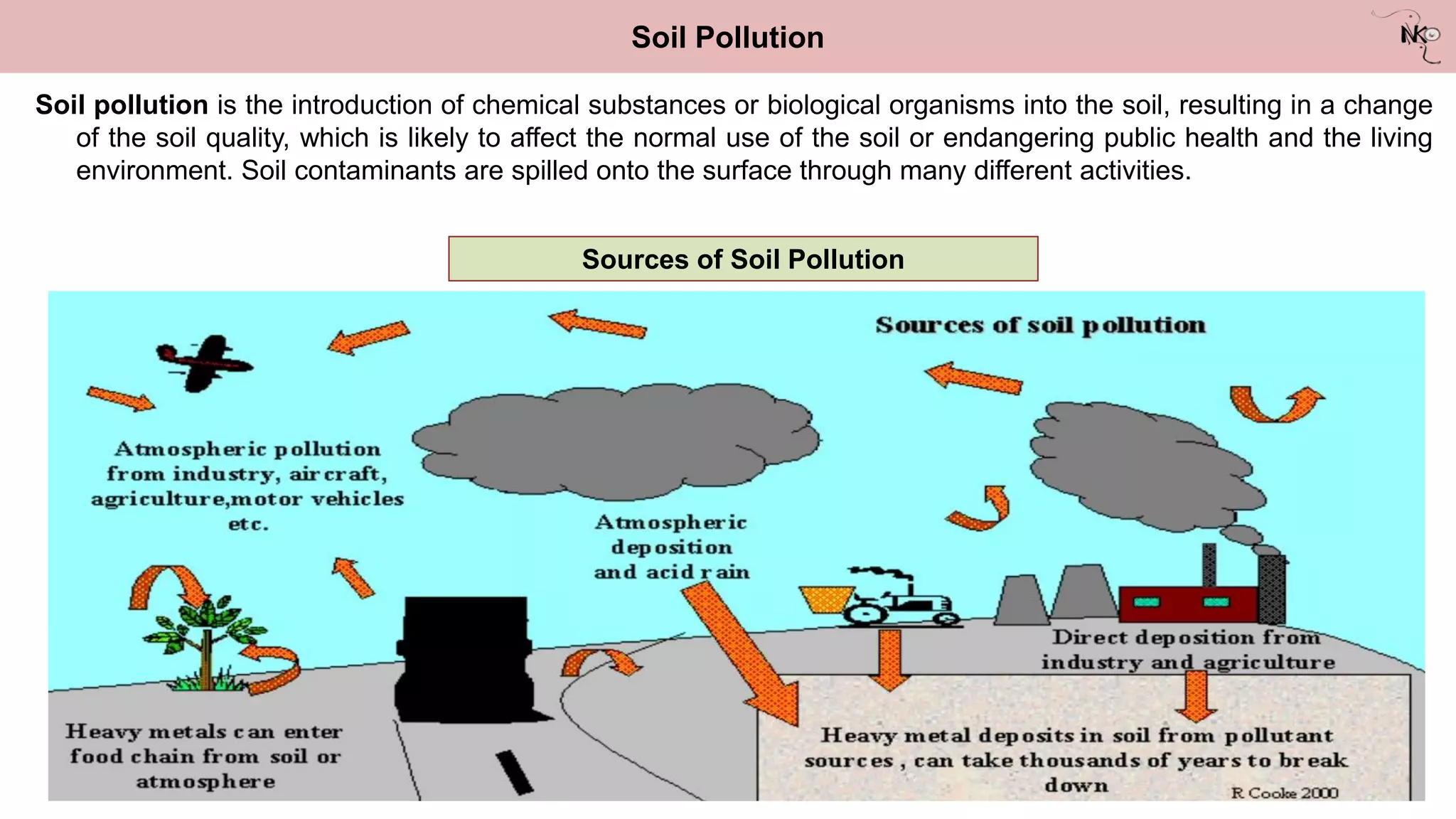
Soil pollution is the introduction of chemical substances or biological organisms into the soil, resulting in a change
of the soil quality, which is likely to affect the normal use of the soil or endangering public health and the living
environment. Soil contaminants are spilled onto the surface through many different activities.
Soil Pollution
Sources of Soil Pollution
Soil Pollution
• Dumping of various types of materials especially domestic and industrial wastes causes land pollution. Domestic wastes
include garbages, rubbish material like glass, plastics, polythene bags, metallic cans, paper, fibres, cloth rags, containers,
paints, varnishes etc.
• Leachates from dumping sites and sewage tanks are harmful and toxic, which pollute the soil.
• Industrial wastes like the effluents discharged from chemical industries, paper and pulp mills, tanneries, textile mills, steel
industries, distilleries, refineries, pesticides and fertilizer industries, pharmaceutical industries, food processing industries,
cement industries, thermal and nuclear power plants, mining industries etc.
• Thermal power plants generate a large quantity of „Fly ash‟ which are dumped on land which cause land pollution
• Pesticides are used to kill pests that damage crops. These pesticides ultimately reach the soil and persist there for a long time.
Pesticides which are persistent in nature are chlorinated hydrocarbon insecticides e.g., DDT, HCH, endrin, lindane, heptachlor,
endosulfan etc. Residues of these pesticides in soils have long term effects especially under the temperate conditions.
• Land also receives excreta from animals and humans. The sewage sludge contains many pathogenic organisms, bacteria,
viruses and intestinal worms which cause pollution of the land.
• The sources of radioactive substances in soil are explosion of radioactive devices, radioactive wastes discharged from
industries and laboratories, aerial fall-out etc. Isotopes of radium, uranium, thorium, strontium, iodine, caesium and of many
other elements reach land and persist there for a long time and keep on emitting radiations.
Impacts of Soil Pollution
Soil Pollution
Soil pollution causes the following effects:
• Sewage and industrial effluents which pollute land ultimately affect human health. Various types of chemicals like acids, alkalis,
pesticides, insecticides, weedicides, fungicides, heavy metals etc., in the industrial discharges affect soil fertility by causing
changes in physical, chemical and biological properties.
• Some of the persistent toxic chemicals inhibit the non-target organisms, soil flora and fauna and reduce soil productivity. These
chemicals accumulate in food chain and ultimately affect human health.
• Sewage sludge has many types of pathogenic bacteria, viruses and intestinal worms which may cause various types of
diseases. Decomposing organic matter in soil also produces toxic vapours.
• Radioactive fallout on vegetation is the source of radio-isotopes which enter the food chain in the grazing animals. Some of
these radio-isotopes replace essential elements in the body and cause abnormalities e.g. strontium-90 instead of calcium gets
deposited in the bones and tissues.
• The pollutants may be washed away by the rain water and may get into the rivers in run-off which directly effects the aquatic
life.
• Many pollutants infiltrate through the unsaturated soil to reach the underground water sometimes by itself and sometimes with
the help of surface and rain water, thereby poisoning the underground water.
Control of Soil Pollution
Soil Pollution
• Effluents should be properly treated before discharging them on land.
• Solid wastes should be properly collected and disposed off by appropriate method.
• From the wastes, recovery of useful products should be done.
• Biodegradable organic waste should be used for generation of biogas.
• Cattle dung should be used for methane generation. Night-soil (human faeces) can also be used in the biogas plant to produce
inflammable methane gas.
• Microbial degradation of biodegradable substances is also one of the scientific approaches for reducing land pollution.
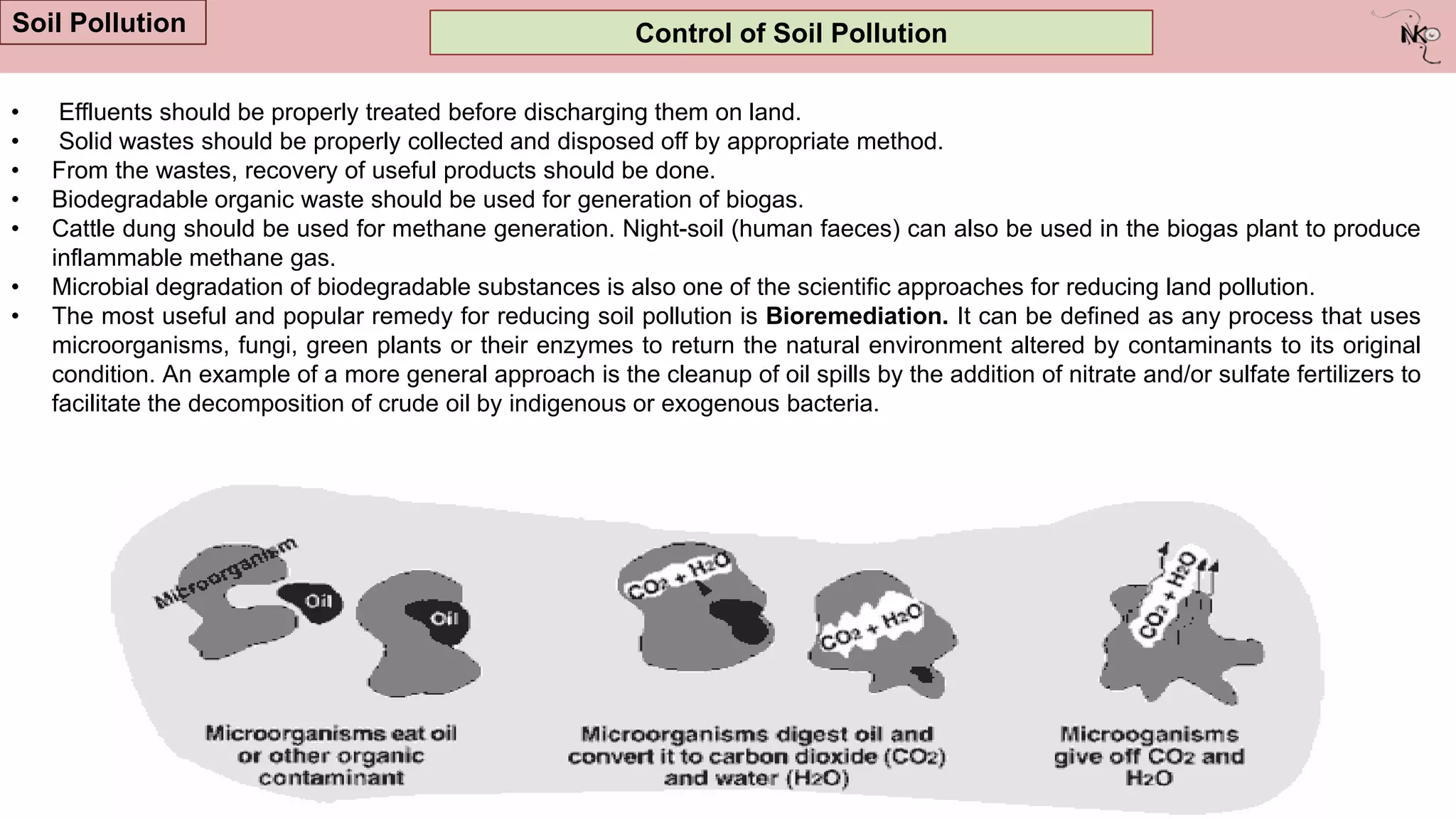
• The most useful and popular remedy for reducing soil pollution is Bioremediation. It can be defined as any process that uses
microorganisms, fungi, green plants or their enzymes to return the natural environment altered by contaminants to its original
condition. An example of a more general approach is the cleanup of oil spills by the addition of nitrate and/or sulfate fertilizers to
facilitate the decomposition of crude oil by indigenous or exogenous bacteria.
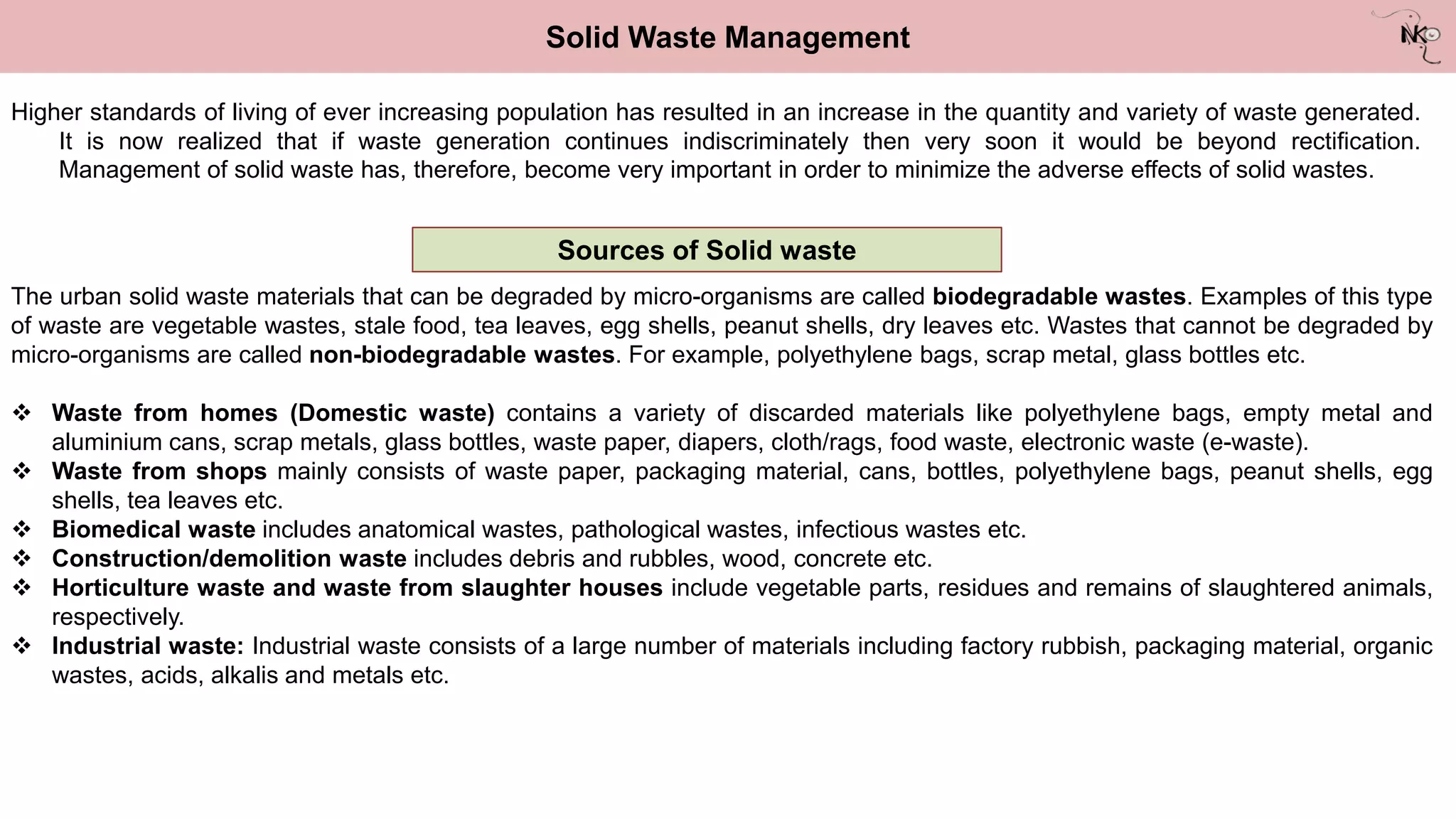
Solid Waste Management
Higher standards of living of ever increasing population has resulted in an increase in the quantity and variety of waste generated.
It is now realized that if waste generation continues indiscriminately then very soon it would be beyond rectification.
Management of solid waste has, therefore, become very important in order to minimize the adverse effects of solid wastes.
Sources of Solid waste
The urban solid waste materials that can be degraded by micro-organisms are called biodegradable wastes. Examples of this type
of waste are vegetable wastes, stale food, tea leaves, egg shells, peanut shells, dry leaves etc. Wastes that cannot be degraded by
micro-organisms are called non-biodegradable wastes. For example, polyethylene bags, scrap metal, glass bottles etc.
 Waste from homes (Domestic waste) contains a variety of discarded materials like polyethylene bags, empty metal and
aluminium cans, scrap metals, glass bottles, waste paper, diapers, cloth/rags, food waste, electronic waste (e-waste).
 Waste from shops mainly consists of waste paper, packaging material, cans, bottles, polyethylene bags, peanut shells, egg
shells, tea leaves etc.
 Biomedical waste includes anatomical wastes, pathological wastes, infectious wastes etc.
 Construction/demolition waste includes debris and rubbles, wood, concrete etc.
 Horticulture waste and waste from slaughter houses include vegetable parts, residues and remains of slaughtered animals,
respectively.
 Industrial waste: Industrial waste consists of a large number of materials including factory rubbish, packaging material, organic
wastes, acids, alkalis and metals etc.
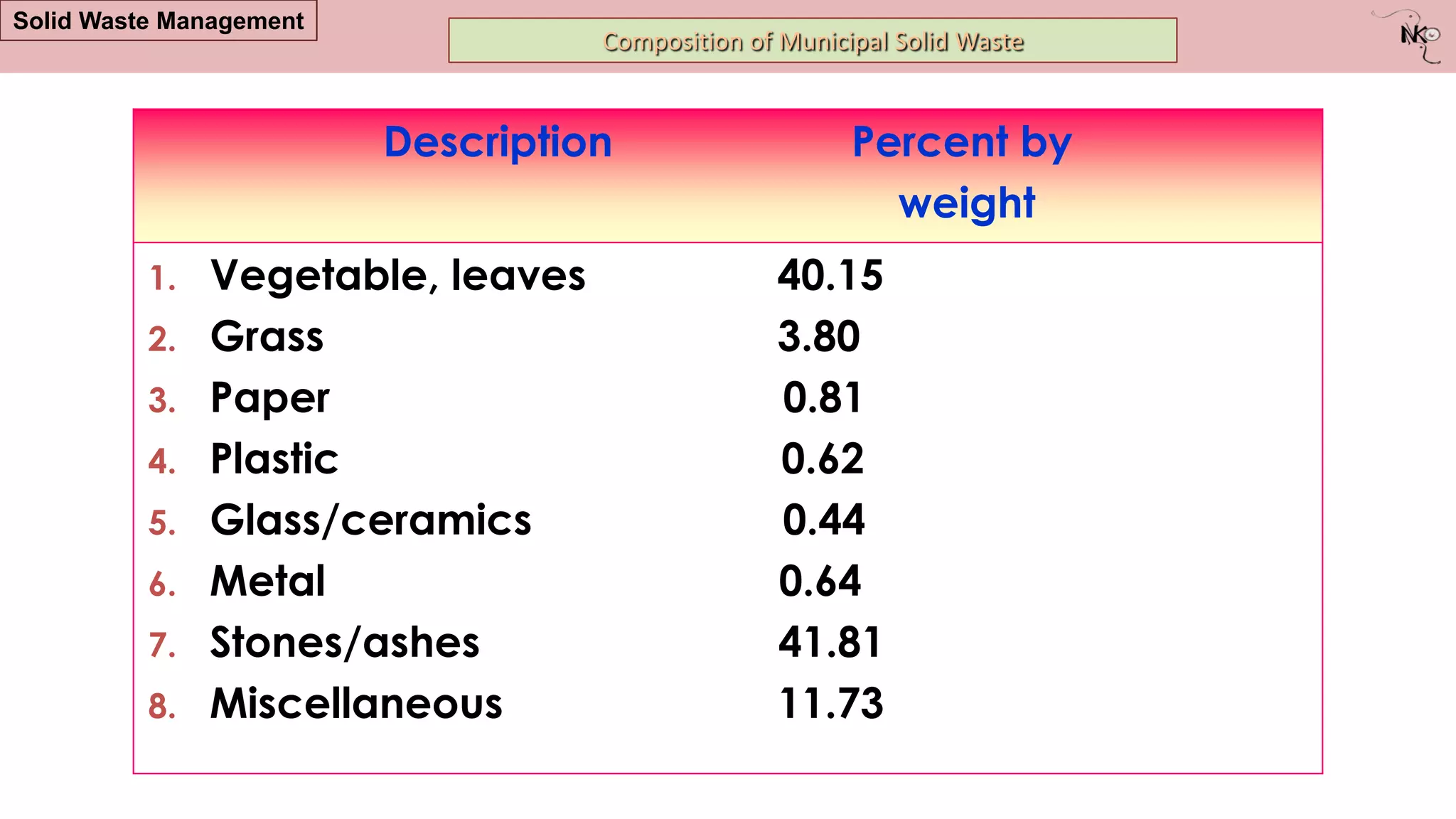
Composition of Municipal Solid Waste
Solid Waste Management
Description Percent by
weight
1. Vegetable, leaves 40.15
2. Grass 3.80
3. Paper 0.81
4. Plastic 0.62
5. Glass/ceramics 0.44
6. Metal 0.64
7. Stones/ashes 41.81
8. Miscellaneous 11.73
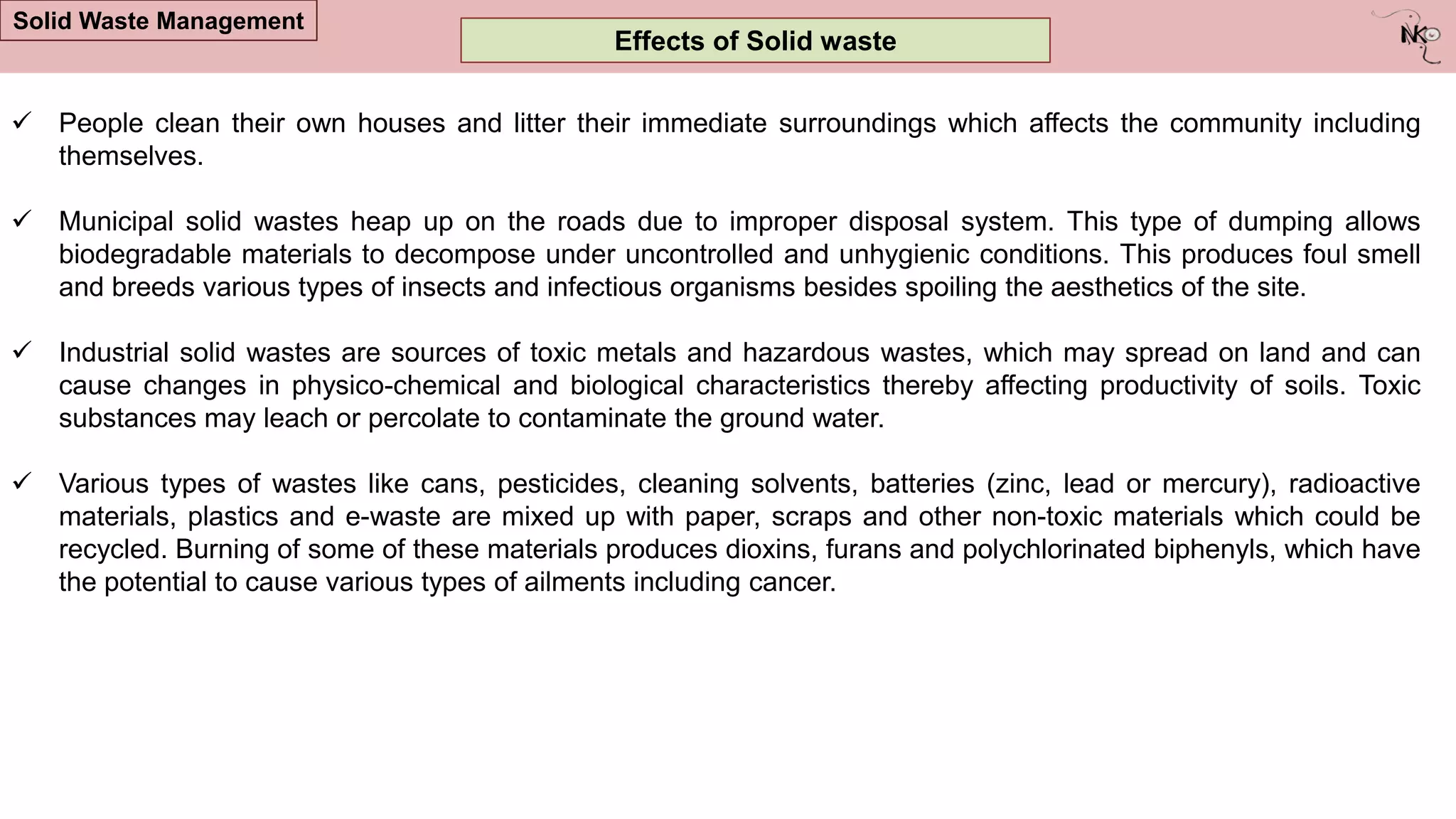
 People clean their own houses and litter their immediate surroundings which affects the community including
themselves.
 Municipal solid wastes heap up on the roads due to improper disposal system. This type of dumping allows
biodegradable materials to decompose under uncontrolled and unhygienic conditions. This produces foul smell
and breeds various types of insects and infectious organisms besides spoiling the aesthetics of the site.
 Industrial solid wastes are sources of toxic metals and hazardous wastes, which may spread on land and can
cause changes in physico-chemical and biological characteristics thereby affecting productivity of soils. Toxic
substances may leach or percolate to contaminate the ground water.
 Various types of wastes like cans, pesticides, cleaning solvents, batteries (zinc, lead or mercury), radioactive
materials, plastics and e-waste are mixed up with paper, scraps and other non-toxic materials which could be
recycled. Burning of some of these materials produces dioxins, furans and polychlorinated biphenyls, which have
the potential to cause various types of ailments including cancer.
Effects of Solid waste
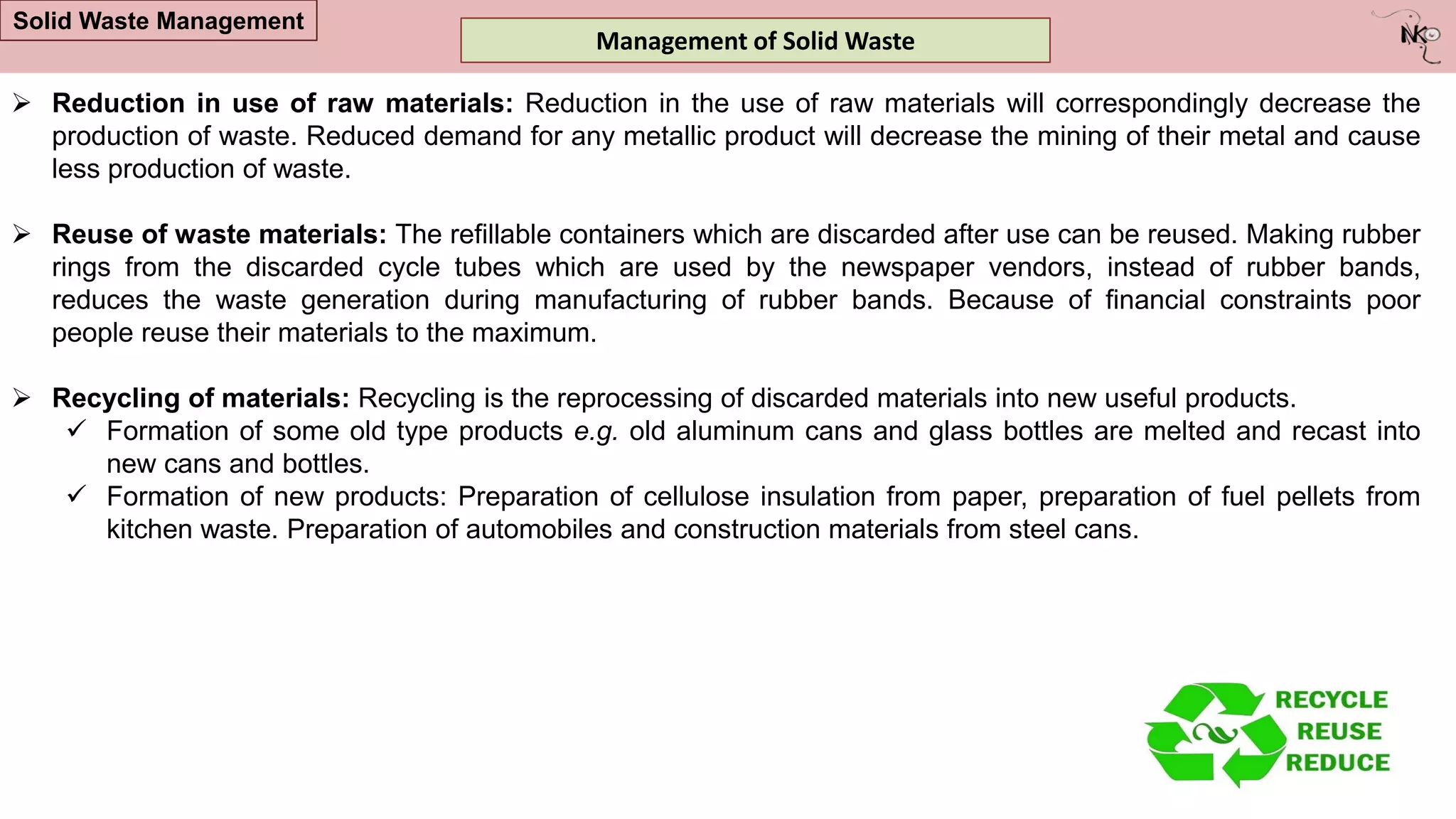
Solid Waste Management
 Reduction in use of raw materials: Reduction in the use of raw materials will correspondingly decrease the
production of waste. Reduced demand for any metallic product will decrease the mining of their metal and cause
less production of waste.
 Reuse of waste materials: The refillable containers which are discarded after use can be reused. Making rubber
rings from the discarded cycle tubes which are used by the newspaper vendors, instead of rubber bands,
reduces the waste generation during manufacturing of rubber bands. Because of financial constraints poor
people reuse their materials to the maximum.
 Recycling of materials: Recycling is the reprocessing of discarded materials into new useful products.
 Formation of some old type products e.g. old aluminum cans and glass bottles are melted and recast into
new cans and bottles.
 Formation of new products: Preparation of cellulose insulation from paper, preparation of fuel pellets from
kitchen waste. Preparation of automobiles and construction materials from steel cans.
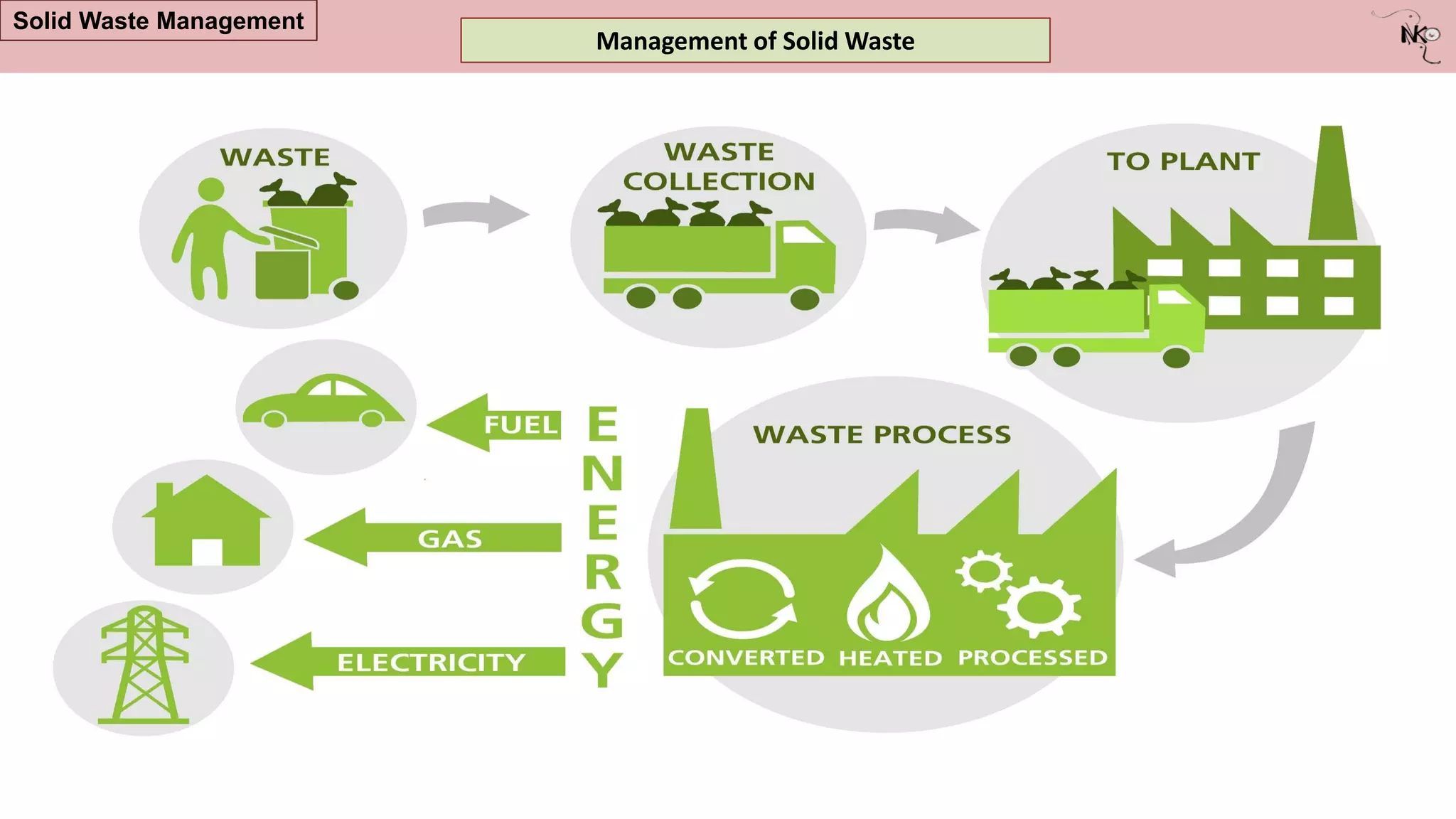
Management of Solid Waste
Solid Waste Management
Management of Solid Waste
Solid Waste Management
Management of Solid Waste
Solid Waste Management
For discarding wastes the following methods can be adopted:
 Sanitary landfill: In a sanitary landfill, garbage is spread out in thin layers, compacted and covered with clay or
plastic foam. In the modern landfills the bottom is covered with an impermeable liner, usually several layers of
clay, thick plastic and sand. The liner protects the ground water from being contaminated due to percolation of
leachate. Leachate from bottom is pumped and sent for treatment. When landfill is full it is covered with clay,
sand, gravel and top soil to prevent seepage of water.
 Composting: Due to shortage of space for landfill in bigger cities, the biodegradable yard waste (kept separate
from the municipal waste) is allowed to degrade or decompose in an oxygen rich medium.
 Incineration: Incinerators are burning plants capable of burning a large amount of materials at high temperature
generally more than 900°C. The required heat comes from oxidation of organically bound carbon and hydrogen
present in the waste material or the added fuel. C + O2 → CO2 + heat. During incineration high levels of dioxins,
furans, lead and cadmium may be emitted with the fly ash of incinerator. Dioxin level may reach many times more
than in the ambient environment. Prior removal of plastics will reduce emissions of dioxins and polychlorinated
biphenyls (PCBs).
Solid Waste Management
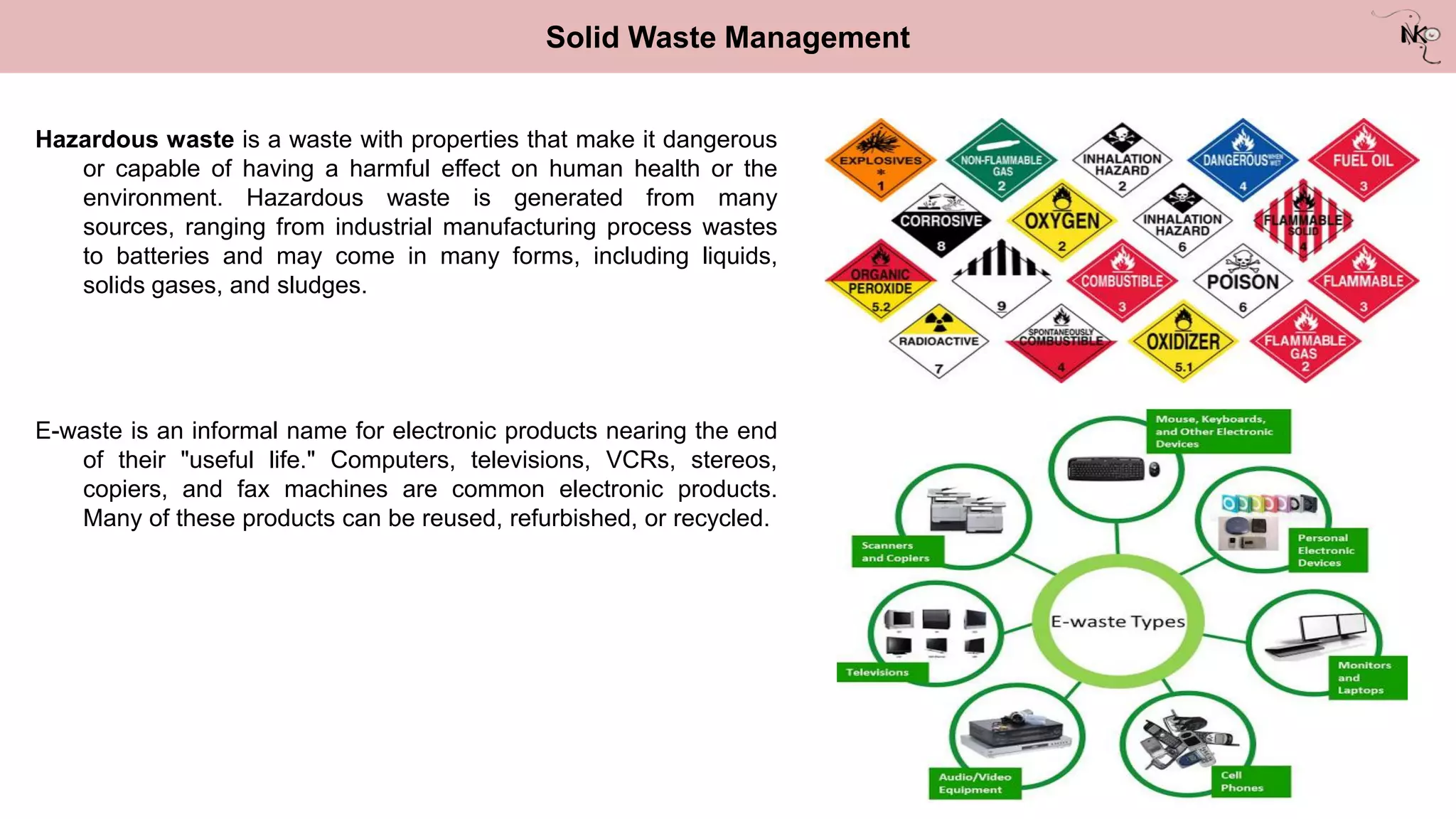
Hazardous waste is a waste with properties that make it dangerous
or capable of having a harmful effect on human health or the
environment. Hazardous waste is generated from many
sources, ranging from industrial manufacturing process wastes
to batteries and may come in many forms, including liquids,
solids gases, and sludges.
E-waste is an informal name for electronic products nearing the end
of their "useful life." Computers, televisions, VCRs, stereos,
copiers, and fax machines are common electronic products.
Many of these products can be reused, refurbished, or recycled.
Nuclear hazards and human health risks
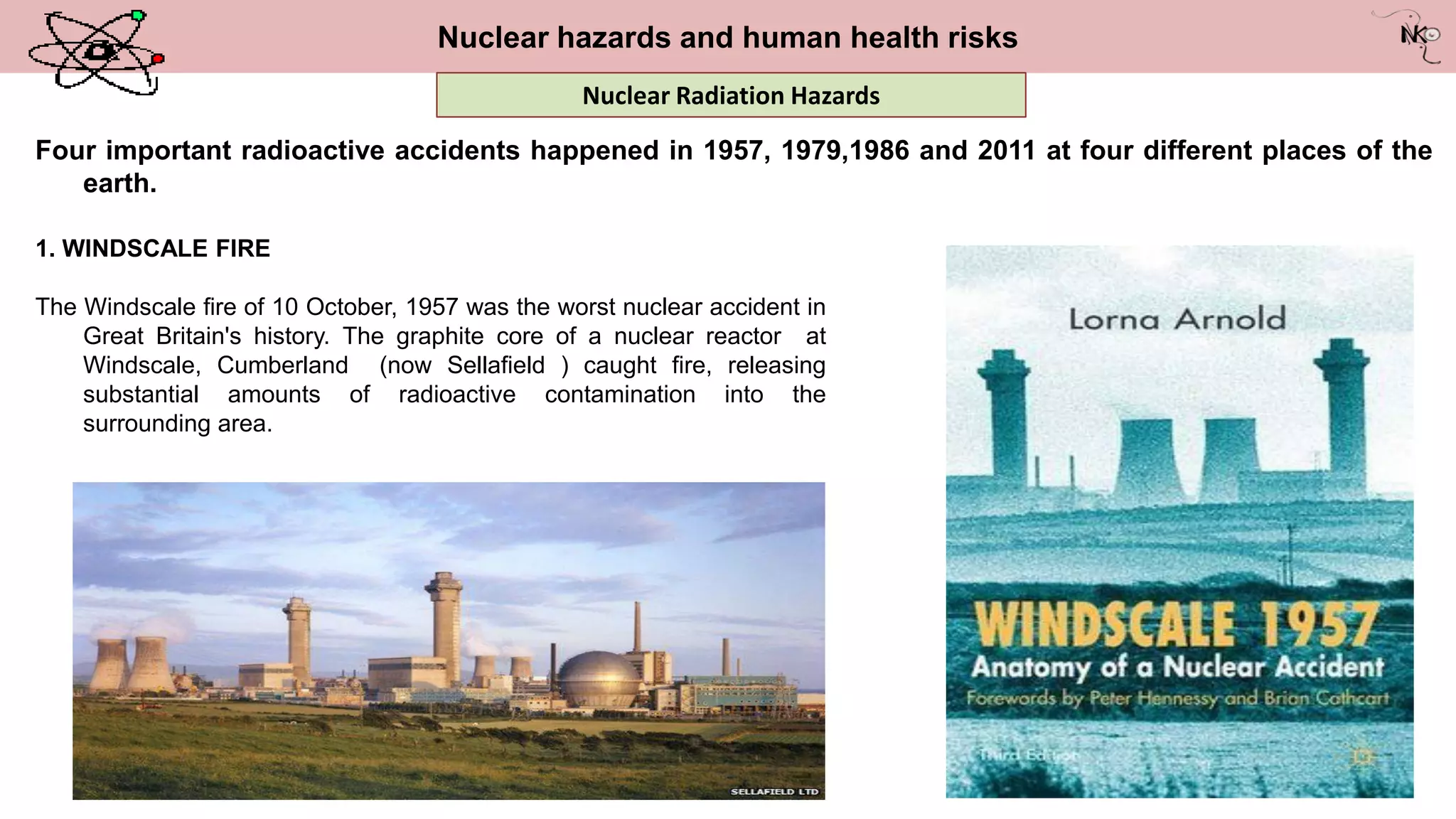
1. WINDSCALE FIRE
The Windscale fire of 10 October, 1957 was the worst nuclear accident in
Great Britain's history. The graphite core of a nuclear reactor at
Windscale, Cumberland (now Sellafield ) caught fire, releasing
substantial amounts of radioactive contamination into the
surrounding area.
Nuclear Radiation Hazards
Four important radioactive accidents happened in 1957, 1979,1986 and 2011 at four different places of the
earth.
Nuclear hazards and human health risks
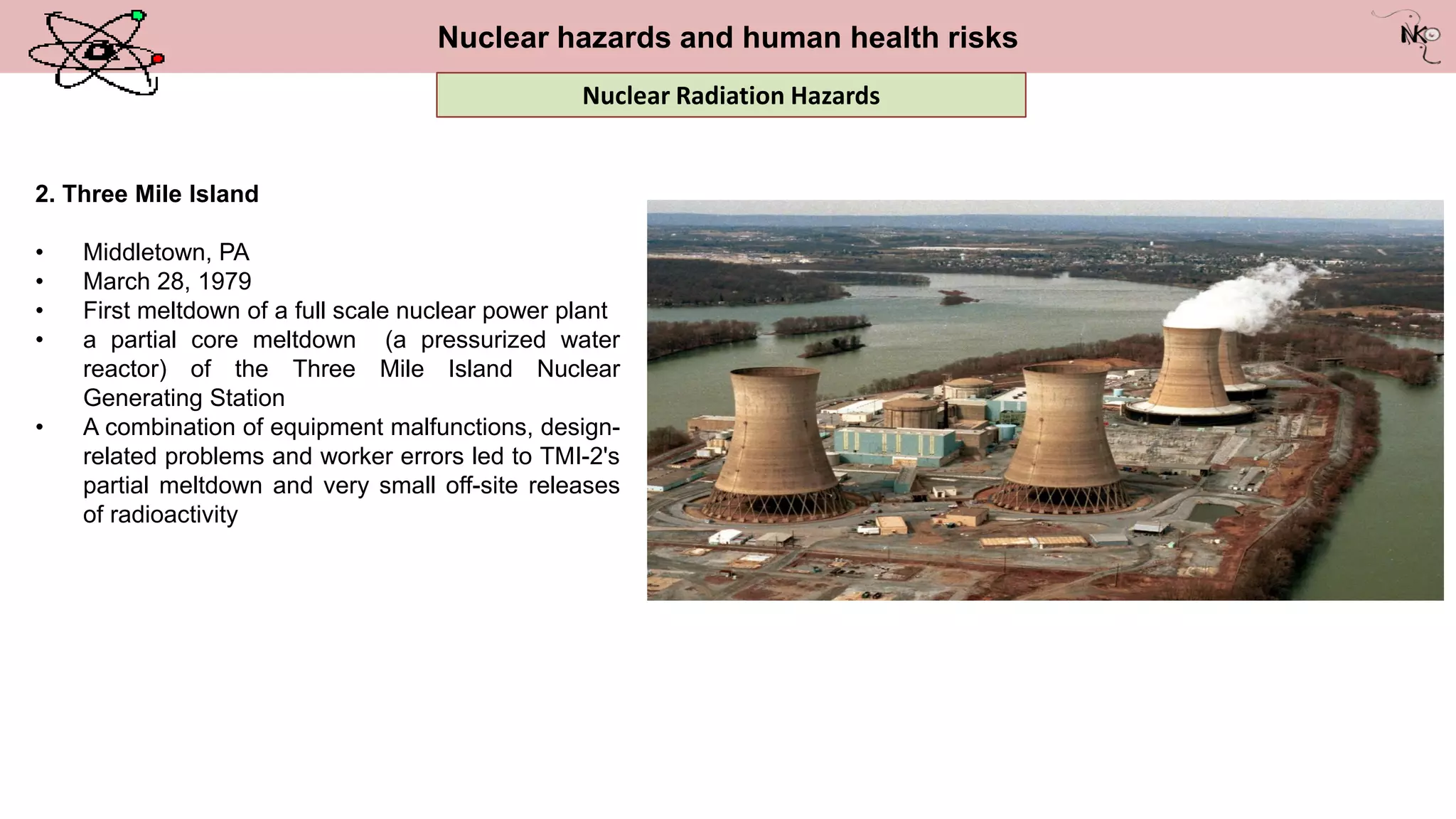
2. Three Mile Island
• Middletown, PA
• March 28, 1979
• First meltdown of a full scale nuclear power plant
• a partial core meltdown (a pressurized water
reactor) of the Three Mile Island Nuclear
Generating Station
• A combination of equipment malfunctions, design-
related problems and worker errors led to TMI-2's
partial meltdown and very small off-site releases
of radioactivity
Nuclear Radiation Hazards
Nuclear hazards and human health risks
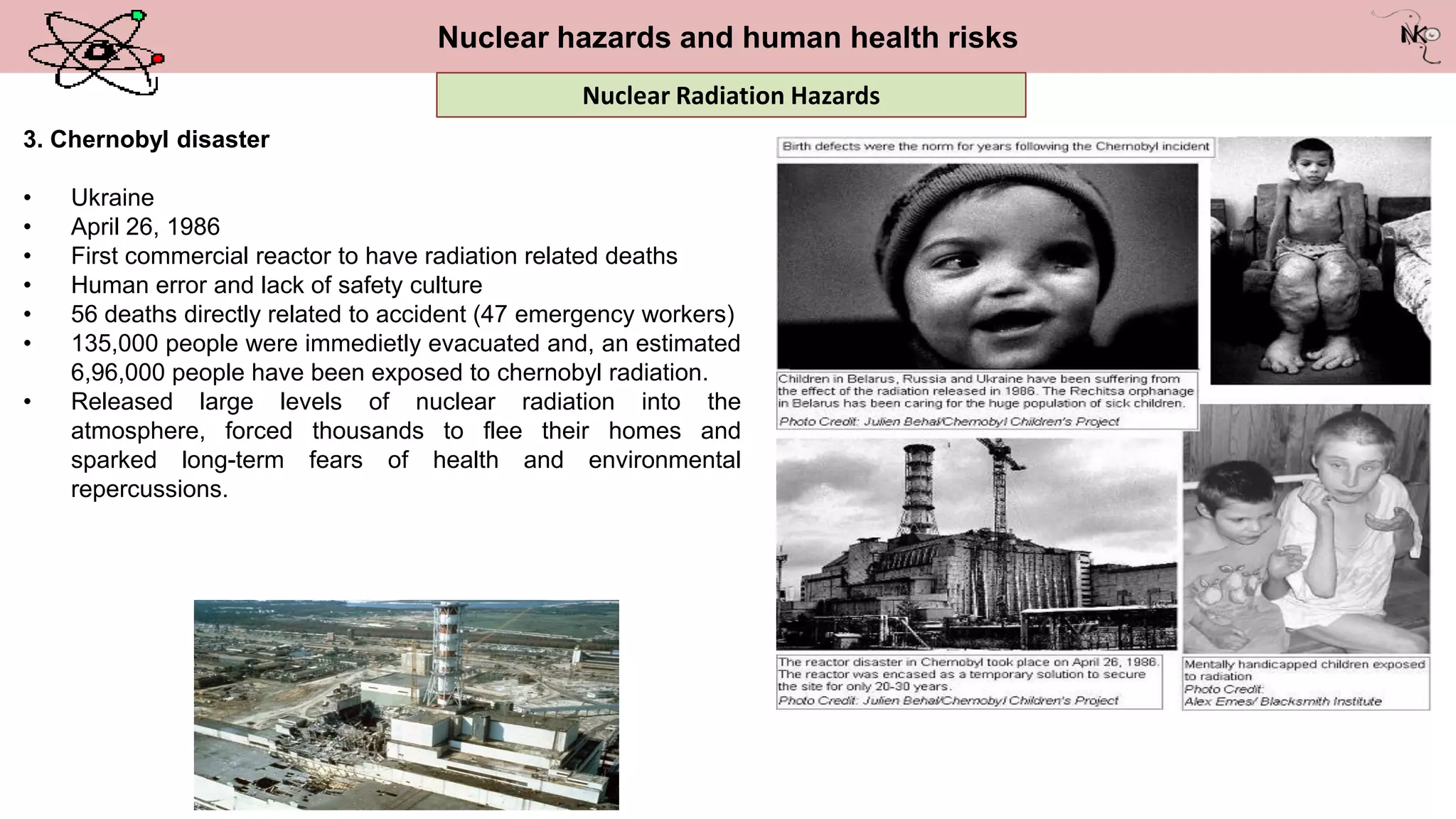
3. Chernobyl disaster
• Ukraine
• April 26, 1986
• First commercial reactor to have radiation related deaths
• Human error and lack of safety culture
• 56 deaths directly related to accident (47 emergency workers)
• 135,000 people were immedietly evacuated and, an estimated
6,96,000 people have been exposed to chernobyl radiation.
• Released large levels of nuclear radiation into the
atmosphere, forced thousands to flee their homes and
sparked long-term fears of health and environmental
repercussions.
Nuclear Radiation Hazards
Nuclear hazards and human health risks
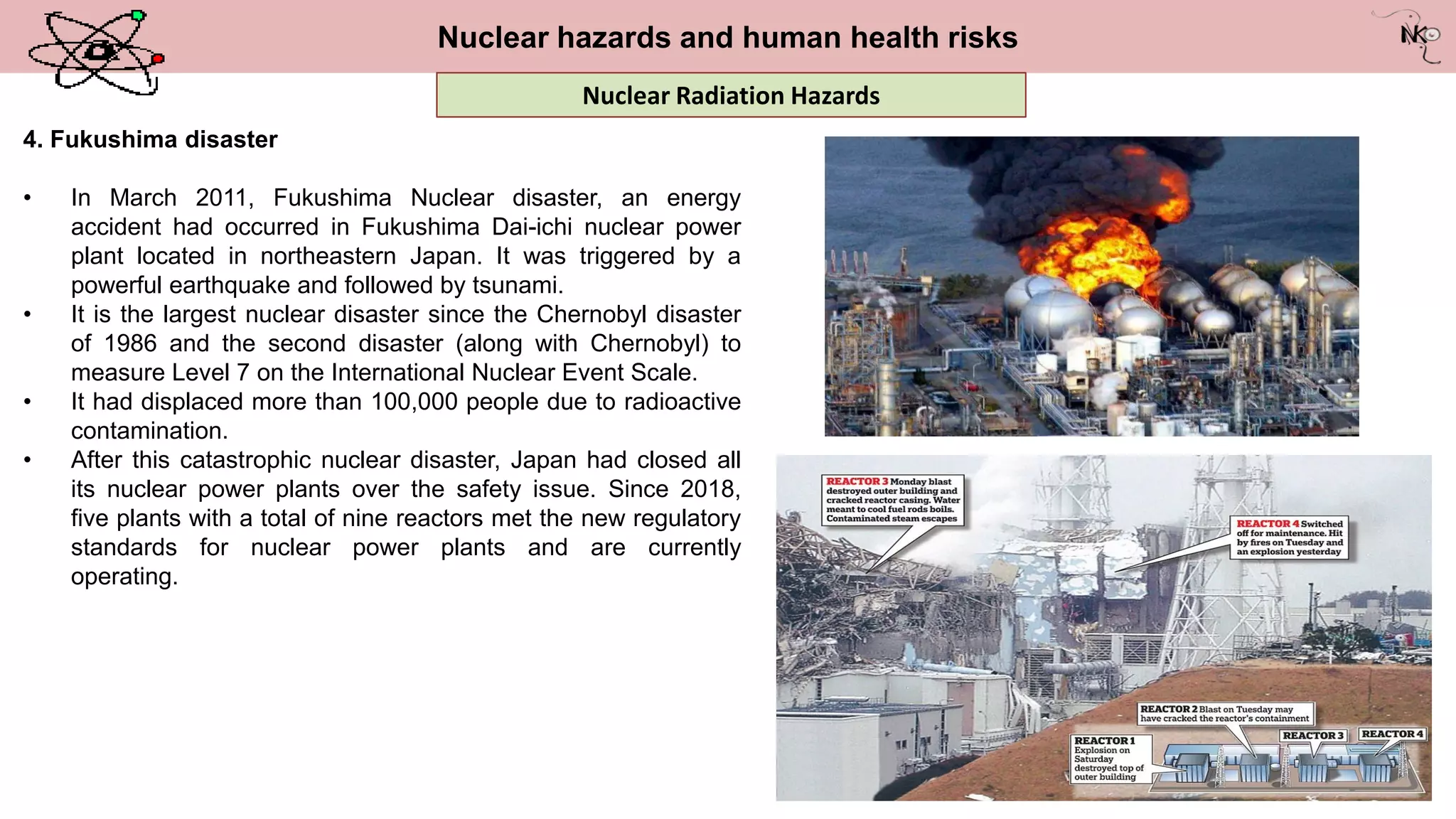
4. Fukushima disaster
• In March 2011, Fukushima Nuclear disaster, an energy
accident had occurred in Fukushima Dai-ichi nuclear power
plant located in northeastern Japan. It was triggered by a
powerful earthquake and followed by tsunami.
• It is the largest nuclear disaster since the Chernobyl disaster
of 1986 and the second disaster (along with Chernobyl) to
measure Level 7 on the International Nuclear Event Scale.
• It had displaced more than 100,000 people due to radioactive
contamination.
• After this catastrophic nuclear disaster, Japan had closed all
its nuclear power plants over the safety issue. Since 2018,
five plants with a total of nine reactors met the new regulatory
standards for nuclear power plants and are currently
operating.
Nuclear Radiation Hazards
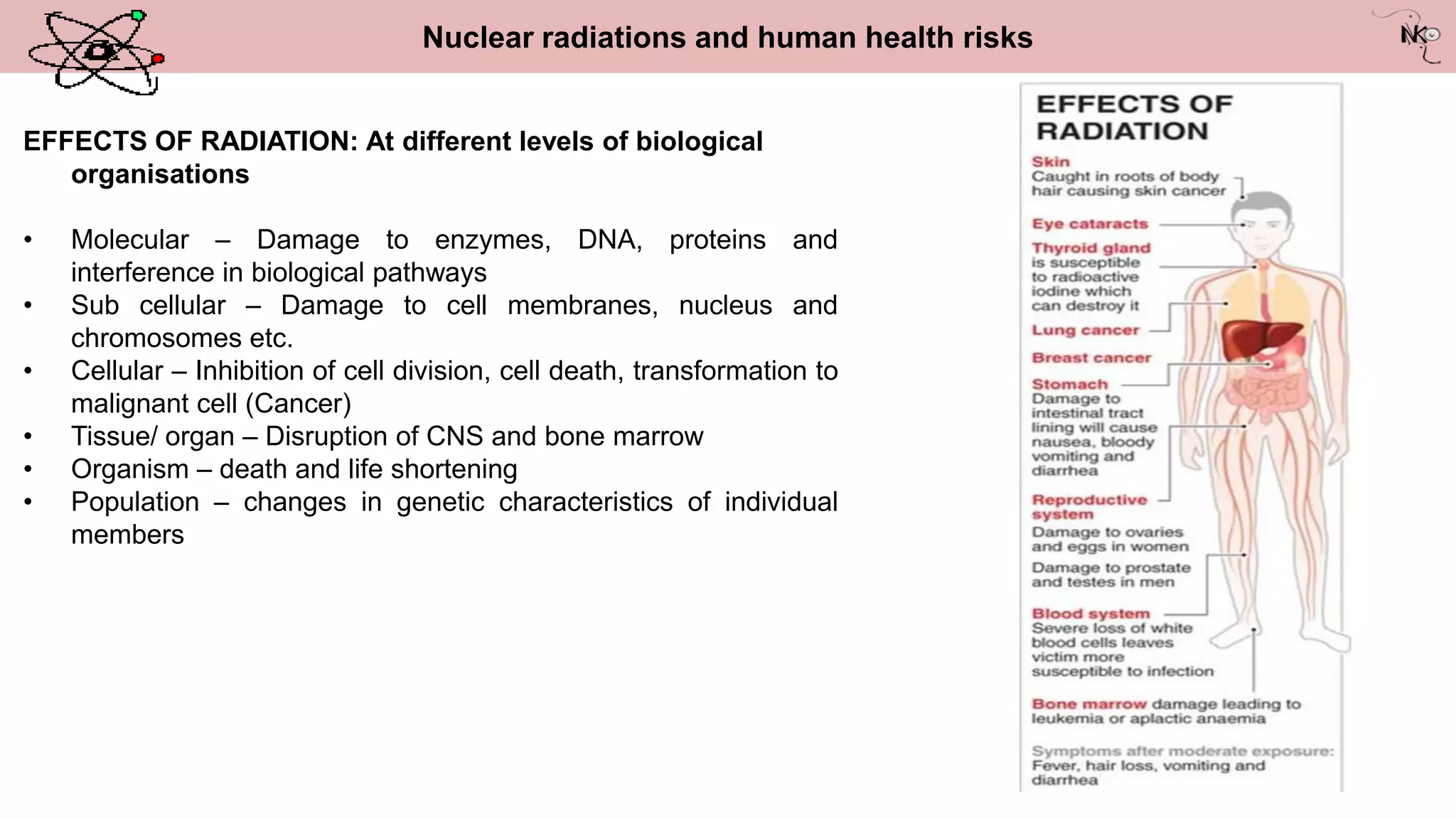
Nuclear radiations and human health risks
EFFECTS OF RADIATION: At different levels of biological
organisations
• Molecular – Damage to enzymes, DNA, proteins and
interference in biological pathways
• Sub cellular – Damage to cell membranes, nucleus and
chromosomes etc.
• Cellular – Inhibition of cell division, cell death, transformation to
malignant cell (Cancer)
• Tissue/ organ – Disruption of CNS and bone marrow
• Organism – death and life shortening
• Population – changes in genetic characteristics of individual
members
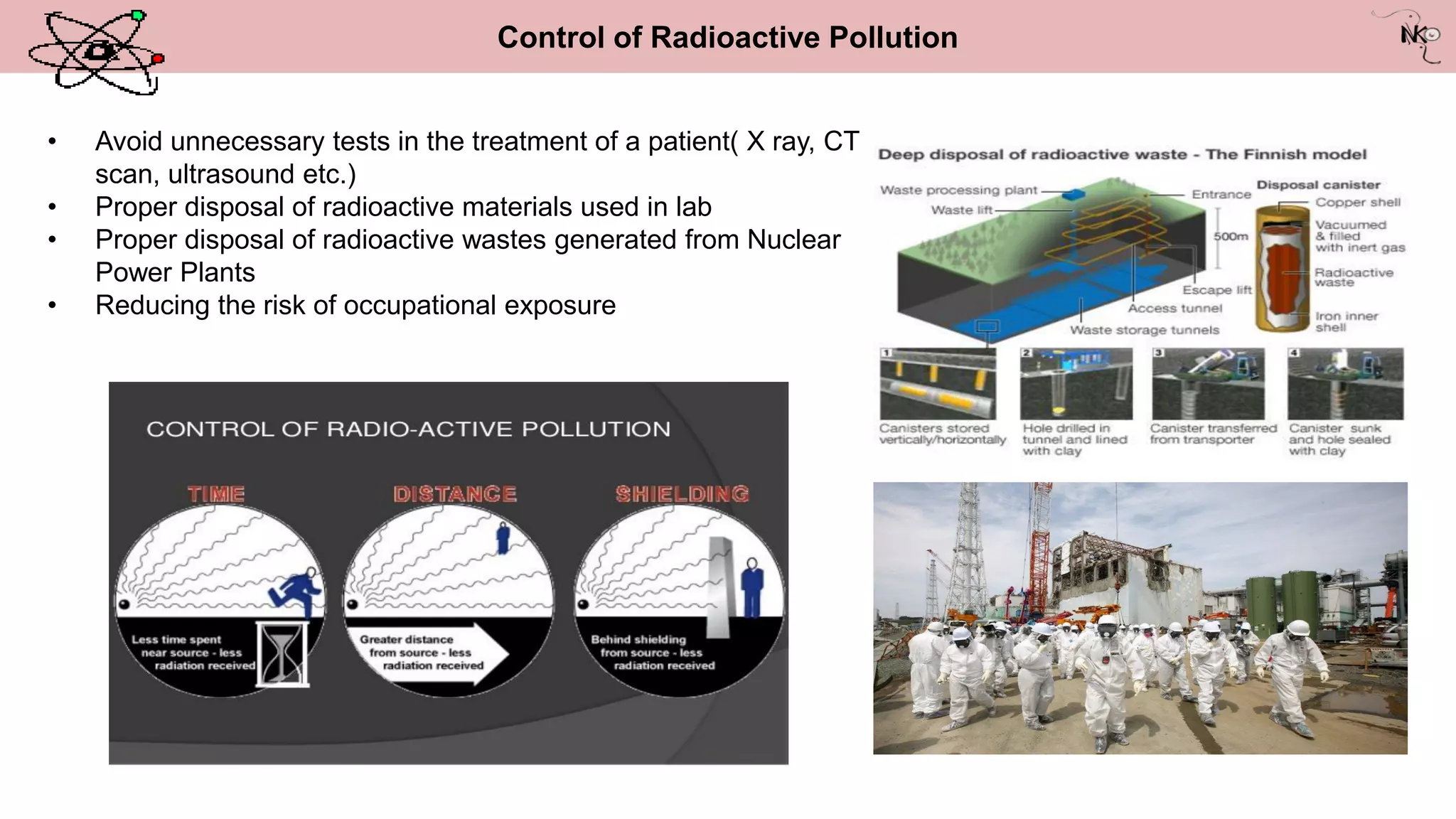
Control of Radioactive Pollution
• Avoid unnecessary tests in the treatment of a patient( X ray, CT
scan, ultrasound etc.)
• Proper disposal of radioactive materials used in lab
• Proper disposal of radioactive wastes generated from Nuclear
Power Plants
• Reducing the risk of occupational exposure
Case Study: Ganga Action Plan (GAP)
 The Ganga action plan was, launched by Shri Rajeev Gandhi, the then Prime Minister of India on 14 January, 1986 with the
main objective of pollution abatement, to improve the water quality by interception, diversion and treatment of domestic
sewage and prevent toxic and industrial chemical wastes from identified grossly polluting units entering in to the river.
The other objectives of the Ganga Action Plan are as under:
 Control of non-point pollution from agricultural run-off, human defecation, cattle wallowing and throwing of unburnt and half
burnt bodies into the river.
 Research and Development to conserve the biotic, diversity of the river to augment its productivity.
 New technology of sewage treatment like Up-flow Anaerobic Sludge Blanket (UASB) and sewage treatment through
afforestation has been successfully developed.
 Rehabilitation of soft-shelled turtles for pollution abatement of river have been demonstrated and found useful.
 Resource recovery options like production of methane for energy generation and use of aquaculture for revenue generation
have been demonstrated.
 The GAP was thus launched with the establishment of the Ganga Project Directorate (GPD), renamed as the NRCD
(National River Conservation Directorate) in June 1994, as a wing of the Department of Environment, to execute the projects
under the guidance and supervision of the Central Ganga Authority (CGA).
 The newly started program Namami Gange has a well-balanced spread of 221 projects, which include STP, ghat
development, surface cleaning afforestation, sanitation, and public awareness, out of which 58 have been completed.
Case Study: Delhi Air Pollution and Public Health Issues
 Air pollution is a big concern in a city like Delhi where more than 16 million people are exposed to severely high pollutant
concentrations on an annual average basis.
 The sixth-most populated metropolis in the world (second largest if the entire NCR is included), is one of the most heavily
polluted cities in India, having for instance one of the country's highest volumes of particulate matter pollution.
 The city suffers from air pollution caused by road dust and industry, with contributions from unclean engines in transportation,
especially diesel-powered vehicles and trucks, and 2-wheelers and 3-wheelers with two-stroke engines.
 It is in this regard that the Government of Delhi introduced Odd-Even scheme in which plying of privately owned cars was
restricted on alternate days based on the last digit (odd/even) of the registration number.
 Air pollution has adverse effects on living organisms and materials. Years of exposure to air pollutants can result in lung
cancer, asthma, chronic bronchitis and emphysema (damage to air sacs leading to loss of lung elasticity and acute shortness
of breath). Suspended particulates can cause damage to lung tissues and diseases like asthma, bronchitis and cancer.
 Sulphur dioxide (SO2) causes constriction of respiratory passage and can cause bronchitis like conditions. In the presence of
suspended particulates, SO2 can form acid sulphate particles, which can go deep into the lungs and affect them severely.
 Oxides of nitrogen especially NO2 can irritate the lungs and cause conditions like chronic bronchitis and emphysema. Carbon
monoxide (CO) reaches lungs and combines with haemoglobin of blood to form carboxyhaemoglobin.
Case Study: Plastic Waste Management Rules
 The Plastic waste management rules, 2016 is aimed at reducing 6,000 tonnes of uncollected plastic waste generated daily by
targeting manufacturers and industries by using a new principle called the Extended Producers Responsibility (EPR) Act.
The other modalities of the new plastic management rules are as follows:
 Increase minimum thickness of plastic carry bags from 40 to 50 microns and stipulate minimum thickness of 50 micron for
plastic sheets also to facilitate collection and recycle of plastic waste.
 Expand the jurisdiction of applicability from the municipal area to rural areas, because plastic has reached rural areas also.
 To bring in the responsibilities of producers and generators, both in plastic waste management system
 To introduce collection of plastic waste management fee through pre-registration of the producers, importers of plastic carry
bags/multilayered packaging and vendors selling the same for establishing the waste management system.
 To promote use of plastic waste for road construction as per Indian Road Congress guidelines or energy recovery, or waste
to oil etc. for gainful utilization of waste and also addresses the waste disposal issue.
 To entrust more responsibility on waste generators, namely payment of user charge
 Thrust on plastic waste minimization, source segregation, recycling, involving waste pickers, recyclers and waste processors
Case Study: Bhopal Gas Tragedy
 The Bhopal Gas tragedy is the worst air pollution episode ever witnessed in India. It happened in Bhopal on December 3,
1984.
 The Union Carbide factory is located in Bhopal, a town in Madhya Pradesh. The fateful incident happened due to the
leakage of lethal gas called methyl isocyanate (MIC) gas from three storage tanks of Union Carbide factory, a Multinational
Corporation.
 MIC is an intermediate used in the manufacture of pesticides. Methyl isocyanate (MIC) is produced by combination of
phosgene, a deadly poisonous gas used in the First World War with methyl amine. In the accident nearly 36 tones of
poisonous MIC gas released into the air of Bhopal.
 MIC gas causes burning sensation in the eyes, removes oxygen from the lungs resulting in breathing trouble and chest
tightness, and also cyanide generation in the body, which ultimately turn fatal and leads to death.
 Bhopal gas tragedy caused the single biggest air pollution tragedy which, according to official sources, claimed 2500 lives,
whereas non-governmental sources put the figure much higher. According to the figure released by the government around
17,000 people have been rendered permanent disabled and another 30,000 partially handicapped. Those who have suffered
mini disability number about 1,50,000.

Unit 5 - Pollution.pdf

  • 1.
    Unit 5 Environmental Pollution •Environmentalpollution (Air, water, soil, thermal, and noise): causes, effects, and controls; Primary and secondary air pollutants; Air and water quality standards •Nuclear hazards and human health risks •Solid waste management: Control measures for various types of urban, industrial waste, Hazardous waste, E-waste, etc; Waste segregation and disposal •Pollution case studies: Ganga Action plan (GAP), Delhi air pollution and public health issues, Plastic waste management rules, Bhopal gas tragedy, etc Nawin Kumar Tiwary, Ph.d. Assistant Professor Department of Environmental Studies Indraprastha College for Women University of Delhi, Delhi, India
  • 2.
    • Pollution, alsocalled environmental pollution is addition of any substance (solid, liquid, or gas) or any form of energy (such as heat, sound, or radioactivity) to the environment at a rate faster than it can be dispersed, diluted, decomposed, recycled, or stored in some harmless form. • The major kinds of pollution, usually classified by environment, are air pollution, water pollution, soil pollution and land pollution. • Pollution of all kinds can have negative effects on the environment and wildlife and often impacts human health and well-being. Environmental Pollution
  • 3.
    The introduction ofgaseous chemicals, particulate matter, or biological materials that cause harm or discomfort to humans or other living organisms, or cause damage to the natural environment or built environment, into the atmosphere. Air Pollution Types of Air Pollutants 1. PRIMARY POLLUTANTS: These are emitted directly from the point source (identifiable and stationary source). E.g, Carbon dioxide (CO2), Carbon monoxide (CO), Sulfur dioxide (SO2), Nitrogen oxides (NOx), Ammonia (NH3), Volatile organic compounds (VOCs), Heavy Metals (Lead, Cadmium, Mercury, Arsenic), Methane (CH4), Particulate Matter (PM), Chlorofluorocarbons (CFCs) 2. SECONDARY POLLUTANTS: These are formed by interactions of primary pollutants or with some natural constituents of the atmosphere. e.g, Ozone (which is formed when hydrocarbons (HC) and nitrogen oxides (NOx) combine in the presence of sunlight), NO2 (which is formed as NO combines with oxygen in the air), Acid Rain (which is formed when sulfur dioxide or nitrogen oxides react with water), Peroxyacyl Nitrate (CH3COONO2), Photochemical Smog (Ozone and Nitrogen Oxides causing haze in the atmosphere due to action of sunlight)
  • 4.
    Types of AirPollutants Air Pollution
  • 5.
    Sources of AirPollutants Anthropogenic Sources • Stationary sources: (industrial emissions, power plants, waste incinerators, residential fuel combustion, agro- emissions, etc.) • Mobile sources (all transport, like vehicles, aircrafts, etc.) • Solvents (like aerosol sprays, fumes from paint, varnish, etc) • Agro-emissions (e.g. methane from paddy) and Forest controlled-fires • Waste (deposition) emissions • Military Pollution (such as nuclear weapons, toxic gases, etc.) Natural Sources • Volcanic activity (producing primarily CO2 sulfur, and ash/PM) • Emissions from wildfires (CO, CO2, PM, etc.) • Radon Gas emitting from radioactive decay from the earth Air Pollution
  • 6.
    Air Pollution Sourcesof Air Pollutants
  • 7.
    Impacts of AirPollution Air Pollution Impact on Human Health • The immediate effects of air pollution is watery eyes, coughing and difficulty in breathing. • Exposure to high levels of air pollution during pregnancy has been linked to miscarriages as well as premature birth, autism spectrum disorder and asthma in children. • Air pollution may damage children‟s brain development, and pneumonia, which kills almost 1 million children under the age of 5 every year. Children who breathe in higher levels of pollutants also face a greater risk of short-term respiratory infections and lung damage. • Other conditions associated with high levels of air pollution include emphysema and chronic bronchitis, as well as lung cancer. • Pollutants can affect cardiovascular health by hardening the arteries and increase the risk of heart attack and strokes, and there is even emerging evidence that air pollution may be linked to mental health conditions and degenerative brain diseases such as Alzheimer’s disease, Parkinson’s disease and schizophrenia. • Impact of Particulate Matter: Particulate matter 2.5 (PM2.5) refers to tiny particles or droplets in the air that are of 2.5 microns in size. Fine particles (PM2.5) pose the greatest health risk. These fine particles can get deep into lungs and some may even get into the bloodstream. Exposure to these particles can affect a person's lungs and heart. Coarse particles (PM2.5 to10) are of less concern, although they can irritate a person's eyes, nose, and throat.
  • 8.
    Impacts of AirPollution Air Pollution Impact on Human Health
  • 9.
    Impacts of AirPollution Air Pollution Impact on Environment • Ecologically, air pollution can cause serious environmental damages to the groundwater, soil, and air. • It is a serious threat to the diversity of life. Studies on the relationship between air pollution and reducing species diversity clearly show the detrimental effects of environmental contaminants on the extinction of animals and plants species. • Air suspended toxicants may also cause reproductive effects in animals. • Acid Rain, Ozone Layer Depletion and Global Warming are global climate change phenomenon due to the emissions of various gaseous pollutants into the atmosphere are other major ecological impacts of air pollution.
  • 10.
    Indoor Air Pollution AirPollution • Indoor air pollution refers to chemical, biological and physical contamination of indoor air. It may result in adverse health effects. In developing countries, the main source of indoor air pollution is biomass smoke which contains suspended particulate matter (PM), nitrogen dioxide (NO2), sulphur dioxide (SO2), carbon monoxide (CO), formaldehyde and polycyclic aromatic hydrocarbons (PAHs). • In industrialized countries, in addition to NO2, CO, and formaldehyde, radon (radioactive emission from earth), asbestos, mercury, human-made mineral fibres, volatile organic compounds, allergens, tobacco smoke, bacteria and viruses are the main contributors to indoor air pollution.
  • 11.
    Global Warming Air Pollution •Troposphere, the lowermost layer of the atmosphere, traps heat by a natural process due to the presence of certain gases. This effect is called Greenhouse Effect as it is similar to the warming effect observed in the horticultural greenhouse made of glass. • The amount of heat trapped in the atmosphere depends mostly on the concentrations of “heat trapping” or “greenhouse gases” and the length of time they stay in the atmosphere. The major greenhouse gases are carbon dioxide, ozone, methane, nitrous oxide, chlorofluorocarbons (CFCs) and water vapours. • Warming or cooling by more than 2°C over the past few decades may prove to be disastrous for various ecosystems on the earth including humans, as it would alter the conditions faster than some species could adapt or migrate. Some areas will become inhabitable because of drought or floods following a rise in average sea level. • Greenhouse gases: The phenomenon that worries the environmental scientists is that due to anthropogenic activities there is an increase in the concentration of the greenhouse gases in the air that absorb infrared light containing heat and results in the re-radiation of even more of the outgoing thermal infrared energy, thereby increasing the average surface temperature beyond 15°C. The phenomenon is referred to as the enhanced greenhouse effect to distinguish its effect from the one that has been operating naturally for millennia. • The greenhouse gases present in the troposphere and resulting in an increase in the temperature of air and the earth are: Carbon dioxide, Methane, Nitrous oxide (NO2), Water vapours, Chlorofluorocarbons(CFC)
  • 12.
  • 13.
    Impacts of GlobalWarming Air Pollution
  • 14.
    Control measures forGlobal Warming Air Pollution To slow down enhanced global warming the following steps will be important: • Cut down the current rate of use of CFCs and fossil fuel. • Use energy more efficiently. • Shift to renewable energy resources. • Increase nuclear power plants for electricity production. • Shift from coal to natural gas. • Trap and use methane as a fuel. • Reduce beef production. • Adopt sustainable agriculture. • Stabilize population growth. • Efficiently remove CO2 from smoke stacks. • Plant more trees.
  • 15.
    Acid Rain Air Pollution Oxidesof sulfur and nitrogen originating from industrial operations and fossil fuel combustion are the major sources of acid forming gases. In the atmosphere these gases are ultimately converted into sulfuric and nitric acids. Hydrogen chloride emission forms hydrochloric acid. Rain water is turned acidic when its pH falls below 5.6 because of these acids. Acid rain is only one component of acidic deposition. Acidic deposition is the total of wet acidic deposition (acid rain) and dry deposition. The strong acids like Sulphuric acid (H2SO4) and Nitric acid (HNO3) dissolved or formed in rainwater dissociate or release hydrogen ions thereby increasing the acidity in rain drops.
  • 16.
    Impacts of AcidRain Air Pollution • It causes deterioration of buildings especially made of marble e.g. monuments like Taj Mahal. Crystals of calcium and magnesium sulphate are formed as a result of corrosion caused by acid rain. • It damages stone statues. Priceless stone statues in Greece and Italy have been partially dissolved by acid rain. • It damages metals and car finishes. • Aquatic life especially fish are badly affected by lake acidification. • Aquatic animals suffer from toxicity of metals such as aluminium, mercury, manganese, zinc and lead which leak from the surrounding rocks due to acid rain. • It results in reproductive failure and killing of fish. • It damages foliage and weakens trees. • It makes trees more susceptible to stresses like cold temperature, drought, etc. Many insects and fungi are more tolerant to acidic conditions and hence they can attack the susceptible trees and cause diseases.
  • 17.
    Ozone layer depletion AirPollution • Ozone layer in the stratosphere filters out harmful ultraviolet radiations from the sunlight and thus protects various life forms on the earth. Ozone is a form of oxygen. The molecule of oxygen contains two atoms whereas that of ozone contains three (O3). • The amount of atmospheric ozone is measured by „Dobson Spectrometer‟ and is expressed in Dobson units (DU). • In 1974, Rowland and Molina warned that CFCs are lowering the concentration of ozone in the stratosphere and predicted severe consequences. It was however, in 1985 that scientists for the first time discovered that 50% (98% in some areas) of upper stratospheric ozone over Antarctica was destroyed. The main sources of ozone depleting substances are: • CFCs and HCFCs in refrigerators and air conditioners, • HCFCs and halons in fire extinguishers, • CFCs and HCFCs in foam • CFCs and HCFCs as aerosol propellants • Methyl bromide for fumigation of soil, structures and goods to be imported or exported.
  • 18.
    Impacts of Ozonelayer depletion Air Pollution  Ozone depletion in the stratosphere will result in more UV radiation reaching the earth especially UV-B (290–320 nm).  The UV-B radiations affect DNA and the photosynthetic chemicals. Any change in DNA can result in mutation and cancer.  Cases of skin cancer which do not cause death but cause disfigurement will increase.  Easy absorption of UV rays by the lens and cornea of eye will result in increase in incidents of cataract.  Melanin producing cells of the epidermis (important for human immune system) will be destroyed by UV-rays resulting in immuno-suppression. Fair people (who cannot produce enough melanin) will be at a greater risk of UV exposure.  Phytoplanktons are sensitive to UV exposure. Ozone depletion will result in decrease in their population thereby affecting the population of zooplankton, fish, marine animals, in fact the whole aquatic food chain.  Yield of vital crops like corn, rice, soybean, cotton, bean, pea, sorghum and wheat will decrease.
  • 19.
    Remedial Measures forAir Pollution • Locating industries after proper environmental impact assessment studies. • By dilution of emission. This can be done by increasing the stack height (though up to permissible height), beyond inversion layer. Wind currents will disperse the pollutants. • Minimise/modify activities which cause pollution e.g. transportation and energy production. • Using low sulphur coal in industries. • Removing sulphur from coal (by washing or with the help of bacteria). • Removing NOx during the combustion process and controlling the flow of air and fuel in industrial boilers. • Vehicular pollution can be checked by regular tune-up of engines; replacement of more polluting old vehicles; installing catalytic converters; by engine modification to have fuel efficient (lean) mixtures to reduce CO and hydrocarbon emissions; and slow and cooler burning of fuels to reduce NOx emission. • Using mass transport system, bicycles etc. • Shifting to less polluting (clean) fuels (hydrogen gas). • Using non-conventional sources of energy. • Using biological filters and bio-scrubbers. • Planting more trees. • Reduction of pollution at source by installing air pollution control devices like cyclones, baghouse filters, wet scrubbers, electrostatic precipitators etc. Air Pollution
  • 20.
    Remedial Measures forAir Pollutants Air Pollution
  • 21.
    National Ambient AirQuality Standards Air Pollution The Ministry of Environment, Forest and Climate Change (MoEFCC), Govt of India have notified the National Ambient Air Quality Standards in the year 2009, by amending the Environment (Protection) Rules 1986. National Ambient Air Quality Standards are the standards for ambient air quality set by the Central Pollution Control Board (CPCB) that is applicable nationwide.
  • 22.
    Water pollution canbe defined as alteration in physical, chemical or biological characteristics of water making it unsuitable for designated use in its natural state. Water Pollution Types of Water Pollutants Water Pollution can be caused by “point sources” or “non-point sources”. 1. Point sources are specific sites near water which directly discharge effluents into them. Major point sources of water pollution are industries, power plants, underground coal mines, offshore oil wells etc. 2. Non-point sources are not at any particular site, rather, these sources are scattered, which individually or collectively pollute water. Surface run-off from agricultural fields, overflowing small drains, rain water sweeping roads and fields, atmospheric deposition etc., are the non-point sources of water pollution.
  • 23.
    Sources of WaterPollution Water Pollution Surface water pollution: The major sources of surface water pollution are: 1. Sewage. Emptying the drains and sewers in fresh water bodies causes water pollution. 2. Industrial effluents. Industrial wastes containing toxic chemicals, acids, alkalis, metallic salts, phenols, cyanides, ammonia, radioactive substances, etc., are sources of water pollution. 3. Synthetic detergents. Synthetic detergents used in washing and cleaning produce foam and pollute water. 4. Agrochemicals. Agrochemicals like fertilizers (containing nitrates and phosphates) and pesticides (insecticides, fungicides, herbicides etc.) washed by rain-water and surface runoff pollute water. 5. Oil. Oil spillage into sea-water during drilling and shipment pollute it. 6. Waste heat. Waste heat from industrial discharges increases the temperature of water bodies and affects distribution and survival of sensitive species. They also cause thermal (heat) pollution of water. Ground Water Pollution: Ground water seems to be less prone to pollution as the soil mantle through which water passes helps to retain various contaminants due to its cation exchange capacity. However, there are a number of potential sources of ground water pollution. Septic tanks, industry (textile, chemical, tanneries), deep well injection, mining etc., are mainly responsible for ground water pollution. Ground water pollution with arsenic, fluoride and nitrate are posing serious health hazards.
  • 24.
    Types of WaterPollutants Water Pollution
  • 25.
    Impacts of WaterPollution Water Pollution Following are some important effects of various types of water pollutants: 1. Oxygen demanding wastes: Organic matter which reaches water bodies is decomposed by micro organisms present in water. For this degradation, oxygen dissolved in water is consumed. Dissolved oxygen (DO) is the amount of oxygen dissolved in a given quantity of water at particular temperature and atmospheric pressure. Lower DO may be harmful to animals especially fish population. Oxygen depletion (deoxygenation) helps in release of phosphates from bottom sediments and causes eutrophication. 2. Rise in BOD: The demand of DO increases with addition of biodegradable organic matter which is expressed as biological oxygen demand (BOD). BOD is defined as the amount of DO required to aerobically decompose biodegradable organic matter of a given volume of water over a period of 5 days at 20ºC. Higher BOD values of any water sample are associated with poor water quality. 3. Nitrogen and phosphorus compounds (nutrients): Addition of compounds containing nitrogen and phosphorus helps in the growth of algae and other plants which when die and decay consume oxygen of water. Under anaerobic conditions foul smelling gases are produced. 4. Pathogens: Many waste waters especially sewage contain many pathogenic (disease causing) and non-pathogenic micro- organisms and many viruses. Water borne diseases like cholera, dysentery, typhoid, jaundice etc. are spread by water contaminated with sewage.
  • 26.
    Impacts of WaterPollution Water Pollution 5. Toxic compounds: Pollutants such as heavy metals, pesticides, cyanides and many other organic and inorganic compounds are harmful to aquatic organisms. The non-biodegradable toxic compounds biomagnify in the food chain and cause toxic effects at various levels of food chain. 6. Heavy metal contamination: Toxic substances polluting the water ultimately affect human health. Some heavy metals like lead, mercury and cadmium cause various types of diseases. • Mercury dumped into water is transformed into water soluble methyl mercury by bacterial action. Methyl mercury accumulates in fish and causes Minimata disease when consumed by humans. • Cadmium pollution had caused the disease called Itai-itai in the people of Japan. In this disease bones, liver, kidney, lungs, pancreas and thyroid are affected. • Lead poisoning affects kidneys reproductive system, liver, brain and central nervous system. It also causes anaemia and mental retardation in children. • Arsenic Pollution in Groundwater causes white or black spots called melanosis. The spots were later found to get converted into leprosy like skin lesions encrusting the palms and soles, eventually rotting into gangrenous ulcers. • Nitrate ions present in the water are harmful to human health. Nitrite reacts with haemoglobin which is converted into non-functional oxidised form. Due to diarrhoea and vomiting child becomes slate blue, giving the baby Blue-baby syndrome or methaemoglobinaemia.
  • 27.
    Impacts of WaterPollution Water Pollution Eutrophication Discharge of untreated municipal sewage (nitrates and phosphates) Nitrogen compounds produced by cars and factories Discharge of treated municipal sewage (primary and secondary treatment: nitrates and phosphates) Discharge of detergents ( phosphates) Natural runoff (nitrates and phosphates Manure runoff From feedlots (nitrates and Phosphates, ammonia) Dissolving of nitrogen oxides (from internal combustion engines and furnaces) Runoff and erosion (from from cultivation, mining, construction, and poor land use) Runoff from streets, lawns, and construction lots (nitrates and phosphates) Lake ecosystem nutrient overload and breakdown of chemical cycling • excessive richness of nutrients (nitrate and phosphate) in a lake or other body of water, frequently due to run-off from the land, which causes a dense growth of plant life. • Increasing biomass of phytoplankton results in 'algal blooms'
  • 28.
    Impacts of WaterPollution Water Pollution Biomagnification • Substances like DDT are not water soluble and tend to accumulate in the organism‟s body from the medium food. This process is called bioaccumulation or bioconcentration. • The concentration of these toxic substances builds up at successive levels of food chain. This process is called biomagnification. Rainbow smelt 1.04 ppm Zooplankton 0.123 ppm Phytoplankton 0.0025 ppm Water 0.000002 ppm Herring gull 124 ppm Lake trout 4.83 ppm Herring gull eggs 124 ppm
  • 29.
    Remedial Measures forWater Pollution It is easy to reduce water pollution from point sources by legislation. However, due to absence of defined strategies it becomes difficult to prevent water pollution from non-point sources. The following points may help in reducing water pollution from non-point sources. • Judicious use of agrochemicals like pesticides and fertilizers which will reduce their surface run-off and leaching. Use of these on sloped lands should be avoided. • Use of nitrogen fixing plants to supplement the use of fertilizers. • Adopting integrated pest management to reduce greater reliance on pesticides. • Prevent run-off of manure. Divert such run-off to basin for settlement. The nutrient rich water can be used as fertilizer in the fields. • Separate drainage of sewage and rain water should be provided to prevent overflow of sewage with rain water. • Planting trees would reduce pollution by sediments and will also prevent soil erosion. • For controlling water pollution from point sources, treatment of waste waters is essential before being discharged. Parametres which are considered for reduction in such water are: Total solids, biological oxygen demand (BOD), chemical oxygen demand (COD), nitrates and phosphates, oil and grease, toxic metals etc. • Waste waters should be properly treated by primary and secondary treatments to reduce the BOD, COD levels upto the permissible levels for discharge. Water Pollution
  • 30.
    Noise pollution isgenerally defined as regular exposure to elevated sound levels that may lead to adverse effects in humans or other living organisms. According to the World Health Organization, sound levels less than 70 dB are not damaging to living organisms, regardless of how long or consistent the exposure is. (Decibel or dB is the unit of measuring sound) Noise Pollution The Central Pollution Control Board (CPCB) has recommended permissible noise levels for different locations as:
  • 31.
    Sources of NoisePollution Noise Pollution The sources of noise can be classified as: (i) Mobile sources are various modes of transportation (like air, road, rail transportation) (ii) Stationary sources include industrial operations, construction activities and celebrations (social/religious functions, elections etc.), electric home appliances etc.
  • 32.
    Impacts of NoisePollution Noise Pollution Noise pollution causes the following effects: • Interferes with man’s communication: In a noisy area communication is severely affected. • Hearing damage: Noise can cause temporary or permanent hearing loss. It depends on intensity and duration of sound level. Auditory sensitivity is reduced with noise level for over 90 dB in the mid-high frequency for more than a few minutes. • Physiological and psychological changes: Continuous exposure to noise affects the functioning of various systems of the body. It may result in hypertension, insomnia (sleeplessness), gastro-intestinal and digestive disorders, peptic ulcers, blood pressure changes, behavioural changes, emotional changes etc.
  • 33.
    Remedial Measures forNoise Pollution Noise Pollution • Reduction in sources of noise: Sources of noise pollution like heavy vehicles and old vehicles may not be allowed to ply in the populated areas. • Noise making machines should be kept in containers with sound absorbing media. The noise path will be uninterrupted and will not reach the workers. • Proper oiling will reduce the noise from the machinery. • Use of sound absorbing silencers: Silencers can reduce noise by absorbing sound. For this purpose various types of fibrous material could be used. • Planting more trees having broad leaves. • Through law: Legislation can ensure that sound production is minimized at various social functions. Unnecessary horn blowing should be restricted especially in vehicle-congested areas.
  • 34.
    Soil pollution isthe introduction of chemical substances or biological organisms into the soil, resulting in a change of the soil quality, which is likely to affect the normal use of the soil or endangering public health and the living environment. Soil contaminants are spilled onto the surface through many different activities. Soil Pollution Sources of Soil Pollution
  • 35.
    Sources of SoilPollution Soil Pollution • Dumping of various types of materials especially domestic and industrial wastes causes land pollution. Domestic wastes include garbages, rubbish material like glass, plastics, polythene bags, metallic cans, paper, fibres, cloth rags, containers, paints, varnishes etc. • Leachates from dumping sites and sewage tanks are harmful and toxic, which pollute the soil. • Industrial wastes like the effluents discharged from chemical industries, paper and pulp mills, tanneries, textile mills, steel industries, distilleries, refineries, pesticides and fertilizer industries, pharmaceutical industries, food processing industries, cement industries, thermal and nuclear power plants, mining industries etc. • Thermal power plants generate a large quantity of „Fly ash‟ which are dumped on land which cause land pollution • Pesticides are used to kill pests that damage crops. These pesticides ultimately reach the soil and persist there for a long time. Pesticides which are persistent in nature are chlorinated hydrocarbon insecticides e.g., DDT, HCH, endrin, lindane, heptachlor, endosulfan etc. Residues of these pesticides in soils have long term effects especially under the temperate conditions. • Land also receives excreta from animals and humans. The sewage sludge contains many pathogenic organisms, bacteria, viruses and intestinal worms which cause pollution of the land. • The sources of radioactive substances in soil are explosion of radioactive devices, radioactive wastes discharged from industries and laboratories, aerial fall-out etc. Isotopes of radium, uranium, thorium, strontium, iodine, caesium and of many other elements reach land and persist there for a long time and keep on emitting radiations.
  • 36.
    Impacts of SoilPollution Soil Pollution Soil pollution causes the following effects: • Sewage and industrial effluents which pollute land ultimately affect human health. Various types of chemicals like acids, alkalis, pesticides, insecticides, weedicides, fungicides, heavy metals etc., in the industrial discharges affect soil fertility by causing changes in physical, chemical and biological properties. • Some of the persistent toxic chemicals inhibit the non-target organisms, soil flora and fauna and reduce soil productivity. These chemicals accumulate in food chain and ultimately affect human health. • Sewage sludge has many types of pathogenic bacteria, viruses and intestinal worms which may cause various types of diseases. Decomposing organic matter in soil also produces toxic vapours. • Radioactive fallout on vegetation is the source of radio-isotopes which enter the food chain in the grazing animals. Some of these radio-isotopes replace essential elements in the body and cause abnormalities e.g. strontium-90 instead of calcium gets deposited in the bones and tissues. • The pollutants may be washed away by the rain water and may get into the rivers in run-off which directly effects the aquatic life. • Many pollutants infiltrate through the unsaturated soil to reach the underground water sometimes by itself and sometimes with the help of surface and rain water, thereby poisoning the underground water.
  • 37.
    Control of SoilPollution Soil Pollution • Effluents should be properly treated before discharging them on land. • Solid wastes should be properly collected and disposed off by appropriate method. • From the wastes, recovery of useful products should be done. • Biodegradable organic waste should be used for generation of biogas. • Cattle dung should be used for methane generation. Night-soil (human faeces) can also be used in the biogas plant to produce inflammable methane gas. • Microbial degradation of biodegradable substances is also one of the scientific approaches for reducing land pollution. • The most useful and popular remedy for reducing soil pollution is Bioremediation. It can be defined as any process that uses microorganisms, fungi, green plants or their enzymes to return the natural environment altered by contaminants to its original condition. An example of a more general approach is the cleanup of oil spills by the addition of nitrate and/or sulfate fertilizers to facilitate the decomposition of crude oil by indigenous or exogenous bacteria.
  • 38.
    Solid Waste Management Higherstandards of living of ever increasing population has resulted in an increase in the quantity and variety of waste generated. It is now realized that if waste generation continues indiscriminately then very soon it would be beyond rectification. Management of solid waste has, therefore, become very important in order to minimize the adverse effects of solid wastes. Sources of Solid waste The urban solid waste materials that can be degraded by micro-organisms are called biodegradable wastes. Examples of this type of waste are vegetable wastes, stale food, tea leaves, egg shells, peanut shells, dry leaves etc. Wastes that cannot be degraded by micro-organisms are called non-biodegradable wastes. For example, polyethylene bags, scrap metal, glass bottles etc.  Waste from homes (Domestic waste) contains a variety of discarded materials like polyethylene bags, empty metal and aluminium cans, scrap metals, glass bottles, waste paper, diapers, cloth/rags, food waste, electronic waste (e-waste).  Waste from shops mainly consists of waste paper, packaging material, cans, bottles, polyethylene bags, peanut shells, egg shells, tea leaves etc.  Biomedical waste includes anatomical wastes, pathological wastes, infectious wastes etc.  Construction/demolition waste includes debris and rubbles, wood, concrete etc.  Horticulture waste and waste from slaughter houses include vegetable parts, residues and remains of slaughtered animals, respectively.  Industrial waste: Industrial waste consists of a large number of materials including factory rubbish, packaging material, organic wastes, acids, alkalis and metals etc.
  • 39.
    Composition of MunicipalSolid Waste Solid Waste Management Description Percent by weight 1. Vegetable, leaves 40.15 2. Grass 3.80 3. Paper 0.81 4. Plastic 0.62 5. Glass/ceramics 0.44 6. Metal 0.64 7. Stones/ashes 41.81 8. Miscellaneous 11.73
  • 40.
     People cleantheir own houses and litter their immediate surroundings which affects the community including themselves.  Municipal solid wastes heap up on the roads due to improper disposal system. This type of dumping allows biodegradable materials to decompose under uncontrolled and unhygienic conditions. This produces foul smell and breeds various types of insects and infectious organisms besides spoiling the aesthetics of the site.  Industrial solid wastes are sources of toxic metals and hazardous wastes, which may spread on land and can cause changes in physico-chemical and biological characteristics thereby affecting productivity of soils. Toxic substances may leach or percolate to contaminate the ground water.  Various types of wastes like cans, pesticides, cleaning solvents, batteries (zinc, lead or mercury), radioactive materials, plastics and e-waste are mixed up with paper, scraps and other non-toxic materials which could be recycled. Burning of some of these materials produces dioxins, furans and polychlorinated biphenyls, which have the potential to cause various types of ailments including cancer. Effects of Solid waste Solid Waste Management
  • 41.
     Reduction inuse of raw materials: Reduction in the use of raw materials will correspondingly decrease the production of waste. Reduced demand for any metallic product will decrease the mining of their metal and cause less production of waste.  Reuse of waste materials: The refillable containers which are discarded after use can be reused. Making rubber rings from the discarded cycle tubes which are used by the newspaper vendors, instead of rubber bands, reduces the waste generation during manufacturing of rubber bands. Because of financial constraints poor people reuse their materials to the maximum.  Recycling of materials: Recycling is the reprocessing of discarded materials into new useful products.  Formation of some old type products e.g. old aluminum cans and glass bottles are melted and recast into new cans and bottles.  Formation of new products: Preparation of cellulose insulation from paper, preparation of fuel pellets from kitchen waste. Preparation of automobiles and construction materials from steel cans. Management of Solid Waste Solid Waste Management
  • 42.
    Management of SolidWaste Solid Waste Management
  • 43.
    Management of SolidWaste Solid Waste Management For discarding wastes the following methods can be adopted:  Sanitary landfill: In a sanitary landfill, garbage is spread out in thin layers, compacted and covered with clay or plastic foam. In the modern landfills the bottom is covered with an impermeable liner, usually several layers of clay, thick plastic and sand. The liner protects the ground water from being contaminated due to percolation of leachate. Leachate from bottom is pumped and sent for treatment. When landfill is full it is covered with clay, sand, gravel and top soil to prevent seepage of water.  Composting: Due to shortage of space for landfill in bigger cities, the biodegradable yard waste (kept separate from the municipal waste) is allowed to degrade or decompose in an oxygen rich medium.  Incineration: Incinerators are burning plants capable of burning a large amount of materials at high temperature generally more than 900°C. The required heat comes from oxidation of organically bound carbon and hydrogen present in the waste material or the added fuel. C + O2 → CO2 + heat. During incineration high levels of dioxins, furans, lead and cadmium may be emitted with the fly ash of incinerator. Dioxin level may reach many times more than in the ambient environment. Prior removal of plastics will reduce emissions of dioxins and polychlorinated biphenyls (PCBs).
  • 44.
    Solid Waste Management Hazardouswaste is a waste with properties that make it dangerous or capable of having a harmful effect on human health or the environment. Hazardous waste is generated from many sources, ranging from industrial manufacturing process wastes to batteries and may come in many forms, including liquids, solids gases, and sludges. E-waste is an informal name for electronic products nearing the end of their "useful life." Computers, televisions, VCRs, stereos, copiers, and fax machines are common electronic products. Many of these products can be reused, refurbished, or recycled.
  • 45.
    Nuclear hazards andhuman health risks 1. WINDSCALE FIRE The Windscale fire of 10 October, 1957 was the worst nuclear accident in Great Britain's history. The graphite core of a nuclear reactor at Windscale, Cumberland (now Sellafield ) caught fire, releasing substantial amounts of radioactive contamination into the surrounding area. Nuclear Radiation Hazards Four important radioactive accidents happened in 1957, 1979,1986 and 2011 at four different places of the earth.
  • 46.
    Nuclear hazards andhuman health risks 2. Three Mile Island • Middletown, PA • March 28, 1979 • First meltdown of a full scale nuclear power plant • a partial core meltdown (a pressurized water reactor) of the Three Mile Island Nuclear Generating Station • A combination of equipment malfunctions, design- related problems and worker errors led to TMI-2's partial meltdown and very small off-site releases of radioactivity Nuclear Radiation Hazards
  • 47.
    Nuclear hazards andhuman health risks 3. Chernobyl disaster • Ukraine • April 26, 1986 • First commercial reactor to have radiation related deaths • Human error and lack of safety culture • 56 deaths directly related to accident (47 emergency workers) • 135,000 people were immedietly evacuated and, an estimated 6,96,000 people have been exposed to chernobyl radiation. • Released large levels of nuclear radiation into the atmosphere, forced thousands to flee their homes and sparked long-term fears of health and environmental repercussions. Nuclear Radiation Hazards
  • 48.
    Nuclear hazards andhuman health risks 4. Fukushima disaster • In March 2011, Fukushima Nuclear disaster, an energy accident had occurred in Fukushima Dai-ichi nuclear power plant located in northeastern Japan. It was triggered by a powerful earthquake and followed by tsunami. • It is the largest nuclear disaster since the Chernobyl disaster of 1986 and the second disaster (along with Chernobyl) to measure Level 7 on the International Nuclear Event Scale. • It had displaced more than 100,000 people due to radioactive contamination. • After this catastrophic nuclear disaster, Japan had closed all its nuclear power plants over the safety issue. Since 2018, five plants with a total of nine reactors met the new regulatory standards for nuclear power plants and are currently operating. Nuclear Radiation Hazards
  • 49.
    Nuclear radiations andhuman health risks EFFECTS OF RADIATION: At different levels of biological organisations • Molecular – Damage to enzymes, DNA, proteins and interference in biological pathways • Sub cellular – Damage to cell membranes, nucleus and chromosomes etc. • Cellular – Inhibition of cell division, cell death, transformation to malignant cell (Cancer) • Tissue/ organ – Disruption of CNS and bone marrow • Organism – death and life shortening • Population – changes in genetic characteristics of individual members
  • 50.
    Control of RadioactivePollution • Avoid unnecessary tests in the treatment of a patient( X ray, CT scan, ultrasound etc.) • Proper disposal of radioactive materials used in lab • Proper disposal of radioactive wastes generated from Nuclear Power Plants • Reducing the risk of occupational exposure
  • 51.
    Case Study: GangaAction Plan (GAP)  The Ganga action plan was, launched by Shri Rajeev Gandhi, the then Prime Minister of India on 14 January, 1986 with the main objective of pollution abatement, to improve the water quality by interception, diversion and treatment of domestic sewage and prevent toxic and industrial chemical wastes from identified grossly polluting units entering in to the river. The other objectives of the Ganga Action Plan are as under:  Control of non-point pollution from agricultural run-off, human defecation, cattle wallowing and throwing of unburnt and half burnt bodies into the river.  Research and Development to conserve the biotic, diversity of the river to augment its productivity.  New technology of sewage treatment like Up-flow Anaerobic Sludge Blanket (UASB) and sewage treatment through afforestation has been successfully developed.  Rehabilitation of soft-shelled turtles for pollution abatement of river have been demonstrated and found useful.  Resource recovery options like production of methane for energy generation and use of aquaculture for revenue generation have been demonstrated.  The GAP was thus launched with the establishment of the Ganga Project Directorate (GPD), renamed as the NRCD (National River Conservation Directorate) in June 1994, as a wing of the Department of Environment, to execute the projects under the guidance and supervision of the Central Ganga Authority (CGA).  The newly started program Namami Gange has a well-balanced spread of 221 projects, which include STP, ghat development, surface cleaning afforestation, sanitation, and public awareness, out of which 58 have been completed.
  • 52.
    Case Study: DelhiAir Pollution and Public Health Issues  Air pollution is a big concern in a city like Delhi where more than 16 million people are exposed to severely high pollutant concentrations on an annual average basis.  The sixth-most populated metropolis in the world (second largest if the entire NCR is included), is one of the most heavily polluted cities in India, having for instance one of the country's highest volumes of particulate matter pollution.  The city suffers from air pollution caused by road dust and industry, with contributions from unclean engines in transportation, especially diesel-powered vehicles and trucks, and 2-wheelers and 3-wheelers with two-stroke engines.  It is in this regard that the Government of Delhi introduced Odd-Even scheme in which plying of privately owned cars was restricted on alternate days based on the last digit (odd/even) of the registration number.  Air pollution has adverse effects on living organisms and materials. Years of exposure to air pollutants can result in lung cancer, asthma, chronic bronchitis and emphysema (damage to air sacs leading to loss of lung elasticity and acute shortness of breath). Suspended particulates can cause damage to lung tissues and diseases like asthma, bronchitis and cancer.  Sulphur dioxide (SO2) causes constriction of respiratory passage and can cause bronchitis like conditions. In the presence of suspended particulates, SO2 can form acid sulphate particles, which can go deep into the lungs and affect them severely.  Oxides of nitrogen especially NO2 can irritate the lungs and cause conditions like chronic bronchitis and emphysema. Carbon monoxide (CO) reaches lungs and combines with haemoglobin of blood to form carboxyhaemoglobin.
  • 53.
    Case Study: PlasticWaste Management Rules  The Plastic waste management rules, 2016 is aimed at reducing 6,000 tonnes of uncollected plastic waste generated daily by targeting manufacturers and industries by using a new principle called the Extended Producers Responsibility (EPR) Act. The other modalities of the new plastic management rules are as follows:  Increase minimum thickness of plastic carry bags from 40 to 50 microns and stipulate minimum thickness of 50 micron for plastic sheets also to facilitate collection and recycle of plastic waste.  Expand the jurisdiction of applicability from the municipal area to rural areas, because plastic has reached rural areas also.  To bring in the responsibilities of producers and generators, both in plastic waste management system  To introduce collection of plastic waste management fee through pre-registration of the producers, importers of plastic carry bags/multilayered packaging and vendors selling the same for establishing the waste management system.  To promote use of plastic waste for road construction as per Indian Road Congress guidelines or energy recovery, or waste to oil etc. for gainful utilization of waste and also addresses the waste disposal issue.  To entrust more responsibility on waste generators, namely payment of user charge  Thrust on plastic waste minimization, source segregation, recycling, involving waste pickers, recyclers and waste processors
  • 54.
    Case Study: BhopalGas Tragedy  The Bhopal Gas tragedy is the worst air pollution episode ever witnessed in India. It happened in Bhopal on December 3, 1984.  The Union Carbide factory is located in Bhopal, a town in Madhya Pradesh. The fateful incident happened due to the leakage of lethal gas called methyl isocyanate (MIC) gas from three storage tanks of Union Carbide factory, a Multinational Corporation.  MIC is an intermediate used in the manufacture of pesticides. Methyl isocyanate (MIC) is produced by combination of phosgene, a deadly poisonous gas used in the First World War with methyl amine. In the accident nearly 36 tones of poisonous MIC gas released into the air of Bhopal.  MIC gas causes burning sensation in the eyes, removes oxygen from the lungs resulting in breathing trouble and chest tightness, and also cyanide generation in the body, which ultimately turn fatal and leads to death.  Bhopal gas tragedy caused the single biggest air pollution tragedy which, according to official sources, claimed 2500 lives, whereas non-governmental sources put the figure much higher. According to the figure released by the government around 17,000 people have been rendered permanent disabled and another 30,000 partially handicapped. Those who have suffered mini disability number about 1,50,000.