By :
Group 1
Pollution
 The word pollution was derived from the latin word

‘pollutus’ meaning ‘to make unclean ‘.
 Pollution is the introduction of contaminants into
the natural environment that cause adverse
change.[1] Pollution can take the form of chemical
substances or energy, such as noise, heat or
light. Pollutants, the components of pollution, can be
either foreign substances/energies or naturally
occurring contaminants. Pollution is often classed
as point source or nonpoint source pollution.
Air pollution : What is it ?
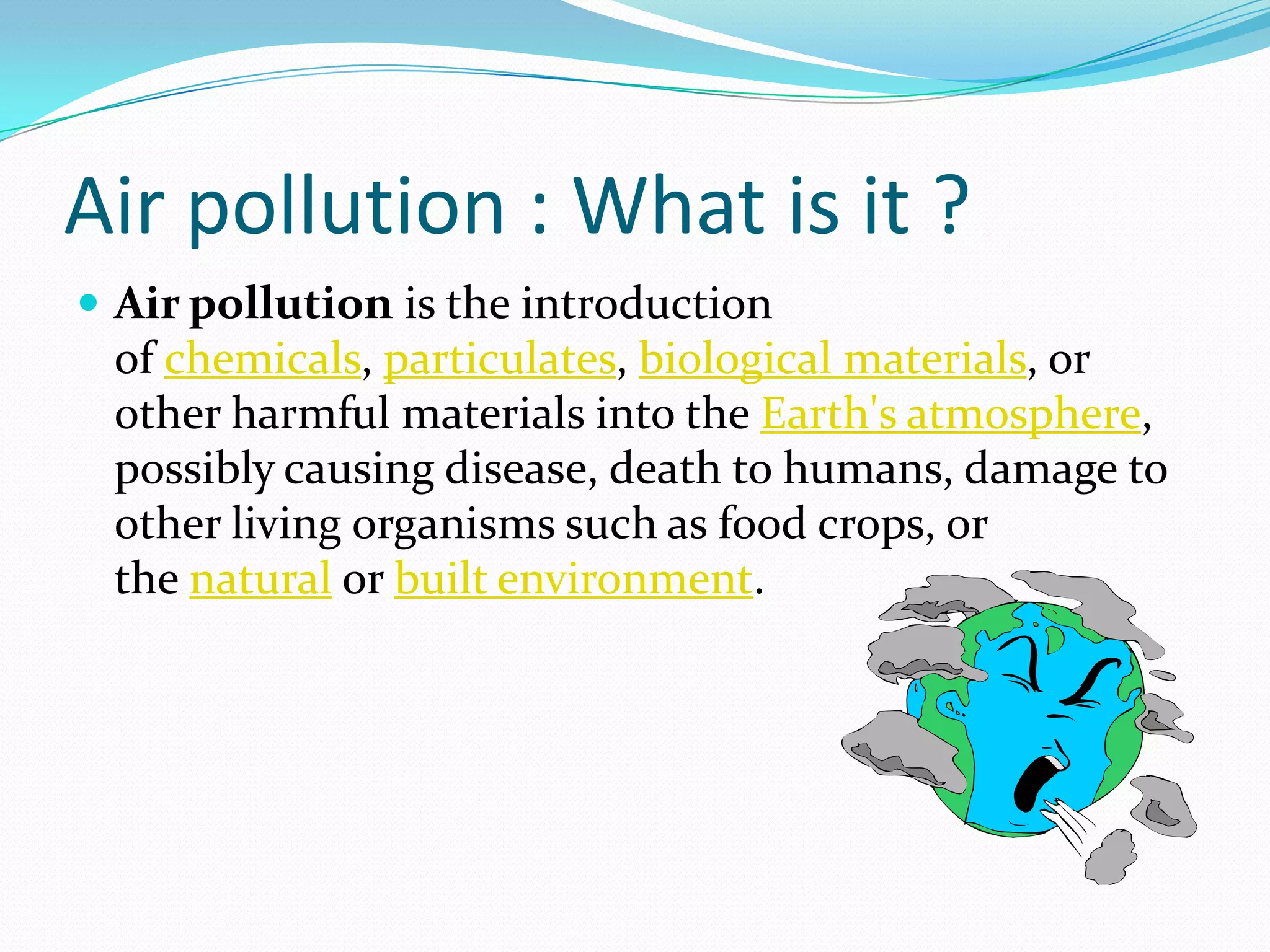
 Air pollution is the introduction

of chemicals, particulates, biological materials, or
other harmful materials into the Earth's atmosphere,
possibly causing disease, death to humans, damage to
other living organisms such as food crops, or
the natural or built environment.
Air pollution : Causes
 The conditions of air are made unclean

due to introduction of foreign elements
from :
1. Natural Sources
2. Man made sources
Natural Sources
 Dust from natural sources, usually large areas of land

with few or no vegetation
 Methane, emitted by the digestion of food by animals,
for example cattle
 Smoke and carbon monoxide from wildfires
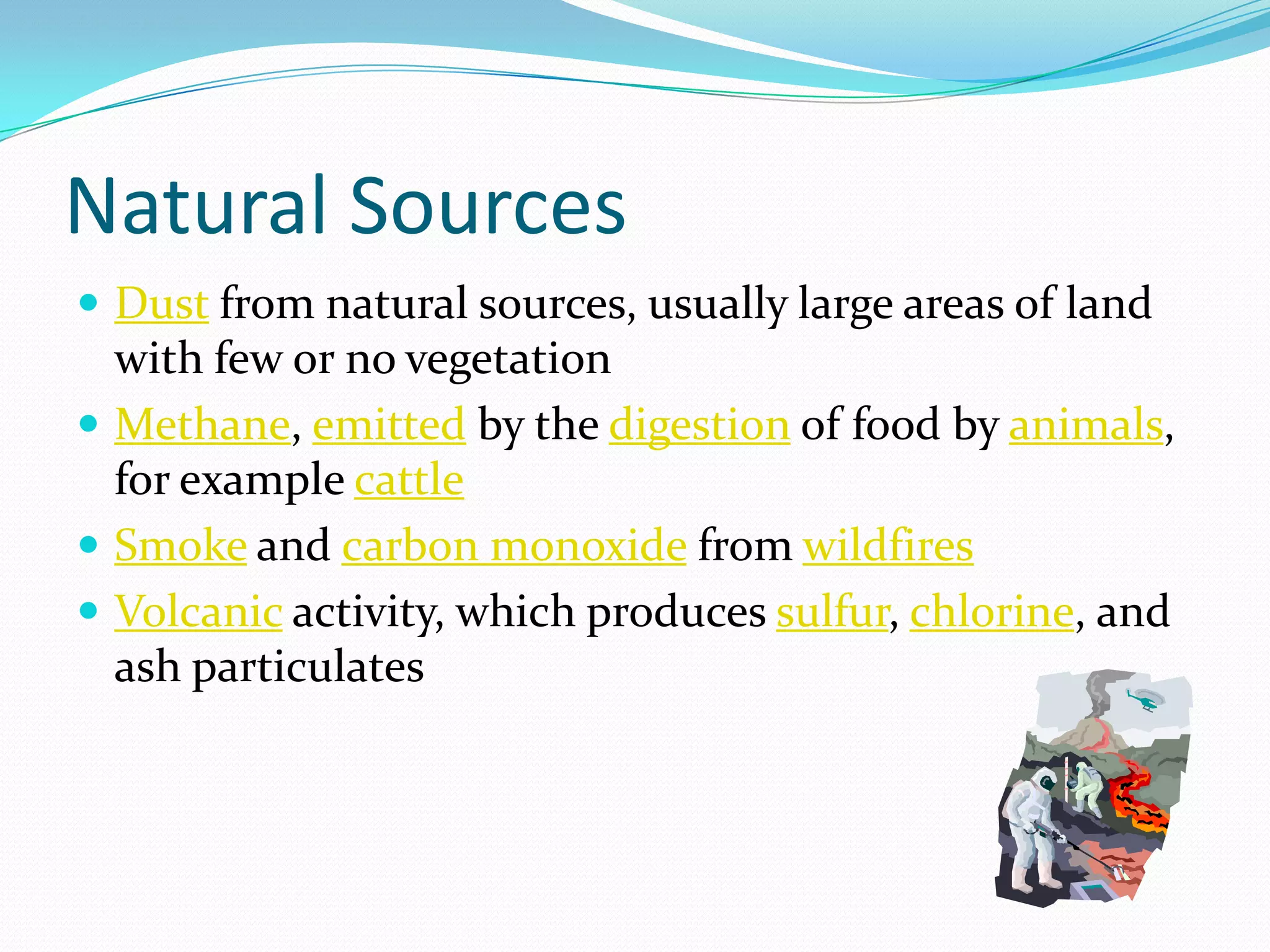
 Volcanic activity, which produces sulfur, chlorine, and
ash particulates
Man made sources
 Mobile Sources include motor vehicles, marine

vessels, and aircraft.
 Fumes from paint, hair spray, varnish, aerosol
sprays and other solvents
 Waste deposition in landfills, which
generate methane
 tationary Sources include smoke stacks of power
plants, etc.
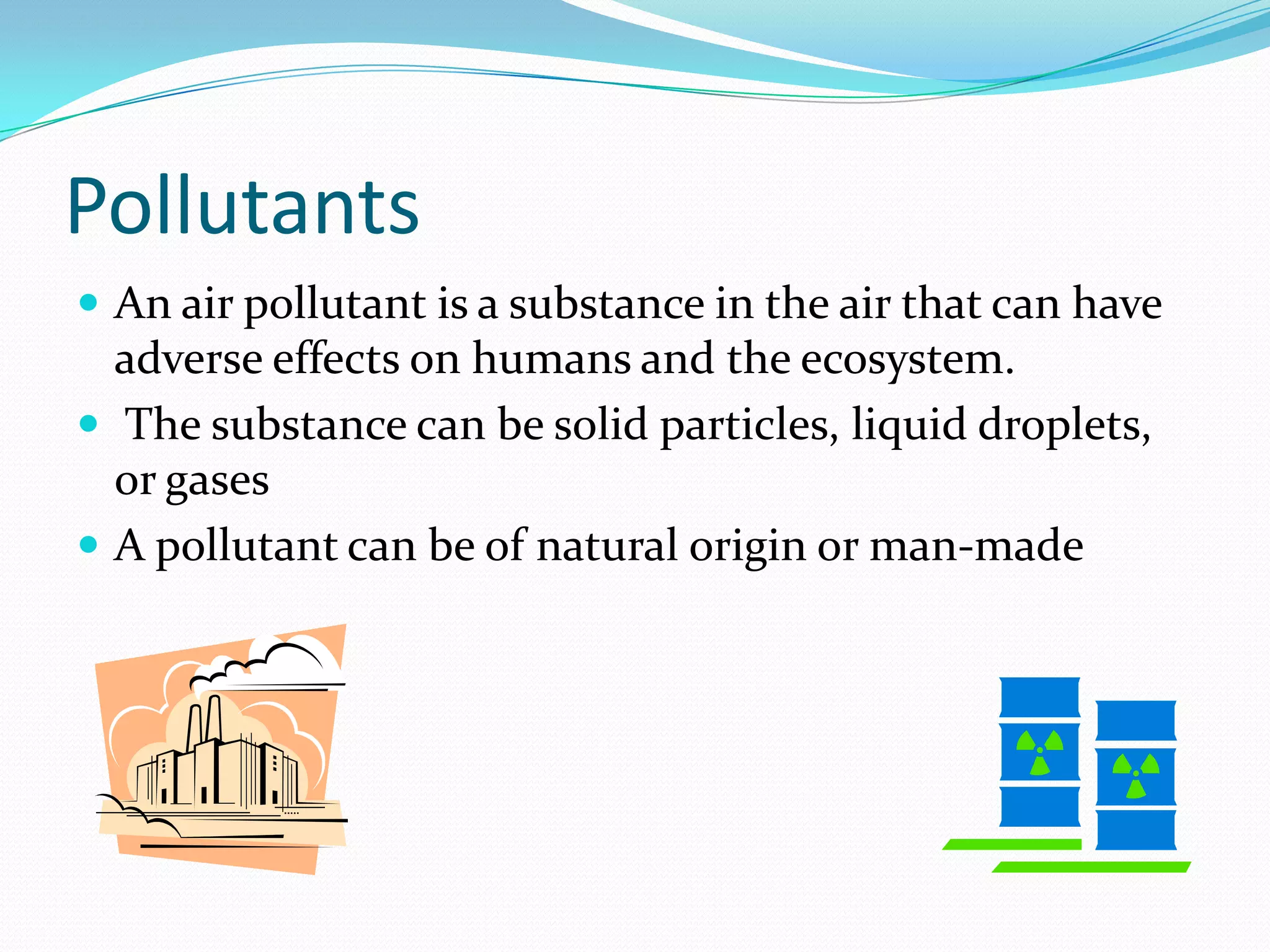
Pollutants
 An air pollutant is a substance in the air that can have

adverse effects on humans and the ecosystem.
 The substance can be solid particles, liquid droplets,
or gases
 A pollutant can be of natural origin or man-made
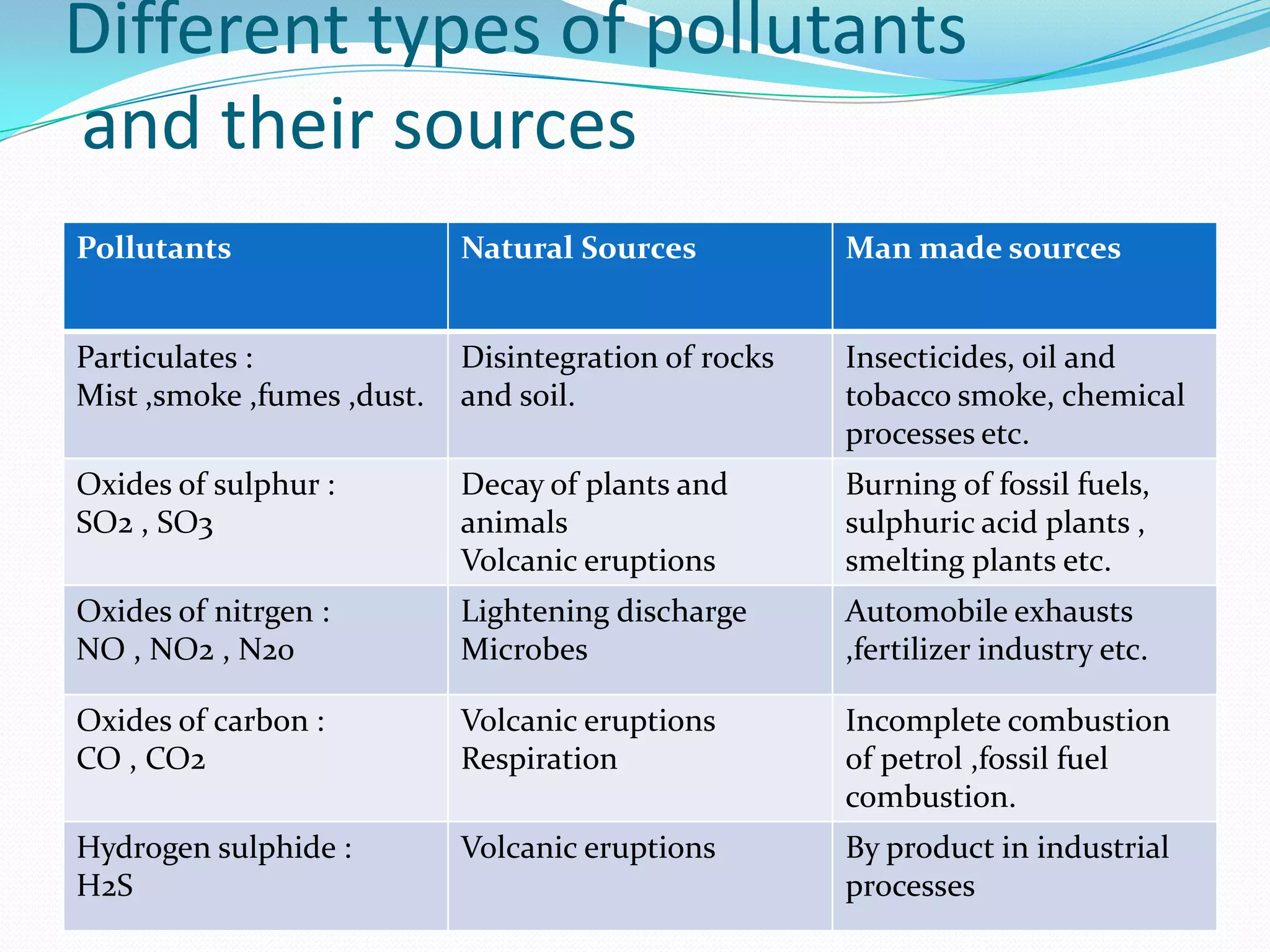
Different types of pollutants
and their sources
Pollutants

Natural Sources

Man made sources

Particulates :
Mist ,smoke ,fumes ,dust.

Disintegration of rocks
and soil.

Insecticides, oil and
tobacco smoke, chemical
processes etc.

Oxides of sulphur :
SO2 , SO3

Decay of plants and
animals
Volcanic eruptions

Burning of fossil fuels,
sulphuric acid plants ,
smelting plants etc.

Oxides of nitrgen :
NO , NO2 , N20

Lightening discharge
Microbes

Automobile exhausts
,fertilizer industry etc.

Oxides of carbon :
CO , CO2

Volcanic eruptions
Respiration

Incomplete combustion
of petrol ,fossil fuel
combustion.

Hydrogen sulphide :
H2S

Volcanic eruptions

By product in industrial
processes
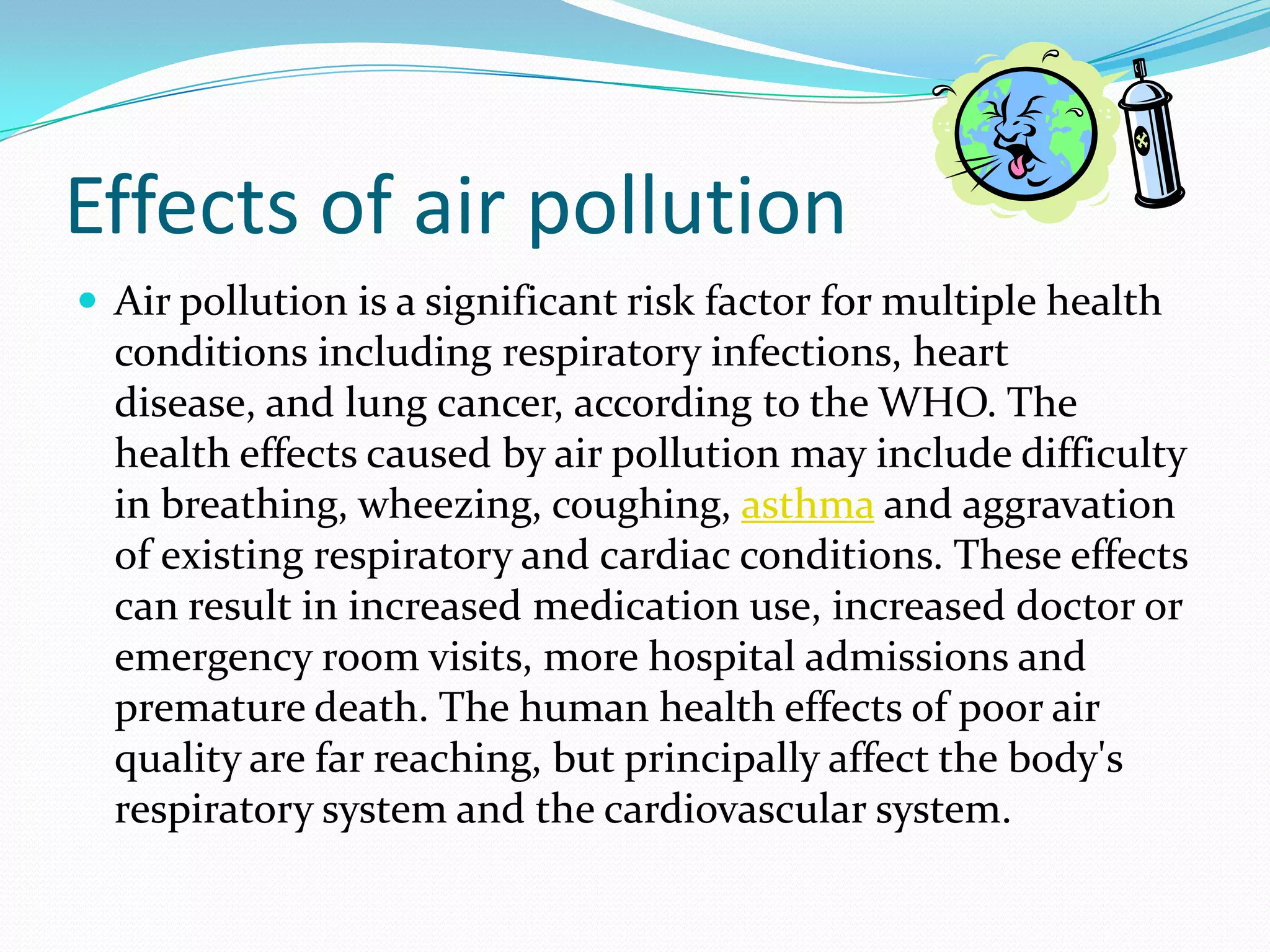
Effects of air pollution
 Air pollution is a significant risk factor for multiple health

conditions including respiratory infections, heart
disease, and lung cancer, according to the WHO. The
health effects caused by air pollution may include difficulty
in breathing, wheezing, coughing, asthma and aggravation
of existing respiratory and cardiac conditions. These effects
can result in increased medication use, increased doctor or
emergency room visits, more hospital admissions and
premature death. The human health effects of poor air
quality are far reaching, but principally affect the body's
respiratory system and the cardiovascular system.
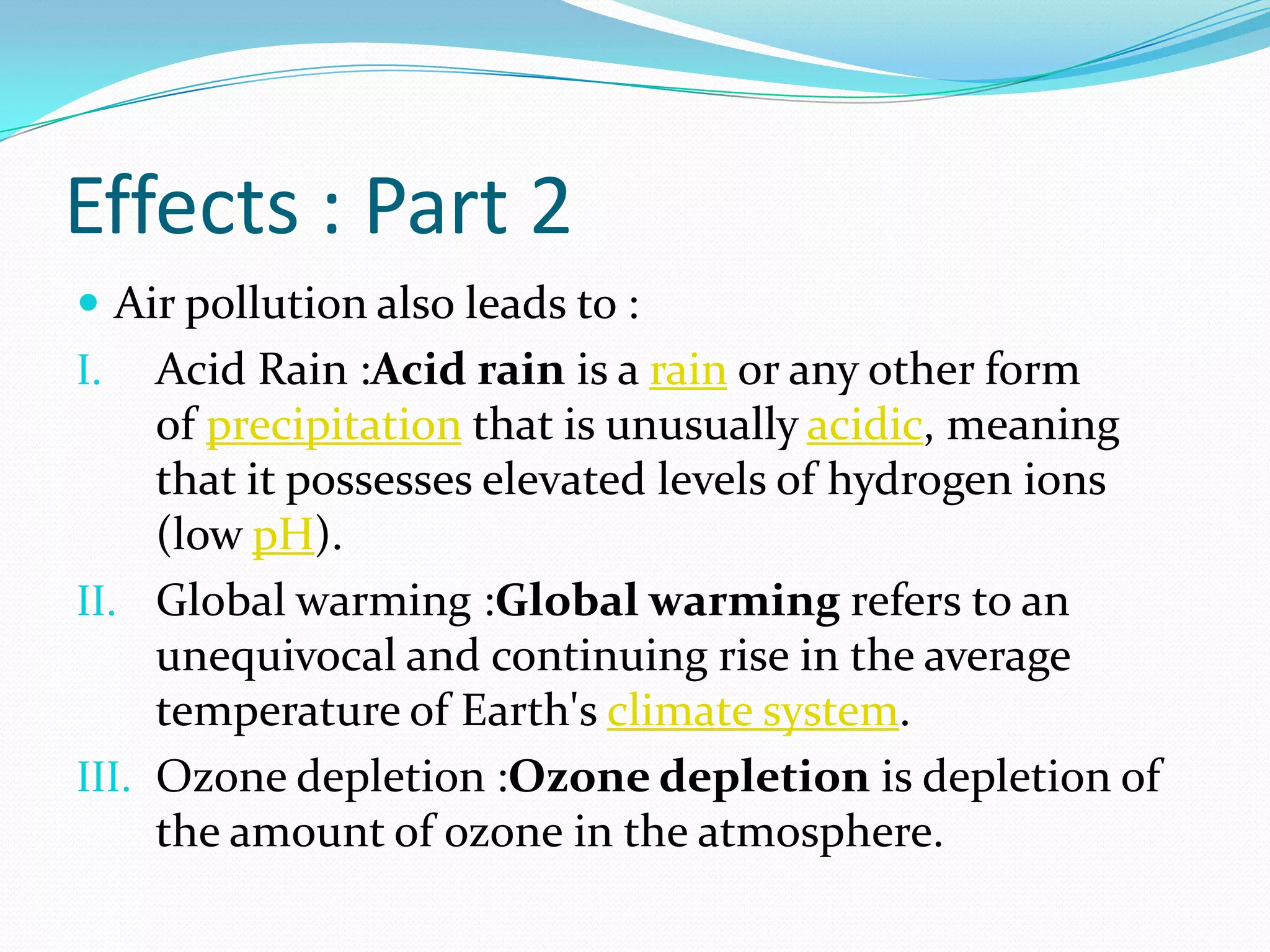
Effects : Part 2
 Air pollution also leads to :

Acid Rain :Acid rain is a rain or any other form
of precipitation that is unusually acidic, meaning
that it possesses elevated levels of hydrogen ions
(low pH).
II. Global warming :Global warming refers to an
unequivocal and continuing rise in the average
temperature of Earth's climate system.
III. Ozone depletion :Ozone depletion is depletion of
the amount of ozone in the atmosphere.
I.
How do we Prevent it ?
 There are various air pollution control technologies

and land use planning strategies available to reduce air
pollution.[53][54] At its most basic level land use planning is
likely to involve zoning and transport infrastructure
planning. In most developed countries, land use planning
is an important part of social policy, ensuring that land is
used efficiently for the benefit of the wider economy and
population as well as to protect the environment.
 Like :Control devices
 Reduction of emissions and the environmental impact
assessment.
Atmospheric pollution

Atmospheric pollution

  • 1.
  • 2.
    Pollution  The wordpollution was derived from the latin word ‘pollutus’ meaning ‘to make unclean ‘.  Pollution is the introduction of contaminants into the natural environment that cause adverse change.[1] Pollution can take the form of chemical substances or energy, such as noise, heat or light. Pollutants, the components of pollution, can be either foreign substances/energies or naturally occurring contaminants. Pollution is often classed as point source or nonpoint source pollution.
  • 3.
    Air pollution :What is it ?  Air pollution is the introduction of chemicals, particulates, biological materials, or other harmful materials into the Earth's atmosphere, possibly causing disease, death to humans, damage to other living organisms such as food crops, or the natural or built environment.
  • 4.
    Air pollution :Causes  The conditions of air are made unclean due to introduction of foreign elements from : 1. Natural Sources 2. Man made sources
  • 5.
    Natural Sources  Dustfrom natural sources, usually large areas of land with few or no vegetation  Methane, emitted by the digestion of food by animals, for example cattle  Smoke and carbon monoxide from wildfires  Volcanic activity, which produces sulfur, chlorine, and ash particulates
  • 6.
    Man made sources Mobile Sources include motor vehicles, marine vessels, and aircraft.  Fumes from paint, hair spray, varnish, aerosol sprays and other solvents  Waste deposition in landfills, which generate methane  tationary Sources include smoke stacks of power plants, etc.
  • 7.
    Pollutants  An airpollutant is a substance in the air that can have adverse effects on humans and the ecosystem.  The substance can be solid particles, liquid droplets, or gases  A pollutant can be of natural origin or man-made
  • 8.
    Different types ofpollutants and their sources Pollutants Natural Sources Man made sources Particulates : Mist ,smoke ,fumes ,dust. Disintegration of rocks and soil. Insecticides, oil and tobacco smoke, chemical processes etc. Oxides of sulphur : SO2 , SO3 Decay of plants and animals Volcanic eruptions Burning of fossil fuels, sulphuric acid plants , smelting plants etc. Oxides of nitrgen : NO , NO2 , N20 Lightening discharge Microbes Automobile exhausts ,fertilizer industry etc. Oxides of carbon : CO , CO2 Volcanic eruptions Respiration Incomplete combustion of petrol ,fossil fuel combustion. Hydrogen sulphide : H2S Volcanic eruptions By product in industrial processes
  • 9.
    Effects of airpollution  Air pollution is a significant risk factor for multiple health conditions including respiratory infections, heart disease, and lung cancer, according to the WHO. The health effects caused by air pollution may include difficulty in breathing, wheezing, coughing, asthma and aggravation of existing respiratory and cardiac conditions. These effects can result in increased medication use, increased doctor or emergency room visits, more hospital admissions and premature death. The human health effects of poor air quality are far reaching, but principally affect the body's respiratory system and the cardiovascular system.
  • 10.
    Effects : Part2  Air pollution also leads to : Acid Rain :Acid rain is a rain or any other form of precipitation that is unusually acidic, meaning that it possesses elevated levels of hydrogen ions (low pH). II. Global warming :Global warming refers to an unequivocal and continuing rise in the average temperature of Earth's climate system. III. Ozone depletion :Ozone depletion is depletion of the amount of ozone in the atmosphere. I.
  • 11.
    How do wePrevent it ?  There are various air pollution control technologies and land use planning strategies available to reduce air pollution.[53][54] At its most basic level land use planning is likely to involve zoning and transport infrastructure planning. In most developed countries, land use planning is an important part of social policy, ensuring that land is used efficiently for the benefit of the wider economy and population as well as to protect the environment.  Like :Control devices  Reduction of emissions and the environmental impact assessment.