Ultrasonic
radar
GROUP MEMBER:
Name: ID:
1. Mamun, Farhan 13-24991-3
2.Amin, Md Al- 13-25137-3
3.Zaman, Khandaker Nahiyan 13-25208-3
4.Parman, Md Dilshad 13-24993-3
5.Islam, S.M Tanbir 13-25249-3
Course Instructor : RETHWAN FAIZ
INDEX:
• Introduction
• How Can We Measure Distance?
• Working Principle
• Circuit Diagram
• Application
INTRODUCTION
• Ultrasonic Sensors are self-contained solid-state devices designed
for non-contact sensing of solid and liquid objects. For many
applications, such as monitoring the level of water in a
tank, ultrasonic technology lets a single device to do a job that would
otherwise require multiple sensors.
WORKING PRINCIPLE
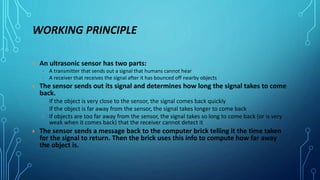
 An ultrasonic sensor has two parts:
 A transmitter that sends out a signal that humans cannot hear
 A receiver that receives the signal after it has bounced off nearby objects
 The sensor sends out its signal and determines how long the signal takes to come
back.
 If the object is very close to the sensor, the signal comes back quickly
 If the object is far away from the sensor, the signal takes longer to come back
 If objects are too far away from the sensor, the signal takes so long to come back (or is very
weak when it comes back) that the receiver cannot detect it
 The sensor sends a message back to the computer brick telling it the time taken
for the signal to return. Then the brick uses this info to compute how far away
the object is.
7
 The “sonic” in ultrasonic refers to sound, and “ultra” means that humans cannot
hear it (but bats and dogs can hear those sounds).
 The ultrasonic sensor can measure distances in centimeters and inches. It can
measure from 0 to 2.5 meters, with a precision of 3 cm.
 It works very well and provides good readings in sensing large-sized objects with
hard surfaces. But, reflections from soft fabrics, curved objects (such as balls) or
very thin and small objects can be difficult for the sensor to read.
 Note: Two ultrasonic sensors in the same room may interfere with each other’s
readings.
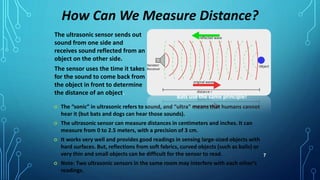
How Can We Measure Distance?
The ultrasonic sensor sends out
sound from one side and
receives sound reflected from an
object on the other side.
The sensor uses the time it takes
for the sound to come back from
the object in front to determine
the distance of an object.
Bats use the same principle!
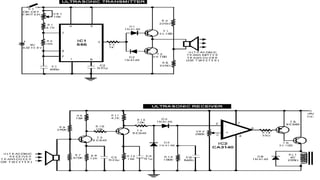
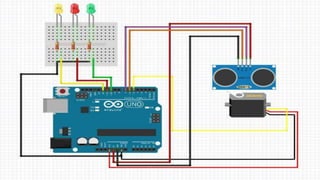
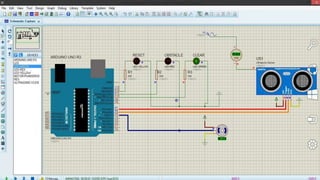
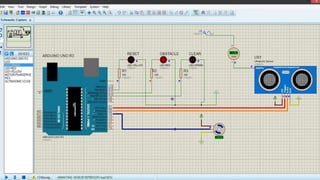
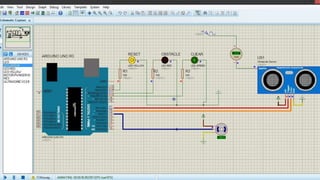
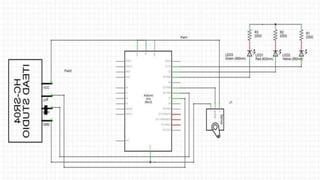
CIRCUIT DIAGRAM
APPLICATION
• 1. Ultrasonic Proximity Sensor for cars, where if it detects an obstacle, it'll
show a warning, and if the obstacle gets too close it'll trigger an auto brake
system.
•

Ultrasonic radar

  • 2.
  • 3.
    GROUP MEMBER: Name: ID: 1.Mamun, Farhan 13-24991-3 2.Amin, Md Al- 13-25137-3 3.Zaman, Khandaker Nahiyan 13-25208-3 4.Parman, Md Dilshad 13-24993-3 5.Islam, S.M Tanbir 13-25249-3 Course Instructor : RETHWAN FAIZ
  • 4.
    INDEX: • Introduction • HowCan We Measure Distance? • Working Principle • Circuit Diagram • Application
  • 5.
    INTRODUCTION • Ultrasonic Sensorsare self-contained solid-state devices designed for non-contact sensing of solid and liquid objects. For many applications, such as monitoring the level of water in a tank, ultrasonic technology lets a single device to do a job that would otherwise require multiple sensors.
  • 6.
    WORKING PRINCIPLE  Anultrasonic sensor has two parts:  A transmitter that sends out a signal that humans cannot hear  A receiver that receives the signal after it has bounced off nearby objects  The sensor sends out its signal and determines how long the signal takes to come back.  If the object is very close to the sensor, the signal comes back quickly  If the object is far away from the sensor, the signal takes longer to come back  If objects are too far away from the sensor, the signal takes so long to come back (or is very weak when it comes back) that the receiver cannot detect it  The sensor sends a message back to the computer brick telling it the time taken for the signal to return. Then the brick uses this info to compute how far away the object is.
  • 7.
    7  The “sonic”in ultrasonic refers to sound, and “ultra” means that humans cannot hear it (but bats and dogs can hear those sounds).  The ultrasonic sensor can measure distances in centimeters and inches. It can measure from 0 to 2.5 meters, with a precision of 3 cm.  It works very well and provides good readings in sensing large-sized objects with hard surfaces. But, reflections from soft fabrics, curved objects (such as balls) or very thin and small objects can be difficult for the sensor to read.  Note: Two ultrasonic sensors in the same room may interfere with each other’s readings. How Can We Measure Distance? The ultrasonic sensor sends out sound from one side and receives sound reflected from an object on the other side. The sensor uses the time it takes for the sound to come back from the object in front to determine the distance of an object. Bats use the same principle!
  • 8.
  • 14.
    APPLICATION • 1. UltrasonicProximity Sensor for cars, where if it detects an obstacle, it'll show a warning, and if the obstacle gets too close it'll trigger an auto brake system. •