NMIMS
Mukesh Patel School of Technology Management and
Engineering

Short Range Personal Radar
System Study & Design
742 – Saahil Sankhe
756 – Ronak Vyas
760 – Nirav Gandhi
B.Tech – Electronics and Telecommunications
1
1. In past few years the technology and
applications of RADAR have
continued to grow.
2. There has been extensive advances in
the use of Digital technology for signal
processing, significant improvements
in the use of infrared for detecting
moving targets in heavy clutter.
3. Taking forward this new trend we plan
to design and develop a RADAR
system for catering personal needs
2
PROBLEM STATEMENT

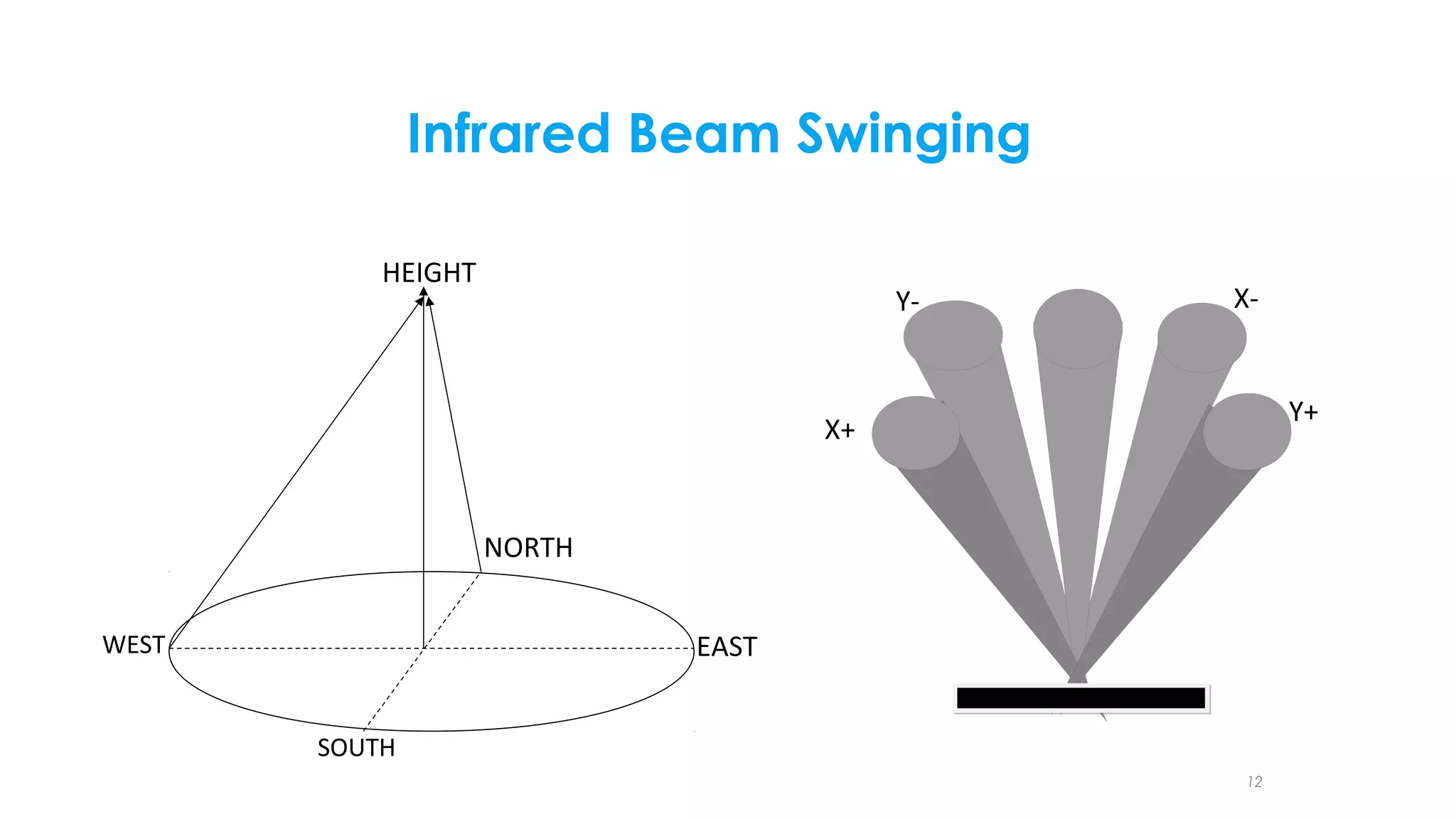
1. We plan to design a type of close proximity
infrared radar system used to detect any
object close to the device by making scanning
with angle 180°and distance from 10cm to
500cm.
2. The system is based on microcontroller design.
The user will hear a voice just as alarm sound
and the distance of the object will be readable
on the screen of small LCD.
3. The user also can see the light given by LED
appear in the direction of the object.
3
WHY SHORT RANGE?
• A shorter frequency-modulated pulse can be transmitted
alternately. This method is typically for collision avoidance
radars, which doesn't need a special characteristic in the
minimal measuring range.
 
• The shorter pulse is an un-modulated very short pulse
( <1 µs). The limited pulse power causes a shorter maximum
range in this period. This method is typically for trafficcontrol radars (ATC-radars), like the ASR-E).
 
• The needed pulse power is dynamically balanced in
dependence on the chosen elevation angle. The pulse
4
duration determines the maximum range therefore.
LiTERATURE SURVEY

PAPER TITLE :Design Infrared Radar System
AUTHOR
:Yahya S.H. Khraisat
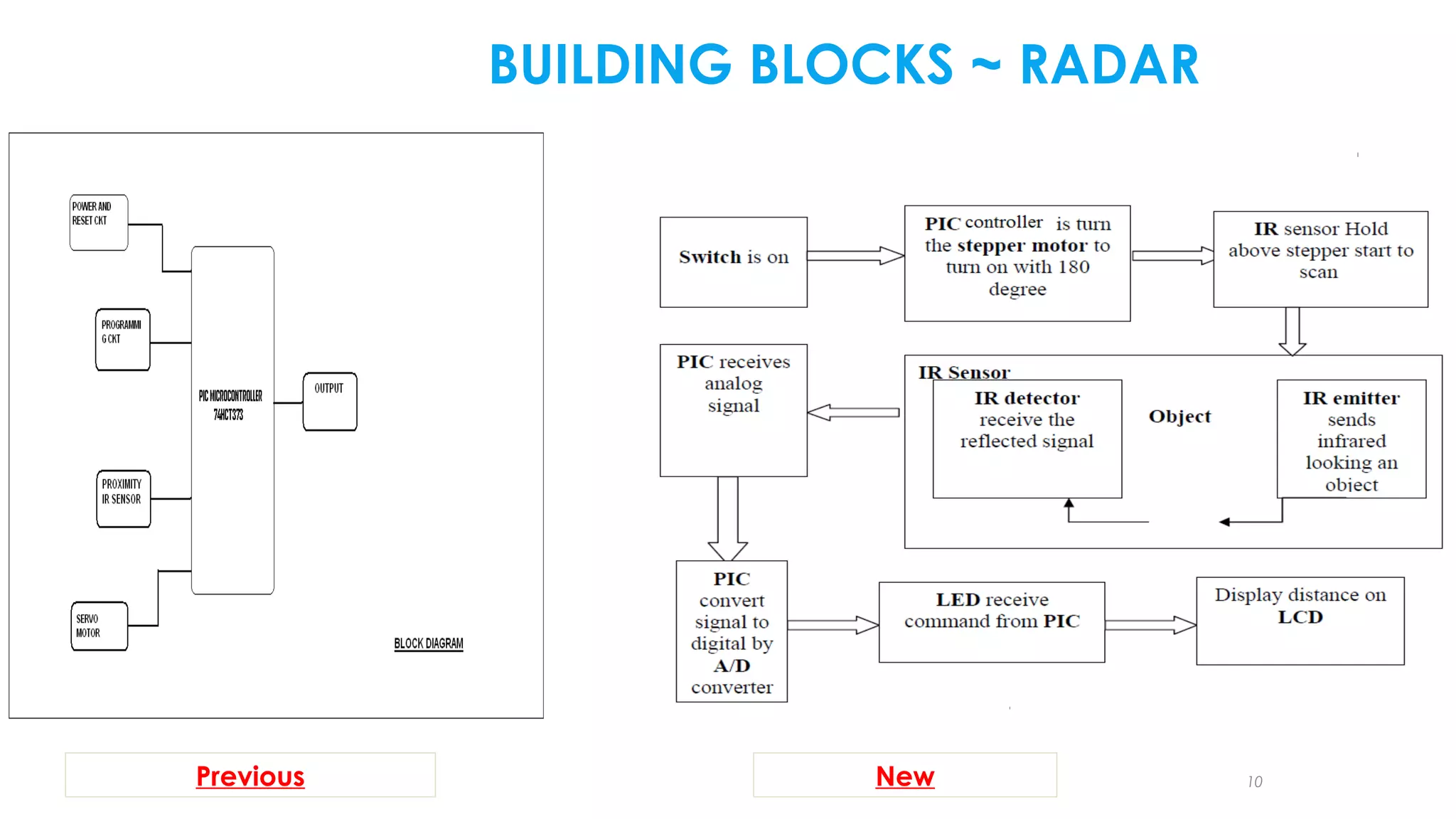
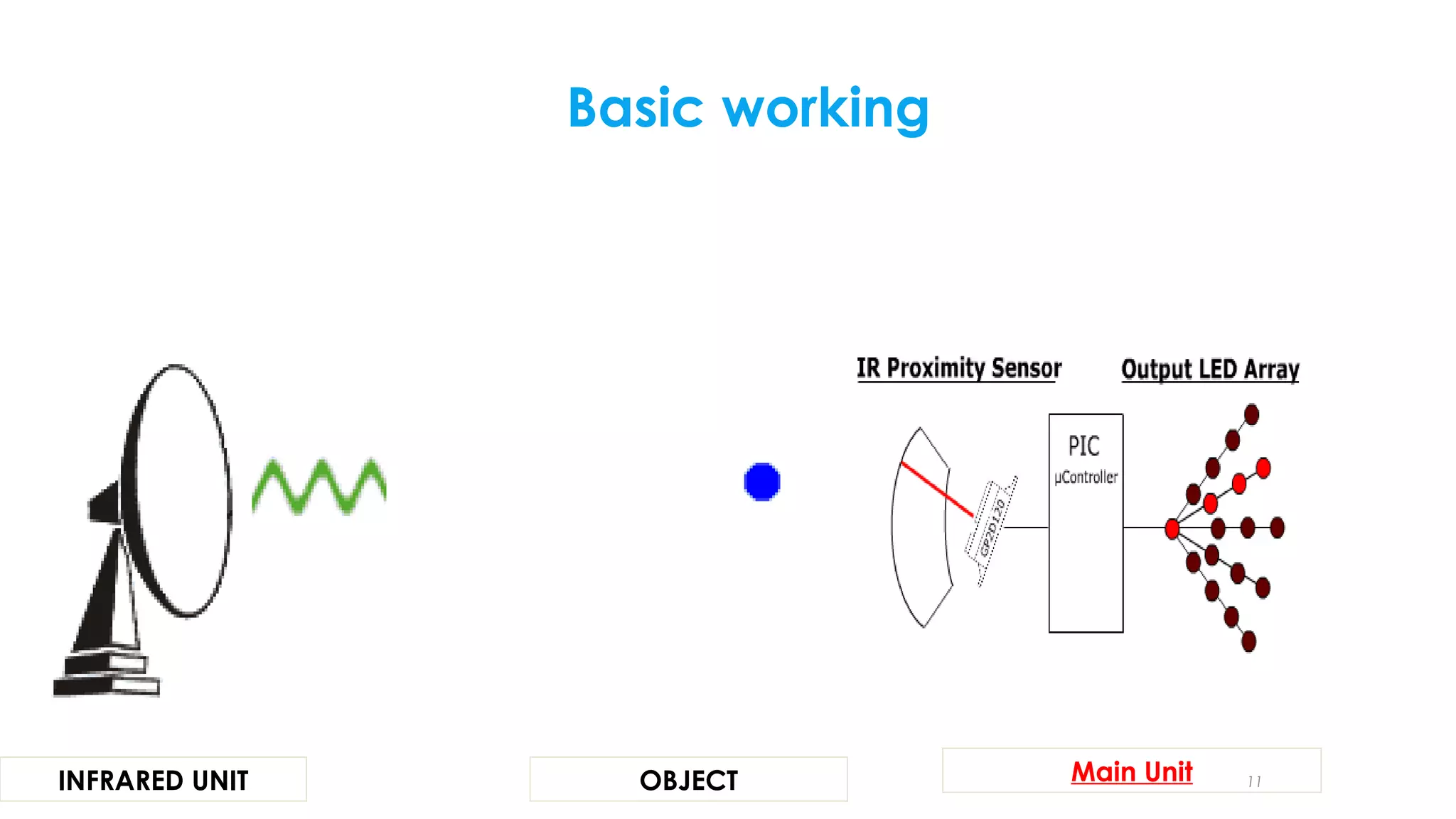
Description :The paper describes about interface of controller and motor with sensor.
The stepper motor will be turned on with instruction to rotate 180 by PIC. The stepper
motor will drive the IR SENSOR this sensor consist of emitter and detector. The emitter will
send an infrared signal to detect an object. When this signal hits the object, the signal
will be reflected back to the detector. Then the detector will send analog signal with
suitable voltage and angle. The voltage of this signal is suitable with the distance. The
controller will make its and convert analog signal to digital by A/D and give a command
to the led which indicate in the direction of the object.
5
LiTERATURE SURVEY

PAPER TITLE : Short Range Radar Based on UWB Technology
AUTHOR
: L. Sakkila, C. Tatkeu, Y. ElHillali, A.
Rivenq,
ElBahhar and J-M. Rouvaen.
Description :Radar sends very
short electromagnetic pulses. This type of radar can employ traditional UWB
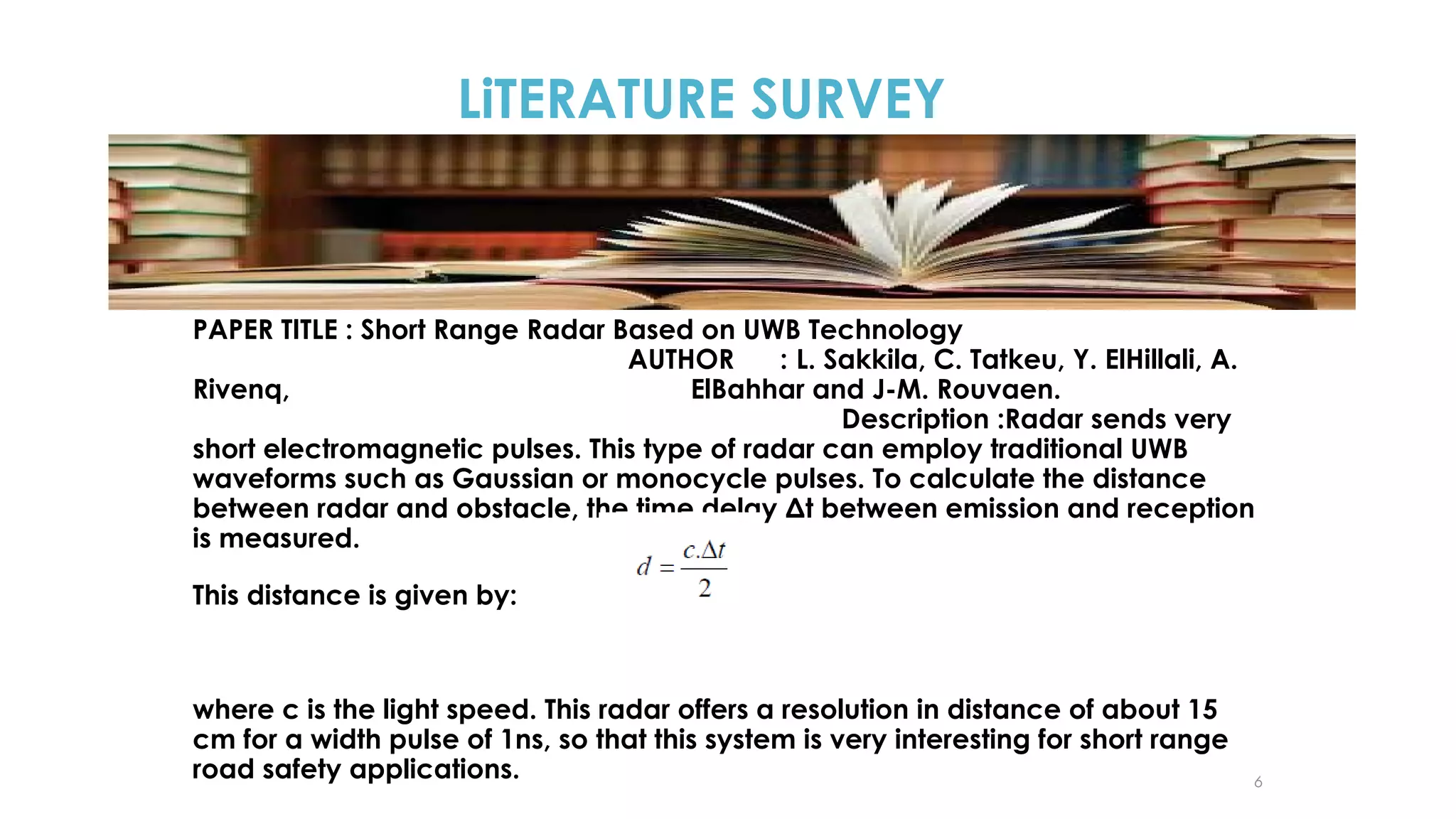
waveforms such as Gaussian or monocycle pulses. To calculate the distance
between radar and obstacle, the time delay Δt between emission and reception
is measured.
This distance is given by:

where c is the light speed. This radar offers a resolution in distance of about 15
cm for a width pulse of 1ns, so that this system is very interesting for short range
road safety applications.

6
STANDARD LiTERATURE BANK

7
RADAR
RADIO DETECTION AND RANGING

8
What is RADAR ?
• RADAR in simple language is the contraction of words
“Radio Detection and Ranging”.
• RADAR is a device which works on radio frequencies that
use microwave source of energy to detect and to
calculate the range of the target.

9
BUILDING BLOCKS ~ RADAR

Previous

New

10
Basic working

INFRARED UNIT

OBJECT

Main Unit

11
Infrared Beam Swinging
HEIGHT

Y-

X-

Y+

X+

NORTH
EAST

WEST

SOUTH
12
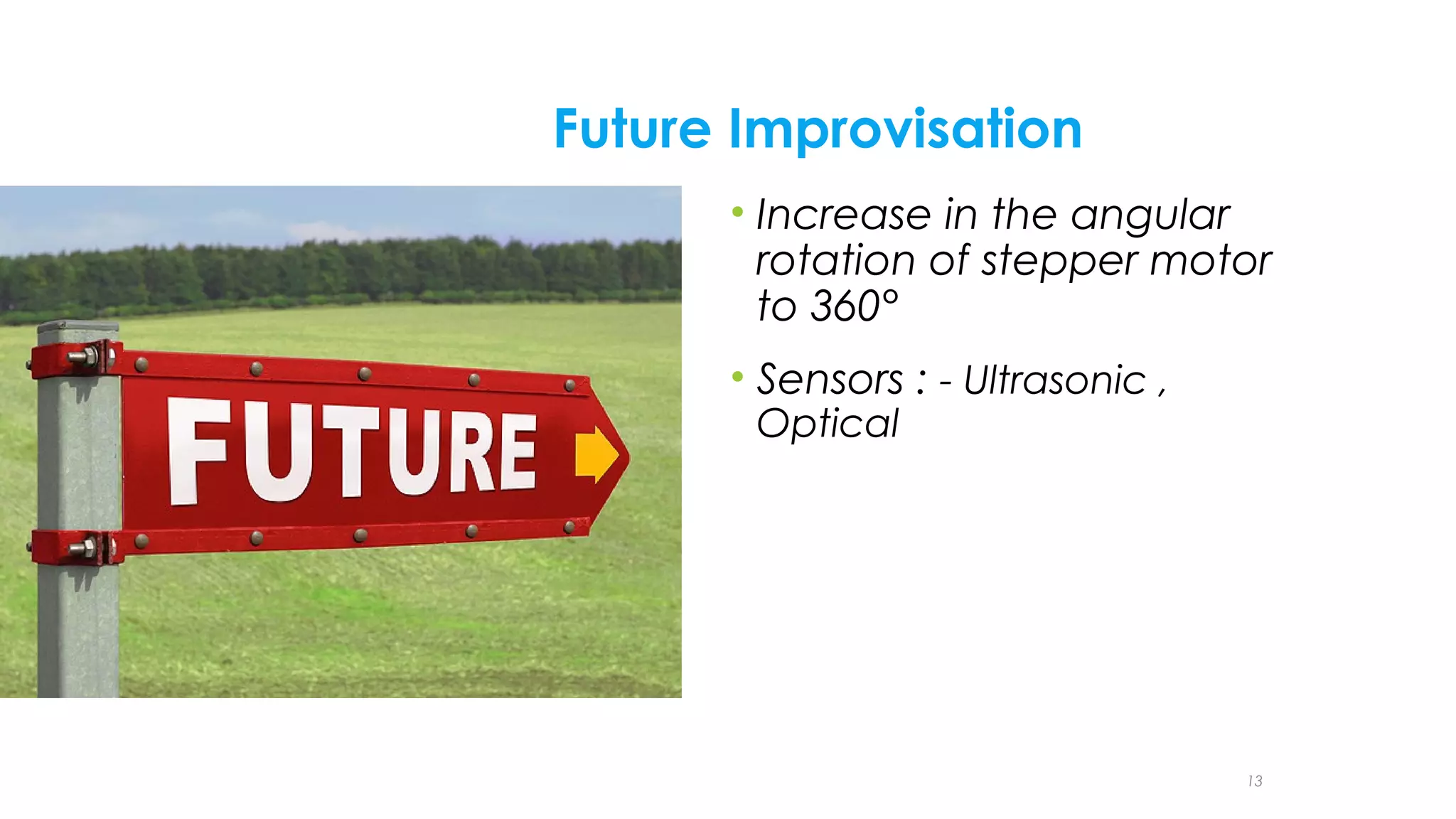
Future Improvisation
• Increase in the angular
rotation of stepper motor
to 360°
• Sensors : - Ultrasonic ,
Optical

13
CURRENT STATUS

14
SOFTWARE AND HARDWARE

MPLAB software could used for Software compilation.
To program the PIC controller we use the PIC ICSP
Programmer
Proteus 8 is used for simulations and virtual working of
the project

15
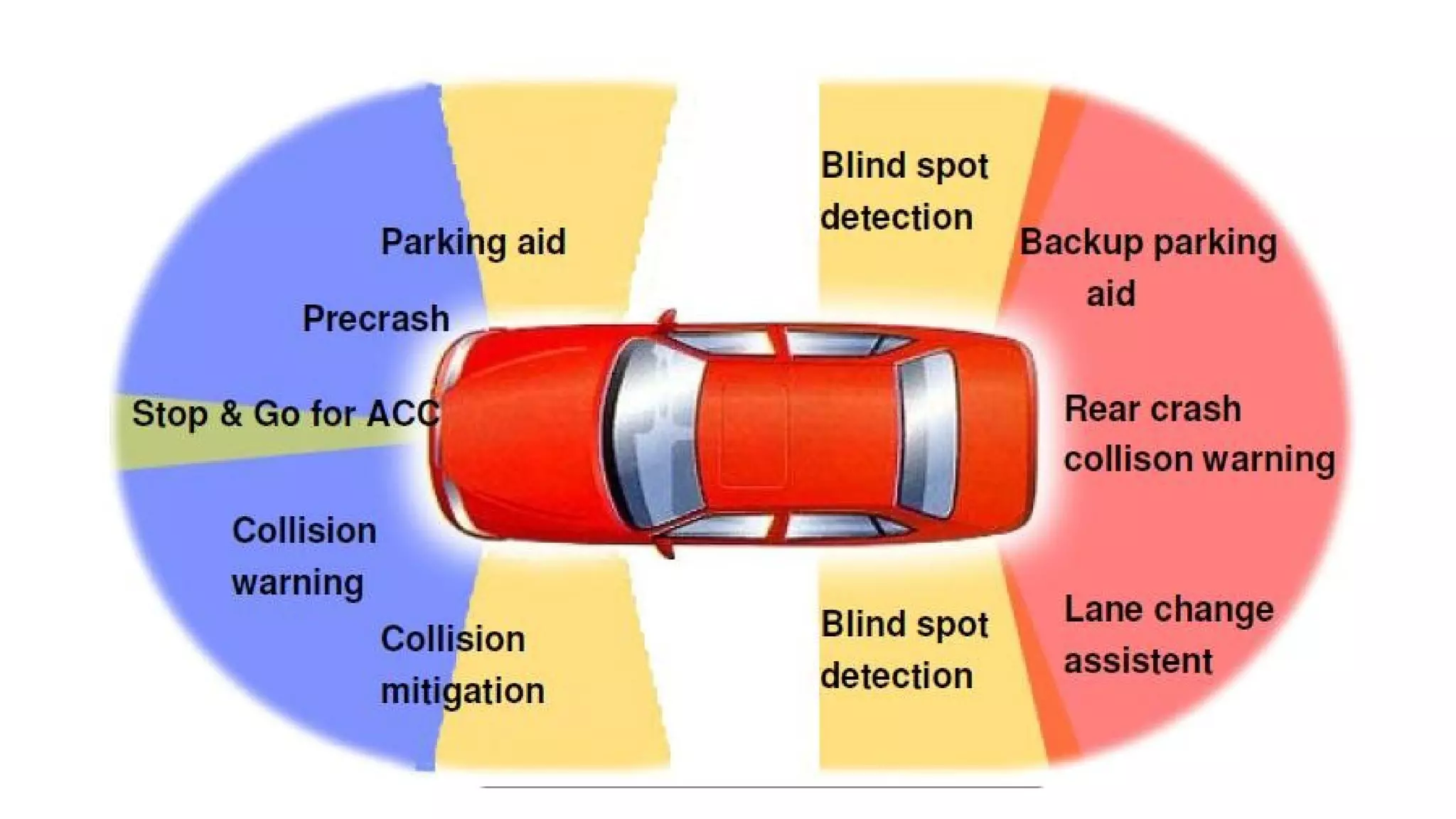
Applications
• Collision avoidance on highways
• Driving assistance in night providing a night vision
• UAV (Unmanned Aerial Vehicle)
• Home security system
• Parking assistance
16
17
Conclusion and Summary
 Radar is briefly defined as method of using radio wave to determine the location
of objects in space in relation to a known point.
 More precise definition of radar is that it is an electromagnetic system for
detection, location and sometimes for recognition of target objects, which
operates by transmitting electromagnetic signals, receiving echoes from target
objects within its volume of coverage, and extracting location and other
information from the echo signals.
 IR Radar is an application of automotive radar, where this type of pulse radar is
operating by sending short pulse to make scanning.
 The goal of this project is to create a working IR Radar system to DETECT close
proximity targets in its RANGE.

18
THANK
YOU
19

Personal radar ppt 1

  • 1.
    NMIMS Mukesh Patel Schoolof Technology Management and Engineering Short Range Personal Radar System Study & Design 742 – Saahil Sankhe 756 – Ronak Vyas 760 – Nirav Gandhi B.Tech – Electronics and Telecommunications 1
  • 2.
    1. In pastfew years the technology and applications of RADAR have continued to grow. 2. There has been extensive advances in the use of Digital technology for signal processing, significant improvements in the use of infrared for detecting moving targets in heavy clutter. 3. Taking forward this new trend we plan to design and develop a RADAR system for catering personal needs 2
  • 3.
    PROBLEM STATEMENT 1. Weplan to design a type of close proximity infrared radar system used to detect any object close to the device by making scanning with angle 180°and distance from 10cm to 500cm. 2. The system is based on microcontroller design. The user will hear a voice just as alarm sound and the distance of the object will be readable on the screen of small LCD. 3. The user also can see the light given by LED appear in the direction of the object. 3
  • 4.
    WHY SHORT RANGE? •A shorter frequency-modulated pulse can be transmitted alternately. This method is typically for collision avoidance radars, which doesn't need a special characteristic in the minimal measuring range.   • The shorter pulse is an un-modulated very short pulse ( <1 µs). The limited pulse power causes a shorter maximum range in this period. This method is typically for trafficcontrol radars (ATC-radars), like the ASR-E).   • The needed pulse power is dynamically balanced in dependence on the chosen elevation angle. The pulse 4 duration determines the maximum range therefore.
  • 5.
    LiTERATURE SURVEY PAPER TITLE:Design Infrared Radar System AUTHOR :Yahya S.H. Khraisat Description :The paper describes about interface of controller and motor with sensor. The stepper motor will be turned on with instruction to rotate 180 by PIC. The stepper motor will drive the IR SENSOR this sensor consist of emitter and detector. The emitter will send an infrared signal to detect an object. When this signal hits the object, the signal will be reflected back to the detector. Then the detector will send analog signal with suitable voltage and angle. The voltage of this signal is suitable with the distance. The controller will make its and convert analog signal to digital by A/D and give a command to the led which indicate in the direction of the object. 5
  • 6.
    LiTERATURE SURVEY PAPER TITLE: Short Range Radar Based on UWB Technology AUTHOR : L. Sakkila, C. Tatkeu, Y. ElHillali, A. Rivenq, ElBahhar and J-M. Rouvaen. Description :Radar sends very short electromagnetic pulses. This type of radar can employ traditional UWB waveforms such as Gaussian or monocycle pulses. To calculate the distance between radar and obstacle, the time delay Δt between emission and reception is measured. This distance is given by: where c is the light speed. This radar offers a resolution in distance of about 15 cm for a width pulse of 1ns, so that this system is very interesting for short range road safety applications. 6
  • 7.
  • 8.
  • 9.
    What is RADAR? • RADAR in simple language is the contraction of words “Radio Detection and Ranging”. • RADAR is a device which works on radio frequencies that use microwave source of energy to detect and to calculate the range of the target. 9
  • 10.
    BUILDING BLOCKS ~RADAR Previous New 10
  • 11.
  • 12.
  • 13.
    Future Improvisation • Increasein the angular rotation of stepper motor to 360° • Sensors : - Ultrasonic , Optical 13
  • 14.
  • 15.
    SOFTWARE AND HARDWARE MPLABsoftware could used for Software compilation. To program the PIC controller we use the PIC ICSP Programmer Proteus 8 is used for simulations and virtual working of the project 15
  • 16.
    Applications • Collision avoidanceon highways • Driving assistance in night providing a night vision • UAV (Unmanned Aerial Vehicle) • Home security system • Parking assistance 16
  • 17.
  • 18.
    Conclusion and Summary Radar is briefly defined as method of using radio wave to determine the location of objects in space in relation to a known point.  More precise definition of radar is that it is an electromagnetic system for detection, location and sometimes for recognition of target objects, which operates by transmitting electromagnetic signals, receiving echoes from target objects within its volume of coverage, and extracting location and other information from the echo signals.  IR Radar is an application of automotive radar, where this type of pulse radar is operating by sending short pulse to make scanning.  The goal of this project is to create a working IR Radar system to DETECT close proximity targets in its RANGE. 18
  • 19.

Editor's Notes

  • #13 The radial velocity of the beam is measured using one vertical and two off zenith beams. The beam pointing sequence is repeated after every one to five minutes. Electronic beam scanning using phase shifters enable the use of a single antenna to scan wide angles.
  • #15 MERILL SKOLNIK,FIELD VISIT-SENSORS BASIC CODES FOR LED. SENSOR,CONTROLLER