The Subsurface Environment
Revision: 
1. Seal 
2. Structural trap 
3. Stratigraphic trap
Introduction 
 We shall discuss about subsurface waters 
 The effects of pressure and temperature on the 
condensation and evaporation of gas and oil. 
 Fluid dynamics in sedimentary basins
Genetic Classification 
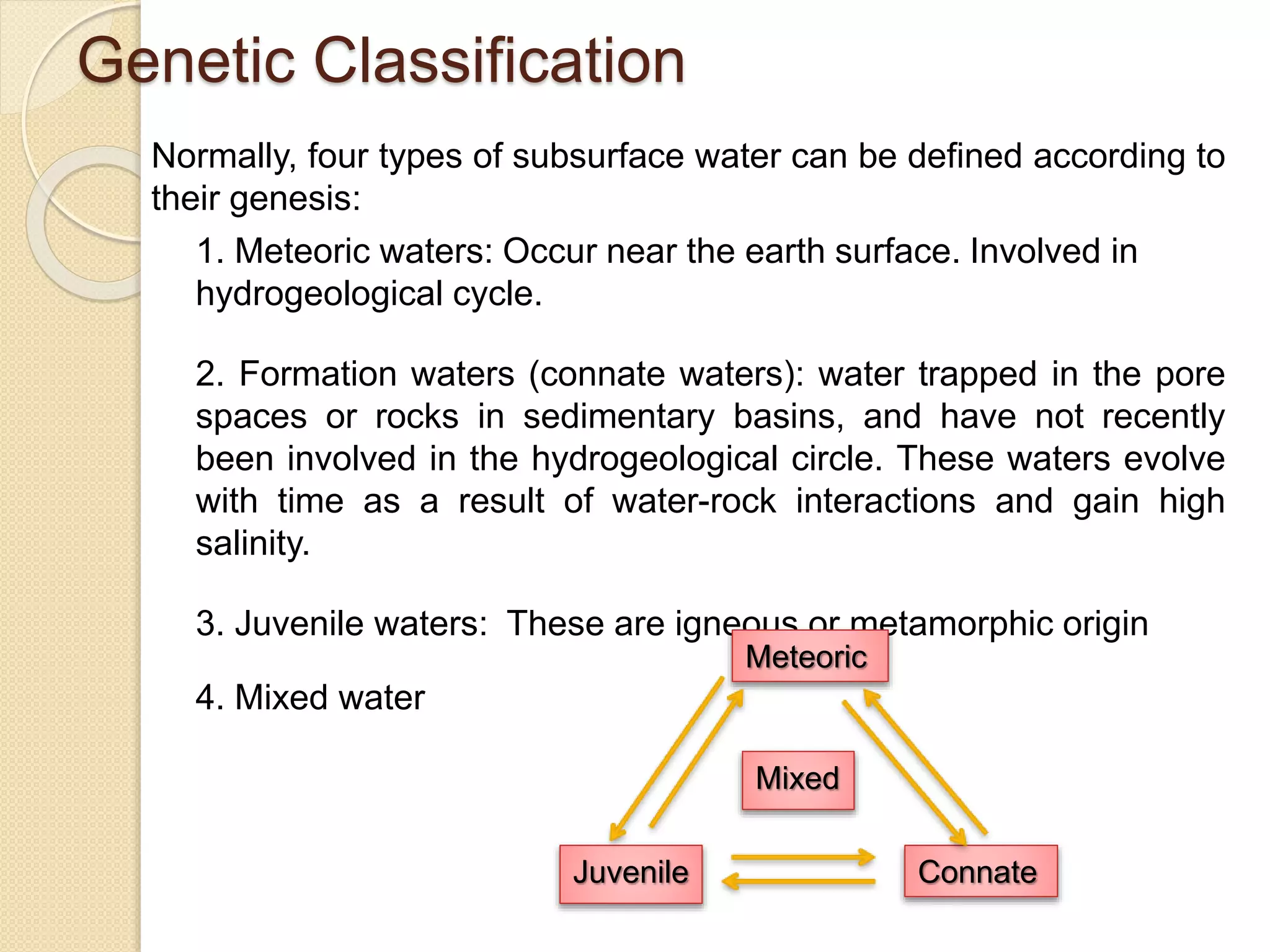
Normally, four types of subsurface water can be defined according to 
their genesis: 
1. Meteoric waters: Occur near the earth surface. Involved in 
hydrogeological cycle. 
2. Formation waters (connate waters): water trapped in the pore 
spaces or rocks in sedimentary basins, and have not recently 
been involved in the hydrogeological circle. These waters evolve 
with time as a result of water-rock interactions and gain high 
salinity. 
3. Juvenile waters: These are igneous or metamorphic origin 
4. Mixed water 
Meteoric 
Mixed 
Juvenile Connate
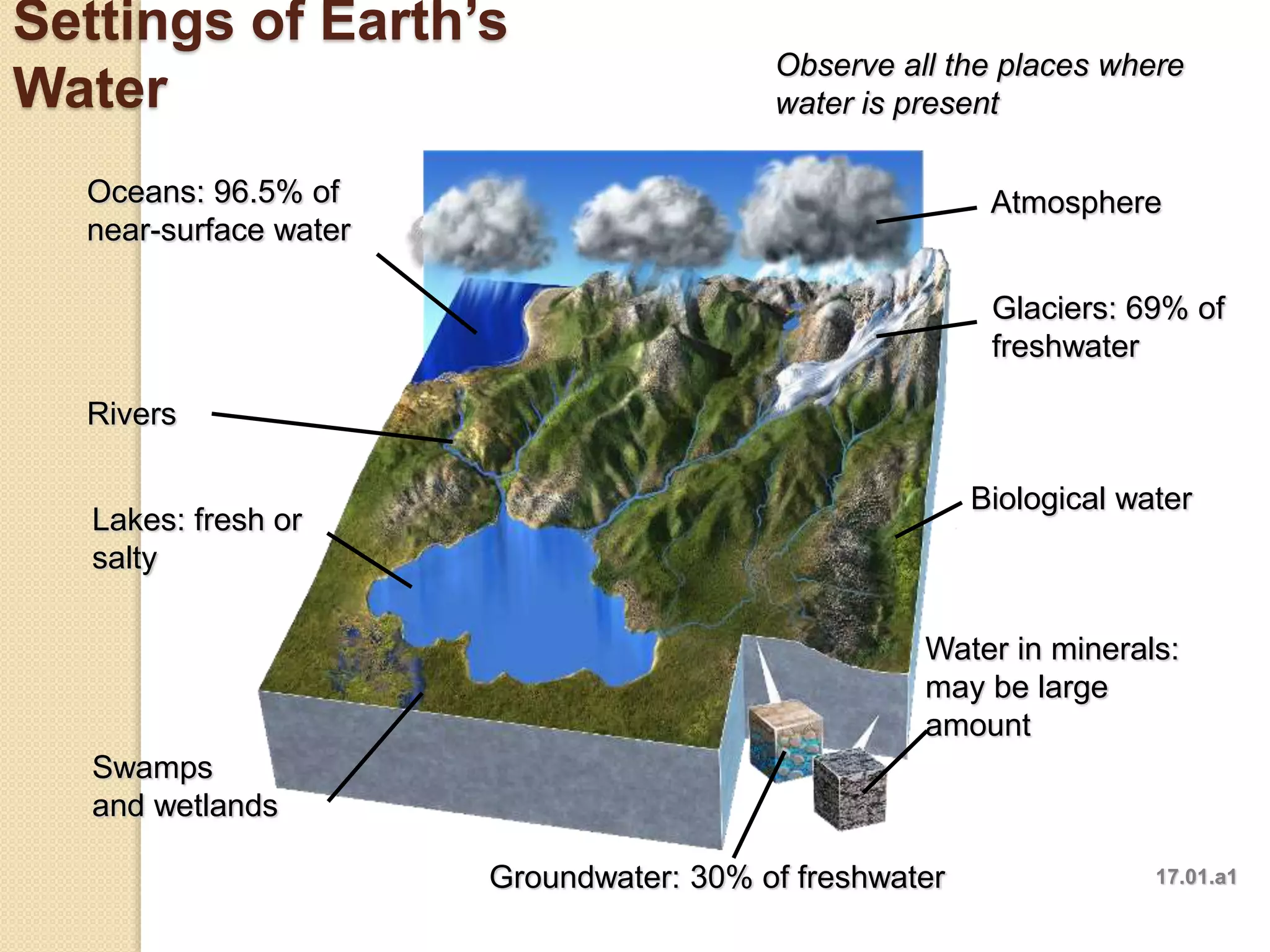
Settings of Earth’s 
Water Observe all the places where 
water is present 
Oceans: 96.5% of 
near-surface water 
Rivers 
Lakes: fresh or 
salty 
Swamps 
and wetlands 
Atmosphere 
Glaciers: 69% of 
freshwater 
Biological water 
Water in minerals: 
may be large 
amount 
Groundwater: 30% of freshwater 
17.01.a1
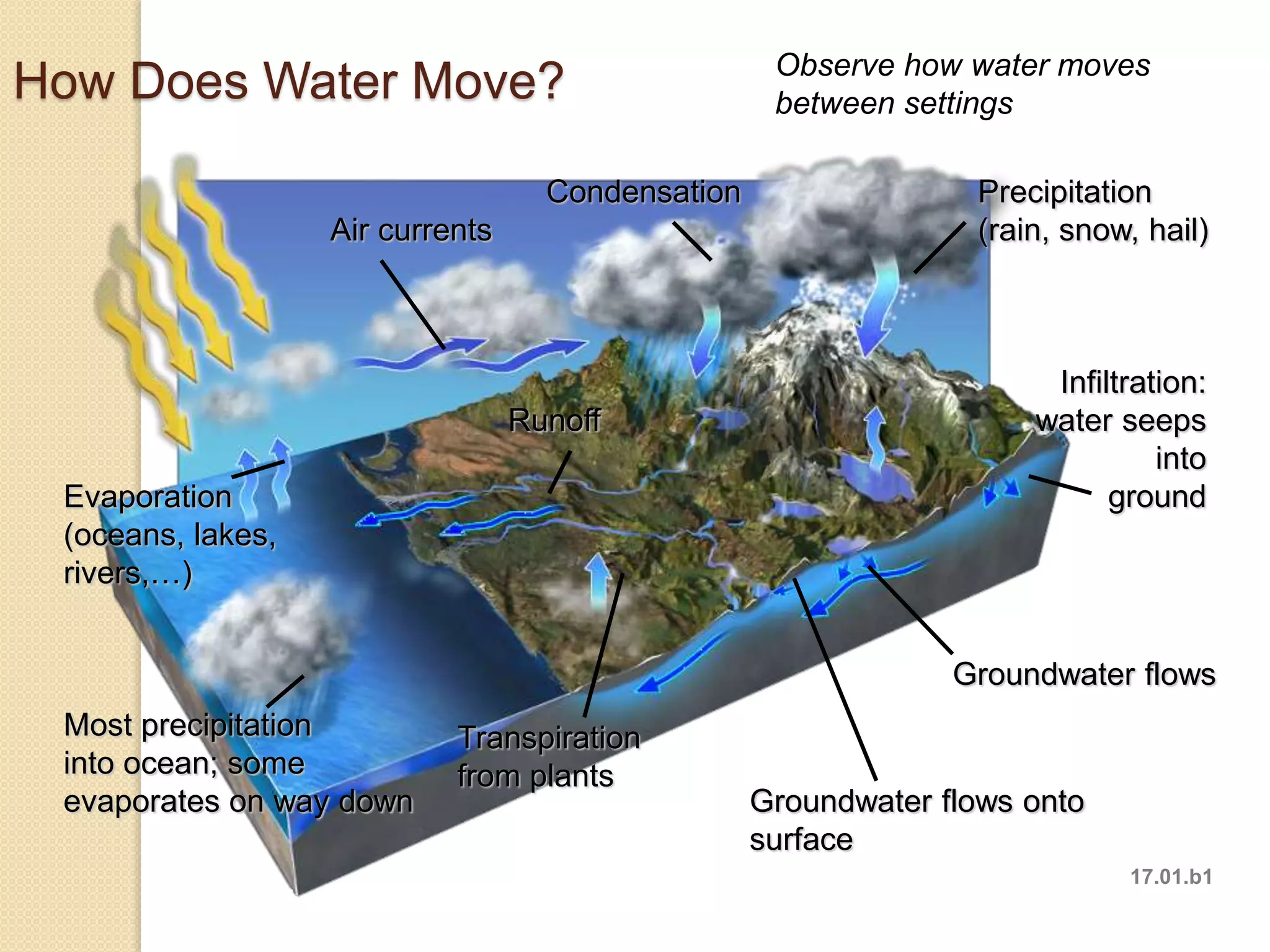
How Does Water Move? Observe how water moves 
between settings 
Air currents 
Evaporation 
(oceans, lakes, 
rivers,…) 
Condensation Precipitation 
(rain, snow, hail) 
Runoff 
Infiltration: 
water seeps 
into 
ground 
Groundwater flows 
Groundwater flows onto 
surface 
Most precipitation 
into ocean; some 
evaporates on way down 
Transpiration 
from plants 
17.01.b1
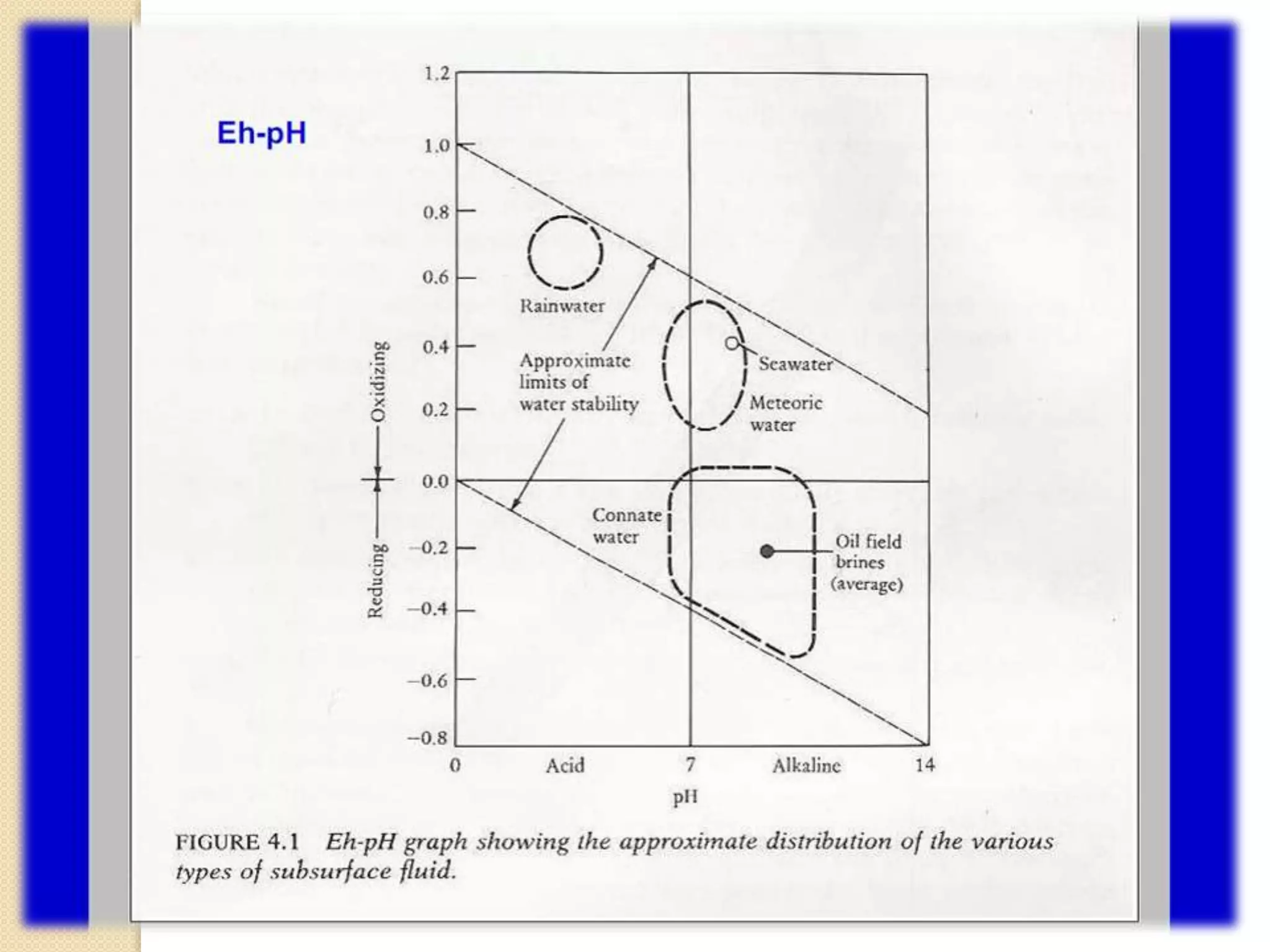
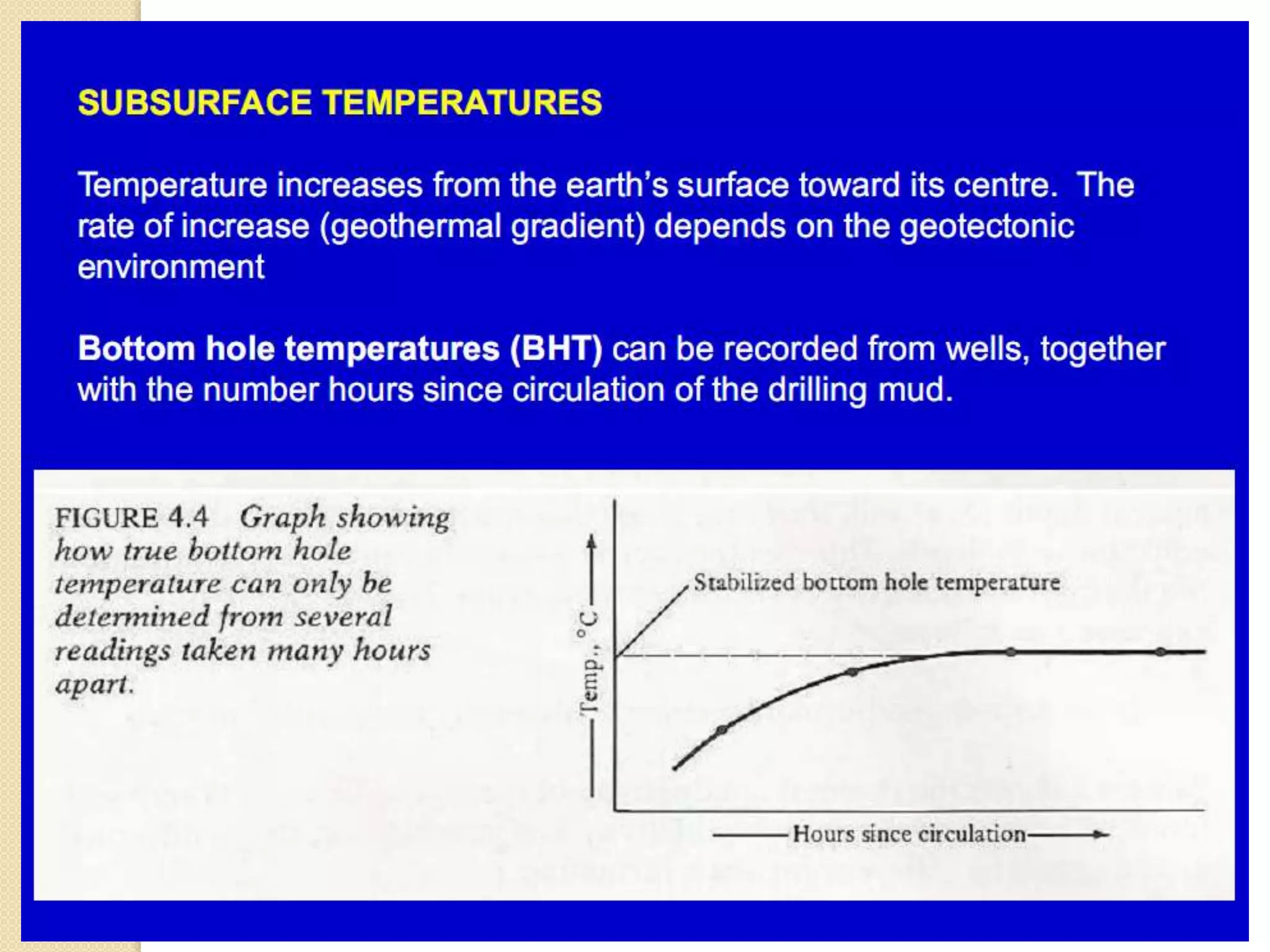
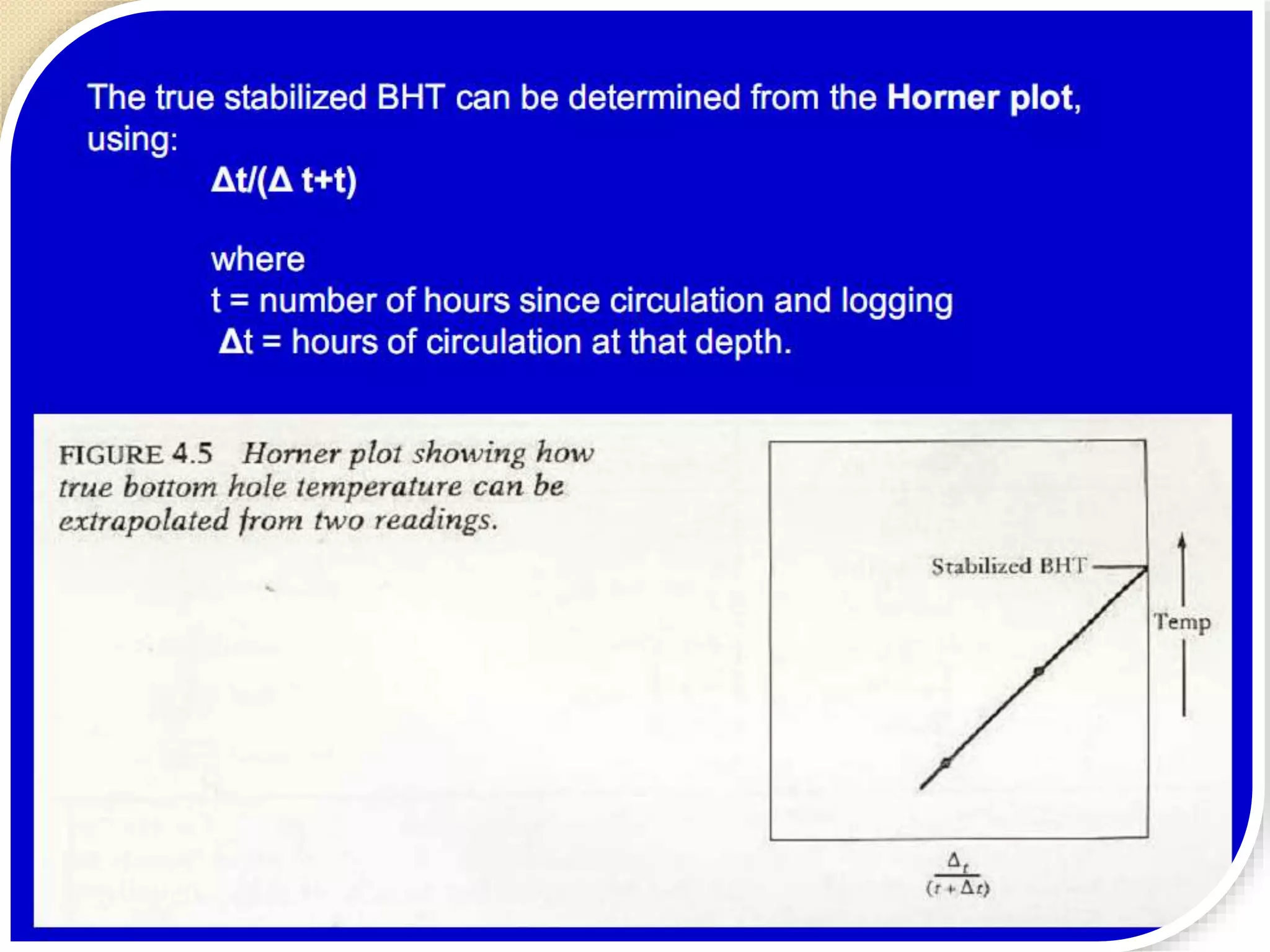
 Reduction potential (also known as redox potential, 
oxidation / reduction potential, ORP, pE or Eh) is a 
measure of the tendency of a chemical species to 
acquire electrons and thereby be reduced. 
Reduction potential is measured in volts (V), or 
millivolts (mV). 
 Each species has its own intrinsic reduction 
potential; the more positive the potential, the 
greater the species' affinity for electrons and 
tendency to be reduced. ORP is a common 
measurement for water quality
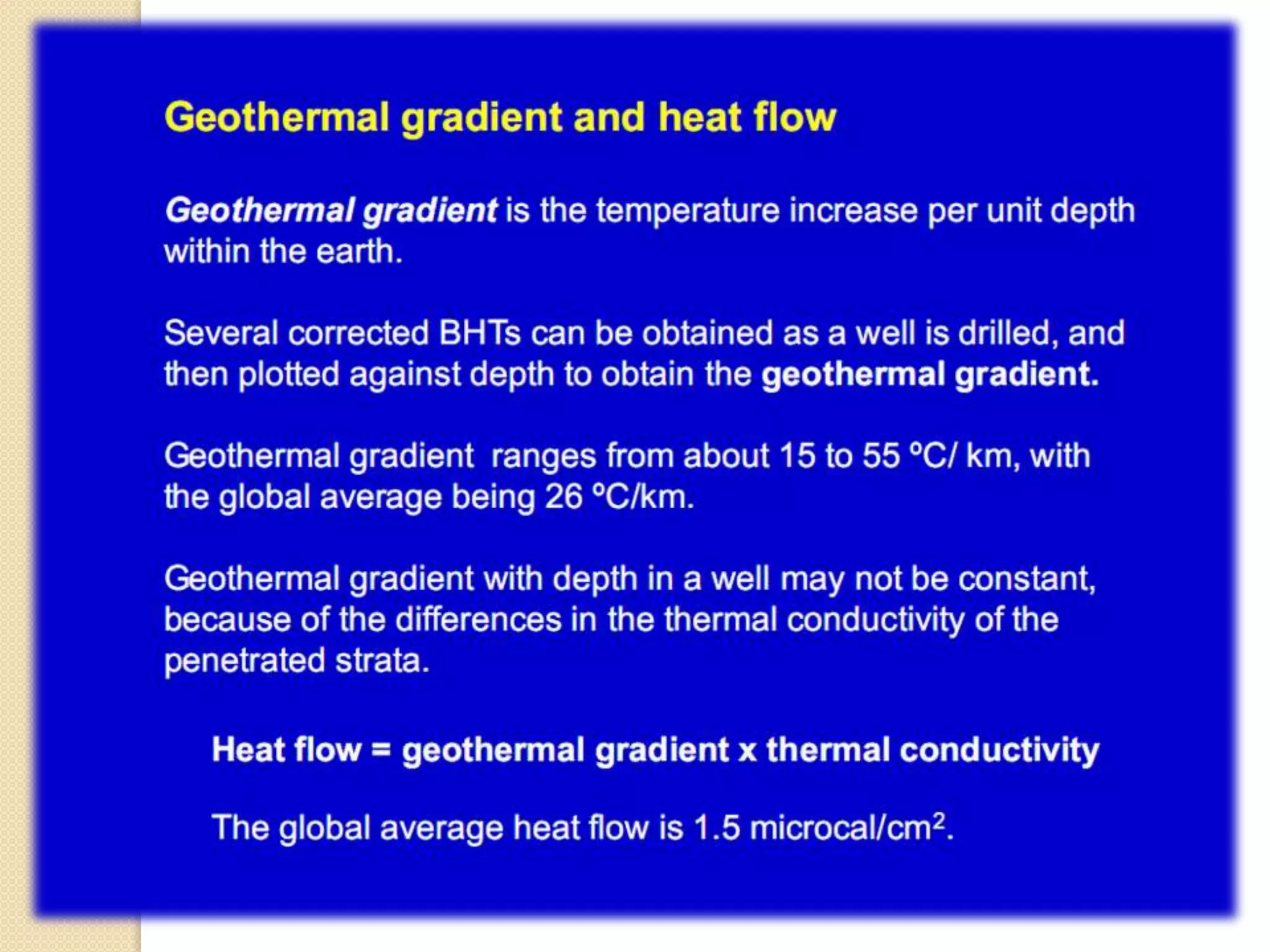
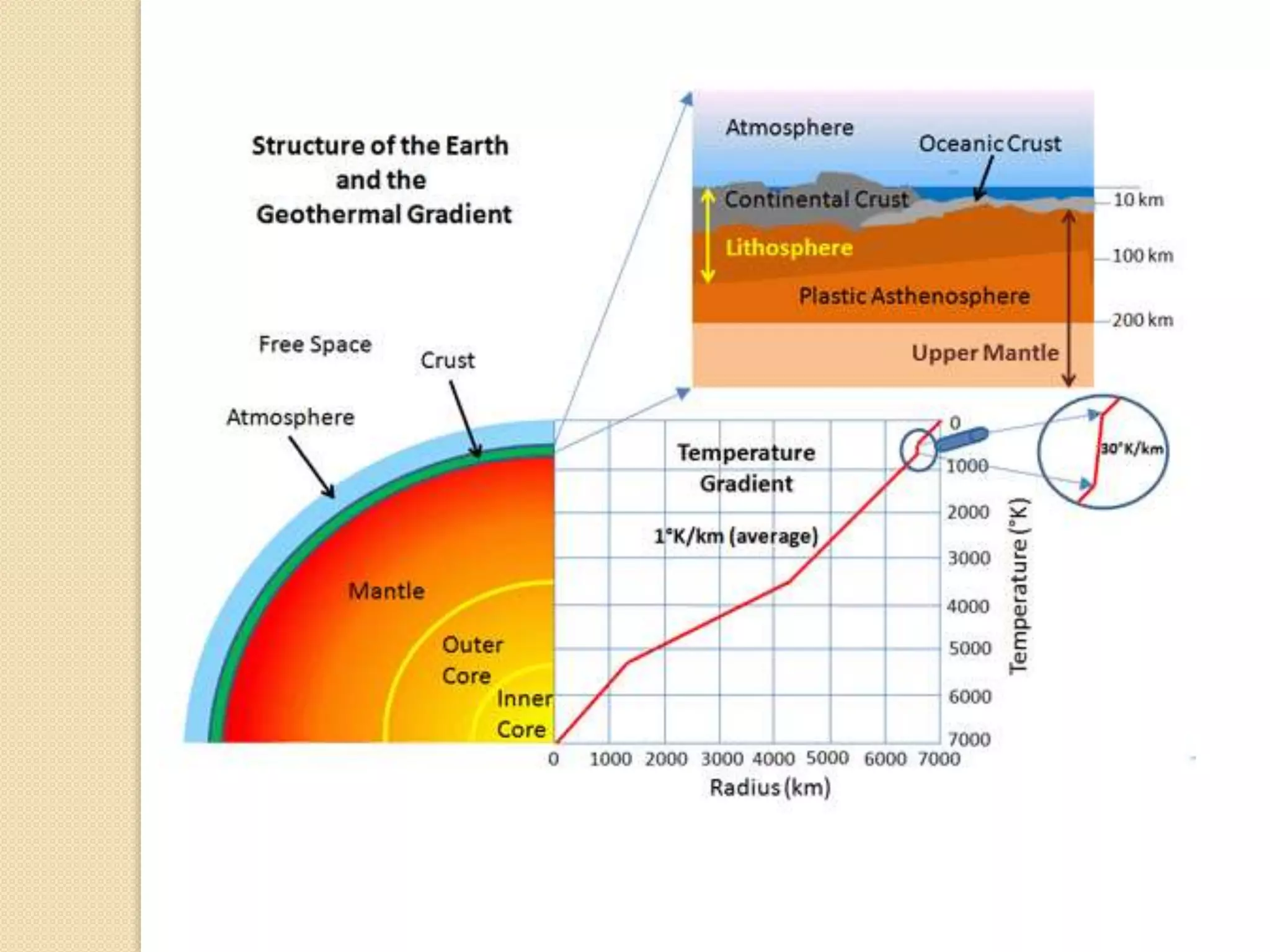
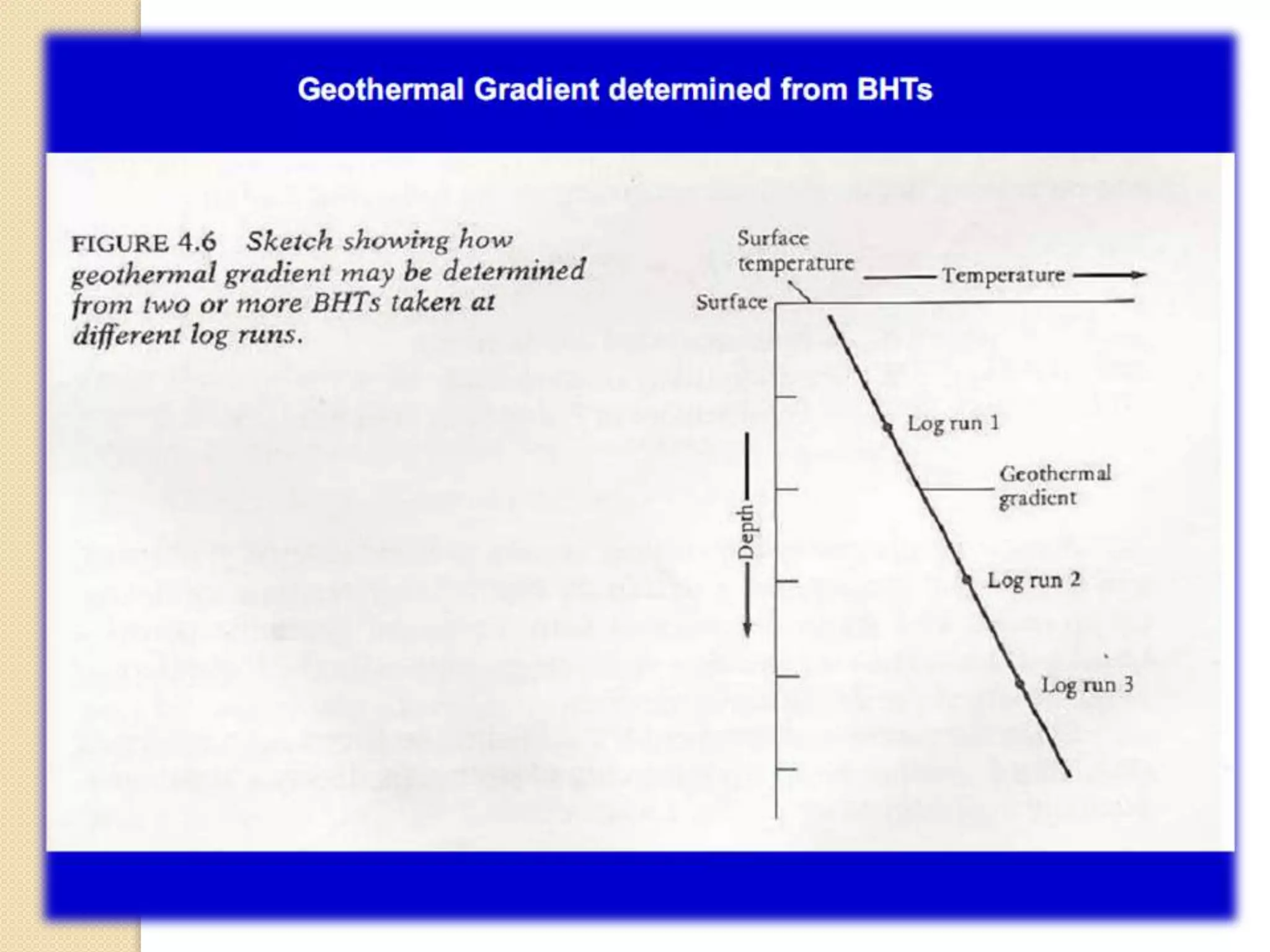
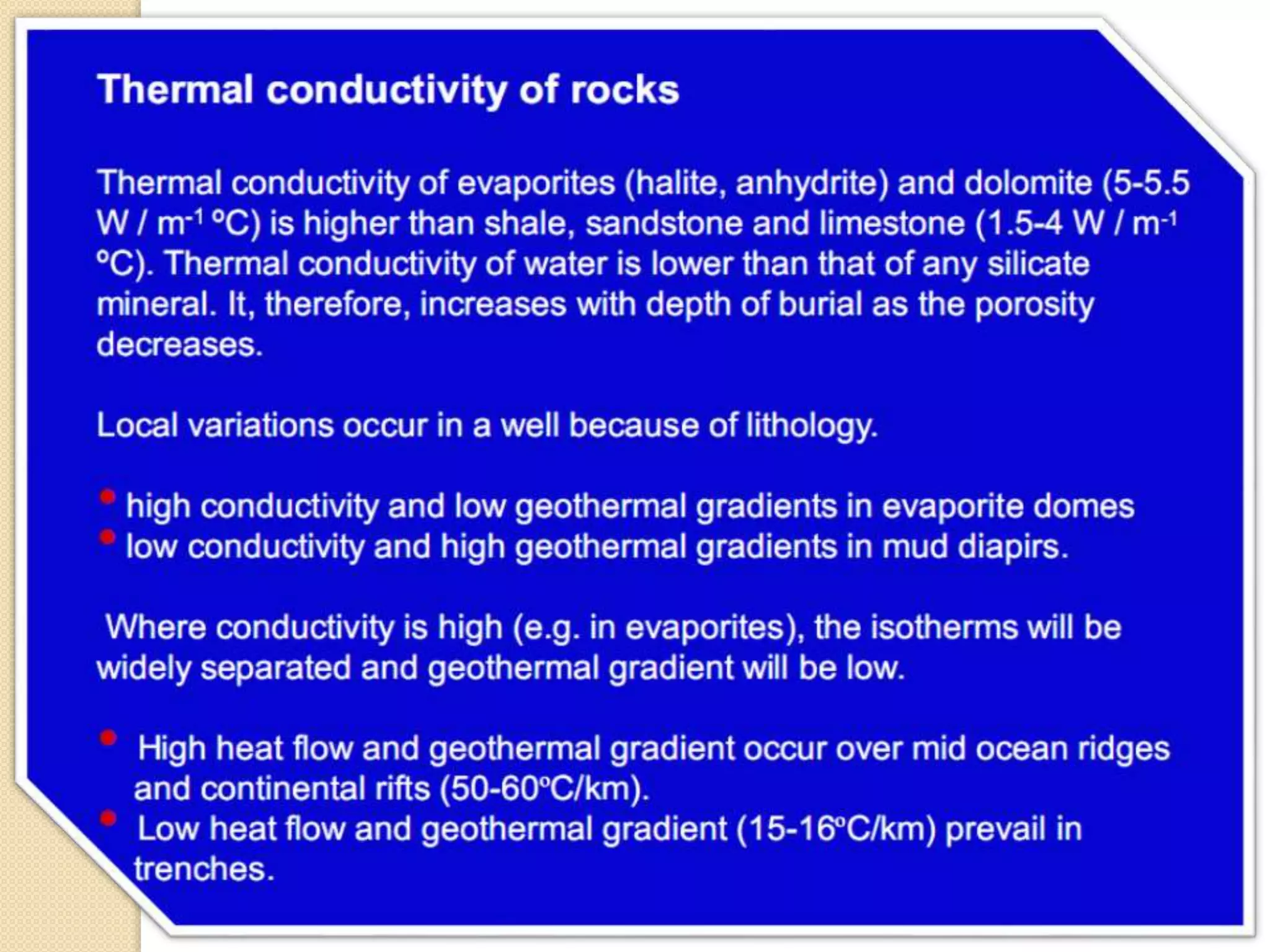
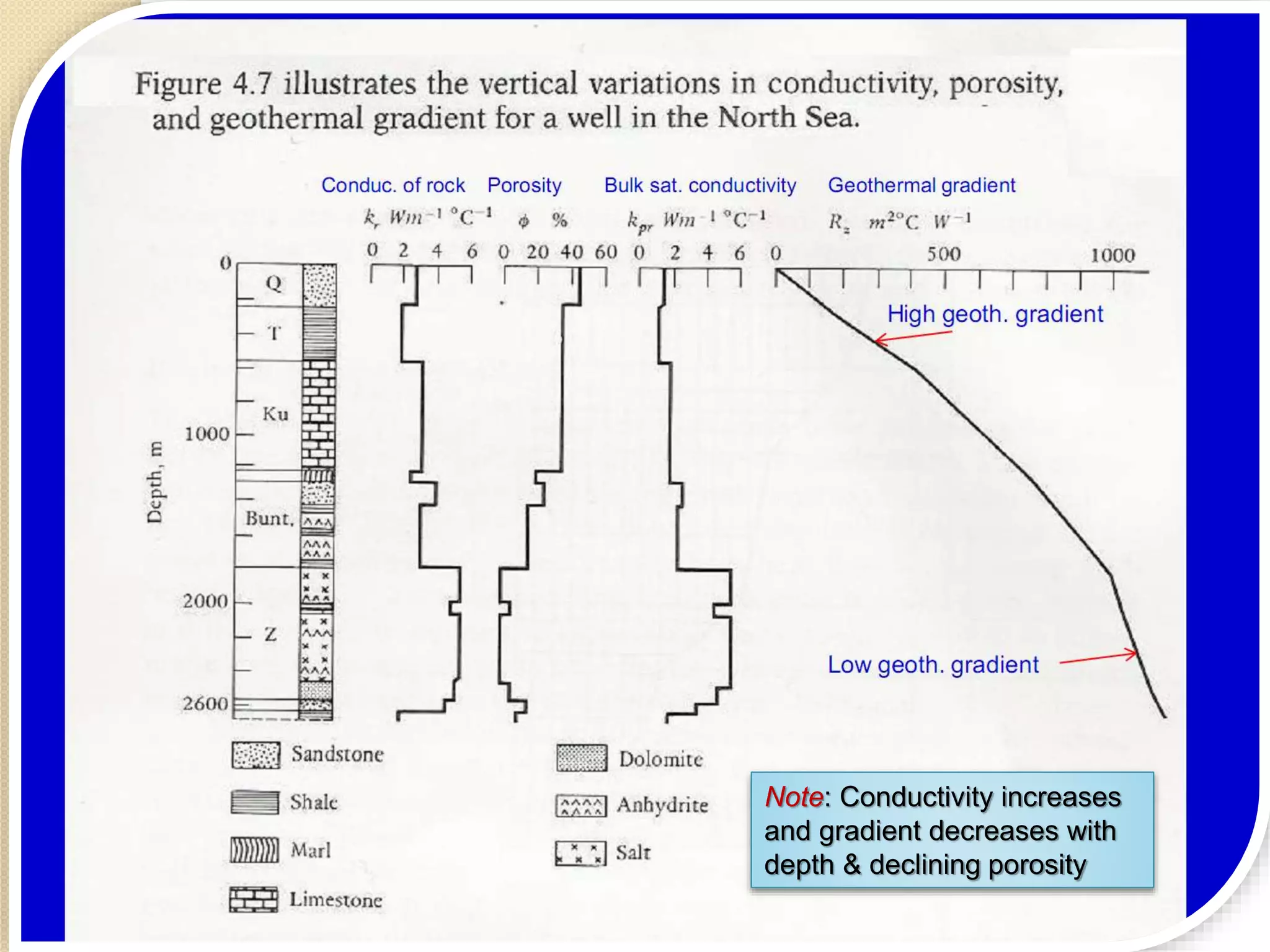
Note: Conductivity increases 
and gradient decreases with 
depth & declining porosity
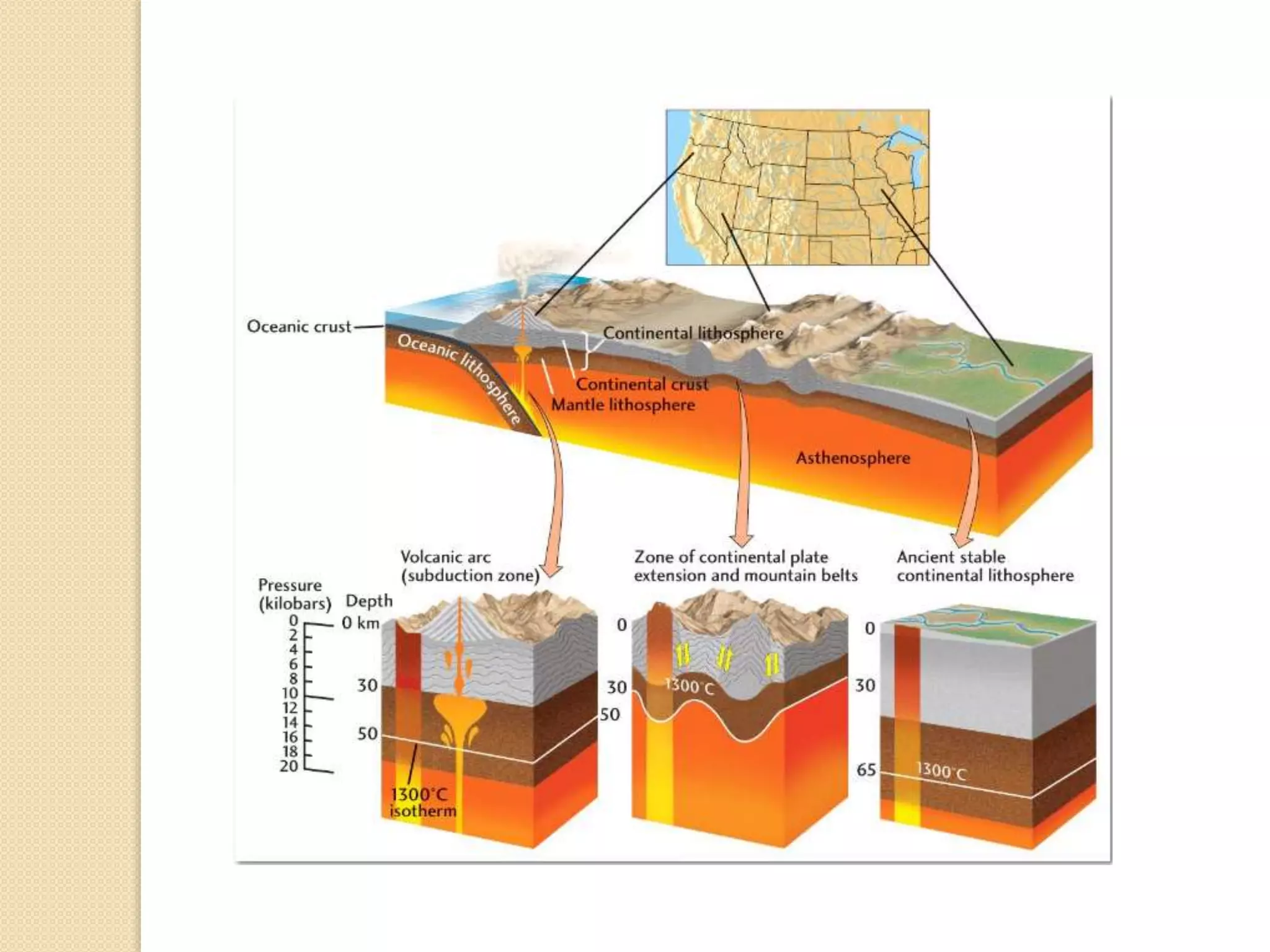
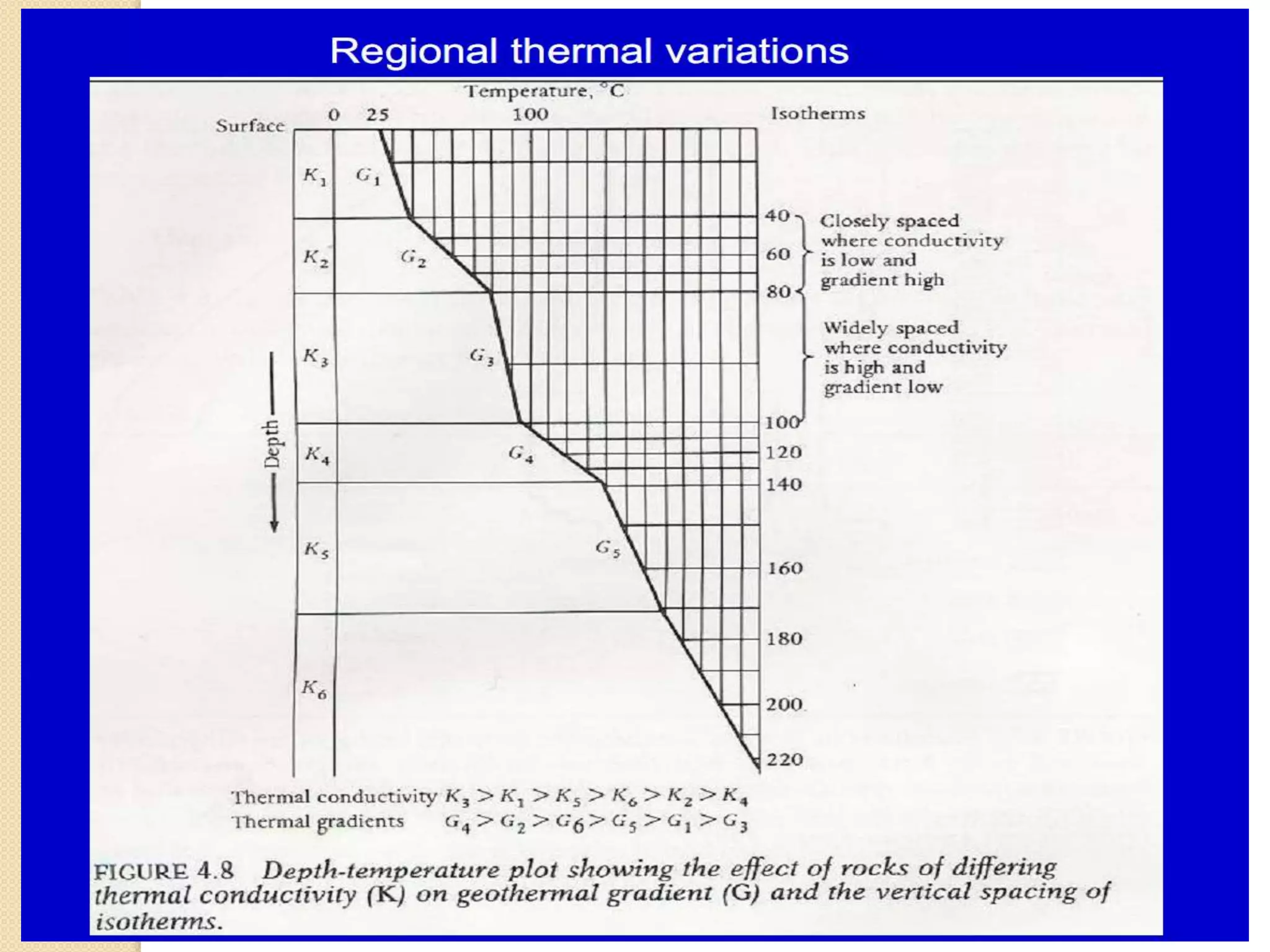
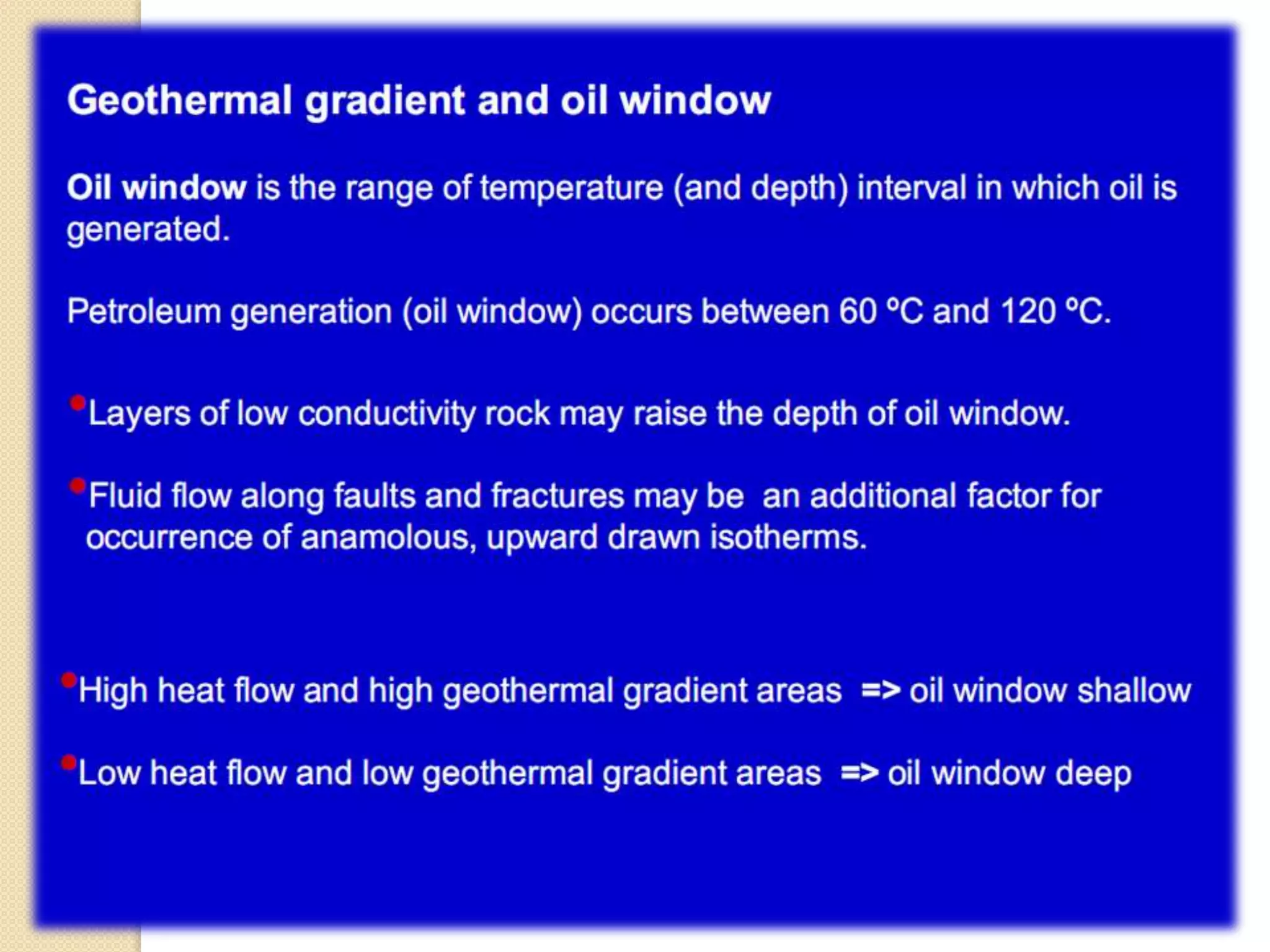
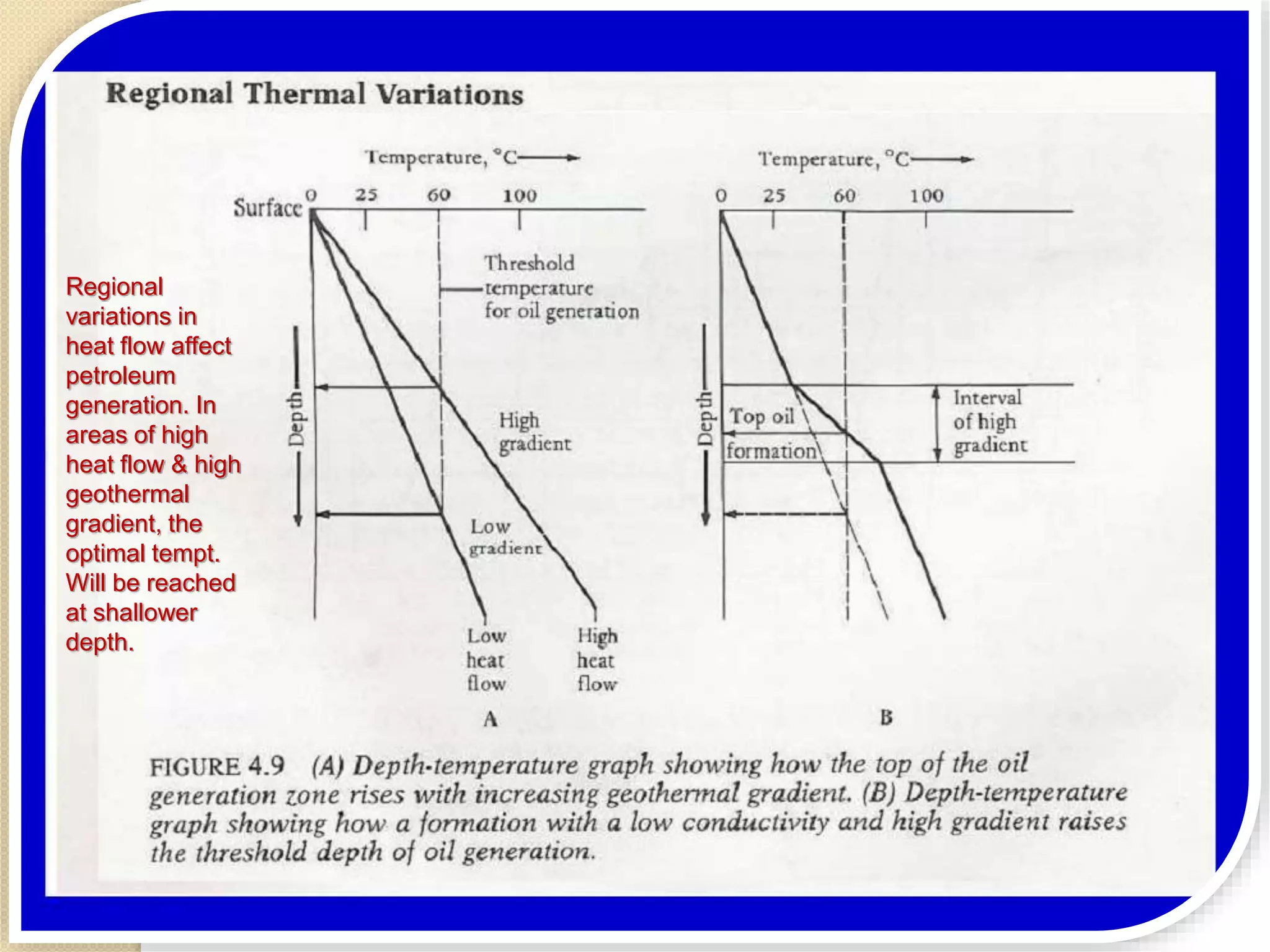
Regional 
variations in 
heat flow affect 
petroleum 
generation. In 
areas of high 
heat flow & high 
geothermal 
gradient, the 
optimal tempt. 
Will be reached 
at shallower 
depth.
Questions?

The Subsurface Environment

  • 1.
  • 2.
    Revision: 1. Seal 2. Structural trap 3. Stratigraphic trap
  • 3.
    Introduction  Weshall discuss about subsurface waters  The effects of pressure and temperature on the condensation and evaporation of gas and oil.  Fluid dynamics in sedimentary basins
  • 5.
    Genetic Classification Normally,four types of subsurface water can be defined according to their genesis: 1. Meteoric waters: Occur near the earth surface. Involved in hydrogeological cycle. 2. Formation waters (connate waters): water trapped in the pore spaces or rocks in sedimentary basins, and have not recently been involved in the hydrogeological circle. These waters evolve with time as a result of water-rock interactions and gain high salinity. 3. Juvenile waters: These are igneous or metamorphic origin 4. Mixed water Meteoric Mixed Juvenile Connate
  • 6.
    Settings of Earth’s Water Observe all the places where water is present Oceans: 96.5% of near-surface water Rivers Lakes: fresh or salty Swamps and wetlands Atmosphere Glaciers: 69% of freshwater Biological water Water in minerals: may be large amount Groundwater: 30% of freshwater 17.01.a1
  • 7.
    How Does WaterMove? Observe how water moves between settings Air currents Evaporation (oceans, lakes, rivers,…) Condensation Precipitation (rain, snow, hail) Runoff Infiltration: water seeps into ground Groundwater flows Groundwater flows onto surface Most precipitation into ocean; some evaporates on way down Transpiration from plants 17.01.b1
  • 9.
     Reduction potential(also known as redox potential, oxidation / reduction potential, ORP, pE or Eh) is a measure of the tendency of a chemical species to acquire electrons and thereby be reduced. Reduction potential is measured in volts (V), or millivolts (mV).  Each species has its own intrinsic reduction potential; the more positive the potential, the greater the species' affinity for electrons and tendency to be reduced. ORP is a common measurement for water quality
  • 22.
    Note: Conductivity increases and gradient decreases with depth & declining porosity
  • 25.
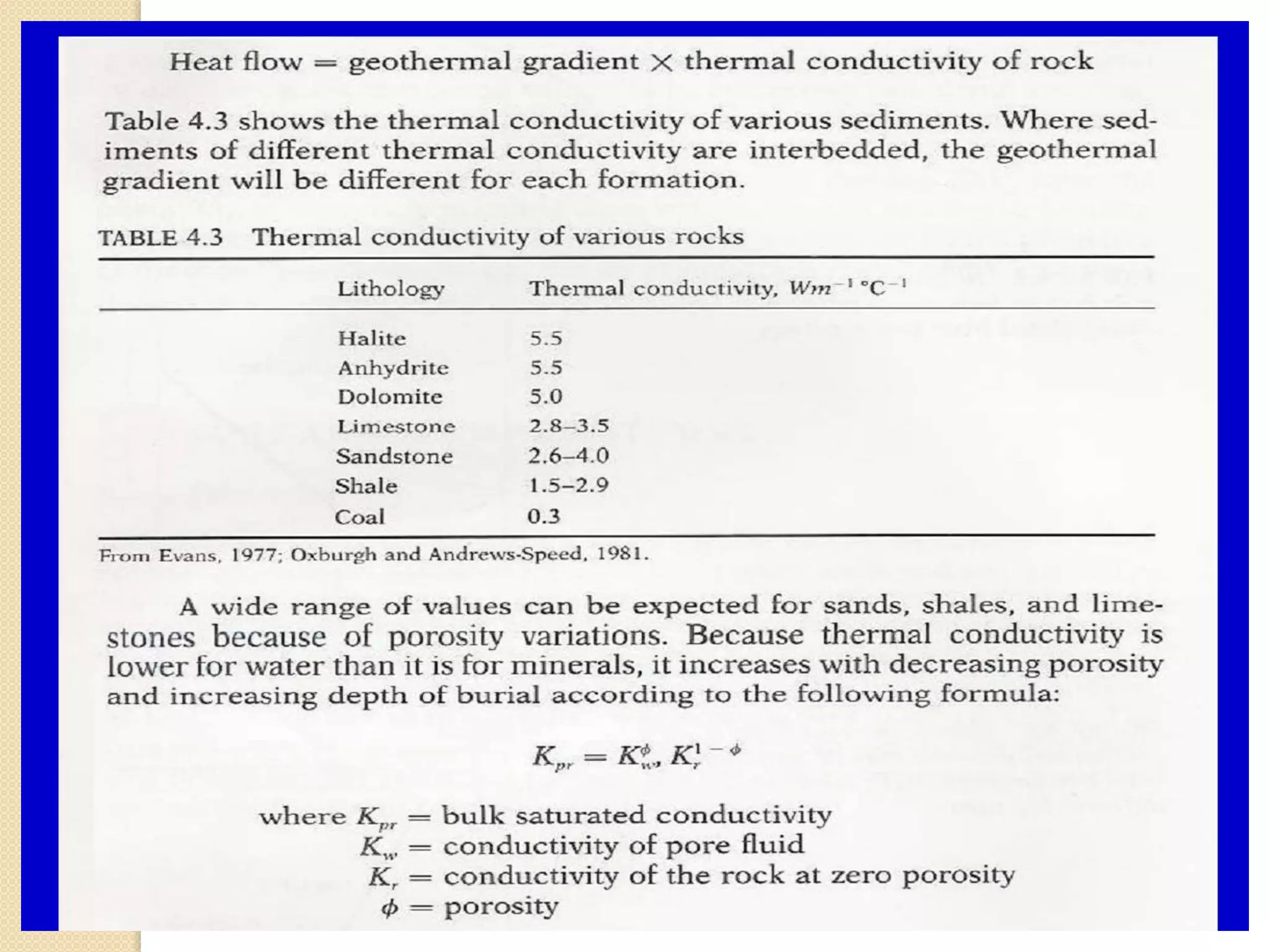
    Regional variations in heat flow affect petroleum generation. In areas of high heat flow & high geothermal gradient, the optimal tempt. Will be reached at shallower depth.
  • 26.