Sweat Glands : Anatomy & Function
Presenter : Dr Mamta
Moderator: Dr Kanika
Introduction
• Sweat gland (sudoriferous gland) is an epithelial skin appendage
• Type of exocrine gland
• 3 types
• Vary in type and density depending on anatomic location
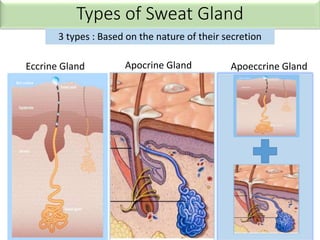
Types of Sweat Gland
3 types : Based on the nature of their secretion
Eccrine Gland Apocrine Gland Apoeccrine Gland
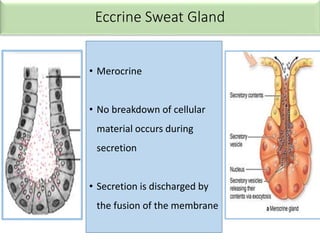
Eccrine Sweat Gland
• Merocrine
• No breakdown of cellular
material occurs during
secretion
• Secretion is discharged by
the fusion of the membrane
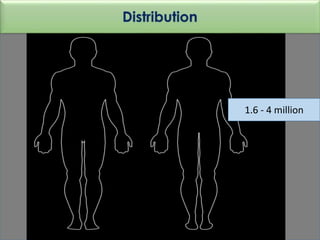
1.6 - 4 million
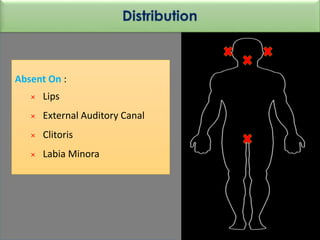
Absent On :
× Lips
× External Auditory Canal
× Clitoris
× Labia Minora
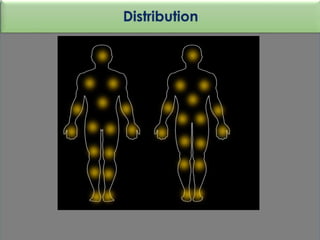
Distribution
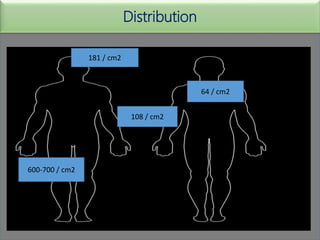
600-700 / cm2
181 / cm2
108 / cm2
64 / cm2
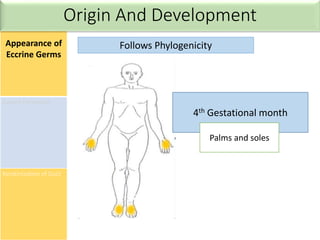
Origin and Development
Appearance of
Eccrine Germs
Lumen Formation
Keratinization of Duct
Follows Phylogenicity
4th Gestational month
Palms and soles
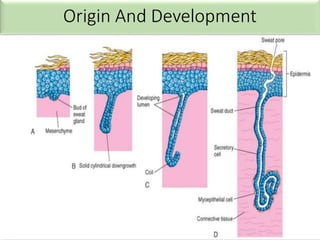
Origin And Development
Appearance of
Eccrine Germs
Lumen Formation
Keratinization of Duct
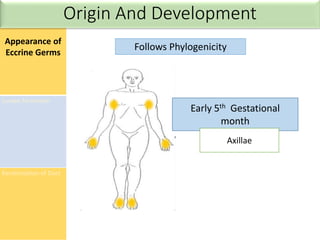
Follows Phylogenicity
Early 5th Gestational
month
Axillae
Origin And Development
Appearance of
Eccrine Germs
Lumen Formation
Keratinization of Duct
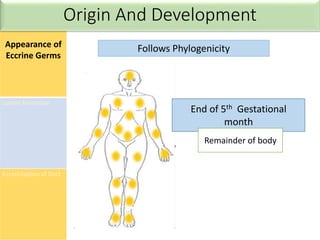
Follows Phylogenicity
End of 5th Gestational
month
Remainder of body
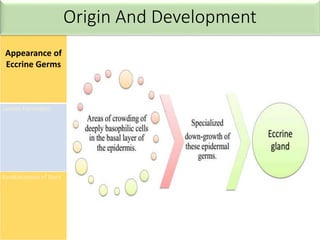
Origin And Development
Appearance of
Eccrine Germs
Lumen Formation
Keratinization of Duct
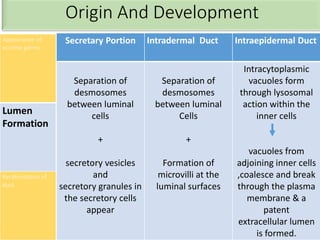
Origin And Development
Appearance of
eccrine germs
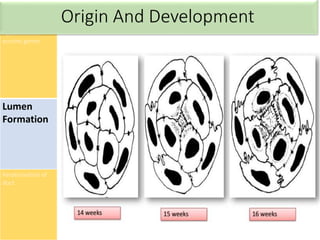
Lumen
Formation
Keratinisation of
duct
Secretary Portion Intradermal Duct Intraepidermal Duct
Separation of
desmosomes
between luminal
cells
+
secretory vesicles
and
secretory granules in
the secretory cells
appear
Separation of
desmosomes
between luminal
Cells
+
Formation of
microvilli at the
luminal surfaces
Intracytoplasmic
vacuoles form
through lysosomal
action within the
inner cells
vacuoles from
adjoining inner cells
,coalesce and break
through the plasma
membrane & a
patent
extracellular lumen
is formed.
Appearance of
eccrine germs
Lumen
Formation
Keratinisation of
duct
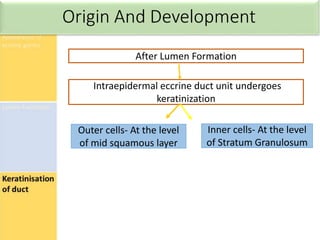
After Lumen Formation
Intraepidermal eccrine duct unit undergoes
keratinization
Outer cells- At the level
of mid squamous layer
Inner cells- At the level
of Stratum Granulosum
• Eccrine glands may be seen in different stages of
development at a time
• By the 8th fetal month, they resemble adult sweat
glands, but are not fully functional until about two
years of age
• No new sweat glands are formed after birth
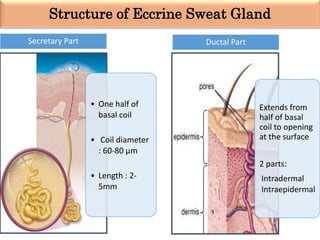
Structure of Eccrine Sweat Gland
• One half of
basal coil
• Coil diameter
: 60-80 µm
• Length : 2-
5mm
Secretary Part
Extends from
half of basal
coil to opening
at the surface
2 parts:
Intradermal
Intraepidermal
Ductal Part
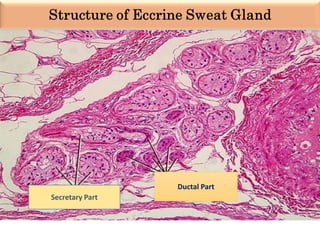
Secretary Part
Ductal Part
Secretory Part
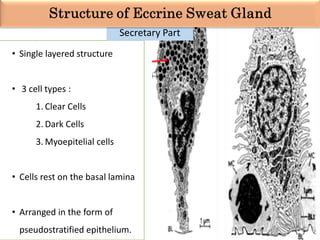
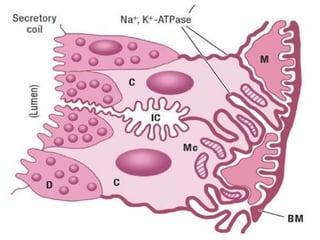
• Single layered structure
• 3 cell types :
1. Clear Cells
2. Dark Cells
3. Myoepitelial cells
• Cells rest on the basal lamina
• Arranged in the form of
pseudostratified epithelium.
Secretary Part
Secretary Part
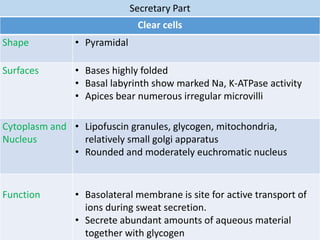
Clear cells
Shape • Pyramidal
Surfaces • Bases highly folded
• Basal labyrinth show marked Na, K-ATPase activity
• Apices bear numerous irregular microvilli
Cytoplasm and
Nucleus
• Lipofuscin granules, glycogen, mitochondria,
relatively small golgi apparatus
• Rounded and moderately euchromatic nucleus
Function • Basolateral membrane is site for active transport of
ions during sweat secretion.
• Secrete abundant amounts of aqueous material
together with glycogen
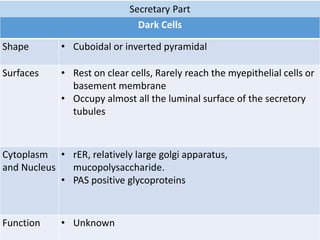
Dark Cells
Shape • Cuboidal or inverted pyramidal
Surfaces • Rest on clear cells, Rarely reach the myepithelial cells or
basement membrane
• Occupy almost all the luminal surface of the secretory
tubules
Cytoplasm
and Nucleus
• rER, relatively large golgi apparatus,
mucopolysaccharide.
• PAS positive glycoproteins
Function • Unknown
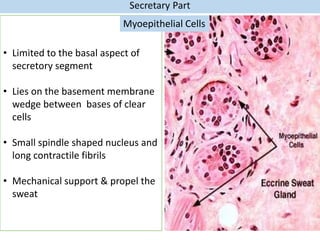
• Limited to the basal aspect of
secretory segment
• Lies on the basement membrane
wedge between bases of clear
cells
• Small spindle shaped nucleus and
long contractile fibrils
• Mechanical support & propel the
sweat
Myoepithelial Cells
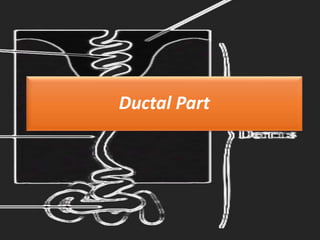
Ductal Part
Ductal Part
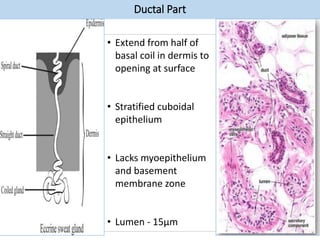
• Extend from half of
basal coil in dermis to
opening at surface
• Stratified cuboidal
epithelium
• Lacks myoepithelium
and basement
membrane zone
• Lumen - 15µm
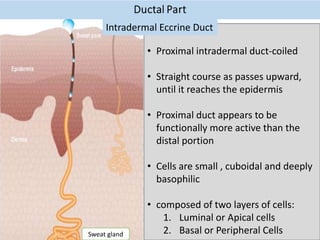
• Proximal intradermal duct-coiled
• Straight course as passes upward,
until it reaches the epidermis
• Proximal duct appears to be
functionally more active than the
distal portion
• Cells are small , cuboidal and deeply
basophilic
• composed of two layers of cells:
1. Luminal or Apical cells
2. Basal or Peripheral Cells
Intradermal Eccrine Duct
Sweat gland
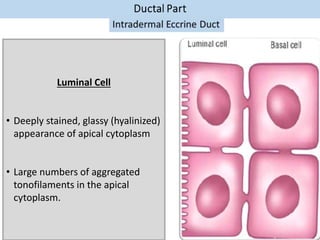
Luminal Cell
• Deeply stained, glassy (hyalinized)
appearance of apical cytoplasm
• Large numbers of aggregated
tonofilaments in the apical
cytoplasm.
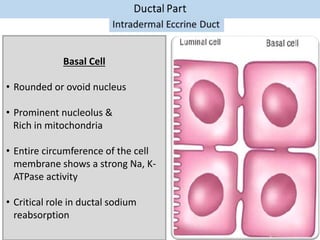
Basal Cell
• Rounded or ovoid nucleus
• Prominent nucleolus &
Rich in mitochondria
• Entire circumference of the cell
membrane shows a strong Na, K-
ATPase activity
• Critical role in ductal sodium
reabsorption
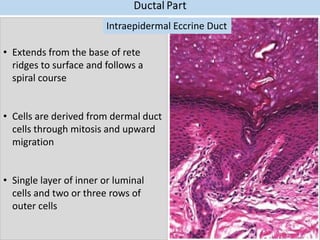
• Extends from the base of rete
ridges to surface and follows a
spiral course
• Cells are derived from dermal duct
cells through mitosis and upward
migration
• Single layer of inner or luminal
cells and two or three rows of
outer cells
Intraepidermal Eccrine Duct
Innervation
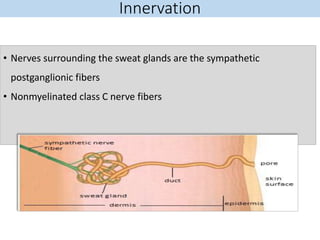
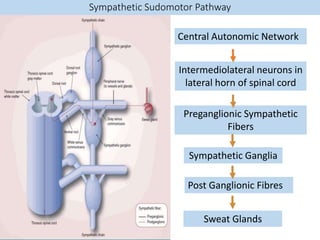
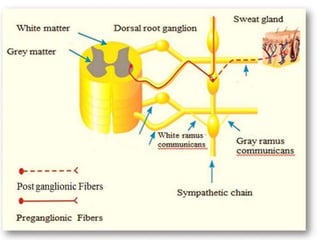
• Nerves surrounding the sweat glands are the sympathetic
postganglionic fibers
• Nonmyelinated class C nerve fibers
Sympathetic Sudomotor Pathway
Central Autonomic Network
Intermediolateral neurons in
lateral horn of spinal cord
Preganglionic Sympathetic
Fibers
Sympathetic Ganglia
Post Ganglionic Fibres
Sweat Glands
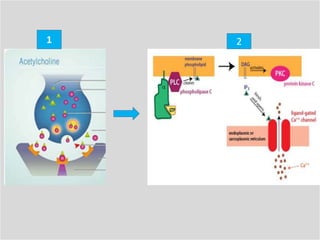
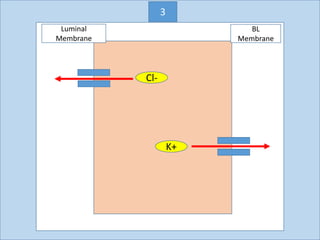
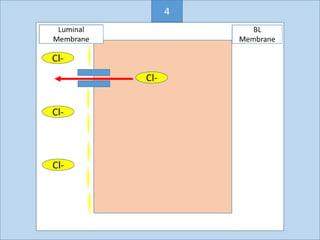
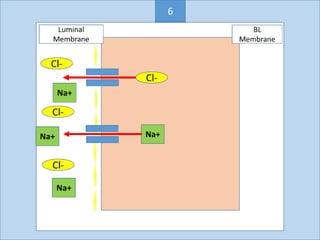
Sweat Formation
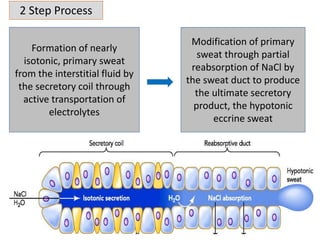
2 Step Process
Formation of nearly
isotonic, primary sweat
from the interstitial fluid by
the secretory coil through
active transportation of
electrolytes
Modification of primary
sweat through partial
reabsorption of NaCl by
the sweat duct to produce
the ultimate secretory
product, the hypotonic
eccrine sweat
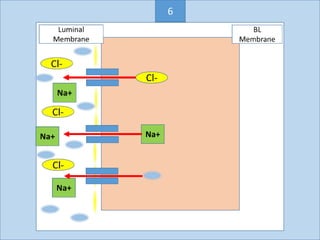
Formation of Primary Sweat
1
1 2
Cl-
K+
Luminal
Membrane
BL
Membrane
3
Cl-
4
Cl-
Na+
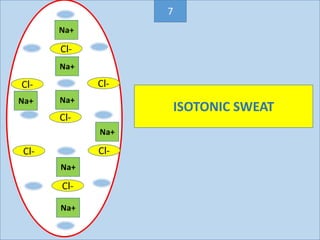
6
Cl-
Na+
6
Cl-
Na+
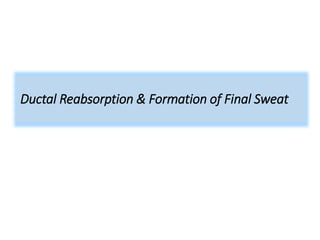
7
ISOTONIC SWEAT
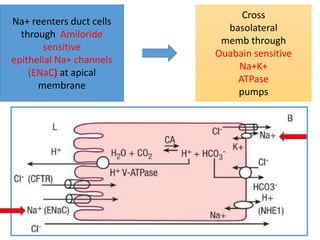
Ductal Reabsorption & Formation of Final Sweat
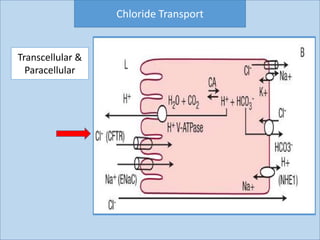
Na+ reenters duct cells
through Amiloride
sensitive
epithelial Na+ channels
(ENaC) at apical
membrane
Cross
basolateral
memb through
Ouabain sensitive
Na+K+
ATPase
pumps
Chloride Transport
Transcellular &
Paracellular
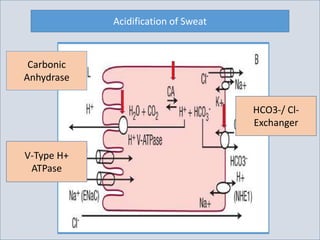
Acidification of Sweat
Carbonic
Anhydrase
HCO3-/ Cl-
Exchanger
V-Type H+
ATPase
Physiology of Sweating
• The principal function of the eccrine glands is to produce
sweat during periods of heat stress
• Normal sweat rates can range from 0.75 to 2 L / hour
• During heat stress, 3-4L / hour can be attained, and a rate of 1-
1.5 L / hour can be maintained
• One litre of evaporated sweat removes about 585 kilocalories
of heat from the body
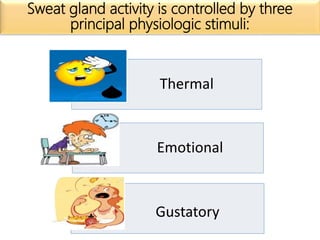
Sweat gland activity is controlled by three
principal physiologic stimuli:
Thermal
Emotional
Gustatory
• Maintenance of a constant body temperature is a
core element of our homeostasis
• Sweating is one of the many mechanism through which the body
dissipates heat
• Temperature setpoint [Tse]- sweating occurs at and above a
certain core temperature
• Sweating induced by thermal stimuli mostly affects the upper
trunk and face but may involve the whole body
Thermoregulatory Sweating
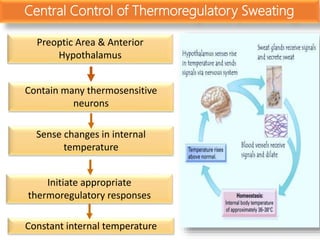
Central Control of Thermoregulatory Sweating
Preoptic Area & Anterior
Hypothalamus
Contain many thermosensitive
neurons
Sense changes in internal
temperature
Initiate appropriate
thermoregulatory responses
Constant internal temperature
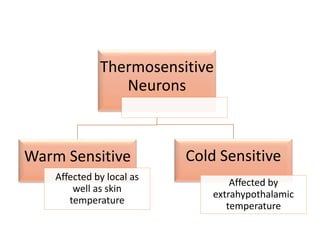
Thermosensitive
Neurons
Warm Sensitive
Affected by local as
well as skin
temperature
Cold Sensitive
Affected by
extrahypothalamic
temperature
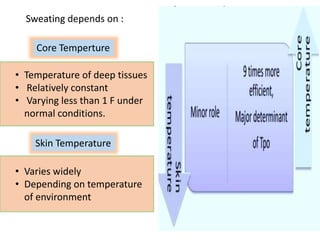
Sweating depends on :
• Temperature of deep tissues
• Relatively constant
• Varying less than 1 F under
normal conditions.
• Varies widely
• Depending on temperature
of environment
Core Temperture
Skin Temperature
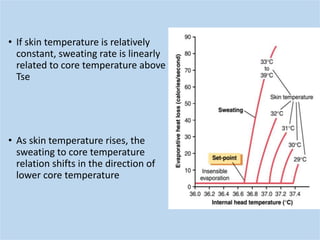
• If skin temperature is relatively
constant, sweating rate is linearly
related to core temperature above
Tse
• As skin temperature rises, the
sweating to core temperature
relation shifts in the direction of
lower core temperature
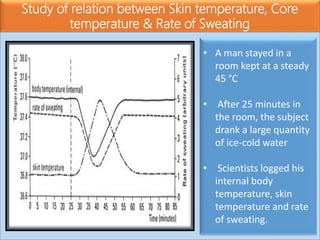
Study of relation between Skin temperature, Core
temperature & Rate of Sweating
• A man stayed in a
room kept at a steady
45 °C
• After 25 minutes in
the room, the subject
drank a large quantity
of ice-cold water
• Scientists logged his
internal body
temperature, skin
temperature and rate
of sweating.
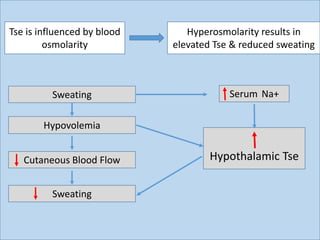
Tse is influenced by blood
osmolarity
Hyperosmolarity results in
elevated Tse & reduced sweating
Sweating
Hypovolemia
Cutaneous Blood Flow
Sweating
Serum Na+
Hypothalamic Tse
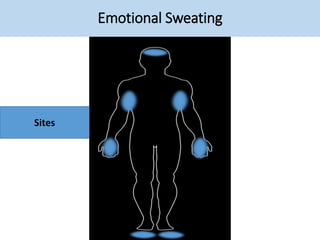
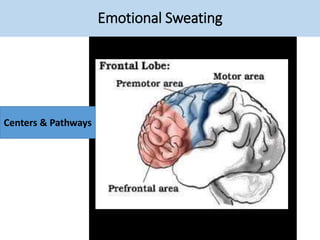
Emotional Sweating
Sites
Emotional Sweating
Centers & Pathways
Gustatory Sweating
• Ingesting highly spiced food stimulates physiologic
gustatory sweating in most people via
trigeminovascular reflex
• This trigeminovascular reflex typically occurs
symmetrically on the scalp or face and predominantly
over the forehead, lips, and nose
• Afferent impulses from taste bud receptors travel via
the glossopharyngeal nerve to nuclei within the
medulla (Medullary Sweating)
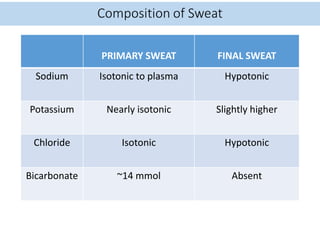
Composition of Sweat
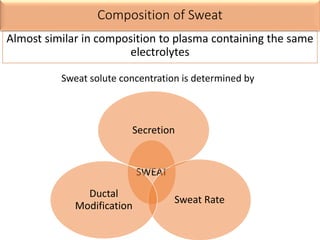
Almost similar in composition to plasma containing the same
electrolytes
SWEAT
Secretion
Sweat Rate
Ductal
Modification
Sweat solute concentration is determined by
Composition of Sweat
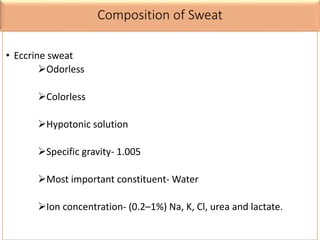
• Eccrine sweat
Odorless
Colorless
Hypotonic solution
Specific gravity- 1.005
Most important constituent- Water
Ion concentration- (0.2–1%) Na, K, Cl, urea and lactate.
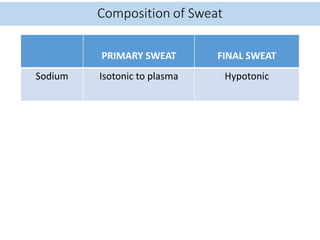
PRIMARY SWEAT FINAL SWEAT
Sodium Isotonic to plasma Hypotonic
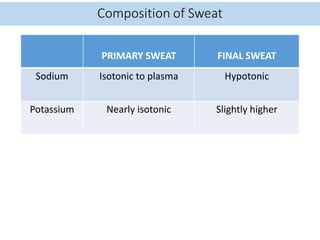
PRIMARY SWEAT FINAL SWEAT
Sodium Isotonic to plasma Hypotonic
Potassium Nearly isotonic Slightly higher
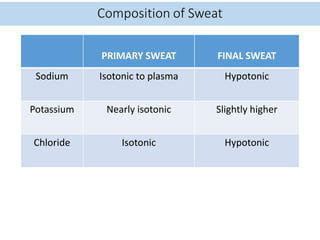
PRIMARY SWEAT FINAL SWEAT
Sodium Isotonic to plasma Hypotonic
Potassium Nearly isotonic Slightly higher
Chloride Isotonic Hypotonic
PRIMARY SWEAT FINAL SWEAT
Sodium Isotonic to plasma Hypotonic
Potassium Nearly isotonic Slightly higher
Chloride Isotonic Hypotonic
Bicarbonate ~14 mmol Absent
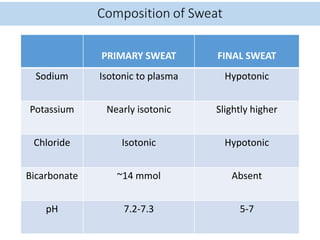
PRIMARY SWEAT FINAL SWEAT
Sodium Isotonic to plasma Hypotonic
Potassium Nearly isotonic Slightly higher
Chloride Isotonic Hypotonic
Bicarbonate ~14 mmol Absent
pH 7.2-7.3 5-7
LACTATE
• @ low sweat rate- 30-40 m mol
• @ high sweat rate- 10 to 15 m mol
• Concentration higher than plasma (<2 mM) indicating that sweat lactate is derived
mainly from the sweat gland as an end product of glycolysis.
UREA
• Same as, or slightly higher than that of plasma
AMMONIA
• 0.5 to 8 mM.
• It is 20 to 50 times higher than the plasma ammonia concentration. [Diffusion
entrapment mechanism].
• Sweat ammonia levels are inversely proportional to the sweat rate and sweat pH.
PROTEINS
• 20 mg/dl,
• The majority are small molecular weight proteins less than 10 kDa.
• The concentration of high Mw proteins (>10kDa) increases with increase in sweat rate.
GLUCOSE
• 0.2-1.5mg/dl,
• Increase in uncontrolled diabetics, favors bacterial growth on skin
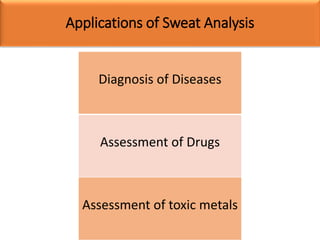
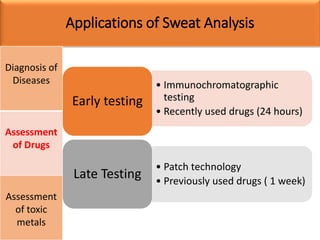
Applications of Sweat Analysis
Diagnosis of Diseases
Assessment of Drugs
Assessment of toxic metals
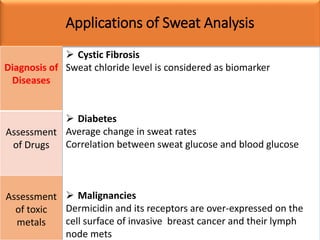
Applications of Sweat Analysis
Diagnosis of
Diseases
Assessment
of Drugs
Assessment
of toxic
metals
 Cystic Fibrosis
Sweat chloride level is considered as biomarker
 Diabetes
Average change in sweat rates
Correlation between sweat glucose and blood glucose
 Malignancies
Dermicidin and its receptors are over-expressed on the
cell surface of invasive breast cancer and their lymph
node mets
Applications of Sweat Analysis
Diagnosis of
Diseases
Assessment
of Drugs
Assessment
of toxic
metals
• Immunochromatographic
testing
• Recently used drugs (24 hours)
Early testing
• Patch technology
• Previously used drugs ( 1 week)
Late Testing
Applications of Sweat Analysis
Diagnosis of
Diseases
Assessment
of Drugs
Assessment
of toxic
metals
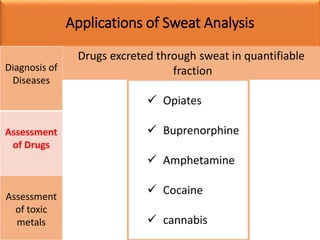
Drugs excreted through sweat in quantifiable
fraction
 Opiates
 Buprenorphine
 Amphetamine
 Cocaine
 cannabis
Applications of Sweat Analysis
Diagnosis of
Diseases
Assessment
of Drugs
Assessment
of toxic
metals
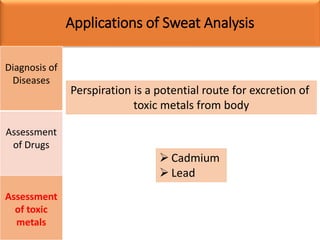
Perspiration is a potential route for excretion of
toxic metals from body
 Cadmium
 Lead
Factors Affecting Sweating
• Environmental Temperature
• Degree of acclimatization
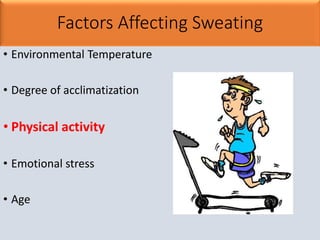
• Physical activity
• Emotional stress
• Age
Factors Affecting Sweating
• Environmental Temperature
• Degree of acclimatization
• Physical activity
• Emotional stress
• Age
Factors Affecting Sweating
• Environmental Temperature
• Degree of acclimatization
• Physical activity
• Emotional stress
• Age
Factors Affecting Sweating
• Environmental Temperature
• Degree of acclimatization
• Physical activity
• Emotional stress
• Age
Effect of exercise on Sweating
Conclusion : Previous physical training improved women's
capacity for useful sweating during exercise in a hot
environment.
• Peripheral sweat rate was significantly (P less than 0.05) greater in
trained men [6.9 +/ 0.6 (SE) g.m2.min1] and women (6.1 +/ 0.7)
compared with sedentary men (3.1 +/ 0.5) and women (2.5 +/ 0.4)
• Physical training improves the secretory activity of the human
sweat gland
Factors Affecting Sweating
• Environmental Temperature
• Degree of acclimatization
• Physical activity
• Emotional stress
• Age
Factors Affecting Sweating
• Environmental Temperature
• Degree of acclimatization
• Physical activity
• Emotional stress
• Age
Assessment Of Sweating
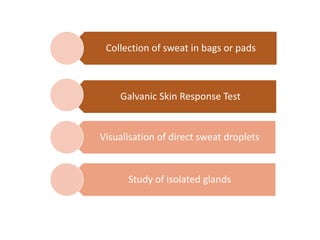
Collection of sweat in bags or pads
Galvanic Skin Response Test
Visualisation of direct sweat droplets
Study of isolated glands
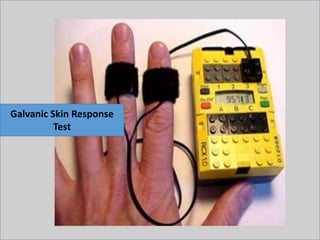
Galvanic Skin Response
Test
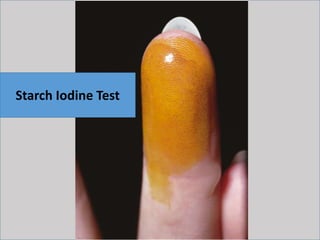
Starch Iodine Test
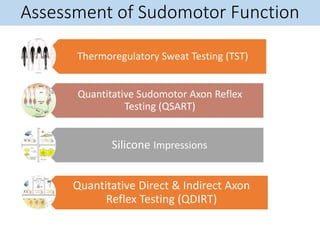
Assessment of Sudomotor Function
Thermoregulatory Sweat Testing (TST)
Quantitative Sudomotor Axon Reflex
Testing (QSART)
Silicone Impressions
Quantitative Direct & Indirect Axon
Reflex Testing (QDIRT)
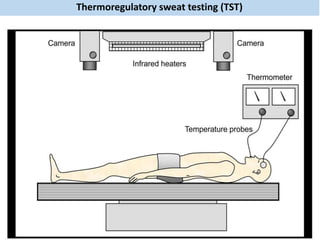
Thermoregulatory sweat testing (TST)
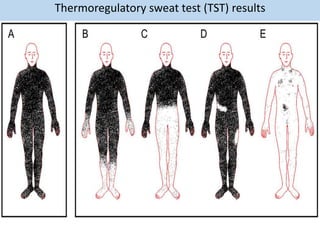
Thermoregulatory sweat test (TST) results
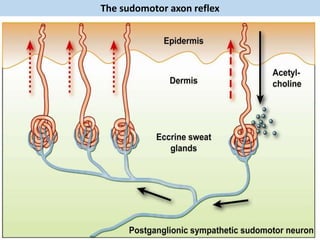
The sudomotor axon reflex
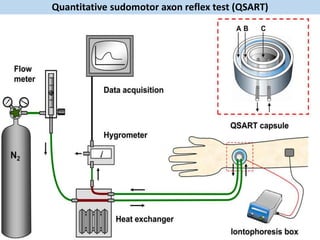
Quantitative sudomotor axon reflex test (QSART)
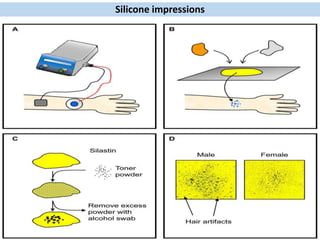
Silicone impressions
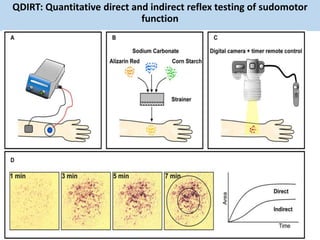
QDIRT: Quantitative direct and indirect reflex testing of sudomotor
function
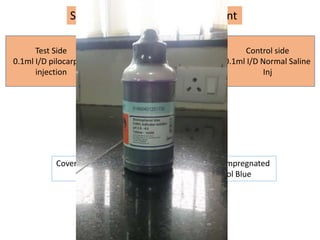
Sweat Testing in Our Department
Test Side
0.1ml I/D pilocarpine
injection
Control side
0.1ml I/D Normal Saline
Inj
Covered with Whatman No.1 filter paper strip impregnated
With 1% alcoholic solution of Bromophenol Blue
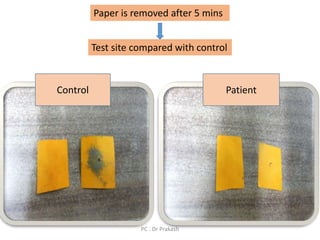
PC : Dr Prakash
Control Patient
Paper is removed after 5 mins
Test site compared with control
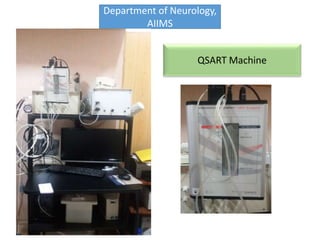
Department of Neurology,
AIIMS
QSART Machine
Functions
Secretory function
Thermoregulation
Electrolyte balance
Keeping stratum corneum
moist
Excretory function
Delivery of systemically
administered drugs to
stratum corneum
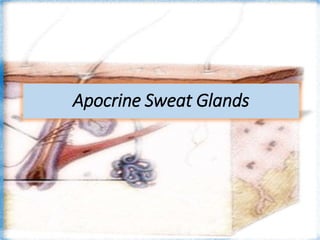
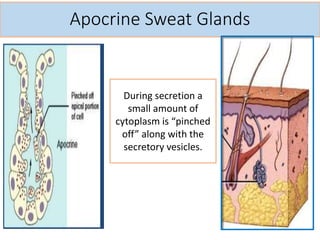
Apocrine Sweat Glands
During secretion a
small amount of
cytoplasm is “pinched
off” along with the
secretory vesicles.
OriginEmbryology
&
Development
Distribution
Structure
Apocrine secretion
Function
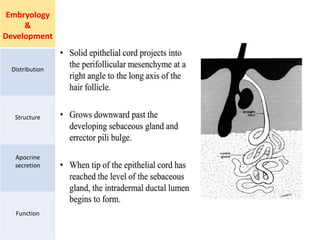
Develop from the upper bulge of hair follicles
that are in the early bulbous peg stage
Formation of apocrine glands begins late in
the fourth month and continues until late in
embryonic life, as long as new hair follicles
develop
Precursor of apocrine glands probably
develops in all hair follicle, but after the fifth
month most begins to regress
By term the glands persist only in a few sites
Embryology
&
Development
Distribution
Structure
Apocrine
secretion
Function
Lumen FormationEmbryology &
Development
Distribution
Structure
Apocrine secretion
Function
The apocrine dermal duct and the intrafollicular
lumen, is analogous to the formation of the
eccrine duct and the intraepidermal portion of
the eccrine duct, respectively.
Post Natal DevelopmentEmbryology &
Development
Distribution
Structure
Apocrine secretion
Function
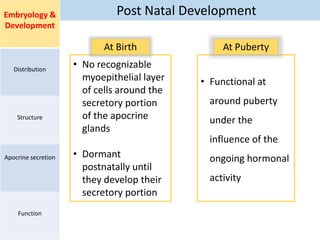
• No recognizable
myoepithelial layer
of cells around the
secretory portion
of the apocrine
glands
• Dormant
postnatally until
they develop their
secretory portion
• Functional at
around puberty
under the
influence of the
ongoing hormonal
activity
At Birth At Puberty
Embryology &
Development
Distribution
Structure
Apocrine secretion
Function
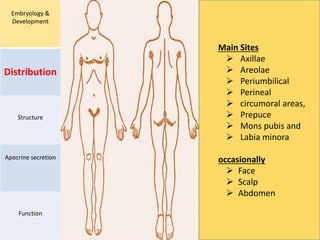
Main Sites
 Axillae
 Areolae
 Periumbilical
 Perineal
 circumoral areas,
 Prepuce
 Mons pubis and
 Labia minora
occasionally
 Face
 Scalp
 Abdomen
Embryology &
Development
Distribution
Structure
Apocrine
secretion
Function
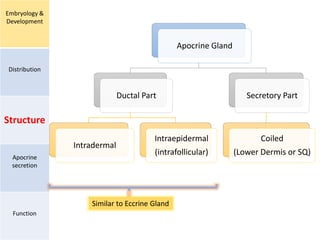
Apocrine Gland
Ductal Part
Intradermal
Intraepidermal
(intrafollicular)
Secretory Part
Coiled
(Lower Dermis or SQ)
Similar to Eccrine Gland
Embryology &
Development
Distribution
Structure
Apocrine
secretion
Function
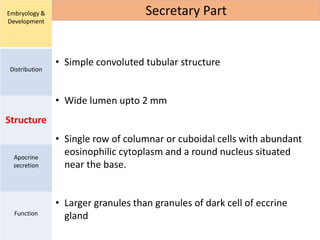
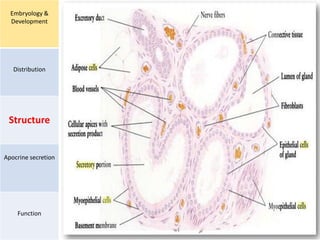
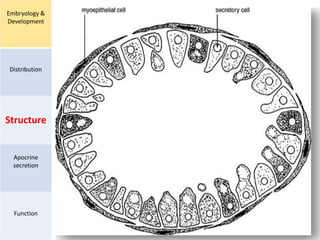
Secretary Part
• Simple convoluted tubular structure
• Wide lumen upto 2 mm
• Single row of columnar or cuboidal cells with abundant
eosinophilic cytoplasm and a round nucleus situated
near the base.
• Larger granules than granules of dark cell of eccrine
gland
Embryology &
Development
Distribution
Structure
Apocrine secretion
Function
Embryology &
Development
Distribution
Structure
Apocrine
secretion
Function
Embryology &
Development
Distribution
Structure
Apocrine
secretion
Function
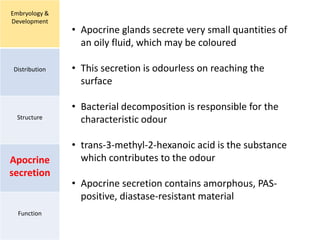
• Apocrine glands secrete very small quantities of
an oily fluid, which may be coloured
• This secretion is odourless on reaching the
surface
• Bacterial decomposition is responsible for the
characteristic odour
• trans-3-methyl-2-hexanoic acid is the substance
which contributes to the odour
• Apocrine secretion contains amorphous, PAS-
positive, diastase-resistant material
Embryology &
Development
Distribution
Structure
Apocrine
secretion
Function
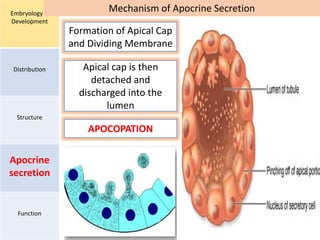
Mechanism of Apocrine Secretion
Formation of Apical Cap
and Dividing Membrane
APOCOPATION
Apical cap is then
detached and
discharged into the
lumen
Embryology &
Development
Distribution
Structure
Apocrine secretion
Function
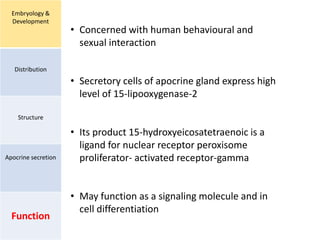
• Concerned with human behavioural and
sexual interaction
• Secretory cells of apocrine gland express high
level of 15-lipooxygenase-2
• Its product 15-hydroxyeicosatetraenoic is a
ligand for nuclear receptor peroxisome
proliferator- activated receptor-gamma
• May function as a signaling molecule and in
cell differentiation
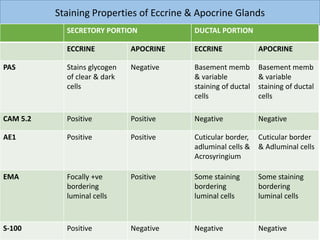
Staining Properties of Eccrine & Apocrine Glands
SECRETORY PORTION DUCTAL PORTION
ECCRINE APOCRINE ECCRINE APOCRINE
PAS Stains glycogen
of clear & dark
cells
Negative Basement memb
& variable
staining of ductal
cells
Basement memb
& variable
staining of ductal
cells
CAM 5.2 Positive Positive Negative Negative
AE1 Positive Positive Cuticular border,
adluminal cells &
Acrosyringium
Cuticular border
& Adluminal cells
EMA Focally +ve
bordering
luminal cells
Positive Some staining
bordering
luminal cells
Some staining
bordering
luminal cells
S-100 Positive Negative Negative Negative
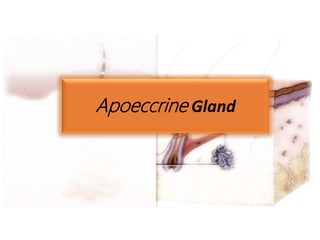
Apoeccrine Gland
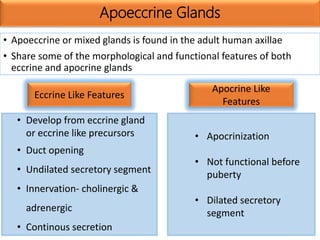
Apoeccrine Glands
• Apoeccrine or mixed glands is found in the adult human axillae
• Share some of the morphological and functional features of both
eccrine and apocrine glands
• Develop from eccrine gland
or eccrine like precursors
• Duct opening
• Undilated secretory segment
• Innervation- cholinergic &
adrenergic
• Continous secretion
• Apocrinization
• Not functional before
puberty
• Dilated secretory
segment
Eccrine Like Features
Apocrine Like
Features
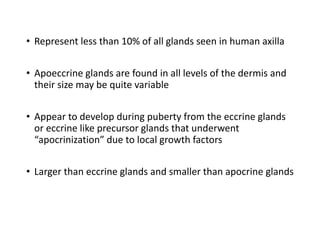
• Represent less than 10% of all glands seen in human axilla
• Apoeccrine glands are found in all levels of the dermis and
their size may be quite variable
• Appear to develop during puberty from the eccrine glands
or eccrine like precursor glands that underwent
“apocrinization” due to local growth factors
• Larger than eccrine glands and smaller than apocrine glands
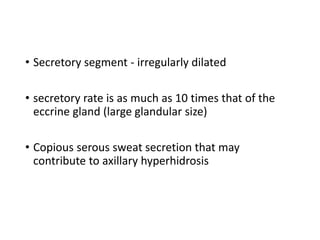
• Secretory segment - irregularly dilated
• secretory rate is as much as 10 times that of the
eccrine gland (large glandular size)
• Copious serous sweat secretion that may
contribute to axillary hyperhidrosis
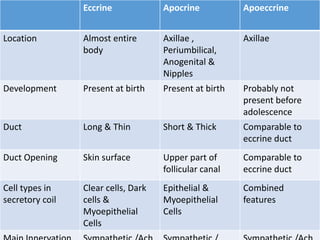
Eccrine Apocrine Apoeccrine
Location Almost entire
body
Axillae ,
Periumbilical,
Anogenital &
Nipples
Axillae
Development Present at birth Present at birth Probably not
present before
adolescence
Duct Long & Thin Short & Thick Comparable to
eccrine duct
Duct Opening Skin surface Upper part of
follicular canal
Comparable to
eccrine duct
Cell types in
secretory coil
Clear cells, Dark
cells &
Myoepithelial
Cells
Epithelial &
Myoepithelial
Cells
Combined
features
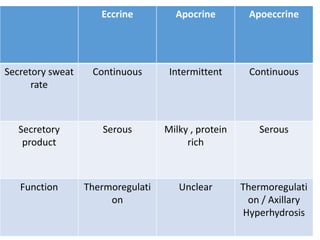
Eccrine Apocrine Apoeccrine
Secretory sweat
rate
Continuous Intermittent Continuous
Secretory
product
Serous Milky , protein
rich
Serous
Function Thermoregulati
on
Unclear Thermoregulati
on / Axillary
Hyperhydrosis
Thank You
Special Thanks
Dr Kanika
Dr Neha
Dr Sanjay
Dr Prakash
Dr Nimitha
Dr Alok

Sweat gland - anatomy and function

  • 1.
    Sweat Glands :Anatomy & Function Presenter : Dr Mamta Moderator: Dr Kanika
  • 2.
    Introduction • Sweat gland(sudoriferous gland) is an epithelial skin appendage • Type of exocrine gland • 3 types • Vary in type and density depending on anatomic location
  • 3.
    Types of SweatGland 3 types : Based on the nature of their secretion Eccrine Gland Apocrine Gland Apoeccrine Gland
  • 4.
    Eccrine Sweat Gland •Merocrine • No breakdown of cellular material occurs during secretion • Secretion is discharged by the fusion of the membrane
  • 5.
    1.6 - 4million
  • 7.
    Absent On : ×Lips × External Auditory Canal × Clitoris × Labia Minora
  • 8.
    Distribution 600-700 / cm2 181/ cm2 108 / cm2 64 / cm2
  • 9.
  • 10.
    Appearance of Eccrine Germs LumenFormation Keratinization of Duct Follows Phylogenicity 4th Gestational month Palms and soles Origin And Development
  • 11.
    Appearance of Eccrine Germs LumenFormation Keratinization of Duct Follows Phylogenicity Early 5th Gestational month Axillae Origin And Development
  • 12.
    Appearance of Eccrine Germs LumenFormation Keratinization of Duct Follows Phylogenicity End of 5th Gestational month Remainder of body Origin And Development
  • 13.
    Appearance of Eccrine Germs LumenFormation Keratinization of Duct Origin And Development
  • 14.
    Appearance of eccrine germs Lumen Formation Keratinisationof duct Secretary Portion Intradermal Duct Intraepidermal Duct Separation of desmosomes between luminal cells + secretory vesicles and secretory granules in the secretory cells appear Separation of desmosomes between luminal Cells + Formation of microvilli at the luminal surfaces Intracytoplasmic vacuoles form through lysosomal action within the inner cells vacuoles from adjoining inner cells ,coalesce and break through the plasma membrane & a patent extracellular lumen is formed.
  • 15.
  • 16.
    After Lumen Formation Intraepidermaleccrine duct unit undergoes keratinization Outer cells- At the level of mid squamous layer Inner cells- At the level of Stratum Granulosum
  • 18.
    • Eccrine glandsmay be seen in different stages of development at a time • By the 8th fetal month, they resemble adult sweat glands, but are not fully functional until about two years of age • No new sweat glands are formed after birth
  • 19.
    Structure of EccrineSweat Gland • One half of basal coil • Coil diameter : 60-80 µm • Length : 2- 5mm Secretary Part Extends from half of basal coil to opening at the surface 2 parts: Intradermal Intraepidermal Ductal Part
  • 20.
  • 21.
  • 22.
    • Single layeredstructure • 3 cell types : 1. Clear Cells 2. Dark Cells 3. Myoepitelial cells • Cells rest on the basal lamina • Arranged in the form of pseudostratified epithelium. Secretary Part
  • 24.
    Secretary Part Clear cells Shape• Pyramidal Surfaces • Bases highly folded • Basal labyrinth show marked Na, K-ATPase activity • Apices bear numerous irregular microvilli Cytoplasm and Nucleus • Lipofuscin granules, glycogen, mitochondria, relatively small golgi apparatus • Rounded and moderately euchromatic nucleus Function • Basolateral membrane is site for active transport of ions during sweat secretion. • Secrete abundant amounts of aqueous material together with glycogen
  • 25.
    Dark Cells Shape •Cuboidal or inverted pyramidal Surfaces • Rest on clear cells, Rarely reach the myepithelial cells or basement membrane • Occupy almost all the luminal surface of the secretory tubules Cytoplasm and Nucleus • rER, relatively large golgi apparatus, mucopolysaccharide. • PAS positive glycoproteins Function • Unknown
  • 26.
    • Limited tothe basal aspect of secretory segment • Lies on the basement membrane wedge between bases of clear cells • Small spindle shaped nucleus and long contractile fibrils • Mechanical support & propel the sweat Myoepithelial Cells
  • 27.
  • 28.
    Ductal Part • Extendfrom half of basal coil in dermis to opening at surface • Stratified cuboidal epithelium • Lacks myoepithelium and basement membrane zone • Lumen - 15µm
  • 29.
    • Proximal intradermalduct-coiled • Straight course as passes upward, until it reaches the epidermis • Proximal duct appears to be functionally more active than the distal portion • Cells are small , cuboidal and deeply basophilic • composed of two layers of cells: 1. Luminal or Apical cells 2. Basal or Peripheral Cells Intradermal Eccrine Duct Sweat gland
  • 30.
    Luminal Cell • Deeplystained, glassy (hyalinized) appearance of apical cytoplasm • Large numbers of aggregated tonofilaments in the apical cytoplasm.
  • 31.
    Basal Cell • Roundedor ovoid nucleus • Prominent nucleolus & Rich in mitochondria • Entire circumference of the cell membrane shows a strong Na, K- ATPase activity • Critical role in ductal sodium reabsorption
  • 32.
    • Extends fromthe base of rete ridges to surface and follows a spiral course • Cells are derived from dermal duct cells through mitosis and upward migration • Single layer of inner or luminal cells and two or three rows of outer cells Intraepidermal Eccrine Duct
  • 33.
    Innervation • Nerves surroundingthe sweat glands are the sympathetic postganglionic fibers • Nonmyelinated class C nerve fibers
  • 34.
    Sympathetic Sudomotor Pathway CentralAutonomic Network Intermediolateral neurons in lateral horn of spinal cord Preganglionic Sympathetic Fibers Sympathetic Ganglia Post Ganglionic Fibres Sweat Glands
  • 36.
  • 37.
    2 Step Process Formationof nearly isotonic, primary sweat from the interstitial fluid by the secretory coil through active transportation of electrolytes Modification of primary sweat through partial reabsorption of NaCl by the sweat duct to produce the ultimate secretory product, the hypotonic eccrine sweat
  • 38.
  • 39.
  • 40.
  • 41.
  • 42.
  • 43.
  • 44.
  • 45.
  • 46.
    Ductal Reabsorption &Formation of Final Sweat
  • 47.
    Na+ reenters ductcells through Amiloride sensitive epithelial Na+ channels (ENaC) at apical membrane Cross basolateral memb through Ouabain sensitive Na+K+ ATPase pumps
  • 48.
  • 49.
  • 50.
  • 51.
    Physiology of Sweating •The principal function of the eccrine glands is to produce sweat during periods of heat stress • Normal sweat rates can range from 0.75 to 2 L / hour • During heat stress, 3-4L / hour can be attained, and a rate of 1- 1.5 L / hour can be maintained • One litre of evaporated sweat removes about 585 kilocalories of heat from the body
  • 52.
    Sweat gland activityis controlled by three principal physiologic stimuli: Thermal Emotional Gustatory
  • 53.
    • Maintenance ofa constant body temperature is a core element of our homeostasis • Sweating is one of the many mechanism through which the body dissipates heat • Temperature setpoint [Tse]- sweating occurs at and above a certain core temperature • Sweating induced by thermal stimuli mostly affects the upper trunk and face but may involve the whole body Thermoregulatory Sweating
  • 54.
    Central Control ofThermoregulatory Sweating Preoptic Area & Anterior Hypothalamus Contain many thermosensitive neurons Sense changes in internal temperature Initiate appropriate thermoregulatory responses Constant internal temperature
  • 55.
    Thermosensitive Neurons Warm Sensitive Affected bylocal as well as skin temperature Cold Sensitive Affected by extrahypothalamic temperature
  • 56.
    Sweating depends on: • Temperature of deep tissues • Relatively constant • Varying less than 1 F under normal conditions. • Varies widely • Depending on temperature of environment Core Temperture Skin Temperature
  • 57.
    • If skintemperature is relatively constant, sweating rate is linearly related to core temperature above Tse • As skin temperature rises, the sweating to core temperature relation shifts in the direction of lower core temperature
  • 58.
    Study of relationbetween Skin temperature, Core temperature & Rate of Sweating • A man stayed in a room kept at a steady 45 °C • After 25 minutes in the room, the subject drank a large quantity of ice-cold water • Scientists logged his internal body temperature, skin temperature and rate of sweating.
  • 59.
    Tse is influencedby blood osmolarity Hyperosmolarity results in elevated Tse & reduced sweating Sweating Hypovolemia Cutaneous Blood Flow Sweating Serum Na+ Hypothalamic Tse
  • 60.
  • 61.
  • 62.
    Gustatory Sweating • Ingestinghighly spiced food stimulates physiologic gustatory sweating in most people via trigeminovascular reflex • This trigeminovascular reflex typically occurs symmetrically on the scalp or face and predominantly over the forehead, lips, and nose • Afferent impulses from taste bud receptors travel via the glossopharyngeal nerve to nuclei within the medulla (Medullary Sweating)
  • 63.
  • 64.
    Composition of Sweat Almostsimilar in composition to plasma containing the same electrolytes SWEAT Secretion Sweat Rate Ductal Modification Sweat solute concentration is determined by
  • 65.
    Composition of Sweat •Eccrine sweat Odorless Colorless Hypotonic solution Specific gravity- 1.005 Most important constituent- Water Ion concentration- (0.2–1%) Na, K, Cl, urea and lactate.
  • 66.
    PRIMARY SWEAT FINALSWEAT Sodium Isotonic to plasma Hypotonic
  • 67.
    PRIMARY SWEAT FINALSWEAT Sodium Isotonic to plasma Hypotonic Potassium Nearly isotonic Slightly higher
  • 68.
    PRIMARY SWEAT FINALSWEAT Sodium Isotonic to plasma Hypotonic Potassium Nearly isotonic Slightly higher Chloride Isotonic Hypotonic
  • 69.
    PRIMARY SWEAT FINALSWEAT Sodium Isotonic to plasma Hypotonic Potassium Nearly isotonic Slightly higher Chloride Isotonic Hypotonic Bicarbonate ~14 mmol Absent
  • 70.
    PRIMARY SWEAT FINALSWEAT Sodium Isotonic to plasma Hypotonic Potassium Nearly isotonic Slightly higher Chloride Isotonic Hypotonic Bicarbonate ~14 mmol Absent pH 7.2-7.3 5-7
  • 71.
    LACTATE • @ lowsweat rate- 30-40 m mol • @ high sweat rate- 10 to 15 m mol • Concentration higher than plasma (<2 mM) indicating that sweat lactate is derived mainly from the sweat gland as an end product of glycolysis. UREA • Same as, or slightly higher than that of plasma AMMONIA • 0.5 to 8 mM. • It is 20 to 50 times higher than the plasma ammonia concentration. [Diffusion entrapment mechanism]. • Sweat ammonia levels are inversely proportional to the sweat rate and sweat pH. PROTEINS • 20 mg/dl, • The majority are small molecular weight proteins less than 10 kDa. • The concentration of high Mw proteins (>10kDa) increases with increase in sweat rate. GLUCOSE • 0.2-1.5mg/dl, • Increase in uncontrolled diabetics, favors bacterial growth on skin
  • 72.
    Applications of SweatAnalysis Diagnosis of Diseases Assessment of Drugs Assessment of toxic metals
  • 73.
    Applications of SweatAnalysis Diagnosis of Diseases Assessment of Drugs Assessment of toxic metals  Cystic Fibrosis Sweat chloride level is considered as biomarker  Diabetes Average change in sweat rates Correlation between sweat glucose and blood glucose  Malignancies Dermicidin and its receptors are over-expressed on the cell surface of invasive breast cancer and their lymph node mets
  • 74.
    Applications of SweatAnalysis Diagnosis of Diseases Assessment of Drugs Assessment of toxic metals • Immunochromatographic testing • Recently used drugs (24 hours) Early testing • Patch technology • Previously used drugs ( 1 week) Late Testing
  • 75.
    Applications of SweatAnalysis Diagnosis of Diseases Assessment of Drugs Assessment of toxic metals Drugs excreted through sweat in quantifiable fraction  Opiates  Buprenorphine  Amphetamine  Cocaine  cannabis
  • 76.
    Applications of SweatAnalysis Diagnosis of Diseases Assessment of Drugs Assessment of toxic metals Perspiration is a potential route for excretion of toxic metals from body  Cadmium  Lead
  • 77.
    Factors Affecting Sweating •Environmental Temperature • Degree of acclimatization • Physical activity • Emotional stress • Age
  • 78.
    Factors Affecting Sweating •Environmental Temperature • Degree of acclimatization • Physical activity • Emotional stress • Age
  • 79.
    Factors Affecting Sweating •Environmental Temperature • Degree of acclimatization • Physical activity • Emotional stress • Age
  • 80.
    Factors Affecting Sweating •Environmental Temperature • Degree of acclimatization • Physical activity • Emotional stress • Age
  • 81.
    Effect of exerciseon Sweating Conclusion : Previous physical training improved women's capacity for useful sweating during exercise in a hot environment.
  • 82.
    • Peripheral sweatrate was significantly (P less than 0.05) greater in trained men [6.9 +/ 0.6 (SE) g.m2.min1] and women (6.1 +/ 0.7) compared with sedentary men (3.1 +/ 0.5) and women (2.5 +/ 0.4) • Physical training improves the secretory activity of the human sweat gland
  • 83.
    Factors Affecting Sweating •Environmental Temperature • Degree of acclimatization • Physical activity • Emotional stress • Age
  • 84.
    Factors Affecting Sweating •Environmental Temperature • Degree of acclimatization • Physical activity • Emotional stress • Age
  • 85.
  • 86.
    Collection of sweatin bags or pads Galvanic Skin Response Test Visualisation of direct sweat droplets Study of isolated glands
  • 87.
  • 88.
  • 89.
    Assessment of SudomotorFunction Thermoregulatory Sweat Testing (TST) Quantitative Sudomotor Axon Reflex Testing (QSART) Silicone Impressions Quantitative Direct & Indirect Axon Reflex Testing (QDIRT)
  • 90.
  • 91.
  • 92.
  • 93.
    Quantitative sudomotor axonreflex test (QSART)
  • 94.
  • 95.
    QDIRT: Quantitative directand indirect reflex testing of sudomotor function
  • 96.
    Sweat Testing inOur Department Test Side 0.1ml I/D pilocarpine injection Control side 0.1ml I/D Normal Saline Inj Covered with Whatman No.1 filter paper strip impregnated With 1% alcoholic solution of Bromophenol Blue
  • 97.
    PC : DrPrakash Control Patient Paper is removed after 5 mins Test site compared with control
  • 98.
  • 99.
  • 100.
    Secretory function Thermoregulation Electrolyte balance Keepingstratum corneum moist Excretory function Delivery of systemically administered drugs to stratum corneum
  • 101.
  • 102.
    Apocrine Sweat Glands Duringsecretion a small amount of cytoplasm is “pinched off” along with the secretory vesicles.
  • 103.
    OriginEmbryology & Development Distribution Structure Apocrine secretion Function Develop fromthe upper bulge of hair follicles that are in the early bulbous peg stage Formation of apocrine glands begins late in the fourth month and continues until late in embryonic life, as long as new hair follicles develop Precursor of apocrine glands probably develops in all hair follicle, but after the fifth month most begins to regress By term the glands persist only in a few sites
  • 104.
  • 105.
    Lumen FormationEmbryology & Development Distribution Structure Apocrinesecretion Function The apocrine dermal duct and the intrafollicular lumen, is analogous to the formation of the eccrine duct and the intraepidermal portion of the eccrine duct, respectively.
  • 106.
    Post Natal DevelopmentEmbryology& Development Distribution Structure Apocrine secretion Function • No recognizable myoepithelial layer of cells around the secretory portion of the apocrine glands • Dormant postnatally until they develop their secretory portion • Functional at around puberty under the influence of the ongoing hormonal activity At Birth At Puberty
  • 107.
    Embryology & Development Distribution Structure Apocrine secretion Function MainSites  Axillae  Areolae  Periumbilical  Perineal  circumoral areas,  Prepuce  Mons pubis and  Labia minora occasionally  Face  Scalp  Abdomen
  • 108.
    Embryology & Development Distribution Structure Apocrine secretion Function Apocrine Gland DuctalPart Intradermal Intraepidermal (intrafollicular) Secretory Part Coiled (Lower Dermis or SQ) Similar to Eccrine Gland
  • 109.
    Embryology & Development Distribution Structure Apocrine secretion Function Secretary Part •Simple convoluted tubular structure • Wide lumen upto 2 mm • Single row of columnar or cuboidal cells with abundant eosinophilic cytoplasm and a round nucleus situated near the base. • Larger granules than granules of dark cell of eccrine gland
  • 110.
  • 111.
  • 112.
    Embryology & Development Distribution Structure Apocrine secretion Function • Apocrineglands secrete very small quantities of an oily fluid, which may be coloured • This secretion is odourless on reaching the surface • Bacterial decomposition is responsible for the characteristic odour • trans-3-methyl-2-hexanoic acid is the substance which contributes to the odour • Apocrine secretion contains amorphous, PAS- positive, diastase-resistant material
  • 113.
    Embryology & Development Distribution Structure Apocrine secretion Function Mechanism ofApocrine Secretion Formation of Apical Cap and Dividing Membrane APOCOPATION Apical cap is then detached and discharged into the lumen
  • 114.
    Embryology & Development Distribution Structure Apocrine secretion Function •Concerned with human behavioural and sexual interaction • Secretory cells of apocrine gland express high level of 15-lipooxygenase-2 • Its product 15-hydroxyeicosatetraenoic is a ligand for nuclear receptor peroxisome proliferator- activated receptor-gamma • May function as a signaling molecule and in cell differentiation
  • 115.
    Staining Properties ofEccrine & Apocrine Glands SECRETORY PORTION DUCTAL PORTION ECCRINE APOCRINE ECCRINE APOCRINE PAS Stains glycogen of clear & dark cells Negative Basement memb & variable staining of ductal cells Basement memb & variable staining of ductal cells CAM 5.2 Positive Positive Negative Negative AE1 Positive Positive Cuticular border, adluminal cells & Acrosyringium Cuticular border & Adluminal cells EMA Focally +ve bordering luminal cells Positive Some staining bordering luminal cells Some staining bordering luminal cells S-100 Positive Negative Negative Negative
  • 116.
  • 117.
    Apoeccrine Glands • Apoeccrineor mixed glands is found in the adult human axillae • Share some of the morphological and functional features of both eccrine and apocrine glands • Develop from eccrine gland or eccrine like precursors • Duct opening • Undilated secretory segment • Innervation- cholinergic & adrenergic • Continous secretion • Apocrinization • Not functional before puberty • Dilated secretory segment Eccrine Like Features Apocrine Like Features
  • 118.
    • Represent lessthan 10% of all glands seen in human axilla • Apoeccrine glands are found in all levels of the dermis and their size may be quite variable • Appear to develop during puberty from the eccrine glands or eccrine like precursor glands that underwent “apocrinization” due to local growth factors • Larger than eccrine glands and smaller than apocrine glands
  • 119.
    • Secretory segment- irregularly dilated • secretory rate is as much as 10 times that of the eccrine gland (large glandular size) • Copious serous sweat secretion that may contribute to axillary hyperhidrosis
  • 120.
    Eccrine Apocrine Apoeccrine LocationAlmost entire body Axillae , Periumbilical, Anogenital & Nipples Axillae Development Present at birth Present at birth Probably not present before adolescence Duct Long & Thin Short & Thick Comparable to eccrine duct Duct Opening Skin surface Upper part of follicular canal Comparable to eccrine duct Cell types in secretory coil Clear cells, Dark cells & Myoepithelial Cells Epithelial & Myoepithelial Cells Combined features
  • 121.
    Eccrine Apocrine Apoeccrine Secretorysweat rate Continuous Intermittent Continuous Secretory product Serous Milky , protein rich Serous Function Thermoregulati on Unclear Thermoregulati on / Axillary Hyperhydrosis
  • 122.
    Thank You Special Thanks DrKanika Dr Neha Dr Sanjay Dr Prakash Dr Nimitha Dr Alok

Editor's Notes

  • #24 Clear cell contains abundant mitochondria and an autofluorescent body called lipofuscin granules in the cytoplasm. Its cell membrane is rich in villi. In contrast dark cell has a relatively smooth cell membrane and cytoplasm contains numerous dark cell granules Due to the abundance of membrane infoldings, villi and mitochondria in clear cells, they are believed to be the major cells involved in secretion of water and electrolytes during sweat formation.
  • #35 Efferent nerve fibers originating from the hypothalamic sweat centre descend through the ipsilateral brainstem and medulla and synapse in the intermediolateral cells of spinal cord. The myelinated axons arising from the intermediolateral horn of spinal cord forms the preganglionic sympathetic fibers passes out through anterior roots and reaches sympathetic ganglion. Unmyelinated sympathetic class C fibers originating from sympathetic ganglia join the major peripheral nerves and end around the sweat gland.
  • #37 Sweat is normally a transparent biofluid with low tonicity and slightly acidic nature with mean ph of 6.3.
  • #58 (i.e., sweating is inducible at a lower core temperature as though Tse has been lowered).
  • #61 Usually confined to palms, soles, axillae and in some instances, forehead.Emotional sweating on palms and soles ceases during sleep, whearas thermal sweating occurs even during sleep if body temperature rises.
  • #62 The centres and pathways responsible for emotional sweating are not fully understood, but it is likely that the sensory stimuli arising from the frontal premotor area ( Brodmanns area 6 ) are involved. Because emotional sweating is blocked by atropine, it is believed to be cholinergic.
  • #77 Excreted sweat conc of some metals and their complexes are sometimes comparable to urine, thus sweat can be used as a biofluid alternate of Urine, particularly in case of kidney diseases
  • #88 Sympathetic skin response (SSR, also referred to as galvanic skin response) is a measure of electrodermal activity and provides a surrogate measure of sympathetic cholinergic sudomotor function. Perturbation of the autonomic nervous system, through rapid inspiration or electrical stimulation, induces a change in skin potential . source of the skin potential is presumed to be the sweat glands and the epidermis, SSR measures a polysynaptic reflex with a spinal, a bulbar and a suprabulbar component
  • #90 aid in localization, diagnosis and monitoring disease progression in neurologic disorders associated with autonomic neuropathy
  • #91 A TST chamber is temperature and humidity controlled. Ceiling mounted infrared heaters control the patient’s temperature. The patient is placed in the supine position. Oral and cutaneous temperature probes are attached. During the application of the indicator dye, the patient’s eyes, nose and mouth should be protected. To achieve even distribution of the indicator powder, an atomizer should be used. The test is started by increasing the room temperature. Oral temperature must rise at least 1.0°C above baseline temperature or to 38 °C (whichever is higher). At the end of the test pictures are taken and used to generate a topographical map of the sweat pattern.
  • #92 Normal sweat patterns show a sweat response present over the entire body that may be variable in intensity (A). In (B), a length dependent neuropathy from diabetes with stocking and glove distribution loss is seen. A patient with a complete myelopathy at T9 is shown in (C). Lesions to individual nerves can show focal or dermatomal sweat defects. A patient with a right T10 radiculopathy and a left lateral femoral cutaneous neuropathy can be identified in (D). A patient with complete anhidrosis secondary to pure autonomic failure is seen in (E).
  • #93 Cholinergic agonists (such as acetylcholine) applied through iontophoresis bind to muscarinic receptors causing local sweat production . The cholinergic agonist simultaneously binds to nicotinic receptors on nerve terminals of sudomotor fibers and an impulse travels antidromically. At branch points this impulse travels orthodromically to a neighboring population of eccrine sweat glands causing an indirect axon mediated sweat response .
  • #94 An overview of the QSART testing procedure: A multi-compartmental sweat capsule has an outer ring (A, 1.5mm wide) for iontophoretic stimulation and an inner compartment (C, 1cm diameter) for measuring humidity. The stimulation and recording sites are separated by a small compartment (B, 1.5mm wide) to prevent direct stimulation of the sweat glands and leakage of the iontophoresis fluid. Dry nitrogen gas is released at a steady rate of flow (typically 100 cc/min) controlled through a flow meter. The gas flows through a temperature controlled heat exchanger and into the sweat capsule (C). Upon exiting the capsule the gas flows back through the heat exchanger and to a hygrometer, where changes in humidity are recorded on a computer.
  • #95 Sweat glands are stimulated via iontophoresis at 2mA for 5 minutes (A). Silicone compounds are mixed in equal parts, rolled out into a thin layer and applied on to the stimulated area until polymerization is reached (B). Toner powder is applied to the silicone imprint and the excess is removed by wiping the surface with alcohol swabs until only the sweat droplet imprints are stained (C). Panel (D) shows two typical imprints, with the male subject producing larger sweat output.
  • #96 Sweat glands are stimulated via iontophoresis at 2mA for 5 minutes (A). Alizarin red powder is applied in a thin layer onto the stimulated area (B). Immediately, digital pictures are taken every 15 seconds for 7 minutes (C). The results can be quantified by droplet number, size, location and response latency in both direct and indirect testing regions.
  • #115 A no. of functions has been attributed to sweat glands, including role as odoriferous sexual attractants, territorial markers and warning signals. But their exact role in humans is still unknown.
  • #116 Cam 5.2 is specific for cytokeratin 8, AE1 reacts with most acidic (type I) cytokeratins (K10, 15, 16 and 19) while AE3 recognises all known basic (type II) cytokeratins. This mixture of antibodies reacts with almost all epithelia without showing cross-reactivity with other intermediate filaments. Epithelial Membrane Antigen- most normal and neoplastic epithelia (usually show cytoplasmic staining S100 proteins are normally present in cells derived from the neural crest (Schwann cells, and melanocytes), chondrocytes, adipocytes, myoepithelial cells, macrophages, Langerhans cells,[2][3] dendritic cells,[4] and keratinocytes