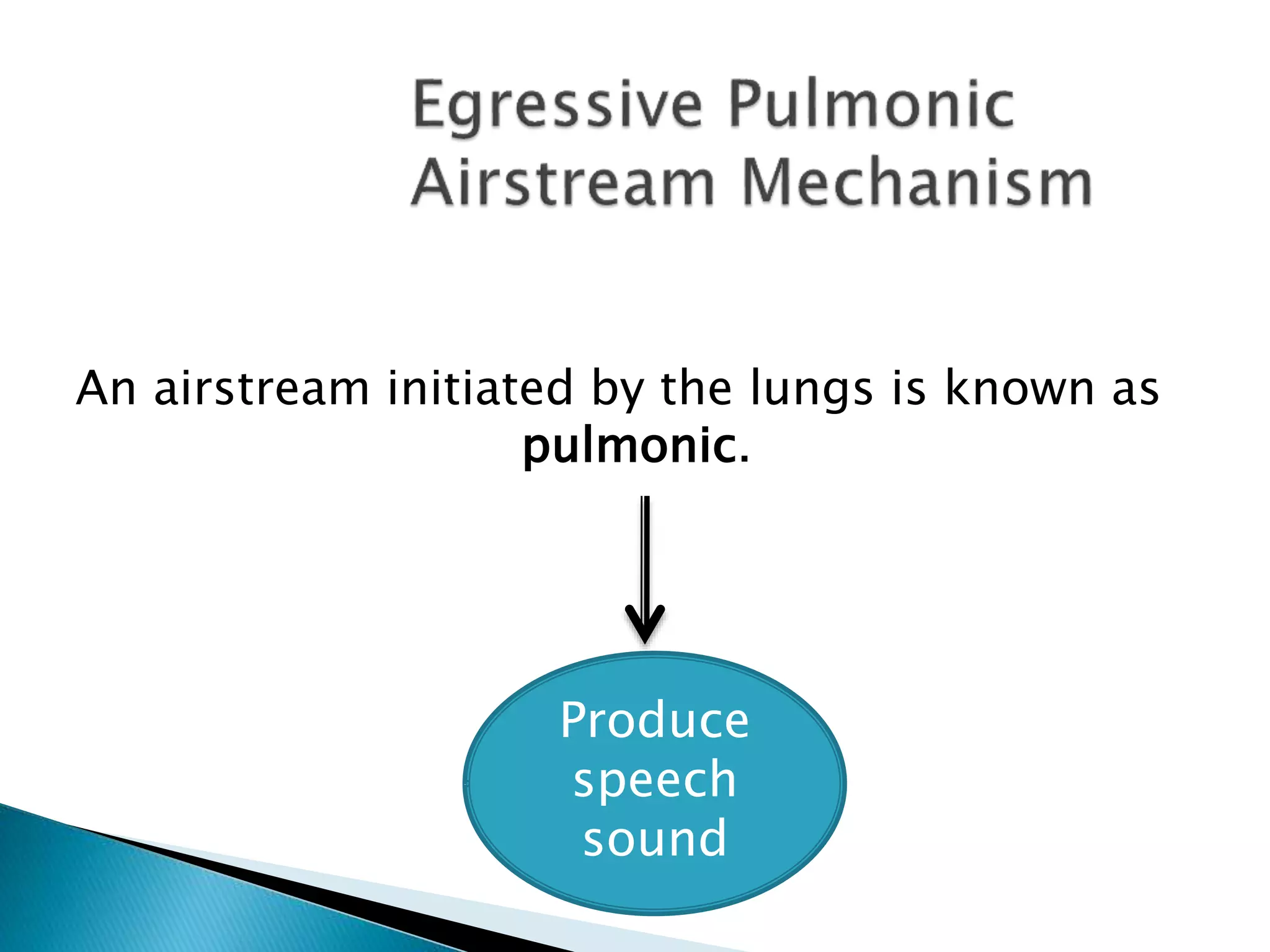
An airstream initiated by the lungs is known as
pulmonic.
Produce
speech
sound
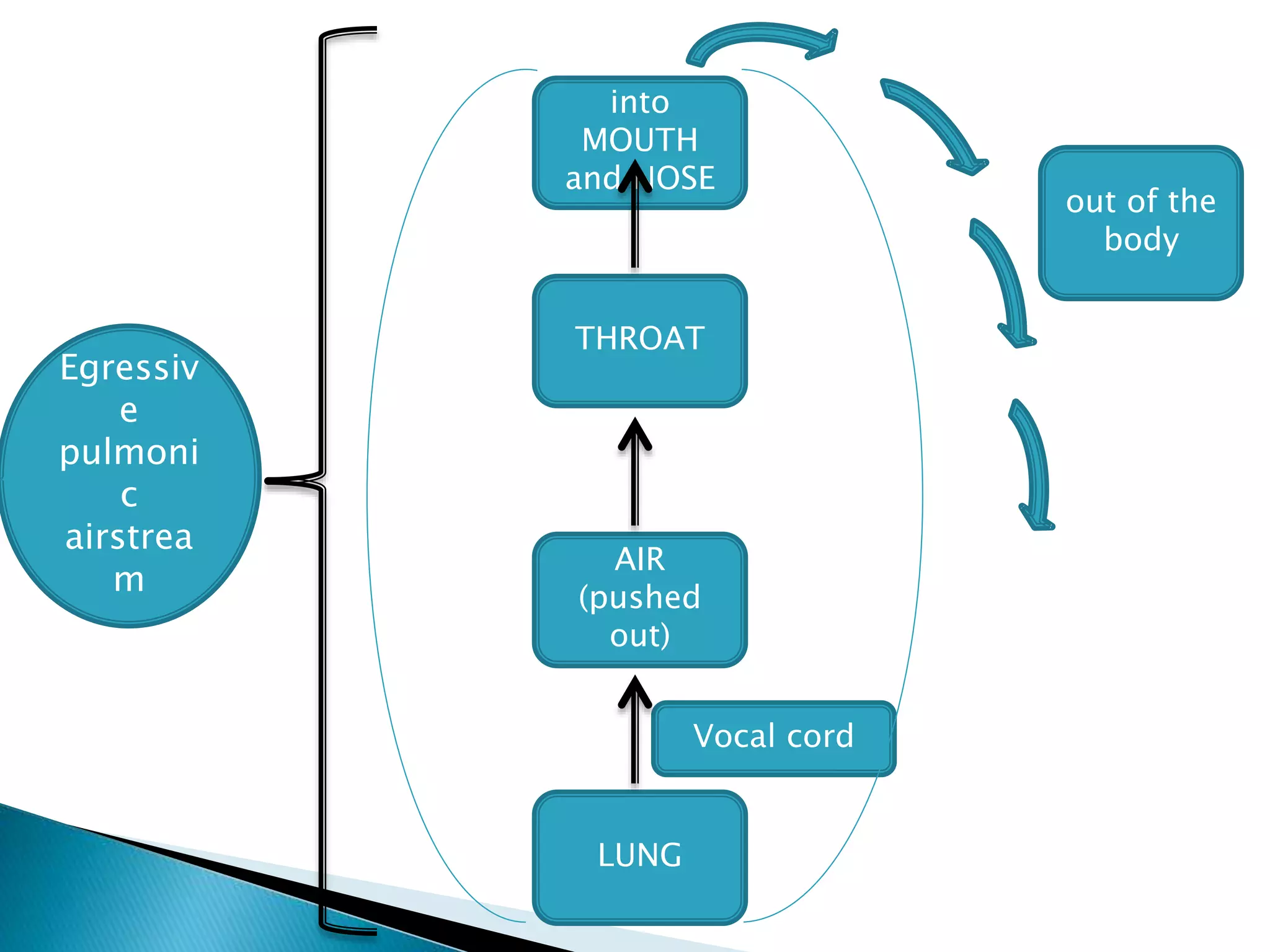
AIR
(pushed
out)
Vocal cord
THROAT
into
MOUTH
and NOSE
LUNG
out of the
body
Egressiv
e
pulmoni
c
airstrea
m
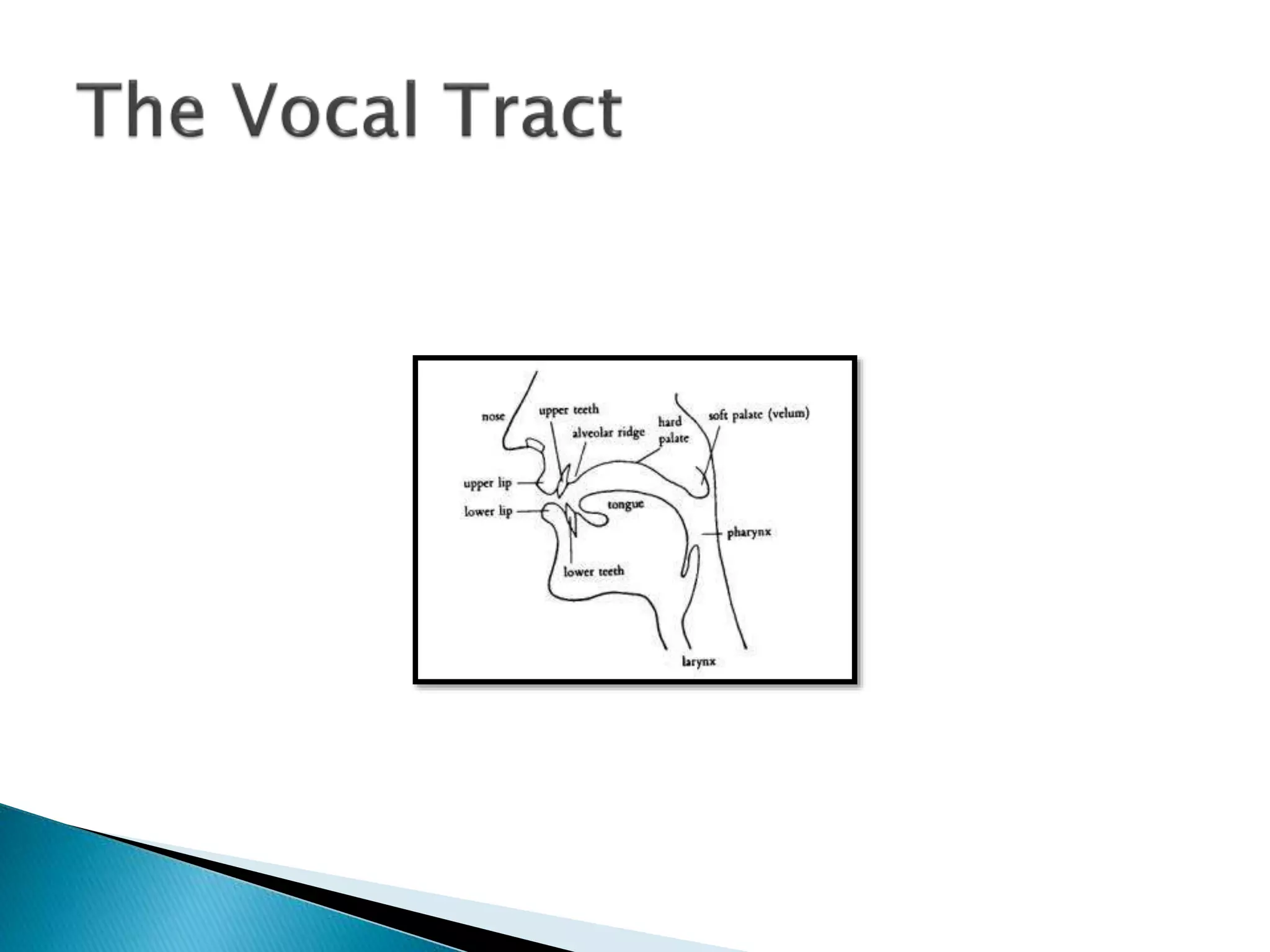
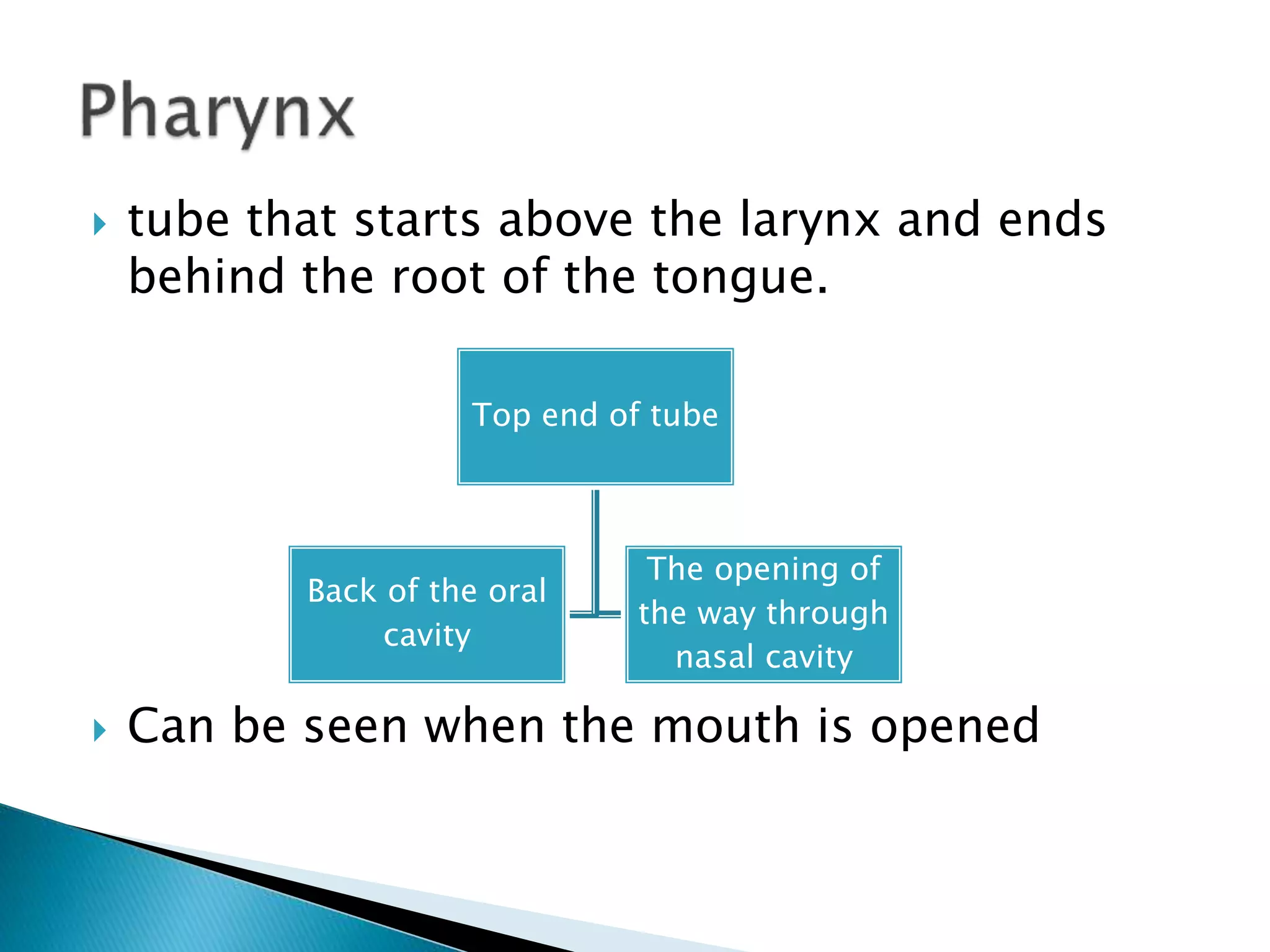
 tube that starts above the larynx and ends
behind the root of the tongue.
 Can be seen when the mouth is opened
Top end of tube
Back of the oral
cavity
The opening of
the way through
nasal cavity
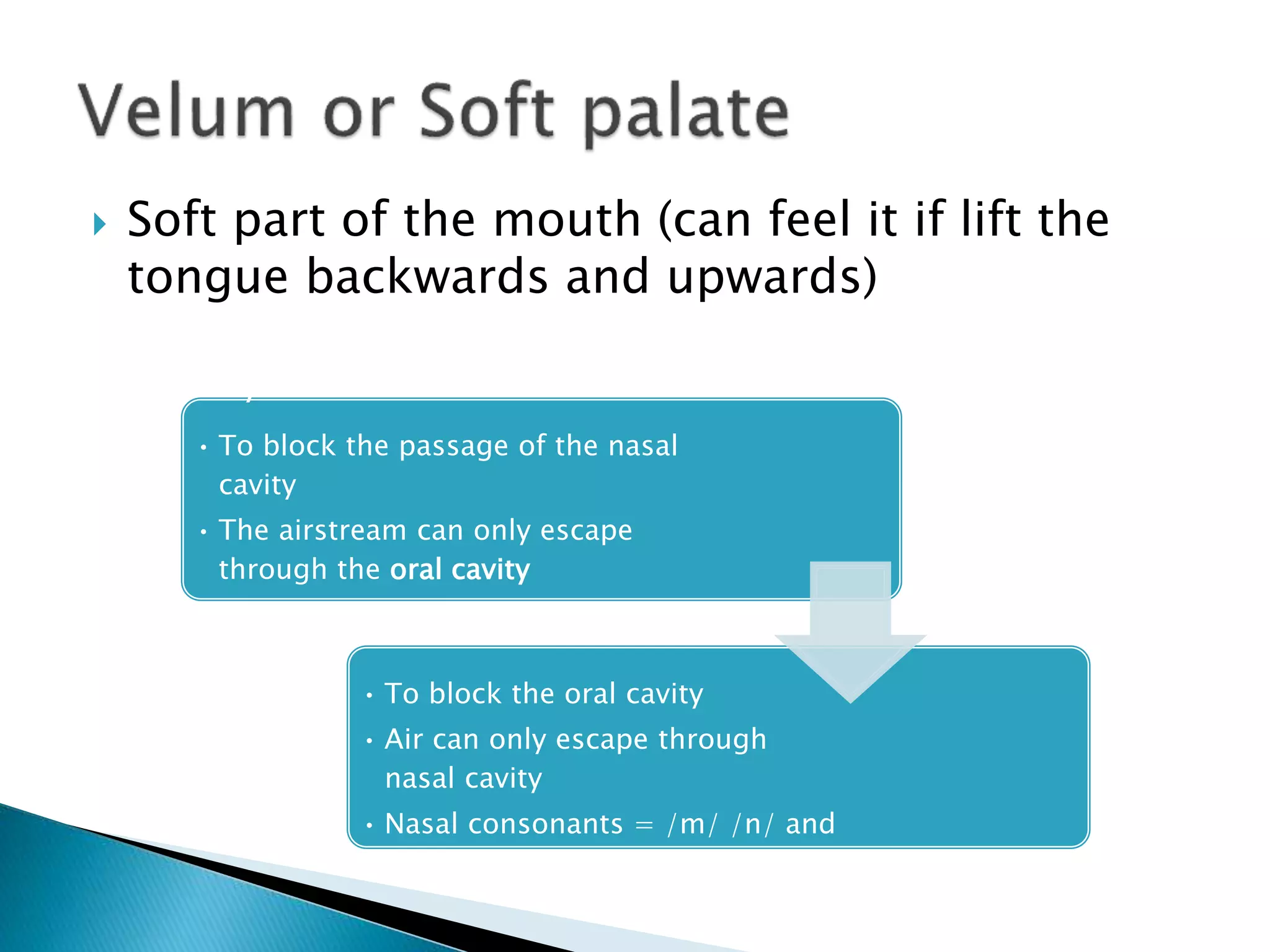
 Soft part of the mouth (can feel it if lift the
tongue backwards and upwards)
May be raised
• To block the passage of the nasal
cavity
• The airstream can only escape
through the oral cavity
• Oral sound = /s/ and /t/
Can be lowered
• To block the oral cavity
• Air can only escape through
nasal cavity
• Nasal consonants = /m/ /n/ and
/𝔶/
 ‘Roof of the mouth’
 Can feel its smooth curved with the tongue
 Palatal /j/ is produced.
 Located directly behind the top front teeth.
 Its surface is covered with little ridges.
 Alveolar sounds = /t/ and /d/
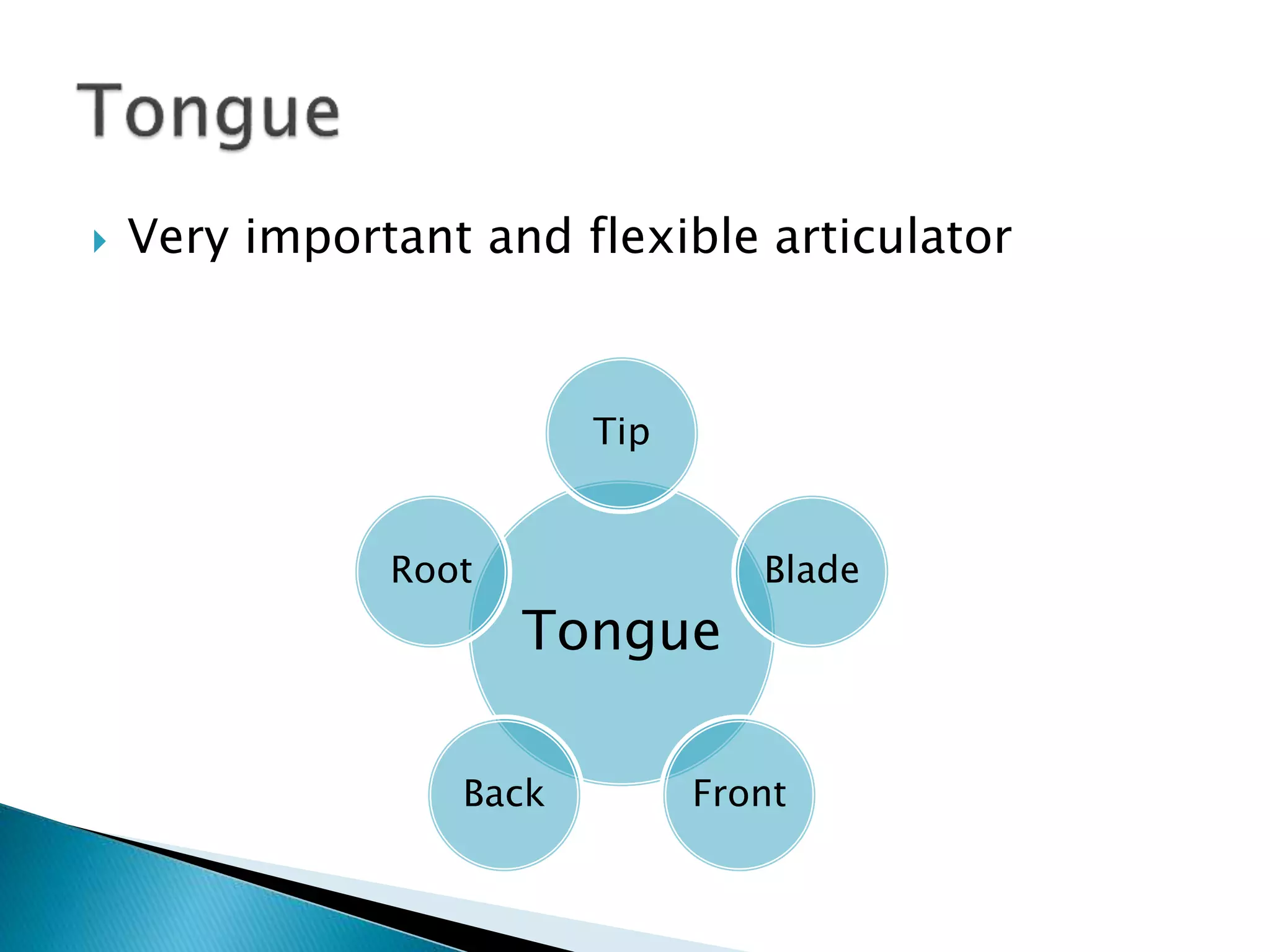
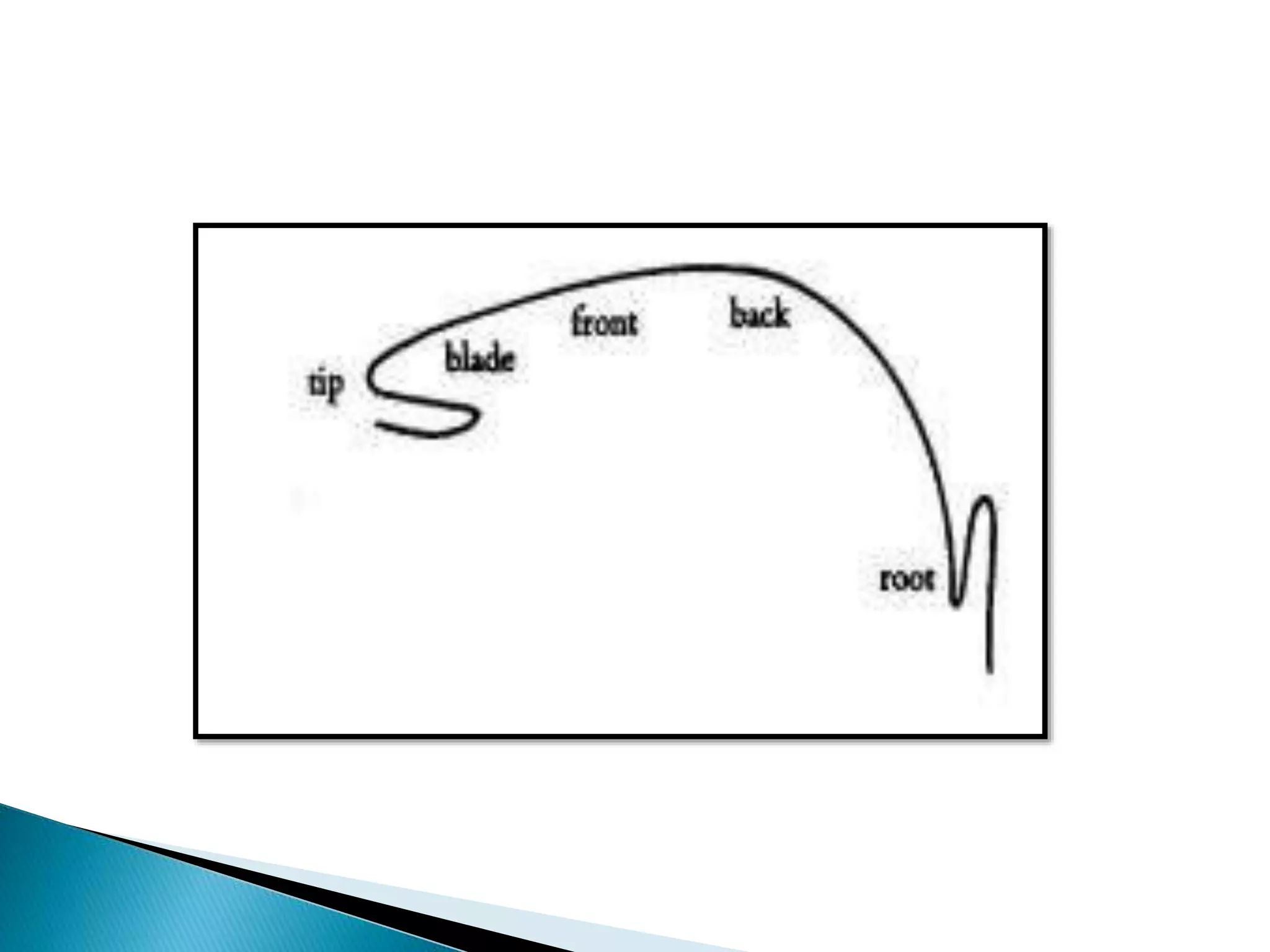
 Very important and flexible articulator
Tongue
Tip
Blade
FrontBack
Root
 Lined round the upper and lower sides of the
mouth(back almost to the soft palate)
 are produced when the tongue in the contact
with the upper teeth
 Dental sound = /𝜽/ and /ð/
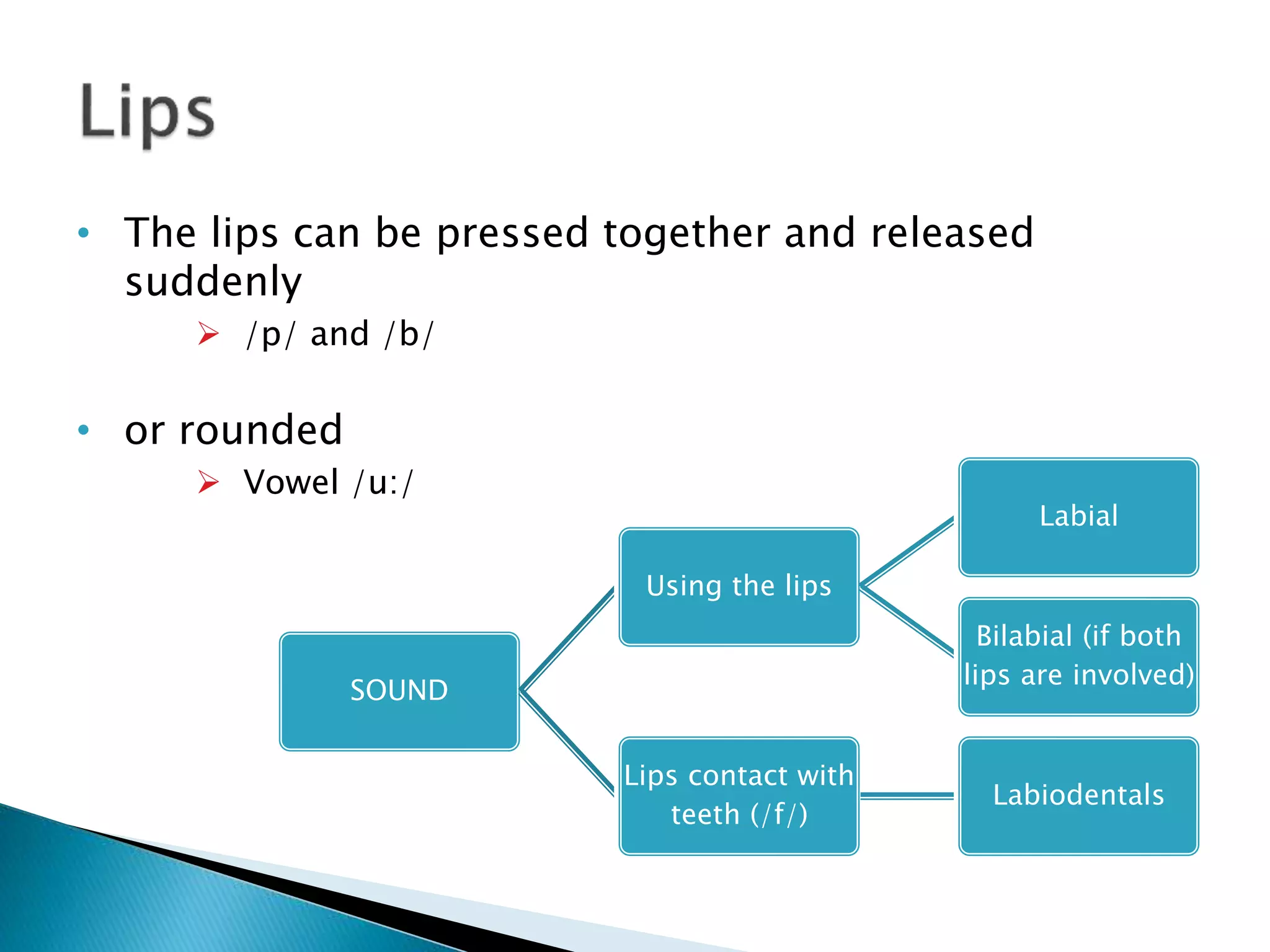
• The lips can be pressed together and released
suddenly
 /p/ and /b/
• or rounded
 Vowel /u:/
SOUND
Using the lips
Labial
Bilabial (if both
lips are involved)
Lips contact with
teeth (/f/)
Labiodentals
 Known as Adam’s apple or voice box
 Located in the larynx are the vocal cords
(control the passage of air to and from lung)
 The vibration of the larynx when to produce
voiced sound /z/
 The movement of the jaws (the lower one)
helps a lot in speaking
 Are not articulators as the same way as
others (cannot make contact with other
articulators)
 Important part of vocal apparatus of making
sound (nasal consonants /m/,/n/)
 Are not moveable so cannot be considered as
articulators.

The production of speech

  • 2.
    An airstream initiatedby the lungs is known as pulmonic. Produce speech sound
  • 3.
    AIR (pushed out) Vocal cord THROAT into MOUTH and NOSE LUNG outof the body Egressiv e pulmoni c airstrea m
  • 5.
     tube thatstarts above the larynx and ends behind the root of the tongue.  Can be seen when the mouth is opened Top end of tube Back of the oral cavity The opening of the way through nasal cavity
  • 6.
     Soft partof the mouth (can feel it if lift the tongue backwards and upwards) May be raised • To block the passage of the nasal cavity • The airstream can only escape through the oral cavity • Oral sound = /s/ and /t/ Can be lowered • To block the oral cavity • Air can only escape through nasal cavity • Nasal consonants = /m/ /n/ and /𝔶/
  • 7.
     ‘Roof ofthe mouth’  Can feel its smooth curved with the tongue  Palatal /j/ is produced.
  • 8.
     Located directlybehind the top front teeth.  Its surface is covered with little ridges.  Alveolar sounds = /t/ and /d/
  • 9.
     Very importantand flexible articulator Tongue Tip Blade FrontBack Root
  • 11.
     Lined roundthe upper and lower sides of the mouth(back almost to the soft palate)  are produced when the tongue in the contact with the upper teeth  Dental sound = /𝜽/ and /ð/
  • 12.
    • The lipscan be pressed together and released suddenly  /p/ and /b/ • or rounded  Vowel /u:/ SOUND Using the lips Labial Bilabial (if both lips are involved) Lips contact with teeth (/f/) Labiodentals
  • 14.
     Known asAdam’s apple or voice box  Located in the larynx are the vocal cords (control the passage of air to and from lung)  The vibration of the larynx when to produce voiced sound /z/
  • 15.
     The movementof the jaws (the lower one) helps a lot in speaking  Are not articulators as the same way as others (cannot make contact with other articulators)
  • 16.
     Important partof vocal apparatus of making sound (nasal consonants /m/,/n/)  Are not moveable so cannot be considered as articulators.