PSYCHOLINGUISTICS.
Introduction 
Psycholinguistics: what happens 
in our mind when we use 
language.
What is psycholinguistics? 
Psychological processing of language 
Part of cognitive science 
Input from neuroscience, informatics and linguistics 
Why is this interesting/important? 
“No man is an island, entire of itself; every man is a piece 
of the continent, a part of the main.” 
John Donne, Meditation XVII
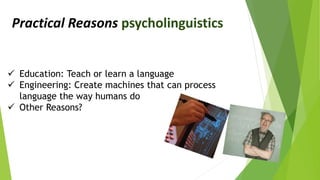
Practical Reasons psycholinguistics 
 Education: Teach or learn a language 
 Engineering: Create machines that can process 
language the way humans do 
 Other Reasons?
DIFINITION 
The study of the mental faculties involved 
in the perception ,and acquisition of 
language. 
The study of the relationships between 
linguistic behavior and psychological 
processes, including the process of 
language acquisition.
PSYCHOLINGUISTICS. 
Psycholinguistics or psychology of 
language is the study of the 
psychological and neurobiological 
factors that enable humans to acquire 
,use, and understand language.
The three primary processes 
investigated in psycholinguistics. 
Language comprehension. 
Language production. 
Language acquisition.
LANGUAGE COMPREHENSION. 
Understanding what other people say and 
write is more complicated than it might at 
first appear. 
Comprehending language involves a variety 
of capacities, skills, processes, knowledge, 
and disposition that are used to derive 
meaning from spoken, written and sign 
language.
LANGUAGE PRODUCTION. 
Language production is the production 
of spoken or written language.it 
describe all of the stages between 
having a concept into linguistic form.
LANGUAGE ACQUISITION 
Language acquisition is just one strand 
of psycholinguistics which is all about 
how people learn to speak and the 
mental processes involved.
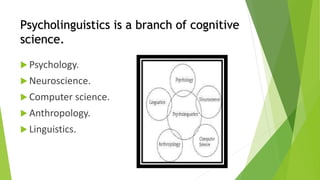
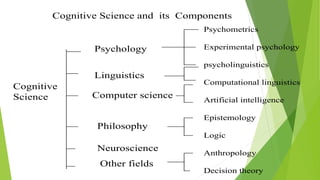
Psycholinguistics is a branch of cognitive 
science. 
 Psychology. 
 Neuroscience. 
 Computer science. 
 Anthropology. 
 Linguistics.
Cognitive Science and its Components 
Psychometrics 
Experimental psychology 
psycholinguistics 
Computational linguistics 
Artificial intelligence 
Epistemology 
Logic 
Anthropology 
Decision theory 
Psychology 
Linguistics 
Computer science 
Philosophy 
Neuroscience 
Other fields 
Cognitive 
Science
Current Directions 
Psycholinguistics is increasingly viewed as a 
portion of the interdisciplinary field of 
cognitive science. 
Shift of the interest in syntax to other 
aspects of language: discourse, lexicon.
Conclusion 
Psycholinguistics is an area of study 
which draws from linguistics and 
psychology and focuses upon the 
comprehension and production of 
language.
Final facts 
 6,912 known living languages in the world 
 896,190 words in English (correct as of yesterday) 
 Mandarin has 1,075,000,000 speakers 
 Most popular word is ‘ok’ 
“When ideas fail, words come in very handy” 
Goethe
PSYCHOLINGUISTICS

PSYCHOLINGUISTICS

  • 1.
  • 2.
    Introduction Psycholinguistics: whathappens in our mind when we use language.
  • 3.
    What is psycholinguistics? Psychological processing of language Part of cognitive science Input from neuroscience, informatics and linguistics Why is this interesting/important? “No man is an island, entire of itself; every man is a piece of the continent, a part of the main.” John Donne, Meditation XVII
  • 4.
    Practical Reasons psycholinguistics  Education: Teach or learn a language  Engineering: Create machines that can process language the way humans do  Other Reasons?
  • 5.
    DIFINITION The studyof the mental faculties involved in the perception ,and acquisition of language. The study of the relationships between linguistic behavior and psychological processes, including the process of language acquisition.
  • 6.
    PSYCHOLINGUISTICS. Psycholinguistics orpsychology of language is the study of the psychological and neurobiological factors that enable humans to acquire ,use, and understand language.
  • 7.
    The three primaryprocesses investigated in psycholinguistics. Language comprehension. Language production. Language acquisition.
  • 8.
    LANGUAGE COMPREHENSION. Understandingwhat other people say and write is more complicated than it might at first appear. Comprehending language involves a variety of capacities, skills, processes, knowledge, and disposition that are used to derive meaning from spoken, written and sign language.
  • 9.
    LANGUAGE PRODUCTION. Languageproduction is the production of spoken or written language.it describe all of the stages between having a concept into linguistic form.
  • 10.
    LANGUAGE ACQUISITION Languageacquisition is just one strand of psycholinguistics which is all about how people learn to speak and the mental processes involved.
  • 11.
    Psycholinguistics is abranch of cognitive science.  Psychology.  Neuroscience.  Computer science.  Anthropology.  Linguistics.
  • 12.
    Cognitive Science andits Components Psychometrics Experimental psychology psycholinguistics Computational linguistics Artificial intelligence Epistemology Logic Anthropology Decision theory Psychology Linguistics Computer science Philosophy Neuroscience Other fields Cognitive Science
  • 13.
    Current Directions Psycholinguisticsis increasingly viewed as a portion of the interdisciplinary field of cognitive science. Shift of the interest in syntax to other aspects of language: discourse, lexicon.
  • 14.
    Conclusion Psycholinguistics isan area of study which draws from linguistics and psychology and focuses upon the comprehension and production of language.
  • 15.
    Final facts 6,912 known living languages in the world  896,190 words in English (correct as of yesterday)  Mandarin has 1,075,000,000 speakers  Most popular word is ‘ok’ “When ideas fail, words come in very handy” Goethe