Downloaded 1,839 times
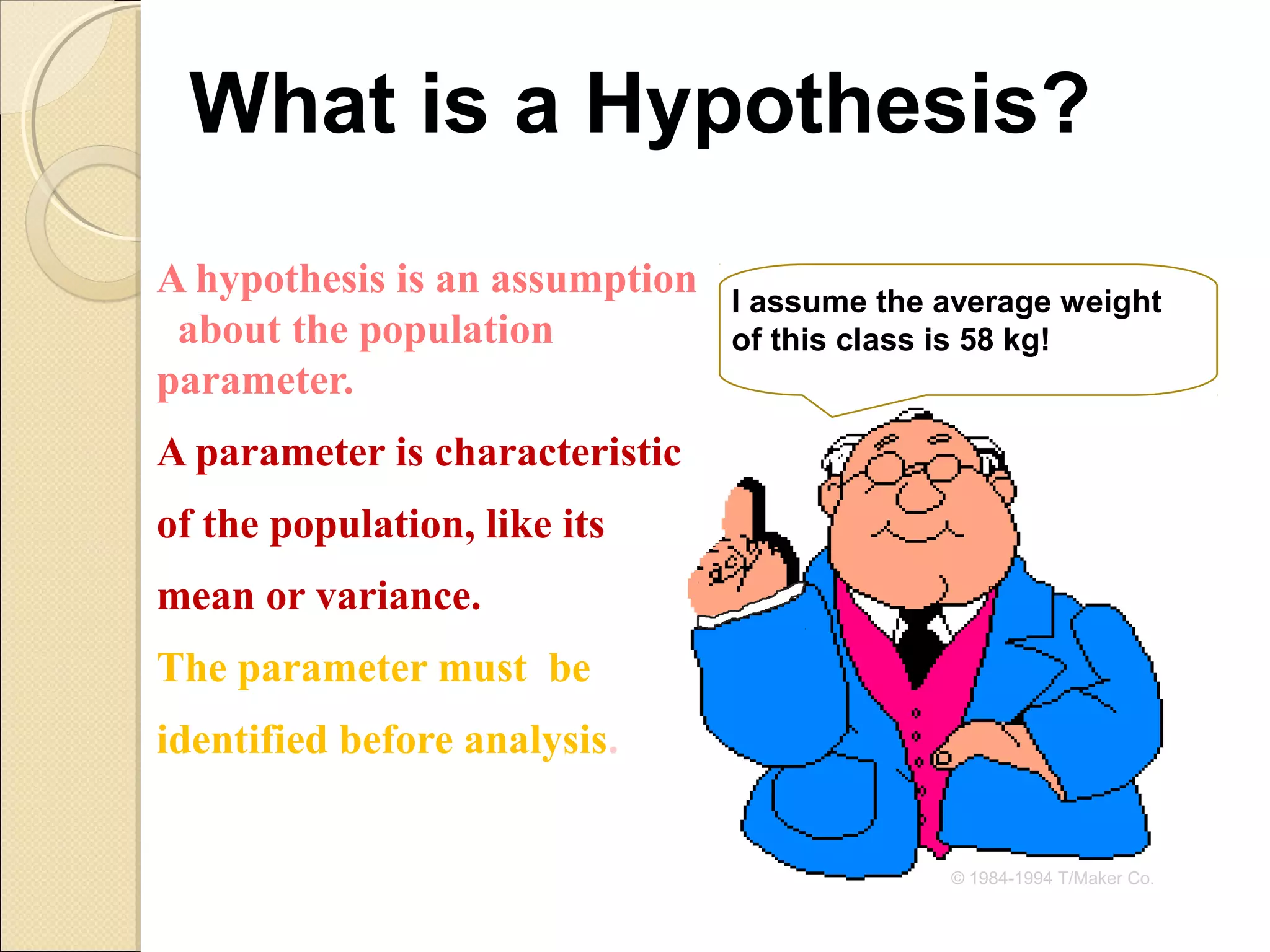




Hypothesis testing involves making an assumption about an unknown population parameter, called the null hypothesis (H0). A hypothesis is tested by collecting a sample from the population and comparing sample statistics to the hypothesized parameter value. If the sample value differs significantly from the hypothesized value based on a predetermined significance level, then the null hypothesis is rejected. There are two types of errors that can occur - type 1 errors occur when a true null hypothesis is rejected, and type 2 errors occur when a false null hypothesis is not rejected. Hypothesis tests can be one-tailed, testing if the sample value is greater than or less than the hypothesized value, or two-tailed, testing if the sample value is significantly different from the hypothesized value.


![Distribution channel &_physical_distribution.pptx [repaired]](https://cdn.slidesharecdn.com/ss_thumbnails/distributionchannelphysicaldistribution-150108150528-conversion-gate01-thumbnail.jpg?width=640&height=640&fit=bounds)


