Customer Relationship
Management
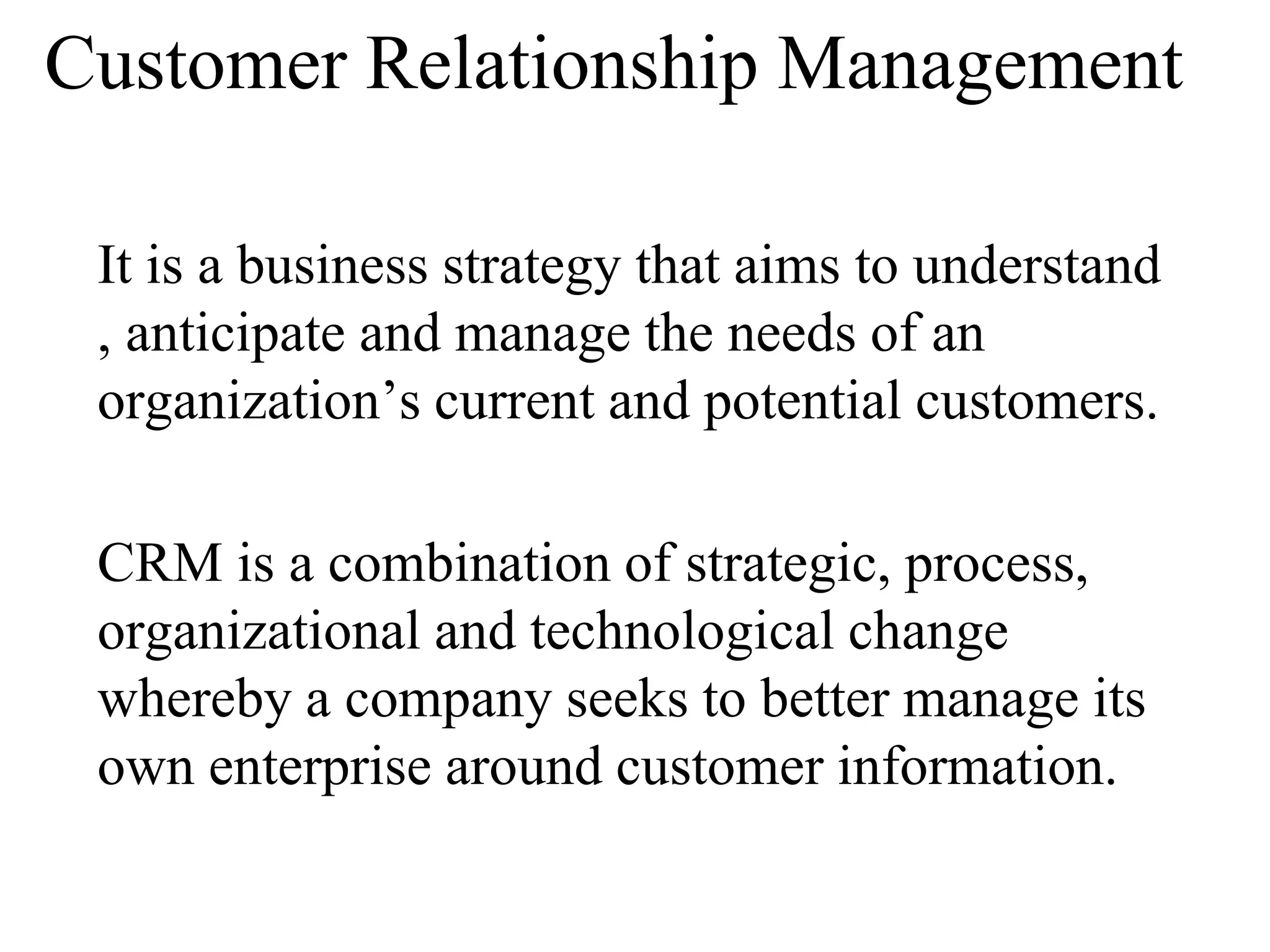
Customer Relationship Management
It is a business strategy that aims to understand
, anticipate and manage the needs of an
organization’s current and potential customers.
CRM is a combination of strategic, process,
organizational and technological change
whereby a company seeks to better manage its
own enterprise around customer information.
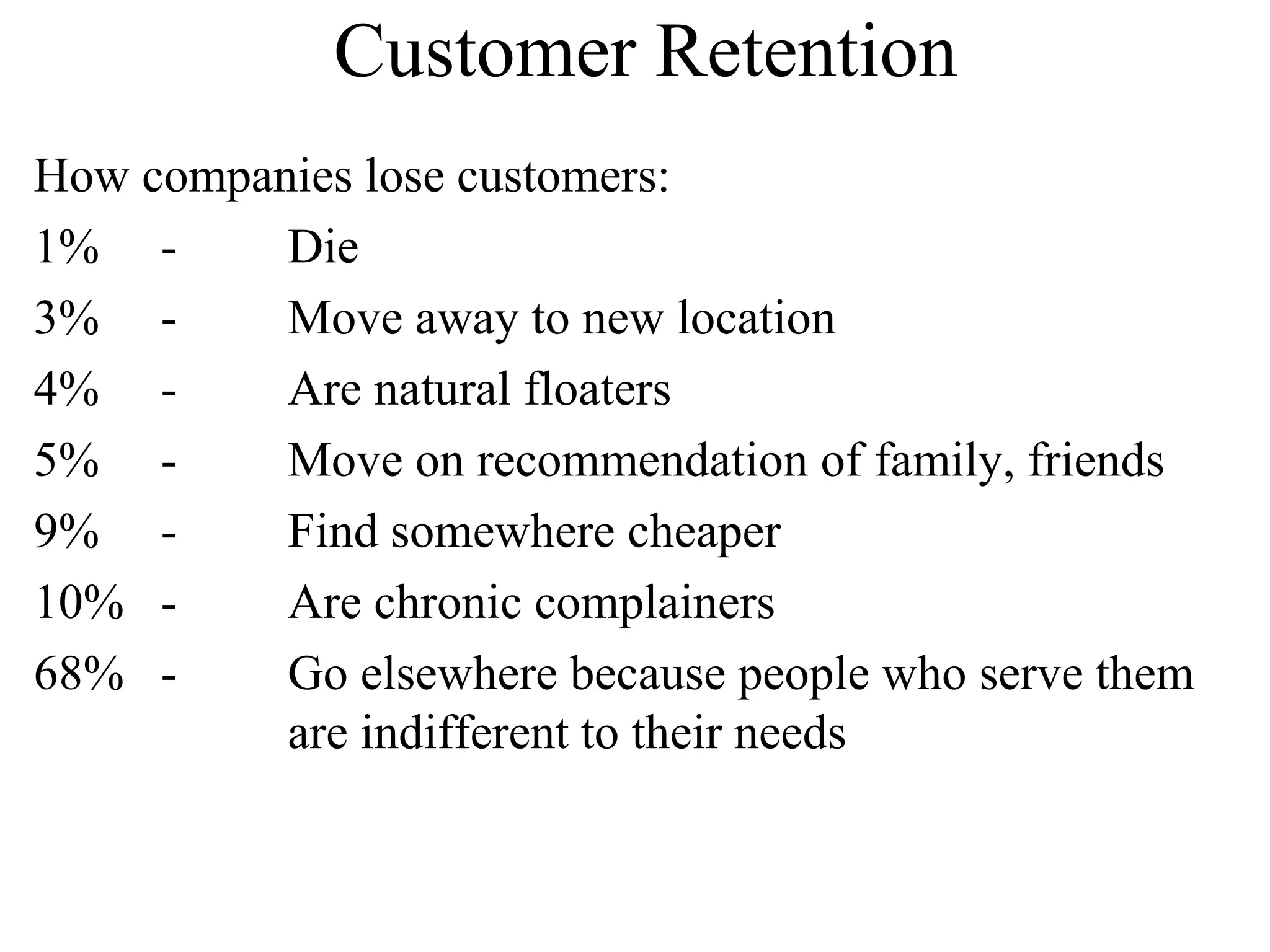
Customer Retention
How companies lose customers:
1% - Die
3% - Move away to new location
4% - Are natural floaters
5% - Move on recommendation of family, friends
9% - Find somewhere cheaper
10% - Are chronic complainers
68% - Go elsewhere because people who serve them
are indifferent to their needs
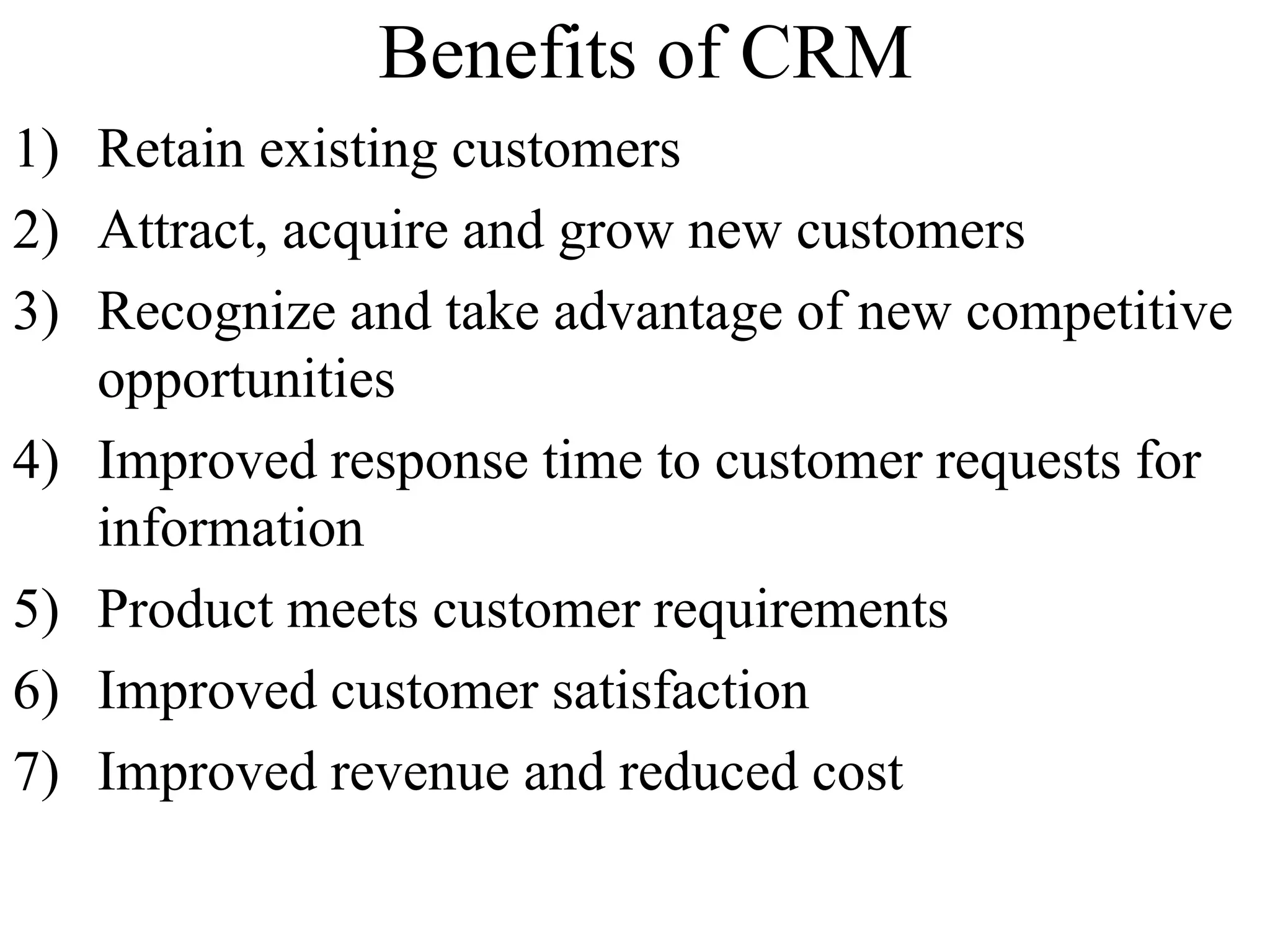
Benefits of CRM
1) Retain existing customers
2) Attract, acquire and grow new customers
3) Recognize and take advantage of new competitive
opportunities
4) Improved response time to customer requests for
information
5) Product meets customer requirements
6) Improved customer satisfaction
7) Improved revenue and reduced cost
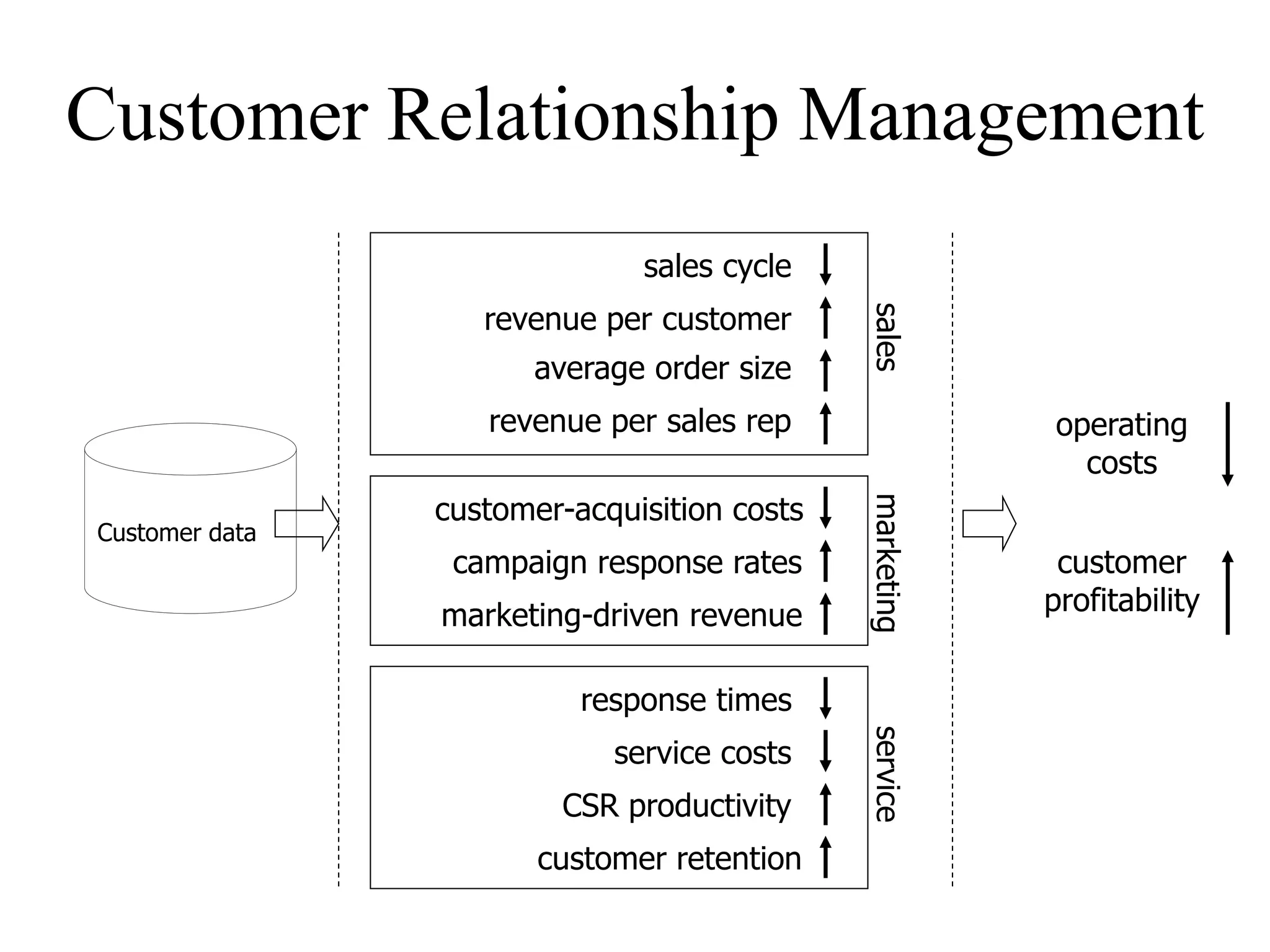
Customer Relationship Management
sales cycle
revenue per customer
average order size
revenue per sales rep
sales
customer-acquisition costs
campaign response rates
marketing-driven revenue
marketing
service costs
CSR productivity
customer retention
response times
service
operating
costs
customer
profitability
Customer data
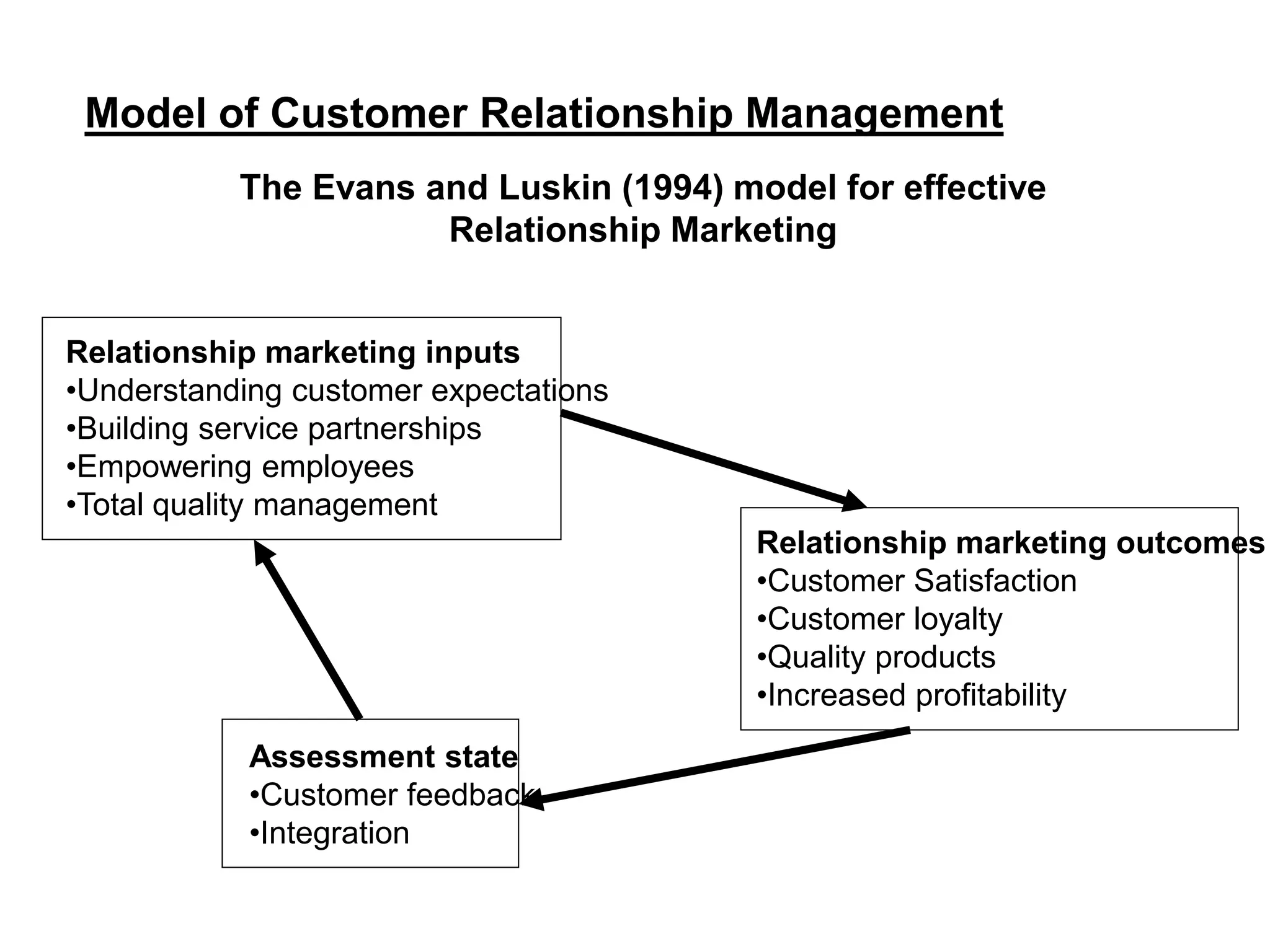
Model of Customer Relationship Management
The Evans and Luskin (1994) model for effective
Relationship Marketing
Relationship marketing inputs
•Understanding customer expectations
•Building service partnerships
•Empowering employees
•Total quality management
Relationship marketing outcomes
•Customer Satisfaction
•Customer loyalty
•Quality products
•Increased profitability
Assessment state
•Customer feedback
•Integration
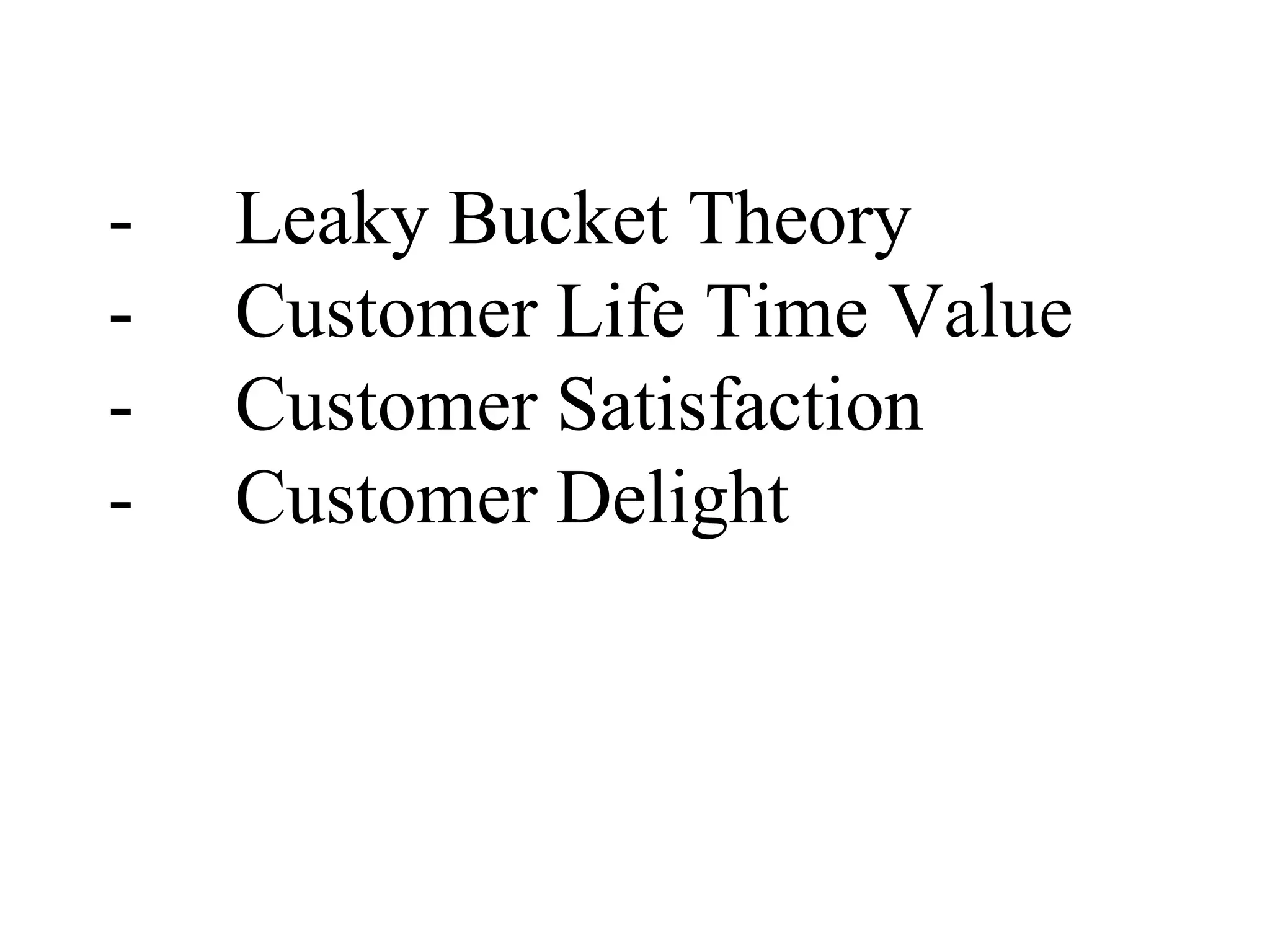
- Leaky Bucket Theory
- Customer Life Time Value
- Customer Satisfaction
- Customer Delight
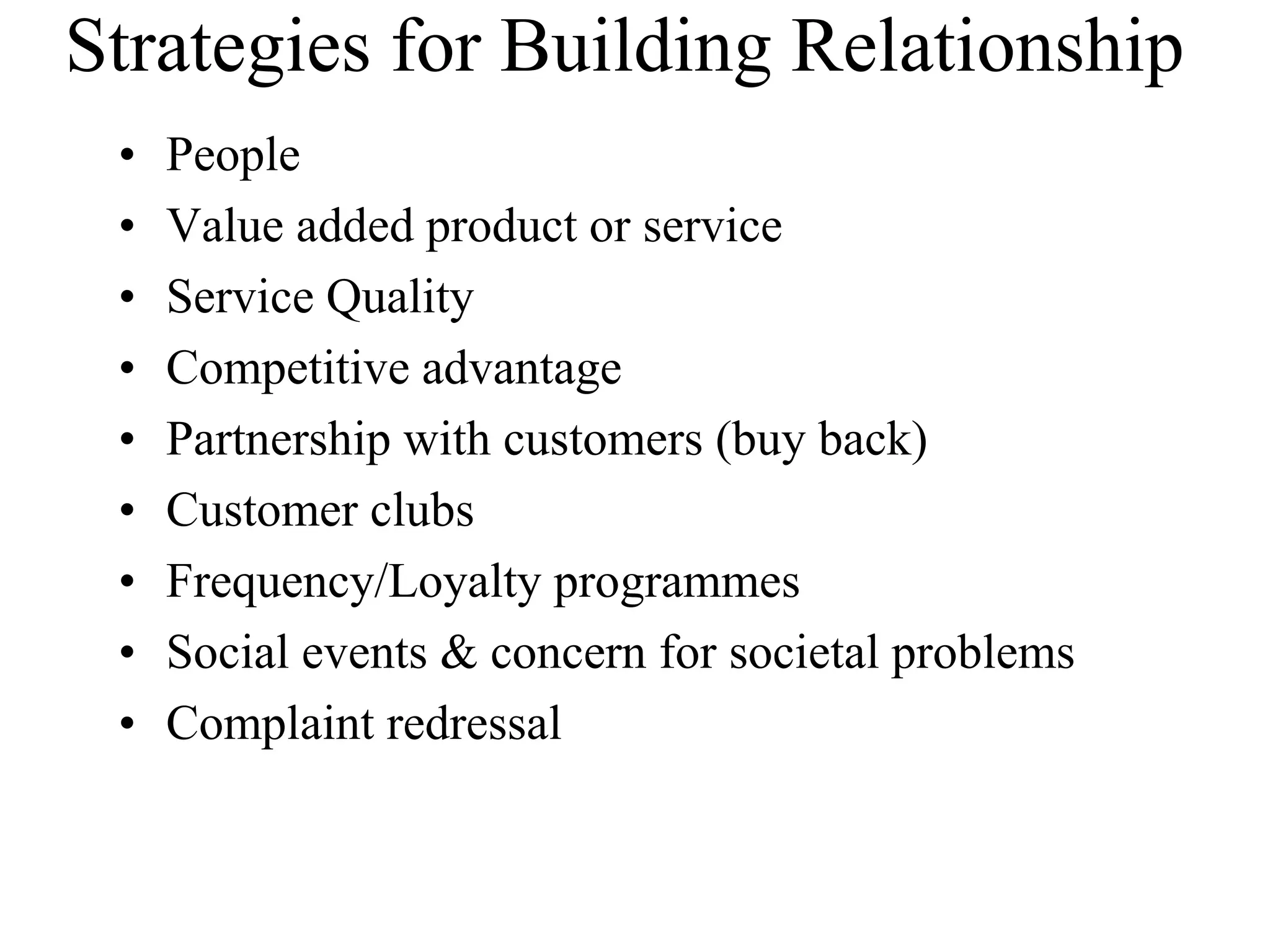
Strategies for Building Relationship
• People
• Value added product or service
• Service Quality
• Competitive advantage
• Partnership with customers (buy back)
• Customer clubs
• Frequency/Loyalty programmes
• Social events & concern for societal problems
• Complaint redressal

Chapter 7. customer relationship management

  • 1.
  • 2.
    Customer Relationship Management Itis a business strategy that aims to understand , anticipate and manage the needs of an organization’s current and potential customers. CRM is a combination of strategic, process, organizational and technological change whereby a company seeks to better manage its own enterprise around customer information.
  • 3.
    Customer Retention How companieslose customers: 1% - Die 3% - Move away to new location 4% - Are natural floaters 5% - Move on recommendation of family, friends 9% - Find somewhere cheaper 10% - Are chronic complainers 68% - Go elsewhere because people who serve them are indifferent to their needs
  • 4.
    Benefits of CRM 1)Retain existing customers 2) Attract, acquire and grow new customers 3) Recognize and take advantage of new competitive opportunities 4) Improved response time to customer requests for information 5) Product meets customer requirements 6) Improved customer satisfaction 7) Improved revenue and reduced cost
  • 5.
    Customer Relationship Management salescycle revenue per customer average order size revenue per sales rep sales customer-acquisition costs campaign response rates marketing-driven revenue marketing service costs CSR productivity customer retention response times service operating costs customer profitability Customer data
  • 6.
    Model of CustomerRelationship Management The Evans and Luskin (1994) model for effective Relationship Marketing Relationship marketing inputs •Understanding customer expectations •Building service partnerships •Empowering employees •Total quality management Relationship marketing outcomes •Customer Satisfaction •Customer loyalty •Quality products •Increased profitability Assessment state •Customer feedback •Integration
  • 7.
    - Leaky BucketTheory - Customer Life Time Value - Customer Satisfaction - Customer Delight
  • 8.
    Strategies for BuildingRelationship • People • Value added product or service • Service Quality • Competitive advantage • Partnership with customers (buy back) • Customer clubs • Frequency/Loyalty programmes • Social events & concern for societal problems • Complaint redressal