Downloaded 139 times
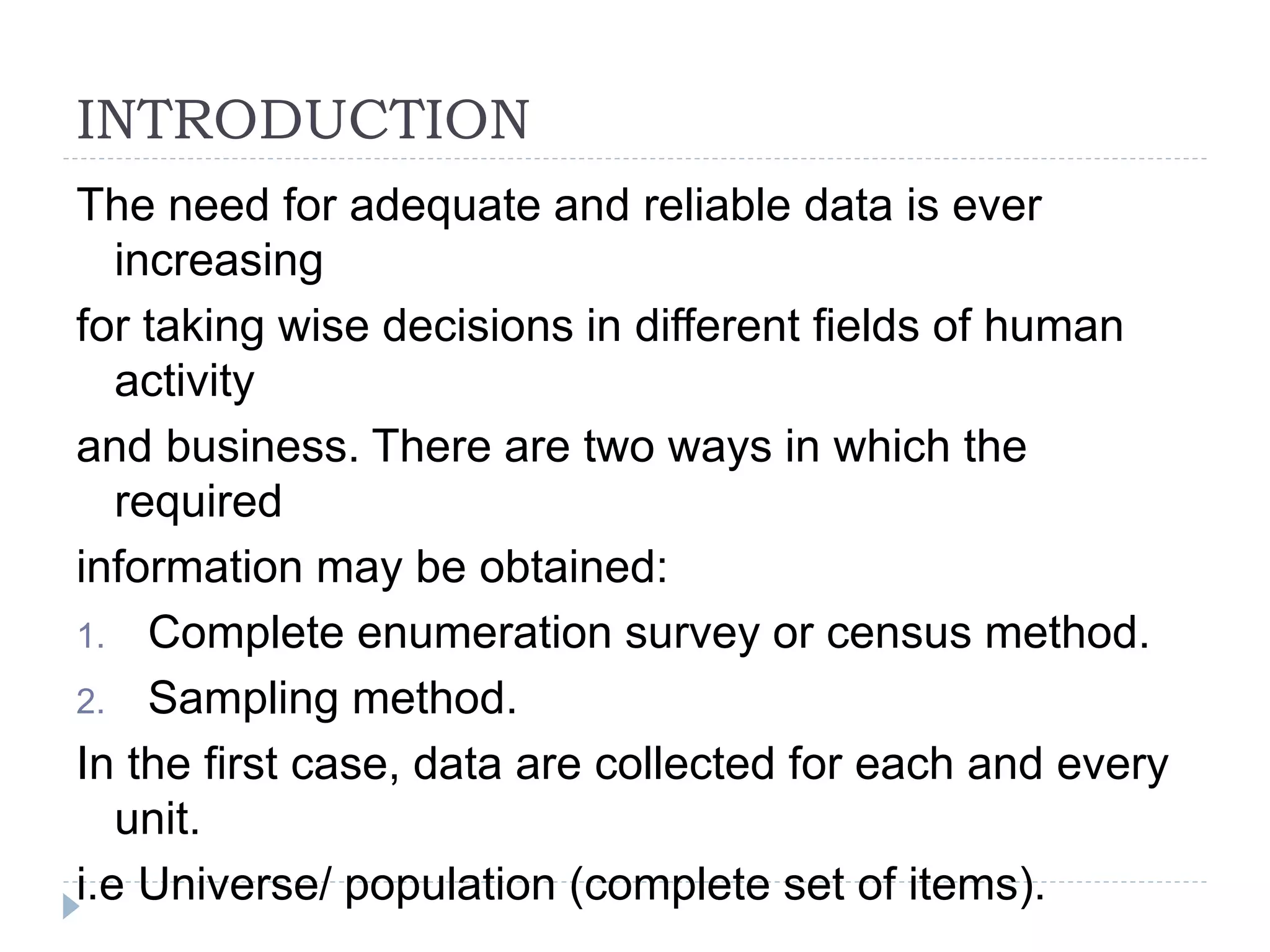
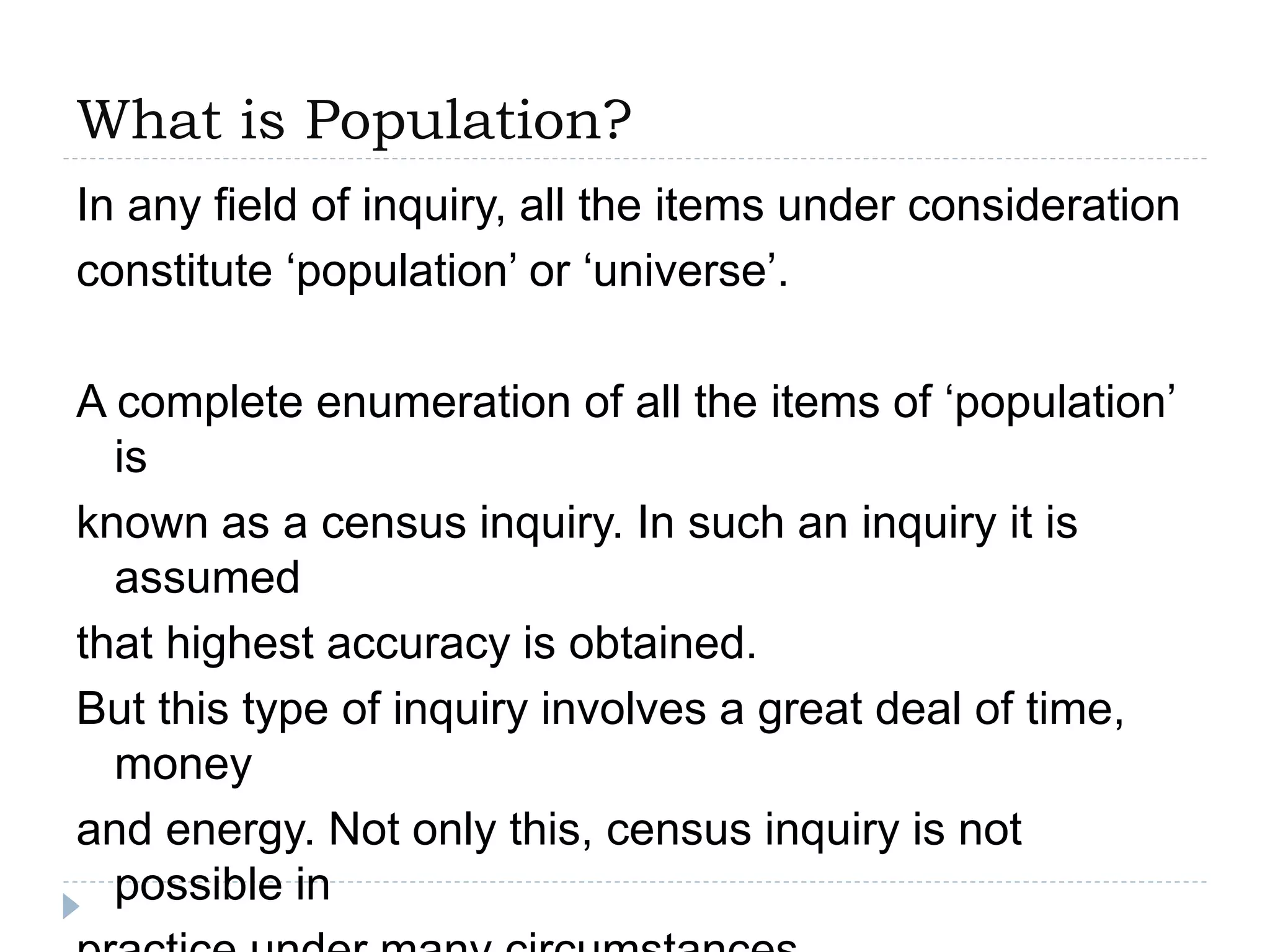
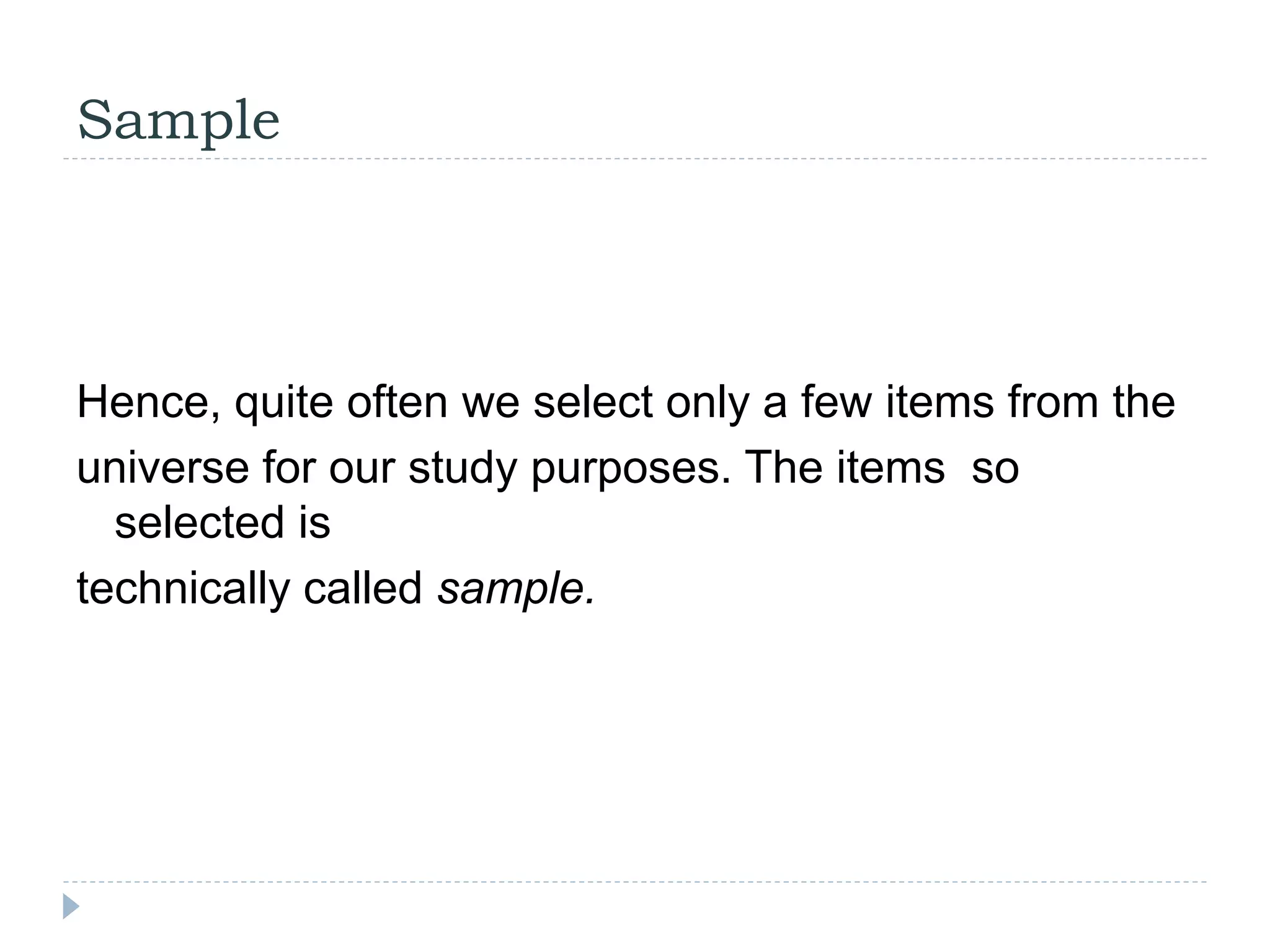
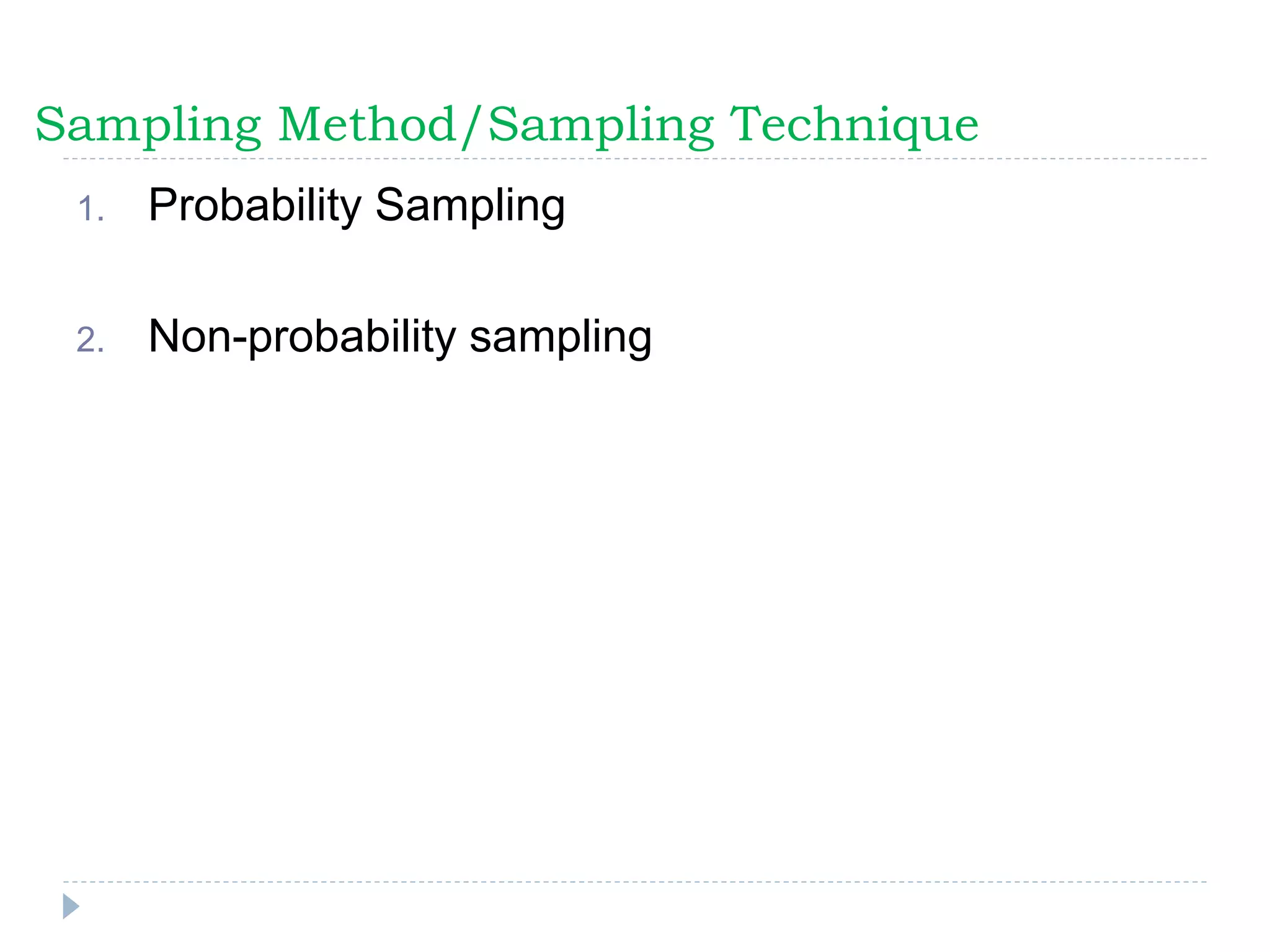
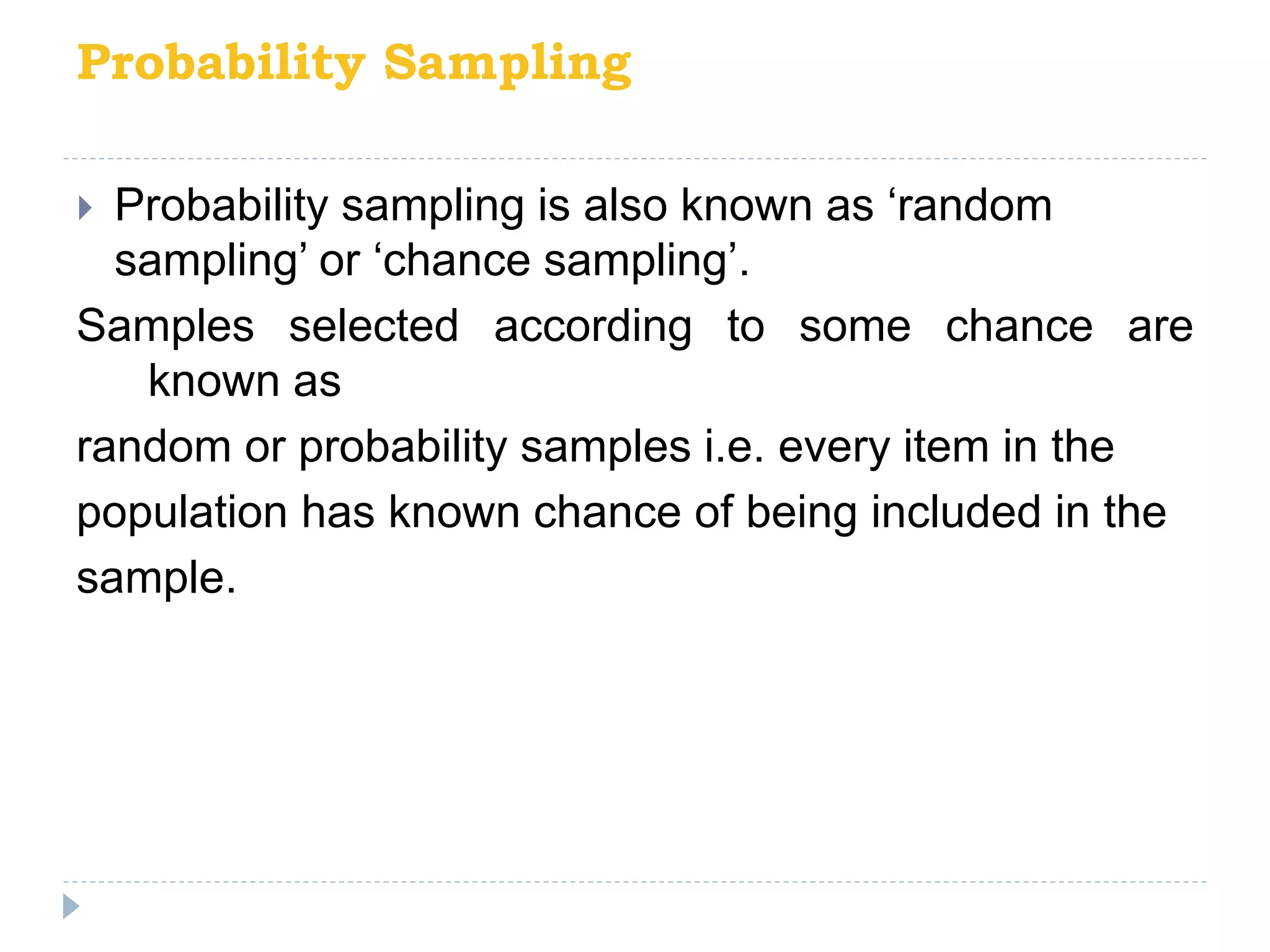
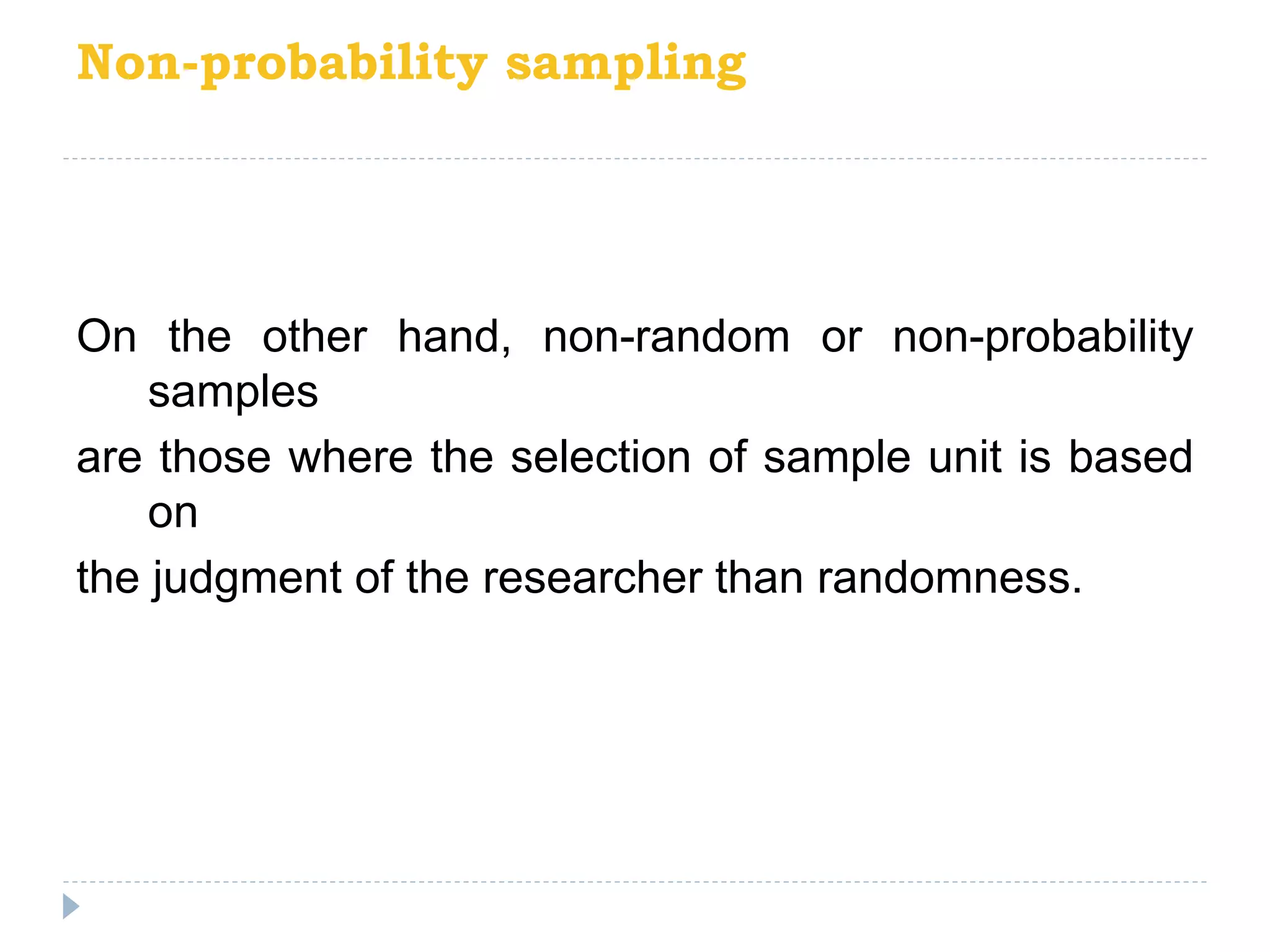
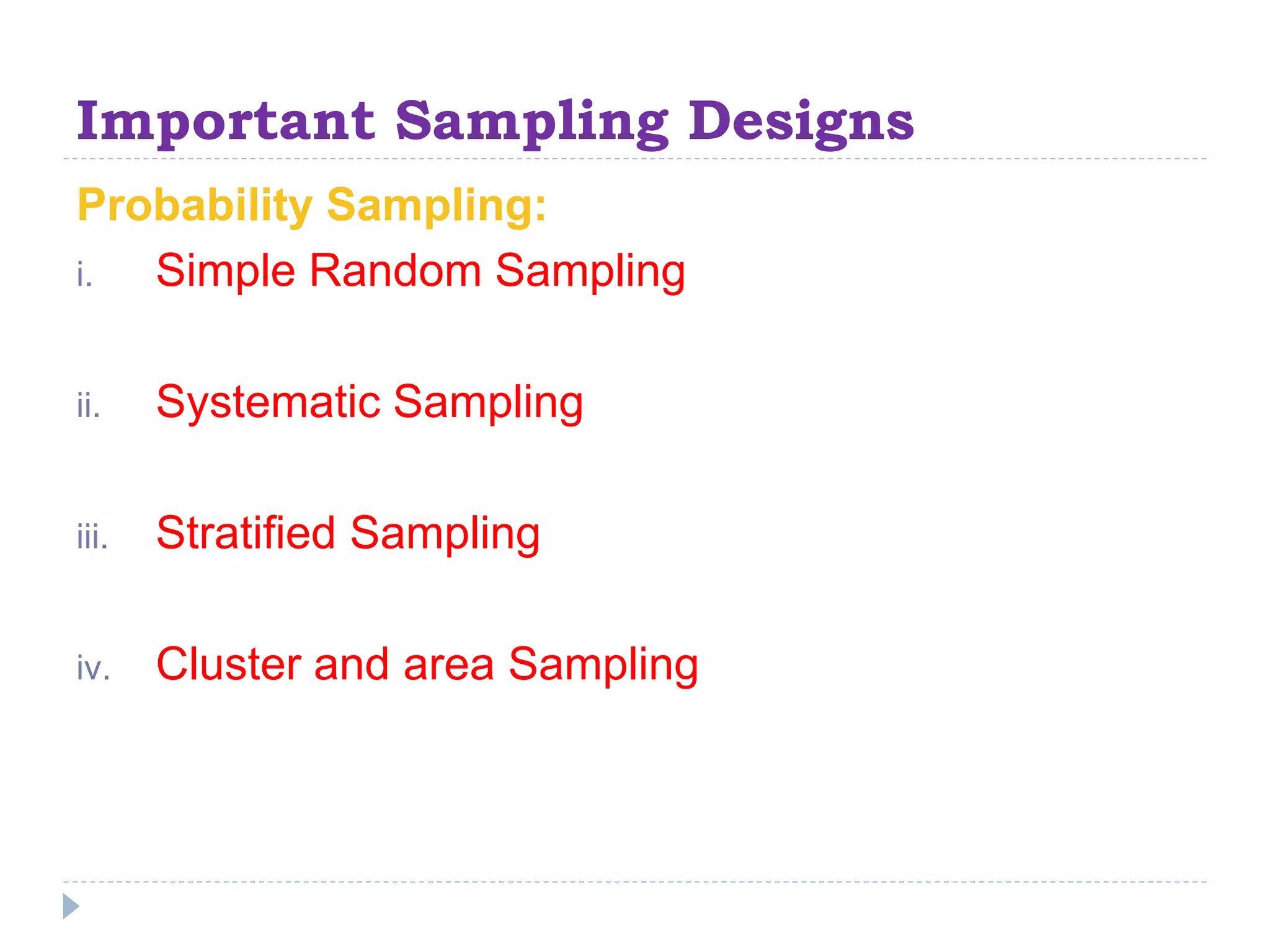
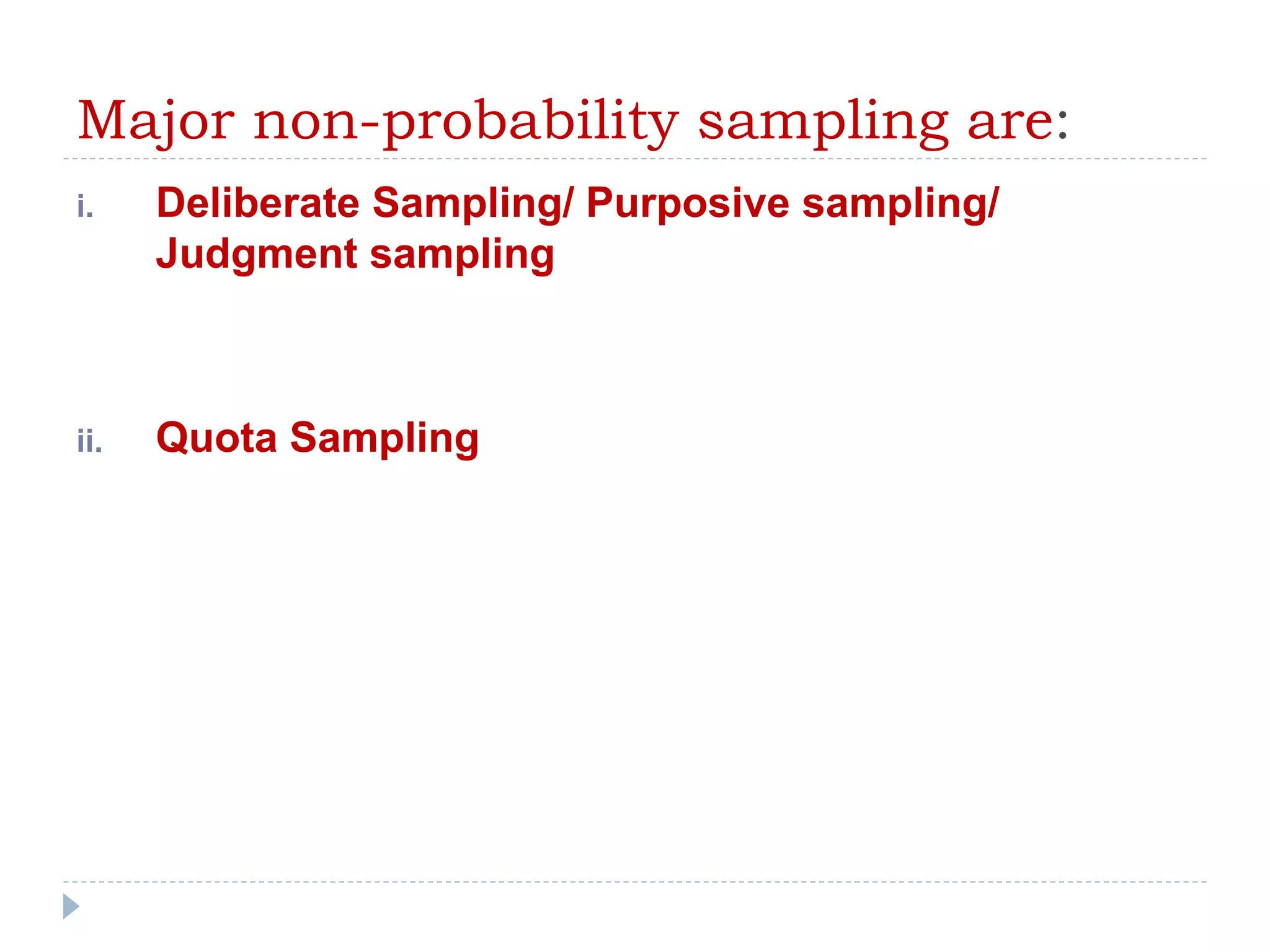
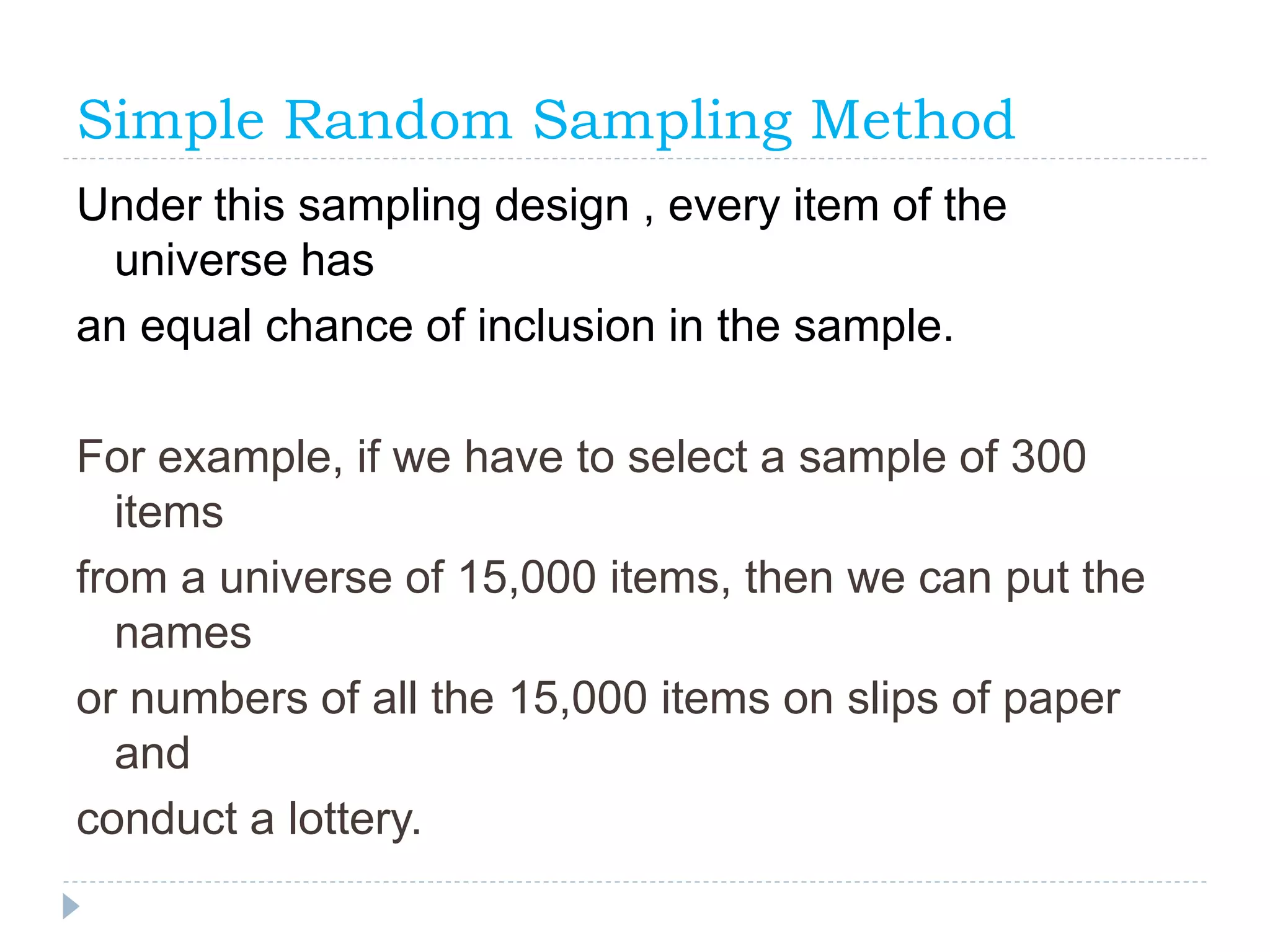
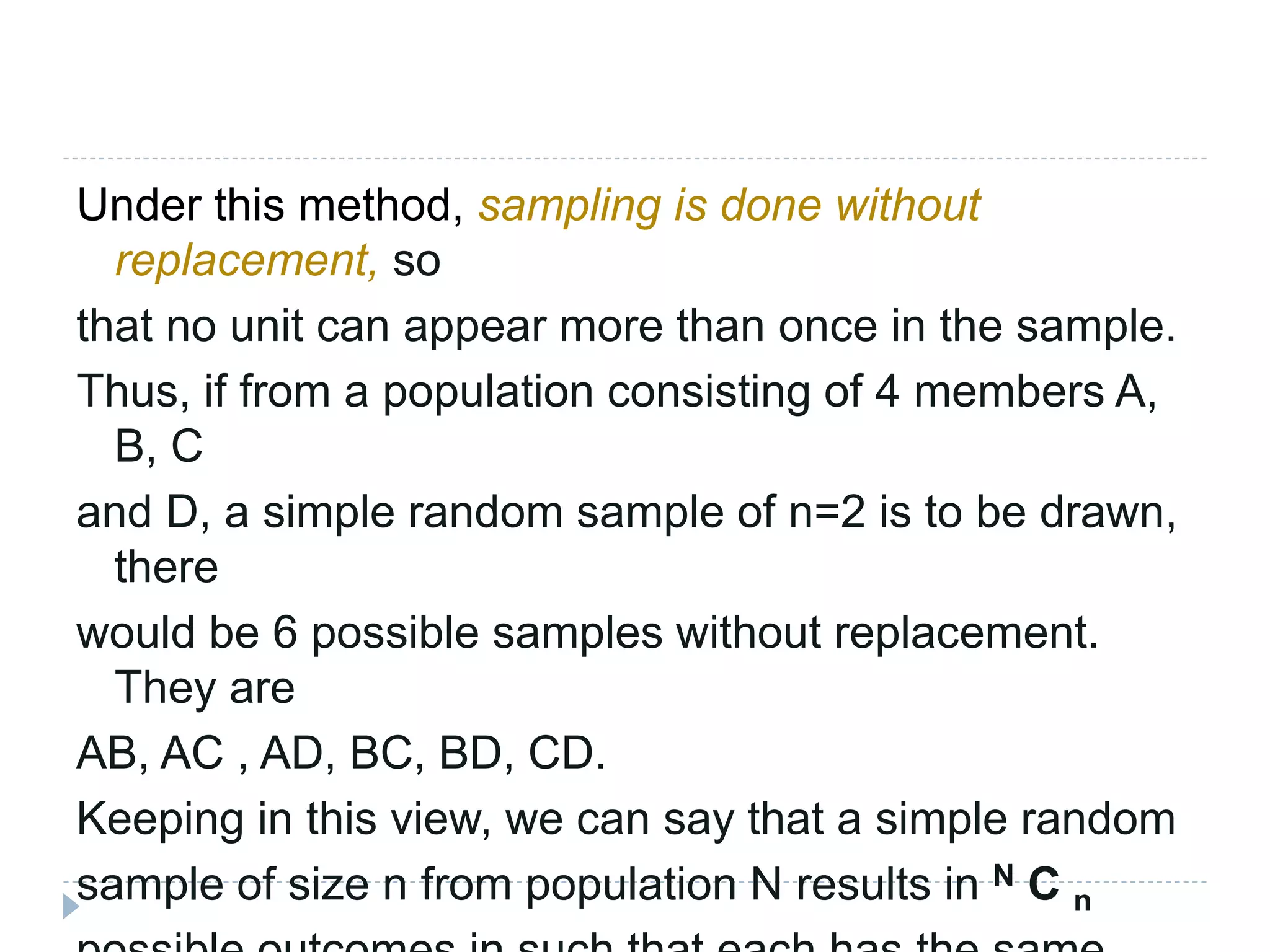
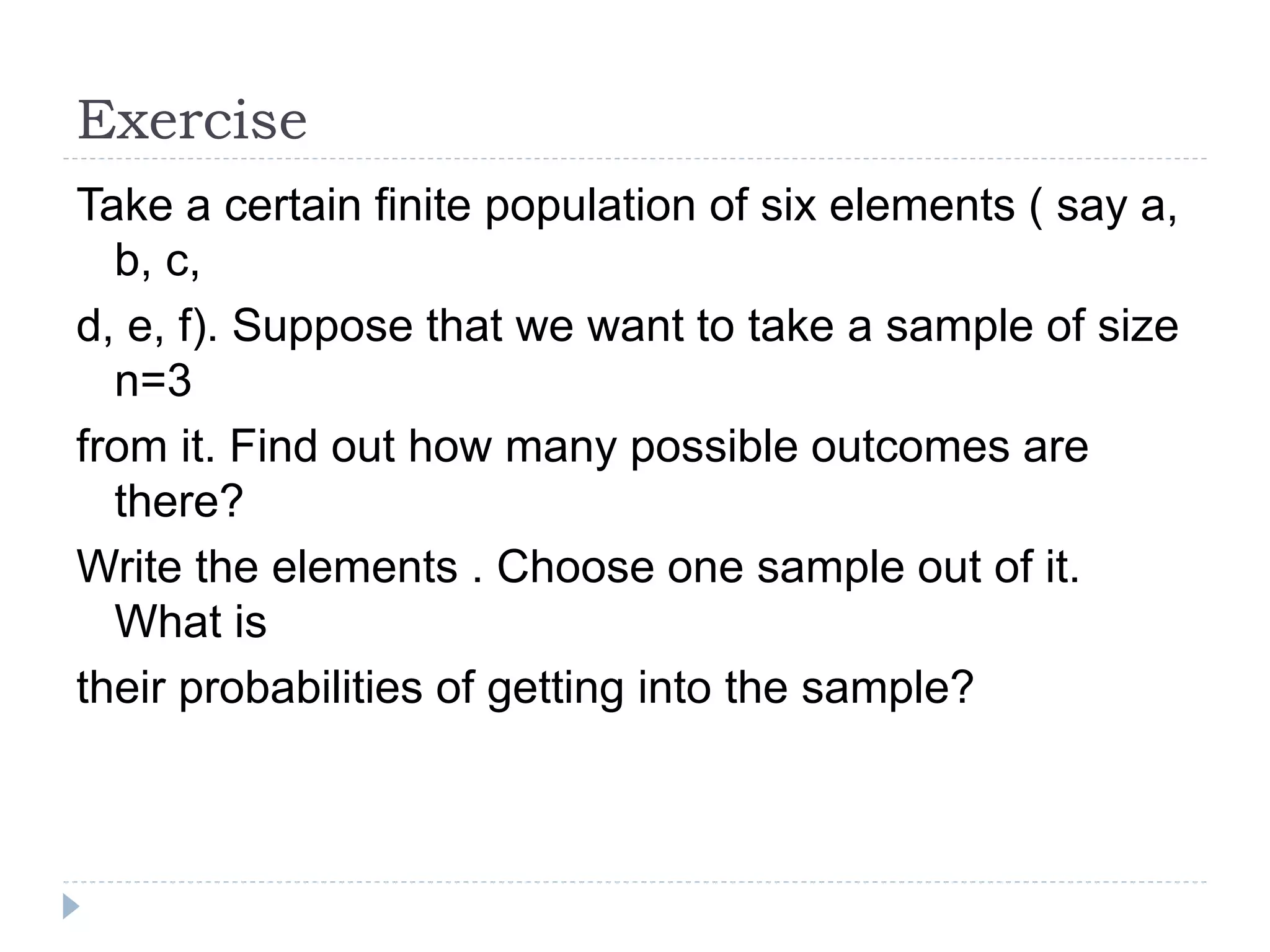
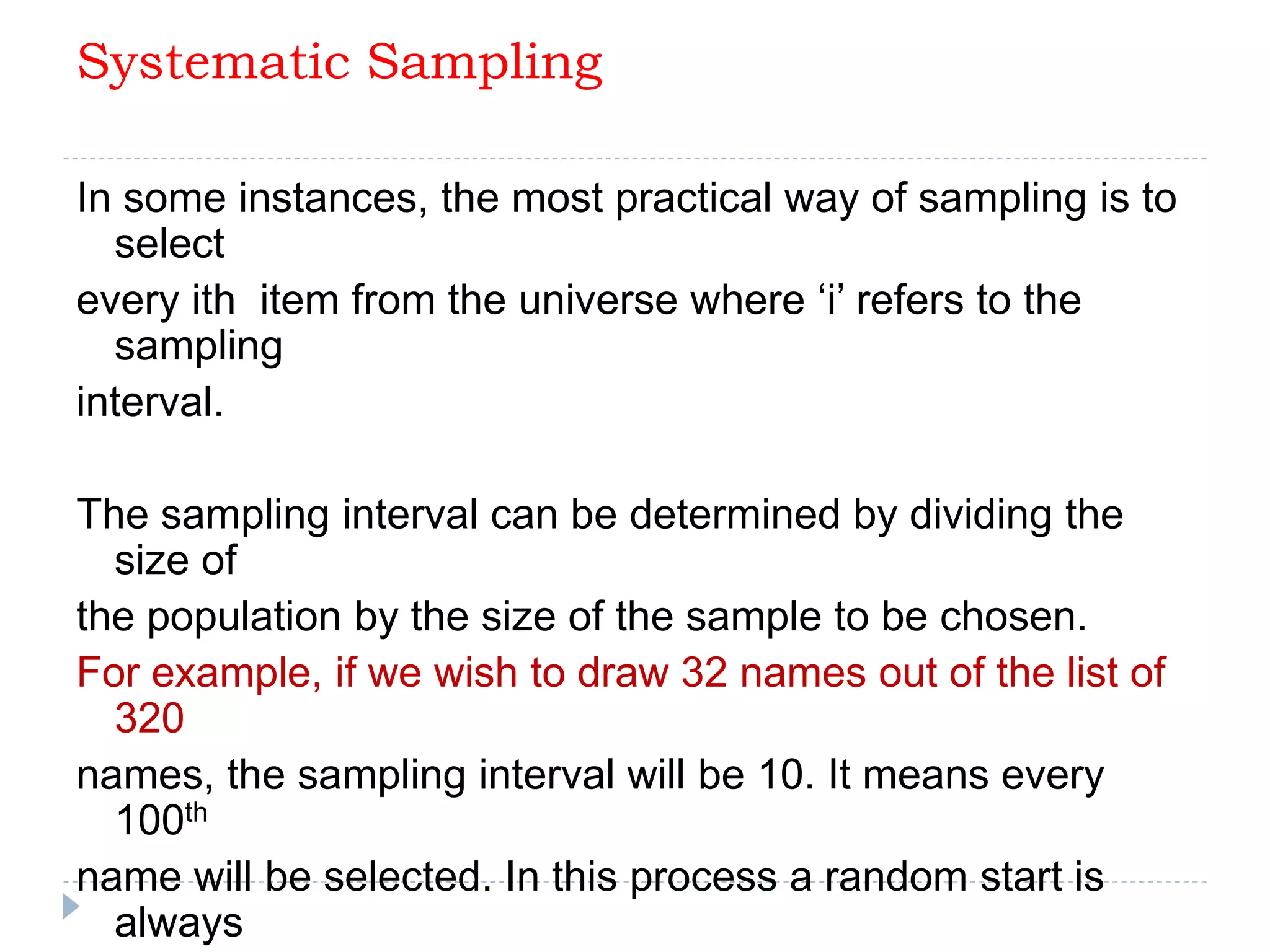
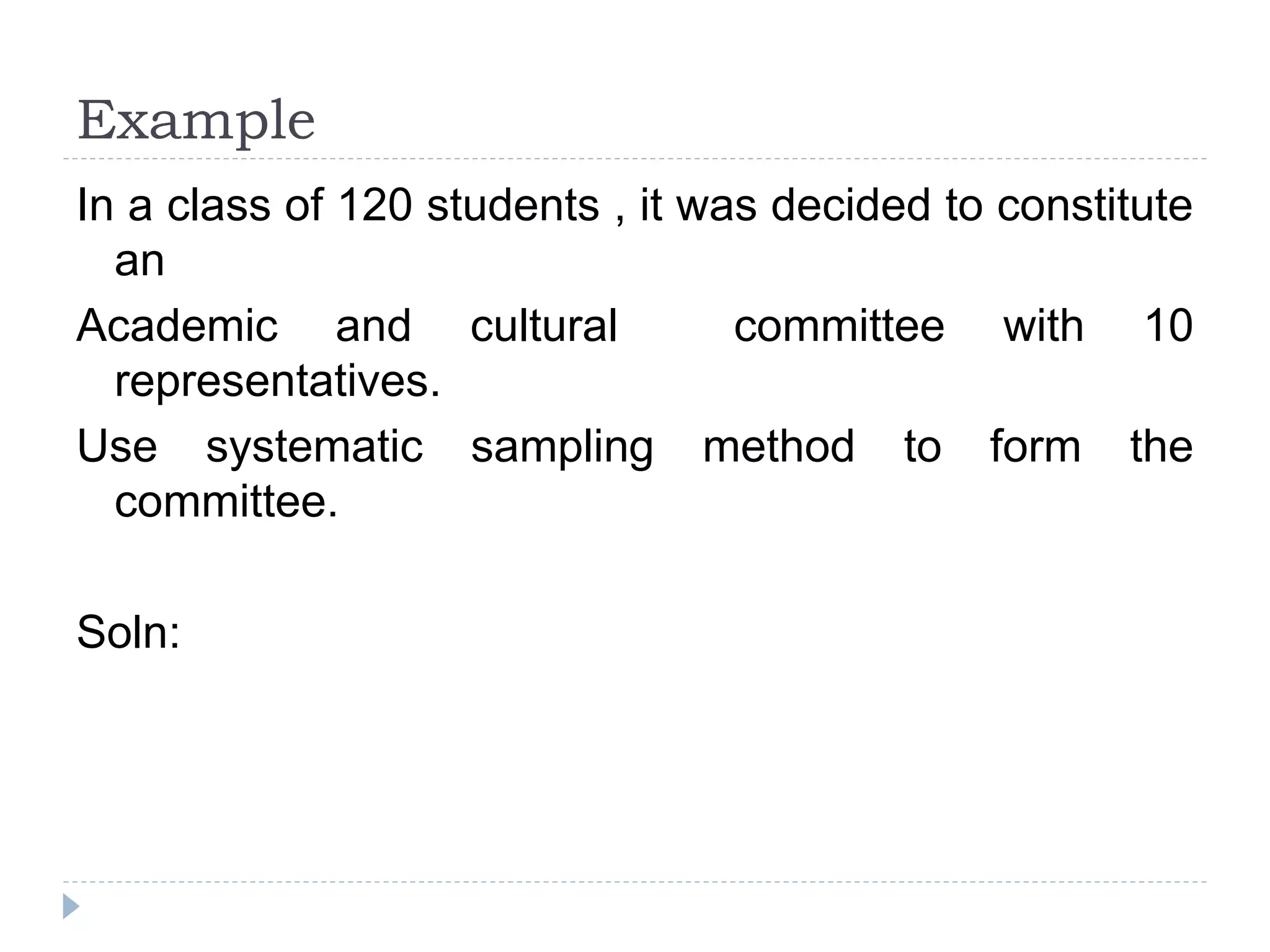
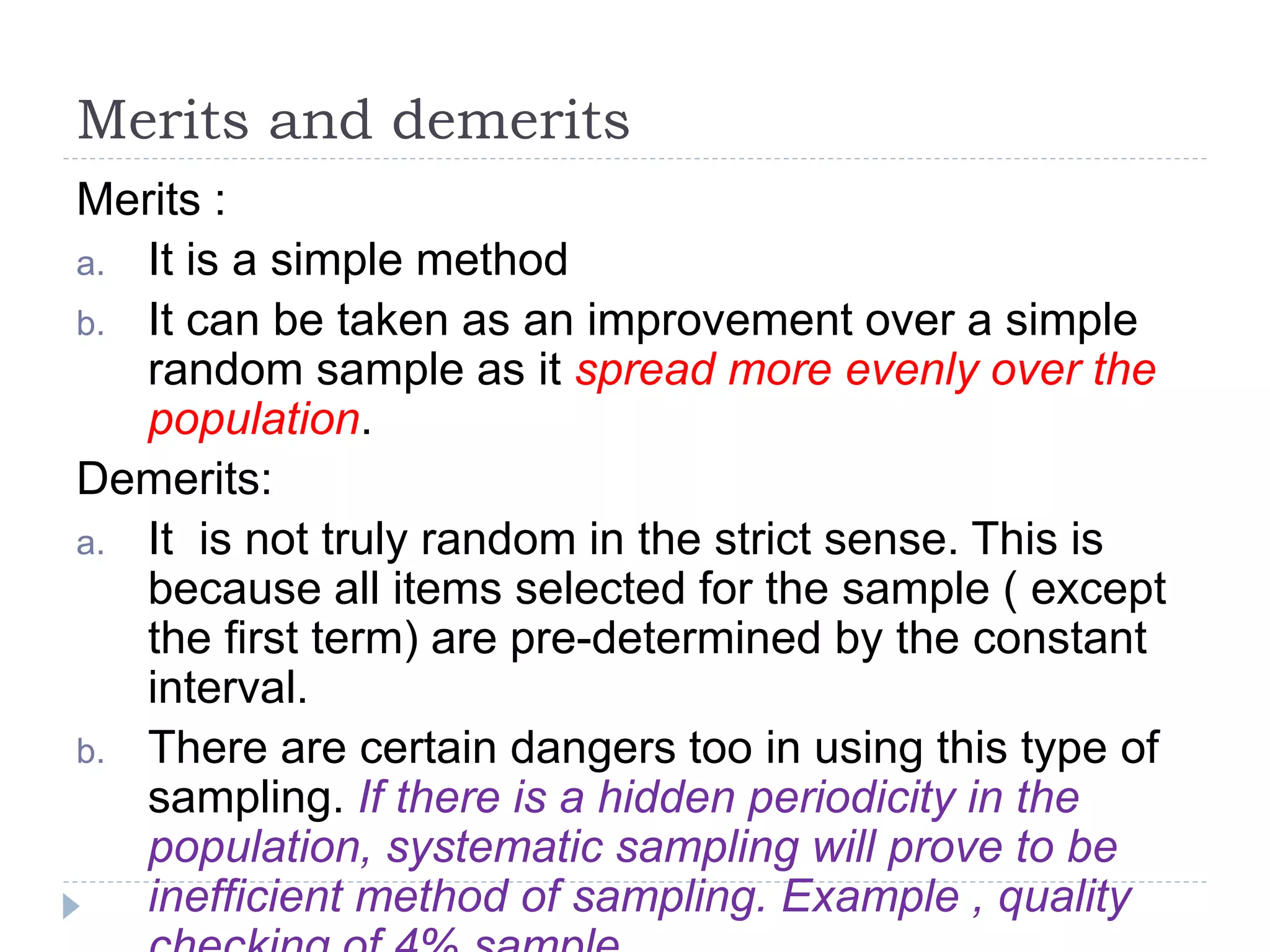
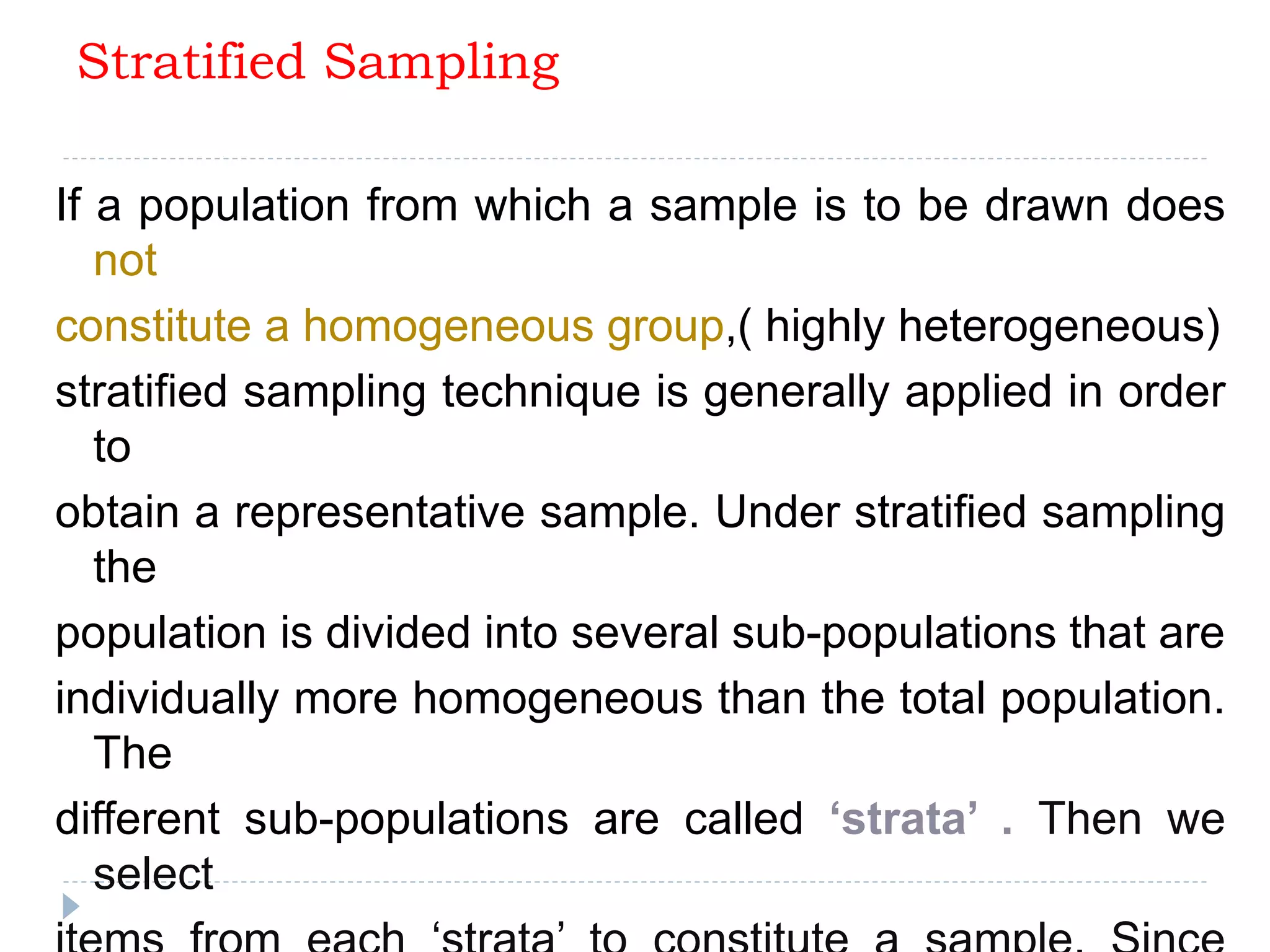
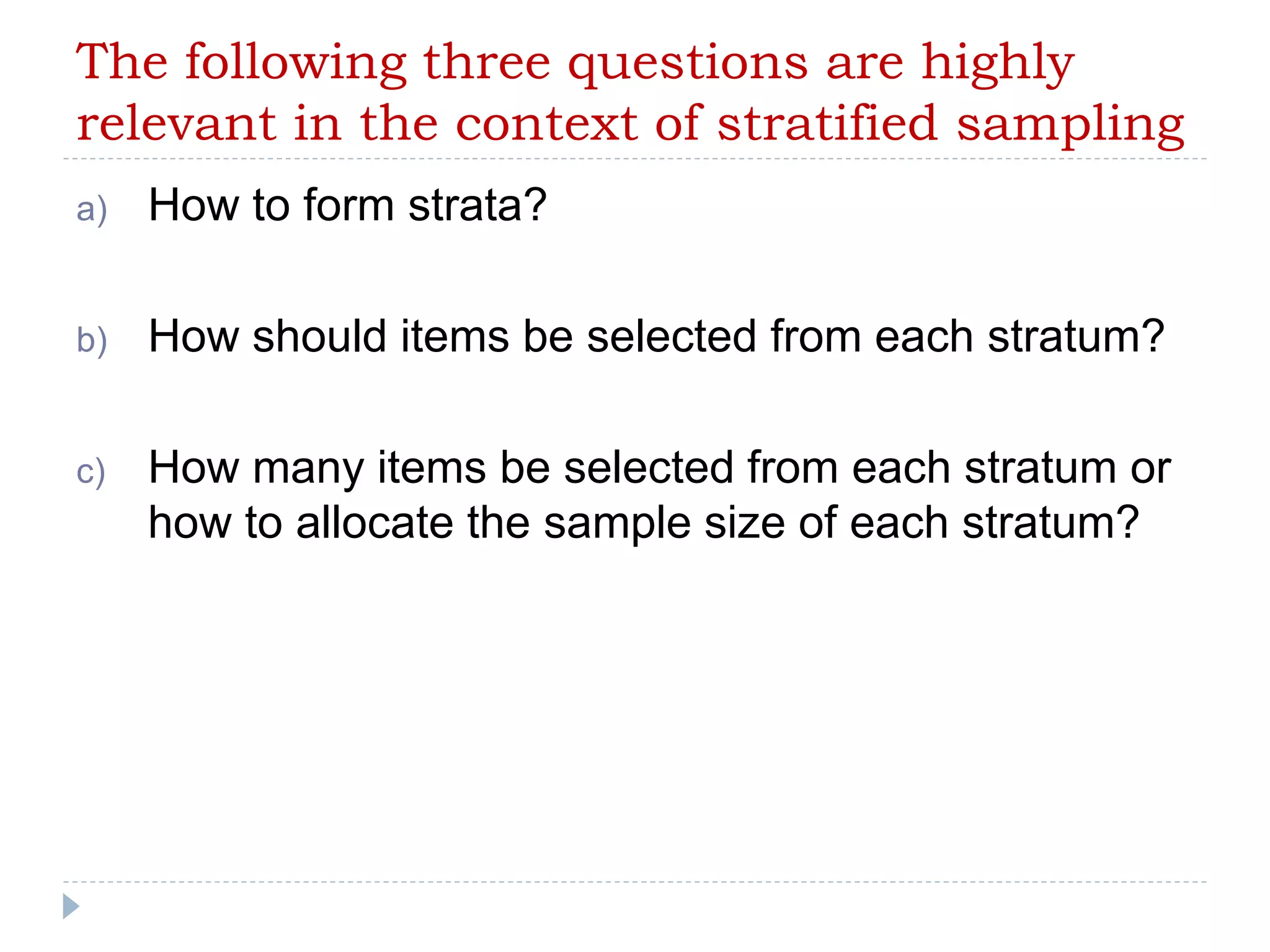
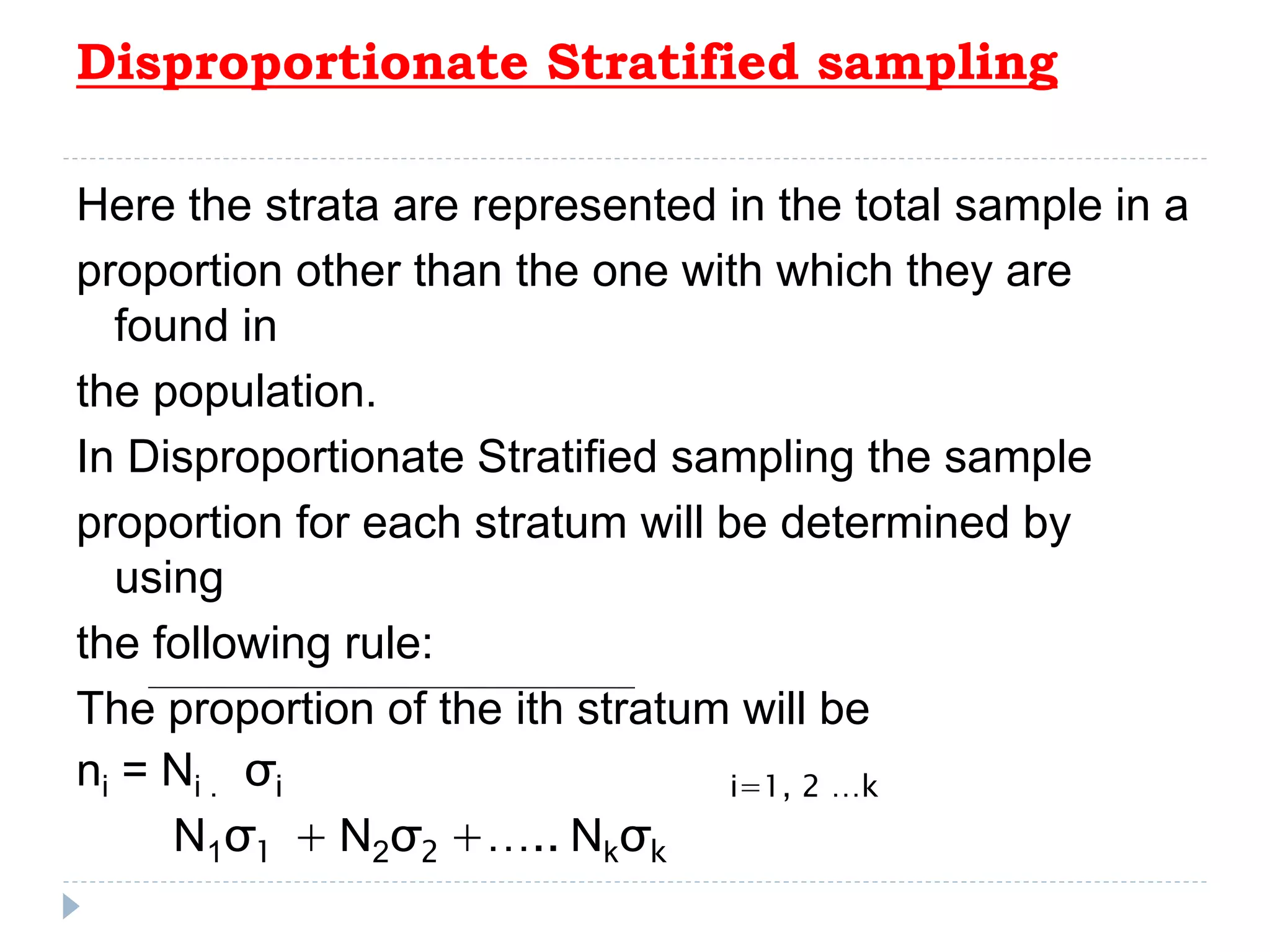
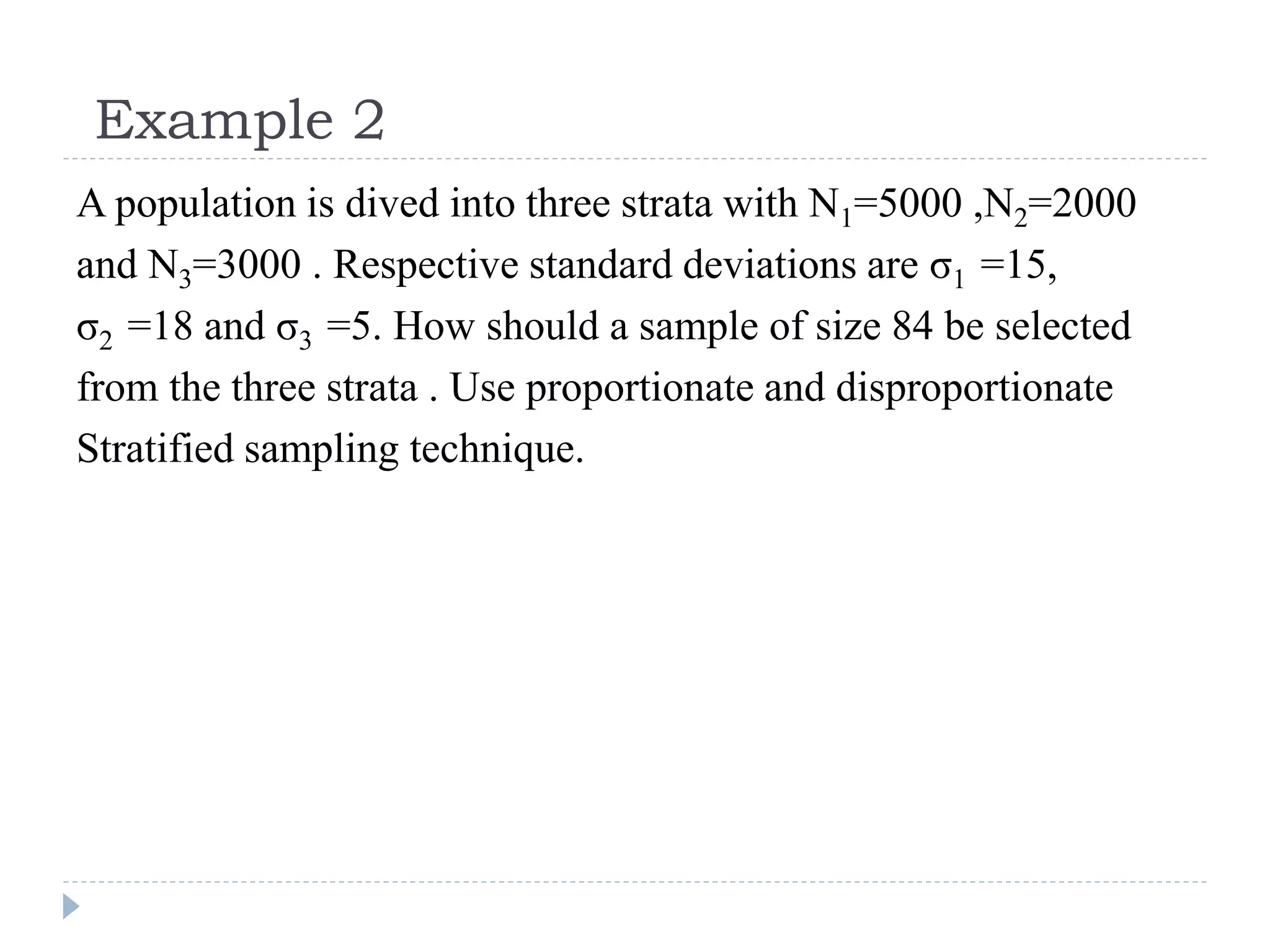
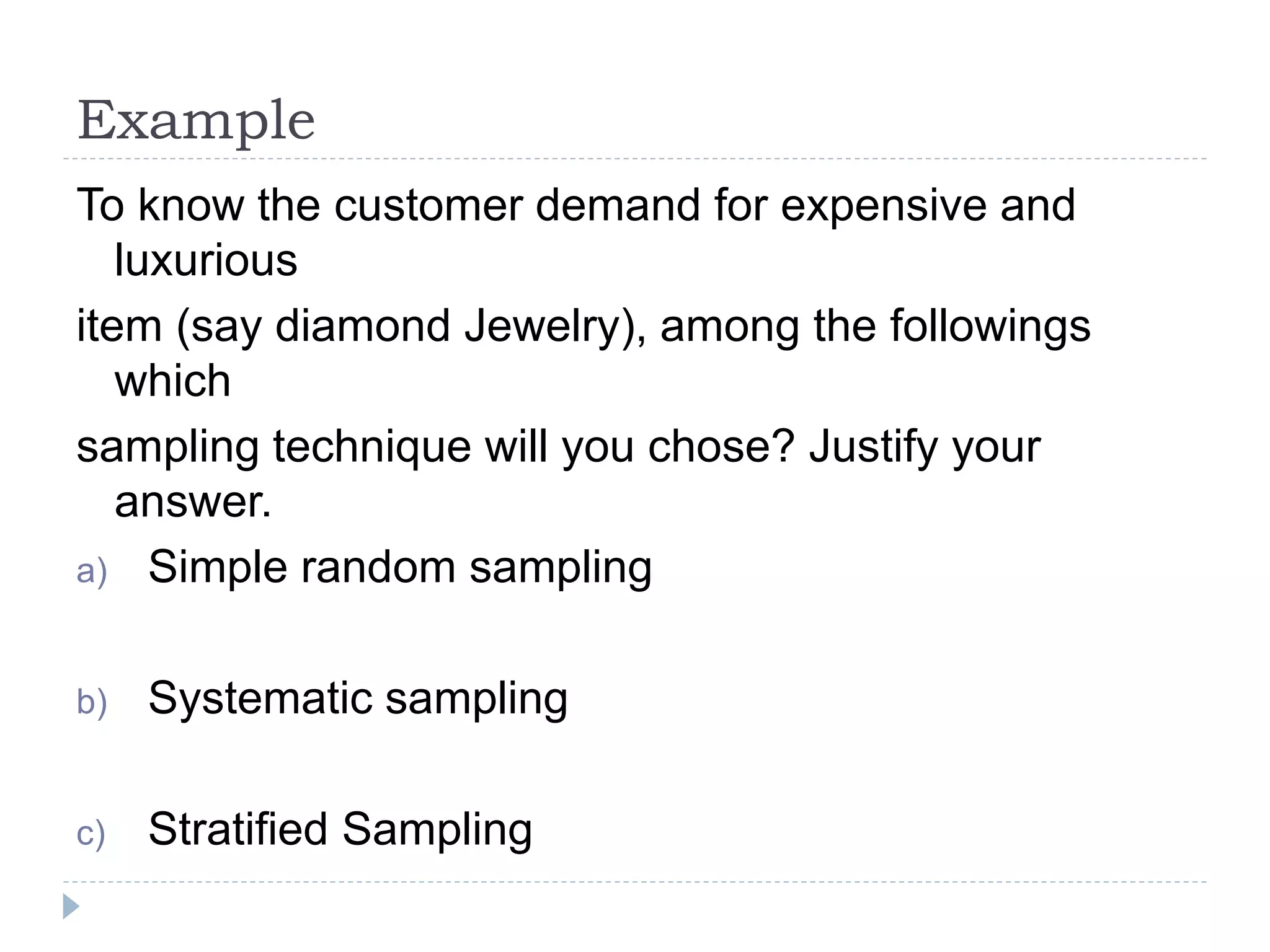
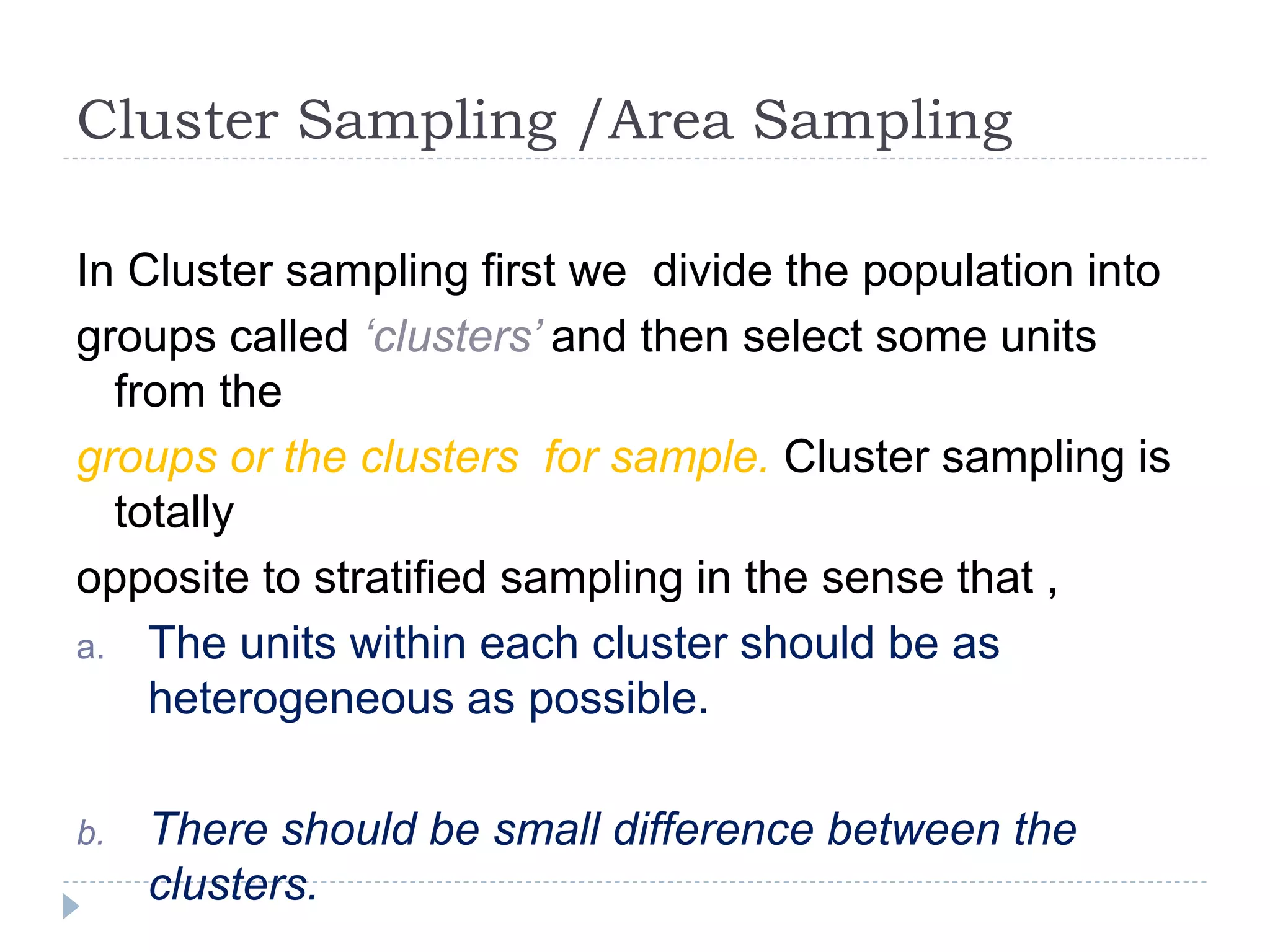
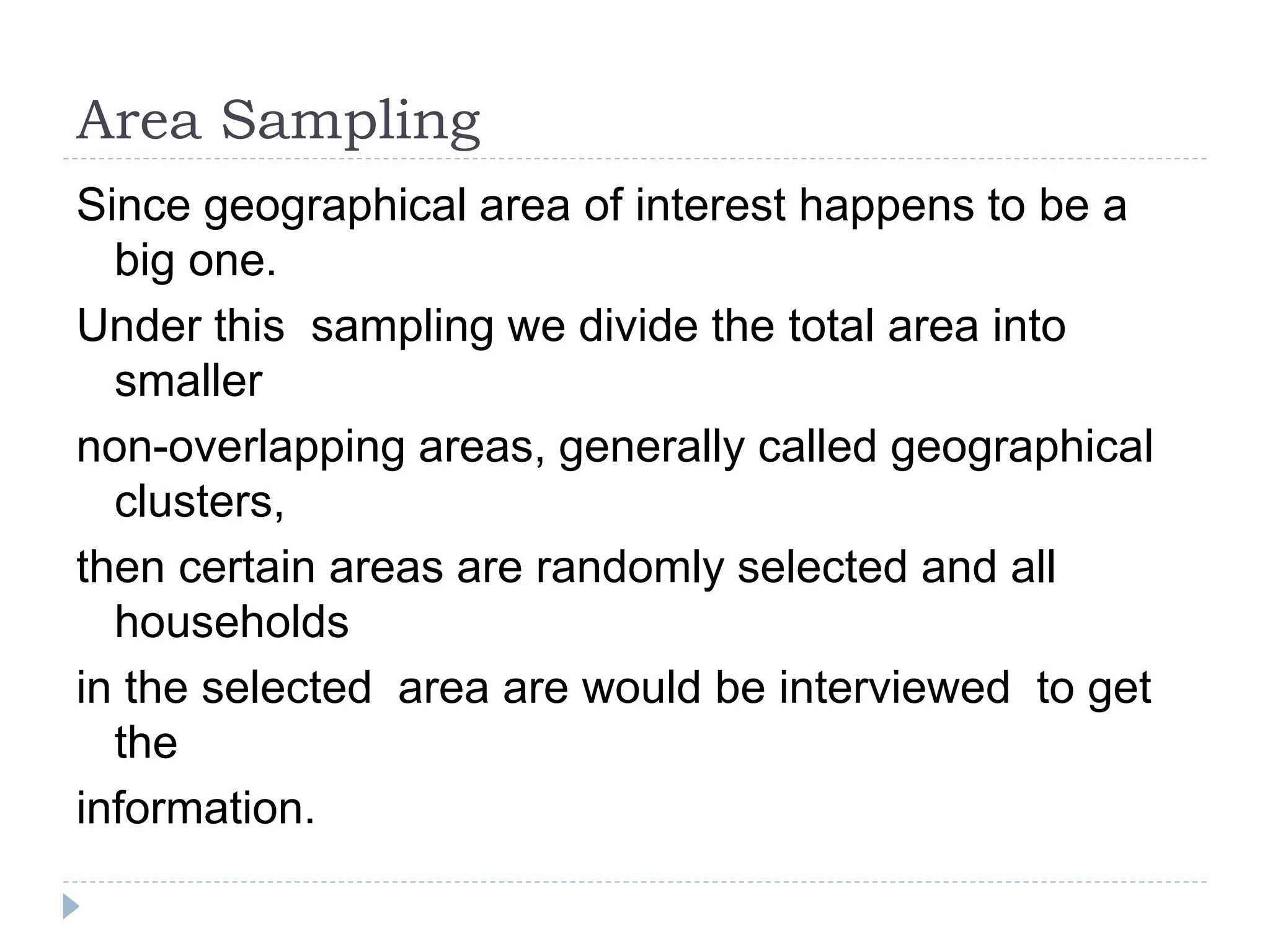
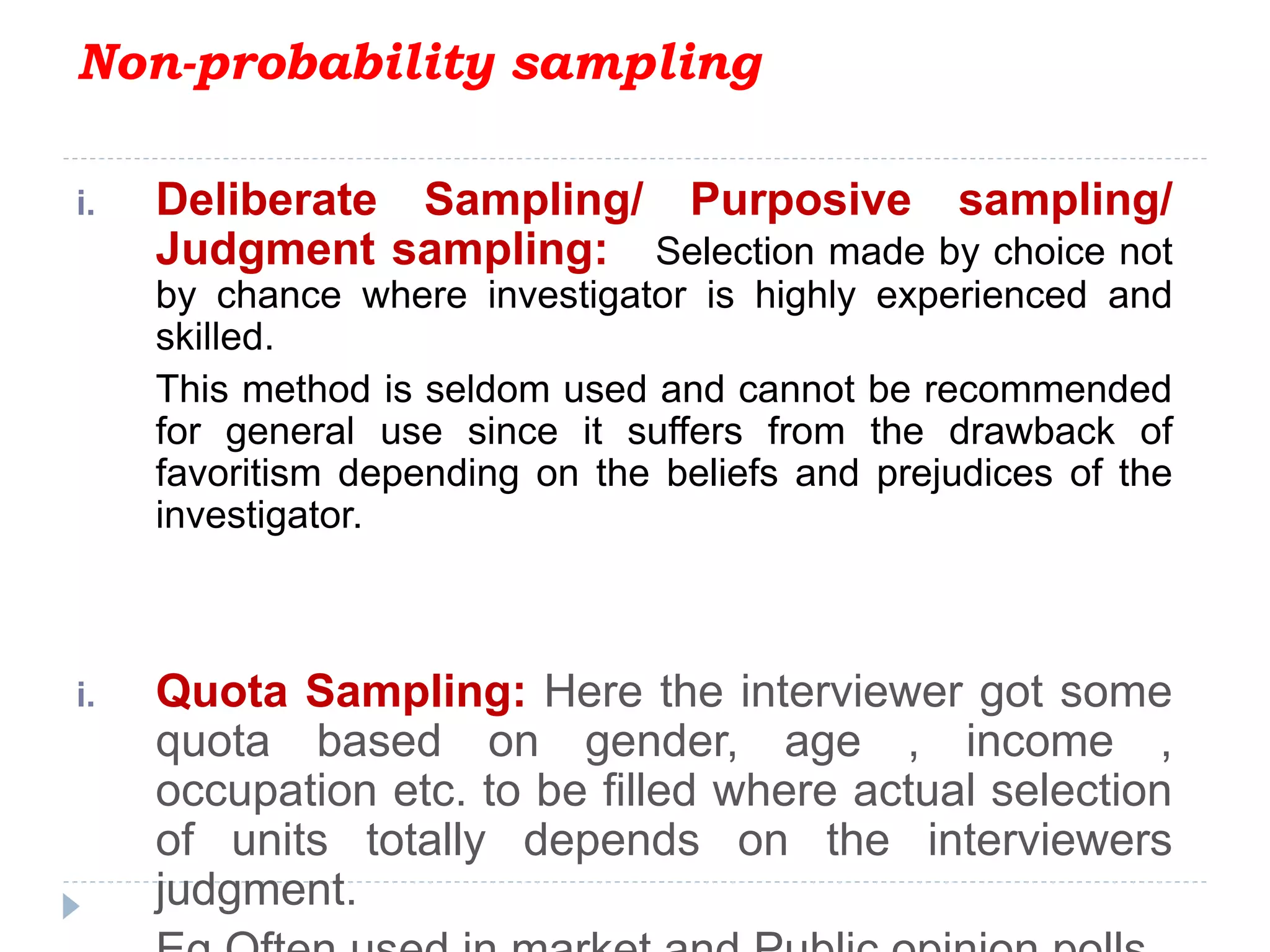
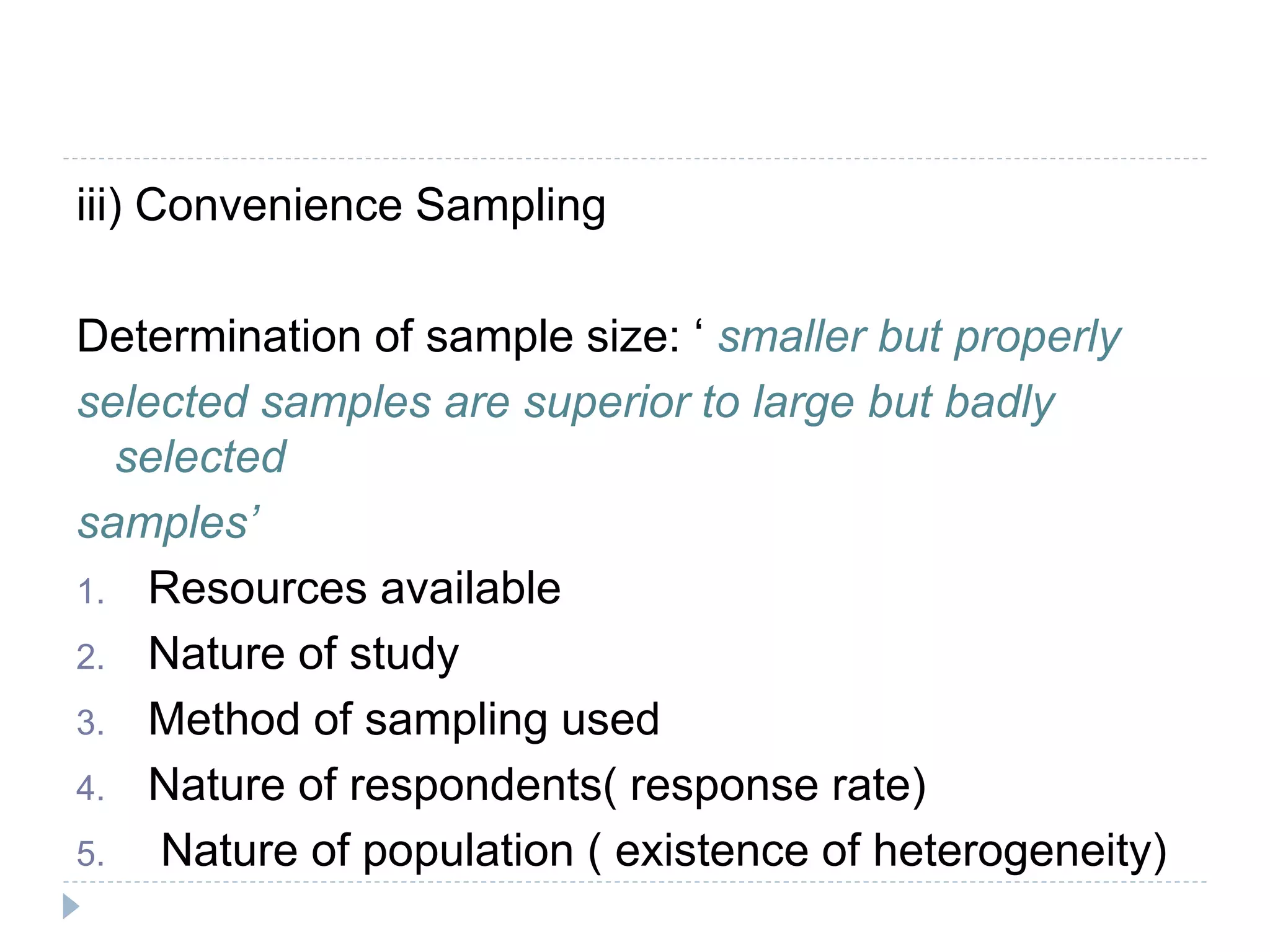
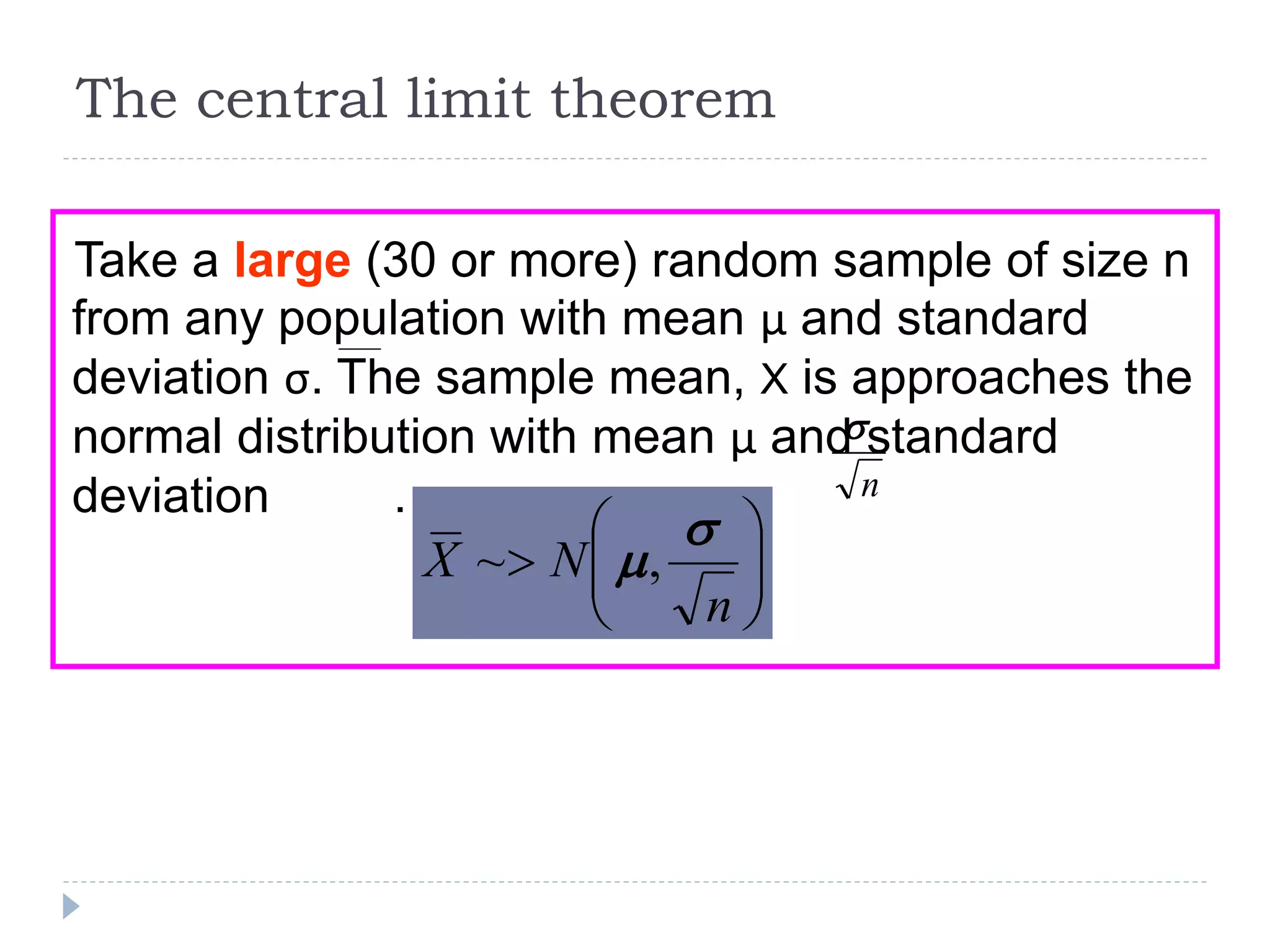

1. Sampling is the process of selecting a subset of items from a population to make inferences about the entire population. It is often used instead of a complete census or enumeration due to the time, cost, and resources required for a census. 2. There are two main types of sampling: probability sampling, where every item has a known, non-zero chance of being selected, and non-probability sampling, where items are selected in a non-random way based on the researcher's judgment. 3. Common probability sampling methods include simple random sampling, systematic sampling, stratified sampling, and cluster sampling. Common non-probability methods include convenience sampling and purposive sampling. The appropriate sampling method depends on the


![Distribution channel &_physical_distribution.pptx [repaired]](https://cdn.slidesharecdn.com/ss_thumbnails/distributionchannelphysicaldistribution-150108150528-conversion-gate01-thumbnail.jpg?width=640&height=640&fit=bounds)


