KASHMEERA.N.A
III SEM MSc ZOOLOGY
ROLL NO : 37
CHRIST COLLEGE
WHAT ARE TELOMERES ?
Telomeres are the ends of chromosomes
• Telomeres are repetitive nucleotide sequences
  located at the termini of linear chromosomes
  of most eukaryotic organisms.

• Its name is derived from the Greek nouns
  telos ='end' and merοs = 'part’.

• Most prokaryotes do not have telomeres.
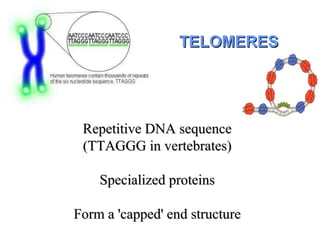
TELOMERES


 Repetitive DNA sequence
 (TTAGGG in vertebrates)

    Specialized proteins

Form a 'capped' end structure
• Telomere specific proteins, eg. TRF1 & TRF2
  bind to the repeat sequence and protect the
  ends.

• Without these proteins, telomeres are acted
  upon by DNA repair pathways leading to
  chromosomal fusions.
• While replicating DNA, the eukaryotic DNA
  replication enzymes cannot replicate the
  sequences present at the ends of the
  chromosomes .

• Hence, these sequences and the information
  they carry may get lost.

• Telomeres "cap" the end-sequences and
  themselves get lost in the process of DNA
  replication.
Telomeres are the ends of
chromosomes


                          Protect ends
                          Maintain length
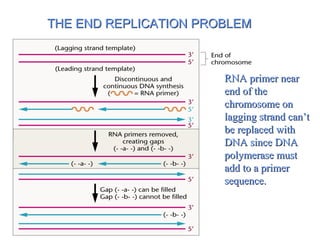
THE END REPLICATION PROBLEM


                       RNA primer near
                       end of the
                       chromosome on
                       lagging strand can’t
                       be replaced with
                       DNA since DNA
                       polymerase must
                       add to a primer
                       sequence.
TELOMERASE
• Telomeric sequence is maintained by a special
  enzyme called telomerase.

• Specialized reverse transcriptase.

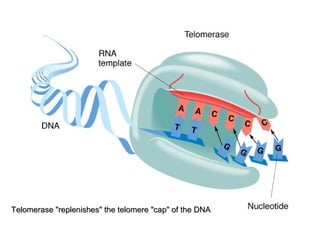
• Carries its own template RNA , which is
  complementary to telomeric repeat sequences.
Telomerase "replenishes" the telomere "cap" of the DNA
• In most multicellular eukaryotic organisms,
  telomerase is active only in germ cells,
  stem cells, and certain white blood cells.
HOW TELOMERASE WORK ?
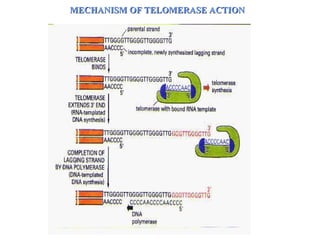
MECHANISM OF TELOMERASE ACTION


                      Tetrahymena

Model organism used in telomere & telomerase research.
MECHANISM OF TELOMERASE ACTION
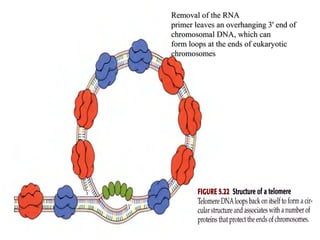
Removal of the RNA
primer leaves an overhanging 3' end of
chromosomal DNA, which can
form loops at the ends of eukaryotic
chromosomes
CLINICAL ASPECTS
•Many experiments have
shown that there is a direct
relationship between
telomeres and aging, and that
telomerase has the ability to
prolong life and cell division.
• Most somatic cells do not have sufficiently
  high levels of telomerase to maintain the
  length of their telomeres for an indefinite
  number of cell divisions.

• Consequently, telomeres gradually shorten as
  cells age.

• This shortening eventually leads to cell death
  or senescence.
• Cancer cells express abnormally high levels of
  telomerase, allowing them to continue dividing
  indefinitely.
Telomerase

Telomerase

  • 1.
    KASHMEERA.N.A III SEM MScZOOLOGY ROLL NO : 37 CHRIST COLLEGE
  • 3.
  • 4.
    Telomeres are theends of chromosomes
  • 5.
    • Telomeres arerepetitive nucleotide sequences located at the termini of linear chromosomes of most eukaryotic organisms. • Its name is derived from the Greek nouns telos ='end' and merοs = 'part’. • Most prokaryotes do not have telomeres.
  • 6.
    TELOMERES Repetitive DNAsequence (TTAGGG in vertebrates) Specialized proteins Form a 'capped' end structure
  • 7.
    • Telomere specificproteins, eg. TRF1 & TRF2 bind to the repeat sequence and protect the ends. • Without these proteins, telomeres are acted upon by DNA repair pathways leading to chromosomal fusions.
  • 8.
    • While replicatingDNA, the eukaryotic DNA replication enzymes cannot replicate the sequences present at the ends of the chromosomes . • Hence, these sequences and the information they carry may get lost. • Telomeres "cap" the end-sequences and themselves get lost in the process of DNA replication.
  • 9.
    Telomeres are theends of chromosomes  Protect ends  Maintain length
  • 10.
    THE END REPLICATIONPROBLEM RNA primer near end of the chromosome on lagging strand can’t be replaced with DNA since DNA polymerase must add to a primer sequence.
  • 12.
    TELOMERASE • Telomeric sequenceis maintained by a special enzyme called telomerase. • Specialized reverse transcriptase. • Carries its own template RNA , which is complementary to telomeric repeat sequences.
  • 13.
    Telomerase "replenishes" thetelomere "cap" of the DNA
  • 14.
    • In mostmulticellular eukaryotic organisms, telomerase is active only in germ cells, stem cells, and certain white blood cells.
  • 15.
  • 16.
    MECHANISM OF TELOMERASEACTION Tetrahymena Model organism used in telomere & telomerase research.
  • 17.
  • 18.
    Removal of theRNA primer leaves an overhanging 3' end of chromosomal DNA, which can form loops at the ends of eukaryotic chromosomes
  • 19.
  • 20.
    •Many experiments have shownthat there is a direct relationship between telomeres and aging, and that telomerase has the ability to prolong life and cell division.
  • 21.
    • Most somaticcells do not have sufficiently high levels of telomerase to maintain the length of their telomeres for an indefinite number of cell divisions. • Consequently, telomeres gradually shorten as cells age. • This shortening eventually leads to cell death or senescence.
  • 22.
    • Cancer cellsexpress abnormally high levels of telomerase, allowing them to continue dividing indefinitely.