BSc. Botany Honours (4th Semester)
Core Paper - 8
MOLECULAR BIOLOGY
UNIT - 2
SURE SHOT LONG QUESTIONS FOR YOUR SEMESTER EXAM
2023-2024
UTKAL UNIVERSITY
Q.1) Discuss mechanism of DNA
replication in Prokaryotes (E.Coli)
Answer:-
• DNA replication in E. coli is semiconservative
and bidirectional.
• This means that the parental DNA strand
serves as a template for a new strand, and
produces two new DNA molecules.
• The three steps of prokaryotic DNA replication
are initiation, elongation, and termination.
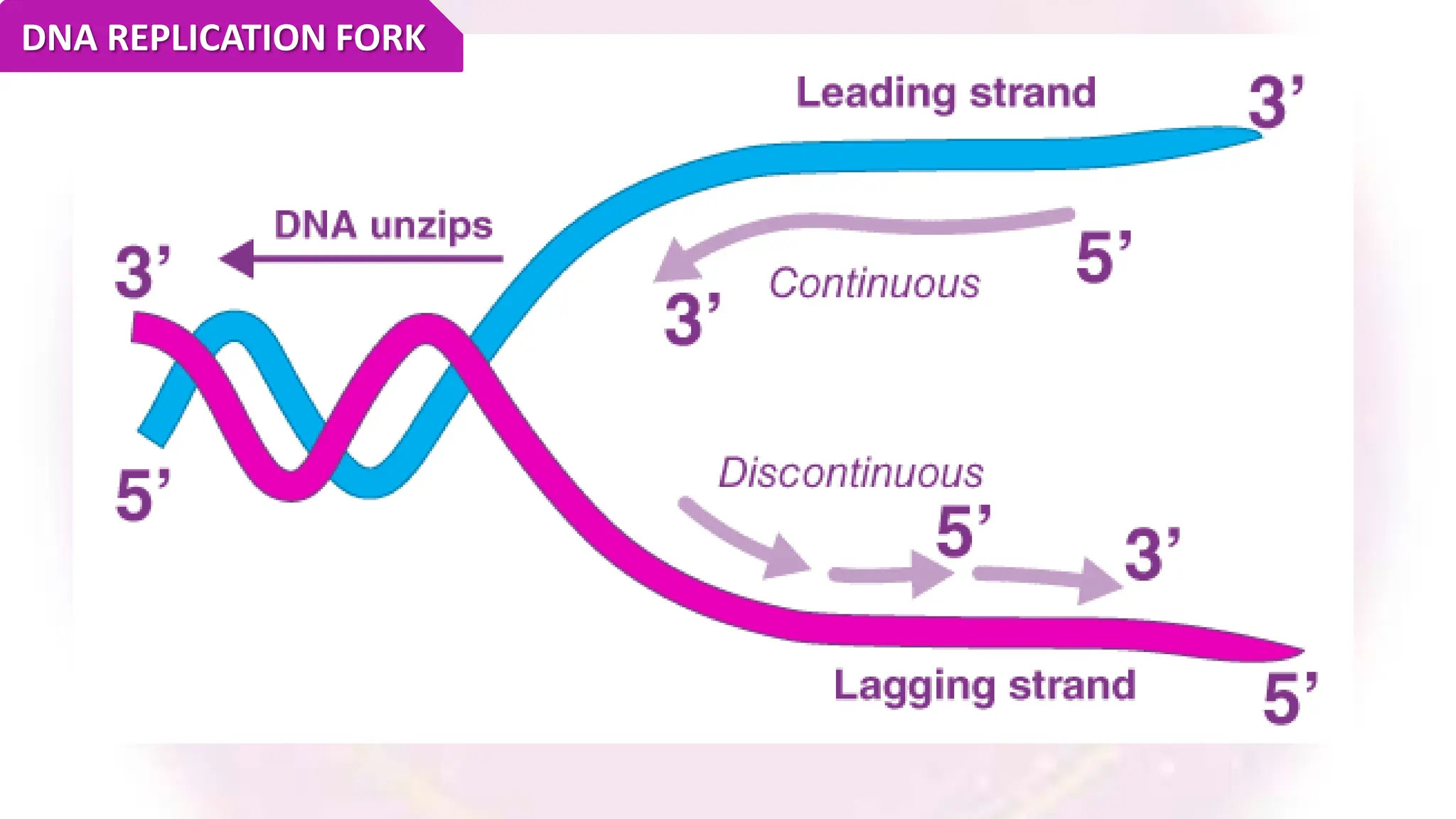
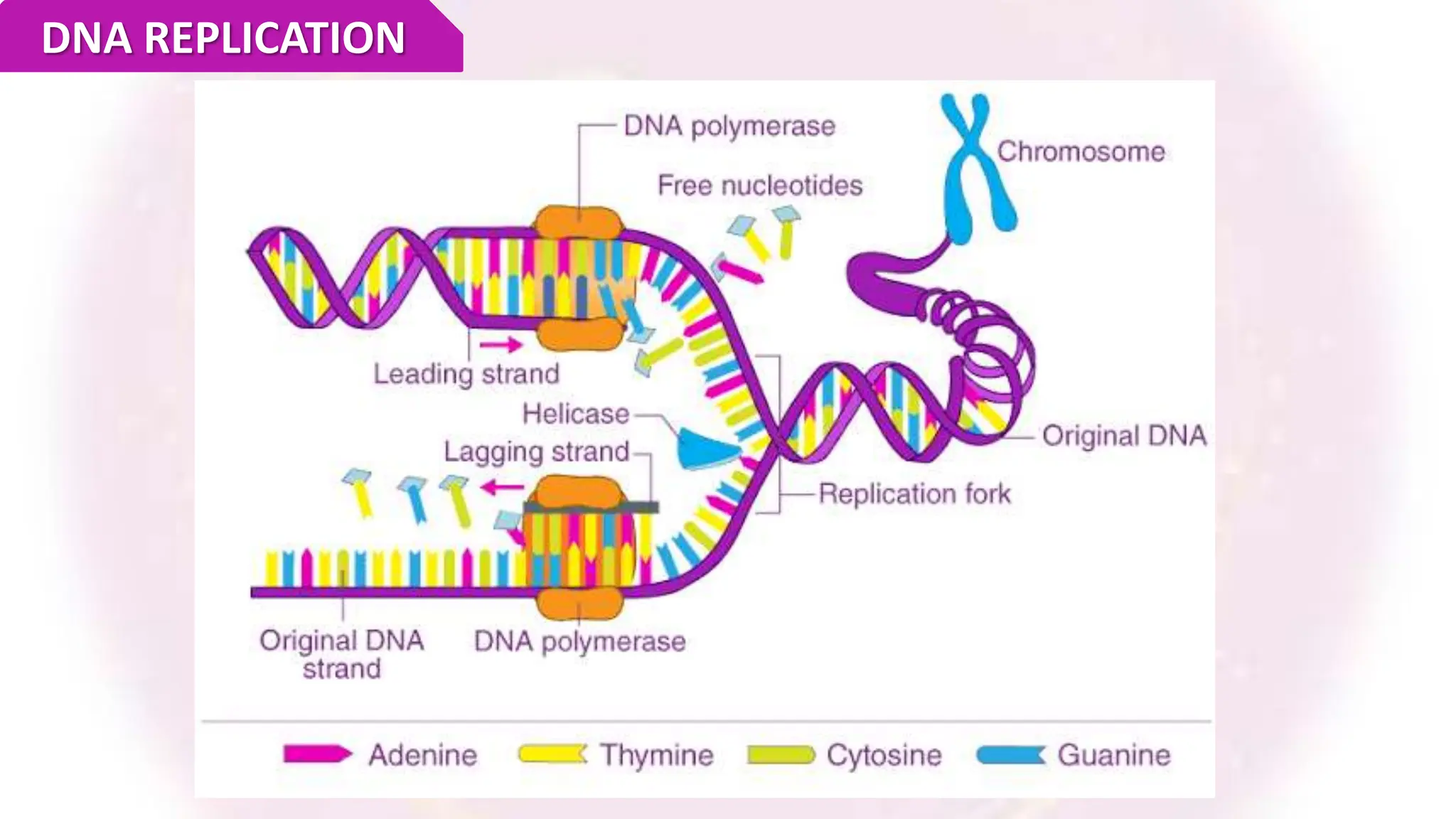
DNA REPLICATION FORK
Here are some details about the mechanism of
DNA replication in prokaryotes:
• Initiation: The two strands of DNA unwind at the origin
of replication.
• Elongation: Helicase opens the DNA and replication
forks are formed. DNA polymerase III adds nucleotides
one by one to the growing DNA chain.
• Termination: Termination occurs when the two forks
meet and fuse, creating two separate double-stranded
DNA molecules.
DNA REPLICATION
The enzymes involved in the replication of
prokaryotic DNA include:
• DNA polymerase I to III
• Helicase
• Ligase
• Primase
• Sliding clamp
• Topoisomerase
• Single-strand binding proteins (SSBs)
• DNA replication in prokaryotes, such as E. coli,
follows a well-orchestrated process involving
several enzymes and proteins.
• The process can be divided into three main
stages: initiation,
elongation, and
termination.
1. Initiation:
• DNA replication begins at a specific site on the
DNA molecule called the origin of replication
(oriC) in E. coli.
• At the oriC region, initiator proteins, such as
DnaA, bind to specific sequences, unwinding a
short stretch of the DNA helix.
• This unwinding creates single-stranded DNA
templates for replication.
2. Elongation:
• Once the DNA is unwound, helicase enzymes, such as DnaB in E. coli, bind to the
separated strands and continue to unwind the DNA ahead of the replication fork.
• Single-strand binding proteins (SSBs) bind to the exposed single strands of DNA,
preventing them from re-forming into a double helix.
• Primase, a specialized RNA polymerase, synthesizes short RNA primers
complementary to the single-stranded DNA templates. These primers provide a
starting point for DNA polymerase III.
• DNA polymerase III, the main enzyme responsible for DNA synthesis in E. coli,
binds to the RNA primers and elongates them by adding complementary
nucleotides in the 5' to 3' direction.
• The leading strand is synthesized continuously in the 5' to 3' direction toward the
replication fork, while the lagging strand is synthesized discontinuously in short
fragments called Okazaki fragments.
• DNA polymerase I removes the RNA primers and replaces them with DNA
nucleotides.
• DNA ligase seals the nicks between adjacent fragments, creating a continuous
strand.
3. Termination:
• DNA replication proceeds bidirectionally from the oriC,
creating two replication forks that move in opposite
directions along the DNA molecule.
• Replication continues until the replication forks meet
each other at a specific termination site called the
termination region (ter).
• Termination is facilitated by termination proteins, such
as Tus protein in E. coli, which bind to the ter sites and
arrest the progress of the replication forks, leading to
the termination of DNA synthesis.
Q.2) Discuss Telomere replication in
eukaryotic chromosomes.
Answer:-
• Telomeres are the ends of eukaryotic chromosomes that
protect them from DNA degradation and other issues.
• Telomere replication is a challenge because the ends of
chromosomes have many obstacles to replication fork
progression.
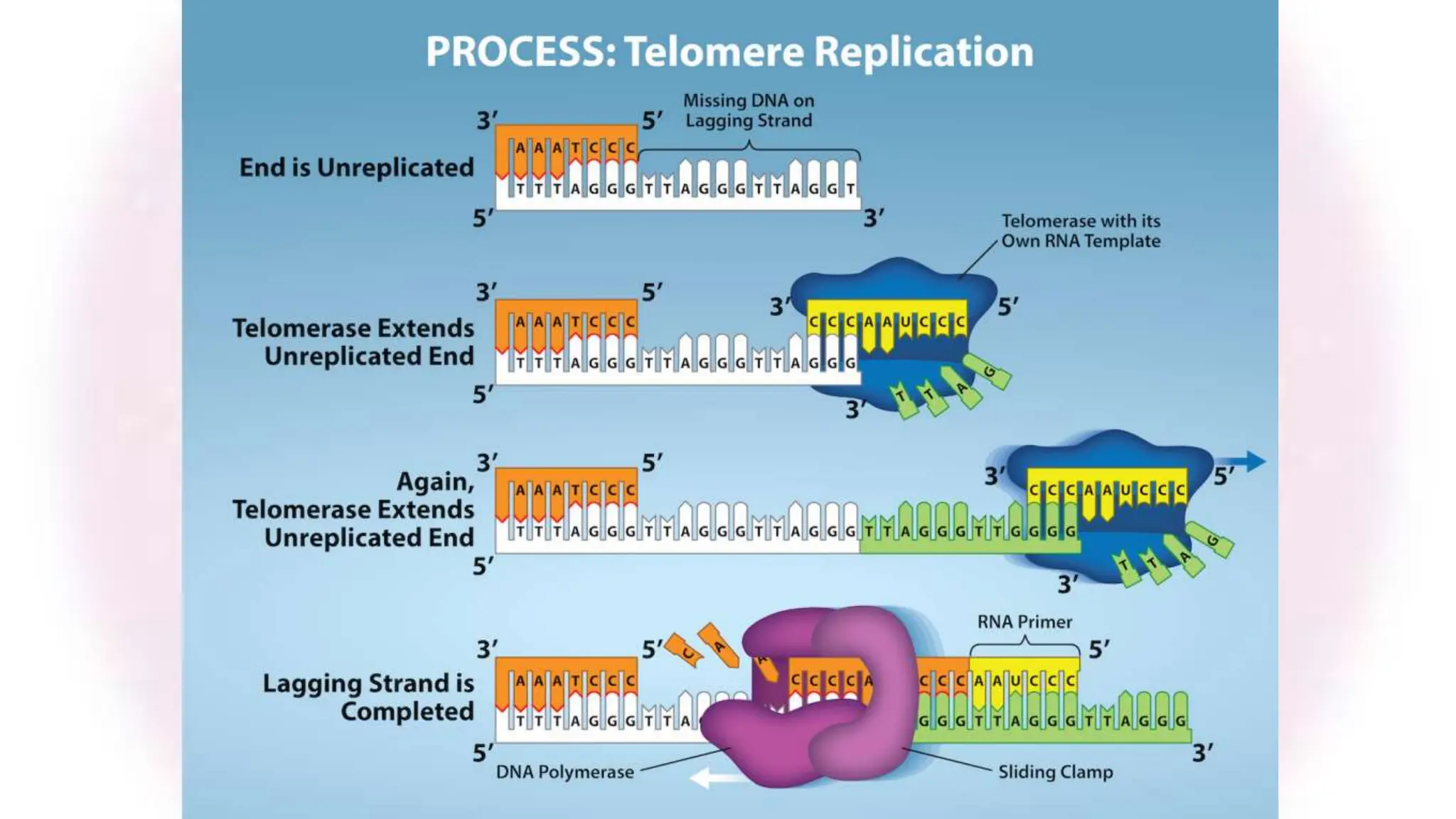
• Telomeres replicate using a telomerase-based mechanism.
Telomerase is a ribonucleoprotein that adds a species-
dependent telomere repeat sequence to the 3' end of
telomeres.
• Telomerase can elongate the 3' single strand G-tails in the
absence of a DNA template.
Here's how telomere replication works:
1. Telomere ace recognizes the tip of an existing repeat
sequence.
2. Using an RNA template within the enzyme telomerase, it
elongates the parental strand in the 5' to 3' direction.
3. It adds additional repeats as it moves down the parental
strand.
• Telomeres are required for cell division in almost all
animals. With each cell replication, the telomeres get
shorter and shorter until they're so short that your cells can
no longer divide.
• Telomeres are essential structures located at the ends
of eukaryotic chromosomes, consisting of repetitive
DNA sequences and associated proteins.
• Their primary function is to protect the ends of
chromosomes from degradation and fusion with
neighboring chromosomes, thus ensuring genome
stability.
• Telomere replication is a highly regulated process that
involves specific enzymes and mechanisms to maintain
the integrity of chromosome ends during DNA
replication.
overview of the process:
1. Telomeric DNA Structure: Telomeric DNA consists of repetitive
sequences rich in guanine and cytosine nucleotides. In humans,
the telomeric repeat sequence is typically TTAGGG. These repeats
form a protective cap at the ends of chromosomes.
2. End Replication Problem: During DNA replication, the enzyme
DNA polymerase synthesizes new DNA strands in the 5' to 3'
direction.
• However, due to the nature of DNA synthesis, the lagging strand is
synthesized discontinuously in short segments called Okazaki
fragments.
• This poses a problem at the ends of linear chromosomes because
the lagging strand synthesis cannot be completed all the way to the
very end, leading to the loss of genetic material with each round of
replication. This phenomenon is known as the "end replication
problem."
3. Telomerase: To overcome the end replication
problem, many eukaryotic cells express an enzyme
called telomerase. Telomerase is a specialized reverse
transcriptase that contains an RNA template
complementary to the telomeric repeat sequence. It
extends the telomeric DNA at the 3' end of
chromosomes by adding repetitive sequences using
its RNA template as a guide.
4. Telomere Extension: Telomerase extends the 3'
overhang of the lagging strand by adding telomeric
repeats to the chromosome ends. This process
ensures that the telomeres maintain their length
despite the shortening that occurs during each round
of DNA replication.
5. Telomere Binding Proteins: Telomeres are bound by a complex of
proteins that help protect chromosome ends and regulate
telomere length. These proteins include shelterin complex
components such as TRF1, TRF2, POT1, TIN2, TPP1, and RAP1.
They play roles in telomere protection, regulation of telomerase
activity, and telomere length homeostasis.
6. Telomere Shortening and Aging: Despite telomerase activity,
telomeres can shorten over time due to factors such as
incomplete replication, oxidative damage, and cellular stress.
Progressive telomere shortening is associated with cellular aging
and senescence. In some cells, particularly somatic cells,
telomerase activity is low or absent, leading to a gradual erosion
of telomeres with each cell division.
In summary, telomere replication in eukaryotic chromosomes involves
the action of telomerase to maintain telomere length and protect
chromosome ends, ensuring genome stability and cellular longevity.
Q.3) Express various features and
properties of Genetic code & its
exceptions.
Answers:-
• The genetic code is a set of rules by which information
encoded in DNA or RNA is translated into proteins.
• The genetic code is a triplet code, meaning that each
amino acid is coded for by a sequence of three
nucleotides.
• The genetic code is also degenerate, meaning that
more than one codon can code for the same amino
acid.
• The genetic code is nearly universal in all known life
forms.
The eight important properties of the genetic code are:
1) Triplet code
2) Degenerate code
3) Non-overlapping code
4) Comma-less code
5) Unambiguous code
6) Universal code
7) Co-linearity
8) Gene-polypeptide parity
• There are a few exceptions to the genetic code.
For example, in some organisms, the codon UGA
codes for tryptophan instead of being a stop
codon.
• The genetic code is a remarkable piece of biology.
It is a universal language that is used by all life
forms to create proteins.
• The genetic code is also a very efficient code, as it
is able to encode a large amount of information
in a very small space.
The genetic code is the set of rules by which information encoded within DNA or mRNA
sequences is translated into the amino acid sequence of proteins. Here are some key features
and properties of the genetic code, along with notable exceptions:
1. Triplet Code: The genetic code is a triplet code, meaning
that each three-nucleotide sequence, called a codon,
encodes for a specific amino acid or a stop signal during
protein synthesis. There are 64 possible codons (4
nucleotides raised to the power of 3), of which 61 code
for amino acids and 3 serve as stop signals (termination
codons).
2. Degeneracy: The genetic code exhibits degeneracy,
meaning that multiple codons can code for the same
amino acid. This redundancy provides some protection
against errors in DNA replication or mutation, as changes
in the third position of a codon often do not affect the
encoded amino acid due to the redundancy of the code.
3. Universal: The genetic code is nearly universal across all
organisms, from bacteria to humans, with minor variations. This
universality underscores the common ancestry of all living
organisms and allows for the exchange of genetic information
between different species through processes such as horizontal
gene transfer.
4. Start and Stop Codons: The codon AUG serves as the start codon,
encoding the amino acid methionine and indicating the beginning
of protein synthesis. Three codons, UAA, UAG, and UGA, serve as
stop codons, signaling the termination of protein synthesis.
5. Non-coding Codons: Some codons do not encode amino acids but
instead serve as signals for various functions during protein
synthesis. For example, AUG serves as both a start codon and an
internal methionine codon in certain contexts.
6. Wobble Hypothesis: The wobble hypothesis explains the degeneracy of
the genetic code by allowing some flexibility in the base pairing between
the third nucleotide of the codon (the "wobble" position) and the
corresponding nucleotide in the anticodon of the transfer RNA (tRNA).
This flexibility allows certain tRNAs to recognize multiple codons.
7. Exceptions: While the genetic code is highly conserved, there are some
exceptions and variations observed in specific organisms or organelles.
These exceptions include:
• Codon reassignments: In some organisms or organelles, certain codons
may encode different amino acids than in the standard genetic code.
• Non-canonical amino acids: Some organisms incorporate non-standard or
modified amino acids into proteins, using codons that typically encode
other amino acids.
• Alternative genetic codes: Some organisms, particularly in the
mitochondrial DNA of certain species, utilize alternative genetic codes
with variations in codon assignments.
Q.4) Discuss mechanism of splicing &
mRNA processing in eukaryotes.
Answers:-
• In eukaryotes, messenger RNA (mRNA)
processing involves the following steps:
1) Transcription
2) Capping
3) Splicing
4) Polyadenylation
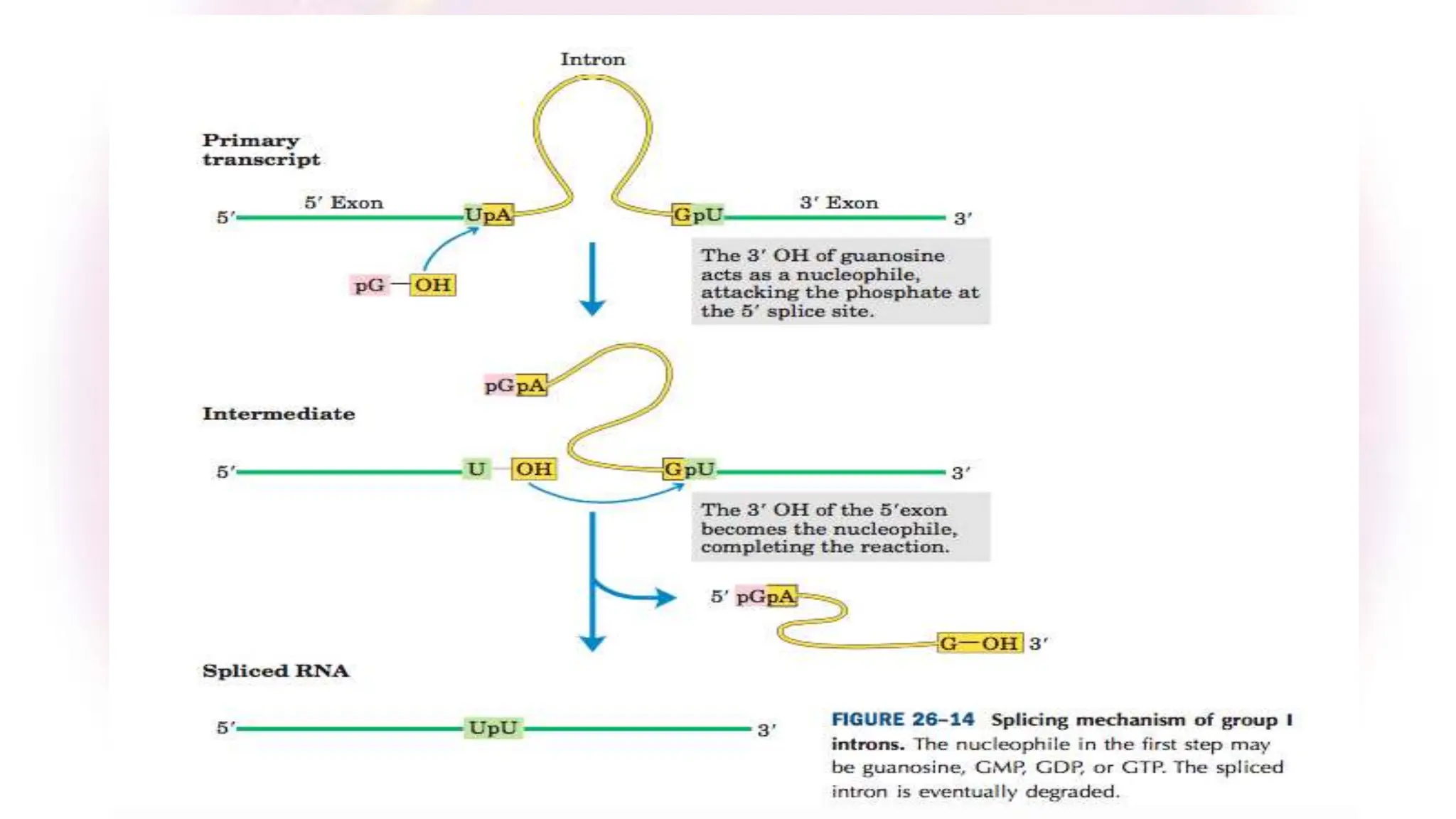
• Splicing is a sequence-specific mechanism that
removes introns and rejoins exons with
precision. It occurs while the mRNA is still in the
nucleus.
Here are some details about the steps of mRNA processing:
• Capping - The first processing event that an mRNA undergoes is
capping. This involves adding a 7-methylguanosine cap to the 5' end
of the primary transcript.
• Splicing - Splicing involves removing introns and rejoining exons.
Spliceosomes are complexes of proteins and RNA molecules that
cleave pre-mRNA. They detect sequences at the 5' and 3' ends of
introns.
• Polyadenylation - Polyadenylation is an inherent part of the
termination mechanism for RNA polymerase II.
Pre-mRNA splicing is a post-transcriptional process that generates
multiple transcript isoforms from a single gene. This process increases
the variety of encoded proteins.
Splicing and mRNA processing are crucial steps in the maturation of pre-
messenger RNA (pre-mRNA) molecules into functional messenger RNA
(mRNA) molecules in eukaryotic cells. Here's an overview of the
mechanisms involved:
1) Transcription: The process begins with transcription, during which RNA
polymerase synthesizes a pre-mRNA molecule using one of the DNA
strands as a template. This pre-mRNA molecule contains both exons
(coding regions) and introns (non-coding regions).
2) Capping: Shortly after transcription initiation, a 7-methylguanosine cap
is added to the 5' end of the pre-mRNA molecule. This cap helps stabilize
the mRNA molecule and is important for recognition by the ribosome
during translation.
3) Polyadenylation: At the 3' end of the pre-mRNA molecule, a
polyadenylate (poly-A) tail is added. This involves the cleavage of the
pre-mRNA downstream of a consensus sequence and the addition of
multiple adenine nucleotides. The poly-A tail protects the mRNA
molecule from degradation and is involved in the export of mRNA from
the nucleus to the cytoplasm.
4) Splicing:
• Definition: Splicing is the process by which introns are
removed from the pre-mRNA molecule and exons are
joined together to form a mature mRNA molecule.
• Spliceosome: Splicing is carried out by a large
ribonucleoprotein complex called the spliceosome, which
consists of small nuclear ribonucleoproteins (snRNPs) and
other protein factors.
• Splice Sites: Splicing occurs at specific nucleotide
sequences at the boundaries between exons and introns,
known as splice sites. The consensus sequences at these
splice sites include the 5' splice site, the branch point
sequence, the polypyrimidine tract, and the 3' splice site.
Splicing Steps: Splicing occurs in two sequential transesterification
reactions:
• First Step (5' Splice Site Cleavage): The 2'-OH
group of the branch point sequence attacks the
phosphate group at the 5' splice site, forming a
lariat structure and releasing the 5' exon.
• Second Step (Exon Ligation): The 3' hydroxyl
group of the 5' exon attacks the phosphate group
at the 3' splice site, resulting in the joining of the
two exons and the release of the intron in the
form of a lariat structure.
5) mRNA Export: Once splicing and other
processing steps are complete, the mature
mRNA molecule is transported from the nucleus
to the cytoplasm through nuclear pores. The
mRNA molecule can then undergo translation
by ribosomes to produce proteins.
Overall, splicing and mRNA processing ensure the
removal of non-coding sequences and the proper
arrangement of coding sequences within mRNA
molecules, allowing for the accurate expression of
genetic information in eukaryotic cells.
Core 8 2nd unit.pptx 4th semester botany

Core 8 2nd unit.pptx 4th semester botany

  • 1.
    BSc. Botany Honours(4th Semester) Core Paper - 8 MOLECULAR BIOLOGY UNIT - 2 SURE SHOT LONG QUESTIONS FOR YOUR SEMESTER EXAM 2023-2024 UTKAL UNIVERSITY
  • 2.
    Q.1) Discuss mechanismof DNA replication in Prokaryotes (E.Coli)
  • 3.
    Answer:- • DNA replicationin E. coli is semiconservative and bidirectional. • This means that the parental DNA strand serves as a template for a new strand, and produces two new DNA molecules. • The three steps of prokaryotic DNA replication are initiation, elongation, and termination.
  • 4.
  • 5.
    Here are somedetails about the mechanism of DNA replication in prokaryotes: • Initiation: The two strands of DNA unwind at the origin of replication. • Elongation: Helicase opens the DNA and replication forks are formed. DNA polymerase III adds nucleotides one by one to the growing DNA chain. • Termination: Termination occurs when the two forks meet and fuse, creating two separate double-stranded DNA molecules.
  • 6.
  • 7.
    The enzymes involvedin the replication of prokaryotic DNA include: • DNA polymerase I to III • Helicase • Ligase • Primase • Sliding clamp • Topoisomerase • Single-strand binding proteins (SSBs)
  • 8.
    • DNA replicationin prokaryotes, such as E. coli, follows a well-orchestrated process involving several enzymes and proteins. • The process can be divided into three main stages: initiation, elongation, and termination.
  • 9.
    1. Initiation: • DNAreplication begins at a specific site on the DNA molecule called the origin of replication (oriC) in E. coli. • At the oriC region, initiator proteins, such as DnaA, bind to specific sequences, unwinding a short stretch of the DNA helix. • This unwinding creates single-stranded DNA templates for replication.
  • 10.
    2. Elongation: • Oncethe DNA is unwound, helicase enzymes, such as DnaB in E. coli, bind to the separated strands and continue to unwind the DNA ahead of the replication fork. • Single-strand binding proteins (SSBs) bind to the exposed single strands of DNA, preventing them from re-forming into a double helix. • Primase, a specialized RNA polymerase, synthesizes short RNA primers complementary to the single-stranded DNA templates. These primers provide a starting point for DNA polymerase III. • DNA polymerase III, the main enzyme responsible for DNA synthesis in E. coli, binds to the RNA primers and elongates them by adding complementary nucleotides in the 5' to 3' direction. • The leading strand is synthesized continuously in the 5' to 3' direction toward the replication fork, while the lagging strand is synthesized discontinuously in short fragments called Okazaki fragments. • DNA polymerase I removes the RNA primers and replaces them with DNA nucleotides. • DNA ligase seals the nicks between adjacent fragments, creating a continuous strand.
  • 11.
    3. Termination: • DNAreplication proceeds bidirectionally from the oriC, creating two replication forks that move in opposite directions along the DNA molecule. • Replication continues until the replication forks meet each other at a specific termination site called the termination region (ter). • Termination is facilitated by termination proteins, such as Tus protein in E. coli, which bind to the ter sites and arrest the progress of the replication forks, leading to the termination of DNA synthesis.
  • 12.
    Q.2) Discuss Telomerereplication in eukaryotic chromosomes.
  • 13.
    Answer:- • Telomeres arethe ends of eukaryotic chromosomes that protect them from DNA degradation and other issues. • Telomere replication is a challenge because the ends of chromosomes have many obstacles to replication fork progression. • Telomeres replicate using a telomerase-based mechanism. Telomerase is a ribonucleoprotein that adds a species- dependent telomere repeat sequence to the 3' end of telomeres. • Telomerase can elongate the 3' single strand G-tails in the absence of a DNA template.
  • 15.
    Here's how telomerereplication works: 1. Telomere ace recognizes the tip of an existing repeat sequence. 2. Using an RNA template within the enzyme telomerase, it elongates the parental strand in the 5' to 3' direction. 3. It adds additional repeats as it moves down the parental strand. • Telomeres are required for cell division in almost all animals. With each cell replication, the telomeres get shorter and shorter until they're so short that your cells can no longer divide.
  • 16.
    • Telomeres areessential structures located at the ends of eukaryotic chromosomes, consisting of repetitive DNA sequences and associated proteins. • Their primary function is to protect the ends of chromosomes from degradation and fusion with neighboring chromosomes, thus ensuring genome stability. • Telomere replication is a highly regulated process that involves specific enzymes and mechanisms to maintain the integrity of chromosome ends during DNA replication.
  • 17.
    overview of theprocess: 1. Telomeric DNA Structure: Telomeric DNA consists of repetitive sequences rich in guanine and cytosine nucleotides. In humans, the telomeric repeat sequence is typically TTAGGG. These repeats form a protective cap at the ends of chromosomes. 2. End Replication Problem: During DNA replication, the enzyme DNA polymerase synthesizes new DNA strands in the 5' to 3' direction. • However, due to the nature of DNA synthesis, the lagging strand is synthesized discontinuously in short segments called Okazaki fragments. • This poses a problem at the ends of linear chromosomes because the lagging strand synthesis cannot be completed all the way to the very end, leading to the loss of genetic material with each round of replication. This phenomenon is known as the "end replication problem."
  • 18.
    3. Telomerase: Toovercome the end replication problem, many eukaryotic cells express an enzyme called telomerase. Telomerase is a specialized reverse transcriptase that contains an RNA template complementary to the telomeric repeat sequence. It extends the telomeric DNA at the 3' end of chromosomes by adding repetitive sequences using its RNA template as a guide. 4. Telomere Extension: Telomerase extends the 3' overhang of the lagging strand by adding telomeric repeats to the chromosome ends. This process ensures that the telomeres maintain their length despite the shortening that occurs during each round of DNA replication.
  • 19.
    5. Telomere BindingProteins: Telomeres are bound by a complex of proteins that help protect chromosome ends and regulate telomere length. These proteins include shelterin complex components such as TRF1, TRF2, POT1, TIN2, TPP1, and RAP1. They play roles in telomere protection, regulation of telomerase activity, and telomere length homeostasis. 6. Telomere Shortening and Aging: Despite telomerase activity, telomeres can shorten over time due to factors such as incomplete replication, oxidative damage, and cellular stress. Progressive telomere shortening is associated with cellular aging and senescence. In some cells, particularly somatic cells, telomerase activity is low or absent, leading to a gradual erosion of telomeres with each cell division. In summary, telomere replication in eukaryotic chromosomes involves the action of telomerase to maintain telomere length and protect chromosome ends, ensuring genome stability and cellular longevity.
  • 20.
    Q.3) Express variousfeatures and properties of Genetic code & its exceptions.
  • 21.
    Answers:- • The geneticcode is a set of rules by which information encoded in DNA or RNA is translated into proteins. • The genetic code is a triplet code, meaning that each amino acid is coded for by a sequence of three nucleotides. • The genetic code is also degenerate, meaning that more than one codon can code for the same amino acid. • The genetic code is nearly universal in all known life forms.
  • 22.
    The eight importantproperties of the genetic code are: 1) Triplet code 2) Degenerate code 3) Non-overlapping code 4) Comma-less code 5) Unambiguous code 6) Universal code 7) Co-linearity 8) Gene-polypeptide parity
  • 23.
    • There area few exceptions to the genetic code. For example, in some organisms, the codon UGA codes for tryptophan instead of being a stop codon. • The genetic code is a remarkable piece of biology. It is a universal language that is used by all life forms to create proteins. • The genetic code is also a very efficient code, as it is able to encode a large amount of information in a very small space.
  • 24.
    The genetic codeis the set of rules by which information encoded within DNA or mRNA sequences is translated into the amino acid sequence of proteins. Here are some key features and properties of the genetic code, along with notable exceptions: 1. Triplet Code: The genetic code is a triplet code, meaning that each three-nucleotide sequence, called a codon, encodes for a specific amino acid or a stop signal during protein synthesis. There are 64 possible codons (4 nucleotides raised to the power of 3), of which 61 code for amino acids and 3 serve as stop signals (termination codons). 2. Degeneracy: The genetic code exhibits degeneracy, meaning that multiple codons can code for the same amino acid. This redundancy provides some protection against errors in DNA replication or mutation, as changes in the third position of a codon often do not affect the encoded amino acid due to the redundancy of the code.
  • 25.
    3. Universal: Thegenetic code is nearly universal across all organisms, from bacteria to humans, with minor variations. This universality underscores the common ancestry of all living organisms and allows for the exchange of genetic information between different species through processes such as horizontal gene transfer. 4. Start and Stop Codons: The codon AUG serves as the start codon, encoding the amino acid methionine and indicating the beginning of protein synthesis. Three codons, UAA, UAG, and UGA, serve as stop codons, signaling the termination of protein synthesis. 5. Non-coding Codons: Some codons do not encode amino acids but instead serve as signals for various functions during protein synthesis. For example, AUG serves as both a start codon and an internal methionine codon in certain contexts.
  • 26.
    6. Wobble Hypothesis:The wobble hypothesis explains the degeneracy of the genetic code by allowing some flexibility in the base pairing between the third nucleotide of the codon (the "wobble" position) and the corresponding nucleotide in the anticodon of the transfer RNA (tRNA). This flexibility allows certain tRNAs to recognize multiple codons. 7. Exceptions: While the genetic code is highly conserved, there are some exceptions and variations observed in specific organisms or organelles. These exceptions include: • Codon reassignments: In some organisms or organelles, certain codons may encode different amino acids than in the standard genetic code. • Non-canonical amino acids: Some organisms incorporate non-standard or modified amino acids into proteins, using codons that typically encode other amino acids. • Alternative genetic codes: Some organisms, particularly in the mitochondrial DNA of certain species, utilize alternative genetic codes with variations in codon assignments.
  • 27.
    Q.4) Discuss mechanismof splicing & mRNA processing in eukaryotes.
  • 28.
    Answers:- • In eukaryotes,messenger RNA (mRNA) processing involves the following steps: 1) Transcription 2) Capping 3) Splicing 4) Polyadenylation • Splicing is a sequence-specific mechanism that removes introns and rejoins exons with precision. It occurs while the mRNA is still in the nucleus.
  • 29.
    Here are somedetails about the steps of mRNA processing: • Capping - The first processing event that an mRNA undergoes is capping. This involves adding a 7-methylguanosine cap to the 5' end of the primary transcript. • Splicing - Splicing involves removing introns and rejoining exons. Spliceosomes are complexes of proteins and RNA molecules that cleave pre-mRNA. They detect sequences at the 5' and 3' ends of introns. • Polyadenylation - Polyadenylation is an inherent part of the termination mechanism for RNA polymerase II. Pre-mRNA splicing is a post-transcriptional process that generates multiple transcript isoforms from a single gene. This process increases the variety of encoded proteins.
  • 31.
    Splicing and mRNAprocessing are crucial steps in the maturation of pre- messenger RNA (pre-mRNA) molecules into functional messenger RNA (mRNA) molecules in eukaryotic cells. Here's an overview of the mechanisms involved: 1) Transcription: The process begins with transcription, during which RNA polymerase synthesizes a pre-mRNA molecule using one of the DNA strands as a template. This pre-mRNA molecule contains both exons (coding regions) and introns (non-coding regions). 2) Capping: Shortly after transcription initiation, a 7-methylguanosine cap is added to the 5' end of the pre-mRNA molecule. This cap helps stabilize the mRNA molecule and is important for recognition by the ribosome during translation. 3) Polyadenylation: At the 3' end of the pre-mRNA molecule, a polyadenylate (poly-A) tail is added. This involves the cleavage of the pre-mRNA downstream of a consensus sequence and the addition of multiple adenine nucleotides. The poly-A tail protects the mRNA molecule from degradation and is involved in the export of mRNA from the nucleus to the cytoplasm.
  • 32.
    4) Splicing: • Definition:Splicing is the process by which introns are removed from the pre-mRNA molecule and exons are joined together to form a mature mRNA molecule. • Spliceosome: Splicing is carried out by a large ribonucleoprotein complex called the spliceosome, which consists of small nuclear ribonucleoproteins (snRNPs) and other protein factors. • Splice Sites: Splicing occurs at specific nucleotide sequences at the boundaries between exons and introns, known as splice sites. The consensus sequences at these splice sites include the 5' splice site, the branch point sequence, the polypyrimidine tract, and the 3' splice site.
  • 33.
    Splicing Steps: Splicingoccurs in two sequential transesterification reactions: • First Step (5' Splice Site Cleavage): The 2'-OH group of the branch point sequence attacks the phosphate group at the 5' splice site, forming a lariat structure and releasing the 5' exon. • Second Step (Exon Ligation): The 3' hydroxyl group of the 5' exon attacks the phosphate group at the 3' splice site, resulting in the joining of the two exons and the release of the intron in the form of a lariat structure.
  • 34.
    5) mRNA Export:Once splicing and other processing steps are complete, the mature mRNA molecule is transported from the nucleus to the cytoplasm through nuclear pores. The mRNA molecule can then undergo translation by ribosomes to produce proteins. Overall, splicing and mRNA processing ensure the removal of non-coding sequences and the proper arrangement of coding sequences within mRNA molecules, allowing for the accurate expression of genetic information in eukaryotic cells.