Kuvempu University
Sahyadri science College
Department of biotechnology
Topic : TELOMERASE
UNDER THE GUIDANCE
OF
Prabhakar B T sir
Sahyadri science
College
Shimoga
SUBMITTED BY
Arshiya Banu
I MSc I sem
Sahyadri
science College
Shimoga
1. History
2. What are telomeres
3. What are telomerase
4. DNA replication
5. End replication problem
6. Telomeric DNA
7. Mechanism
8. How does telomerase work
9. Length changing
10. Telomerase in normal cells and cancer cells
11. Conclusion
12. Reference
History :
■ Discovered by Greinder and Blackburn in 1985
■ First recognised as a anticancer target in 1990
■ Development of a sensitive assay for detecting telomerase in cancer and in normal
tissues in 1995-2000
What are telomere?
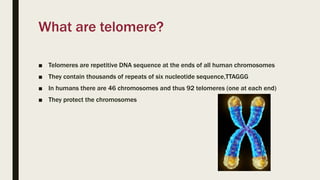
■ Telomeres are repetitive DNA sequence at the ends of all human chromosomes
■ They contain thousands of repeats of six nucleotide sequence,TTAGGG
■ In humans there are 46 chromosomes and thus 92 telomeres (one at each end)
■ They protect the chromosomes
What are telomerase?
The enzyme in a eukaryote that repairs the telomeres of the chromosomes so that
they do not become progressively shorter during successive rounds of chromosome
replication.
DNA Replication
■ Part of understanding the importance of telomeres and telomerase involves the
understanding of DNA REPLICATION
■ Each strand of DNA can act as a template for the synthesis of a new
complimentary strand
■ DNA polymerase is the enzyme used to synthesize the new DNA
■ The problem with DNA replication is that the replication of linear DNA would result
in the loss of genetic material at the end
Many enzymes are responsible for DNA replication such as;
■ DNA helicase : it unwinds and separates double stranded DNA and forms replication fork by breaking
nucleotide pairs in DNA
■ DNA primase : A type of RNA polymerase that generates RNA primers . Primers are short RNA molecules
that act as templates for the starting point of DNA replication
■ DNA polymerase : synthesis of new DNA molecules by adding nucleotides to leading and lagging strands
■ Tropoisomerase : it prevents DNA from super coiling
■ Exonuclease : it removes nucleotide base from the end of DNA chain
■ DNA ligase : joins DNA fragments together by forming phosphodiesterase bonds between nucleotide .
Joins Okazaki fragments
■ Telomerase : catalyse the synthesis of telomere sequence at the end of DNA.
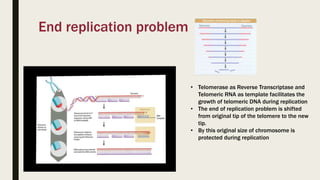
End replication problem
• Telomerase as Reverse Transcriptase and
Telomeric RNA as template facilitates the
growth of telomeric DNA during replication
• The end of replication problem is shifted
from original tip of the telomere to the new
tip.
• By this original size of chromosome is
protected during replication
Telomeric
DNA
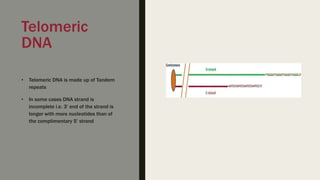
• Telomeric DNA is made up of Tandem
repeats
• In some cases DNA strand is
incomplete i.e. 3’ end of the strand is
longer with more nucleotides than of
the complimentary 5’ strand
Mechanism
• The enzyme telomerase
extends the DNA sequence at
the end of chromosomes .
• It consists of a protein and a
RNA sequence.
• The RNA part functions as a
template for the construction
of new telomere DNA
How does telomerase work?
■ Telomerase places on strand of DNA on the RNA, positioning itself so that the
template lies adjacent to the tip of chromosome
■ Then, the enzyme adds one DNA nucleotide at time until a full telomeric subunit is
formed
■ When subunit is completed, telomerase can attach another by sliding to the new
end of the chromosome and repeating the synthetic process
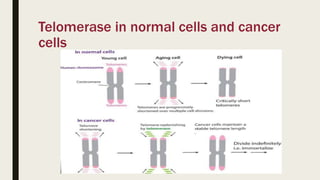
■ Lack of telomerase activity in human cells leads to telomere shortening
■ For there to be continued cell division, telomere loss must stop and telomerase
must be activated
Telomere length changes in Human
Aging
In newborn babies telomeres length is approximately 15-
20kb
mid age people having telomeres length 5-20kb
Telomerase in normal cells and cancer
cells
Conclusion
■ Telomerase is an enzyme containing its own short segment of RNA which it uses as a
template to synthesize DNA sequence to be added onto the telomeres
■ Telomeres appear to be a cellular aging CLOCK which runs down more and more with each
cell division
■ In contrast telomerase resets this clock by adding telomeres back onto the tips of the
chromosomes
■ This restores telomere length and imparts a kind of immortality to the cell
Reference
■ Telomere and telomerase in cancer by Angayarkanni Jayaraman, Kalarikkal Gopikrishnan Kiran
and Palaniswamy Muthusamy published: November 23rd 2016
■ Molecular biology of cancer by Lauren picorino
■ Pardue ML, DeBaryshe PG (2011). "Retrotransposons that maintain chromosome
ends". PNAS. 108 (51): 20317–24. doi:10.1073/pnas.1100278108. PMC 3251079. PMID 21821789.
■ "The Nobel Prize in Physiology or Medicine 2009". The Nobel Foundation. 2009-10-05.
Retrieved 2010-10-23.
Telomerase

Telomerase

  • 1.
    Kuvempu University Sahyadri scienceCollege Department of biotechnology Topic : TELOMERASE UNDER THE GUIDANCE OF Prabhakar B T sir Sahyadri science College Shimoga SUBMITTED BY Arshiya Banu I MSc I sem Sahyadri science College Shimoga
  • 2.
    1. History 2. Whatare telomeres 3. What are telomerase 4. DNA replication 5. End replication problem 6. Telomeric DNA 7. Mechanism 8. How does telomerase work 9. Length changing 10. Telomerase in normal cells and cancer cells 11. Conclusion 12. Reference
  • 3.
    History : ■ Discoveredby Greinder and Blackburn in 1985 ■ First recognised as a anticancer target in 1990 ■ Development of a sensitive assay for detecting telomerase in cancer and in normal tissues in 1995-2000
  • 4.
    What are telomere? ■Telomeres are repetitive DNA sequence at the ends of all human chromosomes ■ They contain thousands of repeats of six nucleotide sequence,TTAGGG ■ In humans there are 46 chromosomes and thus 92 telomeres (one at each end) ■ They protect the chromosomes
  • 5.
    What are telomerase? Theenzyme in a eukaryote that repairs the telomeres of the chromosomes so that they do not become progressively shorter during successive rounds of chromosome replication.
  • 6.
    DNA Replication ■ Partof understanding the importance of telomeres and telomerase involves the understanding of DNA REPLICATION ■ Each strand of DNA can act as a template for the synthesis of a new complimentary strand ■ DNA polymerase is the enzyme used to synthesize the new DNA ■ The problem with DNA replication is that the replication of linear DNA would result in the loss of genetic material at the end
  • 7.
    Many enzymes areresponsible for DNA replication such as; ■ DNA helicase : it unwinds and separates double stranded DNA and forms replication fork by breaking nucleotide pairs in DNA ■ DNA primase : A type of RNA polymerase that generates RNA primers . Primers are short RNA molecules that act as templates for the starting point of DNA replication ■ DNA polymerase : synthesis of new DNA molecules by adding nucleotides to leading and lagging strands ■ Tropoisomerase : it prevents DNA from super coiling ■ Exonuclease : it removes nucleotide base from the end of DNA chain ■ DNA ligase : joins DNA fragments together by forming phosphodiesterase bonds between nucleotide . Joins Okazaki fragments ■ Telomerase : catalyse the synthesis of telomere sequence at the end of DNA.
  • 9.
    End replication problem •Telomerase as Reverse Transcriptase and Telomeric RNA as template facilitates the growth of telomeric DNA during replication • The end of replication problem is shifted from original tip of the telomere to the new tip. • By this original size of chromosome is protected during replication
  • 10.
    Telomeric DNA • Telomeric DNAis made up of Tandem repeats • In some cases DNA strand is incomplete i.e. 3’ end of the strand is longer with more nucleotides than of the complimentary 5’ strand
  • 11.
    Mechanism • The enzymetelomerase extends the DNA sequence at the end of chromosomes . • It consists of a protein and a RNA sequence. • The RNA part functions as a template for the construction of new telomere DNA
  • 13.
    How does telomerasework? ■ Telomerase places on strand of DNA on the RNA, positioning itself so that the template lies adjacent to the tip of chromosome ■ Then, the enzyme adds one DNA nucleotide at time until a full telomeric subunit is formed ■ When subunit is completed, telomerase can attach another by sliding to the new end of the chromosome and repeating the synthetic process ■ Lack of telomerase activity in human cells leads to telomere shortening ■ For there to be continued cell division, telomere loss must stop and telomerase must be activated
  • 14.
    Telomere length changesin Human Aging In newborn babies telomeres length is approximately 15- 20kb mid age people having telomeres length 5-20kb
  • 15.
    Telomerase in normalcells and cancer cells
  • 16.
    Conclusion ■ Telomerase isan enzyme containing its own short segment of RNA which it uses as a template to synthesize DNA sequence to be added onto the telomeres ■ Telomeres appear to be a cellular aging CLOCK which runs down more and more with each cell division ■ In contrast telomerase resets this clock by adding telomeres back onto the tips of the chromosomes ■ This restores telomere length and imparts a kind of immortality to the cell
  • 17.
    Reference ■ Telomere andtelomerase in cancer by Angayarkanni Jayaraman, Kalarikkal Gopikrishnan Kiran and Palaniswamy Muthusamy published: November 23rd 2016 ■ Molecular biology of cancer by Lauren picorino ■ Pardue ML, DeBaryshe PG (2011). "Retrotransposons that maintain chromosome ends". PNAS. 108 (51): 20317–24. doi:10.1073/pnas.1100278108. PMC 3251079. PMID 21821789. ■ "The Nobel Prize in Physiology or Medicine 2009". The Nobel Foundation. 2009-10-05. Retrieved 2010-10-23.