   Introduction
   Principals of discussion method
   What skills are judge in group discussion
   Tips for good discussion
   Merits of discussion method
   Demerits of discussion
   Suggestions
   Oral expressions of different points of view
    among two or more persons
   a critical conversation about a particular
    topic
   Exchange of ideas about topic
   A group discussion is a type of meeting, but
    it differs from the formal meetings
   In discussion method students discuss on
    topic given by teacher in groups
Following are the principals of discussion
  method
 The topic should be selected from daily life.
  Students should have sufficient information
  about it
 The discussion should remain topic based
  .Irrelevant details from students’ side should
  be discourage
 Participants should be small in number to
  insure the participation of each individual in
  the discussion
   During the discussion, the teacher should
    remain present for guidance and maintain
    discipline
   In the end the discussion should be
    summarized to reach logical conclusion
   During discussion ,discipline should be
    maintained.
   Every one should be given a chance to share
    ideas but in turn
    Your listening skill.
    Your attitude and confidence.
    How you put forward your views.
    How you behave and interact with group.
    Your analysis skill and subject knowledge.
    Your leadership and decision making skills.
    How good you are at communication with
    others.
Keep eye contact while speaking:
 Keep eye contact with every team member
  while speaking.
Initiate the Discussion:
 Initiate the group discussion only when you
  understood the group discussion topic clearly
  and have some topic knowledge
Allow others to speak:
 Do not interrupt anyone in-between while
  speaking.
Speak clearly:
 Speak politely and clearly. Use simple and
  understandable words while speaking
Positive attitude:
 Be confident. Do not try to dominate anyone.
  Keep positive body language. Show interest
  in discussion.
Listen carefully to others:
 Speak less and listen more! Pay attention
  while others are speaking
   Assign topic for discussion according to their
    subject
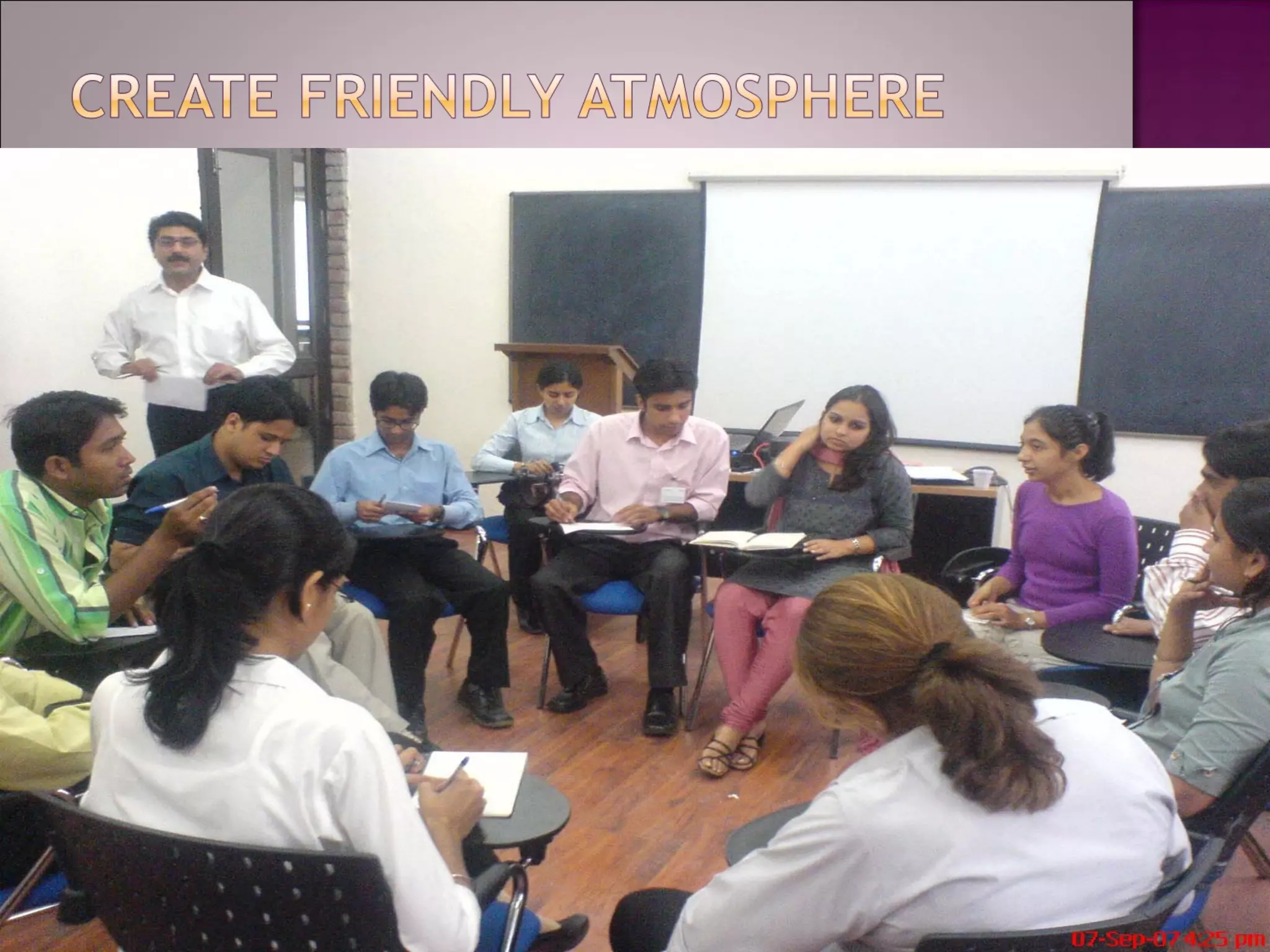
   Create friendly atmosphere
   Try to facilitate students about educational
    materials for study in advance
   Invite most outspoken students to get
    involved at first
   Invite all students to get involve in discussion
   Student centered method
   Active role of student
   Discussion make classroom environment alive
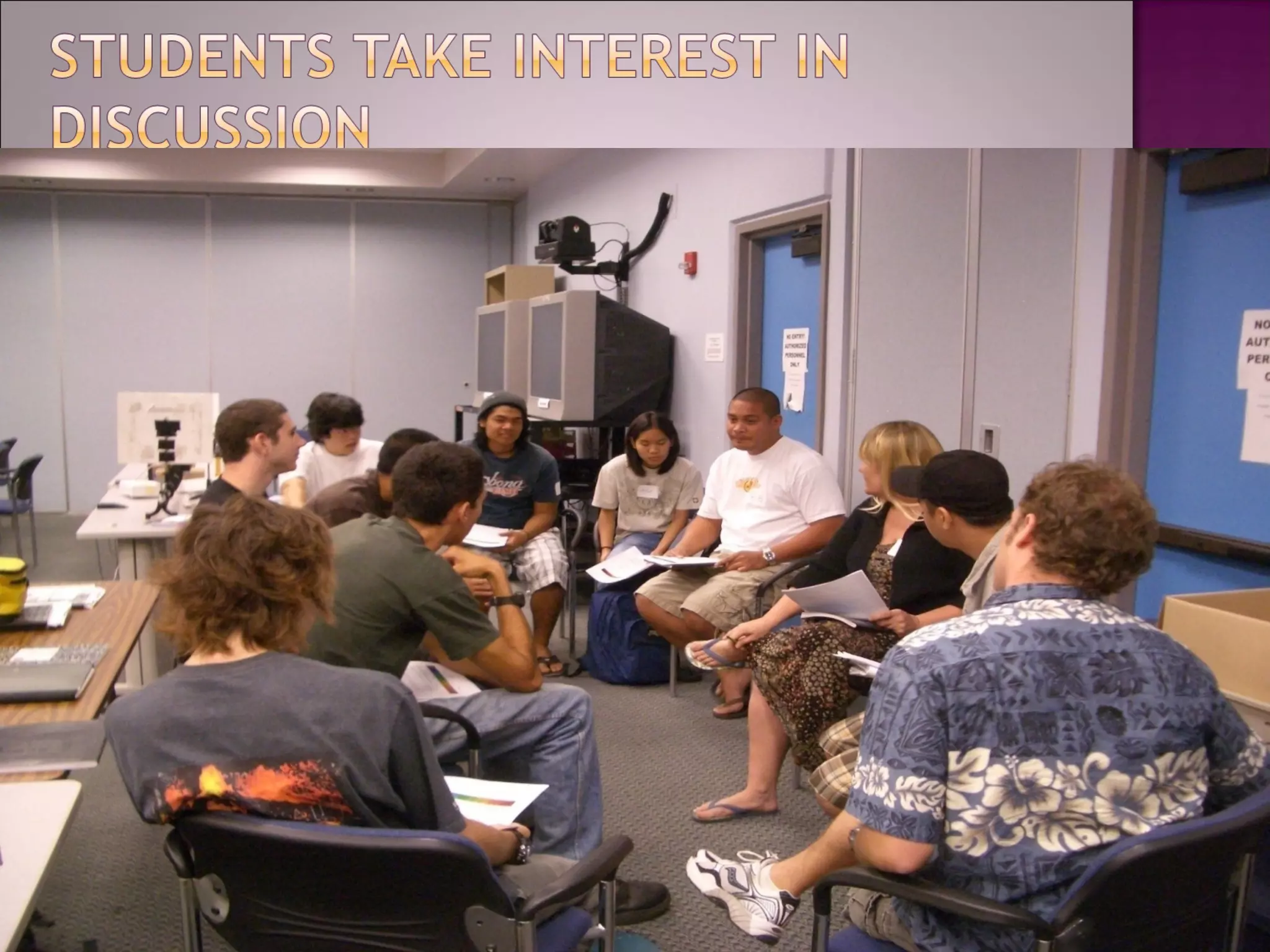
   Students take interest in discussion
   Equal opportunity for all the students
   It develops critical thinking in students
   Helpful to improve verbal communication
    power of students
   Its a two way communication
   Values like broad-mindedness, self-
    confidence, tolerance , co-operation ,
    appreciation and positive criticism flourished
    in students
   It develops the habit of study
   Democratic attitude develops among
    students
Discussion method is not free from pitfalls.
  Some are here …
 Science subjects can not taught through
  discussion
 Discussion method is only suitable for higher
  classes. It is not applicable in early classes
 It can be time consuming when discussion
  diverges from the topic
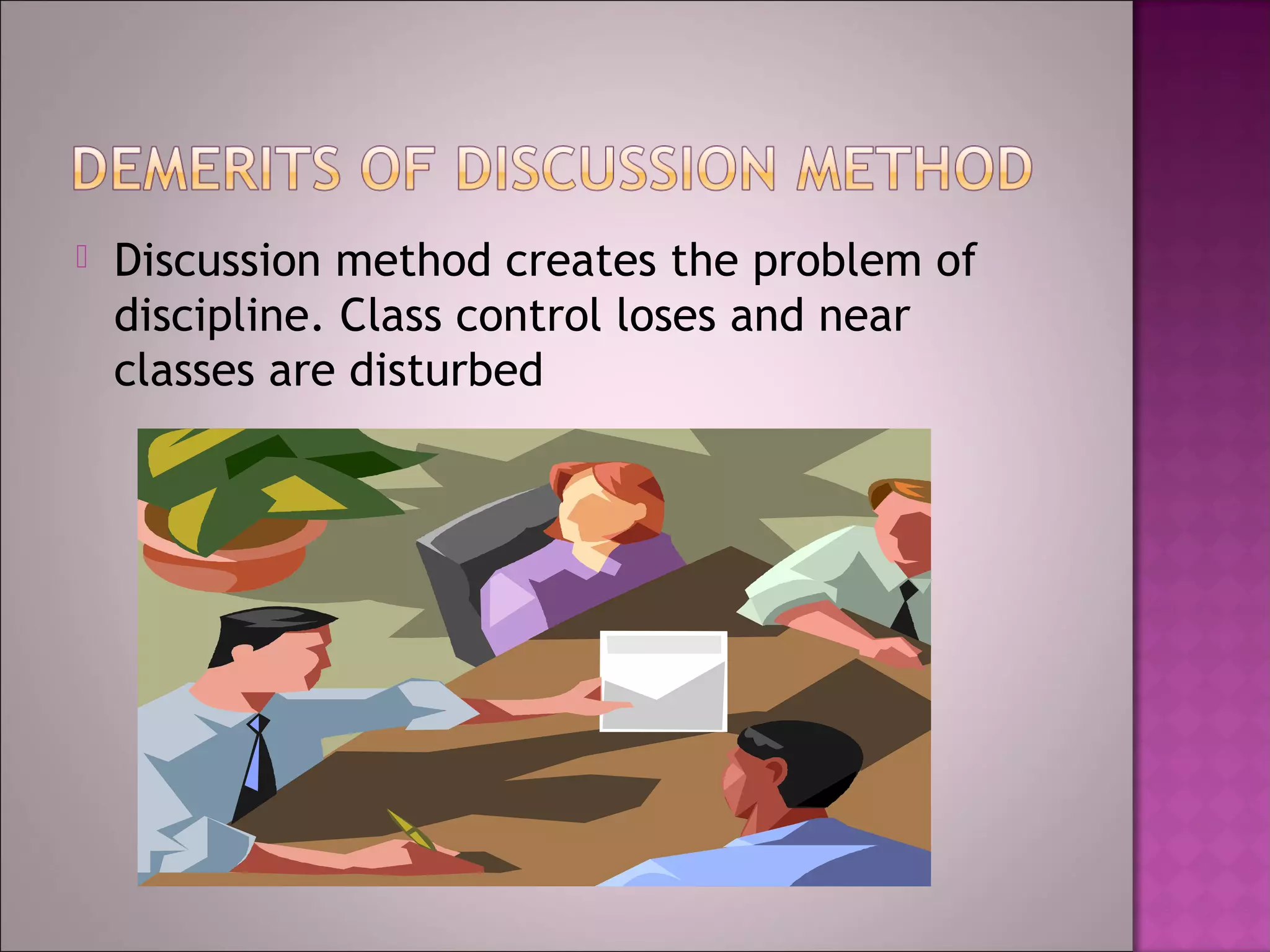
   Discussion method creates the problem of
    discipline. Class control loses and near
    classes are disturbed
   The discussion must have a purpose
   Students must have something to say
   Topic should be easy for students
   Think few minutes before starting of a group
    discussion
   Topic should be from syllabus
   Provide equal opportunity for each student in
    discussion
   A variety of points of view are put forward
    and discussed.
   Class discipline should be maintain
   Thank You

group dscussion method

  • 3.
    Introduction  Principals of discussion method  What skills are judge in group discussion  Tips for good discussion  Merits of discussion method  Demerits of discussion  Suggestions
  • 5.
    Oral expressions of different points of view among two or more persons  a critical conversation about a particular topic  Exchange of ideas about topic  A group discussion is a type of meeting, but it differs from the formal meetings  In discussion method students discuss on topic given by teacher in groups
  • 6.
    Following are theprincipals of discussion method  The topic should be selected from daily life. Students should have sufficient information about it  The discussion should remain topic based .Irrelevant details from students’ side should be discourage  Participants should be small in number to insure the participation of each individual in the discussion
  • 7.
    During the discussion, the teacher should remain present for guidance and maintain discipline  In the end the discussion should be summarized to reach logical conclusion  During discussion ,discipline should be maintained.  Every one should be given a chance to share ideas but in turn
  • 9.
    Your listening skill.  Your attitude and confidence.  How you put forward your views.  How you behave and interact with group.  Your analysis skill and subject knowledge.  Your leadership and decision making skills.  How good you are at communication with others.
  • 10.
    Keep eye contactwhile speaking:  Keep eye contact with every team member while speaking. Initiate the Discussion:  Initiate the group discussion only when you understood the group discussion topic clearly and have some topic knowledge Allow others to speak:  Do not interrupt anyone in-between while speaking.
  • 11.
    Speak clearly:  Speakpolitely and clearly. Use simple and understandable words while speaking Positive attitude:  Be confident. Do not try to dominate anyone. Keep positive body language. Show interest in discussion. Listen carefully to others:  Speak less and listen more! Pay attention while others are speaking
  • 13.
    Assign topic for discussion according to their subject  Create friendly atmosphere  Try to facilitate students about educational materials for study in advance  Invite most outspoken students to get involved at first  Invite all students to get involve in discussion
  • 15.
    Student centered method  Active role of student  Discussion make classroom environment alive  Students take interest in discussion  Equal opportunity for all the students  It develops critical thinking in students  Helpful to improve verbal communication power of students
  • 16.
    Its a two way communication  Values like broad-mindedness, self- confidence, tolerance , co-operation , appreciation and positive criticism flourished in students  It develops the habit of study  Democratic attitude develops among students
  • 18.
    Discussion method isnot free from pitfalls. Some are here …  Science subjects can not taught through discussion  Discussion method is only suitable for higher classes. It is not applicable in early classes  It can be time consuming when discussion diverges from the topic
  • 19.
    Discussion method creates the problem of discipline. Class control loses and near classes are disturbed
  • 20.
    The discussion must have a purpose  Students must have something to say  Topic should be easy for students  Think few minutes before starting of a group discussion  Topic should be from syllabus  Provide equal opportunity for each student in discussion  A variety of points of view are put forward and discussed.  Class discipline should be maintain
  • 21.
    Thank You