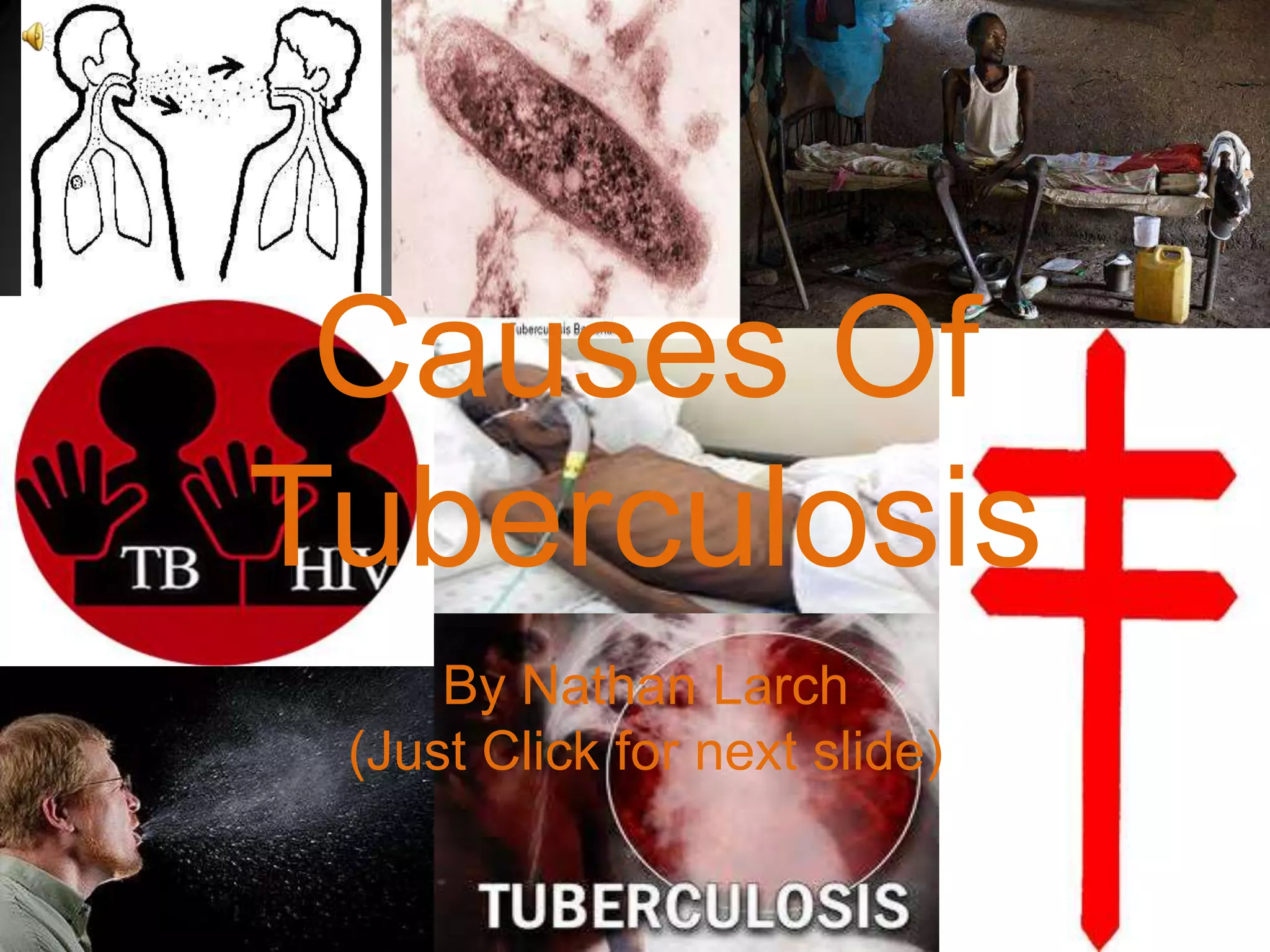
Causes Of
Tuberculosis
     By Nathan Larch
 (Just Click for next slide)
Don’t click screen until the slide is done, otherwise it will skip ahead.   Click these to replay narration


                                         Introduction
• Tuberculosis is caused by the Mycobacterium
  Tuberculosis. Often abbreviated TB.
•   Pictures of Tuberculosis Bacterium


• Passed on from person to person via droplets of mucus
  or saliva. This often happens when a person
  coughs, sneezes, talks, etc.
Infection
• Once in the body, different things may happen:
  1. The person has a strong immune system and the
  bacteria is destroyed quickly.
  2. The person will develop a latent infection and the
  bacteria will be present in the body, but there are no
  symptoms and it is not contagious.
  3. The person will become immediately sick and will
  be contagious.
• The infection first reaches the lungs, specifically the
  alveoli.
Infection (continued)
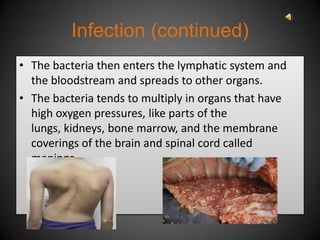
• The bacteria then enters the lymphatic system and
  the bloodstream and spreads to other organs.
• The bacteria tends to multiply in organs that have
  high oxygen pressures, like parts of the
  lungs, kidneys, bone marrow, and the membrane
  coverings of the brain and spinal cord called
  meninge.
    Tuberculosis in the spine     TB infected deer lung
Risk Factors
• A risk factor is a variable associated with an
  increased risk of disease or infection.
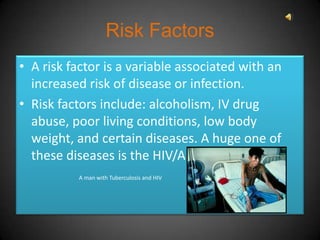
• Risk factors include: alcoholism, IV drug
  abuse, poor living conditions, low body
  weight, and certain diseases. A huge one of
  these diseases is the HIV/AIDS virus.
          A man with Tuberculosis and HIV
HIV/AIDS and TB
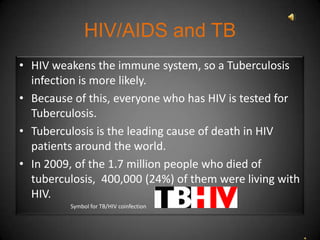
• HIV weakens the immune system, so a Tuberculosis
  infection is more likely.
• Because of this, everyone who has HIV is tested for
  Tuberculosis.
• Tuberculosis is the leading cause of death in HIV
  patients around the world.
• In 2009, of the 1.7 million people who died of
  tuberculosis, 400,000 (24%) of them were living with
  HIV.
         Symbol for TB/HIV coinfection
Bacterial Resistance
• The TB bacteria has become resistant to many
  antibiotics. It usually takes about 6 months to kill all
  of the bacteria, but many people don’t continue to
  take their medication for that long, because most TB
  patients begin to feel better after a few weeks.
• Multidrug-resistant Tuberculosis (MDR-TB) has
  evolved and is resistant to at least two of the four
  drugs regularly used to treat TB. The next level is
  extensively drug-resistant Tuberculosis (XDR-TB).
  Which is rare, but is extremely dangerous.
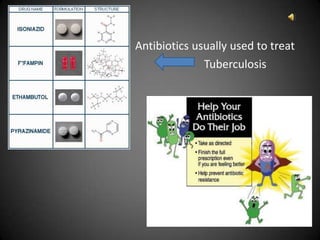
Antibiotics usually used to treat
•                 Tuberculosis
Tuberculosis Facts

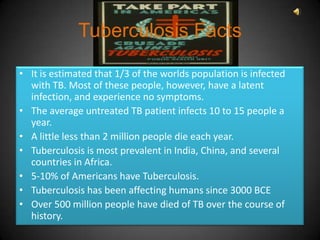
• It is estimated that 1/3 of the worlds population is infected
  with TB. Most of these people, however, have a latent
  infection, and experience no symptoms.
• The average untreated TB patient infects 10 to 15 people a
  year.
• A little less than 2 million people die each year.
• Tuberculosis is most prevalent in India, China, and several
  countries in Africa.
• 5-10% of Americans have Tuberculosis.
• Tuberculosis has been affecting humans since 3000 BCE
• Over 500 million people have died of TB over the course of
  history.
Conclusion, 5 main points
• Tuberculosis is caused by a bacteria that spreads from
  person to person via tiny droplets of mucus or saliva
• There are certain risk factors associated with TB.
• The biggest one of these risk factors is the HIV virus.
• Many strains of TB have become resistant to the
  antibiotics used to treat it.
• Tuberculosis starts out in the lungs, and then is spread to
  other parts of the body through the bloodstream and
  lymphatic system.
                                   THE END!

CAUSES OF TUBERCULOSIS POWERPOINT

  • 1.
    Causes Of Tuberculosis By Nathan Larch (Just Click for next slide)
  • 2.
    Don’t click screenuntil the slide is done, otherwise it will skip ahead. Click these to replay narration Introduction • Tuberculosis is caused by the Mycobacterium Tuberculosis. Often abbreviated TB. • Pictures of Tuberculosis Bacterium • Passed on from person to person via droplets of mucus or saliva. This often happens when a person coughs, sneezes, talks, etc.
  • 3.
    Infection • Once inthe body, different things may happen: 1. The person has a strong immune system and the bacteria is destroyed quickly. 2. The person will develop a latent infection and the bacteria will be present in the body, but there are no symptoms and it is not contagious. 3. The person will become immediately sick and will be contagious. • The infection first reaches the lungs, specifically the alveoli.
  • 4.
    Infection (continued) • Thebacteria then enters the lymphatic system and the bloodstream and spreads to other organs. • The bacteria tends to multiply in organs that have high oxygen pressures, like parts of the lungs, kidneys, bone marrow, and the membrane coverings of the brain and spinal cord called meninge. Tuberculosis in the spine TB infected deer lung
  • 5.
    Risk Factors • Arisk factor is a variable associated with an increased risk of disease or infection. • Risk factors include: alcoholism, IV drug abuse, poor living conditions, low body weight, and certain diseases. A huge one of these diseases is the HIV/AIDS virus. A man with Tuberculosis and HIV
  • 6.
    HIV/AIDS and TB •HIV weakens the immune system, so a Tuberculosis infection is more likely. • Because of this, everyone who has HIV is tested for Tuberculosis. • Tuberculosis is the leading cause of death in HIV patients around the world. • In 2009, of the 1.7 million people who died of tuberculosis, 400,000 (24%) of them were living with HIV. Symbol for TB/HIV coinfection
  • 7.
    Bacterial Resistance • TheTB bacteria has become resistant to many antibiotics. It usually takes about 6 months to kill all of the bacteria, but many people don’t continue to take their medication for that long, because most TB patients begin to feel better after a few weeks. • Multidrug-resistant Tuberculosis (MDR-TB) has evolved and is resistant to at least two of the four drugs regularly used to treat TB. The next level is extensively drug-resistant Tuberculosis (XDR-TB). Which is rare, but is extremely dangerous.
  • 8.
    Antibiotics usually usedto treat • Tuberculosis
  • 9.
    Tuberculosis Facts • Itis estimated that 1/3 of the worlds population is infected with TB. Most of these people, however, have a latent infection, and experience no symptoms. • The average untreated TB patient infects 10 to 15 people a year. • A little less than 2 million people die each year. • Tuberculosis is most prevalent in India, China, and several countries in Africa. • 5-10% of Americans have Tuberculosis. • Tuberculosis has been affecting humans since 3000 BCE • Over 500 million people have died of TB over the course of history.
  • 10.
    Conclusion, 5 mainpoints • Tuberculosis is caused by a bacteria that spreads from person to person via tiny droplets of mucus or saliva • There are certain risk factors associated with TB. • The biggest one of these risk factors is the HIV virus. • Many strains of TB have become resistant to the antibiotics used to treat it. • Tuberculosis starts out in the lungs, and then is spread to other parts of the body through the bloodstream and lymphatic system. THE END!